One of the Joys of Maturity

Custom Search
One of the Joys of Maturity |
Custom Search
|
| Affiliated Advertisers |
Clicking through one of our banner ads or some of our text links and making a purchase will produce a small commission for us from the sale. A Year in Our Garden - 2014 Another gardening season is done. Here are my thoughts about how our year went with both successes and failures.
January is a pretty slow gardening month for us. We start a few things, but mostly have to be patient so our transplants are timed to be ready, but not too big, when spring breaks and we can move them into the garden. We unintentionally got a very early start on our geraniums and onions. I usually start them towards the end of January. But I had some seed of questionable viability that I started in early December, more as a germination test than a start on our transplants. It turned out that both the suspect geranium seed and the year old onion seed germinated well. That got us off to bumper crops of geraniums and onions for the season.
This was really too early a planting. As it turned out, it provided us lots of lovely transplants in March for early, hanging basket plants. But they quickly outgrew their cute egg carton seed starters, and I had to begin moving them to fourpacks by the end of the month.
In more traditional plantings, I started germinating geranium seed on coffee filters on January 9 and seeded a whole bunch more onions on January 22. The large onion seeding was the beginning of some variety trials I wanted to do, as I feared our favorite hybrid storage onion varieties might soon disappear from seed catalogs. We ended up growing thirteen varieties of onions in 2014, instead of our standard four favorites. Along the way, we did indeed find some potential replacements for the threatened storage varieties, our favorite of which, sure enough, is no longer available for 2015! Due to an unfortunate backorder of seed, we even started one more variety of onions on Groundhog Day. To top off the month, we were snowed in for several days until a neighbor with a front end loader could clear our driveway and the 4-5' snowdrifts that surrounded our car and truck! |
|
Indoors, we had a very productive gardening month. We successfully seeded Patterson onions (that were backordered), celery, leeks, beets, lots of herbs, cauliflower (2 weeks earlier than usual), broccoli, cabbage, and brussels sprouts. Seeding our cauliflower earlier than our broccoli was an experiment. We usually seed them both at the same time, but always have the cauliflower maturing weeks after the broccoli. The experiment was somewhat successful, although I think I may seed next year's cauliflower a full three weeks before I seed our broccoli, so that they'll mature heads about the same time. The geraniums we started in early December required repotting into 4 and 4 1/2 inch pots. The petunias we started in egg cartons in early January were moved to fourpacks. The flats of onions planted in January required haircuts to keep them from toppling over. And most of the herbs we seeded this month got transplanted to fourpacks. A reader from Australia shared his unique way of propagating gloxinias from their flower stems. And, we got our first spray of dormant oil on our apple trees. Not bad for one of the coldest, snowiest months on record.
March is always an interesting month of gardening for us. We have lots, often too many, garden transplants growing under our plant lights. Running out of space there, I began moving trays of hardier plants to our sunroom. The sunroom runs pretty cold through the winter, but was warm enough by March to handle onions and brassicas on the tops of bookshelves by the windows. I later added our very early geraniums (started in December), along with some small gloxinias. I also begin moving transplants outside to our cold frame as soon as possible to relieve crowding under our plant lights. And each year, we have a cold snap late in March and have to cover our dining room table with trays of transplants on nights too cold for the cold frame to protect them from freezing. I seeded fifteen different varieties of lettuce on March 5. We like lots of variety in lettuce, and once transplanted, the red and green lettuces make a nice display.
With such an early planting, I treat any of our pea seed that didn't come from the seed vendor already treated, using Captan The day after I planted our peas in 70o F comfort, the temperature dropped to a daytime high of 38o with winds gusting at over 40 MPH and an overnight low of 18o. That's just March in Indiana. One of my projects for March was building a new cold frame. Our old cold frame was made with treated 2x4's, but even they had begun to rot at the corners where nails held them together. We'd gotten over decade of use from the wooden cold frame, but I decided to build the new frame with something that wouldn't rot...PVC pipe. I planned to construct two cold frames sized together to cover one of our 3' x 15' raised beds. With delays and cost overruns that would make a defense contractor blush, only the first frame got built. But I have all the parts necessary for the second frame on hand and a considerably improved design for it.
Soil levels routinely drop in our raised beds over the years. That's understandable, as we haul lots of produce out of the plots and composts stalks and such, rather than turning them back into the soil directly.
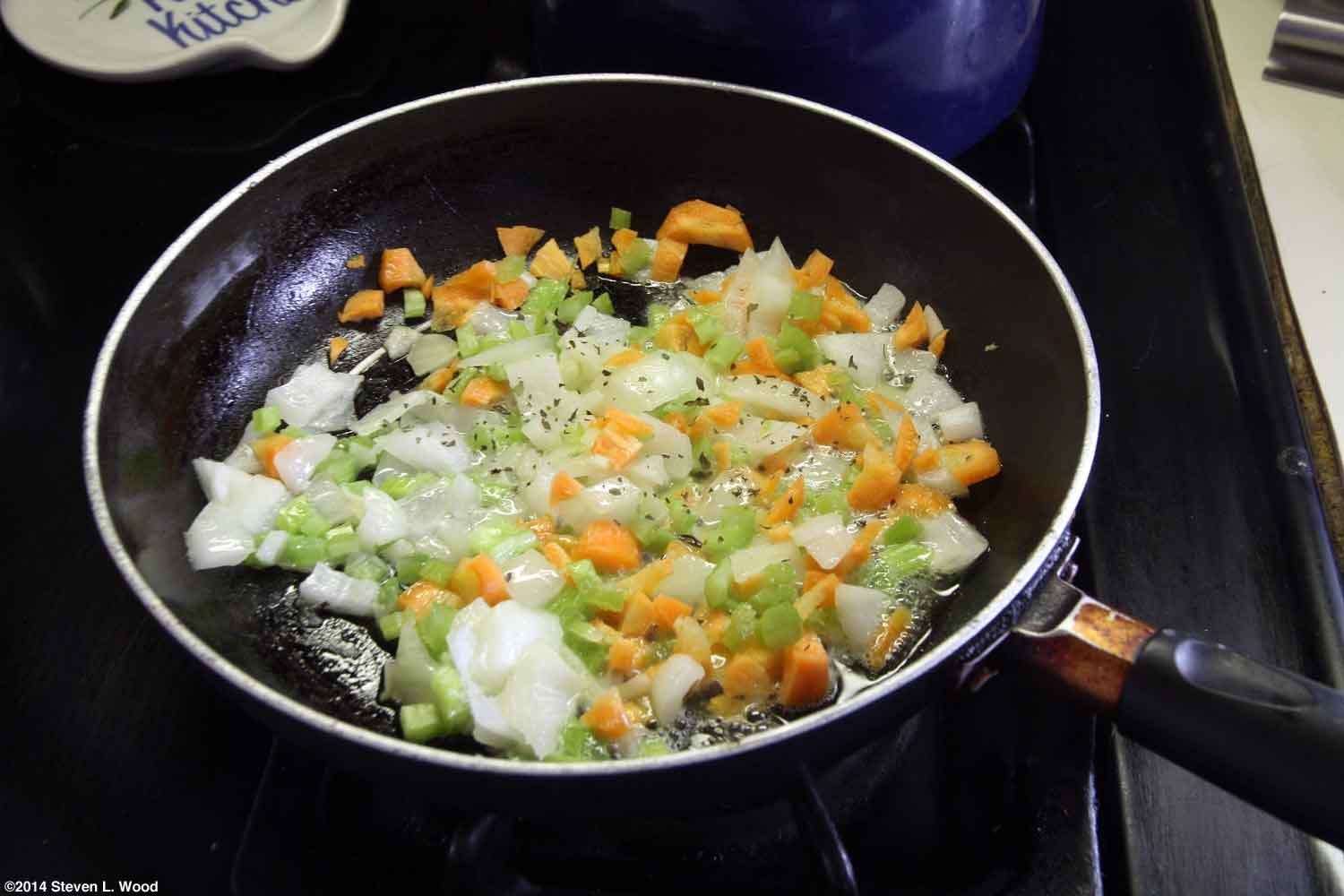
We got our last snowfall of the season on March 24-25. Only a few inches of snow accumulated and temperatures began to rise quickly afterward. I was able to return our transplants to the cold frame the next day. While waiting out the cold spell, I started our tomatoes and peppers. I try to seed them approximately eight weeks before the first of them will go into the ground. Allowing a few days for germination, that should have put these plants at about an ideal six to eight weeks of age when they're transplanted. The only problem with such a plan is that only some of the tomatoes get transplanted at the right time, as it takes time to get everything into the garden. I really need to stagger our starts of tomatoes and peppers a bit. Overnight temperatures throughout the rest of the month flirted with levels below which our new cold frame could protect. I threw a couple of tarps over the frame one night when the outside temperature dipped to 27o F. The max-min thermometer I keep in the cold frame showed that it had kept our plants at an acceptable 33o F. Cream of Broccoli Soup I wound up the month using up the last of our frozen broccoli to modify our recipe for Asiago Cheese & Tortellini Soup to make cream of broccoli soup. Instead of adding tortellinis and asiago cheese to the seasoned chicken broth, one just purées broccoli in the broth and then thickens it with cream and flour.
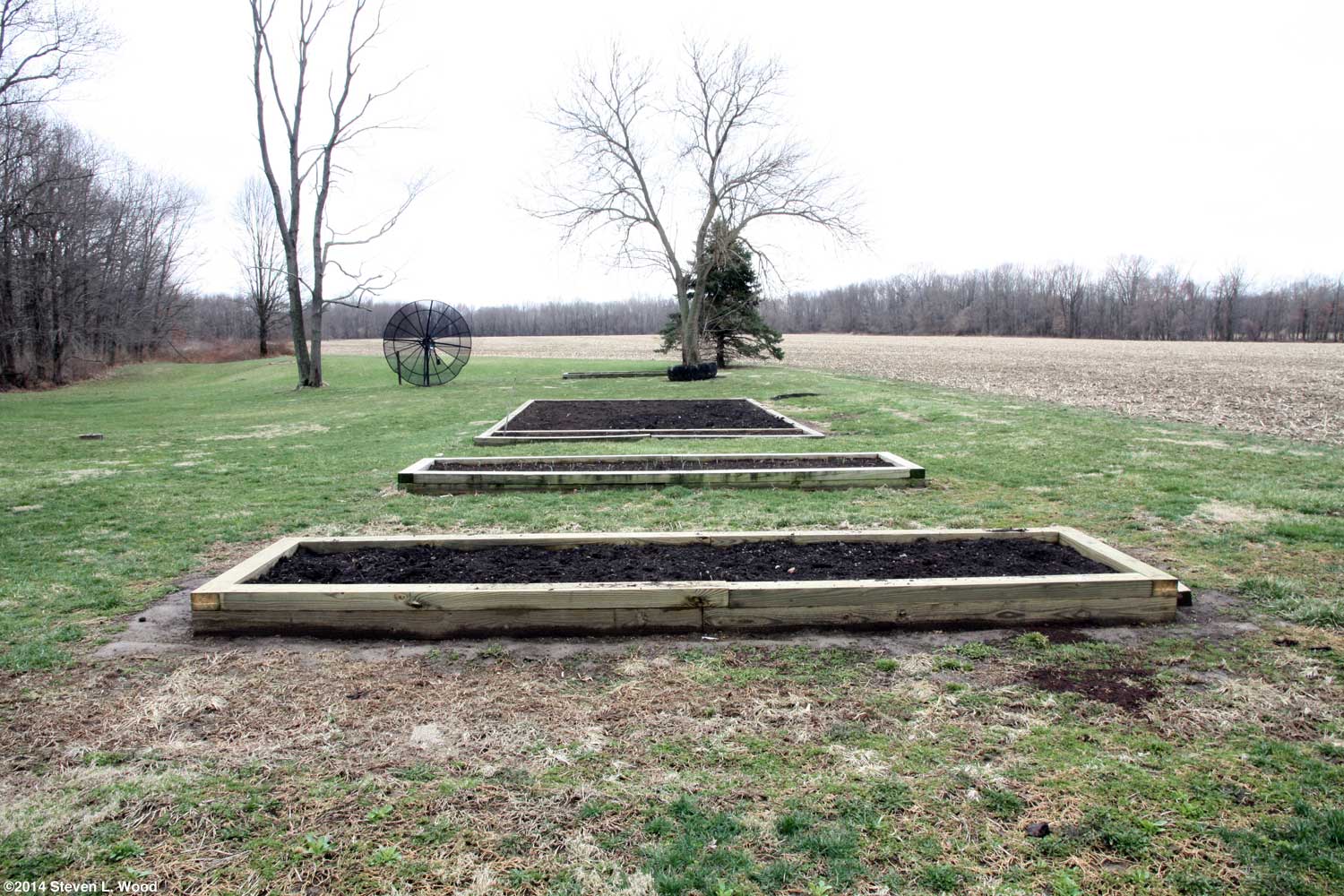
The new truck I bought in February got put to work in early April. Concerned with the standing water problems we've had over the last few years, I put in one more narrow raised garden bed where our spring brassicas were to go. The bed was constructed with 6" x 6" x 8' and 4"x 6" x 8' pressure treated landscape timbers, much like our other raised beds. I used 3/8" x 22-24" rebar to hold the timbers in place. I pretty well guaranteed us a great crop of spring broccoli and cauliflower by first tilling the interior, native soil of the bed and then filling it with sphagnum peat moss and compost and mixing it with the native soil. Putting in this raised bed retired the last of what was our original garden plot at this property. We had used the previous owner's garden plot when we first moved in, but quickly realized the ground was low and the soil was pretty well spent. We tried improving the soil for several years before moving our main garden plot to a sloping piece of ground just south of the old plot. The slope of the new plot got us started first terracing and later totally enclosing that area as a raised bed. The original garden plot, which at one time measured 19' x 39', now contains two 4' x16' raised beds with interior dimensions of 3' x 15', an ideal size for a raised bed. There are lots of options for buying or building a raised garden bed. But if you're interested in building one similar to ours, our feature story, Building a Raised Garden Bed, gives illustrated, step-by-step instructions.
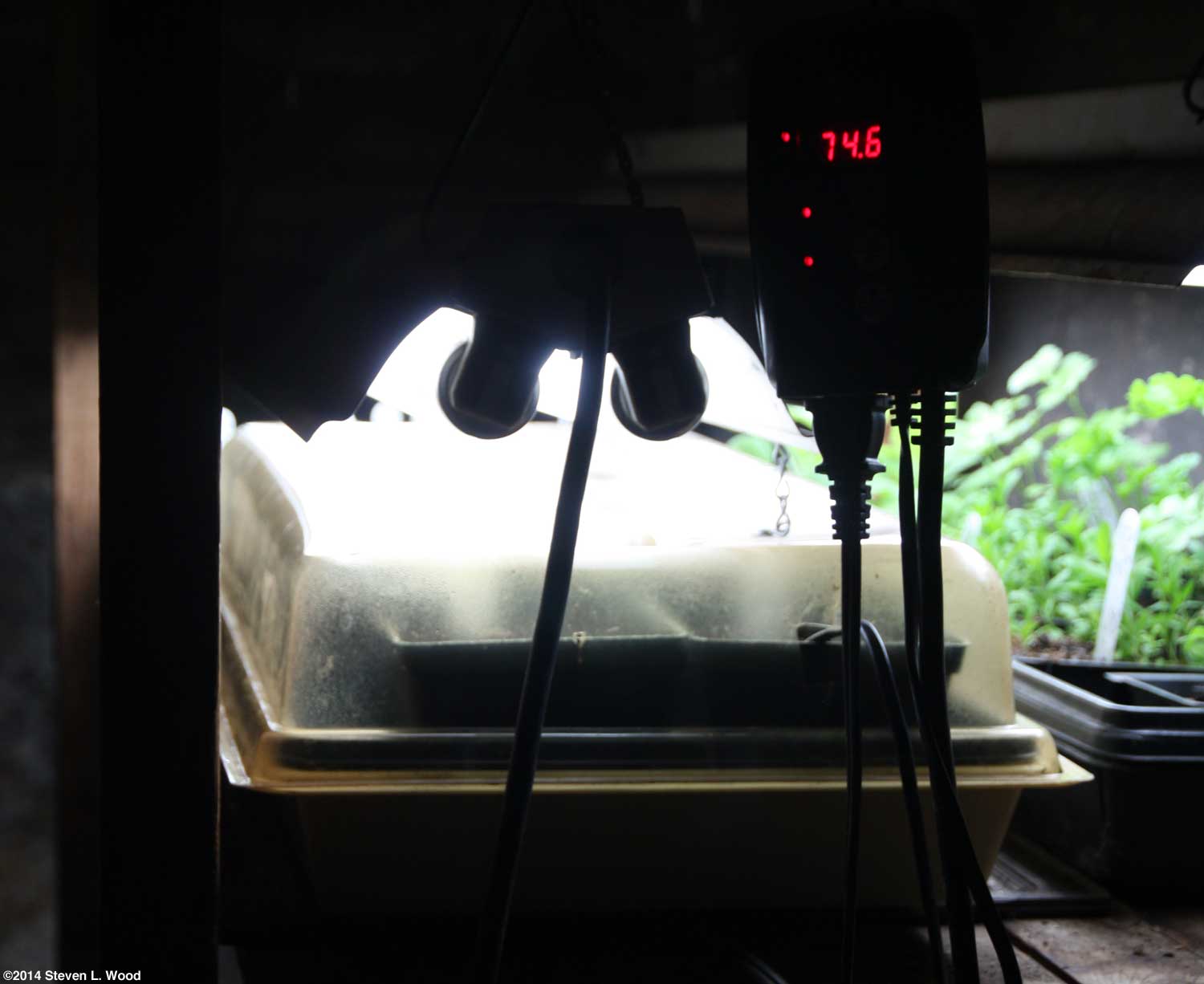
The seed flats of pots of melons are covered with clear humidomes and go on a thermostatically controlled soil heating mat under our plant lights. While the image at right shows a temperature of 74.6o F, that's only because I had just turned the heat mat on. The thermostat was set at 80o F, and actually could go as high as 85o F, as seedless watermelons take a lot of bottom heat to germinate well.
There are lots of other organic methods of preventing cutworm damage and a host of chemicals to kill cutworms. Since I don't like spraying poisons on anything we're going to eat, and I drink a lot of coffee, I rinse out and save used wax paper coffee cups all winter for use in the spring as cutworm collars. We usually transplant the first of our brassicas into our garden during the first ten days of April. Broccoli, cauliflower, and other brassicas can easily survive a light frost, something we'll experience off and on all through April. Our early planted broccoli and cauliflower usually matures before the heat of summer sets in which causes the heads to be bitter and go to seed.
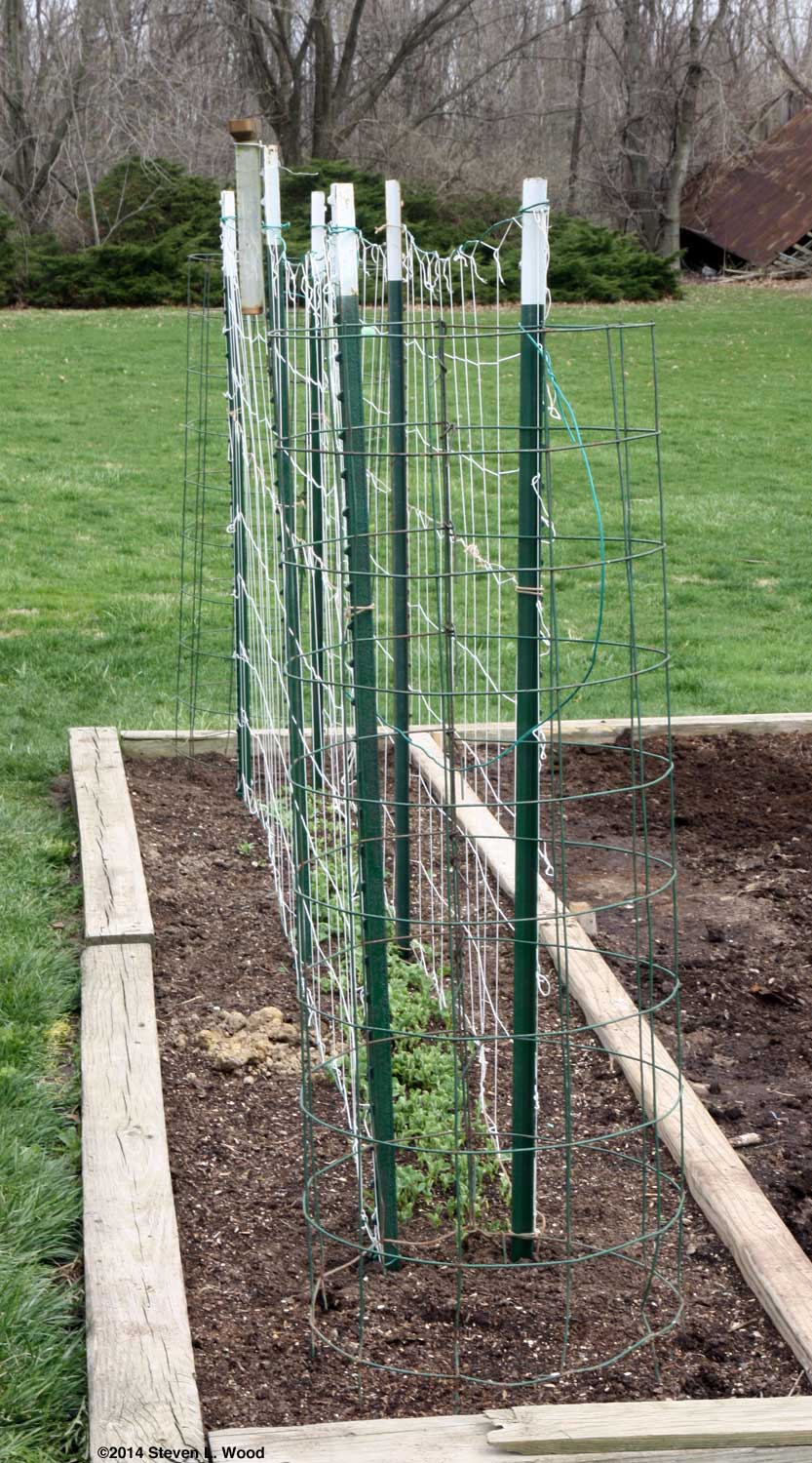
The idea of the double trellis was to contain the peas between the rows of nylon trellis netting. Giving away the ending to this story, I only spaced the trellises eight inches apart, and the peas still grew outside the trellises...and then blew over, bent, breaking their stems, once again cutting short our pea harvest. Next year, I'm going to try a wider spacing for the trellises. If that doesn't work, I may be looking for property to buy in a less windy area. (Just joking.) We began picking a bit of asparagus in mid-April, but a cold snap delayed any serious growth of the delicious vegetable until later in the month.
We use an intensive planting method for our carrots and onions, spacing double rows of them just four inches apart with a foot between the different vegetables. The co-planting is supposed to deter insects. I'm not sure that works, or if we've just been lucky. But we grow some great carrots and onions. Carrots require deep, rich soil without a lot of pebbles in it to produce long, delicious roots. Most gardeners have to rely on short carrot varieties to avoid problems with their carrots hitting tough subsoil and splitting. Our main raised bed was double dug several years before it was first terraced and later enclosed as a raised bed. With the addition of a lot of peat moss, soil, and compost to fill the bed, we're blessed to have a nearly ideal growing environment for carrots. We still grow lots of sweet, short carrot varieties, but we also can grow the long ones in our raised bed. I transplanted more onions into the main raised bed on April 19. We already had more than enough onions in the ground to supply our needs for the next year, but I was trying out some new-to-us, mostly open pollinated onion varieties this year. These onions got transplanted in double rows around the area where our caged bell peppers would eventually go once any chance of frost was past. Our lettuce transplants and direct seeded spinach went into the ground on April 20, and a couple of grape tomato plants for the grandkids got added to the ends of the tall pea trellis on the 23rd. Besides our raised garden beds in our back yard, we're fortunate to have the use of part of a fallow field next to our property to grow space hog crops such as sweet corn, melons, and other vining crops. I was able to do a first tilling of that area, which we refer to as our East Garden...because it's east of our other plots, on April 22. I seeded the half of the plot to be rotated out of production this year to alfalfa on April 23.
Planting into our East Garden is always a bit of a challenge. Despite a number of turndown crops of alfalfa and buckwheat, it's soil is only marginal for gardening. But we're seeing very slow, gradual improvement in the soil there. One of the techniques that makes our Senior Garden plots successful is our extensive use of grass clipping mulch. Even though no weeds were visible, our plantings began getting mulched with grass clippings towards the end of the month. Such mulching usually occurs after a gentle scuffle hoeing of the area. The grass clipping mulch suppresses weed growth around our crops and also helps conserve soil moisture. That second one is especially important to us, as our well frequently runs dry for short periods during the summer, preventing any serious watering or irrigation after mid-June. After doing some watering and mulching chores on April 28, I was able to get our green beans planted. It's vitally important to get our green beans started early in our main raised bed in years when the adjoining field will be planted to soybeans. The bugs that love soybeans love tender green bean plants even more and migrate from the field to our green beans in overwhelming numbers late in the season. By planting early, we're able to avoid having to spray a lot with insecticides. Since I'd failed to start transplants for them, I direct seeded our Waltham Butternut Squash into an area just outside our East Garden that previously had been the site of a compost pile. Because butternut squash and pumpkins are such vigorous viners, we grow them away from our melons, as either would crowd out the melons if planted in the same row with them. I also made our first application of Thuricide, an amazing biological product that keeps our early broccoli and cauliflower free of the nasty worms cabbage loopers and small white cabbage moths cause. And on April 29, I transplanted pepper plants between the rows of onions I'd added earlier in the month to close out planting in our main raised bed. Having it fully planted allowed me to focus on weeding and mulching that bed while turning our full attention to our large East Garden plot. April is an incredibly busy gardening month for us. We do get a little rest through the month, as there are frequent cold, sometimes rainy periods. There's also the occasional, totally unwelcome but seasonal, late frost.
|
|||||||||||||||||||||||||
From Steve Wood, the at Senior Gardening |
| Affiliated Advertisers |
©2014 Senior-gardening.com


 fungicide to prevent seed rot in the soil. It's certainly not organic, but it allows us to get our pea seed in the ground really early. The pea seed is smart and seems to know to germinate at the appropriate time.