One of the Joys of Maturity |
|

| Affiliated Advertisers |
Clicking through one of our banner ads or some of our text links and making a purchase will produce a small commission for us from the sale. The Old Guy's Garden Record
Paul's numbers sound about right. Our rain gauge at noon was getting close to an inch and a half of rainfall since about noon yesterday. Several nearby weather stations are reporting considerably less rainfall, so the showers have been a bit spotty.
Buster, by the way, came to us as a feral stray several years ago. He was terribly aggressive then, but shedding a number of his nine lives over the past few years in tangles with area critters, one that almost tore his head off, and a good bit of TLC from my darling wife, have made him a welcome addition to the many cats and dogs that keep us company on the back porch and around the grounds. I did the initial washing and trimming of the carrots on our back steps. The carrot tops went to the compost heap, while the wash water which contained a good bit of precious garden soil, went back onto the raised bed.
We won't be canning our usual 20+ quarts of green beans from this stand, but again, we'll gladly take what is there. There are actually some very nice, straight Bush Blue Lakes Sadly, the second row of green beans I planted just five days after the first row only produced about six plants. They just got caught in the very worst of the heat and drought and didn't come up, despite the seed being soaked before planting and several good waterings. We also still have not germinated a row of kale, something we always have good luck growing here. It's been a strange gardening season. Hummingbirds
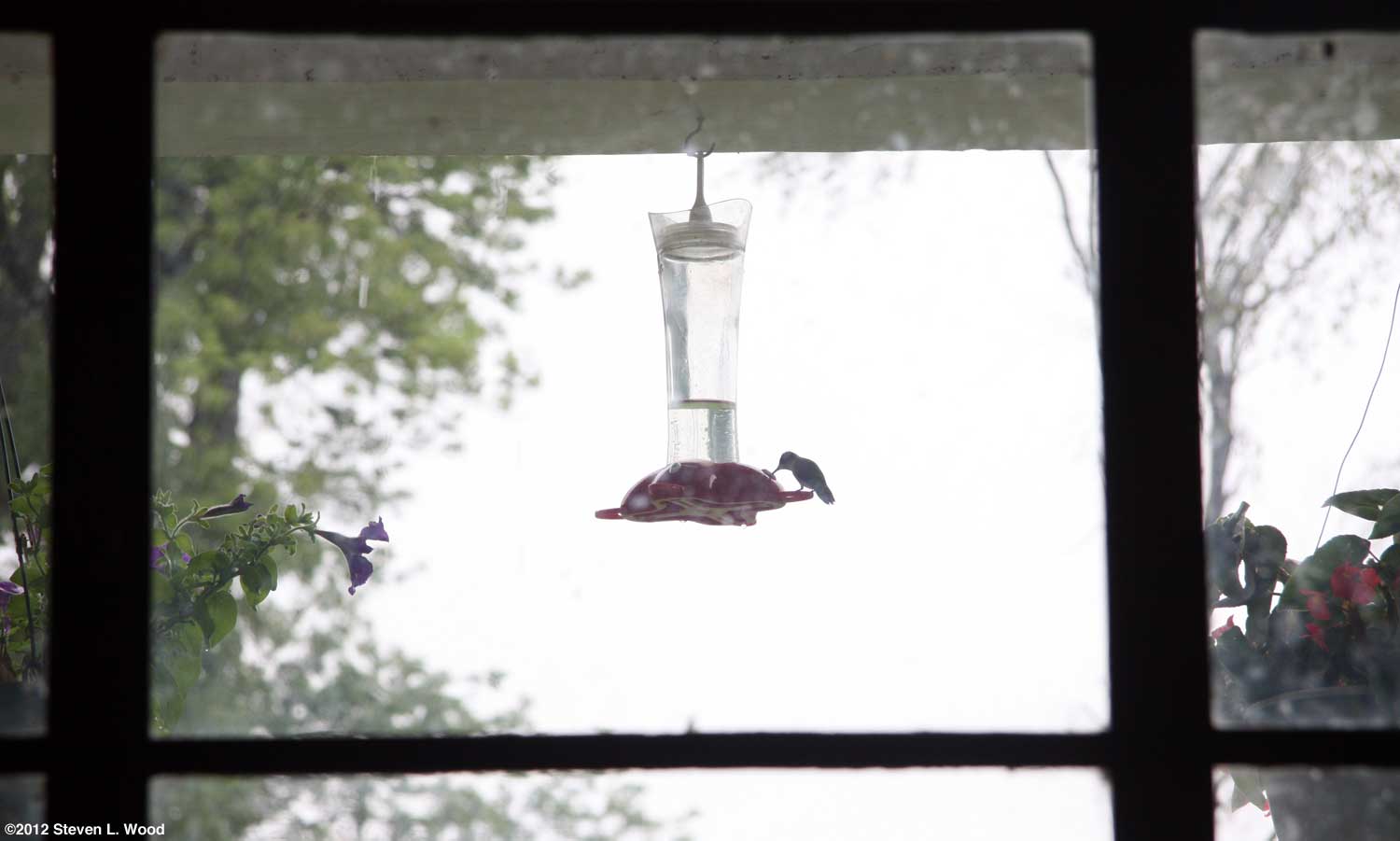
"Our" hummingbirds are beginning to head south for the winter (already!). Two weeks ago, the feeding frenzy at our two feeders was nearly constant, with me filling the feeders twice a day. Towards the end of last week, feeding dropped off, and we had just a few birds at the feeders throughout the day. Apparently, one large group of hummingbirds had headed south. Then, a couple of days ago, the traffic at the feeders picked up again, actually exceeding what we'd seen throughout the summer. Apparently, some migrating hummingbirds had found our feeders and stayed just over a day before heading out south again. We'll keep at least one feeder available throughout this month for the remaining birds and other transients that might come through. The East Garden With our main, raised garden beds not doing much throughout the drought, I've been able to focus more attention than usual on our large East Garden where we grow our "space hogs." With a muscle pull acting up every time I use the tiller, I've resorted to using Roundup to keep the aisles between our rows of melons clean. Over the last week or so, I've been able to hand weed a lot of tall grass than had broken through the limited mulch we'd been able to apply to the melon rows, also training the melon vines back onto the mulch where possible.
Almost half of the six thousand square feet in the East Garden is now devoted to cover and/or green manure crops. I seeded a 30 foot square to alfalfa at the end of May, and did a succession seeding of buckwheat in August over the ground where our sweet corn had been. The alfalfa took hold fairly slowly. I've mowed it several times with the blades set as high as possible to hold back weeds and promote a bit of spreading of the great legume. Alfalfa can fix lots of nitrogen into the soil on its roots. It also puts down very deep roots, which can make tilling in succeeding years a bit difficult, but well worth it as the roots help break up the plow pan that invariably develops just under tilling depth in the heavy clay soil of the East Garden. We grow buckwheat as a green manure crop to add organic matter to the challenged topsoil of the East Garden. This year's planting is presenting some unusual choices, as some of the plants which germinated almost immediately after seeding are already coming into bloom. Other plants in the 30' x 40' planting are just getting going. But whether we turn it in in the next week or so or wait on the laggards to bush out a bit, we'll add a little bit of tilth to the area. I didn't mail order either our alfalfa or buckwheat seed this year, instead relying on a local farm store, Graham Feed & Farm Center, for our seed. And no, the irony of mentioning Buckwheat and Alfalfa without Spanky in this section wasn't lost on me. Eggplant and Pumpkins
I finally got a couple of hills of honeydew going, but have only had one honeydew melon ripen so far. I also have a hill of late Crimson Sweet watermelon that is producing icebox sized melons! And we have one succession yellow squash plant there now producing nice squash that went in where one of the honeydew hills had failed.
At the very end of the row is a hill of Howden pumpkins. With mulch in scarce supply, much of the planting got overgrown with grass. Squash bugs nearly decimated the foliage at one point, and then powdery mildew set in. Several sprayings of strong fungicide and insecticide took care of the disease and insect problems for now, but hand weeding has been the only answer for the grass that is going to seed amongst the pumpkin plants. And in spite of my poor plant husbandry, the vines now carry two orange and one immature green pumpkin. Melons We haven't been able to haul any truckloads of melons to the mission in Terre Haute like we did last year, but we are now getting a steady supply of both watermelon and cantaloupe. Until this weekend, my wife had shared any surplus melons we had with friends at work. With Annie off visiting one of our daughters in California this weekend, I resorted to putting a pile of melons by the roadside with a cardboard box sign advertising "Free melons."
In a normal year, the aisles shown above would be heavily mulched with grass clippings from the field around the East Garden and completely covered with vines. I didn't increase the 15' aisle spacing for the melon rows this year. That may show how much the drought has limited our melon crops this year. But even so, we're getting some good melons. The striped, Crimson Sweet type melons visible above are actually Trillion seedless melons. That variety has been a standout in this dry growing season. Our Ali Baba and Picnic watermelons have also been quite productive, with our other seedless variety, Farmers Wonderful, putting out just a few melons so far. Both our Crimson Sweets and Moon & Stars, usually top performers, have been a disappointment. And yes, with the rain this weekend, there will be some serious weeding to do in the East Garden in the next week. Potatoes
Looking Ahead Even with the showers this weekend, things remain pretty dicey for starting fall crops in the garden. I may chance a seeding of spinach this week and try one more time to get some kale going. But beyond that, I'm not trying for our usual fall garden of lettuce, cabbage, cauliflower, and broccoli this year. It's way too late for most of the brassicas, and our soil moisture levels are still lousy. I will be spreading compost on our asparagus patches, getting the garden ready for winter, and continuing to plan for our garden for next summer. I have a fairly nice stand of buckwheat to turn down soon (despite what using the tiller will do to my bum leg) and some liming and seeding to do in the field that surrounds our East Garden.
Wednesday, September 5, 2012 - Pickle Day
Since I've used the same recipe for around thirty years, I wasn't as careful as I should have been looking at quantities and ended up with just four pints of canned pickles instead of the seven or eight the recipe states. But as it turned out, I was pretty picky about what cucumber slices I would use, and four pints was all my large stack of cucumbers would make. Slightly overripe fruit, insect and skin damage ruled out using over half of the cukes! I also got so involved in the process that I forgot to grab the camera. So if we continue to get some rain and our cucumber vines persist, maybe we'll have another Pickle Day yet this fall. But I will add that the pickles were great and they keep well canned for years. Freezing Carrots
Once the ends and bad spots were trimmed out, I cut the carrots into slices. Fat carrot sections got cut into fairly thin (quarter inch) slices, while more slender carrots were left up to and inch and a half long.
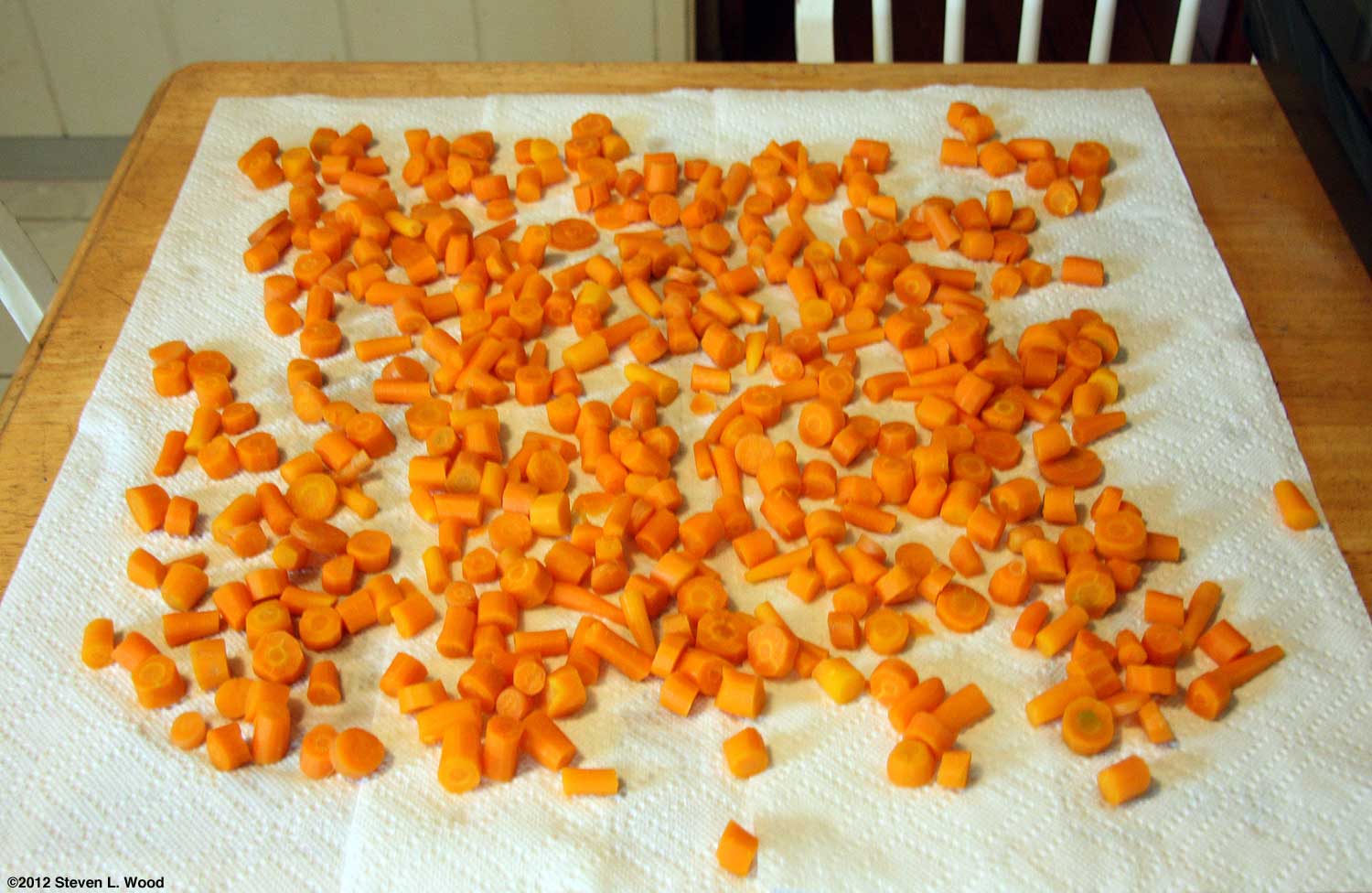
Once cooled, I spread the carrots out on paper towels over newspaper on the kitchen table to dry. The dried carrots went onto a large cookie sheet to freeze, and eventually ended up in a zip lock freezer bag for long-term storage. When I began writing this evening about green bags, I did a web search and found that Wikipedia had some interesting info on them. The article contained info from a TV news report that found the bags "did keep carrots and green peppers 'much fresher much longer,'" but also found disappointing results for other fruits and vegetables. That pretty well describes our experience as well. We still use green bags for lettuce, but find our real savings from them come from being able to store carrots from our garden for long periods. Successful Germination Test
I'd placed several Moira tomato seeds on a damp paper towel in a zip lock freezer bag last month. I set it aside on the kitchen counter, and other than one day last week, forgot about it. When I checked the germination test today, I was pleased to see that the seed had germinated at around 70%. While that's not a fantastic rate of germination, it tells me that I can trust the seed for next year's crop. If you're interesting in saving tomato seed, our Saving Tomato Seed feature story should prove helpful. The U.S. Drought Monitor map released today reflects some improved growing conditions for those of us in Indiana, but it also shows drought conditions actually worsening in the plains (See dark brown zones.).
Several good rains have moved our area out of the worst drought rating with yet another good chance of significant rainfall predicted for tomorrow. I really want to breathe a sigh of relief that the drought appears to be over, but after tomorrow, there's not a lot of rain in the ten day forecast. It's a little hard getting used to having rain again. I started to walk to the barn yesterday with a brand new pair of white tennis shoes on. I caught myself and changed into an old pair, later being thankful for that as the ground actually squished with mud in places. And as I mowed up close to the edge of a soybean field west of our house, I noticed several soybean plants that had become top heavy with filled out beans and had toppled into the mower's path. Sadly, the fallen beans could also be a sign of weak stalks with lots of lodging (farmerspeak for plants falling over) in store for farmers.
Tipping over when top heavy is one drawback of the tomato cages we use. I've begun to bury the bottom round of wire of the welded wire cages to prevent toppling, but it still happens sometimes. And...the first time it toppled over, we were experiencing 50-60 MPH straightline winds from the front that preceded the remnants of Hurricane Isaac. Beyond standing up the fallen tomato cage, not a lot of gardening got done today. I had to drive to the city to pick up a new pair of glasses in the morning and then mowed all afternoon. The recent rains have spurred some pretty lush growth of our lawn. I didn't get the job completely done today, as I still need to rake the lawn in places. If this were a real farm, I'd say I have hay down. As it is, I have lots of grass clippings that need to be raked so they won't kill the grass under them. The clippings, of course, will be used for mulch and compost. It's closing in on midnight as I begin writing this posting. It's also raining cats and dogs outside, with local weather stations already reporting well over an inch of rainfall so far. I got an early start today out in our East Garden, hunting for ripe melons to cut for two of our grandchildren who frequently spent part or all of their weekend with us. They've come to look forward to fresh cut melon pieces as part of Friday night dinner with grandma and grandpa.
You may notice in the foreground of the image above that I had to mow our small patch of alfalfa again yesterday. I mow it as high as possible and not very often, but occasionally to hold back the grass growing amongst the alfalfa plants.
I also picked a nasty looking Roadside Hybrid muskmelon that suffered from bacterial rind necrosis. After washing it thoroughly and cutting it, it turned out to be quite tasty. When I have to pitch cull melons on the compost pile, I often cut them in half to speed decomposition. When I cut several Roadside Hybrid melons earlier this summer that looked terrible on the outside, I found that the flesh was not affected by the disease. I also picked an Athena melon that really didn't want to come off the vine. I've learned that our Athenas sometimes don't properly go to half- and full-slip as they ripen. And this one turned out to be absolutely delicious.
The baby watermelons shown at left are Farmers Wonderfuls. And I've noticed this year that our seedless varieties, Farmers Wonderful and Trillion, often set and ripen two melons very close together on the same vine, while our seeded varieties tend to set their melons considerably further apart.
I seeded our buckwheat in the midst of the drought on August 8. We had just a small chance of showers predicted at that time. But I had bought the seed in the spring and went ahead and took a chance on the planting. We received a couple of very light showers in the days following which proved to be enough to germinate the buckwheat. The crop really didn't fill out much until our recent rains. But seeing it in full bloom after just four to five weeks blew me away.
We have two orange pumpkins finishing ripening on the vines, along with a good sized green pumpkin that may just ripen in time for Halloween. Even though any newly set pumpkins probably won't have time to fully ripen, I certainly enjoyed the giant, bright orange-yellow blooms on the plants. Another treat just outside the East Garden is the bountiful crop of small red apples the volunteer apple tree we now care for has put on. I've been picking and eating early ripening apples off of it for several weeks. But as I picked a bright red apple today, I noticed that it came off the branch with a very gentle tug, a sure sign that the tree will start dropping lots of apples soon if we don't get them picked. I'm hoping, if the storm tonight hasn't blown the apples off the tree (bruising them), to pick apples tomorrow morning with the grandkids and make applesauce. We still have several of the Granny Smith apples we picked several weeks ago, and two varieties and flavors of apple always seem to make the applesauce taste better.
I still have about an acre of some really tall grass to mow and rake in the East Garden, so we should have plenty of mulch and organic material for the compost pile. It's now just a matter of finding time to do the mowing when it's dry enough. We also have green beans ready to be picked, again, when it's dry enough. And our bell peppers have resumed putting out lots of full sized peppers. With the rain, some kale I seeded this week should pop up, and of course, there are lots of tomatoes to be picked. So while the rains didn't come in time for us to grow a normal garden this year, we're still getting lots of produce. And...I can't help it, but I'm still amazed at that crop of buckwheat!
The rain we received here at the Senior Garden on Friday night totaled just over two and a quarter inches, bringing our home total for the month to almost four inches of precipitation! The local weather station I used for the chart at left back in August has gotten a bit less, with one other nearby reporting station getting a bit more, but still not as much as we did. So the storms that came through were a bit irregular in their rainfall amounts, but our immediate area did receive several thorough, soaking rains that could spell the end of the drought which began clear back in February!
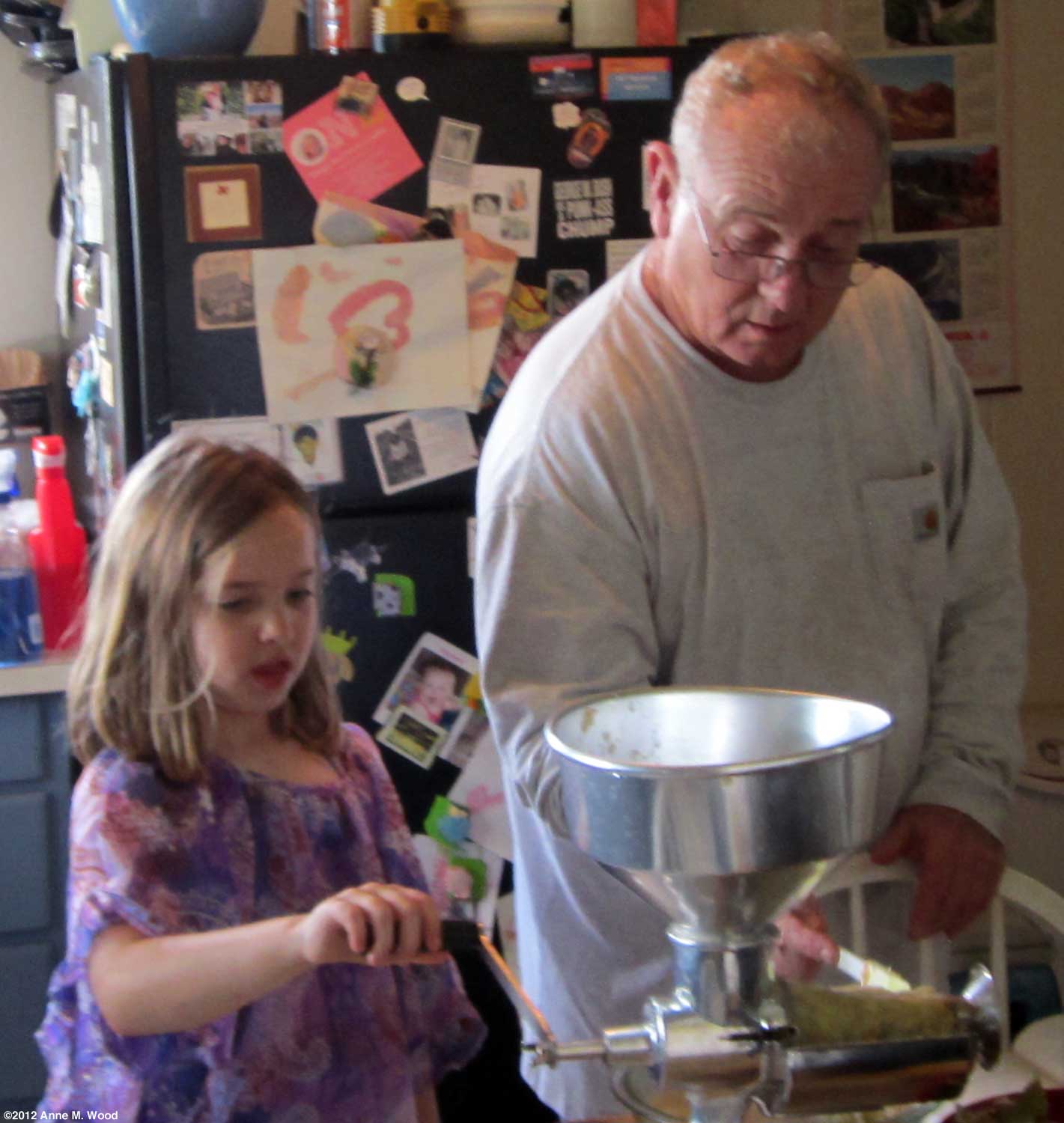
Our Squeezo is one I picked up used on eBay, as new ones have become terribly expensive (almost $200). But Squeezo Strainers are still made in America and are considerably better built than some of the cheaper alternatives. For making applesauce or straining tomatoes, a tool like this one is a real time saver. While you still need to cut bad spots out of apples to be processed, the Squeezo eliminates coring and peeling the apples. One does still need to steam the apples a bit to soften them before straining, but that just adds the wonderful fragrance of cooking apples to the kitchen.
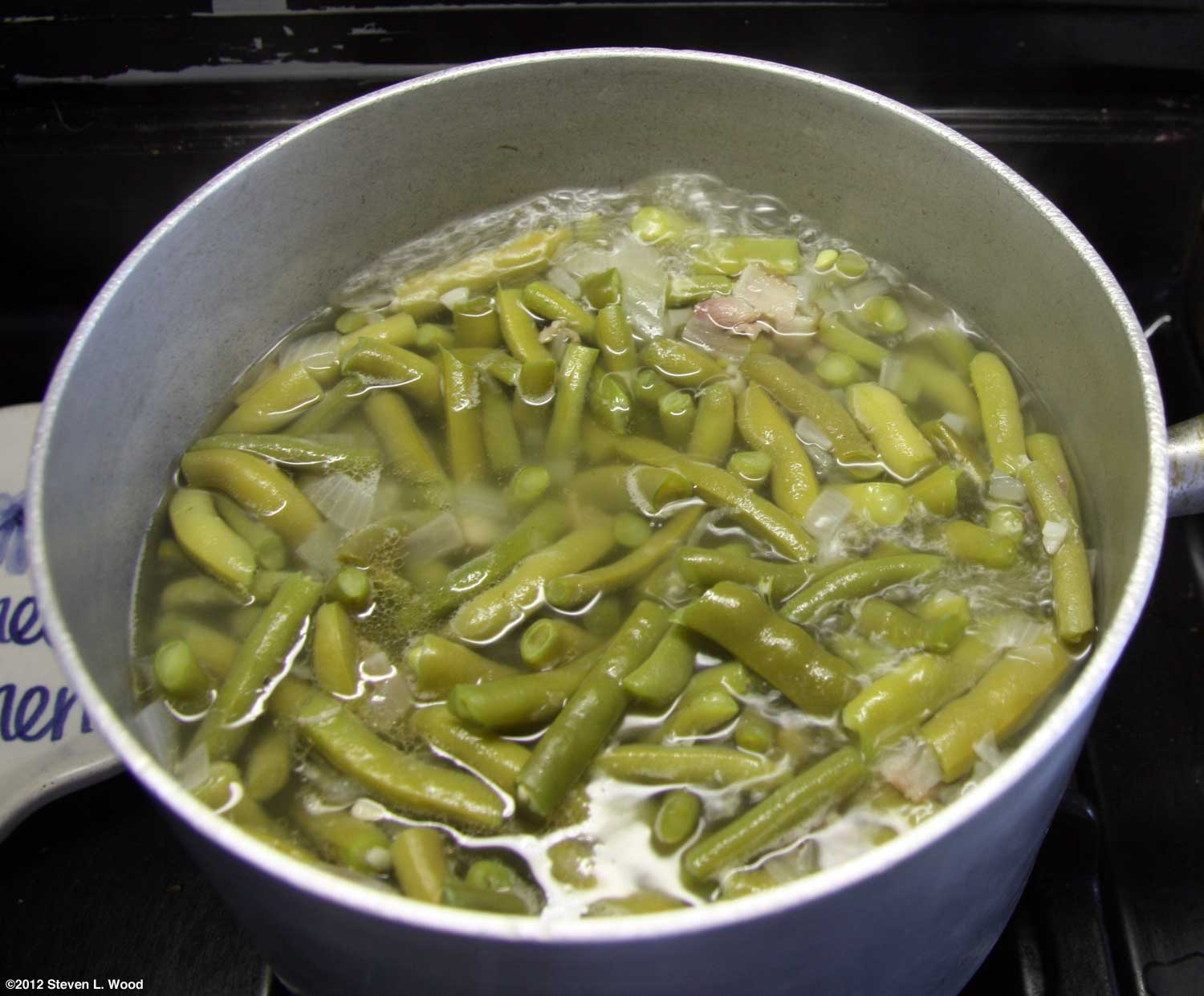
Annie and I snapped beans as we watched the Colts game this afternoon. While the Colts first regular season game with quarterback Andrew Luck was just so-so, a sample of the beans snatched from the cooking pot tasted great. We also picked a bunch of green and red bell peppers after the game. Our one plant of yellow peppers is lagging behind a bit in ripening completely yellow peppers, but our reds are cranking out lots of quality peppers. I really didn't look at our East Garden today. I knew if I did that I'd find hours of work that needs doing. While I enjoy gardening greatly, it's not often one gets to watch a football game with a beautiful woman! Our gardening season is winding down quickly. We're getting some rain from time to time, so things have greened up a good bit. But cooler temperatures have slowed ripening of crops as we move towards an expected first frost in early to mid-October. Our watermelons aren't quite as flavorful now, and our tomatoes seem to be taking forever to ripen. Our lawn has greened up with the rain and mowing is once again a weekly or more often job. When I mowed the field around our East Garden last week, it quickly became obvious that I'd put down more "hay" than our old lawn sweeper could handle. It had been regularly throwing a drive chain for years, but last week started doing so about every other trip. Since its grass/leaf bag and wheels were also about shot, I ordered a new, larger lawn sweeper last Friday from Sears.
The new sweeper uses a toolbar hitch, rather than the heavy duty tubular design of my old one. I now have a box of heavy steel tubes in a box to go to the scrap yard, so the old sweeper will deliver one more time. And the new unit handled the heavy layer of grass clipping hay pretty well.
An email from the Seed Savers Exchange today related that their webinar for September is on Tomato Seed Saving. While we have a pretty good online feature on Senior Gardening on Saving Tomato Seed, I went ahead and signed up for this one to pick up whatever new information I can. It will be held on September 27, 2012 at 7:30 P.M. (CDT). Previous webinars are available on the SEE Webinar page. Tuesday, September 25, 2012 - Canning Green Beans!
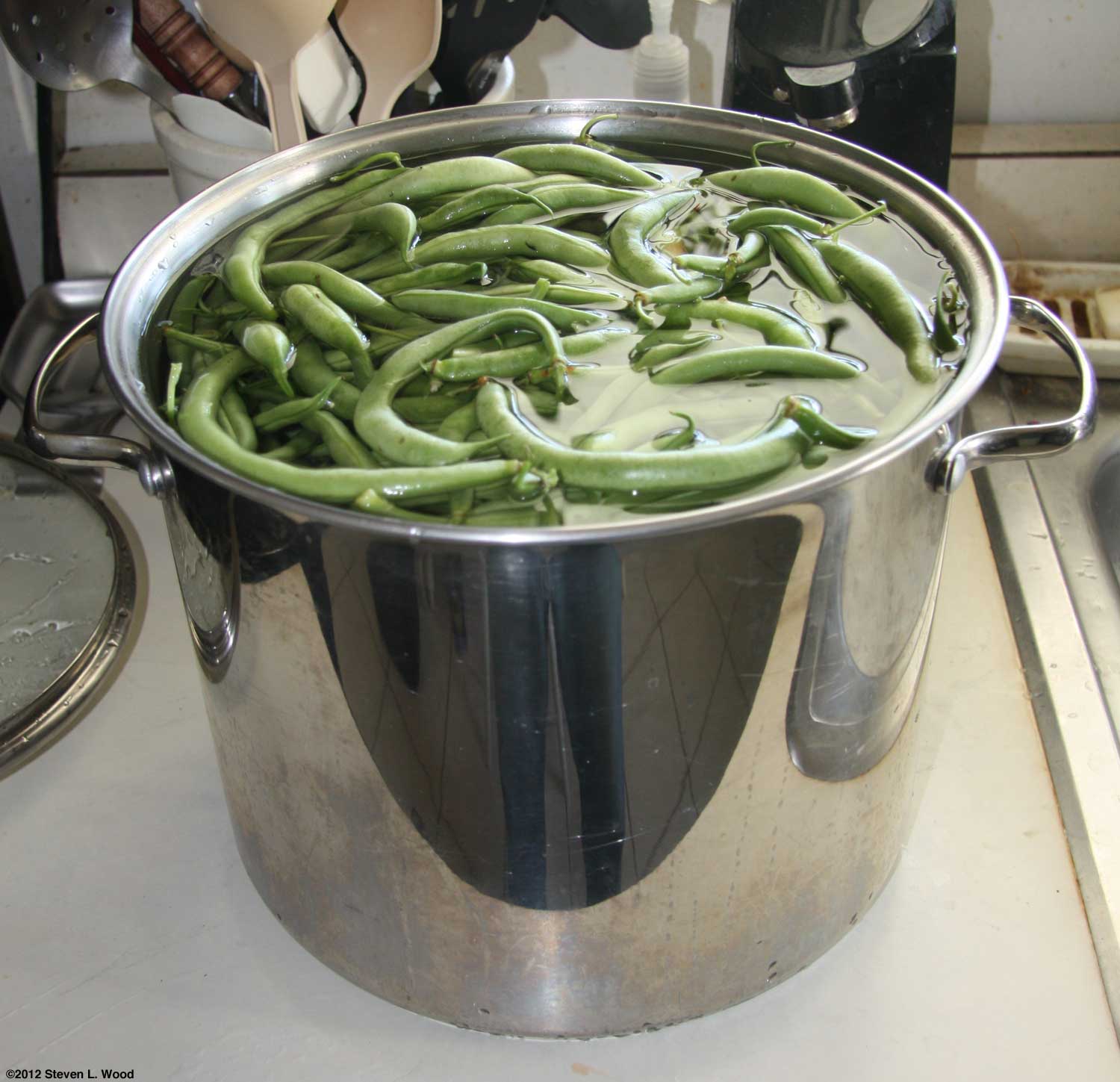
The one jar pictured at right with the white plastic lid didn't go through the canner, as we'll be having those beans with our supper tonight. I ran across some regular and wide mouth plastic lids for canning jars Sadly, these green beans weren't grown organically, as I did some really bad planning in when and where I planted them. They went into the ground in August when insect populations were reaching their height. And they were planted near a soybean field. I think every bug in the soybean field stopped by for a change of pace taste of green beans. A better plan would have been to plant early before insect populations got going and organic controls might have been effective. I also could have planted our green beans in our East Garden which is over a hundred yards from the soybean field. With crop rotation, the soybean field will go back to field corn next year, so we shouldn't have the same level of insect pressure on green beans grown in our main garden. But this year's experience is something I need to remember (It's happened before!) when the field goes back to soybeans. What a Surprise! The thermometer took quite a dip Sunday night, reminding me that our first frost can't be all that far away. Since a frost advisory had been posted, we picked tomatoes, peppers, and green beans just in case things got really crazy overnight. I didn't cover any plants, as I'm actually ready for a fairly miserable gardening season to be over. And as it turned out, the temperature bottomed out at around 35o early Monday morning. It was enough to require a light scraping of windshields, but not quite low enough to do much damage to our remaining crops. But that killing frost will come... With the drought this summer, I really didn't plan for our usual fall garden this year. The last few years we've had good crops of fall broccoli that can tolerate a light frost. We've also been able to grow great fall lettuce and spinach with a variety of season extenders (floating row covers, a cold frame, and even old blankets anchored over the crops on cold nights). Getting past an early frost or two often extends the growing season by several weeks. With the mild winter last year, our row covers enabled us to pick lettuce and spinach right up until Thanksgiving!
Dave's Garden also has a handy page where you just enter your zip code to get the average last and first frost dates in your area. When I first started gardening in Indianapolis, I called our extension service and was told that the easy way to remember the last and first frost dates there was "5-10 and 10-5" for May 10 and October 5. While not exactly accurate, it was an excellent memory trick to make the approximate dates stick in ones head. I'm still thankful for the ingenuity of the extension agent there. Where we live now, the season is actually a bit longer, with a last frost date of around April 30 and a first frost date of approximately October 15. And of course, last and first frost dates are just climatic averages. We've had frost damage in mid-may and late September. But the point is that knowing your frost dates can help one effectively plan for early and late plantings with some degree of accuracy. If you, like me, didn't try for a fall garden this year, there is an advantage in it. Not having to work around late crops may allow one to get a head start in good weather on garden cleanup and soil preparation for the next gardening season. I plan to get our potatoes and the remaining vining crops out of our East Garden in the next week or so and thoroughly till the whole area. The half of the East Garden that will be rotated out next year may get seeded yet this fall to a cover crop. Thursday, September 27, 2012 - Now the Rain Comes It's raining again today. I emptied a couple of inches of rainfall from the last two days out of our rain gauge this morning and wondered a bit about how much rain we've actually received this month. (I haven't been keeping records on it.) The local Weather Underground reporting station we use most shows just over four inches of precipitation for the month, but they appear to have missed one heavy shower we got a week or so ago. When I checked a ways both east and west of the Wabash River, my suspicions were confirmed. I found nearby weather stations reporting over seven inches of rainfall for the month! Taking advantage of the wet, cool weather, I got out and overseeded parts of our lawn this morning. Fall is an ideal time to get new grass seed started.
With the gardening season waning, I realized last weekend that I hadn't frozen any peppers yet this year. We wash our peppers, core and seed them, and cut them in half before washing them again in preparation for freezing. Once the peppers dry, we just slice them and spread them out on a cookie sheet greased with a thin layer of spray olive oil and pop them into the freezer. Blanching doesn't seem to be necessary for peppers. We bag the peppers in either quart (as shown at left) or gallon freezer bags. Whole peppers that have been cored, seeded, and washed can be frozen the same way for stuffed peppers. We do get a bit of freezer burn on the bagged peppers the longer they're stored, but they sure beat buying expensive bell peppers in the winter and spring. After dumping garden refuse on our compost pile near our East Garden last evening, I remembered I'd forgotten to do a bit of picking this week. We had two Howden pumpkins ready to be cut, with three more still ripening on the vines. There were also a half dozen Black Beauty We're also still getting a few Sugar Cube cantaloupe and an occasional honeydew melon. The honeydew pictured is a Tam Dew, the last of them on the vine, but we have several Passport melons on the vine that may just ripen before our first frost. With all the rain, I'm behind on mowing...again. Once things dry out enough, I'll have several days worth of mowing and raking to do. Fortunately, our mower is in great shape, as I had the John Deere service truck out to do our annual checkup and tuning of the mower. While I can do everything the service guy did, he daily looks for worn belts, bent parts, etc. that I would probably miss. He also delivered a new "toy" that I'll write about next month.
Sunday, September 30, 2012 - Drought Continues in the Plains
Our area is still listed as being in a "moderate drought," but recent rainfalls should considerably improve the next U.S. Drought Monitor report. But as I looked at the current drought map, I was struck with how much of the plains area of the U.S. is still in the "Drought - Exceptional" classification that defined our situation most of the summer. The 12-week animation at left gives one a good idea of areas moving out of the most severe classification (brown) and those still experiencing some really devastating conditions. It makes me glad I'm just a gardener and not a farmer relying on good growing conditions for my livelihood. While the chart at right shows a monthly total of 4.59" of precipitation for September, the reporting station I use is around six miles south of us. We actually have received significantly more rainfall here at the Senior Garden, estimated at around 6-7" or so. Saving Tomato Seed Feature Updated I took part in the Seed Savers Exchange's Tomato Seed Saving webinar on Thursday and gleaned a bit of information to update our Saving Tomato Seed feature story. From the rather poorly organized and executed presentation, I learned that drying seed on coffee filters may eliminate the problem of dried seed adhering to the drying medium, usually paper towels. But the experience also got me looking on YouTube for some good tutorials on the subject which I added at the end of our feature story. Digging Potatoes I finished up digging our Red Pontiac potatoes today. While the digging produced lots of "new potatoes," there weren't many large enough to store for boiling potatoes for the winter. The Red Pontiacs seemed more affected by the drought than our row of Kennebecs which still look pretty good for this time of year.
After digging the row of potatoes, I saved some zinnia seed for next year. I was reminded to do so by the many volunteer zinnias that had come up in the row of Red Pontiacs.
One of the bright spots in our East Garden these days is our hill of two pumpkin plants. I sent two ripe pumpkins home with grandkids yesterday, but today noticed we had four more good sized pumpkins coming on. From Steve, the
at Senior Gardening |
|||||||||||||||||||||||||||||||||||||||||||||||||||||||||||||||||||||||||||||||||||||||||||||||||||||||||||||||||||||||||||||||||||||||||





 , I set about freezing all of our cull carrots today. These are the carrots that got broken during harvest, had bad spots, including some munching by bugs, or in some way showed signs of not storing well.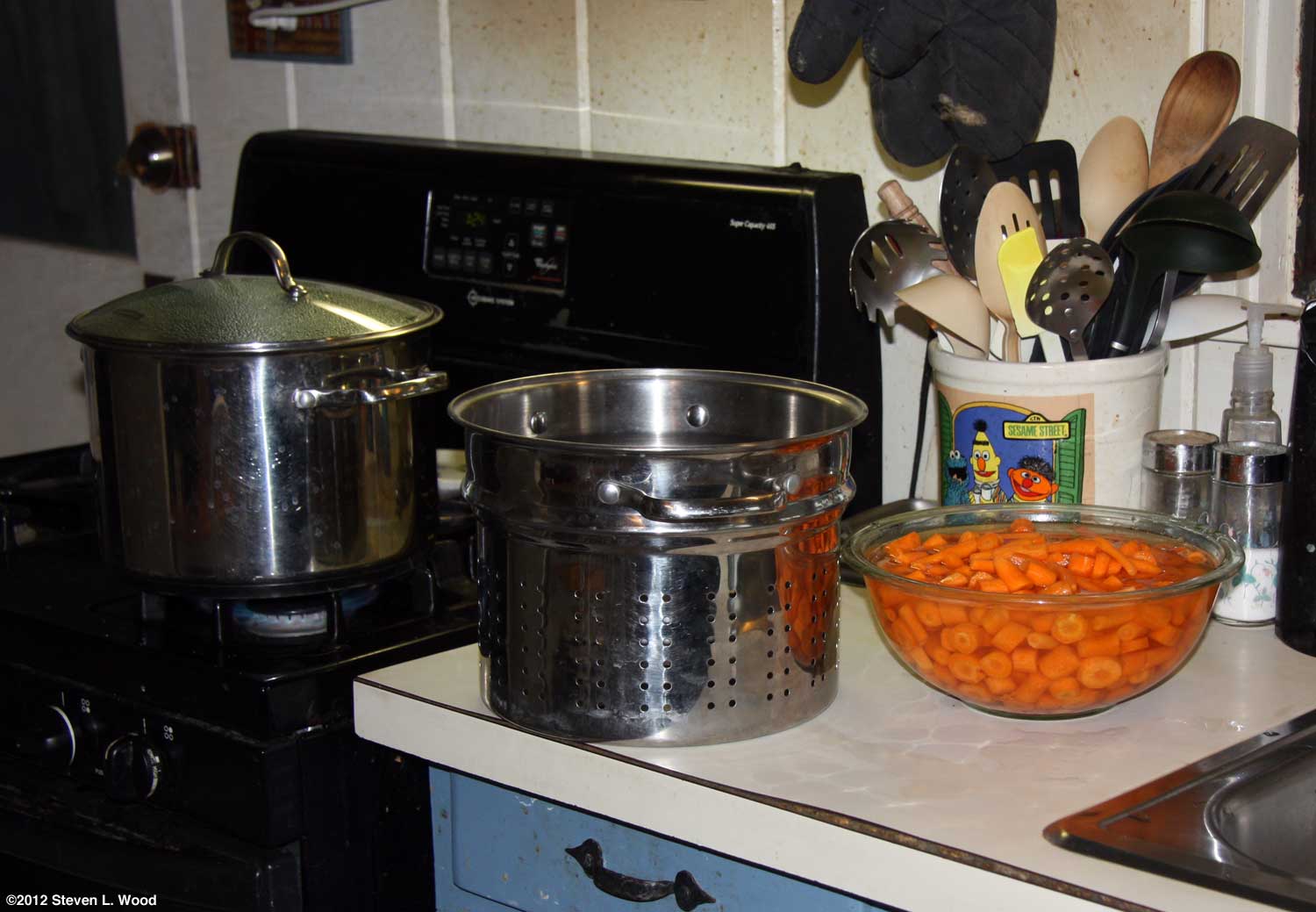


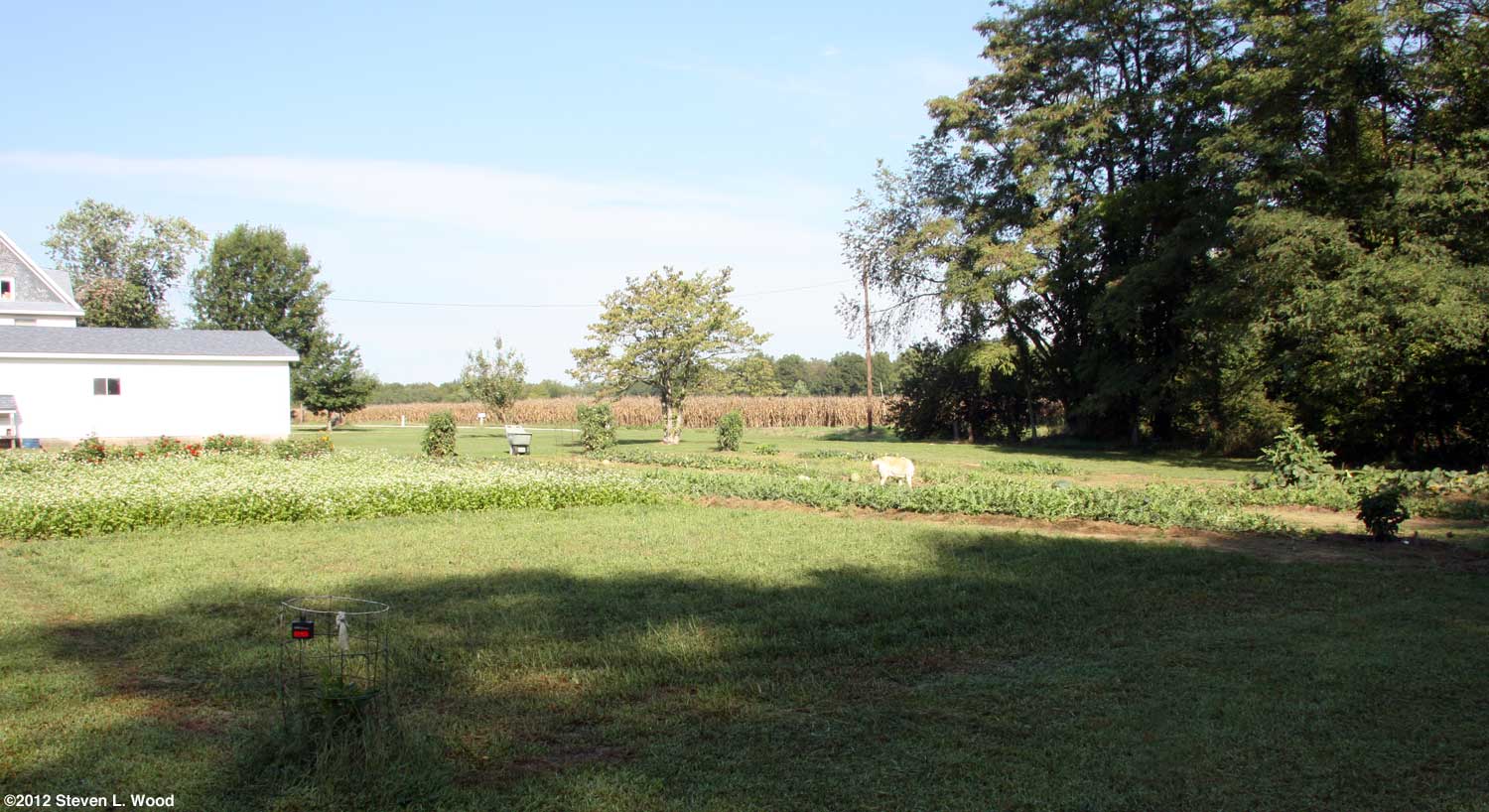



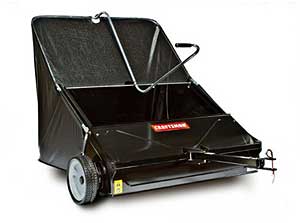
 I spread assembly of the new sweeper over two days, putting together the sweeper head and hitch one evening and the sweeper bag the next morning. As one might expect, the printed directions weren't wholly adequate, but the manufacturer, Agri-Fab, had

 on closeout sale somewhere a few years ago. I've found them to be excellent for jars of canned pickles and beets and such that one leaves in the refrigerator for a time. The plastic lids don't get rusty as canning rings are prone to do in a fridge.
 Our NWS office supplies a nice web page about


 Since the long term weather forecast doesn't show much chance for frost in the next ten days, I mulched the remaining row of potatoes with grass clippings. The clippings have had a chance to cool down and shouldn't burn the potato plants, as they were around one of our rows of cantaloupe, which are quickly giving up the ghost. I've already pulled several hills of vines and immature fruit and composted them.
| Affiliated Advertisers |
©2012 Senior-Gardening.com