One of the Joys of Maturity |
|

| Affiliated Advertisers |
The Old Guy's Garden Record
Clicking through one of our banner ads or some of our text links and making a purchase will produce a small commission for us from the sale.
I'd left our old compost pile alone, hoping to screen some compost for transplanting things into our East Garden plot. But with time running short, I've decided to transplant a couple of pots of butternut squash into the area, as they may have just enough time to produce some squash. We're starting August with a rainy day. It rained a bit this morning, and we have thunderstorms as I write this afternoon. More rain is predicted overnight.
|


|
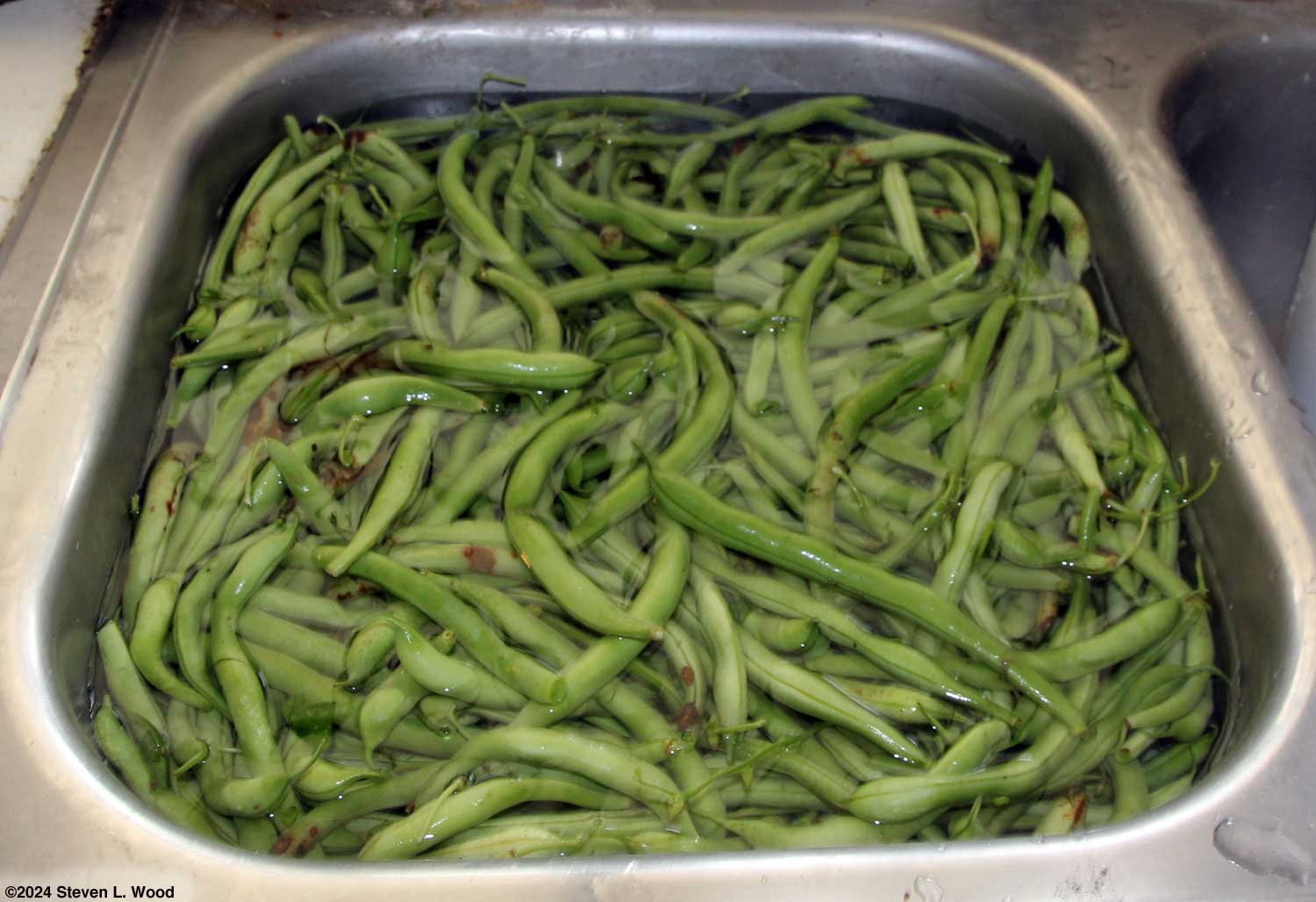
Washing and snapping the beans took another hour or so…only because Annie pitched in and helped snap the beans. As with lots of third pickings, there were lots of bad spots on the beans to be snapped out. Disease, rot, and bug damage were all present. But having grown the beans early, and with the farmer spraying insecticide on the soybeans growing near our beans, we didn't have to spray our beans this time, making them pretty much an organic crop. (Never mind the fertilizer I put down before planting.
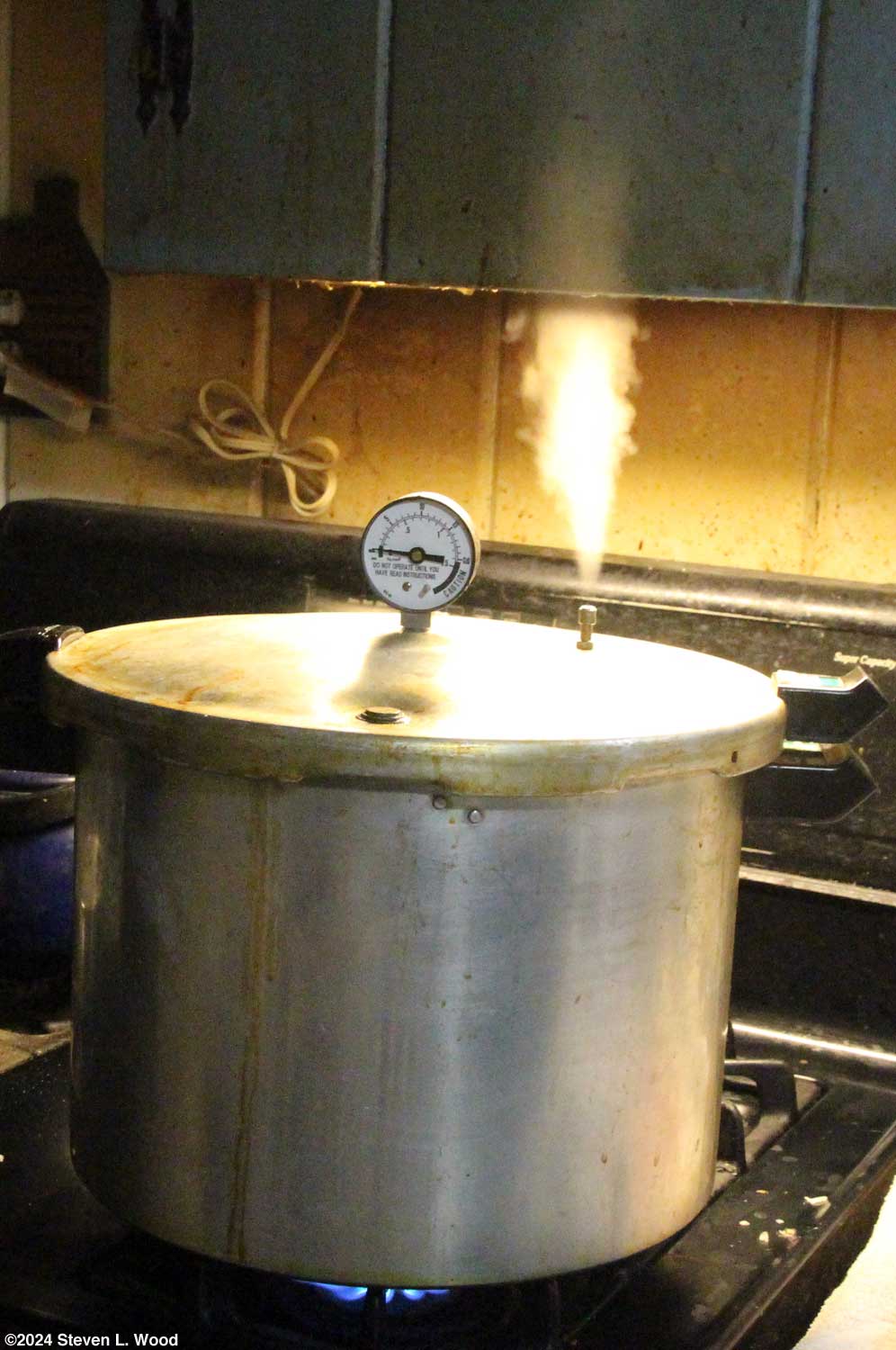
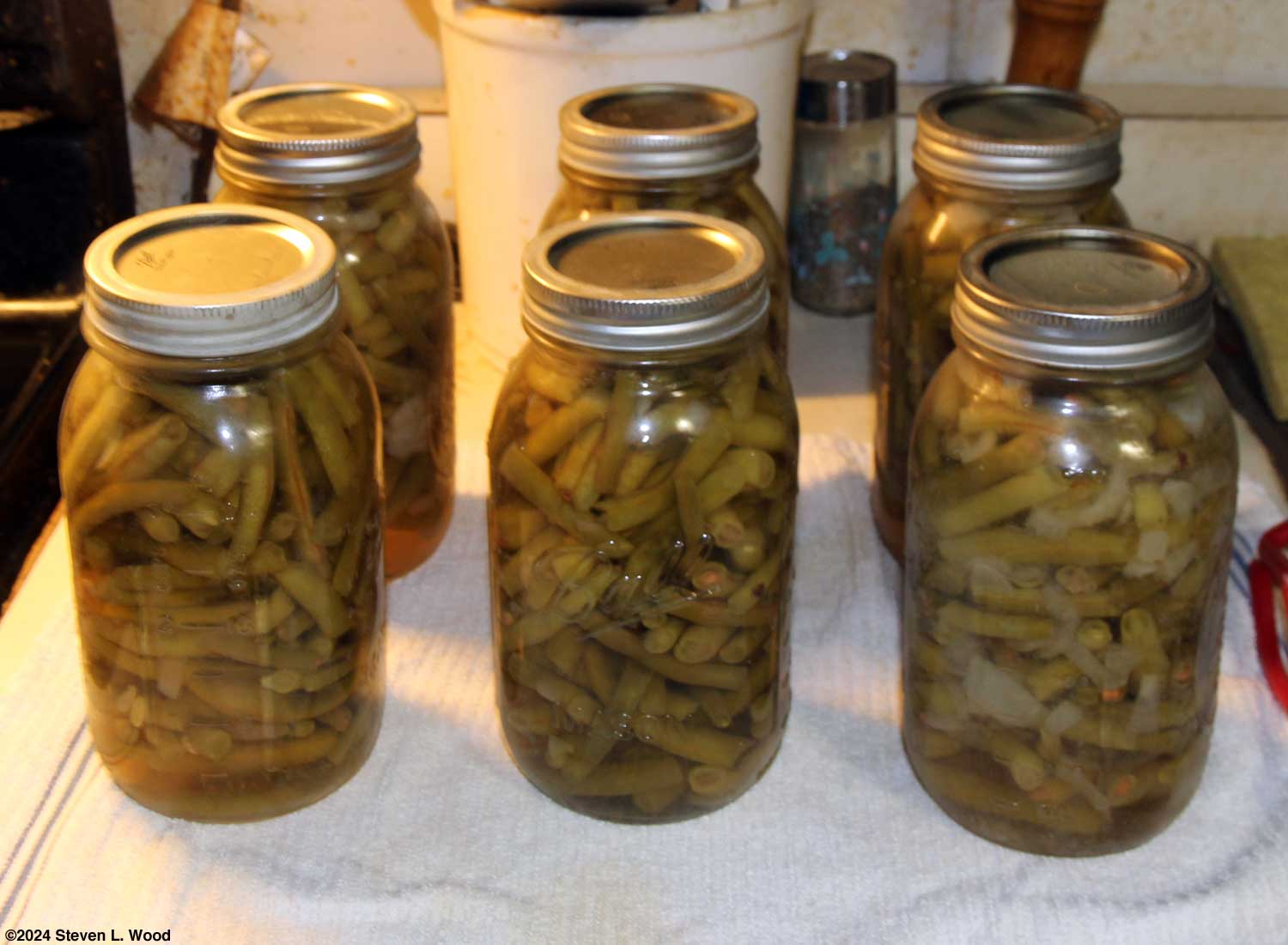
Safety Note: I love green beans flavored with added bacon or ham. But adding any meat to a vegetable canning pushes the canning time for quarts from 25 to 90 minutes. Researching adding bacon to our beans, I found several irresponsible web sites still saying the canning time with meat added was twenty-five minutes. That's flat out wrong and dangerous! This picking made six quarts of canned green beans with some left over for a snack. That's a lot of work for what at the grocery would cost under twenty dollars. But this batch included six varieties of beans, mostly organically grown. The flavor of our canned green beans is unexcelled by any commercial product. A Political Comment While picking beans in ninety degree heat with extreme humidity, I remembered something I'd read on NPR: Florida blocks heat protections for workers right before summer. Farm and field workers had sought "paid rest breaks, water, and access to shade when temperatures soar." Both Florida and Texas have passed legislation prohibiting such protections. From the NPR posting: "Ron DeSantis has signed a law that prevents cities or counties from creating protections for workers who labor in the state's often extreme and dangerous heat. Two million people in Florida, from construction to agriculture, work outside in often humid, blazing heat." That's just wrong!
The driver who returned our thirty year old MTD tiller from the shop had gotten it to start easily. Since then, I followed his directions with no success. As a last ditch effort, I tried again yesterday afternoon. I pulled the air filters and gave the carburetor a little starting fluid. I didn't turn on the choke. And alas, the tiller turned over on the second pull of the starter cord. I took it out to the East Garden and tilled up and down between a couple of our corn rows. While the tiller was working well, my legs and back weren't, so I quit for the day. I did three more rows today before the 90°F heat and my weary legs said to stop. There's lots more to be tilled, but I have time. We're into another very hot, dry spell that may last until at least the middle of the month. So I may have saved myself around $600 for now. At 76 years of age, I'm a bit adverse to buying expensive new equipment.
With our ancient rear tine tiller running again, I hope to get our East Garden and main raised bed cleaned up a bit. Succession plantings of fall kale, spinach, and carrots is an iffy proposition with the dry weather conditions. And...I've gotten awfully comfortable with sitting inside in air conditioned comfort afternoons switching between watching MSNBC and the Olympics. I used our Greenworks weedeater to knock down the tall grass between the rest of our sweet corn rows, kidney beans, and potatoes today. I would have liked to do more, but I’d let our lawn get really out of control and had to begin mowing.
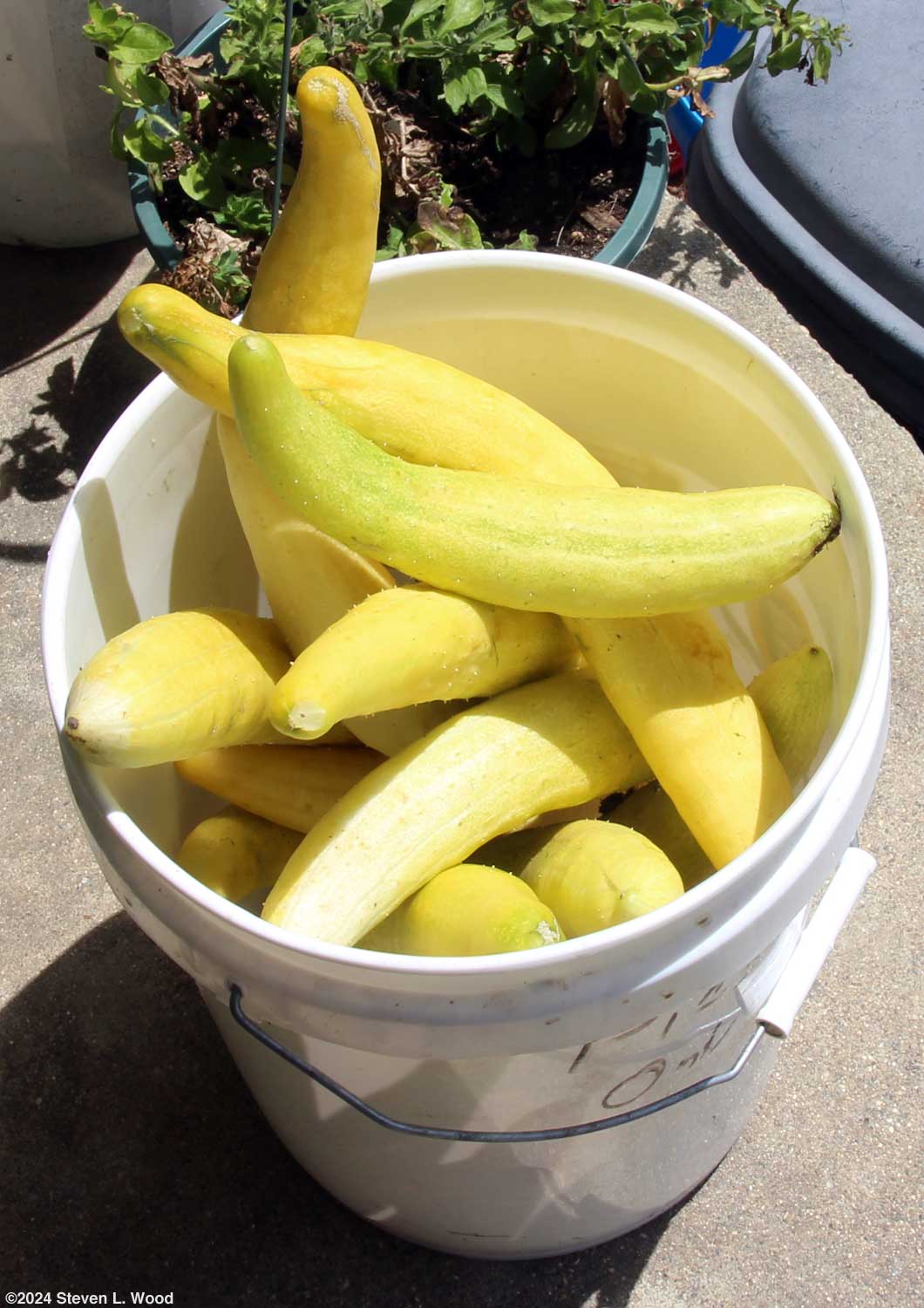
The only real gardening I did was picking around fifteen yellowed Japanese Long Pickling cucumbers for seed saving. The cukes went onto our drying/curing table in the garage to cure for about a week before I save seed from them. While there wasn't much water in our rain barrel, I drug its hose out to the cucumber row. The plants have been day wilting. I'll probably need to water them with the hose as rain isn't in the forecast until the middle of next week. I sorted through the groundfall apples I've been picking up and wondered if there were enough good ones ripe enough to make an apple pie. The washed apples are sitting in a tray on our dining room table. I've read that apples can ripen a bit after picking. So I'm dreaming of warm apple pie à la Mode.
Stuck inside, I saved and froze our first batch of Earlirouge tomato seed of the season. Its germination test was only 60%, about 20% less than our standard for seed sharing, but still good enough for us to use for starting transplants. I also started saving seed from another batch of Earlirouges. I used only five fairly large (for the variety) tomatoes, but just that should produce hundreds of seeds. BTW: The Turtle Tree Seed Initiative offers good Earlirouge (and Quinte) tomato seed developed from seed we gave them years ago.
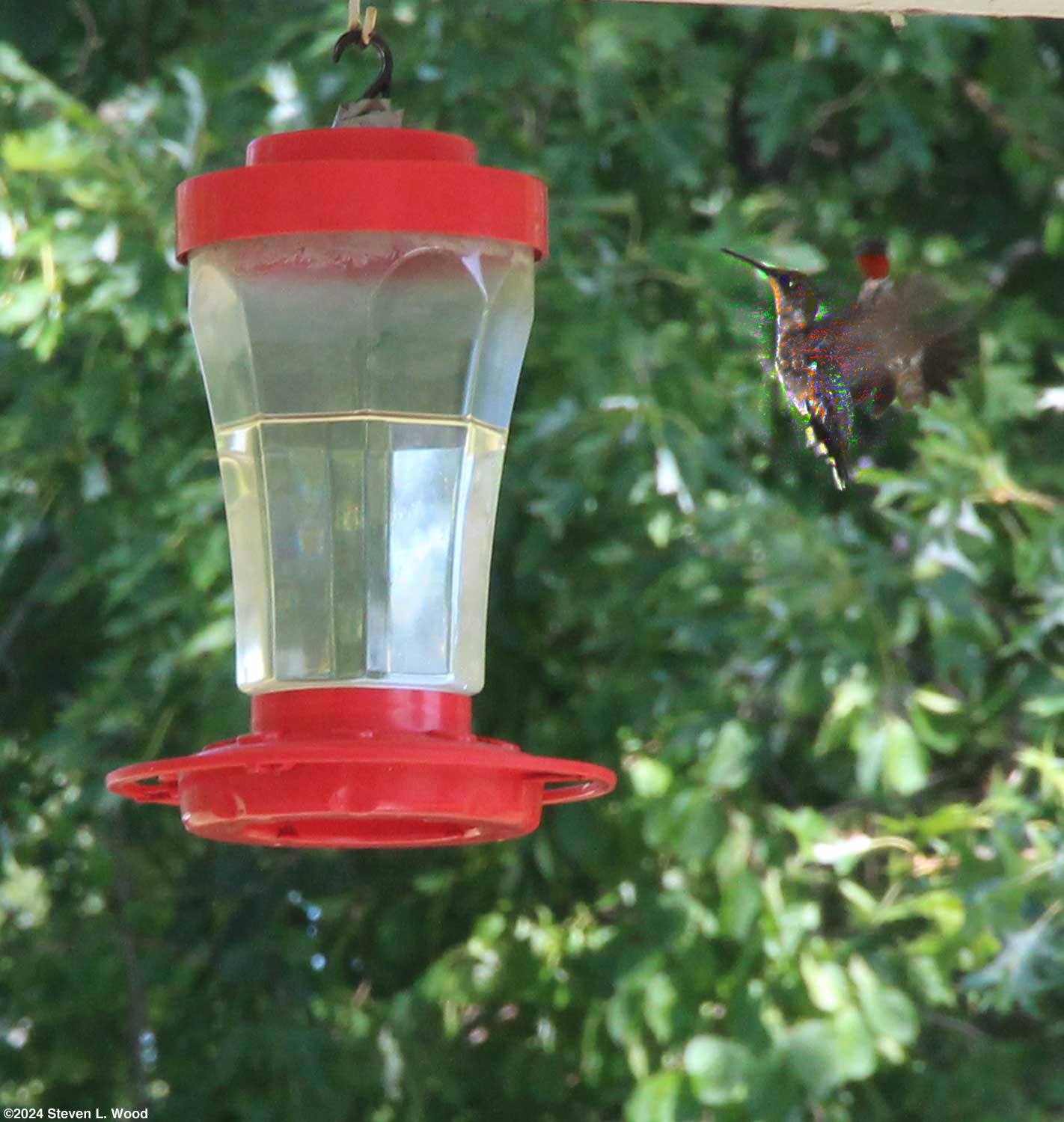
I've also begun increasing the sugar content in the nectar we usually mix at a 4:1 water to sugar content. Some of the tiny birds will begin migrating south this month and will need to put on some extra weight before the long trip. I watered our cucumber vines both last night and this morning. They'd been day wilting. I also pruned back vines that had overgrown our parsley plants along the edge of the bed. We have lots of good pickles in storage and some relish, but are almost out of dried parsley. I need a bumper crop from those parsley plants. And while pretty much stuck inside, I started a small pot of gloxinias. Our plants that usually produce a glorious bunch of blooms on our dining room table by this time of the year aren't doing well. Very few of last year's plants have emerged from their annual required period of dormancy. I'm guessing that the poor gloxinia production is related to what happened to many of our transplants. When I washed and sterilized pots and trays last year, I didn't get the trays rinsed out well enough and some bleach residue probably remained. So a new planting should be up and producing blooms in about five months. And of course, I've not been using bleach when washing out our pots and trays anymore. And I'm fortunate to have lots of good saved gloxinia seed in the freezer from previous years.
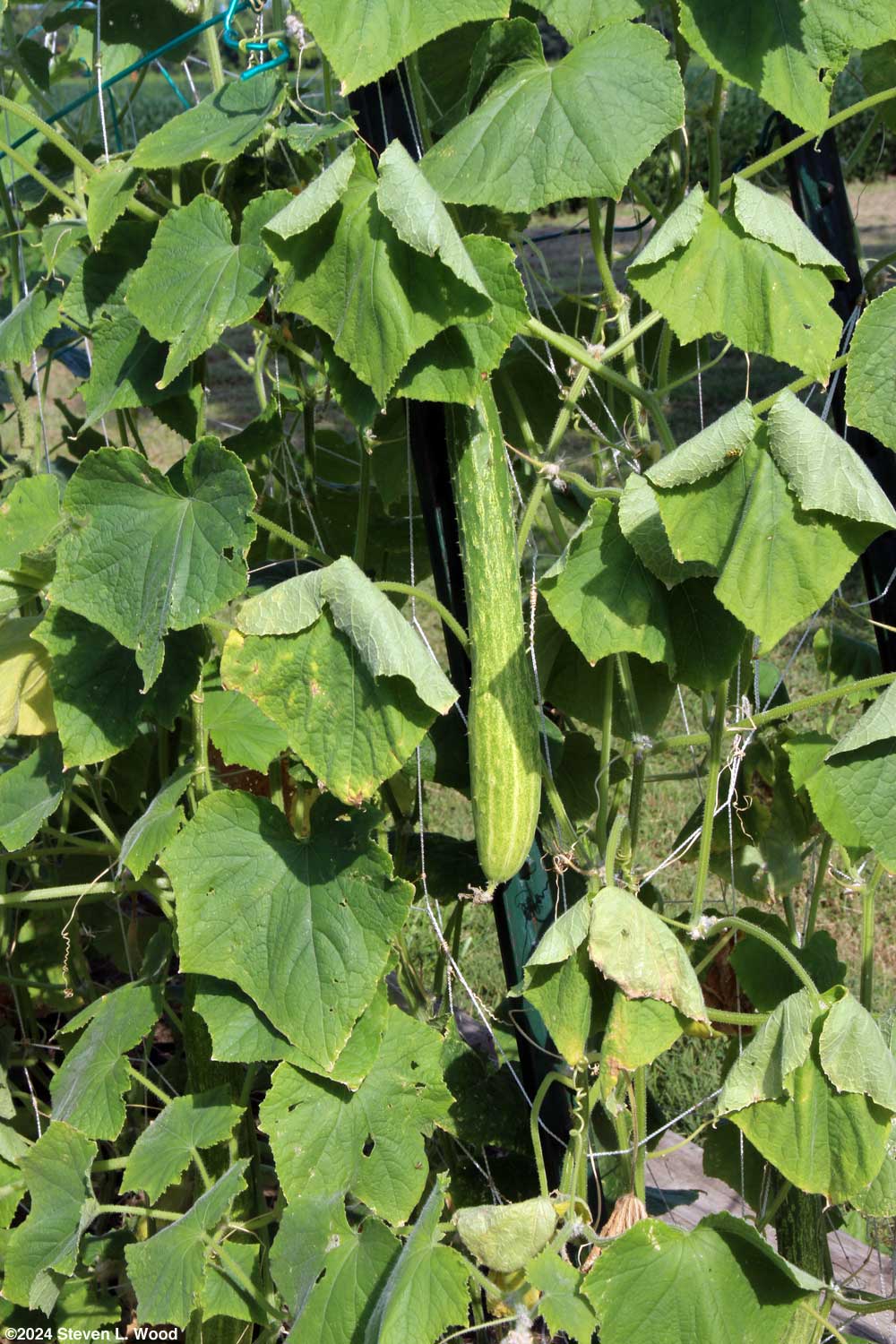
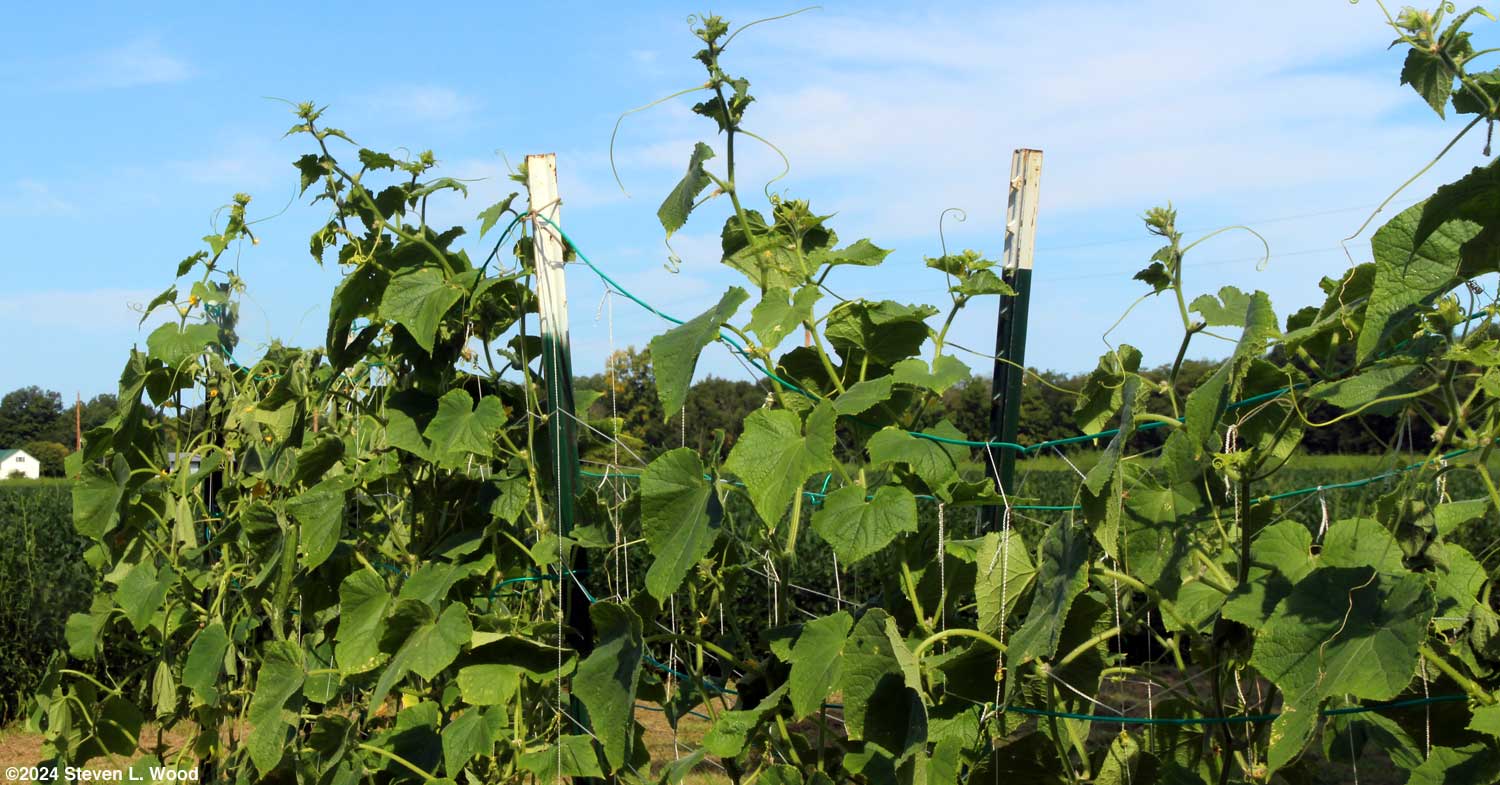
The JLP vines are aggressive growers. As I wrote yesterday, I had to trim back some of the vines that had overgrown our planting of parsley. By this morning, I could see that my pruning had only done minor damage to the cucumber plants. The vines are now outgrowing the double trellis they grow between. The trellises are five feet tall, with the vines now pushing about a foot above the top of the netting. This planting of JLP cucumbers is a succession planting. It's growing between the trellises that supported our early peas. With a 60 days-to-maturity rating, such successions are easily possible with this variety. In our recipe for Sweet Pickle Relish, I give two versions, using just six of the cucumbers for a small batch and another using twenty-one of the cukes for a big batch of relish.
While I'm promoting the Japanese Long Pickling cucumber variety for making pickles and relish, I need to add that they are just so-so for fresh use in salads and such. There are lots of other more compact growing varieties that are great for fresh use but possibly so-so for canning pickles and relish. With my shoulder, arm, and neck feeling much better today, I hope to mow the field next to us. I may even try using the weedeater to knock down some rampant weed growth in our main raised garden bed.
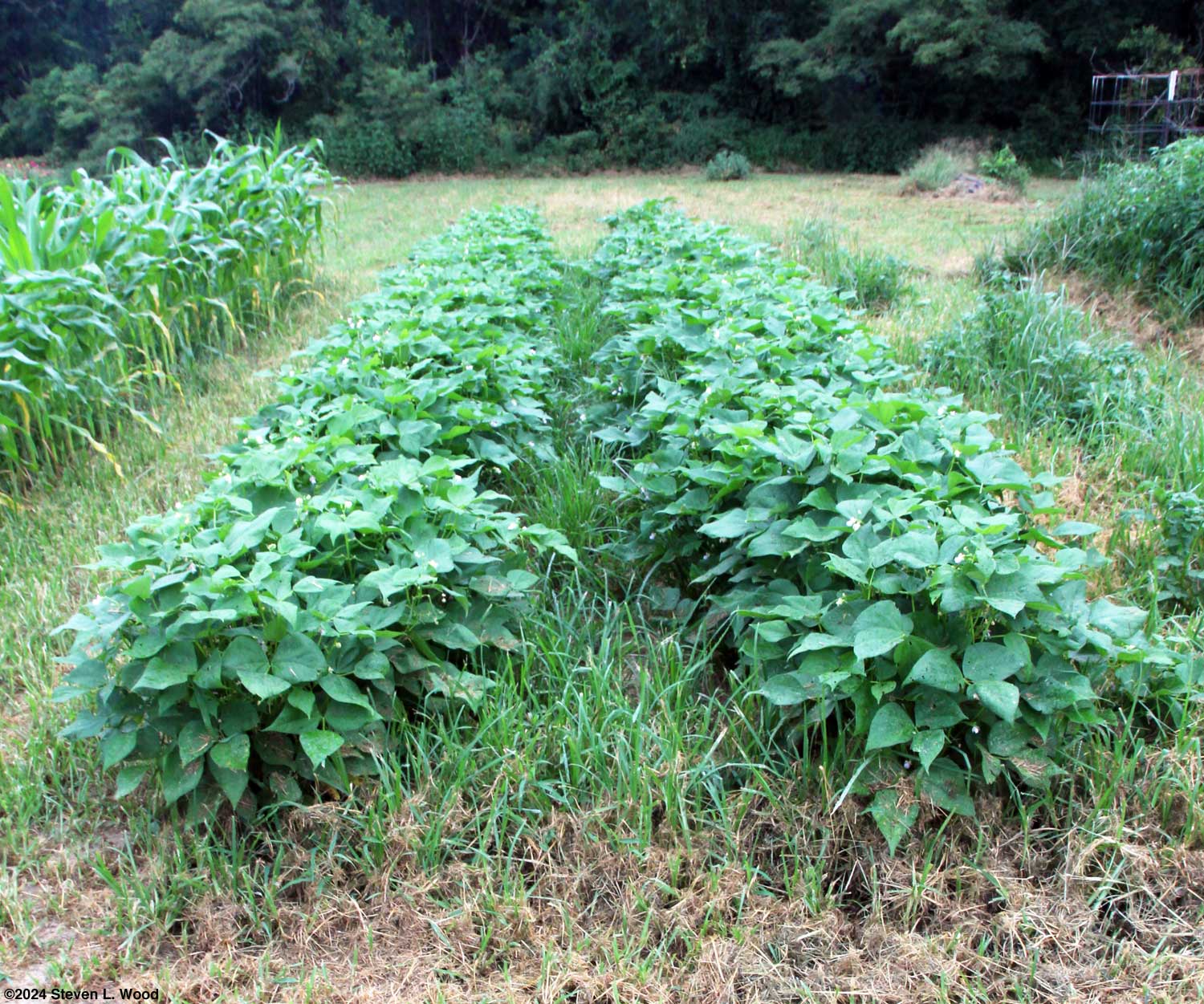
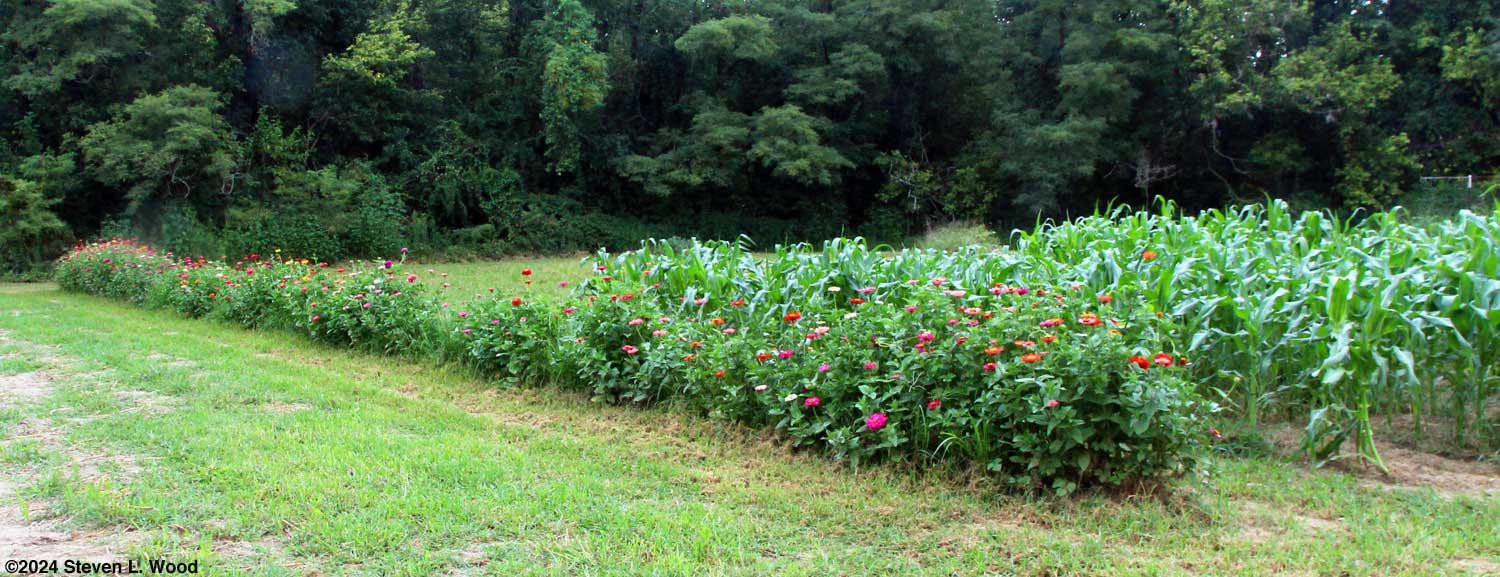
I've been a bit lazy of late while letting my neck, shoulder, and arm recover a bit from whatever I did to aggravate them. I did fertilize and rototill between a few rows of our sweet corn yesterday. With today's rain, the corn should really pop up a bit. I was happy to see that our two rows of kidney beans are now in bloom. We missed getting any kidney beans last season. We use the kidney beans for seed saving, canning for future use in Texas Nachos, Portuguese Kale Soup, and making Refried Kidney Beans. Our eighty foot row of zinnias are coming into bloom. They'll bloom until a frost kills them. And of course, I'll save seed from them for future plantings. Saving zinnia seed is really, really easy. You just pick the blackened blooms, let them dry on of cookie sheet indoors for a week or two, break the seed heads apart, and freeze the seed in Ziploc bags for future use.
My lovely wife, Annie, alerted me to a nice row of zinnias along the road on the back way into town. I'm not sure if our annual long row of zinnias influenced the planting, but it pleased me. When I went to look, I found three major plantings of zinnias along the road and in yards. Hurray for our somewhat distant neighbors on west Washington Street.
While some of the apples are still a bit green, others are ready for use. I've been researching how to properly store the apples and also how to make and freeze apple pies. A Martha Stewart article suggests that "the crisper drawer of your refrigerator is a great place to store them." They can last six to eight weeks there. If you're lucky enough to have a cool root cellar, "apples can last up to 10 months in it." Lacking such a cool root cellar and with today's rain, I'm considering making and freezing apple pies this afternoon! A Pie Academy posting, How to Freeze an Apple Pie Before Baking It, offers some good guidance.
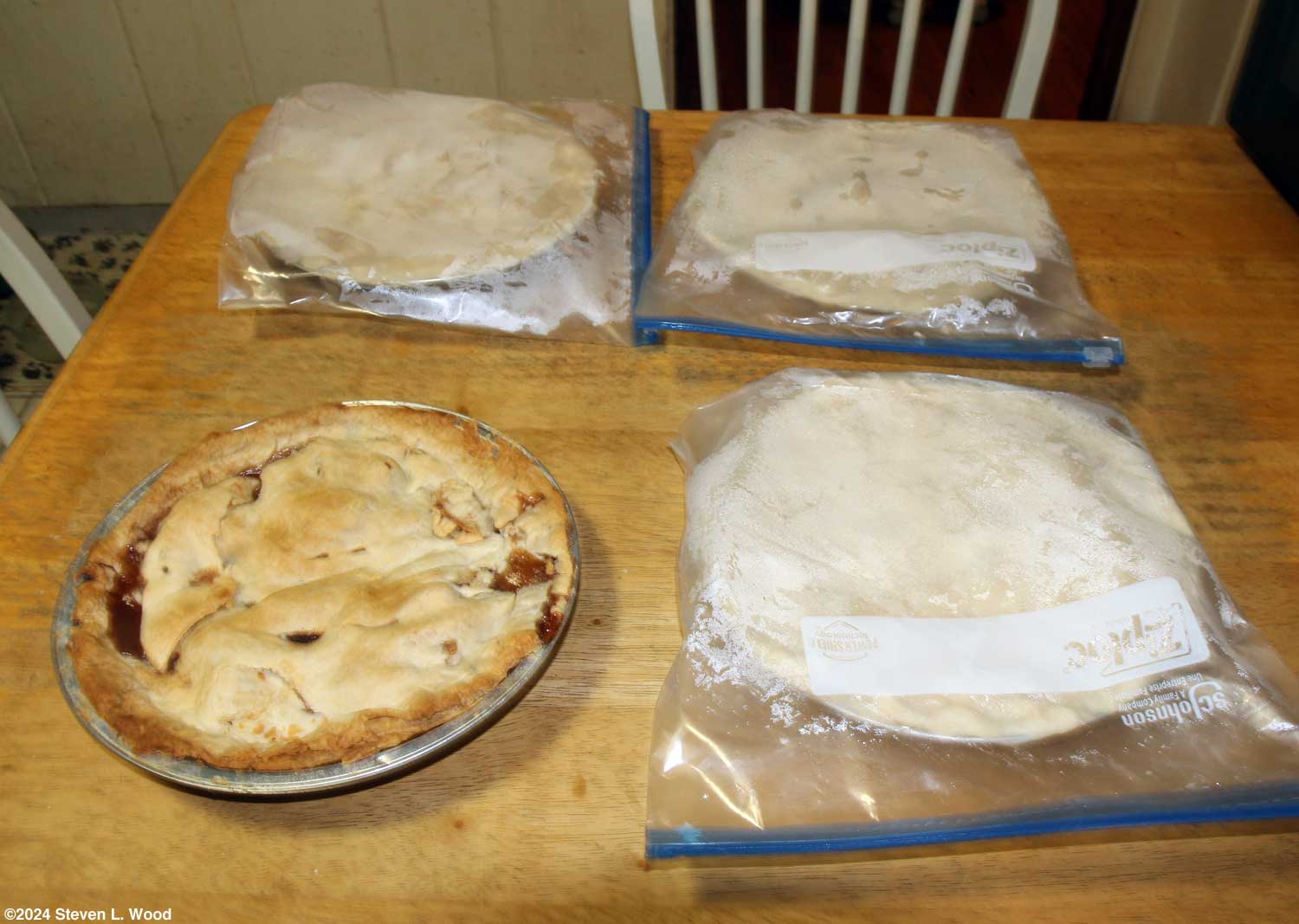
We had some strong thunderstorms roll in this morning at around 5 A.M.. We really needed the rain and got about an inch or so of it. When out trying to burn off our limb pile, I noticed that the storm had toppled over part of two rows of our sweet corn. I'm not sure if the damage came from a downdraft or from a sweet corn variety with little stalk strength. Fortunately, the rest of our sweet corn looked okay. Apple Pies Trying to trim down our tray of groundfall apples, I made apple pies today. I made four pies using the Pillsbury Perfect Apple Pie Recipe. Since I was using pie pans saved from Quiches from the Grand Traverse Pie Company, the recipe made more than a pan would hold, necessitating some modification of the recipe. For three pies, I followed directions from a Pie Academy posting, How to Freeze an Apple Pie Before Baking It, that offers some good guidance. A fourth pie got baked.
Two of the frozen pies will go to a couple of our daughters tomorrow. And even with making all the pies, I ended up with even more apples in our apple tray on the dining room table. At one point in the apple peeling, I got disgusted with cutting bad spots out of the groundfall apples and went out and picked more apples from our Yellow Delicious tree.
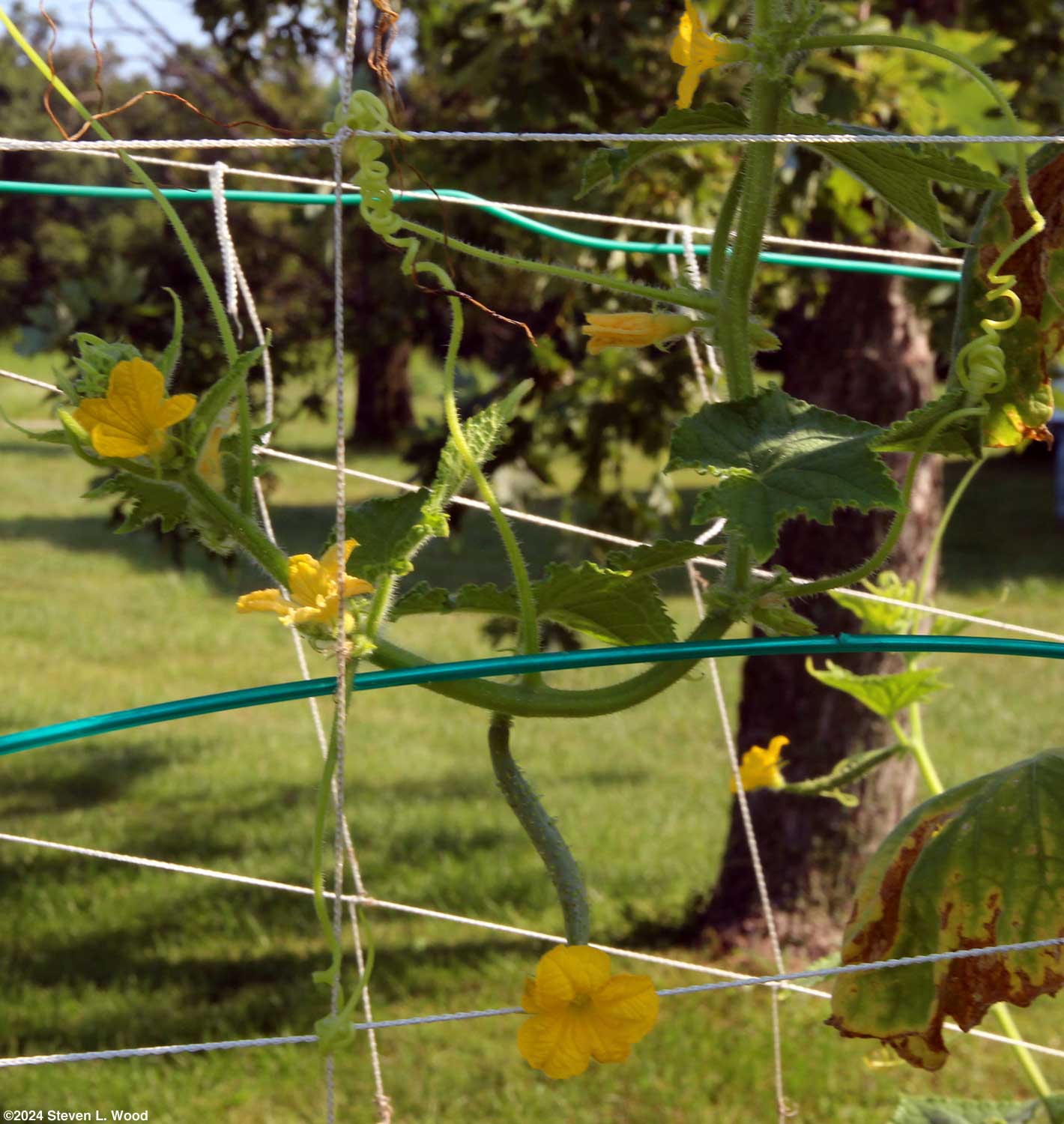
I've been a little frustrated with the production of our Japanese Long Pickling cucumber vines. They have set on and ripened cucumbers, but never enough at one time for me to make a batch of Sweet Pickle Relish. Our lack of rain has limited the vines despite frequent waterings. Hopefully, yesterday's rain will correct that somewhat. As I looked over the vines this morning, I saw a cluster of blooms high on the vines that may produce some nice long, straight cucumbers. Cleaning Up Our Main Raised Garden Bed
Next came pulling the dead and nearly dead broccoli and cauliflower plants. Since the brassicas had been heavily mulched with grass clippings, there weren't all that many weeds growing under them. With that done, all that was left in the bed were some flowers and our row of seven all-season Earliest Red Sweet pepper plants. I’d harvested a row of onions just outside the pepper row earlier this week.
I'm guessing that I'll need to rototill the bed twice to get it planting ready. That will take less than a week. With about sixty days from our first frost date, I may still have time to grow good crops of fall hardy carrots, kale, spinach, and lettuce.
When I was going into town today, I drove around our East Garden plot on the way out. I first noticed that the stalks of corn that had blown over in the storm were righting themselves! I really like the taste of the Enchanted variety that blew over, but wonder about its durability.
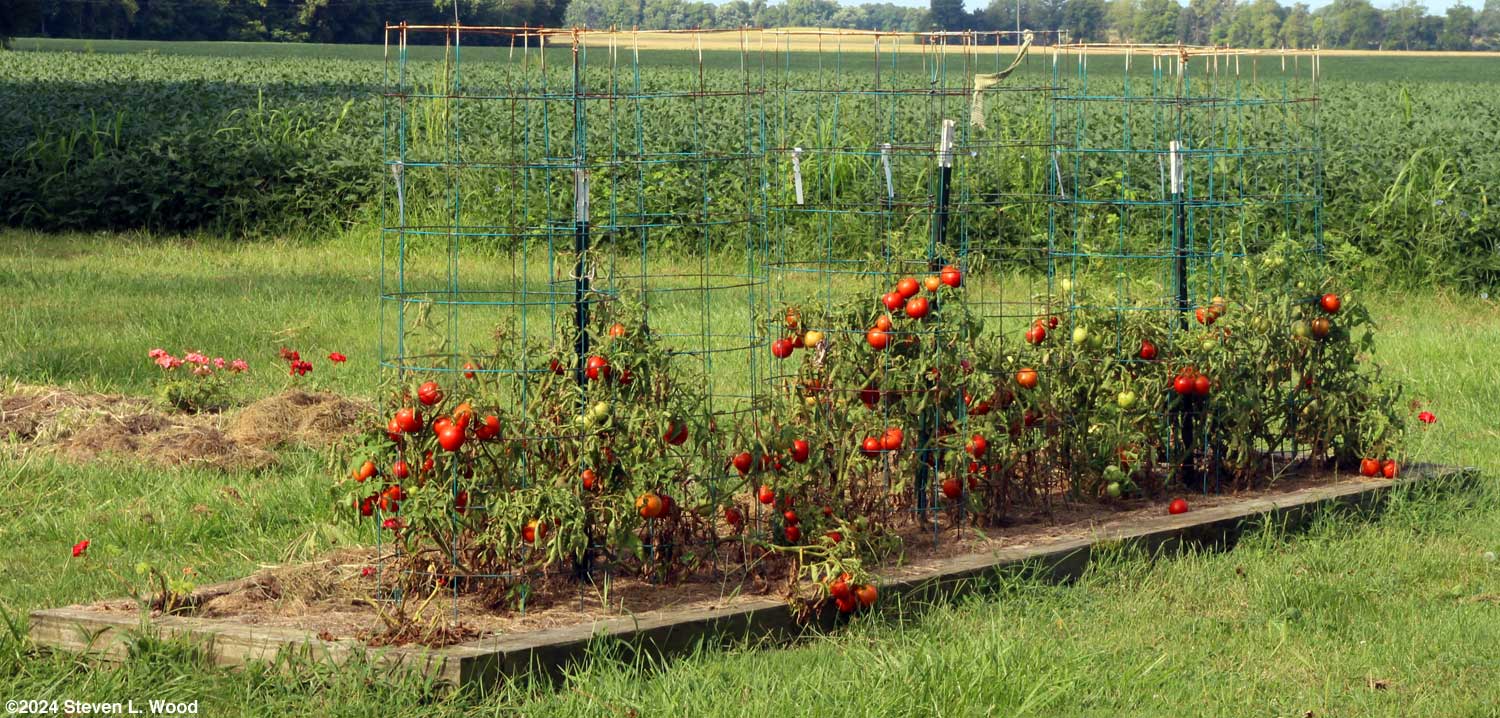
Our kidney beans are important for seed saving for future plantings, making Refried Kidney Beans, and in our annual batch of Portuguese Kale Soup. And while going around the East Garden plot, I spied one large tomato turning yellow/orange. Our Earlirouge tomatoes in our main garden have been disappointingly small so far. But seeing several large Moira and Quinte tomatoes on plants in our East Garden is refreshing.
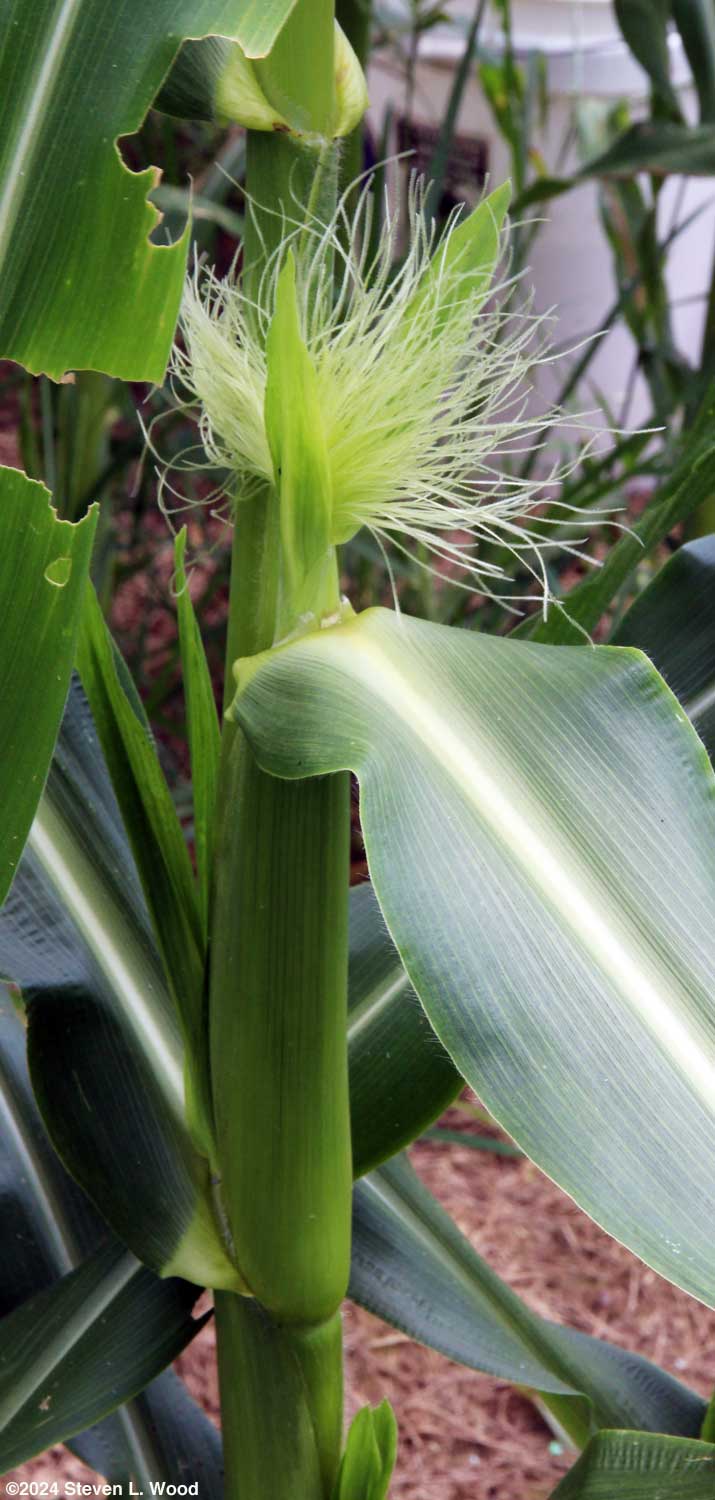
I direct seeded our sweet corn on July 7, some 43 days ago. The varieties now setting ears are rated at 75 days-to-maturity. While such figures are helpful, I learned during my farming years that degree days are a more accurate predictor of corn maturity. It would appear that our hot spells have shortened our sweet corn's maturity dates by about a week or so. Of course, maybe that's just me hoping for some homegrown corn on the cob as soon as possible. I also noticed that our kidney beans have now put on and are filling out bean pods. When I dumped our kitchen compost bucket, I also spread a half quart of powdered egg shells over the compost pile. That will add some calcium to it. I also spread two quarts of powdered egg shell over the area where our tomatoes will grow next season. I’m hoping the egg shell will break down over the winter and may help prevent blossom end rot in the tomatoes next spring. I spread balanced fertilizer and lime over our main raised bed. Then I tried to rototill it. Our old walking tiller couldn’t handle some of the tough grass plants, but I did get the soil amendments tilled under.
The main raised bed will have to tilled at least twice more before it's planting ready. And I'm running out of gardening days before frost sets in. I still want to get some carrots, kale, spinach, and lettuce in.
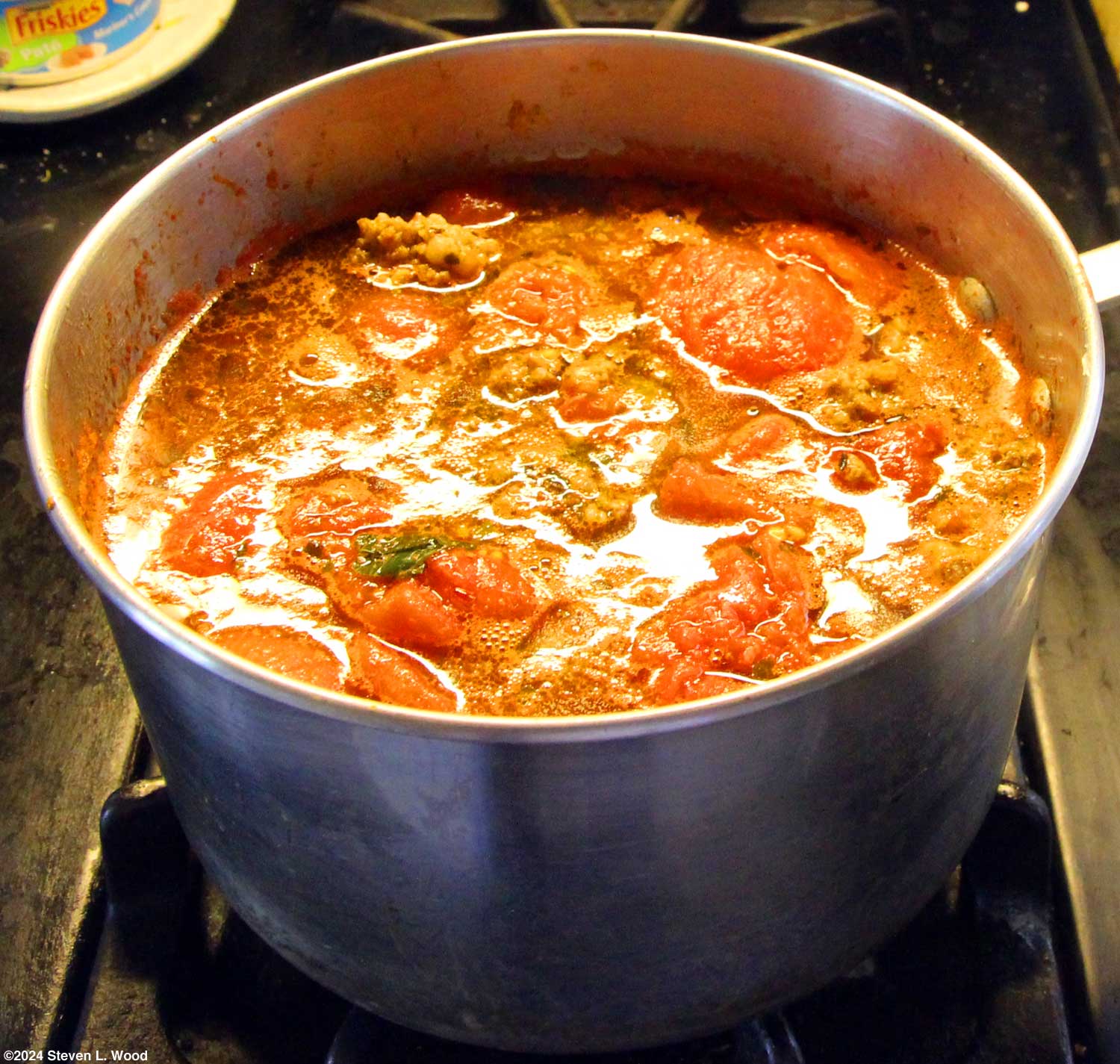
I picked Earlirouge tomatoes this morning. Some of the ripe tomatoes were just a tad larger than a golf ball. But they were fully ripe. So I’m boiling down the tomatoes, seasoned with basil, parsley, oregano, black and red pepper, and a bit of salt. I’d chopped onion and garlic and browned them with some hamburger and a little Italian sausage. While I'd like to be tilling or mowing grass today, wrestling our old, heavy rototiller around in our main raised garden bed yesterday, has left both my shoulders in total protest. So today, I'm back to another recovery day with my usual pain killers of aspirin, BenGay, and some good scotch. But a nice spaghetti dinner this evening should help ease the pain.
I finally got around to mowing our lawn today. While mowing, I also picked up around twenty-five groundfall apples. Once washed and sorted, there were about twelve good apples to be saved. The washing (actually scrubbing with a brush) is important, as our apples are showing sooty mold. Fortunately, it's not as bad as in years past.
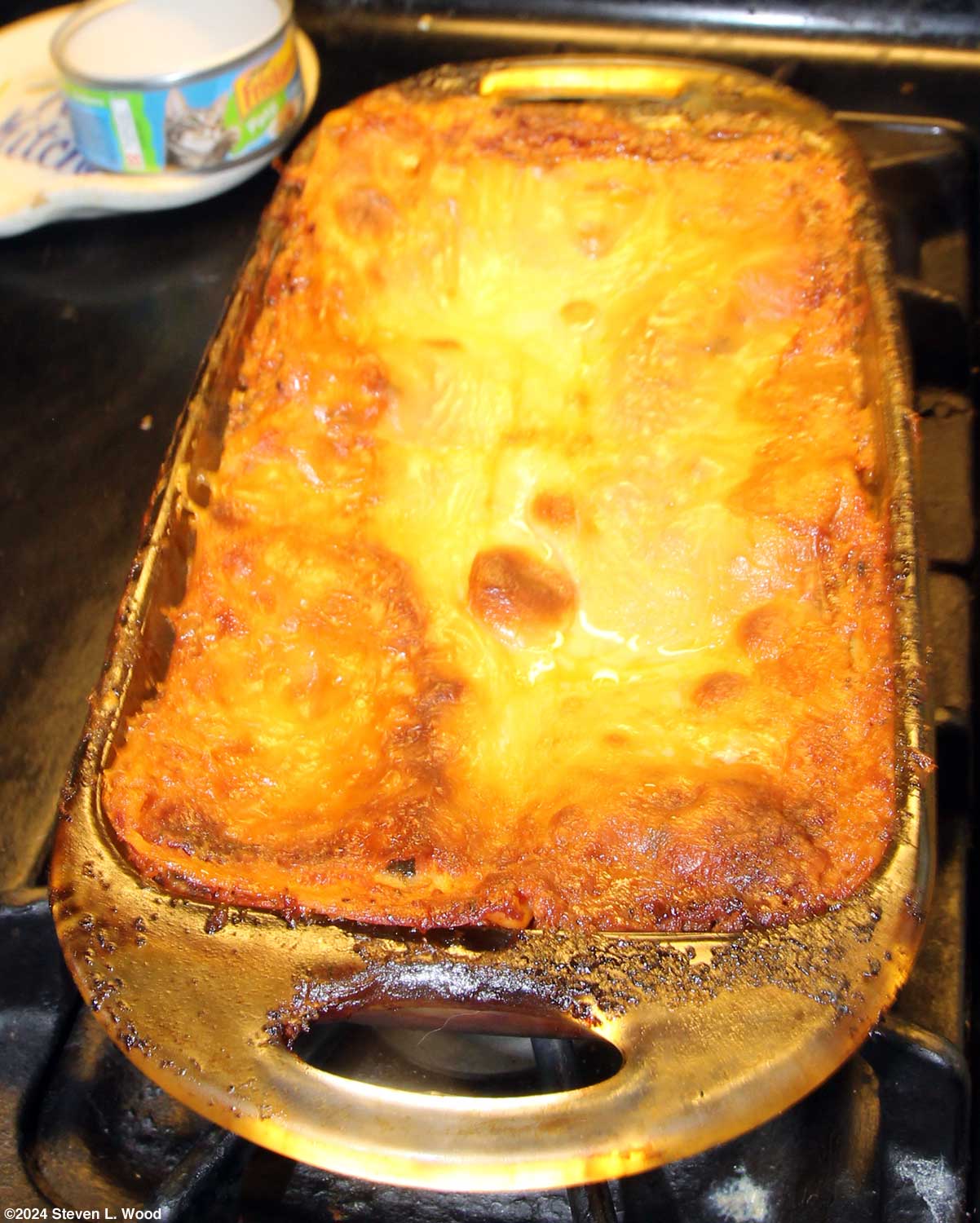
While attending Milligan College in the 1960's, my then wife and I sometimes splurged for a dinner at Dino's Restaurant in Elizabethton, Tennessee. I've never found lasagna as good as theirs. Dino once told us he moved to Elizabethton to avoid the mob's protection rackets in New Jersey!
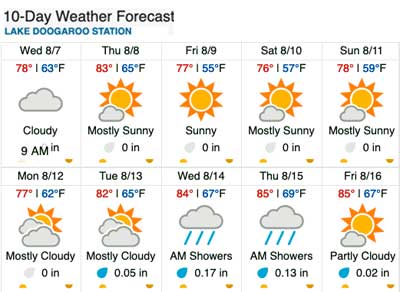
We're looking at a stretch of days in the 90s with almost no chance of rain. That doesn't bode well for getting late crops of carrots, kale, spinach, and lettuce started. And we're running out of growing days with an average first fall frost date of October 14. Currently, we have cucumbers, tomatoes, bell peppers, sweet corn, kidney beans, and potatoes in our garden plots. The sweet corn, kidney beans, potatoes, and tomato plants in our East Garden are doing surprisingly well considering our droughty weather conditions. Our raised beds are really dry, as raised beds are prone to do. Weeding
Vetch With the season seemingly getting away from me, I decided to forego a second planting of buckwheat in the rotated out parts of our East Garden. Instead, I ordered five pounds of hairy winter vetch seed for a winter cover/turndown crop. We've had nice results the last few years from plantings of hairy winter vetch. It holds back weeds and adds organic matter and nitrogen to the soil when turned under. I also added some Walla Walla sweet onion seed to the order for a overwintered planting of the sweet onions. No Monarchs I asked Google today, “Why aren't monarchs visiting our milkweed?” The first and possibly best answer I saw came from the Monarch Joint Venture, “Because monarchs are distributed across a very wide range, and there are so many fewer monarchs than there were previously, it can take a long time for monarchs to find a patch of milkweed." The Lady Bird Johnson Wildflower Center also contributed that, "monarchs that...are flying now are migrants heading to Mexico and they are generally in reproductive diapause, i.e., they are not laying eggs." Hummingbirds A week or so ago, I though I'd seen a dropoff in our hummingbirds at the feeders. Most years, we have a dropoff of activity at our feeders sometime in August as the tiny birds leave for their migration south. But so far, the birds are going through almost a pound of sugar mixed for nectar each day!
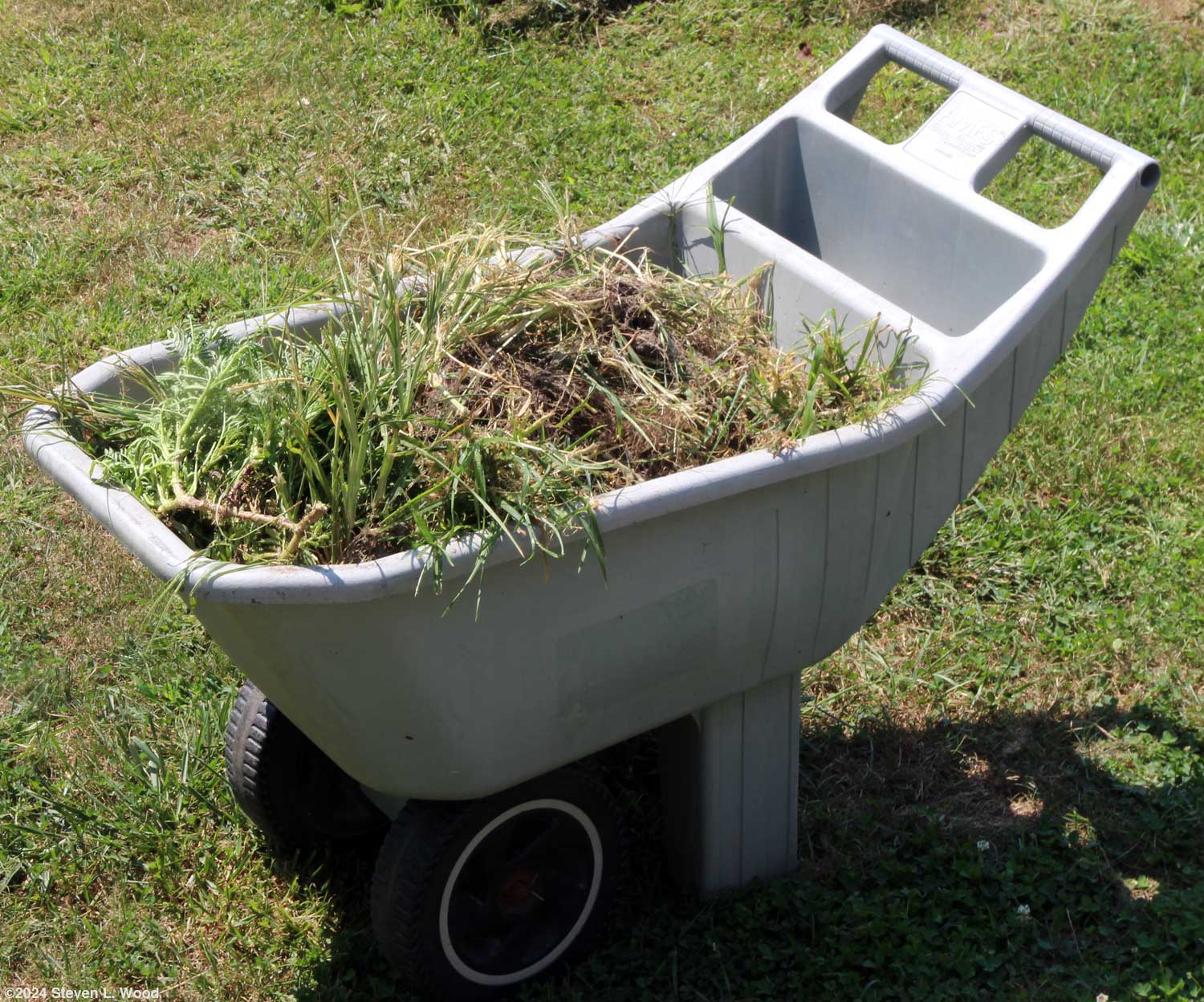
I'm still working on cleaning up grass weeds from our main raised garden bed. When forked up, some of the weeds and weed balls stretched almost eighteen inches across. I'd really let things get out of hand there.
I weeded until my sore back and 90 degree temperatures dictated I stop for the day. I have one small patch of grass yet to dig out. Then I'll need to do some raking of mulch before rototilling the area. While I want to direct seed carrots, kale, and spinach, there's no rush during this hot, dry period. I'm guessing the soil is a bit too warm to support good seed germination right now. Once the hot spell subsides, I'll plant and water daily, stressing our poor old deep well.
Tuesday, August 27, 2024 - Done...Almost I finished getting the last of the stubborn grass weeds out of our main raised bed this morning. I had high hopes of tilling the plot.
So I'll till and possibly begin seeding our fall garden tomorrow.
I started cleaning up our main raised bed ten days ago. I'd tried to till it then, but found the well established grass weeds too tough for my old rototiller. So I worked several mornings pulling and composting the weeds. I'd hoped to till the bed yesterday, but thunderstorms rolled though in the morning leaving just enough precipitation to make tilling a bad idea. So I tilled the bed this morning and later raked part of it. I think the bed needs one more good shot with the tiller before it's planting ready.
Our poor AC unit is struggling to keep up with the intense heat today. It's running about four degrees behind our usual setting of seventy-seven. But it is still fairly comfortable inside. Some relief from this heat wave may be in store by the weekend.
Is today a good day to advertise heat stoves? Friday, August 31, 2024 - August Wrap-up
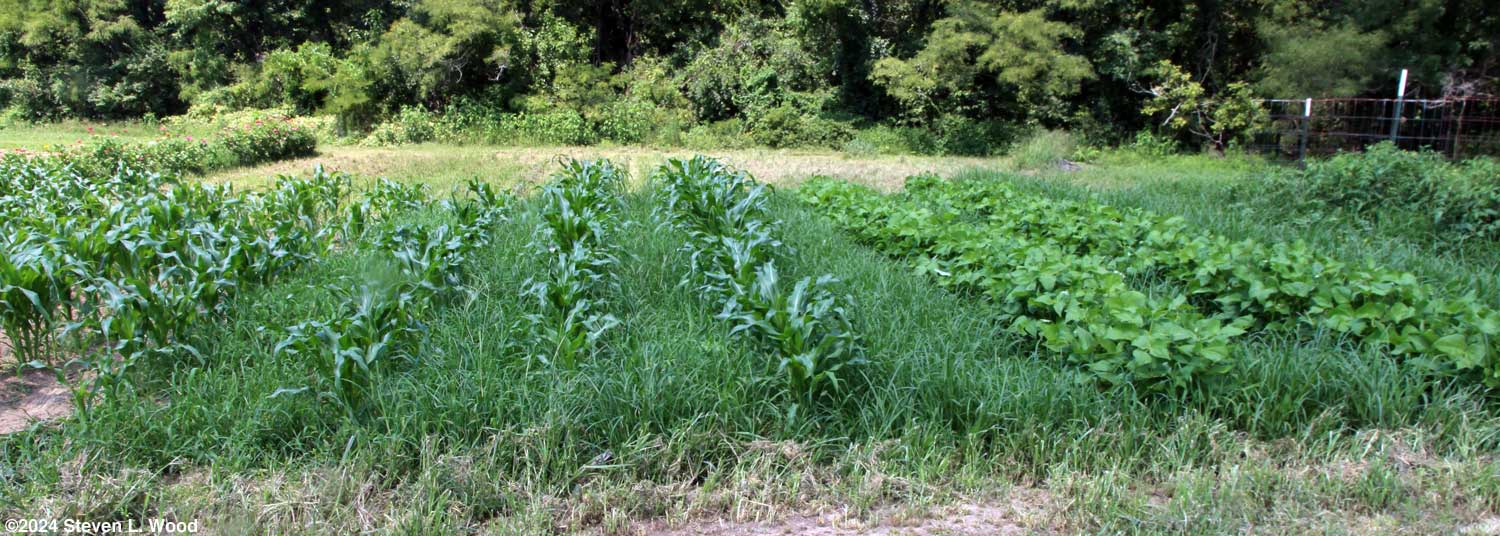
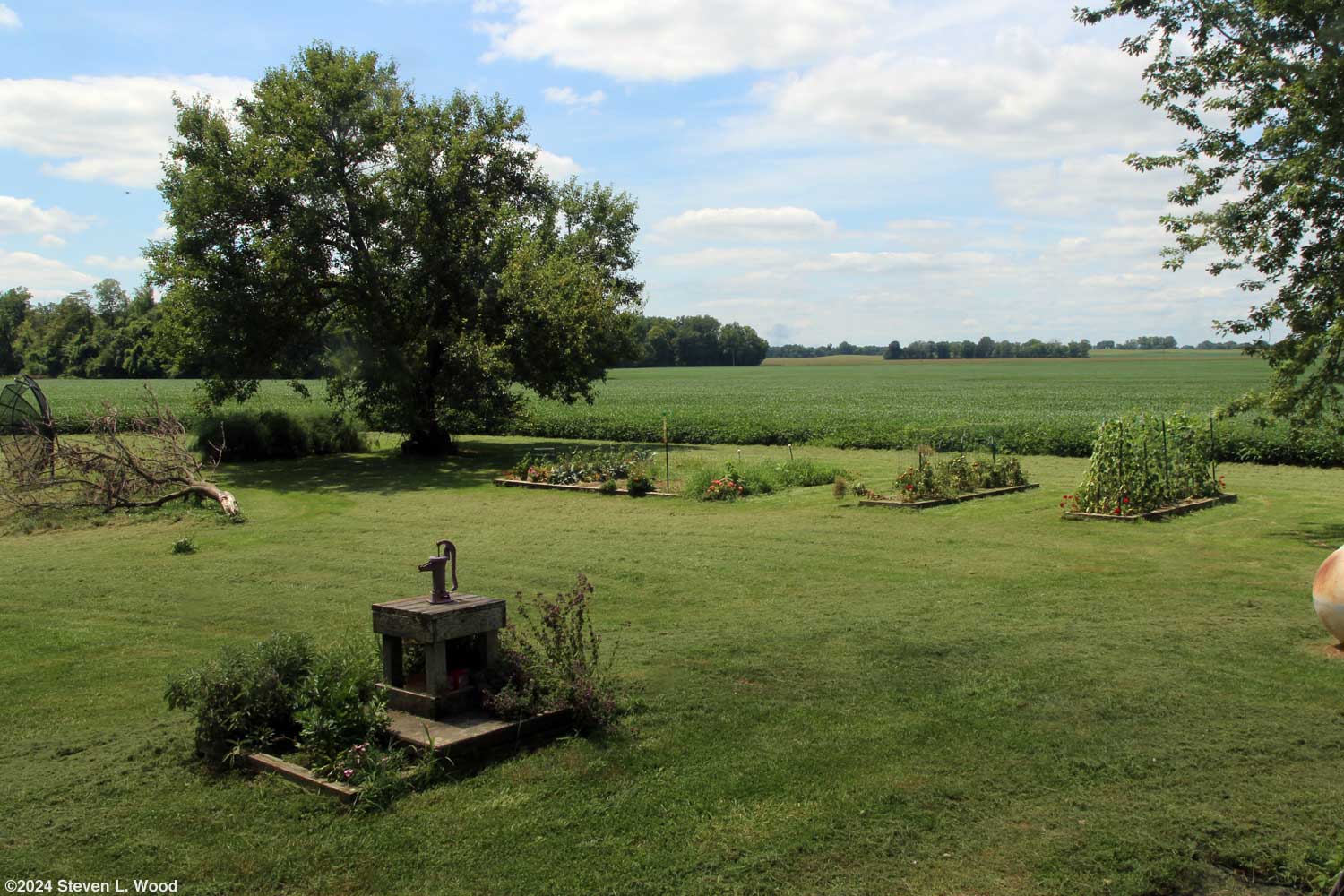
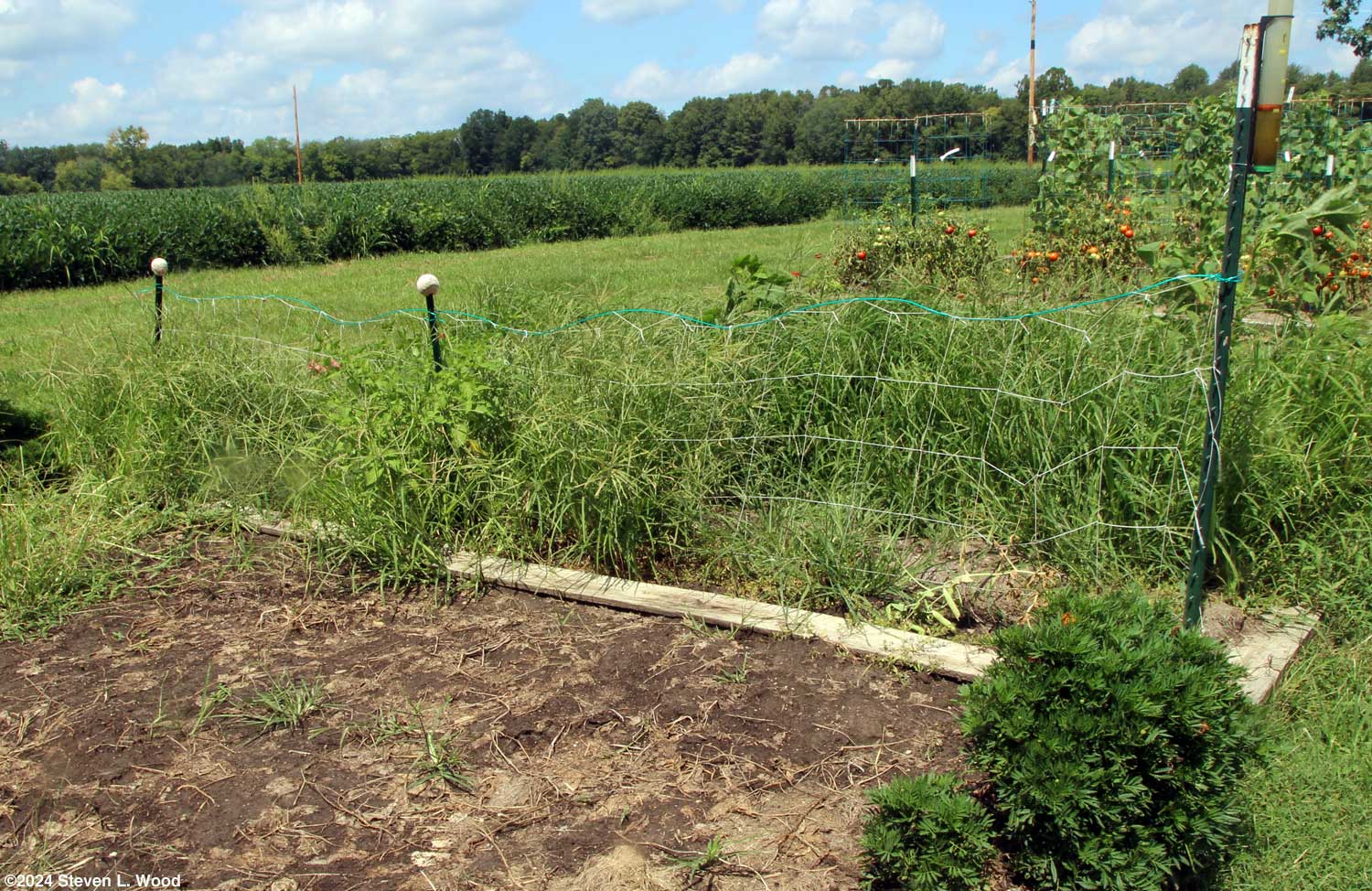
Besides a lovely long row of zinnias in bloom, our East Garden has sweet corn tasselling and putting on ears, and kidney beans filling out pods. The Moira tomato plants along with some Quintes are in that plot as well. Our row of potatoes looks a bit sick.
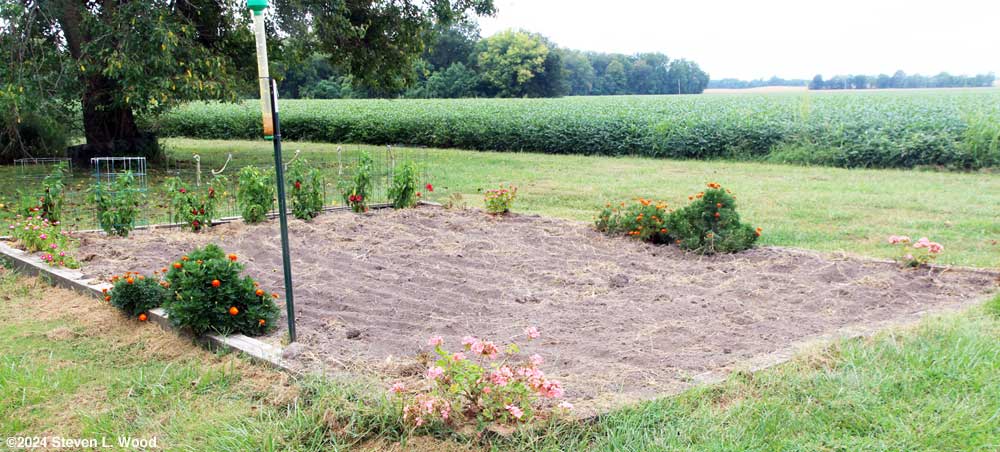
On a lesser note, I spent almost the last half of August struggling to clean up a lot of our main raised garden bed. I'd let it get overgrown with grass weeds, some of which had eighteen inch wide root balls. But the bed is finally ready for another rototilling before I rake it out and plant some very late fall crops. And...I was able to work around most of the flowers at the sides of the bed, only killing one poor Vinca.
Contact Steve Wood, the at Senior Gardening |

 )
)

















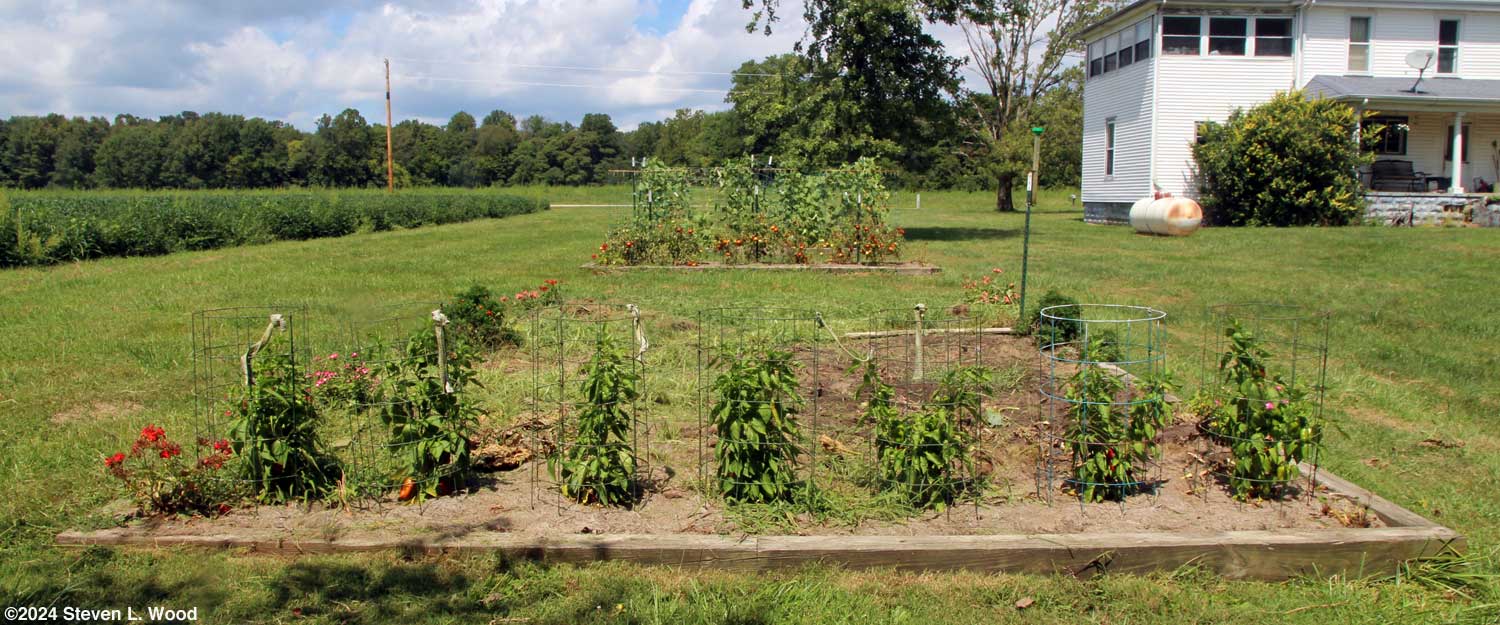




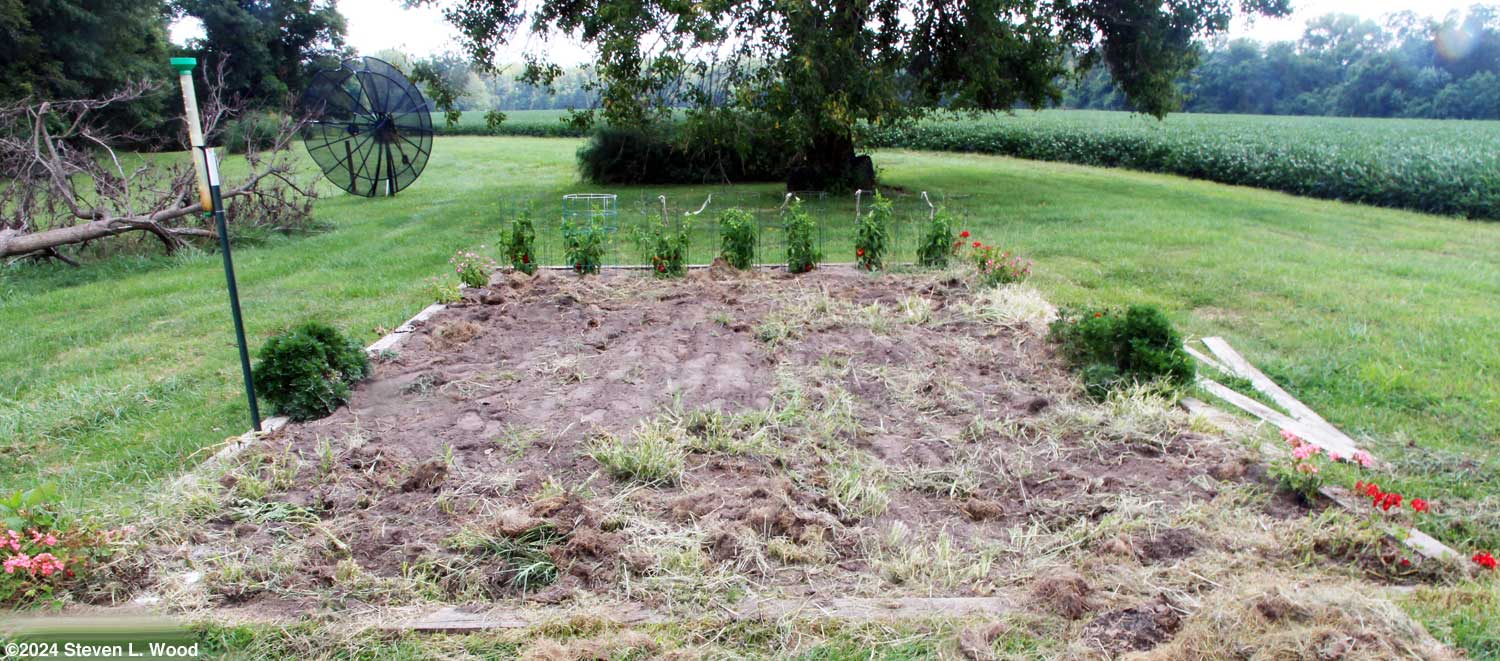





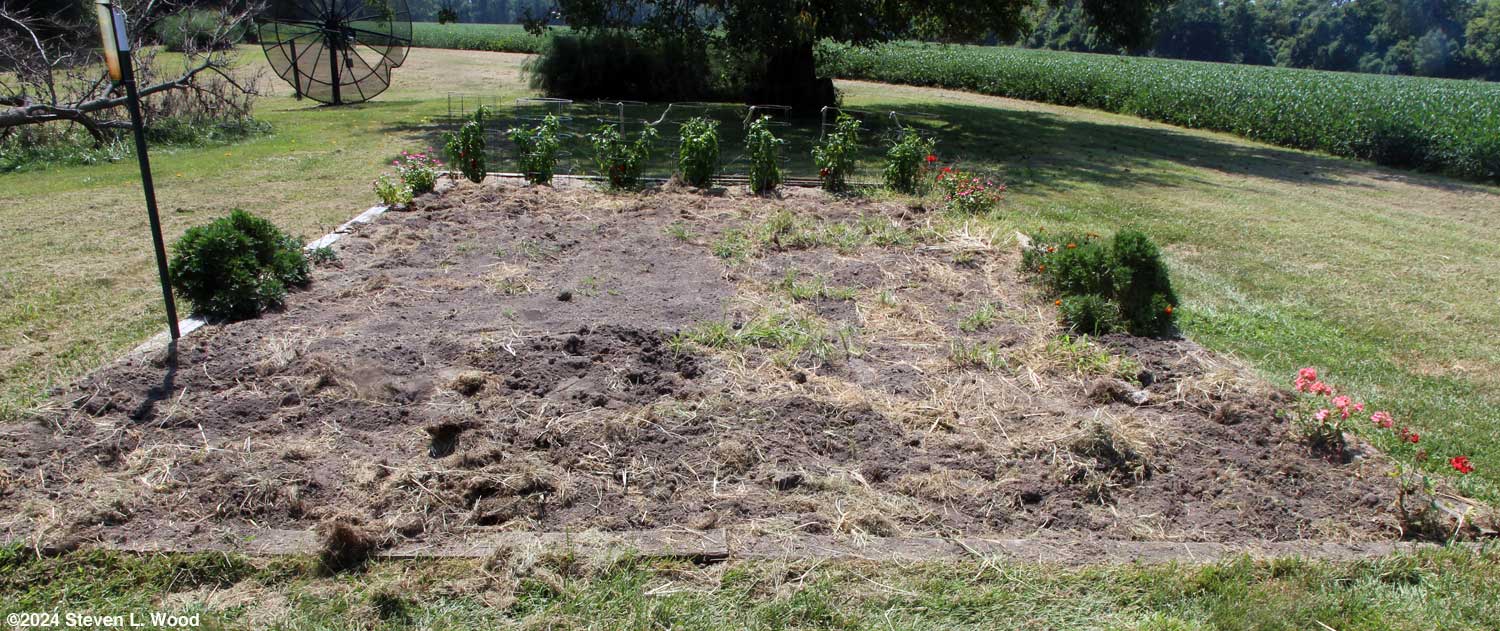

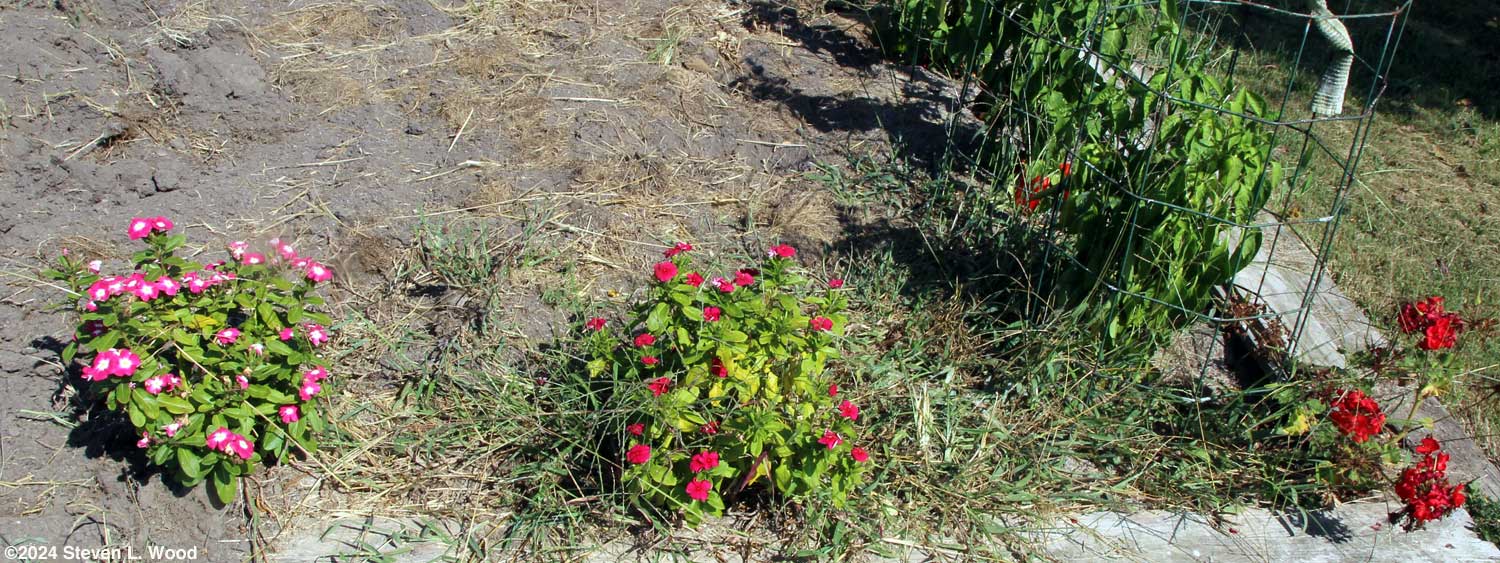


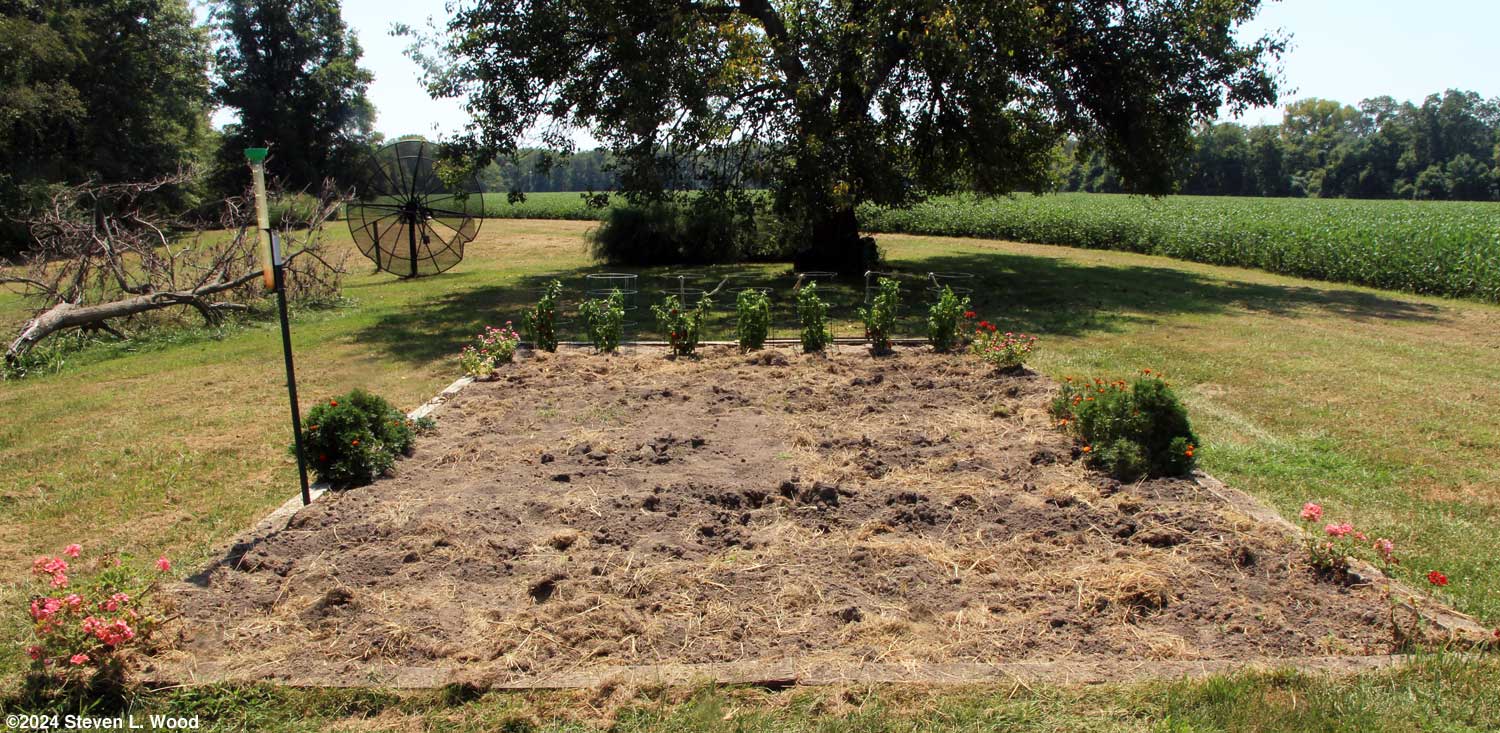


 This bed often gets away from me. My use of grass clipping mulch works against me with the weed seed it drops when I don't keep up with the weeding. But even this late in the season, I hope to grow some fall carrots, kale, spinach, and lettuce with possibly the help of some
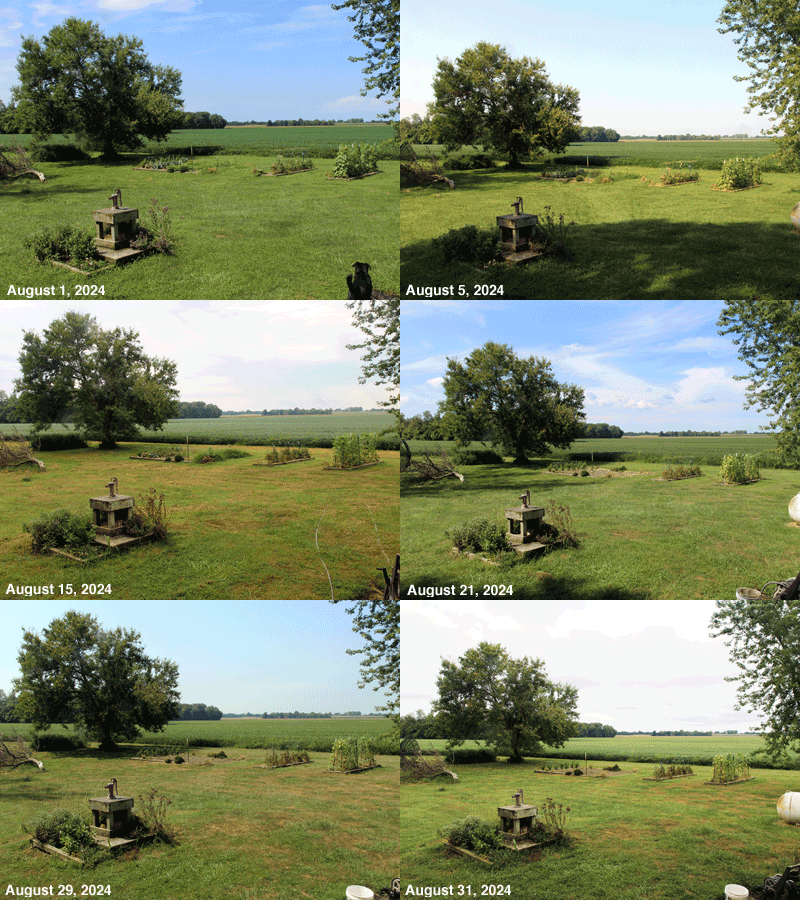 It's been a tough month for gardening here. Several dry heat waves along with some physical problems and a lack of ambition have limited my gardening. And at the height of the recent heat wave, our air conditioning went out a couple of days ago. A repairman came yesterday, diagnosed the problem, and said he needed to chase a part and would call me. Since then, crickets! It may be a hot Labor Day weekend for us. At least the extreme heat has finally broken. Well, sort of. Today's high temperature, 86°F, is about ten degrees less than yesterday.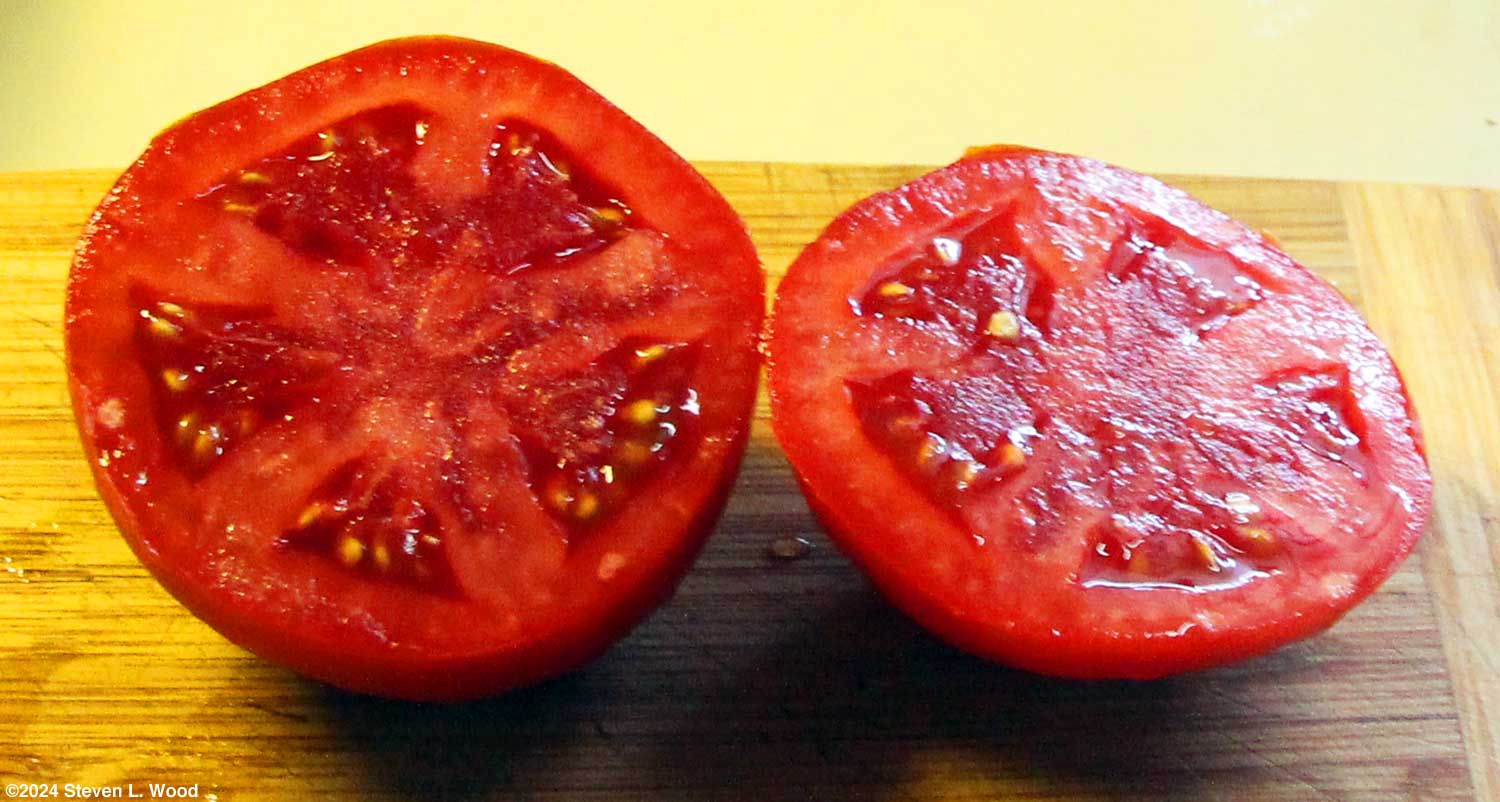
| Affiliated Advertisers |
©2024 Senior-Gardening.com