One of the Joys of Maturity |
|

| Affiliated Advertisers |
The Old Guy's Garden Record
Clicking through one of our banner ads or some of our text links and making a purchase will produce a small commission for us from the sale. At the first of a summer month, I'm usually ready to jump into some serious gardening. But with our current dry spell, watering was the morning job of the day. The ten tomato plants I'd put in our East Garden last week looked terrible yesterday. They looked a bit better this morning, but still got a good drenching of water. I also watered the long row of zinnias in the East Garden. I thought I was going to have to re-seed them, but they began coming up a day or so ago. The rest of the watering was to our bed of cucumbers, basil, and parsley. Some also went onto some parsley in our herb garden. And of course, our transplants got watered as well. Making Garlic Powder
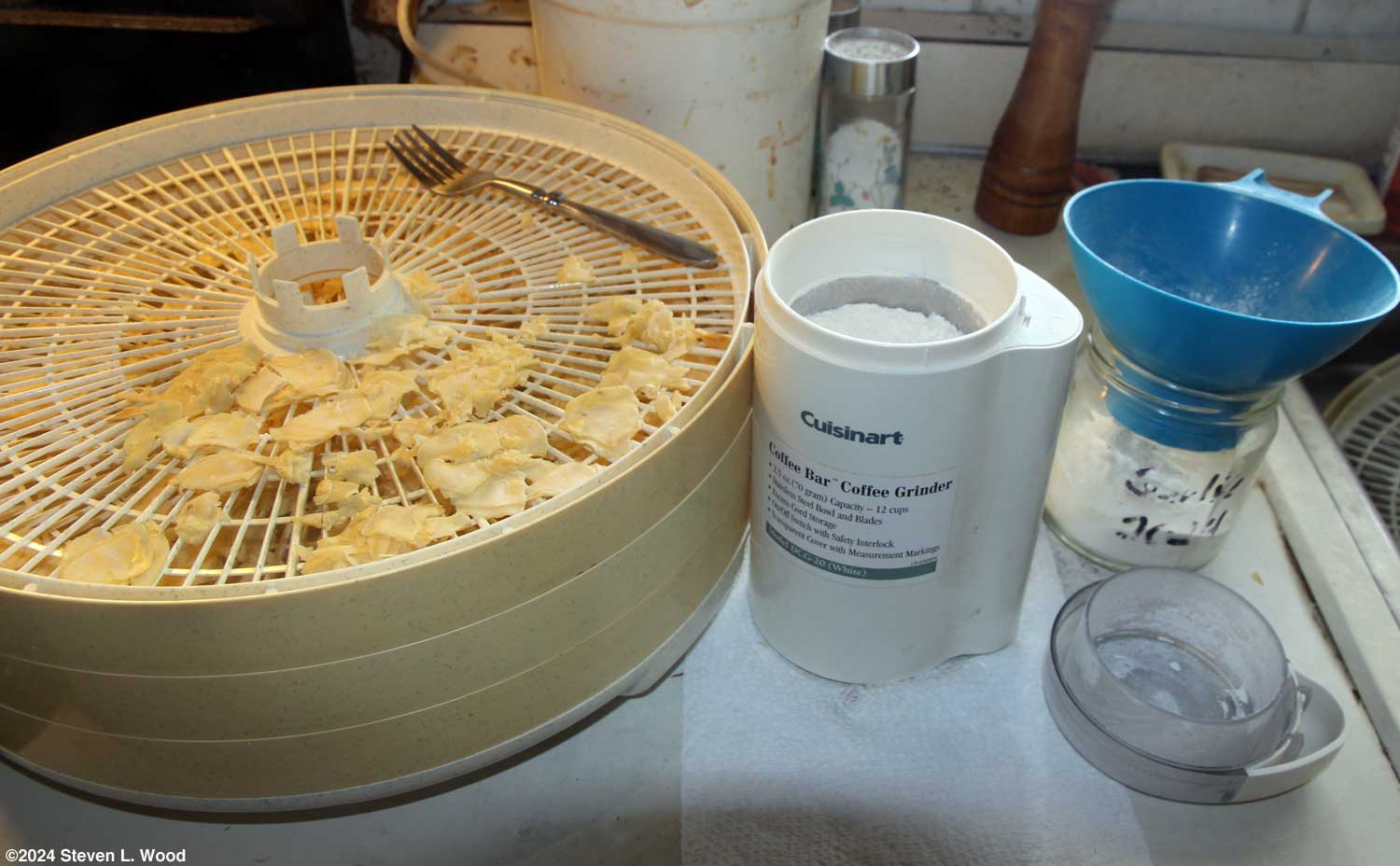
One of the harder parts of this process is scraping the garlic chips and pieces off the dehydrator trays. Some of the garlic sticks and has to be pried off with a fork, knife, or some other tool. Our garlic and other stuff get ground to powder in an extra coffee grinder that probably has never had coffee beans in it. Each load takes around 20-30 seconds to completely grind to powder. Cleanup from this project isn't much fun. The dehydrator trays have to be soaked in warm dishwater before being scrubbed to remove any garlic pieces I didn't get off of them. The coffee grinder gets dry wiped out before I rinse it with water several times. I've told myself over and over that I need to make our garlic powder shortly after harvest when the skins on the cloves of garlic are easy to remove. But this is the first year I've done it. And I did it with only cull garlics with split wrappers that wouldn't have stored well. Our how-to: Growing Garlic.
Get $20 e-gift card off your first Chewy purchase of $49+ with Code: WELCOME |



Thursday, July 4, 2024 - Independence Day - U.S.
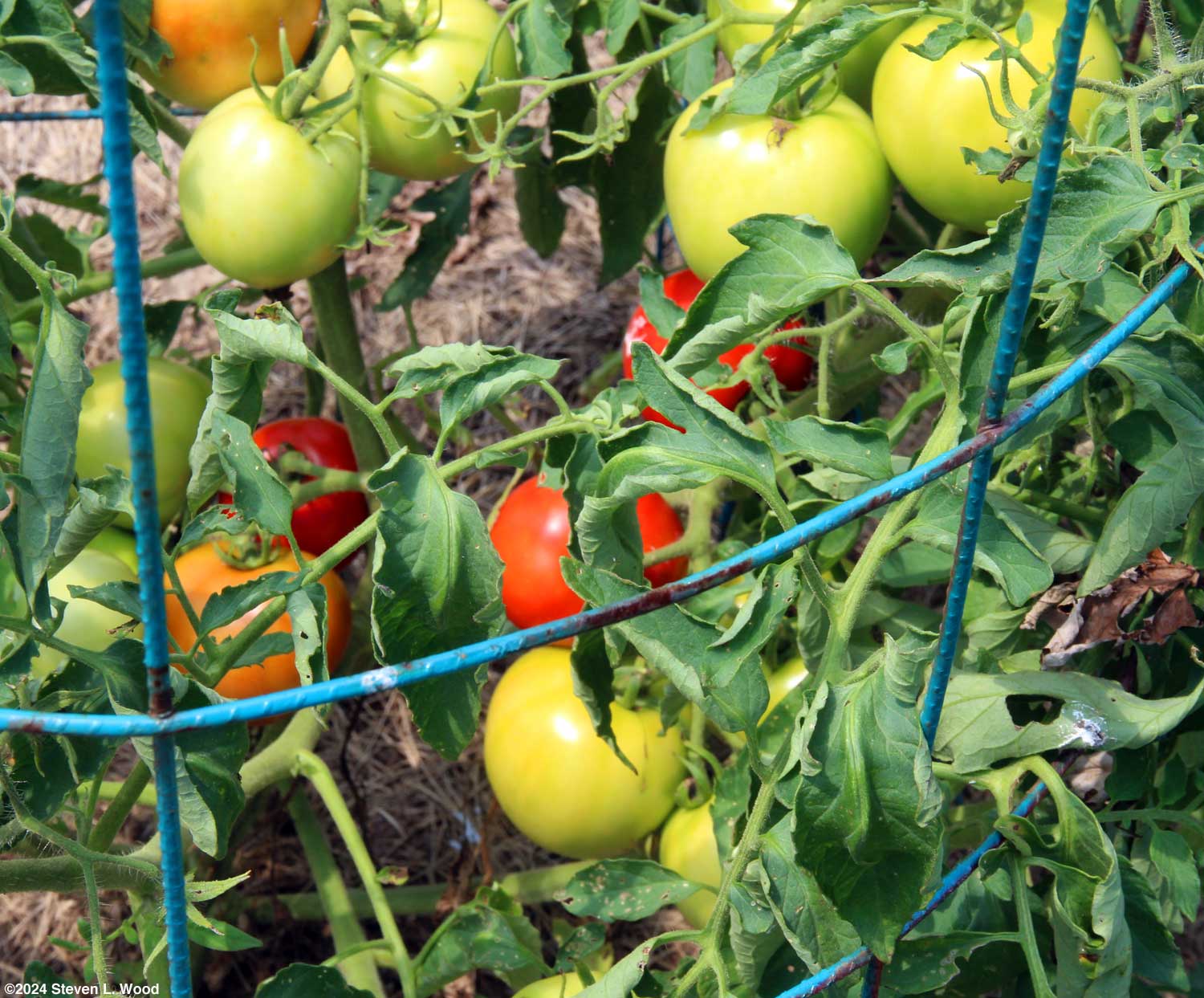
After weeks of dry weather here, we're having a huge storm system move through today. Several local parades have been postponed due to the predicted near three inches of rain today. I'd sort of given up on gardening this month because of the extremely dry weather. Putting seed into bone dry ground or transplanting stuff just didn't seem wise. I have spent a lot of time hauling water to our East Garden plot. Our Earlirouge tomato plants in our main raised bed are producing one or two ripe tomatoes each day. The six plants are filled with medium sized green tomatoes. If they ripen together, we should have enough to can whole tomatoes soon. Our downstairs pantry is down to just a few quarts of canned tomatoes and pints of tomato purée.
Later We didn't get any three inches of rainfall today, but did get a welcome 1.4 inches. I'm hoping that will invigorate our plantings. Sadly, there's not much precipitation in our current extended forecast. The rainfall sprung a leak in our roof with droplets falling on our KVM box that connects our two Mac Minis to a keyboard, monitor, and mouse. It apparently took out the mouse, the cheapest of the items in the area. I have another inexpensive Kensington Mouse-in-a-Box on order, but also found an old one to get me back up and running. The mice are cheap, but work really well.
Friday, July 5, 2024 - Just Add Water We may have gotten another tenth or two of rain this morning. But yesterday's rainfall has already done some good things.
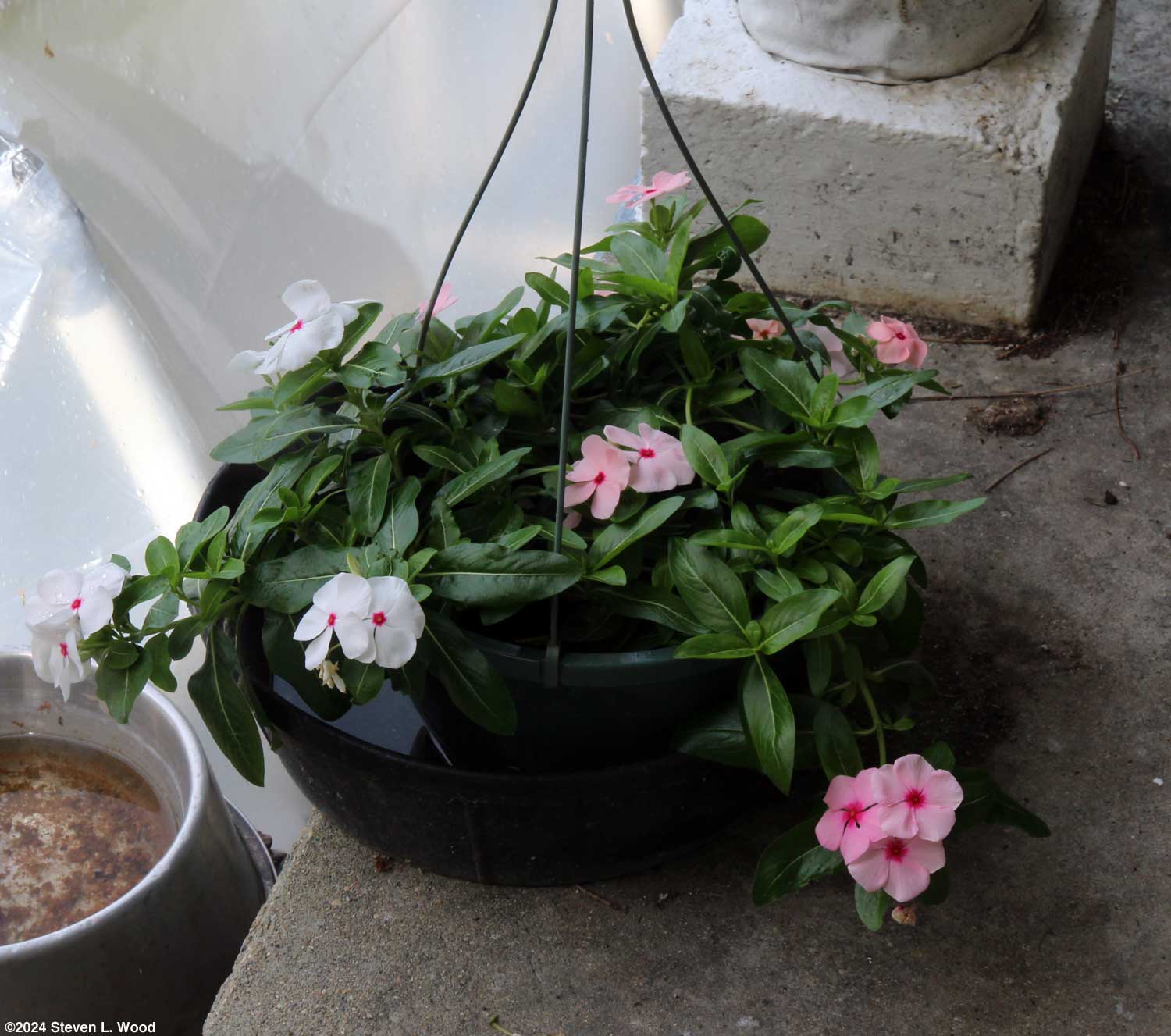
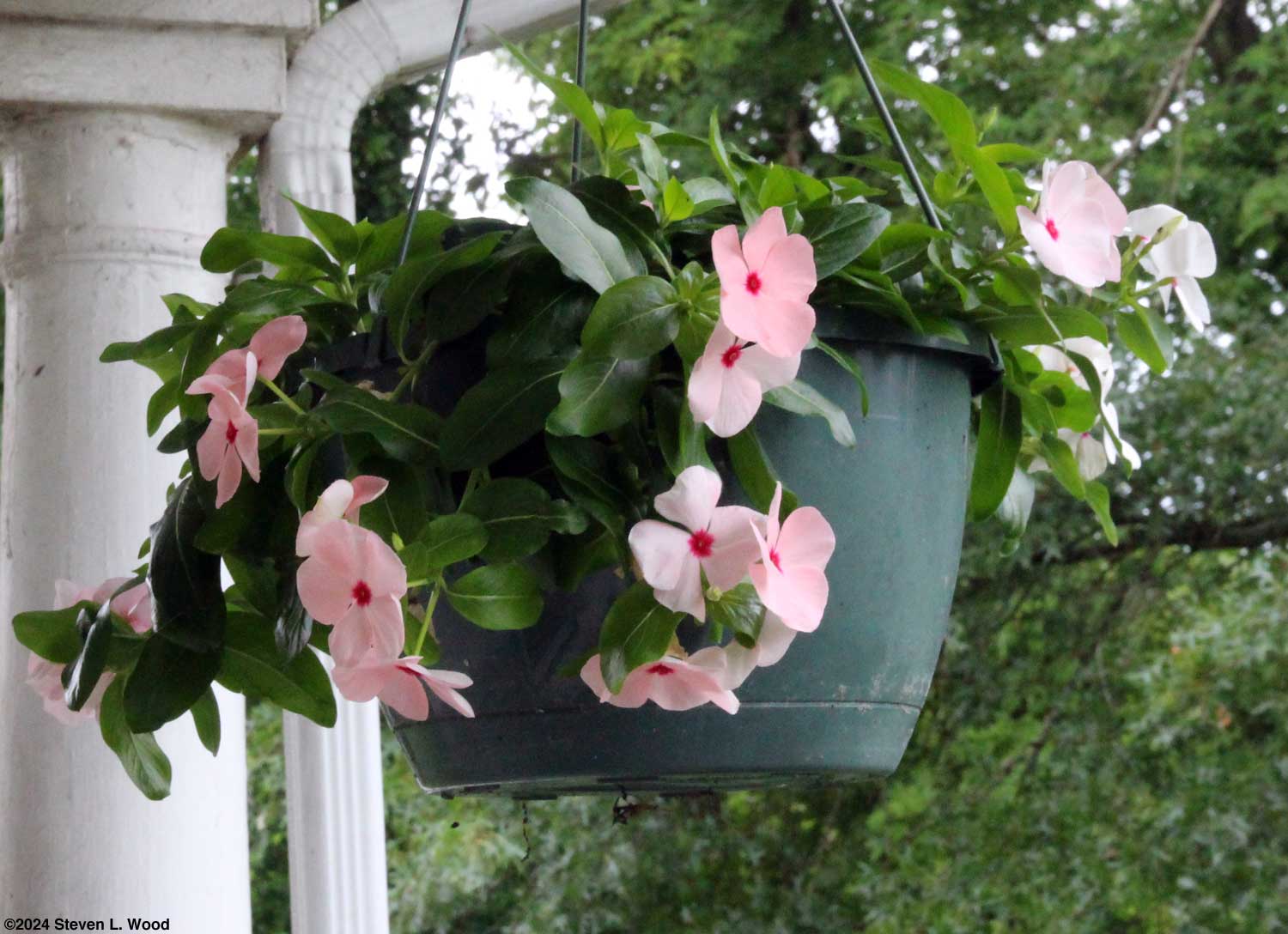
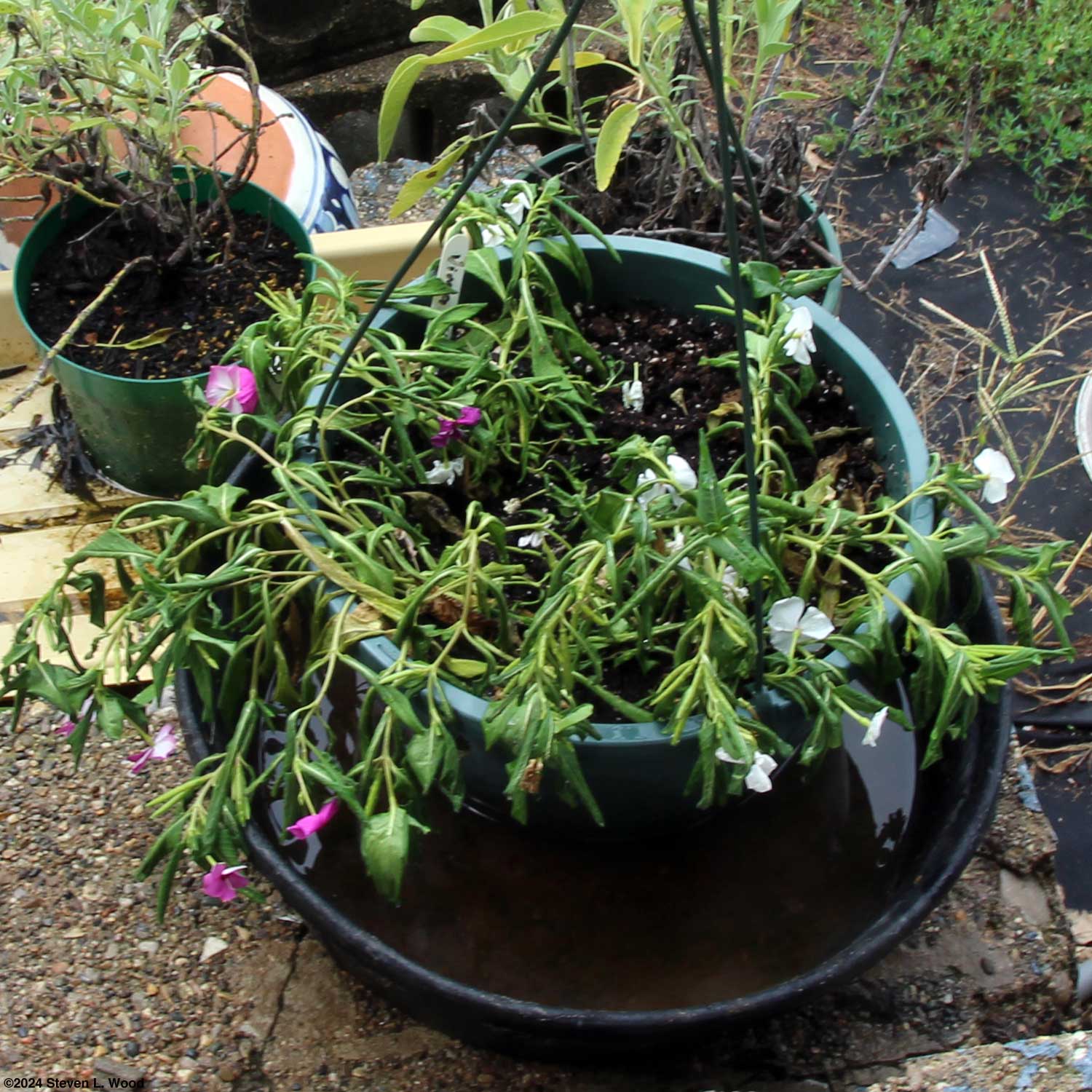
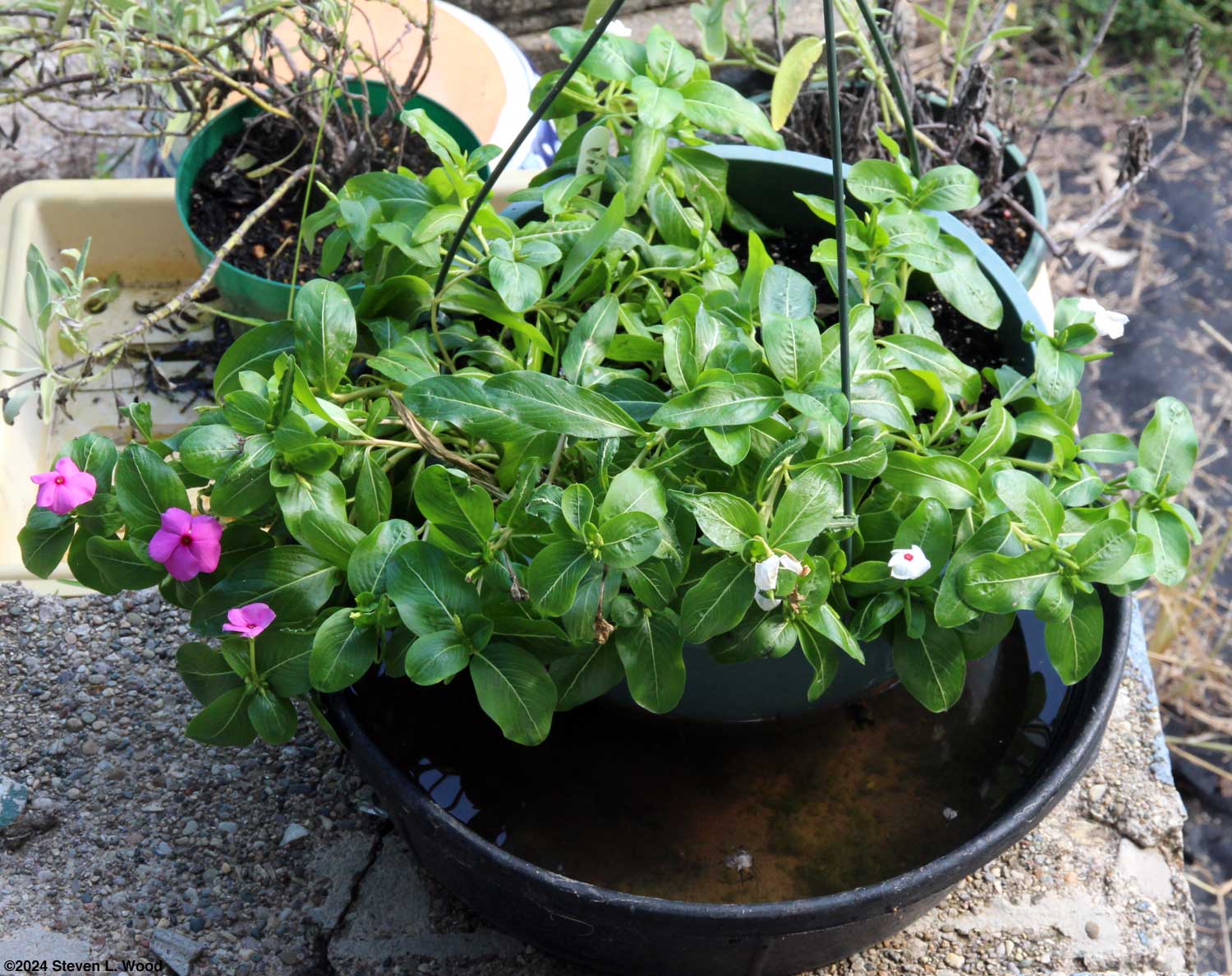
We may yet get a little more rain today. There are pop-up showers showing on weather radar close to us. One of the things that has kept me busy this season is trying to keep our hanging basket plants watered. Our usually reliable petunias haven't done well. I lost two pots of them over the last few weeks. Our hanging basket vinca are all in bloom, but need very frequent watering. I keep a livestock watering pan on the back porch to bottom water the pots...with some fertilizing and top watering as well. And the rain has caused my sloppy seeding of buckwheat in our East Garden to fill in a bit.
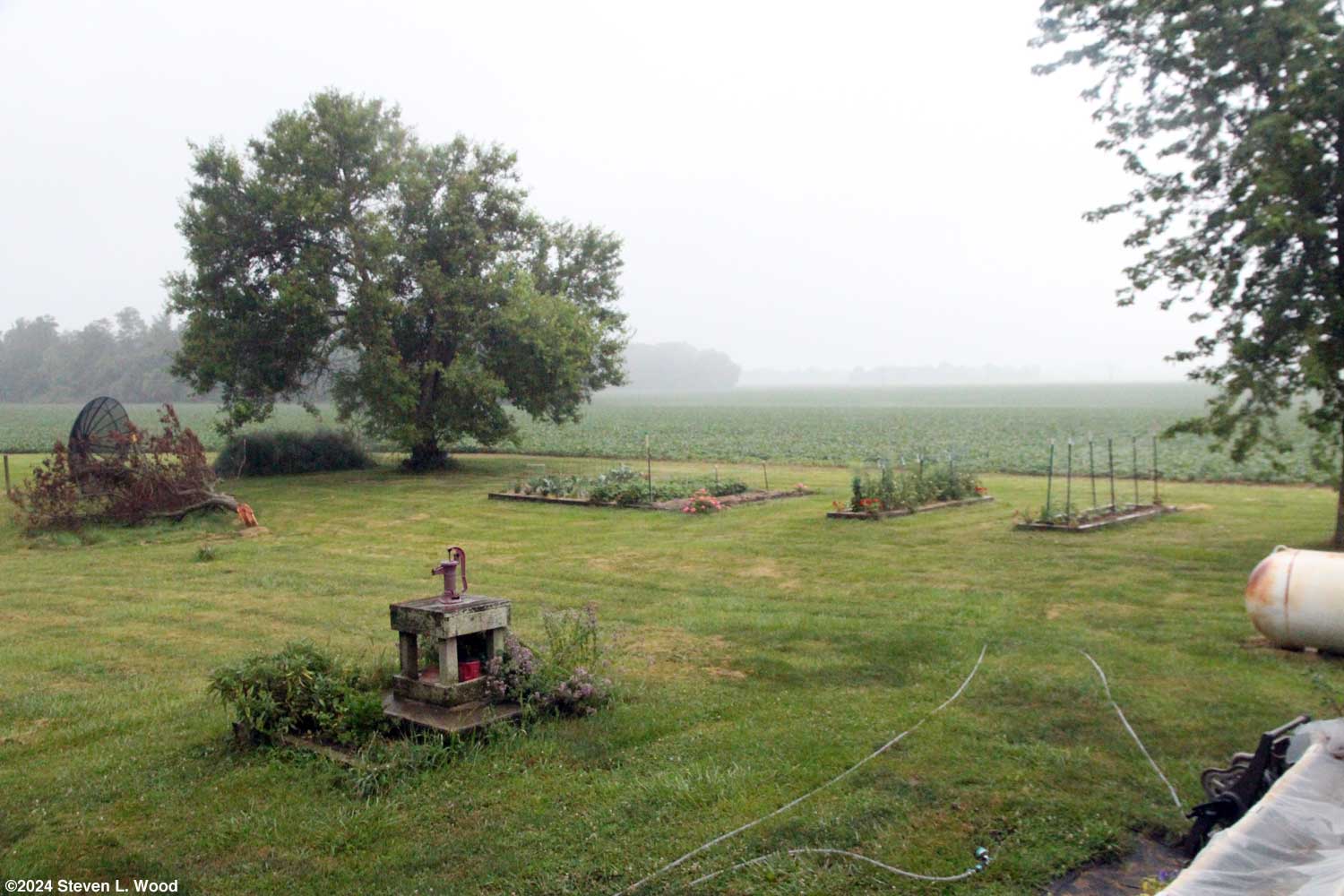
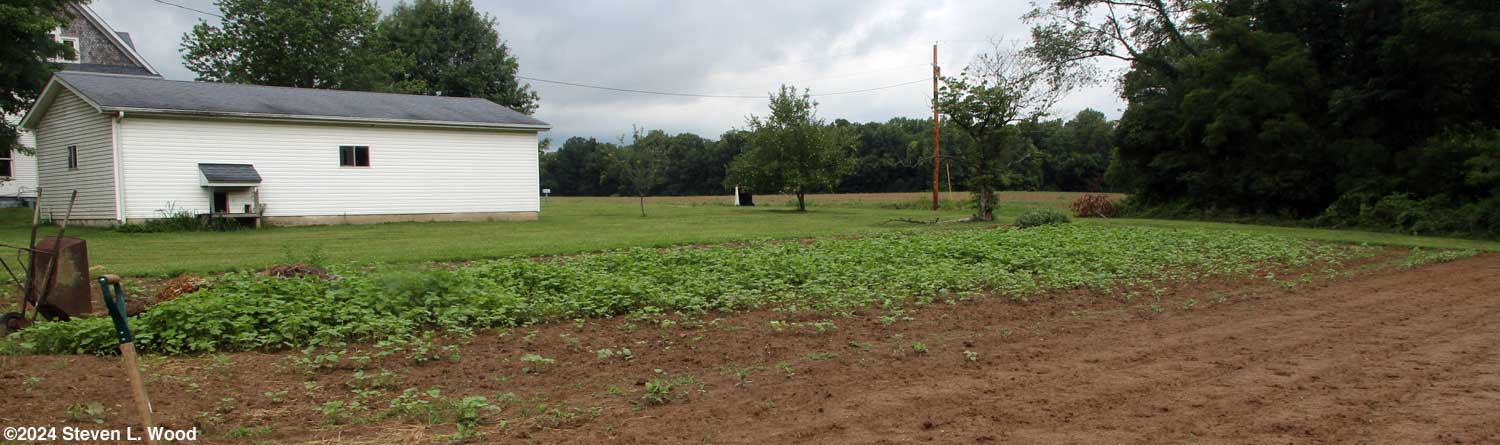
Regular turndown crops of buckwheat, hairy winter vetch, and occasionally alfalfa over the last ten years have finally begun to produce noticeable improvement in the East Garden soil. When I started gardening this area, it was simply a burnt out cornfield with nasty yellow and orange clay soil.
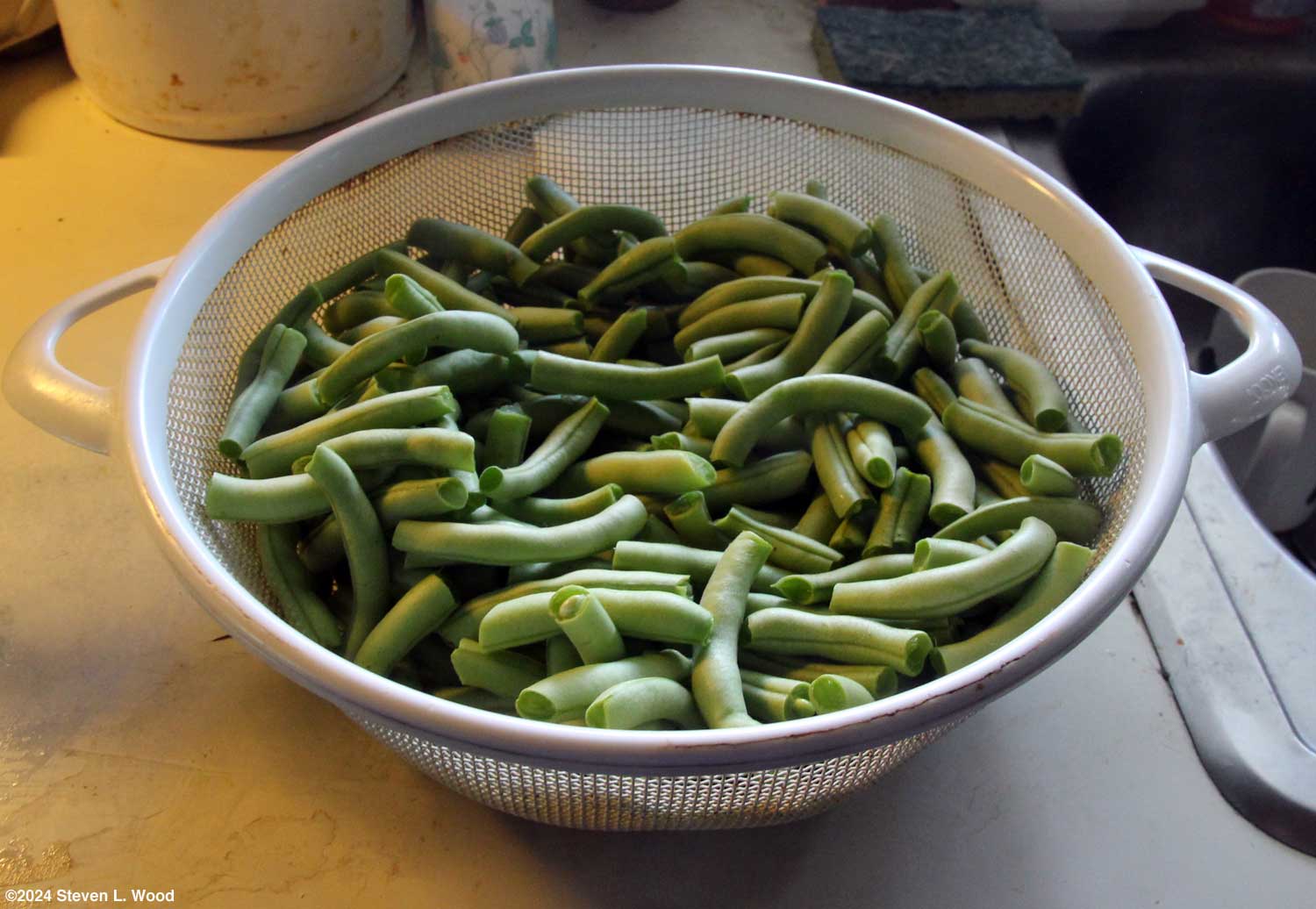
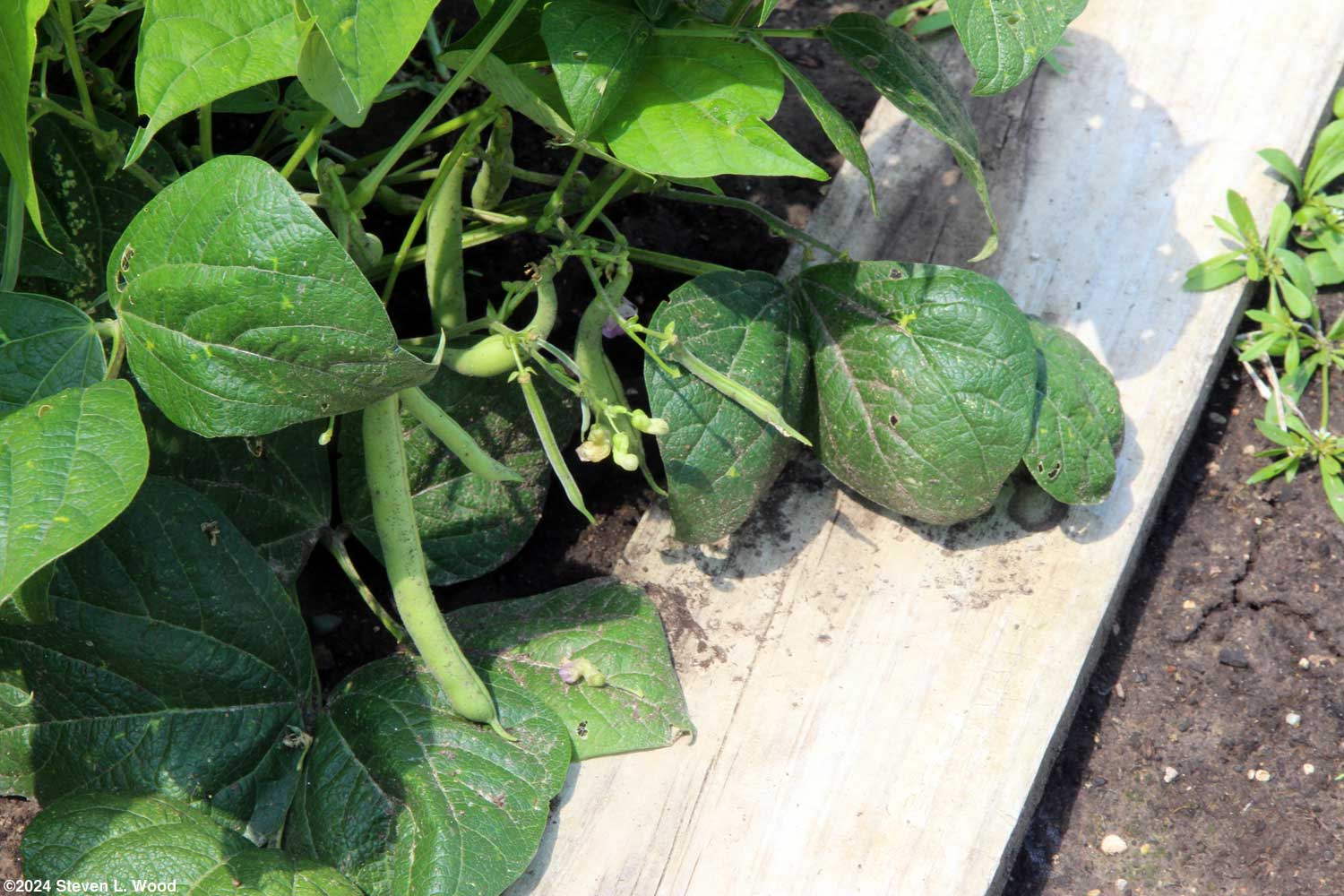
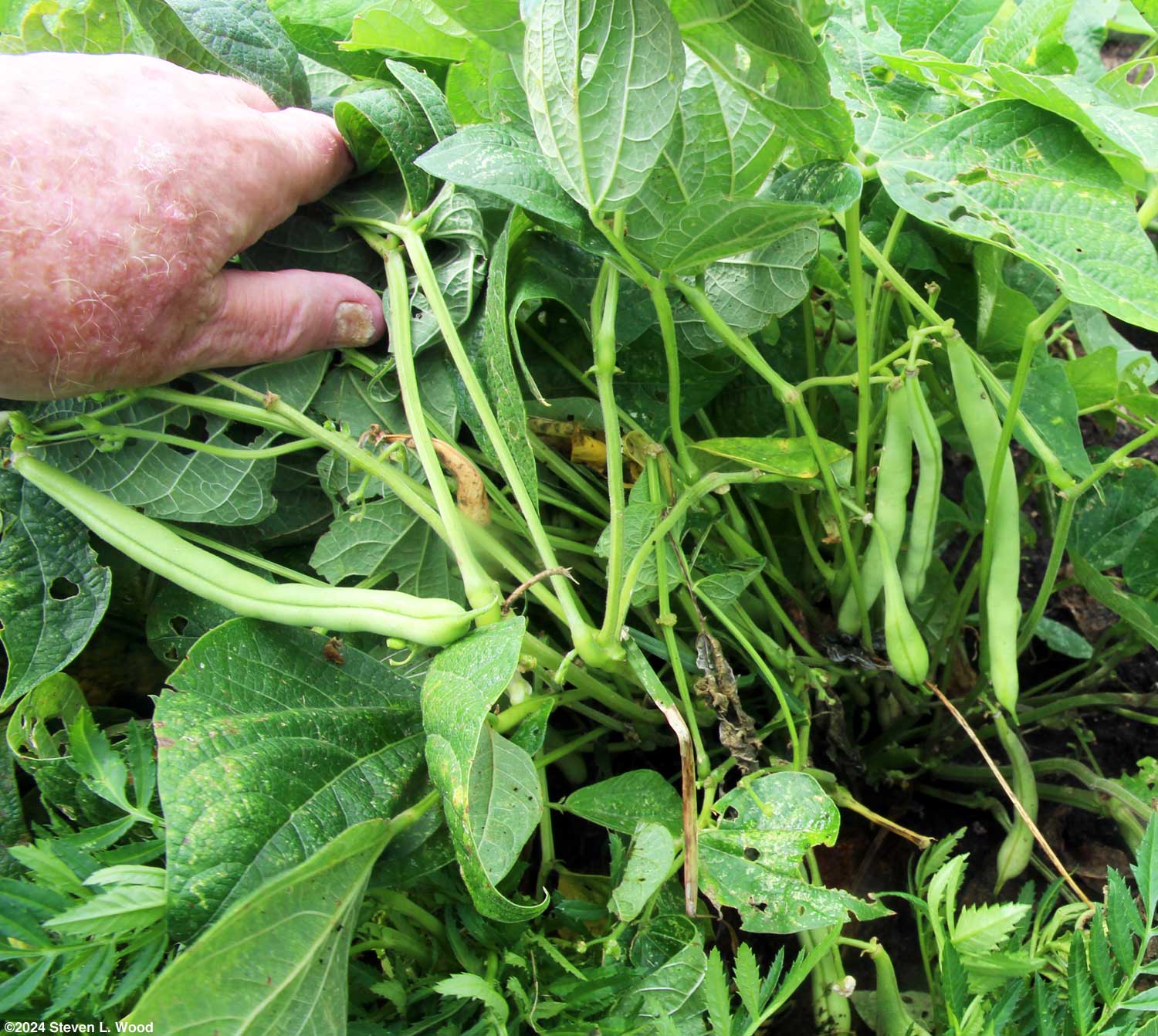
Saturday, July 6, 2024 - Green Beans
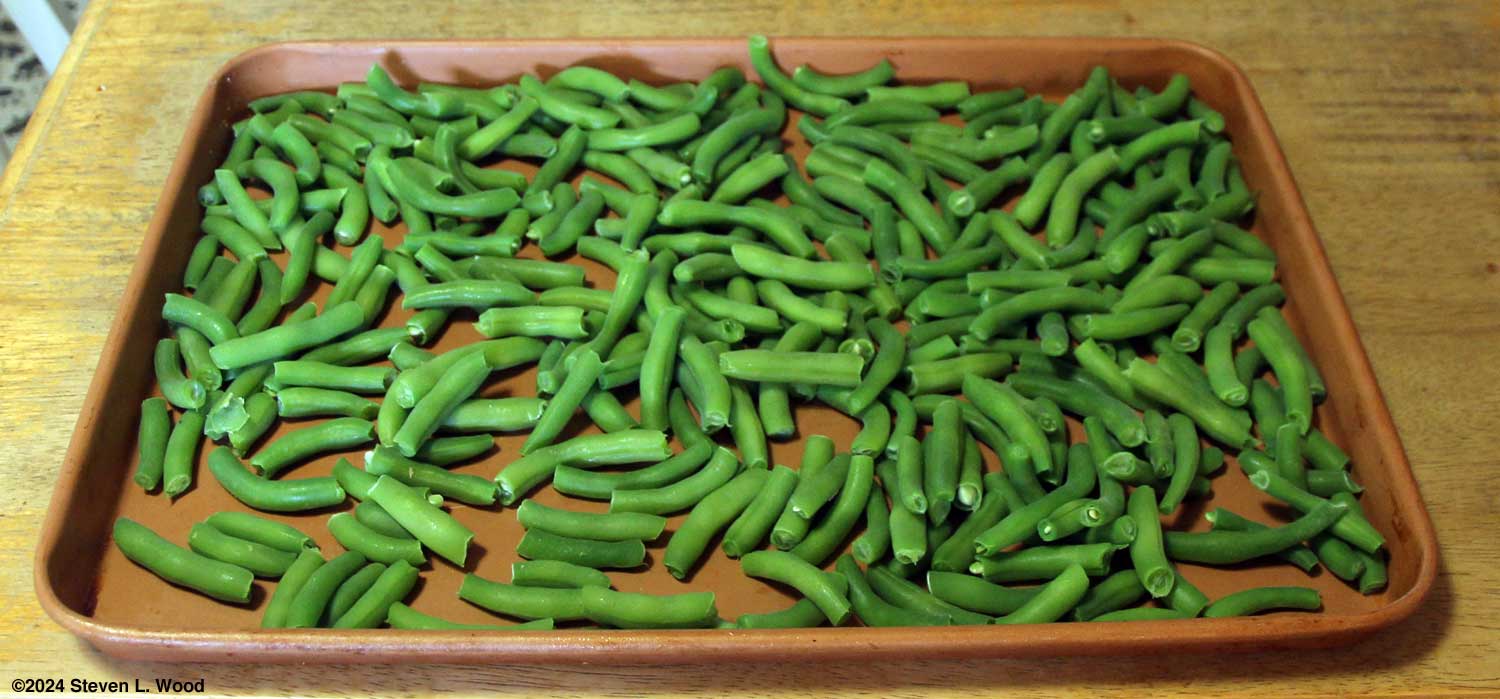
This picking didn't produce nearly enough beans to justify getting out our pressure canner, so the beans got washed, snapped, scalded, and frozen. They'll go into a gallon Ziploc freezer bag
Our how-to: Growing Beans. Sunday, July 7, 2024 - Sweet Corn
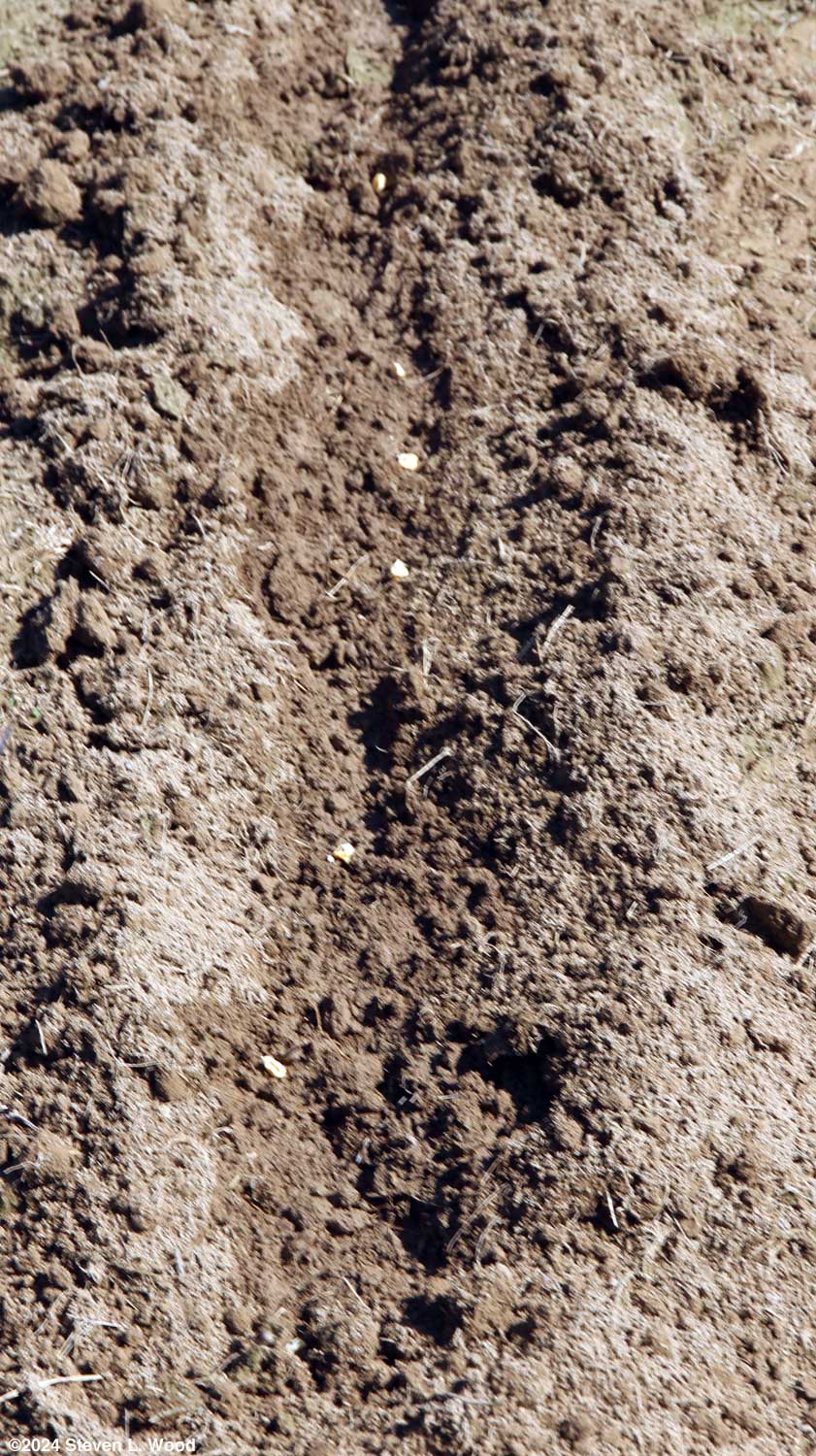
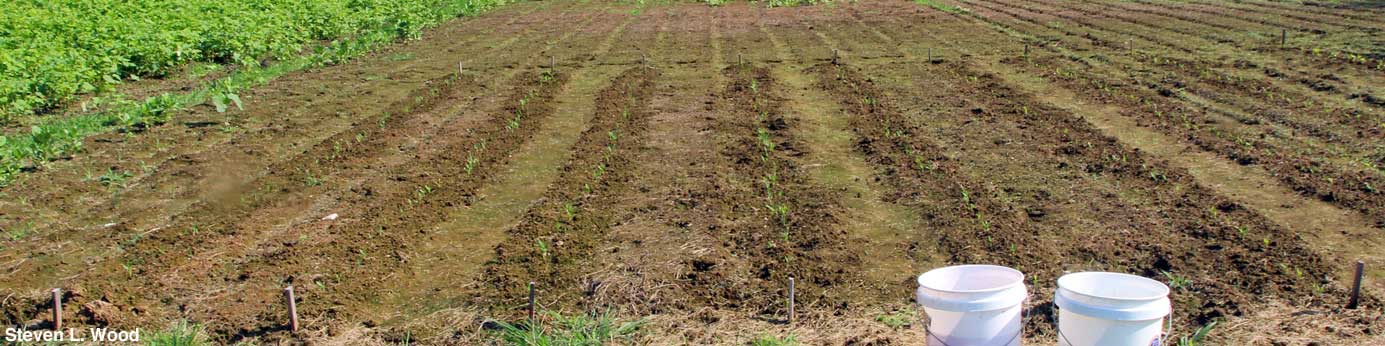
I staked out eight thirty foot rows spaced three feet apart. Then I strung the rows two at a time and made a shallow furrow down them with our garden hoe. Even though the soil showed moisture from recent rains, I watered each furrow before spacing seed in them four to eight inches apart. Then I raked soil over the seed that was one to one and a half inches deep and tamped down the soil for good seed to soil contact. Varieties planted with days-to-maturity figures in parentheses: Anthem XR (74), Vision MXR (75), X-tra-Tender 3473 (75), Yellowstone (76), Honey & Pearl (76), American Dream (77), Enchanted (78), and Supersweet Jubilee (85). Other than the Yellowstone and Supersweet Jubilee seed from 2022, the rest of the seed planted was fresh this year. Way back in my farming years, we used to grow and roadside two to four acres of sweet corn each year. Growing sweet corn in our East Garden plot has been a humbling experience many years. But here's my how-to on growing sweet corn: Growing a Garden Delicacy: Sweet Corn. I may have just enough season left to sneak in a planting of red kidney beans tomorrow. Our saved seed came from some commercial seed that had a 100 days-to-maturity figure, but ours has always matured at around 85 days.
Monday, July 8, 2024 - Kidney Beans
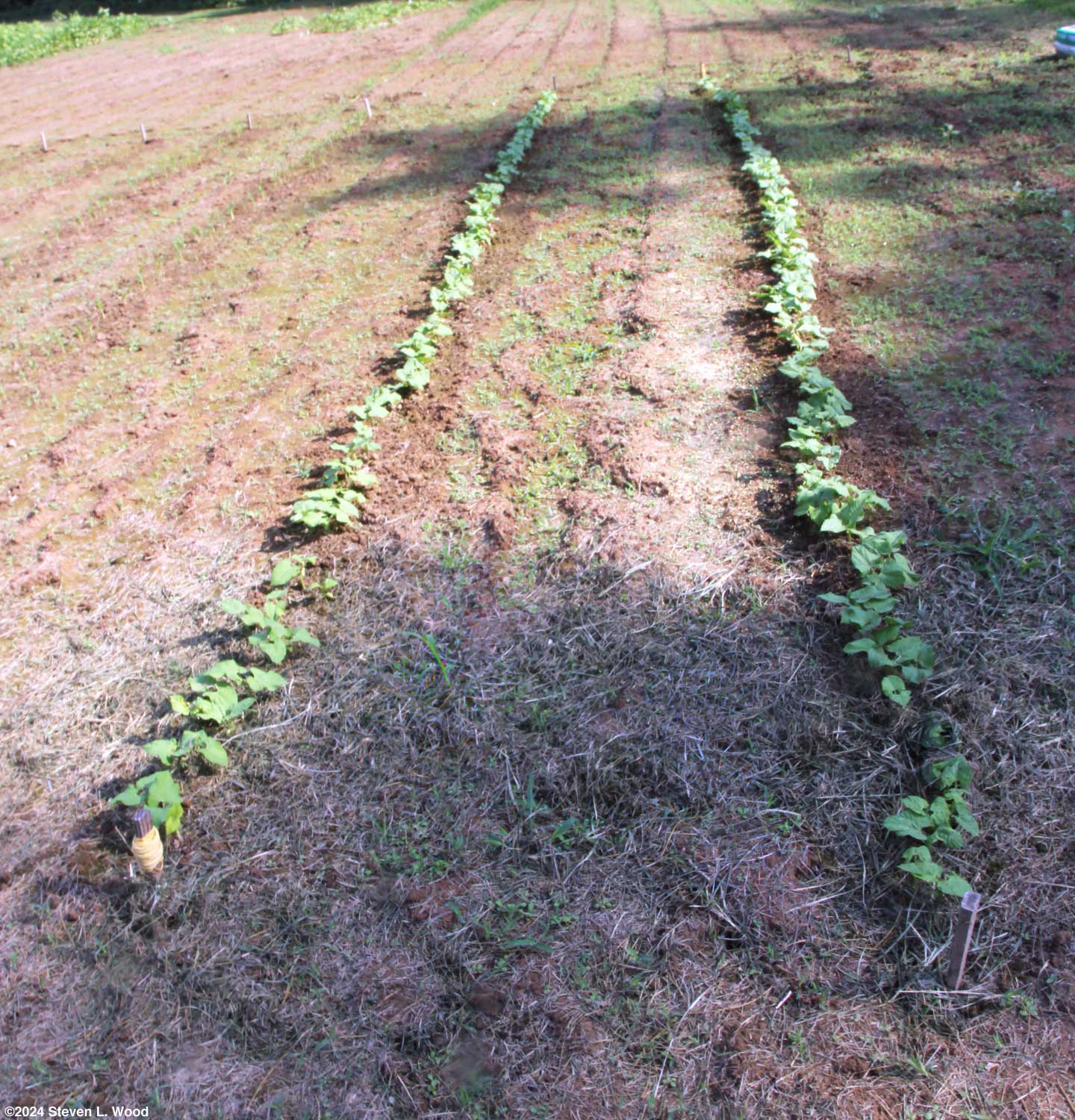
Today's planting didn't differ much from yesterday's seeding of sweet corn. I did have to redo my row spacing, as the second row for the beans fell right over where I'd planned to plant potatoes and had a lot of soil sulfur on it. So the rows of beans got spaced four feet apart. With over nine ounces of seed saved in 2022 and even more from years past, I wasn't sparing with this seeding. I tried to space the seeds one to two inches apart, although I frequently dropped several seeds very close together.
While I've had some off years in kidney bean production, we haven't had to purchase seed since 2015. Our start of this line of seeds came from Fedco Seeds.
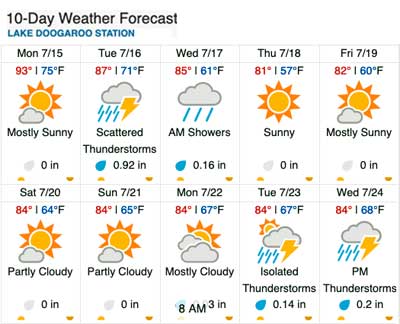
Fortunately, it's supposed to rain all day today. We need the rain, and my back needs the rest. A weather site originally said we might get a couple of inches of precipitation today, but it's looking like we'll get a good bit less. But even that should help the sweet corn and kidney bean seed I planted this week. It should also help our tomato plants. We took a small tray of Earlirouge tomatoes to the food bank yesterday. Something that brightened my morning was seeing a lovely Cora Cascade trailing vinca in bloom. I've noticed that the Vincas need more frequent watering than our other hanging basket plants. With rain coming and our garden cart already partially filled with rainwater, I moved a bunch of dirty trays, inserts, and pots into it to soak. This time around, I didn't add any bleach to the water. When the sun is back out, I'll scrub and rinse the items. And my wife, Annie, and I are going to celebrate today by eating out at the Sullivan China Wok. They have a great buffet. And also, one of our daughters, Samantha Rose, worked for them years ago at their original location. They treated her well.
As to the rain yesterday, we got 1.25 inches of precipitation. That's a good bit less than was predicted, but certainly enough to help our plantings. And, we didn't get any of the tornadoes that hit a bit south of here. With our garden plots too muddy to work and the grass too wet to mow, I'm turning to making a batch of our Asiago Cheese & Tortellini Soup. A local grocery deli quit selling this soup, so we had to figure out how to make it ourselves. There are lots of variations of the recipe online. I just prefer ours.
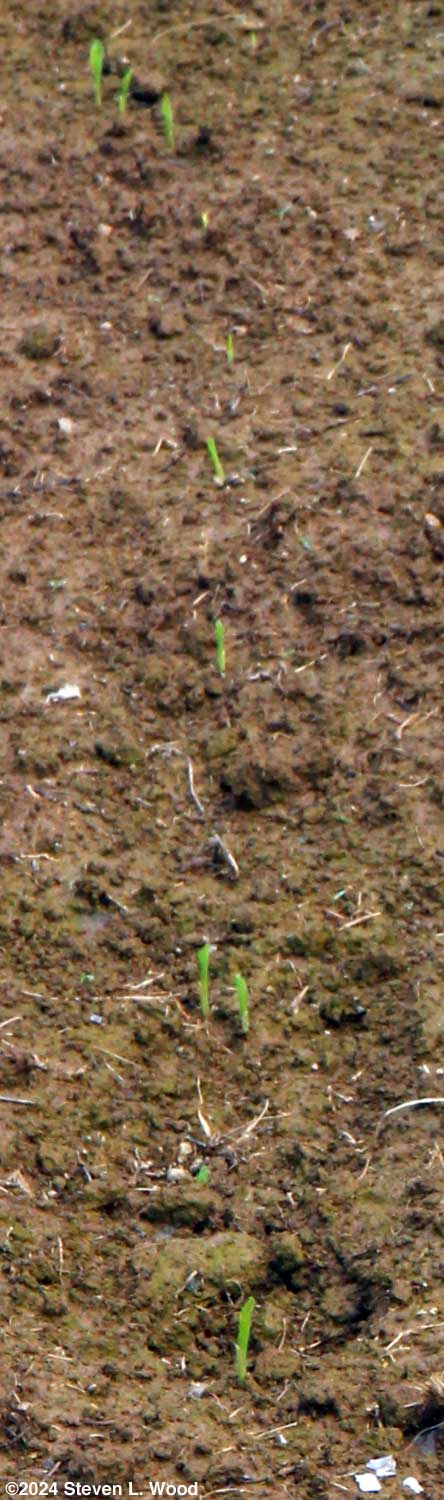
While out near the East Garden plot, I was thrilled to see some tiny, tiny sweet corn spikes pushing up through the soil. I had to look really closely to see them, but was rewarded that most of the eight rows showed some germination.
I'm not sharing Earlirouge seed this year, as last year's crop was so lousy. But if you're looking for a medium sized tomato variety with great flavor and deep red interiors, Earlirouge is for you. Seed for the variety is available from the Turtle Tree Seed Initiative. I gave them some seed that they grew out and began offering a few years ago. Turtle Tree is a small, non-profit seed company, part of Camphill Village U.S.A, a 501(c)(3) nonprofit organization. Camphill Village is an integrated life-sharing community located in Copake, NY. Of Turtle Tree Seed’s approximately 30 person team – 20 have some sort of developmental difference. As a former special education teacher, I like what Turtle Tree and Camphill Village are doing for those with disabilities.
I saw that some of our early green bean varieties were approaching being ready for another picking. Our later bean varieties still haven't put on pods, a disappointment.
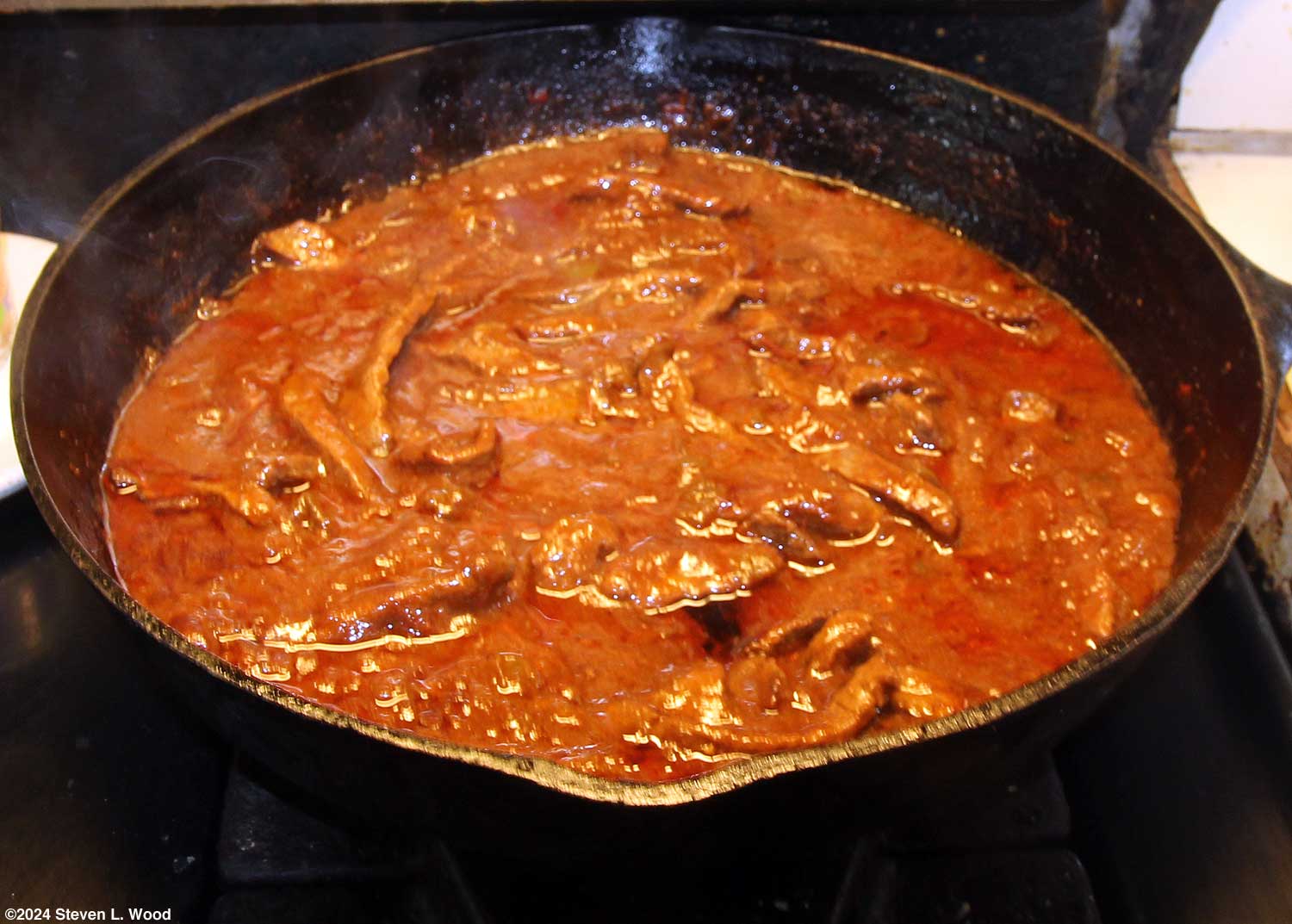
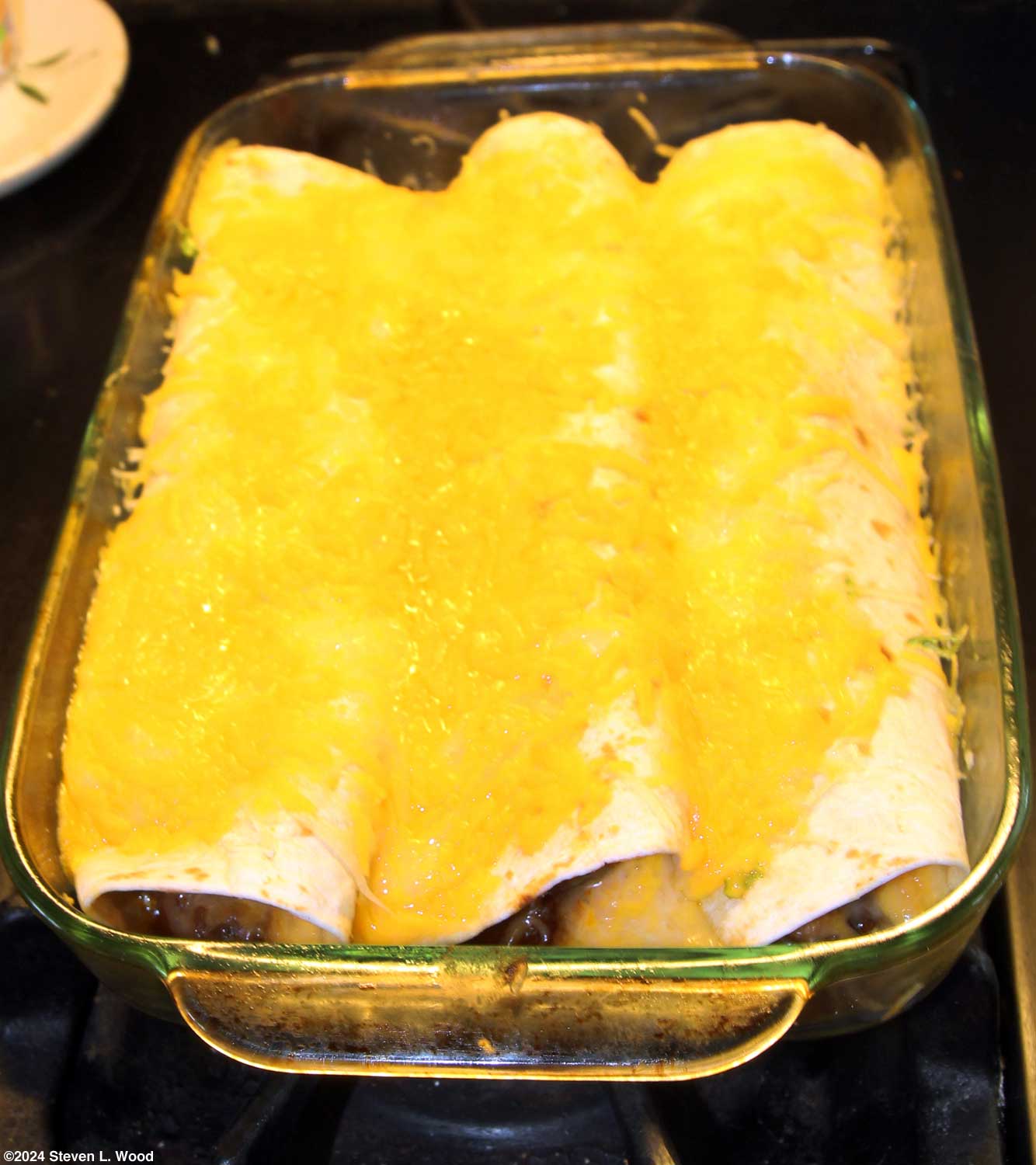
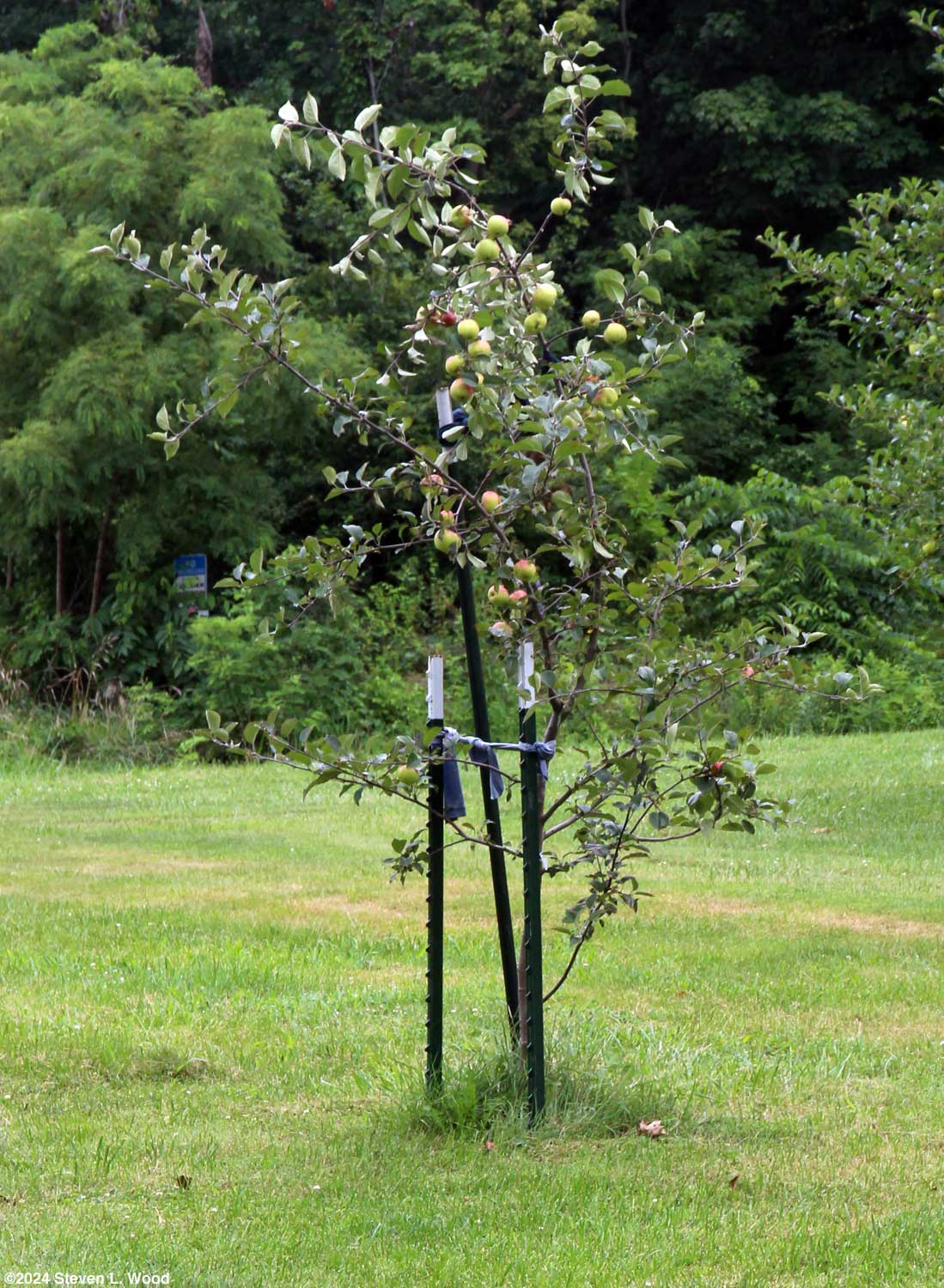
I need to again tie up our youngest apple tree that is about bent double with the weight of apples on it. With some time on my hands, I made beef burritos for supper. I used thin sliced round steak that had been marinated. Then I cooked it for hours in the marinade, beef broth, picante, and taco seasoning. The tortillias got filled with the meat, refried beans, and Mexican cheese before being baked at a low temperature.
As to gardening, I picked four small Earlirouge tomatoes today. Something I left out yesterday was a photo of the beef burritos I made. (Not a great shot!) The idea for them came from a place in Chicago where a cousin used to take me that had fantastic beef burritos. I hope to finish my weekly mowing chores tomorrow. I had to wait to start mowing today, as we had a heavy dew down plus some still standing water from recent rains. That pushed the mowing into the heat of the day. I'll try to get an earlier start tomorrow.
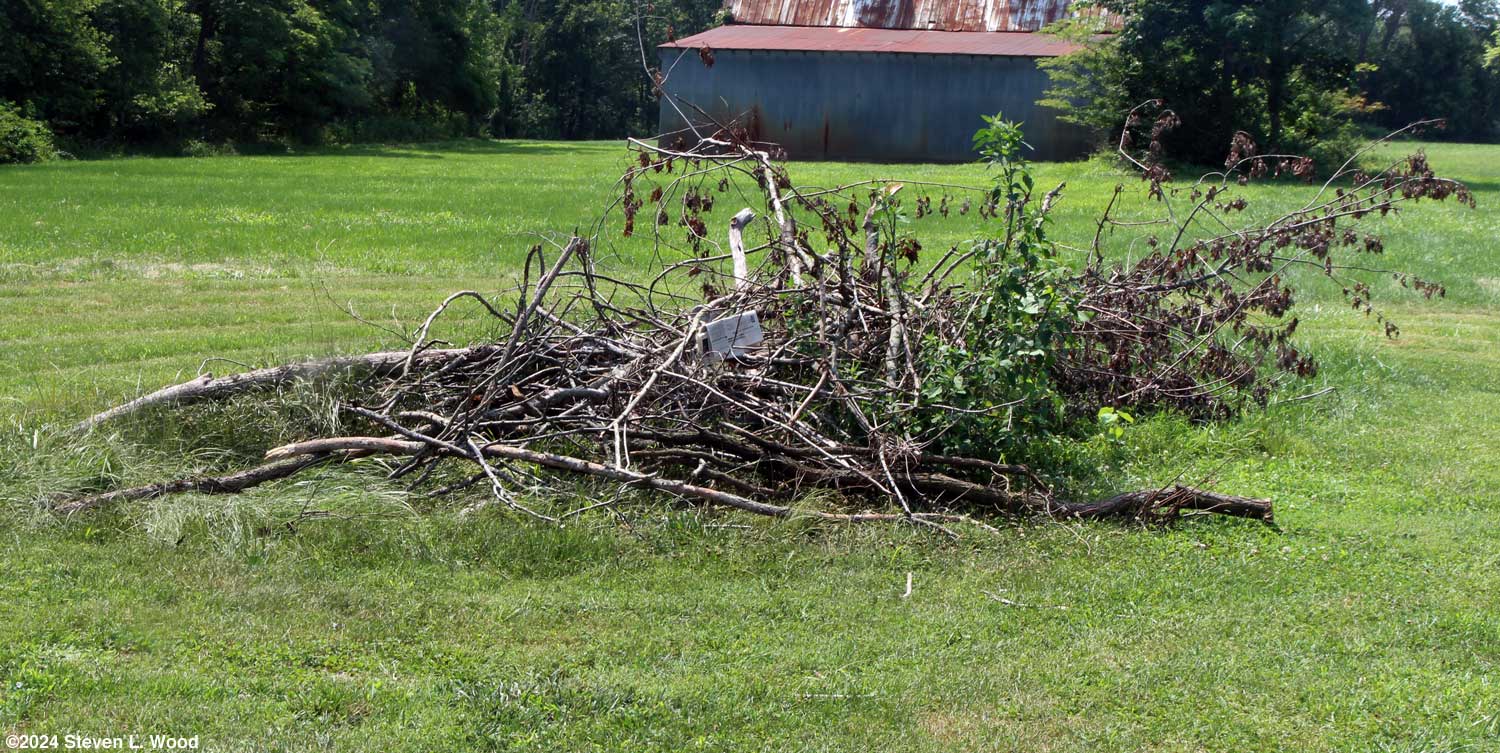
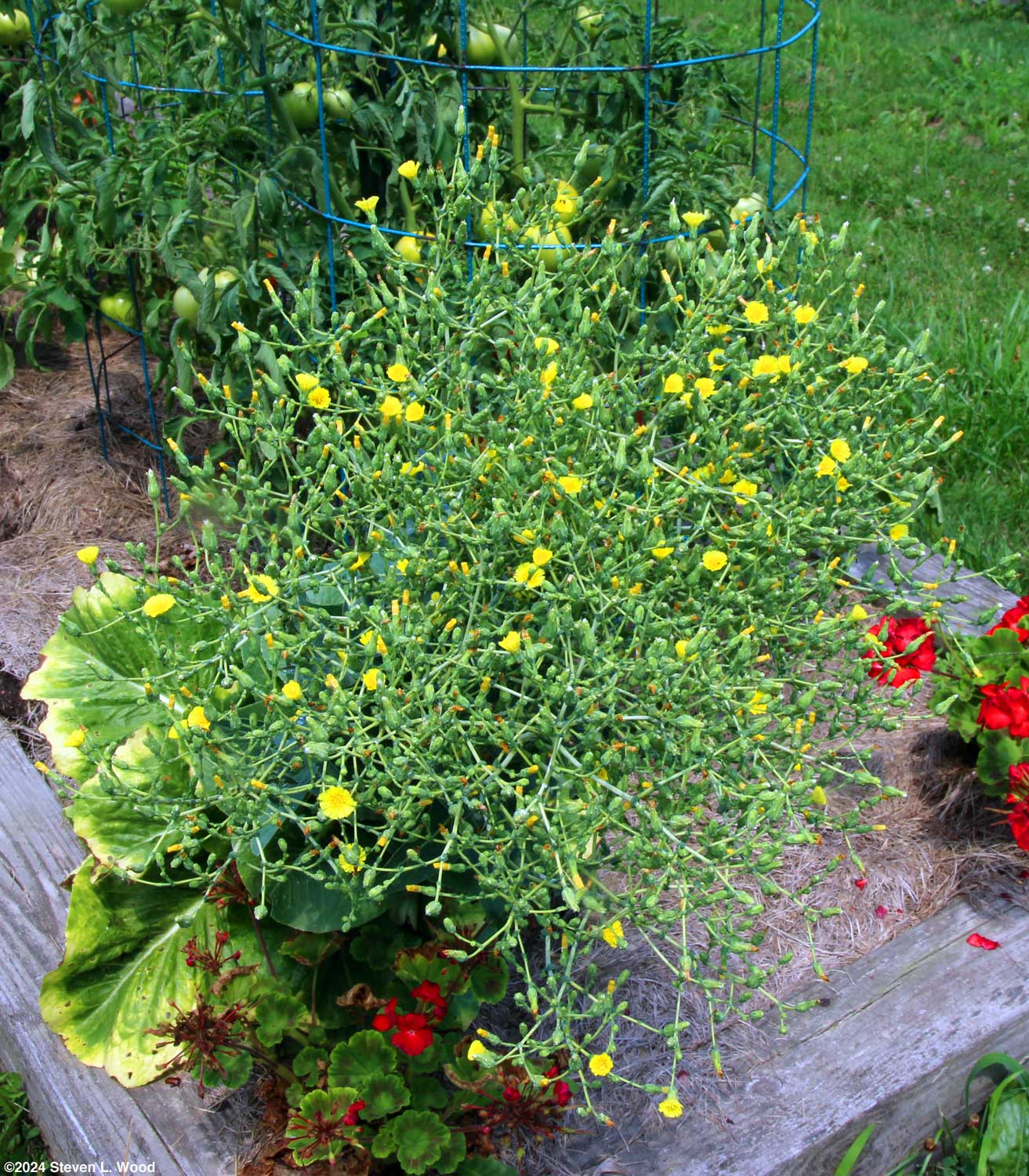
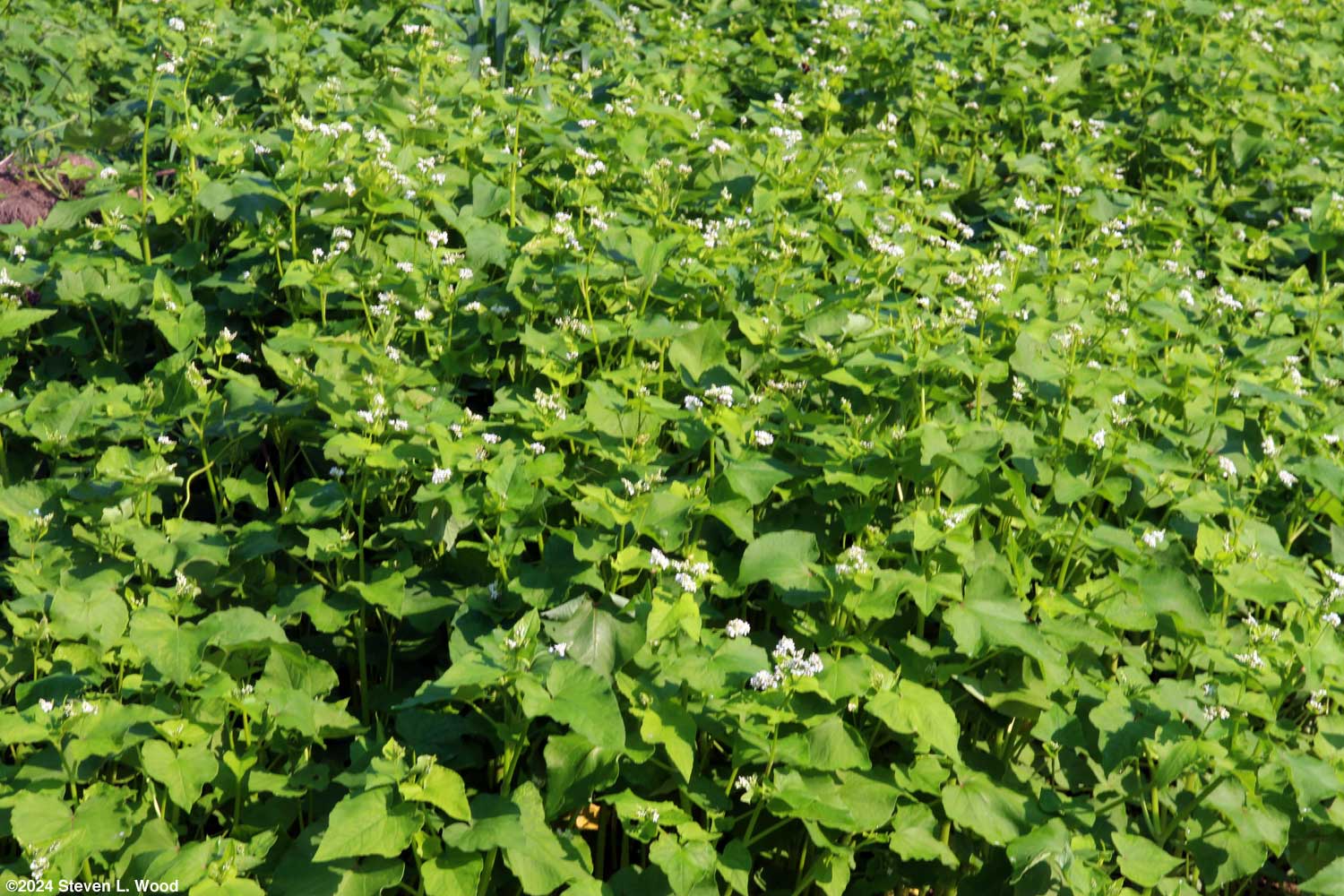
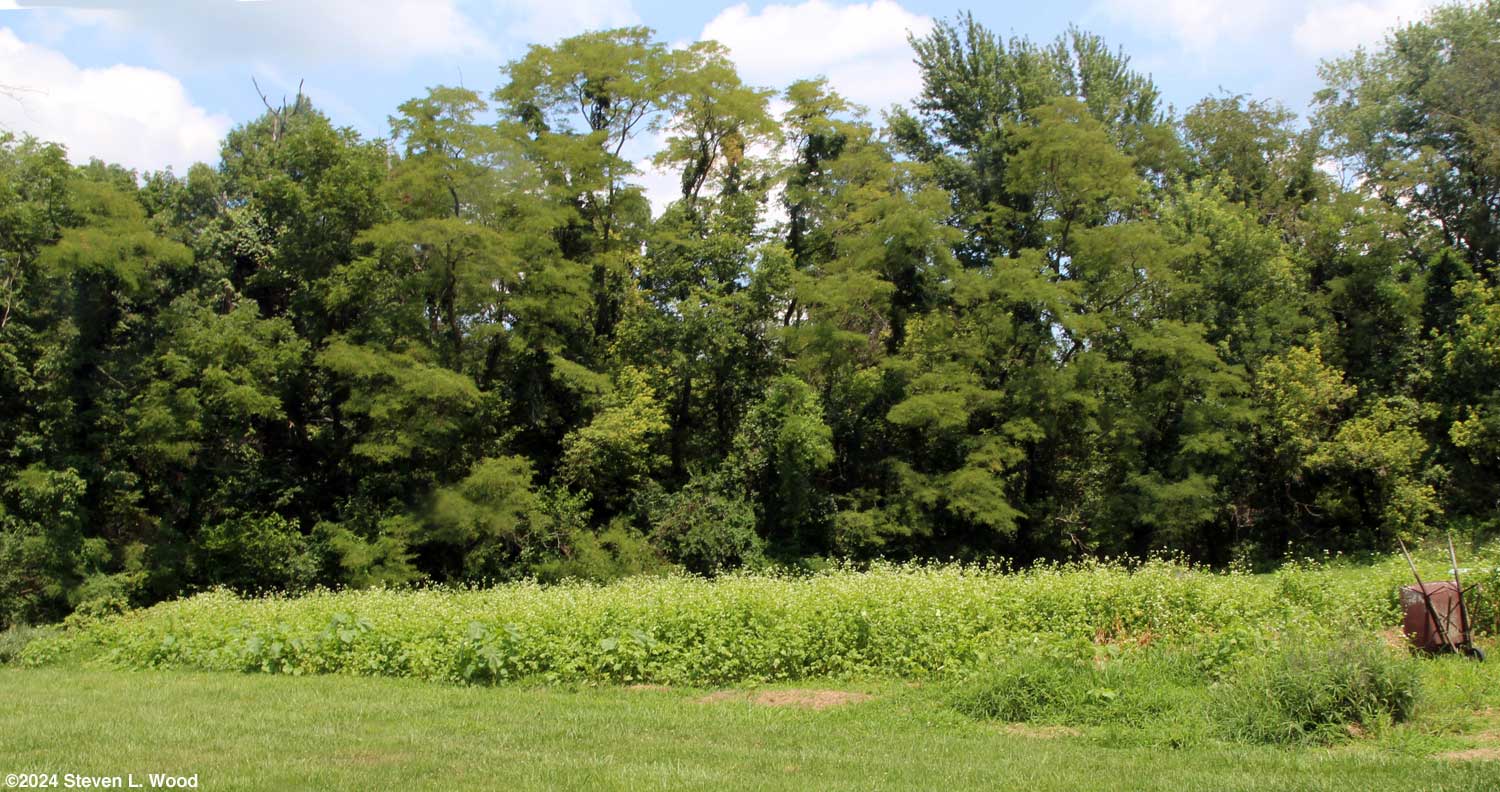
Wow! Is it ever muggy out today! I'm sorta iffy on mowing this afternoon, but tomorrow and the following day may be even hotter. It's July in Indiana. I got out this morning for yet another unsuccessful attempt at torching our burn pile. But while I was out, I saw that our buckwheat planted in the unused part of our East Garden plot is coming into bloom. It will soon be time to mow it down and turn it under before planting another round of the excellent turndown crop. But for the next week, I'll enjoy the beautiful blooms of the buckwheat.
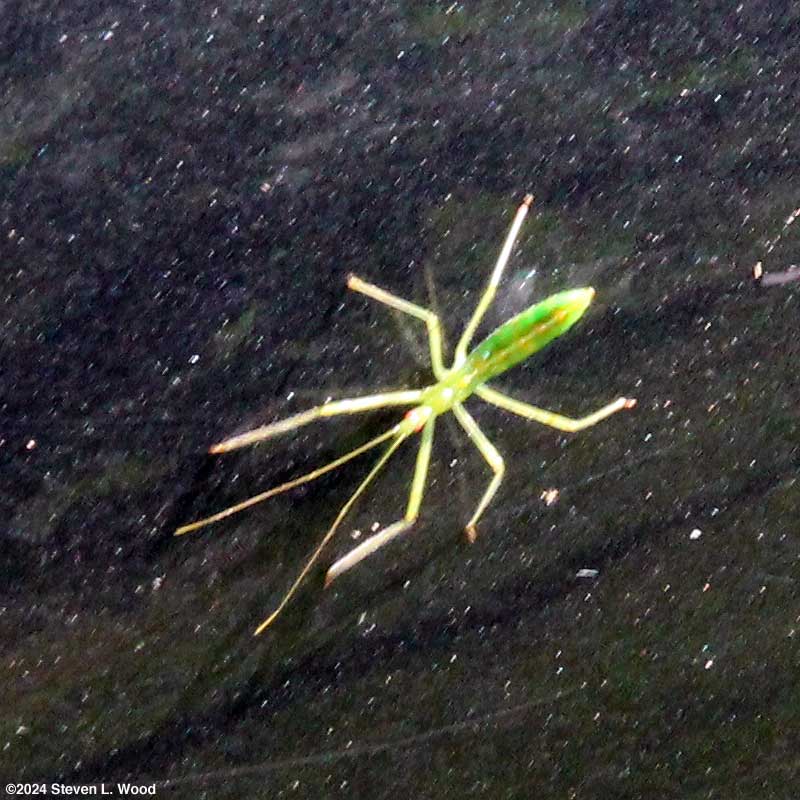
On my way back to the house, I spotted an unusual looking bug on the side of my truck. I grabbed a shot of it. I think it may be a green assassin bug. They eat all sorts of other bugs, beneficial and otherwise.
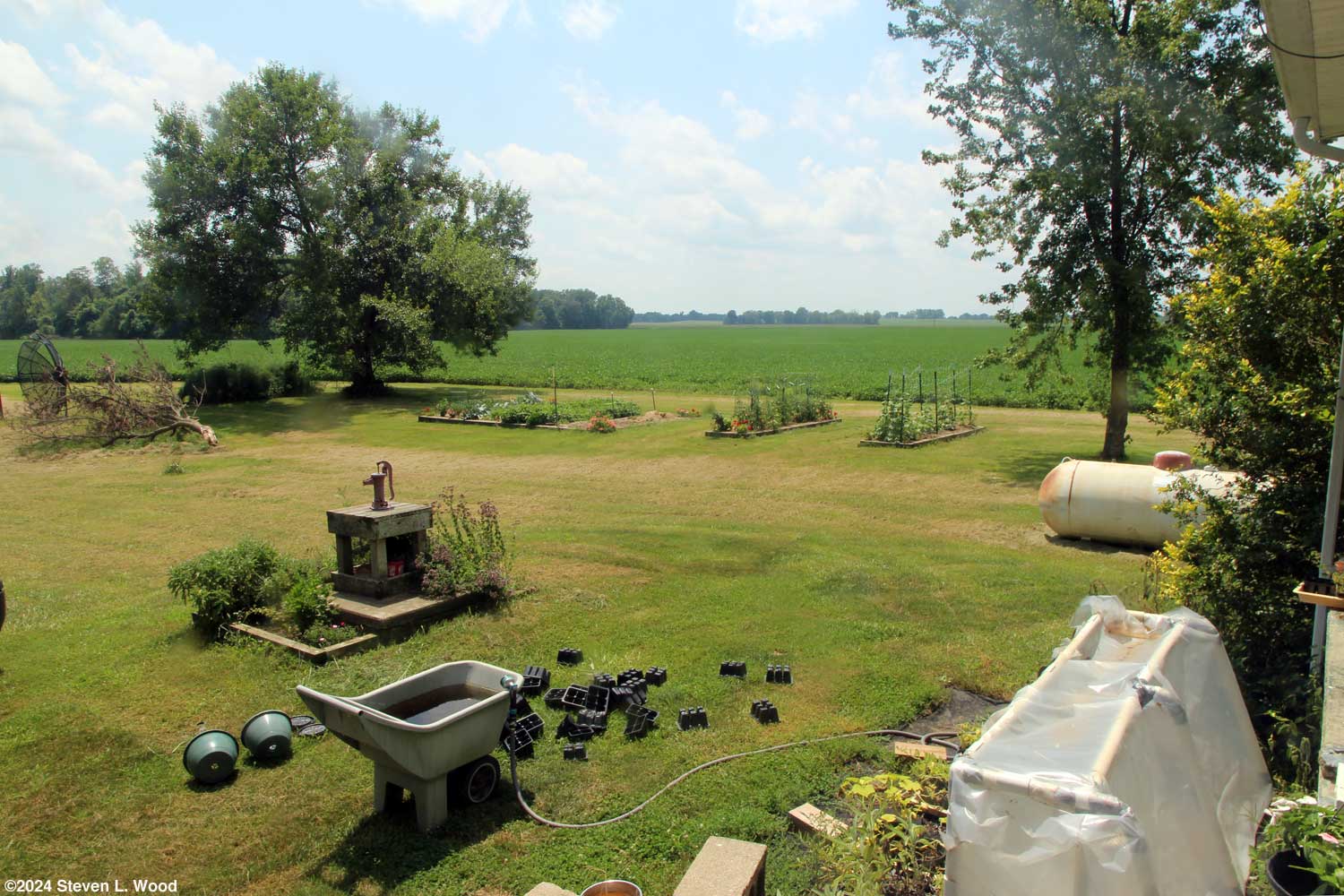
A project I began several days ago is about done. I soaked used trays, pots, and inserts in our garden cart. Our heavy duty Perma-Nest trays took a good bit of scrubbing with a brush to come clean. But our standard black 1020 trays, some pots and the inserts only required a high pressure spray to come clean. As you can see from the photo at left, I still need to pick up and put away the last of the inserts and a couple of hanging basket pots when they're completely dry.
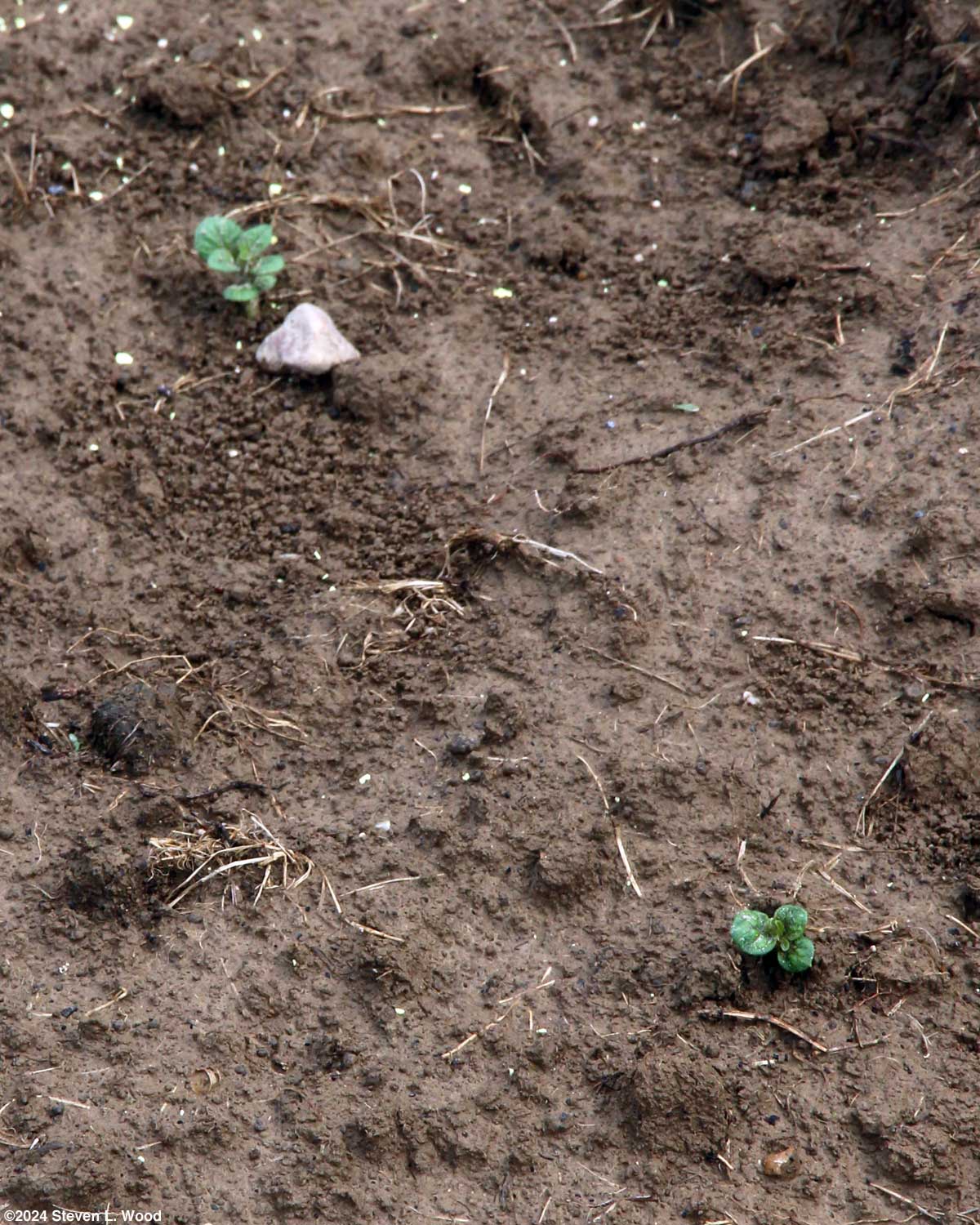
After a bit of watering this morning, I moved on to scuffle hoeing around our two rows of kidney beans. For some reason, they had a lot more seedling weeds sprouted around them than our corn rows. I also cleaned up a few weeds around the few potato plants that have emerged in an adjacent row.
Used at the right time when weeds are just emerging, a scuffle hoe is an amazing tool for keeping ones garden rows weed free. Also known as a hula hoe, I first learned of the tool from the old Jim Crockett Victory Garden TV show and book.
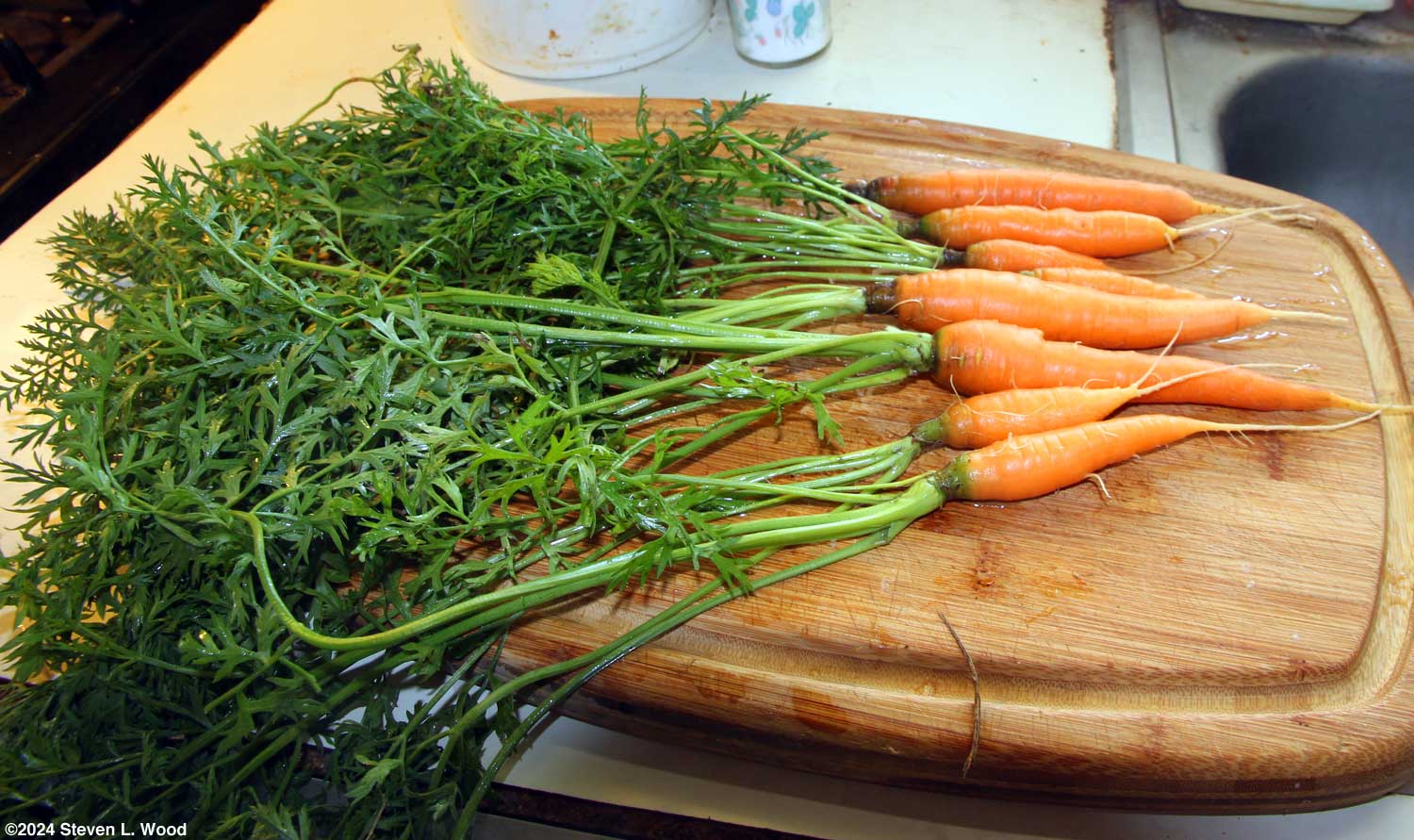
When I was out watering, I dug a few carrots with just my gloved hand. I went back out later prepared to dig more carrots. I ended up bending my best garden trowel in the dry hard soil. The few carrots I got then were tiny. But I also picked some green beans. We'll have fresh steamed carrots and green beans with our supper tonight.
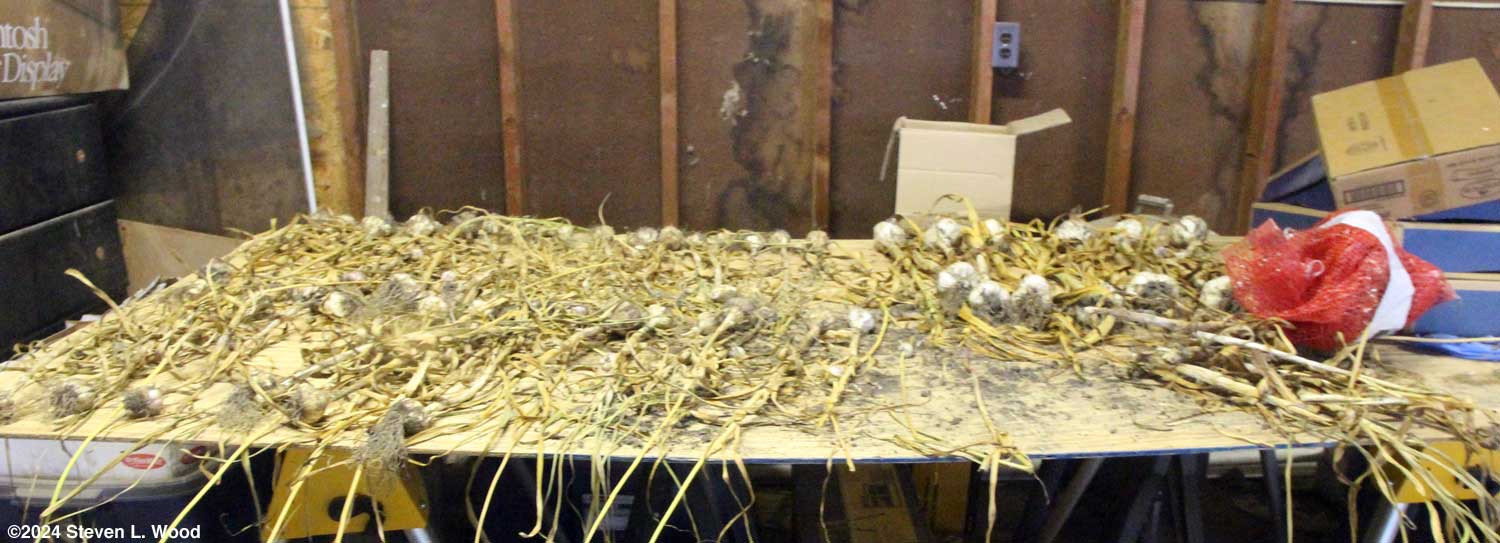
We received a little over an inch of rain overnight. And there are more storms on their way for later today, tonight, and possibly tomorrow. So any serious outside work is out for now. But I had a drying table full of garlic ready to be trimmed and stored.
I cut off the garlic tops around an inch above the bulb and trimmed the roots. In sorting the garlic, I was disappointed that most of our Chesnok Red and Purple Glazer garlics had split wrappers or a rotting clove in them. While I got a big bag of elephant garlic and a somewhat smaller one of regular garlic, the bag of culls was quite large. Since I've already made lots of garlic powder from some cull garlics at harvest, the culls will go to our local food bank. They're still good for cooking, but wouldn't store well over time. The bagged and stored good garlic will mostly go for planting this fall. Our how-to: Growing Garlic.
Last evening, I addressed a problem with our youngest apple tree. It had so many apples on it, it was nearly bent over. So I drove a tall T-post into the ground and pulled it upright. The tree is just too young and spindly to support so many apples. I think our green beans are ready for a picking today. It's still morning, and the bean plants are wet with dew. I'll wait until they dry out to begin picking, as working the plants wet is said to possibly spread disease amongst the plants. After picking, there'll be washing, snapping, and then canning. It could be a long day. It usually is on green bean days. Our how-to: Growing Beans. And note that with most green bean varieties maturing in around sixty days, there's still time this summer to grow a good crop of them. According to Texas A&M, "Most people will agree that the flavor of the fall-grown green beans far exceeds that of those produced in the spring." Later I got another light picking of green beans today. Again, there weren't enough to can, so I froze them. It appears there will be another half gallon of frozen green beans from this picking.
Our Provider, Contender
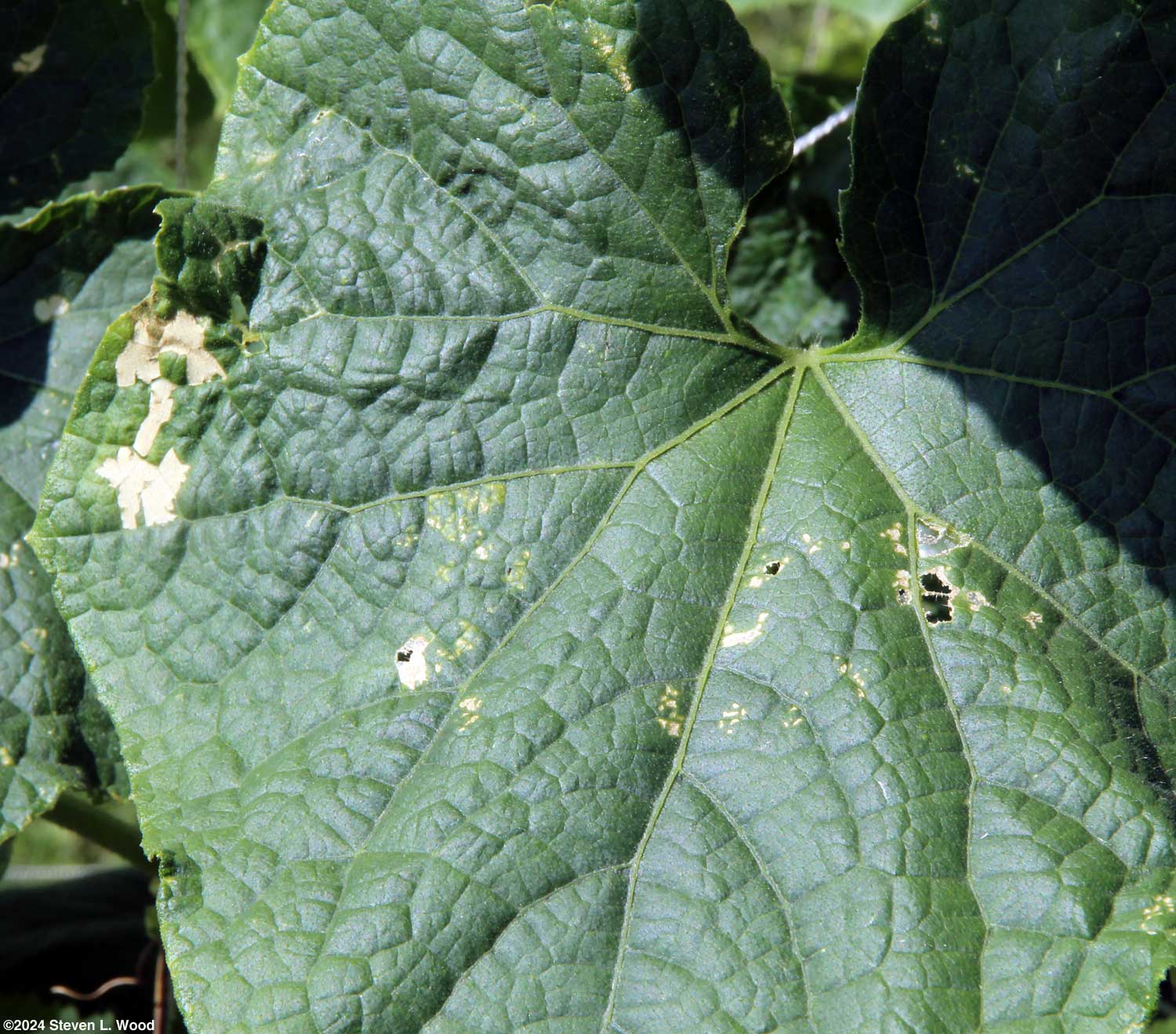
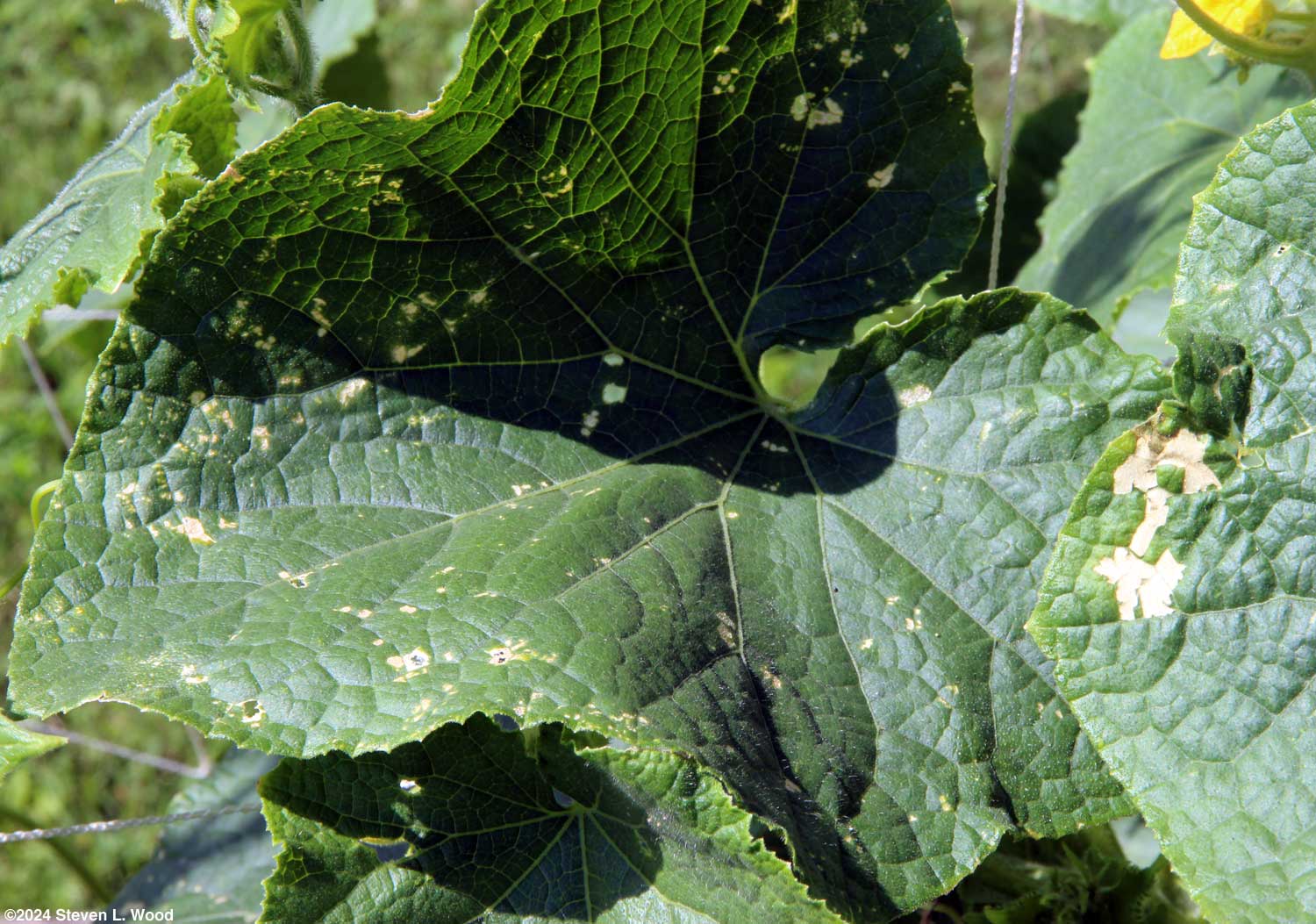
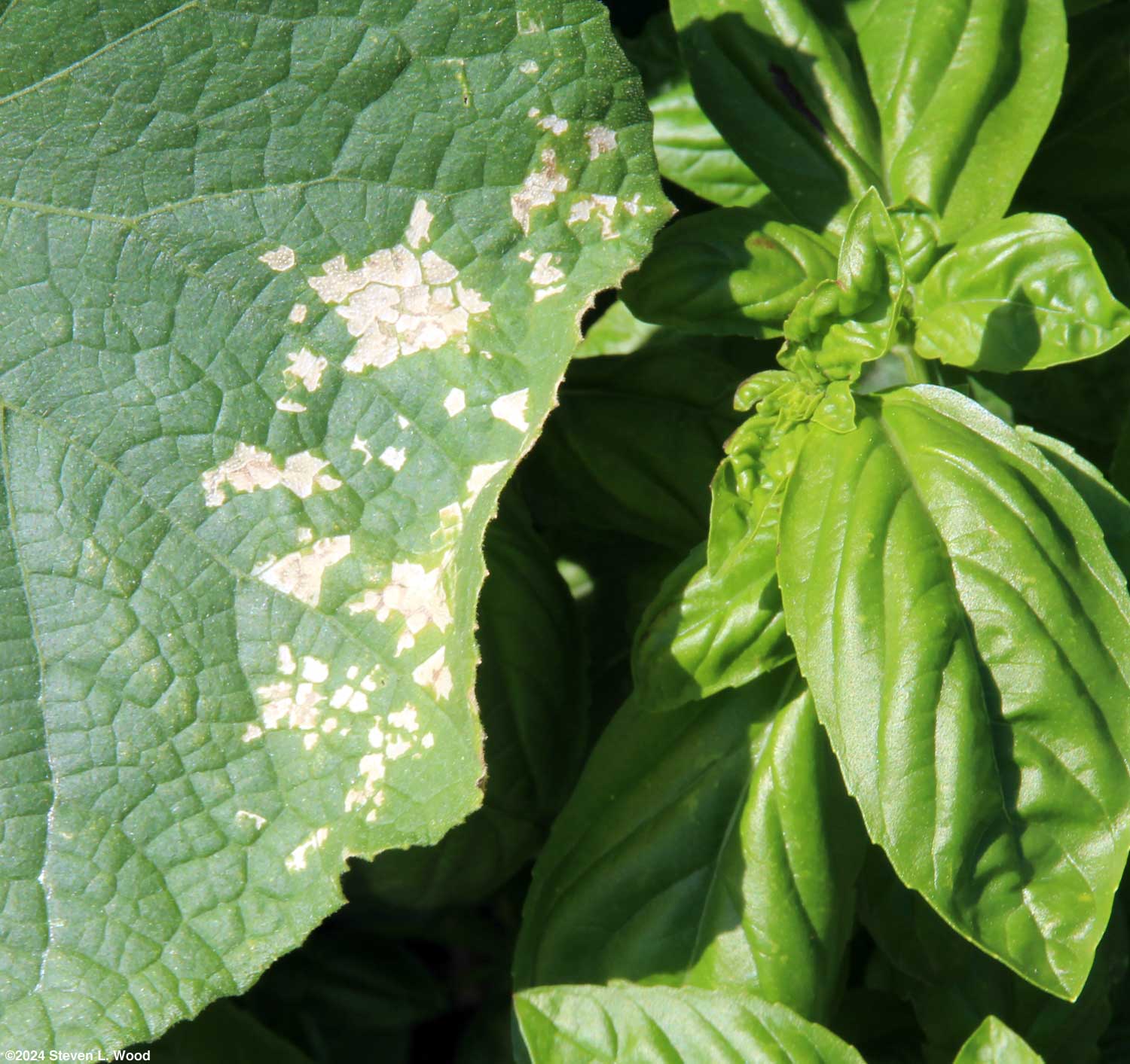
We have a lovely day today, but I was totally lacking in gardening ambition. So after doing a little scuffle hoeing in our East Garden, I quit. But later my conscience got to me. Instead of real gardening, I began weeding our flowerbeds. The front flowerbeds were filled with weeds around our few hosta plants. The side beds had gotten so bad that I had sprayed them with Roundup. I wound up with a garden cart full of weeds and some grass that had been treated with the herbicide. I was going to dump the mess along the woods, but did a search about composting weeds killed with Roundup. According to the National Gardening Association and New Mexico State University, such weeds are safe to compost, as the active ingredient apparently doesn't persist. So our cart of weeds went onto our working compost pile. Uh-oh! When out this afternoon picking tomatoes, I noticed spots on some of the leaves of our cucumber plants. I haven't been able to identify the infection as yet.
As I tried to identify the problem, I kept running into pages that said there was no cure for the infection. Since I've had some luck with such situations in the past using Serenade biofungicide and Fungonil Fungicide, I loaded our insecticide sprayer with Fungonil and sprayed the plants at dusk. The sprayer still had some fruit tree spray in it which may help with the problem.
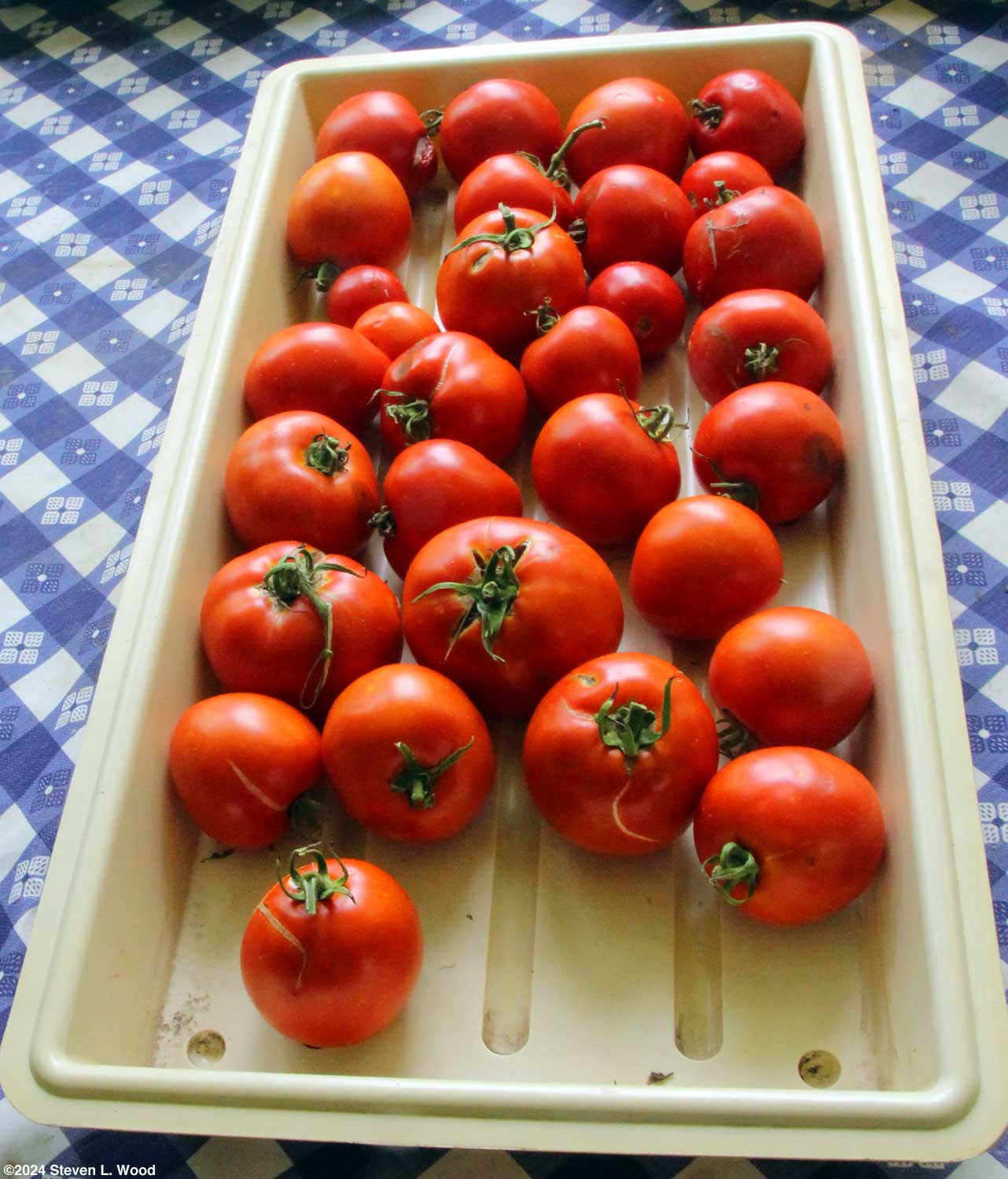
In the past, Serenade has proved effective in stopping fungal and virus infections that some authorities deem unstoppable. While this information may seem unhelpful since Serenade is no longer on the market, there is an alternative. A biofungicide with the same active ingredients as Serenade is available. Cease biofungicide is a bit expensive, as it's only sold by the gallon, but may prove effective. As I usually do around this time of the season, I began keeping a tray of tomatoes on our dining room table. Some of the tomatoes are ones that need to ripen a bit more, as I sometimes goof and pick them a little early.
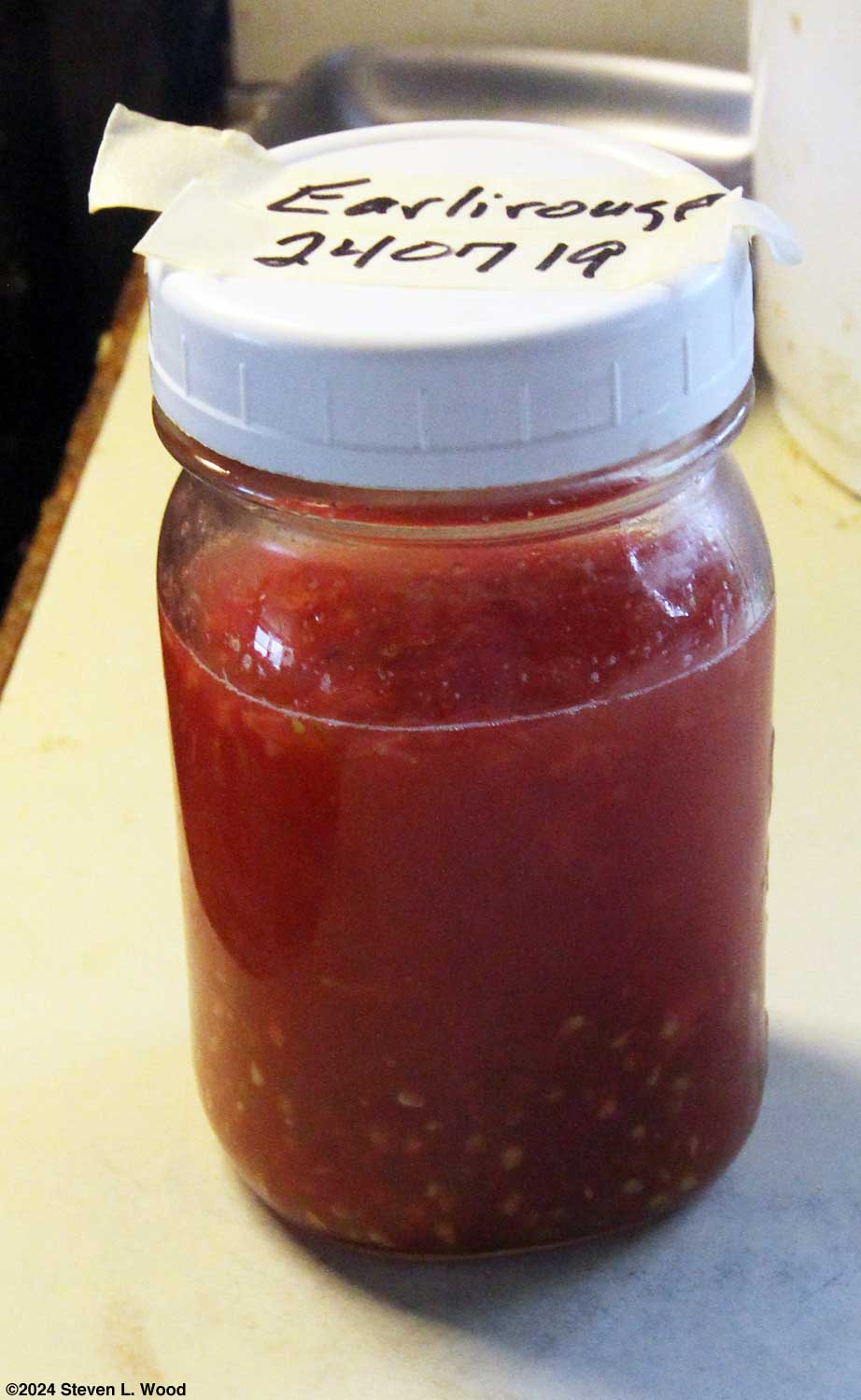
I often cut open the squeezed tomatoes to harvest the last of their seed. With just eight tomatoes done today and not having good seed from last year's plants, I cut open each tomato and harvested the last ten or so seeds in each one. The eight tomatoes released what is probably hundreds of seed. The seed, pulp, and juice go into a canning jar. I added a quarter teaspoon of sugar to the mix to speed fermentation. I'll let the mix ferment for three or four days, stirring it a bit each day. Then I rinse the seed, floating off any tomato flesh that didn't decay in the fermentation process. I strain the seed, removing the few pieces of tomato flesh still clinging to seeds and spread the seed over a paper towel or coffee filter over a paper plate to dry. I let the seed dry for several days. Eventually, I work the seed between my fingers and palms to separate it. Tomato seeds tend to clump together. Once separated a bit, the seed goes into a seed envelope and into the freezer for long term storage.
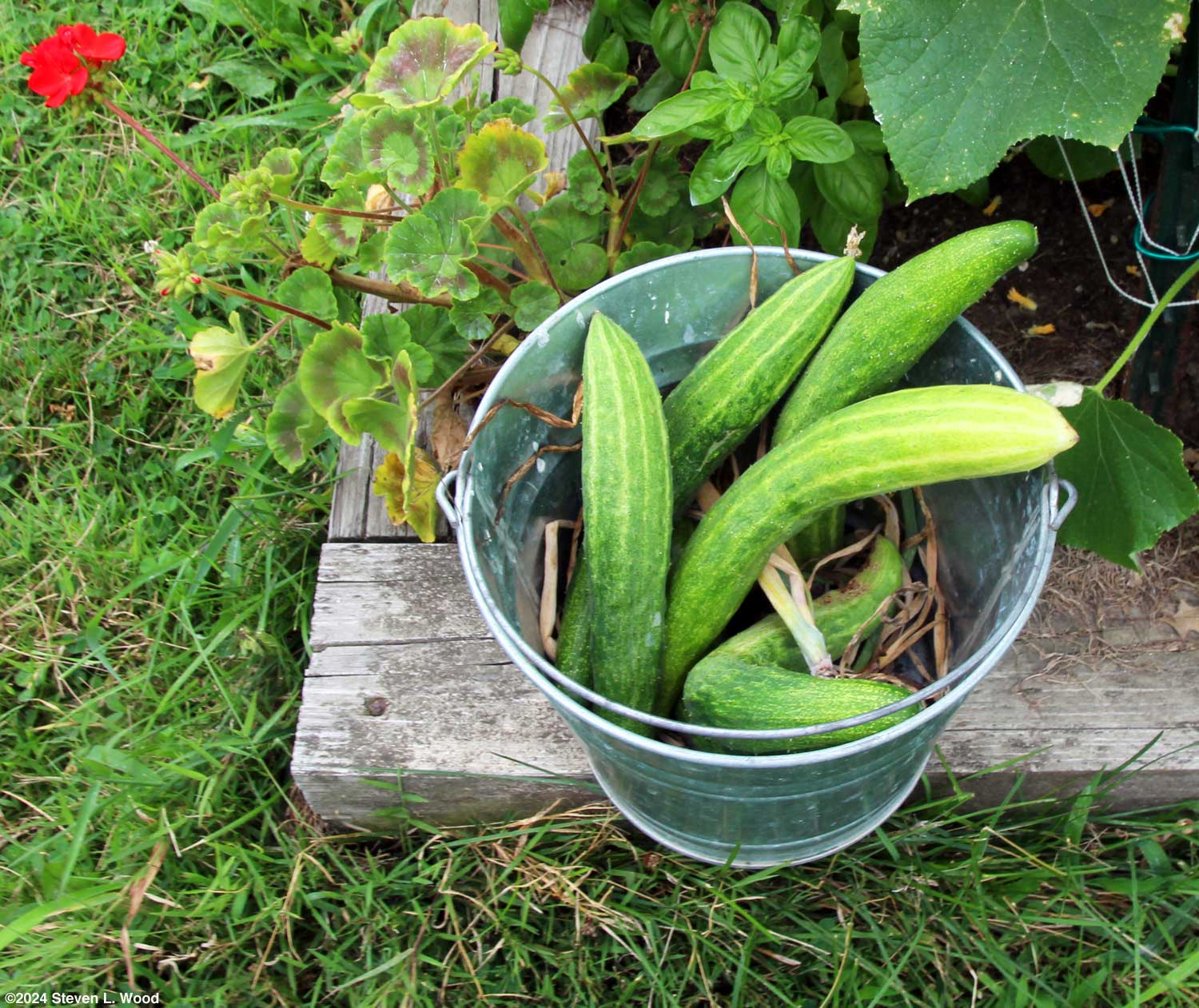
While out in the back yard, I stooped to pull a weed in our cucumber patch and saw a ripe cuke. Looking more closely, I found about five rather small (for JLPs) cucumbers. They're at the size to be good for table use. The ripe cucumbers came from an area of the bed where I'd strung hose from our rain barrel to water them. I'd not seen a female bloom on the vines...still haven't. But the watering and few cukes says a lot about our weather conditions this season. Along with a bunch of cull garlics, the cucumbers will go to our local food bank for a food distribution tomorrow.
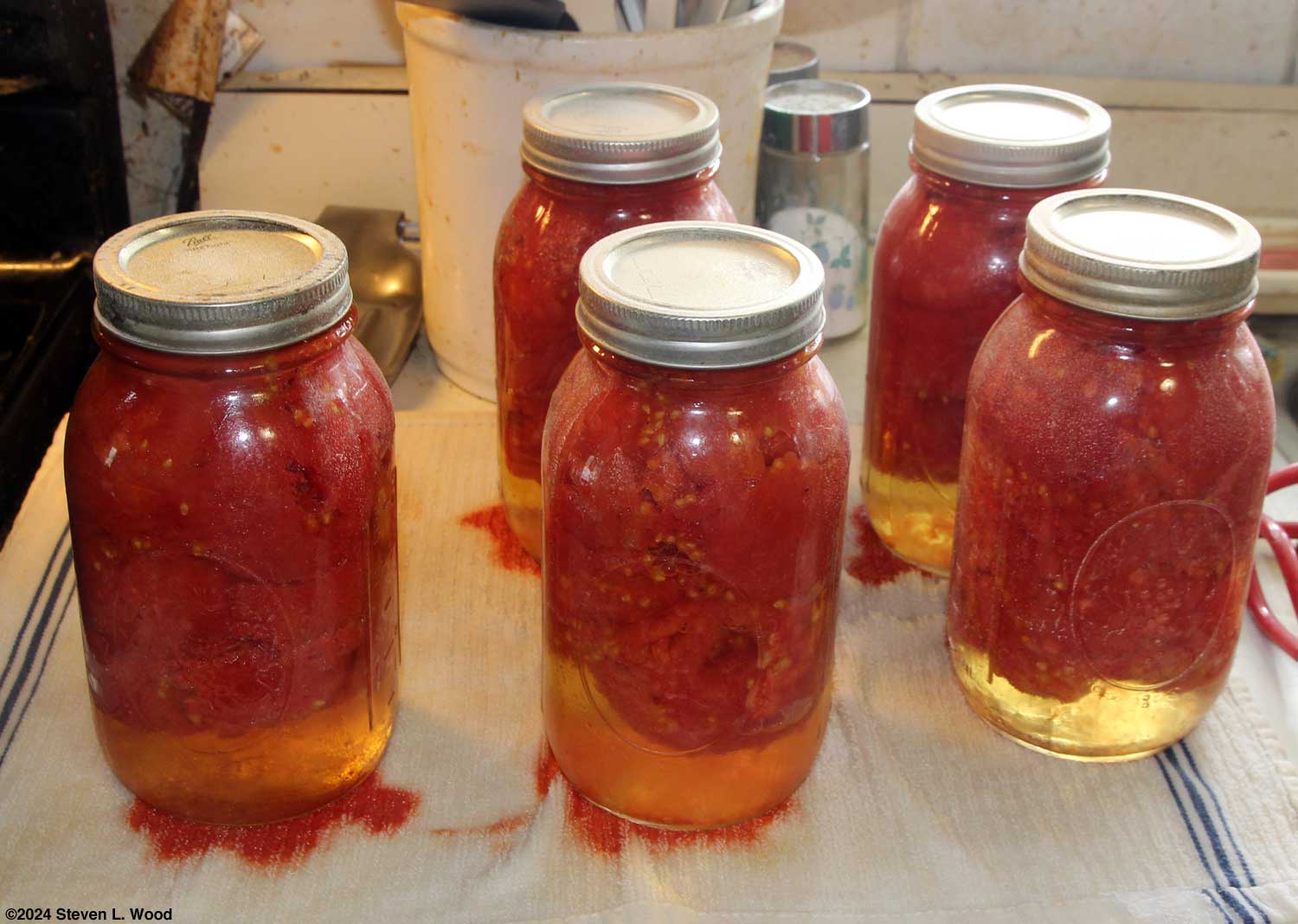
Canning tomatoes takes a bit of time. Quarts have to be water bath canned for 45 minutes, which doesn’t include time for the water to reach the boiling point. Preparing the tomatoes takes even longer. By the time the tomatoes were done, so was I. Being an Earlirouge day, I floated off tomato trash and floating seeds from a jar of Earlirouge seed I'd begun saving several days ago. Depending on a germination test of the seed, I should be able to offer seed via the Seed Savers Exchange for next year's plantings.
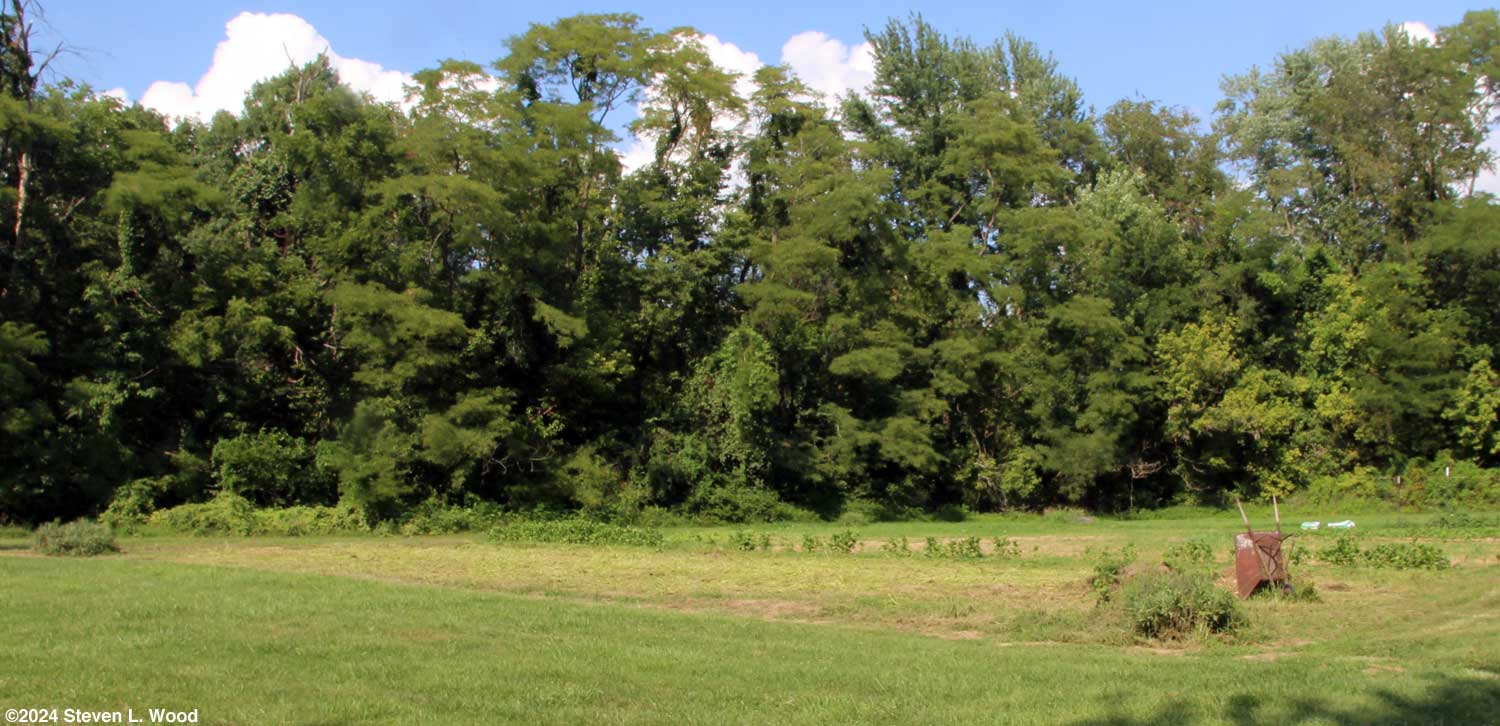
I'd like to say that I mowed down our buckwheat plants in the East Garden yesterday. They'd gotten tall and were in full bloom. Actually, the mower just knocked them over. But buckwheat doesn't upright after being knocked over. It just dies. So I'll let the buckwheat decay a bit before tilling it under. Then, I'll re-plant more buckwheat!
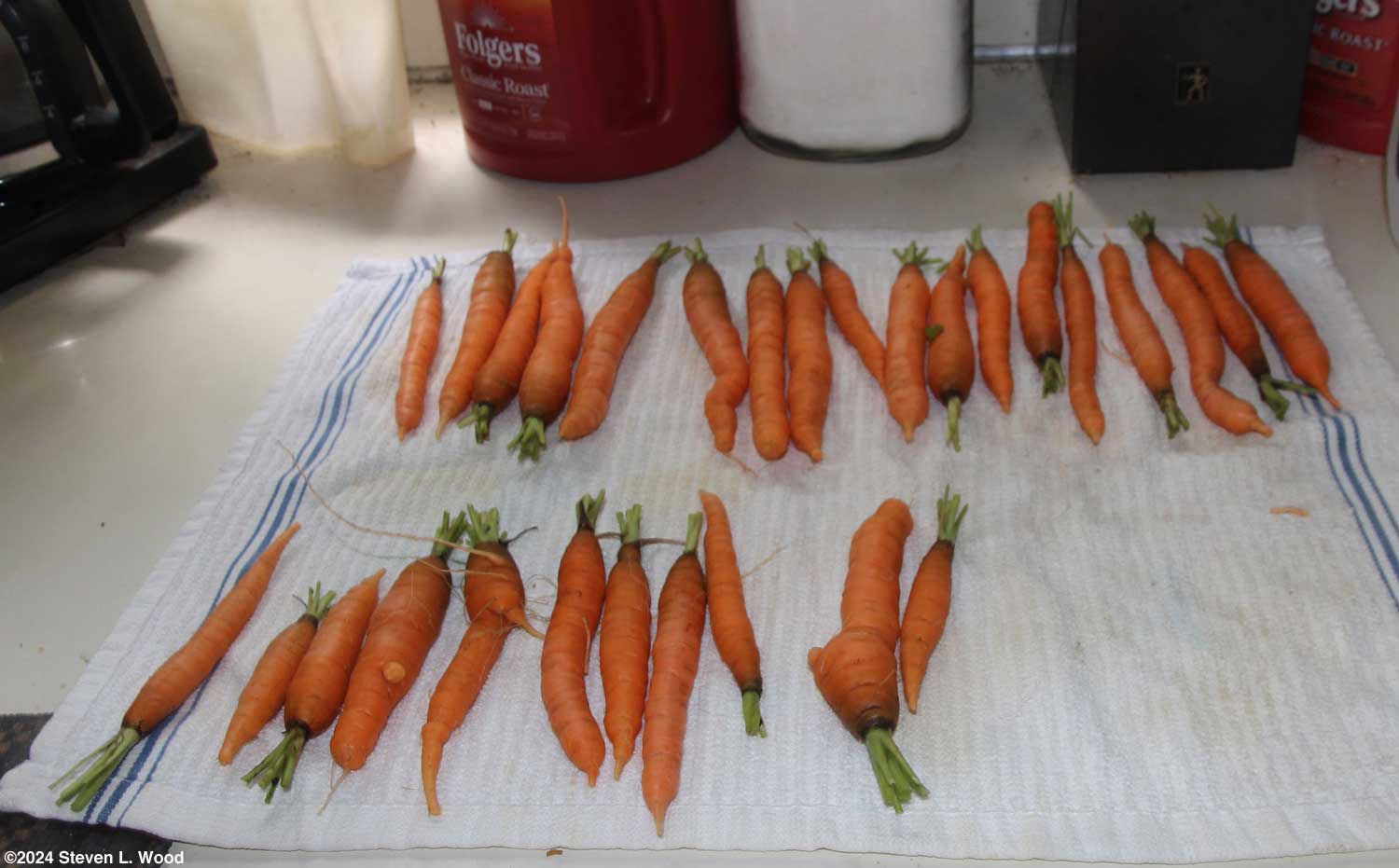
I did get out and dig the last of our spring carrots. They again were on the small side from lack of soil moisture and weed pressure. But with what I dug on Tuesday and earlier, we may have enough carrots to last us until our fall carrots come in.
Our green beans were ready for another picking today. The dew dried off the plants fairly quickly, so I was picking by eleven o’clock. I got beans from all six varieties planted, but only a few from the Stringless Green Pod plants. I was impressed with what our Bush Blue Lake plants produced. There were lots of fat, beany beans there. And I think a mix of bean varieties inproves the flavor of any saved mix. The picking only took an hour. Each picking so far this season has reminded me of why I quit planting beans in wide rows. It’s hard to find all the beans! Washing and snapping the beans took another hour or so. Since it was quite pleasant out, I did the snapping sitting on our back porch glider. We should get one more good picking of beans this season.
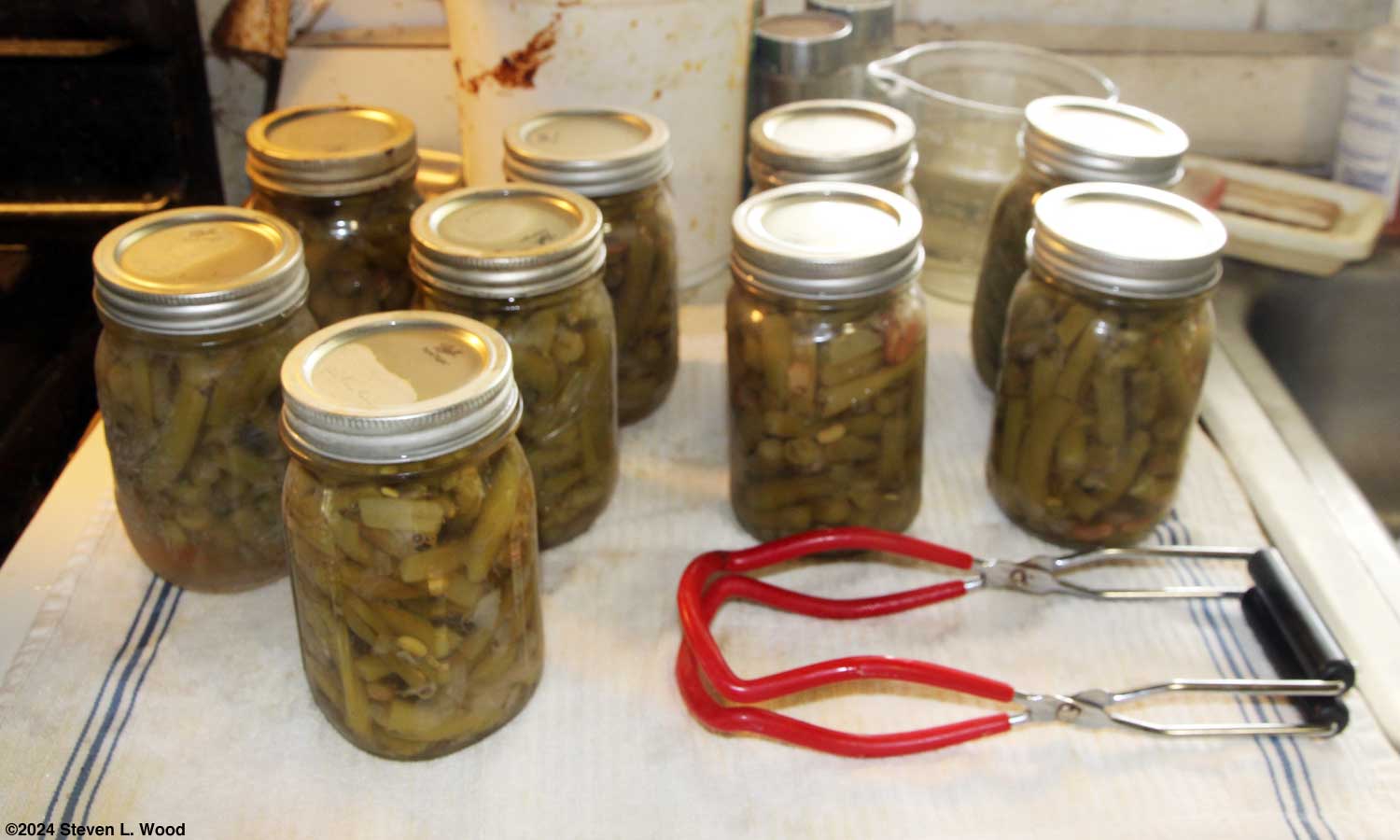
For bottom watering our porch plants, I use a large rubber livestock pan. A little water on top of the plants plus a good bottom watering usually revives them. By mid-afternoon, the plant was looking a whole lot better. When doing laundry downstairs yesterday, I grabbed a pint of canned green beans saved last season from our downstairs pantry. Since my lovely wife had picked up a package of bacon, I seasoned the beans with bacon and some saved frozen onion pieces. And as I put away the bacon in the fridge, I noticed a jar of green beans that hadn't sealed from Saturday's canning. So I added them to the pot. That made for a lot of green beans that both Annie and I feasted on for supper.
As I walked around our narrow raised beds, I found two yellowed Japanese Long Pickling cucumbers. At this stage, they're not good for slicing or making pickles or relish. But they are at about the point one wants for seed saving. I'll let them yellow out a bit more before picking them. Then they'll sit a few days on our drying/curing table in the garage. For seed saving, one wants the cucumbers as ripe as possible without beginning to rot. For more info, see: Processing Cucumbers for Seed.
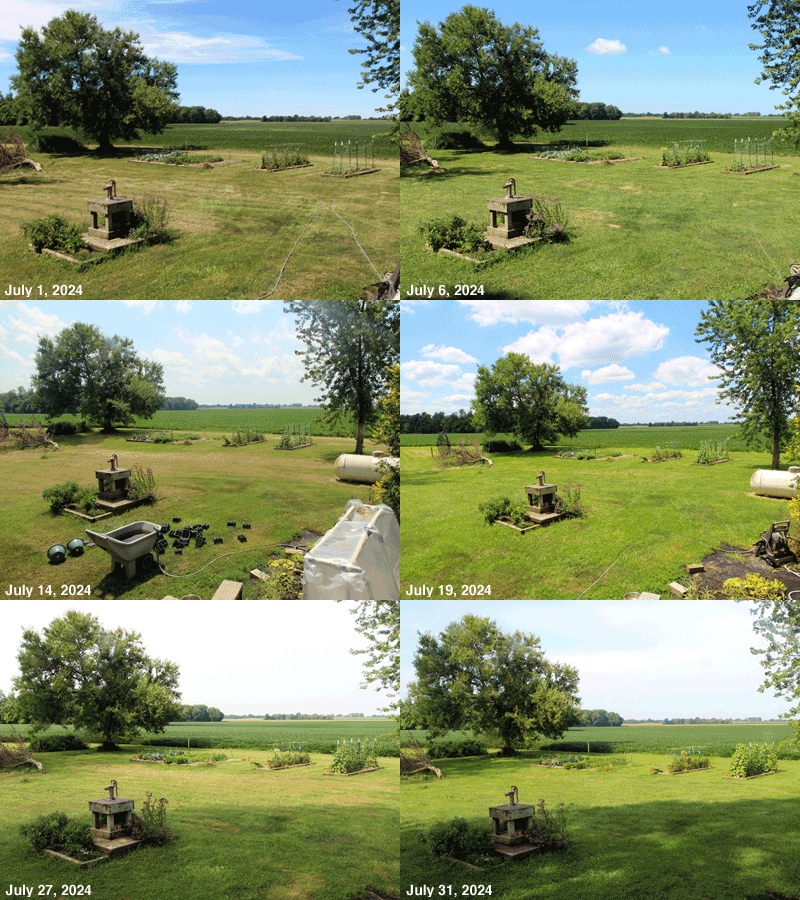
Wednesday, July 31, 2024 - July Wrap-up
But...I made enough garlic powder from cull garlic bulbs to last us all year. The rest of the culls went to our local food bank. We also began to get a few ripe tomatoes early in the month followed by increasing harvests. And our green beans finally came in big time. I froze a gallon of them, canned nine pints, and still have one more big picking to do. I finally got our sweet corn and kidney beans planted. They may have just enough season left to make a crop. And the buckwheat planted in the rotated out portion of our East Garden exploded in growth once the rains returned. I mowed it down, but haven't yet turned it under.
Contact Steve Wood, the at Senior Gardening |






































| Affiliated Advertisers |
©2024 Senior-Gardening.com