One of the Joys of Maturity
One of the Joys of Maturity |
|
| Affiliated Advertisers |
Clicking through one of our banner ads or some of our text links and making a purchase will produce a small commission for us from the sale. Onions We Grew in 2014 Until this year, we had primarily grown the same four varieties of onions in our garden for six or seven years. We were fairly happy with the varieties, but three of the four were hybrids which tend to come and go from seed catalogs as they're replaced with seed developers' latest and greatest releases. With some of our favorites down to just one or two sources for seed, I decided this year to test some new-to-us, mostly open pollinated onion varieties to give us options for the future.
All of the varieties we tried, both old and new, germinated well. It turned out that we had a nearly perfect growing season for onions this year. That's great for onion production, but doesn't tell one much about how well a variety may do under less than ideal conditions. But we've definitely found some promising options for what we may grow in the next few years. Below are the initial results of our onion trials. I've grouped them by type and then alphabetically, marking the hybrids we may replace with an asterisk. Links in the comments are to the seed source. So far, we're just rating the onions on how they grew. Our results really won't be complete until we have cooked with the onions and also see how well they store over the winter, as we're looking for a balance of excellent flavor and good storage potential. Yellow Storage Onions
Update: The last of our Copras stored well until late March, but it appears (as of December, 2016) that the variety has been discontinued. Fortunately... Clear Dawn - We grew the Clear Dawn open pollinated onion for the first time in 2016. It was was bred out of the Copra variety and introduced by Beth and Nathan Corymb of Meadowlark Hearth after being entrusted to them by biodynamic growers Claire Hall and Don Jason. We were pleased by the flavor and storability of the new variety. The Fedco Seeds catalog refers to it as "the best open-pollinated storage onion."
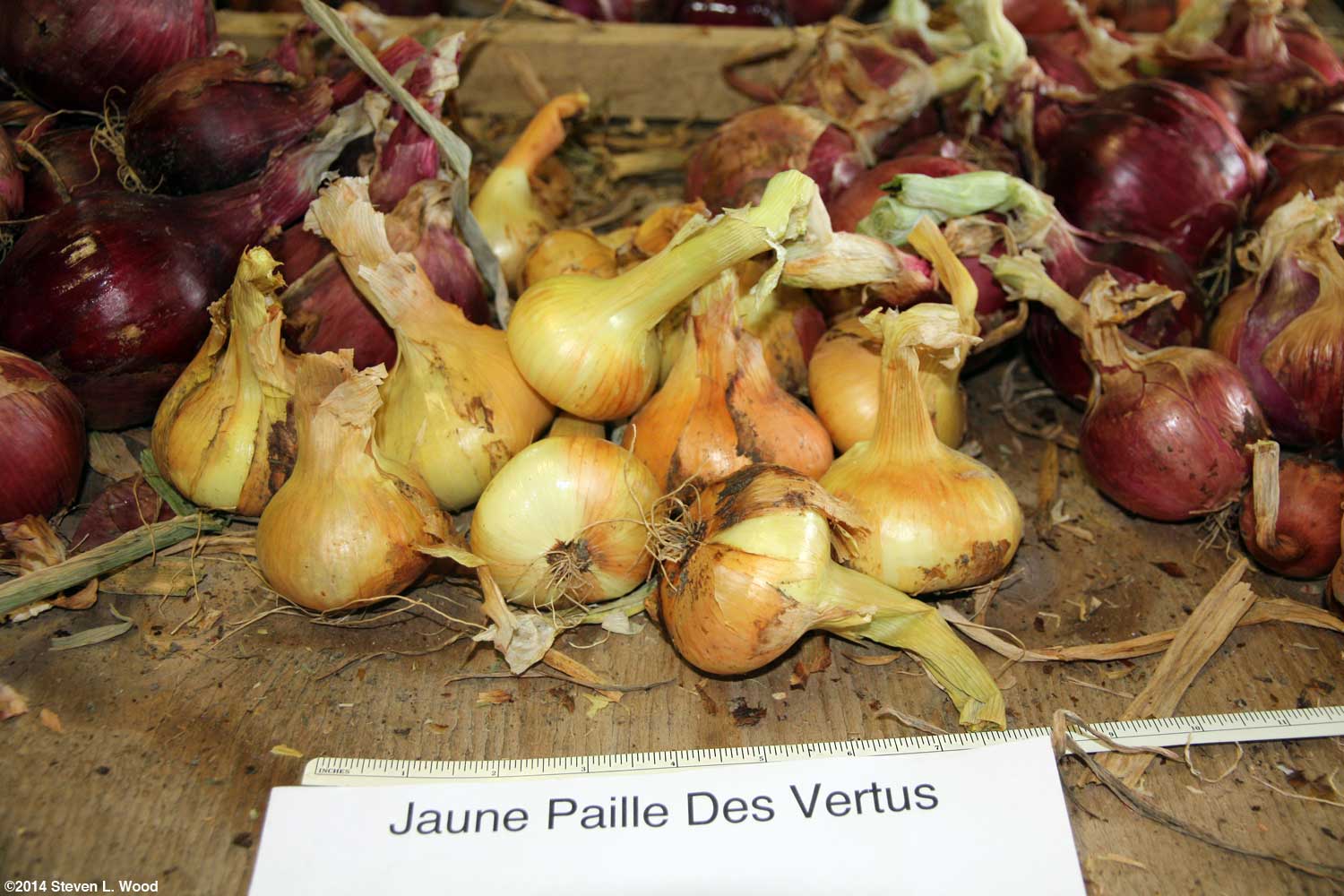
Update: The last of our Jaune Poille Des Vertus onions stored well into March.
Although Milestone seed was only available from two suppliers (that I know of) this year, I was able to pick up a packet of the seed this summer when I ordered some garlic bulbs. We'd had to drop our previous supplier of the seed, and the other supplier had an outrageous flat rate shipping charge that made buying a single packet of seed cost prohibitive. But with the garlic order, I was able to get some seed that I hope will store well and be viable next January.
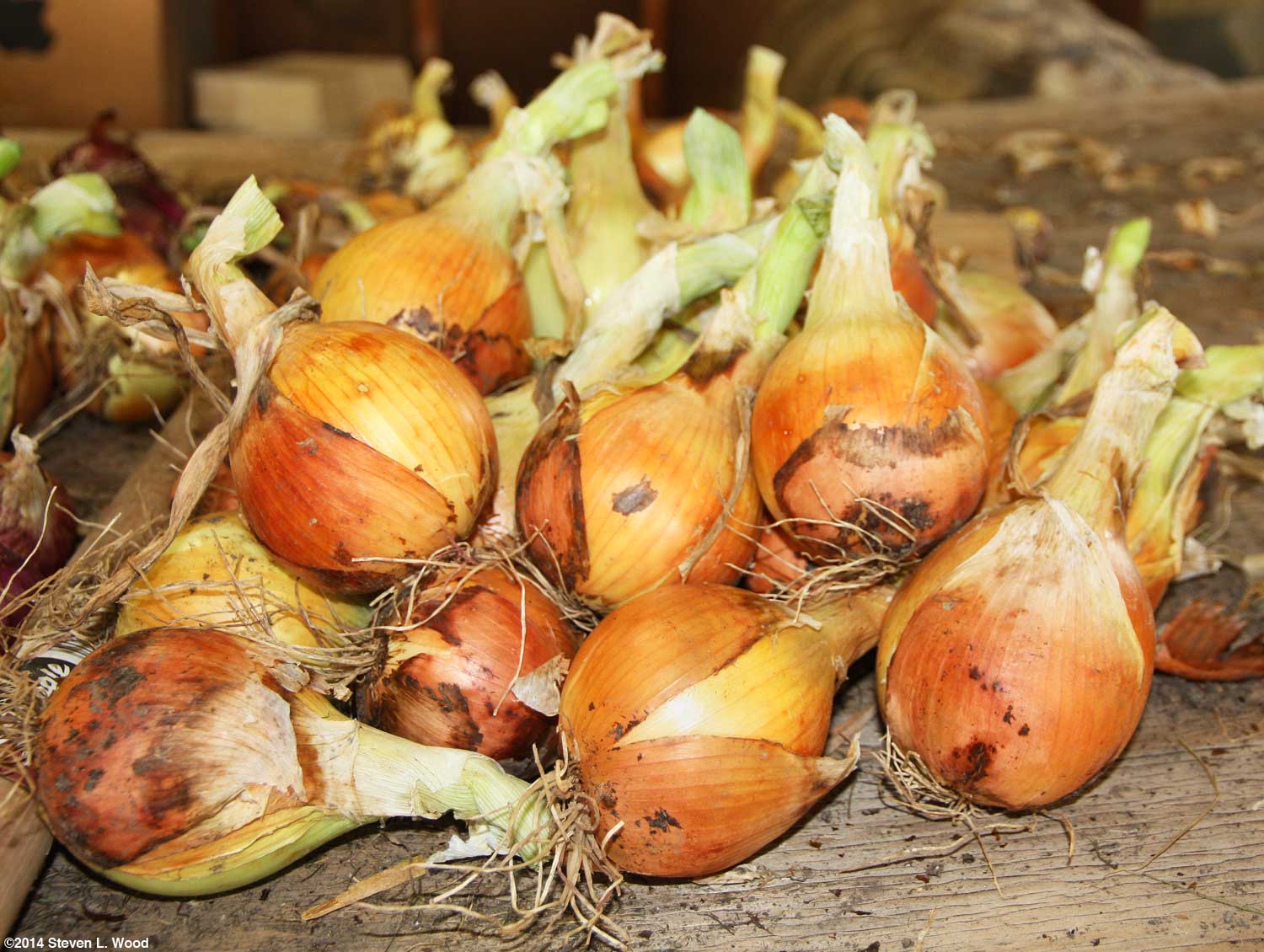
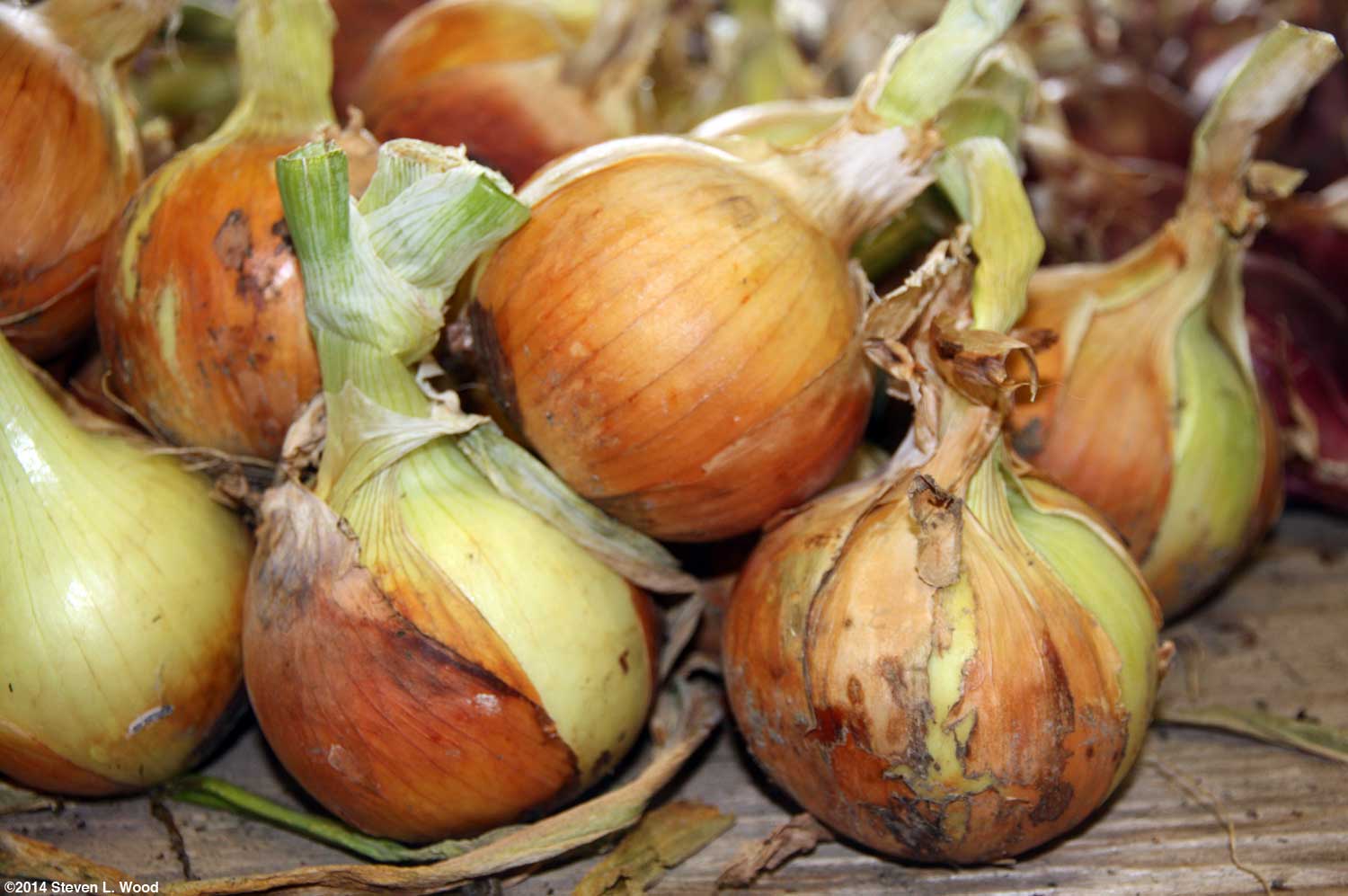
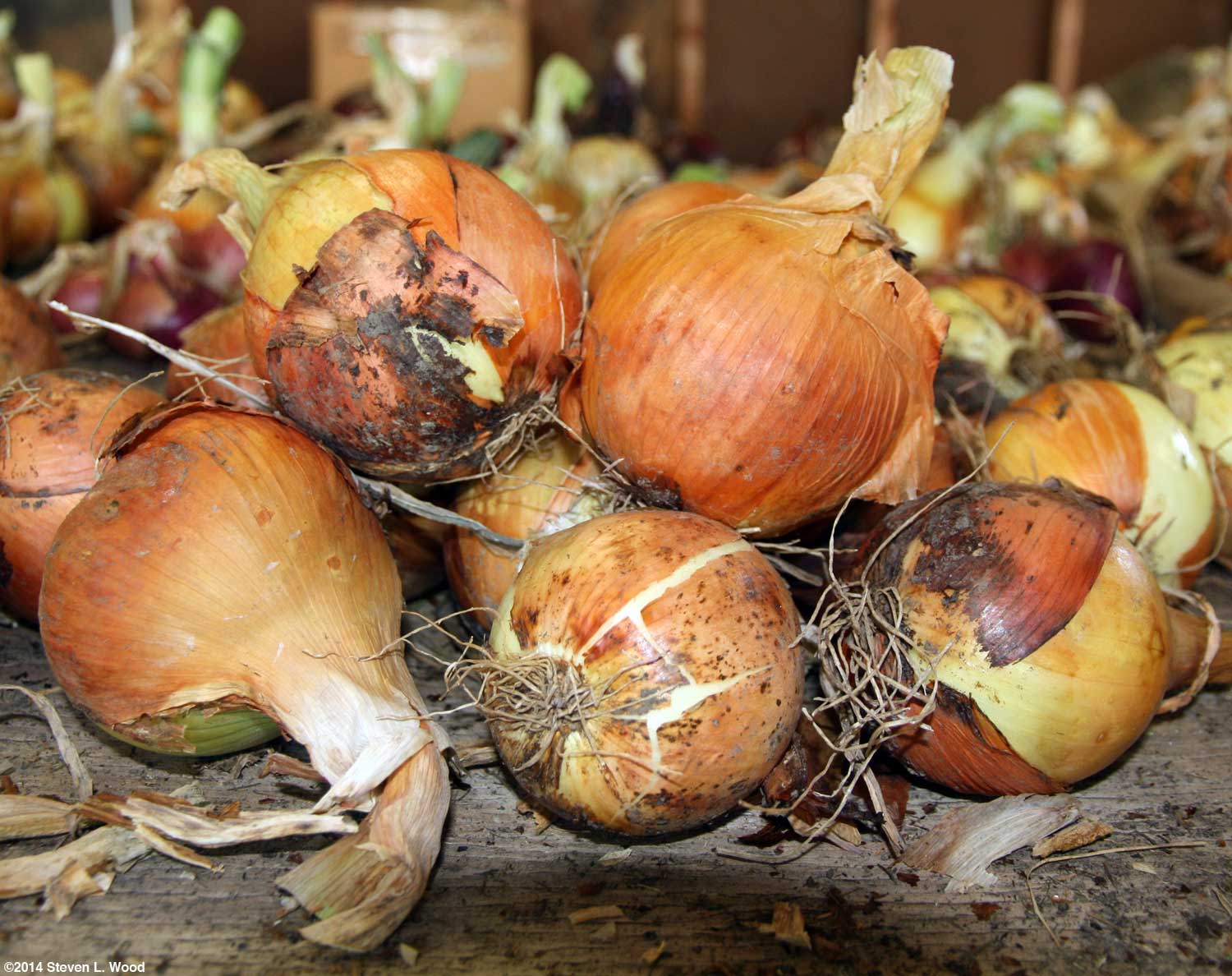
Some of our Pattersons proved to be the largest of our storage onions this year. Of course, sometimes big onions don't store all that well. But we've already used some of the onions for cooking and liked the flavor. So if they store at all well, we may have another good storage variety for a few years (Patterson is a hybrid.). Note that in a 2011 trial of Copras and Pattersons, the Mary's Vegetable Garden blog found Copras to be a better option (for her) for long-term storage.
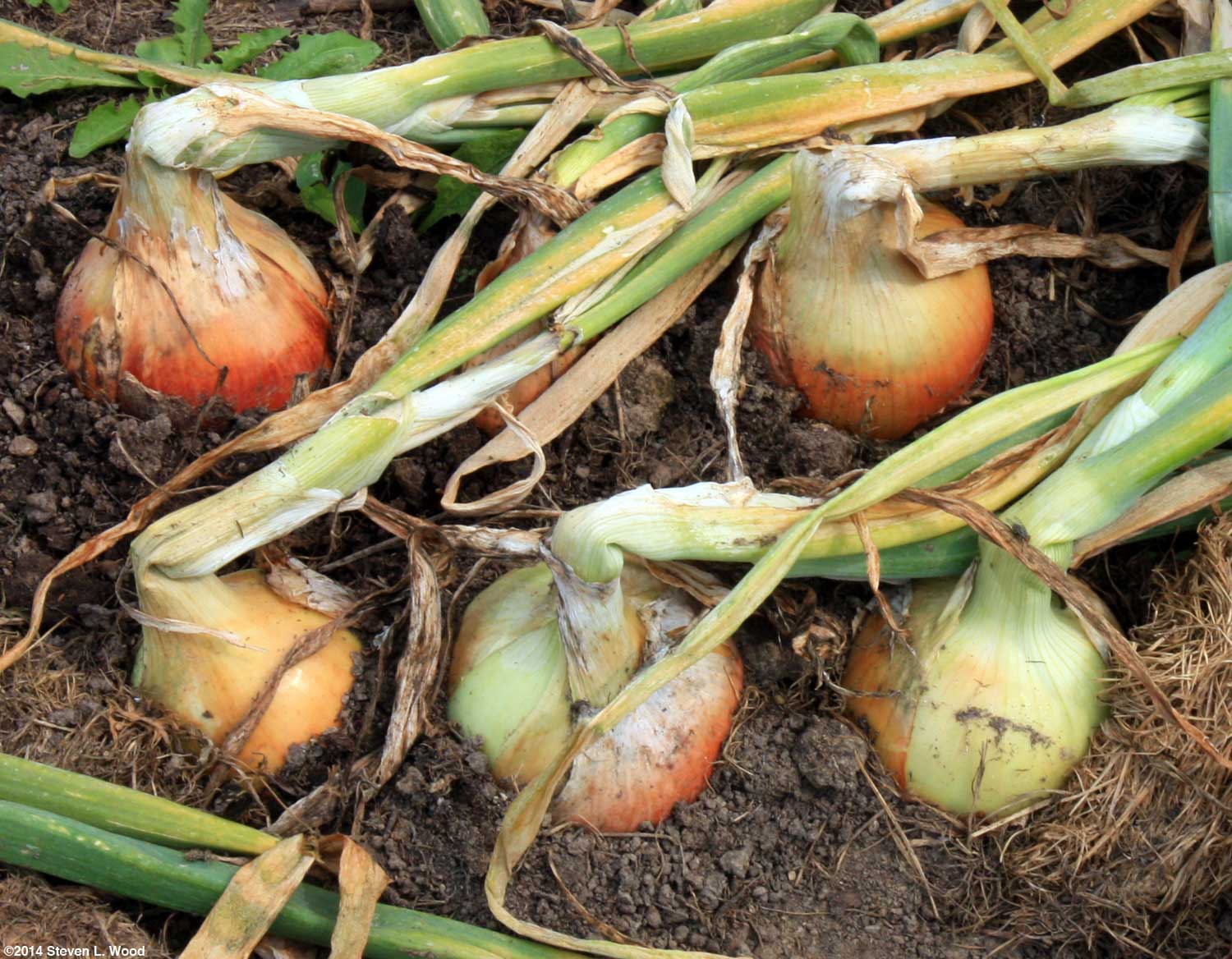
That description is one reason we do trials of varieties, as our Stuttgarters were the most disappointing of all the new-to-us varieties we tried. The plants seemed to lack vigor, with us losing more Stuttgarter transplants than any other variety. The onions were small and some started to rot in the ground before we got them pulled. While they could still make us believers if they truly do store "clear through to next spring," I'm guessing that this is a variety that just isn't well suited to our growing conditions.
|
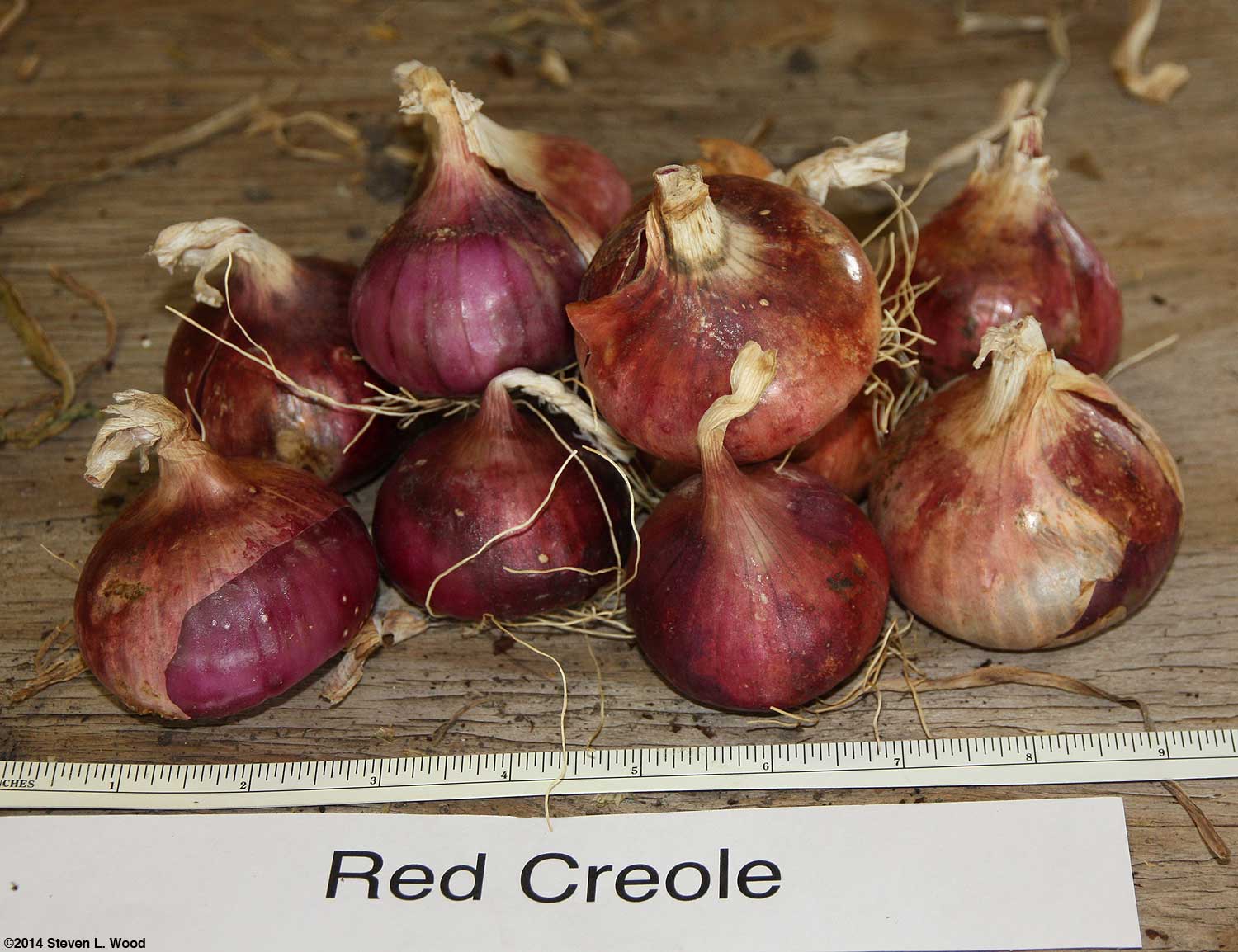
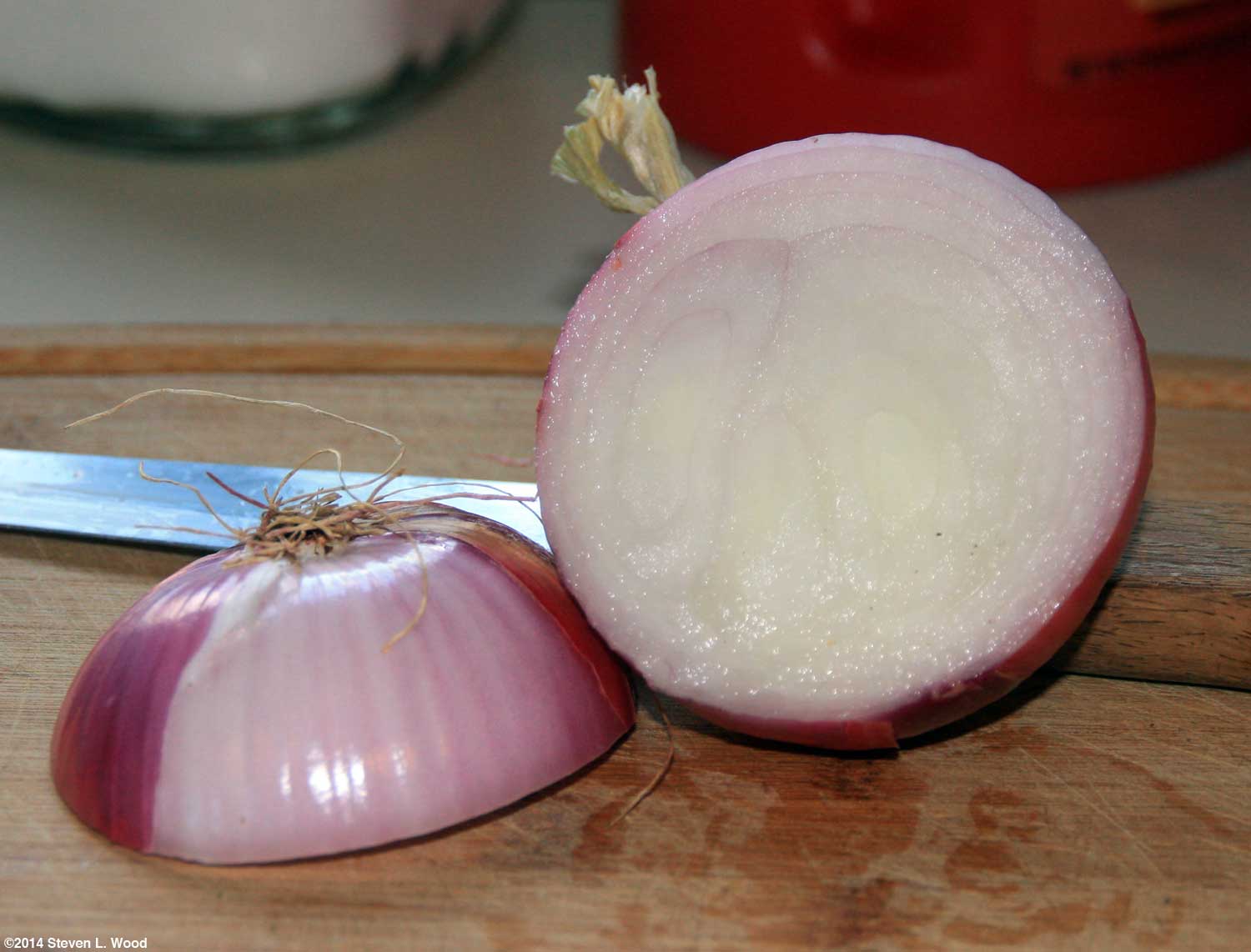
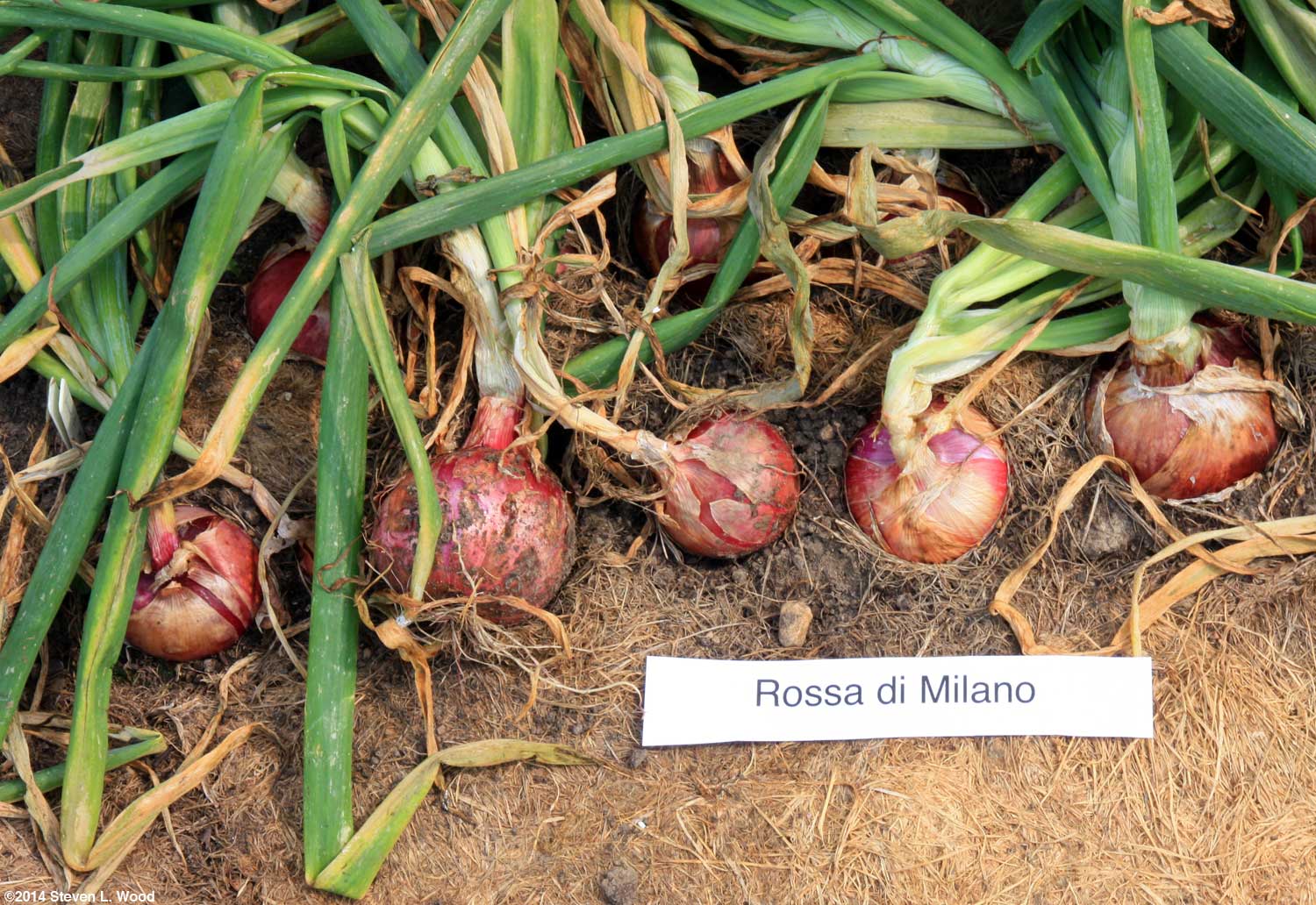
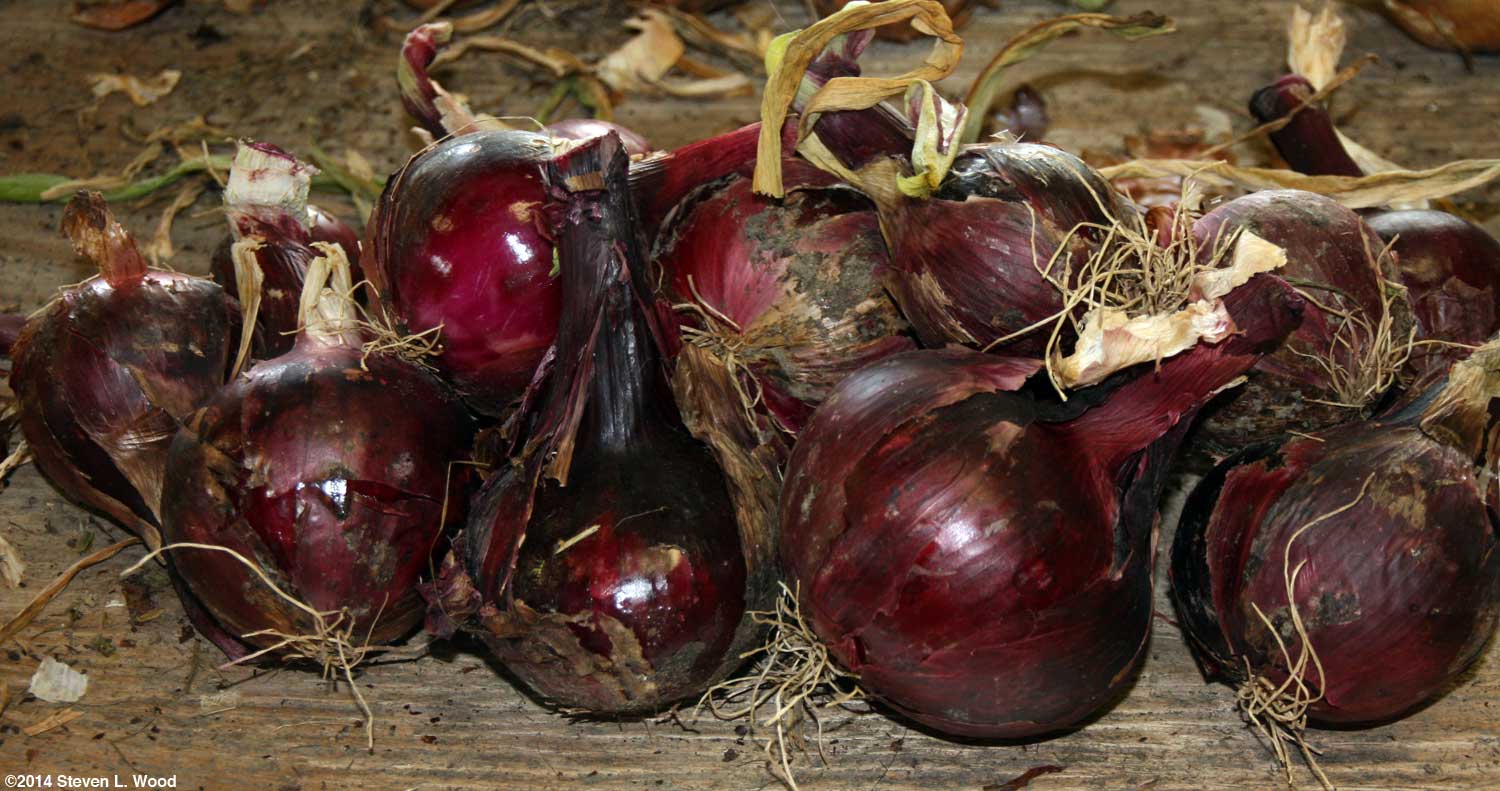
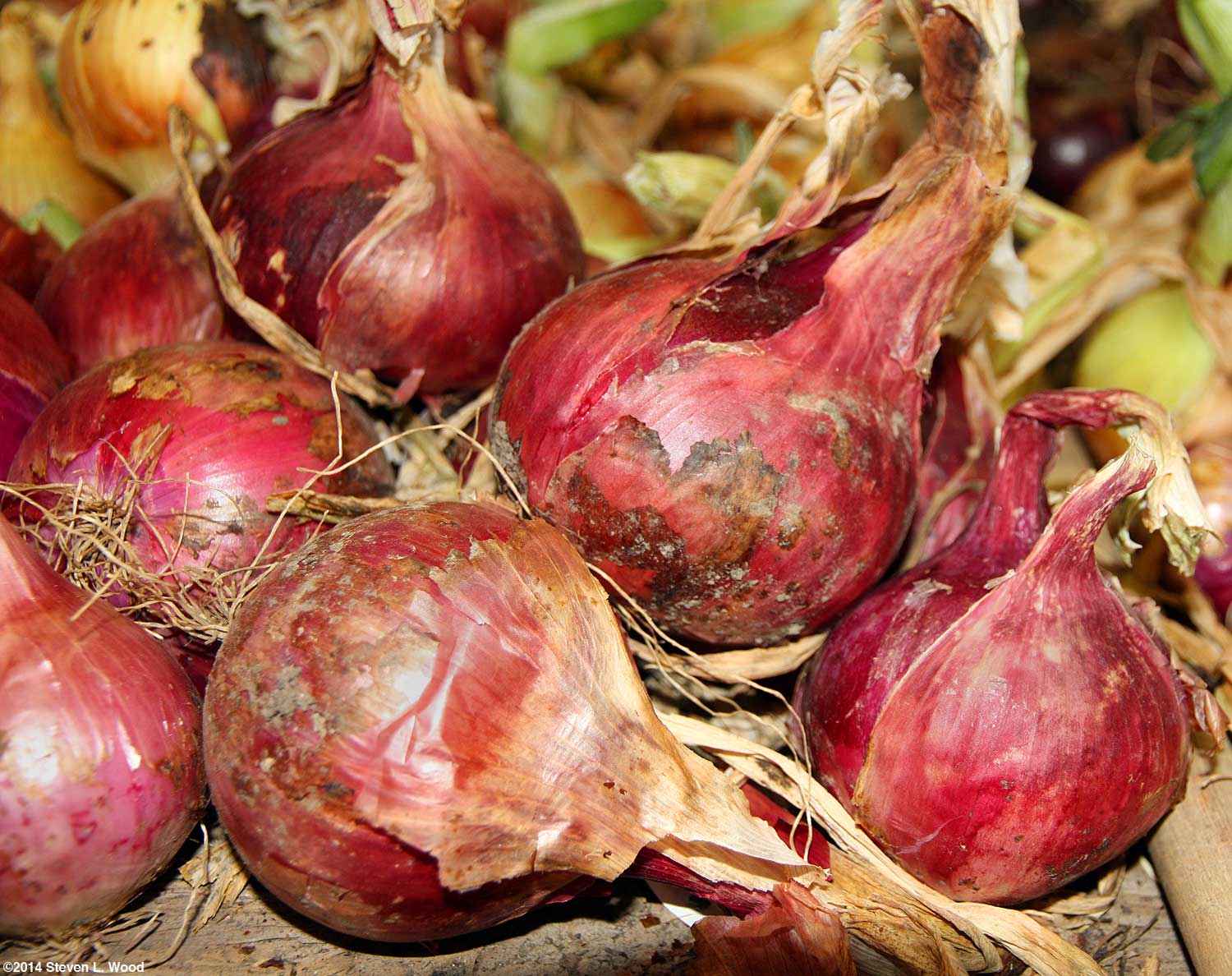
Red Zeppelin* - Two new hybrid red onion varieties were released somewhere around 2008. With the names "Red Zeppelin" and "Grateful Red," I had to try at least one of them. Red Zeppelin seed was cheaper then, so it was our choice. Our crop of the hybrid this year confirms why we've been growing them for so long. We got more large, good onions from them than almost any other variety grown, yellow or red. Hopefully, seed for the variety will remain available for some time. But if not, we now have three very good options for open pollinated replacements. Update: As usual, we had good Red Zeppelin onions in storage well into February, the best storage of any of our red onions. And sadly, seed for Red Zeppelins is no longer available. We tried some Red Sunset last year (2019) that both grew and stored well for us. I found some Red Zeppelin seed in 2022 from Hazzard's Seed Company! Rossa di Milano - Our short (3') double row of Rossa di Milano Note: We're still growing Rossa di Milanos in 2020!
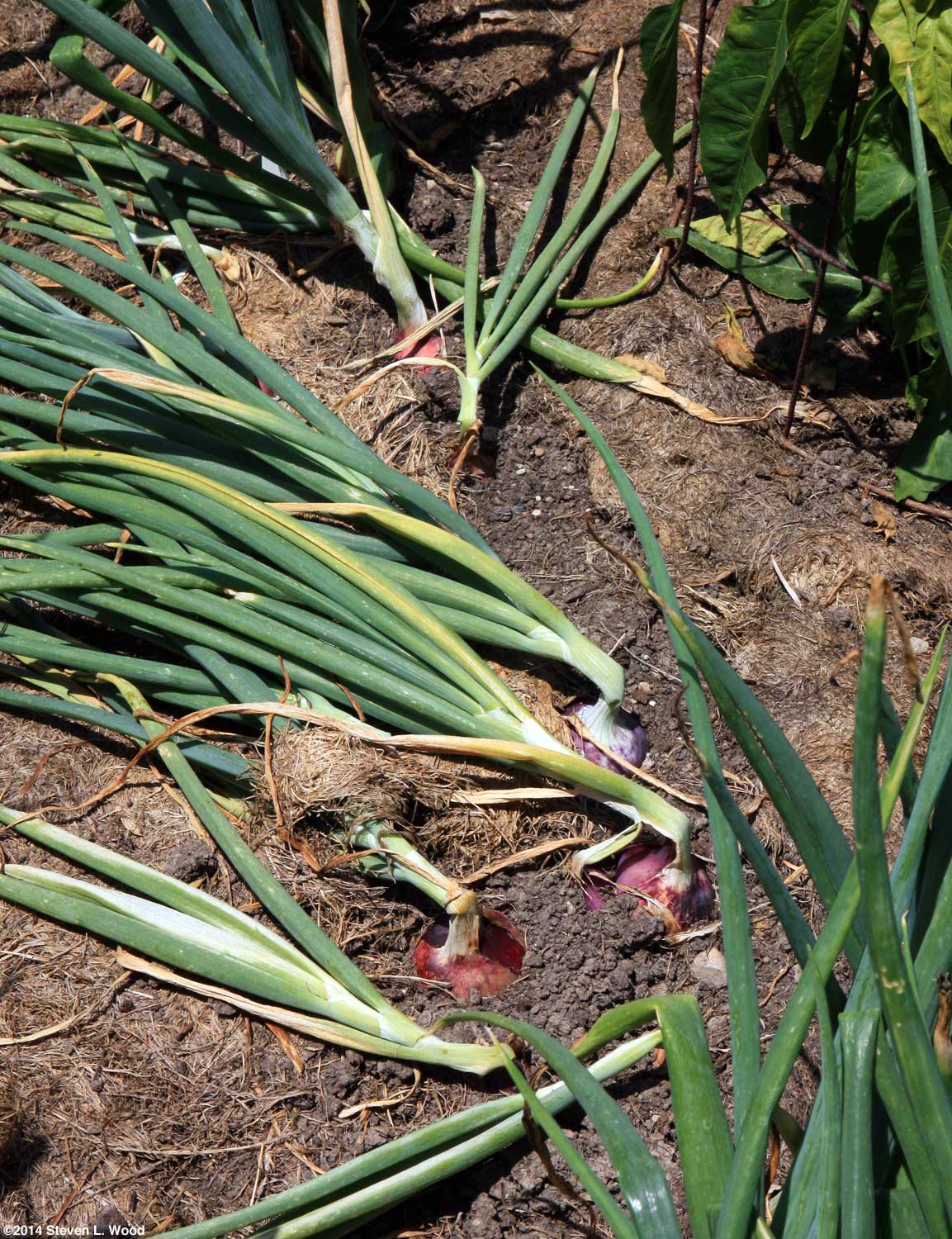
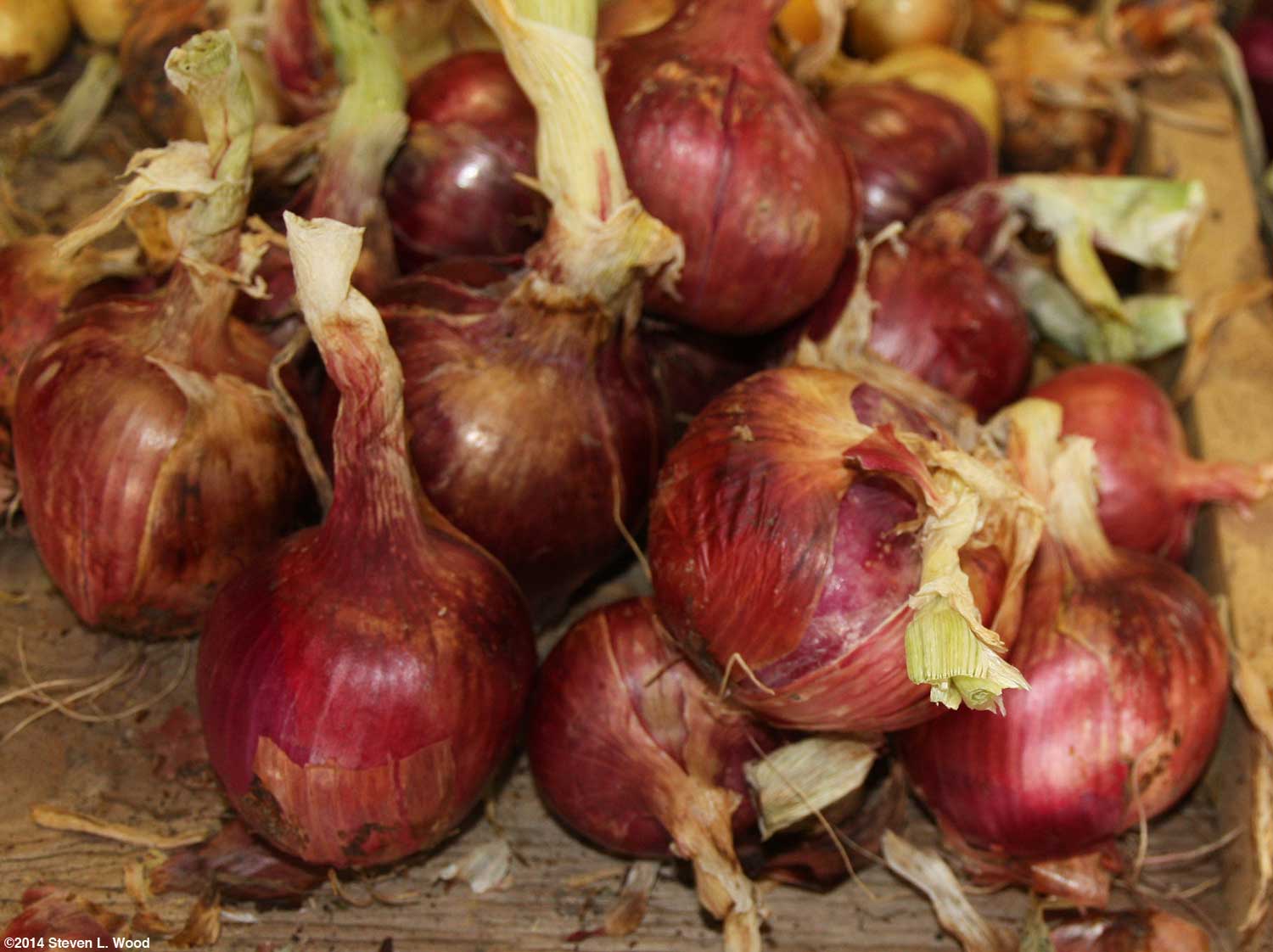
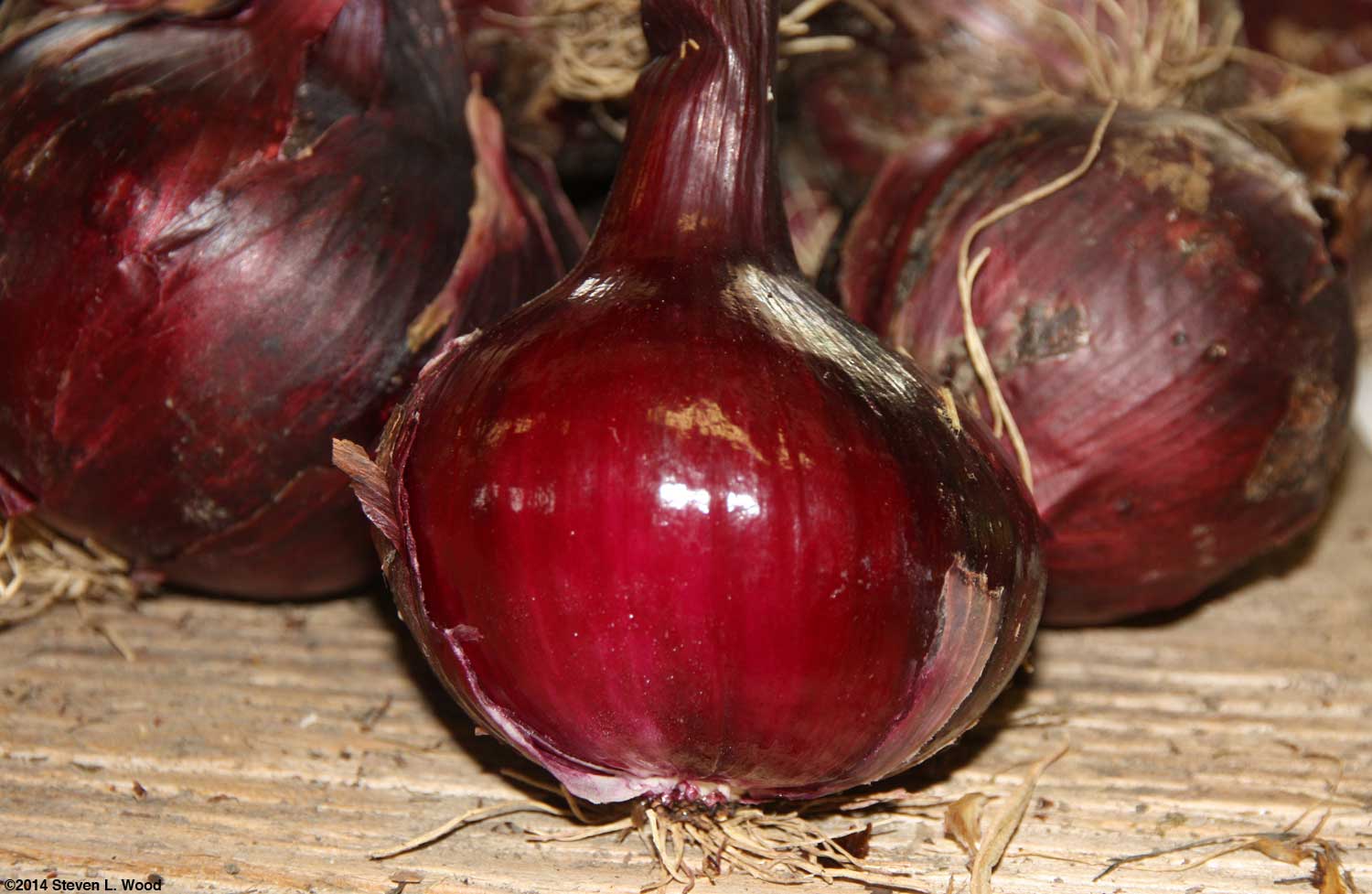
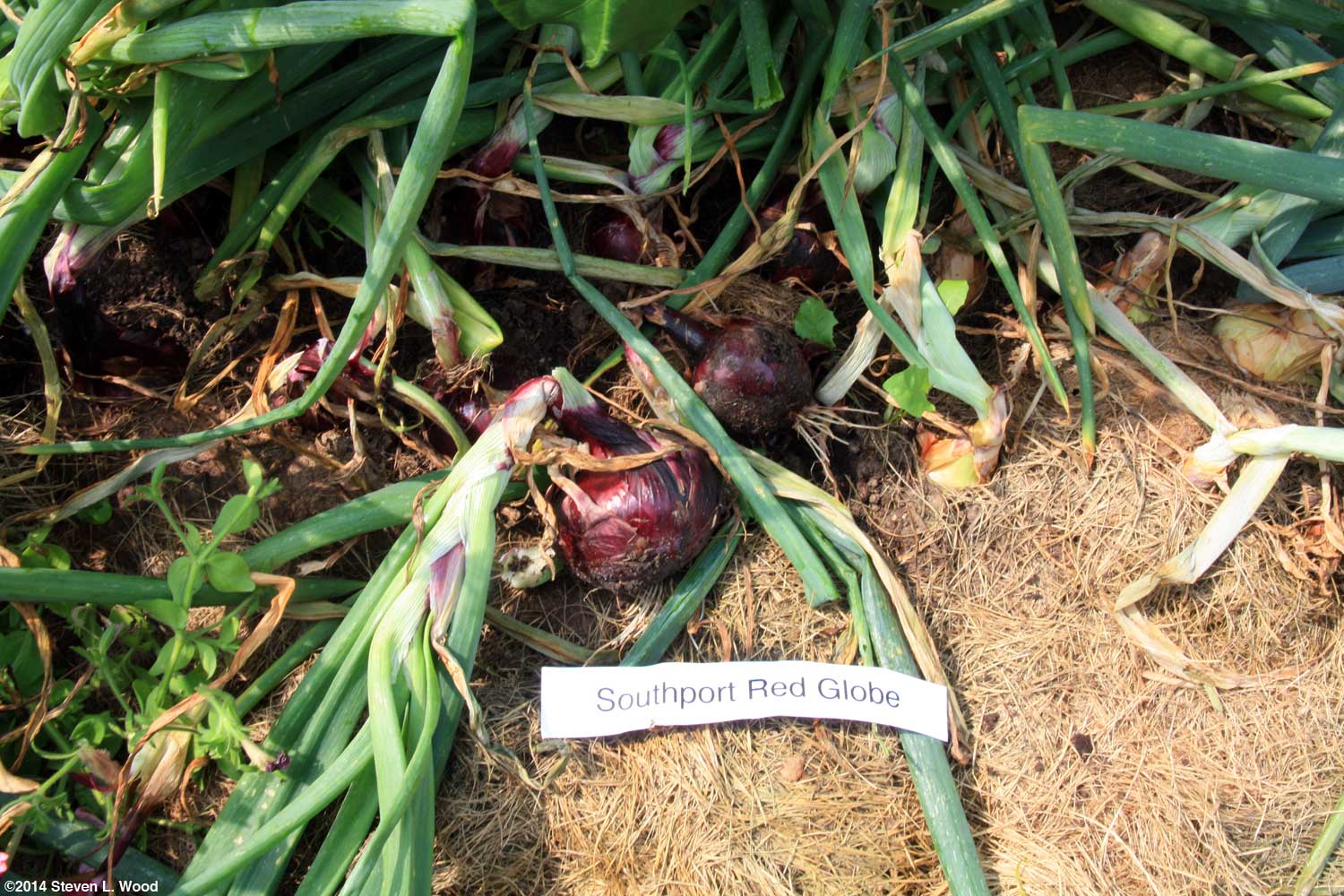
Southport Red Globe - Like our Copra onions, our short double row of Southport Red Globe onions, growing at the opposite end of the same row as the Copras, had to compete for light and moisture with surrounding plants. We lost a good many of our Southport transplants during the growing season, but those that survived produced the deepest, darkest reds of any of the red onions we grew this year. According to the variety description of Baker Creek Heirloom Seeds, Southport Red Globe onions were "first released in 1873." I suspect the variety won't disappear anytime soon from seed catalogs. Southport Red Globes are supposed to be a good storage variety that grows well in northern latitudes. We haven't cooked with any of them yet, but so far like what we've seen from them.
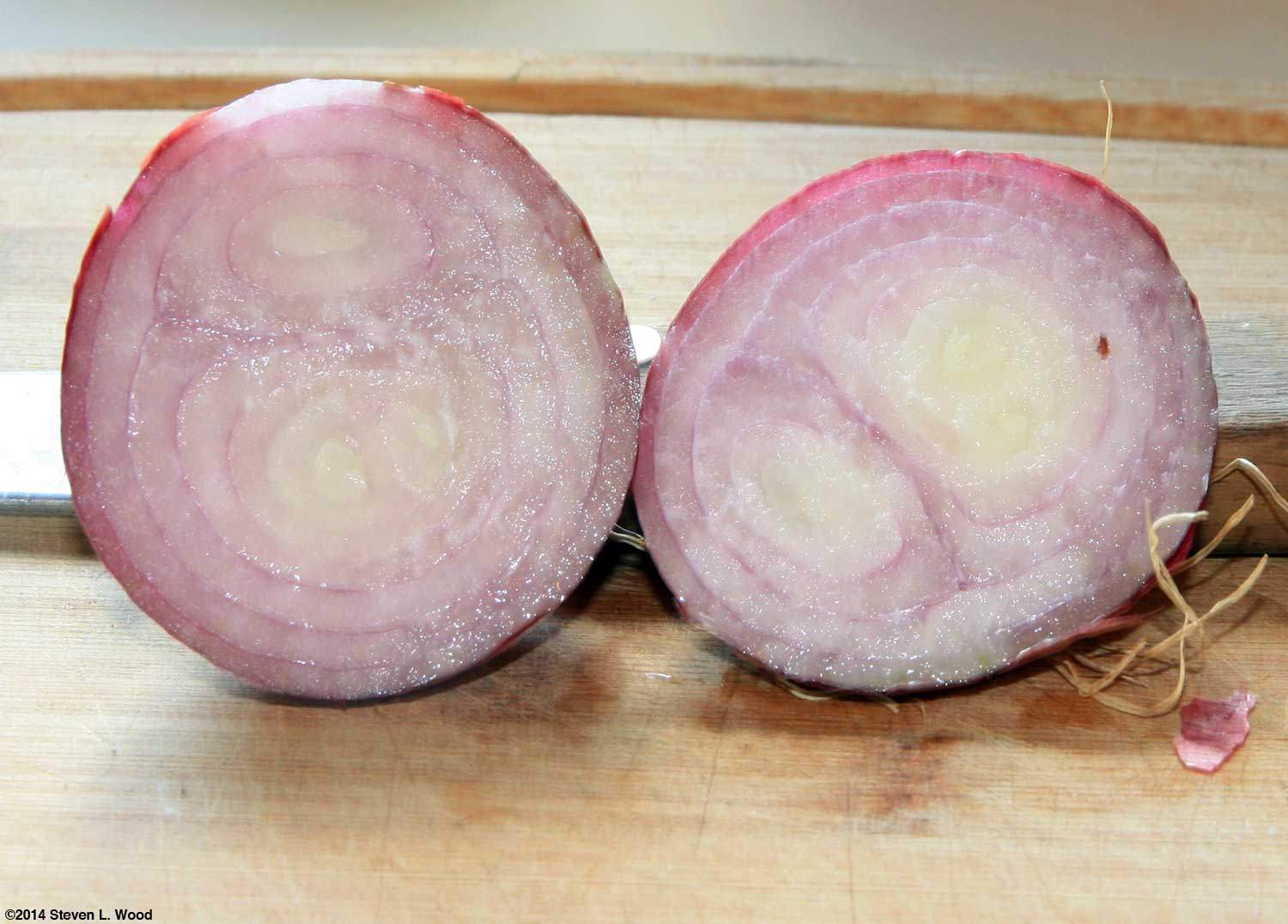
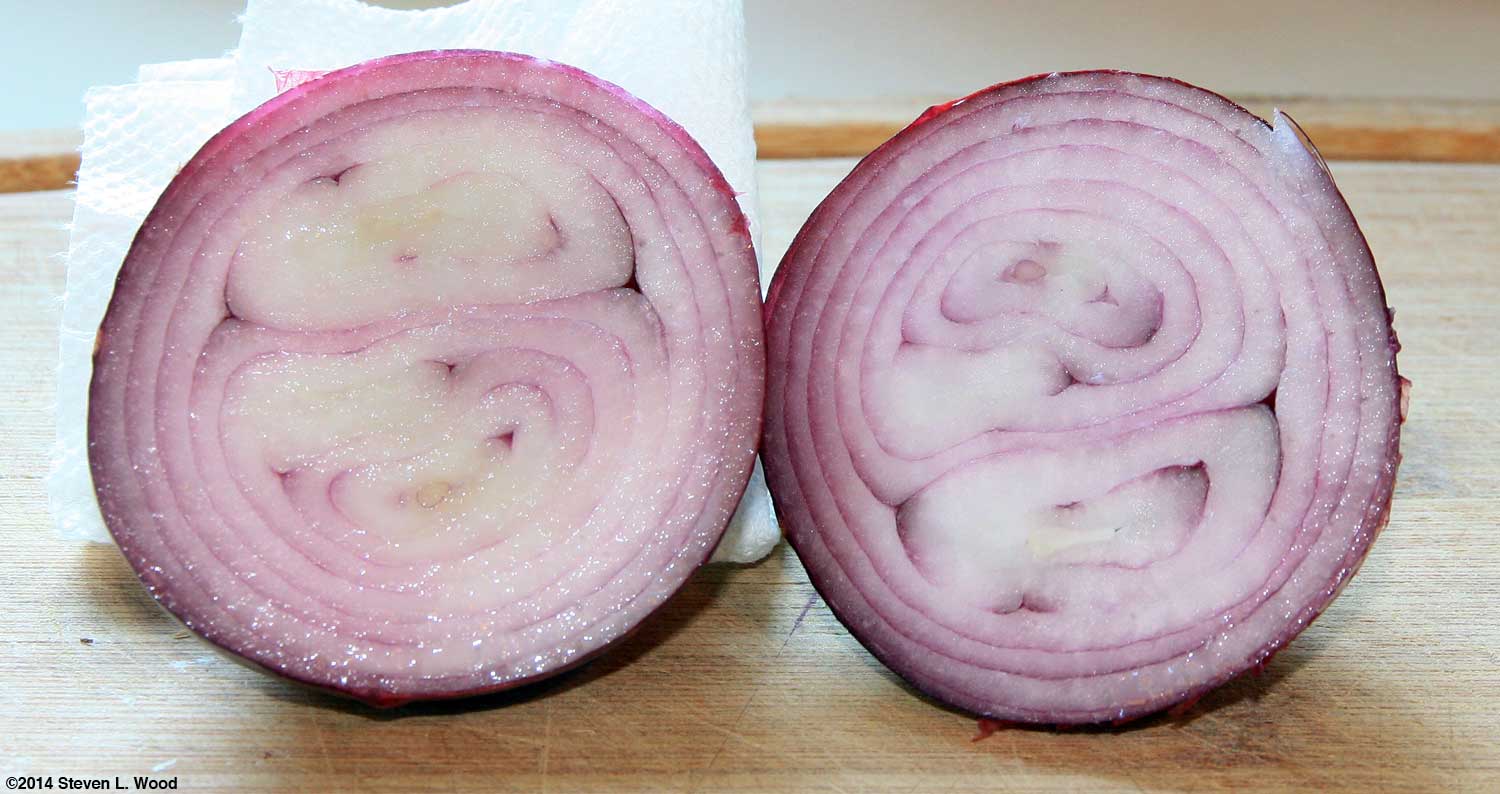
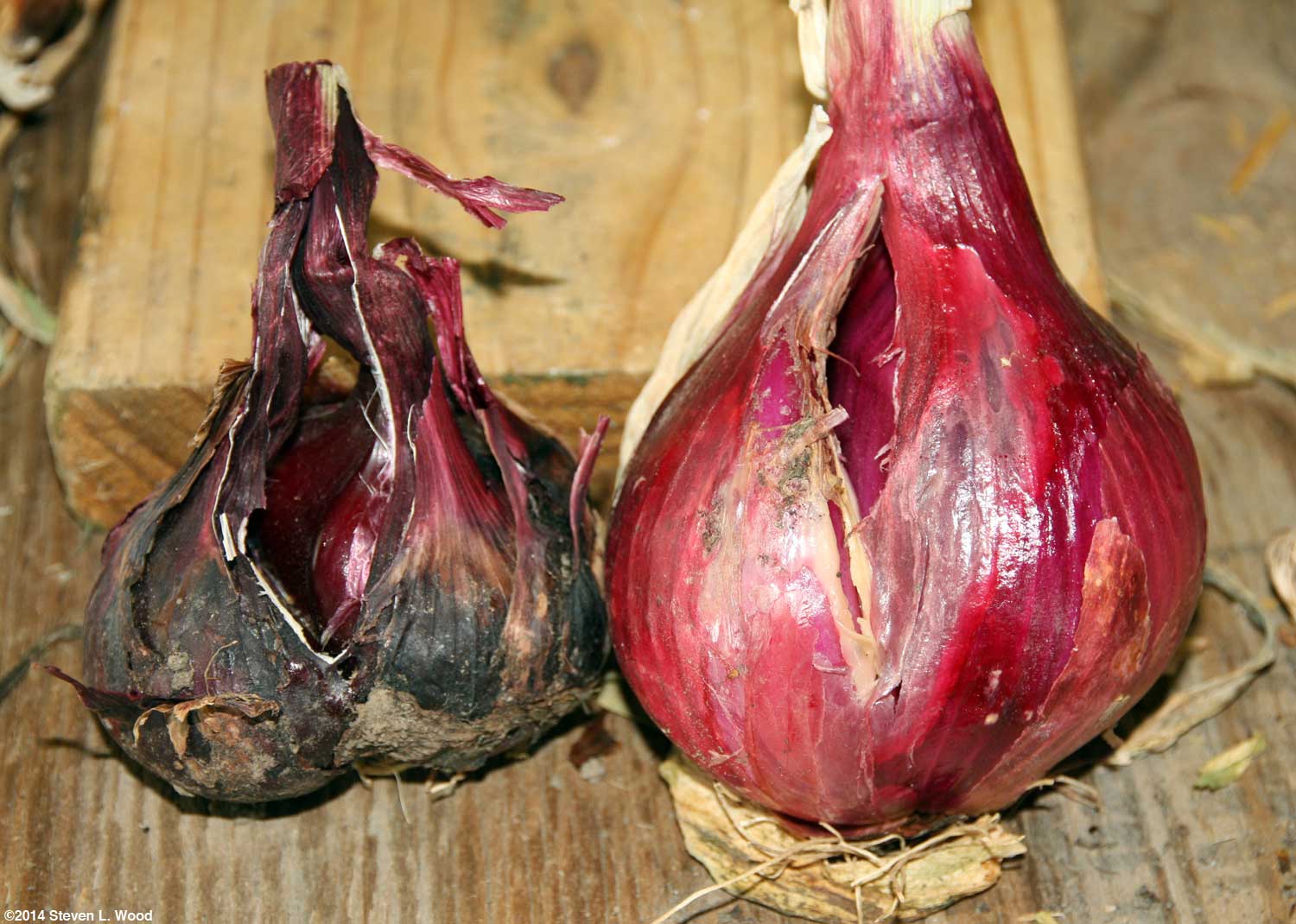
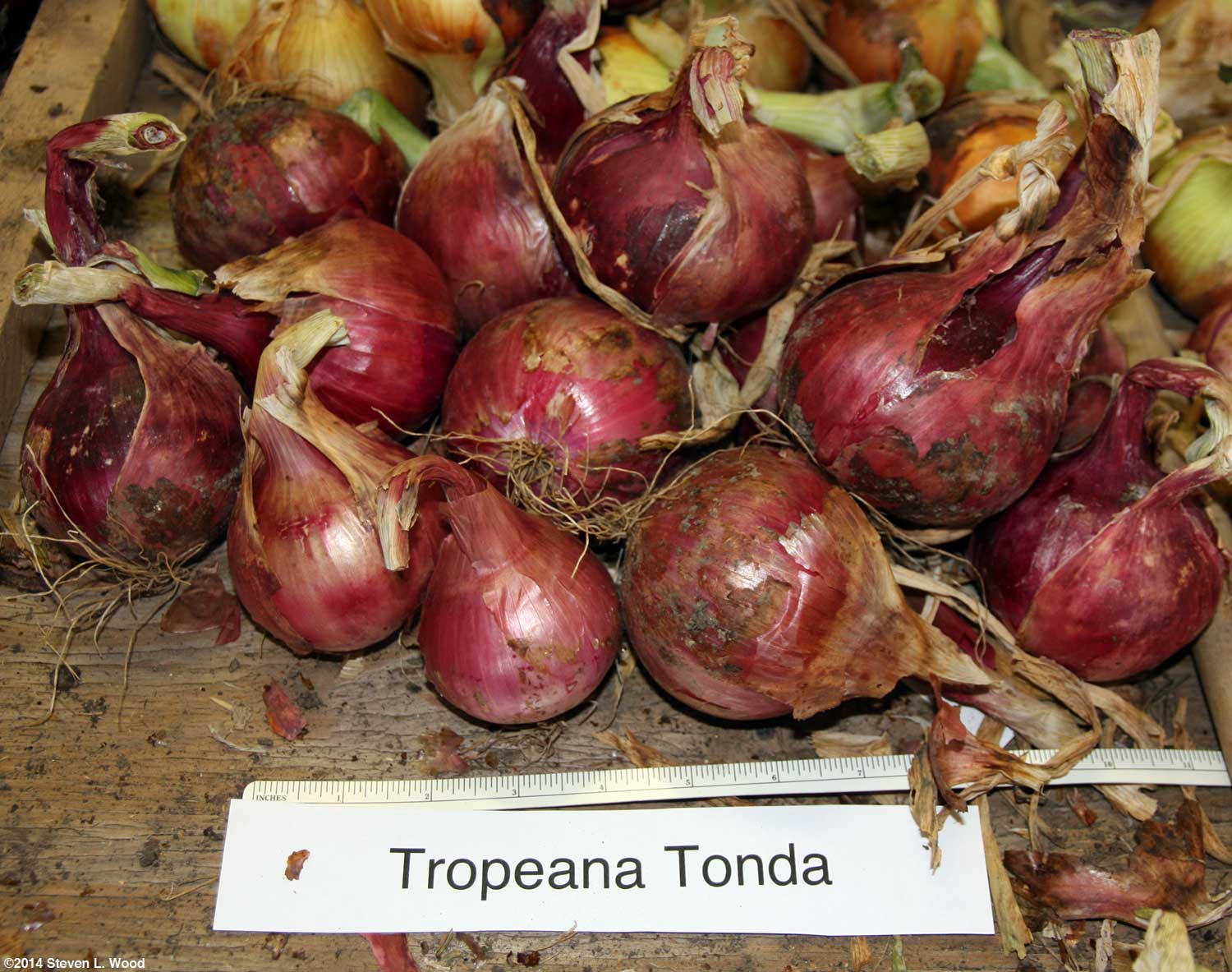
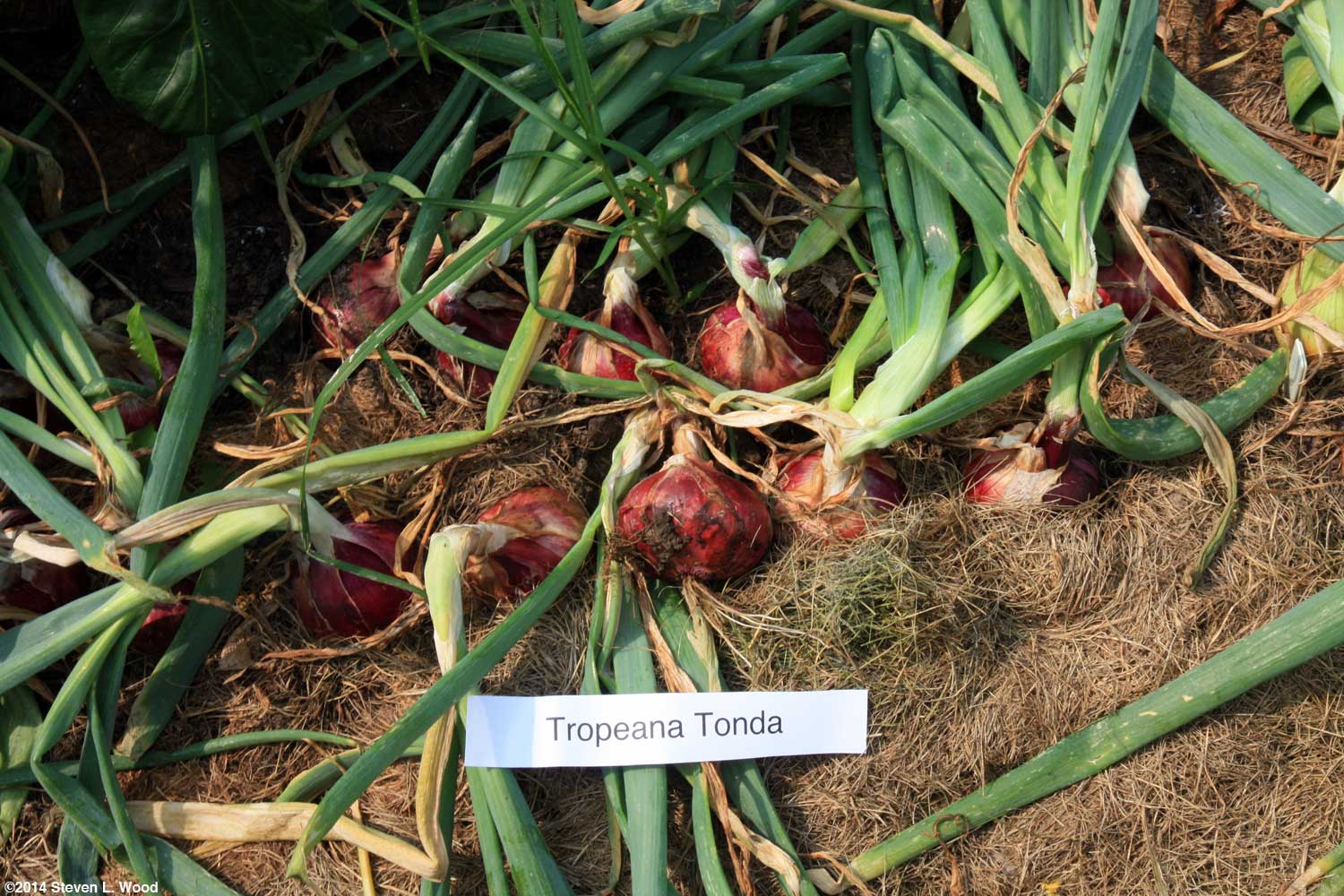
...Tropeana Tondas also have a tendency to double or split, something that makes such bulbs poor candidates for storage. I almost missed the splits, as Tondas have pretty heavy outer wrappers, and there almost certainly will be splits starting inside the bulbs that I didn't find. While we'll use the splits and even plant a few plants of the variety next year, this isn't a red onion I can see counting on as a long-term storage onion. We'll see how the single onion bulbs store (and taste).
Sweet Onions
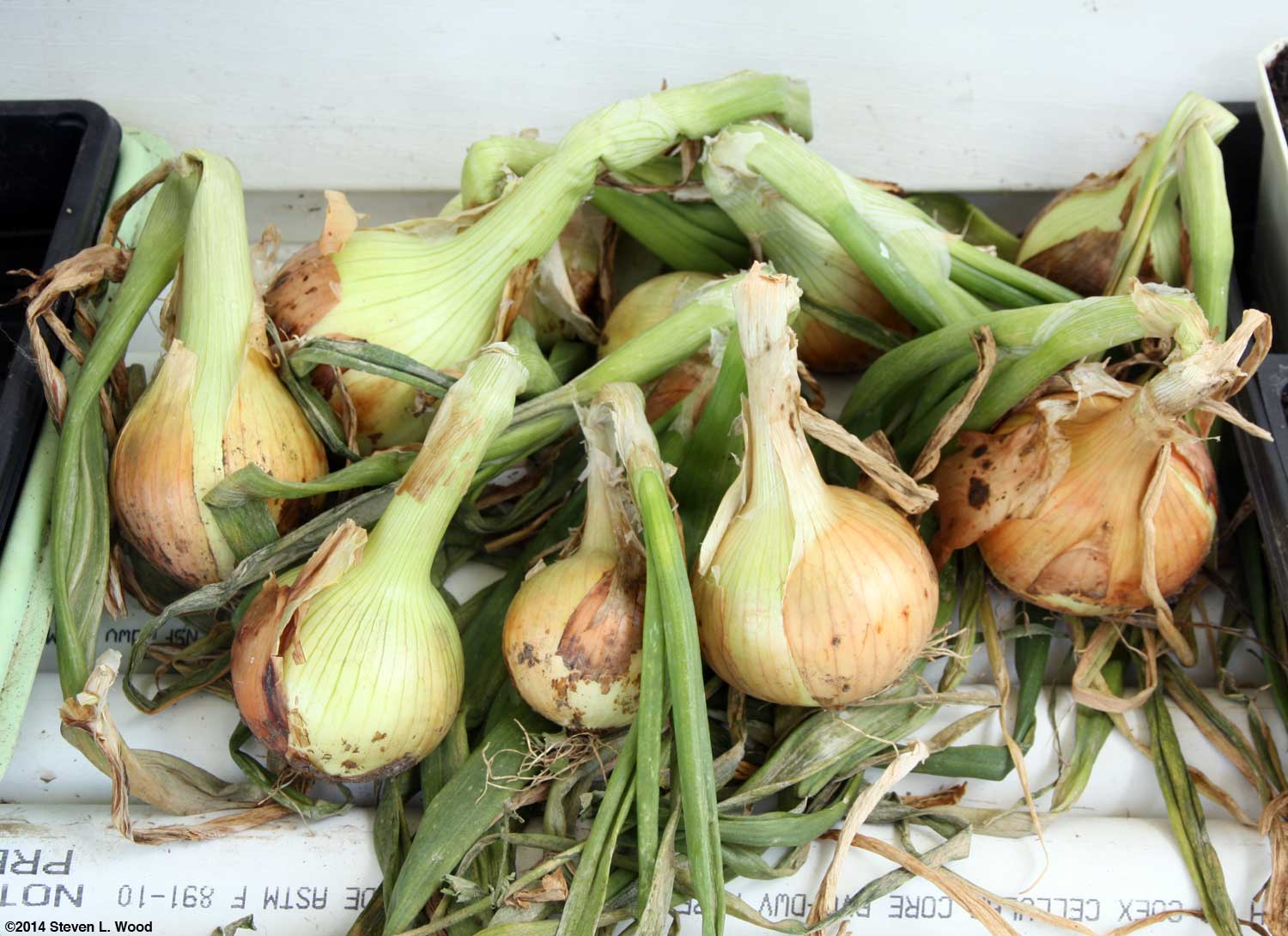
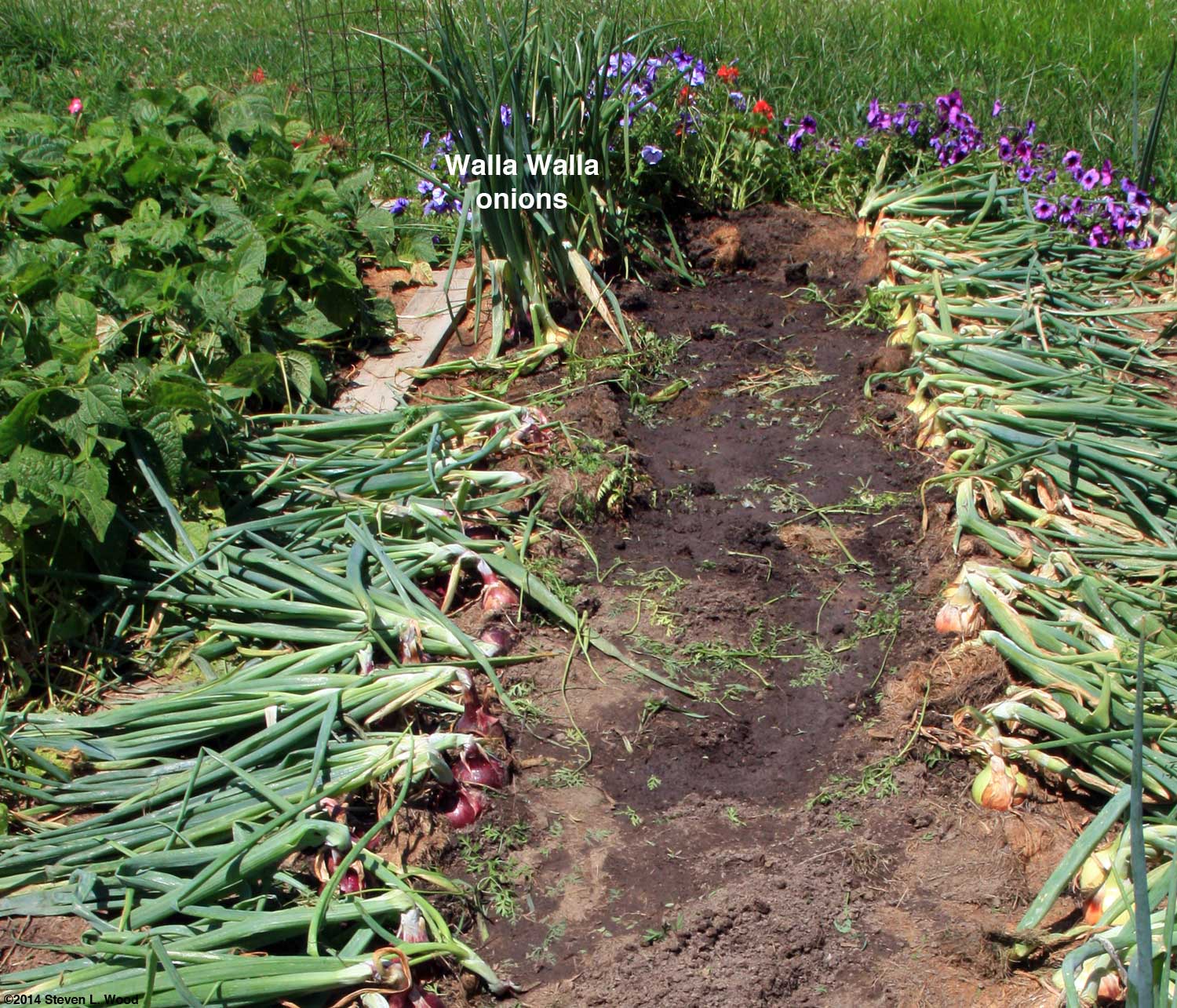
We didn't test any other sweet onion varieties this year, as we're satisfied with the Walla Walla variety. We've tried other sweet onion varieties in past years, especially one year when there was a seed failure for Walla Wallas, but haven't found a better option for our growing conditions. Curing the Onions
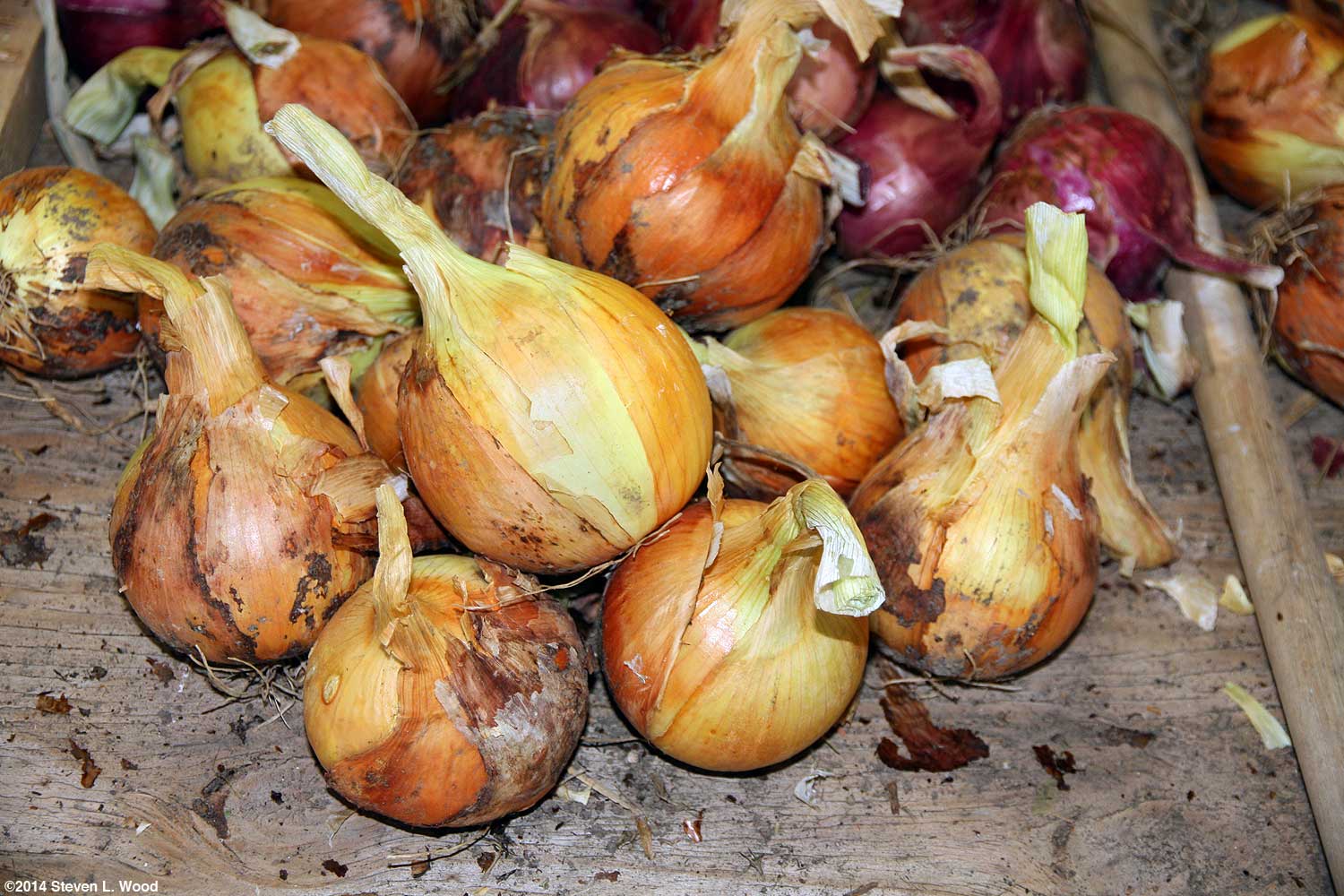
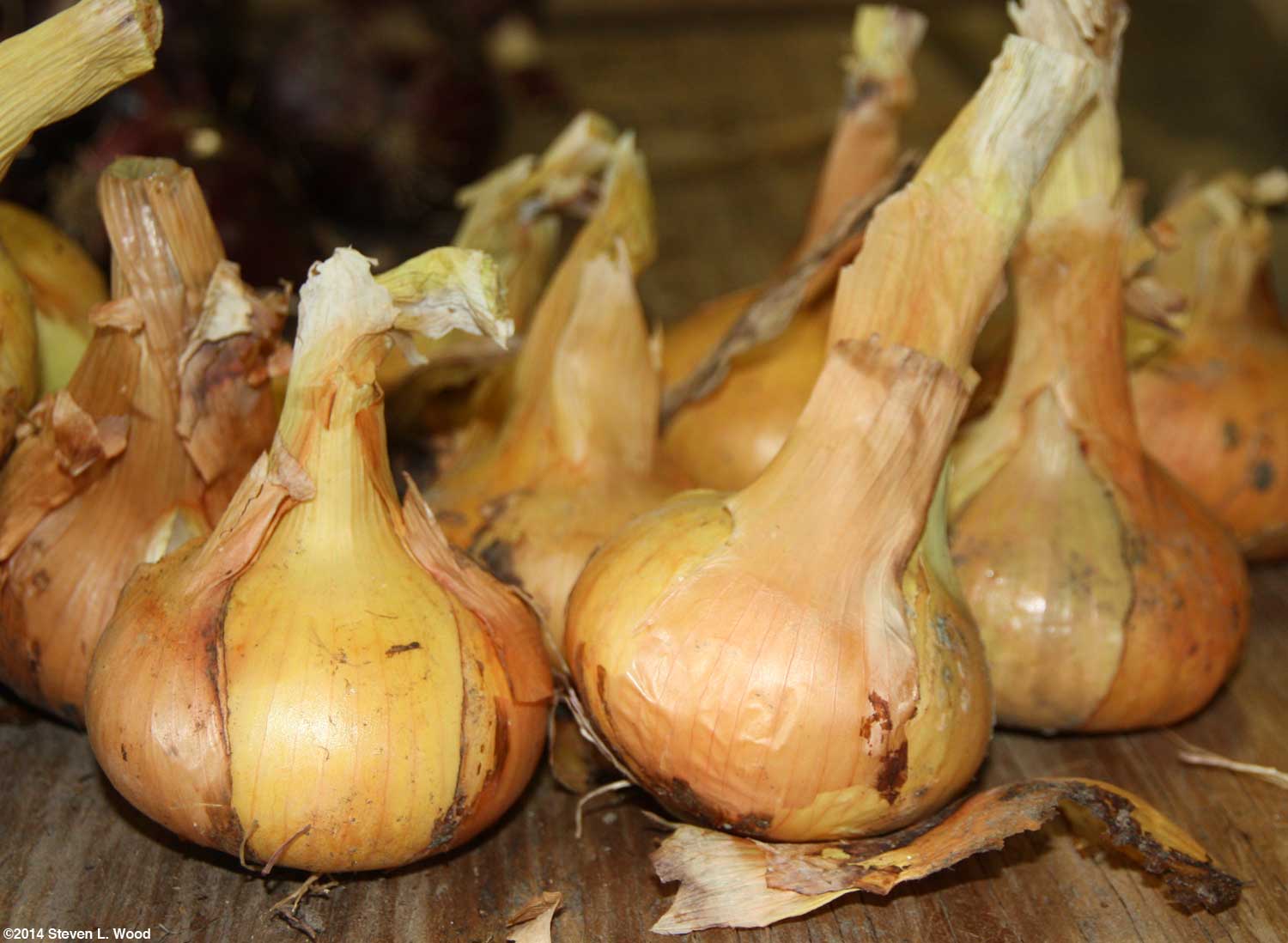
After a couple of weeks on the table, the onions will be bagged by variety in old mesh potato bags and hang from the rafters of the garage for another week or so before going into our basement for long-term storage. Winding Up I think we've found some good varieties of storage onions to grow in the future. Some of them may be hybrids, as both the Copra and Patterson hybrid onions did quite well for us this year. But we also may have found a gem in the Yellow of Parma yellow storage onion. And all of our open pollinated red onions did well, with the reservations noted above. I'm not terribly concerned about growing hybrid onions over open pollinated varieties, as onion seed doesn't store well. The issue of hybrids being discontinued bothers me, but having to come back to buy hybrid seed year after year is something I'd be doing anyway, as I'm not prepared to start producing onion seed from open pollinated varieties, something we do with several pea and tomato varieties no longer available from seed houses. Given the choice between a hybrid that probably has a maximum of ten years in seed catalogs versus an equally good open pollinated variety that may have already been around fifty years, I'll go open pollinated every time. Such a practice works well for us, as a crop failure of one variety really doesn't hurt us much. Commercial growers, however, having to produce a saleable crop every year, probably will continue to rely on hybrids because of their concentrated harvest and possible better disease resistance. With the upswing over the last few years in seed houses specializing in heirloom seed, there's probably going to be plenty of open pollinated onion varieties on the market to choose from for years to come. We list many of those heirloom seed suppliers on our Trusted Suppliers page. I hope you've found some useful information from our onion trials. I've learned a lot about onions this summer, but I probably won't be growing thirteen different onion varieties at one time ever again! It's been fun, but also a lot of work. I'll try to come back to this page and update it as I learn how our onions stored and cooked up. But right now, I realize I need to pull together some info from our blog over the years and post a feature story about How We Grow Our Onions.
From Steve Wood, the at Senior Gardening |
| Affiliated Advertisers |
last updated 12/15/2016
©2014 Senior-gardening.com