One of the Joys of Maturity |
|

| Affiliated Advertisers |
The Old Guy's Garden Record
Clicking through one of our banner ads or some of our text links and making a purchase will produce a small commission for us from the sale. Friday, April 1, 2022 - Getting Started
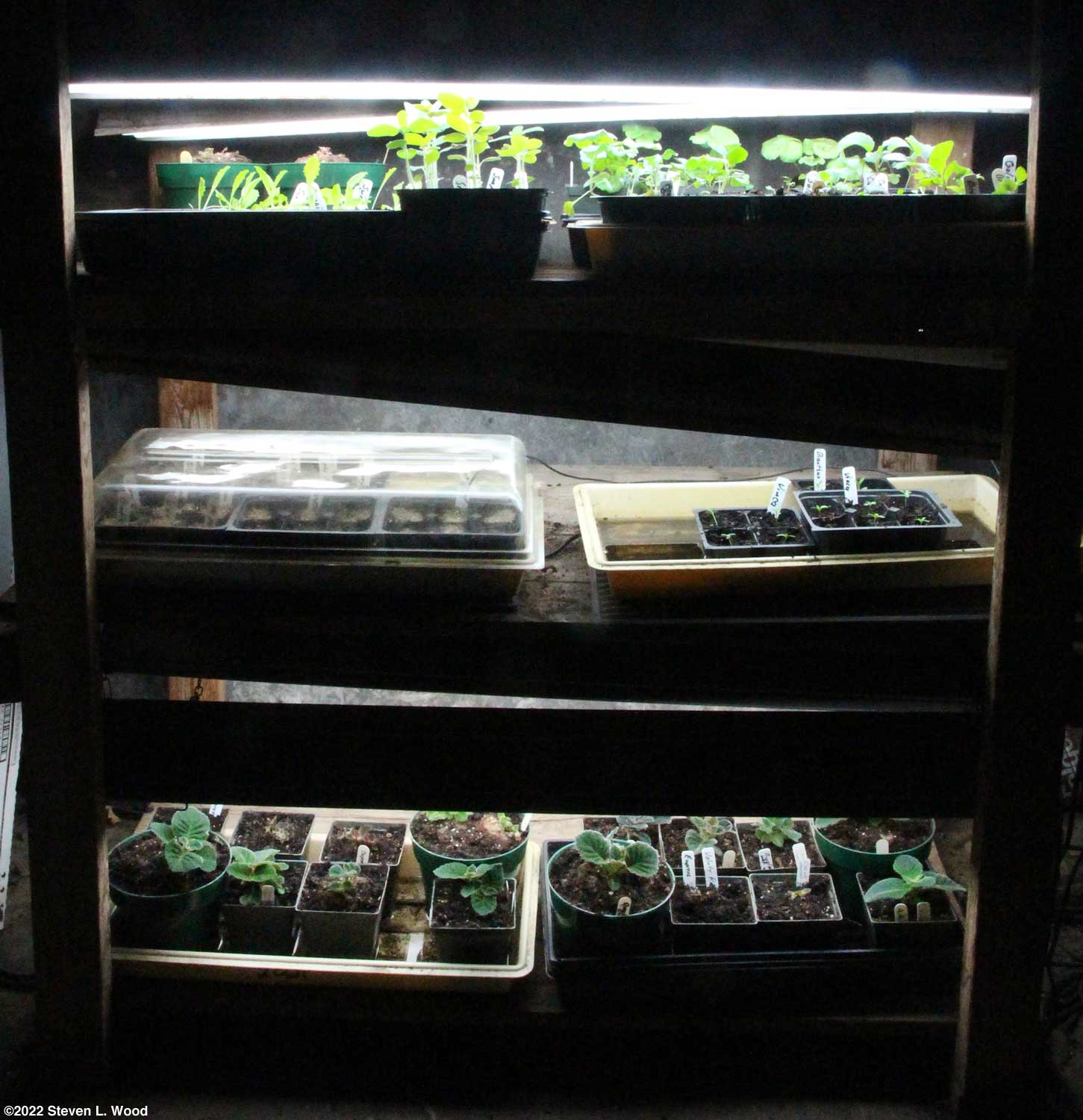
As soon as I can, I want to transplant our onions and lettuce and direct seed carrots. Often, transplanting brassicas (broccoli, cauliflower, cabbage, etc.) is an early April job. But our broccoli has been slow to germinate. Our saved Goliath seed is only germinating at about 40%! So our cauliflower will get transplanted early while our broccoli will probably have to go into our East Garden plot a good bit later. One of our more unusual early plantings will be of green beans. Since we live way out in the country beside a farm field, the farm rotation influences our bean planting. When the field is planted to corn, we can plant beans at our leisure. This year the field will be planted to soybeans, which draw lots of Japanese beetles. Rather than have to regularly spray our beans with some very non-organic materials, I try get our beans in early so they'll mature before the Japanese beetle population explodes.
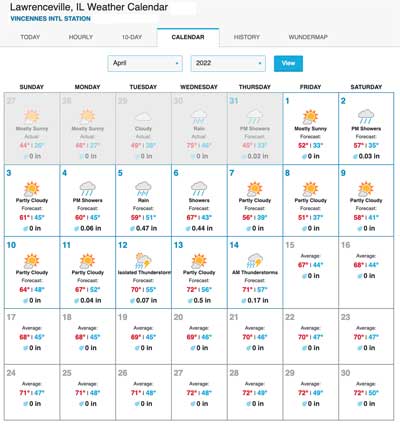
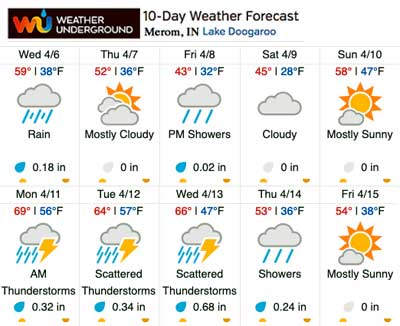
Some Tools One of the features on the Weather Underground site is their Calendar Forecast. You access it by clicking on "Calendar" on the main page or "View Calendar Forecast" on the extended forecast page. Doing so reveals a fourteen day forecast along with climatic averages for the rest of the month. While a fourteen day forecast isn't all that reliable, it can add some guidance to ones gardening plans. Another great tool I've regularly mentioned on this site is Johnny's Selected Seeds Seed-Starting Date Calculator. Beyond giving dates for starting transplants, it also suggests dates for setting out transplants or direct seeding based on ones zip code. Their page of interactive tools has several other useful tools. A couple of my favorites are their Succession-Planting Calculator and Fall-Harvest Planting Calculator
|

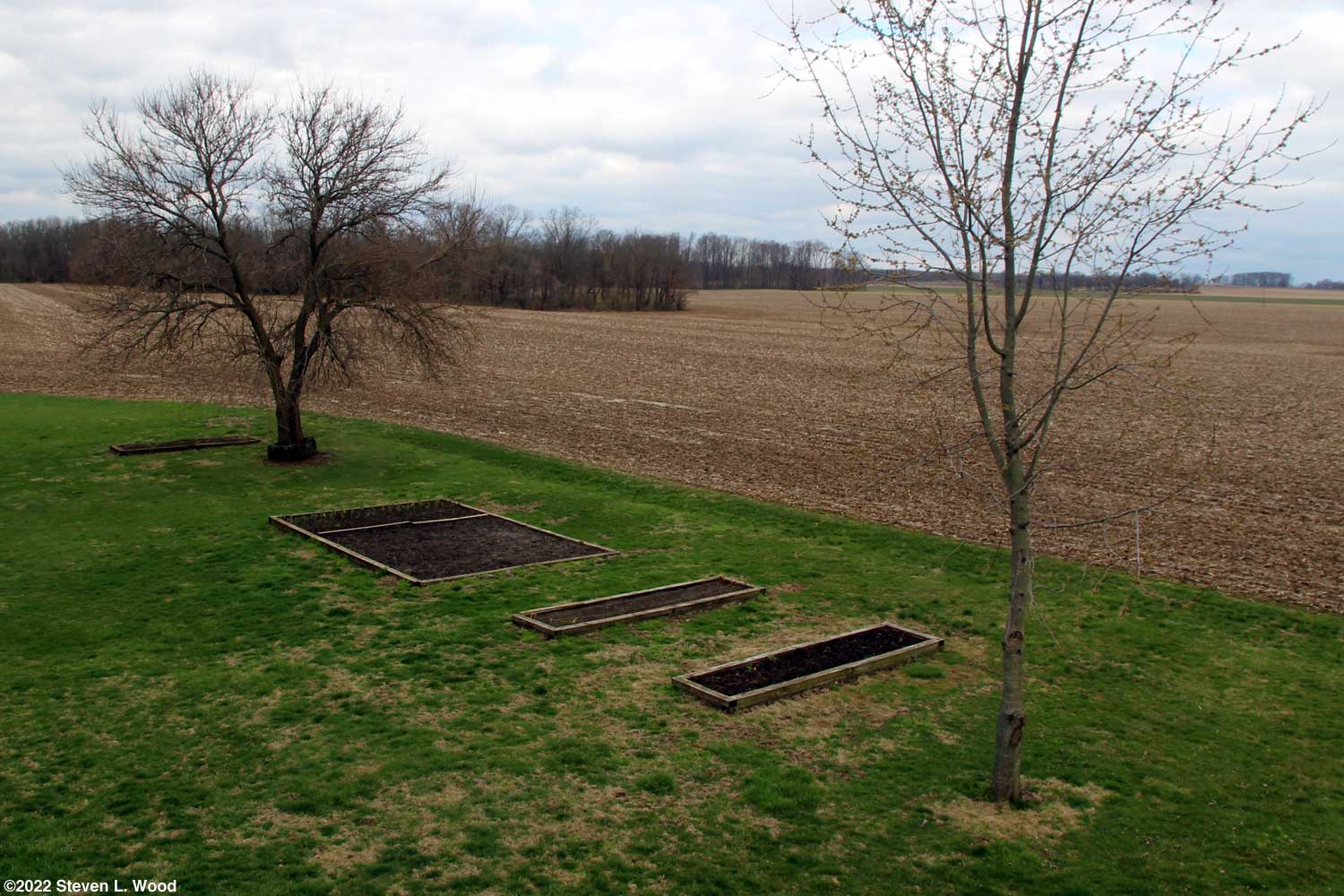



Saturday, April 2, 2022 - Garden Plans
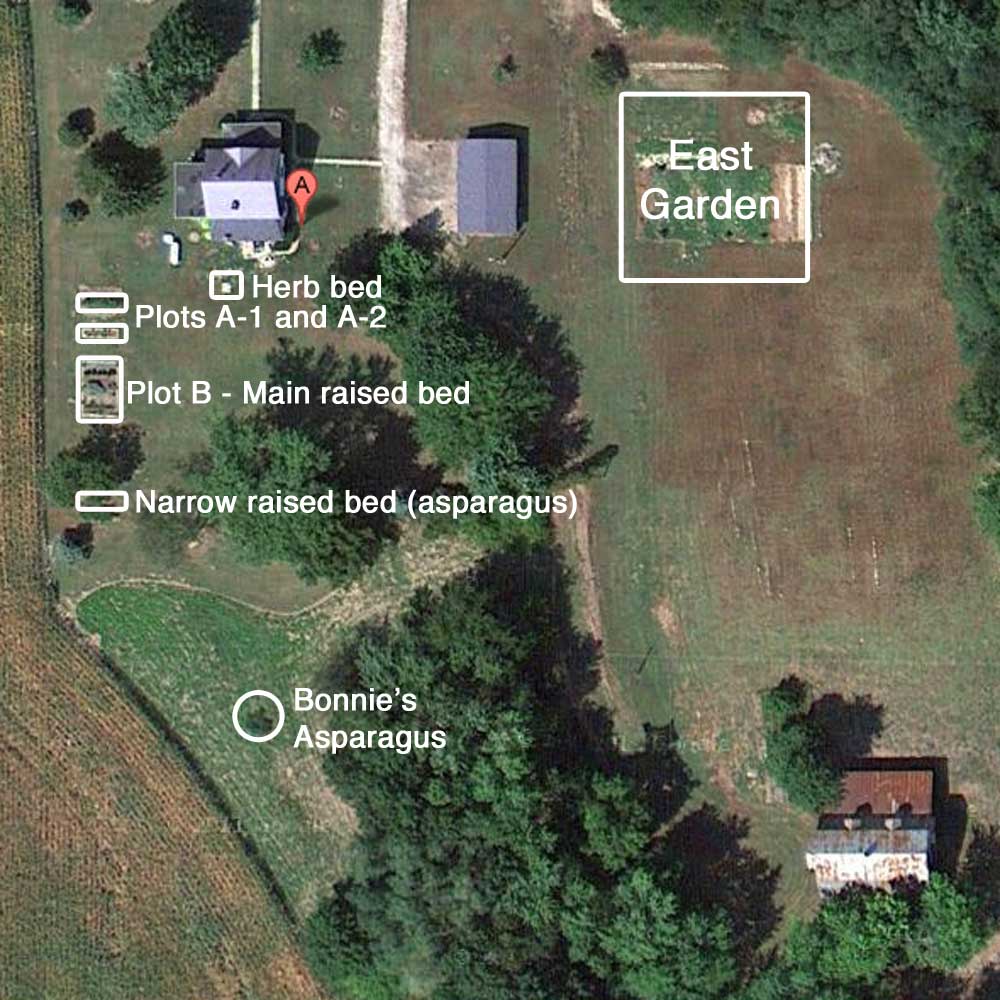
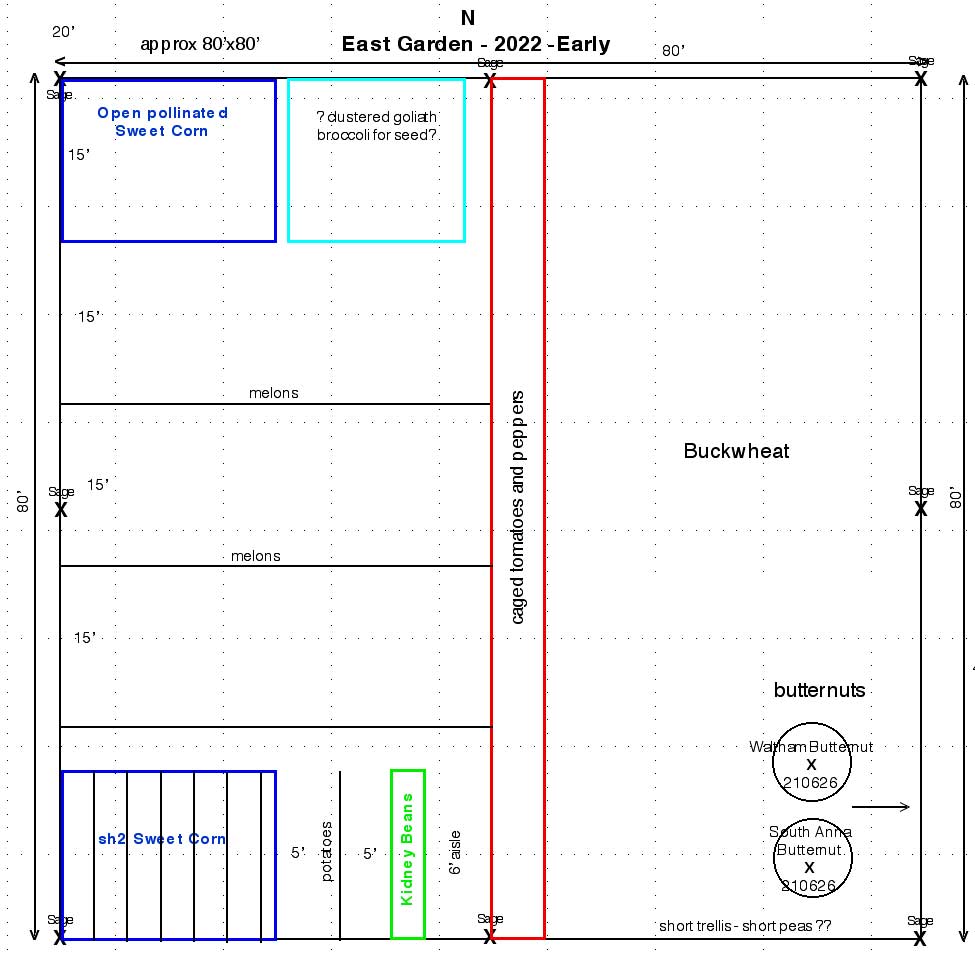
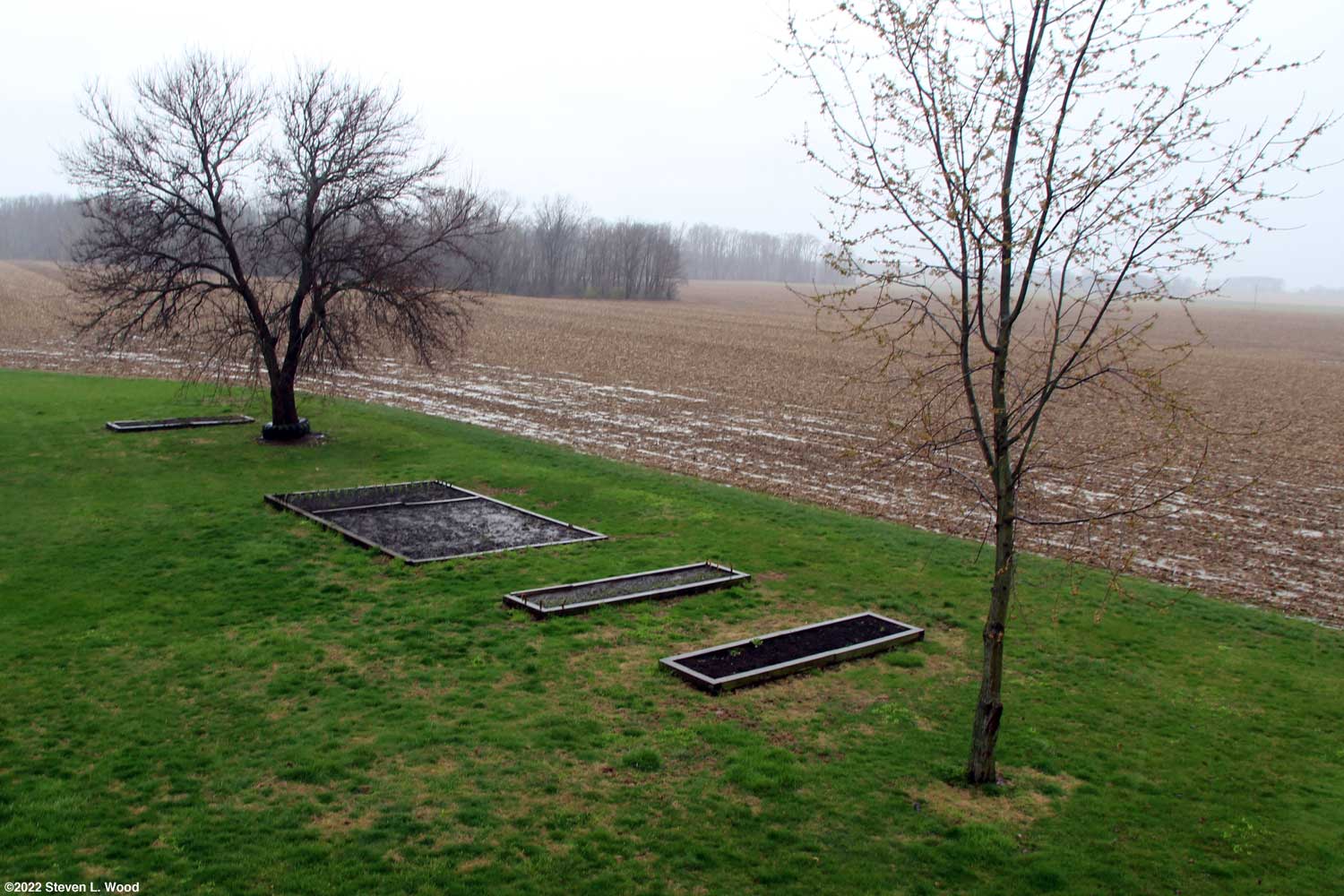
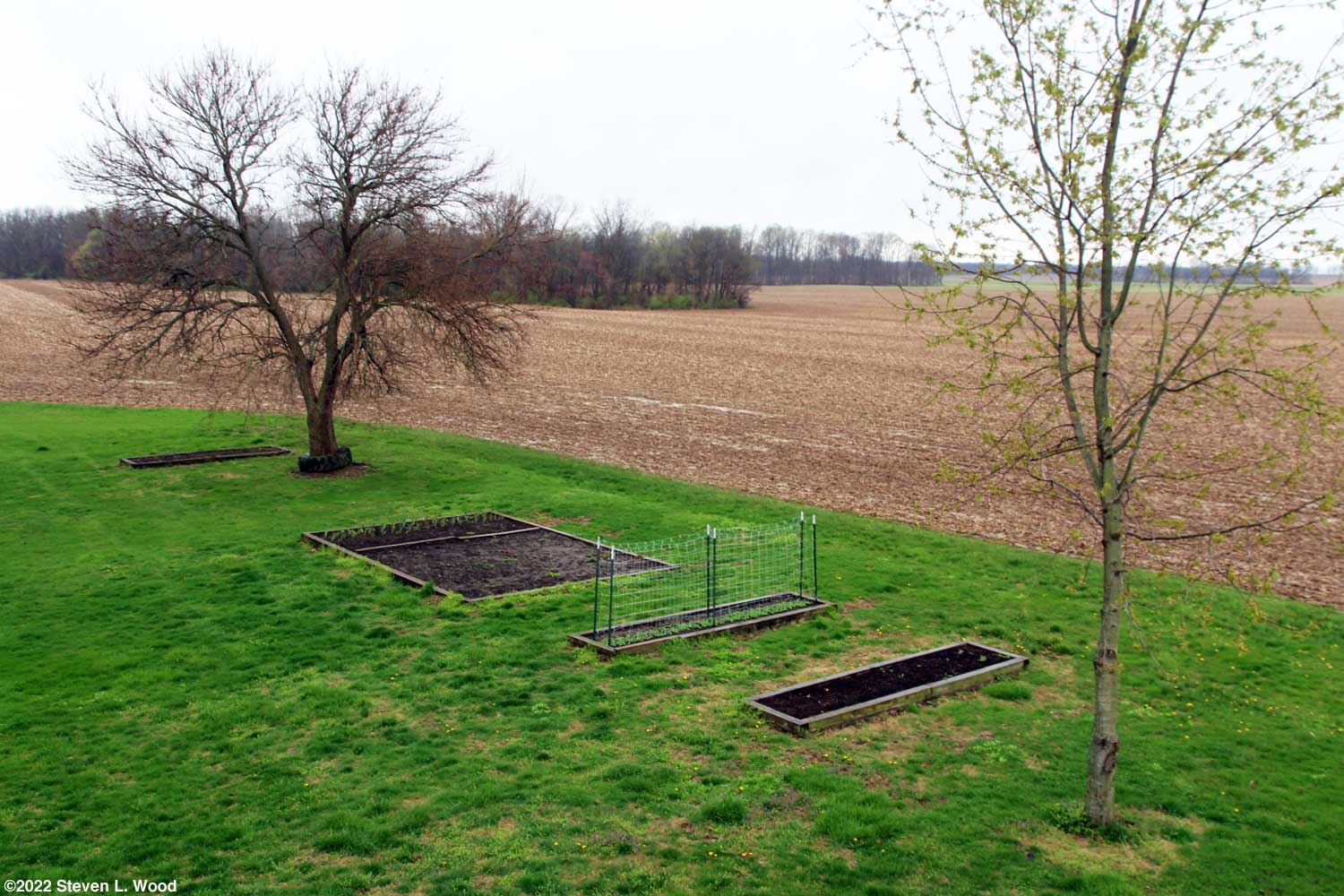
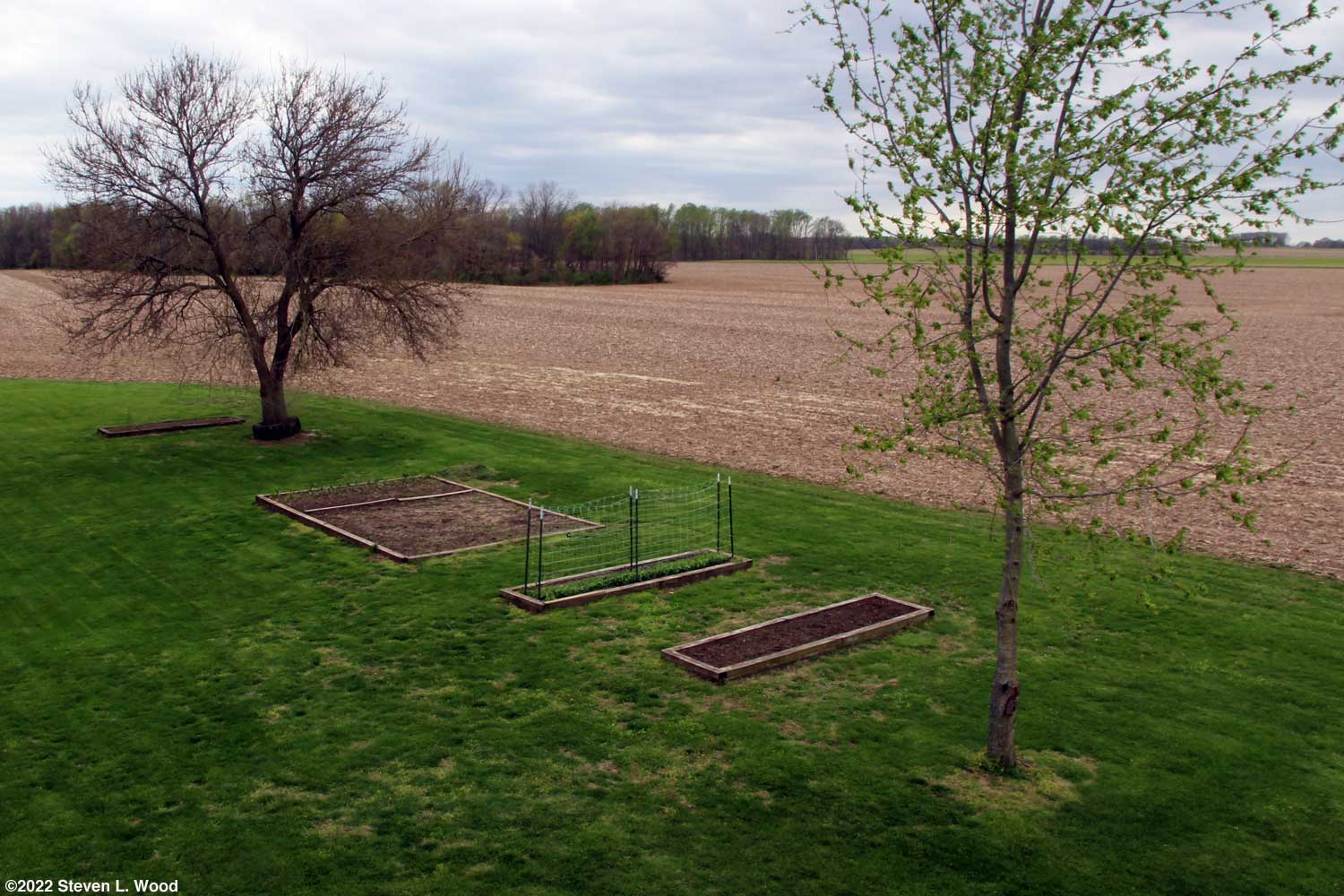
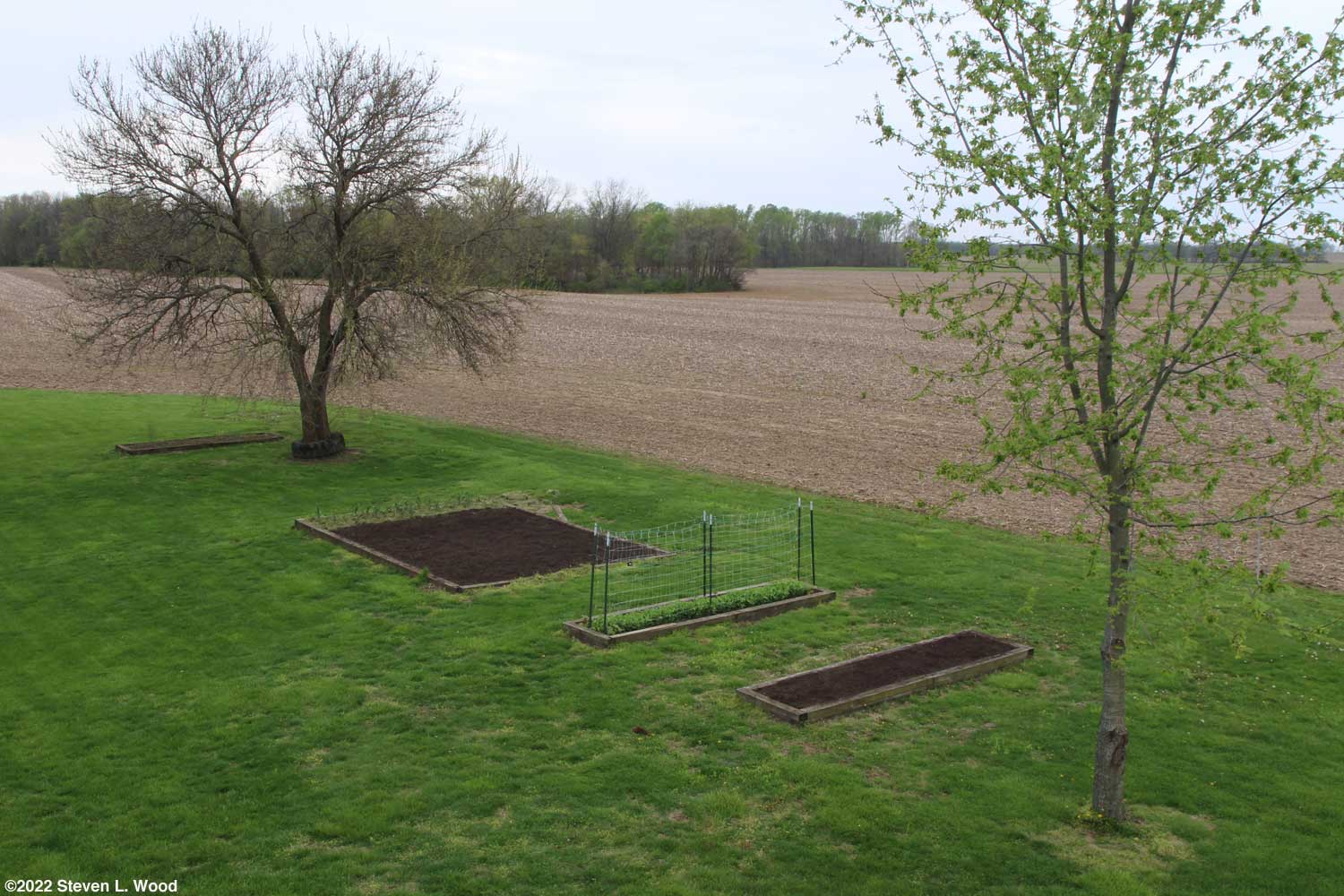
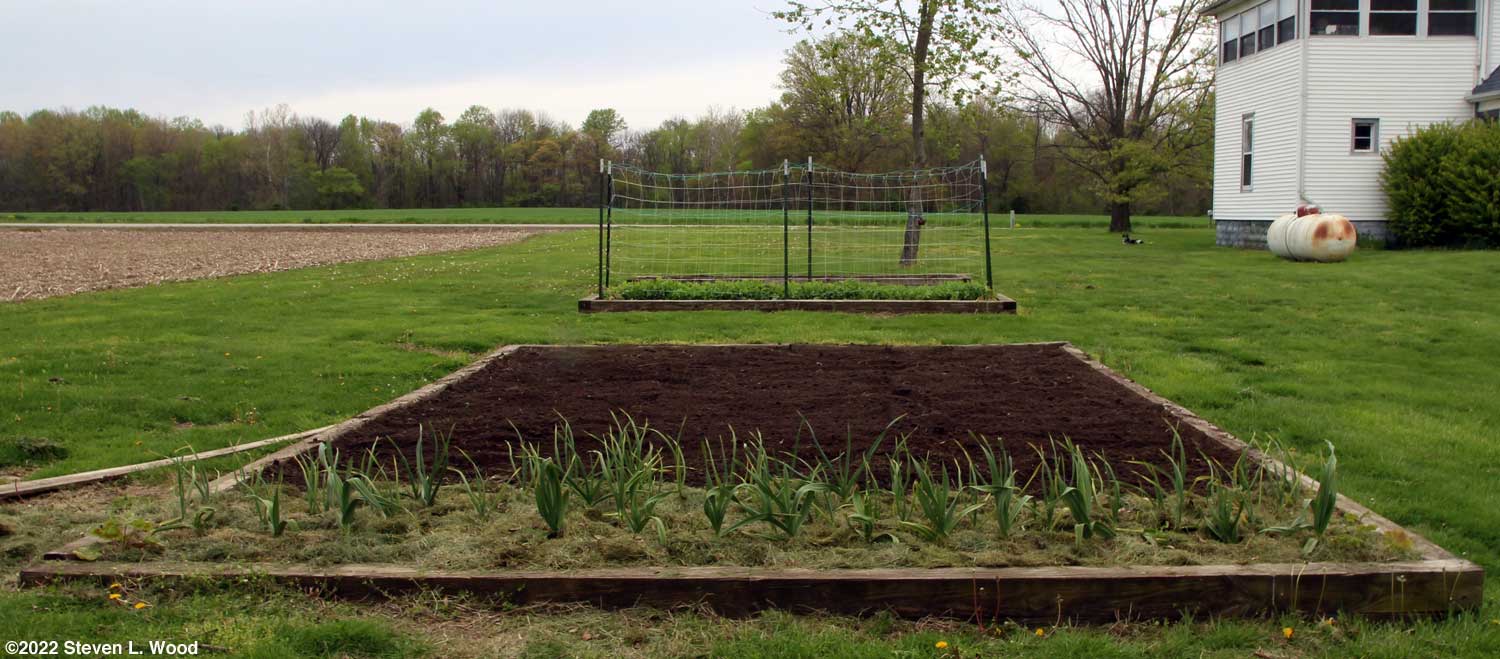
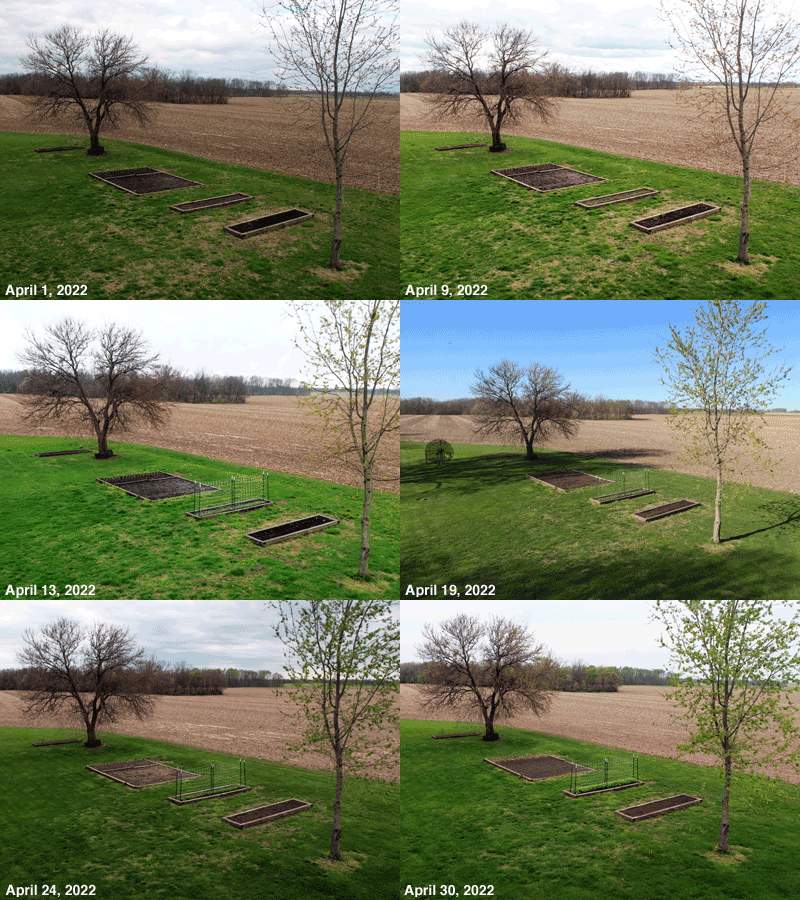
The image at left shows where our garden plots lie. At times, we've used small patches closer to the barn as isolation plots. Raised beds A-1 and A-2 have interior dimensions of about 3' x 15'. Plot B, our main raised bed, measures 16' x 24'. Our asparagus raised bed measures about 3.5' x 15'. Bonnie's Asparagus Patch is just a circle of asparagus with a diameter of about 8'. It was planted well before we moved here twenty-eight years ago. Our East Garden plot has varied in size over the years, but the last few years, it has been standardized at 80' x 80'. We generally use just half of that space each season, sowing the rest to buckwheat and/or hairy vetch turndown crops for soil improvement. Plot B, our first built and main raised bed, will have an all season planting of our favorite tomato variety, Earlirouge. Early crops will include green beans, supersweet peas, cauliflower, an intensive planting of onions, carrots, beets, and lettuce, and our fall planted garlic. Other than the tomatoes, succession crops will take the place of the early crops by mid-season or so.
I hope we'll soon be snapping off asparagus spears from both our raised bed of Viking asparagus and Bonnie's Asparagus Patch, I haven't seen and spears emerging as yet. The last time we had asparagus in March and early April after a warm winter, the drought of 2012 followed. So I'll just be happy to pick asparagus when it comes. If you're considering building a raised garden bed, here's how we built two very different raised beds.
Getting old is a bummer. And the East Garden plan isn't final as yet. I'm considering squeezing in a long row of Eclipse supersweet peas. But that planting depends on how much compost we get out of our old compost pile. Peas love compost! An ill-fated planting of a lot of our saved pea seed in the East Garden totally failed several years ago. I direct seeded those peas, but will go with transplants this time if I decide to do it. I'm really hoping there are others out there still working to preserve the excellent Eclipse pea variety.
Monday, April 4, 2022 - Starting More Tomatoes
The first start of Earlirouges produced no sprouts or plants. I dumped them yesterday. I'm guessing that I got the water too hot during the hot water treatment and killed the seed. The second planting from March 28 had lots of spouts. Being a bit paranoid, I had put lots of seeds in each sixpack cell. So one of my jobs yesterday was to thin the Earlirouges to one plant per cell. With the batch thinned to twelve cells and needing only six transplants, I hope to be able to pick the strongest and most healthy looking plants for transplanting next month. I started the rest of our tomatoes this morning. I seeded Moira, Quinte, Crimson Sprinter, Bradley, and Red Pearl open pollinated varieties. Our hybrids for this season will be Bella Rosa, Dixie Red, Mountain Fresh Plus, Mountain Merit, and Honey Bunch.
Of the hybrids started, the Mountain Fresh Plus and Mountain Merit varieties stand out for their good flavor and disease resistance. When I brought anthracnose into our East Garden via some bad seed, those two varieties continued to produce while other varieties faded. Our grape tomato varieties, Red Pearl and Honey Bunch, are an interesting pair. Red Pearls produce the most flavorful grape tomatoes I've ever grown, but don't produce that many grape tomatoes. The Honey Bunches are flavorful and produce lots of grape tomatoes. While I save seed each year from the Red Pearl variety, I can't share any of it as the variety is PVP patent protected. But Johnny's Selected Seeds always seems to have the variety on sale! I also started our Earliest Red Sweet bell pepper plants today. The ERS variety produces early peppers and continues to produce heavily late into the season. It's peppers are smaller than most popular hybrids, but the volume of peppers offsets that limitation.
Our how-tos: I still need to seed paprika peppers, although we had a fantastic crop of them last year that yielded more dried, ground paprika than we probably can use in a year's time. Uppotting
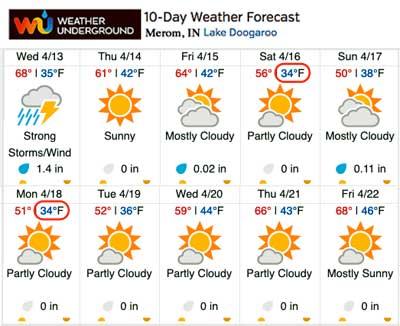
I also moved some Goliath broccoli seedlings from an egg carton I started them in to deep sixpack inserts. The plants were tiny, but were in danger of falling over. I also repotted the rest of our Goliath broccoli that had gotten leggy, moving the plants deeper into the soil of their sixpack inserts. Planting Still on Hold Any outdoor planting here is still on hold. We have freezing temperatures predicted for both Saturday and Sunday morning.
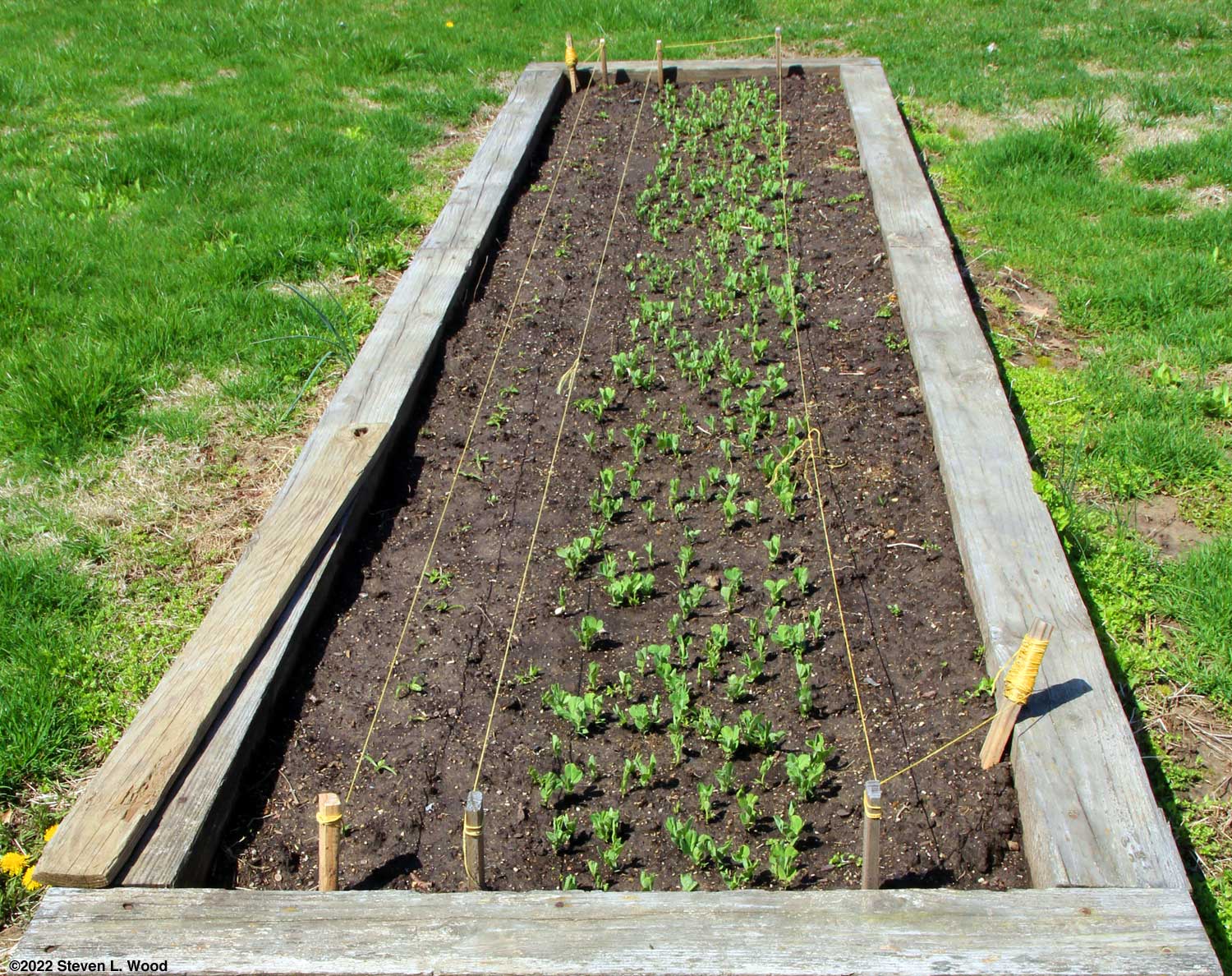
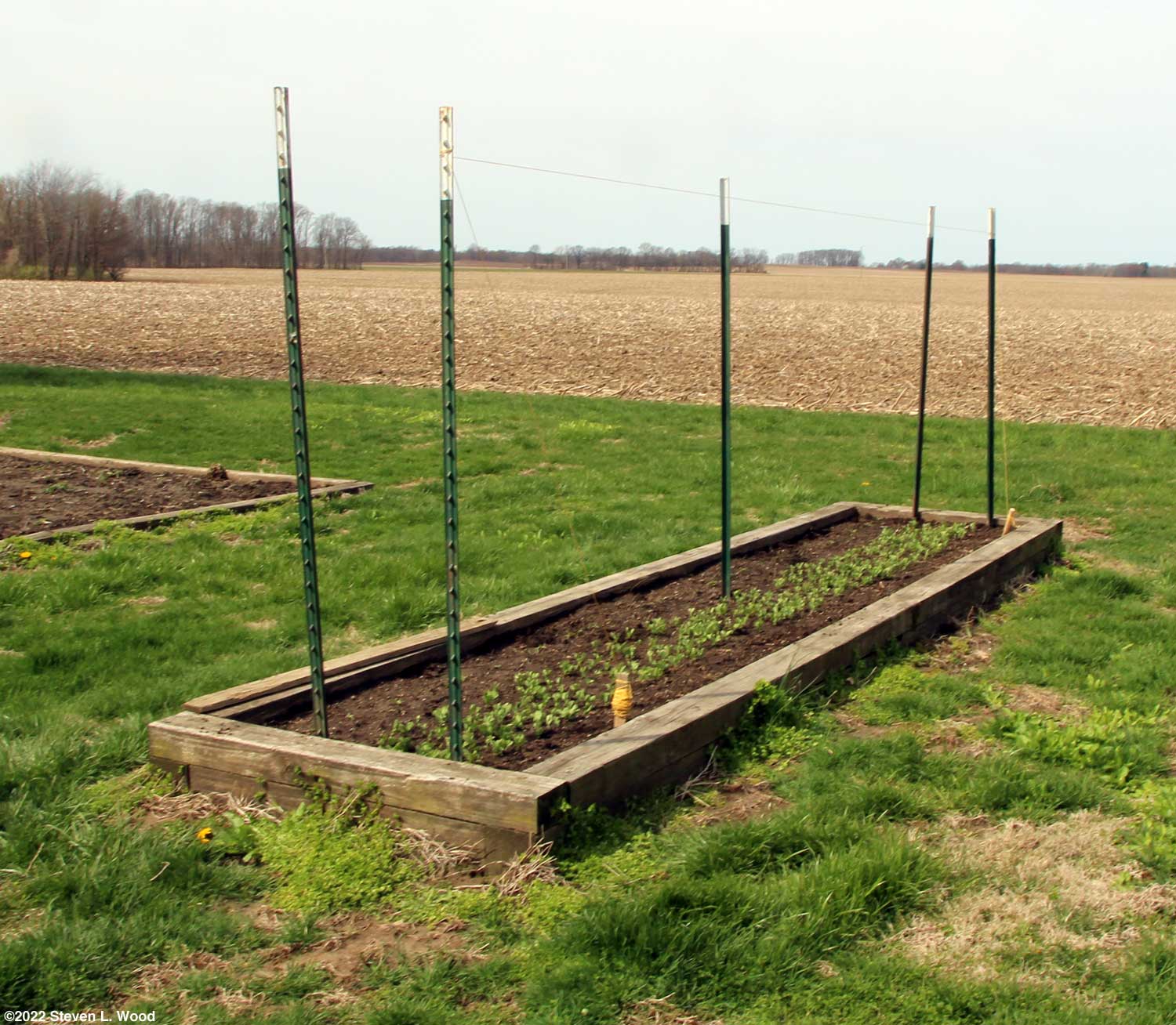
Our extended weather forecast doesn't look conducive to getting much outdoor gardening done. There are a couple of freezing mornings and lots of rain in the forecast. One job I will need to get done in breaks from the rain is to erect a double trellis around our planting of early peas. For years, some of our pea vines would blow off a single trellis, bending so that those vines didn't produce many good peas. I finally came upon the idea of putting up two trellises spaced sixteen inches apart. That has cut down of vines blowing off the trellis and also increased our early pea harvest. The crummy weather outlook actually may work for me a bit. My lovely wife, Annie, fell off our front steps last Thursday night, breaking her hip. The break was in such a place that the surgeon recommended a total hip replacement. She had emergency surgery late Friday night. I brought her home this afternoon. She's doing quite well, but will need a lot of assistance over the next couple of weeks. It's appropriate that should fall to me, as Annie took time off work to help me when I was recovering and rehabbing from a hip replacement seven years ago.
Carhartt T-shirt Sale through April 17
So instead, I finally finished and filed our taxes. I also, out of caution, brought our hanging basket plants back inside. We have low temperatures predicted for the next three mornings, one of them a hard freeze of 28° F. And snow on April 8? Really! It's supposed to be spring! Someone or something has seriously pissed off Mother Nature.
25% off SITEWIDE (excludes gift cards). CODE: GROW422. Offer ends 4/10/22 Friday, April 8, 2022 - Starting Herbs and Paprika Peppers
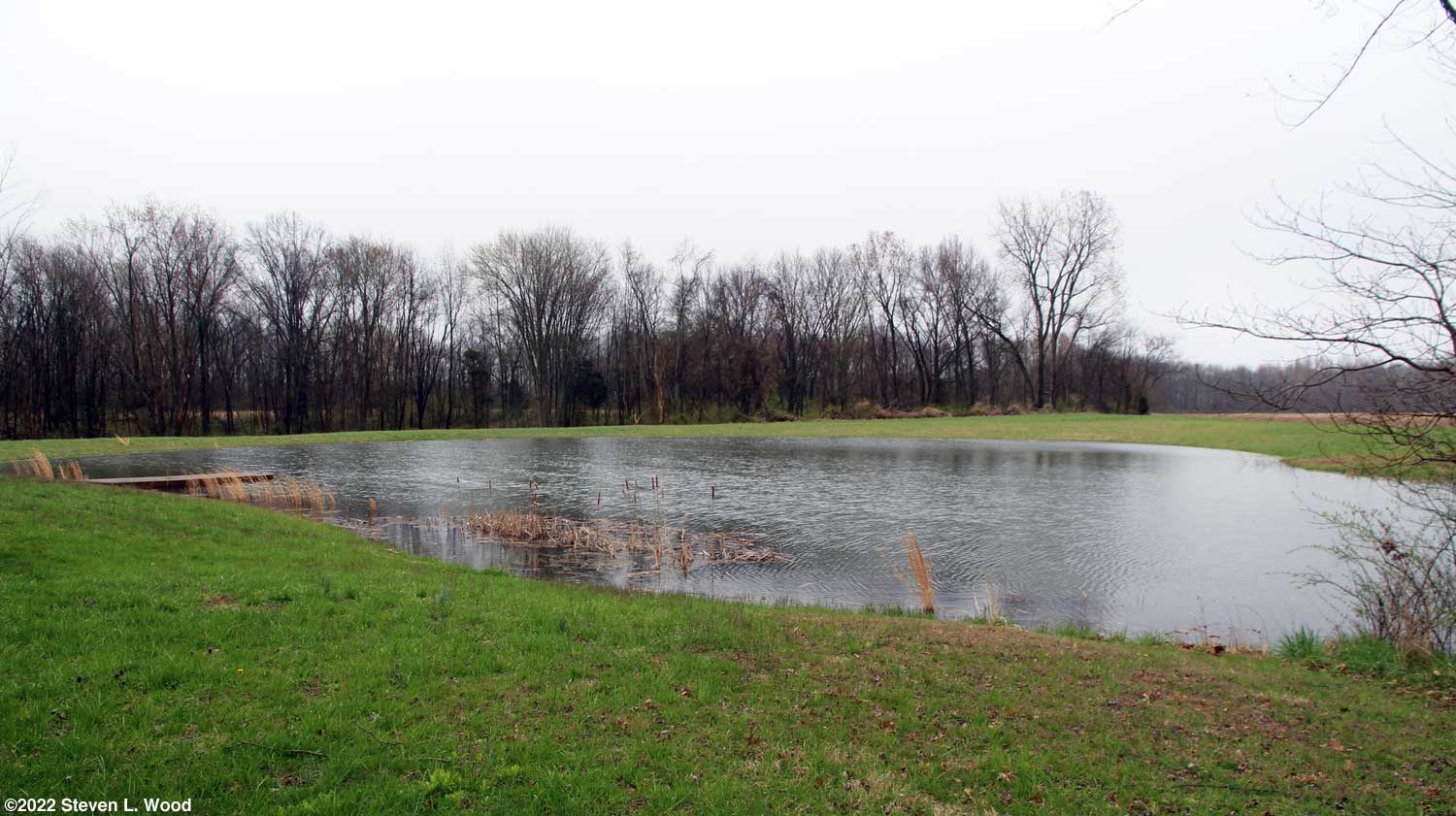
After a really slow start this morning, I got busy in the afternoon starting some herbs and paprika peppers. A lot of my seed was old, so I seeded heavily in some small, round, communal plastic pots. I'll have to stay alert to the plants coming up and move them to individual pots or insert cells once they get going. I seeded basil, dill, rosemary, and thyme. Some of the basil seed and all of the dill seed were seeds we'd saved. I probably didn't need to start any dill, as we often have volunteer plants of it come up in our raised beds. Dill sheds a lot of seeds even when one tries to collect them before they drop. Since I never seem to be able to remember what herbs need light for germination and what don't, I made a chart several years ago to help me. I also seeded our paprika peppers. I used some saved seed and Hungarian and Boldog Hungarian Spice seed. Interestingly, I read online that pepper seed might slightly benefit from a little light. I covered the pepper seed lightly with vermiculite as I'd covered the herb seed. The paprika peppers will go into our East Garden. Peppers there struggle to produce in the poor soil. I've been able to get some fairly nice paprika pepper crops there by giving each plant a deluxe planting hole filled with fertilizer, lime, peat moss, and sometimes compost mixed with the native soil. And of course, we have a how-to on Growing Peppers. The Pond There's always been a pond behind the barn on the field we help take care of. While it was never great for fishing, I have enjoyed watching turtles on the banks laying their eggs. Over the years, the dam of the old pond eroded, leaving just a shallow pond.
It now is a lovely half acre or so pond, but had never been stocked. So a few weeks ago, I invested in some flathead minnows to get things started. They came via UPS and were in good shape on arrival. When I'd normalized the temperature in the bag of minnows, I only saw one dead fish as I dumped the minnows into the pond. Later this summer, I hope to add bluegill and bass to the pond. And eventually, I'll even add some catfish, but not until the other species are well established.
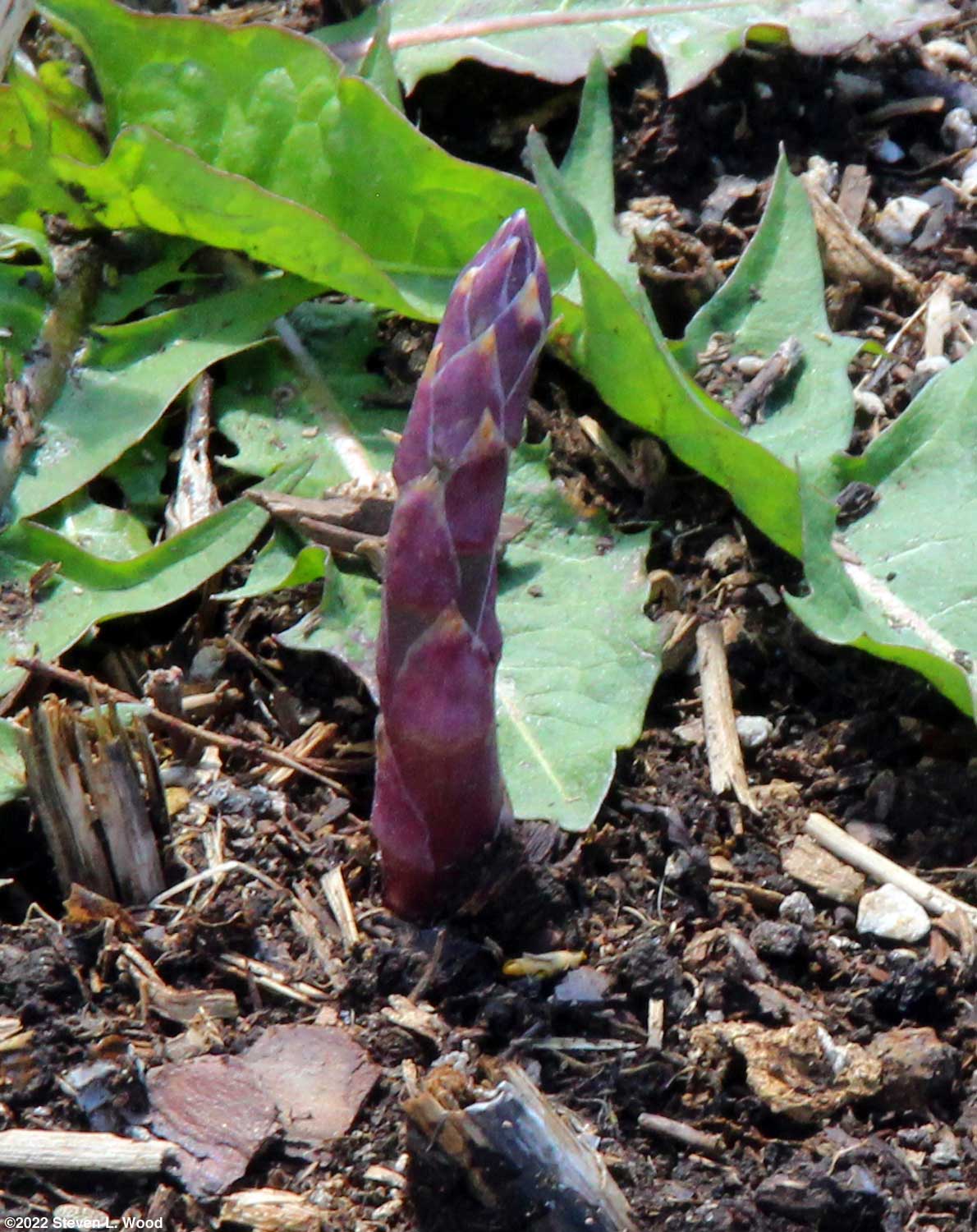
I noticed we have our first asparagus spear up. It won't be long until we're feasting on asparagus again. And yes, that's a jumbo dandelion in the photo. The sun was out when I took these pictures. Then I made a quick trip to town. One purchase was of seed potatoes from our local garden center. By the time I got home, it had clouded over and the wind picked up. So I chose to be lazy and wait for a warmer day before attacking some outdoor jobs.
I closed our cold frame at around four in the afternoon. That's usually a no-no, as a cold frame can really heat up with the sun on it. Since it's mostly cloudy today, I'm hoping to hold in as much heat as possible before a predicted freeze tomorrow morning.
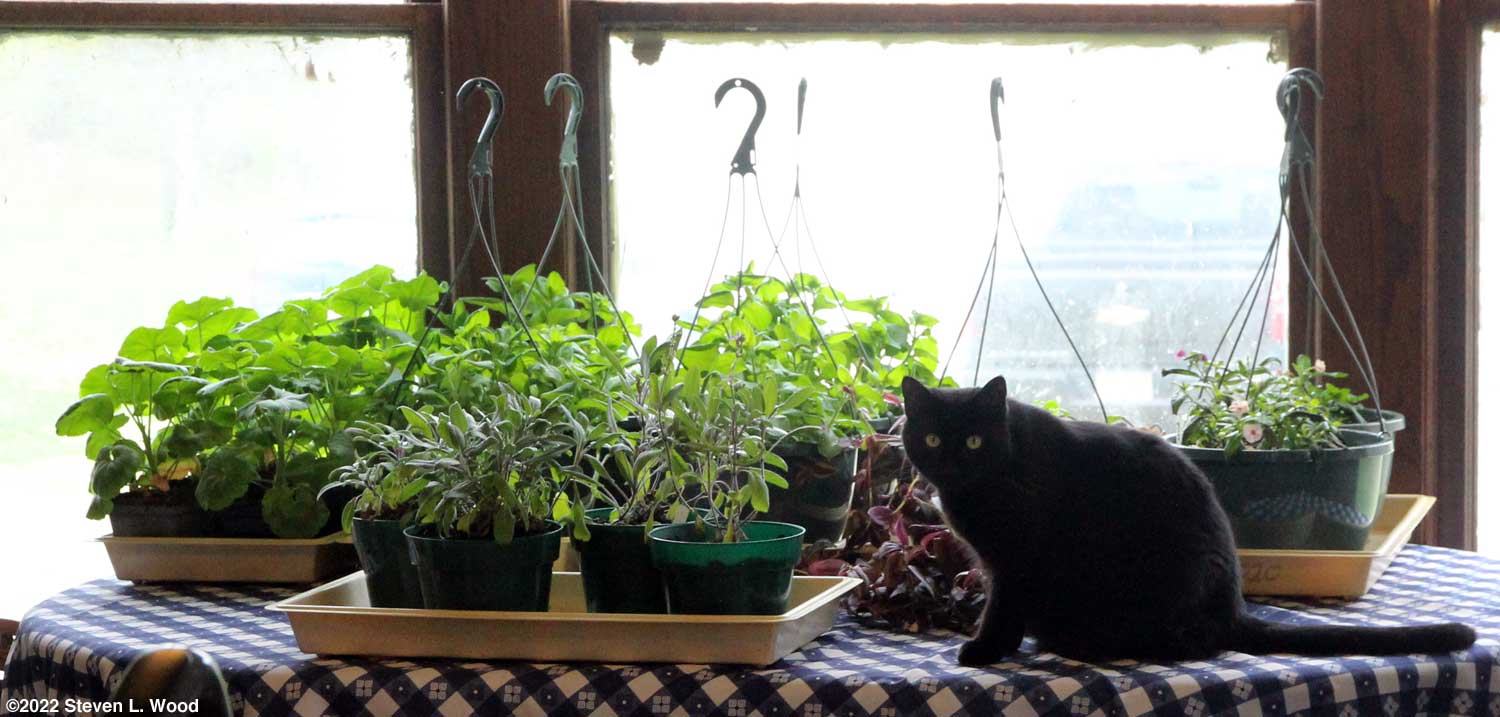
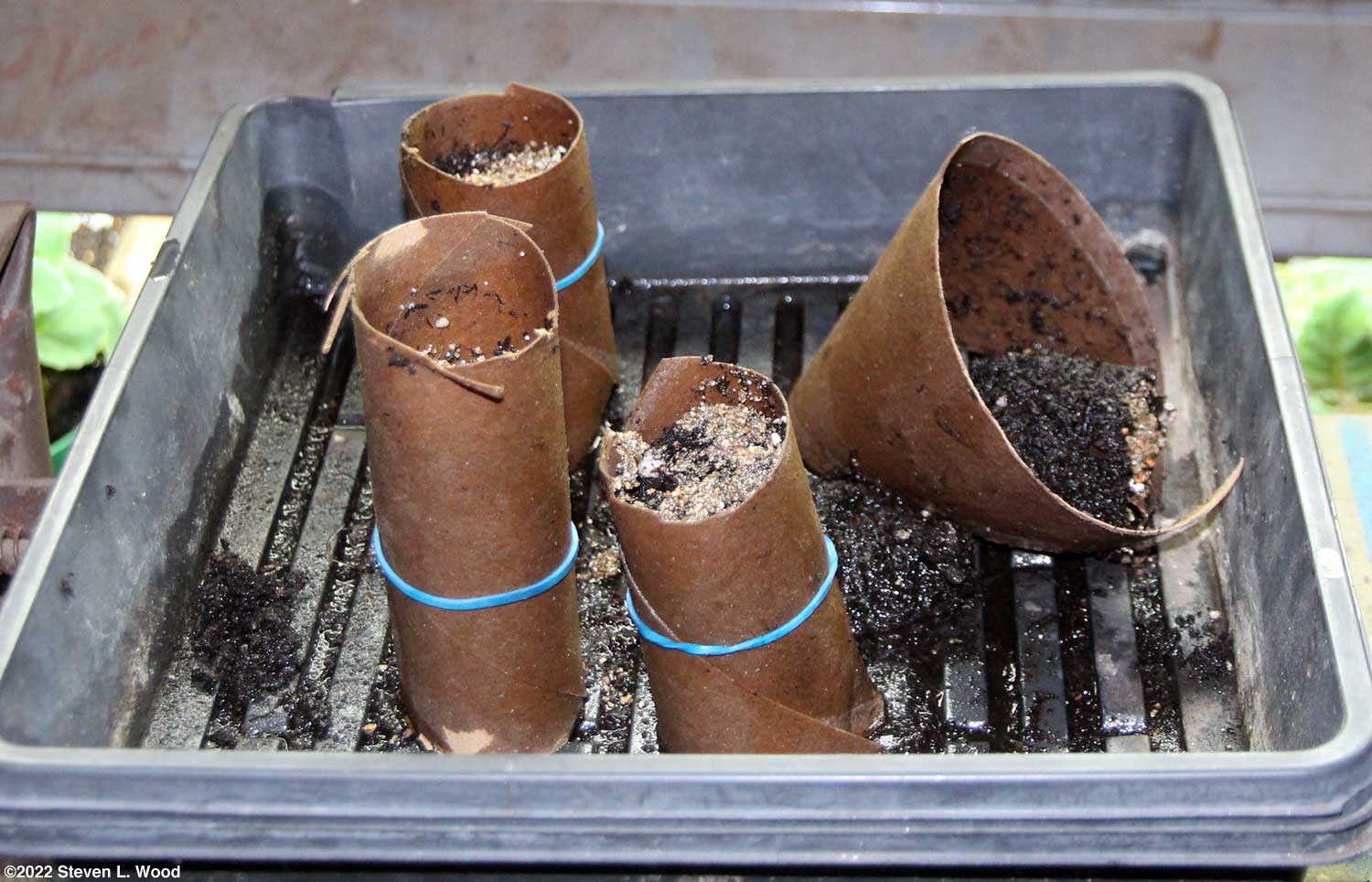
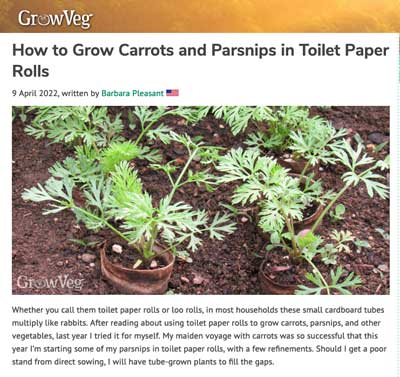
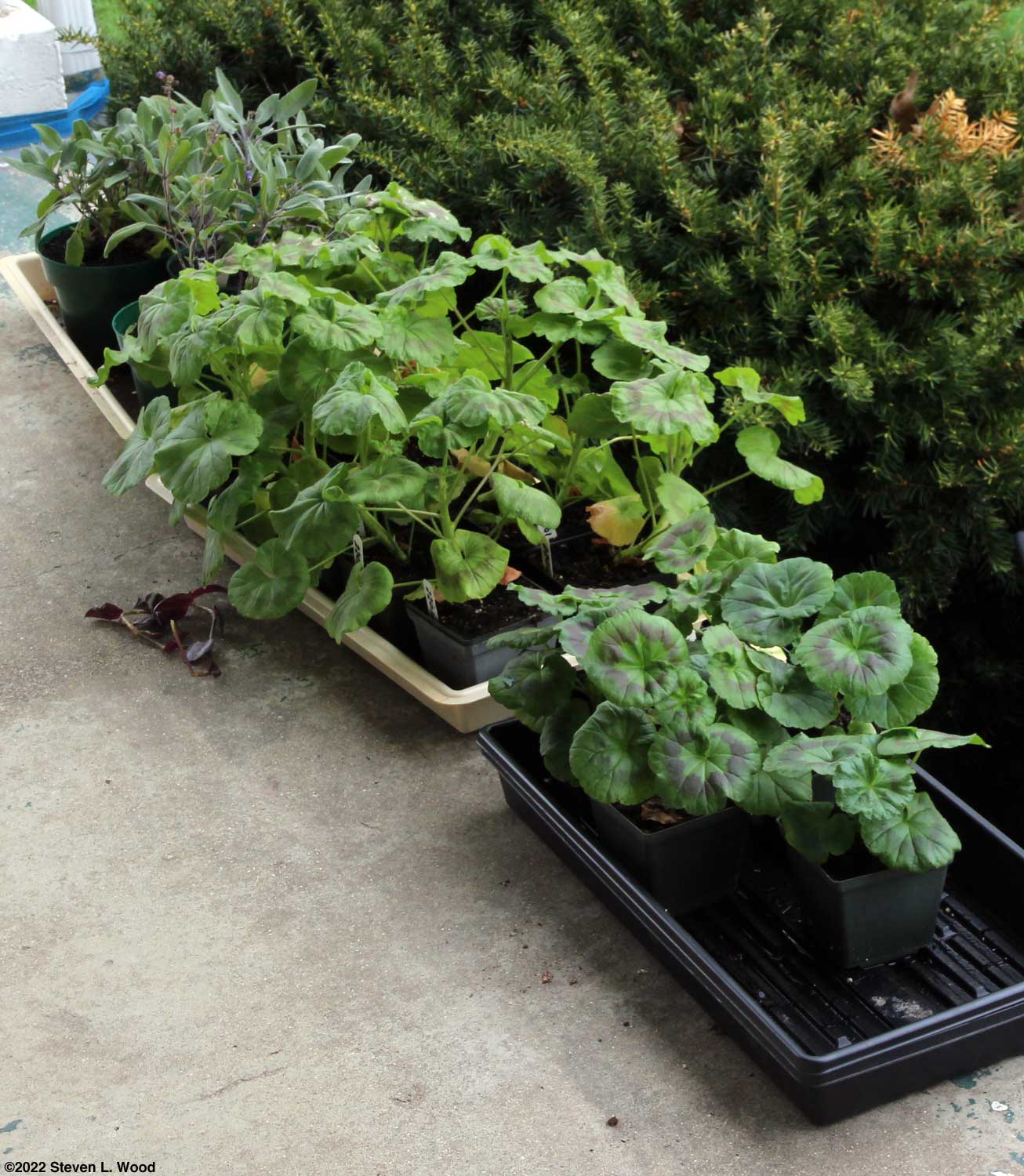
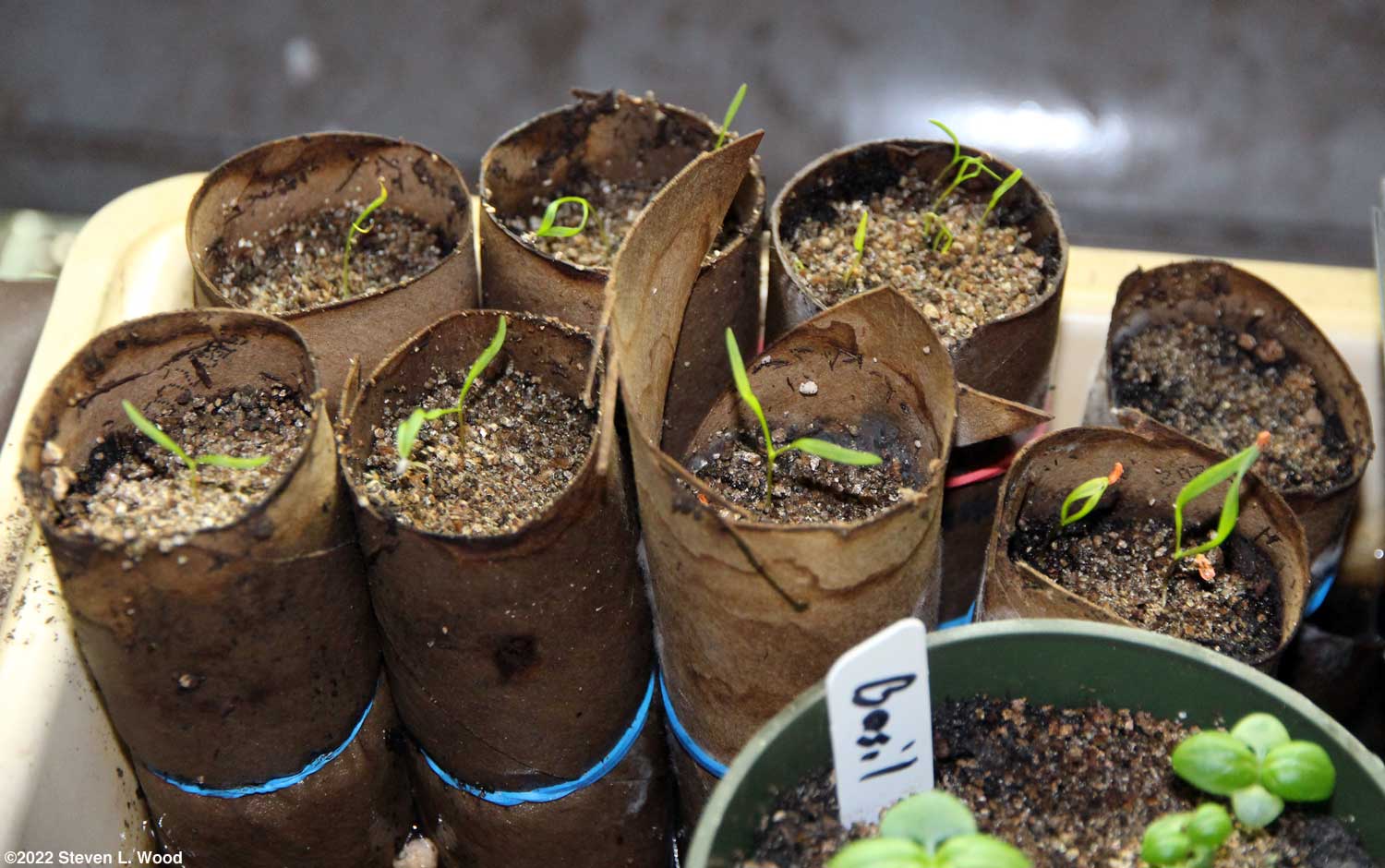
Our hanging basket plants along with some geraniums and sage have been inside for several days. From our extended weather forecast, they may need to remain inside for another week to ten days! One of our cats, Lulu, appears to be guarding the plants. More After putting up today's posting, I came across a really interesting article by Barbara Pleasant on Grow Veg, How to Grow Carrots and Parsnips in Toilet Paper Rolls.
I started off my outside work today finishing a job I started weeks ago. I'd let some grass get going in our herb bed and have been fighting it for a couple of years. It's a variety spread by rhizomes, so just pulling the grass doesn't kill it. Several weeks ago I put a little water and some Roundup in a cat food can, donned latex gloves, and used my gloved fingers to caress each blade of grass I saw with some Roundup. That killed most of the grass, but some survived. So I repeated the process today. One of my big jobs for today was putting in six, seven foot T-posts to hold three strands of plastic coated clothesline wire on which our nylon trellis netting will hang. It was too windy to try stringing the netting, but I stretched the clothesline wire between the T-posts. It will expand some in the sun.
Some light weeding in the narrow raised bed was necessary. I went on to weed our other raised beds, especially our asparagus bed. I dug out the large dandelion pictured here yesterday with an asparagus shoot. I also paid special attention to some chickweed that was blooming. Letting it set and spread seed could cause a weed nightmare. I also observed a bunch of asparagus shoots just breaking the soil surface. I moved on to picking up branches around the yard. Actually, I collected mainly limbs, leaving sticks behind that the mower can handle. I'll need to do our first mow in the next few days which should produce some much needed grass clipping mulch for the pea bed and our garlic.
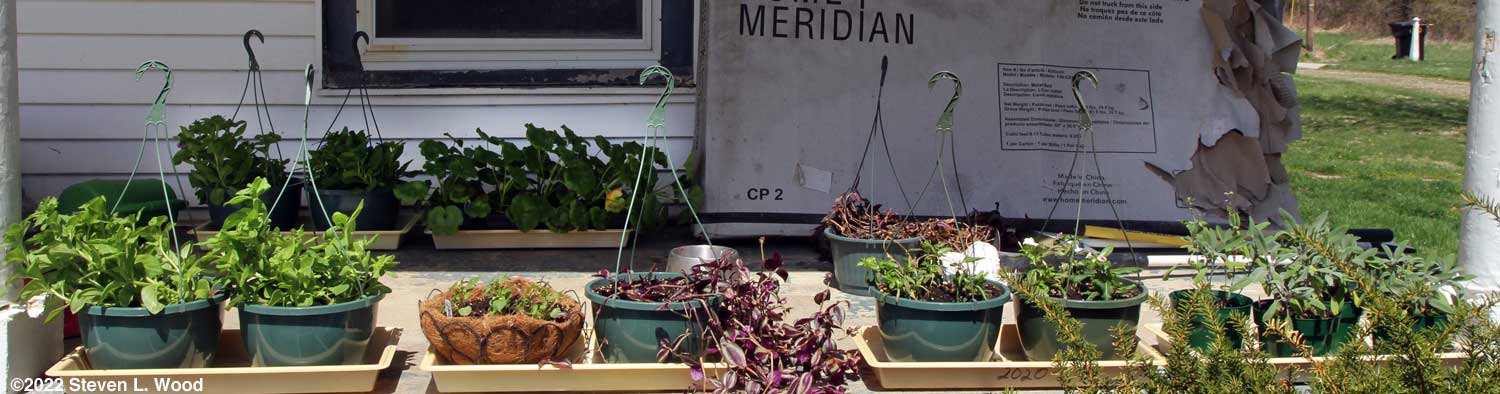
I wound up my gardening day by moving our hanging basket plants from our dining room table back outside. Joining the flowers and sage were a tray of large geraniums. I had a glorious time working outside today. But I also was cognizant that overdoing things would be a mistake. I'm still recovering and rehabbing from a severe neck injury last summer. So I'm taking it slow, but totally enjoying the outside work. I'm going to break one of my rules for this site and re-run an ad that appeared here previously this month. I ordered five Carhartt T-shirts from Dungarees a week ago. They arrived promptly in good shape. If you're into Carhartt clothes, the prices on this sale are excellent.
Carhartt T-shirt Sale through April 17 Monday, April 11, 2022 - Toilet Paper Roll Carrots
I apparently got one roll too wet and it fell apart. The others have held up so far, but small rubber bands around the rolls seem to be a good idea. Gloxinias
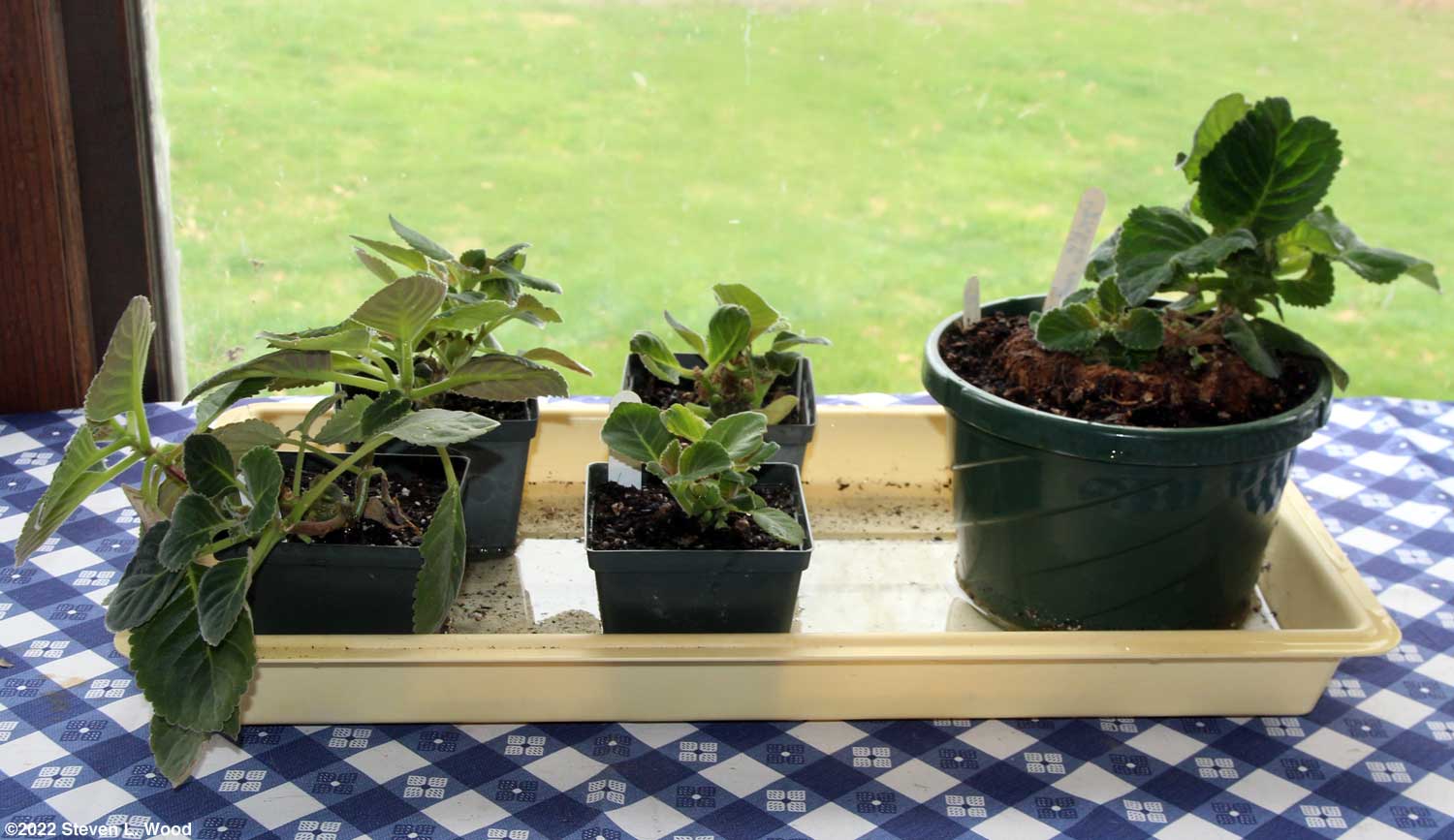
I brought the gloxinia plants down from our sunroom today. I trimmed off dead and damaged leaves and old, dried out bloom buds. Then I broke a rule for gloxinias. As they move towards dormancy, one shouldn't fertilize them. But since just leaving them alone, sparsely watered, hadn't pushed them into dormancy, I decided to give them a bit of liquid fertilizer. Trellis Netting Up Two years ago I wrote some Reminders to Myself:
This year, it took me two days to set up our double trellis. Rain, wind, and age made the process twice as long as usual. And as I installed the trellis netting today, the wind terribly tangled some brand new trellis netting. But I got it untangled, so that part of the job is done.
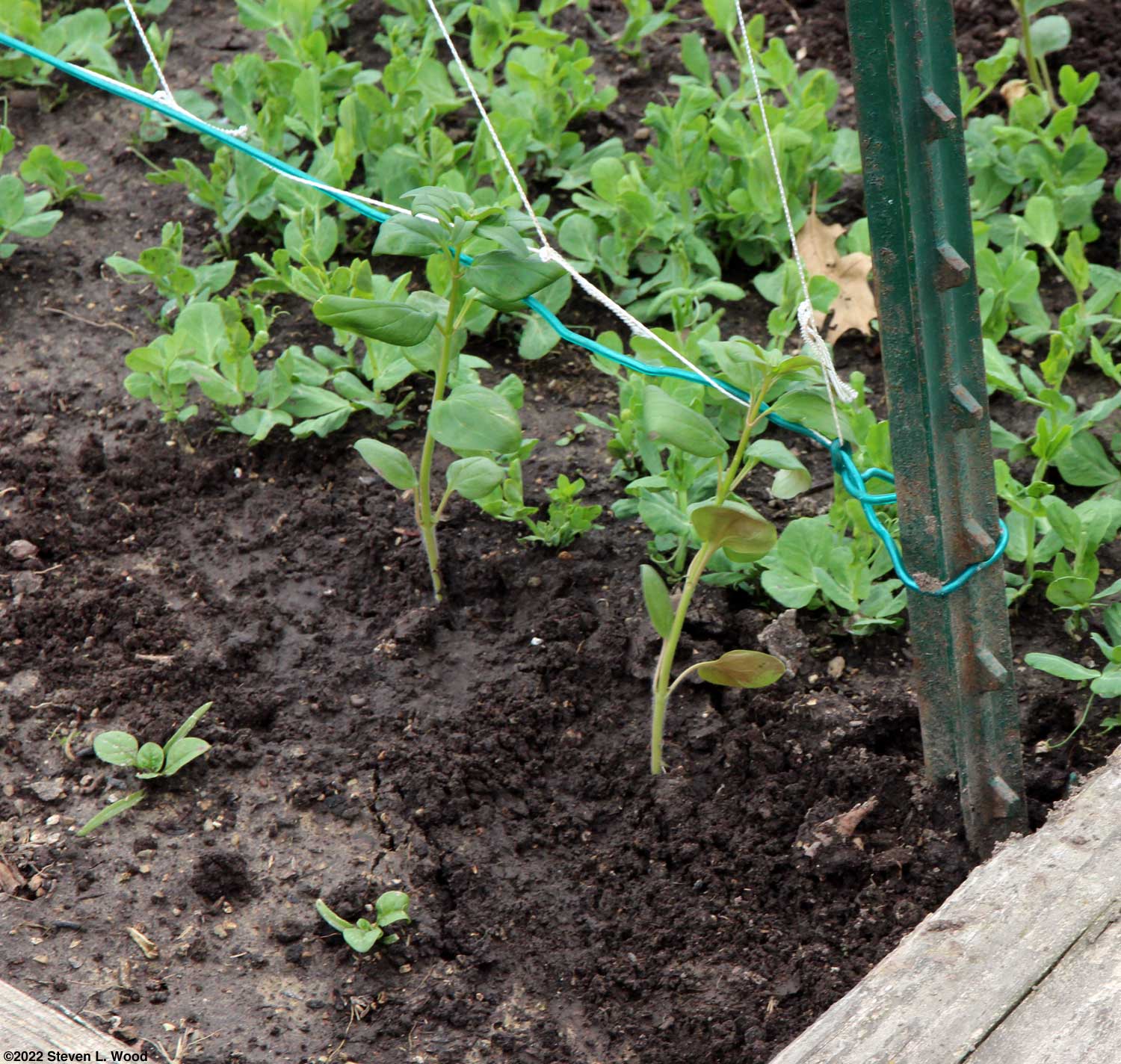
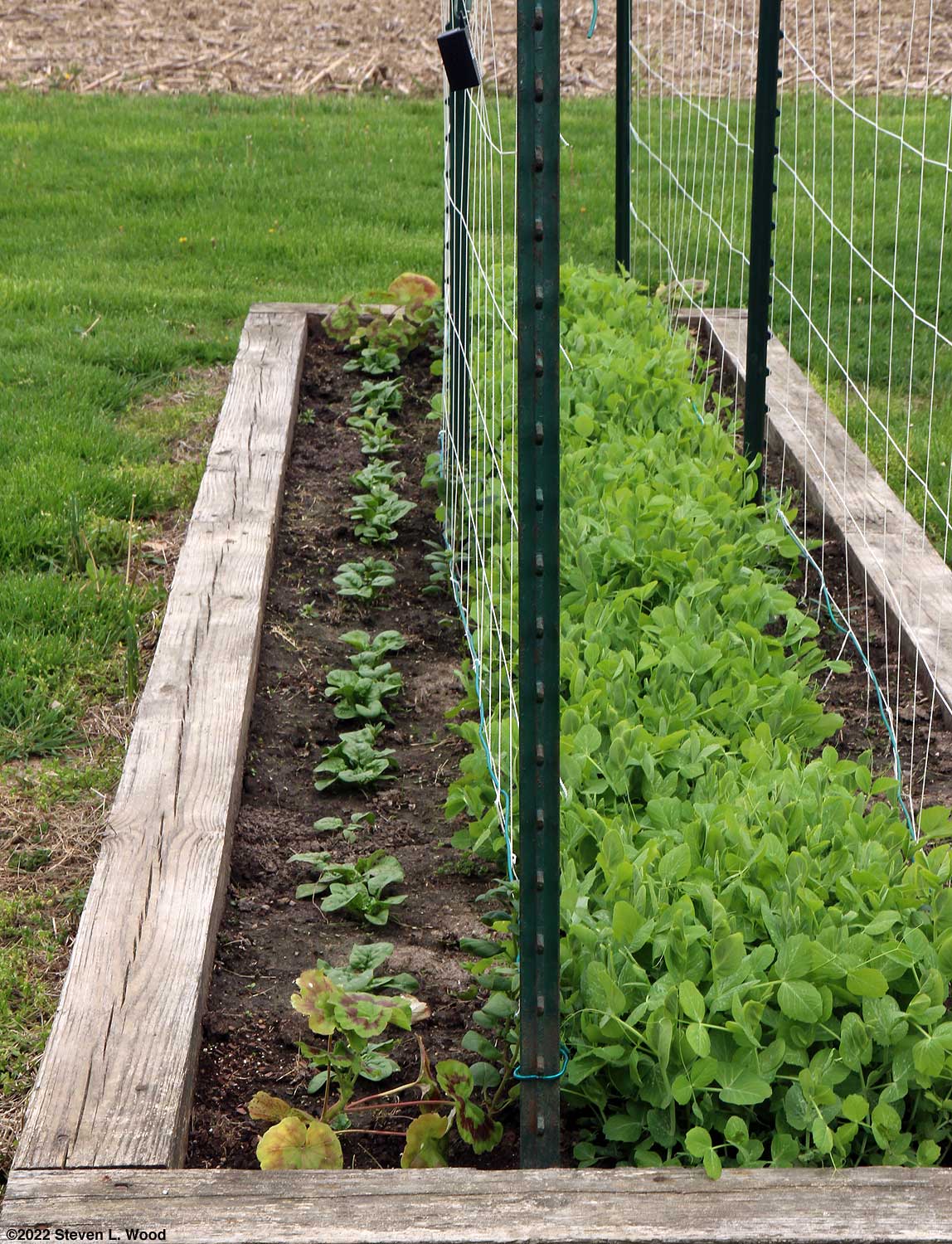
I use a double trellis to keep our tall peas from blowing off the trellis. Most of the peas grow in a sixteen inch wide row between the two trellises. When the peas play out, Japanese Long Pickling vining cucumbers will benefit from growing between the double trellises. I use six, seven foot T-posts to hold three strands of plastic coated clothesline wire on which some nylon trellis netting hangs for our trellises.
Our how-to feature, Another Garden Delicacy: Homegrown Peas, gives the skinny on how we grow our peas, tall and short, from start to the table. I moved a couple of deep sixpack inserts of our favorite snapdragon variety, Madame Butterfly, outside today to begin hardening off. They would have been my choice to surround our pea planting, but the seed for them was backordered and came in very late. They'll instead go around a planting of short, supersweet peas.
I brought melon, squash, eclipse and encore pea seed in from the garage freezer today. It's about time to get transplants started for those crops. This always puts a strain on our soil heating mat space. I'll start the melons and squash first and later start our supersweet peas. All require some bottom heat to get going. Later I wanted to inspect our apple trees and also check our asparagus beds. But it just keeps raining and raining.
Thursday, April 14, 2022 - First Asparagus
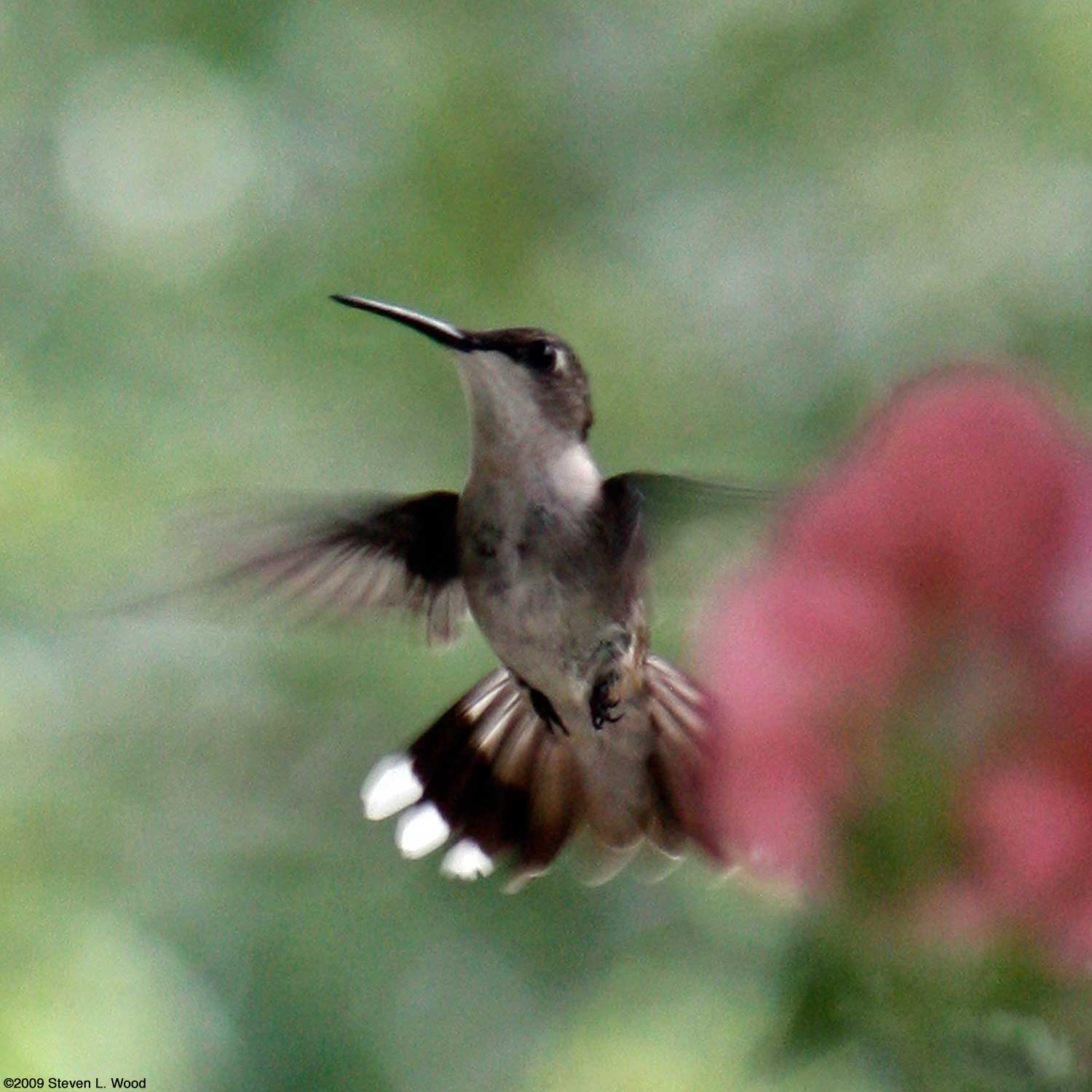
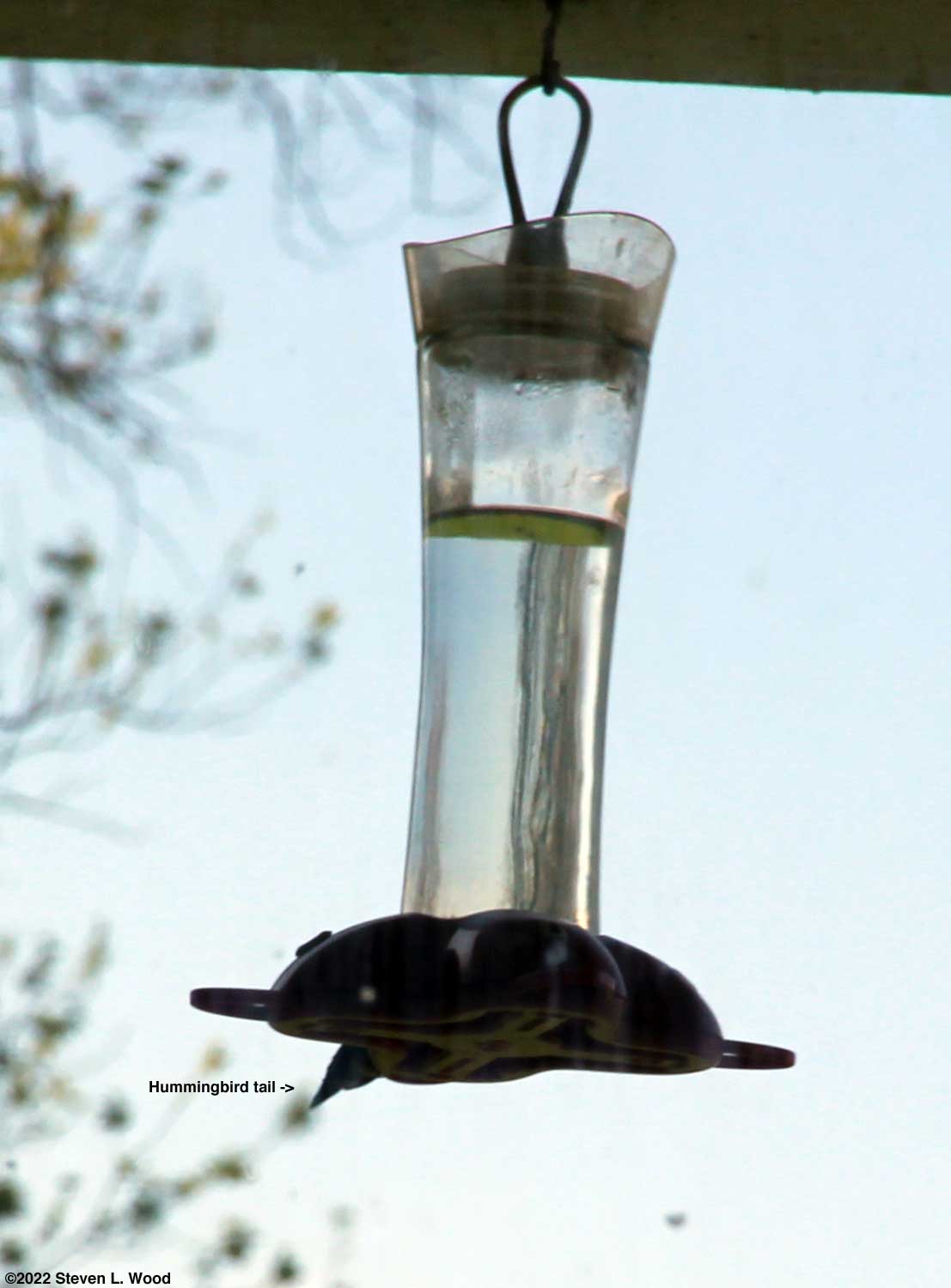
Apple Trees and Snapdragons Apple trees and snapdragons wouldn't normally go in a paragraph together. But I'd hoped to spray our apple trees and transplant snapdragons around our early peas today. Steady winds of 20-30 MPH put off those tasks until a less windy time. FTC Regs You may have noticed the "Clicking through one of our banner ads or some of our text links and making a purchase will produce a small commission for us from the sale" message at the top of most of the pages on this site. An advisory from an affiliate manager emphasized the Federal Trade Commission requirement. So I've spent considerable time this week attempting to comply. Sadly, the affiliate wants the "disclosure so it appears at the top of every article...per FTC guidelines." That simply isn't going to happen on this site. Top of each page plus the other FTC disclosure notices should be enough. Yep! A federal reg that is a total pain in the ass. And that's coming from a liberal Democrat!! Possibly a good thing is that going though the 171 blog posts on Senior Gardening, I'm cleaning up expired links to advertisers who are no longer Senior Gardening affiliates. (I'm about half way through the archived blog posts.) Hummingbirds It's time for us to hang a hummingbird feeder. The first of the delightful, small birds usually begin to arrive here in late April. I'll also need to begin laying in extra granulated sugar to make nectar for the birds. We mix water and sugar in a 4:1 ratio for the birds.
Friday, April 15, 2022 - Good Friday
Sadly, by the time we got home, the weather had changed. While still warm, it had become cloudy and windy. Undeterred, I went ahead and transplanted eighteen Rocket Mix snapdragons around our planting of early peas. I tried to transplant the snaps along the trellis line to give them some support when they get tall. Since I had so many transplants, some of them went on the shady side of the pea row. I've not done that before, so we'll see how they do there.
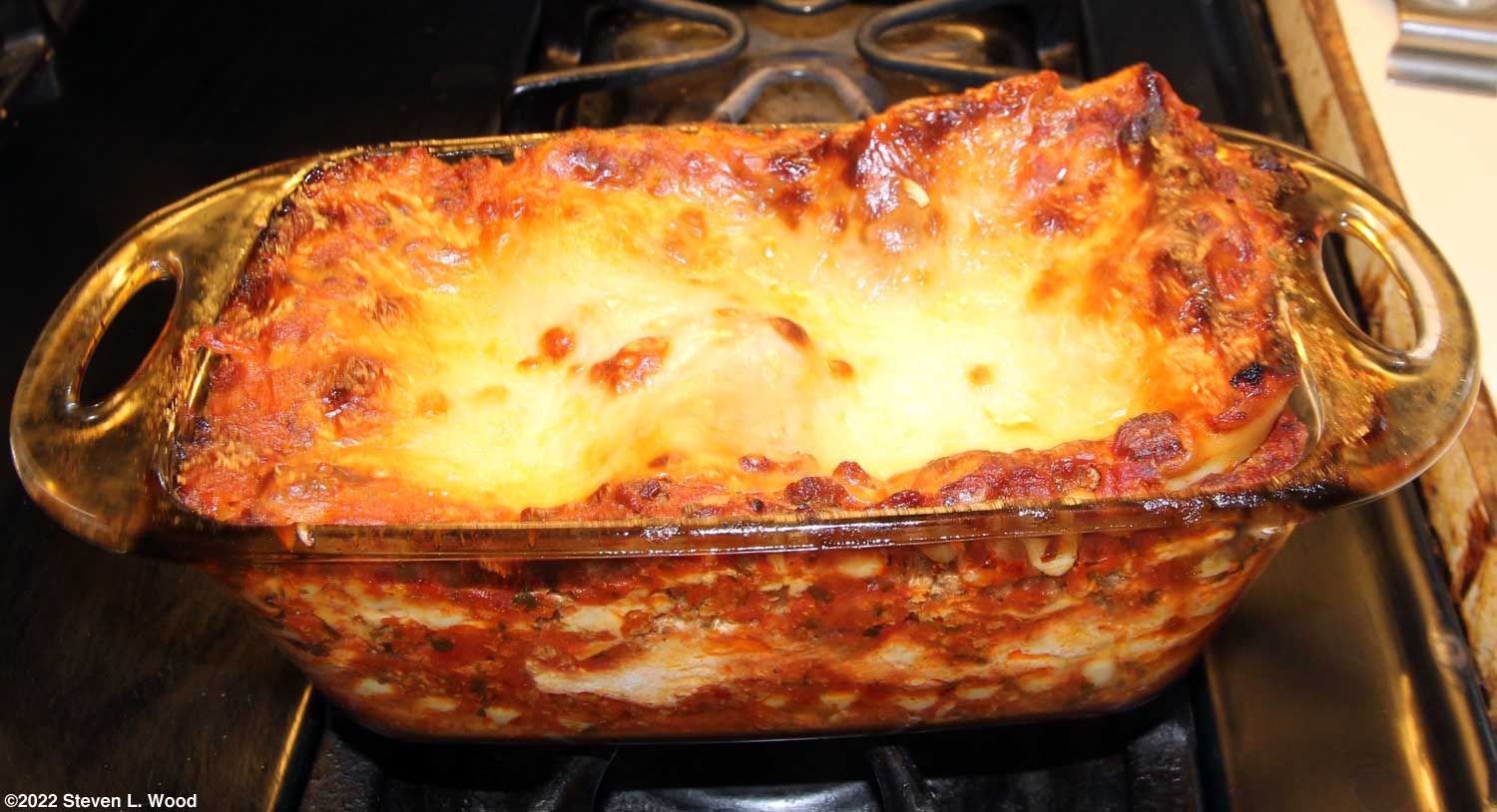
Lasagna Night Lasagna night usually follows spaghetti night at our house. I make our spaghetti sauce with a quart of canned whole tomatoes and a pint of tomato sauce seasoned with basil, parsley, oregano, garlic, and onion...all from our garden. It also gets some red and black pepper. I slightly sauté the onion and garlic when I brown hamburger to go in the sauce.
After cleaning up from a spaghetti dinner, we immediately move on to making the lasagna. Once baked, it goes into the fridge overnight until reheated the next day. Lasagna always seems to taste better when reheated. I started the spaghetti sauce around eight o'clock yesterday morning. By noon, I'd burnt it as I got busy doing other things while it boiled down. So...I started again, this time being careful not to burn the sauce.
As you can see, I now make our lasagna in a bread pan. It's deeper for more layers, but also makes for a smaller lasagna that matches our needs with all of our children grown and on their own. Even then, it feeds us for two or more days.
Indiana’s Largest Indie Bookstore - Morgenstern Books Sunday, April 17, 2022 - Easter - First Mow I mowed our lawn yesterday for the first time since last June. After my fall in early July (2021), we had to hire out the mowing. So yesterday was a test to see if my neck could handle the bumps in mowing our rough yard. It did, but I still have the field to mow. It's growing a good bit slower than our lawn. Since I mowed a bit high, the mowing didn't produce enough grass clippings to be worth sweeping up to use as mulch.
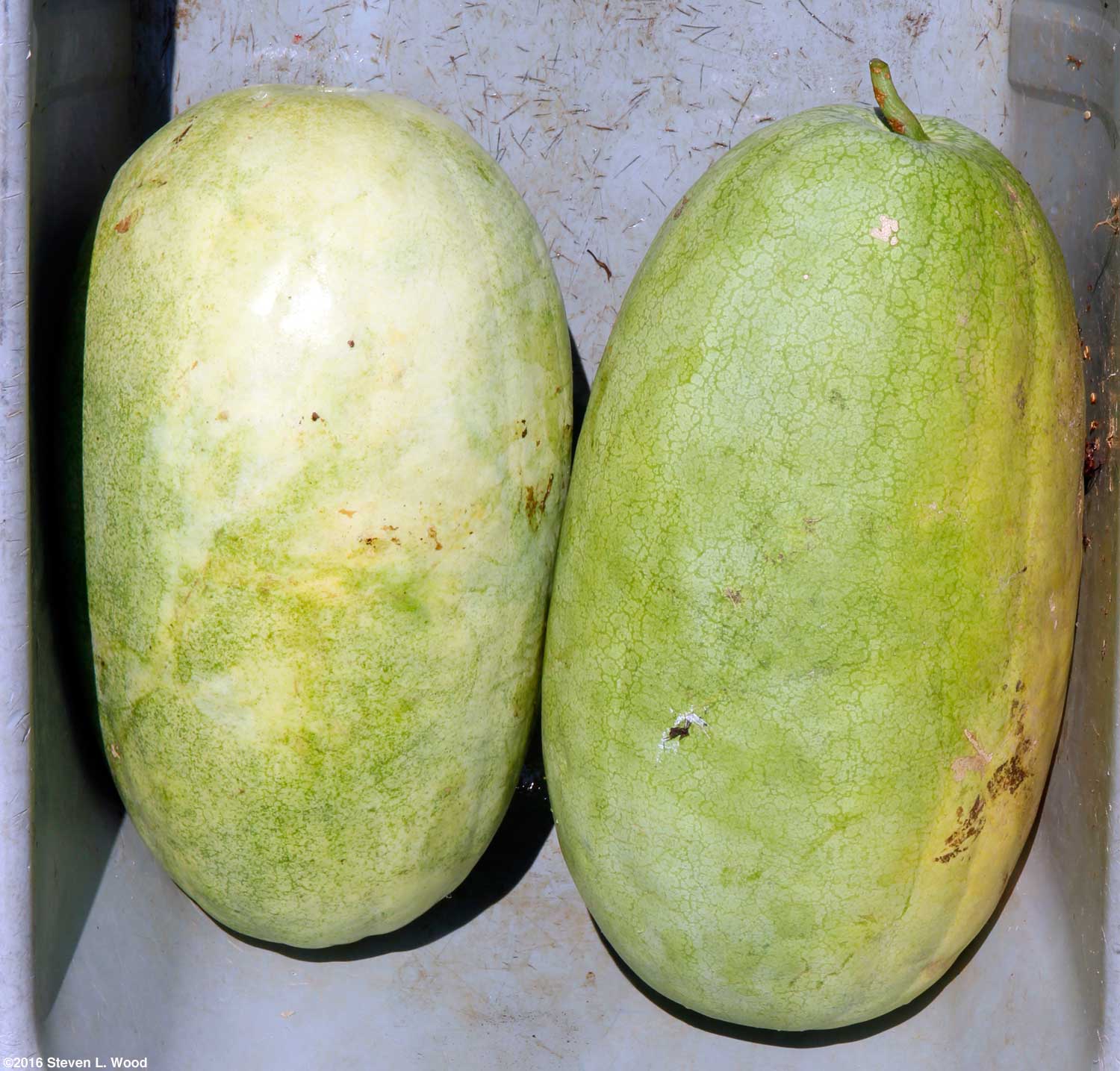
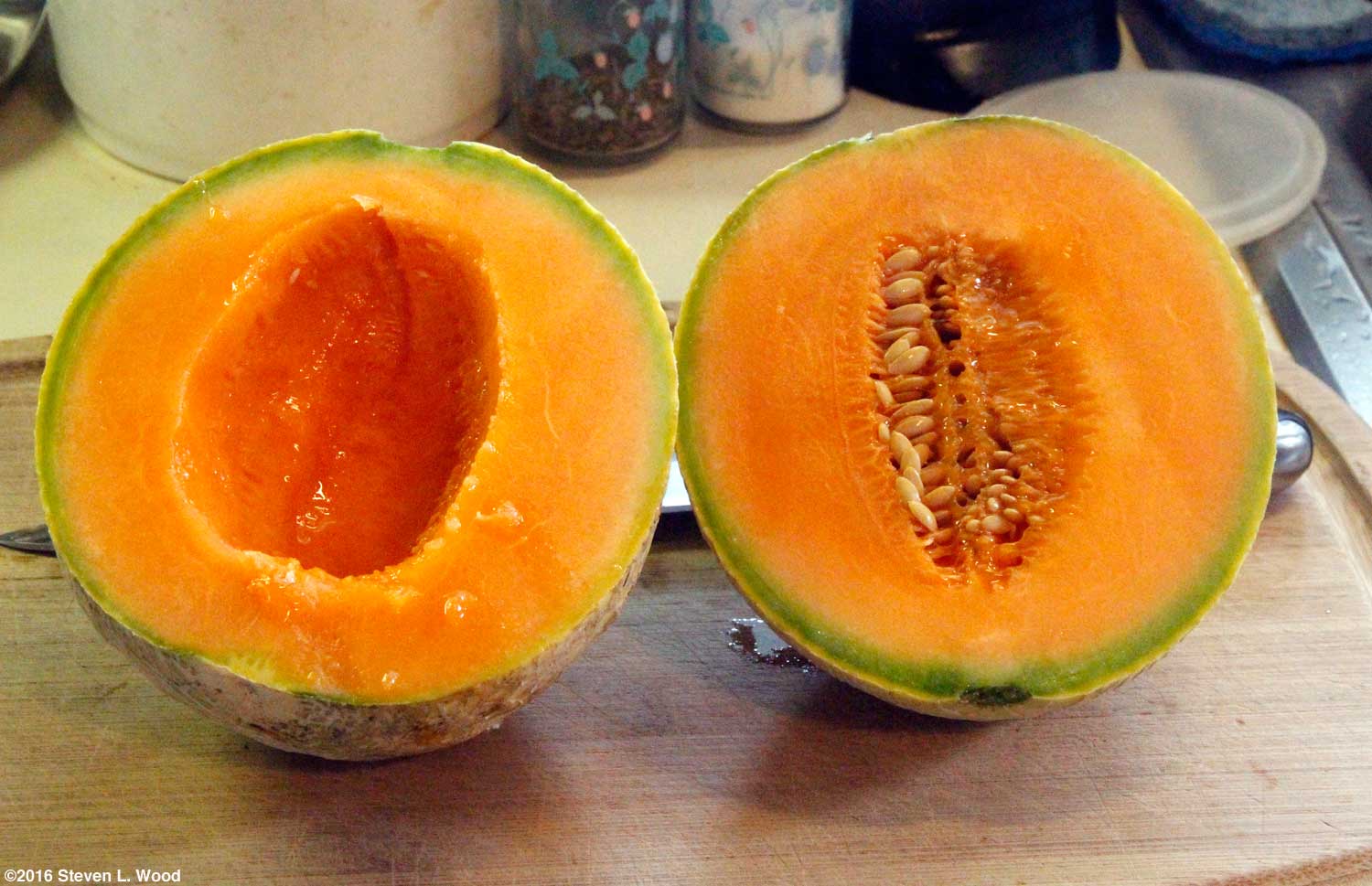
I got our melons and yellow squash seeded today for the East Garden. I started Athena, Avatar, Sugar Cube, Sarah's Choice, and Roadside Hybrid (good, but discontinued variety) cantaloupe. For honeydews, I chose Tam Dew and Diplomat. Our watermelon for this year will be Ali Baba, Blacktail Mountain, Congo, Crimson Sweet Virginia Select, Picnic - Farmers Wonderful, Kingman, and Trillion (triploids). And as always, Slick Pik will be our summer yellow squash. The planting filled two Perma-Nest trays, each with ten four and four and a half inch pots. Using larger pots allows me to put several seeds in each pot and transplant them as a hill from one pot.
I'm hoping to begin transplanting these melons in four to five weeks. Any longer, and the vines become somewhat difficult to work with. Our how-to, Growing Great Melons on Heavy Clay Soil, tells how we grow good melons in some so-so soil.
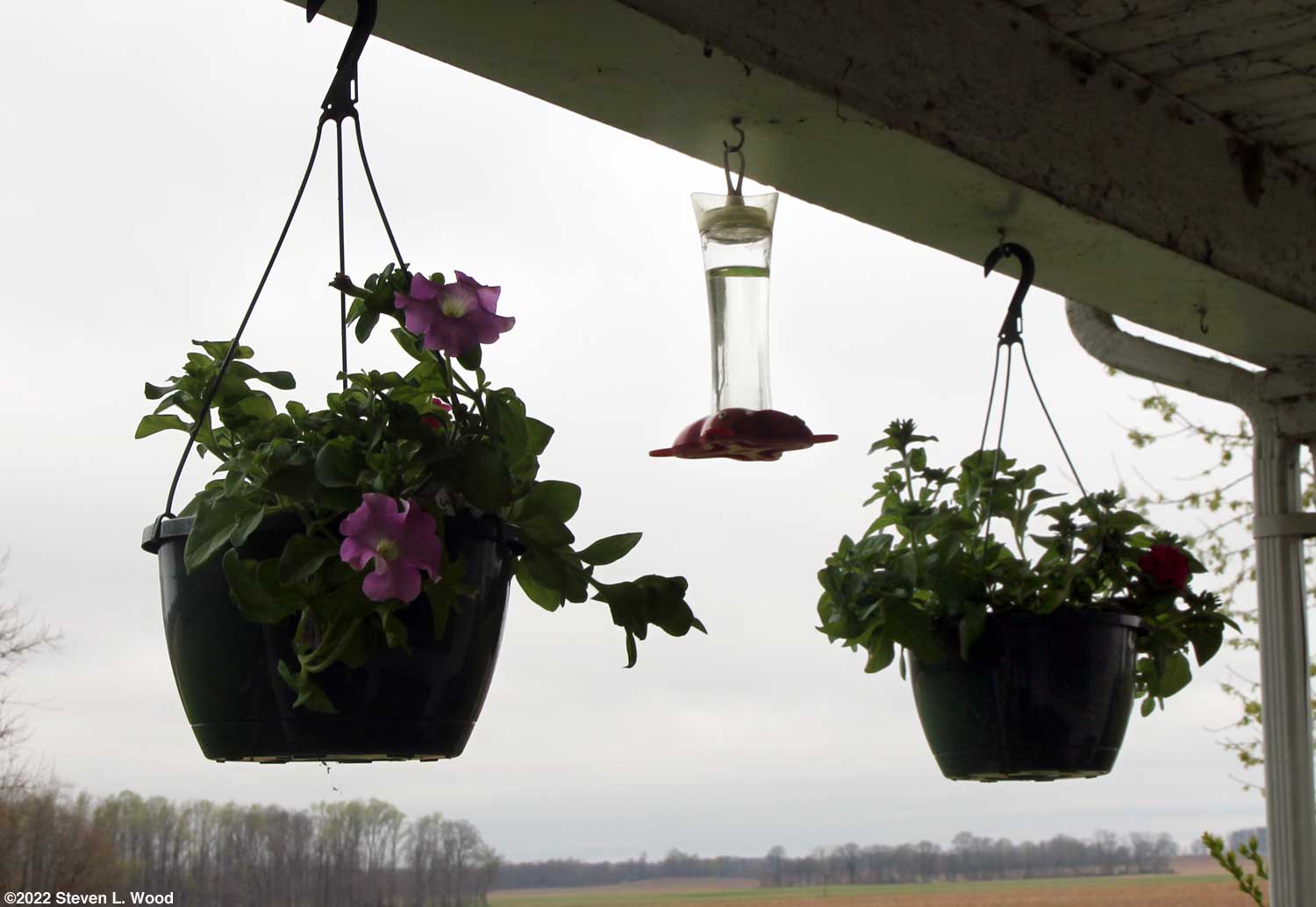
As usual, the nectar in the hummingbird feeder was a 4:1 ratio mix of water to granulated sugar. We stick with that formula until August when the birds need to put on more weigh for their migration south. Then we mix at about 3.5:1. As the season progresses and especially after the hummingbirds hatch out their first clutch of eggs, we'll hang a second and third feeder for them. Things really get crazy after the birds second clutch of eggs hatch and the baby birds leave their nests.
Our hanging basket plants had to come back inside one last time (I hope) last night. It got down to 33° F, but there was no frost that I saw this morning. The plants are now back outside, hanging from hooks on our back porch. Petunias, impatiens, vinca, and tradescantia zebrina (Wandering Jew) now adorn our back porch. Apple Trees
To top things off, I have a Geneva 222 rootstock still growing in a tub that miraculously has stayed alive there for several years. I took some cuttings from it this winter. The cuttings are budding, but they are refusing to root despite a couple of generous applications of Clonex Rooting Gel
Since we've lost trees to root rot, I followed a suggestion from Gardening Info Online to treat the area where the new apple tree will go. They suggest applying "a 3% solution of household hydrogen peroxide to your soil" to kill root rot pathogens. To be safe, I'll treat the planting hole with Serenade biofungicide at planting. Serenade has been discontinued, but a similar product, Cease, has approximately the same ingredients.
I tried and failed attempting to spray a wild rose bush with Roundup that is encroaching on the volunteer apple tree today. I tried my Roundup sprayer, but it wouldn't hold any pressure. I tried another sprayer, but it too was defective. I'll have to shop for another sprayer tomorrow. I keep three different garden sprayers. One is for organic products, another is for non-organic insecticides, and a third is for Roundup. Doing so relieves me of the worry of chemical residue possibly harming our plantings.
Possibly more effective are our homemade Not Tonight Deer and Repels All-Anmal Repellent. Rabbits and deer took all of our lettuce and brassicas last year, so I'm hoping our deterrents this year may be more effective.
I moved the tray of watermelon onto the heat mat that the cantaloupe had been on, figuring that heat mat was doing a better job than the one the watermelon had been on. The tray of cantaloupe had their humidome removed and our lights moved down to just above the young plants. By this morning, some of the watermelon seeds had begun to germinate, including one triploid variety that usually requires more heat to come up than standard melons. The other two triploids I have seeded haven't come up yet. Note that our watermelon varieties other than the triploids are all open pollinated.
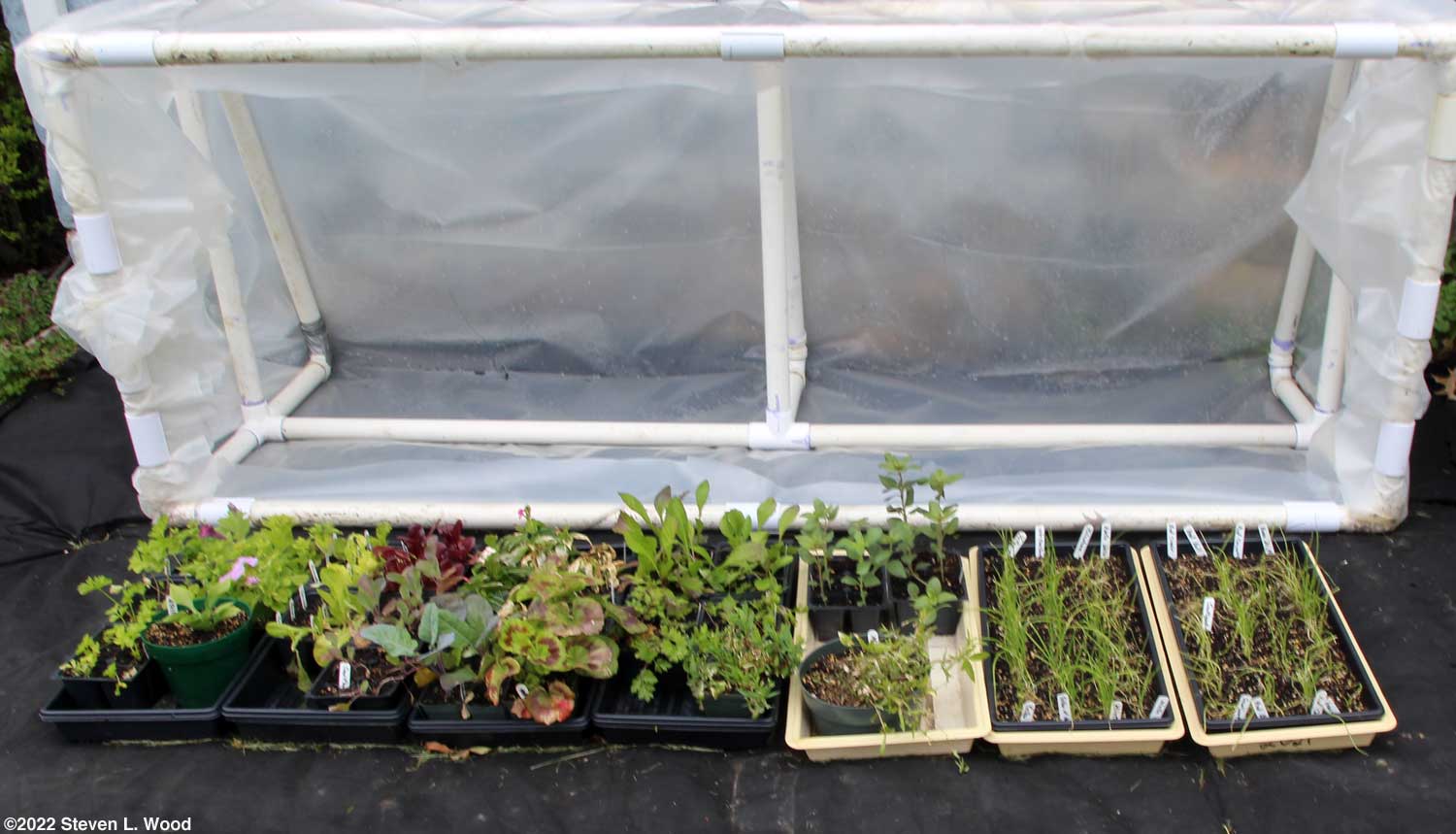
Other than some vinca that got nipped by a frost/freeze, we've not had any weather related damage to our transplants. Our onion transplants suffered from me not getting them watered regularly enough, but now seem to have recovered. I often forget that so many plants concentrated in a tray use up far more water than our other trays of plants.
Our current extended weather forecast suggests that I won't be able to rototill our raised beds anytime soon. Instead, I'll have to rely on last fall's tilling and hoeing and raking the beds before planting. My goal is to have the raised beds completely planted this month. But soil temperatures will dictate when our Earlirouge tomatoes and Earliest Red Sweet peppers get transplanted. Both varieties can stunt if planted in cold ground. Our East Garden plot that sat mostly idle last season, other than tomatoes and paprika peppers, must be tilled a couple of times before planting. That could push planting it into late May or early June! Such late plantings have actually worked for us in the past. Our late transplanted tomatoes bear fruit right up until the first frost. And the sh2 supersweet corn we grow germinates far better in warm ground than cold. Friday, April 22, 2022 - Earth Day 2022
I ordered another Stayman Winesap apple tree from Stark Bro's Nurseries on April 17. Winesaps became my favorite apple variety after an old friend, Mike Wardell, gave Annie and I one for a wedding present. It produced lots of tasty apples before succumbing to fire blight. The new tree arrived promptly, a little before I was really ready to put it into the ground. It went into the basement for a couple of days. But I got around to planting it this morning. Over the years, instructions for planting trees has changed a bit. It used to be that you gave a new tree the most deluxe hole you could. In recent years, experts have suggested all native soil was a better option. My planting today came somewhere in between those recommendations. I mixed a good bit of peat moss with the soil I dug creating a planting hole. I also used my post hole digger to dig deeper and possibly encourage some kind of a taproot. I watered the hole with a couple of gallons of starter solution made up of half strength Quick Start, a bit of Maxicrop Soluble Seaweed Powder
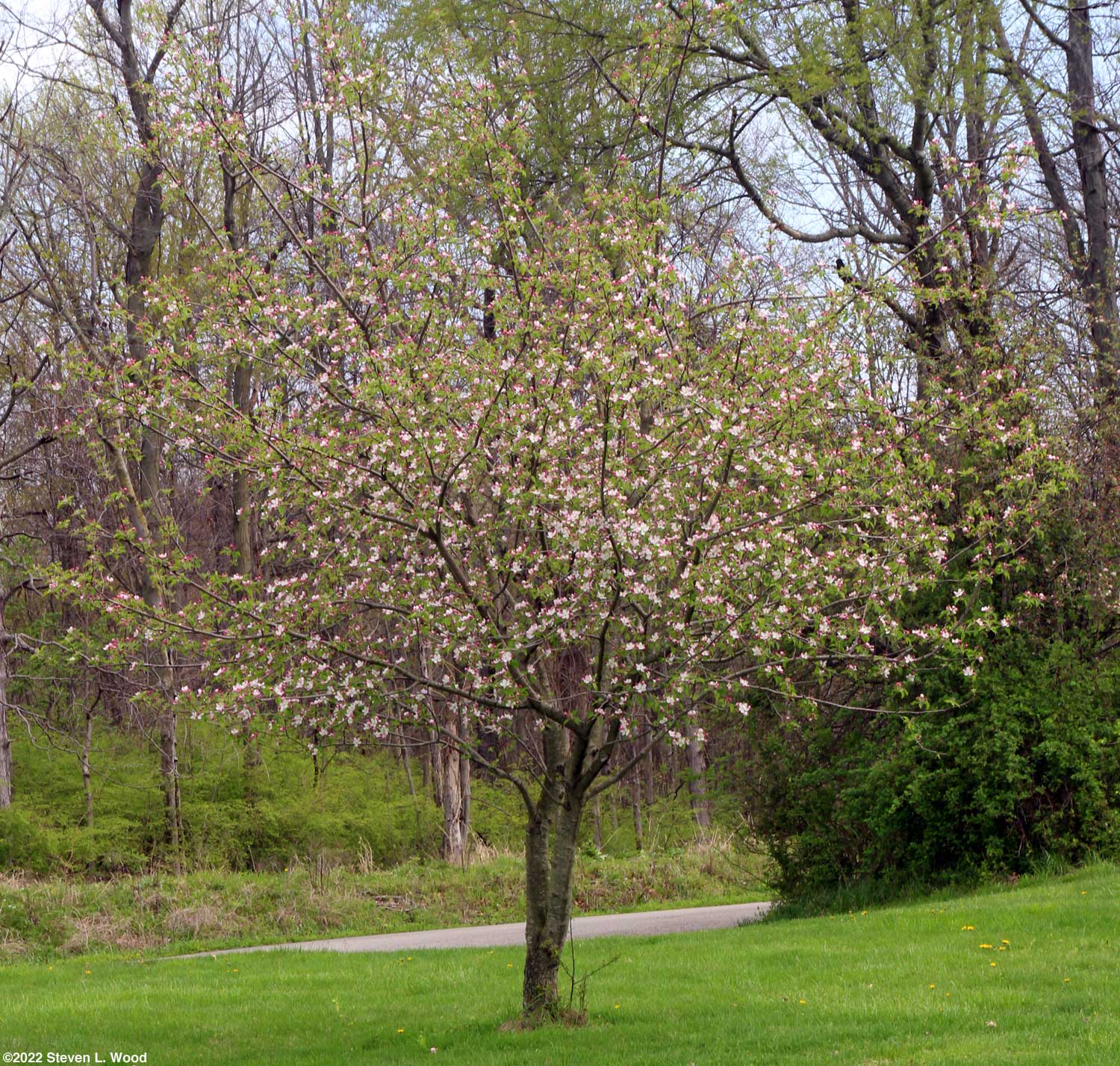
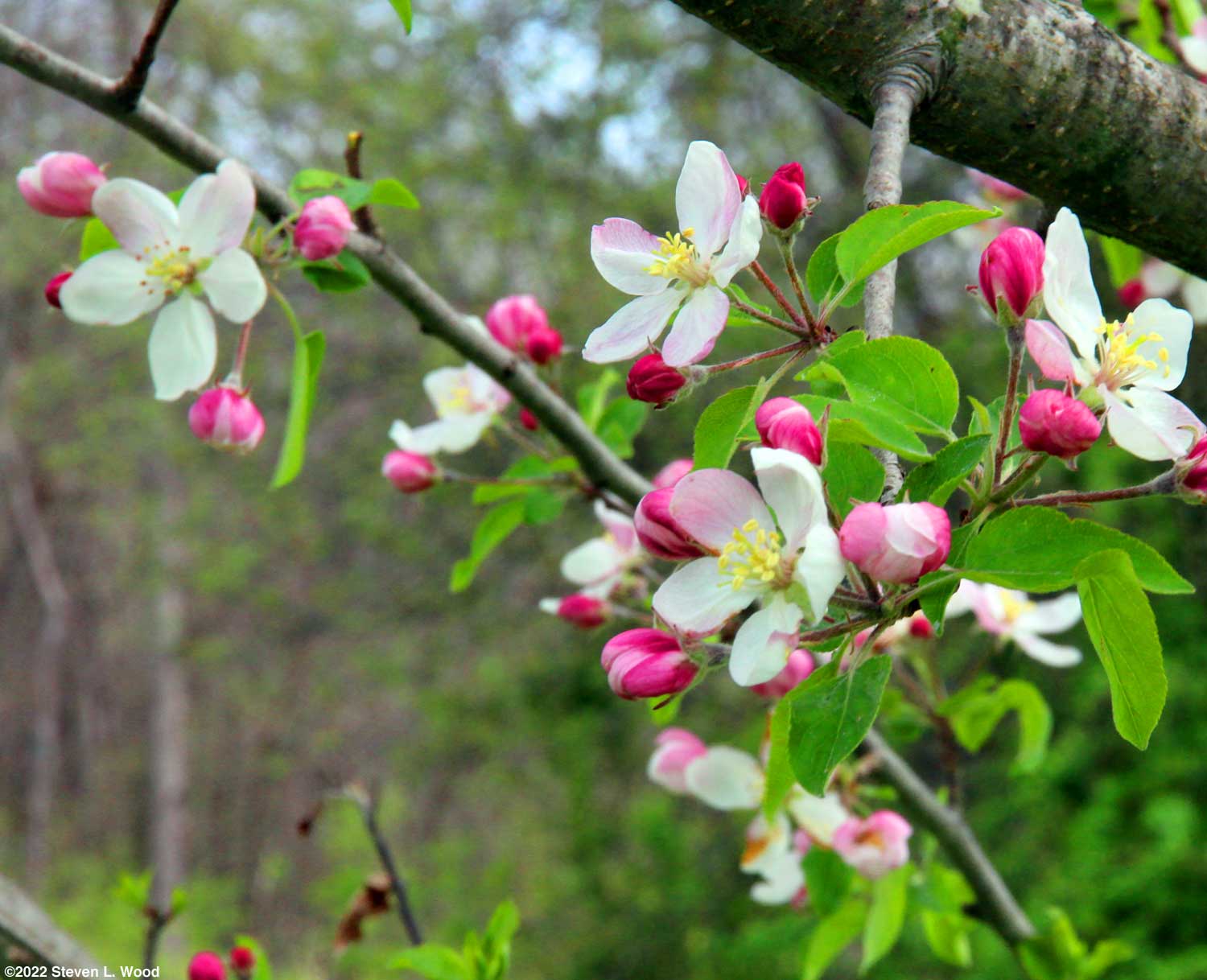
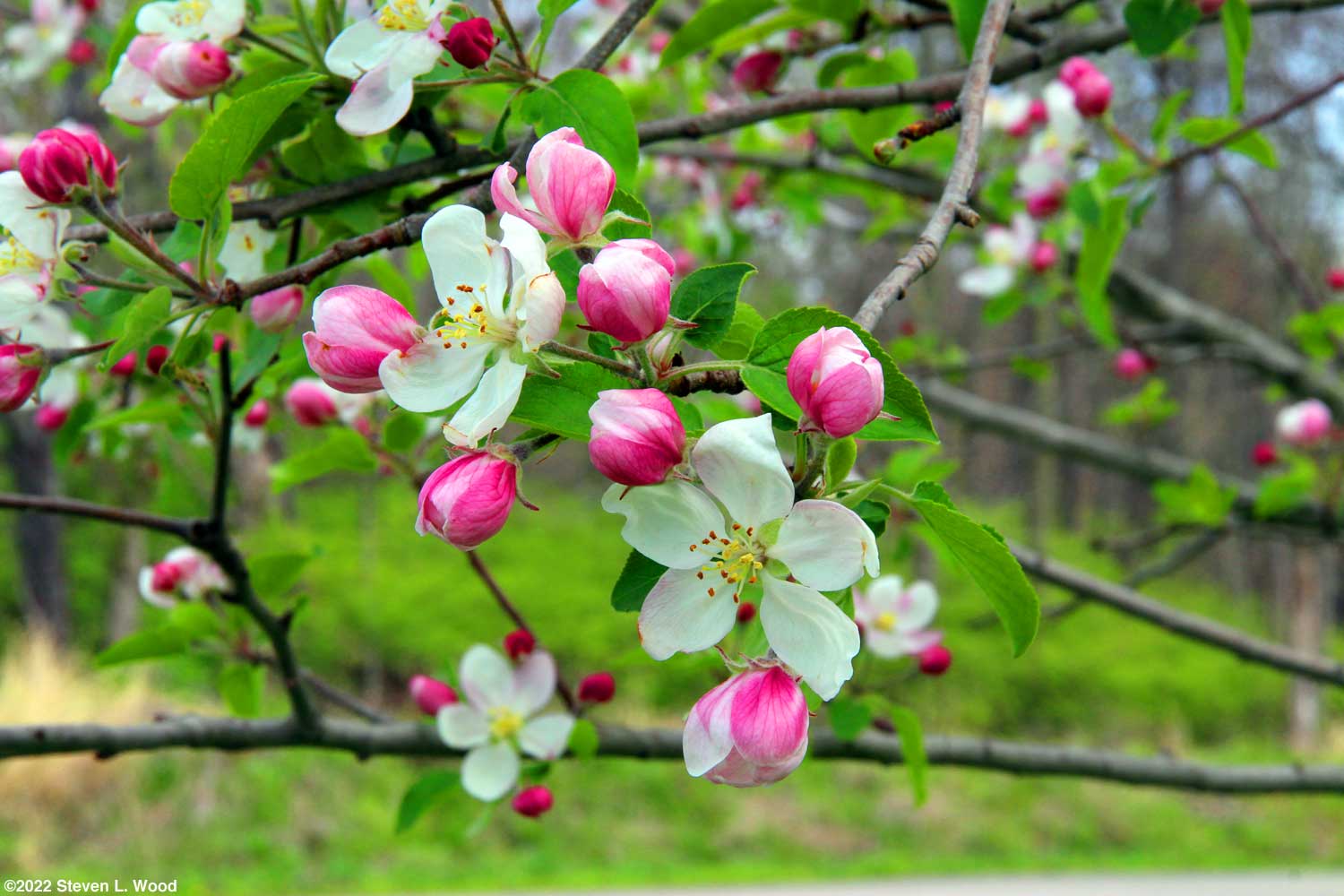
Once the planting hole was filled, I added an old pepper cage covered with hardware cloth that I've used for years to protect young trees from mice and other critters. I'd originally cut a square hole for the new tree, thinking I'd cover the planting with black landscape fabric. I'd picked up a huge roll of it years ago from an end of the season sale from Johnny's Selected Seeds. I may add that later, but the pepper cage put off that for today. I'm planning to plant the Geneva 222 rootstock tree I bought in 2019 in the next few days. It probably will never produce much fruit, but I might be able to graft other varieties onto it. The poor tree has sat at the edge of our back porch for three years in a planting tub and deserves a chance to survive. Apple Blossoms The supposedly Stayman Winesap tree I received from the Arbor Day Foundation years ago produces yellow apples, but is now in glorious full bloom. At least it's probably a good polinator.
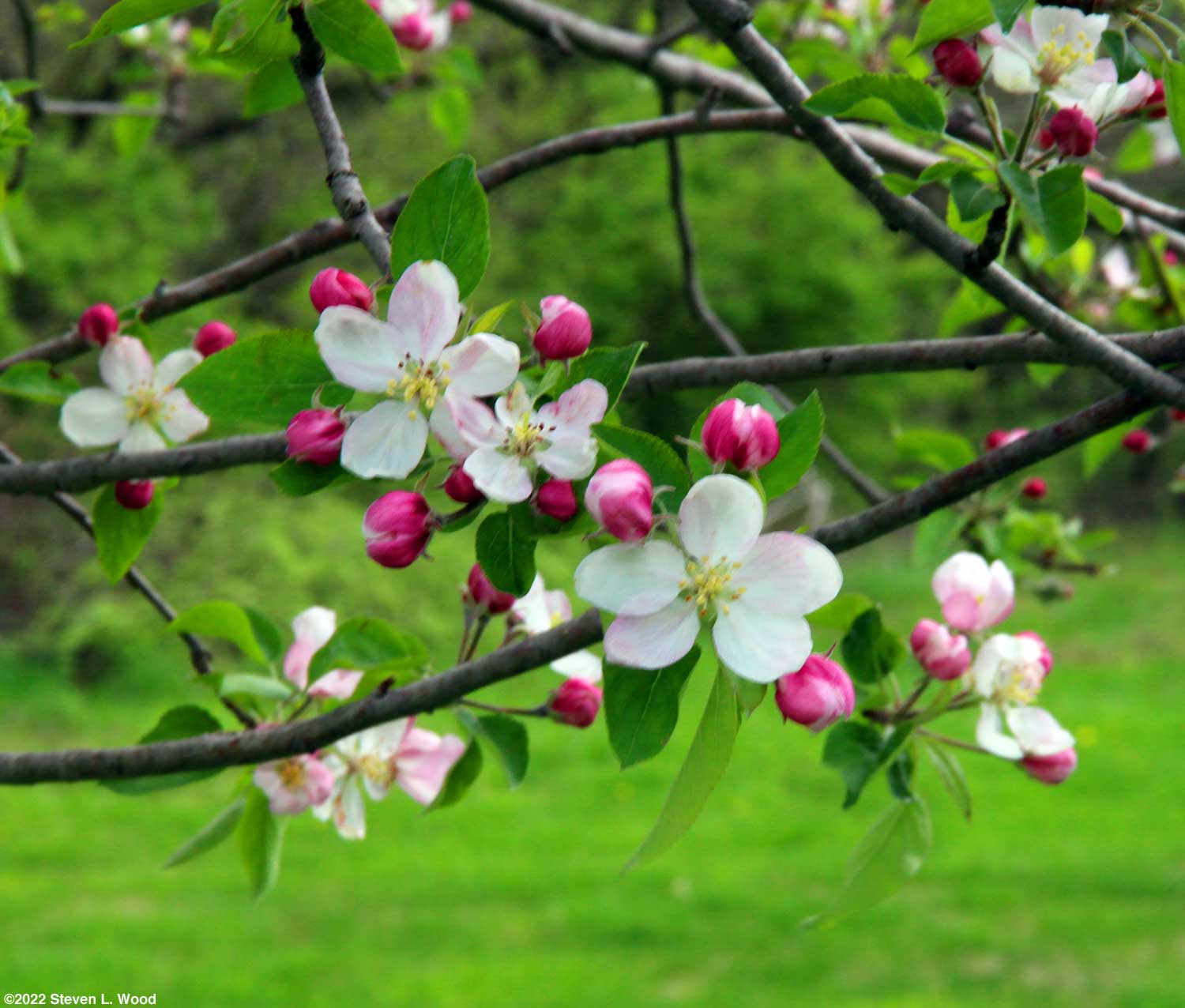
Whether you get any apples or not later on, apple blossoms are one of the true beautiful joys of spring. Other
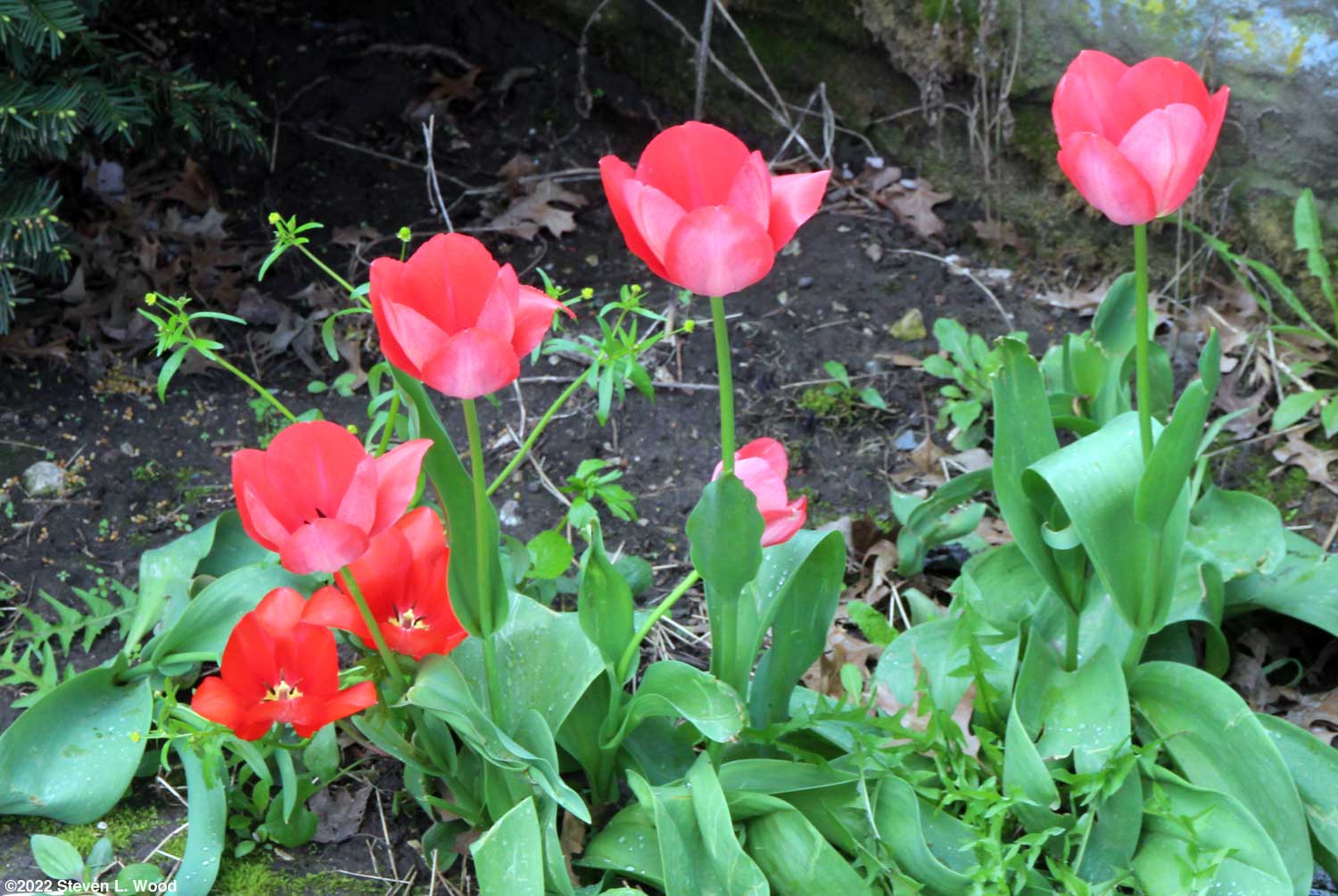
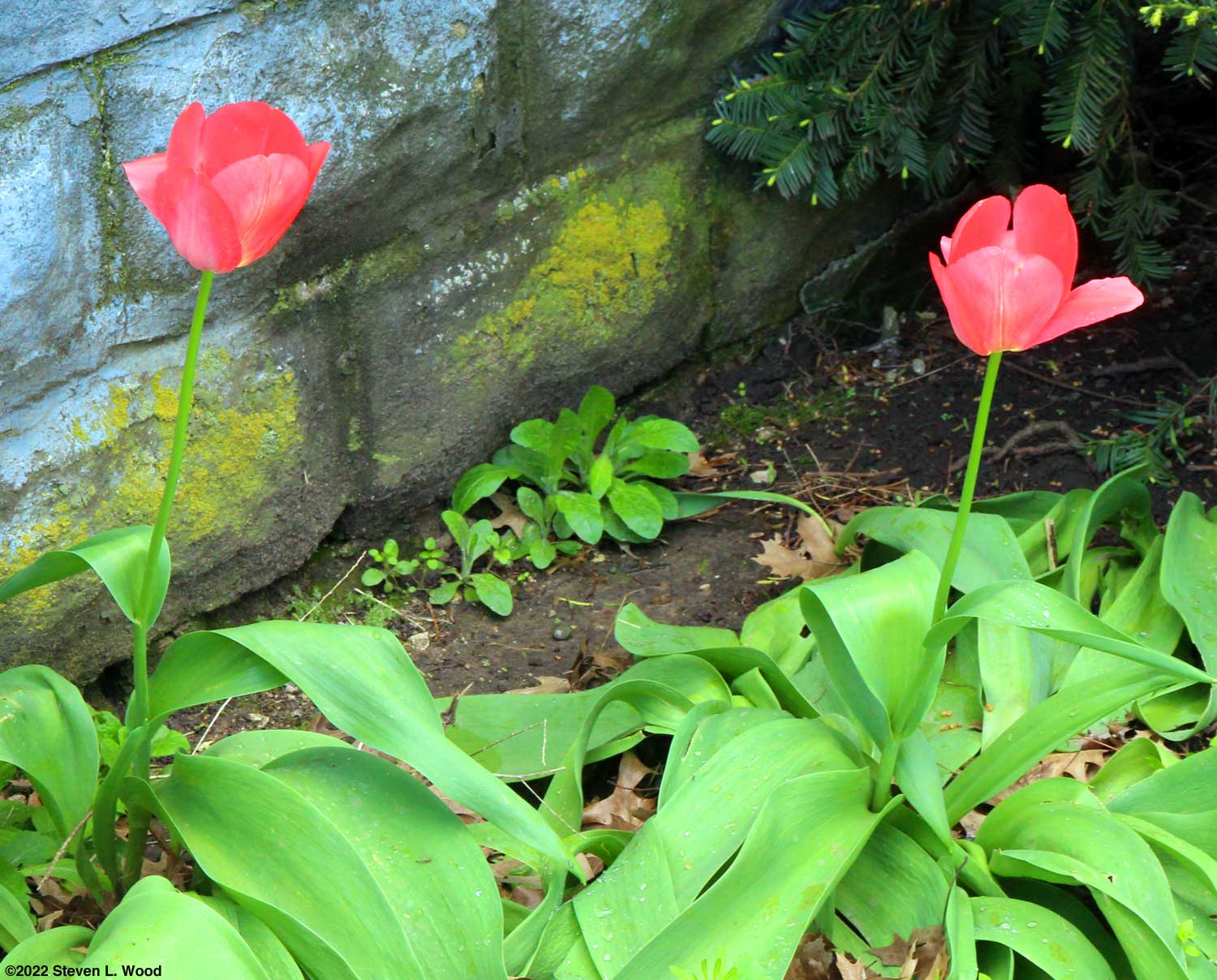
As I came in today, I grabbed a couple of shots of the tulips in our front flowerbeds. They don't get much care, but have faithfully bloomed each spring for years.
Saturday, April 23, 2022 - First Hummingbird
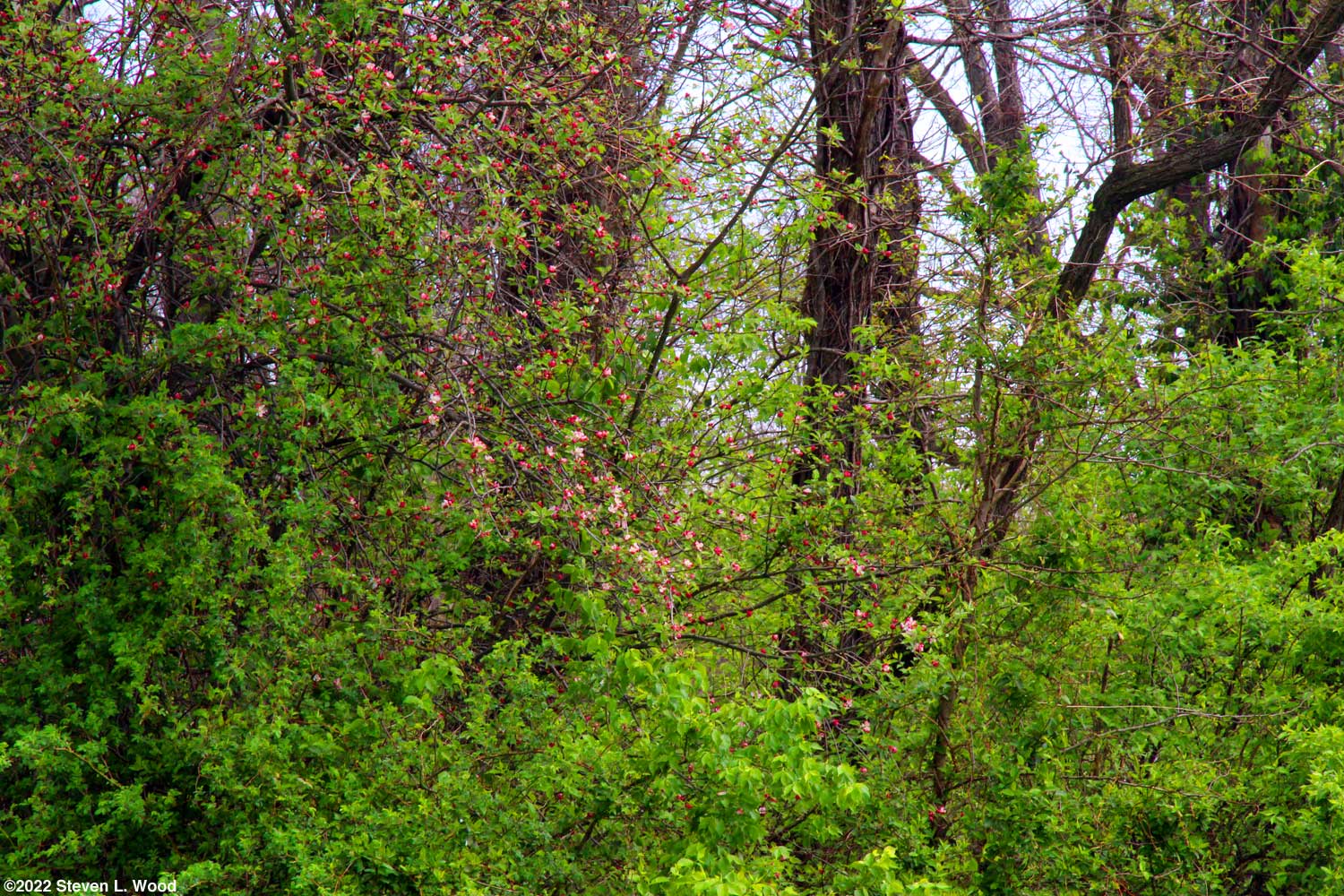
Apple Tree in Full Bloom Even though I'm not thrilled with the variety of apples it produces, our one mature apple tree has burst into beautiful full bloom. Our mature volunteer apple tree just off our property is also in bloom, although the plants crowding it out obscure most of the blooms from view. Hopefully, bees will be able to find the blossoms, as the tree has proved to be a good pollinator. A Day Off My neck didn't approve of my activities yesterday. Digging and planting a tree in the morning and driving my wife to and from physical therapy in the afternoon aggravated my neck injury. So even though it's sunny and 80° F outside, I'm not doing much gardening, tree planting, or mowing today. I did pick a lot of asparagus and also transplanted six geraniums into our raised beds. But strong winds are really hammering the poor geraniums. Aspirin, BenGay, and some good scotch have taken away a bit of the discomfort.
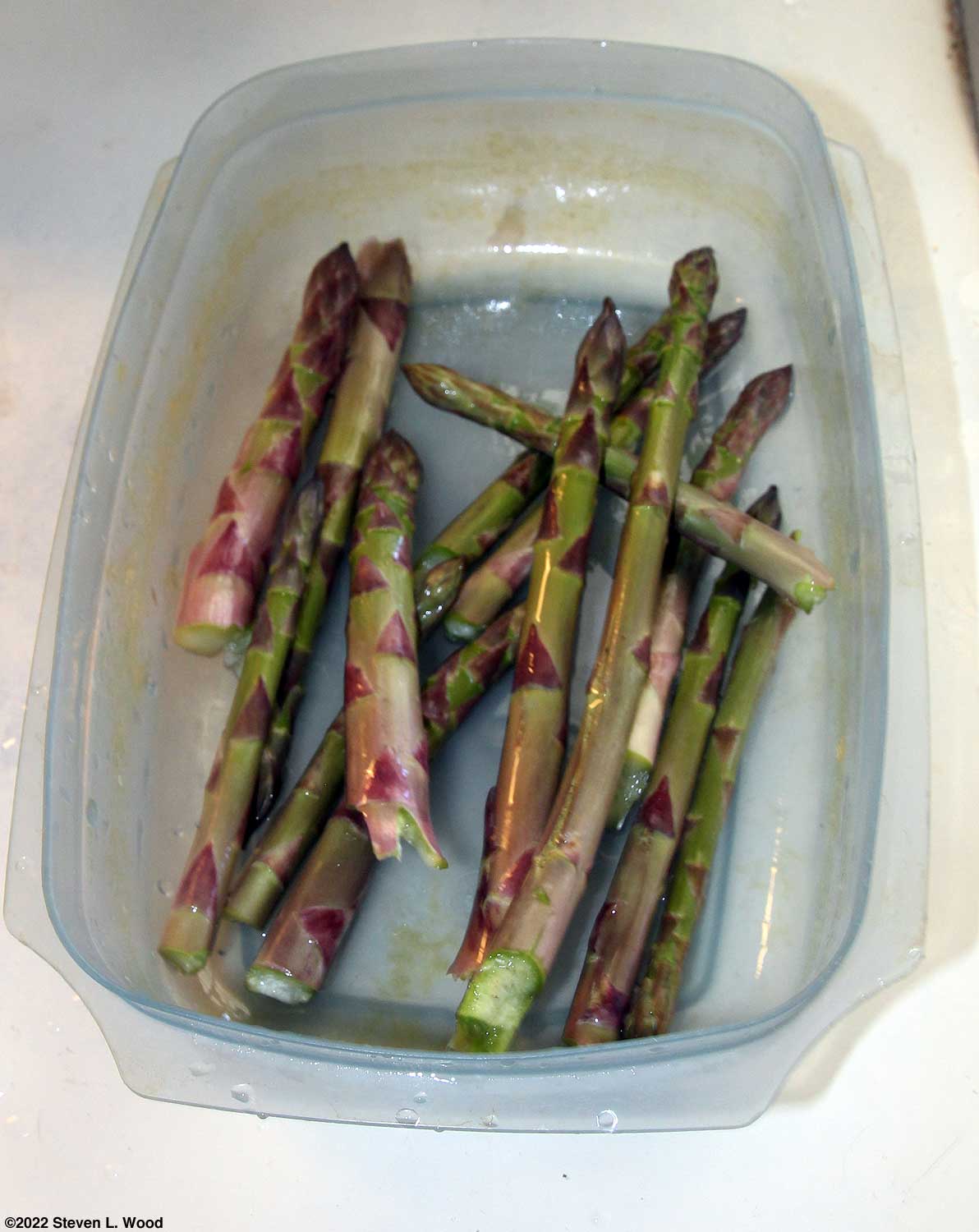
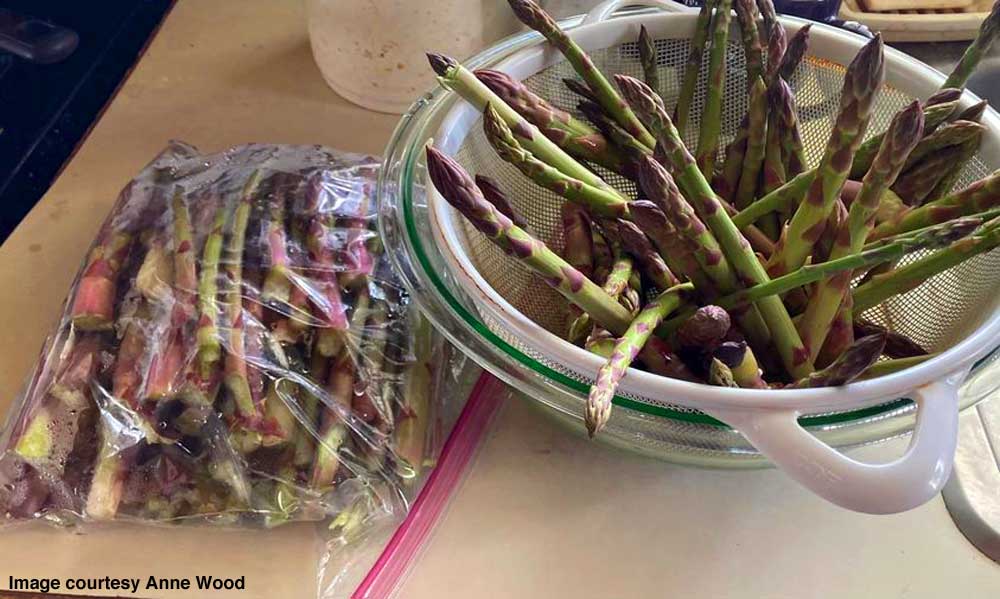
Our asparagus patches are now producing an abundance of spears. After I picked asparagus, Anne took the shot at right while I mowed. Three pounds of asparagus will go to our local food bank for their food distribution tomorrow evening. It takes several years to get an asparagus patch started, but it's usually worth the effort and the wait. I tell how I started ours in our how-to, Growing Asparagus. While I started our patch from seed, I definitely recommend starting from the best purchased asparagus crowns you can find.
Monday, April 25, 2022 - Starting Our Eclipse Peas
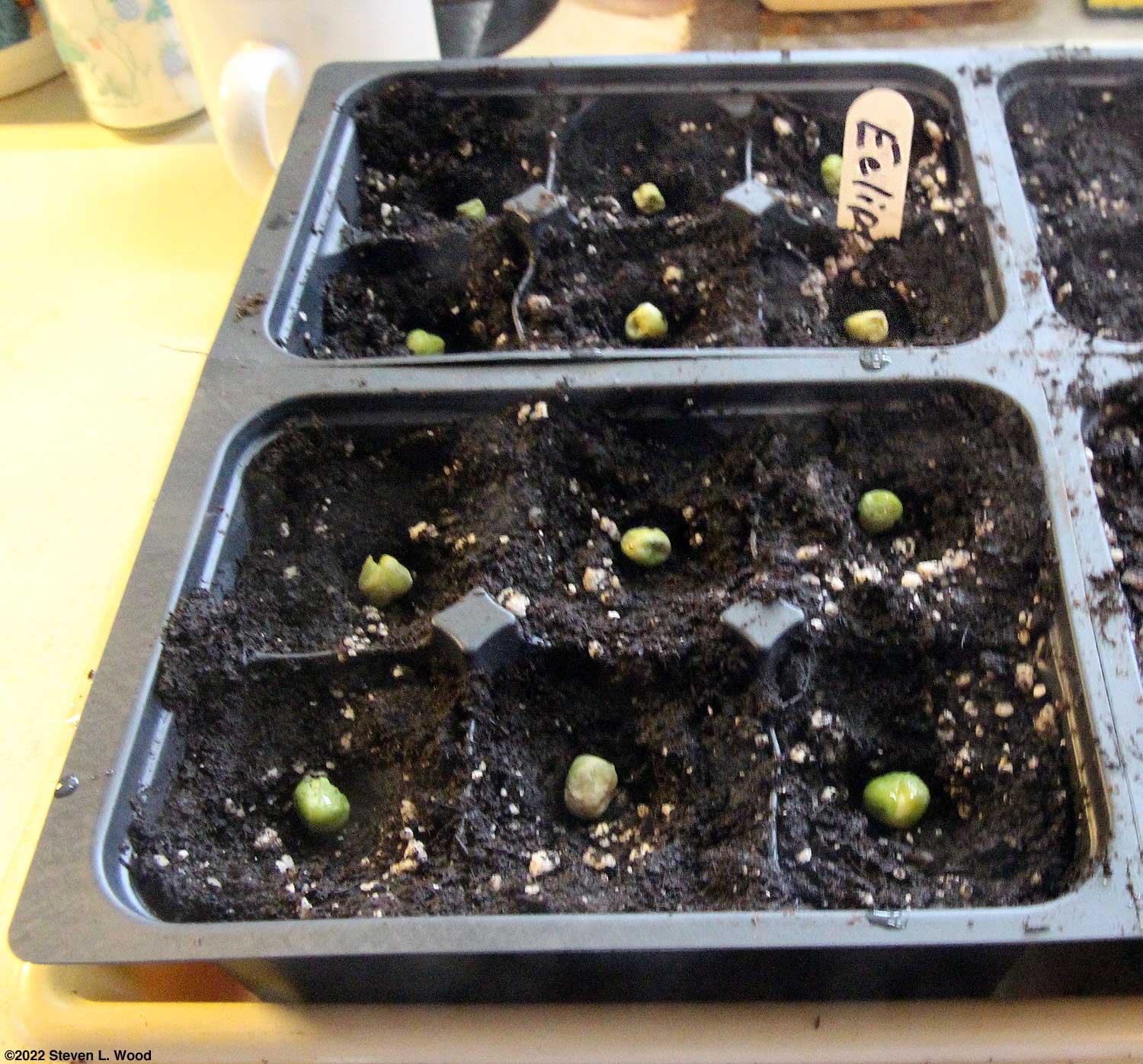
The Eclipse pea variety was covered by a plant patent (PVP) through last year, although the patent holder no longer produced seed for the variety. Over the years, I've legally saved Eclipse pea seed solely for our own use, but hopefully will have a good enough seed crop this season to share seed with others next year, as Seminis's patent has expired. I filled two sheets of deep sixpack inserts (72 cells) with sterile potting mix. To further ensure the potting mix had no damping off fungus or such, I also watered the potting mix with boiling water. Even though my seed had germination tested at just 70-80% last year, I placed only one seed in each cell as a bit of a further germination test. I also started a communal pot of nine seeds just in case I ended up with a bunch of empty cells. The seed planted in flats of deep sixpack inserts was saved last season (2021). The seed started in the communal pot was from 2019.
The flats of seeded peas got covered with clear humidomes and went onto our soil heating mats under our plant lights. Cornell University suggests an optimum germination temperature of around 75° F for peas, so that's where I set our thermostats. Here are links to our pea how-to and our story of trying to save the Eclipse pea variety. I'll be starting some Encore supersweet peas once I get the Eclipse peas off our soil heating mats. Encore is a parent variety of Eclipse and produces peas that are almost as sweet as Eclipses. Encore was also a plant patented variety that the patent holder chose to stop producing and let the variety become extinct. Shame on Seminis/Monsanto/Bayer.
The Laguna carrot variety has apparently been discontinued, so I was pleased that my stash of the seed for the excellent variety was still good...a sorta weird germination test. Worried? Maybe a Little As weather conditions (and my health) continue to put off most serious soil preparation and planting, am I getting worried? Maybe a little, but I can remember several late planted gardens that did really well for us. While our carrots should have been seeded by now, our onions, lettuce, and brassicas transplanted, there's still time to get them in and get good crops. Transplanting tomatoes and peppers right now would be pretty risky, as both can stunt from cool weather. And I've started our melon transplants late enough that our large East Garden plot should surely dry out enough for tilling before they're ready to go into the ground. Weather
The wind absolutely howled here yesterday, beating some tradescantia zebrina (Wandering Jew) plants I'd potted up and put on the porch to get them out of our sunroom. It rained around an inch or so overnight. And we have morning low temperatures of 37 and 34° F predicted for the next two days! Our extended weather forecast from the Weather Underground suggests I won't be able to rototill our raised beds before planting. That won't help our deep root crops such as carrots, but shouldn't impact our other crops, as I was able to rototill the raised beds late last fall. Of course, the difficult weather may prove to be a blessing. After mowing our bumpy yard yesterday, my neck is killing me today! Whine, whine! I should count my blessings, as my neurologist son-in-law told me that my fall last July could easily have killed me.
Yes, I like daisies. While out mulching, I did the old Jim Crockett test for soil readiness for tilling. It's to pack a fistful of soil into ones hand and then drop it on the soil. If the soil ball shatters, the soil is dry enough for tilling. My samples shattered, although I took them in the driest parts of our raised beds. But I went ahead and rototilled our main raised bed and a narrow one and raked them smooth.
With our main raised bed tilled, I can start direct seeding carrots and beets and transplanting onions, lettuce, celery, and cauliflower in the next few days. (Our broccoli transplants are still babies growing under our plant lights.)
Saturday, April 30, 2022 - April Wrap-up
The weather has finally warmed. I got out yesterday afternoon and staked the rows for various plantings in our main raised garden bed. I cheerfully staked a 3' x 15' area next to our garlic for our onions, carrots, beets, celery, and lettuce in an intensive planting. Traditional rows were marked for cauliflower, short peas, and a wide row of green beans. The best news of the month is my wife's rapid recovery from a broken hip that resulted in emergency hip replacement surgery. She spent the first six days of the month in the hospital. The last two weeks she's received some excellent physical therapy from ATI Physical Therapy in Terre Haute. Yesterday's PT was highlighted by a brief shopping trip after therapy! She's healing quickly. Thank you, Lord.
Contact Steve Wood, the at Senior Gardening |


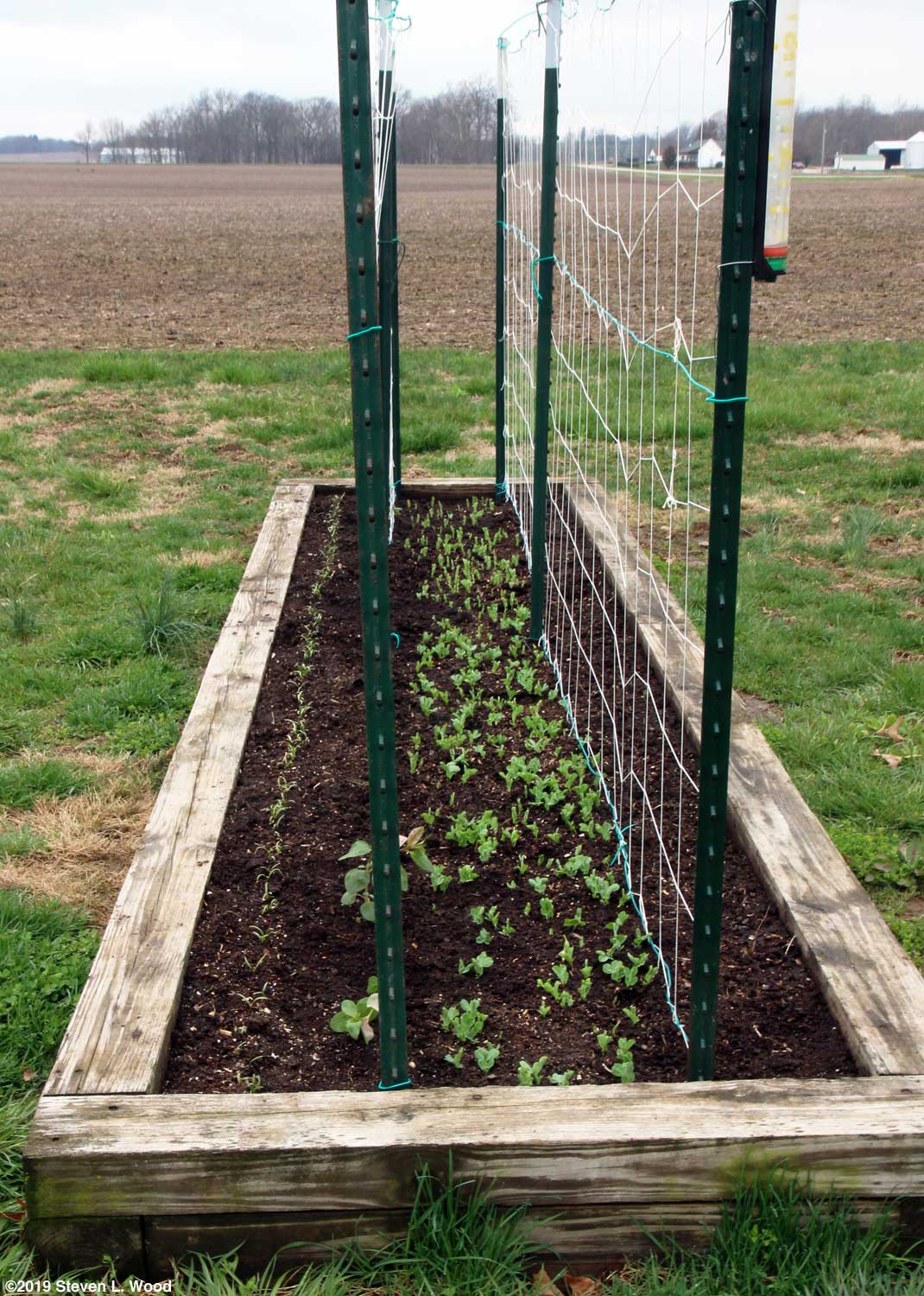






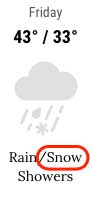 I wanted to put up our double trellis around our wide row of peas today. When I opened the back door this morning, the wind was howling. It continued all day with rain mixed in at times. Messing with light weight




















 . The Geneva rootstock has good cold hardiness, resistance to fire blight, Phytophthora root rot, and wooly apple aphid. We've lost trees to both fire blight and Phytophthora root rot in the past.






 , and Serenade biofungicide. A touch of ground limestone was added to help neutralize the acidity of the peat moss, but I omitted any solid fertilizer for this planting. When necessary, tree spikes can supply that nutrition.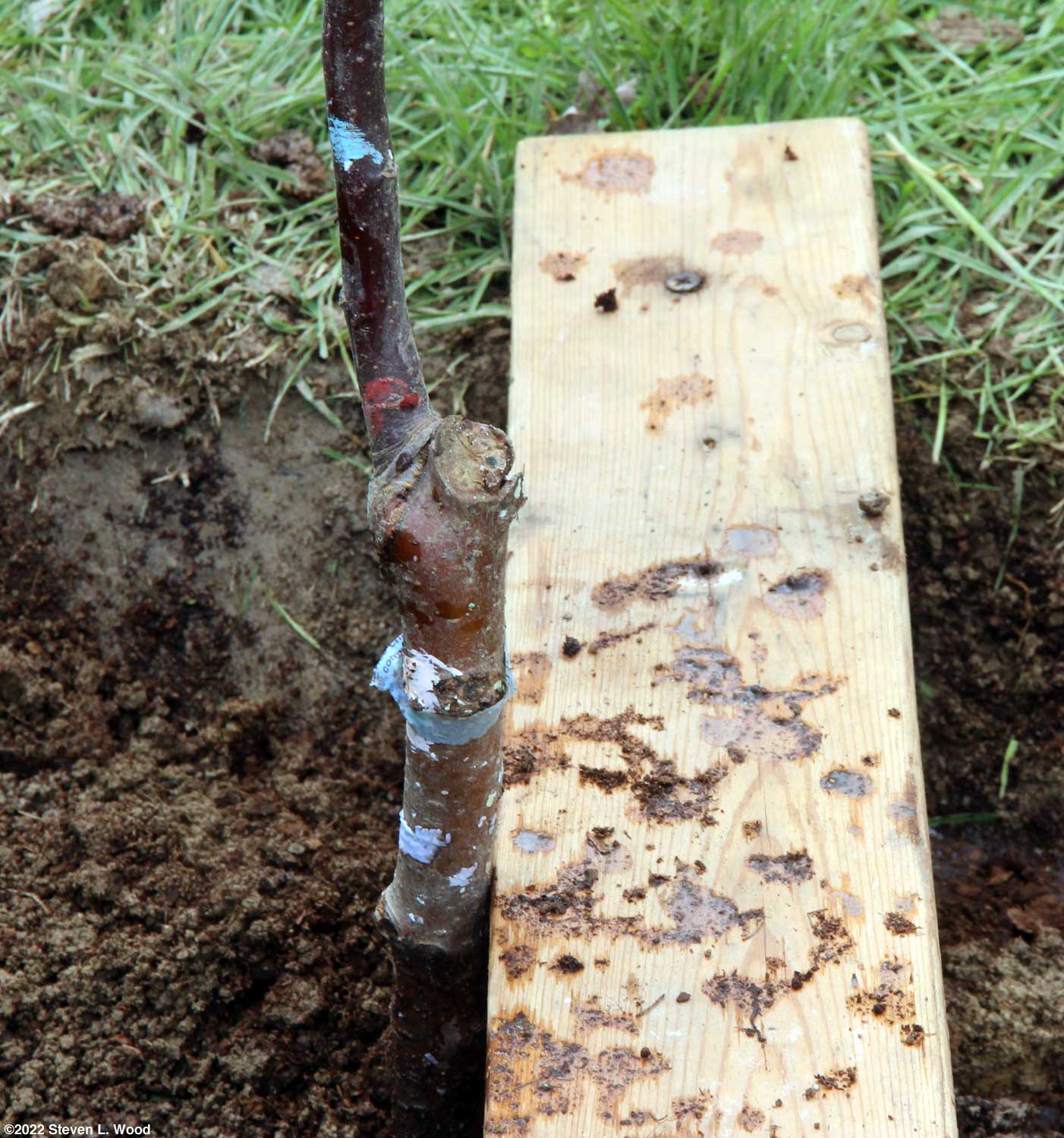












| Affiliated Advertisers |
©2022 Senior-Gardening.com