One of the Joys of Maturity |
|

| Affiliated Advertisers |
Clicking through one of our banner ads or some of our text links and making a purchase will produce a small commission for us from the sale. The Old Guy's Garden Record
Summer truly arrives in the month of June. Those occasional cold nights of spring disappear and crops like tomatoes and peppers begin to put on lots of growth in the warm weather. Our melon plants have set on blooms already and will soon set and begin ripening fruit. One yellow squash plant now has four or five squash ripening. We've had tomato blossoms for weeks now, and our apple trees have tiny apples on them. (I noticed the apples on Tuesday when mowing. I saw some self-pruned apples on the ground under our Granny Smith tree.)
The heat of summer will end our harvest of spring spinach and lettuce, and later, broccoli. But we'll again enjoy these cool weather crops in the fall. I pulled several spinach plants yesterday that were going to seed. I will be letting our Abundant Bloomsdale spinach mature seed again this year. Last year's experiment with saving spinach seed didn't turn out well, as the seed germinated very poorly. At 68 years of age, I'm still trying to learn how to do new things in the garden. With the warm winter we had, I expect our garlic will mature this month. Our Red Creole onions will also begin to mature small, red onions for us. Red Creoles are a southern, short day variety, but produce our earliest onions when grown here in the midwest. When our early peas play out, we'll pull the vines and transplant cucumbers between our double trellises. More and more gardeners have requested seed for our Japanese Long Pickling strain of cucumbers. They are very good, but not great, for slicing, but perfect for making pickles. We were the sole source for JLP seed for several years, but I think there may be a lot more folks offering seed from the variety on the Seed Savers Exchange and other seed outlets next year. Asparagus Care
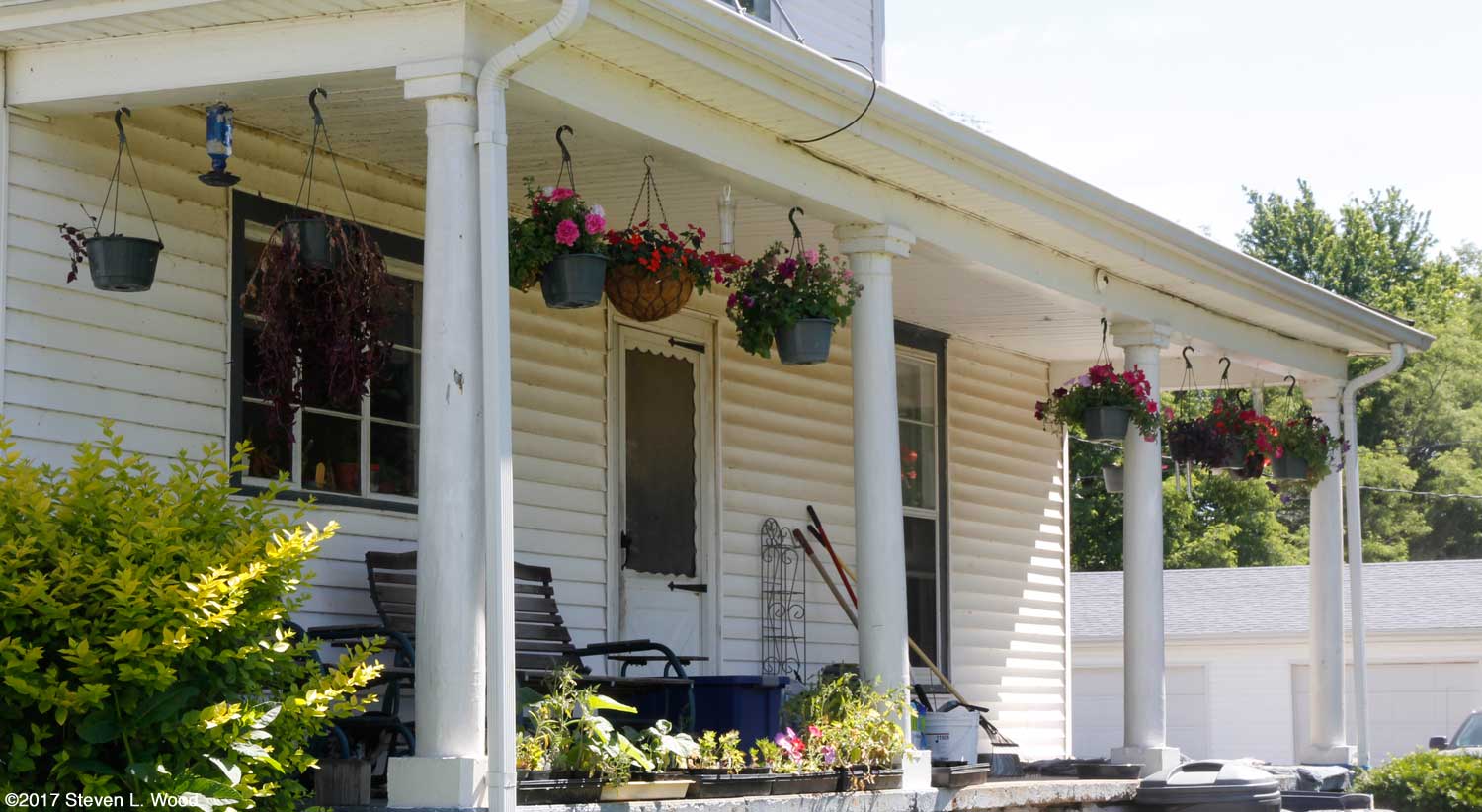
Bonnie's Asparagus Patch, which lies just off our property, also needs weeding and fertilization. Sadly, there are some vining weeds in it I've not been able to control over the last few years. While I'm not big on using herbicides, I'm going to try using some of the new Roundup Precision Gel on a few of the weeds to see if it kills them and doesn't harm the asparagus. Hanging Basket Plants We line our back porch each year with plants in hanging baskets. The trailing petunias and impatiens took quite a beating in the high winds we had the last two months, but have survived and are now in full bloom. Our Wandering Jew plants didn't do as well in the wind, but may yet make it.
I hung a third hummingbird feeder from the porch yesterday to cut down on some of the battles for dominance going on amongst the hummingbirds. When their first brood of young leave the nest, things will get even busier at the feeders. And after the second brood, we frequently have six to ten hummingbirds vying for a spot at the feeders. Father's Day Gift Guides (for Gardeners) Burpee rolled out emails this week advertising their Father's Day Gift Guide for gardeners.
While there's some nice stuff on their site, and we really value Burpee as one of our affiliated advertisers, let me also suggest a couple of our buying guide pages that may provide ideas for gifts for gardeners.
|




|
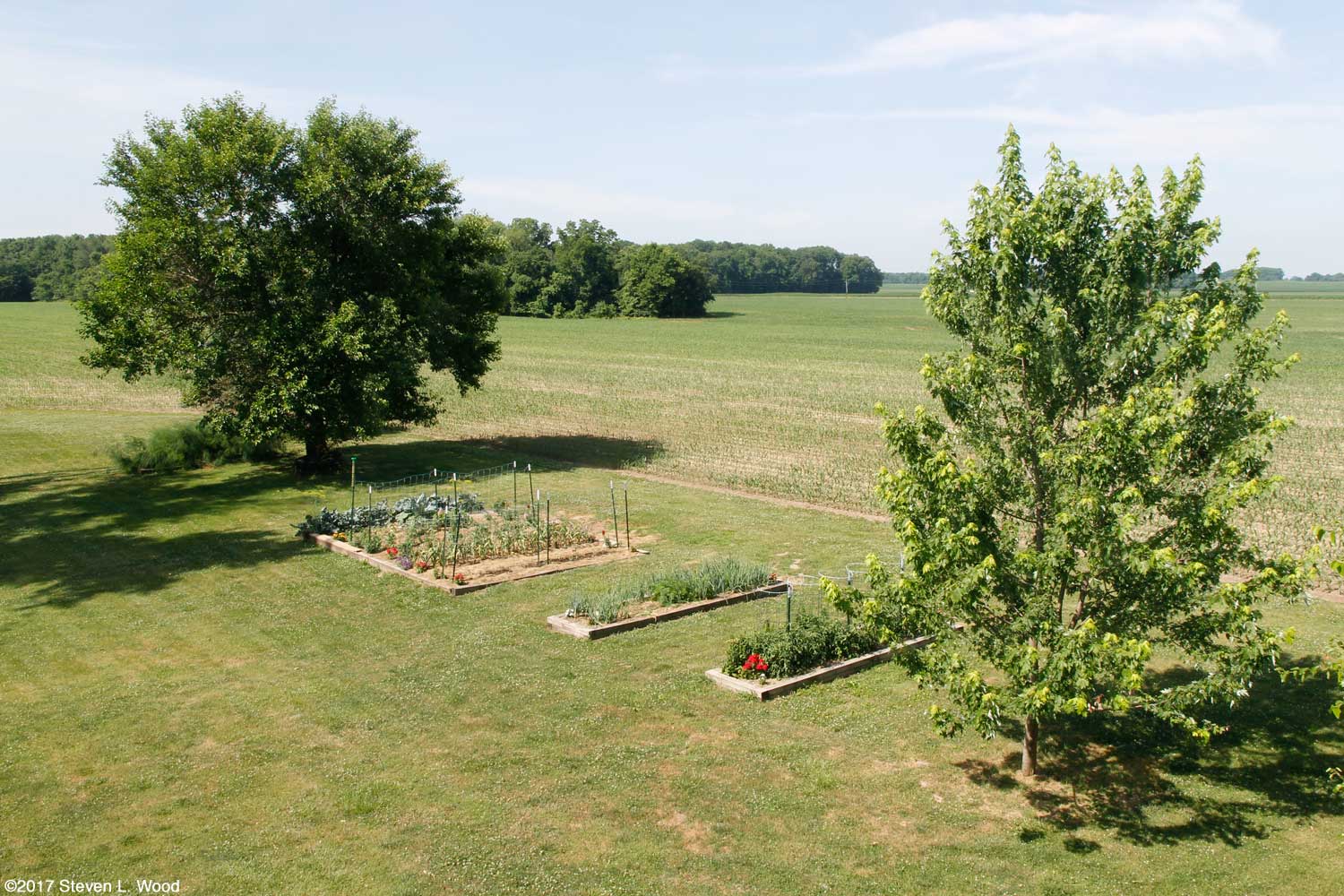
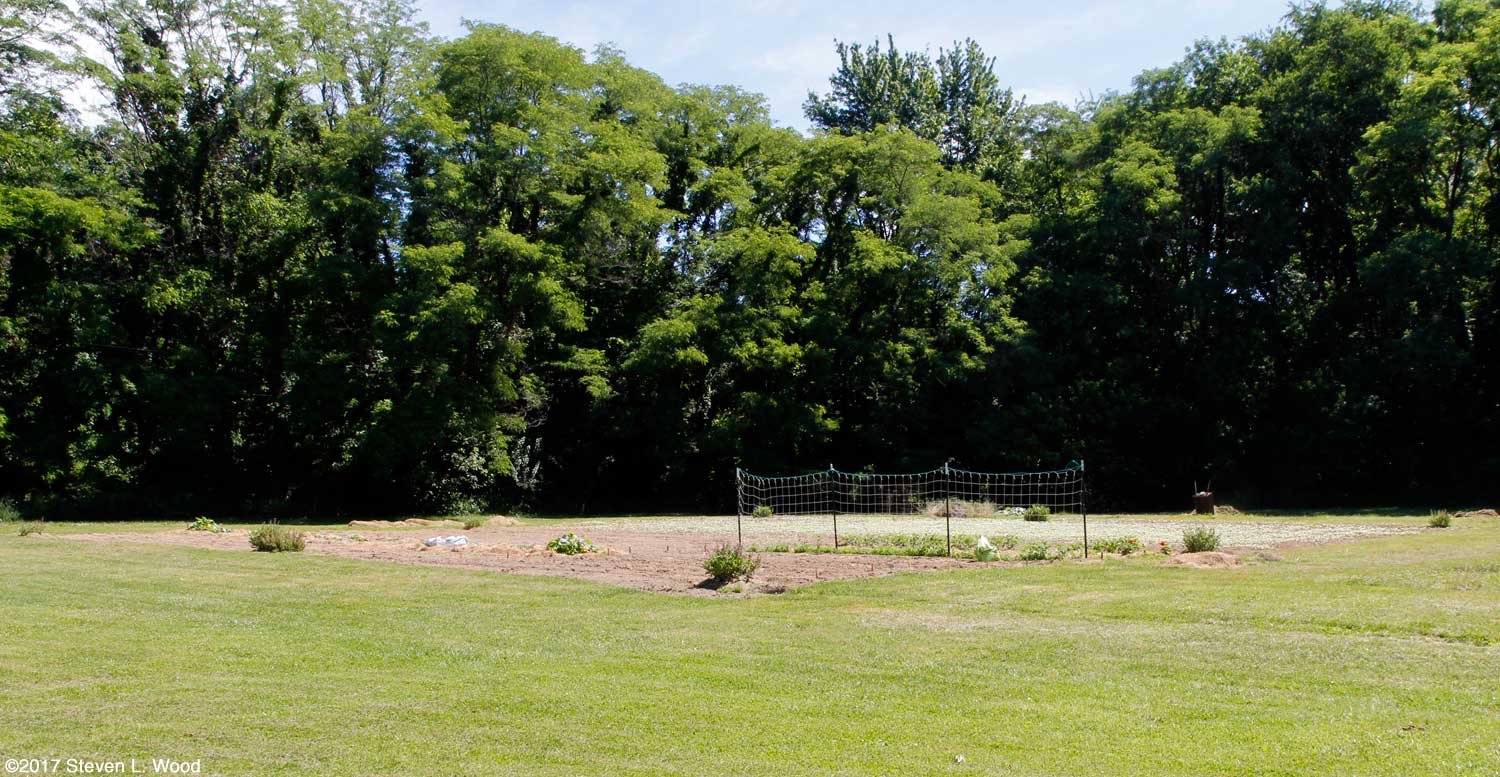
I'm a bit pooped today and may not get a lot of gardening done. But boy, what a gardening day I had yesterday. I finally got started transplanting tomatoes and peppers into our East Garden. With space available there this year, I'm going to grow all the varieties I usually don't have space for. I'm not terribly concerned about the late planting date, as we have other, earlier planted tomatoes in our main garden. These plants should begin bearing fruit about the time our other tomato plants begin to wear out.
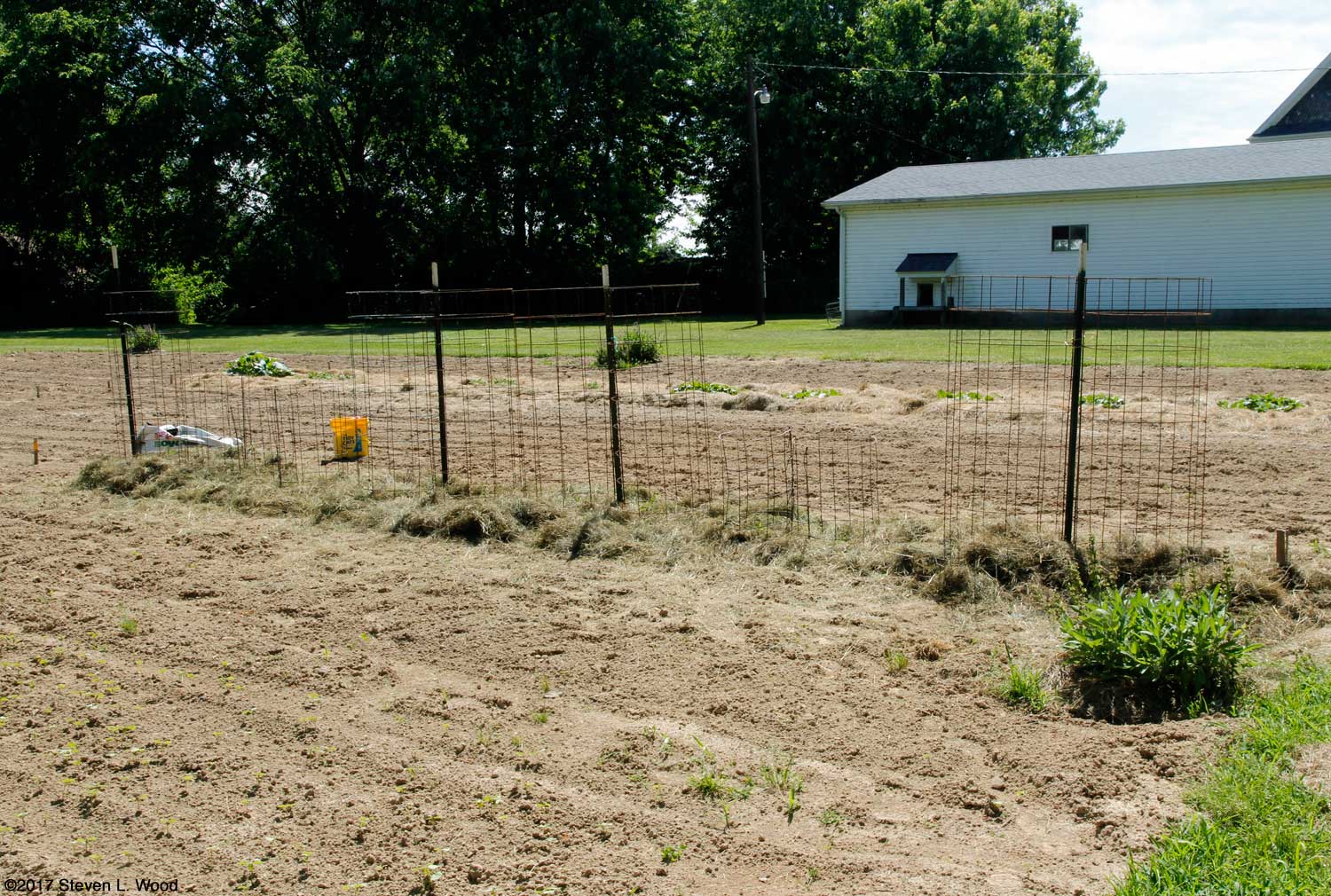
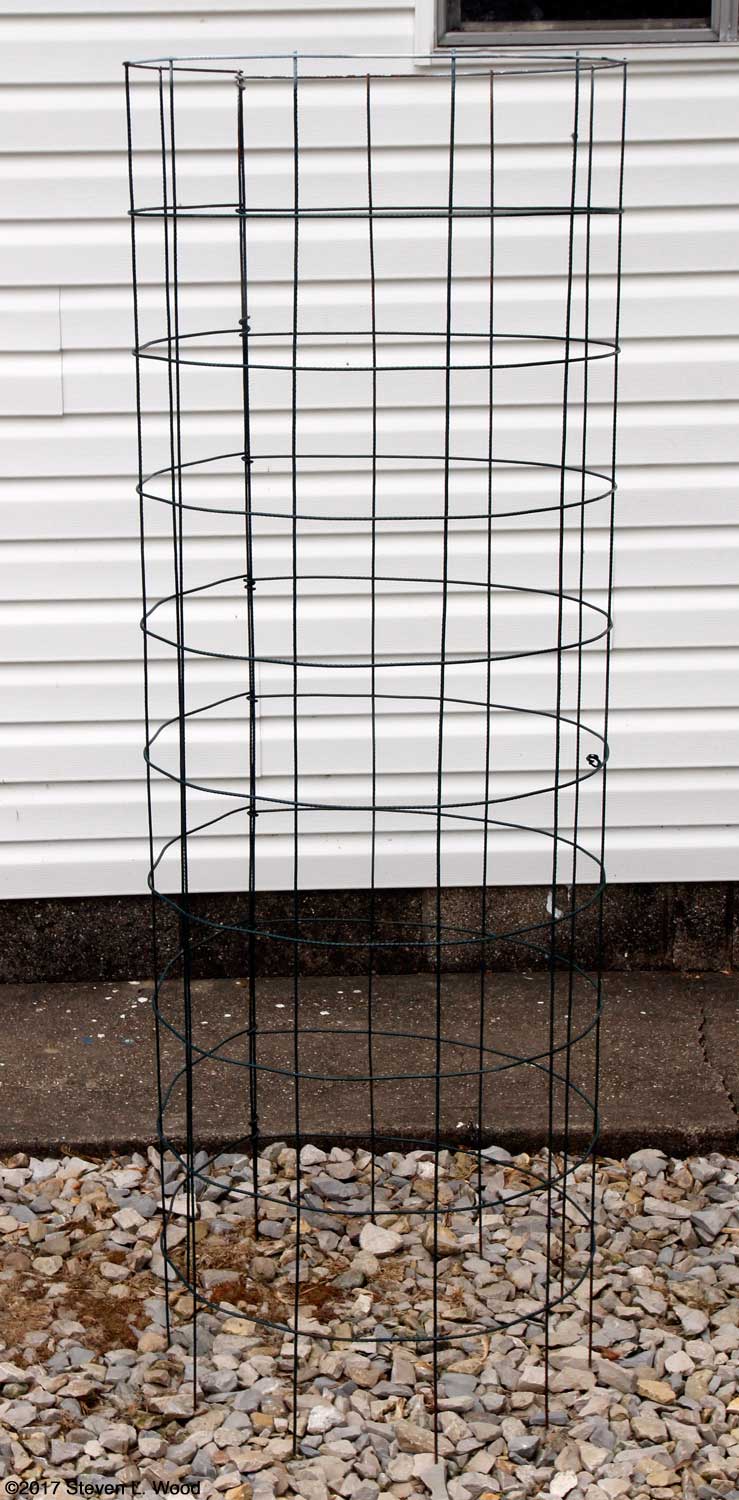
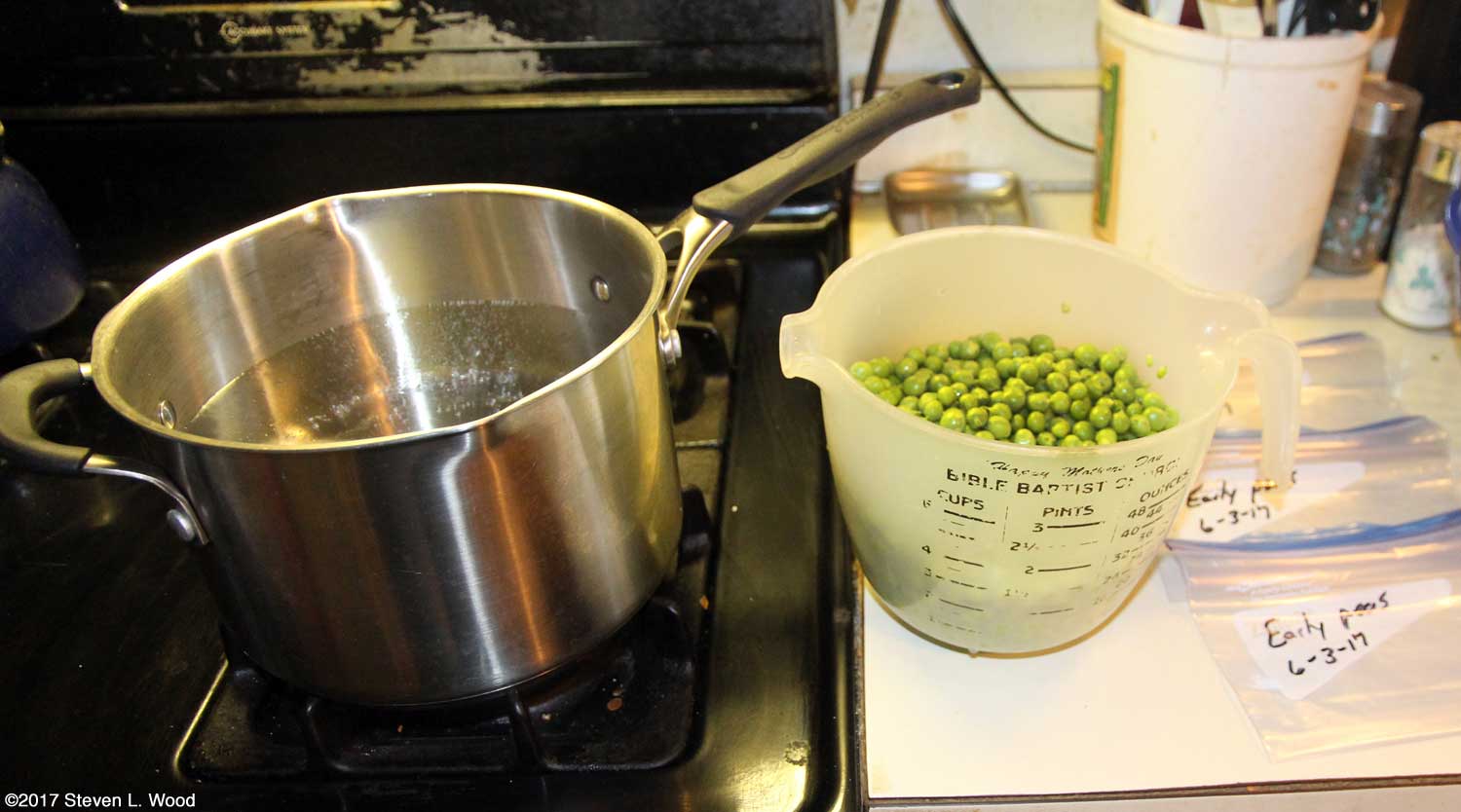
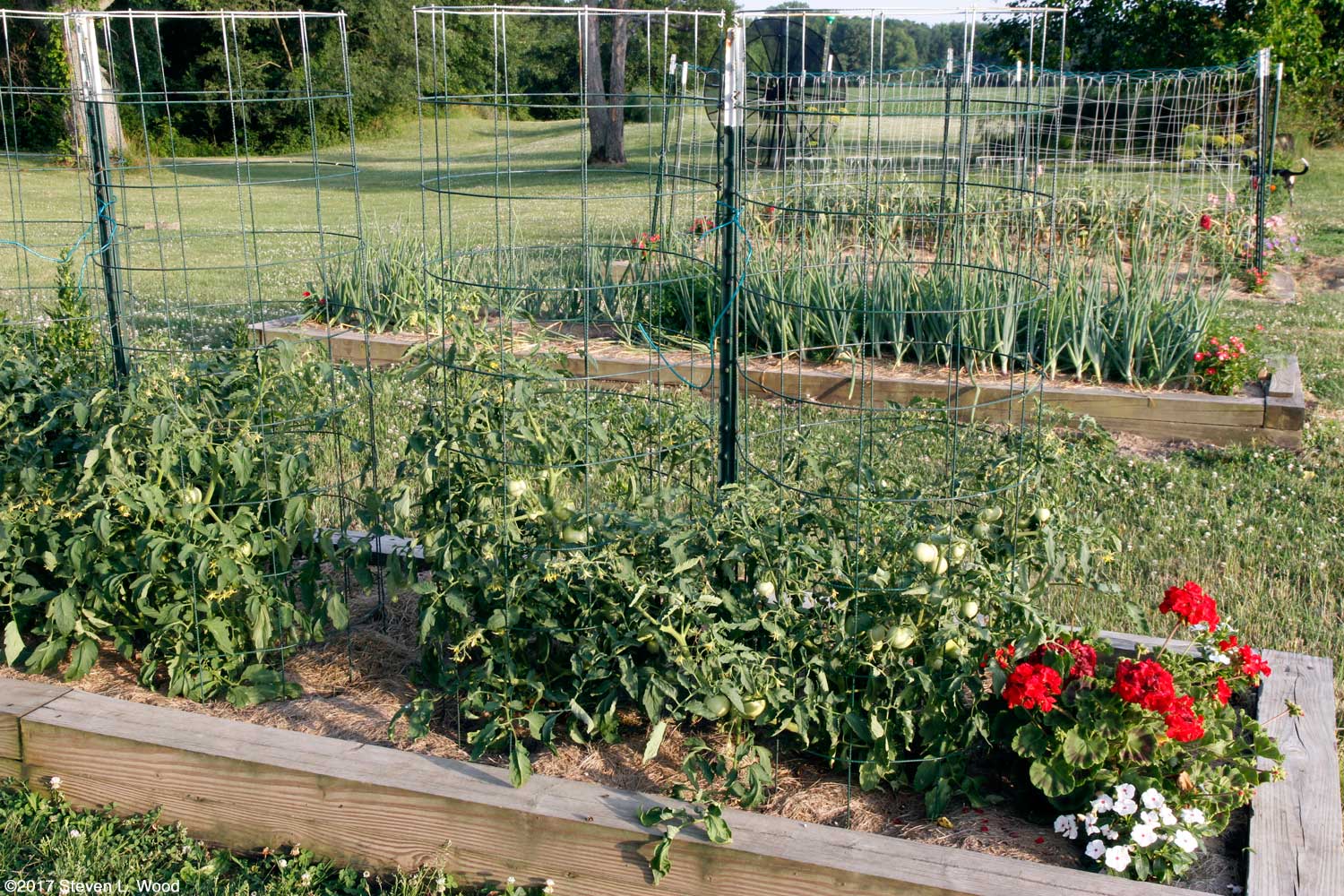
Even though our East Garden plot is partially shielded from the high winds that hit our raised garden beds, I anchored each pair of tomato cages to a T-post driven into the ground. We've had tomato cages top heavy with tomatoes blow over in the East Garden in the past. All of the plants were thoroughly mulched with grass clippings for weed control and moisture retention. Many of the tomato transplants were really quite tall. Using an old Jim Crockett trick, I planted many of them sideways in the planting hole, gently bending the stem upward. I'm pretty sure the plants haven't stunted, as their roots hadn't grown through the drainage hole at the bottom of the sixpack inserts I seeded them in. Still, we may get a disappointing harvest from these plants going in late and going into pretty poor soil. But we should get all the tomatoes we can use from our six Earlirouge plants in our main garden. If the East Garden tomatoes do well, most of the fruit will end up going to our local food bank. After a long break, I got back out in our main garden and picked a half gallon of peas. That may sound like a lot of peas, but shelled, they'll make about four servings or a pint frozen! You've gotta love the taste of fresh peas to put up with all the trouble of growing them for not much yield. We do. I also cut one head of broccoli, three heads of cauliflower, and a huge Coastal Star romaine lettuce. This is our third year growing Coastal Star. The first year we got zip. Last year, we got a couple of heads. I'm glad I tried the highly rated variety again, as it certainly did well this spring. Having noticed some bug damage on one of our yellow squash plants, I ended my gardening day yesterday by spraying the squash, melons, and our apple trees with fruit tree spray. For bugs on squash, only a true insecticide seems to work for us. This product is a chemical cocktail of the fungicide Captan and the insecticides Malathion and Carbaryl, with a little sticker spreader thrown in. I did the spraying at about eight o'clock at night, so as not to harm any bees. I may yet get a burst of energy today and build some more tomato cages. I'll probably need about seven more, along with two to four pepper cages. The row reserved for the tomatoes and peppers is fifty-five feet long, and I've gotten a little over half of it planted. Even with black flies making things less pleasant, working our garden plots is a true joy. I begin and end each day with a prayer of thanks to our Lord for another day.
Sunday, June 4, 2017 - More on Cages
I lined up the unassembled cages I did this time, as I did the first bunch done over a month ago, and painted four or five cages at once. They got a heavy coat of heavy rust primer on their bottoms before getting a final coat. While I'd been using Hunter Green for cages, I quickly ran out of that color. Feeling particularly parsimonious, I cleared our paint shelf of all the old spray cans of Rustoleum and Krylon spray paint we had, no matter the color. A couple of new pepper cages got gray, while the last of the tomato cages are a mix of green, gray, red, and blue. I don't think the tomatoes and peppers will mind. Freezing
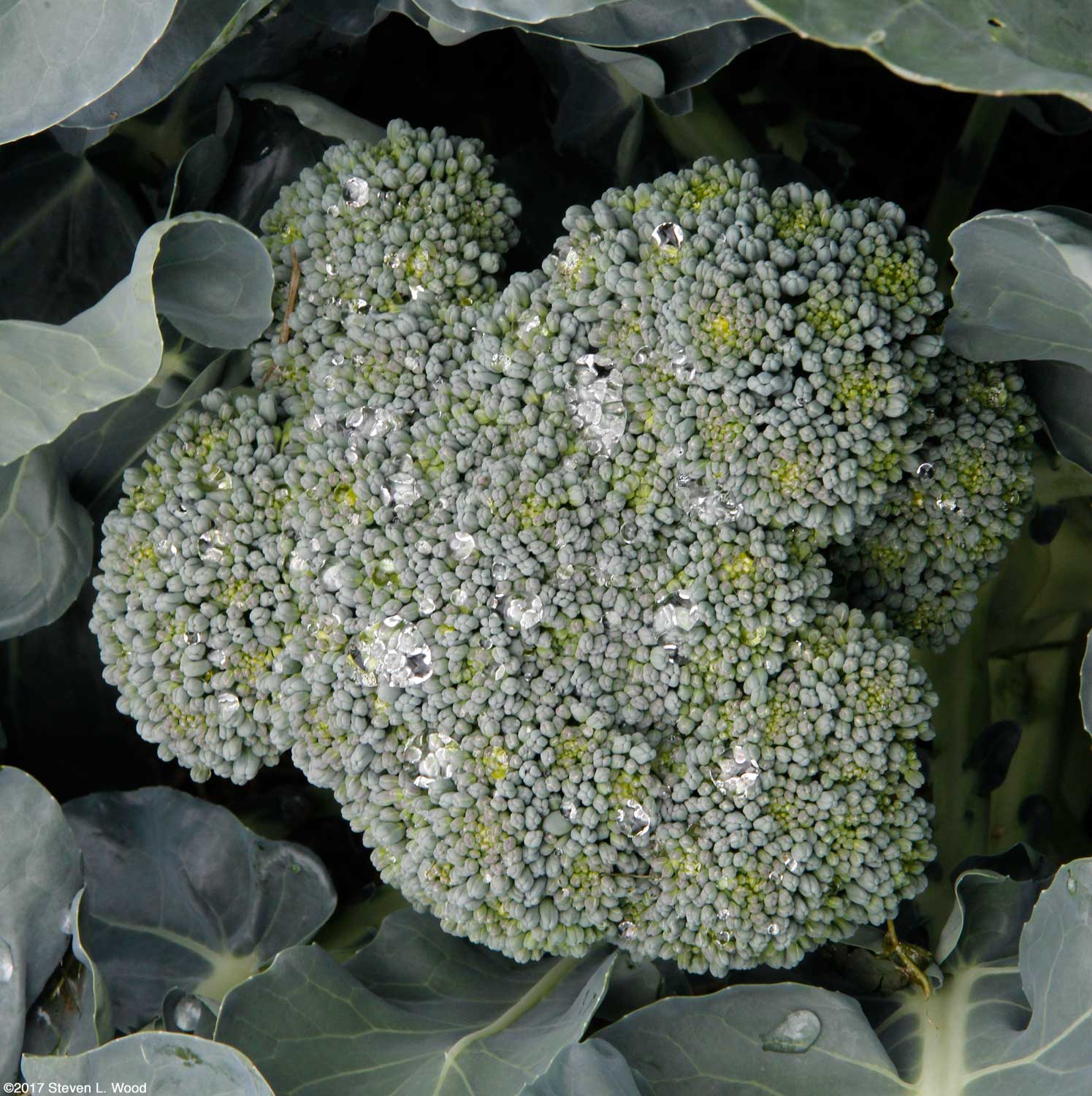
This afternoon and evening, I worked on freezing the broccoli and cauliflower I'd picked over the last several days. I cut the brassicas into florets, blanched them for three to four minutes, dried them a bit, and then froze them on cookie sheets. We usually do most of our freezing of broccoli and cauliflower with our fall crop, so it's a bit fresher when we use it. But our brassicas all seemed to mature within a few days this spring. Rather than waste it, I froze some. We still have one broccoli plant with a main head to cut. And of course, the plants will produce smaller sideshoots for a while. We have three cauliflower left to cut. One is a white cauliflower while the other two are the reddish, longer season Violet of Sicily types. With some really hot weather predicted for early next week and a gallon each of broccoli and cauliflower in the freezer, I may pull the broccoli plants soon and plant a succession crop of green beans in the brassicas' spot. And while it may sound premature, in just a few weeks I'll be seeding our fall broccoli and cauliflower transplants! When cleaning up the remains of cauliflower plants and some broccoli leaves I trimmed to give our sweet onions a bit more daylight, I also pulled all of our spinach other than the Abundant Bloomsdale variety. I'm going to try saving seed from the Abundant Bloomsdale variety again this year. The spinach was getting bitter from heat and many of the plants were going to seed. Likewise, the last of our spring lettuce needs to come out, as it is bolting. Like the brassicas, we'll grow fall crops of lettuce and spinach.
Monday, June 5, 2017 - Watering and Spraying
After watering the tomatoes, I gave them a precautionary spray of Serenade biofungicide. I'd drenched the ground with Serenade when I transplanted the tomatoes, but wanted a little insurance against blight, bacterial spot, and anthracnose, tomato diseases we've faced in years past. I also gave our peas a good dose of Serenade. Our early Maxigolt peas are showing some powdery mildew, something I don't want to spread to our other pea varieties. Having emptied our biologicals sprayer, I refilled it with Thuricide (BT), as I'd seen some small white cabbage moths in our broccoli and cauliflower. While the spring brassicas are just about at the end of their productivity, I'd like to maintain our so far perfect record of not having any worms in our heads of broccoli and cauliflower this year. Our current weather forecast doesn't hold much promise for rain, so I guess that I'll be pumping and hauling a lot of water from our shallow well this week. Pumpkins Transplanted
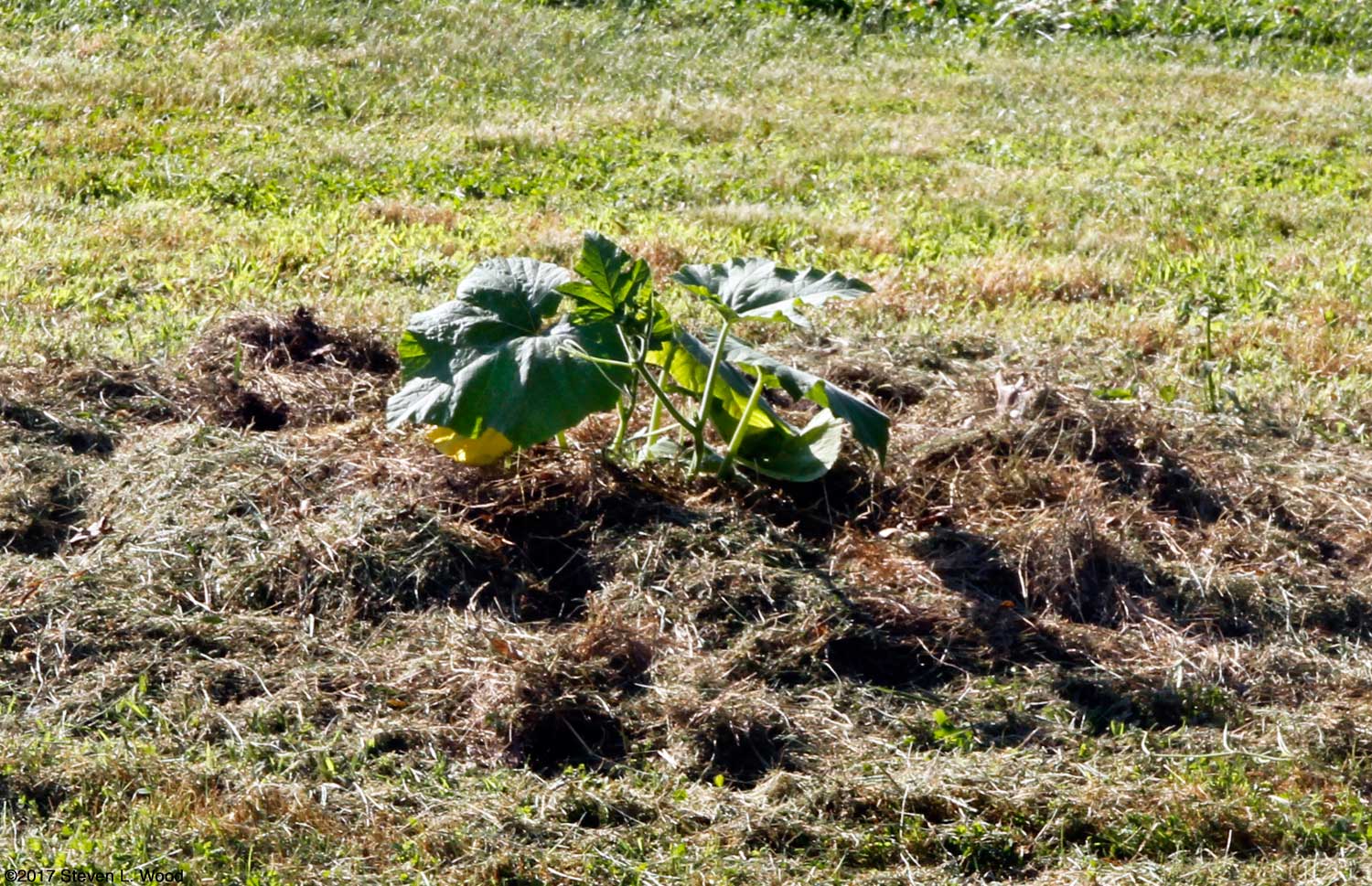
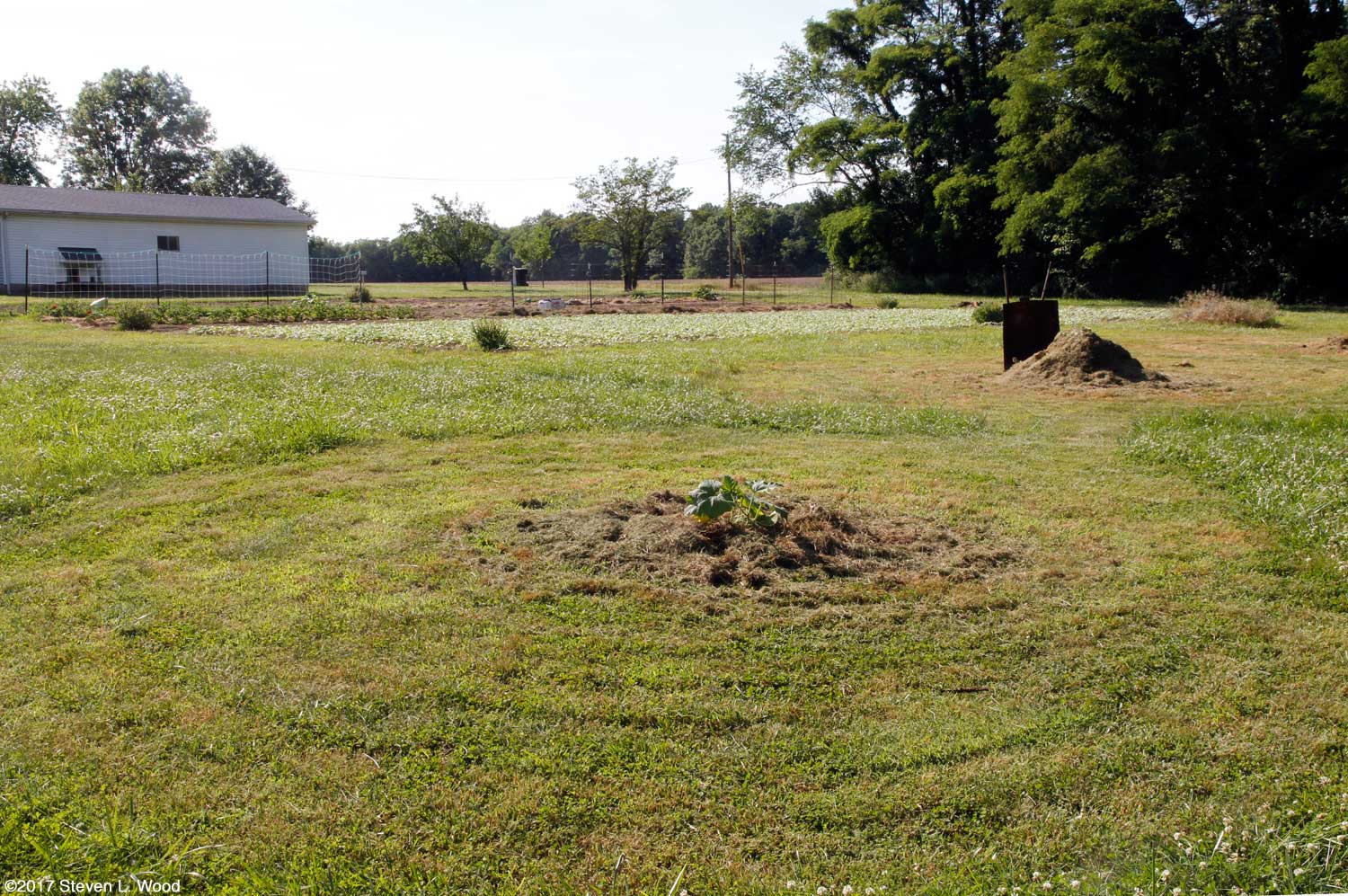
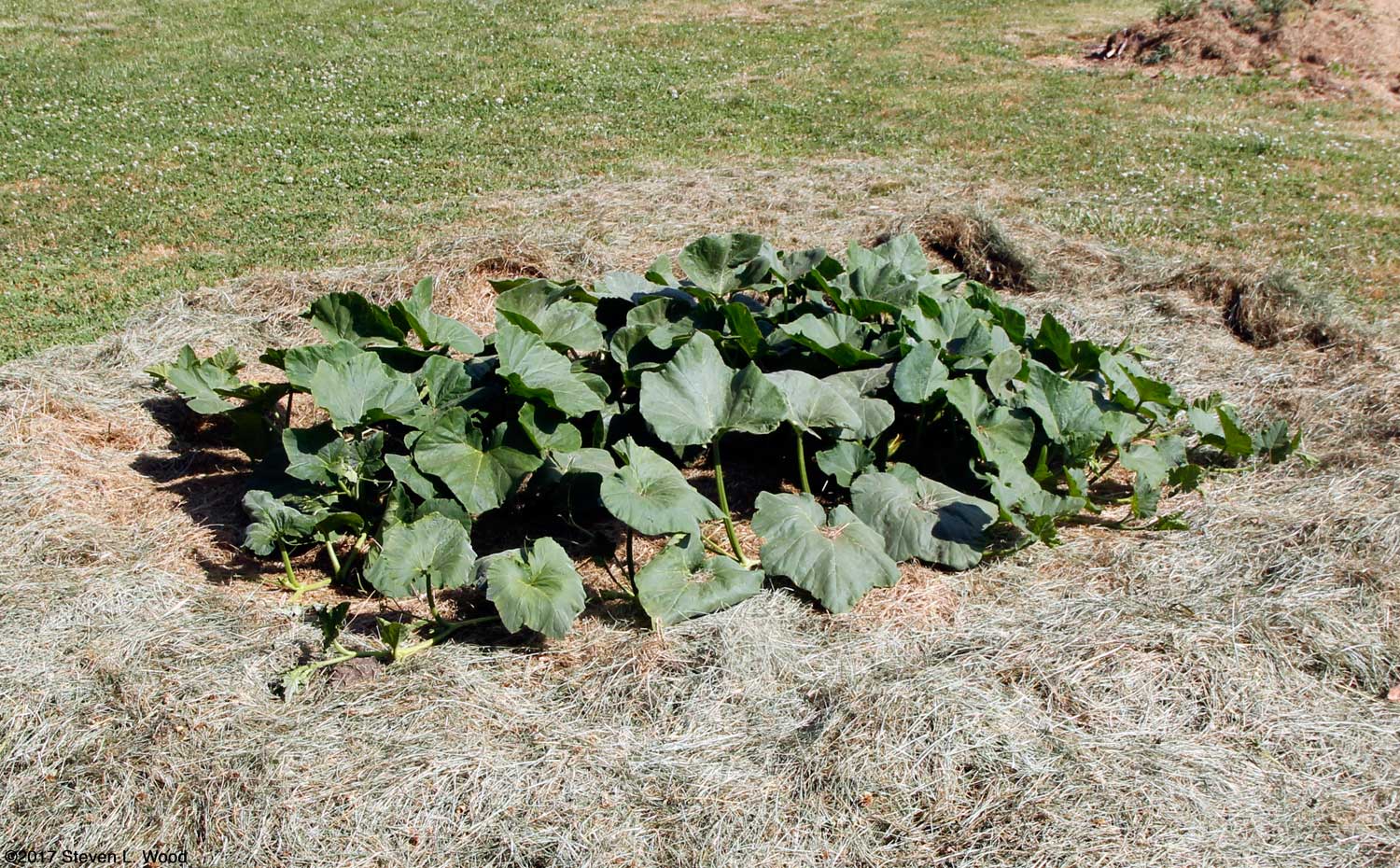
I purposely start our pumpkin transplants a bit later than our other squash transplants, as I want the pumpkins maturing a few weeks before Halloween. This year I started our usual Howden variety, but also a few old Jack O' Lantern The pumpkins got a deluxe hole filled with compost, peat moss, lime, and fertilizer. I'd previously mulched the site, so mulching was just a matter of drawing the existing mulch up to the transplants. I'll have to mulch like crazy to stay ahead of the pumpkin (and butternut) vines, as they grow really quickly. I finished transplanting tomatoes and peppers this afternoon in 90+° F heat. Transplanting in the heat of the day isn't very good for the transplants, but I wanted to get the job done. Before I could start with new plants, I had to replace one tomato and one pepper plant that didn't make it from last Thursday's planting. As usual, each plant got a deluxe planting hole with peat moss, fertilizer, lime, and egg shell mixed in. They also got a gallon or two of transplanting solution. As dry as things are here now, I didn't skimp on water today.
The idea with this planting was to grow some of the varieties we like, but often don't have room for. The total planting, Thursday and today, included Mountain Fresh Plus, Bella Rosa, Better Boy, Oh, Happy Day, Mountain Merit, Moira, Quinte, Mountain Princess, Maglia Rose and Red Pearl tomatoes. The pepper varieties planted were Ace, New Ace, Red Knight, Mecate, Gold Standard, Kevin's Early Orange, Sweet Chocolate, and Hungarian. One more possible advantage of this planting is that the tomato and pepper cages may present a bit of an obstacle for deer. Of course, raccoons will go right between the cages, heading for the melons just beyond them. Our leftover transplants will go to the local food bank next week, in case anyone stopping by there is still putting in a garden.
Tuesday, June 6, 2017 - Tomato (and Pepper) Cages
Our Tomato Cages gives step-by-step directions on how to make these great cages. The catch: It's rather expensive to build these cages and it takes a good bit of physical effort. I'm guessing that these will be my last set of tomato cages to build, as they usually last for about ten years before rusting out. But then, my dad kept saying he'd bought his last new car. He ended up buying four last new cars before passing at 98, almost 99 a few years ago. I'll simply treasure the years the Lord grants me and keep gardening and writing about it until He calls me home.
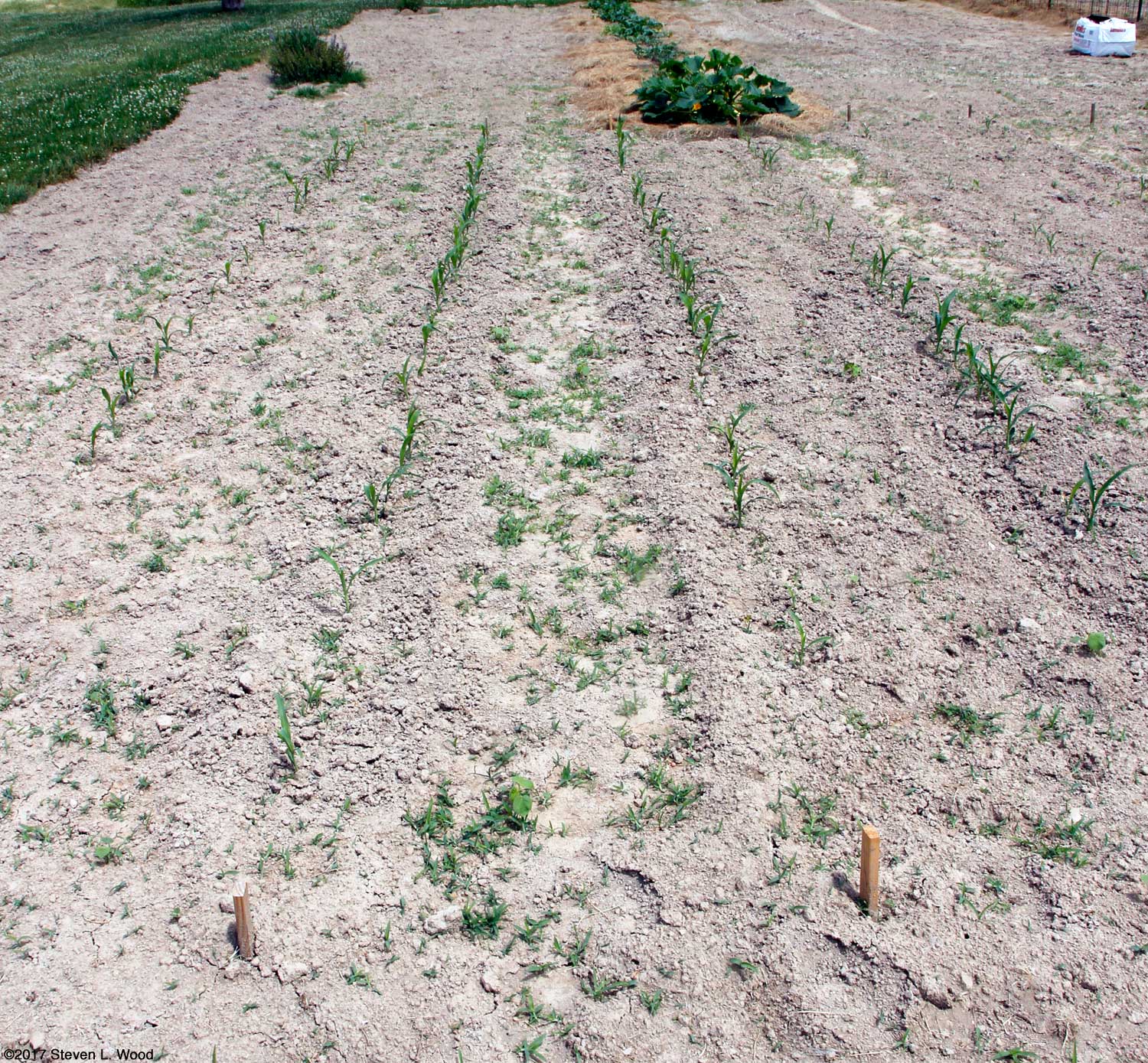
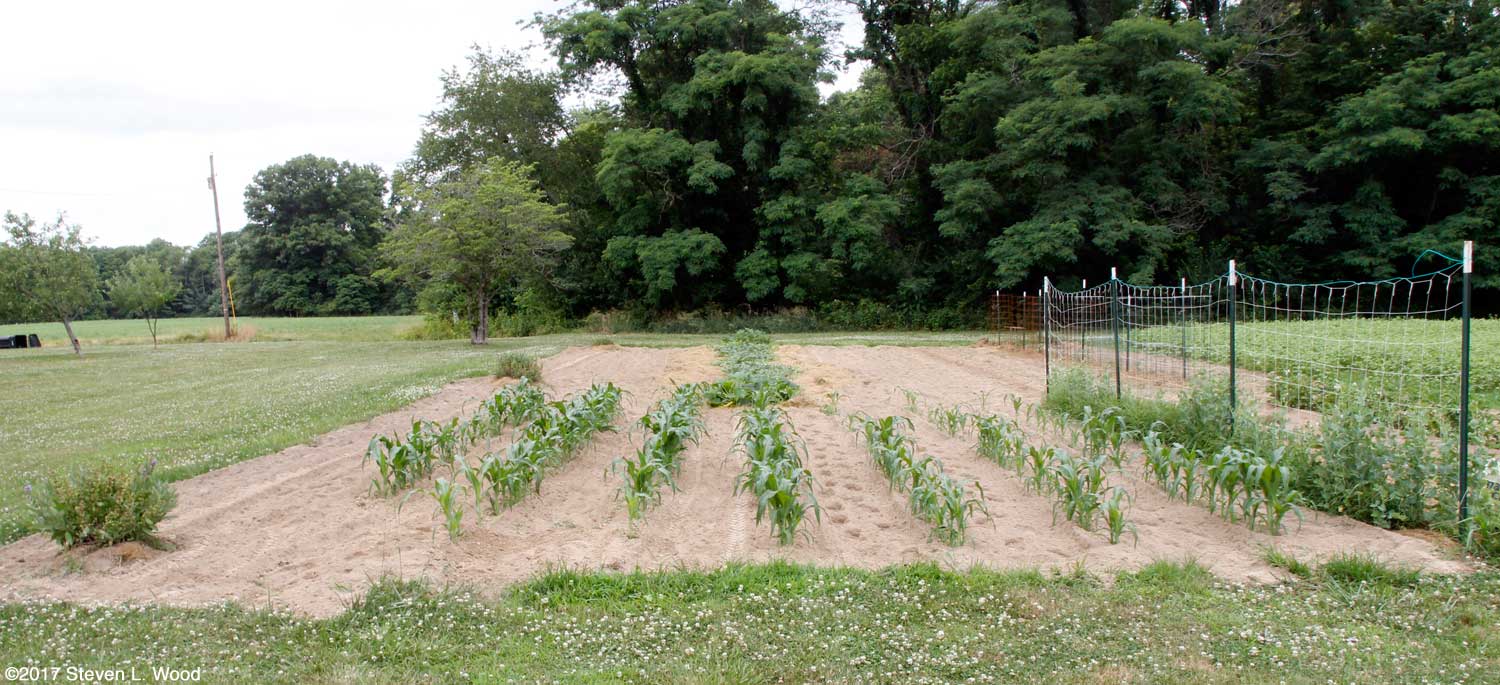
I got after a job I knew needed doing for several days. Despite our current dry soil conditions, lots of seedling weeds had sprung up in our sweet corn patch. I'd done a little work in the area with a scuffle hoe, but the volume of weeds and expanse of the area required tilling. Fortunately, most of the sweet corn was just tall enough that I could rototill with the shields up and throw a bit of soil over low growing weeds in the row. I resisted the urge to add a bit of fertilizer at this time but probably will with the next tilling. After tilling, I went back and poked some short season Summer Sweet 6800R seed into the bare spots in the corn rows. Our 6800R and Summer Sweet HiGlow SS3880MR germinated pretty well despite the dry soil. The new Jaws sh2 from Burpee was pretty spotty, and the new Summer Sweet Multisweet 502BC from Twilley Seeds was almost nonexistent. When poking in seed, I did uncover a few small corn plants I'd buried with the tilling. I had originally tilled an extra two feet or so outside the old boundary of our East Garden. The plan at that time was to run an electric fence in that space to keep the deer and raccoons out of our East Garden. Then I blew my gardening mad money on a giant roll of remesh for new tomato cages, so the hot wire will have to wait. I am, however, working on our own recipe for the deer repellent, Not Tonight Deer! The manufacturer of the excellent product went out of business several years ago. But the main ingredients of the nasty smelling (and presumably, nasty tasting) stuff are rotten eggs and white pepper. I have two gallon jugs of my homebrew curing just off the back porch. We'll see how it works.
I still need to direct seed kidney beans, zinnias, and nasturtiums into our East Garden patch. When that's done, I'll be done with our "spring" planting. Of course, we have rows of early peas and brassicas just about ready to come out of our main garden bed, so I'll be planting succession crops in those areas in just a few weeks.
Friday, June 9, 2017 - Peas to Cucumbers
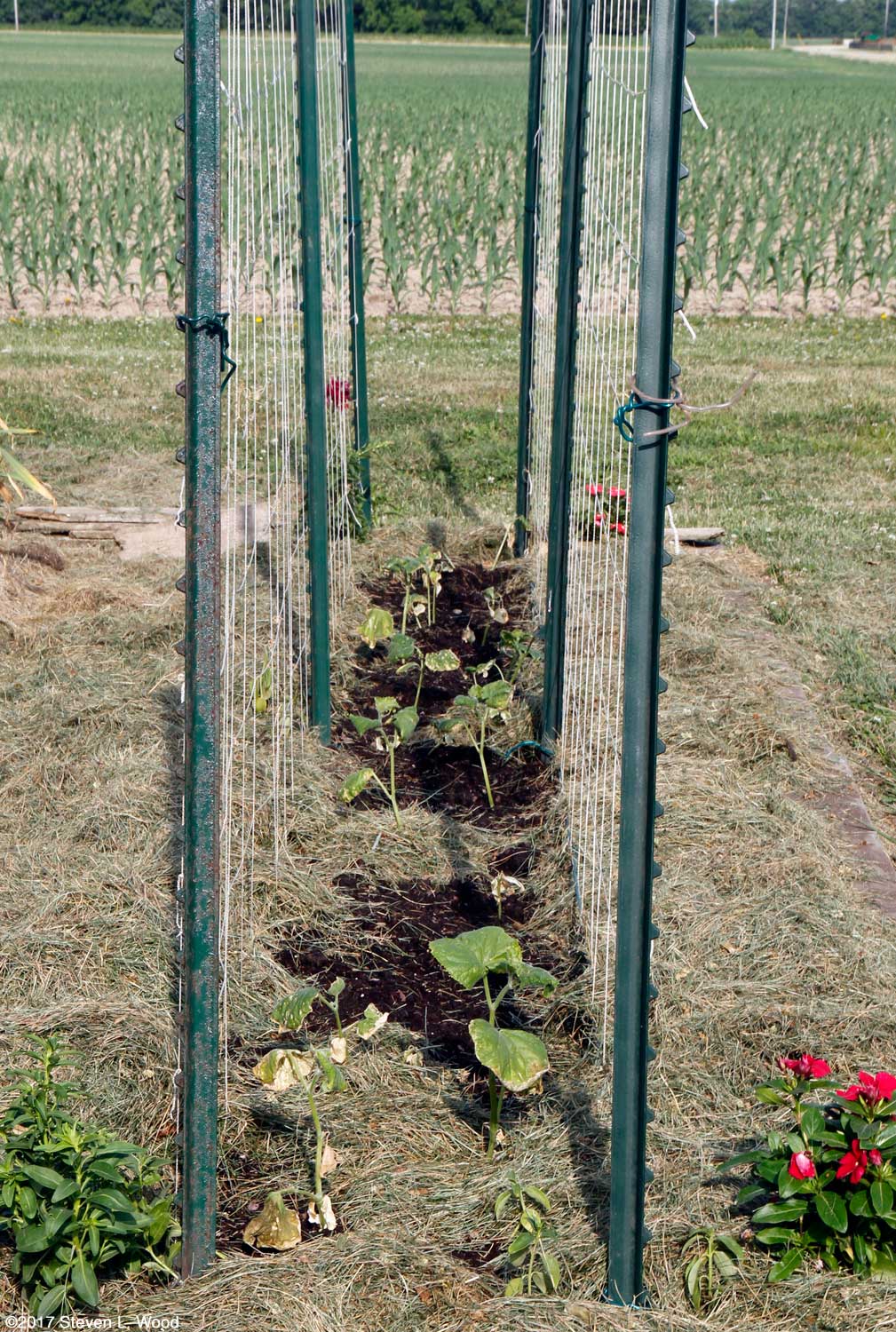
Production from our early pea vines had fallen off rapidly this week. The vines were getting old, our weather is steadily getting warmer, and some of the vines had powdery mildew on them. It was time. Today, I pulled back the grass clipping mulch from what had been the pea row and raised the bottom of the trellis netting on both sides of the row. Then I did several soil pH tests along the row and found it to be running around 6.3, a bit low for healthy peas. I had to water the dry soil a bit to be able to get an accurate reading from our electronic soil pH test meter! The grass and leaf mulch I used over the winter may have contributed to the slightly acidic soil, as there were still leaf remnants decaying on the soil surface. After raking away any pea vine remains and pulling some stubborn weeds, I used a garden hoe to work in some peat moss, a good bit of lime, and a healthy dose of 12-12-12 commercial fertilizer. Then I drenched the 16" x 15' row with about twenty gallons of water with a bit of Serenade biofungicide mixed in. By that time, it was early afternoon, and I didn't want to transplant cucumbers in the heat of the day. So after supper (and after shelling, blanching, and freezing the last of the early peas), I got out and transplanted about eighteen cells of Japanese Long Cucumber plants along the row. Some of the cells from deep sixpack inserts had two plants in them, and I didn't thin them out. I used around fifteen more gallons of water during the transplanting, as the soil was bone dry about four inches down.
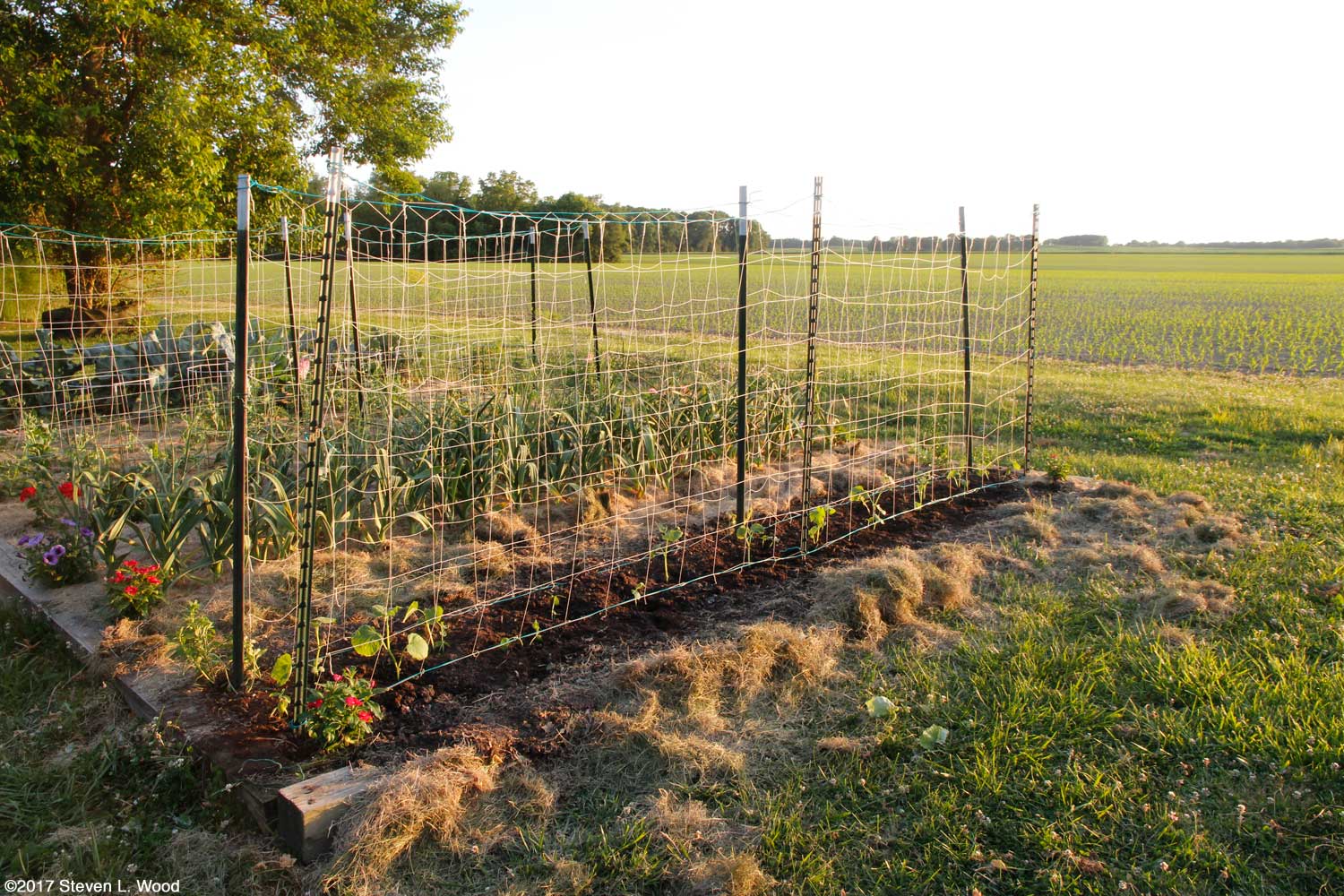
I still need to add a middle wire to help support the weight of mature cucumbers. I could get away with just a top and bottom strand of wire with the fairly light peas, but mature cucumbers have considerable weight. I'll also need to re-mulch the row when I have some more grass clippings available. I also added the last of our snapdragon transplants around the trellis netting, as they can coexist with the cucumber vines, coming into full bloom once the cukes are out. This is our first succession planting of this gardening season. While I'm still trying to do initial plantings for a few more things in our East Garden, I'll also be doing other succession plantings in our main garden. Once our brassicas are out, I'll plant beans in their place. Our lettuce patch will be seeded to kale, although our main kale planting will come sometime next month where our carrots are currently growing. June is obviously a busy time in our garden, but it's also a lot of fun. When pulling the last of the pea vines I missed last night, I found many of the roots had lots of nitrogen nodules attached. Obviously, the granular soil inoculant we use worked with this planting. The peas sucked nitrogen out of the air and fixed it on their roots. Normally, the peas would then use the stored nitrogen as they ripened their last peas. Since I pulled our vines a bit early, there were still lots of nodules on the roots. And of course, the pea vines that broke off at the soil surface left a little bonus of nitrogen on their roots for the cucumbers to use.
Sunday, June 11, 2017 - Mulching With all that we plant each season, it would be impossible to stay up with it all with traditional weeding. While I hand weed, rototill, and scuffle hoe to hold back weeds, we primarily use lots of grass clipping mulch to save on weeding and also to hold in soil moisture. With that in mind, I've spent most of yesterday and today mowing, collecting, and mulching with grass clippings.
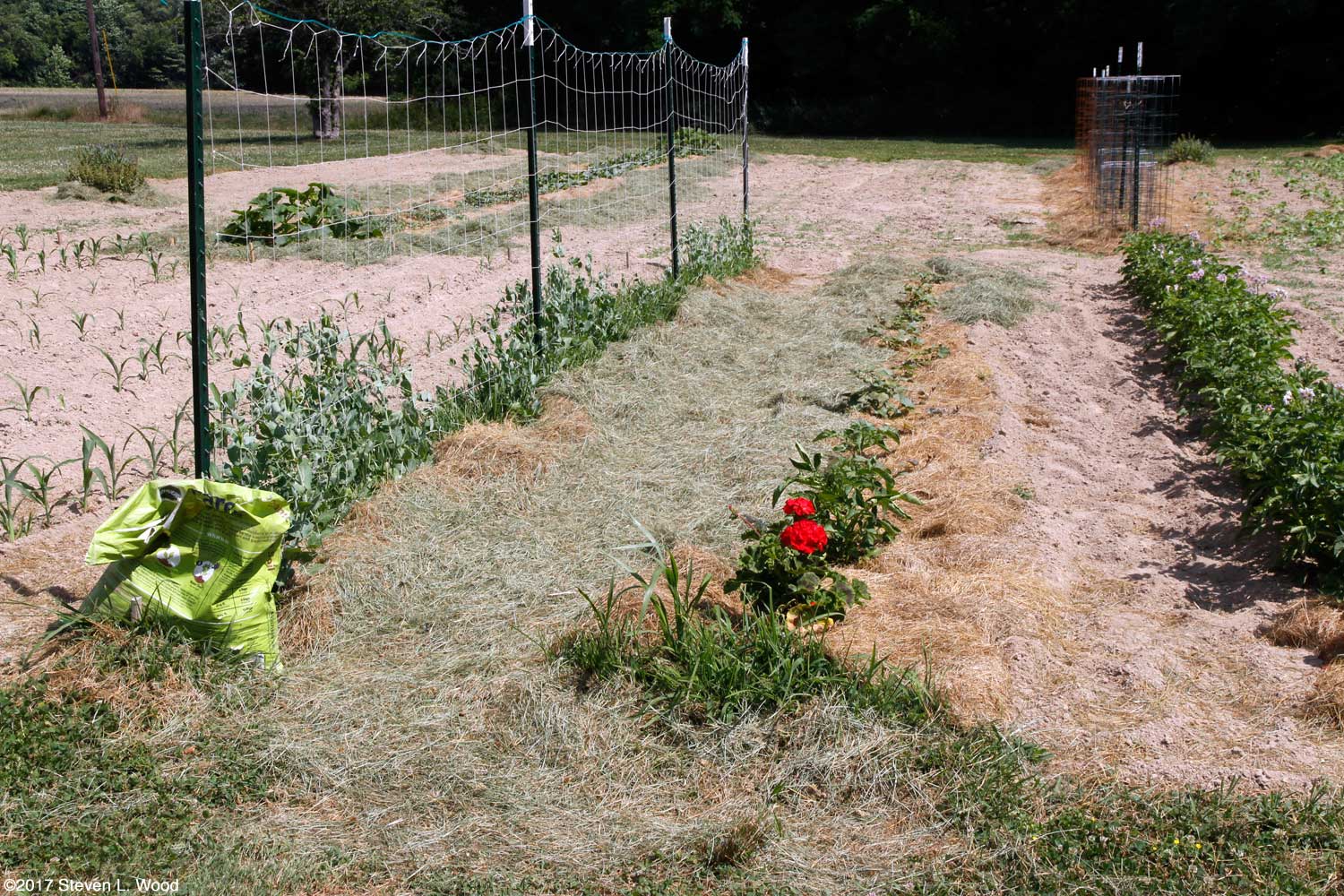
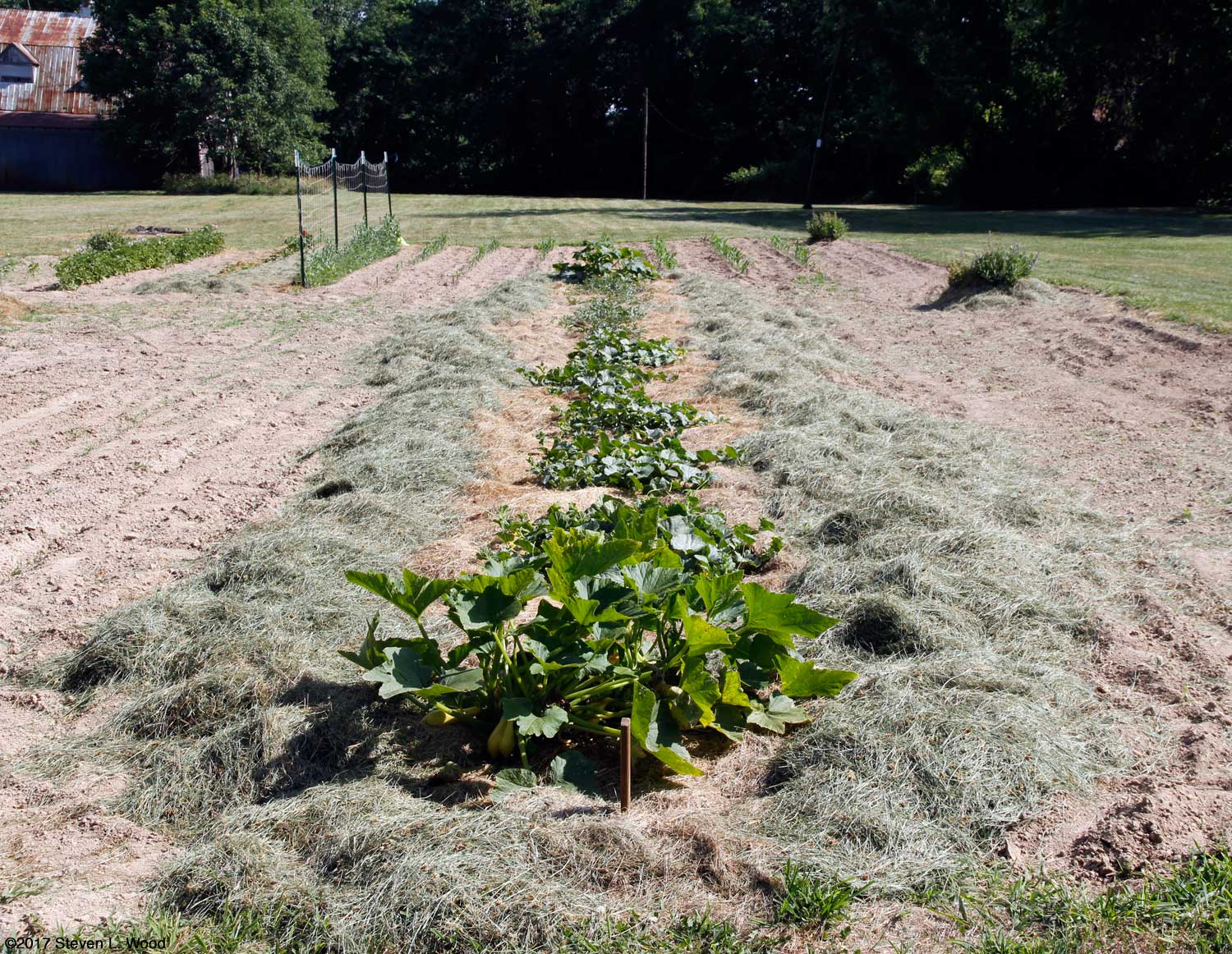
Then I mulched between our already mulched row of sweet potatoes up to one side of the trellis holding our Sugar Snap pea vines. But the major mulching was adding eighteen inches to two feet more of mulch around our long row of melons, as they're really beginning to vine now. We'll eventually mulch about ten to fifteen feet out from the center of the melon row, even with some serious training of the vines. We Have Daisies!
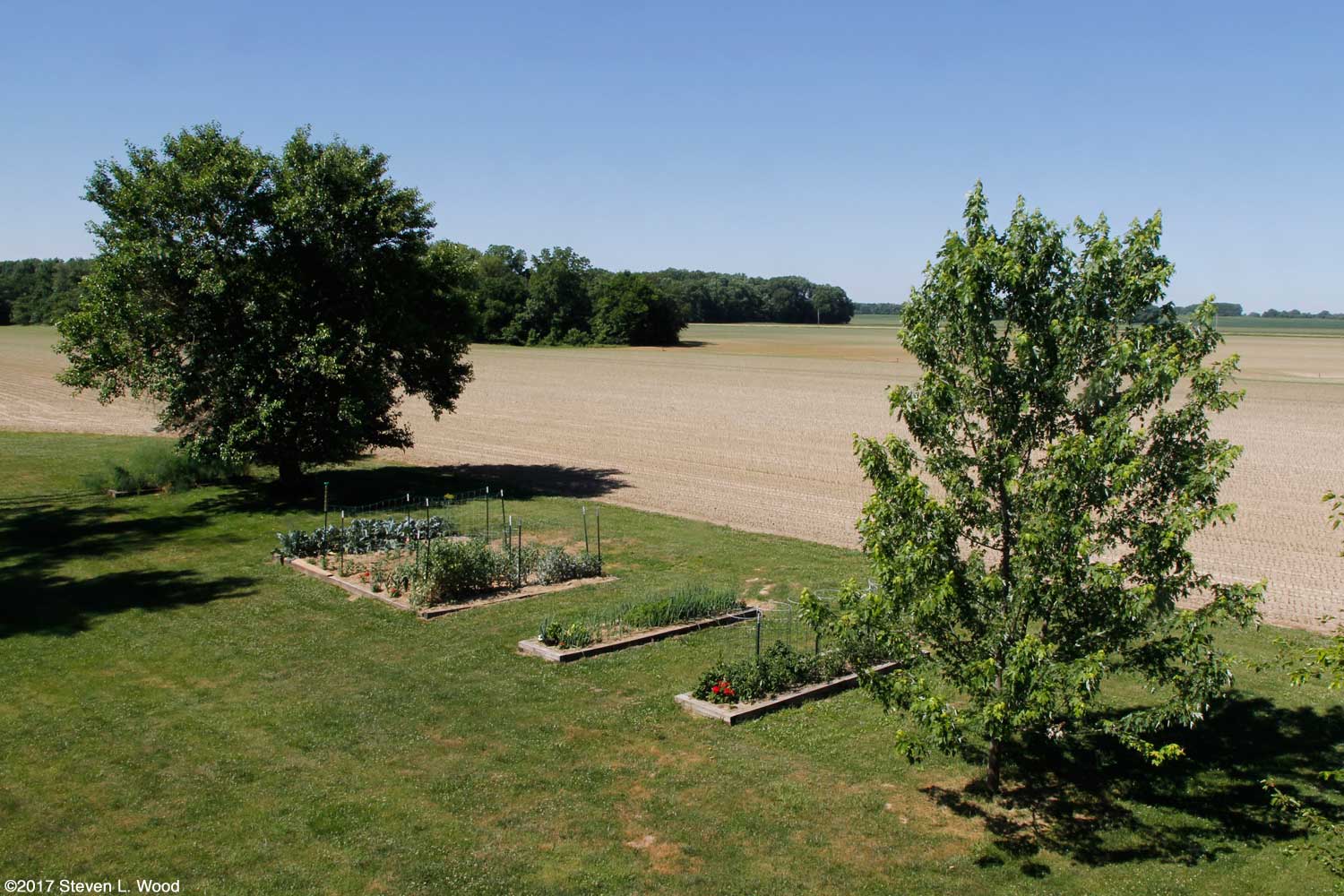
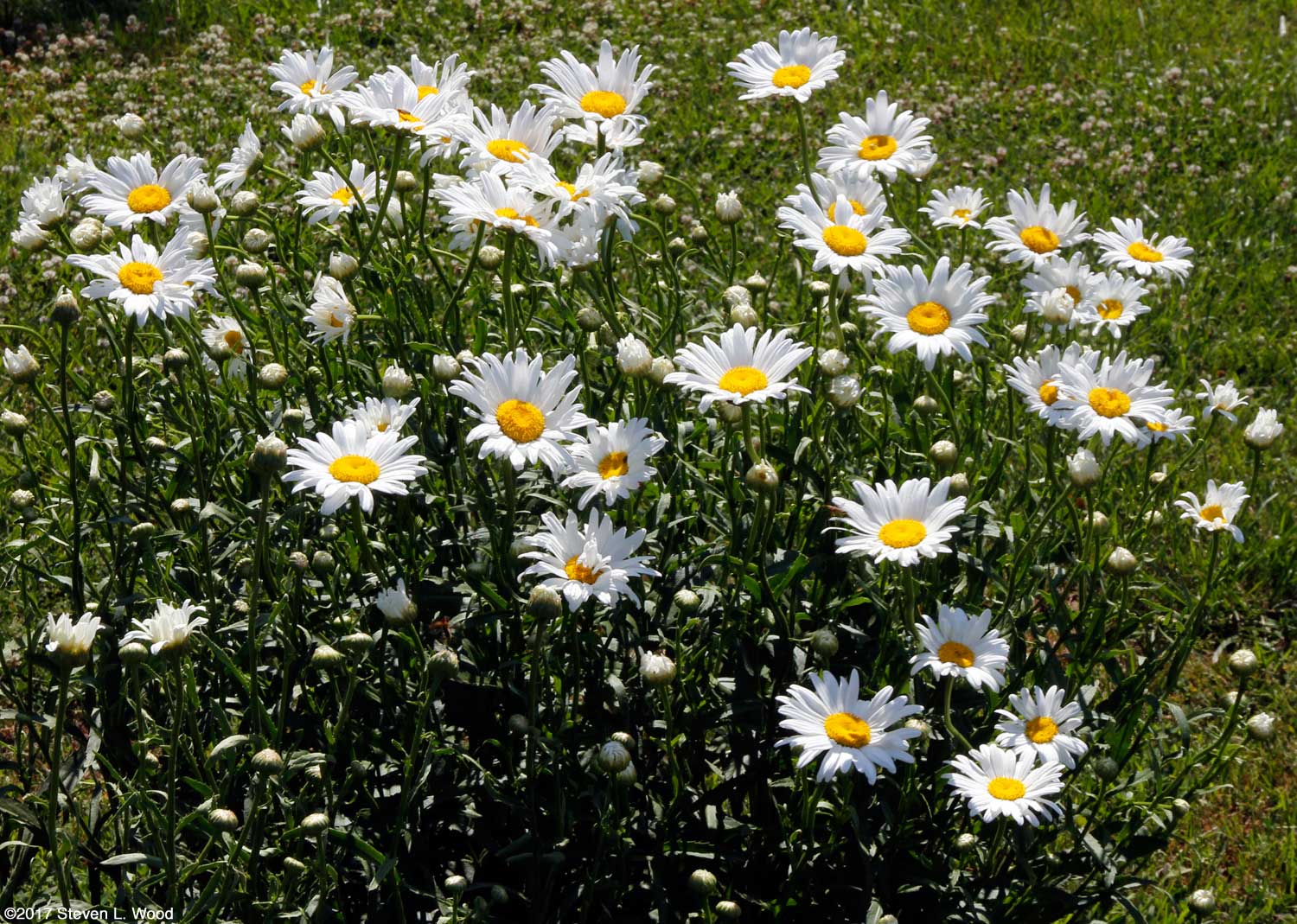
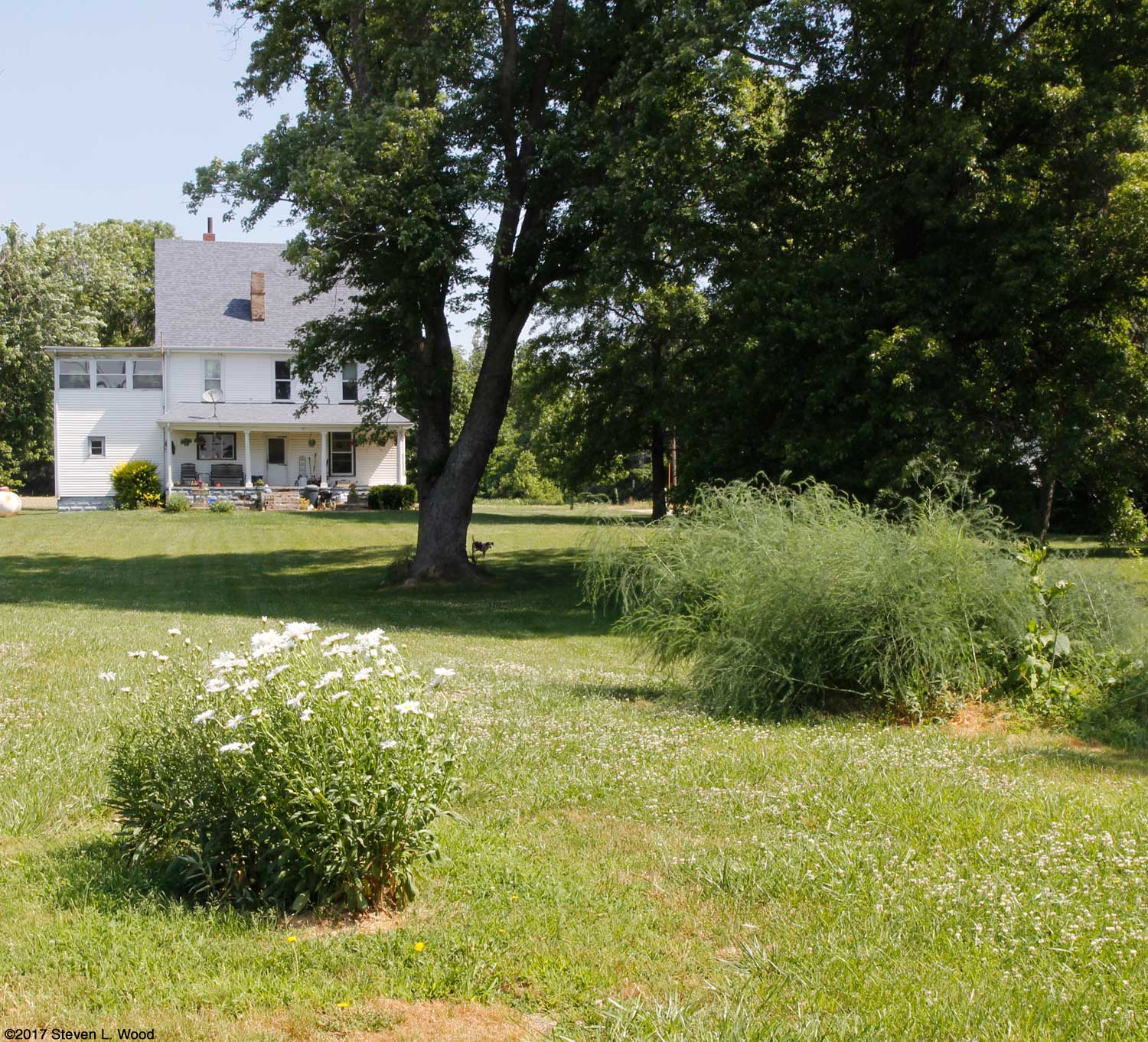
After several false starts, we finally have some daisies in bloom. I'd previously planted tall varieties close to the house that fell over on our sidewalk. Last summer, I transplanted daisies in what had been an isolation plot that had terrible soil. The daisies are at the back of our yard, but are clearly in bloom, even when viewed from the house. I love daisies. They're my mother-in-law's favorite flower and one of Annie's favorites as well. There's a bit of a story with the site of the daisies. We lost our senior dog, Mac, about this time last year. I buried him at the site of the abandoned isolation plot. He's obviously still working for us, pushing up daisies. Violet of Sicily Cauliflower
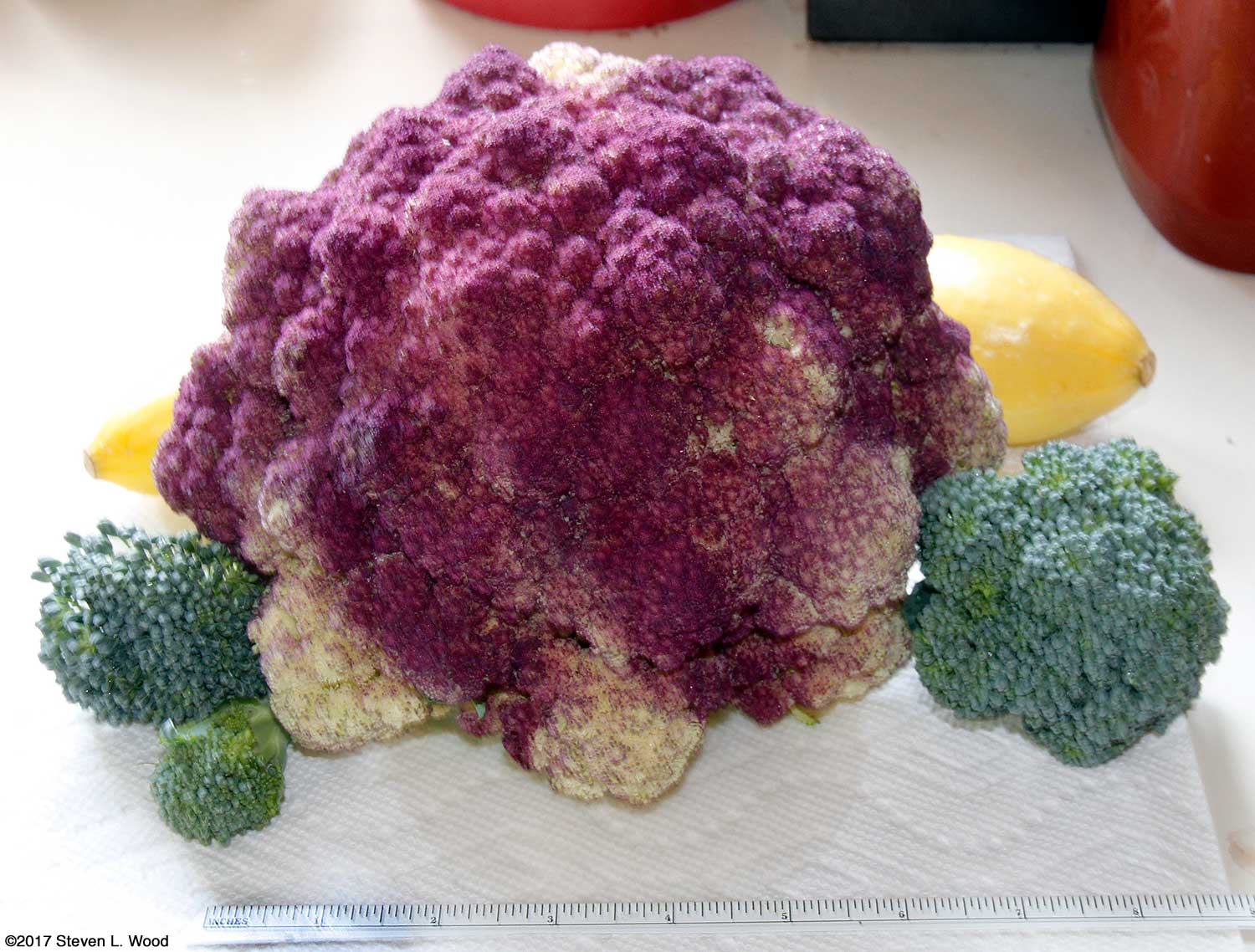
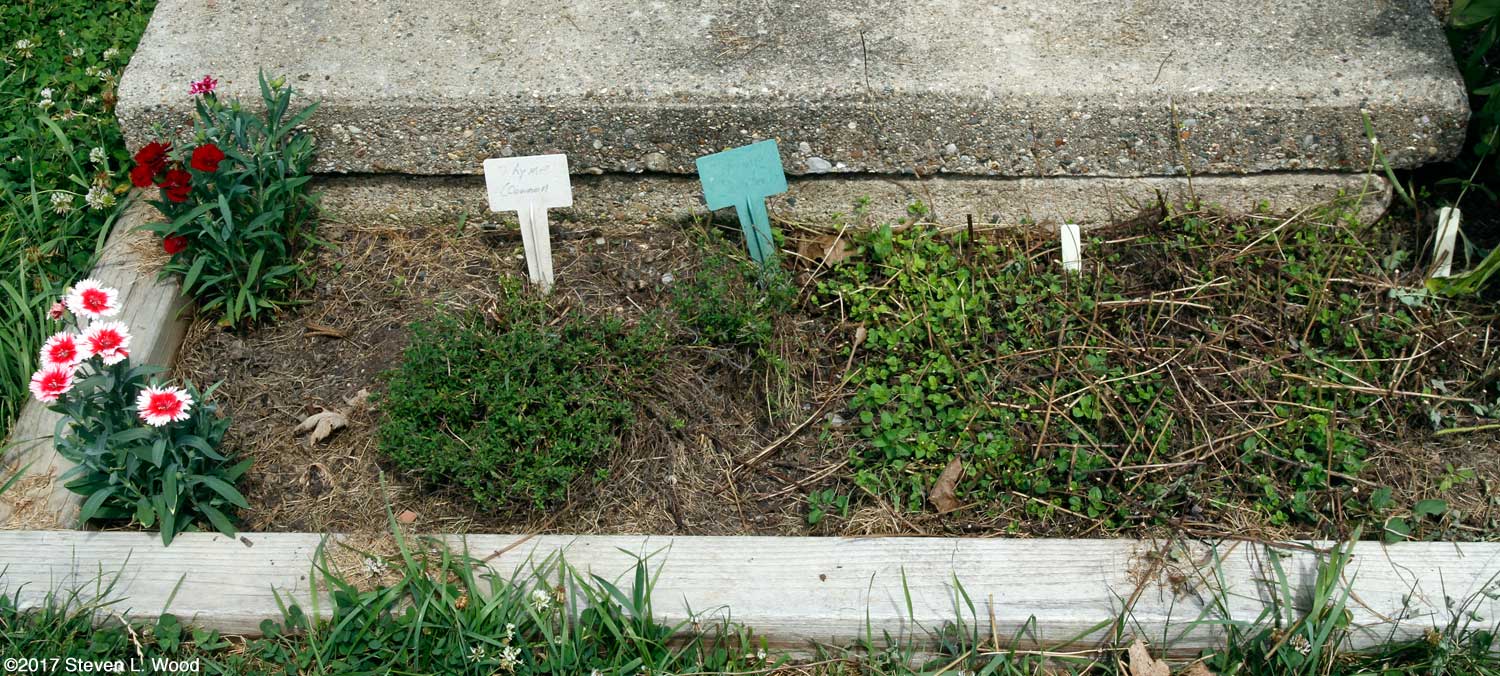
We've already cut all of the heads of our Fremont and Amazing cauliflower, so with the giant head of Violet of Sicily I cut today, we're down to one plant. Our row of broccoli beside the cauliflower row isn't doing much. Usually, we'd be getting lots of sideshoots from the broccoli after their main heads are cut, but the hot, dry weather apparently isn't conducive to broccoli producing sideshoots. With about five days of 90+ degree weather predicted here, I'll probably pull the broccoli plants in the next few days, as any heads produced in such heat would probably be bitter. Extras I made a late trip out to our East Garden this evening to grab a shot of our butternuts. On the way, with my camera hanging from my neck, I grabbed shots of some nicely developing Granny Smith apples, our section of buckwheat cover/smother crop, and the dianthus on one side of our front steps.
Despite my irregular spray routine, the apples look pretty good so far. The buckwheat is almost to the point of canoping, which will shut out light to weeds under it. And the dianthus are showing their variety of blooms. Eating Our Way Through the Gardening Season
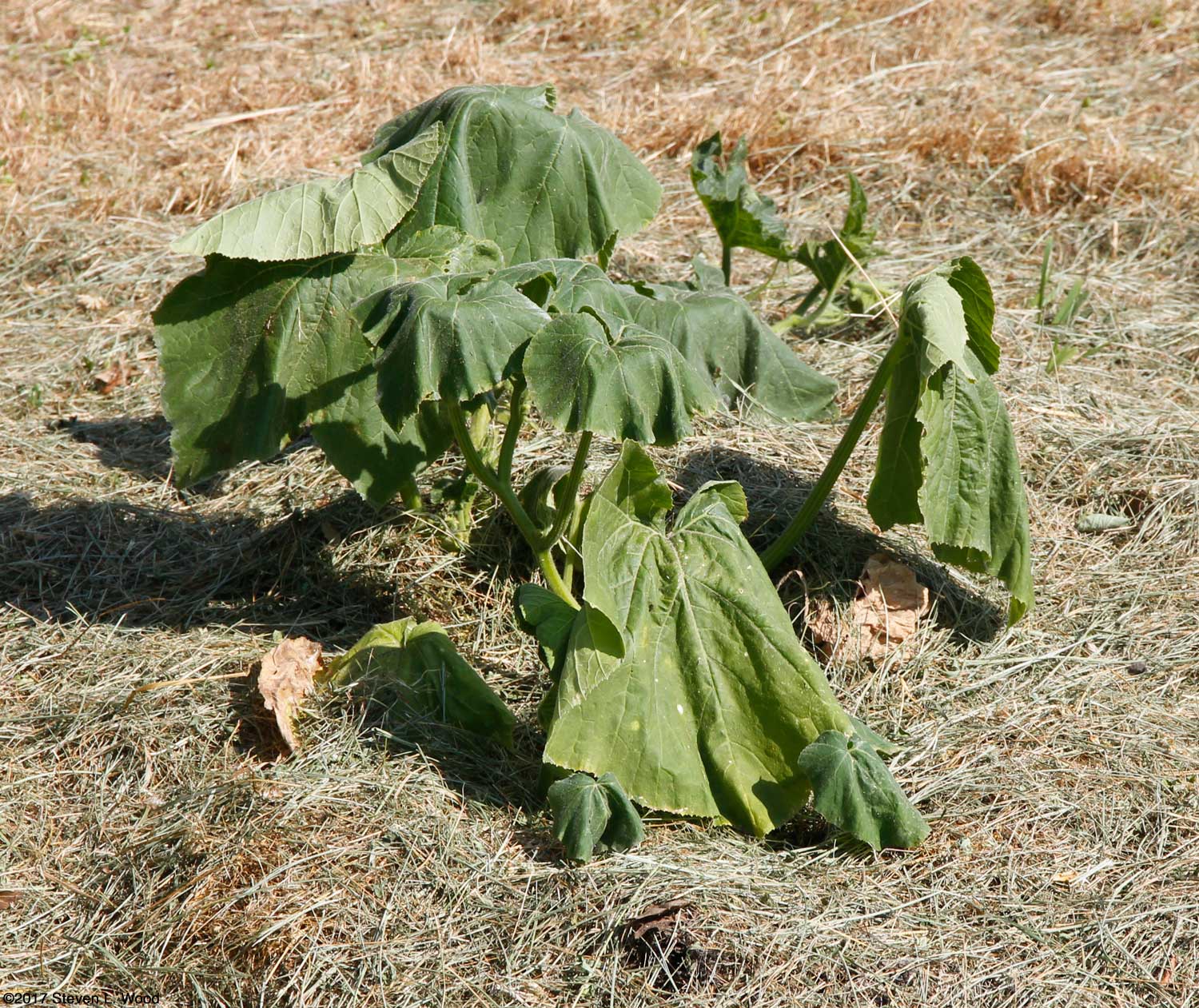
I generally just grow things we really like, so there are some good vegetable crops that you just won't read about here on Senior Gardening. I try to advise those new to gardening to grow what they like, although I've been known to grow kohlrabi just because I like how it looks in the garden. We're looking forward to feasting upon tomatoes, peppers, carrots, onions, garlic, more peas, kale, cucumbers, green and lima beans, sweet corn, sweet potatoes, potatoes, butternut squash, cantaloupe, and watermelon from our garden plots. Our transplanted pumpkins are currently struggling to survive. And we lost several cucumber plants from Friday's transplanting. I direct seeded cucumber seed to replace the lost transplants, and may have to direct seed more pumpkins. With each gardening season, there are successes and failures. As gardeners, we learn from both our successes and failures, but almost always enjoy the experience. With a lot of the world and even parts of our country underfed, we're truly blessed to have such a bounty each summer.
I put new mulch around our row of cucumbers early this morning. Some places, I was able to run the mulch into the row and around plants. But we lost several plants, so I didn't mulch areas I'd direct seeded to replace the lost plants. I also have a couple of deep sixpack inserts seeded to cucumbers started on our back porch, just in case. After mulching, the row got another thorough watering. As it turned out, we got a brief shower this afternoon. Only 0.15" of rain fell, the first precipitation we've received this month, but that's certainly better than nothing.
Zinnia seed isn't terribly expensive, and I've built up our supply of saved seed over the years. I had a quart and a half of saved seed to work with, although it was about three-fourths petals and one-fourth seed. I'm not all that great at cleaning zinnia seed. Each season we grow zinnias, I add a packet or two of inexpensive zinnia seed to add some genetic diversity to the seed we'll be saving in the fall.
Finishing my morning gardening before eleven, I came inside to find (online) that the heat index was already pushing a hundred. Note that a lot of gardening sites recommend against mulching under pumpkins and squash. Squash bugs, the bane of squash here in the midwest, love to hide in the mulch. We use some strong chemicals to control the squash bugs, as nothing else seems to work for us. But if you're going to grow yellow squash or pumpkins organically, I'd recommend doing without the mulch and just weeding and watering a bit more. We lost two tomato plants in the long row I put in the East Garden over the last two weeks. I'd already replaced one of the plants once, but since donated our extra tomato and pepper plants to the local food bank. So I shopped for tomato plants at Walmart today, fortunately finding the Better Boy variety I'd lost, but not finding any Bella Rosa, the other variety that died. I settled on a Celebrity plant, a variety we've grown and liked in the past. Our current weather forecast shows a fair chance of pop-up thundershowers for the rest of the week. We really need a thorough, soaking rain, though. Until we get one, showers or not, I'll be pumping and hauling water to our various garden plots.
Wednesday, June 14, 2017 - Yellow Squash After some wonderful harvests of spring, cool weather crops, we're at an in between time. The only thing I pick each day is yellow squash. That's not a bad thing, as we're getting beautiful squash. But it's a far cry from about a month ago when we were picking peas and broccoli every day with some lettuce and spinach as well.
Our yellow squash varieties are the same we've grown for several years, Slick Pik and Saffron. The hybrid Slick Pik produces slender squash, but the plants seem to wear themselves out fairly quickly. The open pollinated Saffron variety produces a fatter squash, and the plants can last all summer...if you can keep the squash bugs off of them. I have my packet of Slick Pik seed laid out in the kitchen to remind me to start the first of what will probably be three or four succession planted Slick Piks. Both varieties are bush squash, but don't let that description fool you. While they don't runner like butternuts or melons, a couple of the squash planted together in a hill will often spread to over six feet in diameter! We plant ours at the ends of our melon rows. And fortunately, neither the deer nor the raccoons that so plague our melons and sweet corn have much of a taste for squash. If you've not grown squash in your garden before, they're a good investment for the time and space they take. Other than powdery mildew and insects such as squash bugs, squash are pretty trouble free. Some types vine (sometimes vigorously like butternuts), and others are bush. Finding something you really like is the trick. Their growth requirements are about the same as melons, although squash seem to tolerate poor soil a good bit better than melons. Weather Our extended weather forecast remains about what it has been. Temperatures are expected to approach or exceed 90° F for the next ten days, with a chance of pop-up thundershowers most afternoons. We had a fast moving thundershower move through this afternoon, dropping 0.38 inches of rain. Like yesterday, that's not the gentle, day long soaking rain we really need, but it helps. On the negative side, I noticed this morning while replacing some tomato plants in our East Garden that the soil there was too wet to till. I have a couple of weedy patches I need to turn down before mulching them, but the tilling will just have to wait. I'm finding that the daily high temperatures this year wear me out quicker than in the past. I'm trying to garden early and late to avoid the consequences of staying out in the sun too long. I'm also taking a lot more midday naps!
We had a great day for working in the garden today. It was mostly cloudy and fairly cool this morning (80 at noon) with a strong breeze. I took advantage of the good working conditions to take out our row of broccoli plants. While I cut a lot of sideshoots (and our last cauliflower), they may turn out to be bitter from the hot weather we've had. Until today, we hadn't gotten as many sideshoots as usual because of our dry weather. The few showers we had this week triggered the plants to put on a good many. Sadly, it's a bit late to let the plants remain and continue producing.
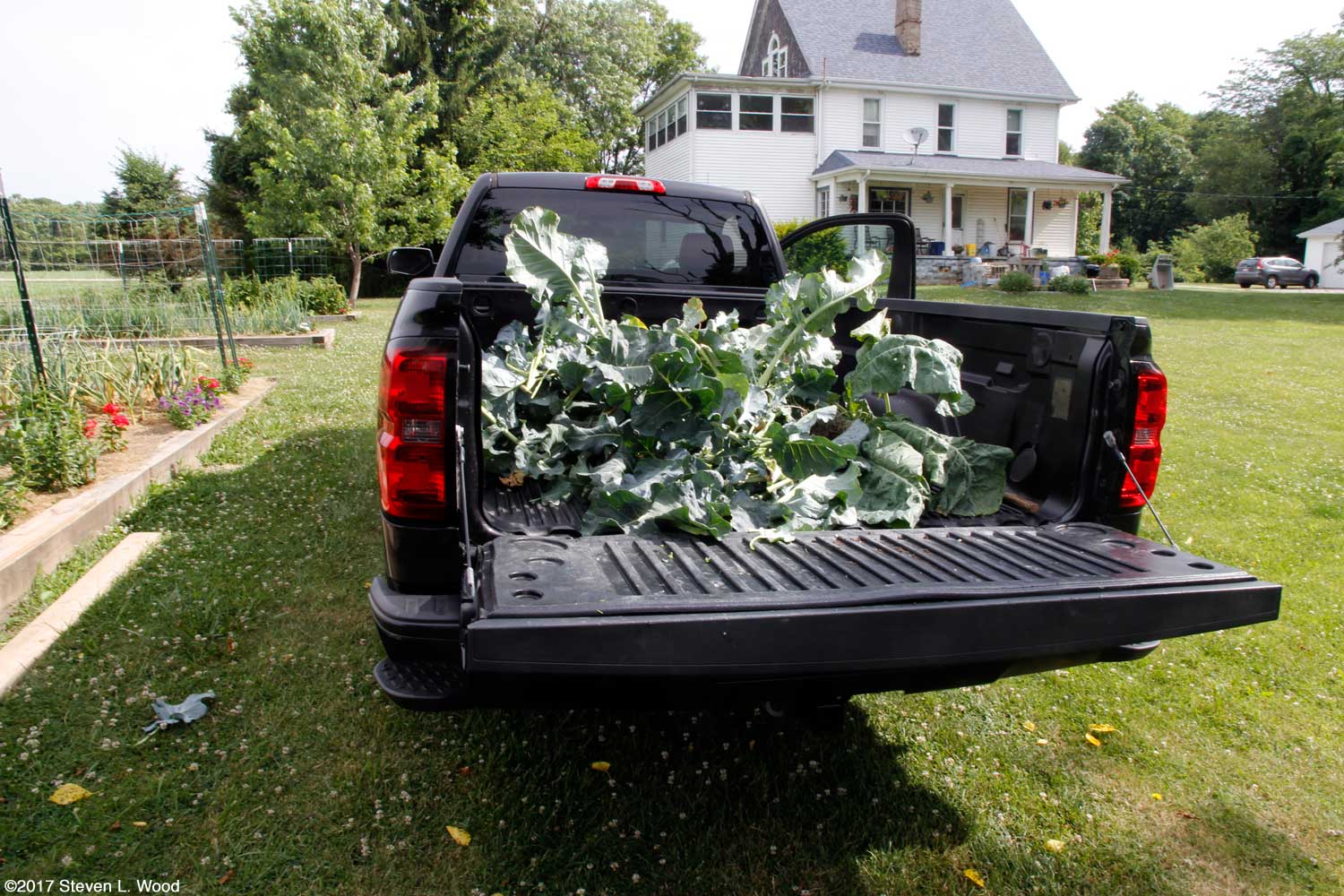
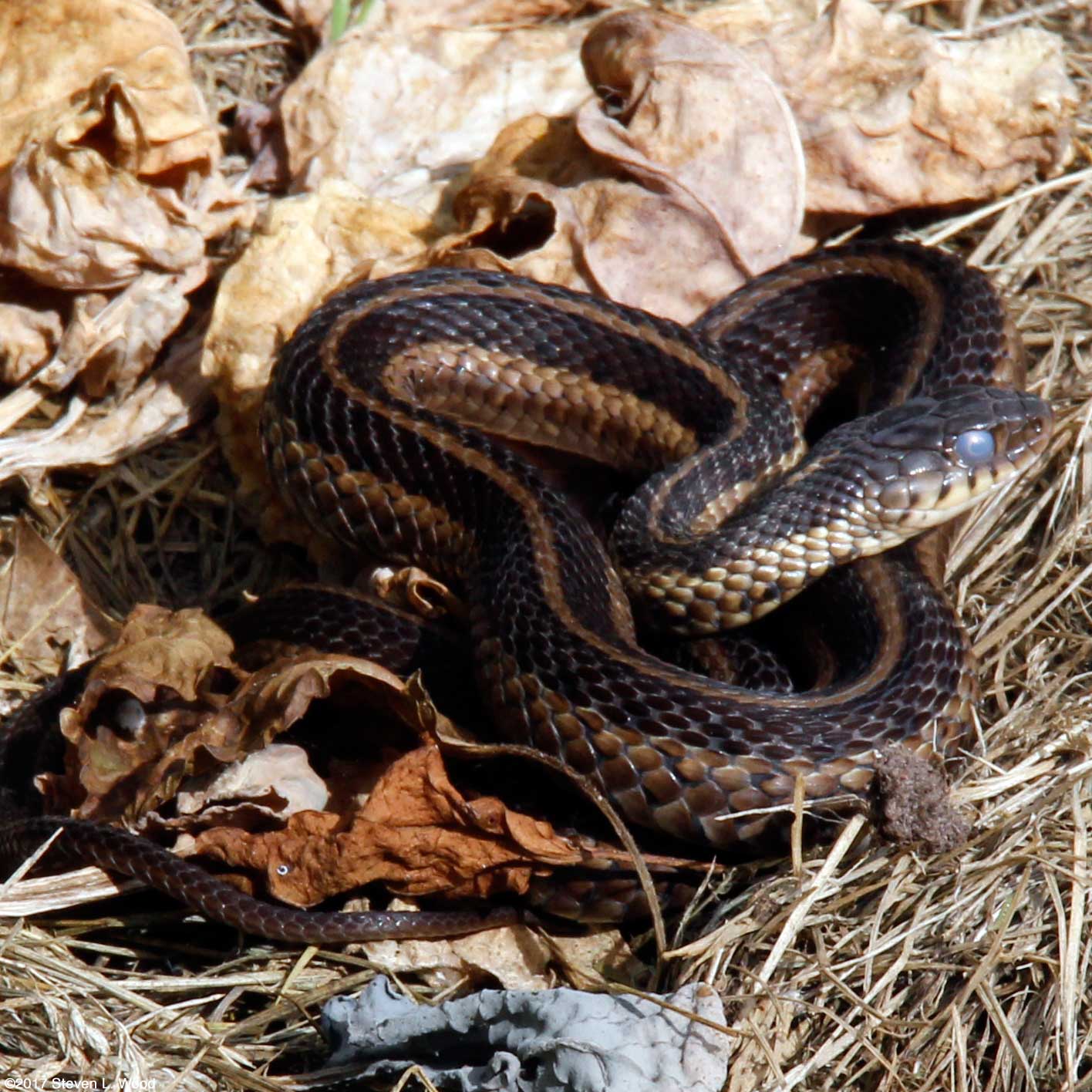
The broccoli had shaded the row of Walla Walla onions I'd planted a foot off the broccoli row. Hopefully, the onions will now bulb and produce some good sweet onions. While pulling the broccoli plants, a garter snake had to keep moving to stay under cover. We've had lots of garter snakes under our broccoli, cauliflower, and kale over the years. They seem to like the hunting there and certainly do no harm. I hauled all the pulled brassica plants to our compost pile in our pickup truck. I chopped the leaves and stems onto the compost pile, but threw the base of each plant on our burn pile. That part of a broccoli plant takes a long time to decompose.
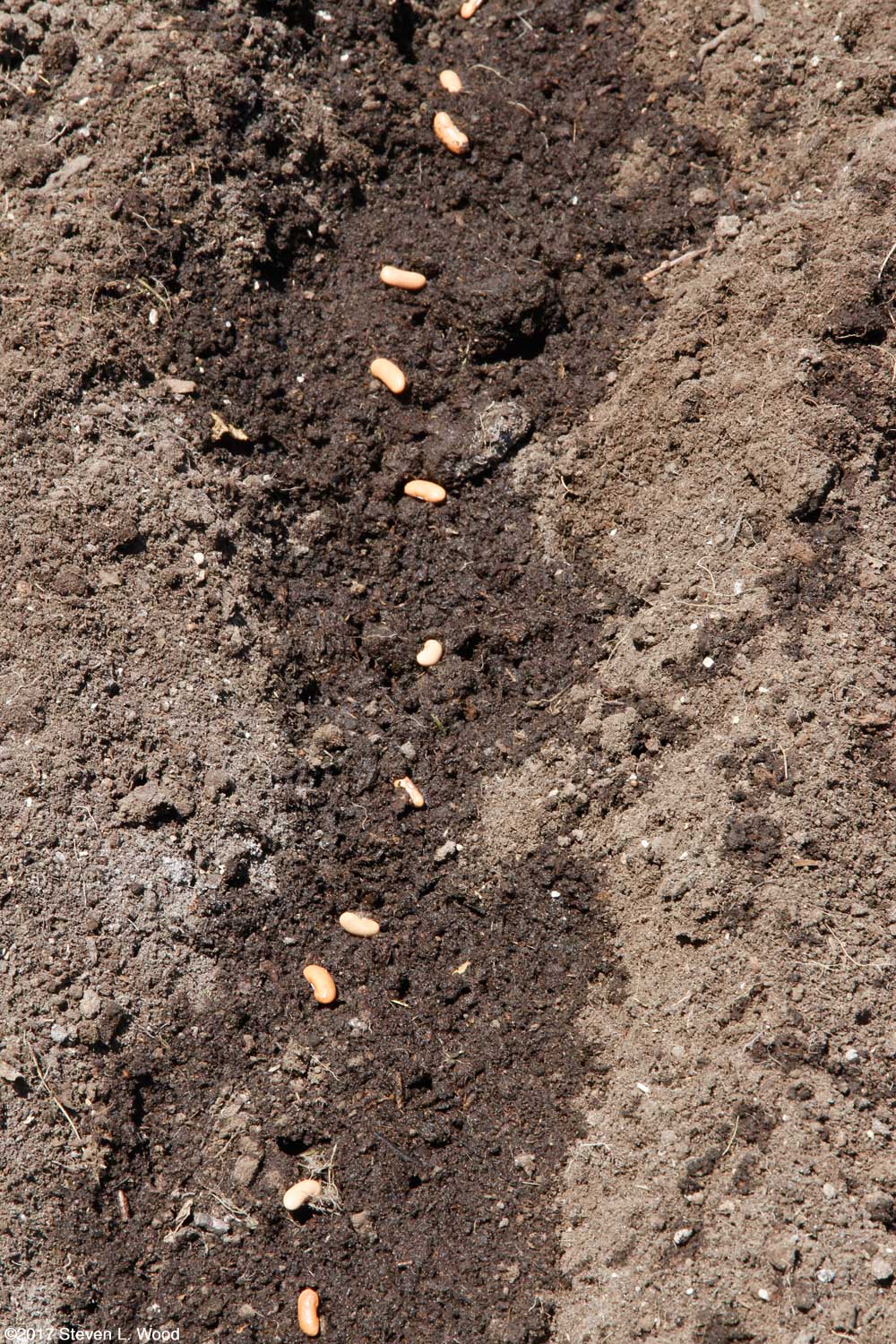
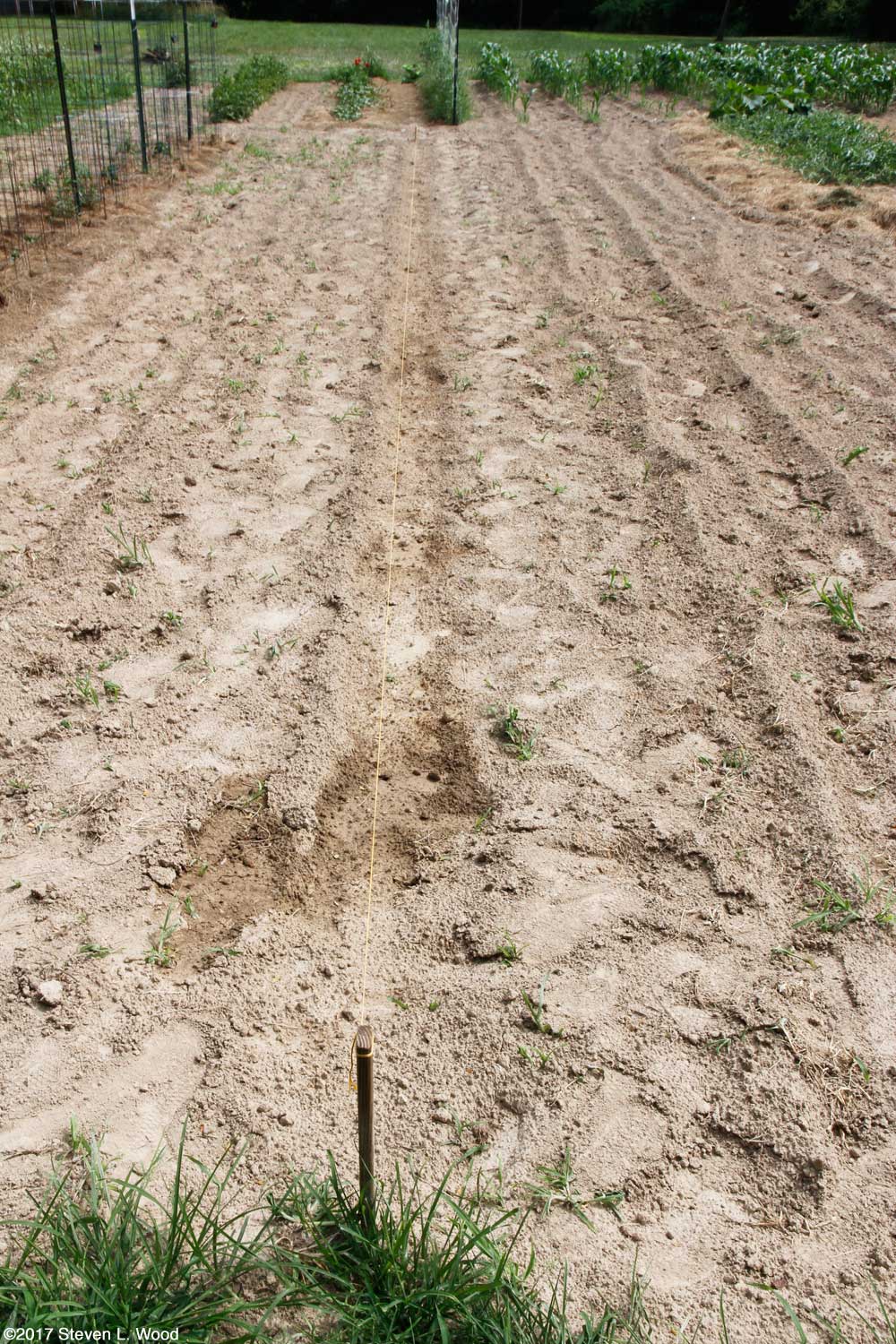
When I finished the initial pass with the tiller, I marked a 55' row next to our tomatoes and peppers and tilled in a bit of lime and 12-12-12 fertilizer. I staked and stringed the row, dug a furrow with a hoe, and watered the furrow. Then I seeded our last "spring planted crop," kidney beans. We probably don't need a fifty-five foot row of kidney beans, but I had the time, space, and seed. Note that watering the furrow is a neat trick to give seeds a chance to germinate faster than weed seed on the soil surface. It works pretty well when you get a bit of rain in a day or so after seeding. It's supposed to rain here tonight. But, if you don't get rain and can't regularly water the planting, your seed may start to germinate but die once the little soil moisture you've supplied with furrow watering dries out. In other words, it's a gamble. While working in the East Garden, I was pleased to see that the zinnias I seeded on Tuesday were beginning to emerge. Not so pleasing was the discovery of lots of squash bug eggs on the bottom sides of the leaves on our yellow squash plants. The yellow squash, our butternuts, and our pumpkin plants all got a good dose of a nasty chemical cocktail to suppress the bugs. Before spraying, I rubbed off all the egg clusters I could find, but I'll have to be watchful, as I'm sure I missed a few egg clusters. Our 40' x 80' planting of buckwheat is "in the boot." I seeded the buckwheat on May 23. This is about the fastest I've ever seen buckwheat mature, but I'm growing it earlier this year than I have before.
When I was in town this week, I picked up five pounds of buckwheat seed and some valuable advice. I asked the farm supply vendor about growing buckwheat after buckwheat, my plan for the rotated out portion of our East Garden for this year. He laughed and said he'd grown three straight crops of buckwheat for turndown in a single season! He also confirmed that I could let the current stand of buckwheat go to seed to get a second crop.
In the last few days, I finally started a pot of Slick Pik yellow squash for when our current plant gives out. While our Saffron yellow squash plants can last most of the growing season...if I can keep the squash bugs off of them...the Slick Piks just plain wear out after producing a heavy crop. So, I start a succession of Slick Piks to keep us in yellow squash all summer long. I also got around to cleaning up the flowerbeds on the east side of our house. I'd ignored the seedling weeds growing in the flowerbed until they'd become pretty well established, almost overgrowing the daisies, hostas, and petunias I'd planted there. It took about an hour to rescue the Silver Princess In the evening, I worked on the other side of the air conditioning unit that now divides the bed. I didn't get the whole bed done, but I did save four hostas I'd grown from seed and the petunias I'd transplanted early in the season. I lost one hosta, however, to dog digging, but I have a replacement for it growing on the back porch. I still need to weed around and prune the one rose bush in the bed. Other than crab grass, the most prevalent weed in the second section weeded were volunteer petunias! We've grown petunias in the bed for years. Apparently, the soil is lousy with dropped petunia seed. I think I need to start saving petunia seed. My tool of choice for such weeding remains the CobraHead Weeder and Cultivator I got as a promotional freebie from the company a few years ago. It's an absolute dandy for tight weeding sessions (as long as you have a steady hand).
Monday, June 19, 2017 - Not Tonight Deer!
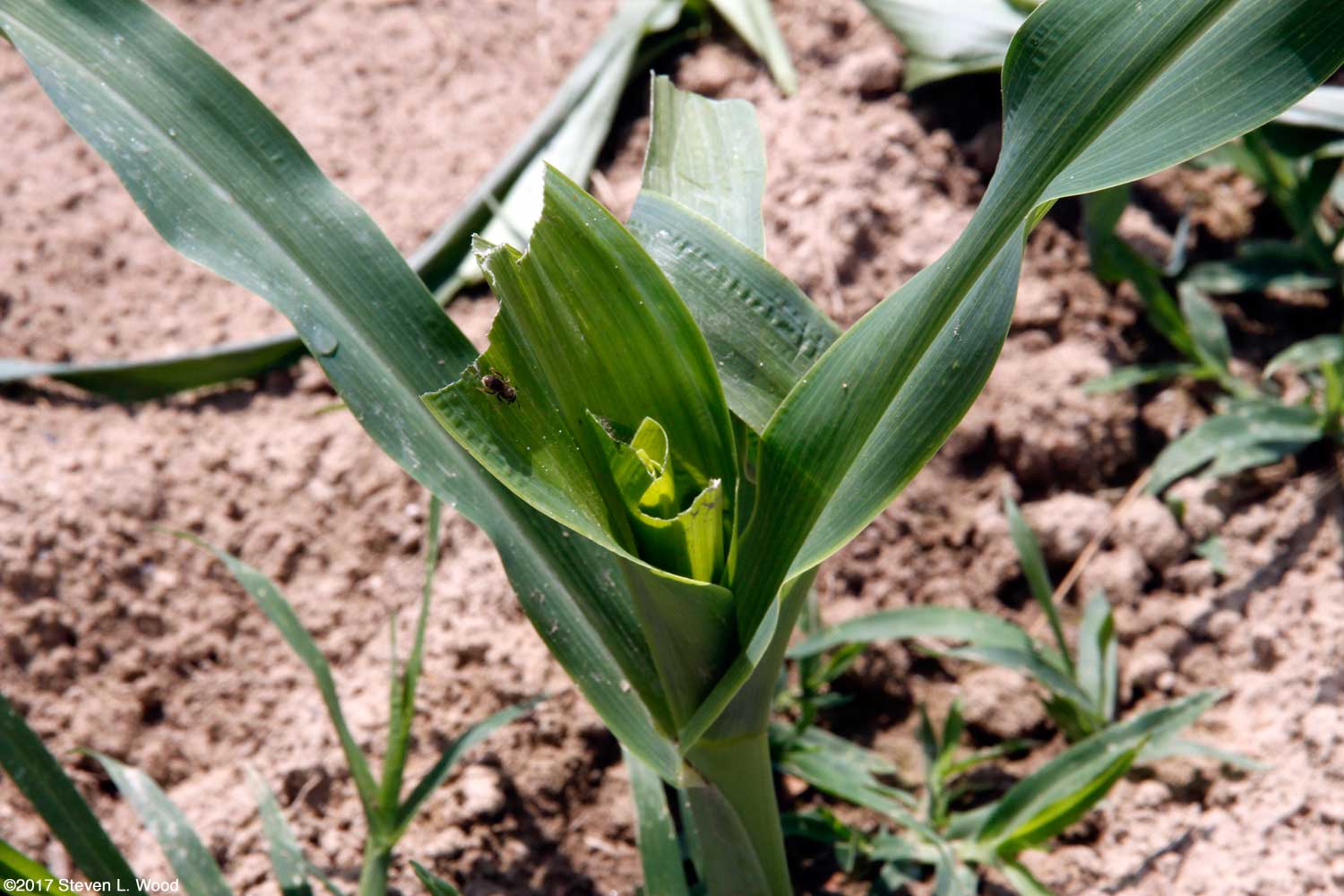
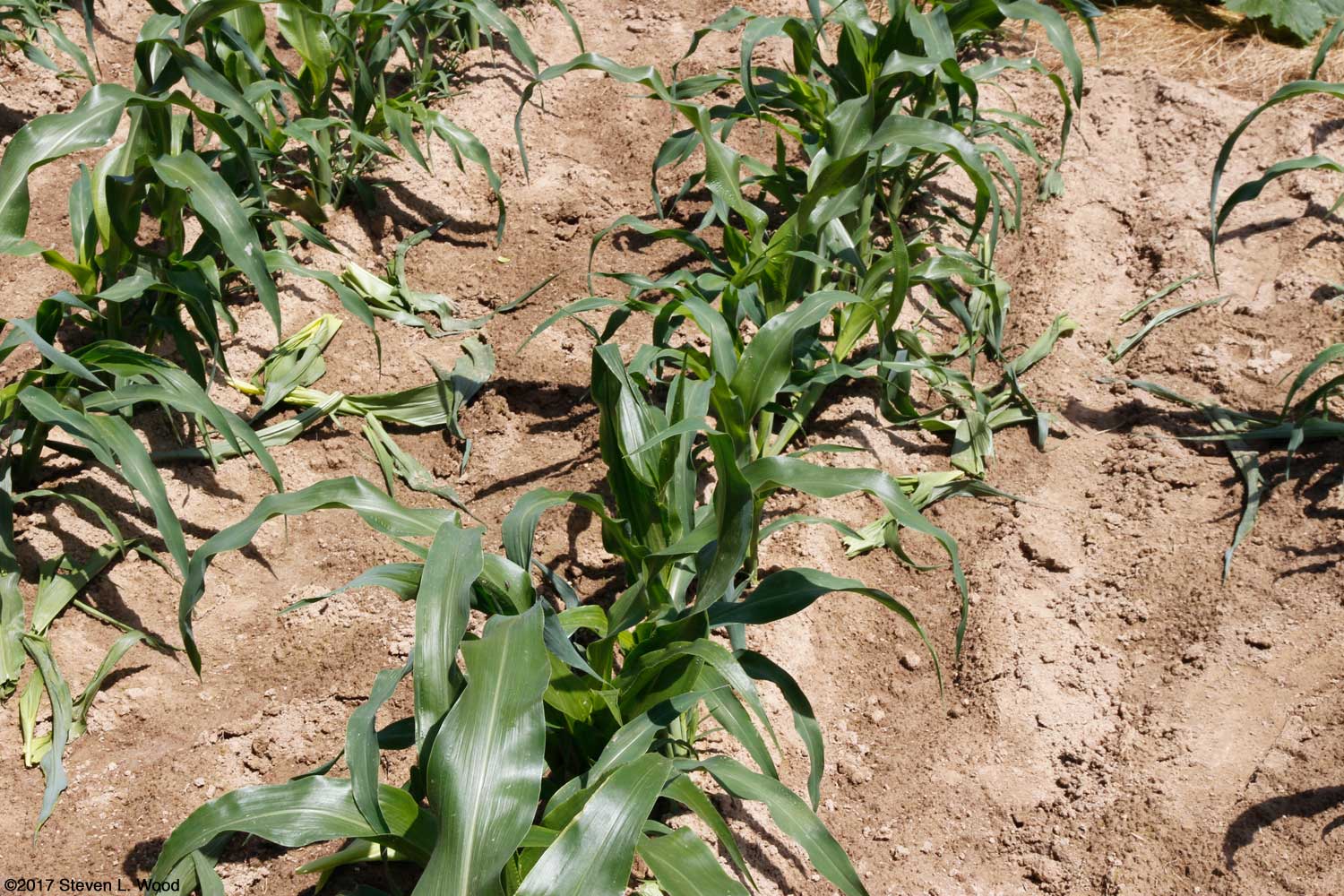
Overnight, a deer or two finally found this year's planting of sweet corn. With field corn planted around us, it took the deer a while to find their favorite. While they bit off a plant or two, our sweet corn isn't tasseling as yet, and the deer love the tassels, so they didn't do much damage. I'd considered putting a hot wire around our East Garden this year, but couldn't bring myself to go to that expense. Instead, we've been spreading pieces of Irish Spring bar soap around the East Garden. It's said to deter deer, although what I'd spread a couple of weeks ago had apparently lost its repellent power. I refreshed the soap on the ground and also hung two bags of it from our Sugar Snap pea trellis. I also broke out our Nite Guard Solar Predator Control Lights Hopefully, some homemade Not Tonight Deer will save our crop. Several weeks ago, I mixed together eighteen beaten eggs, white pepper, habanera sauce, and buttermilk. I strained the mixture with some water into two old gallon jugs and set them outside to cure (rot). The two main ingredients of the commercial Not Tonight Deer were rotten eggs and white pepper. I added the other stuff from some online recipes. I strained a cup of the evil smelling mixture into my garden sprayer and added enough water to make a gallon of spray. I then heavily doused our sweet corn with the stuff that smells like the old commercial product that the deer seemed to hate.
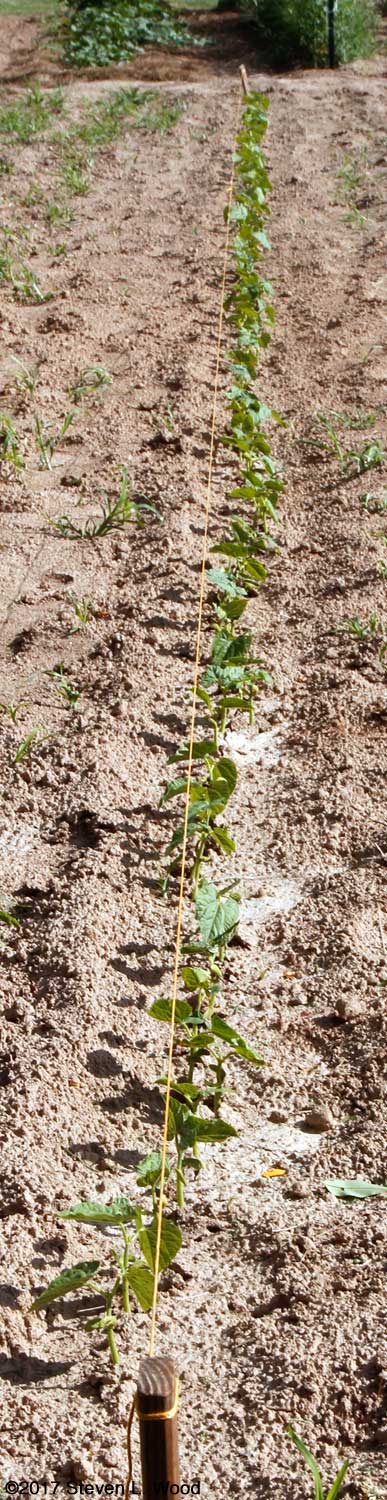
After pulling back the mulch from the planting areas, I spread a good bit of lime and 12-12-12 fertilizer over them. I thoroughly hoed the areas to work in the soil amendments and loosen the soil. Then I made furrows and watered them before spreading and then covering the seed. The kale seed went into a rather shallow furrow, as the seed, like most brassicas, is very small. The green bean seed went in a bit deeper. One of our challenges with Succession Plantings is getting seed to germinate in hot, dry conditions. Without any rain, I'll need to water both plantings daily until the plants emerge. And even with regular watering, we have trouble getting kale to come up at this time of year.
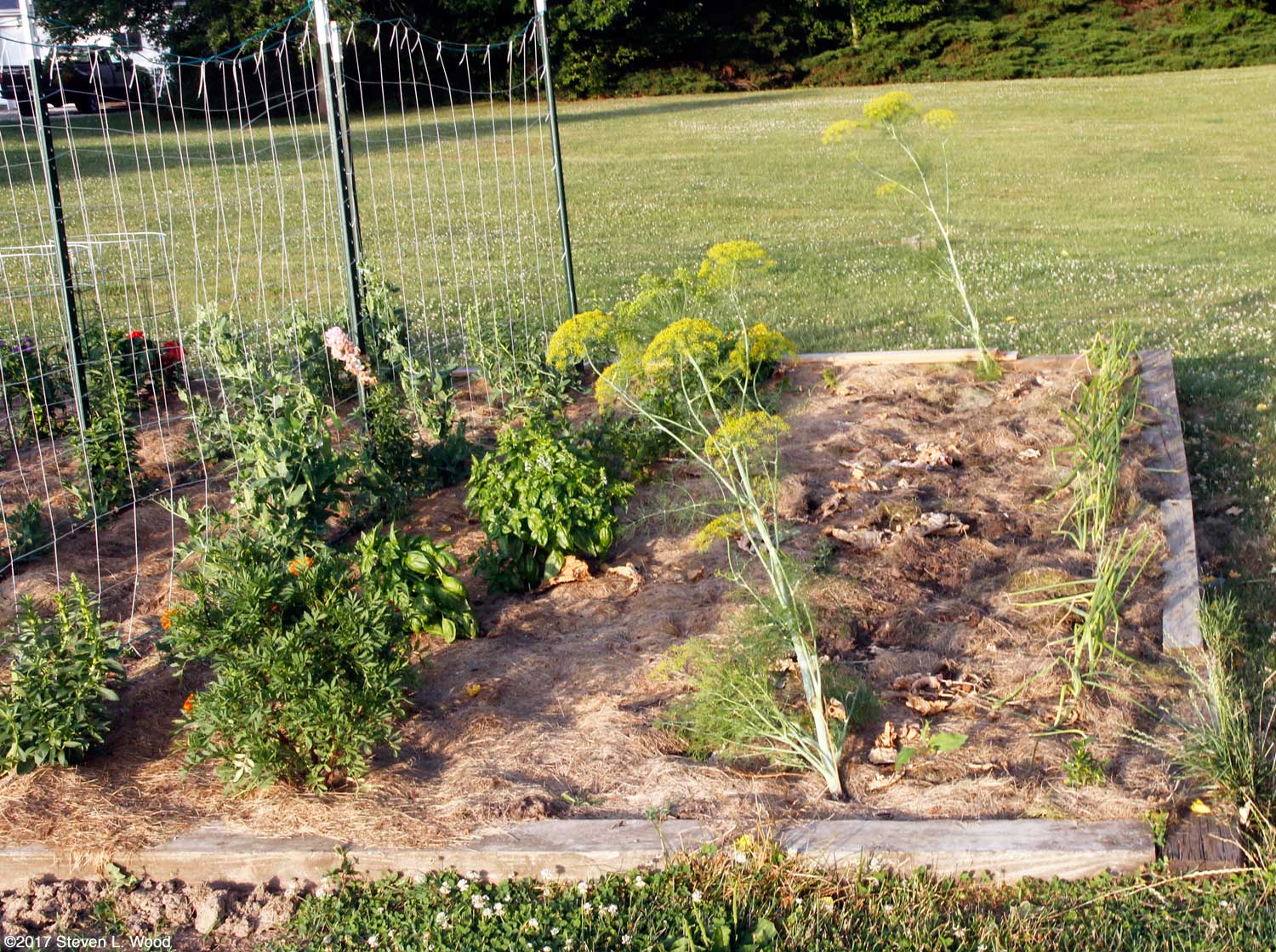
I'd originally planned to put in two rows of green beans. But in one of those hasty decisions one makes to regret, I put in a row of basil and parsley when I saw I had the room. Unfortunately, with the extra row of herbs, I only had room for one row of green beans in this area. The dill plants at either end of the planted green bean row will come out before they go to seed. I let some dill go to seed last year, and volunteer dill plants have become a major, although aromatic, weed in our main raised bed this year. And as you can see from the image above, we had another very nice day today to be outside and gardening. Tuesday, June 20, 2017 - Summer Solstice
For gardeners, the change in day length, at first unnoticeable, will mean gradually less evening hours of light to work in the garden. Shortening day length also has to be factored into when or whether to make succession plantings. About ten days have to be added to varieties' days-to-maturity figures that will mature in the shortening day length of fall. For those with home flocks, artificial light will need to be used starting sometime in August to provide at least fourteen hours of light per day to keep hens laying well. I didn't do any gardening today, other than watering our newly seeded kale and green beans. I also did something I should have done yesterday, laying walking boards over the newly planted areas. Doing so helps conserve soil moisture and also denies light to weeds germinating on the soil surface.
I was pleased to see that several of our hills of cantaloupe had set melons on the vines. I also observed some vine damage. A little inspection revealed spotted cucumber beetles. Once the sun sets this evening, I'll need to spray the vines with an insecticide to kill the beetles and a fungicide to ward off the plant diseases the beetles often transmit. The image at right is of Diplomat honeydew melons. Our honeydews often are our first melon plants to set and ripen fruit. That makes them a target for local raccoons. The raccoons often split open the honeydews, but don't eat much of them. I guess they don't like the mild flavor of them. We certainly do.
I saw no new deer damage to our sweet corn today. I'm hoping the varied defenses I set out this week are doing the job. The real tests for deer deterrents comes when the plants tassel and then when they put on ears. Deer will bite off almost all the tassels if allowed to, and of course, they make an absolute mess of the ears.
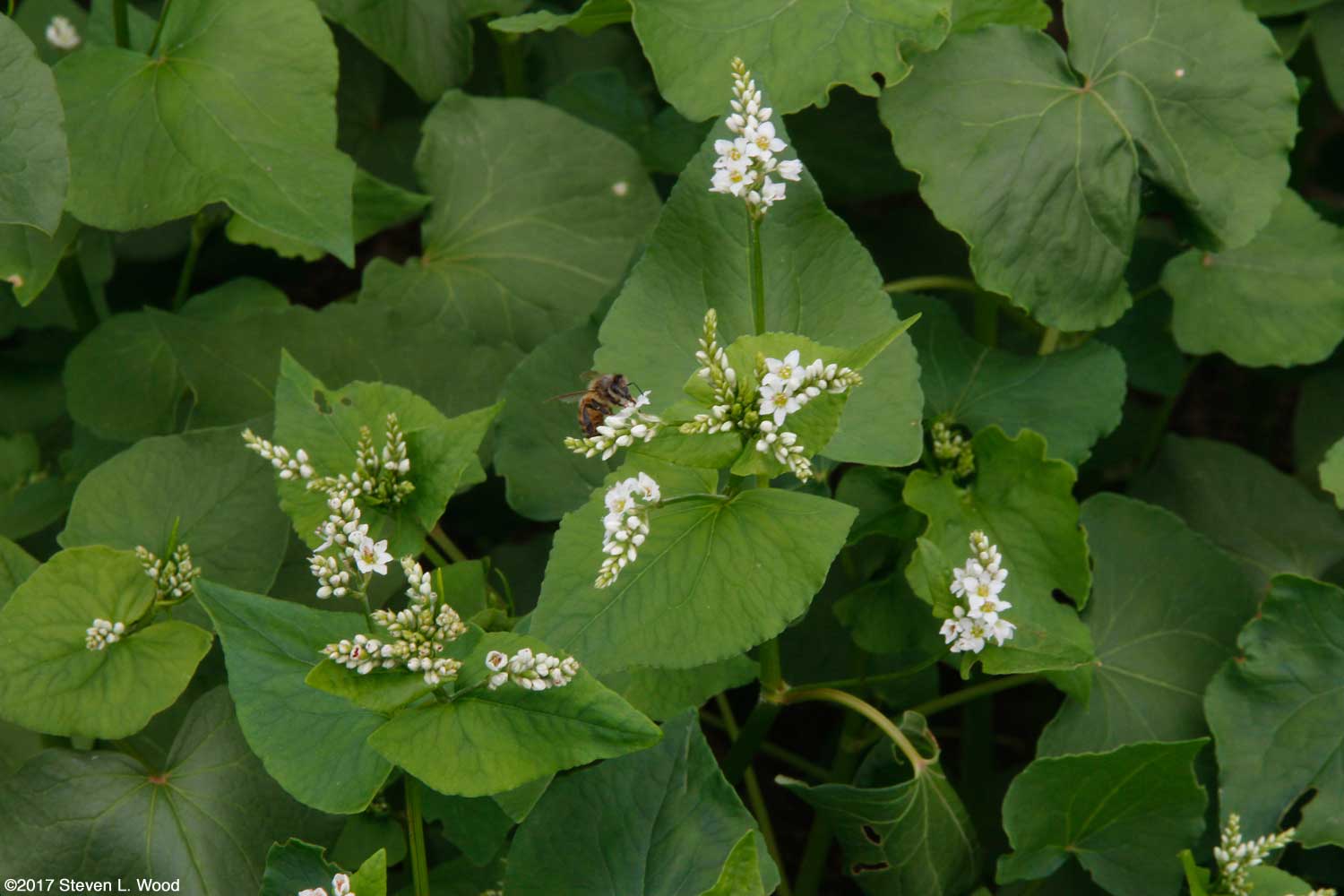
Last week, I'd trimmed back our thyme and oregano in our raised herb garden bed. Unfortunately, I didn't trim down far enough and left a stemmy mess. So today, I cut back both herbs almost to the ground. Another potential item on my gardening to do list got put off, but for good reason. When I looked at our stand of buckwheat this morning, there were lots and lots of honeybees visiting the blooms. We've not seen a lot of honeybees in recent years, so I decided to let them have at least another day at the buckwheat before I turn it under as green manure. Of course, when I went back this afternoon to get a picture of the honeybees on the blooms, none were present. They seem to do the bulk of their work in the morning.
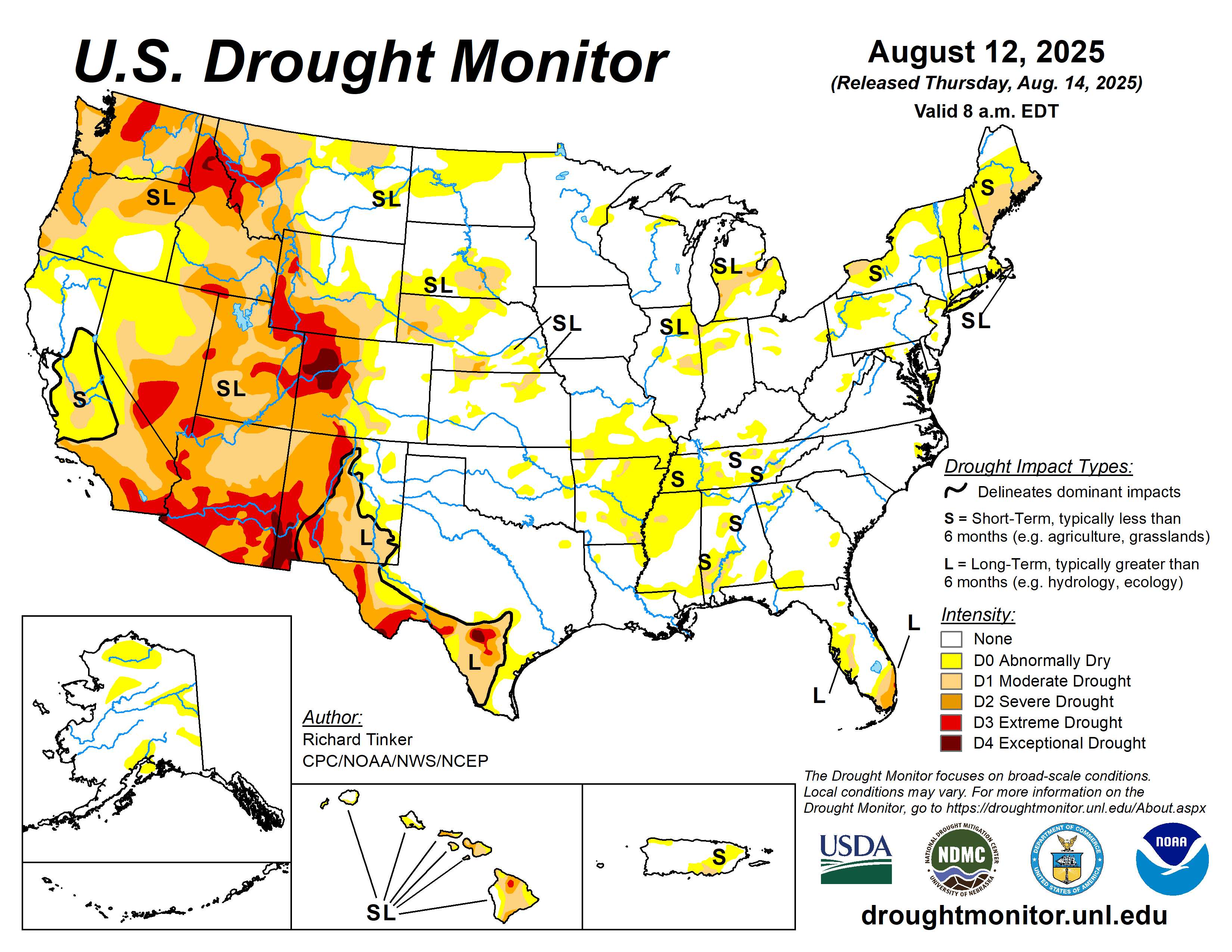
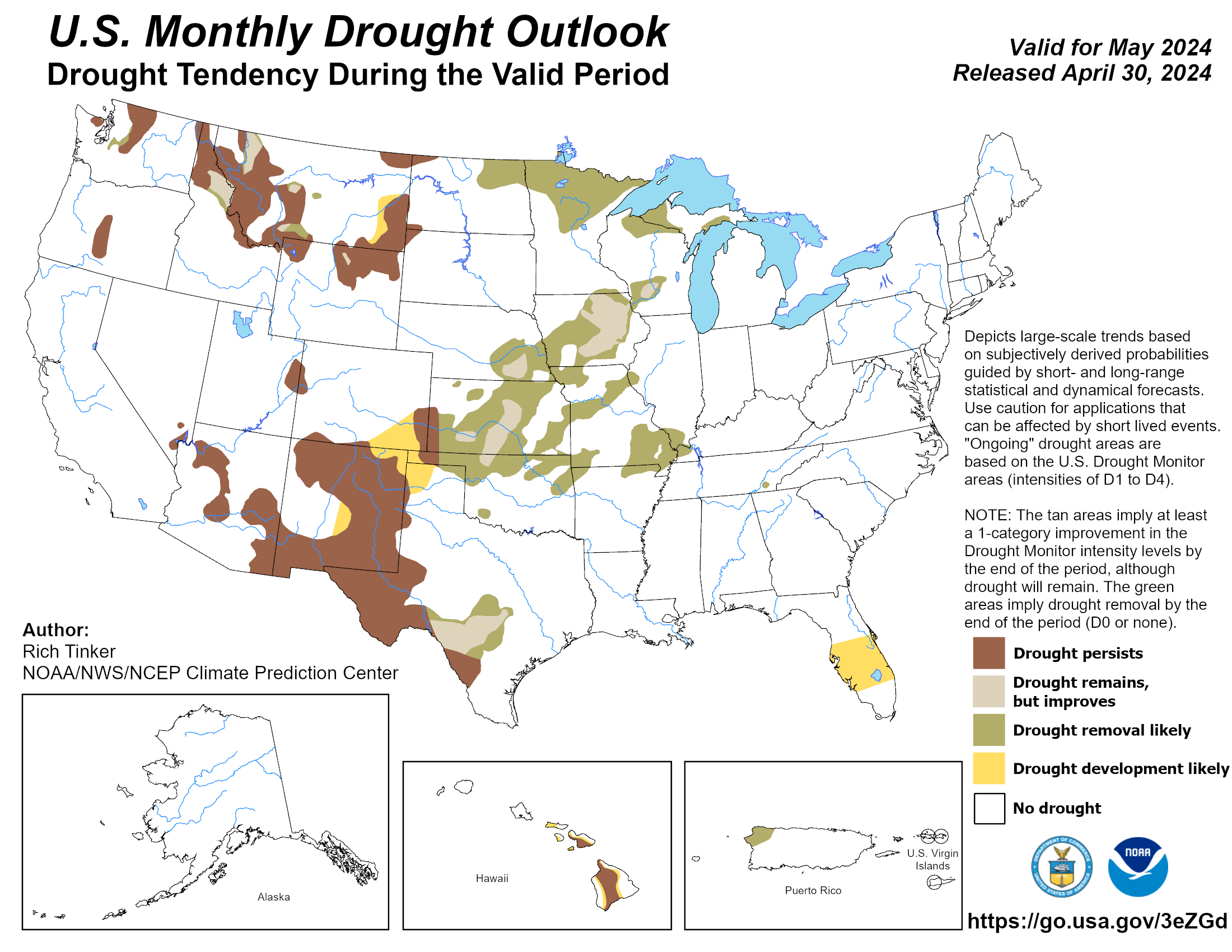
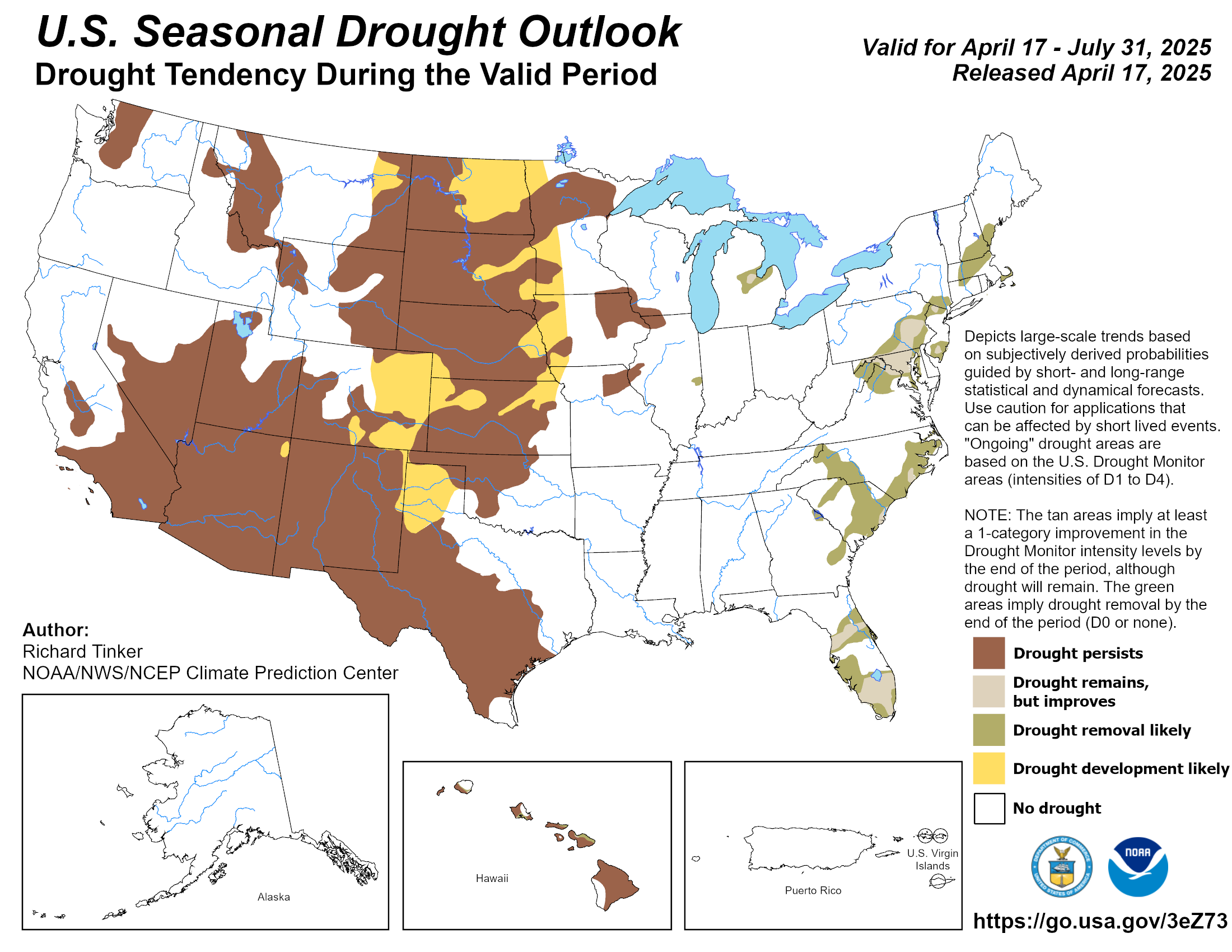
While our previous monthly rainfall totals this year are fairly close to normal, the rainfall hasn't been timely. We've had heavy rains that washed out all the fields around us and long dry spells. This dry weather leading up to what is our normal summer dry spell is a bit unsettling. Fortunately, both of our wells seem to be holding up okay so far. Looking at the U.S Drought Monitor for Indiana, we're now in the "abnormally dry" classification, the first of five levels of drought intensity by the Drought Monitor. We have little chance of rain in our extended forecast until late next week. Nationally, the drought outlook is far better than it has been in the last few years. The west coast is mostly out of its long drought, as well as parts of the south, including sections of Mississippi and Florida.
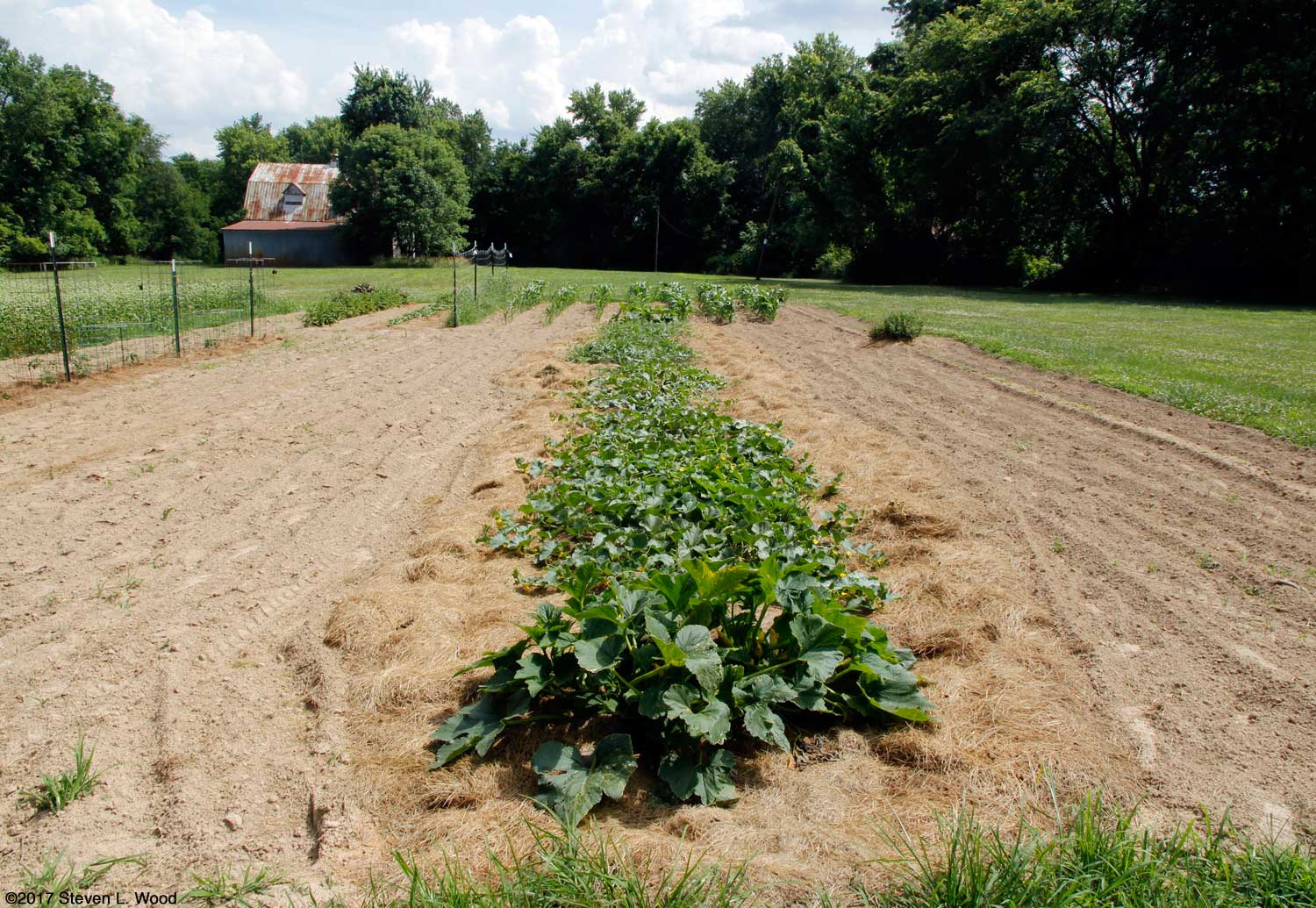
I was really surprised to see that the kidney beans, planted in very dry soil, had emerged. When I went to water our newly seeded kale and green beans, both were showing signs of coming up as well, despite the dry soil conditions. Our row of melons with yellow squash plants on either end continues to do well. They got another round of mulch added around them to stay ahead of the melon vines' quickly expanding runners. The recent invasion by spotted cucumber beetles seems to have done little damage. And in the photo at right, you can just barely see the end of the row of kidney beans on the left and our long row of zinnias on the right. I'm amazed each year that our saved zinnia seed, mostly flower trash mixed with seed, comes up so well. I took a shot at mowing our cover/smother crop of buckwheat today, but I've let it get too tall to either just mow or till under. The buckwheat tends to stick to the underside of the mower deck. And in past years when I've tried to till too tall buckwheat, it bound up the tines on the tiller. I obviously need to figure something out...possibly getting a new weed eater to knock down the buckwheat. If nothing else, I can let it go to seed to re-seed the area. For now, the bees are enjoying all the buckwheat blooms.
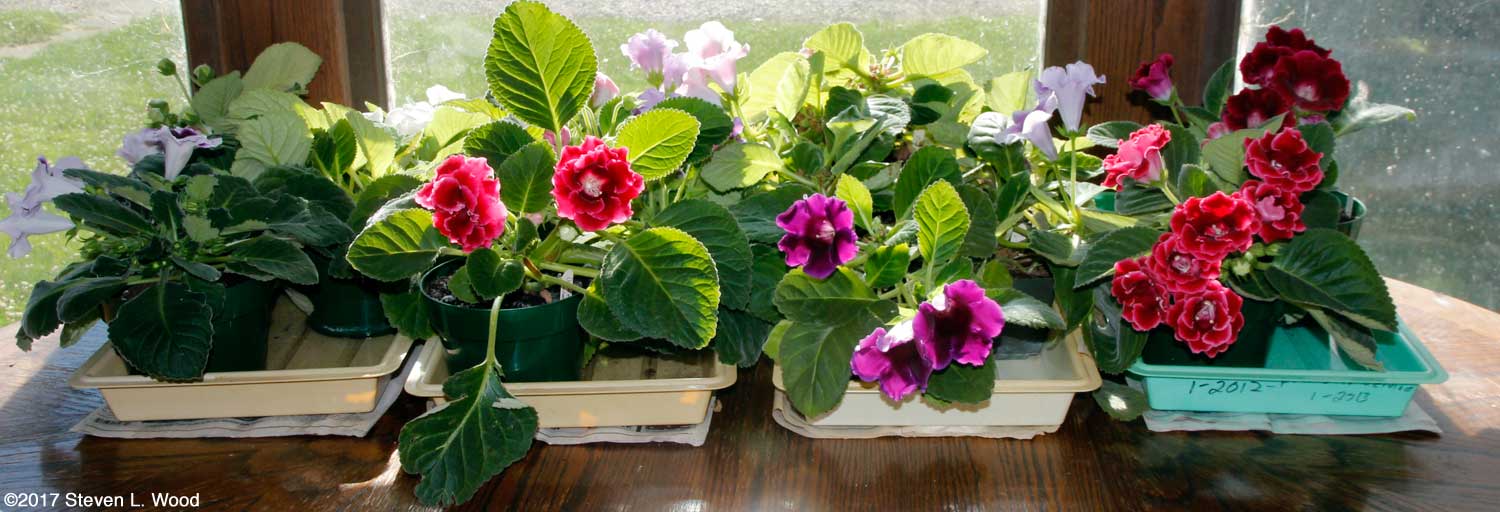
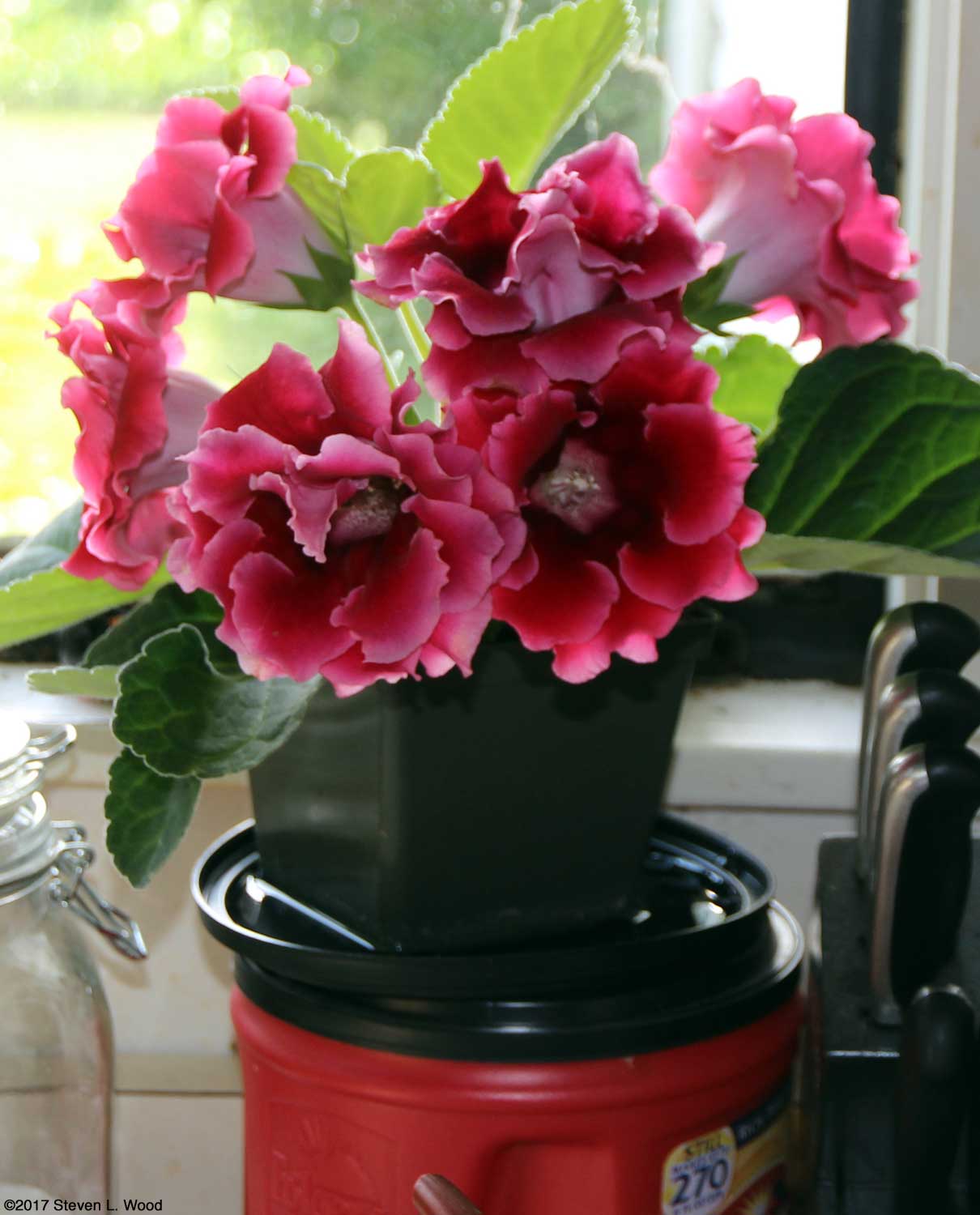
Supper For our otherwise unhealthy supper tonight (grilled brats, fried battered mushrooms), we had healthy steamed carrots, yellow squash, and sugar snap peas all picked from our garden today. Our spring carrots are just about ready to dig. Our sugar snap peas are struggling to draw enough moisture from the soil to fill out their pods. The yellow squash just keep on regularly producing. Gloxinias Despite my best efforts, our gloxinias are all trying to bloom now. About the only way I know of to have gloxinias in bloom during the winter is to start them from seed about this time of year. Since we're just about overrun with gloxinia plants, I won't be starting any more from seed this year.
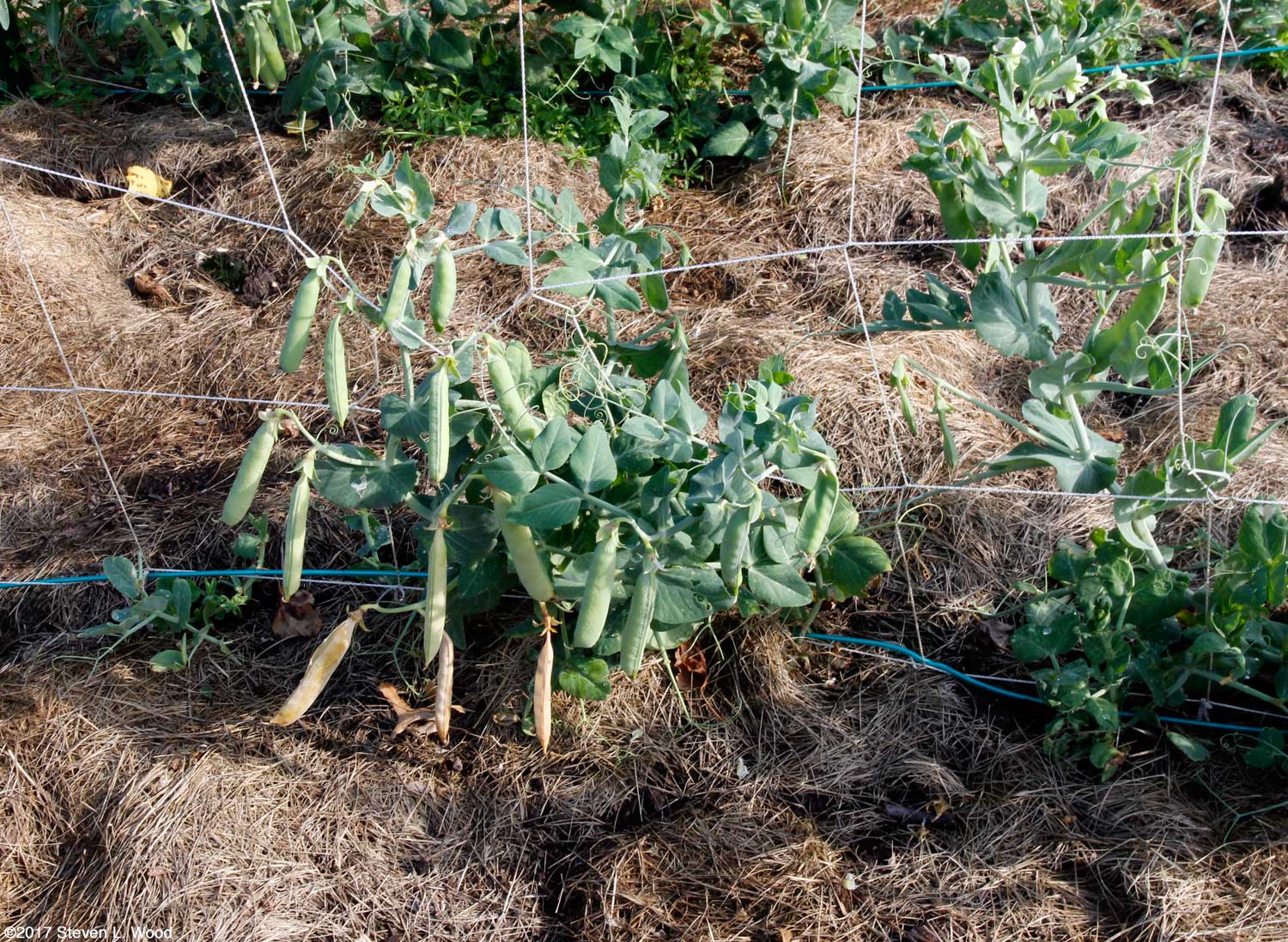
One of our prettier porch plants this year has been a basket of impatiens. Hanging beside a hummingbird feeder, its flowers get an occasional visit from the tiny birds. Keeping a coco basket planter watered can be a challenge. I drop ours every few days into a shallow pan filled with warm water to keep the flowers going. But the planter seems ideal for trailing impatiens, as they do well in it year after year. Besides our sugar snaps, our short peas are now filling out pods. Sadly, germination of the short peas was extremely poor. I'd hoped to have enough to freeze some peas from the vines, but with so few, I'm going to let them all ripen seed for next year's crop. We had a great year last year with all of our pea varieties. This year, we're obviously just so-so. But that's part of gardening. On a positive note, before proofing and putting up this posting, I took a short break to open windows and turn off the air conditioning. It's seventy degrees outside and supposed to get into the fifties tonight. We'll sleep comfortably under the covers tonight with fresh air blowing in the open windows.
I seeded a whole tray, half and half, to broccoli and cauliflower. That's more plants than usual, but because of an error in my garden planning, these plants will have lots of room to grow...in our East Garden plot. We've successfully grown broccoli and cauliflower in the East Garden, but it's more of a challenge with the heavy clay soil there. I started Premium Crop, Goliath, Green Magic, and Umpqua broccoli. The first two varieties are tried and true favorites. The last two are ones I wanted to give another try after poor previous results. For cauliflower, I stayed with our favorite varieties: Amazing; Fremont; and Violet of Sicily. The brassicas are germinating on our plant rack in the basement. The cooler temperatures of the basement are more to the liking of broccoli and cauliflower seed. I tell the specifics of how we start and grow our broccoli, both spring and fall, in our how-to feature story, Growing Great Broccoli and Cauliflower. Spring and Fall Crops Let me add that growing fall crops of things we also grow in the spring can save ones bacon at times. Several years ago, our dogs in pursuit of a mole dug up half of our spring carrot crop. Then heavy rains and standing water rotted most of the rest of the carrots. An excellent harvest of fall carrots that year gave us all the carrots we wanted for winter use. Last spring, all of our broccoli plants buttoned, only putting on golf ball sized heads. A good fall crop filled our freezer with all the broccoli we needed. Some vegetables just do better for us in the fall. Our lettuce season in the spring is far too short due to hot days causing the lettuce to turn bitter and/or bolt early on. We have a much longer fall lettuce season. We get a little longer picking with spinach in the spring, possibly because we start it earlier. But when we can get summer planted spinach seed to germinate well, we often have a long harvest of it in the fall. Johnny's Selected Seeds provides a free Fall-Harvest Planting Calculator spreadsheet that is quite helpful in planning when to start fall crops.
Friday, June 30, 2017 - June Wrap-up
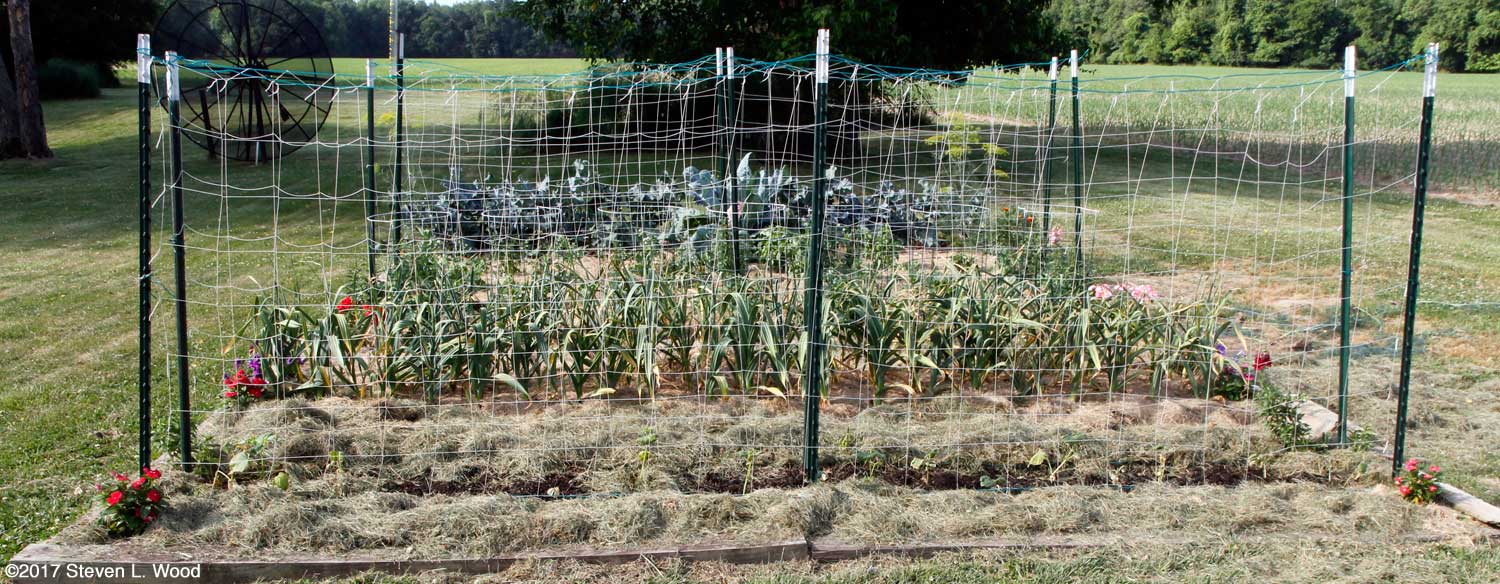
Our garlic was ready for digging, something that often happens in June after a warm winter. I got our garlic just about right this time, as a delay in digging encourages the bulbs to split their covers as they grow, making the garlic unsuitable for long-term storage.
Our six Earlirouge tomato plants in one of our narrow raised beds all have tomatoes on them. The plants appear to be healthy, so we're looking forward to a delicious harvest of slicing and canning tomatoes. The last of our "spring plantings" was a long row (80') of zinnias along the west border of our East Garden and a fairly long row (55') of kidney beans. I moved full speed ahead into succession plantings with a row of green beans replacing our spring brassicas and a short row of kale over what had been our spring lettuce patch. I also started our first replacement yellow squash plant (as our hybrid variety doesn't last all season) and our fall brassicas (broccoli, cauliflower, and cabbage). I also put in a pot of pumpkin transplants just outside our East Garden plot. I start our pumpkins a little late to time them for Halloween Jack O' Lanterns for our grandkids.
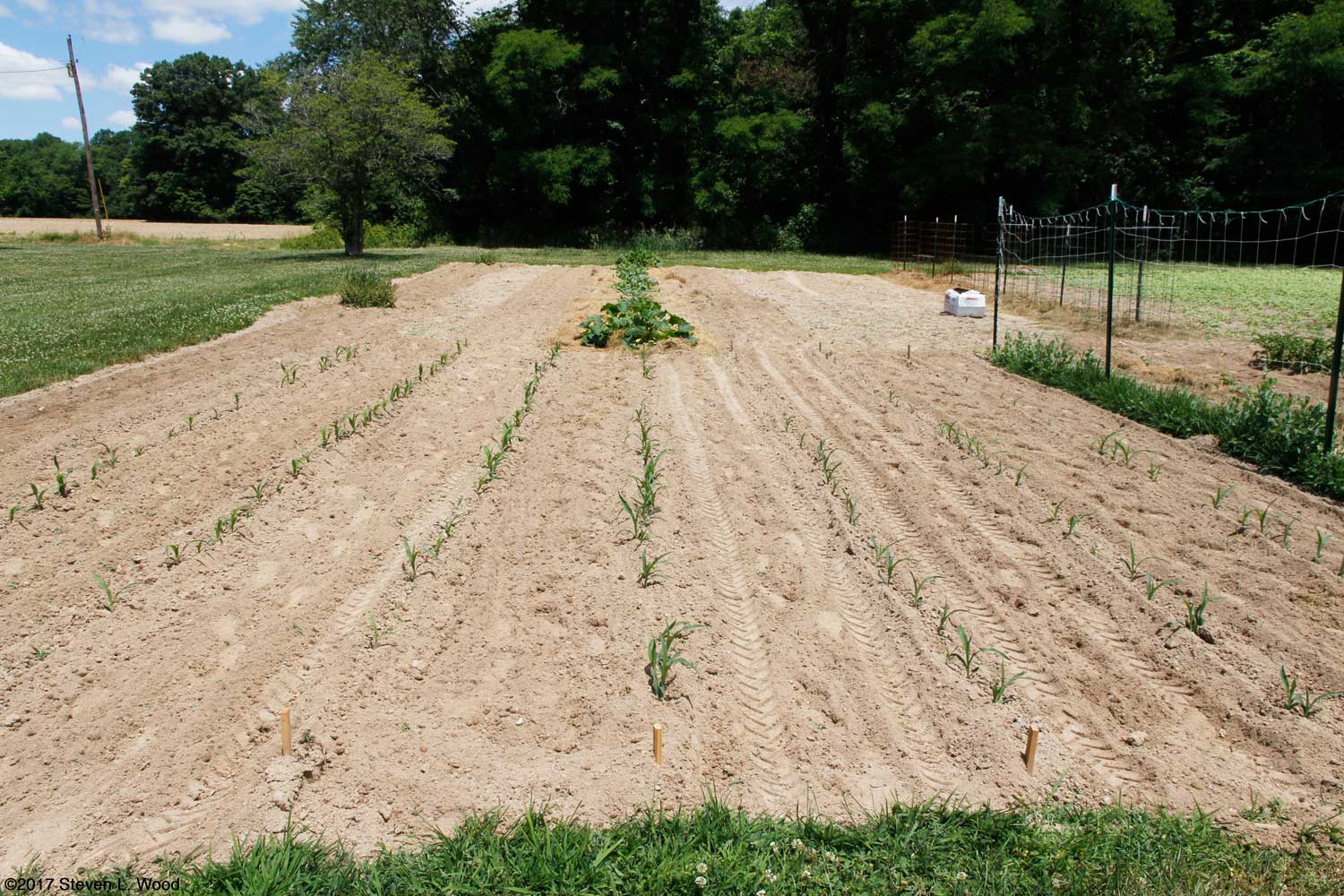
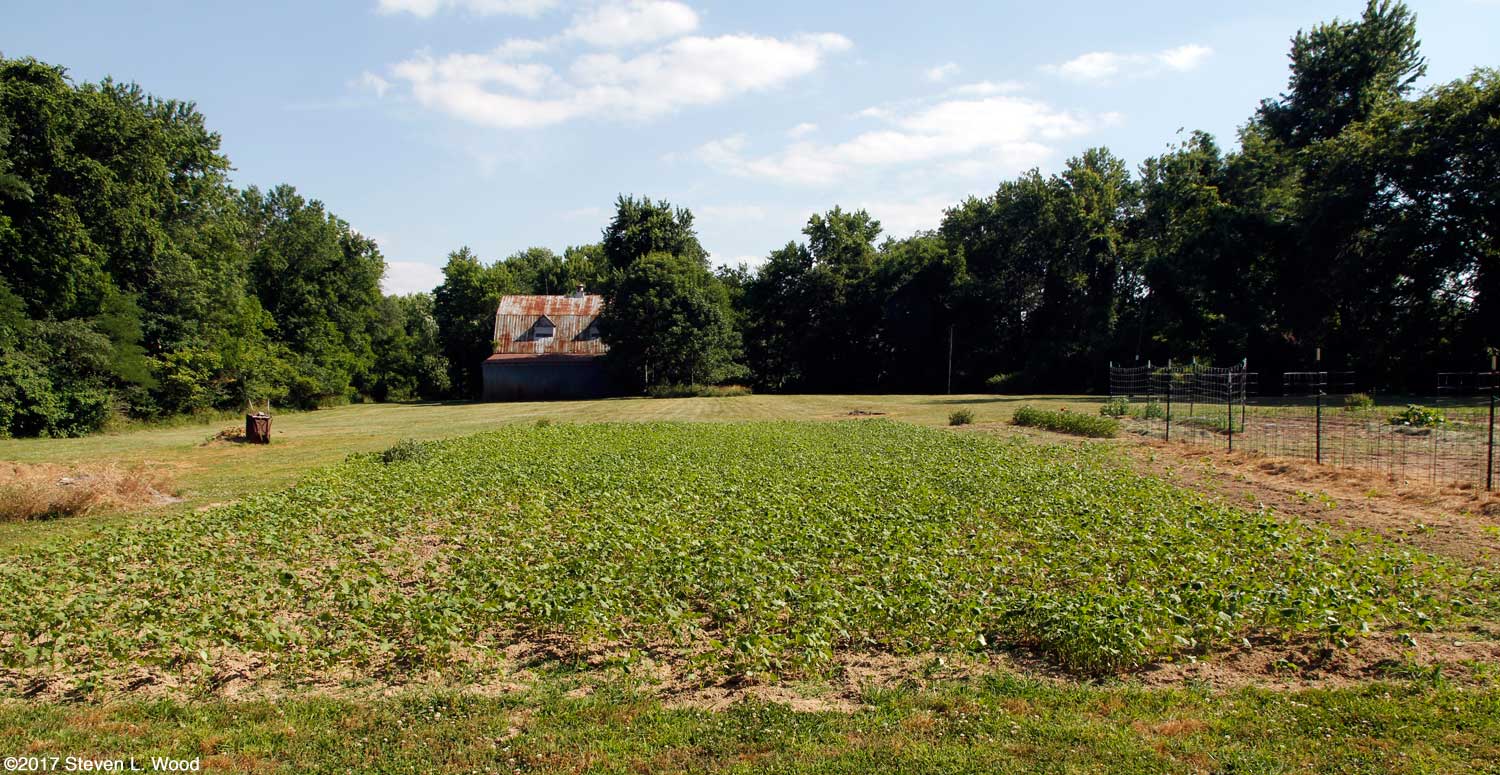
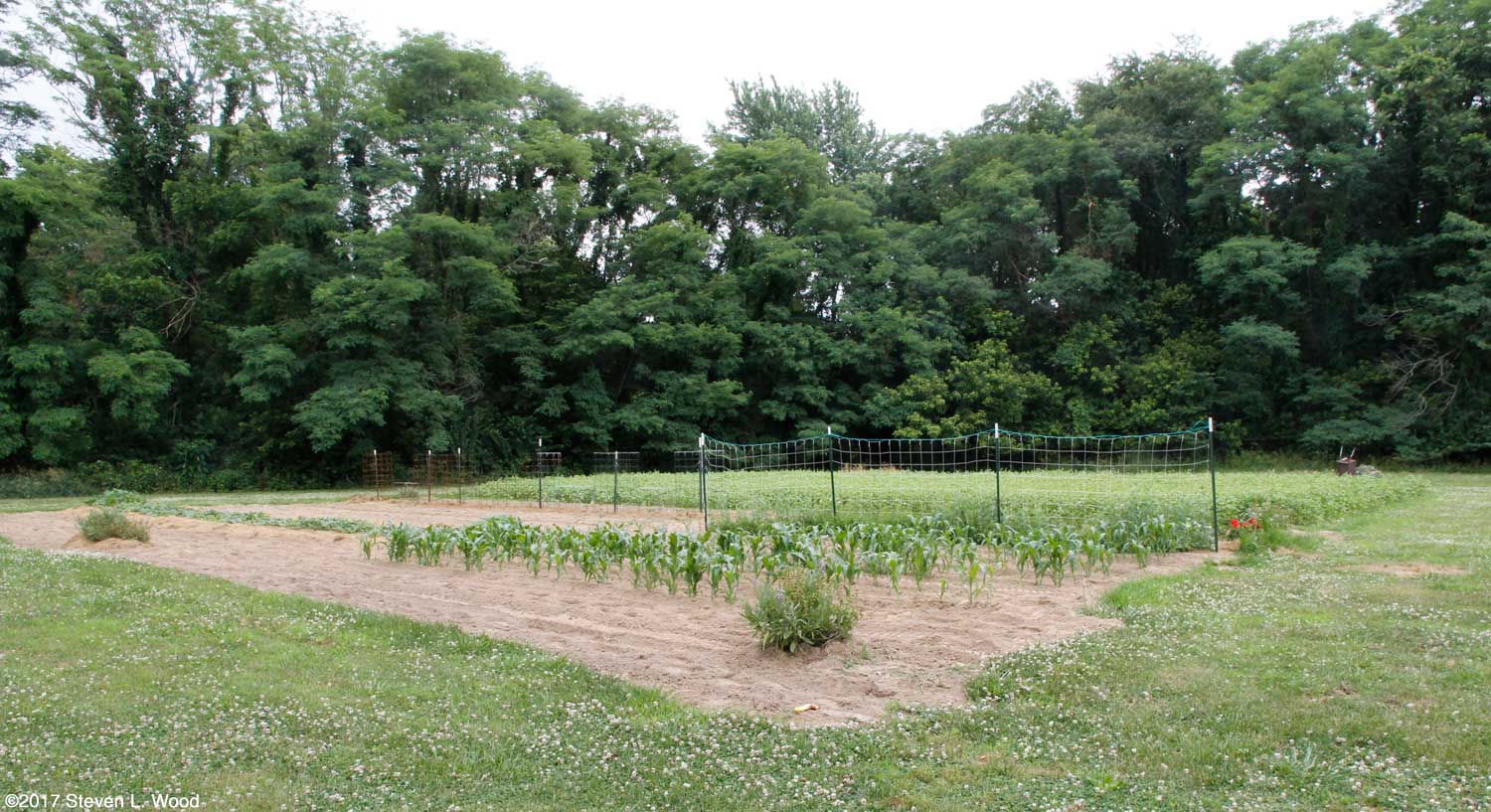
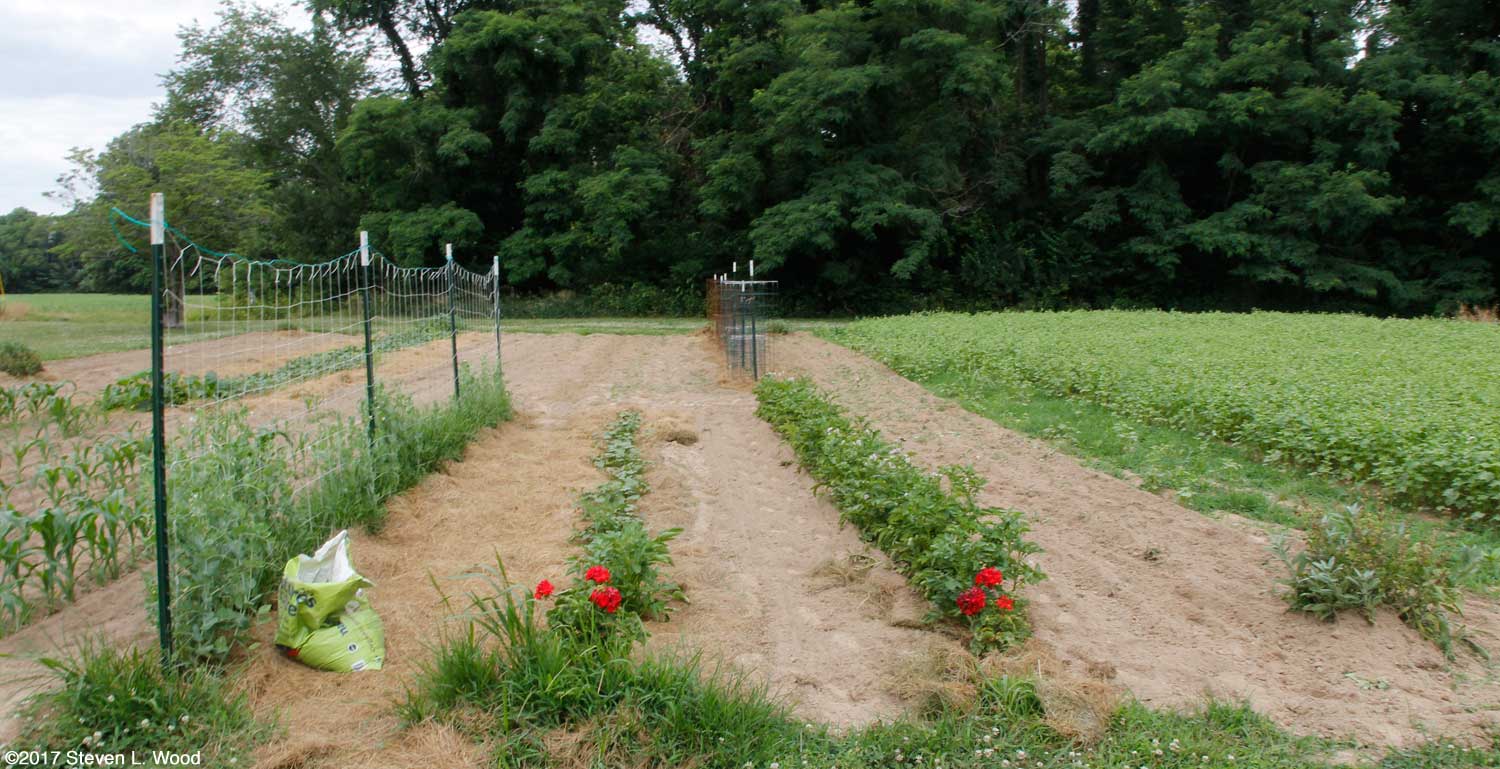
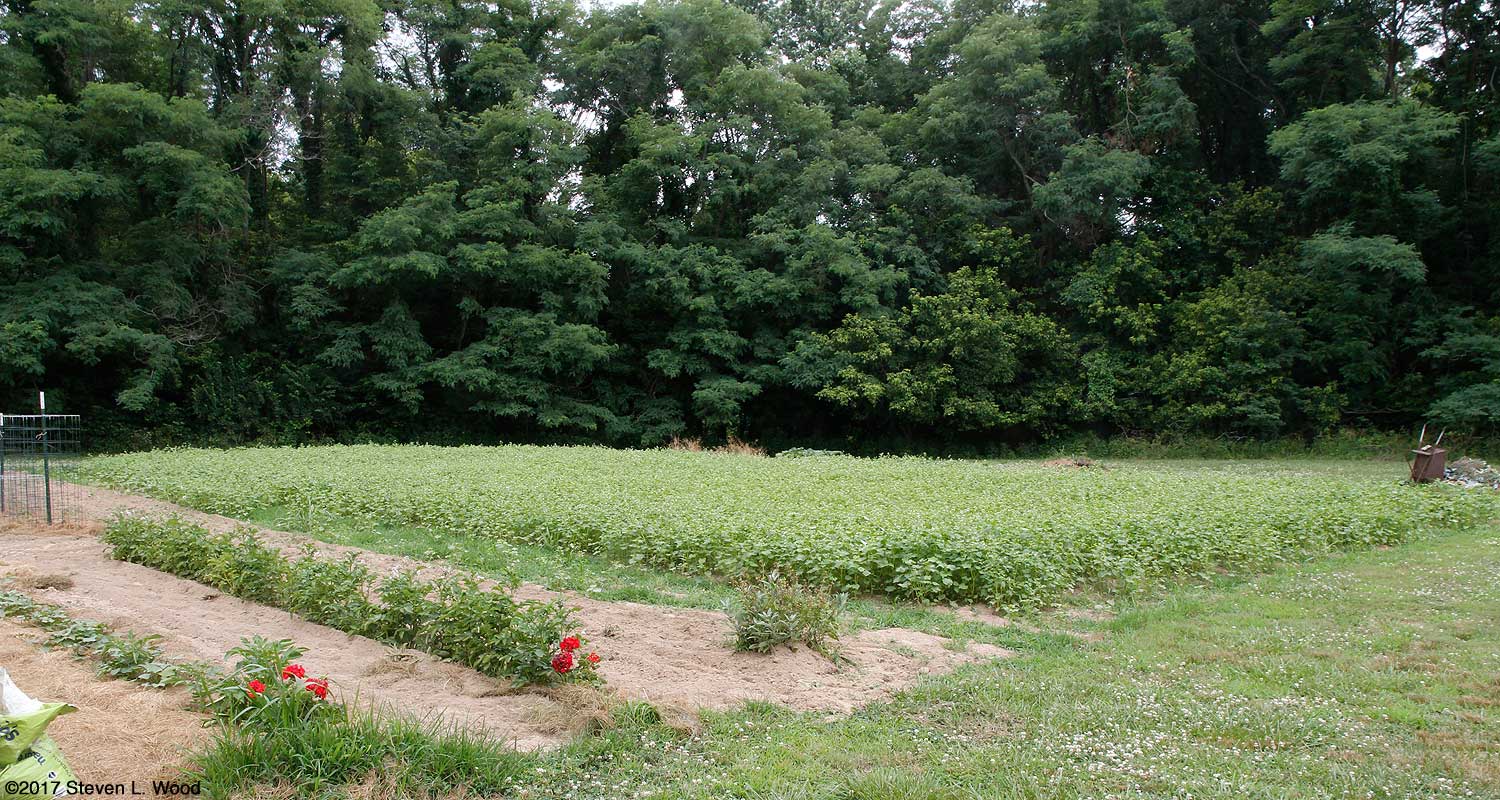
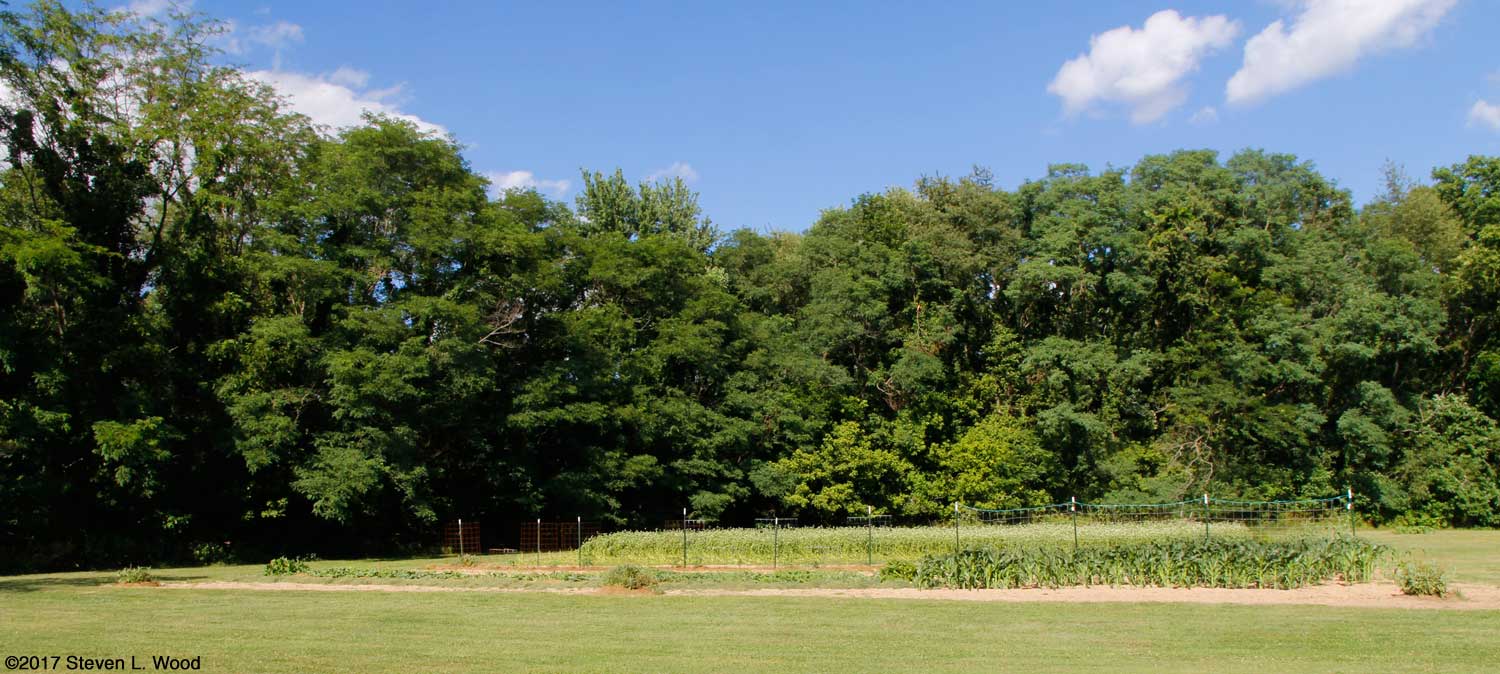
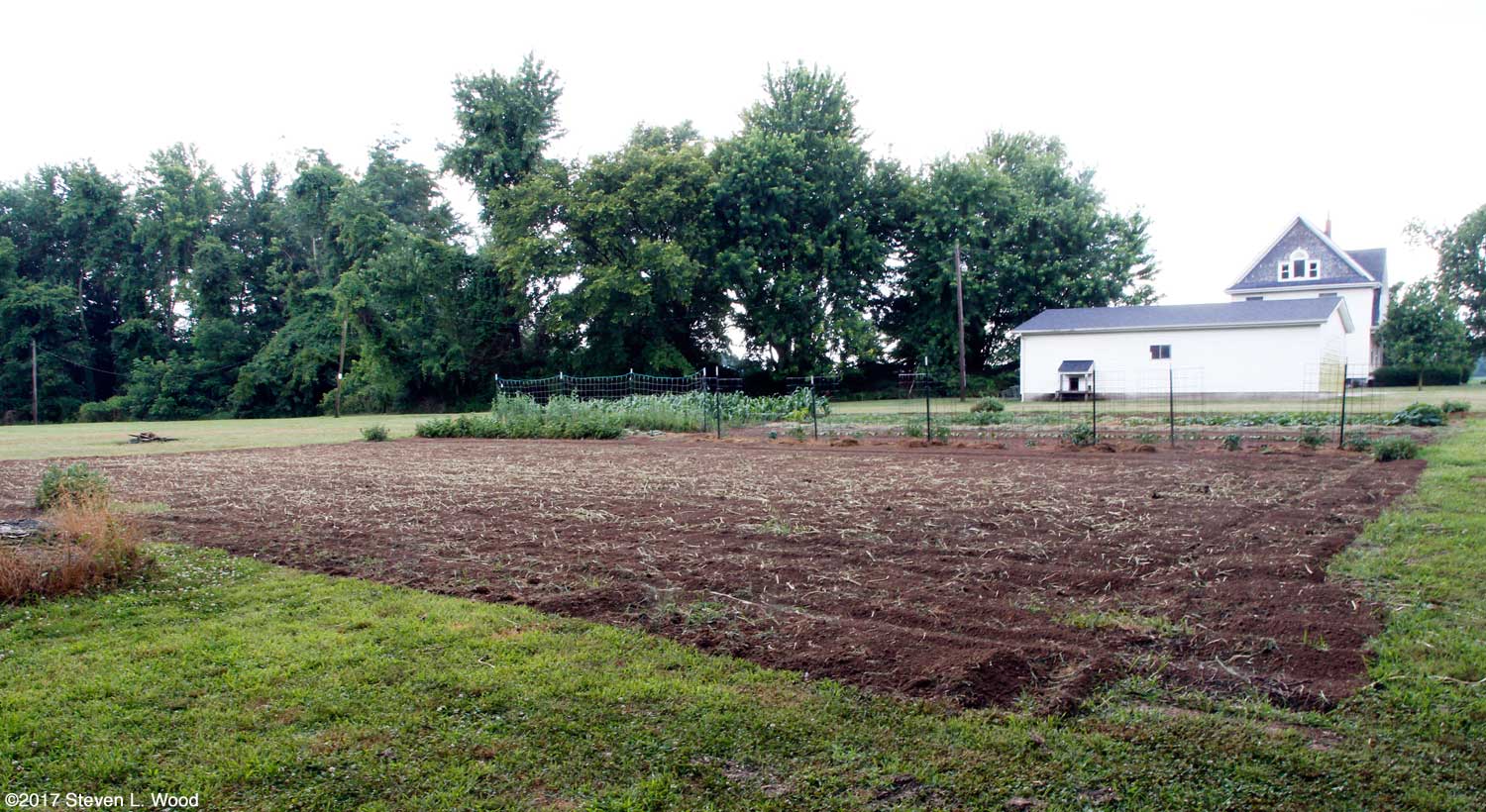
I mowed down our 40' x 80' planting of buckwheat, although I mowed it well after it was at its peak of green manure production. I delayed in part because we had lots of honeybees visiting the buckwheat blooms and also because of several light rains that made the buckwheat too wet to mow or till under. After mowing, I let the buckwheat sit in the sun a couple of days before using our pull-type tiller to turn it under. I plan to re-seed the plot to buckwheat again early in July. I felt rather proud of myself yesterday as I got the buckwheat tilled under in the morning. We had a thunderstorm in the afternoon that dropped 0.20" of rain on us. I took today's photos after the rain which makes the soil in the East Garden look a whole lot richer than it really is.
As long as I can protect the remaining butternut vines, they should fill in and give us an adequate harvest. For the Slick Pik yellow squash, I have a couple of replacement plants in a four inch pot on the back porch. Slick Piks never seem to last long, but they produce glorious, long, thin squash when they're doing well. I've found that keeping a succession of transplants of the variety keeps us in yellow squash all summer long. All in all, we've had a pretty good month of gardening. I begin and end each day thanking the Lord for another day of life. Contact Steve Wood, the at Senior Gardening
|
|||||||||||||||||||||||||||||||||||||||||
 , which I find essential for growing peppers on our ground,
  , and
, and 
















 , which have limited effectiveness.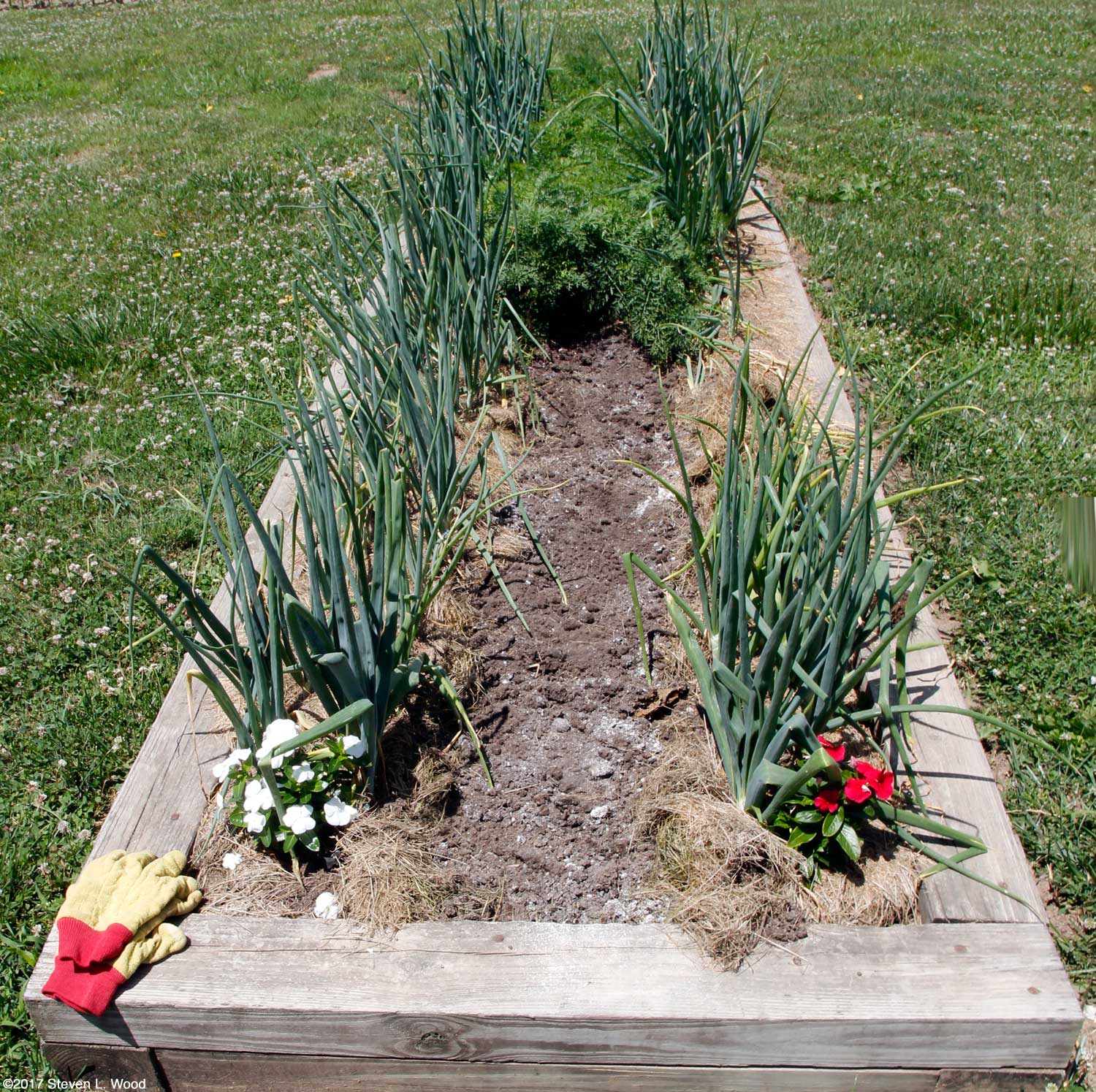












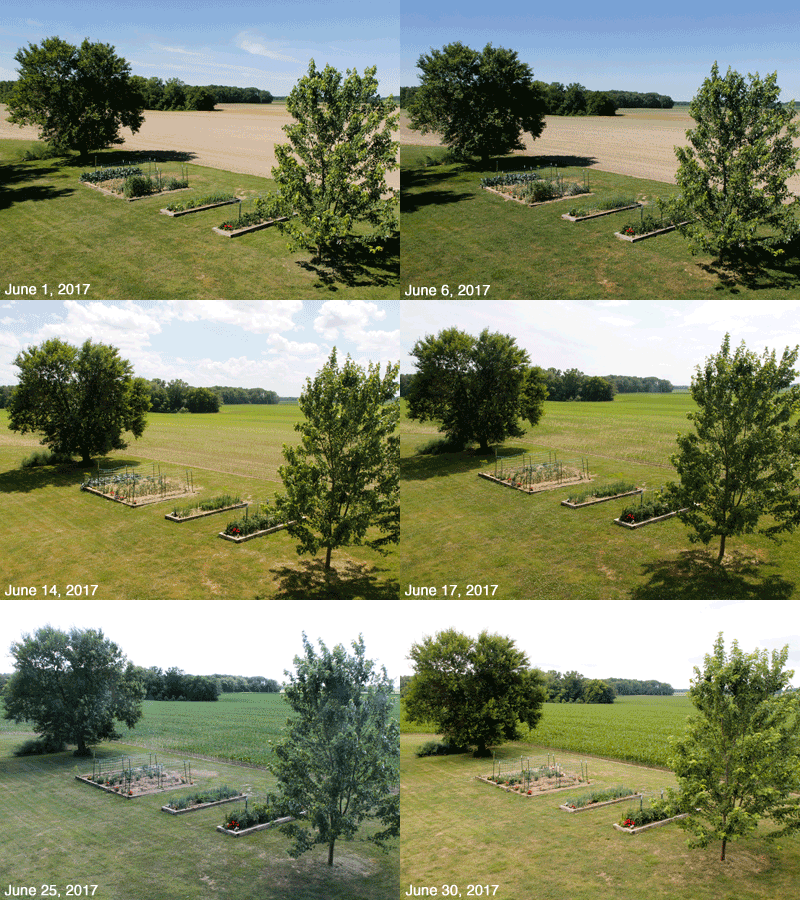 We've had a productive month in our garden plots in June. Despite a serious lack of rainfall, we harvested peas, broccoli, cauliflower, lots of yellow squash, and our first melon, a Diplomat honeydew. The honeydew melon hadn't gone to half- or full-slip yet, but its skin was also yellowing and showing marks of raccoon interest.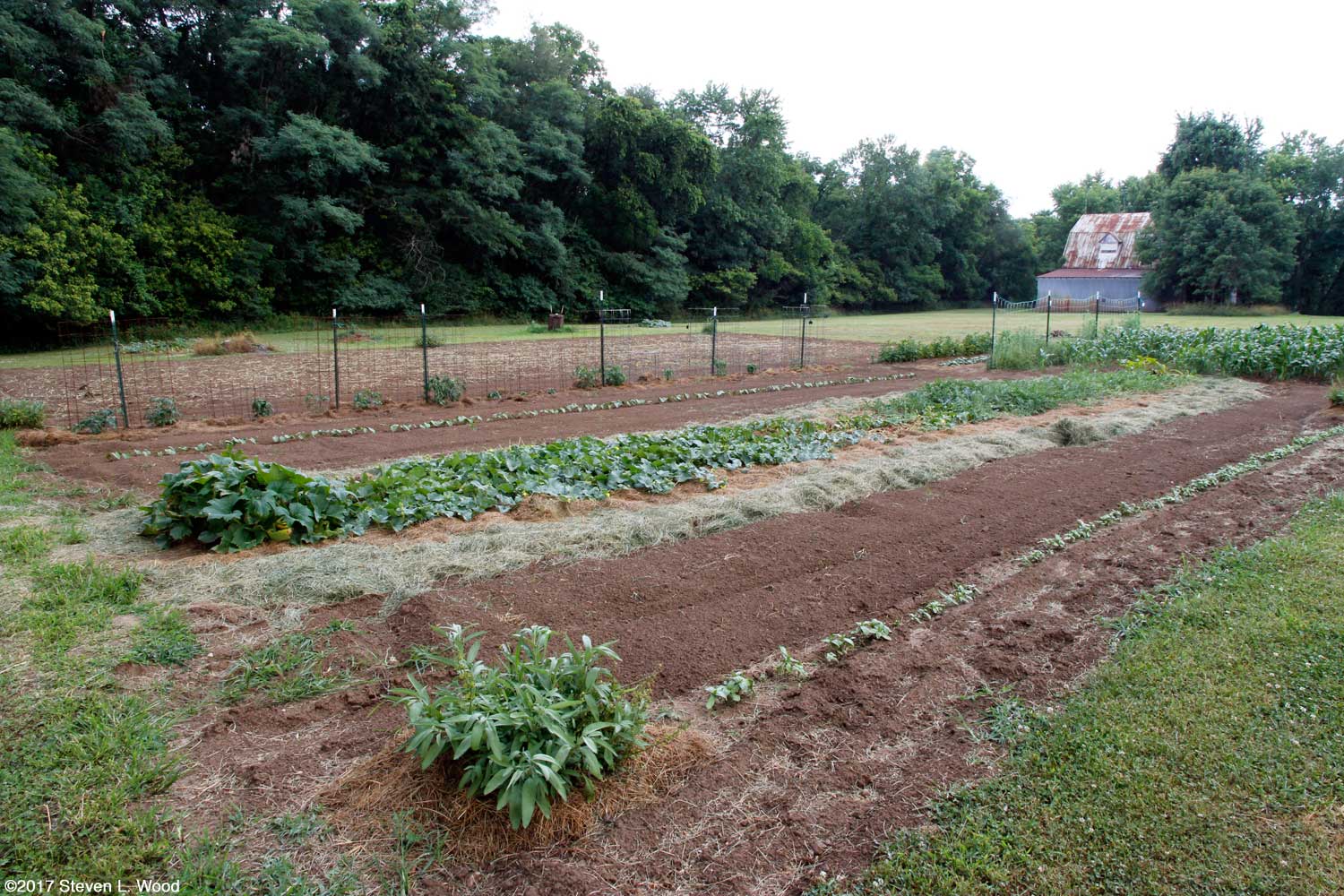

| Affiliated Advertisers |
©2017 Senior-Gardening.com