One of the Joys of Maturity |
|

| Affiliated Advertisers |
The Old Guy's Garden Record
Clicking through one of our banner ads or some of our text links and making a purchase will produce a small commission for us from the sale.
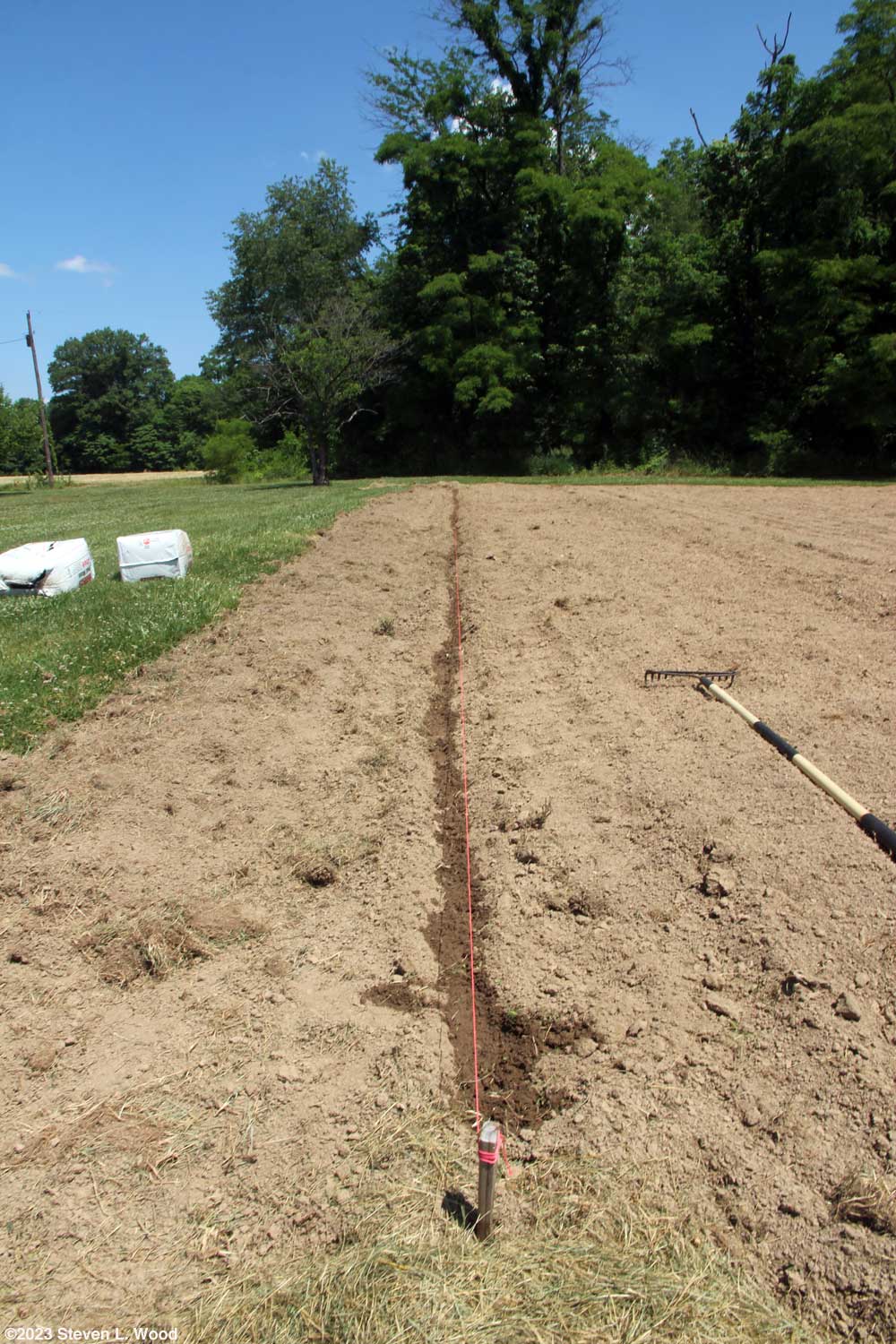
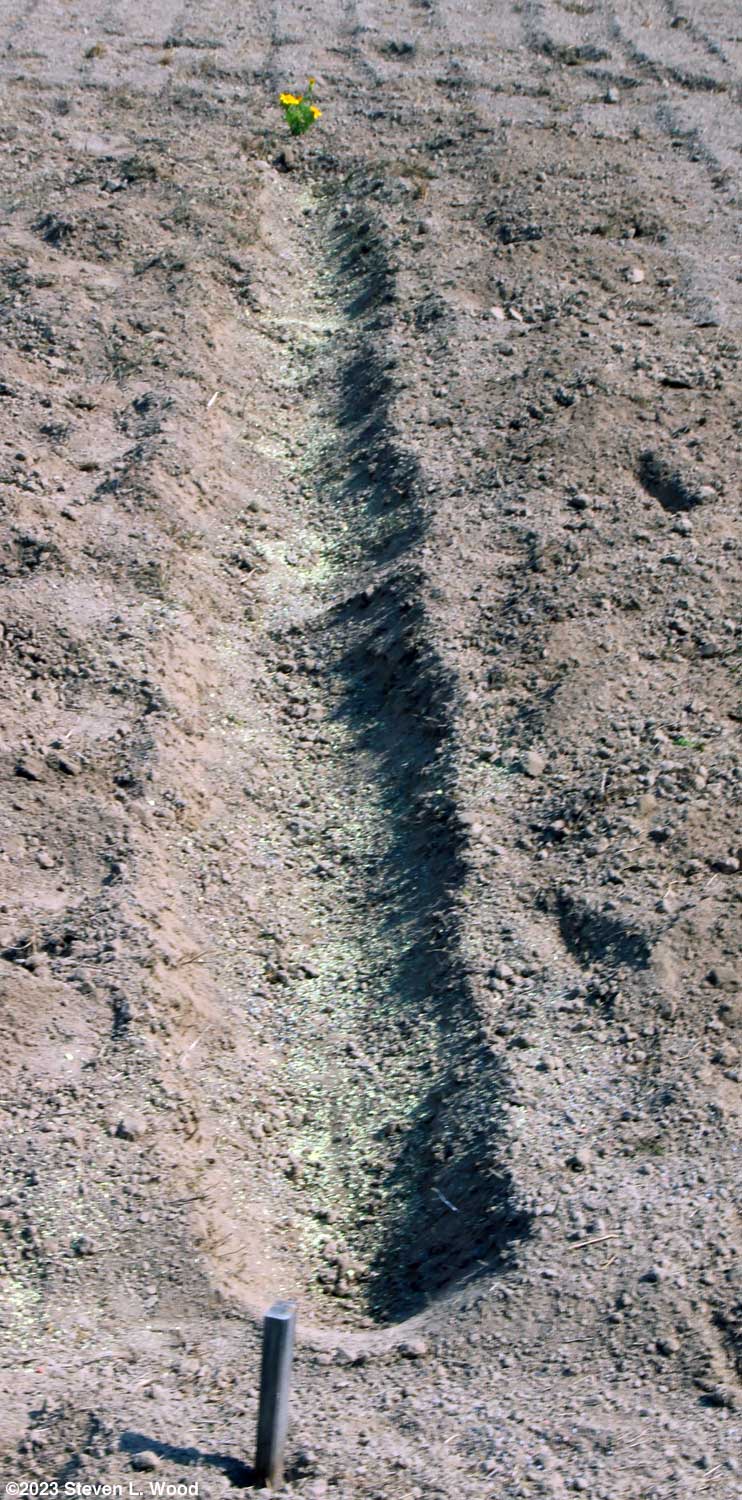
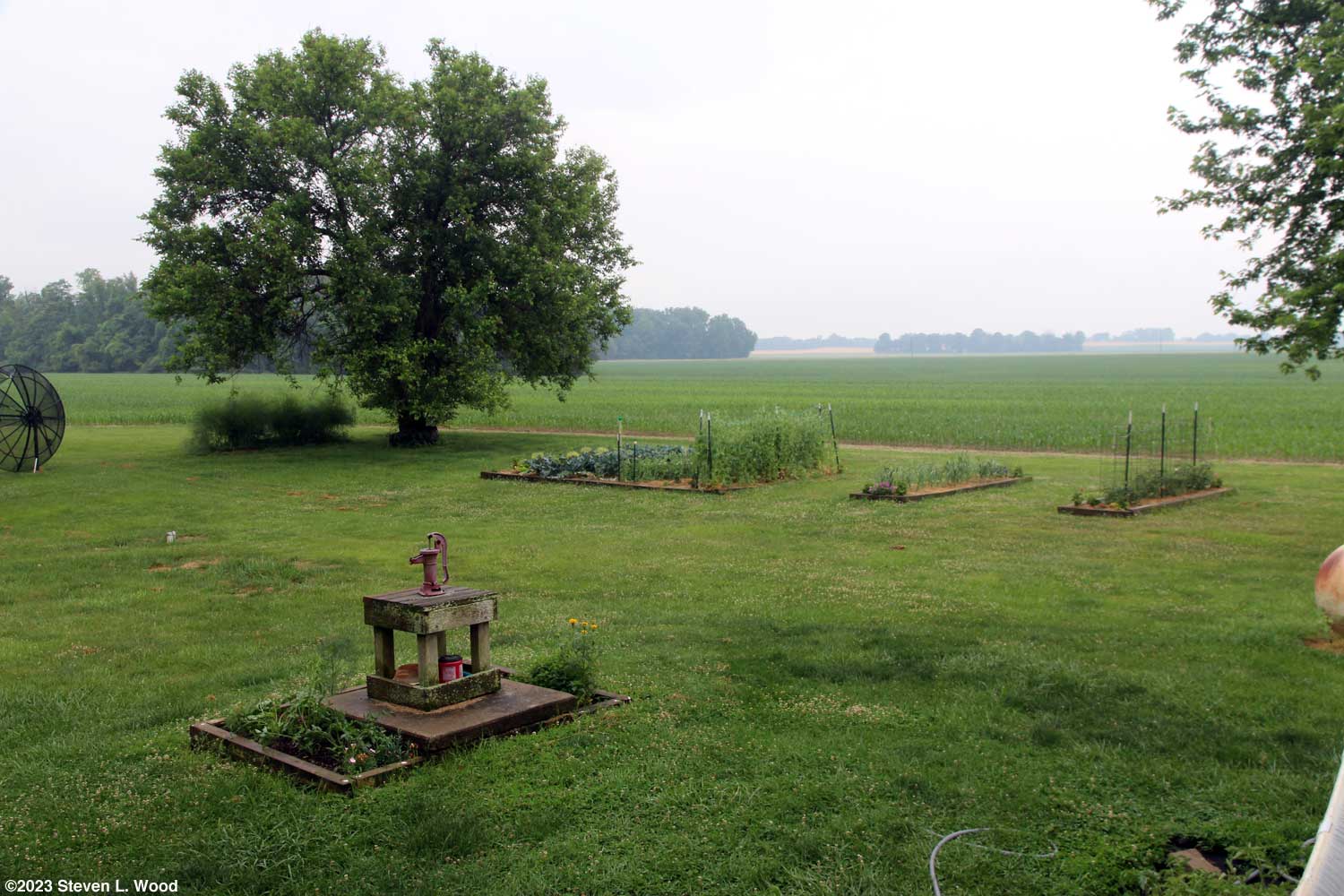
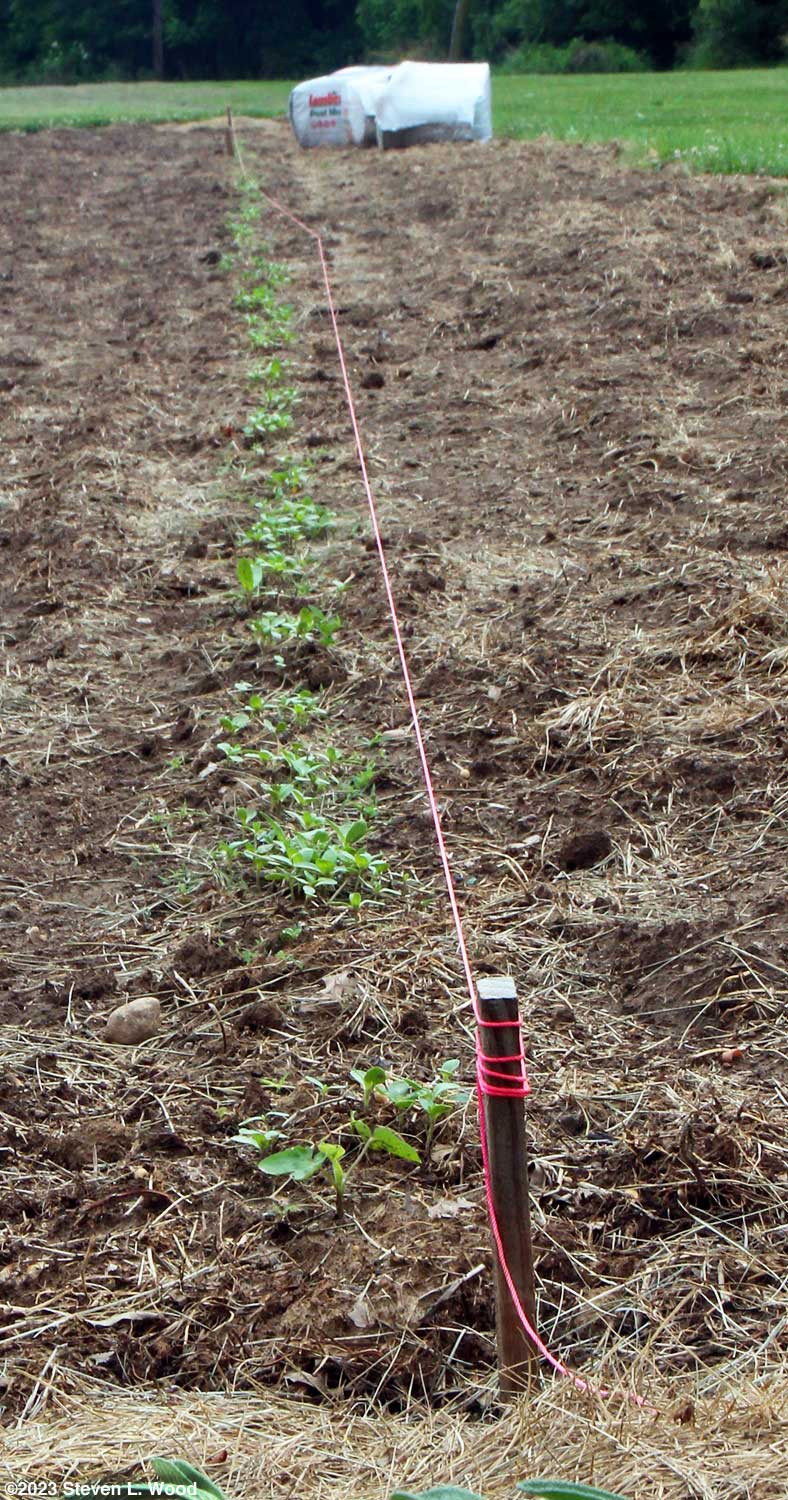
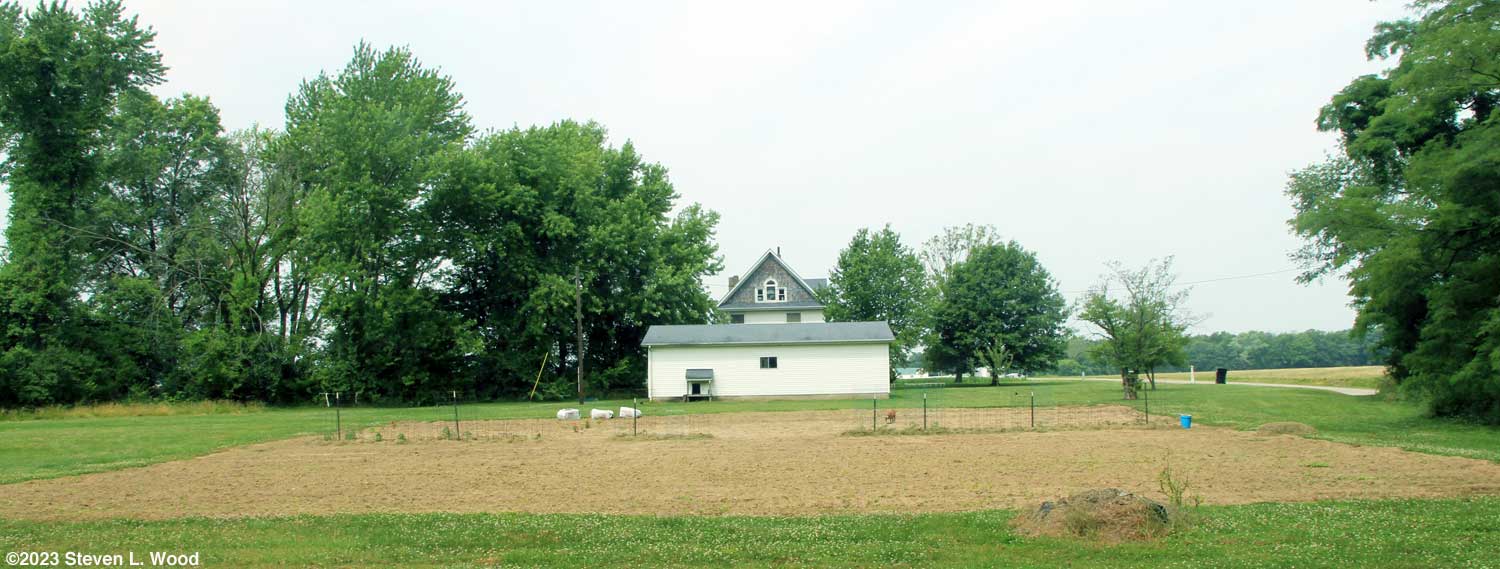
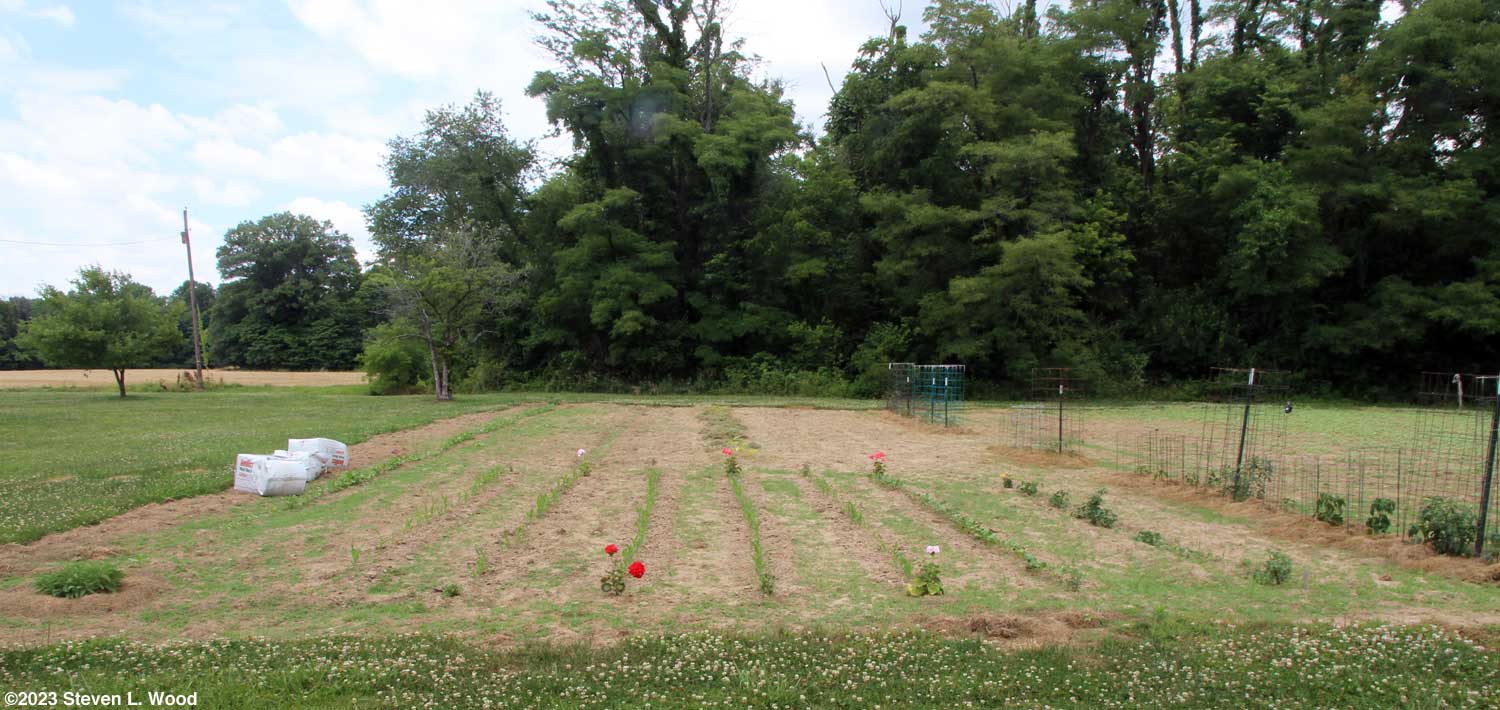
I'm hoping our peas stay sweet. We have several days coming with high temperatures in the 90s! That also goes for our lettuce and spinach. I'll also need to keep a close eye on our cauliflower, taking any heads we get small before they quickly yellow and turn bitter in the heat. As expected, our area dropped into the U.S. Drought Monitor's Abnormally Dry classification. After watering the peas and our transplants on the back porch and under the cold frame, I took a long break before heading out to our East Garden plot. With the exception of last year, we've had a near eighty foot long row of zinnias on the west end of the plot most years. They draw lots of nice comments from friends and neighbors who can see them when they are driving by. So I dug our saved 2021 zinnia seed out of the freezer and headed for the East Garden. I strung the row...and then the string broke. I'm realizing that as I age, so are my garden tools. After finding some newer twine, I re-strung the row and used our garden hoe to make a furrow.
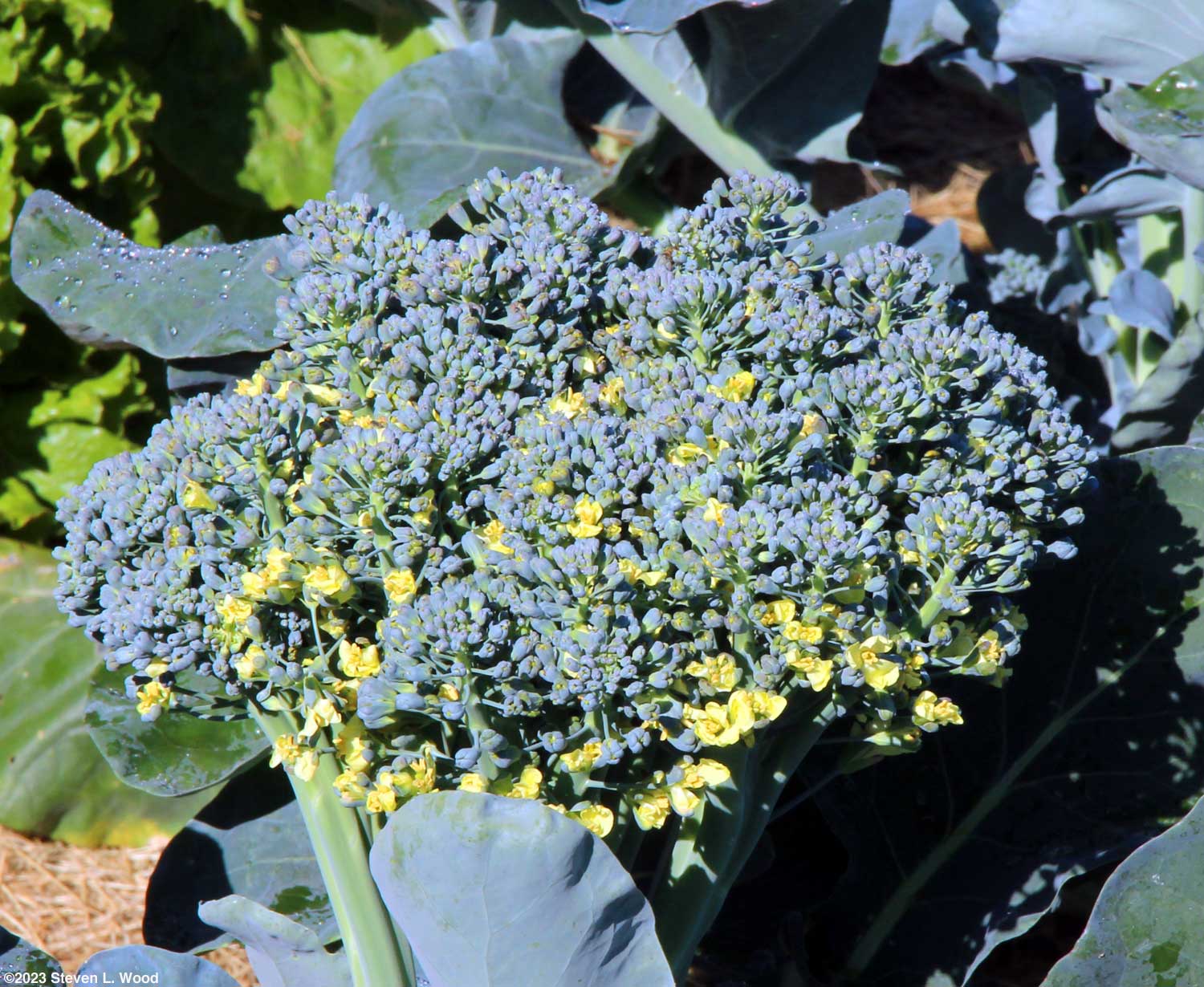
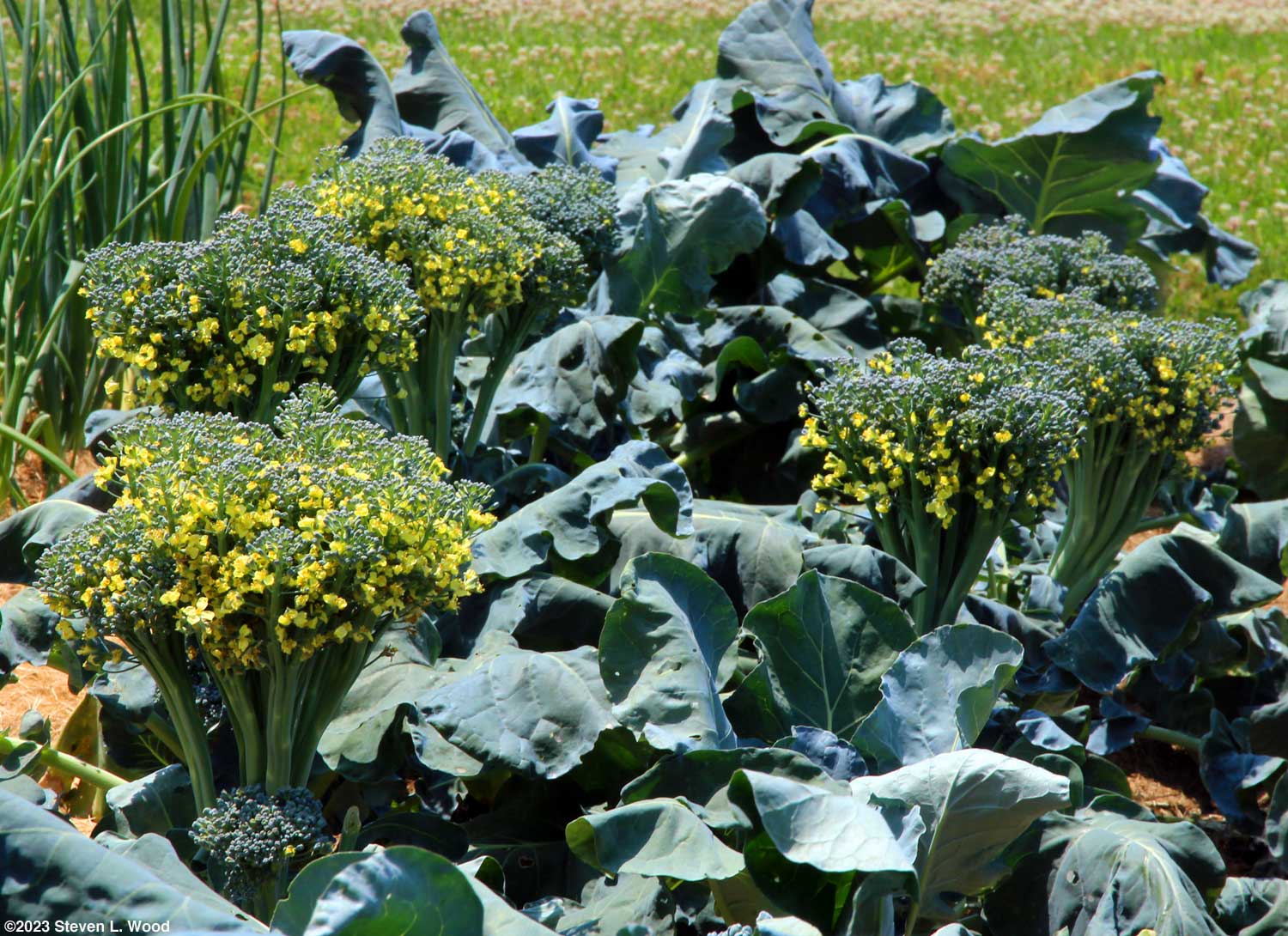
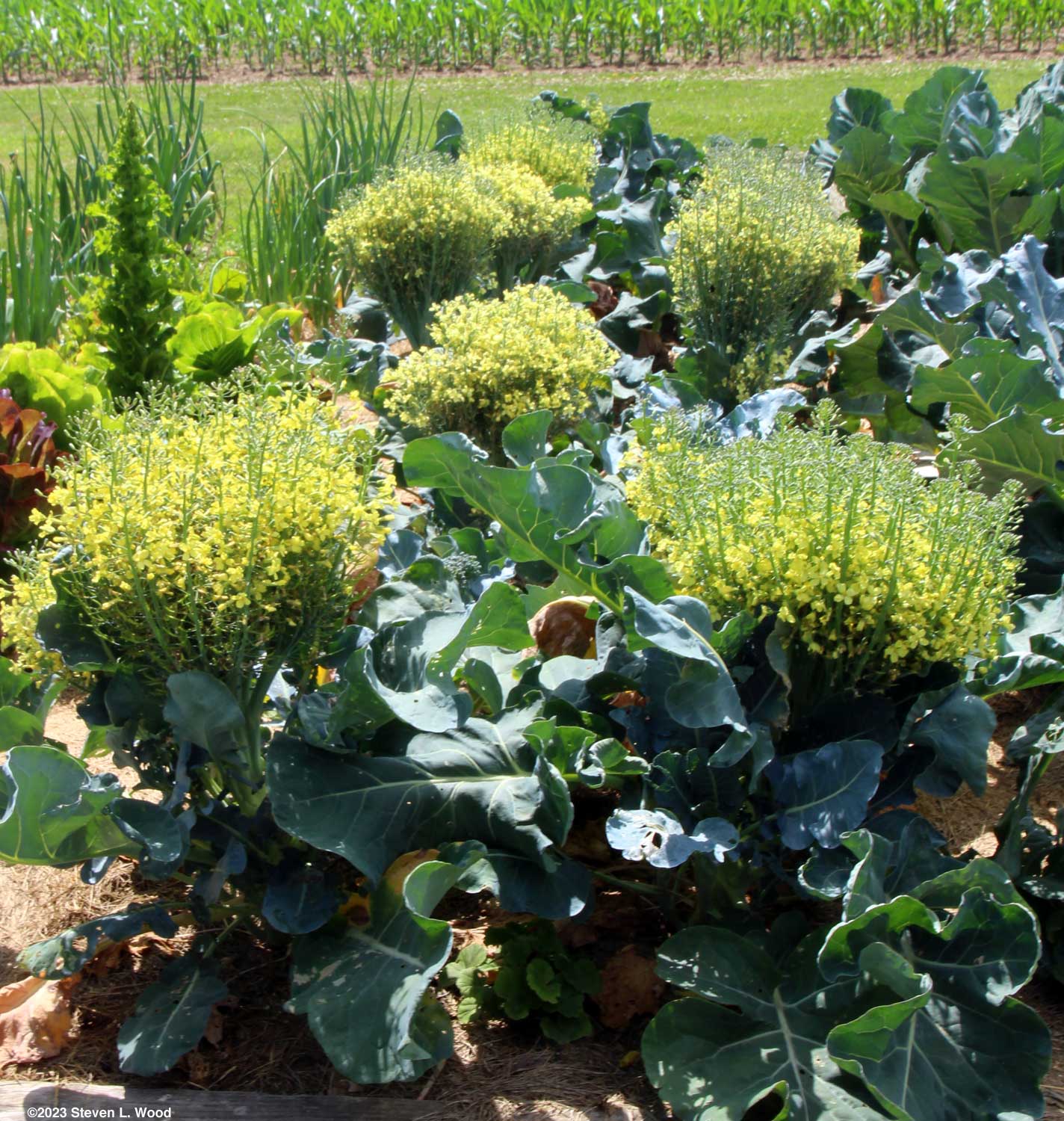
Several of the large heads of Goliath broccoli we're growing for seed production are starting to bloom. The spots of yellow blooms are hard to miss on the broccoli heads. Since broccoli needs to cross-pollinate to produce viable seed, having several plants in bloom at once is essential for seed production.
|



|
We set a record high temperature for this date today, 94°F. While I have a myriad of garden chores I want to do each day, there's only so much energy each day, especially in hot weather. Today's early chore was to stake the rows for our crops in our East Garden plot. Later, I picked some more peas and even harvested a celery, half of which went into some ham salad. Through this hot streak, I hope to get a few things done in the cooler morning hours. But today, the temperature reached 90°F by noon! I did haul water to our Earlirouge tomato plants that were looking a little stressed. I also stretched out the hose from our rain barrel for our row of early peas, hoping some water would help the pods fill in.
Shop Burpee Gardening Today and Enjoy Free Shipping On Orders $50+. Use Code FREESHIP623
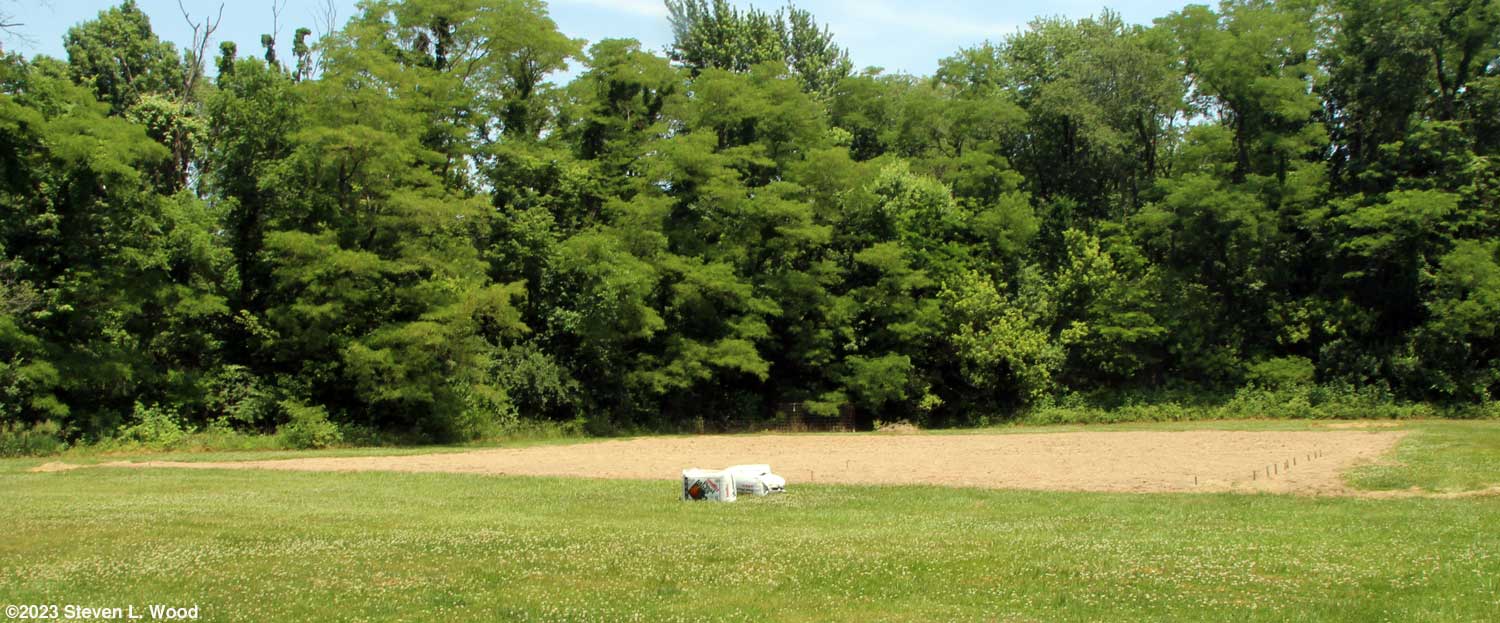
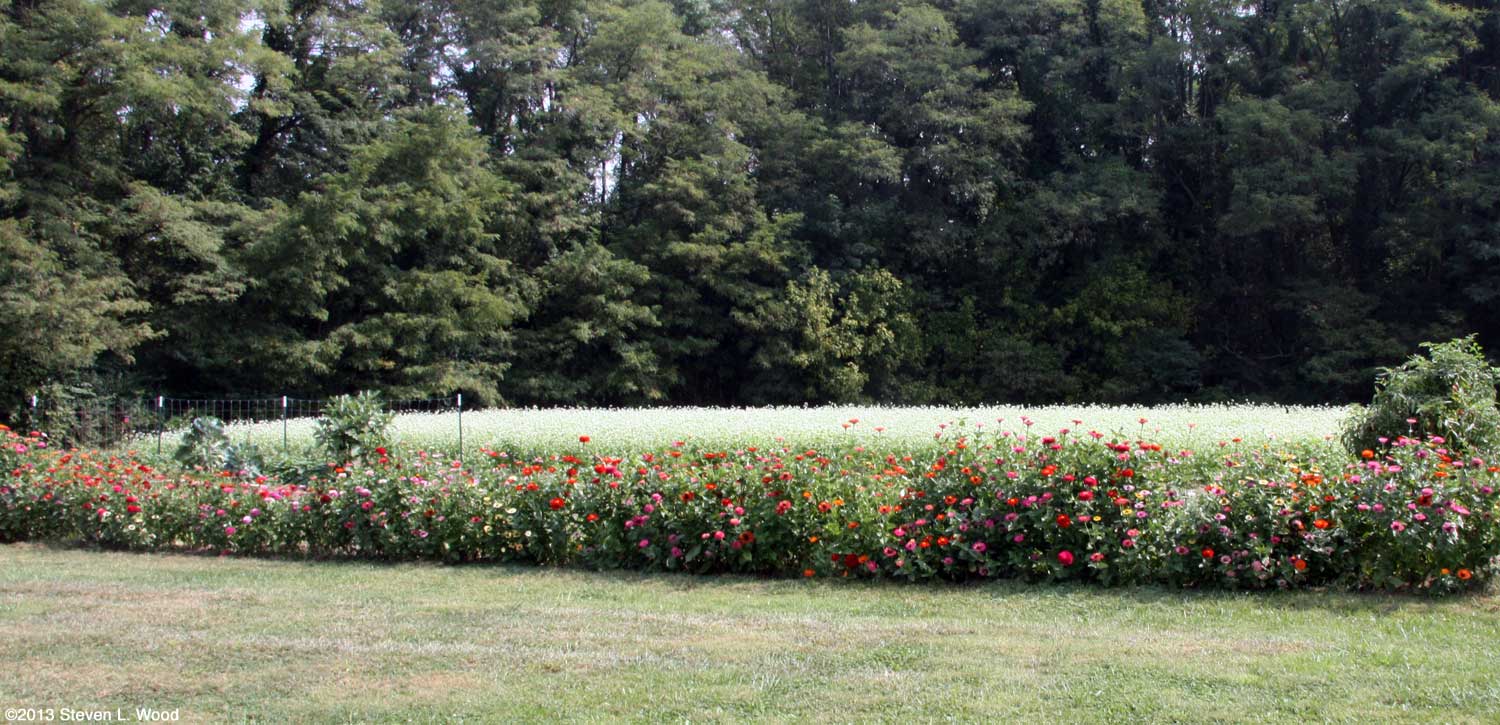
While I've grown other cover/turndown crops (alfalfa, hairy winter vetch) for soil improvement in the past, buckwheat has been the most reliable of those crops. One summer, I turned under three stands of buckwheat. There really aren't any gardening tricks necessary for growing buckwheat. It tolerates varying soil types and pH conditions. And while one could just broadcast the seed over the soil and let it go at that, I set our pull-type tiller to a very shallow setting and incorporated the seed into the soil.
And with buckwheat, your get some side benefits beyond its weed control and soil improvement features.
It's really cool to walk past a stand of buckwheat in bloom and hear the gentle buzz of hundreds of bees visiting the blooms.
And the visual effect can be stunning.
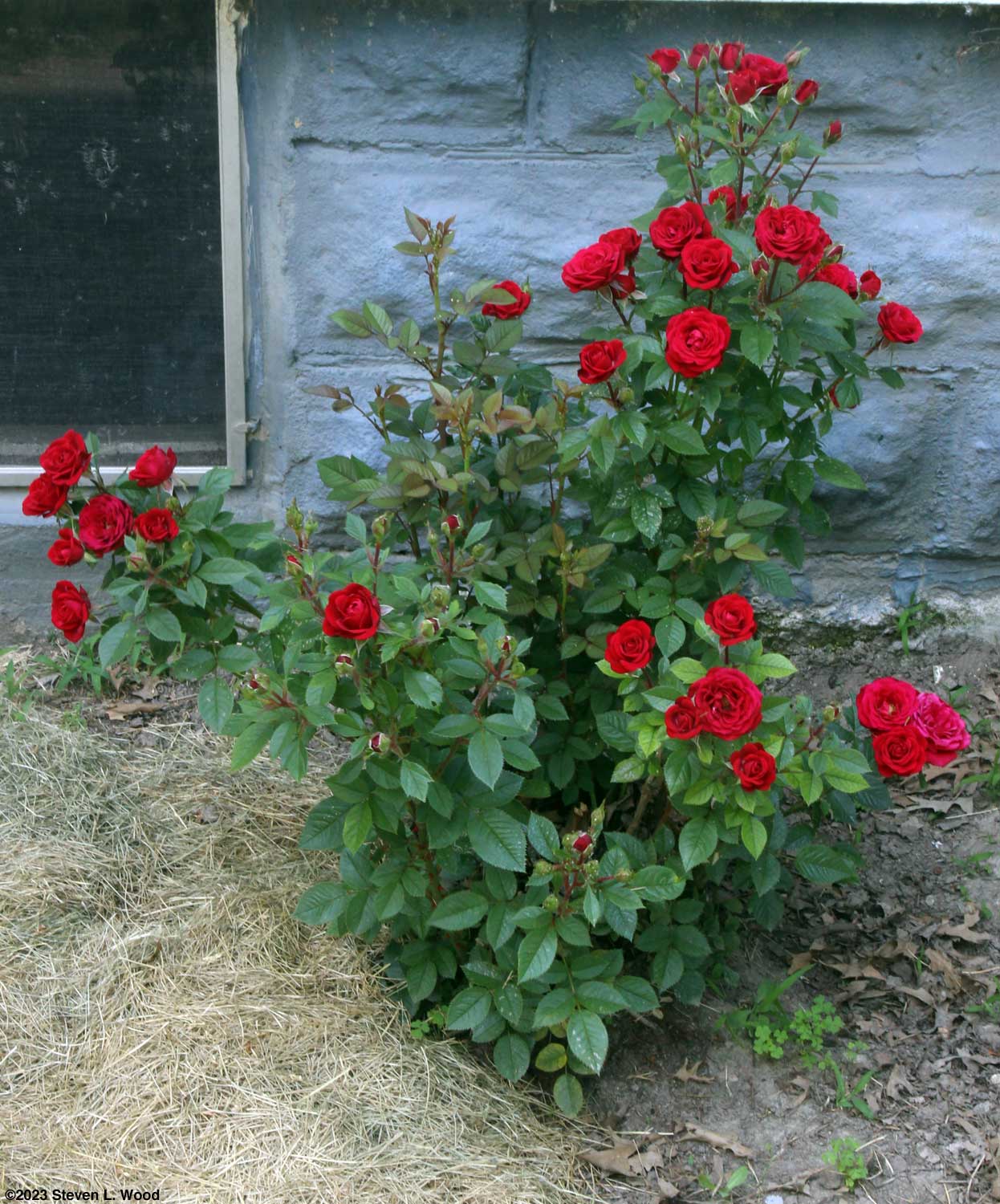
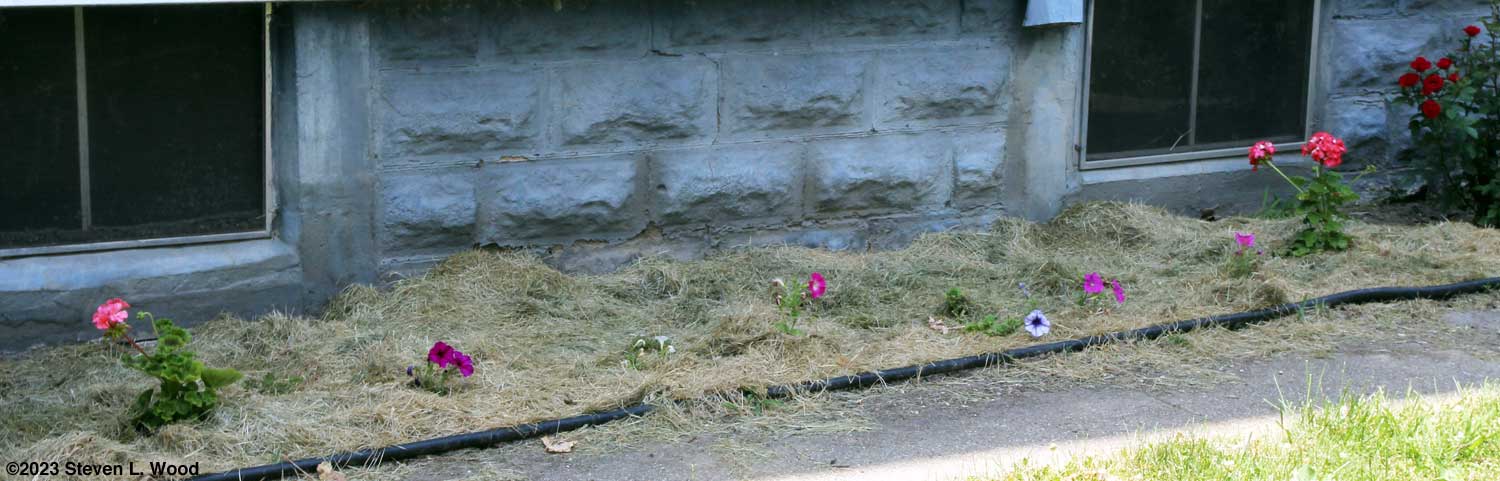
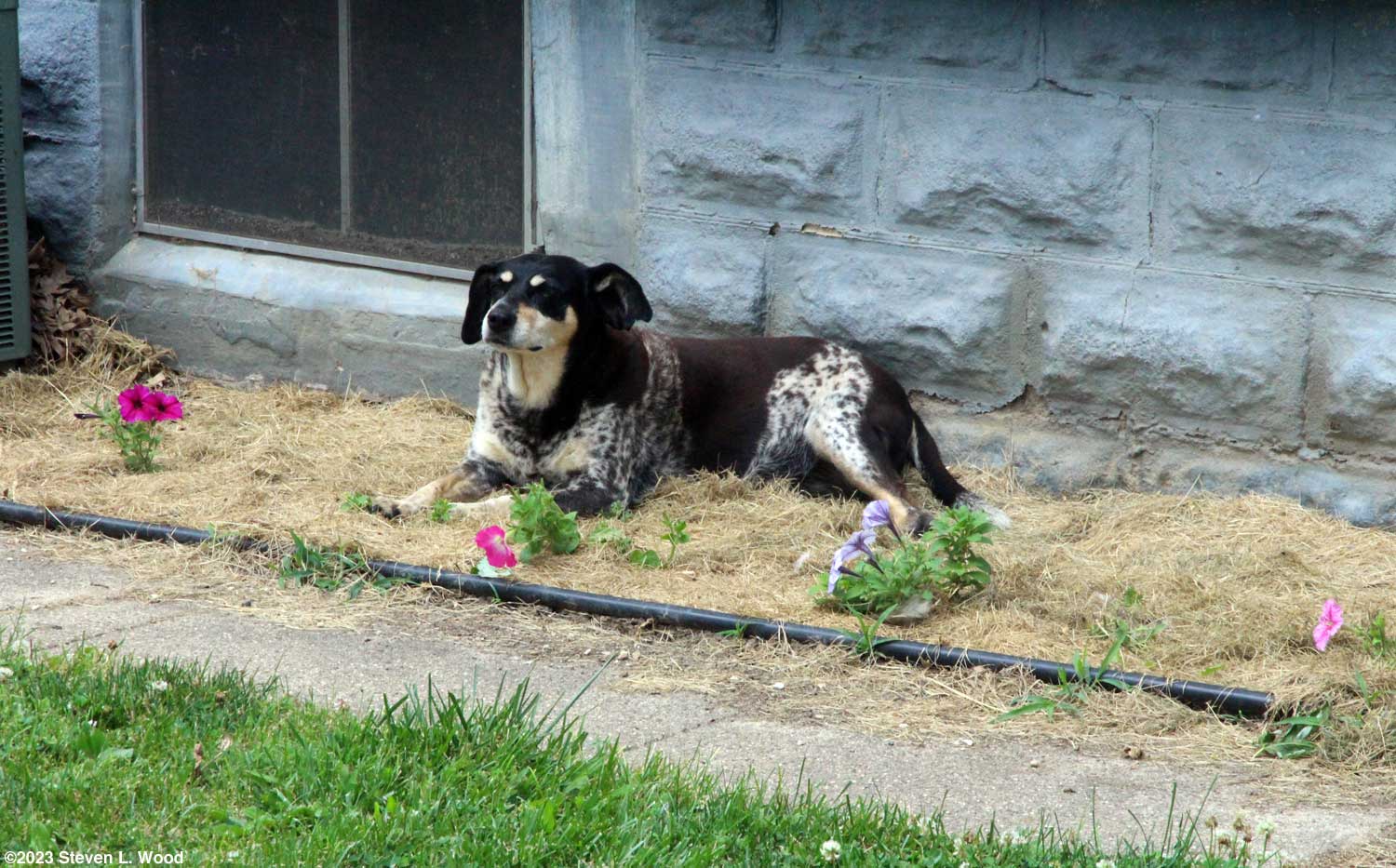
I was pretty well done gardening before noon as temperatures reached the high 80s, headed for the mid-90s. I did pick a nice bunch of peas. I also admired our Goliath broccoli for seed beginning to bloom. And while taking today's photos, I had to get a shot of our one rose bush in bloom. It came from one of those Mother's Day Walmart offerings of a miniature rose bush in a pot. I grew it out and transplanted it into a flowerbed years ago. I have no idea of the variety, but it has been an outstanding performer for us for years. Mulching the flowerbeds on the east side of our house has held back weeds. It's also allowed some petunias and geraniums to thrive. Unfortunately, our dogs love to lay in the mulch and have repeatedly buried our painted daisies in the mulch.
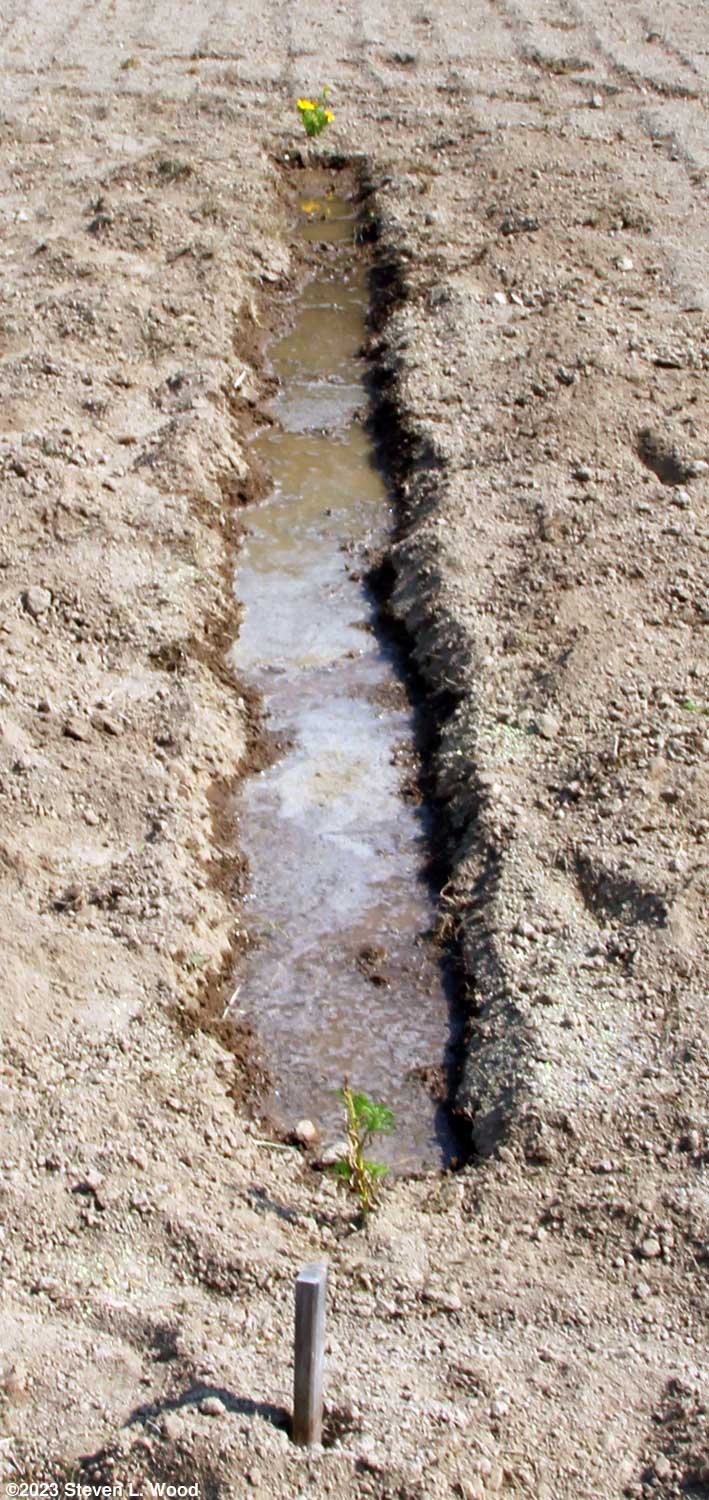
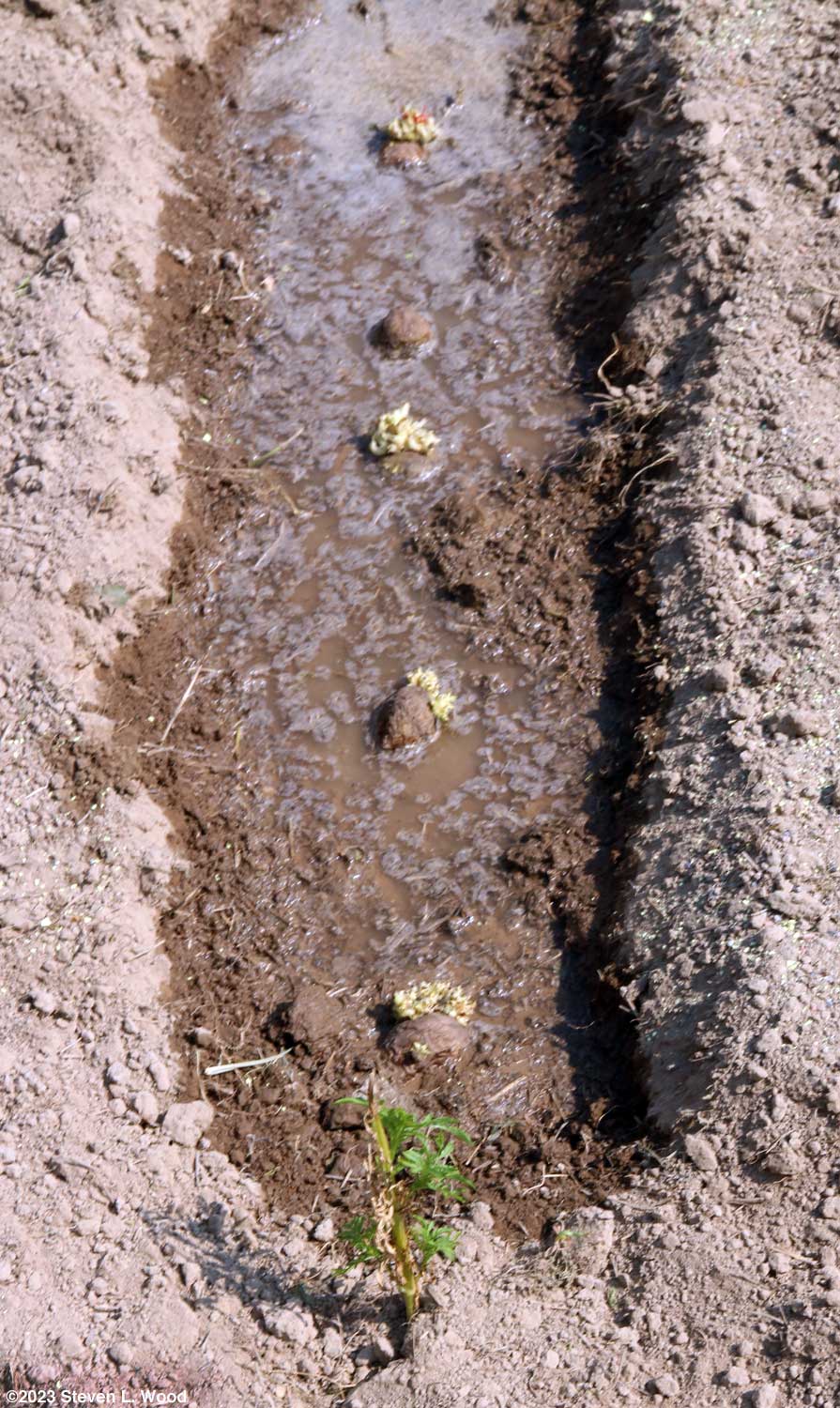
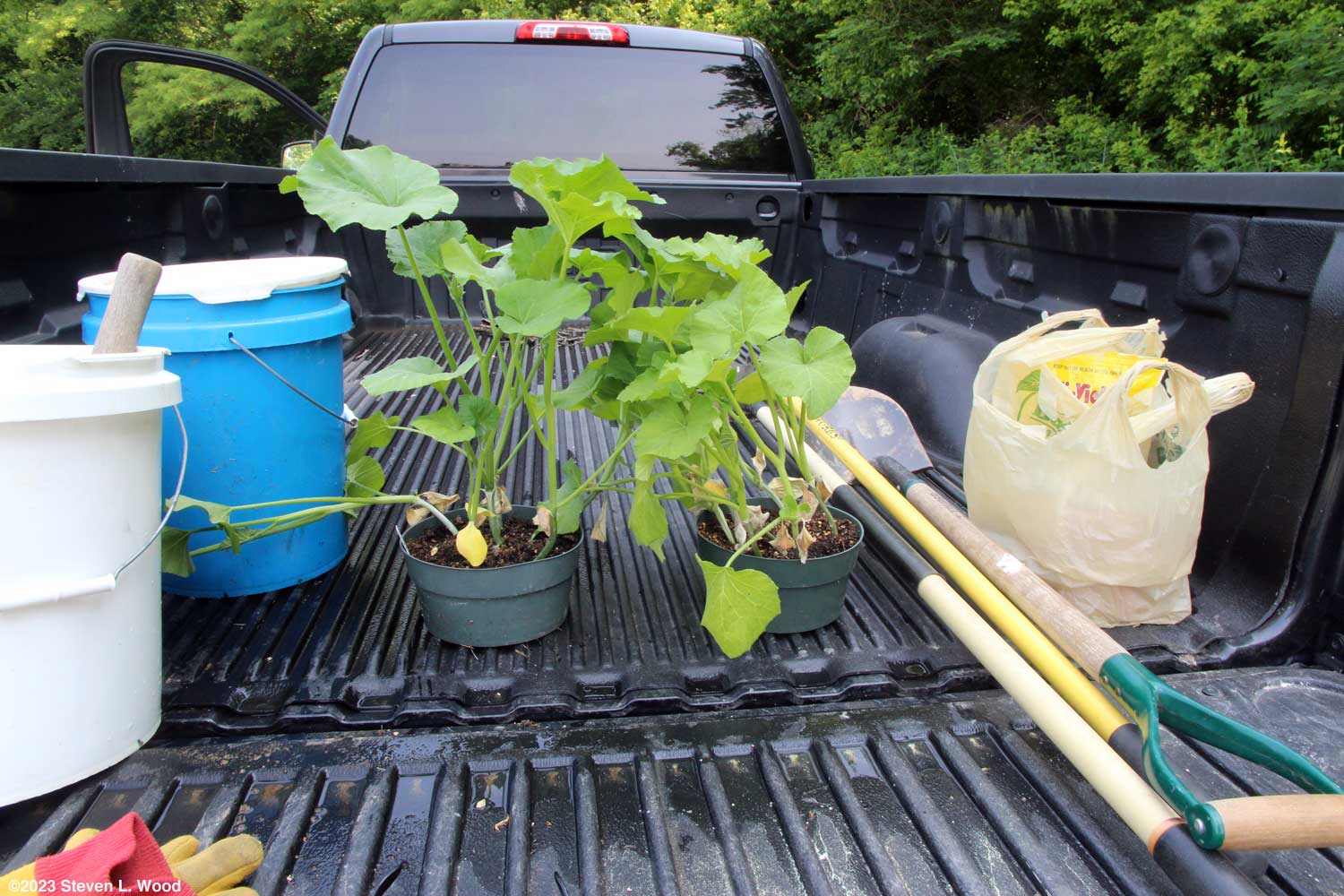
It was a great morning for gardening today. Temperatures stayed in the 70s with a pleasant breeze. After watering the row of zinnia seed I put in last Thursday and some painted daisies, I moved on to our East Garden plot. Planting the East Garden is a bit of a challenge. I was driven today by our seed potatoes now having some four inch eyes along with our butternut transplants getting about eighteen inches tall. Both desperately needed to go into the ground. I started out by shoveling out a six inch deep furrow for the seed potatoes. With a little cutting, I had just enough Kennebec and Pontiac seed potatoes for the twenty foot row. I spread a little 12-12-12 fertilizer, some Muriate of Potash (0-0-60), and some Soil Acidifier down the furrow and worked them into the hard clay subsoil with my garden hoe. Lowering the soil pH helps prevent potato scab disease.
Then I did something different from my usual potato planting routine. I heavily watered the furrow with a starter solution of Quick Start
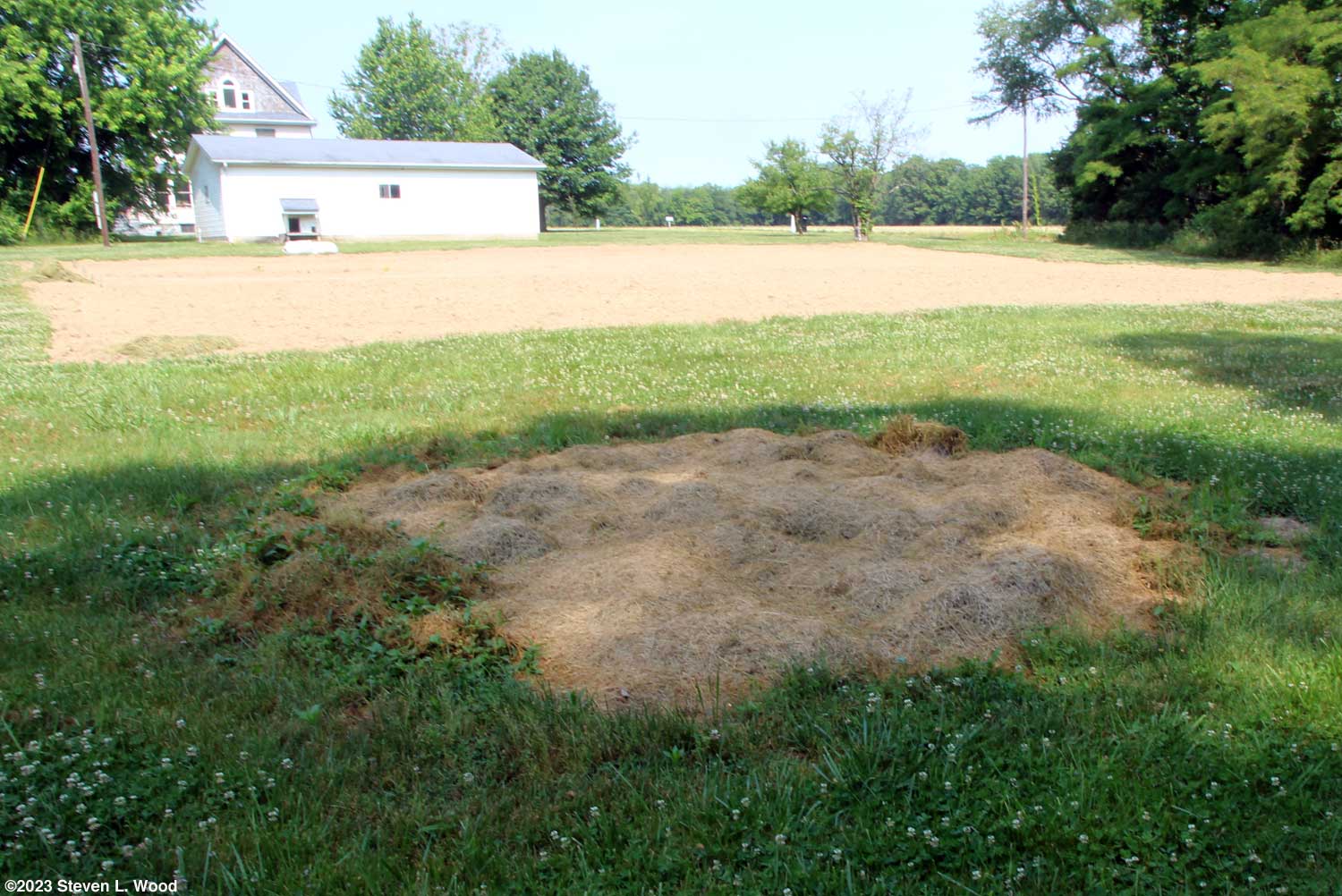
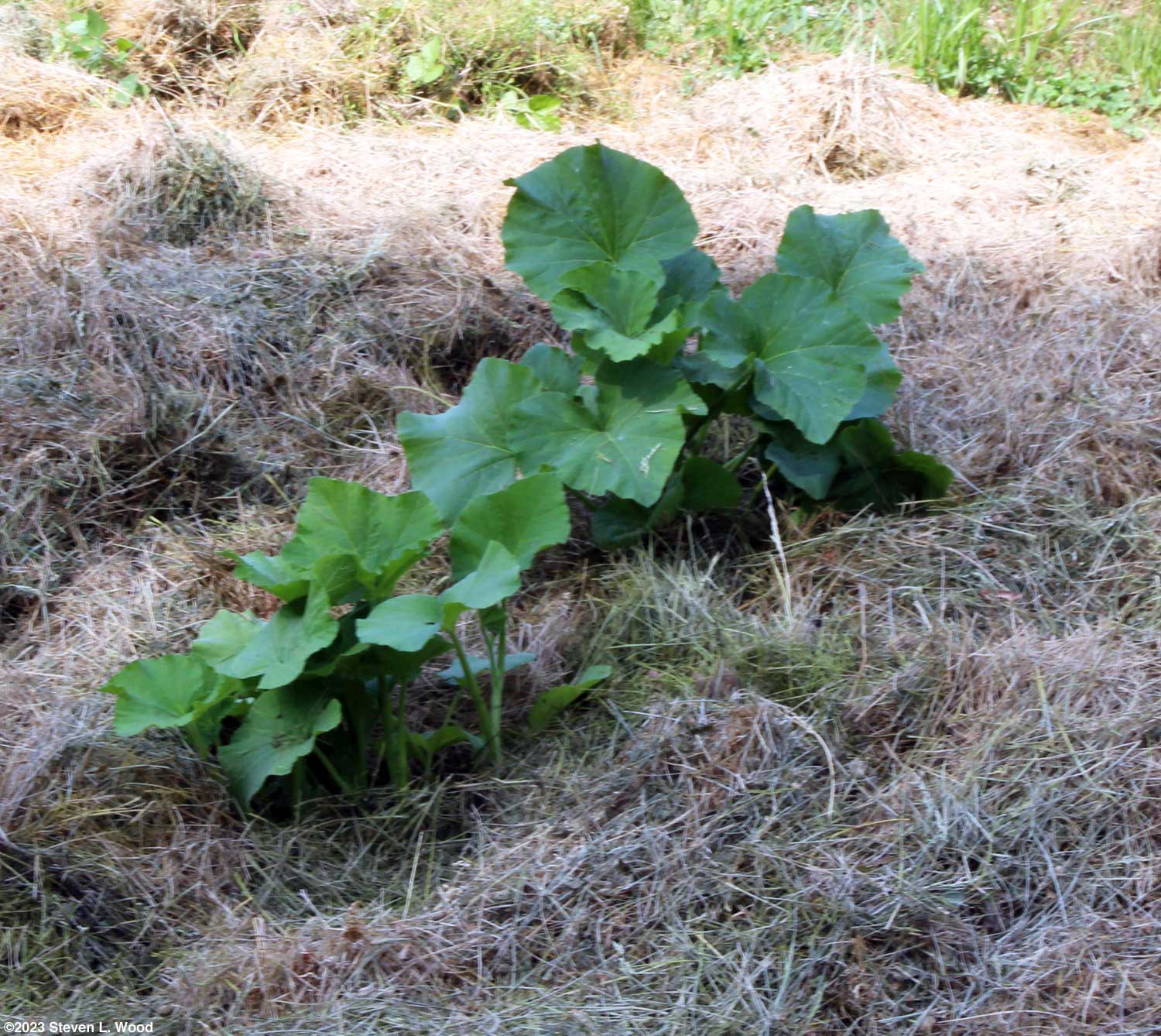
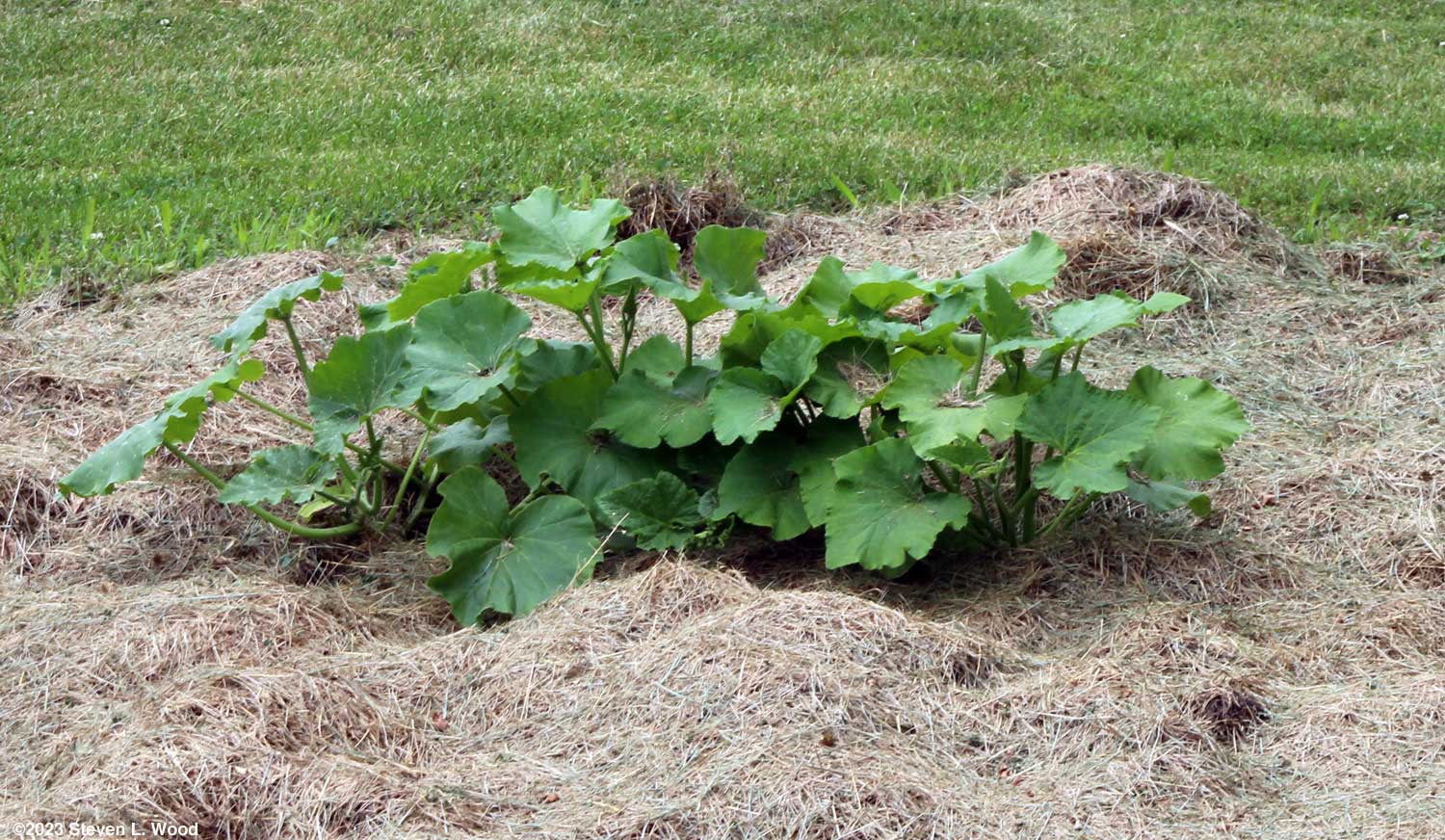
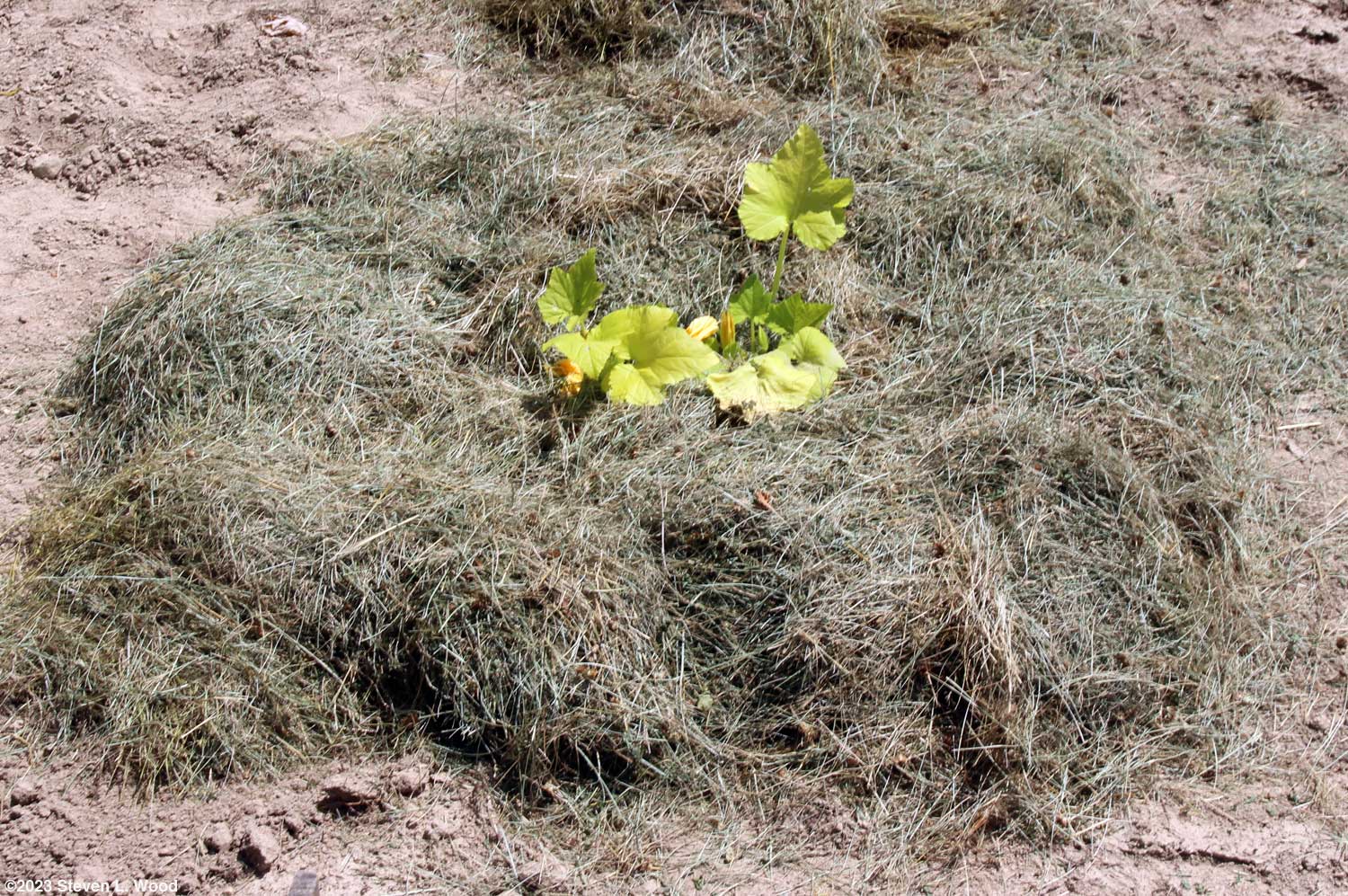
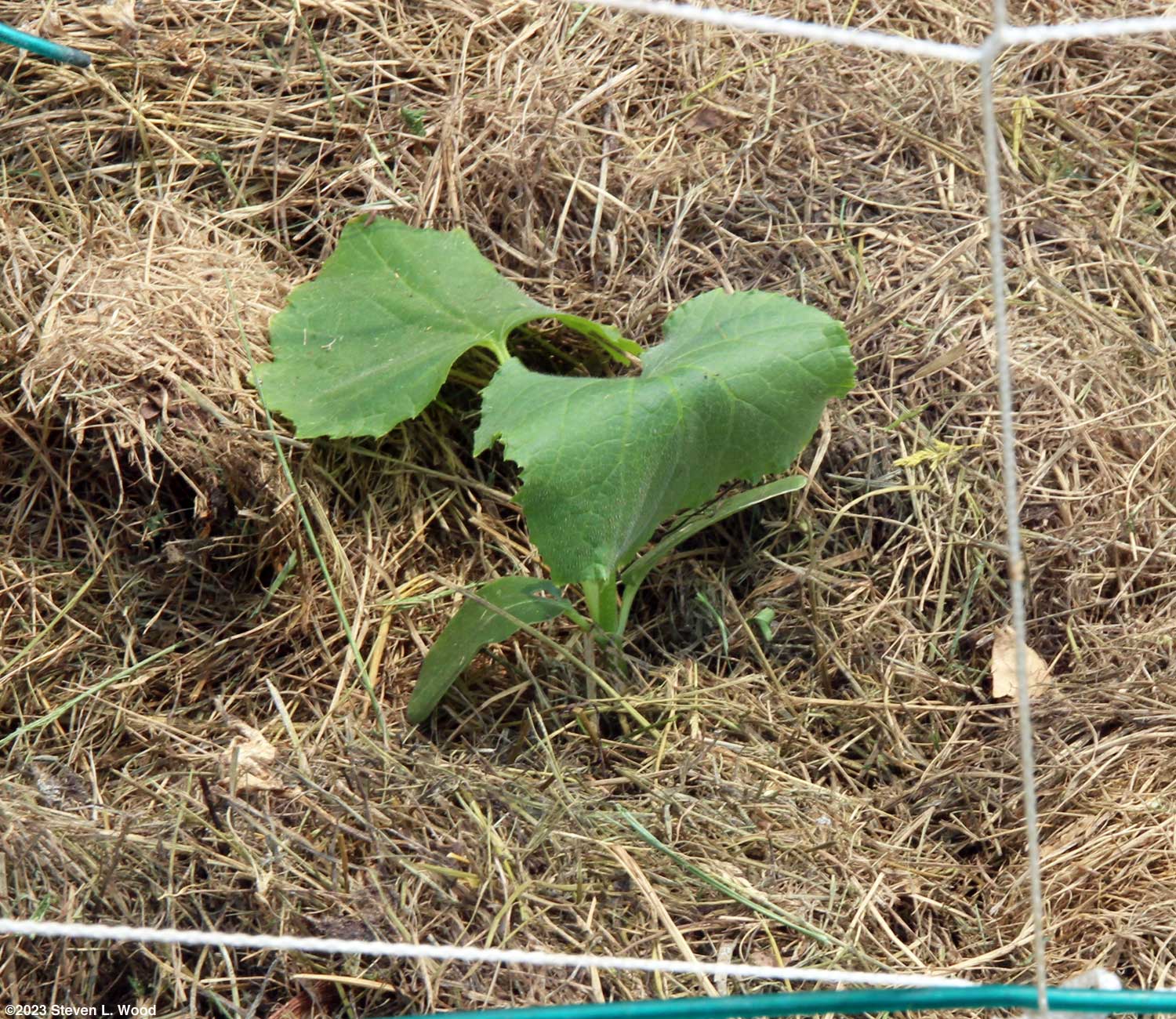
Taking a big chance on not rotating our butternuts, I chose to heavily cover our old compost pile with grass clippings this spring. That's the area where we got a bunch of volunteer butternuts last year. Not rotating to a new location has all kinds of risks (squash bugs, vine borers, cucumber beetles, powdery mildew), but there was a good four inches of compost remaining in some places in the old compost pile site.
While the butternut transplants were pretty tall, I buried them a little deep to compensate and protect them from the wind. The heavy grass clipping mulch should also offer the young plants some protection. We sometimes just split butternuts, seed them, and bake them with brown sugar and a bit of nutmeg in them. More often, especially for family Thanksgiving and Christmas dinners, we make them into butternut mock yams. And because the butternuts are often so prolific, we feel good about donating lots of them to our local food bank.
These butternuts won't be organic. Re-planting in this area will require some serious sprays of insecticides and fungicides. It's a price I'm willing to pay.
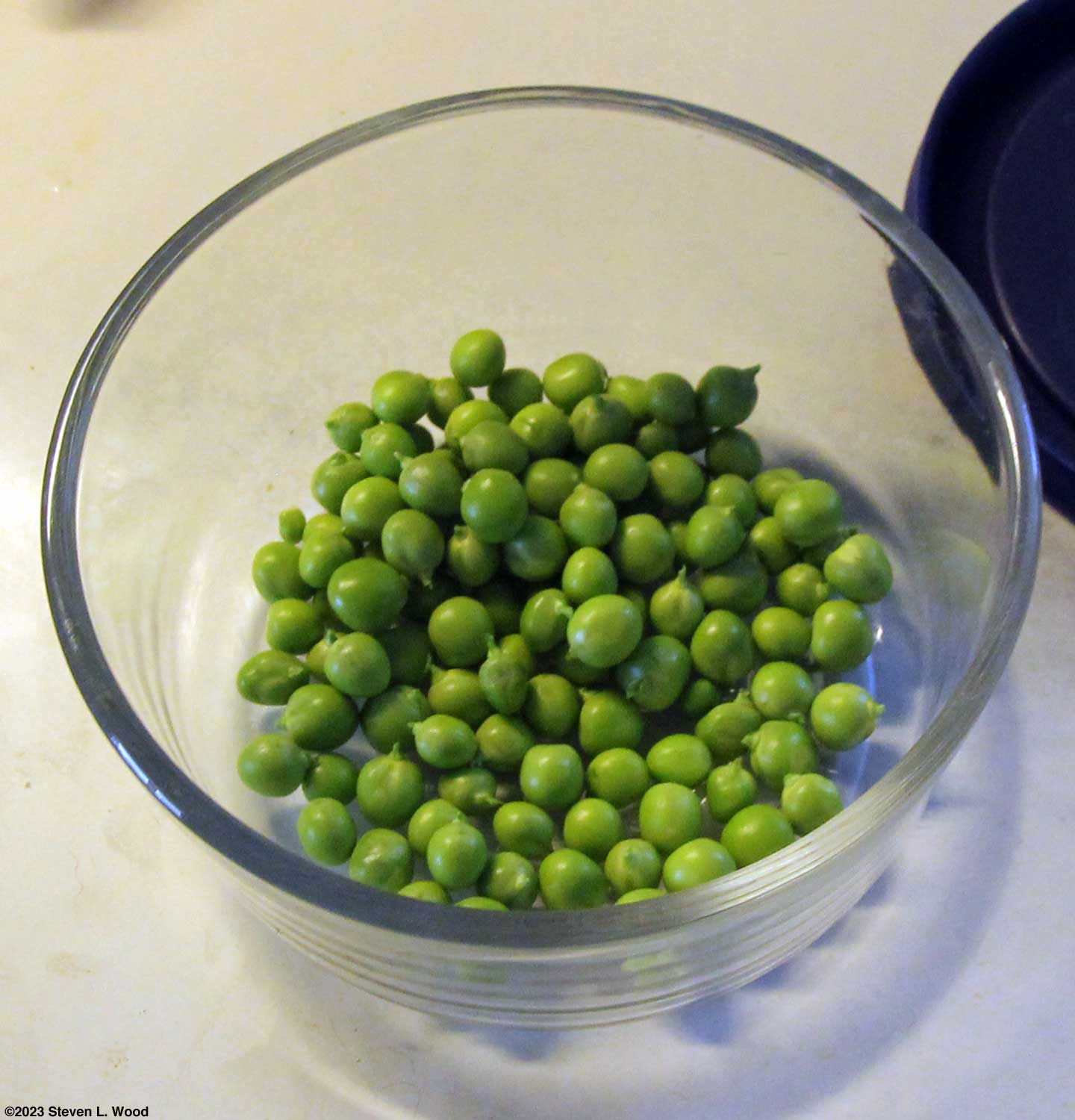
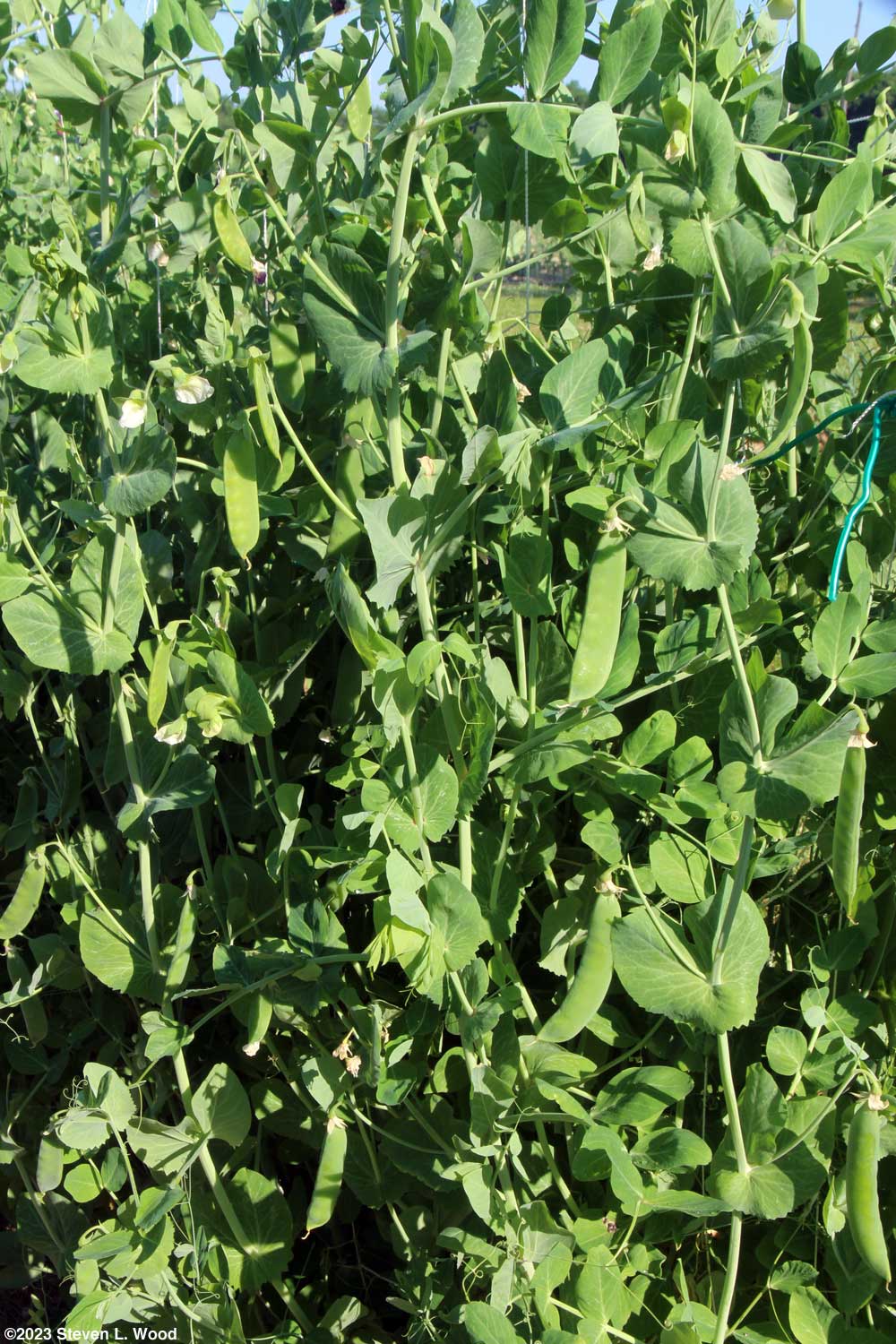
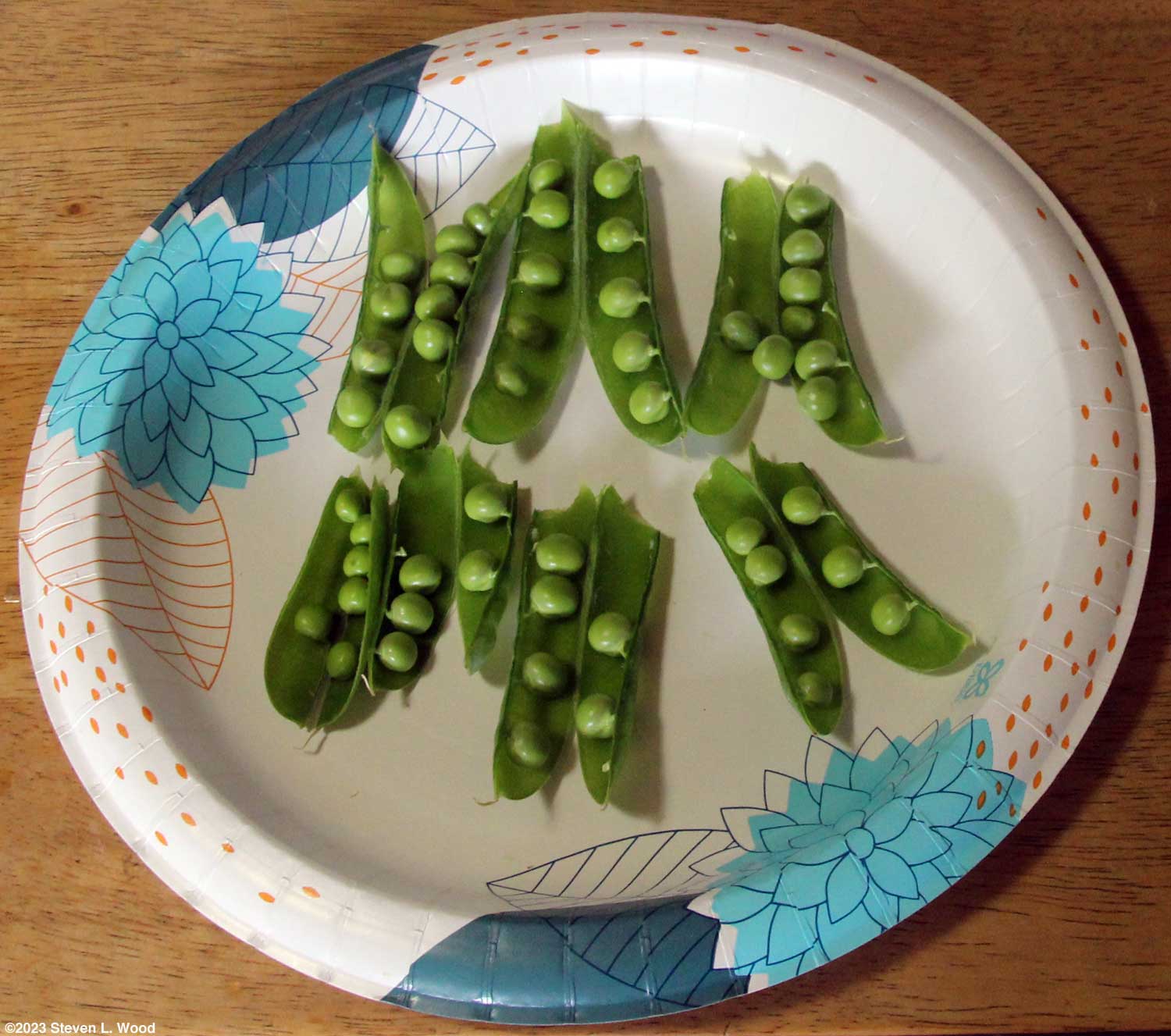
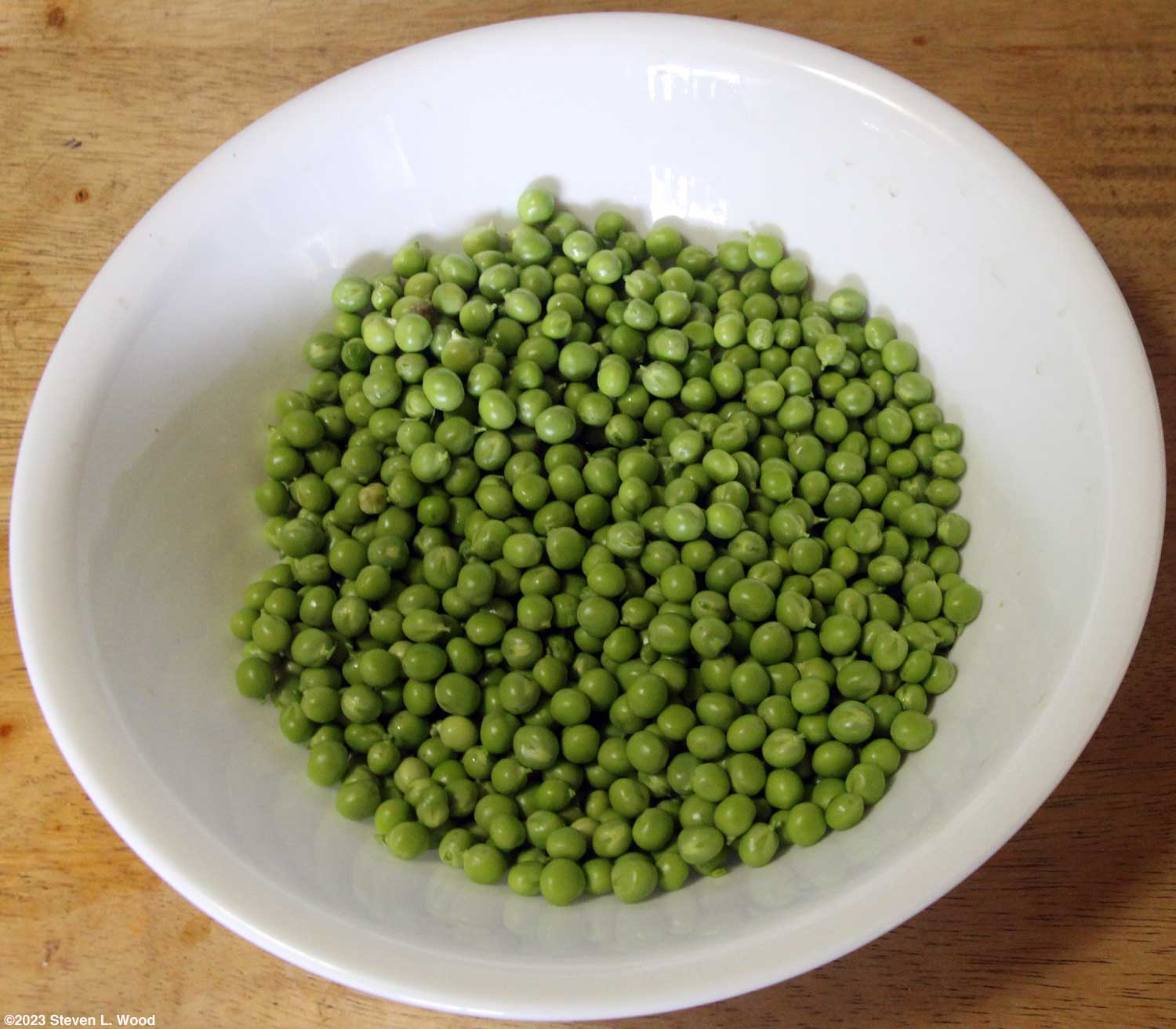
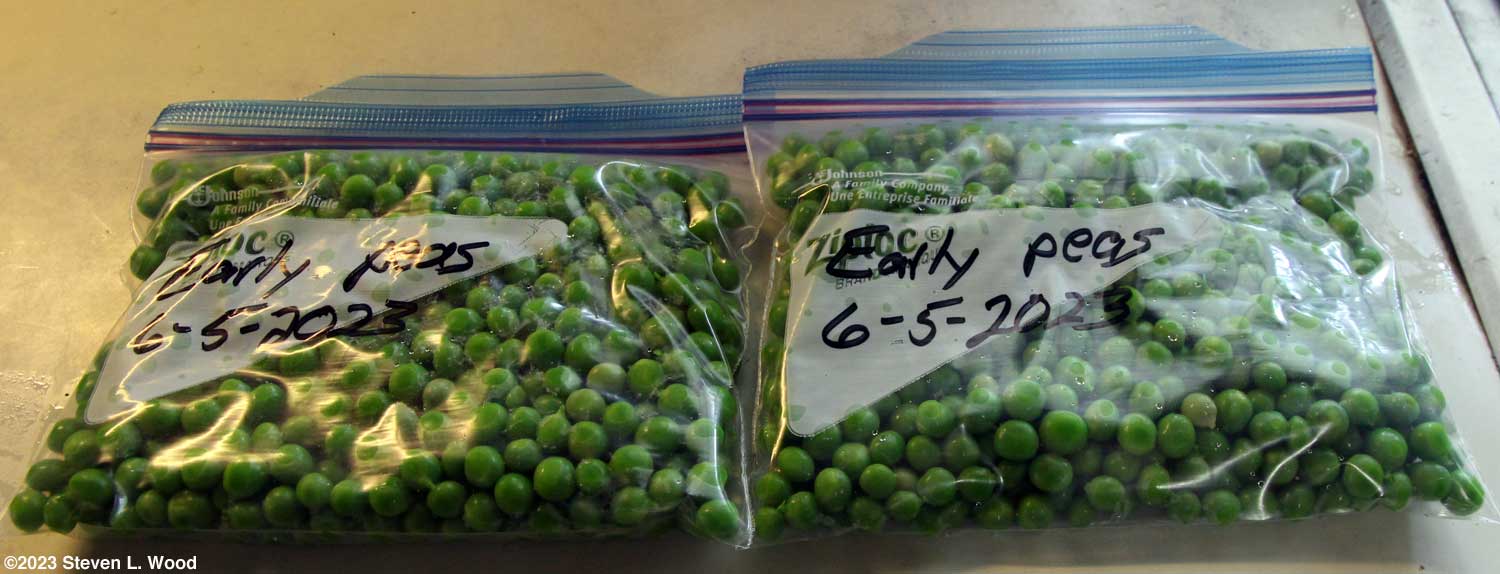
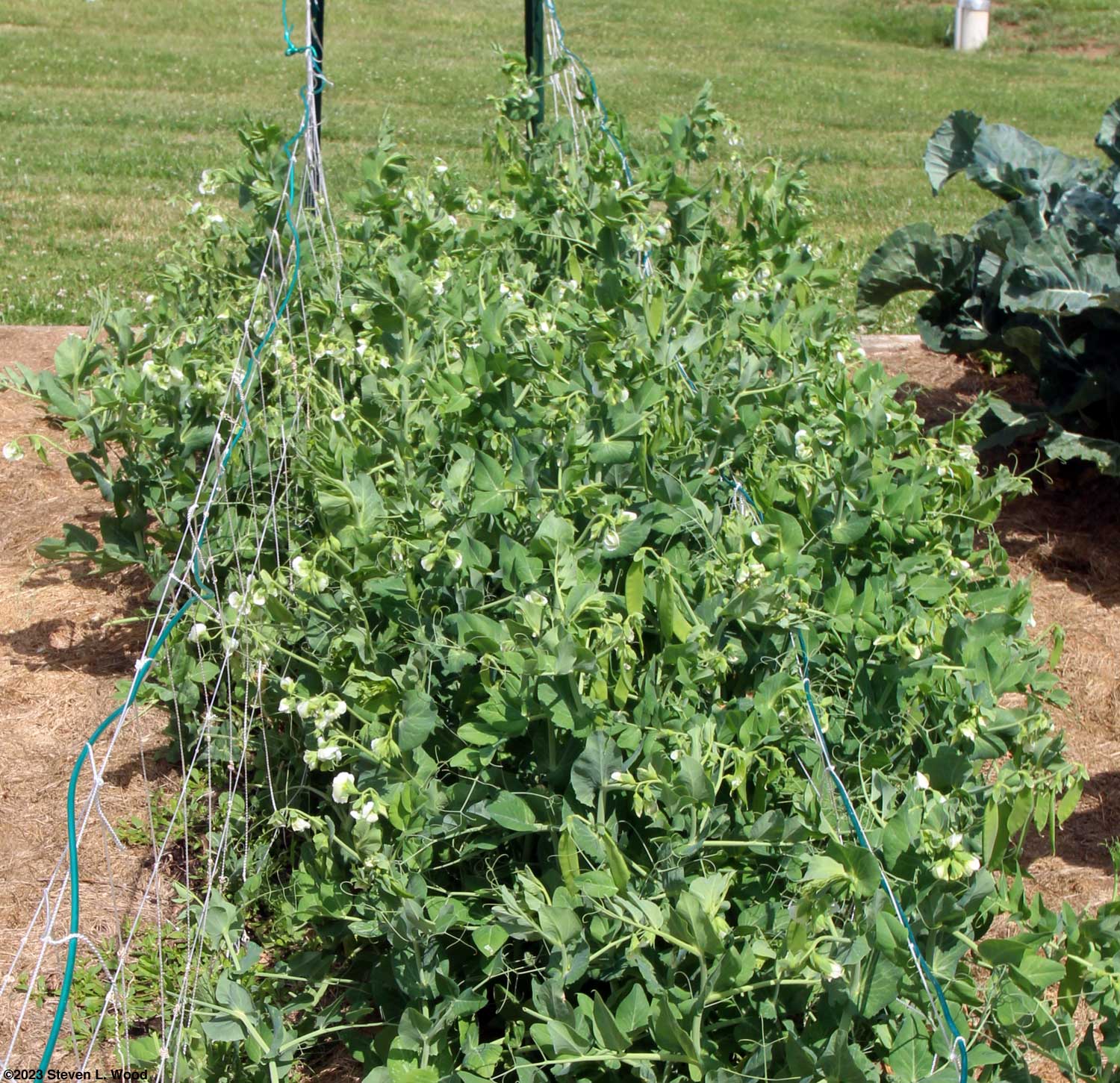
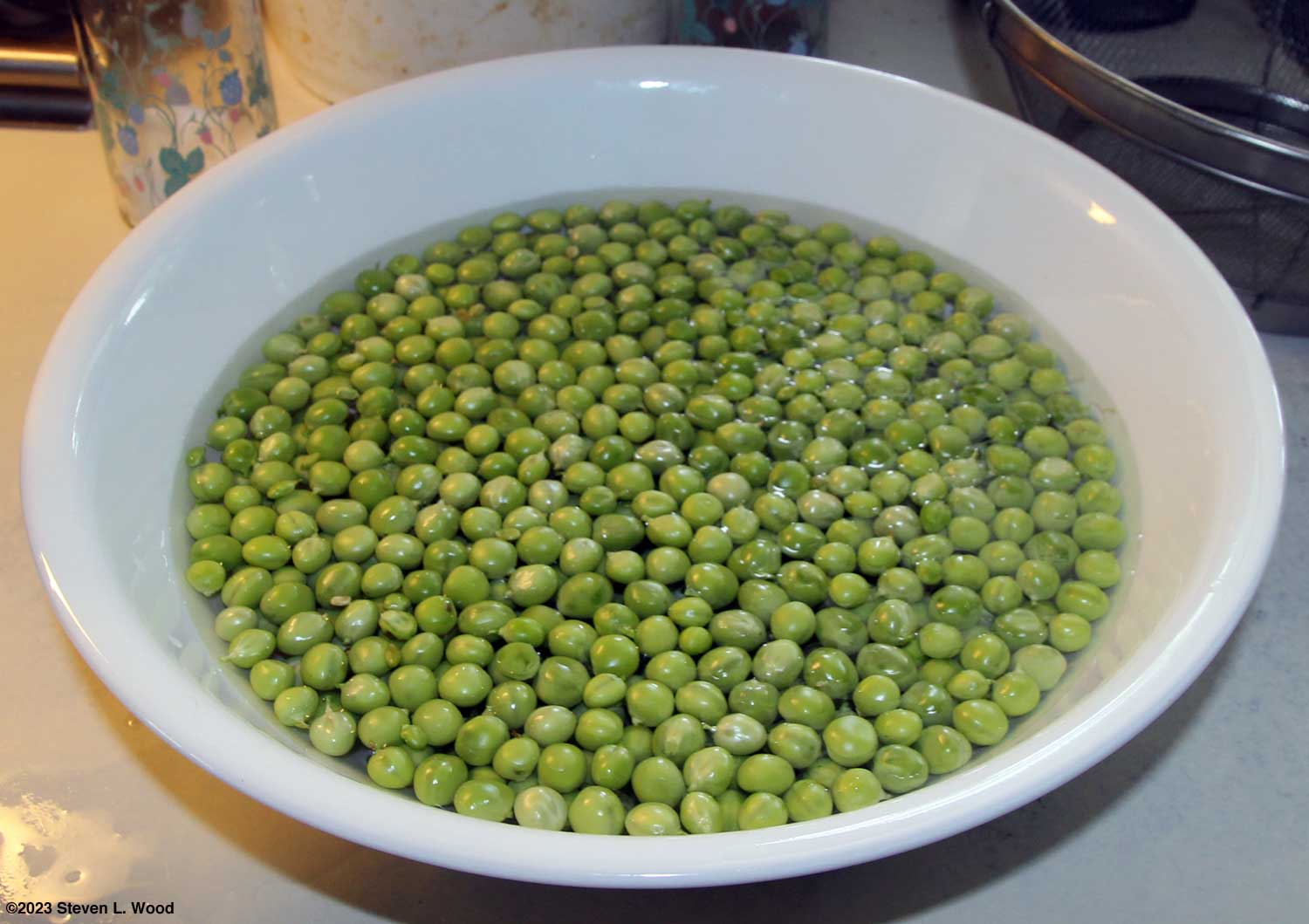
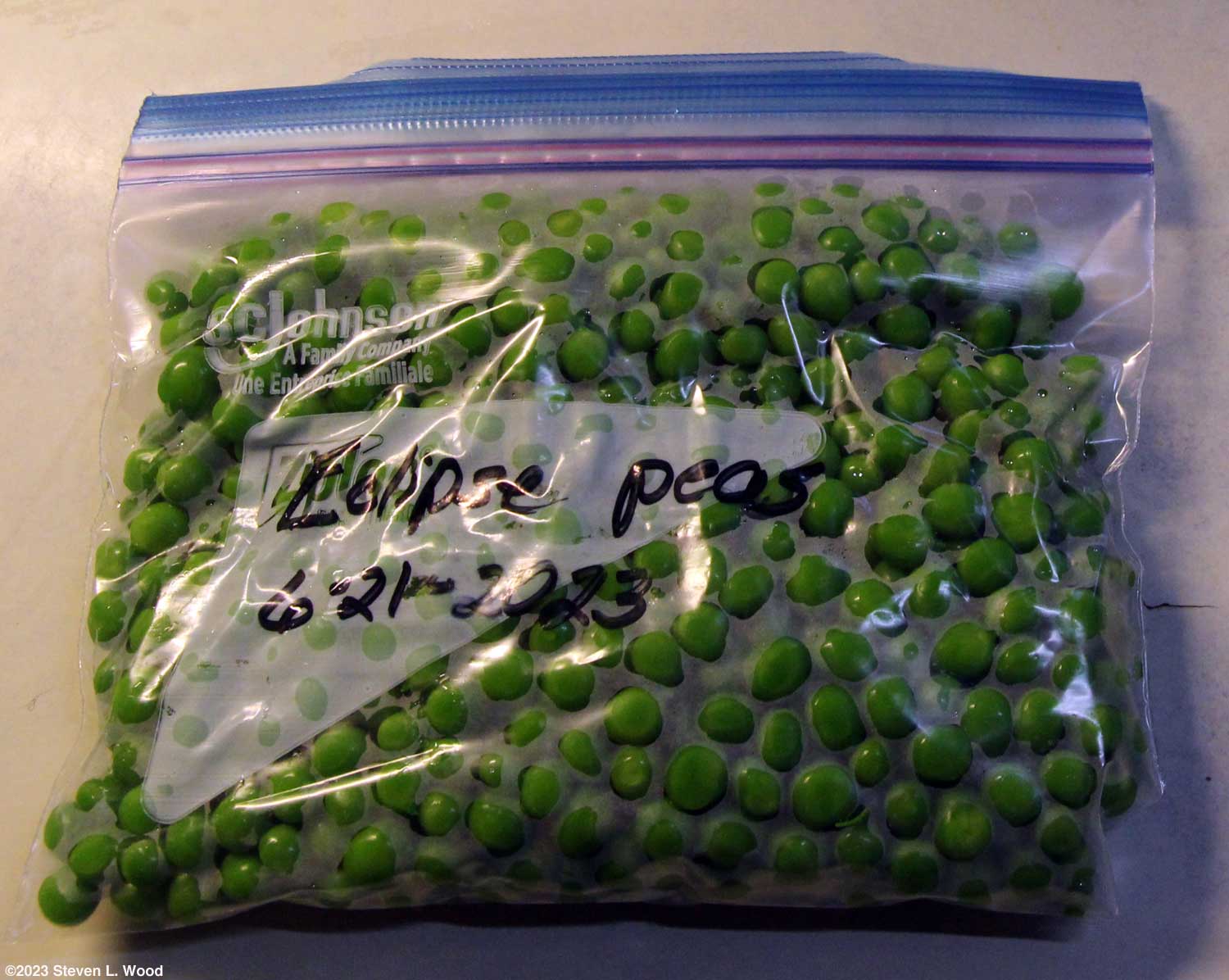
Our early peas are a somewhat cross of the Champion of England and Maxigolt varieties. While peas cross-pollinating is iffy, I'm trying for a cross of the two varieties. But what we picked today had long Champion of England characteristics and smaller, tight pods similar to the Maxigolts. The pea pods were almost all fully filled with very few cull peas that had obvious problems. Rinsed, blanched, and bagged, today's peas made two pints for the freezer. As I wrote in our how-to, Another Garden Delicacy: Homegrown Peas, "Growing peas is a labor of love. If you don't crave the slight improvement in flavor of homegrown peas over what are really pretty good name brand grocery store frozen peas, growing and preserving peas probably isn't worth the effort involved." Since we love peas, it's worth the effort for us.
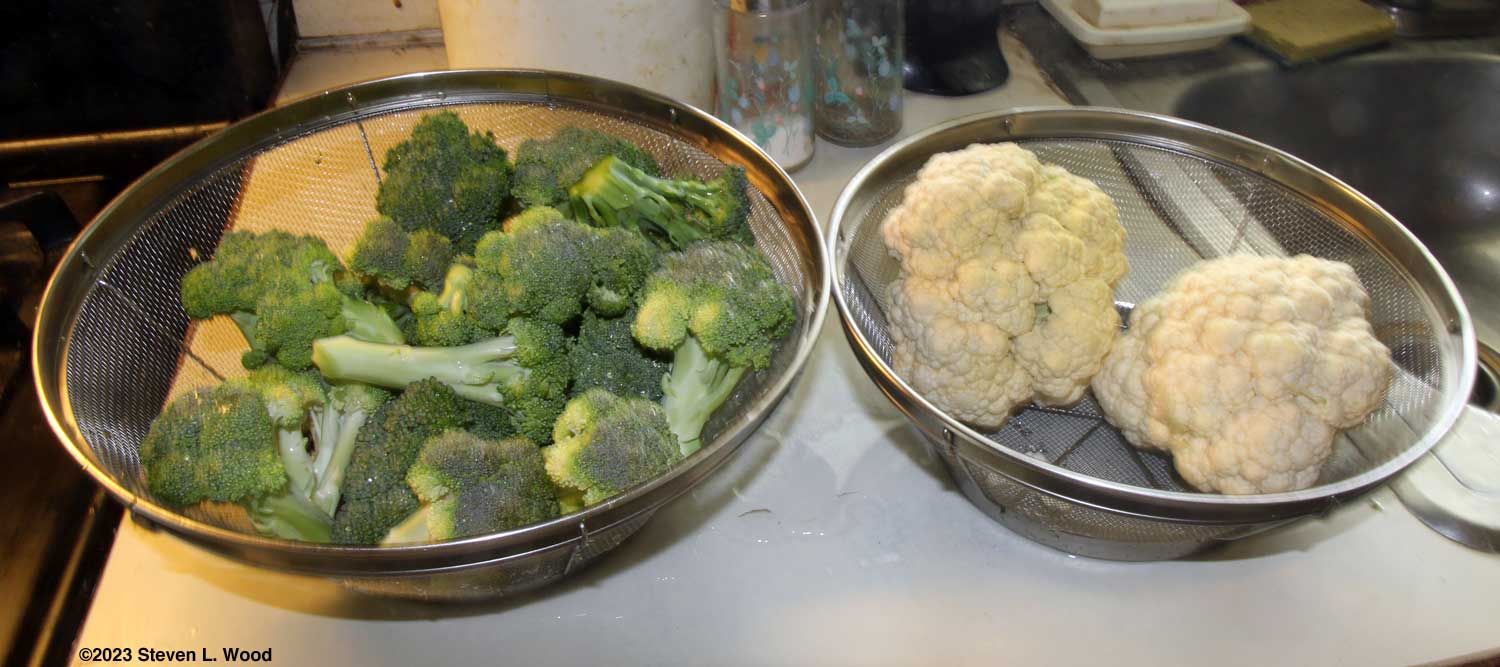
I pretty much took today off from gardening with two notable exceptions. I picked and froze more peas. And later, almost as an afterthought, I went to our brassicas and cut broccoli and cauliflower. Sadly, two heads of cauliflower were badly yellowed, but one was bright white while a purple Violet of Sicily was perfect for picking.
The Violet of Sicily cauliflower turns green when blanched, so there's actually more cauliflower in the photo above than shows. Once frozen, the mix will go into a gallon Ziploc bag and into our big freezer. Even with our current hot weather, we may yet get more usable broccoli and cauliflower. Here's hoping!
The broccoli and cauliflower I froze last night pretty well filled two gallon Ziploc freezer bags. It appears that we may get one more picking of the delicious brassicas, especially with a few cooler days in the offing. Once they're done producing, I'll replace the broccoli and cauliflower with a couple of rows of green beans. We should have lots more peas to pick. Our early peas are still blooming a bit while they also are fattening lots and lots of pea pods. A little rain and the cooler weather certainly won't hurt those vines. But I do need to remember to start some Japanese Long Pickling cucumber plants inside. They'll replace the peas on our double trellis. Since our downstairs pantry is still filled with pickles and relish, this crop will be for some quick seed saving. I might just be able to sneak in a fall crop of Sugar Snap peas after the cukes.
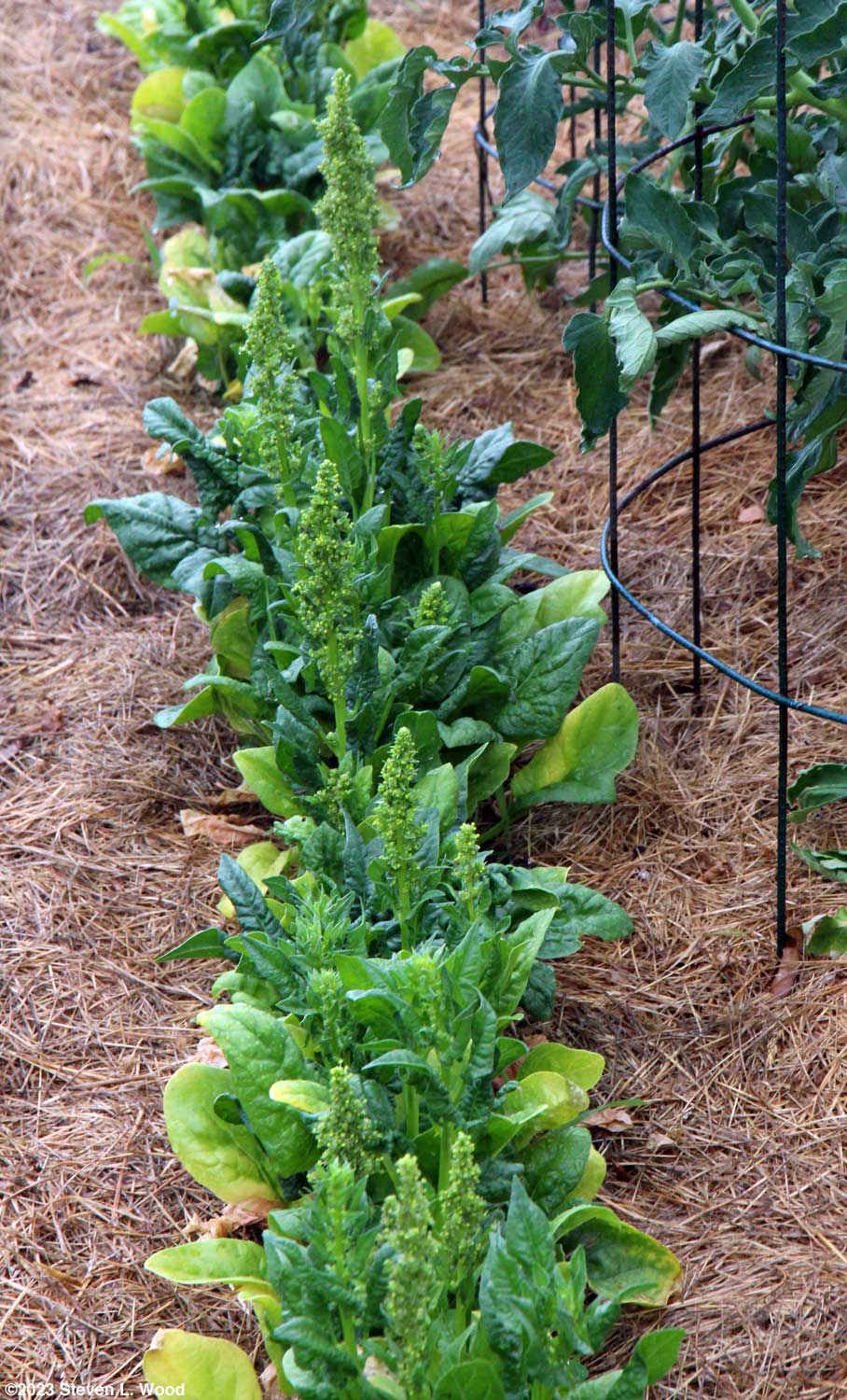
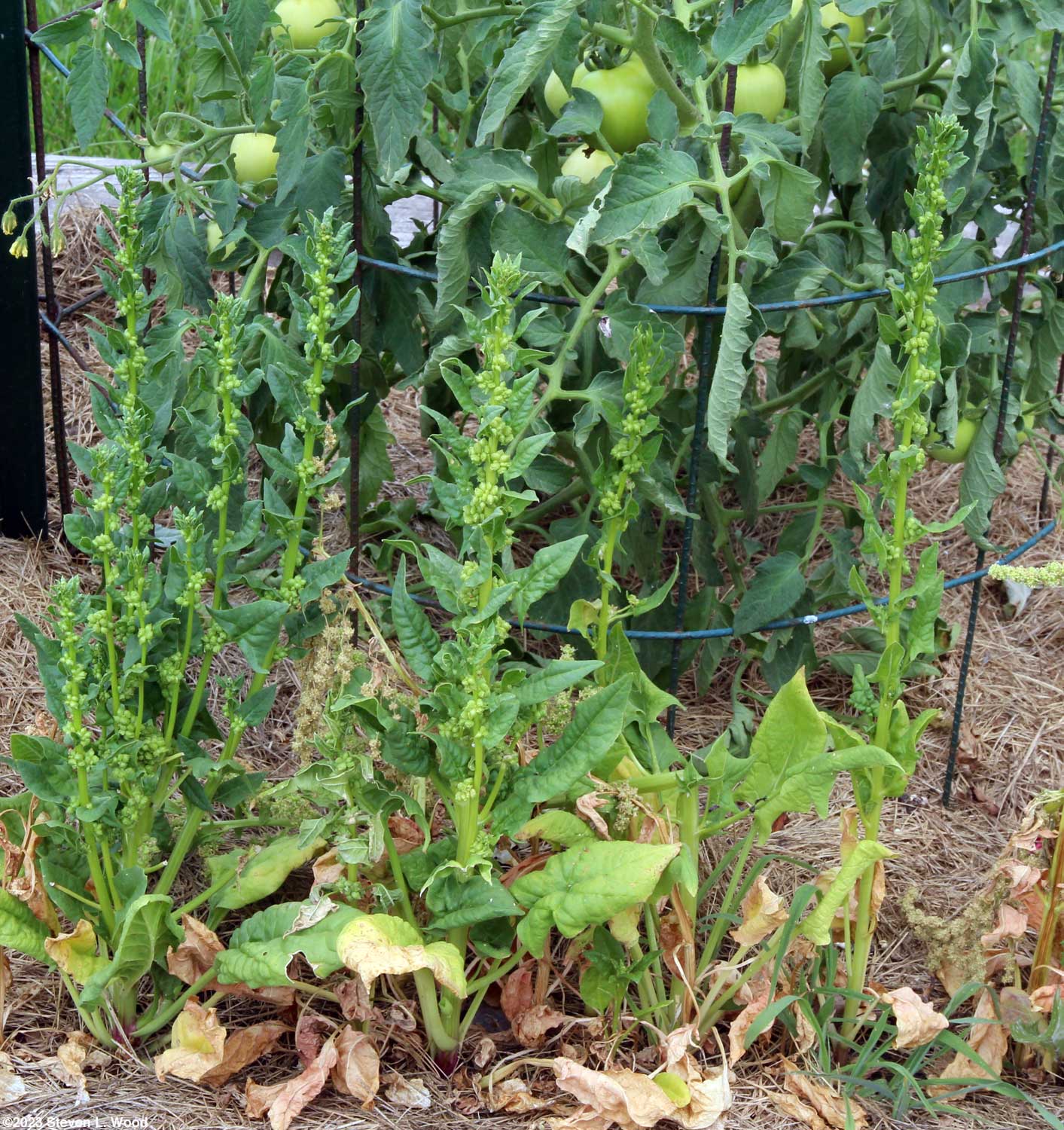
Hot weather and lengthening days are two factors that cause spinach to bolt. And after only a few spinach salads this spring, our row of Abundant Bloomsdale spinach is blooming up and down the row. Our spring spinach season always seems too short. All is not lost with the blooming spinach plants. We'll save seed from them. Last year's spinach perversely produced only a few female plants for seed saving. So I'm hoping that we'll get a good mix this year and lots of seed. Incidently, spinach plants are mostly male or female, but sometimes carry both gender characteristics. I'm hoping the little bit of rain we're getting today will pop up our smother/cover crop planting of buckwheat. I've seen it germinate before with just heavy dew.
Besides hardware, Hoss Tools offers a good line of affordable garden seed. Sorry, photo fans. Today is a no pix gardening day. This morning, I direct seeded a twenty foot row of red kidney beans into our East Garden plot. I also direct seeded five twenty foot rows of sweet corn. The sweet corn seed furrows got watered before seeding, as we probably have rain coming over the weekend. The varieties planted were Xtra Tender 3473 white, First Lady and American Dream bicolors, and Yellowstone, Vision MXR, and Accentuate yellows. Part of the reason for no photos is that I spent most of the afternoon working on our lawn tractor. I wrestled the pull-type tiller off of it, cleaned the mower deck and sharpened its blades, and reinstalled it. It's a labor intensive job that left me worn out. But I'm ready to mow and collect grass clippings to mulch our future East Garden transplantings of yellow squash, melons, tomatoes, and paprika peppers.
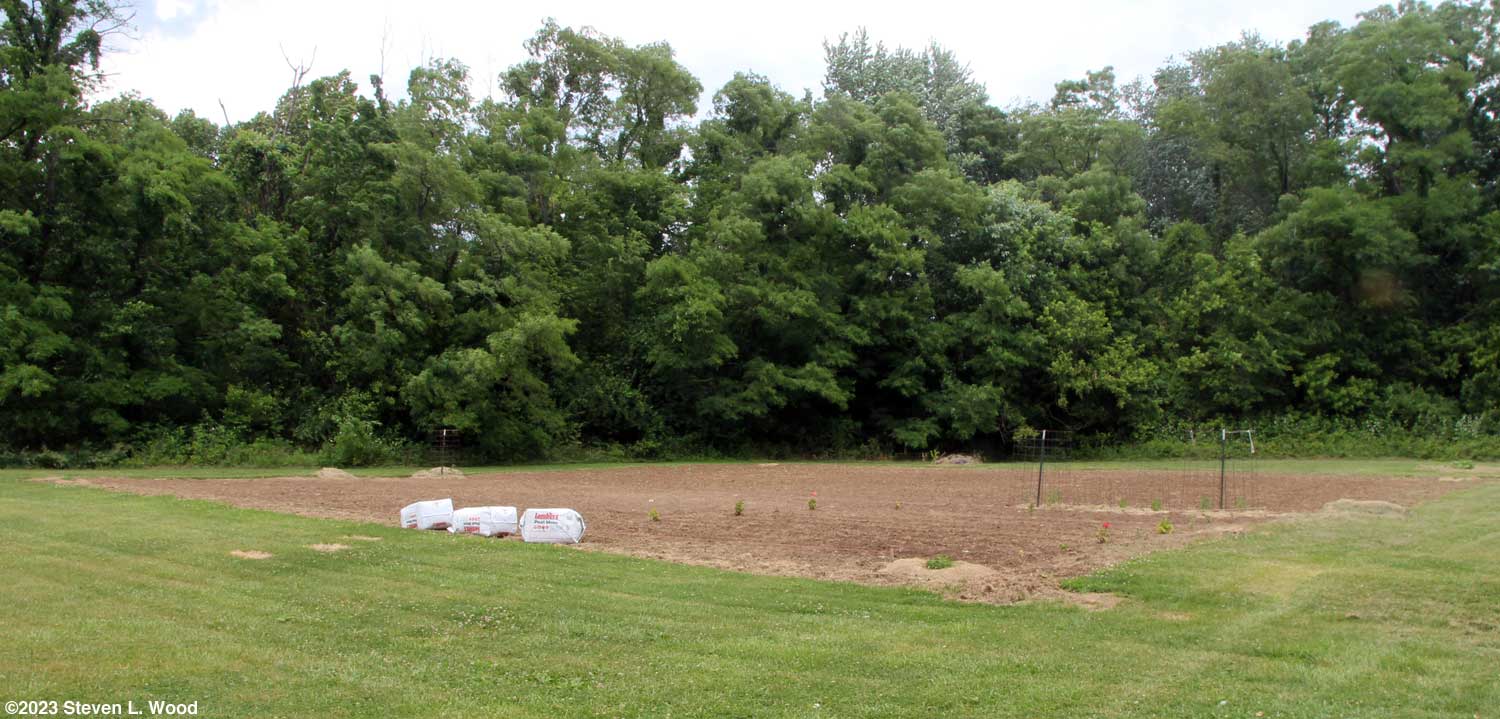
Little by little, I'm getting our East Garden planted. Yesterday, of course, I direct seeded kidney beans and sweet corn into the plot. Today, I transplanted tomato and paprika peppers along the eastern side of the area I'm using this year in the East Garden. The rest was seeded to buckwheat several days ago. For the planting, I selected the largest and healthiest tomatoes and peppers I had. I put in two Crimson Sprinter tomatoes, three Boldog Hungarian Spice paprika peppers, and one each of Mountain Fresh Plus and Mountain Merit hybrid tomatoes.
Moving to the other end of the eighty foot tomato/pepper row, I put in one each of Red Pearl and Honey Bunch grape tomatoes. The open pollinated Red Pearls are the best tasting grape tomatoes we've ever grown. Honey Bunches are the most productive grape tomato variety we've grown...and have good flavor. Each transplant hole got a little peat moss, some precious compost, lime, ground eggshell, and some commercial 12-12-12 fertilizer. The planting holes were liberally watered with a starting solution of Quick Start My plan for today was to transplant tomatoes and peppers and then mow and collect grass clippings. The transplanting took far longer than I expected...and took more out of my 74 year old bones than I'd anticipated. As I age, I find that I can't now do what I'd consider a full day's work anymore. But little by little, I'm getting things done. I thank the Lord for each day.
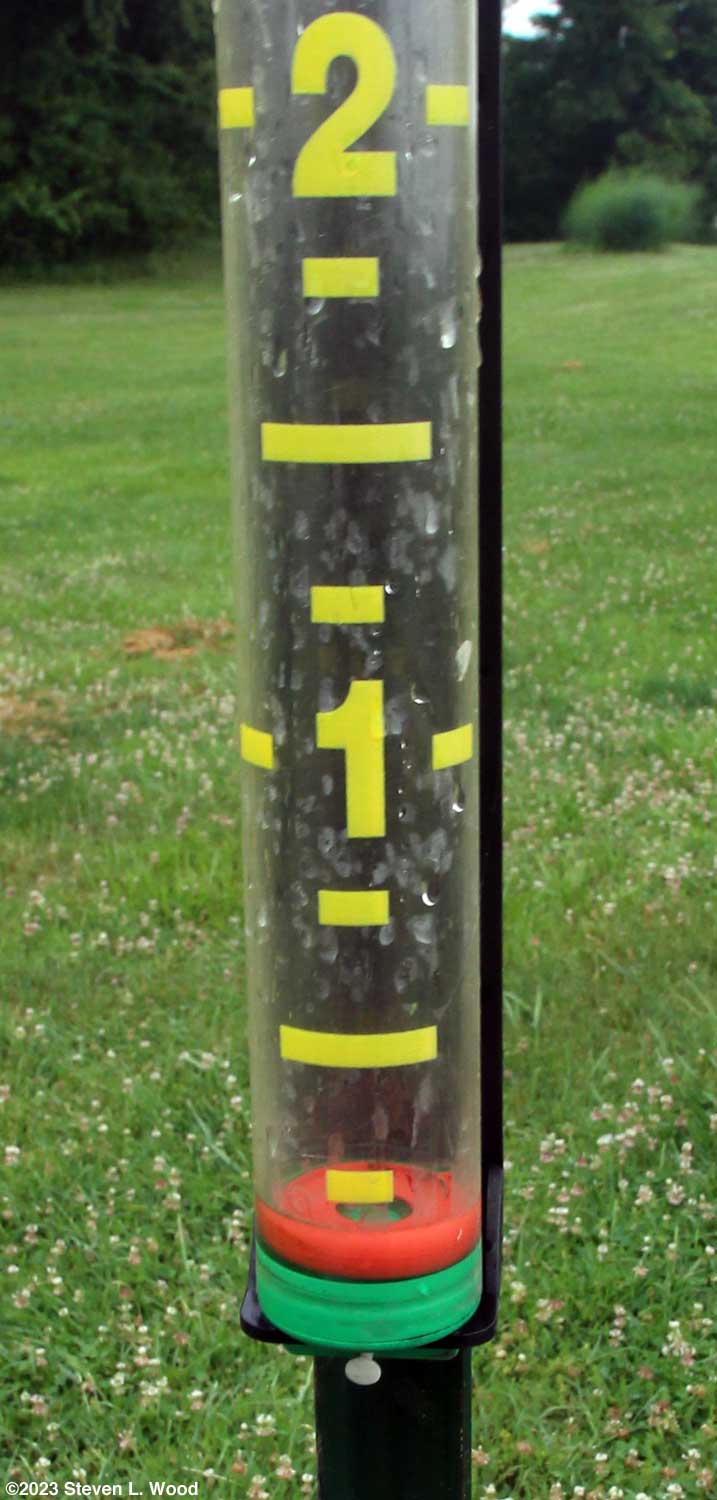
Hallelujah! We got 1.6 inches of rain on Sunday! Good thing, as our deep well ran dry for a few minutes today for the first time in years. When we had four long-haired daughters living with us, screams from the shower of "The well ran dry" happened all too frequently. As usual, the well came back up in about forty-five minutes.
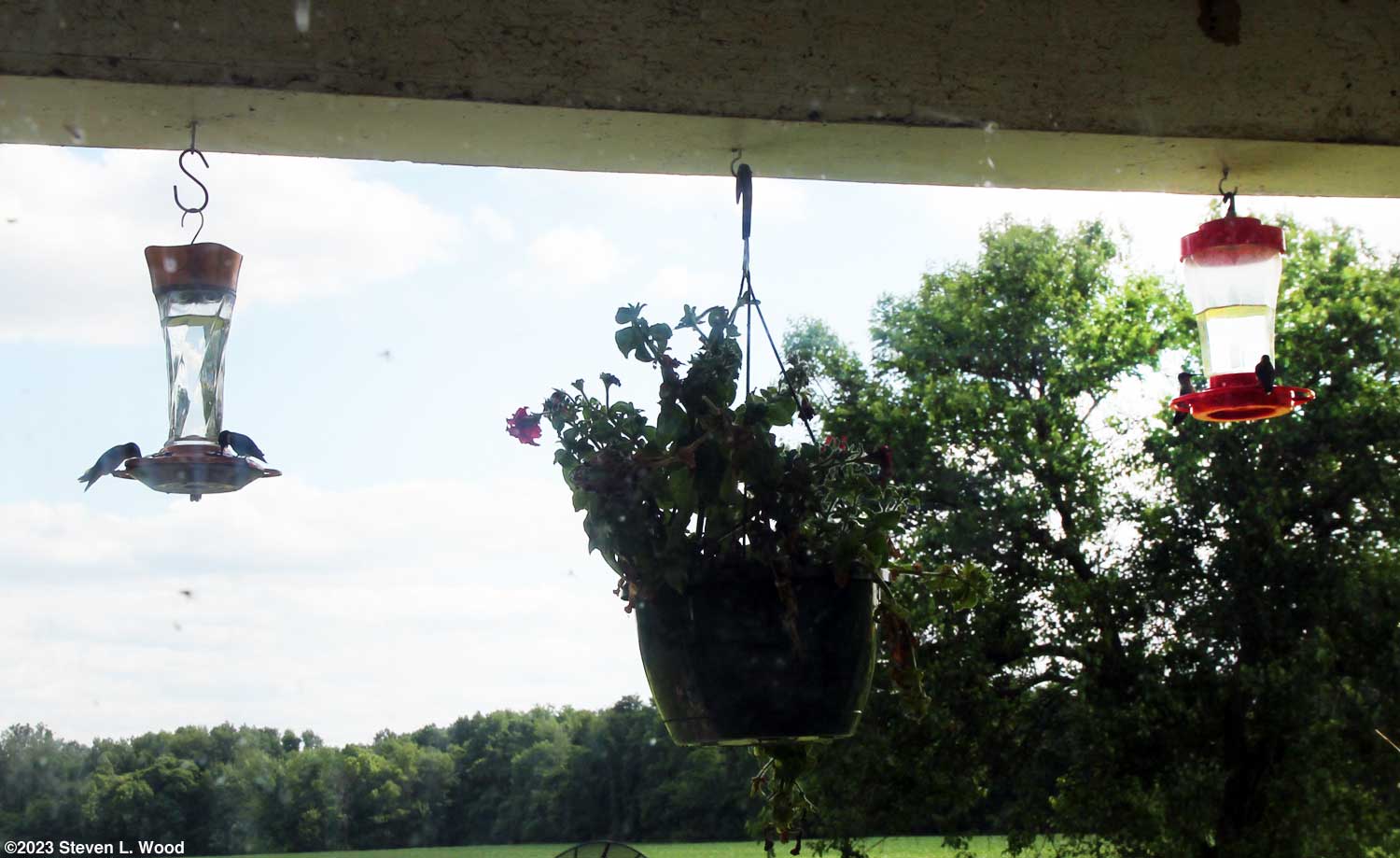
It's now obvious that a bunch of young hummingbirds have left their nests. I've had to refill our main feeder twice a day the last few days. In desperation, I hung a thirty-two ounce feeder yesterday, but no birds were visiting it. So I moved it one hanging basket plant away from the birds' favorite feeder, and it has eased the need to refill feeders.
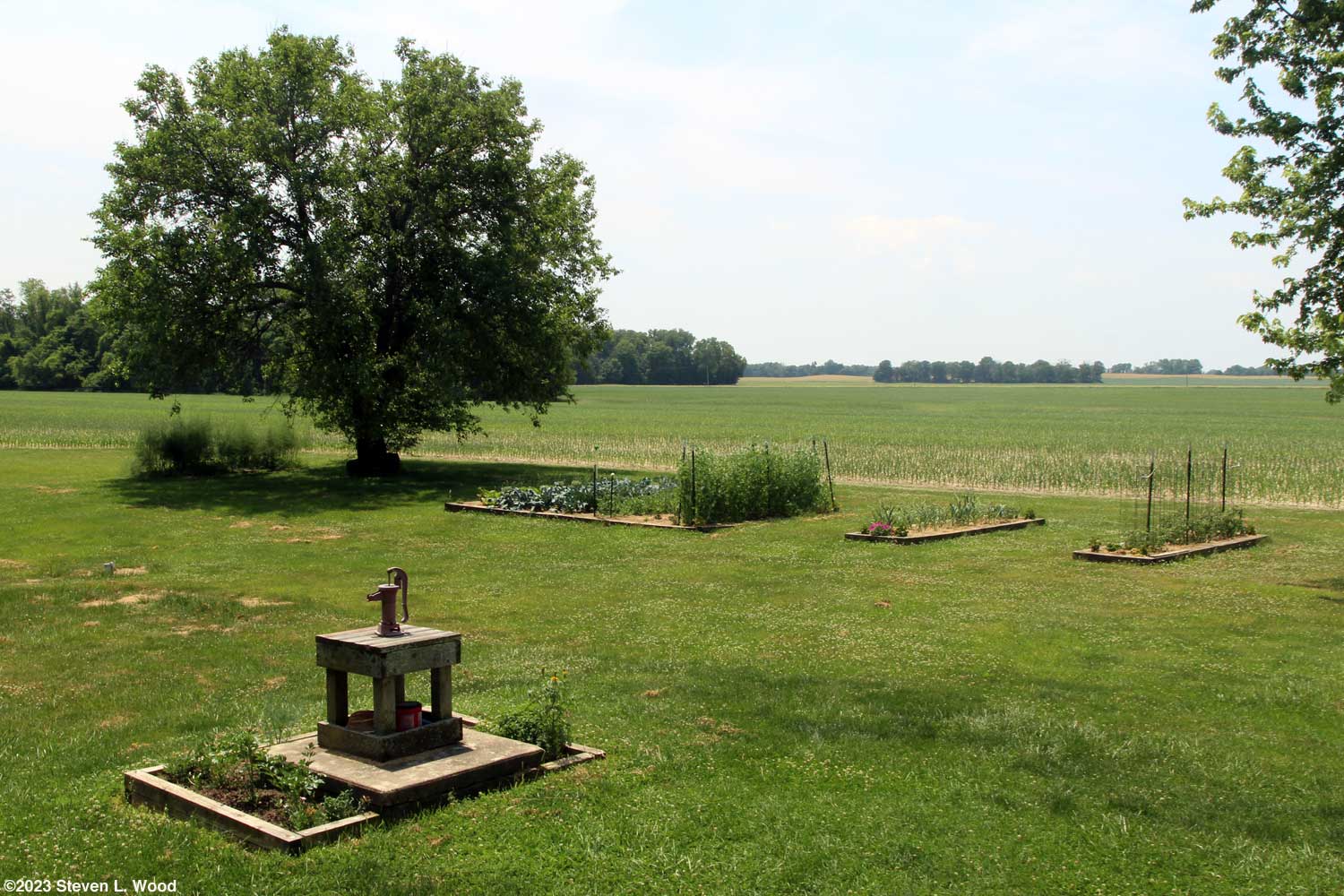
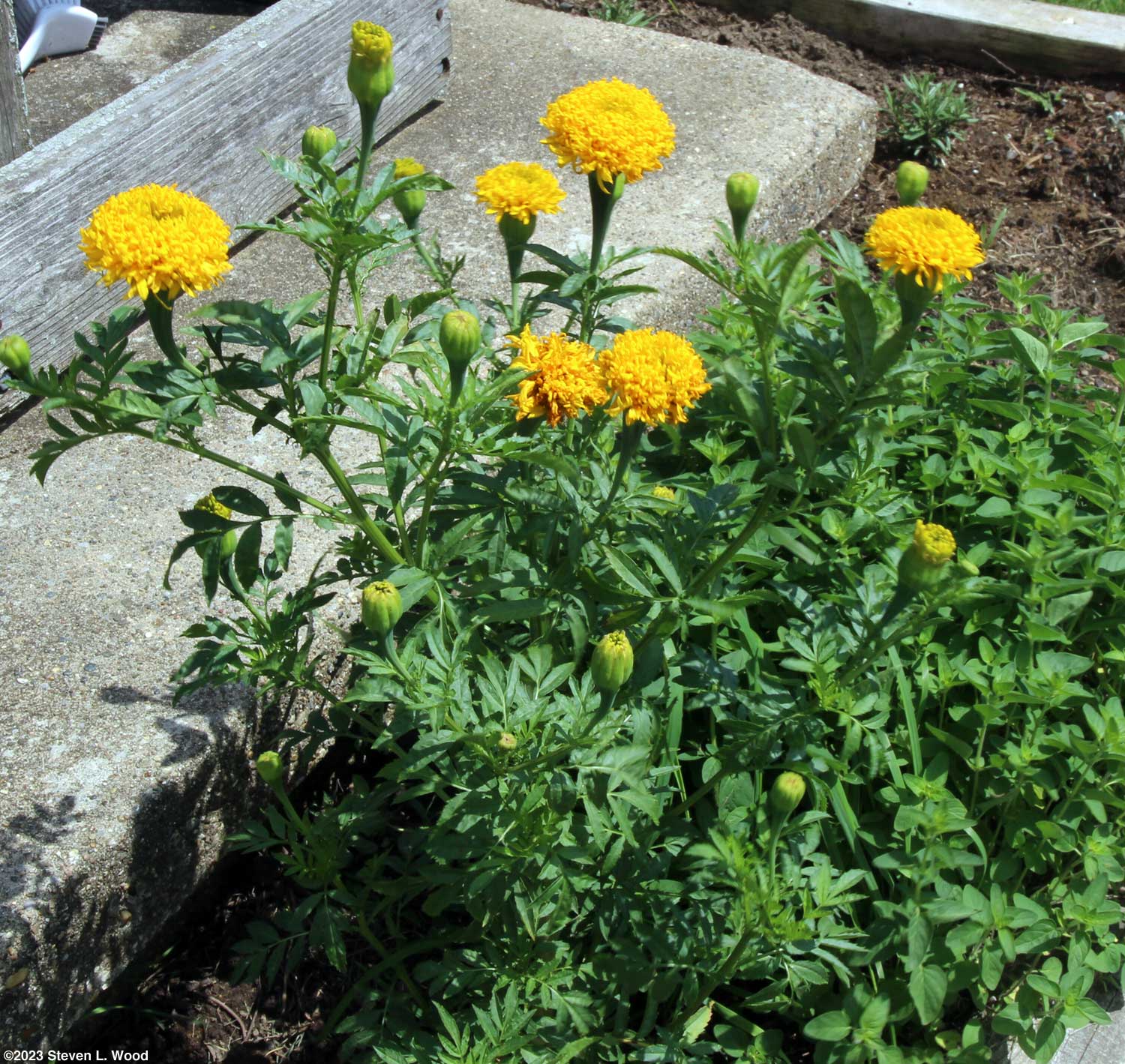
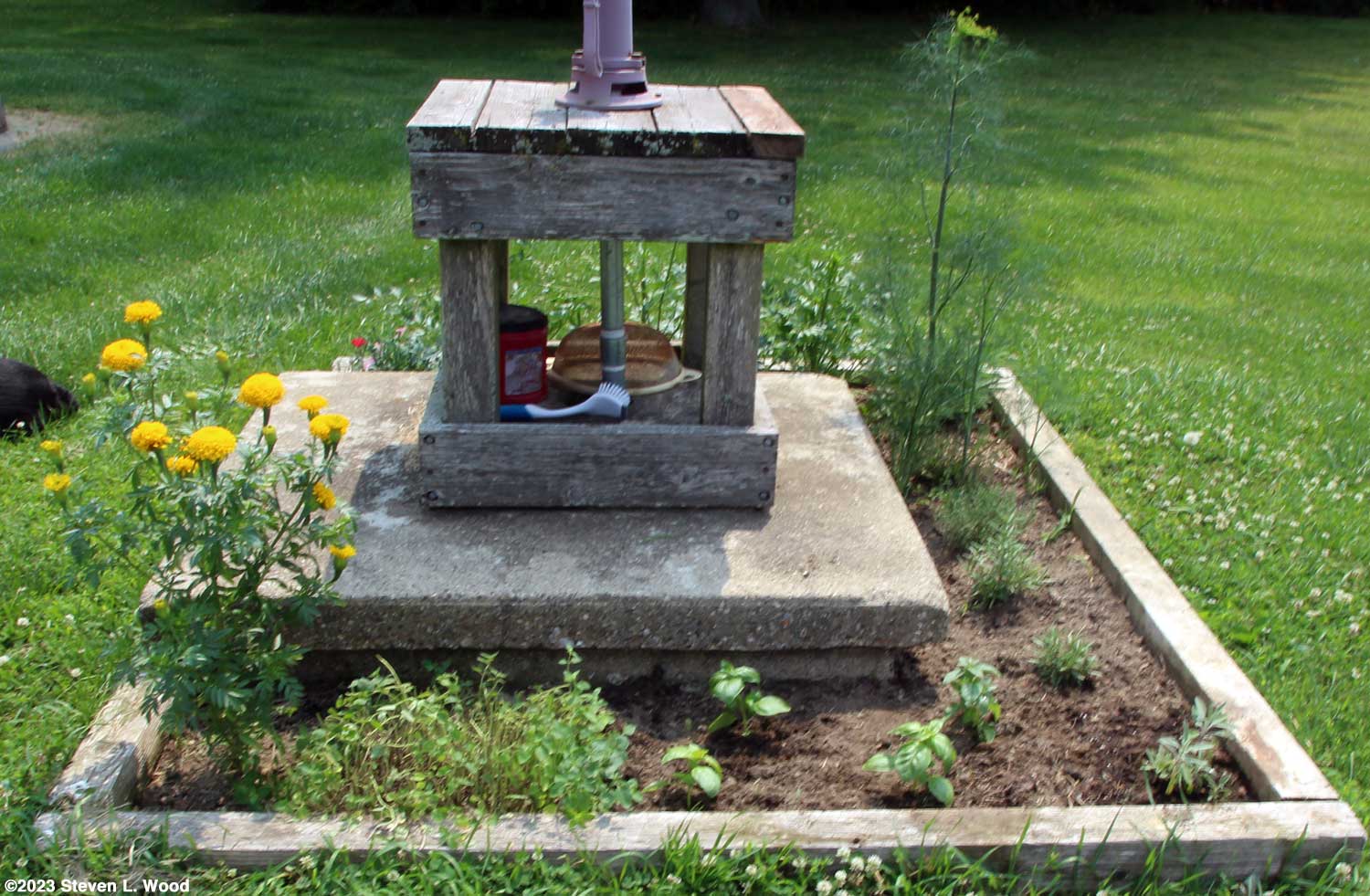
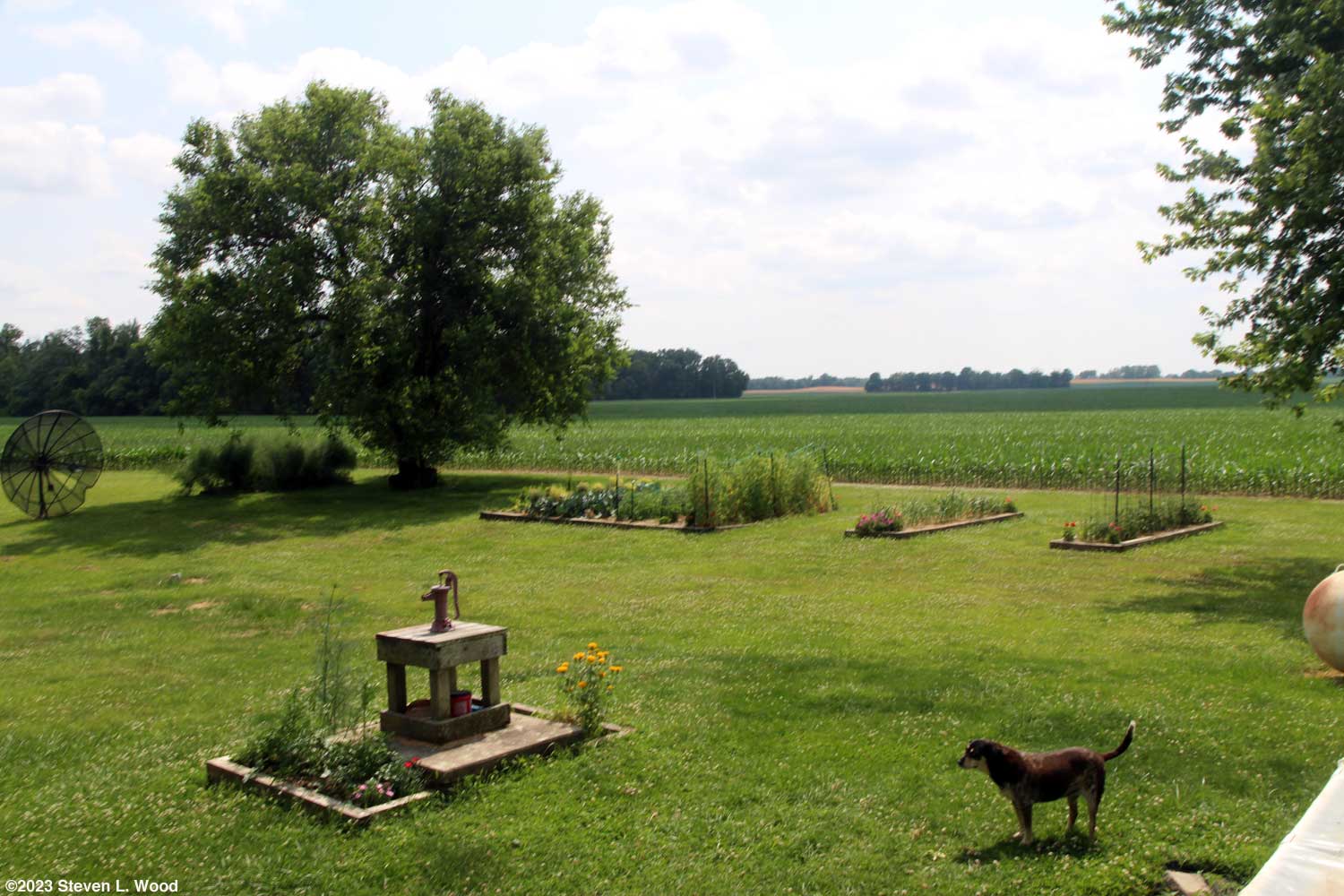
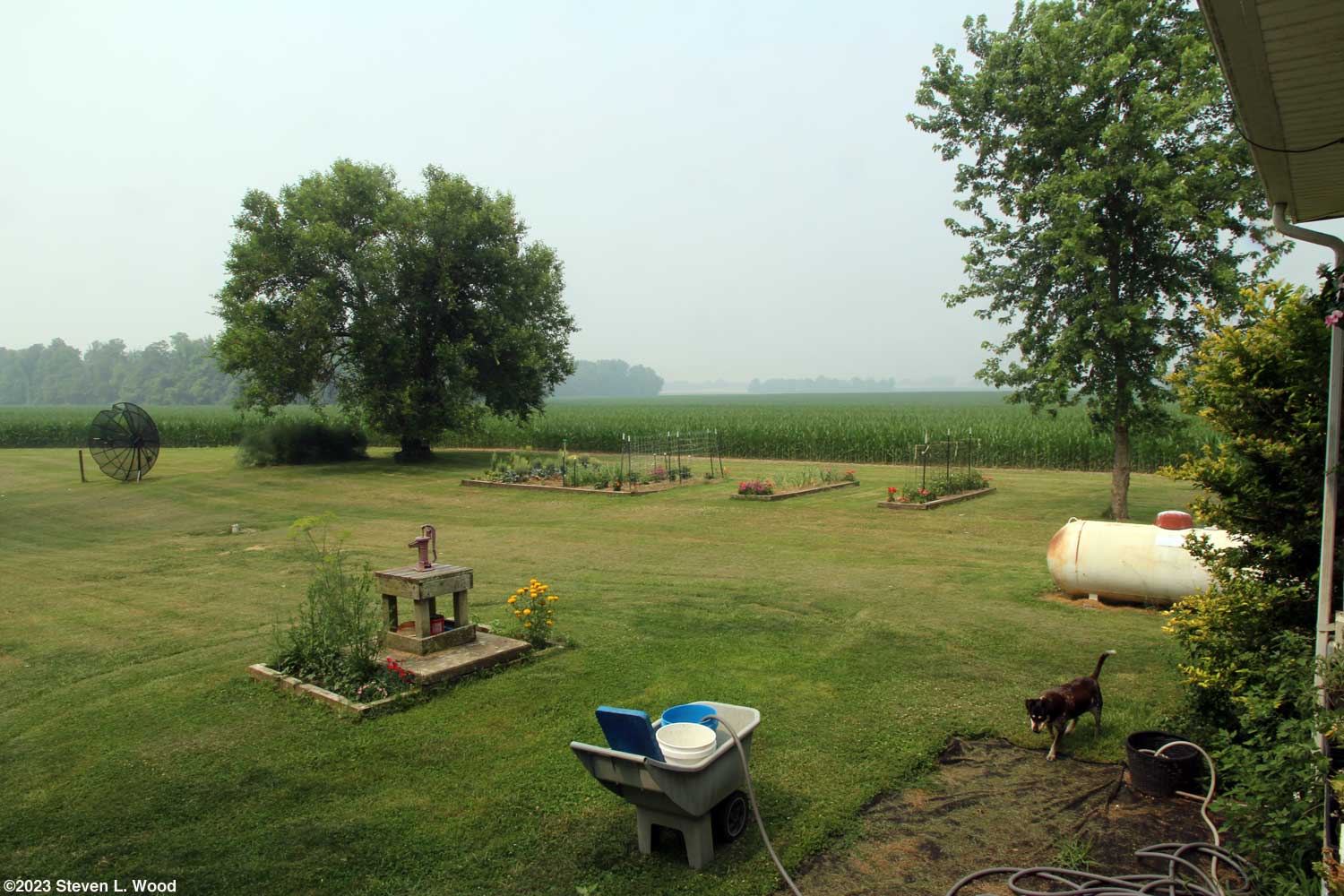
Beyond picking peas, I didn't do a lot of gardening today. Instead, I mowed the field around our East Garden plot. The grass and clover in the field were a bit high and wet. The clippings will need to sit and dry in the sun for a day or two before being swept up to be used as grass clipping mulch around our tomatoes, paprika peppers, and melon plants in the East Garden. Below are some images I grabbed today while walking around our garden plots. Yellow Things are coming into bloom these days. A single yellow marigold graces one side of our herb bed. And in our main raised bed, our Goliath broccoli plants for seed are in full bloom. Most of the pollinating of them seems to be getting done by bumblebees.
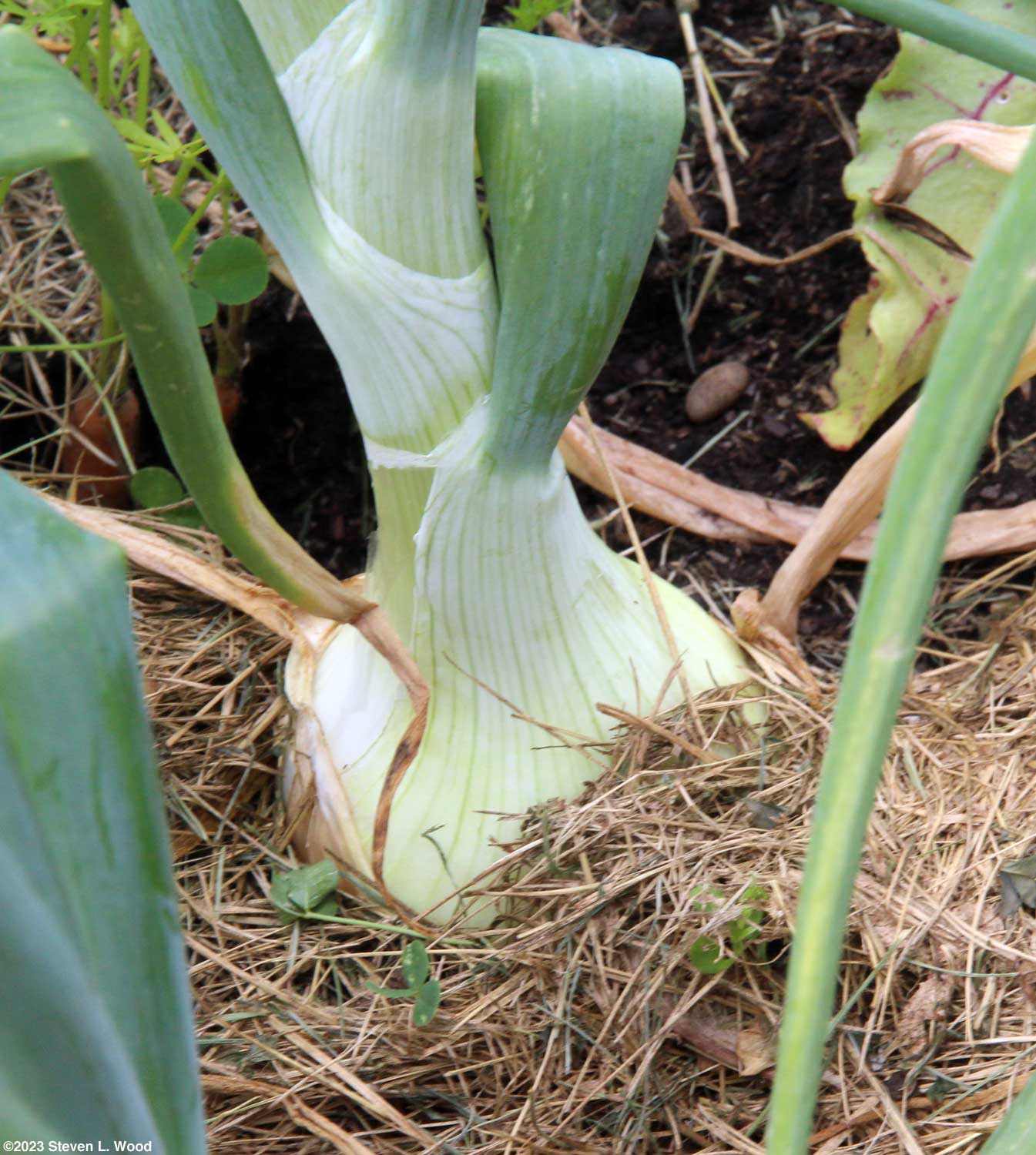
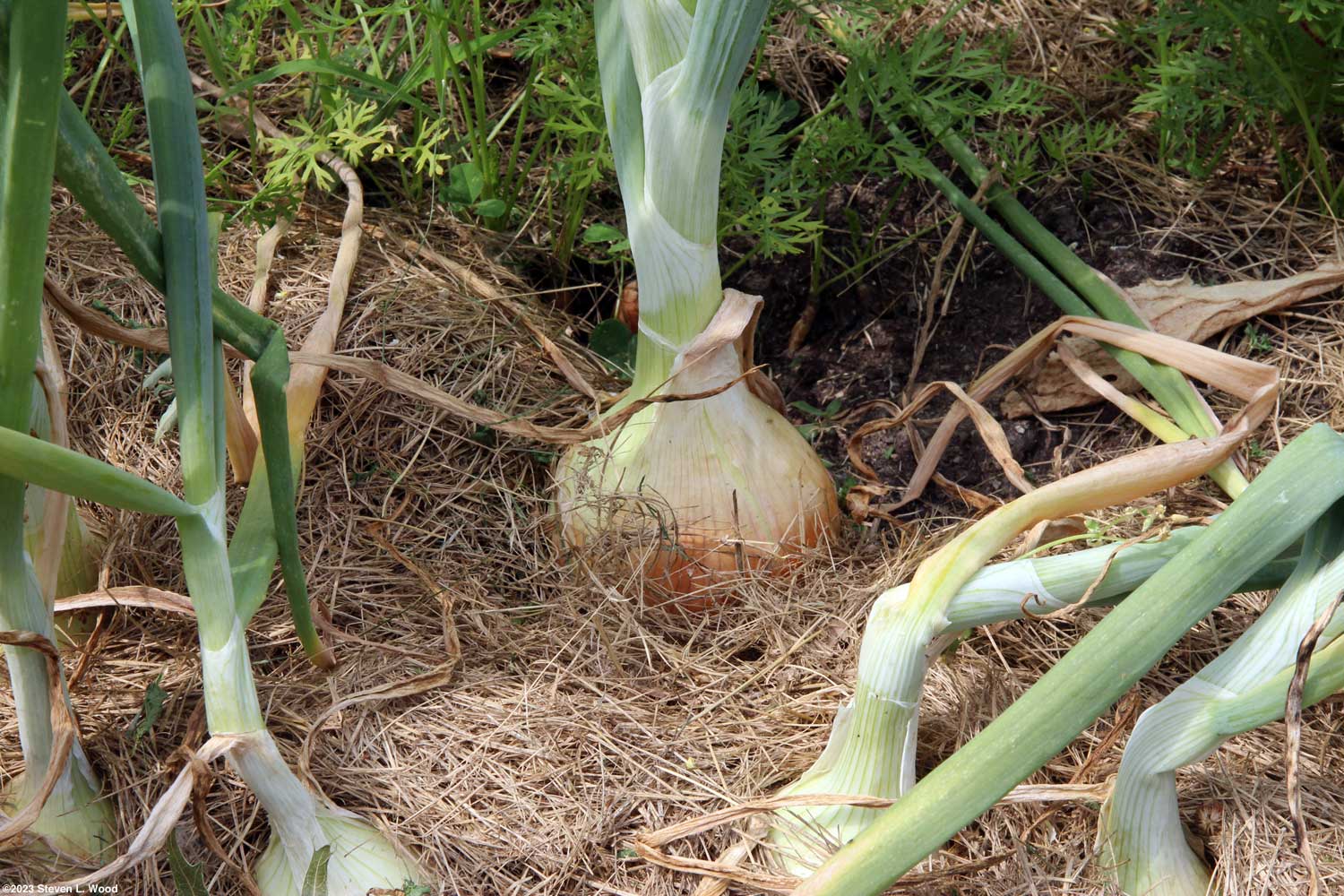
When walking the garden today, I saw that one of our overwintered Walla Wallas was putting on a nice onion bulb. That's just what I wanted. Sadly, another plant had put up a scape, something that might limit the onion bulb size. I left both the small, but good onion bulb and the scape alone to see what happens. Overwintering onions is all new to me. Several good pages from trusted seed suppliers may give you some good guidance on the subject: • Johnny's Selected Seeds: Recommendations from Johnny's Onion Overwintering Trials
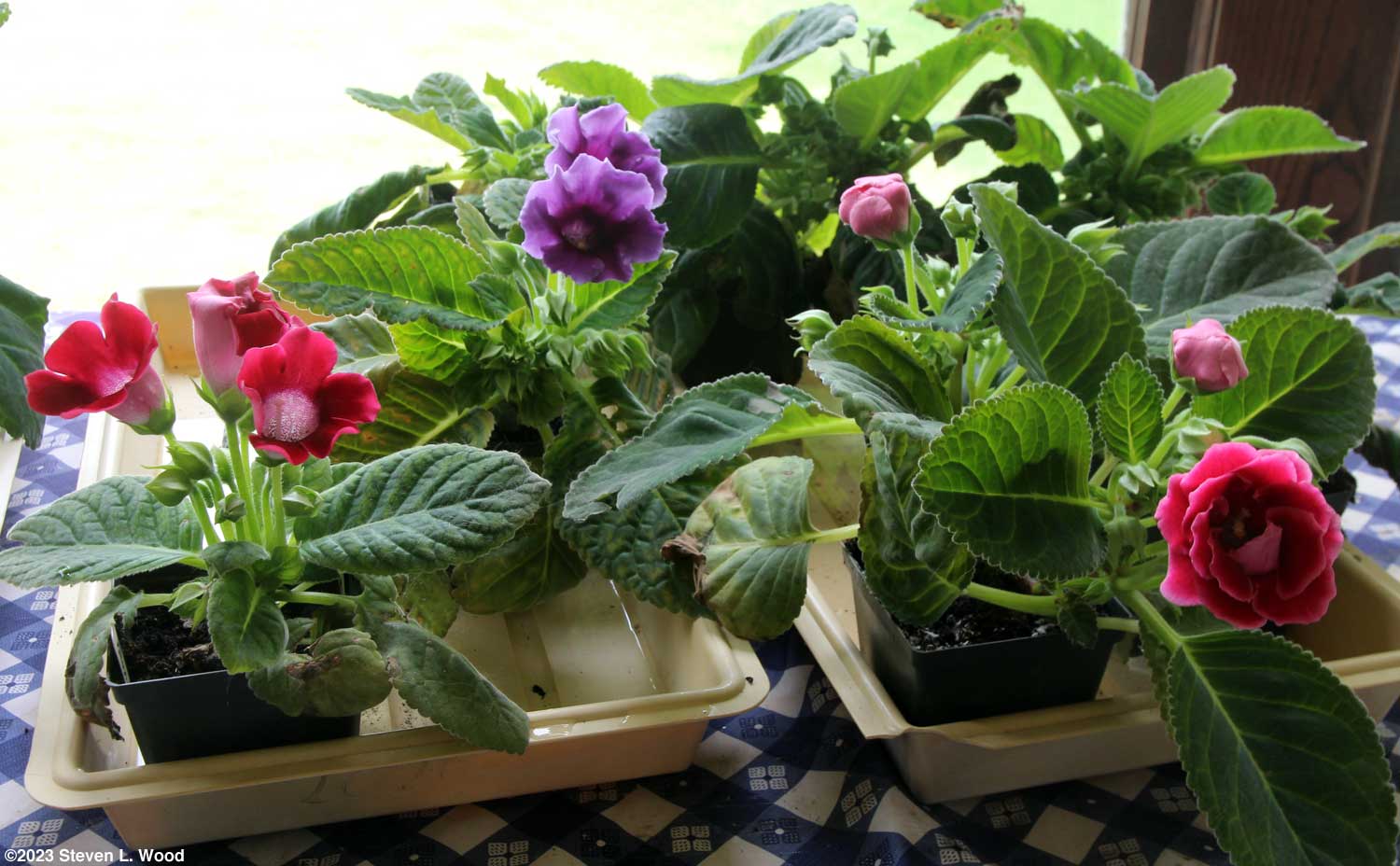
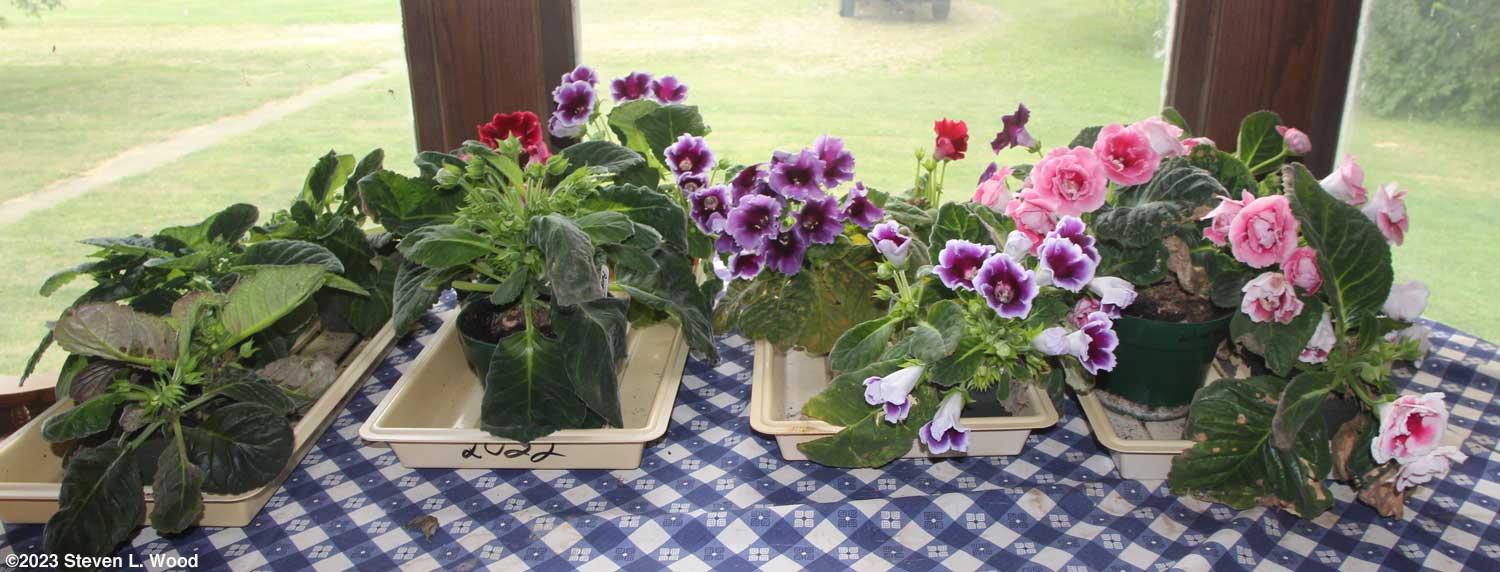
Tuesday, June 13, 2023 - Gloxinias Some of our gloxinias are beginning to bloom. We have about a dozen plants on our dining room table with buds or blooms, with another dozen under our plant lights that have buds on them.
Our plants are a landrace mix of the Empress, Cranberry Tiger, and Double Brocade varieties we've saved seed from for years. The plants shown above are all second year or older gloxinias. As more plants burst into bloom, I'll begin hand pollinating the blooms for seed saving.
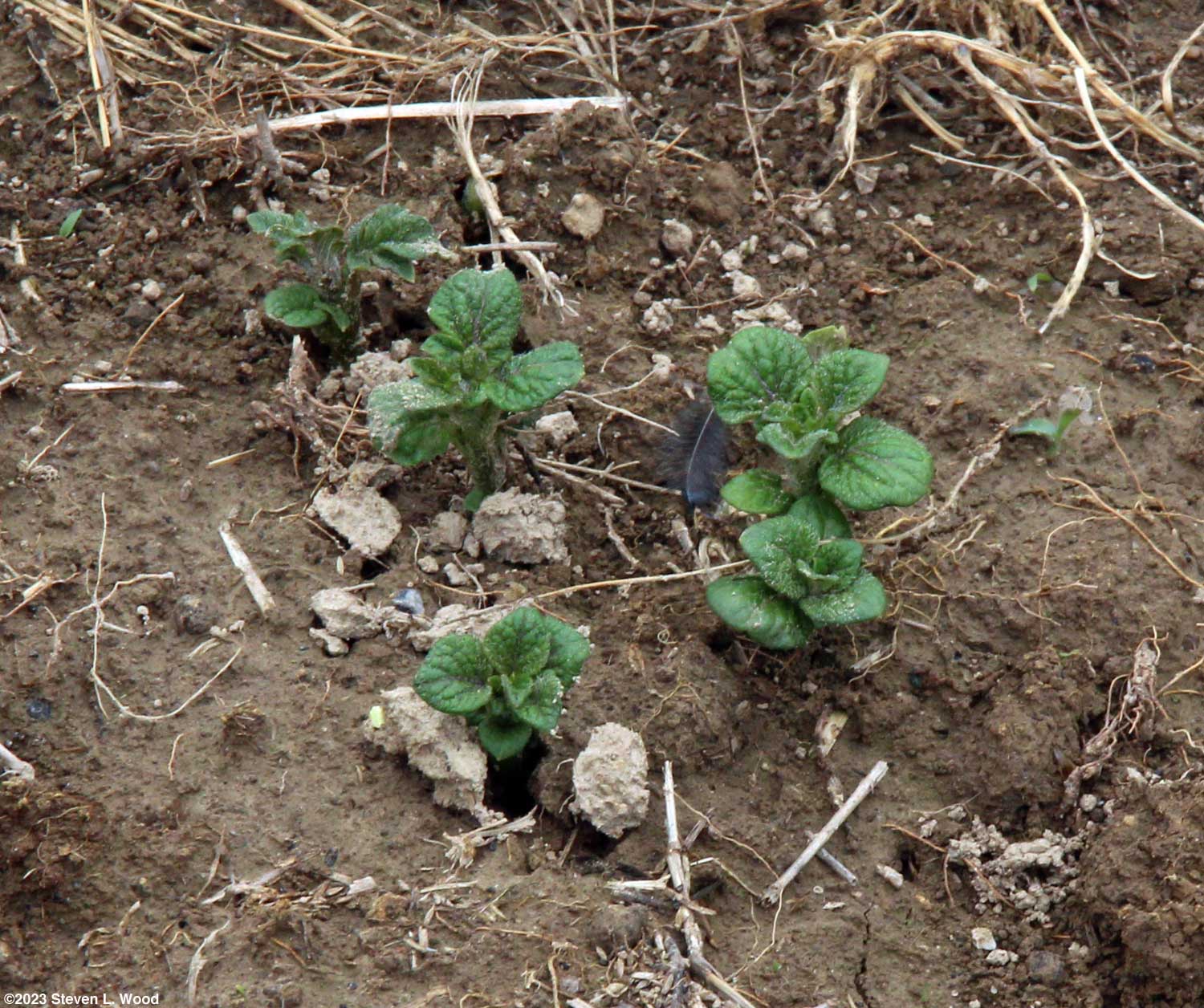
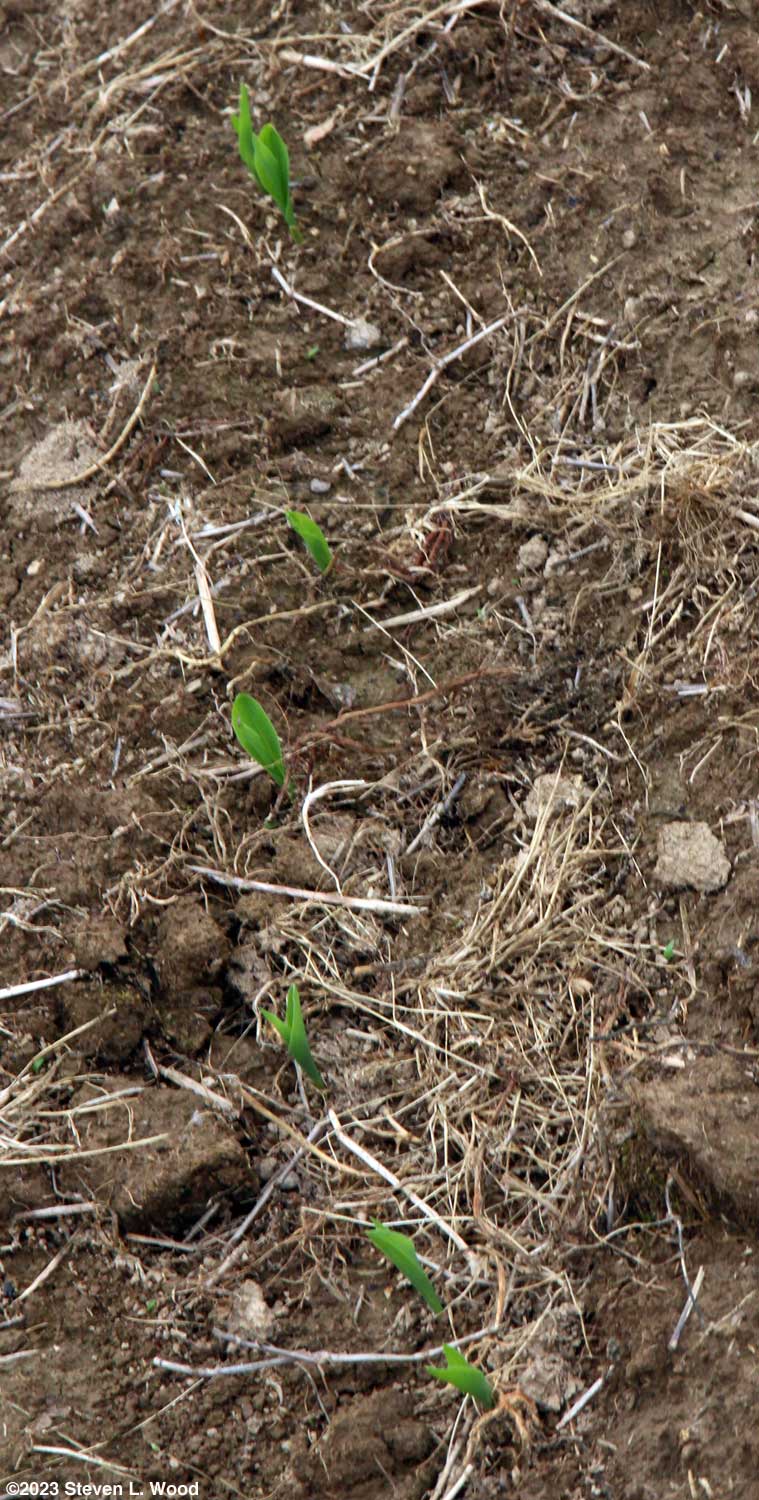
Wednesday, June 14, 2023 - Things Are Coming Up
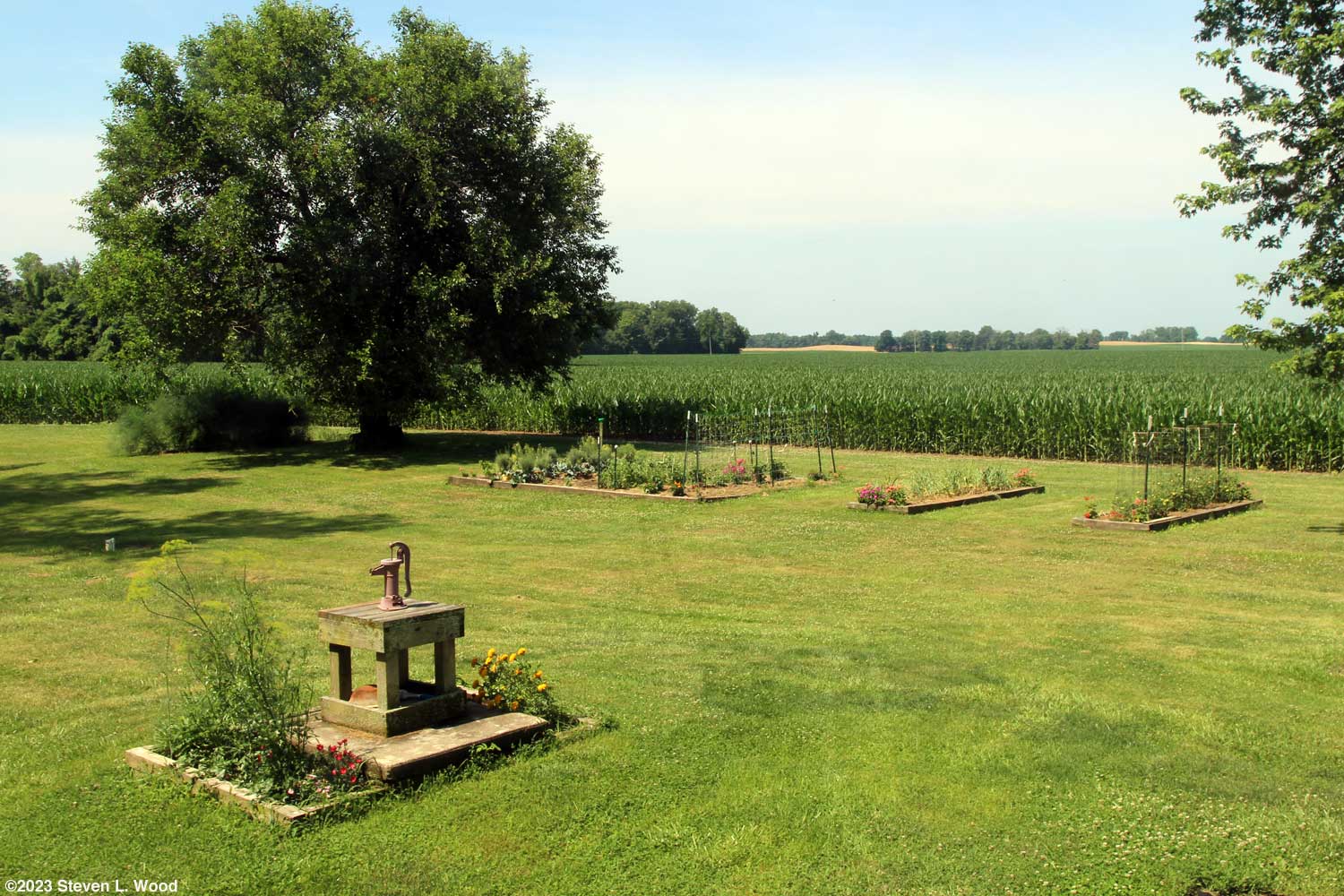
For years, we've grown a long row of zinnias along the west border of our East Garden plot. Zinnias are easy to grow and also easy to save seed from. While I sometimes add a cheap package of zinnia seed off a seed rack to our planting, this year's zinnias are all from seed saved in 2021. They make a pretty border to the plot and also give a visual lift to passersby on the road.
The tomatoes and paprika peppers I've transplanted are doing well. I had a whole tray of more tomatoes and paprika peppers ready to go, T-posts and driver in the truck, and buckets of water run this afternoon before I realized I didn't have the spirit or energy to do the job. I attended the funeral of a dear old friend this morning. I taught twenty years by Marion Wardell and actually lived next door to her during my single years. She was loved and respected by all who knew her. Getting back on subject, our East Garden plot is coming together. I still have tomatoes, paprika peppers, yellow squash, cantaloupe, and watermelon to transplant into the large plot. I worked a bit today at sweeping up grass clippings, but I got my wind rows too high or the sweeper is failing...or a little of both.
I'll throw this one in, possibly for a bit of humor. The one flowerbed I have planted has become a favorite resting area for our dogs. I think they've crushed the painted daisies I put down the center of the bed, but haven't seemed to hurt the geraniums and petunias there.
I got a little more transplanting done in our East Garden today before hot temperatures ran me back inside. I transplanted six more paprika pepper plants and two more tomato plants and mulched them in. The pepper varieties were Hungarian and Hungarian Spice. The tomatoes were one of our old Jack Metcalf favorites, Quinte (Easy Peel).
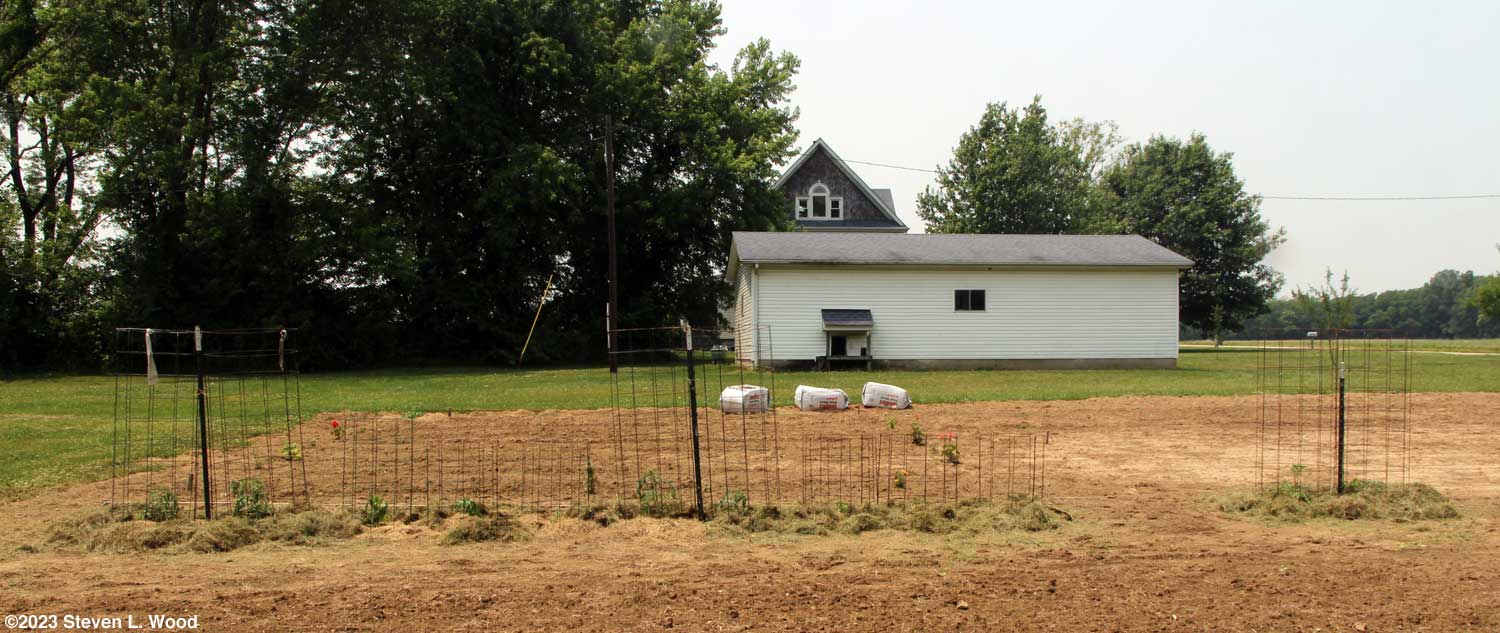
Three Hungarian Spice paprika pepper plants went in beside a couple of grape tomato plants on one side of our East Garden. Part of today's jobs was to complete the grass clipping mulching around the plants.
Three Hungarian paprika plants and two Quinte tomato plants went in at the other end of our East Garden plot. This area required quite a bit of mulching, as I'd run out of grass clippings with the previous plantings. What takes so long with these plantings is that the planting holes get some peat moss, some very precious compost, lime, ground egg shell, commercial fertilizer, and gallons of starter solution containing Quick Start It's now mid-June, and I'm way behind in getting our East Garden planted. I still have Bella Rosa, Moira, and Bradley tomato transplants I want to get into the ground to complete our row of paprika peppers and tomatoes on the east edge of our East Garden plot. After that, I'll be putting in yellow squash, cantaloupe and watermelon. And I think I'm going to need to overseed our previous planting of buckwheat on the rest of the plot.
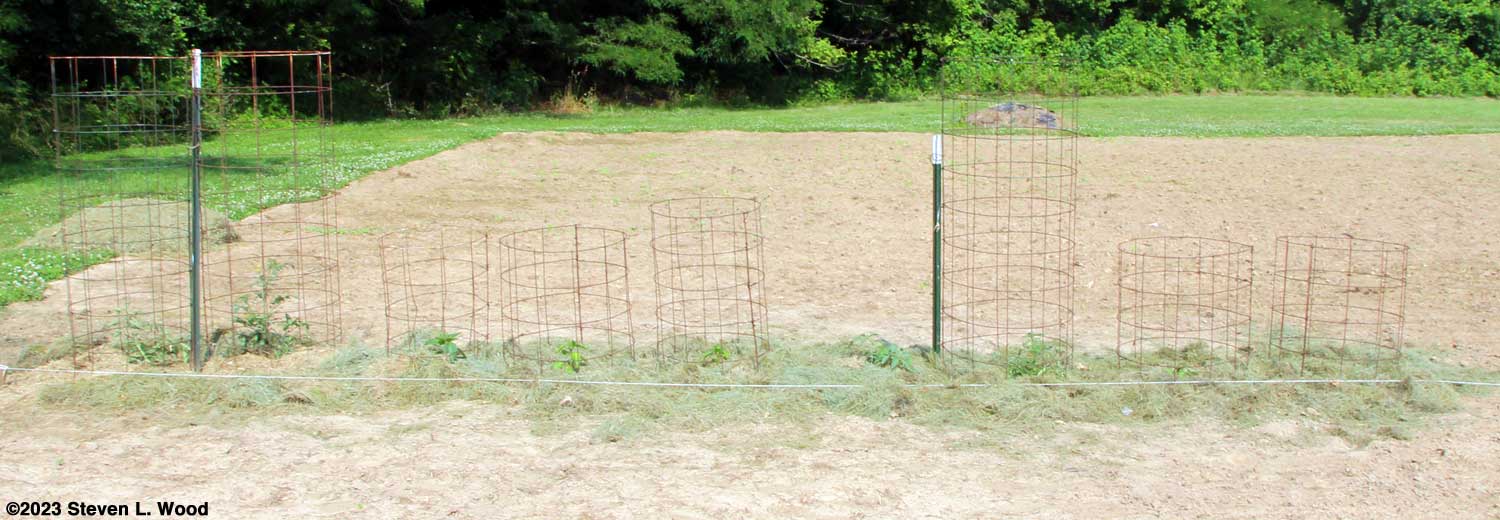
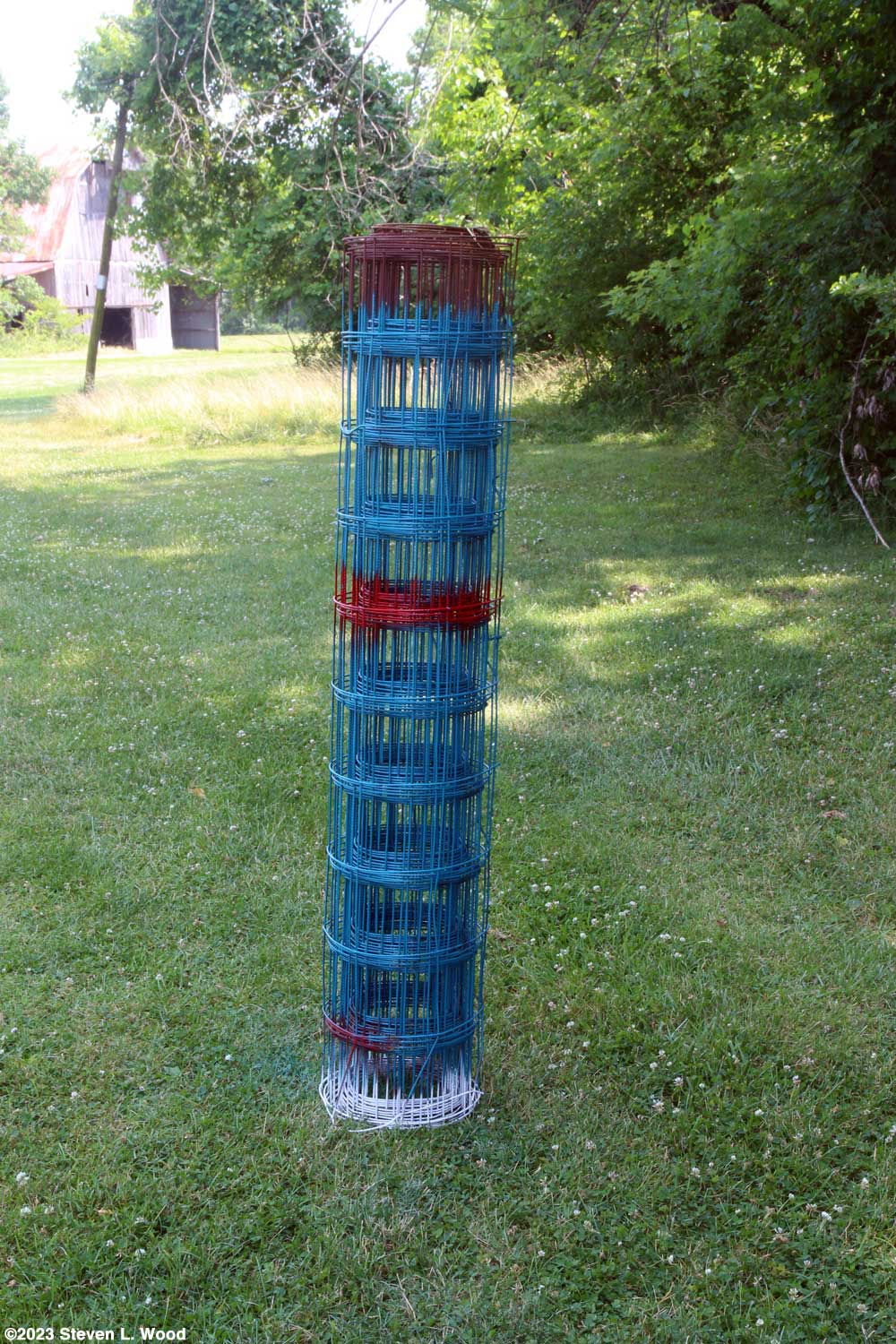
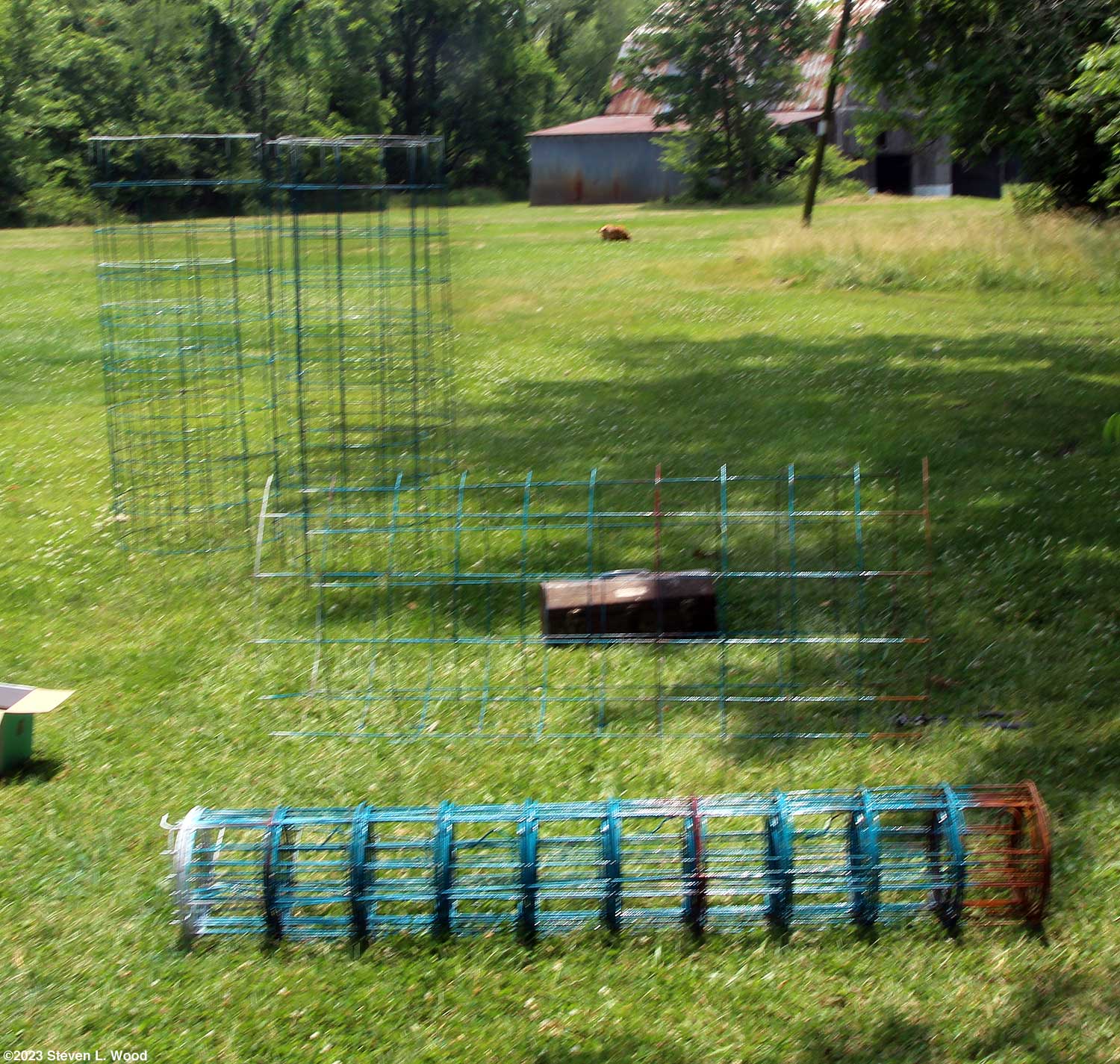
$20 off your first Chewy purchase of $49+ plus Free Shipping with code NEWCHEWY I started my gardening day by pushing a 50' roll of concrete reinforcing wire (remesh) onto the grass beside our garage. I'll be using the wire to make some new tomato cages (more about that later). I sprayed what will be the base of the cages with an old can of Rust-Oleum for Rusty Metal Primer. The base of the cages is where they first fail and begin to come apart as the welds break.
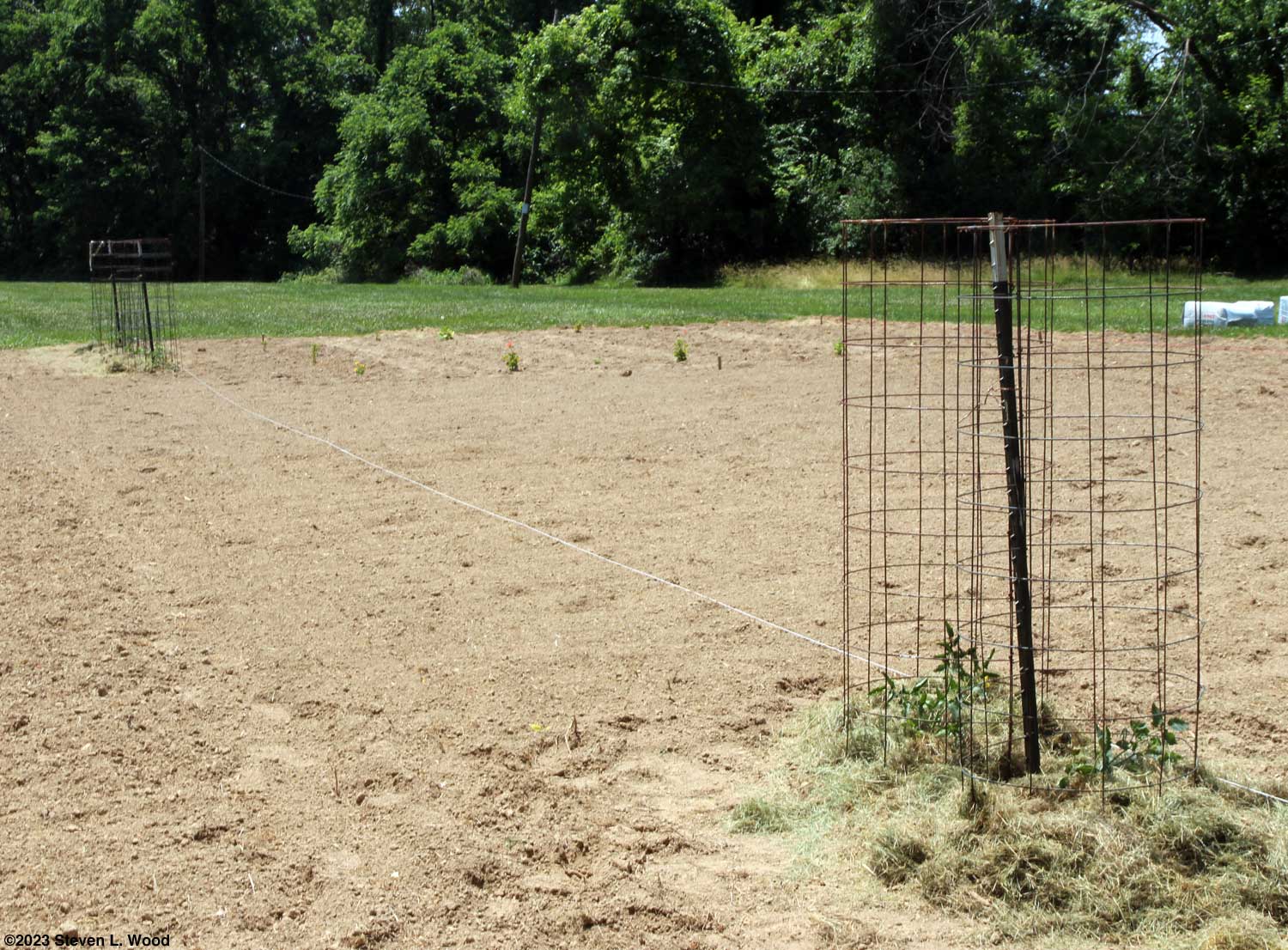
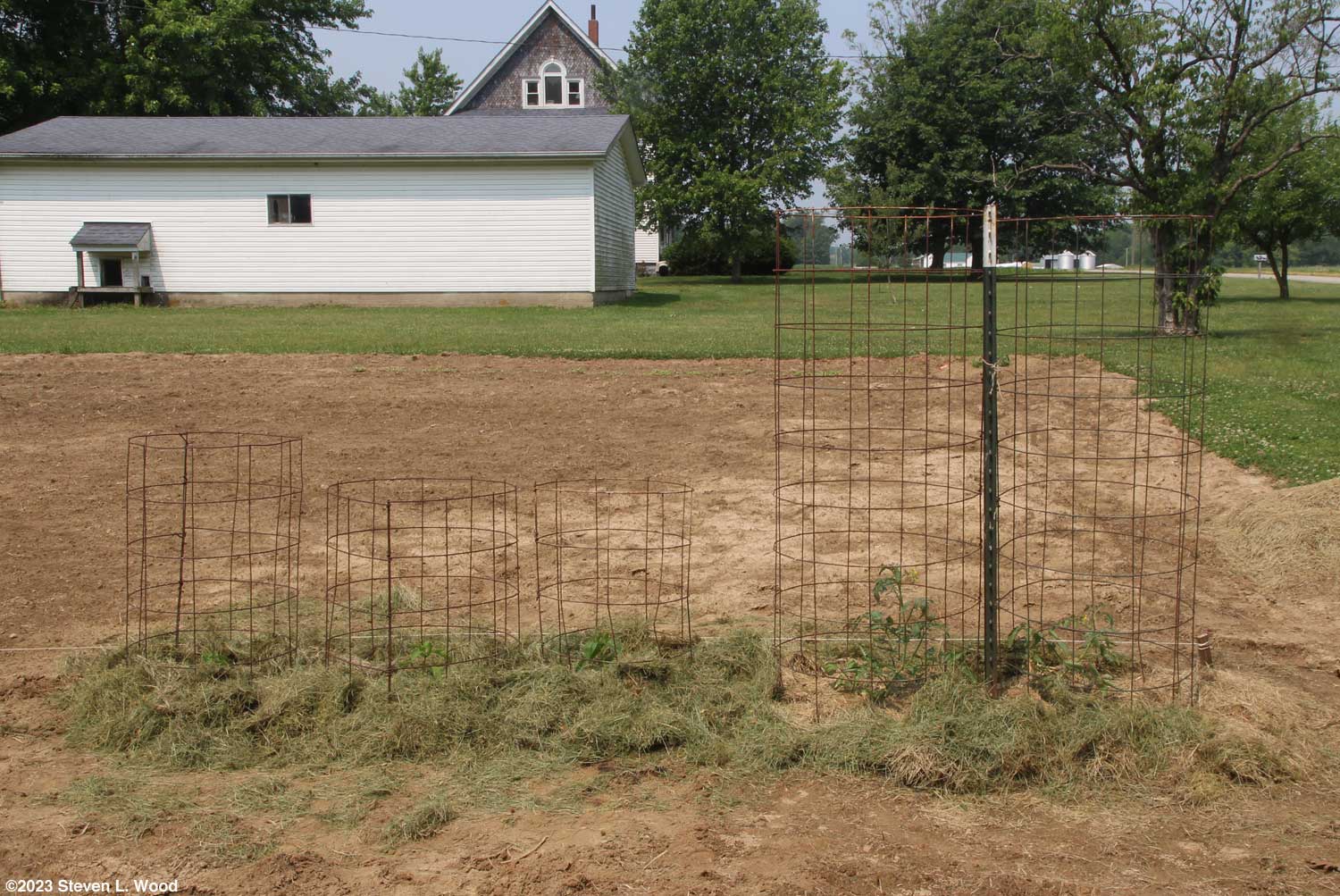
I filtered our new batch of Not Tonight, Deer! yesterday, as there are lots of deer tracks across the open ground of our East Garden plot. The once commercial and now homemade concoction really does deter deer. Painting the remesh was a bit of a lark. I had a bunch of old cans of Rust-Oleum sitting on the workbench from some previous project. Painting white at the top of tomato cages was induced after I ran into a tomato cage while working in the garden in twilight years ago. The other colors were just what was there. The red can's valve had clogged, but a half hour soaking in gasoline cleared it and I couldn't resist using a bit of it. The paint should be dry enough by tomorrow to start making some new tomato cages. The fifty foot roll of remesh should yield six or seven new cages. See Our Tomato Cages.
Monday, June 19, 2023 - Juneteenth - Peas and More Peas
Later, I picked some Eclipse supersweet peas, adding them to some picked and shelled yesterday that we'll enjoy with our supper tonight. I'll take several pickings for the table and freezer before letting the endangered variety produce a seed crop. See: Working to Save a Pea Variety I didn't do a lot outside today, as I spent a good bit of time with my wife trying to figure out some Social Security forms she needed to fill out. She needed editable PDF files, so we ended up working on my 2018 Mac Mini that still has a working version of Acrobat Pro.
Six new cages got put into use yesterday when I transplanted a couple of Bella Rosa and two Bradley tomato plants into our East Garden and caged the previously uncaged Moira. I also put in a couple of Boldog Hungarian Spice paprika pepper plants. I still have enough of the roll to make a few more cages and several nice tomato transplants under our cold frame.
Our broccoli and cauliflower rows produced some nice surprises yesterday. We got one huge Premium Crop broccoli head along with lots of sideshoots. We also got two nice heads of cauliflower, not something I expected with all the hot weather we've had. And our one remaining Violet of Sicily cauliflower has a head that is reddening nicely and should be ready to be cut tomorrow.
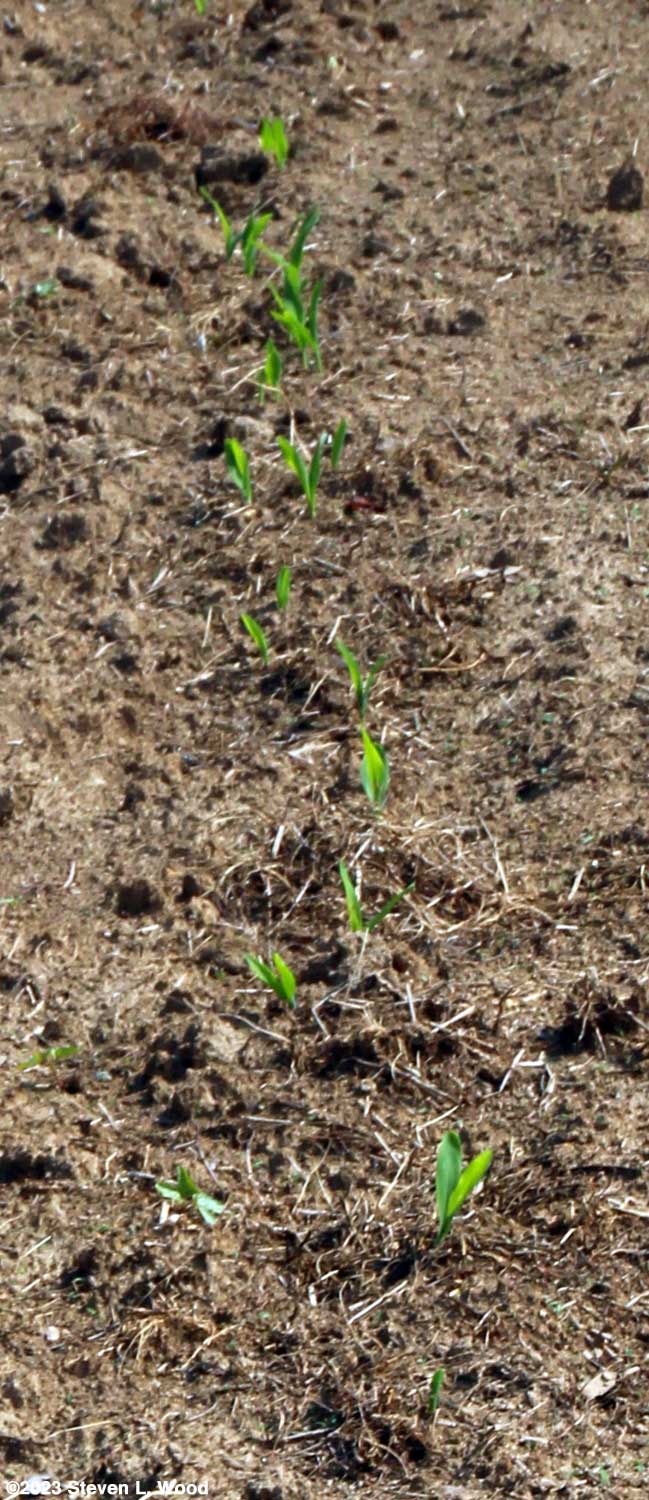
I got out this morning and scuffle hoed our sweet corn and kidney bean rows. What little moisture we've had was enough to germinate lots of tiny seedling grass and morning glory weeds. I didn't scuffle the entire aisles of the plantings. Instead, I spread just a little fertilizer down one side of each row and scuffled both sides of the row. I'll catch the weeds in the center of the aisles with our walking tiller once the corn and beans get a bit bigger.
Our planting of buckwheat is coming up despite minimal precipitation. I did overseed along our row of tomato and paprika pepper plants today. I also started a pot of gloxinias today. They take about five months from seeding to bloom, so we may have more gloxinias in bloom in November.
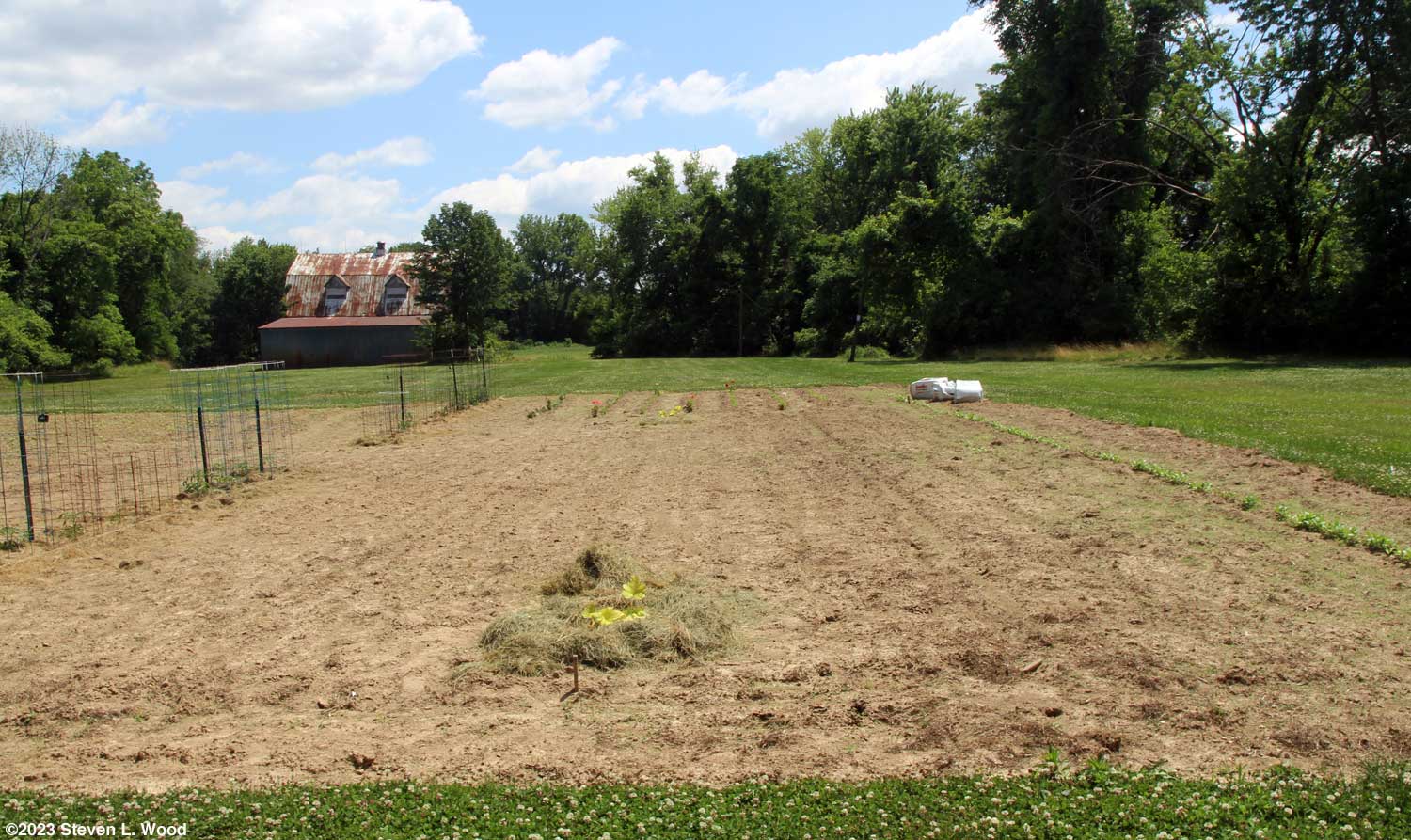
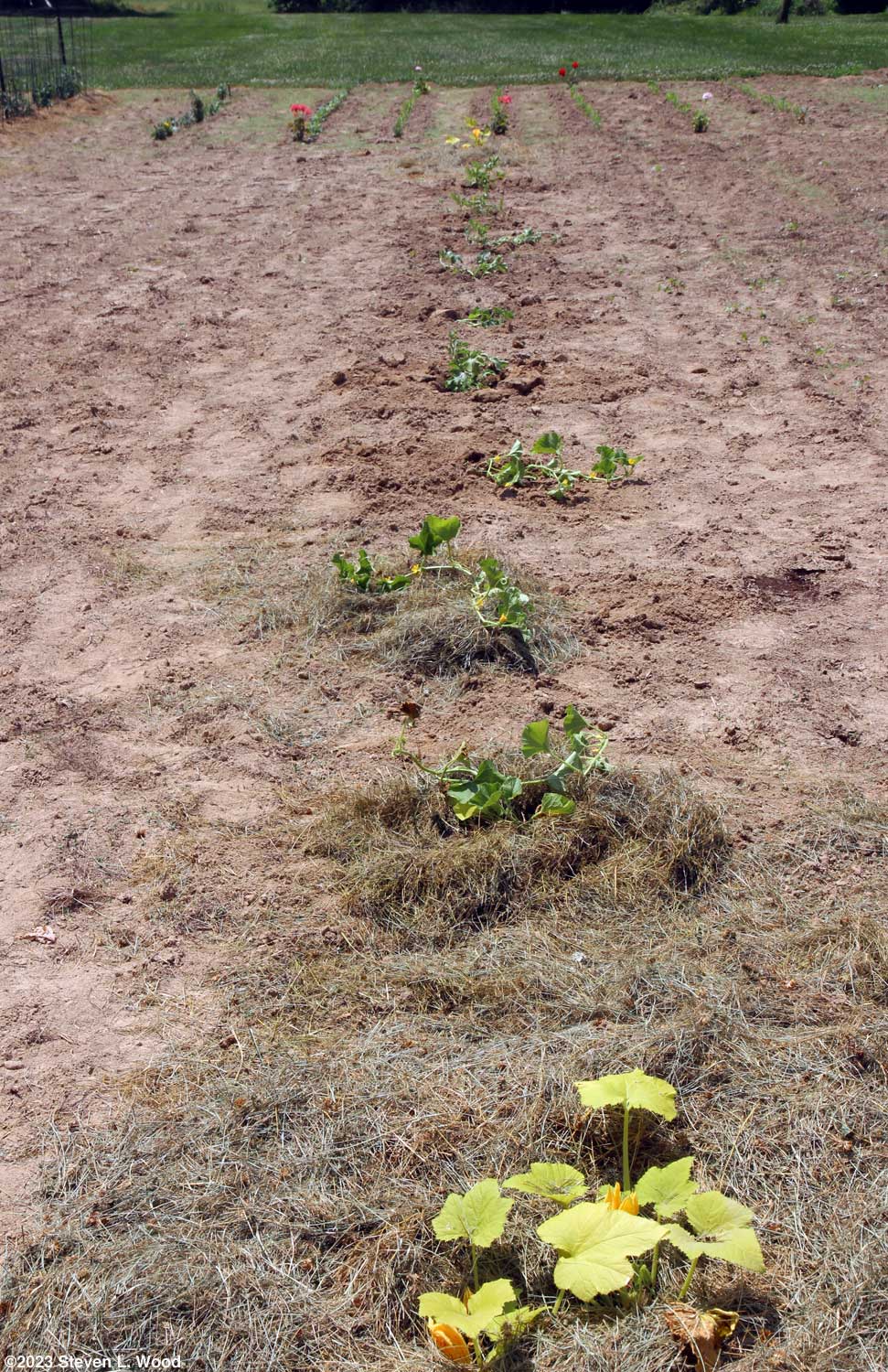
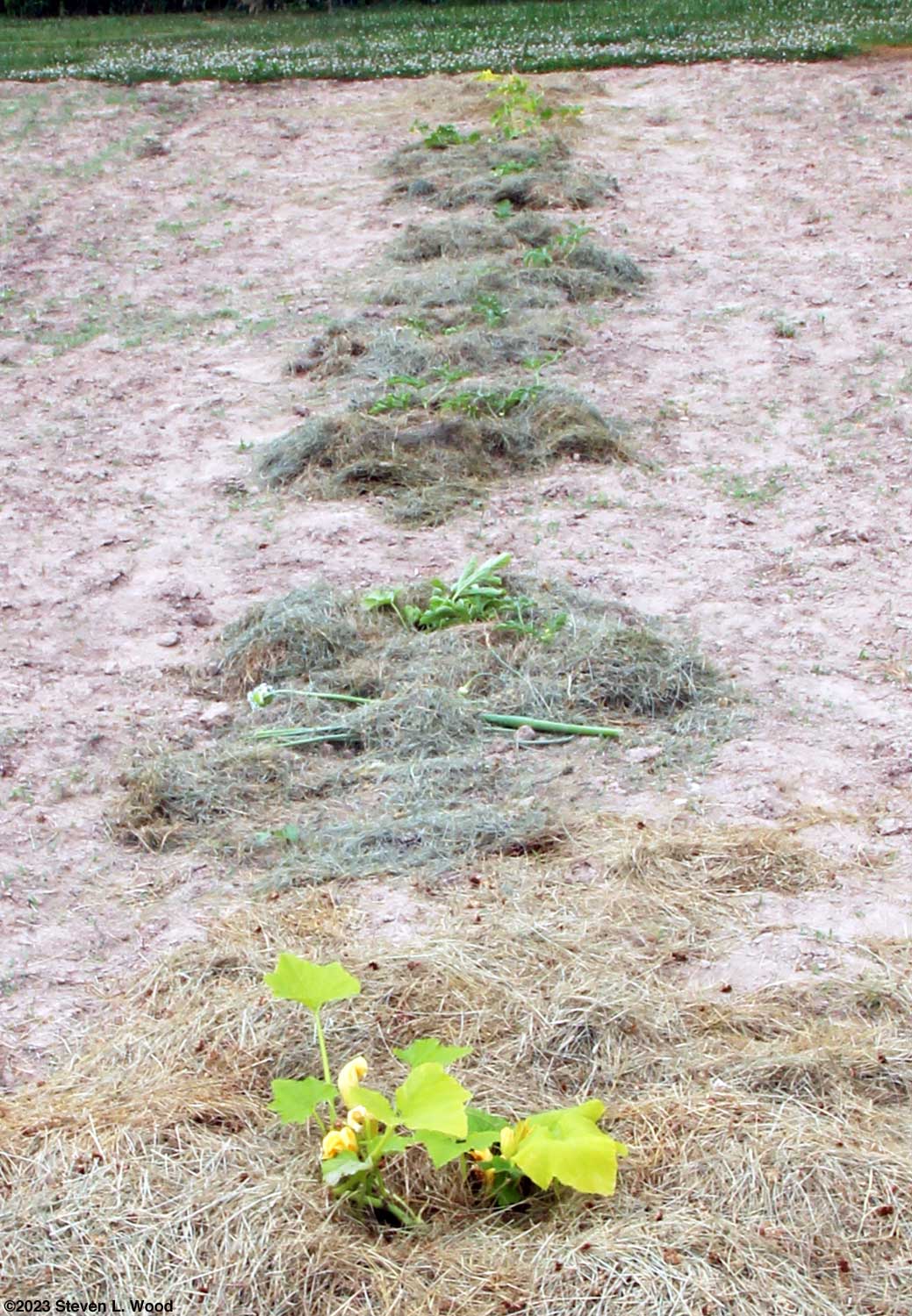
The planting holes got filled with the compost/peat moss mix and had 12-12-12 fertilizer and lime liberally spread over them. I worked the soil amendments into the subsoil a bit with a shovel before adding a couple of gallons of starter solution to each planting hole. The melon transplants got squished into the muddy holes and filled in with the dug soil a bit, using the rest of the dug soil to form a trench to hold rainwater (if we ever get any rain) around the plants. Then the plantings got watered again. The first two plants in got what grass clipping mulch I had left on hand. Beyond that, I'll just have to deal with weeds with mulch from future mowings, scuffle hoeing, rototilling, and possibly even some weed killer. At this late date, it was a necessity to just get the plants into the ground. Started on May 10 with days-to-maturity dates varying from 70 to 100 days, we may get ripe melons in August. Transplanted today were two hills of Sugar Cube and one of Athena cantaloupe. Our watermelons were Crimson Sweet Virginia Select (two hills), the Farmers Wonderful triploid, Glenn Drowns' Blacktail Mountain, regular Crimson Sweet, and the always dependable Ali Baba variety.
Having stored the PVC frame by the garage and noticing the grass was dry, I started mowing at around 10:30 am. I was done by 11:30 when I broke a whole front wheel assembly while driving through a ditch. Fortunately, our John Deere dealer picked up the mower for repair in just a couple of hours, later delivering a staggering repair estimate that I'm going to be only too happy to pay. Funny thing: Totally disgusted with breaking the mower, I added some scotch to my coffee and sat down in my easy chair. I quickly fell asleep. When I awoke, the mower which I'd left in a ditch by the roadside was gone. The John Deere driver knows us well and doesn't bother making contact when he picks up or drops off our mower. There are some advantages to doing business with reliable smalltown folks.
Our early peas are a mix of the Champion of England and Maxigolt varieties. I'd really hoped to cross the varieties, but since peas are self-pollinating, I'm not making much progress there. We'll be taking a few pickings for the table and freezing of the supersweet Eclipse pea variety. But the main thrust of this planting is seed saving. See: Working to Save a Pea Variety.
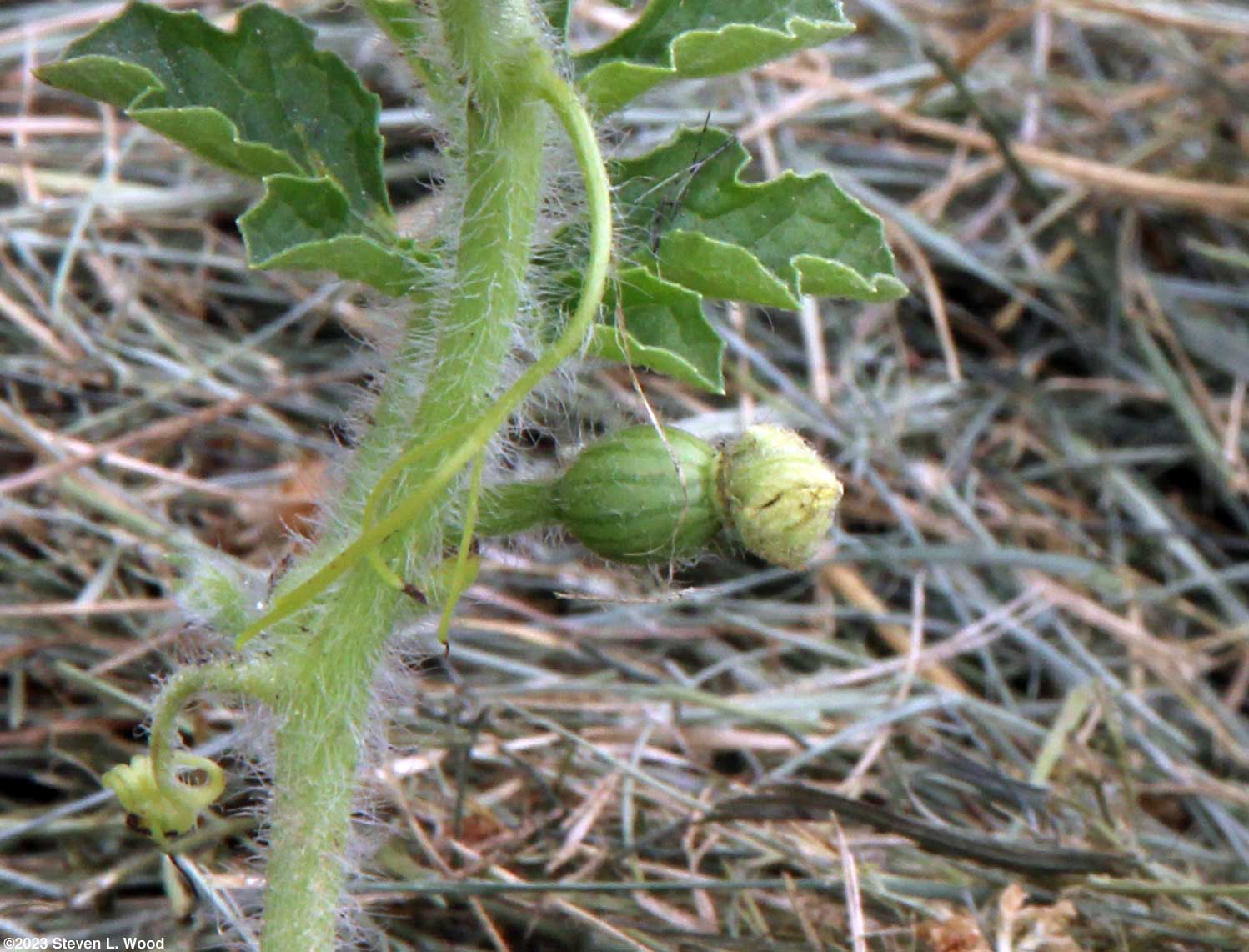
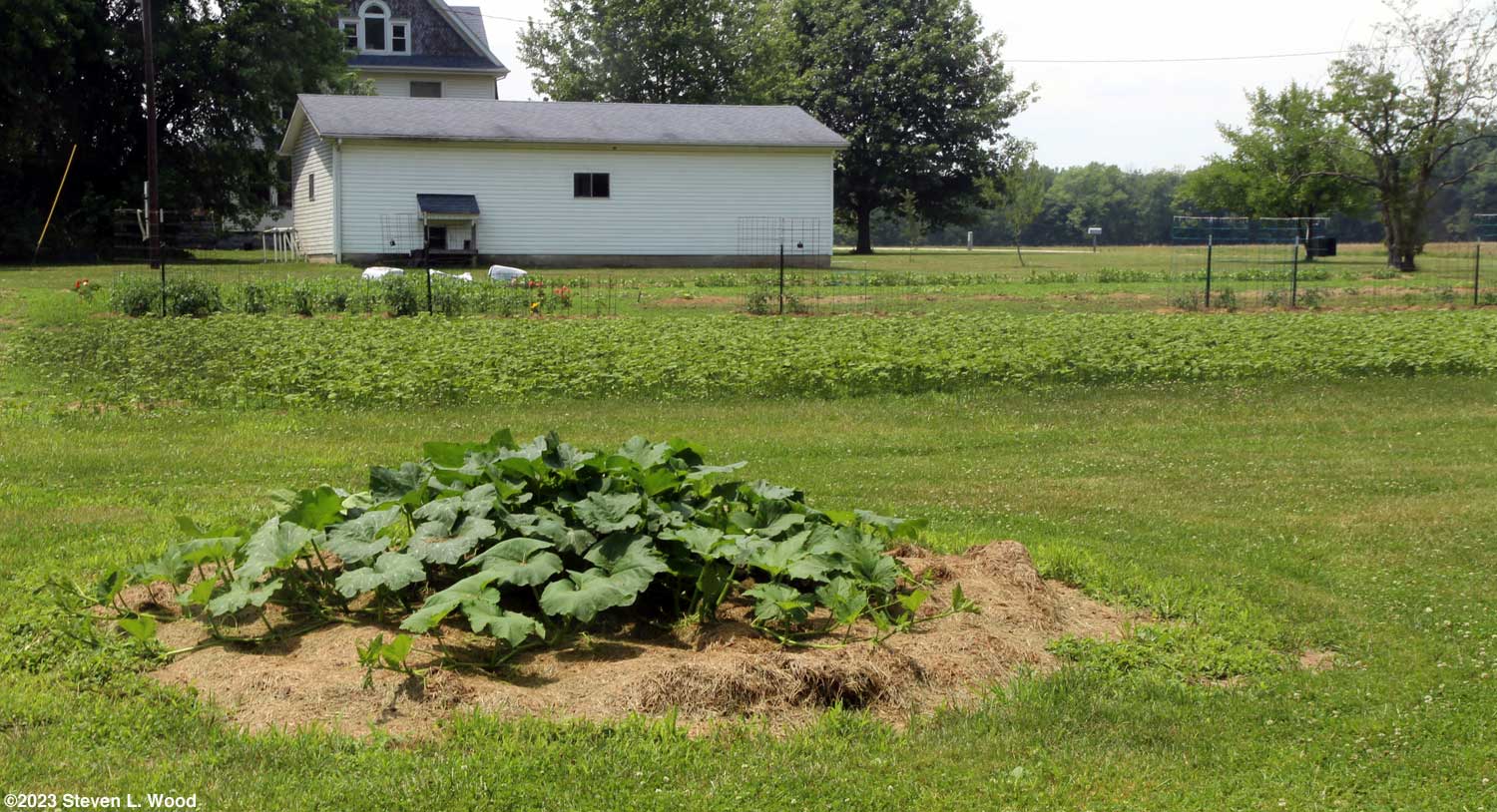
While mulching the melons, I was pleased to find a baby watermelon on a Crimson Sweet Virginia Select vine. I'm not sure if this particular melon will mature, but it's a hint of what is to come. While our melons are mulched, I'm in a bit of a fix on weed control in our East Garden plot. Our mower which produces grass clippings for weed control is in the shop for repair. And sadly, our 29 year old rototiller refused to start today. I already had fertilizer down along our rows of sweet corn, anticipating tilling it in this morning and turning under seedling weeds that had emerged in the area. If the tiller refuses to start tomorrow, I'll be down to scuffle hoeing the sweet corn rows for weed control and integrating the fertilizer.
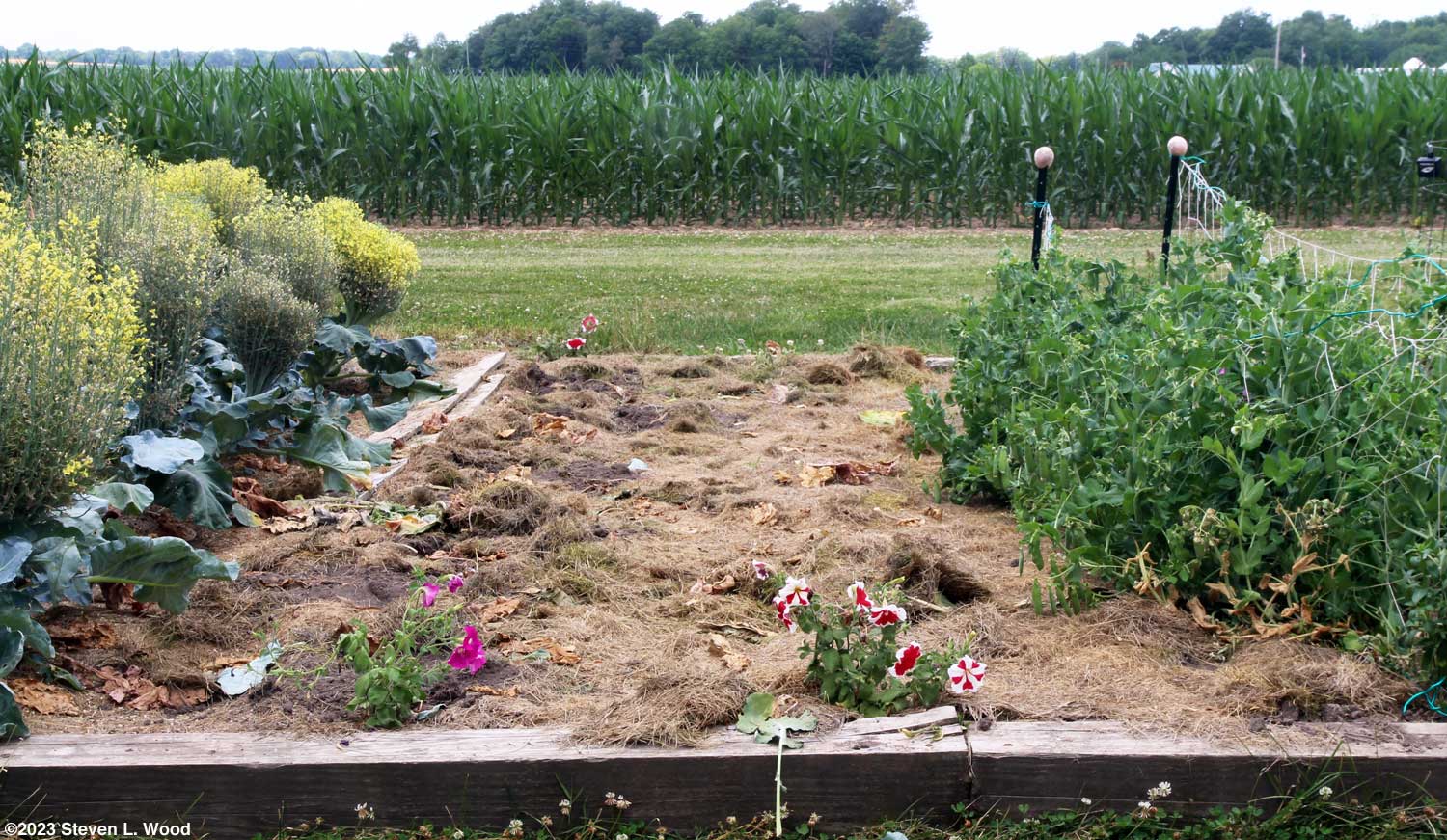
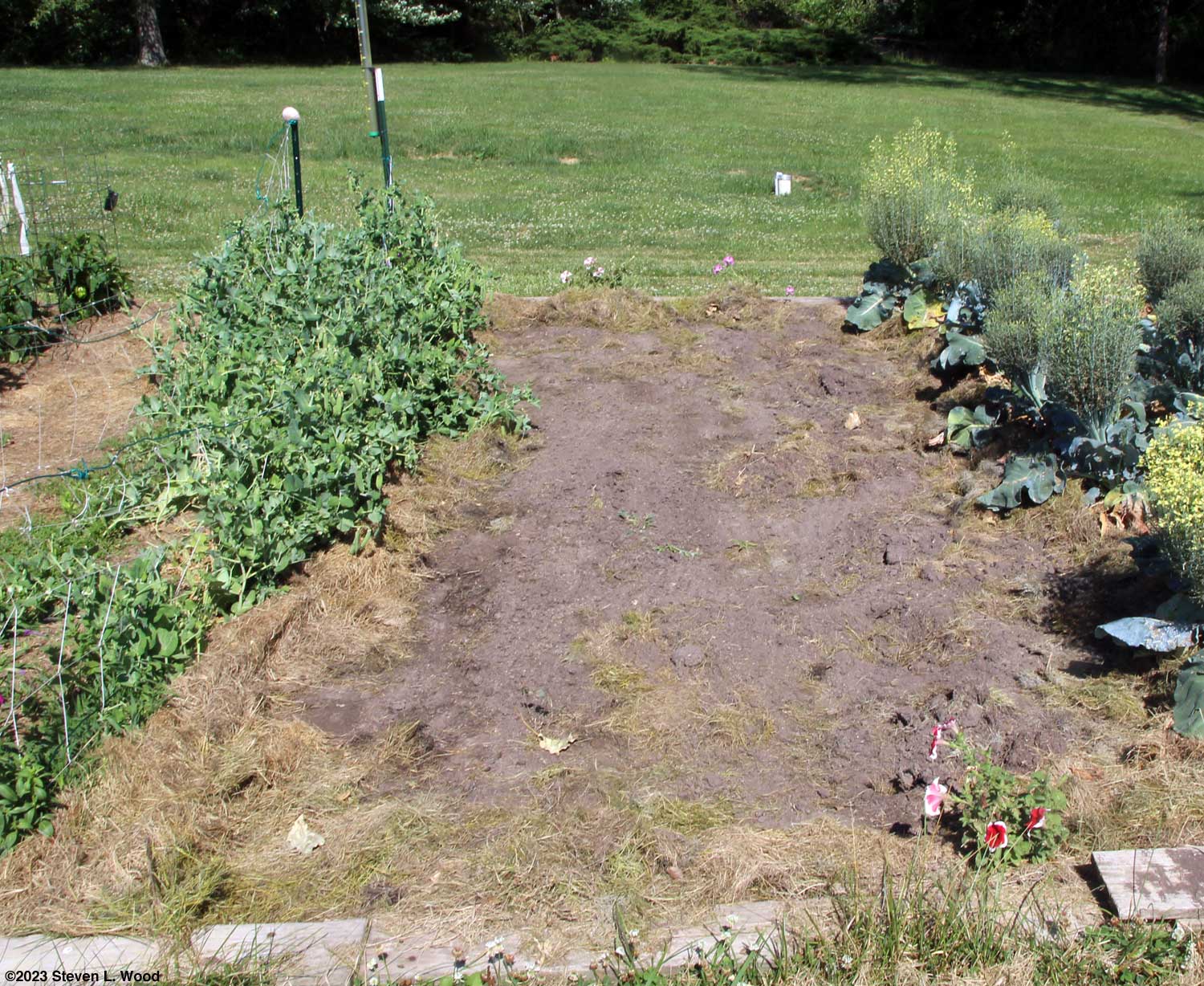
Taking out the two rows of brassicas reminded me that it is almost time to start our fall broccoli, cauliflower, and cabbage transplants. The end of June is our usual time for starting such stuff.
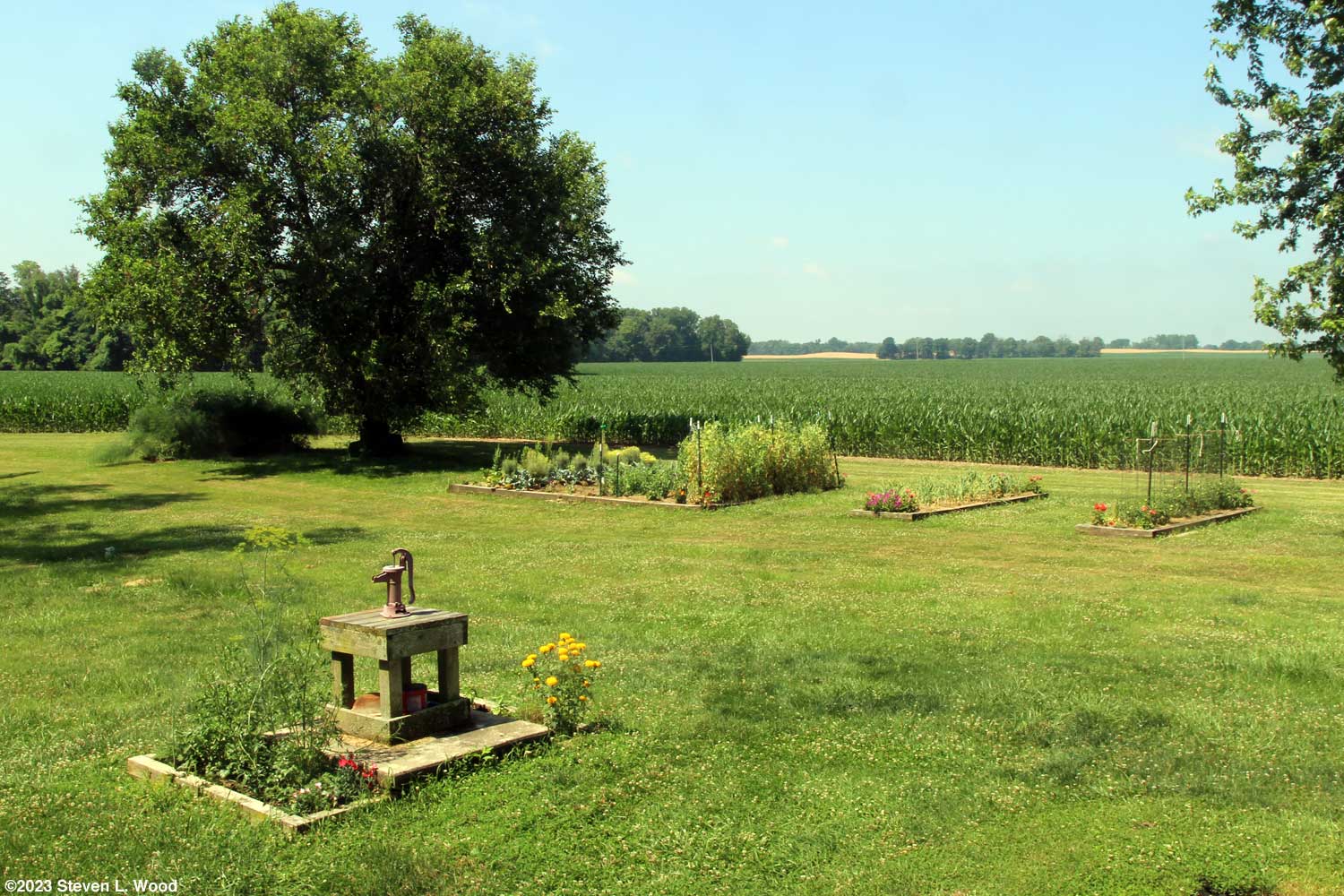
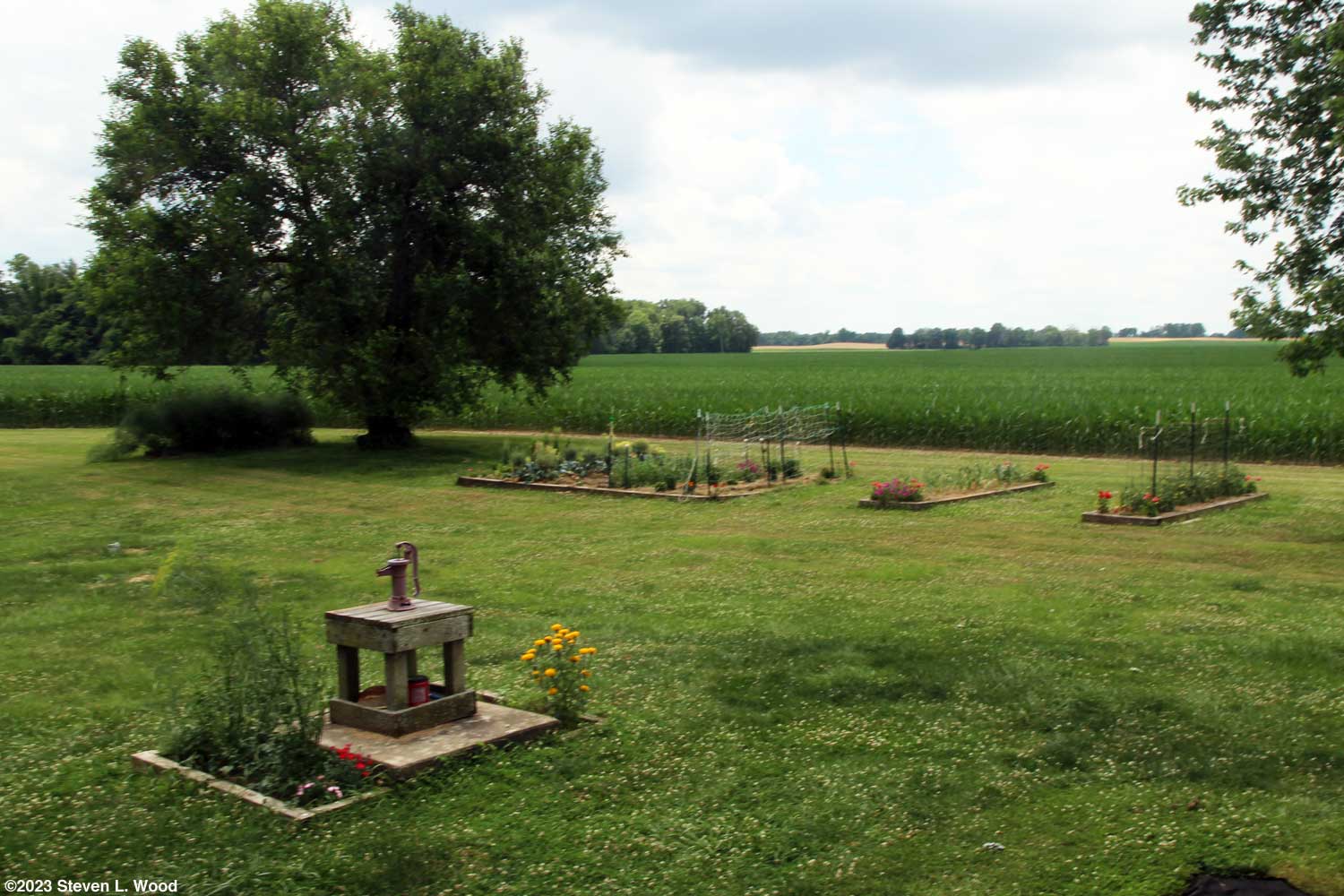
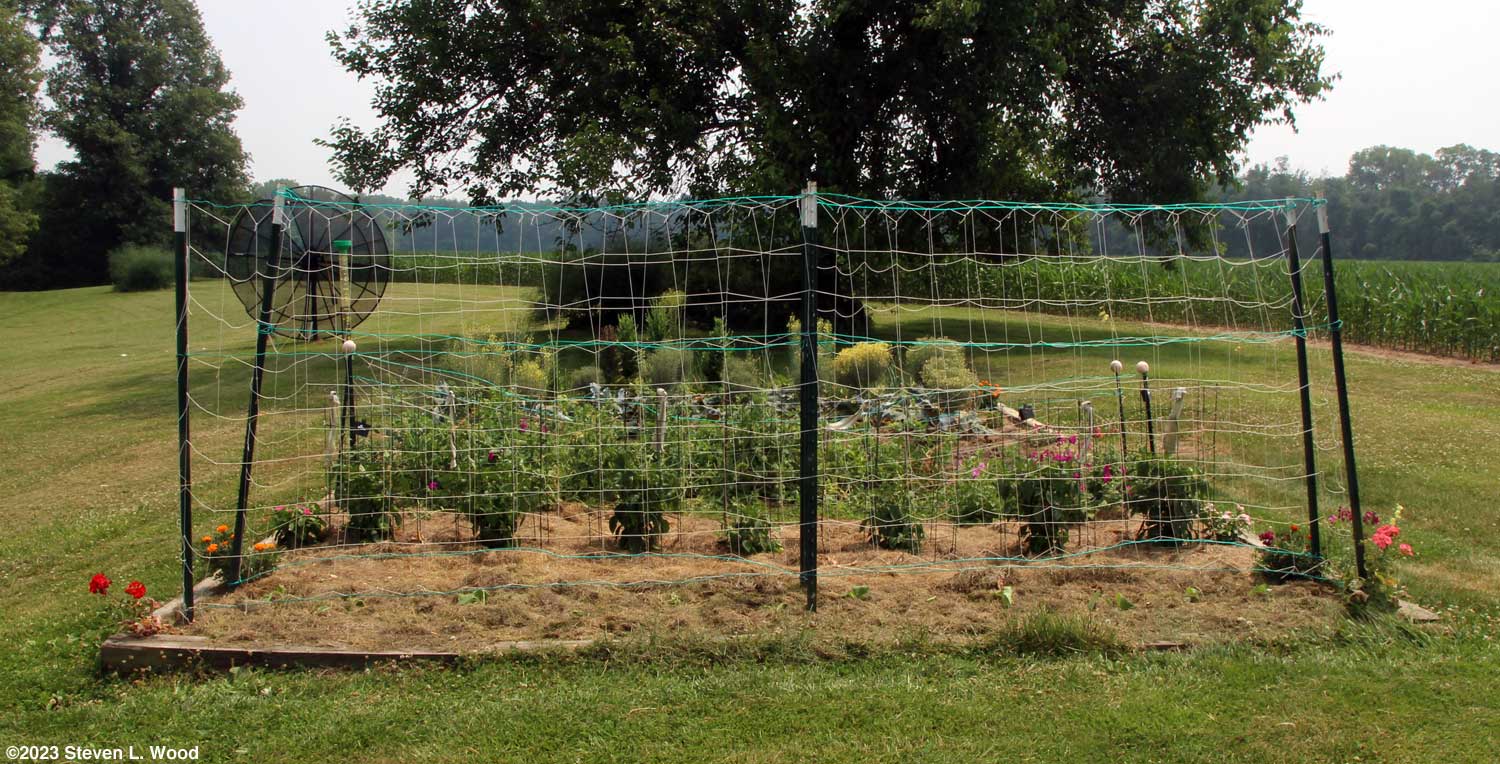
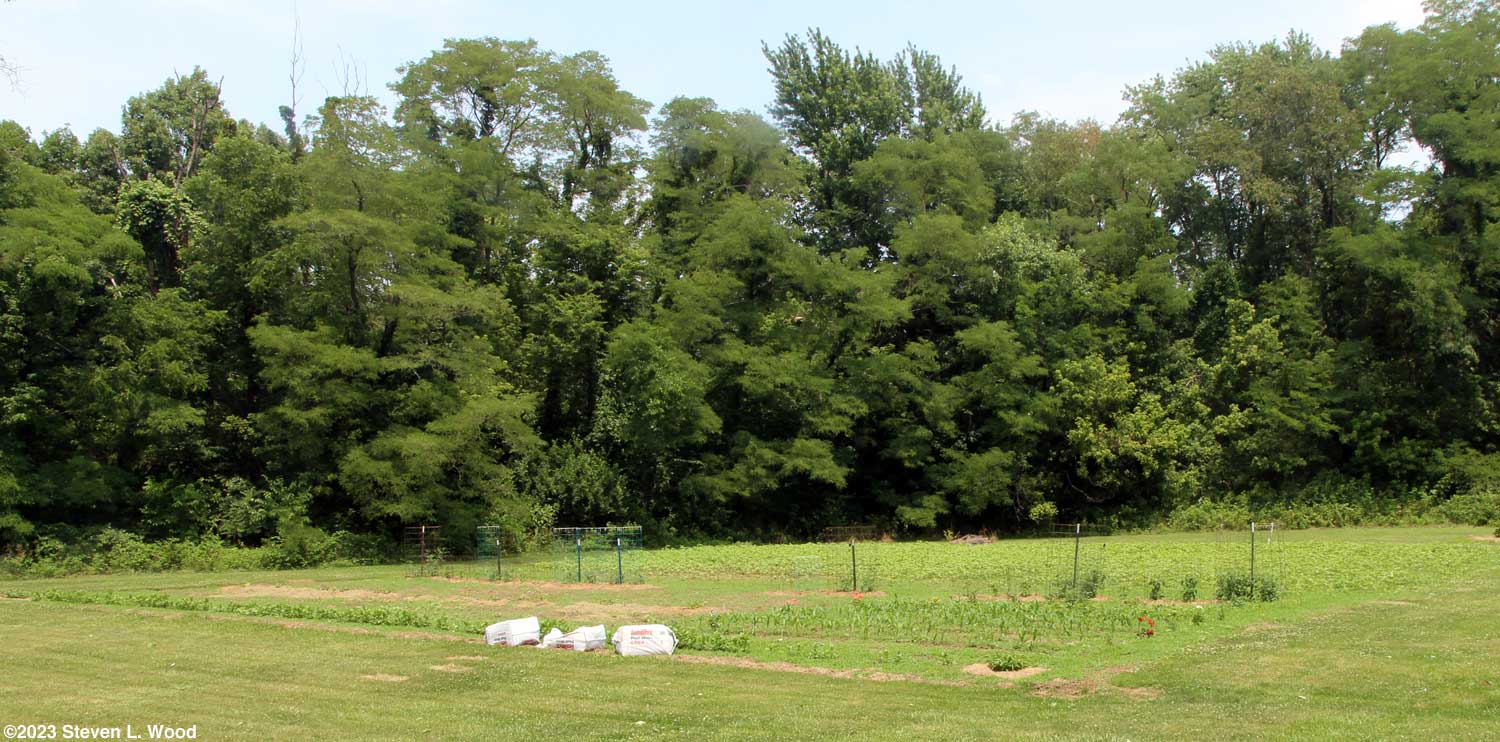
With our East Garden plot fully planted, I looked around a bit at our other plantings today.
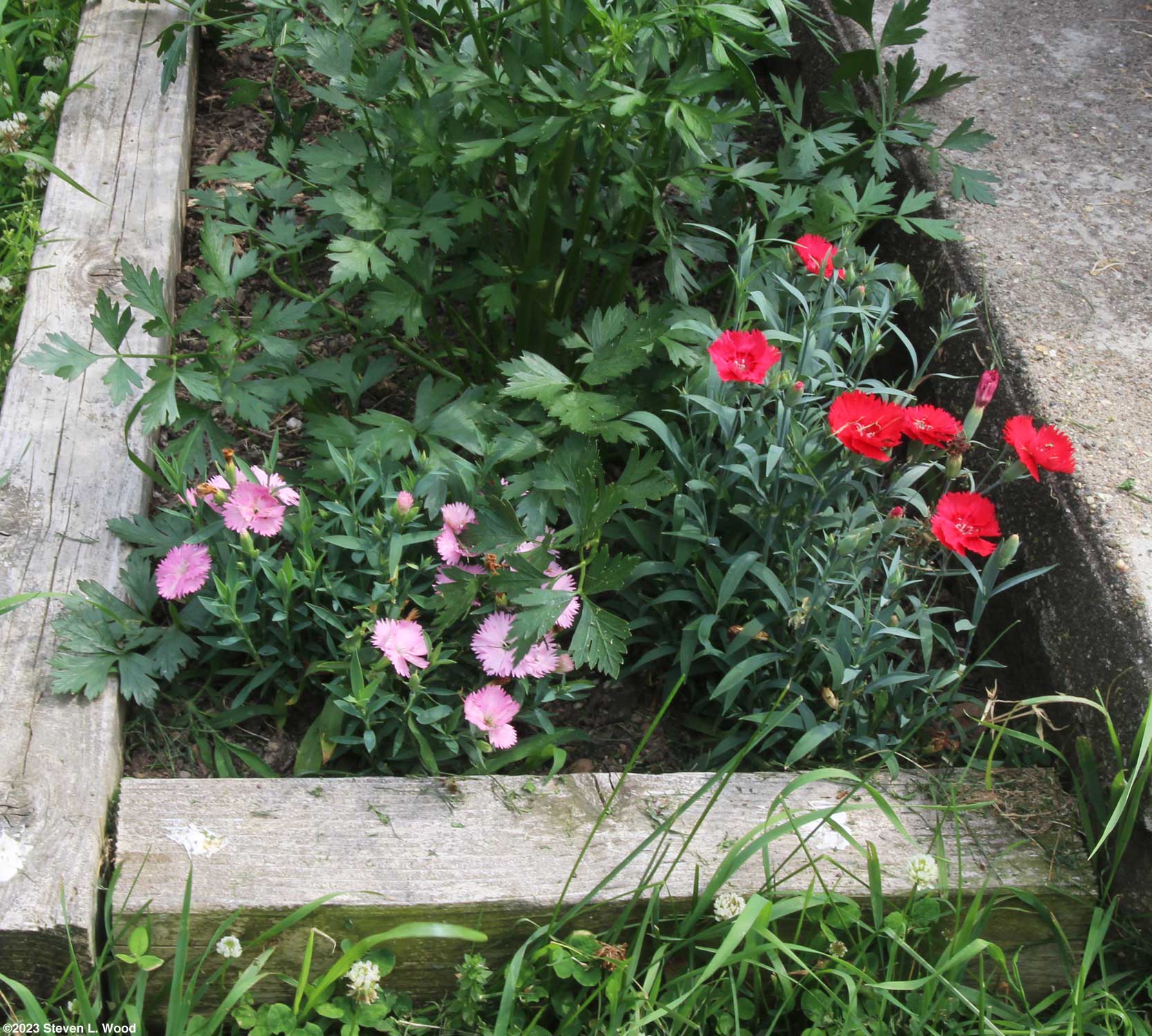
Our Abundant Bloomsdale spinach plants are producing lots of female seed baring stalks this year. That's in contrast to last year when the stalks were mostly male. The dianthus in our herb bed are in bloom again. I've already saved seed from them in their last blooming cycle. And a few of our overwintered Walla Walla onion plants are now producing good bulbs.
A bright spot in our gardening is that I half filled a 12 quart galvanized bucket with raw Eclipse pea pods this morning. Shelled, washed, and blanched, they filled three pint Ziplock freezer bags. I'm currently up in the air as to whether to keep picking those peas for the freezer or to let them go to seed for seed saving and sharing. My one previous experience with sharing the once patented seed variety didn't turn out well, as the recipient never shared any seed from the endangered variety. Of course, the Eclipse variety can be difficult to germinate. We got lucky this year, as both our transplants and direct seeded Eclipse have done well. both rows coming into bloom at about the same time.
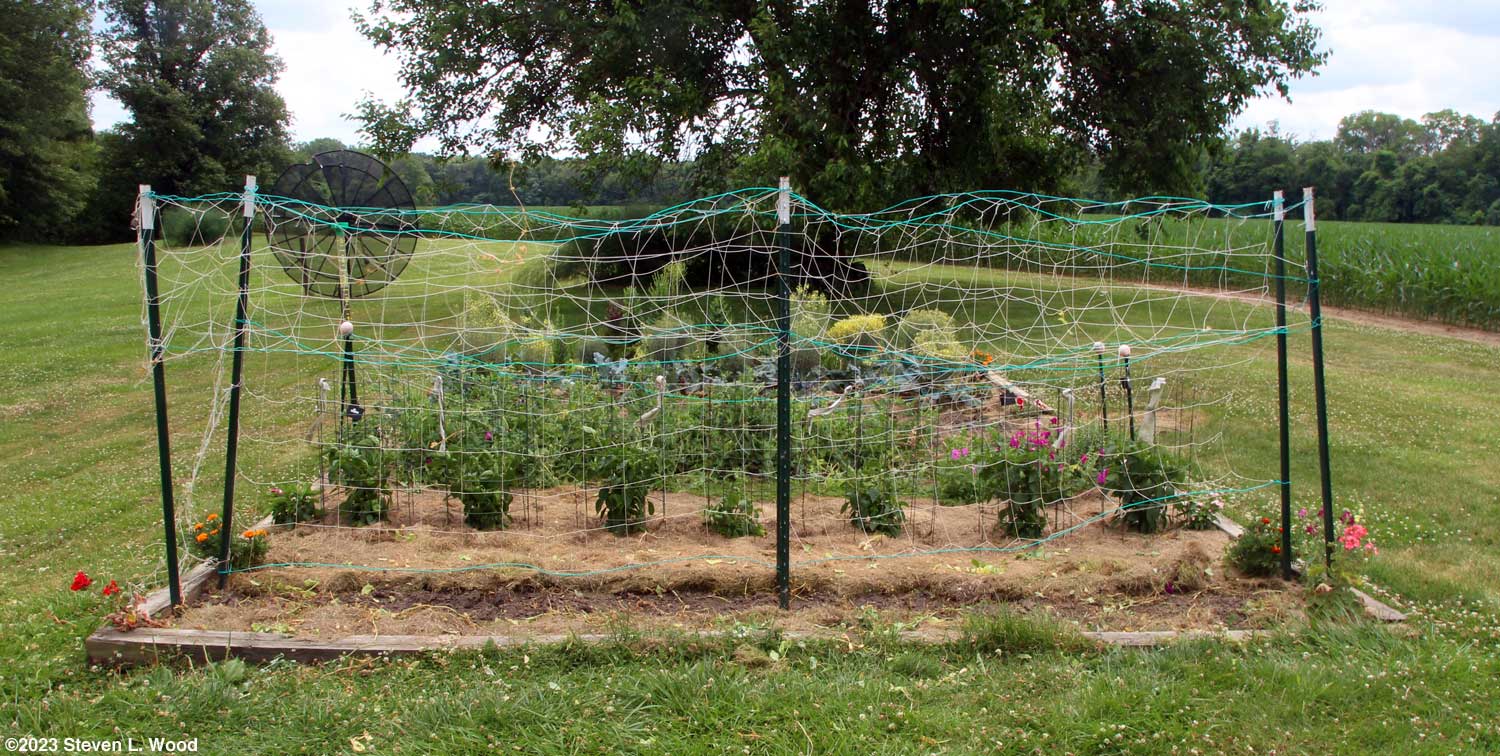
While we're actively picking and saving some of our spring planted crops, we're also moving into a time of Succession Planting. The green beans after brassicas are the first succession crop, but we'll soon pull our early pea vines and replace them with a short season of Japanese Long Pickling cucumbers, followed by sugar snap peas. Our Eclipse pea area will go to lima beans. And our garlic will give way to a planting of fall brassicas. Our three parsley plants in our herb bed are bolting. They began putting up growth spikes I'd not seen before a week or so ago. I attribute the bolting to starting the plants too early (in January) and the hot, dry weather we're experiencing. So I started more parsley this afternoon and will pull the plants in the herb bed soon.
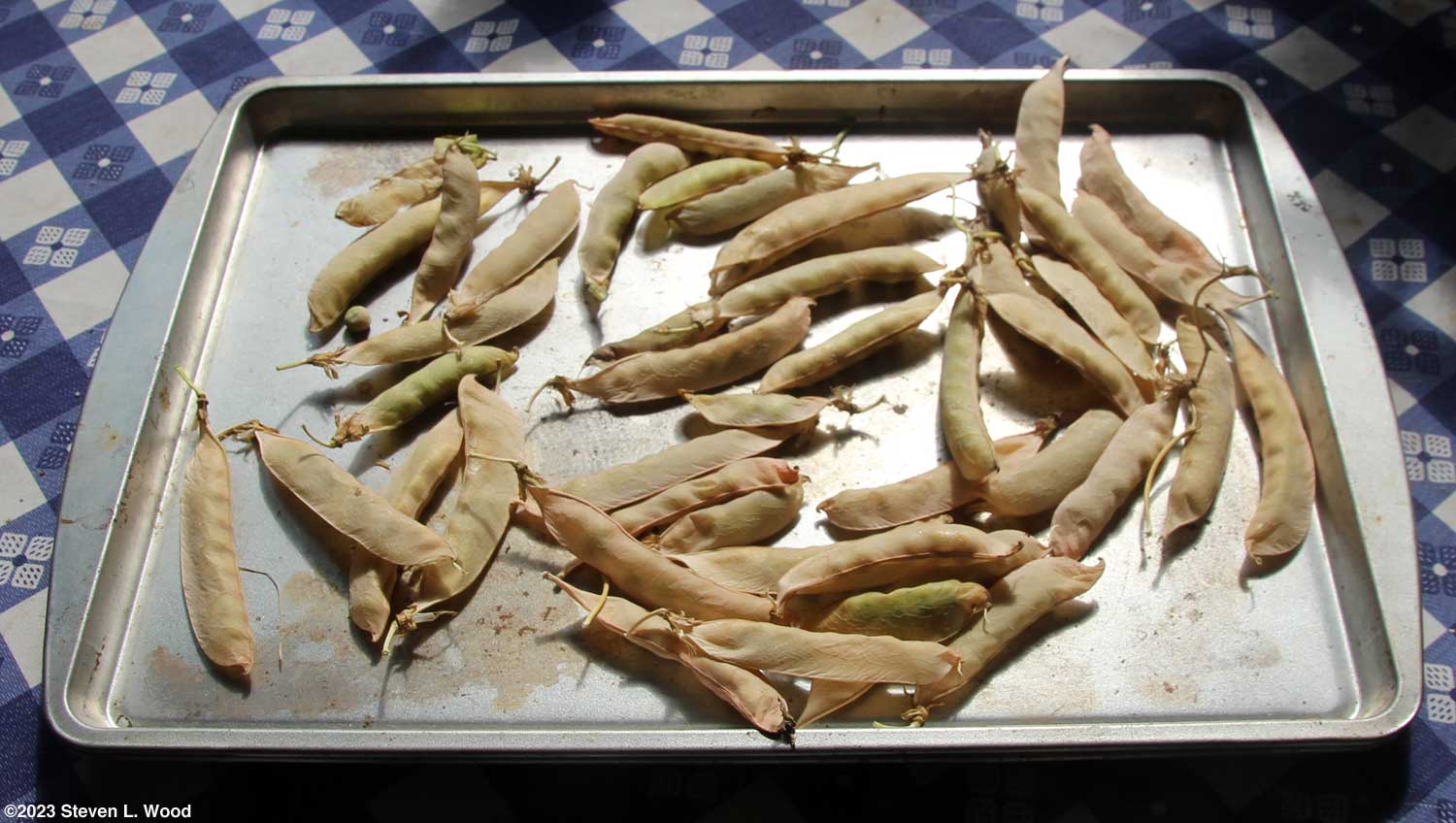
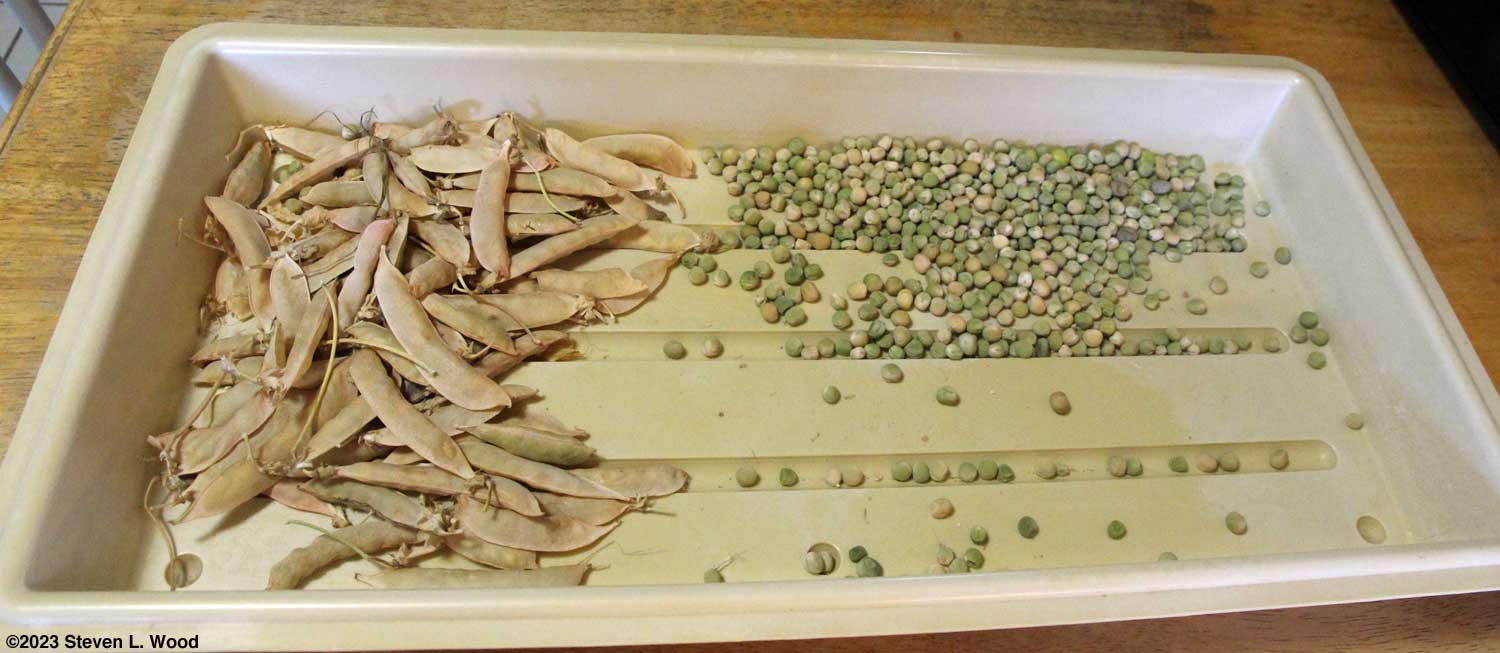
I sorted the pea pods into trays. One tray was for green podded peas and the other was for browned pods and peas that had broken loose from their pods during the picking. When dried and shelled, I'll freeze these peas for planting next March. I've been trying to cross the Champion of England and Maxigolt tall pea varieties. Peas are self-pollinating, so I haven't had a lot of success with the experiment. But we've had a fabulous pea harvest this year from our early peas.
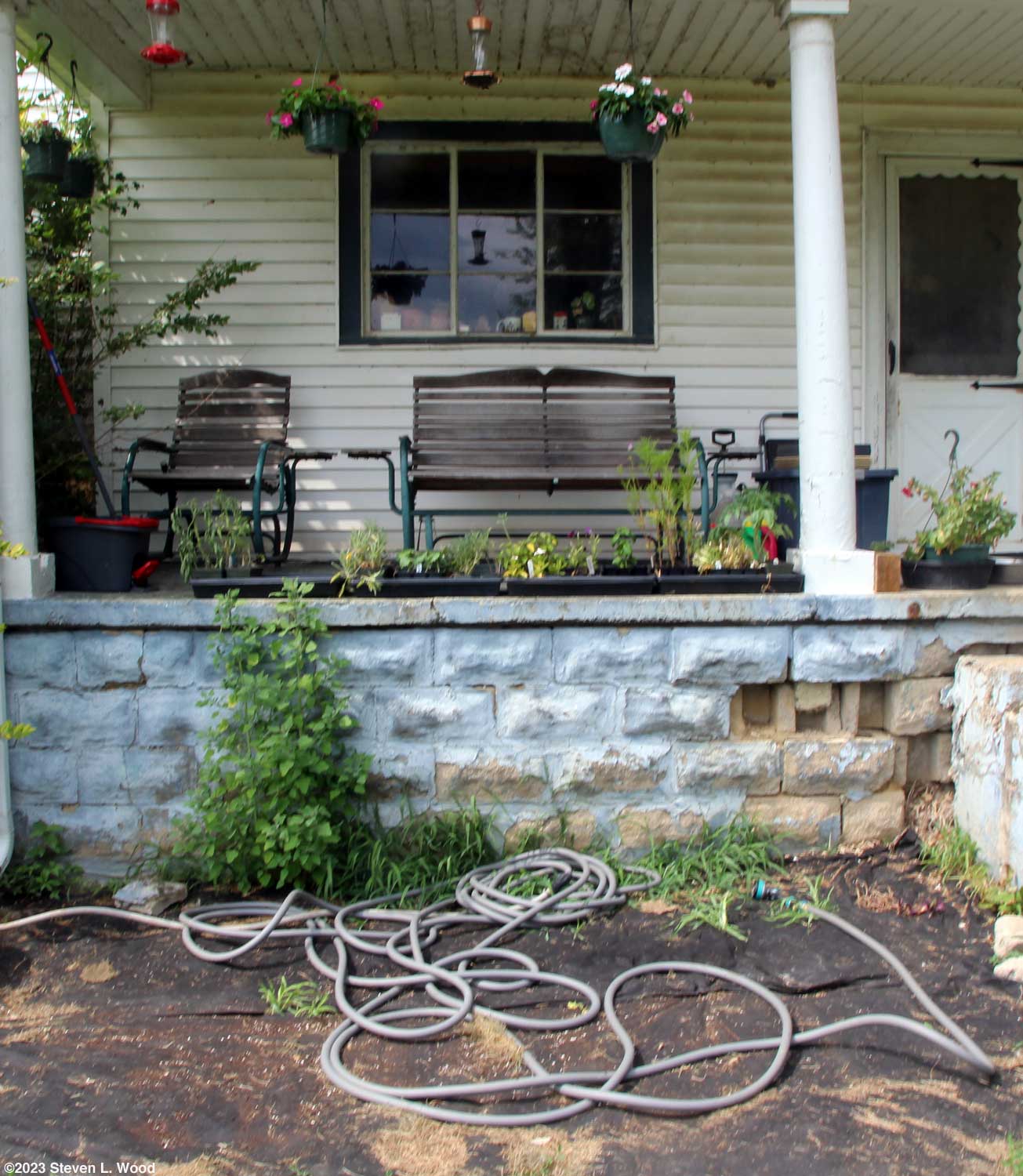
The pea vines went onto our working compost pile. I gave them a good shot of Jerry Baker's Compost Tonic. The recipe for the compost starter concentrate is a cup of household ammonia, a 12 ounce Coke (regular, not diet), and a quarter cup of dish detergent. Baker recommended using a hose end applicator at a 15:1 water-concentrate ratio, but I just pour a bit of the concentrate in a 2 gallon plastic watering can I reserve for this task with a gallon or two of water. I scuffle hoed the the row the peas had grown in and will use a regular garden hoe tomorrow to work in a little fertilizer and lime. I have about a dozen of very healthy Japanese Long Pickling cucumber transplants on our back porch just about ready for transplanting.
All the transplants got a good dose of starter solution and were mulched in with the mulch I raked off our previous rows of broccoli and cauliflower. I did have to sort out a good many large cauliflower leaves from the mulch. I used one of our overwintered Walla Walla onions in a batch of spaghetti/lasagna sauce on Sunday. Our Walla Wallas are beginning to fall over, a sign that they're about ready to come out of the garden and onto our makeshift drying table in the garage.
It appears that my efforts are going to be successful this year. I still need to learn how to effectively clean the seed. If all goes well, I hope to offer the variety via our two seed outlets, the Grassroots Seed Network and the Seed Savers Exchange. Alliance Tractor got our repaired lawn mower back to us yesterday, a quick turnaround. I was too worn out yesterday to mow, but got our yard mowed today. Even though I desperately need grass clipping mulch for our melons in our East Garden, I quit after mowing our basic yard and a bit of the other land we care for. At 74, I'm finding that I run out of energy about mid-afternoon each day. But...I'm still alive and kicking. Thank you, Lord.
After sweeping up some grass clippings and mulching a bit around our melon plants, I mowed the acre plus field next to us. With the haze and our old lawn sweeper not working well, I left the grass clippings on the field. A bright spot today was our gloxinias in bloom on our dining room table. And I found four more gloxinias on our plant rack about ready to bloom. So they joined the other gloxinias on the table.
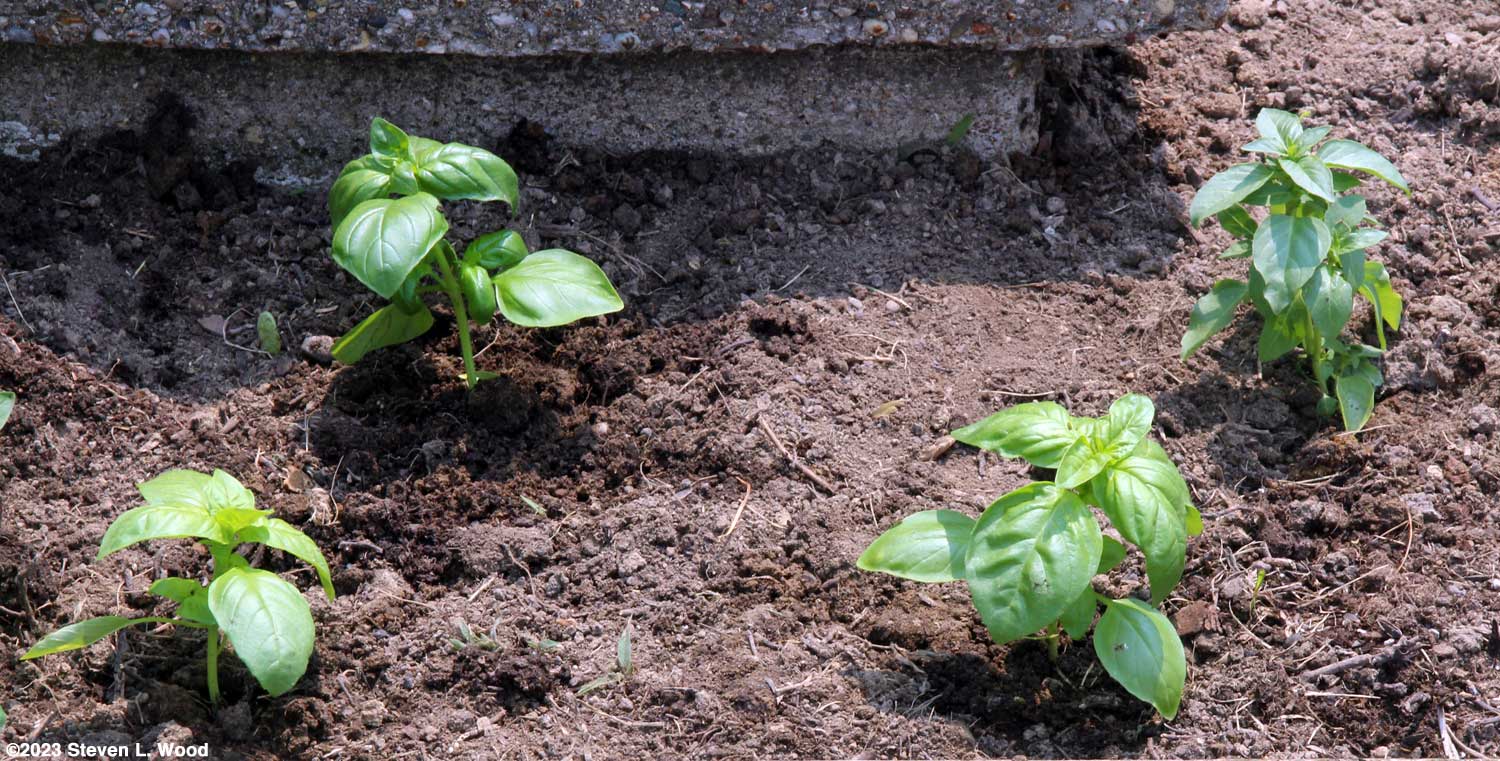
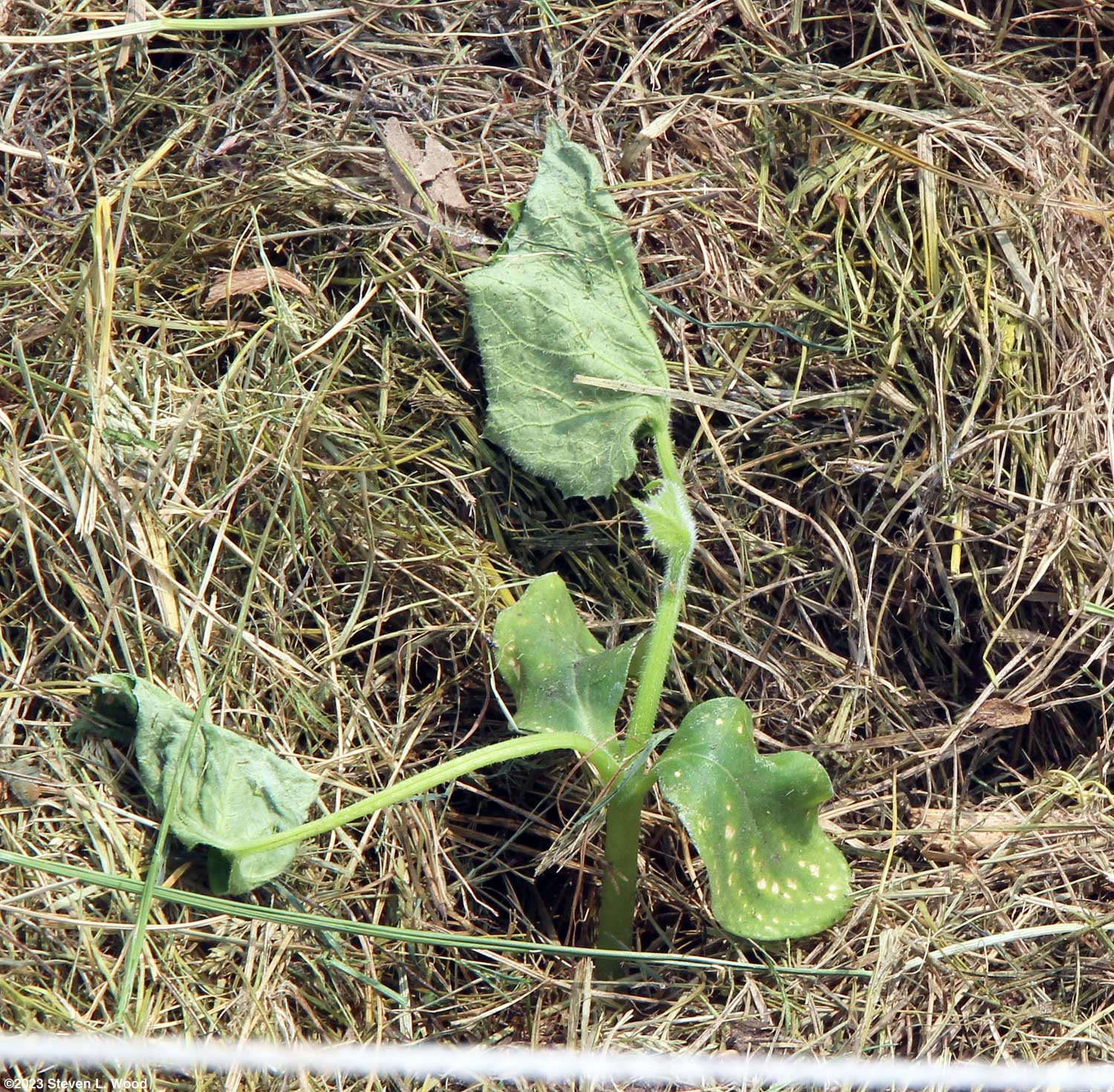
In a break between thunderstorms, I checked our newly transplanted row of Japanese Long Pickling cucumbers. Some of them had wilted a bit after being transplanted and then something (see image at right) dug at the base of about half of the plants. Surprisingly, all twelve plants look pretty healthy today. With the cooperation of a local grocery putting Crescent Rolls and Cheese Singles on sale, we had pigs in a blanket for supper last night. While good, the stars of the meal were some freshly picked supersweet Eclipse peas. Despite the taste delight of the peas and four pints of them now in our freezer, I've decided to quit picking the endangered variety and let the plants produce a seed crop. We have lots of our early peas frozen, so cutting the Eclipse season short won't be that much of a sacrifice. I hope to get enough pea seed from this planting to be able to share Eclipse seed next year. Getting back to the storms, Annie's brother, a retired meteorologist, was concerned enough about the oncoming storms that he called family members here in Indiana from his home in Florida to warn of the extremely violent storm system. And I must say, I've never seen the leaves and limbs of our trees lashing around like they did today at the height of the storm. Thanks, Mike!
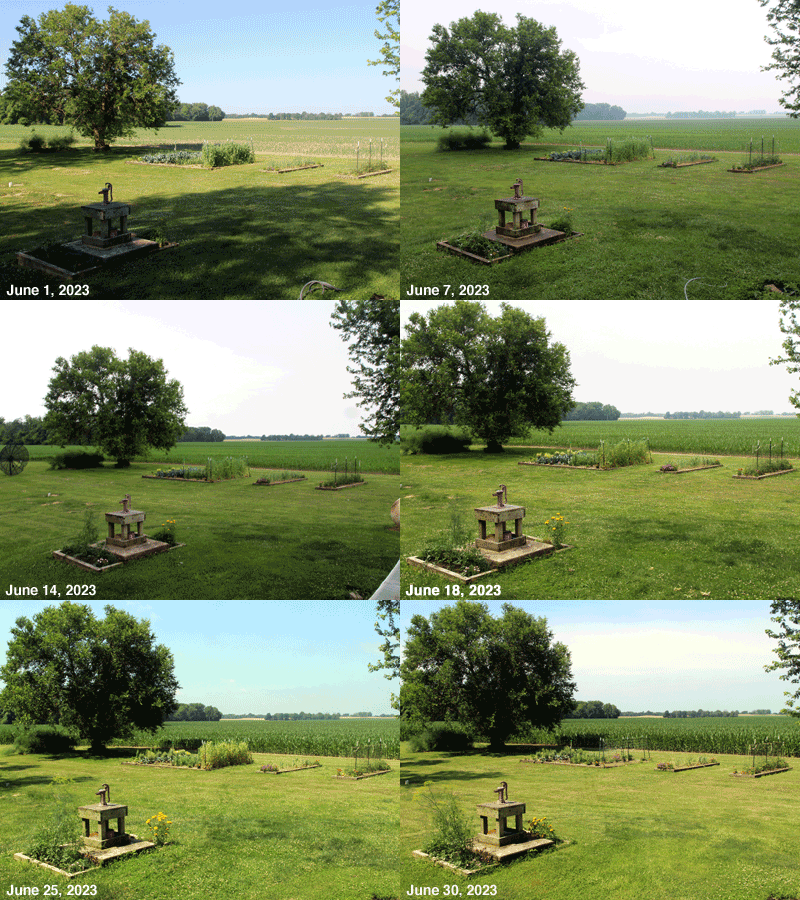
Friday, June 30, 2023 - June Wrap-up
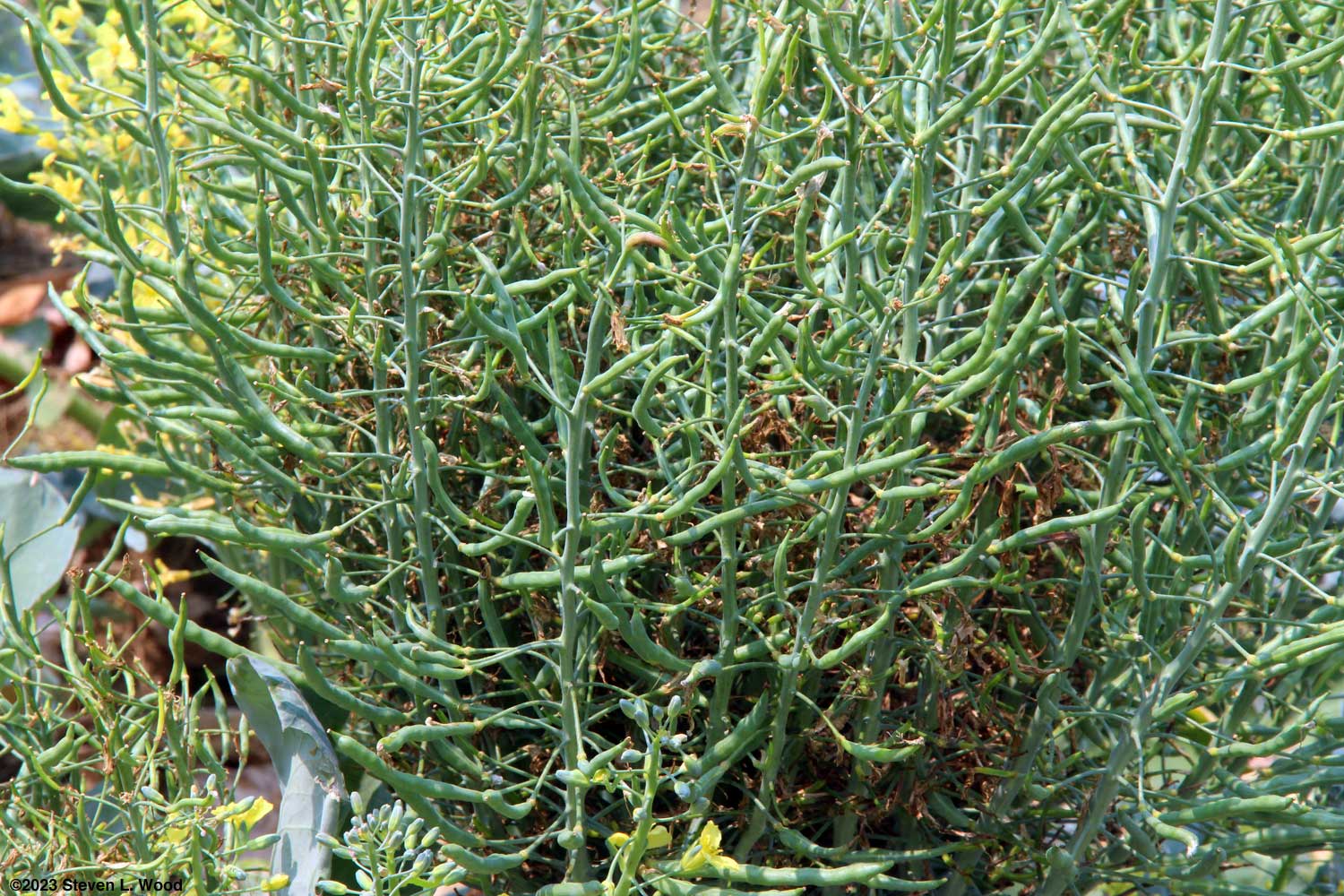
Coming in a bit behind our peas, our rows of broccoli and cauliflower for the table produced some wonderful meals and two gallon bags of frozen broccoli and cauliflower. We lost some cauliflower to the hot and dry conditions this month, but still got more of it than in many other springs. I need to remember to start our fall brassicas in the next few days. While tempting to pick, eat, and/or freeze, I mostly let our Goliath broccoli for seed bloom and begin producing seed pods. I did, however, nip off a few Goliath sideshoots. I noticed yesterday that the strong storms had broken off most of the female spinach seed spikes. It appears that this year will be another tough one for spinach seed production. Fortunately, I have lots of Abundant Bloomsdale spinach seed from past years in the freezer. While it won't produce any seed for saving, I'm looking forward to some nice fall spinach for the table. Speaking of leafy greens, we got some wonderful lettuce early this month. The hot and dry conditions made the lettuce bolt and turn bitter. I pulled and composted our remaining lettuce plants today. But like spinach, we get better lettuce in the fall.
And in what to me is a triumph over old age and injuries, I got a reduced sized East Garden planted this month. The last two years I suffered injuries that prevented doing the heavy work of planting and mulching the East Garden plot. But I got it in this year, although I'm probably going to have to do some workarounds to keep it going. Our walking tiller, essential for weeding around our sweet corn currently refuses to start. But Annie bought a push type reel mower years ago that may keep the weeds down in the sweet corn aisles. Our lawn sweeper is just about shot, so a new one or possibly some weed killer may be employed to keep our melon patch clean.
I still have some of the roll of remesh left that I used to make tomato and pepper cages. I may make a couple more tomato cages for the East Garden, as I still have two incredibly healthy Mountain Fresh Plus tomato transplants and space remaining for them in our East Garden. To some of the folks who have emailed me this month and not received a reply, my apologies. I'm having an email authentication problem that has caused my responses to folks with Google accounts to bounce. I've checked with my web provider and found that my accounts are supposed to have the necessary authentication.
Contact Steve Wood, the at Senior Gardening |





 ,
,  , and Serenade biofungicide. After waiting several minutes for some of the solution to work into the soil, I squished my potato sets into the mud and then drew soil over them with my garden rake. As a final touch, I added yellow marigolds at the center and either end of the row.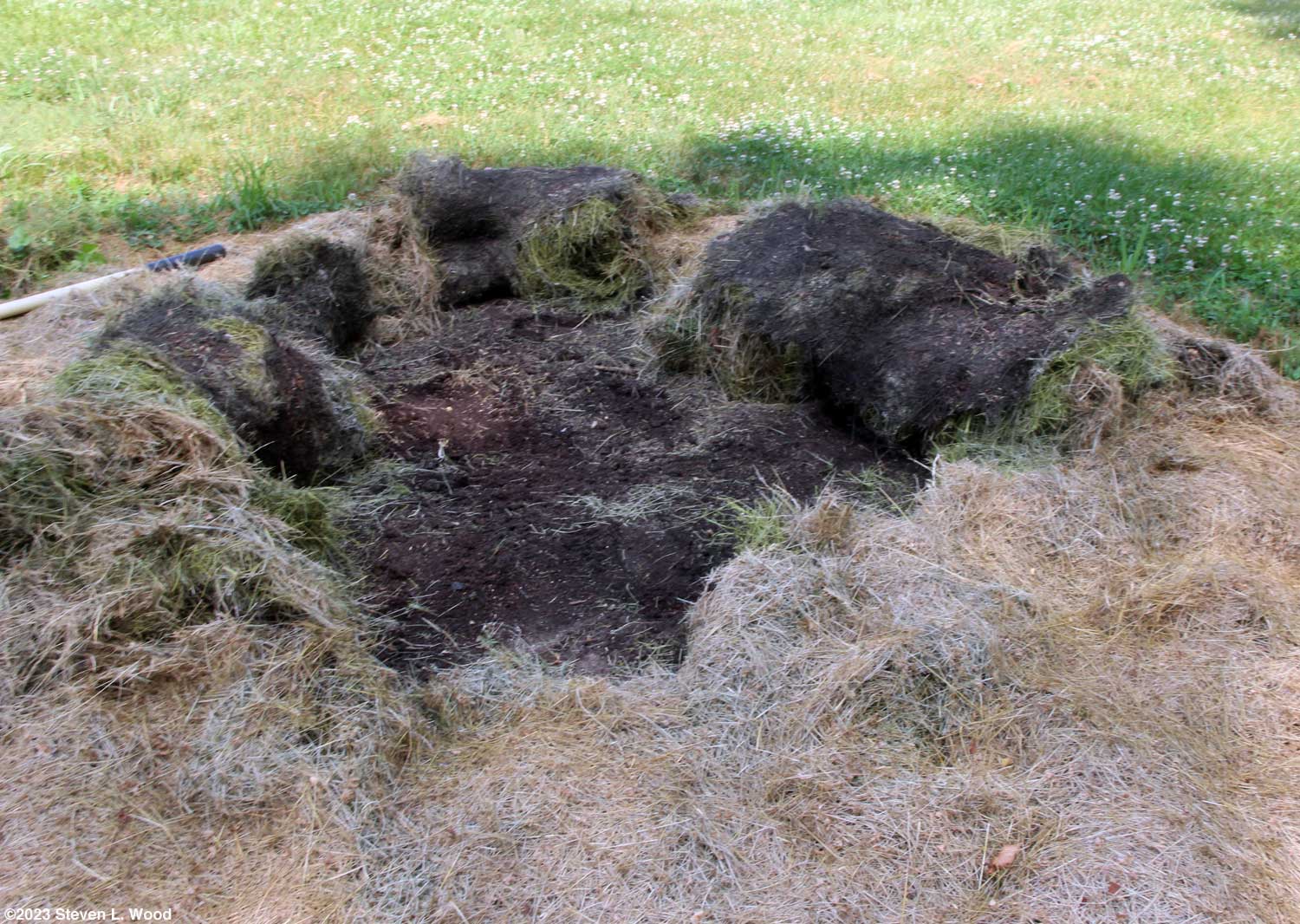



































| Affiliated Advertisers |
©2023 Senior-Gardening.com