One of the Joys of Maturity |
|

| Affiliated Advertisers |
The Old Guy's Garden Record
Clicking through one of our banner ads or some of our text links and making a purchase will produce a small commission for us from the sale.
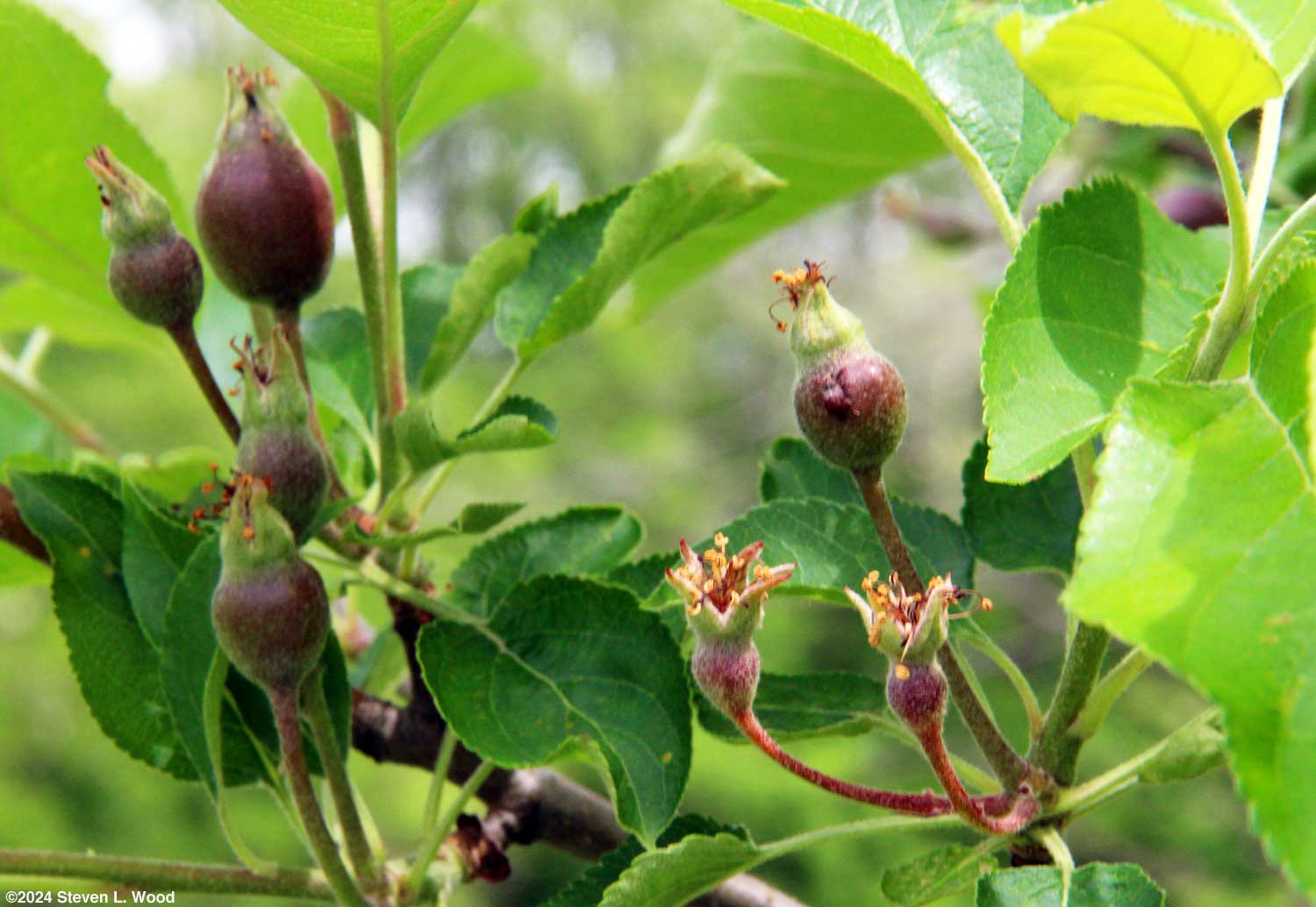
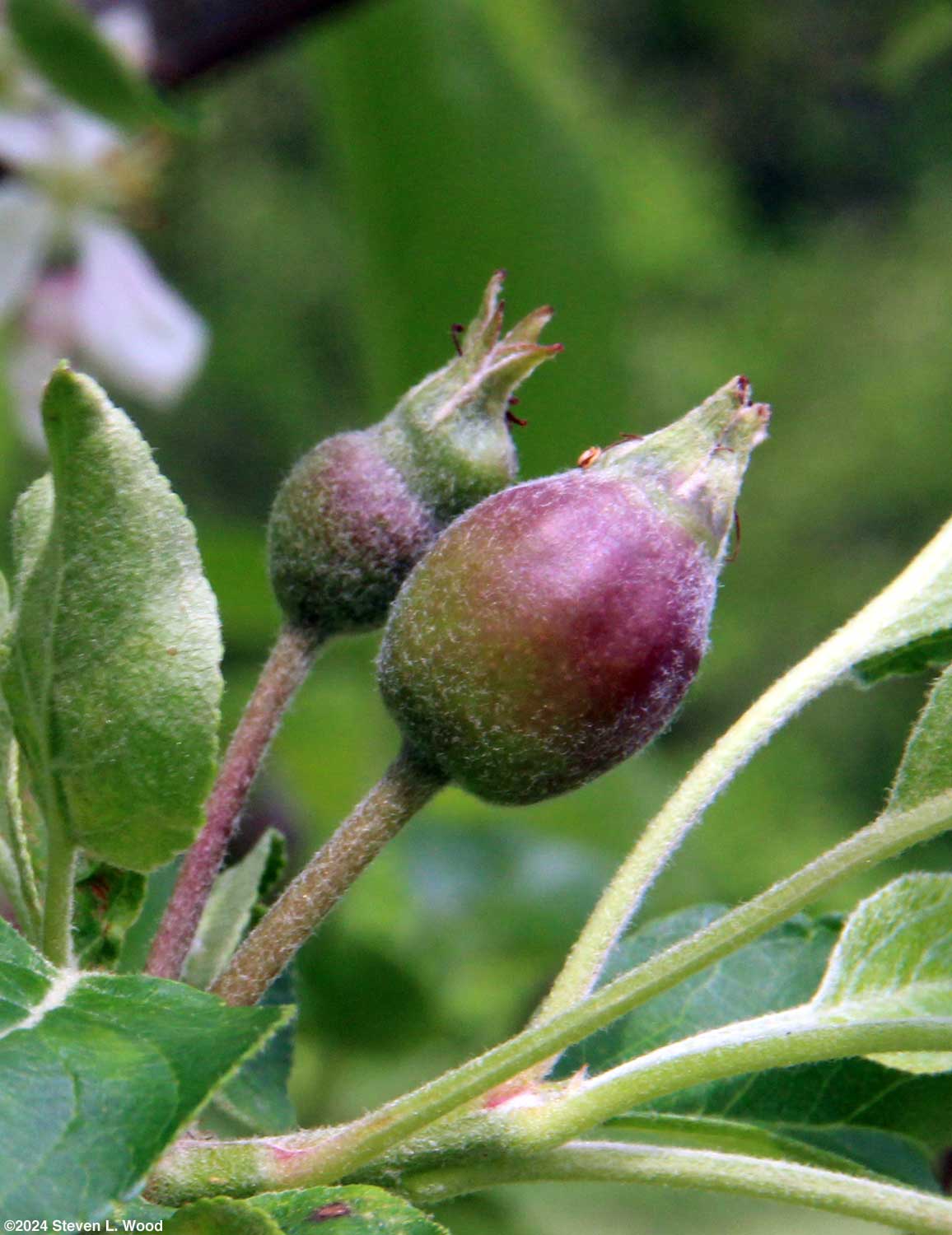
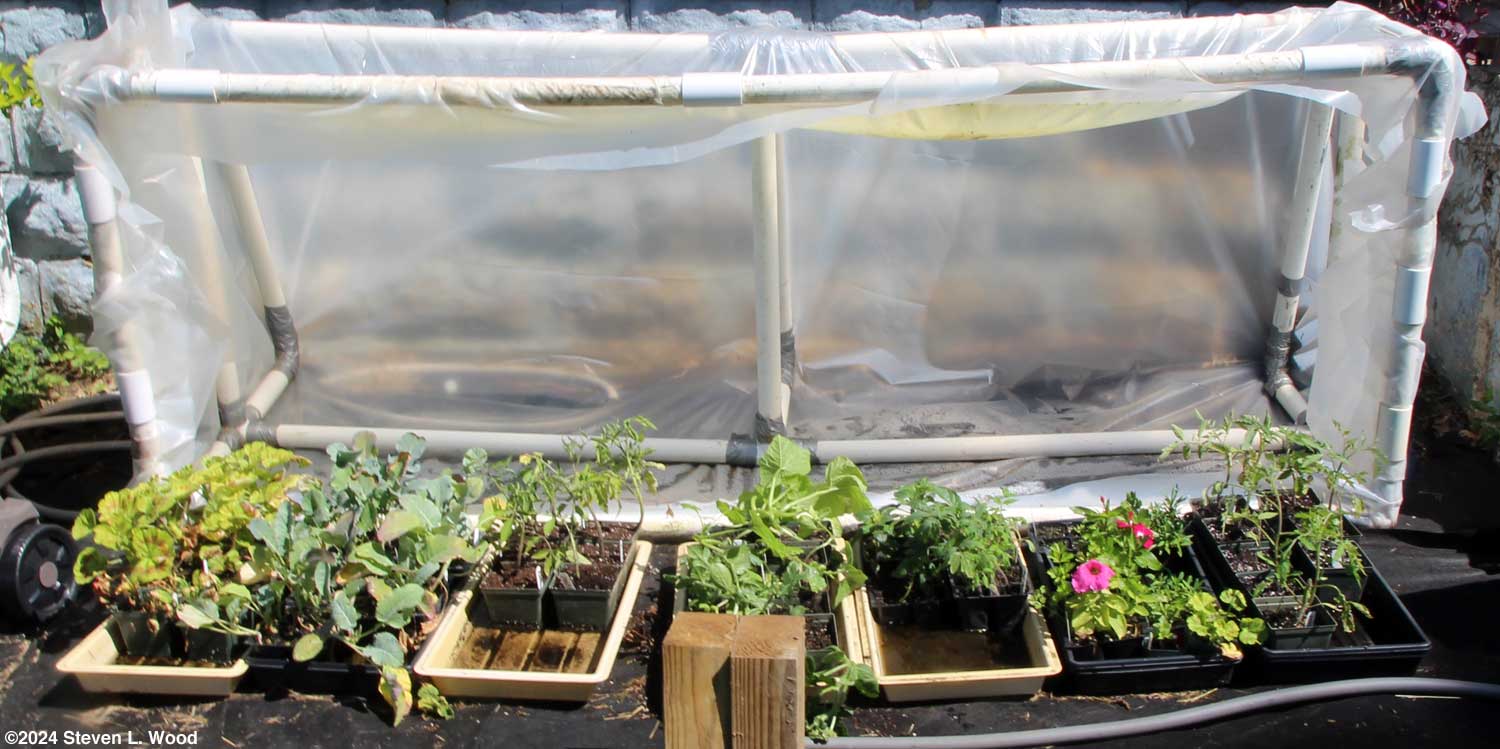
It's an exciting time of year for a gardener. The weather has warmed, and we've had lots of precipitation to overcome the seemingly winter drought. Of course, this time of year brings the scourge of blackflies. The tiny biting pests come from an active creek near us and persist until things get really hot out. I've found that an OFF! Clip-On somewhat discourages the bugs. As you can see at right, we have lots of healthy transplants ready to go into the ground. Our broccoli and cauliflower transplants are getting huge and will probably be the first plants to go into our main raised garden bed. Onion plants and sets, lettuce, and direct seeded carrots and beets will probably be next. I'll wait just a bit before transplanting tomato plants. Our transplants aren't that big yet, and I've had problems with early transplanted tomatoes in the past. In a change from the past few years, I'll be putting six Moira tomatoes into a narrow raised bed instead of our usual Earlirouge. It will be interesting to see what the Moiras do in some of our best soil. I have a bunch of Earlirouges to go into our large East Garden plot. I've not been satisfied with the varieties' growth and production over the last few years. The Earlirouge transplants include one from 1988 saved seed and lots of others from saved seed over the last eleven years. My Special Treat for Today Hopefully, readers of this site find something special and wonderful in each day. I was mowing today (not necessarily a treat) when I observed baby apples on three of our four apple trees. While not all of the apples will mature, it promises far more than the eight or ten apples total we harvested last season.
Even our two year old dwarf Stayman Winesap tree has lots of apples set on. With its small limbs, I don't know if they'll be able to support the fruit.
|




|
We've had some nice weather of late. I'm still playing catchup with mowing and raking grass clippings. I mowed our lawn on Wednesday and the field yesterday. That's about three acres of high wet grass. Between lots of rain and an equipment breakdown, I got way behind on mowing and the grass was really tall.
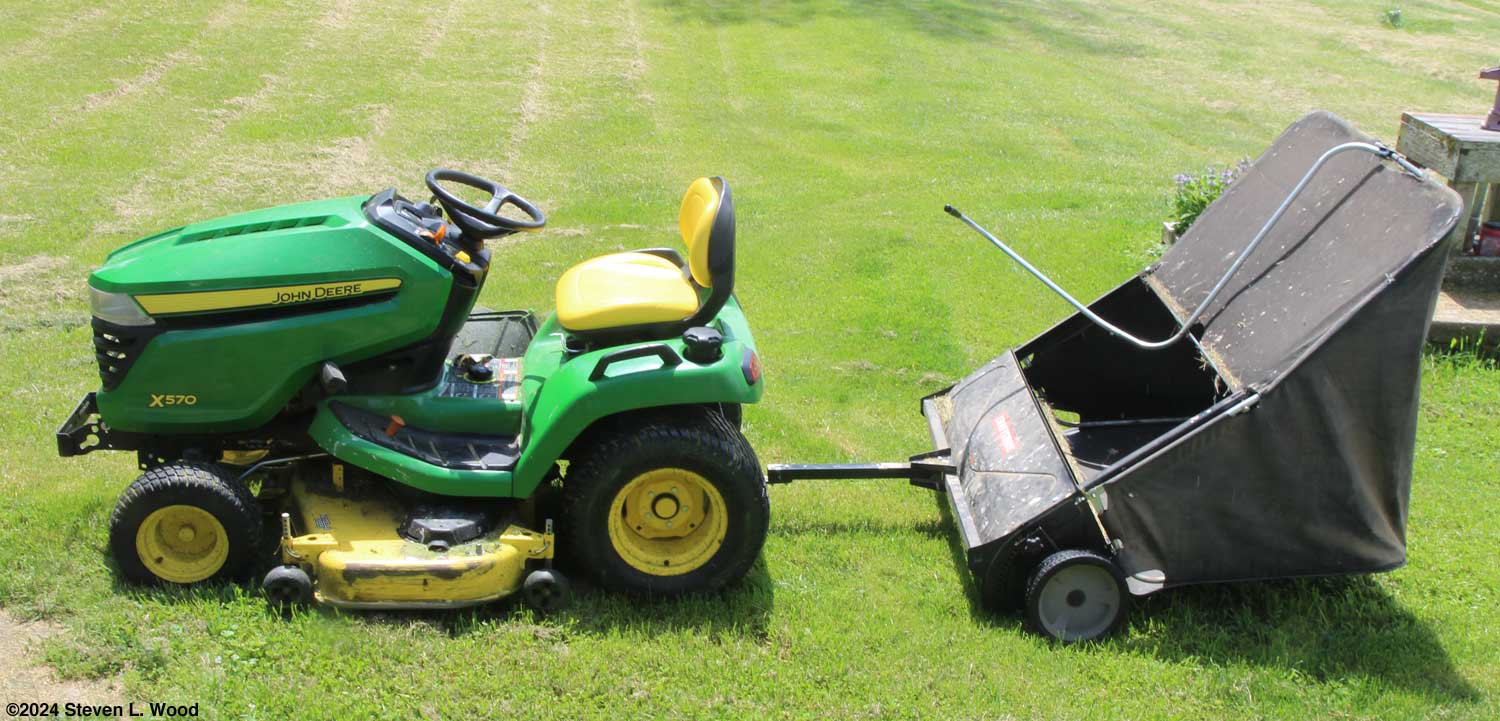
I'm writing while on a break from collecting grass clippings, as the grass is still a bit wet. I think our old lawn sweeper sensed my wife and I discussing replacing it this morning, as it's started doing a fairly good job where the clippings have dried and aren't piled too high. After over $800 in service and repairs, our seven year old John Deere X570 is doing a good job mowing and also pulling the lawn sweeper. I'm reluctant to move on to a new mower, as the X570 also supports a pull behind rototiller I use to turn our East Garden plot. I hope to get back to gardening tomorrow.
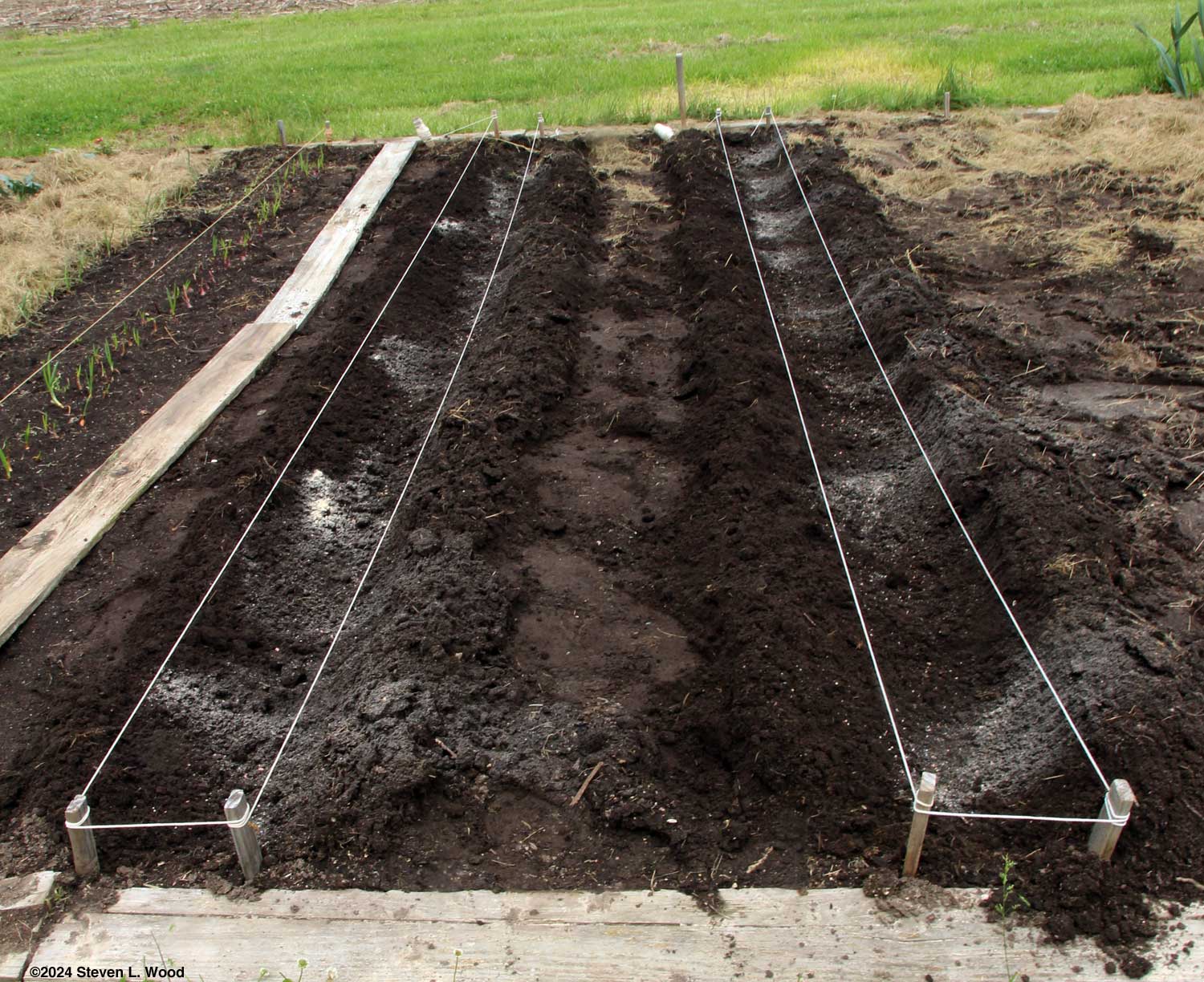
Well, I got back to gardening today, but I didn't put any seed or plants into the ground. Instead, I started by raking smooth our main raised garden bed, pulling many weeds to the sides of the bed. I also put a couple of pepper cages at the south end of the bed to facilitate measuring where stuff will eventually go. Our pepper transplants are still tiny, so it will be a while before they go into the ground. After picking asparagus, I moved on to rototilling the narrow raised bed where our Moira tomato plants and possibly some lettuce will go. And after dumping our kitchen compost bucket on our working compost pile, I found that there was still enough of the old Bonide Fruit Tree Spray in our insecticide sprayer to give our apple trees another spray. I focused the spray on the young apples on the trees. The spray used today was a nasty chemical cocktail of the fungicide Captan and the insecticides Malathion and Carbaryl, with a little sticker spreader thrown in.
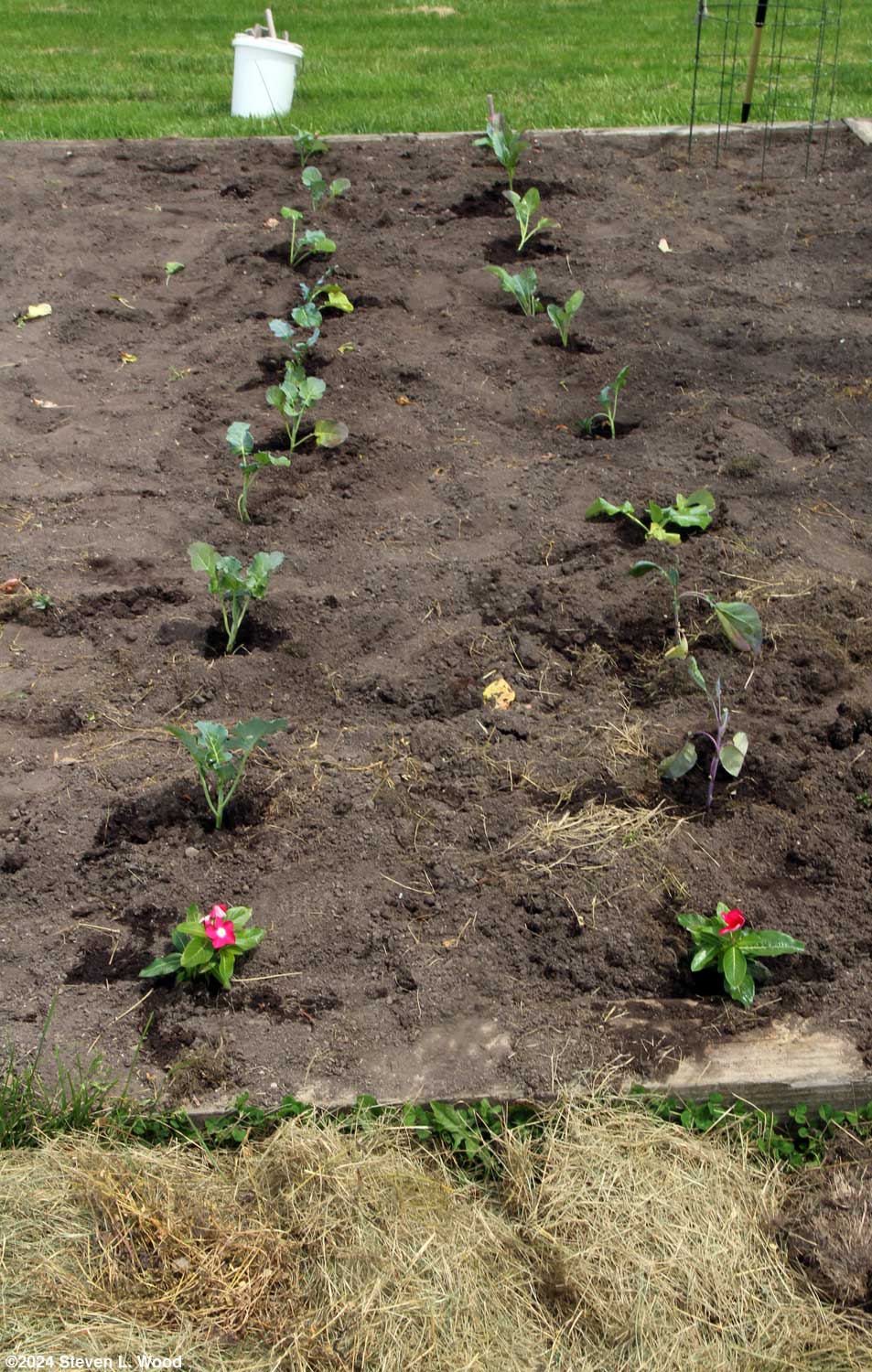
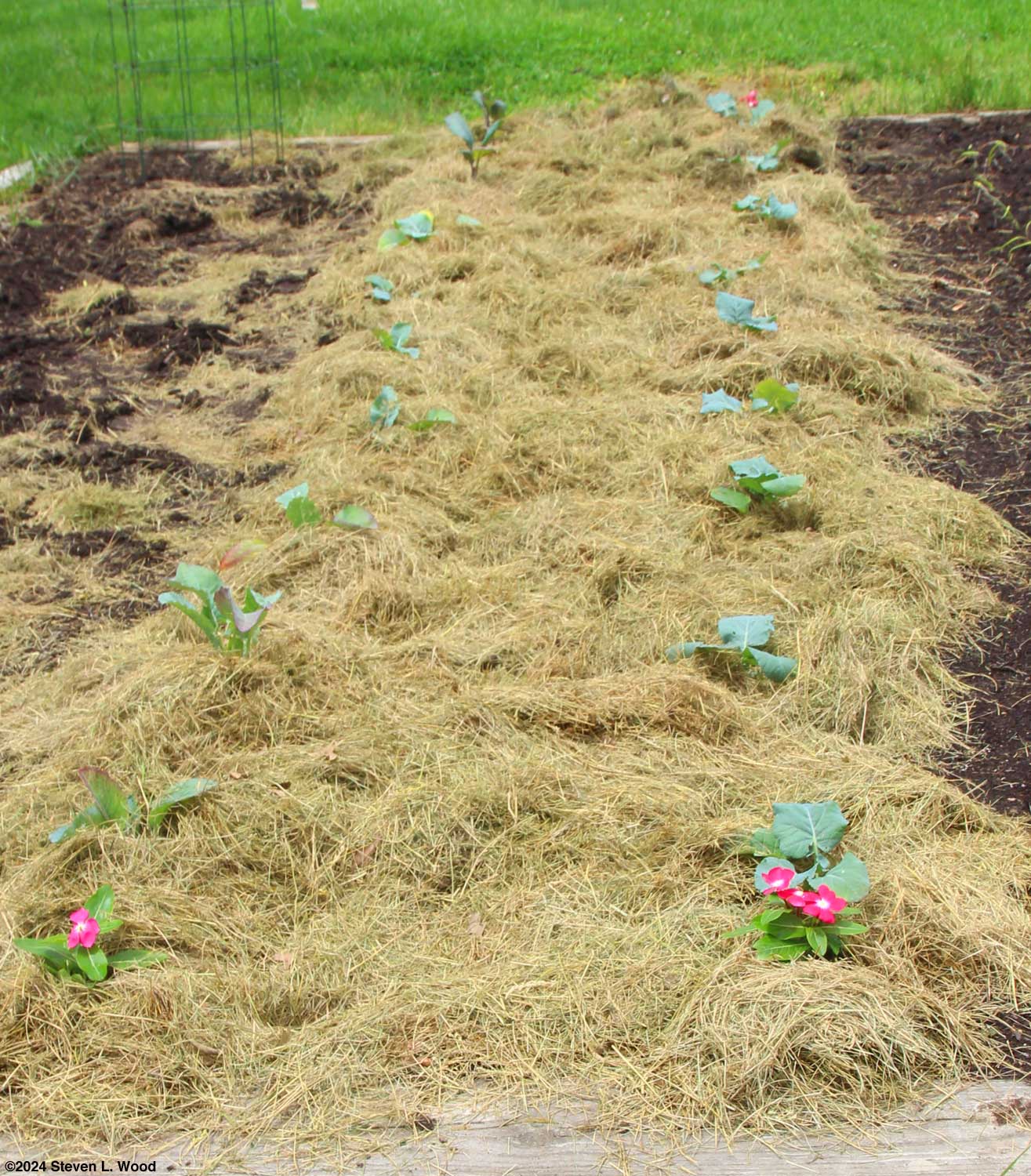
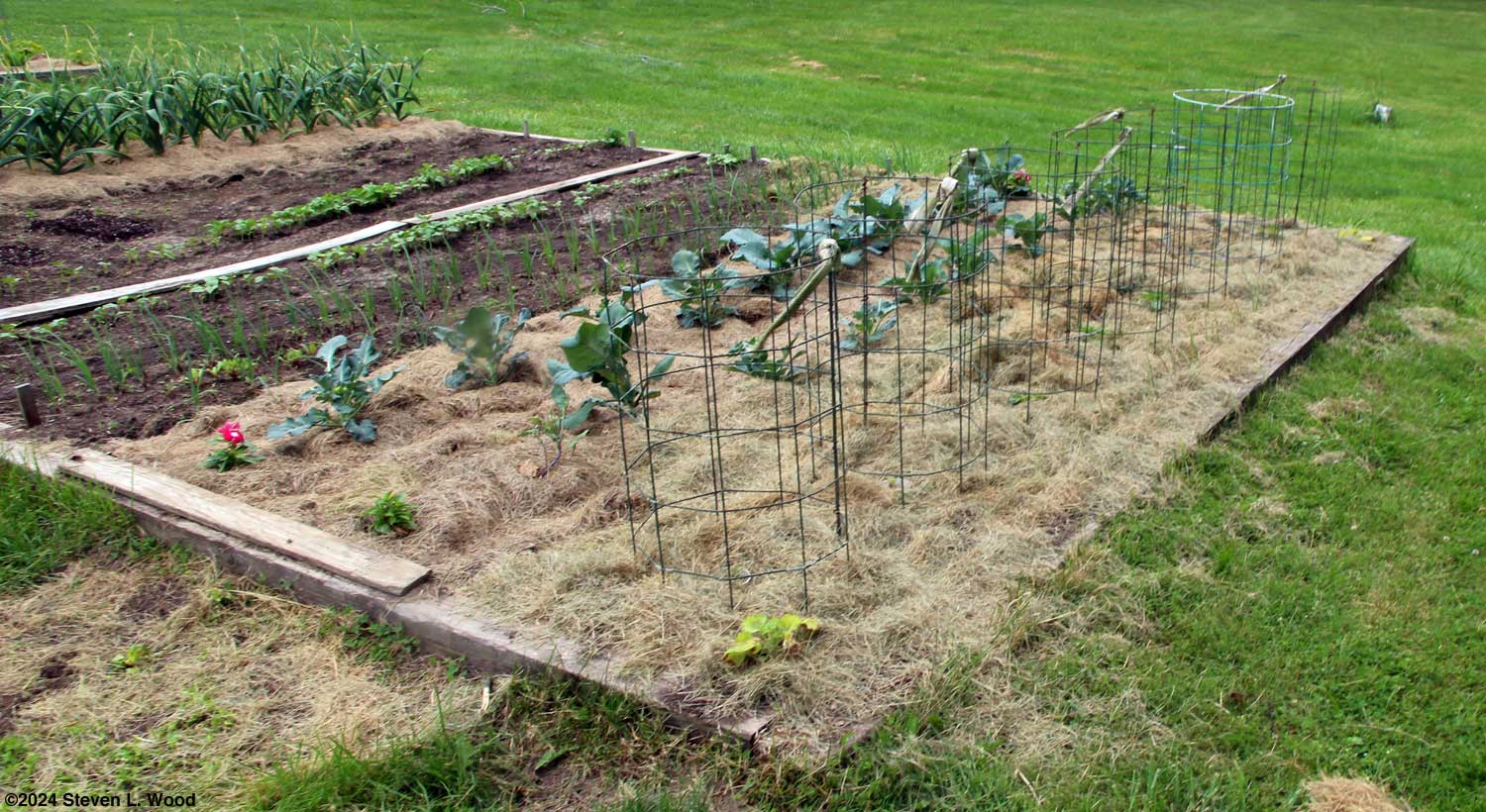
The raised bed soil was loose from a recent rototilling. It also was quite dry. Each planting hole got a sprinkle of 12-12-12 fertilizer and lime worked into its base. Then the holes got watered with Quick Start fertilizer before popping a transplant into the muddy hole. I didn't use cutworm collars for this transplanting as the stems of the transplants were pretty tough. I did make a soil trough around each plant to hold in rainwater. I put in five Amazing, two Fremont, and two Di Sicilia Violetto purple cauliflower in one row. A second row got five Premium Crop and four Castle Dome broccoli. I still have around eighteen Goliath broccoli plants left, but they're for seed saving and will go into our East Garden plot. While I have plenty of grass clipping mulch on hand, I held off on mulching. We have rain predicted for the next three days and the ground really needs a good soaking before the mulch goes on. Brassicas seem to be a favorite of area rabbits and deer. Some years we've had a spring or fall crop totally nibbled off. So today, I sprayed the brassicas with a mix of Thuricide to deter cabbage moths and Not Tonight, Deer to frustrate the critters. Then I liberally spread some Repels All around the plants. I'm probably leaving something out here, but our how-to, Growing Great Broccoli and Cauliflower, gives the full picture of our brassica growing practices.
Get beautiful flowers, blooming plants, keepsake gifts & gourmet gift baskets for Mother’s Day. Shop our top gifts for Mother's Day this year!
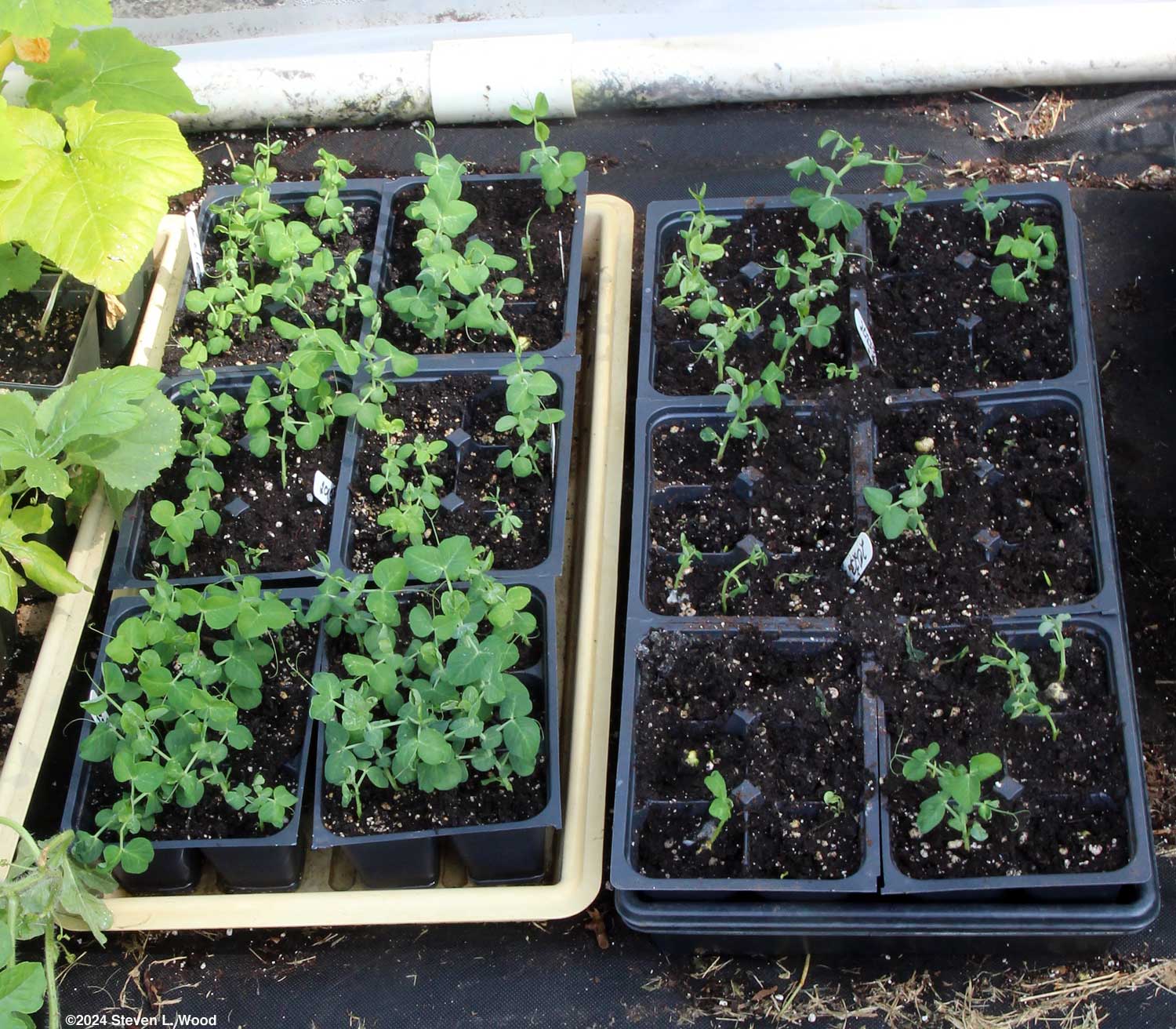
I filled two flats of deep sixpack inserts with sterile potting mix. Each of the seventy-two cells got one or two pea seeds, as our seed hasn't germinated very well of late. I used saved seed from 2019, 2021, 2022, and 2023. The flats went over a soil heating mat set to 70° F. The pea plants will eventually go into a fifteen foot row supported by a short trellis. Until recently, the Eclipse variety was a patented PVP variety. Now that it's free to share, I have trouble producing enough seed for replanting...after we enjoy some of the peas for table use.
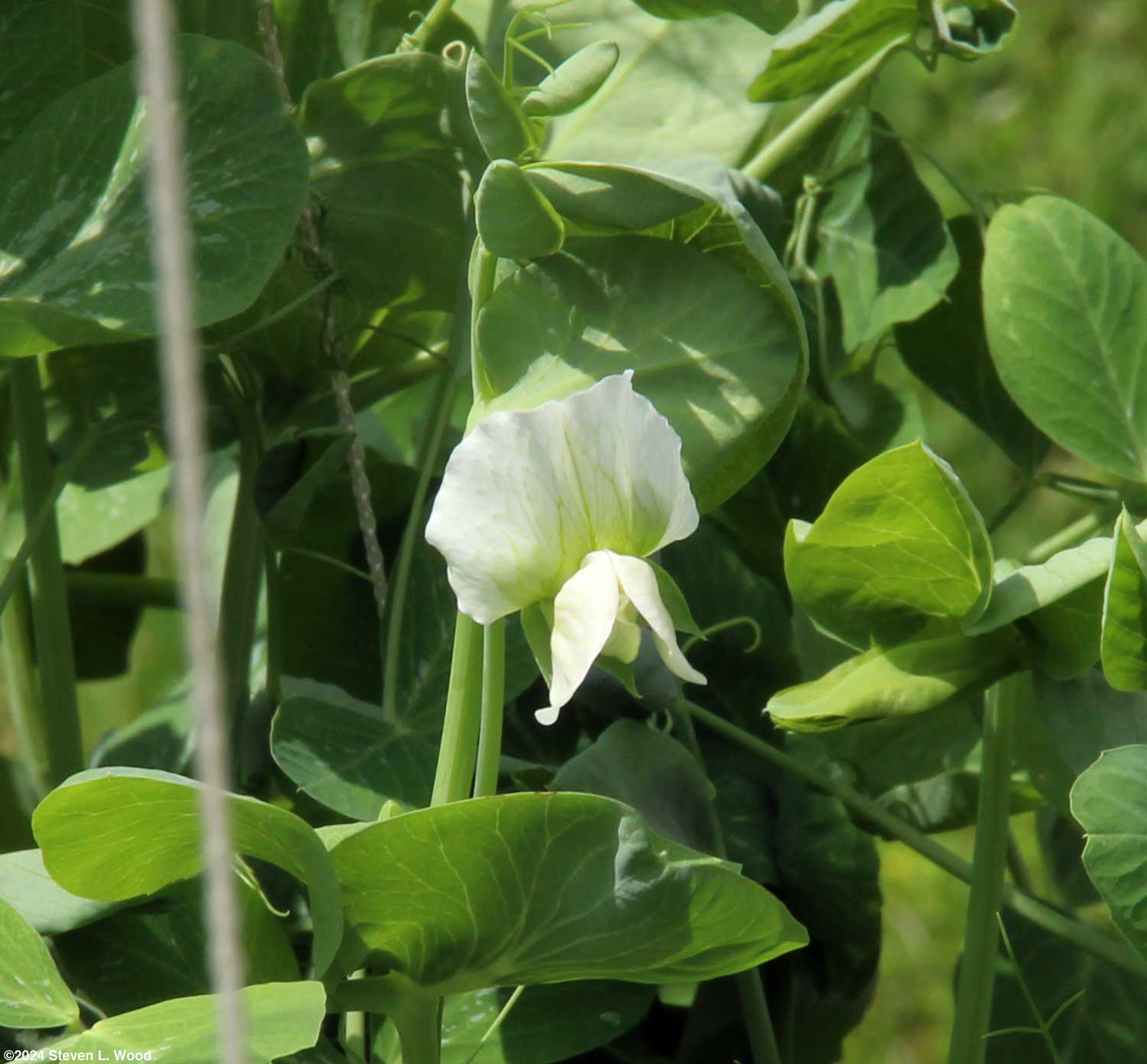
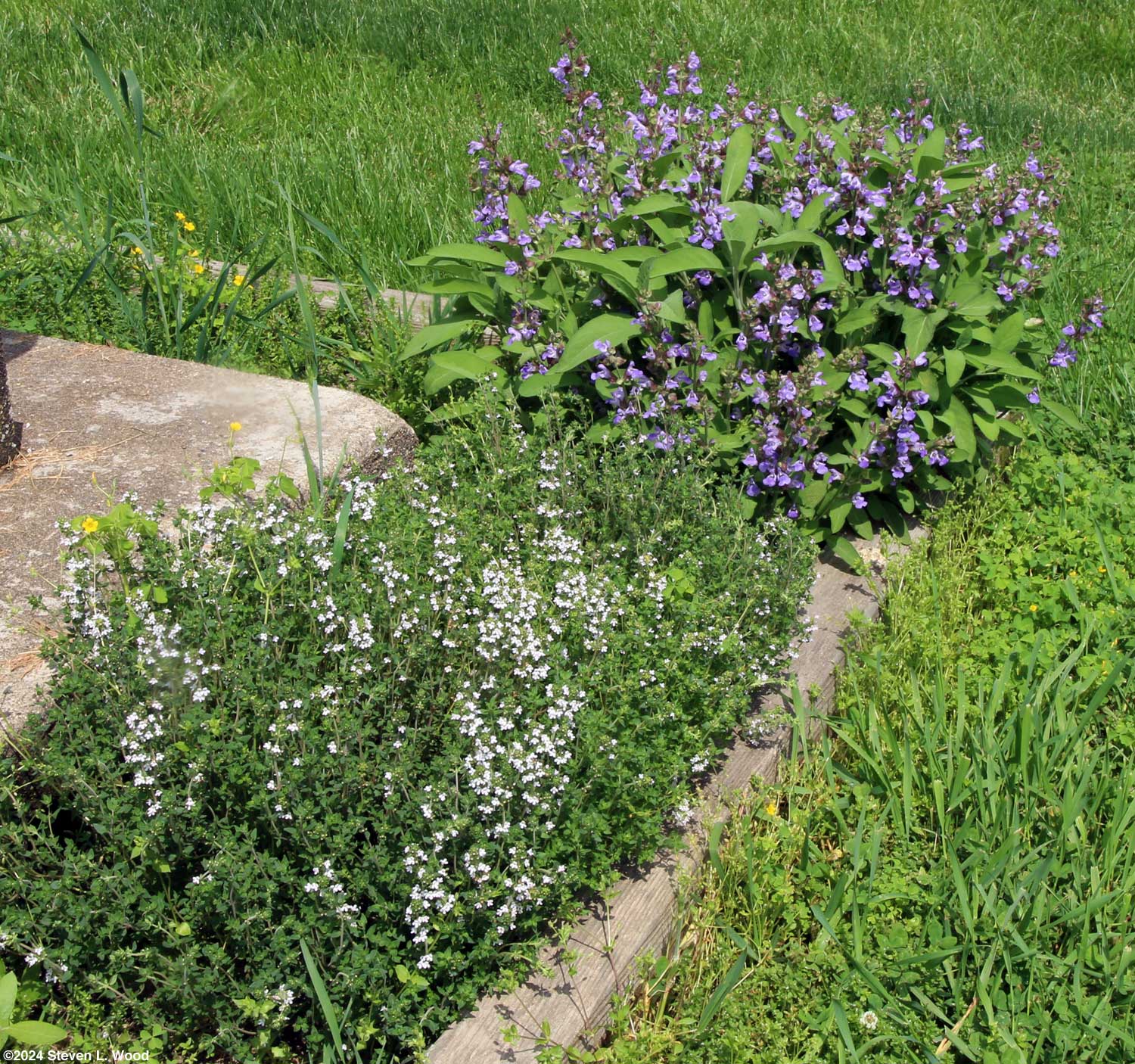
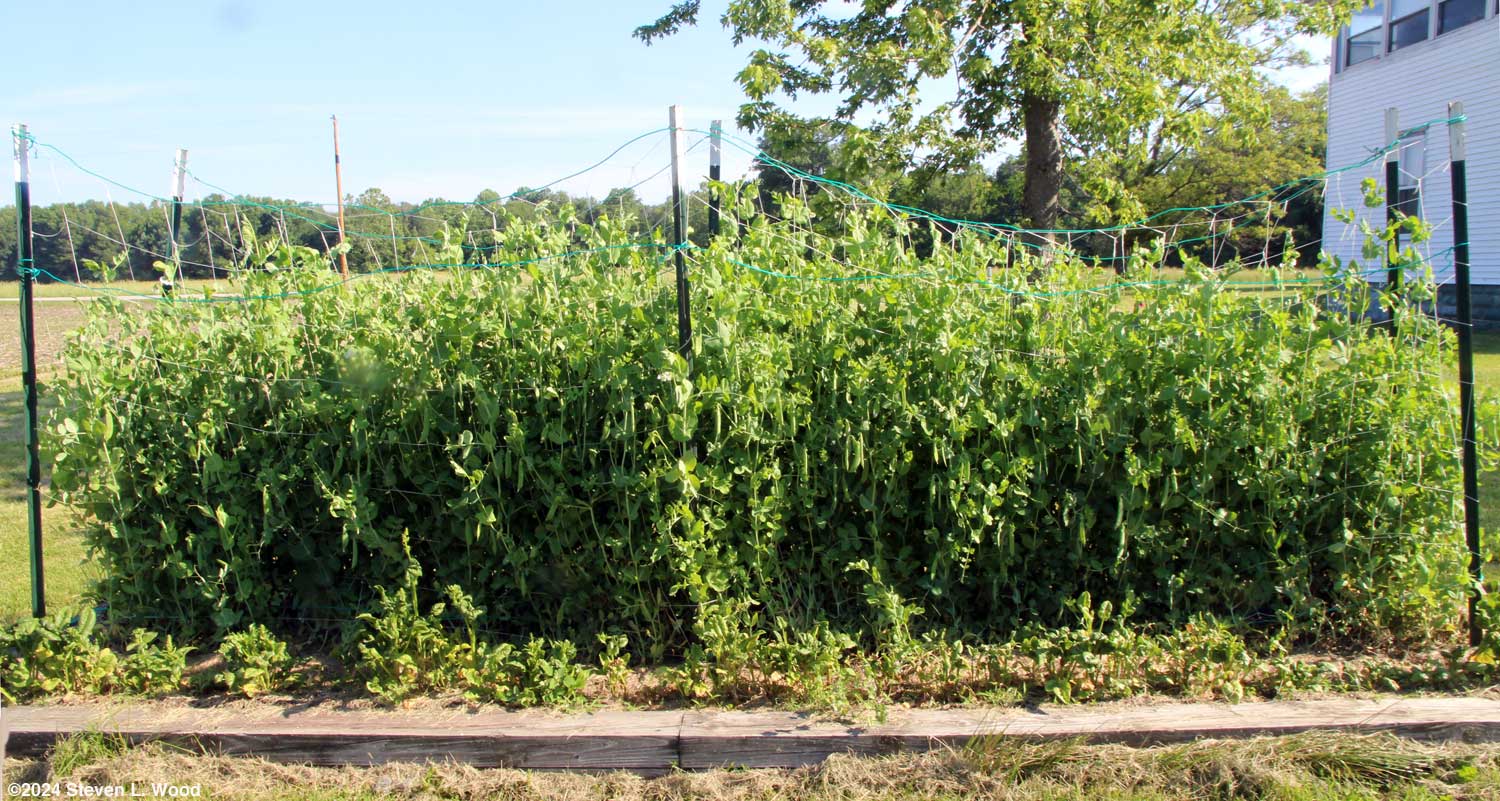
Our tall, early peas are a mix or cross of the Champion of England and Maxigolt varieties. We used to grow them separately, but began saving the cross pollinated peas a few years ago, getting an agreeable mix from the saved seed that grows well for us. The peas flavor rivals the supersweet Eclipse variety. And both our rosemary and sage in our herb garden are in bloom. I had to replace the sage plants last season. The sage plants we use as corner markers in our East Garden plot are also showing signs of blooming.
In other somewhat non-gardening news, it's stormy here today...and possibly in a New York courtroom. Enough politics and weather. Now it's time to get cleaned up for the day and go vote. Maybe I can get some gardening done tomorrow. Later Every time I looked out our kitchen window, an eyesore got me. I needed to trim the grass around our raised herb bed and also weed the bed.
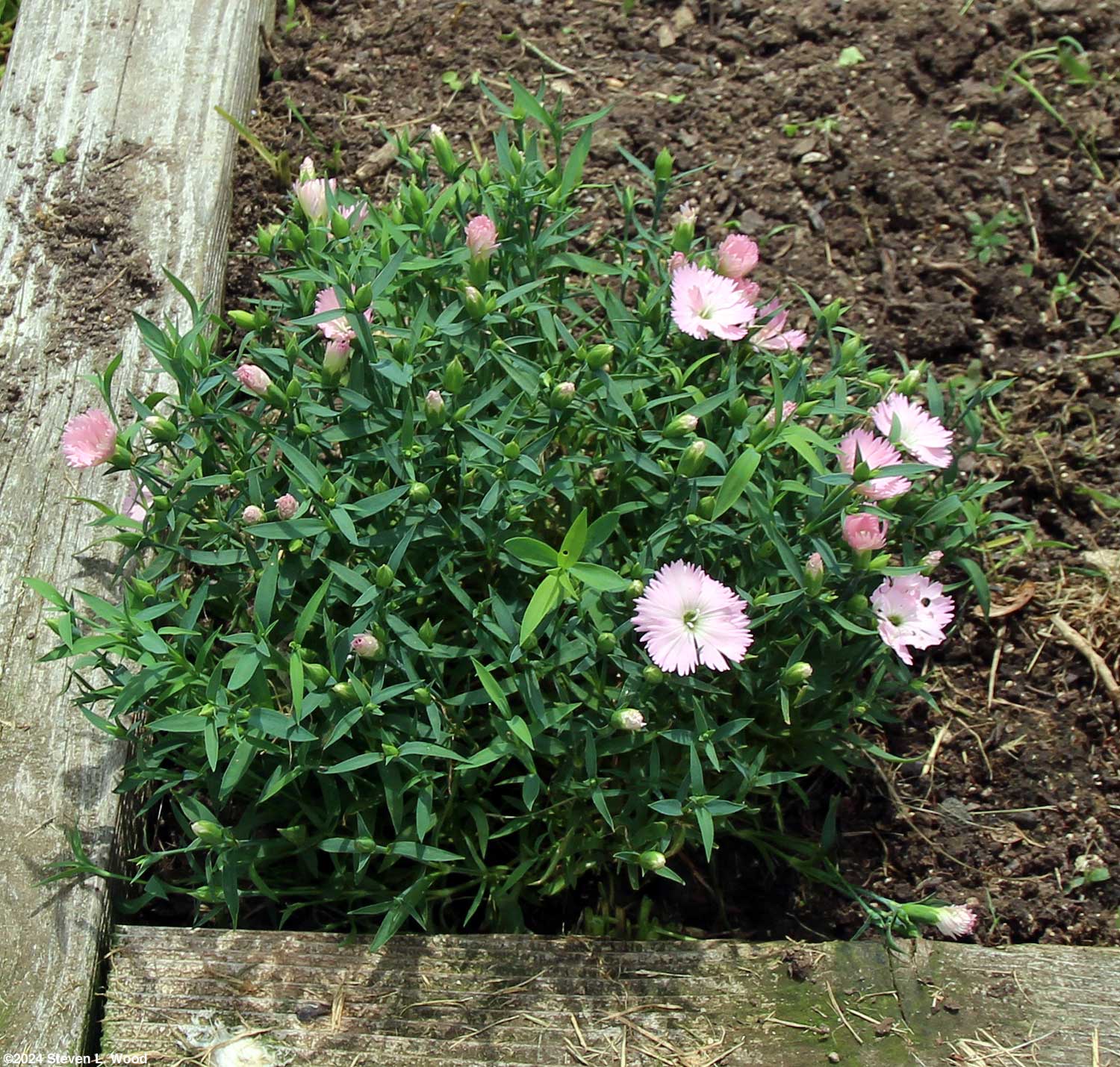
Keeping spent blooms pinched back allows Dianthus plants to bloom over a full summer. Letting the blooms ripen seed slows blooming somewhat. And pinching off mature blooms full of seeds is rather easy. • Gardening Know How: Dianthus Plants: How To Grow Dianthus Cleaning up the herb bed revealed the giant growth of our oregano. It regularly attempts to take over the herb bed, if not the whole world.
The onions I started in January pretty much failed. I still don't know what went wrong, although I suspect that I didn't get all the bleach water rinsed off the trays when I cleaned them.
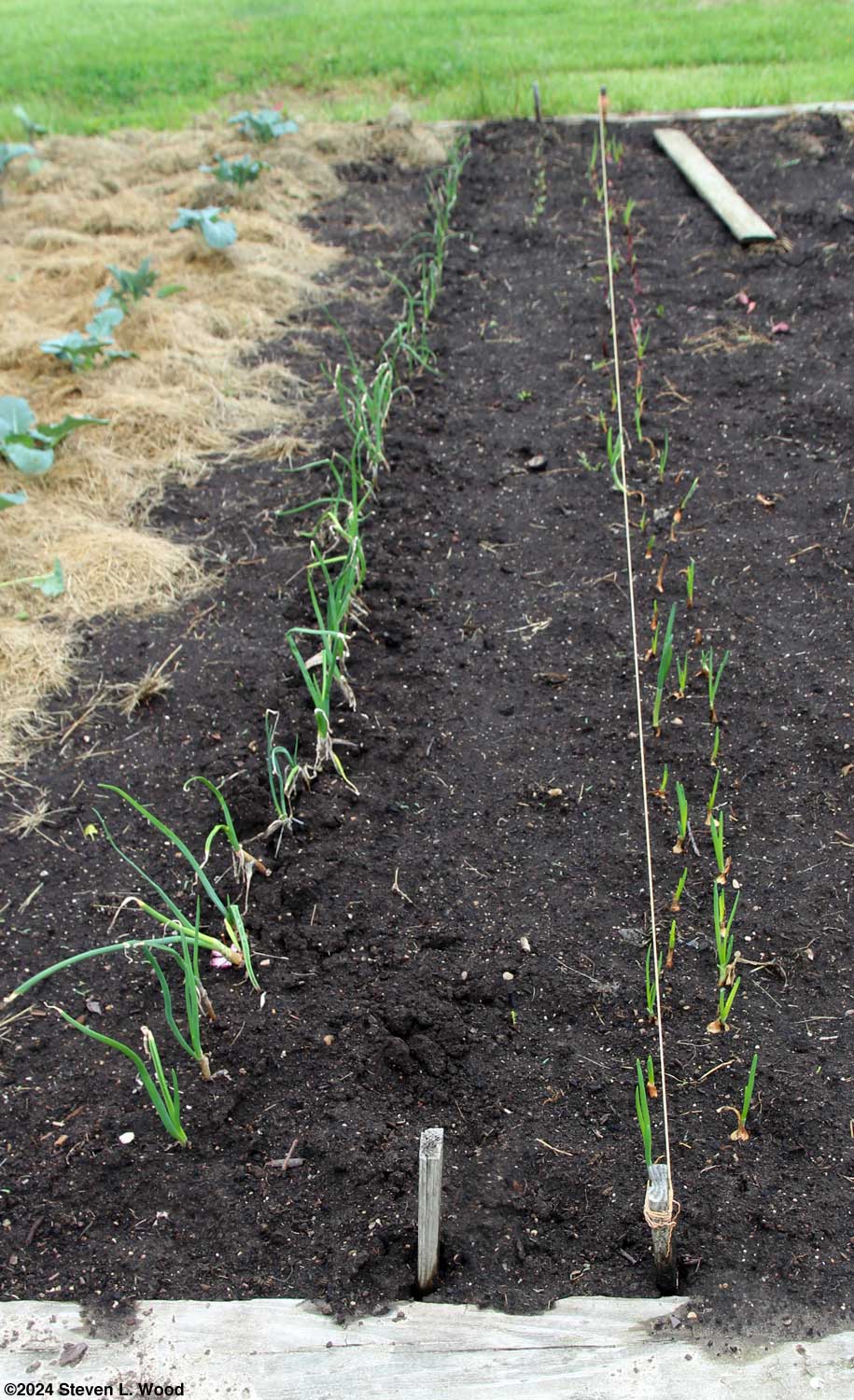
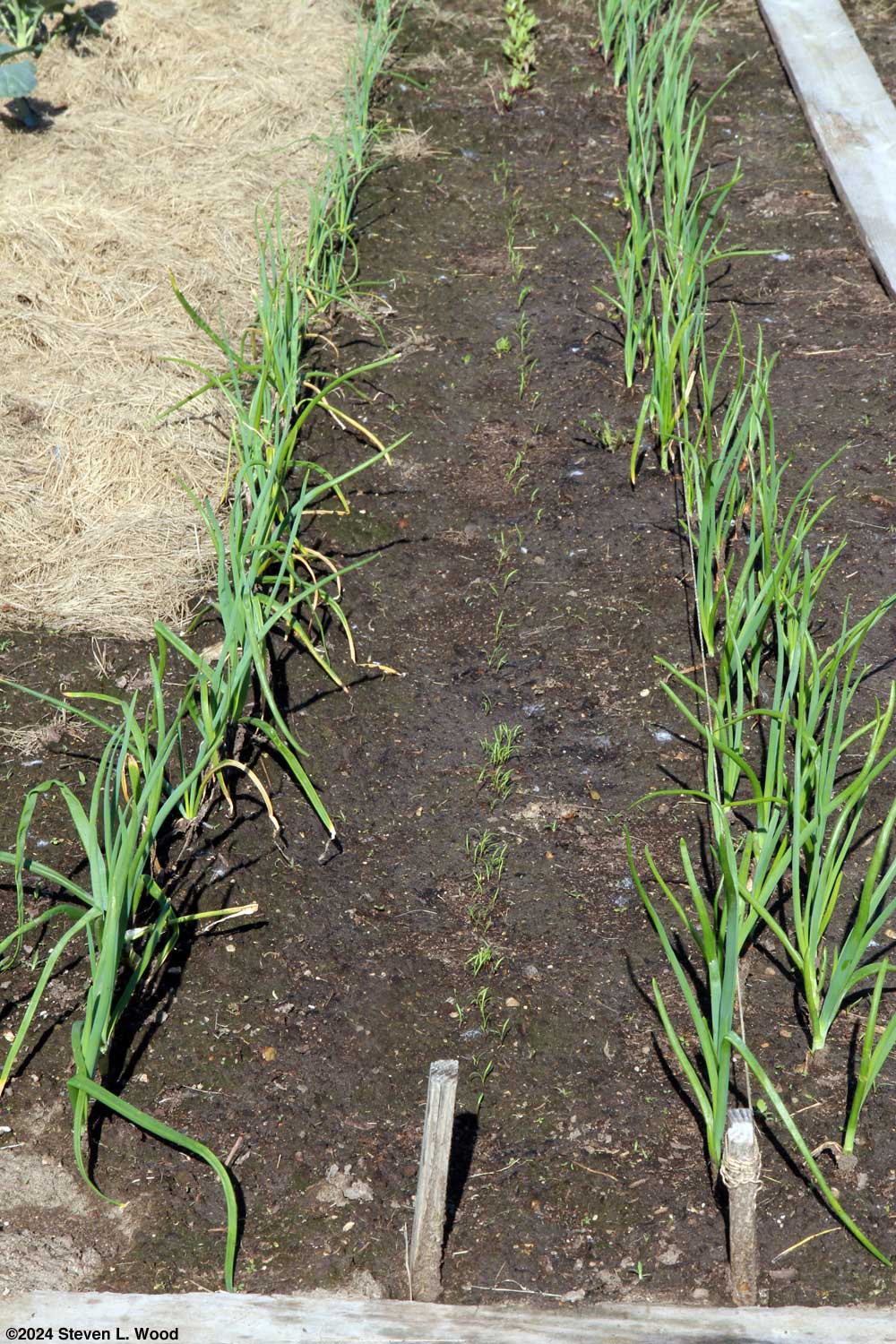
So I picked up a bundle of Walla Walla onion plants and bags of red and yellow onion sets at our local garden center. The Walla Walla plants made a single fifteen foot row when transplanted. The red and yellow onion sets made a nice double row with a single row of carrots in between. I still have a bunch of onion sets left that I guess our food bank will get. The carrot varieties planted were Mokum I share in a couple of how-to's how we grow this stuff:
Grass clipping mulch eventually breaks down. There were and still are a few spots in our rows of garlic where the mulch has thinned and weeds have sprouted. I got started pulling weeds in the garlic and adding fresh mulch. This round of mulching may last until I harvest the garlic in early July. The brassicas mulched this morning will need another round of mulch in a month or so. We have several cool, sunny days predicted before rain returns early next week. I'm hoping to get some serious gardening done in that time.
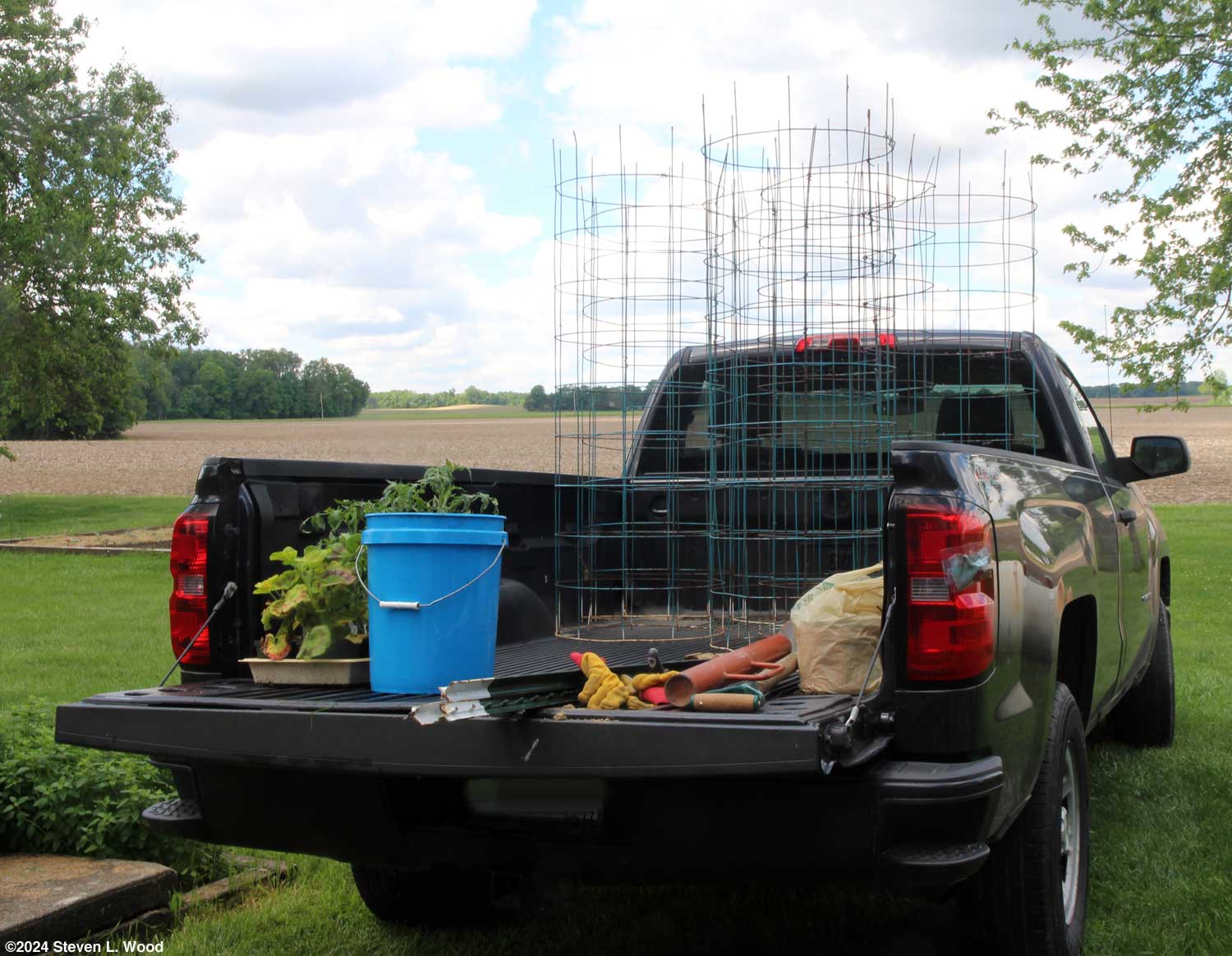
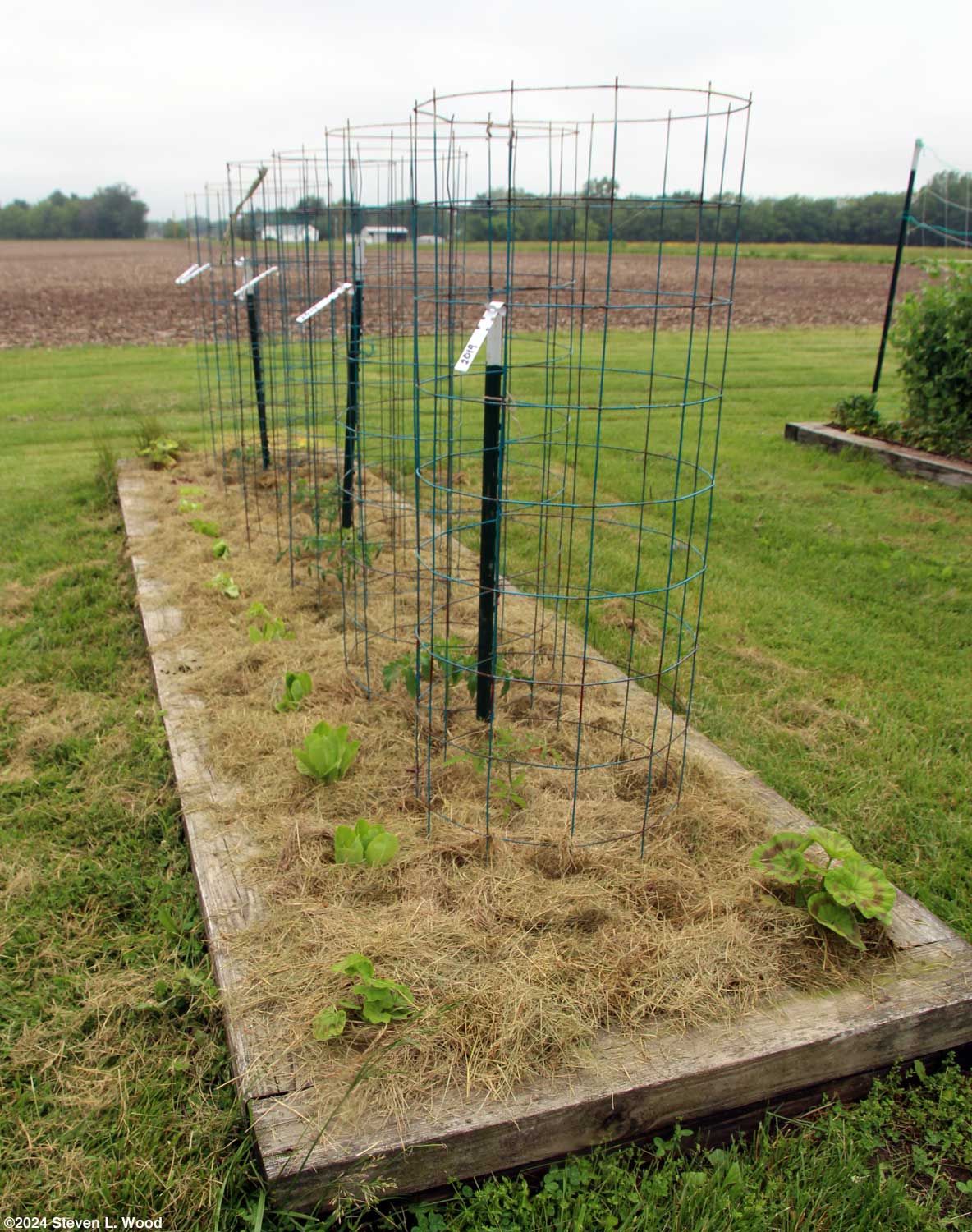
Getting ready to plant proved to be quite a chore. I assembled tomato plants, tomato cages, T-posts and the post driver, wires to attach cages to T-posts, a trowel and shovel, my tape measure, starter solution made up of Quick Start fertilizer and Serenade biofungicide, and some nifty tree labels in our truck. Since I was unhappy with how our Earlirouge plants had performed the last few years, I dropped back to plants from seed saved from 2009-2019. I attached the labels with the year of the seed to each tomato cage.
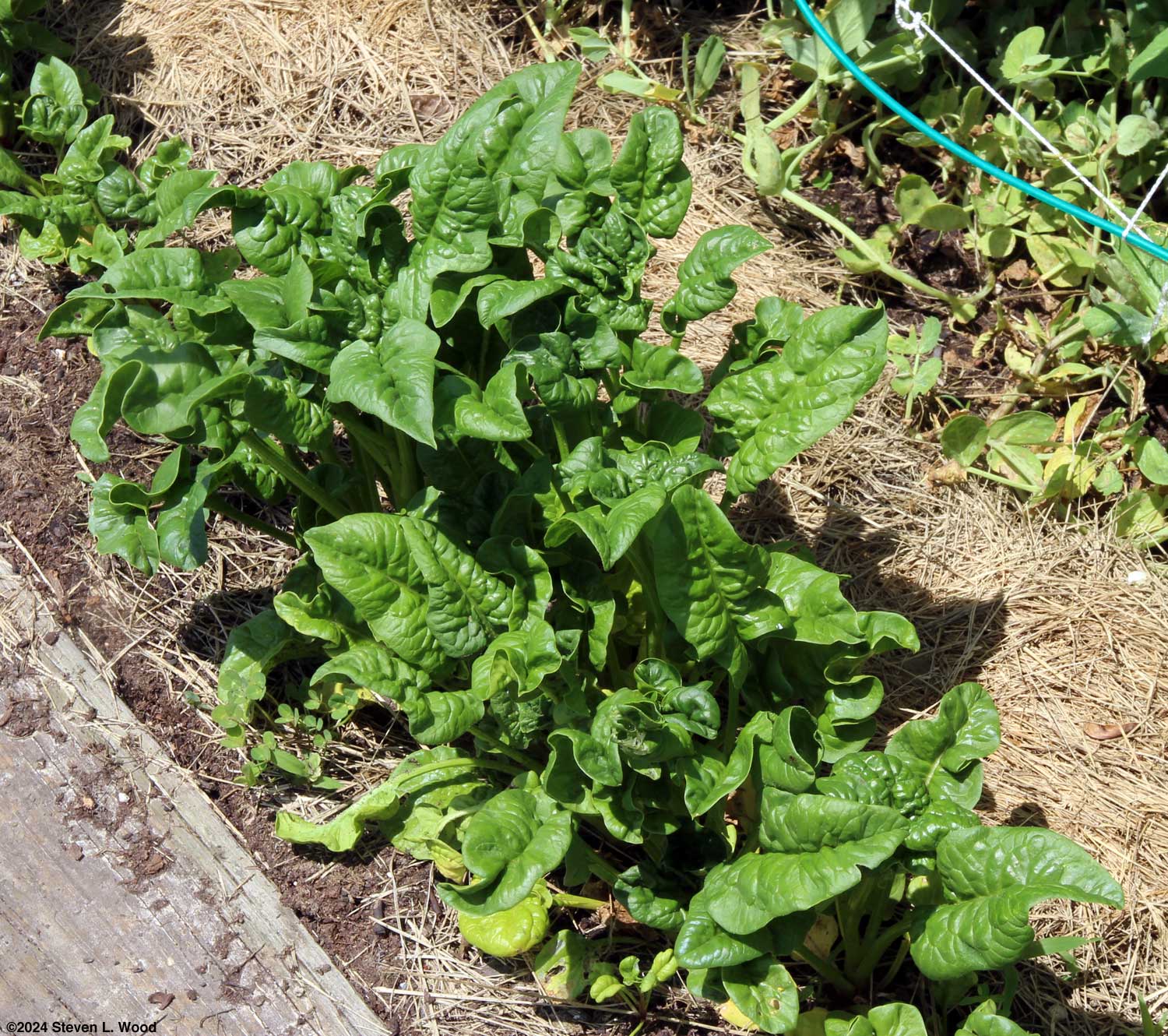
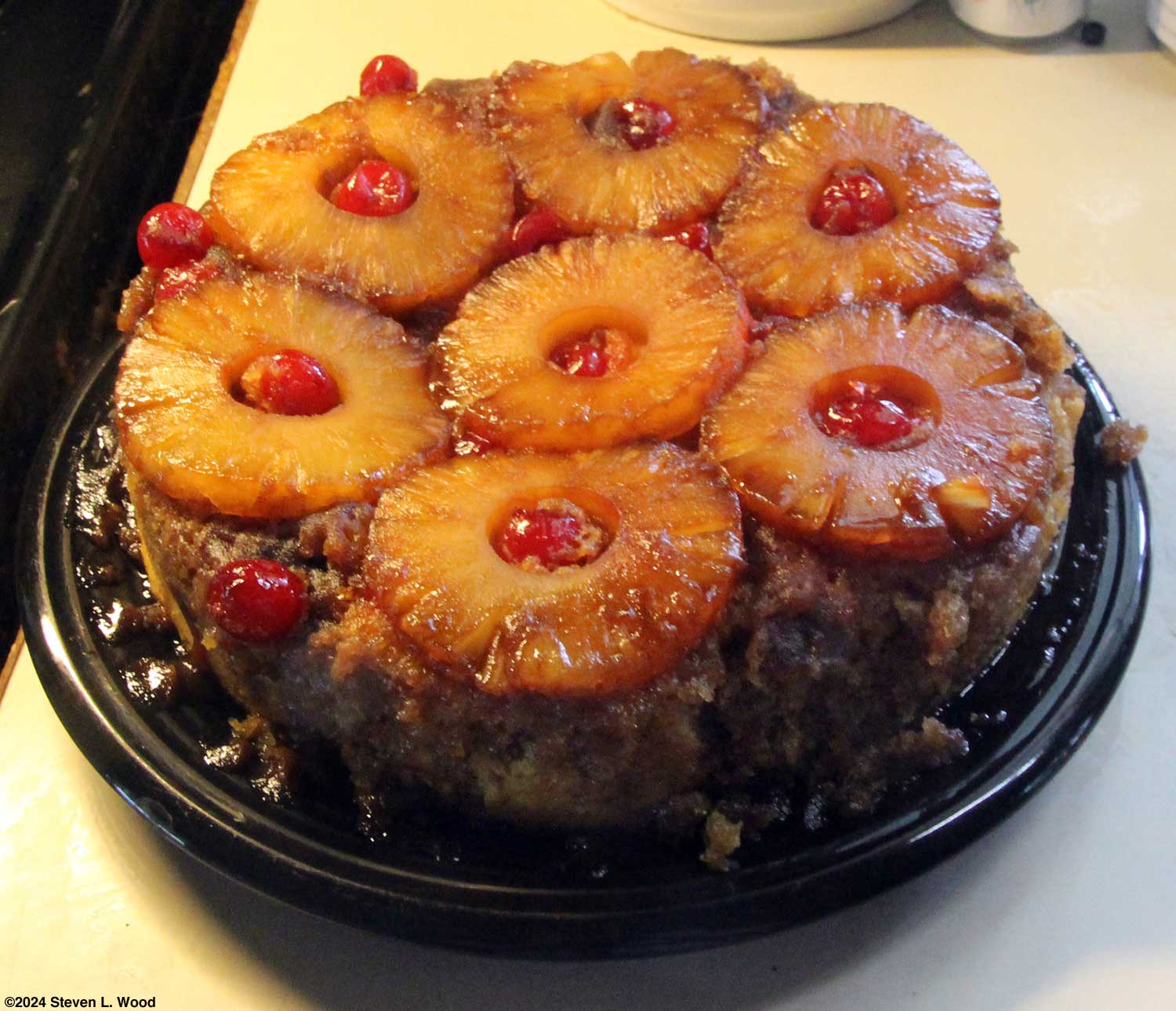
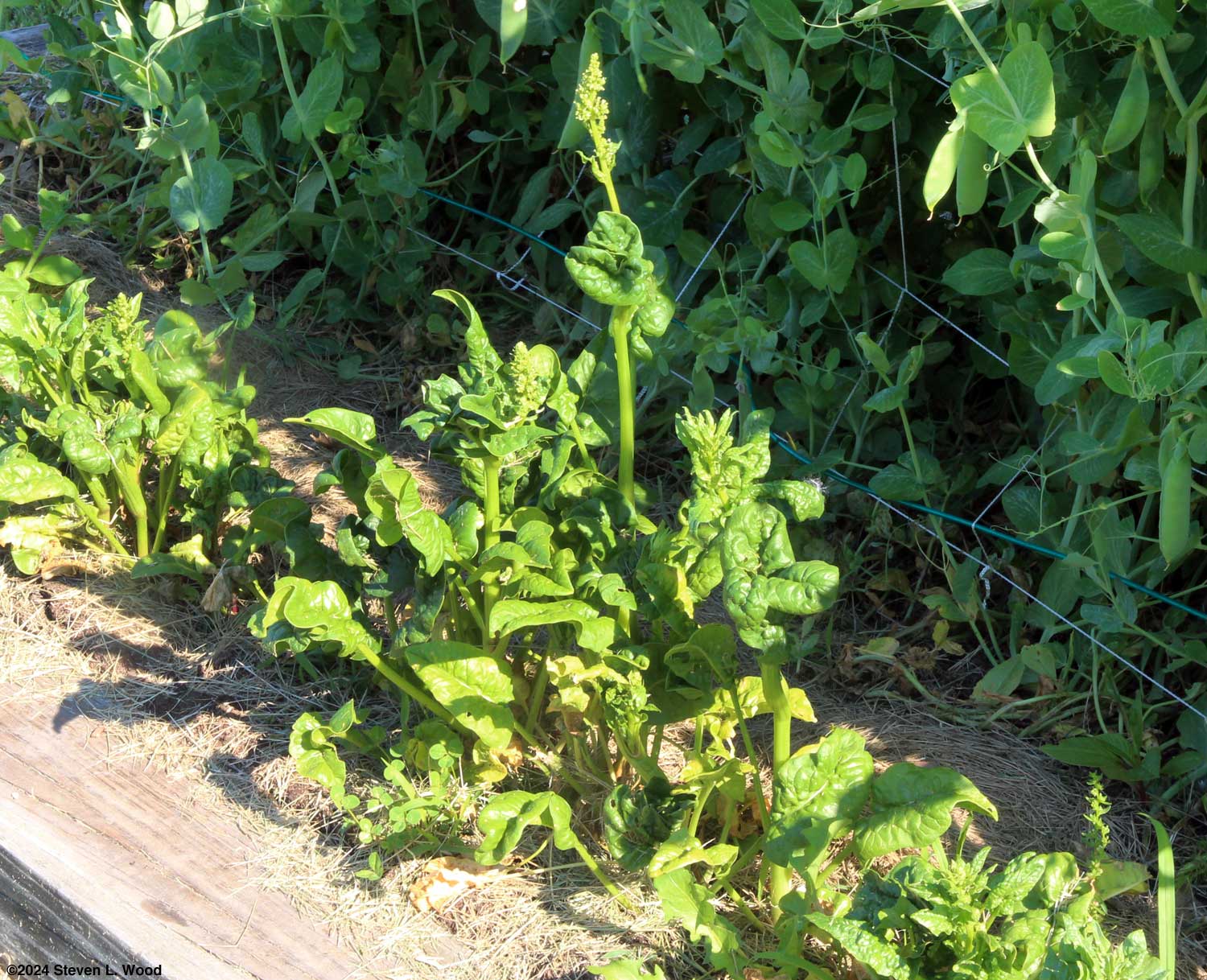
While I had grass clipping mulch on hand, I held off on mulching. With these narrow beds, I can leave a nice space for something like spinach or lettuce down the sunny side edge. Once I get some lettuce in, the bed will be thoroughly mulched. And our spinach along the edge of our other narrow raised bed of early peas looks about ready for a first picking. And if for no other reason, there's a shot of a pineapple upside down cake I made yesterday.
I was disappointed that none of our favorite romaine, Jericho, had survived nor had any Better Devil. Both were seeded with saved seed. There are no links above for Sun Devil and Barbados as both varieties have long ago disappeared from seed catalogs. Getting this late a start at putting in lettuce makes harvesting usable lettuce iffy. I'll take baby romaines and head lettuce as soon as possible befor heat makes the plants get bitter and bolt. But I may also be able to save seed from some of the plants. Our how-to, Growing Lettuce, tells how we get a little nice spring and some good fall lettuce. When done with the lettuce, I began uppotting our Moira and remaining Earlirouge tomato plants to four inch pots. The move seems to give the plants quite a boost. I still have some Quinte canning tomatoes and Red Pearl grape tomato plants to uppot.
I also brought our flat of melon and squash from under our plant lights out to the cold frame. While I still have green beans to direct seed and Eclipse peas to transplant into our raised beds, it's getting close to time to transplant tomatoes, squash, and melons into our East Garden plot. And I'm looking forward to getting some sweet corn, potatoes, and kidney beans started in that plot.
Sunday, May 12, 2024 - Mother's Day (U.S.)
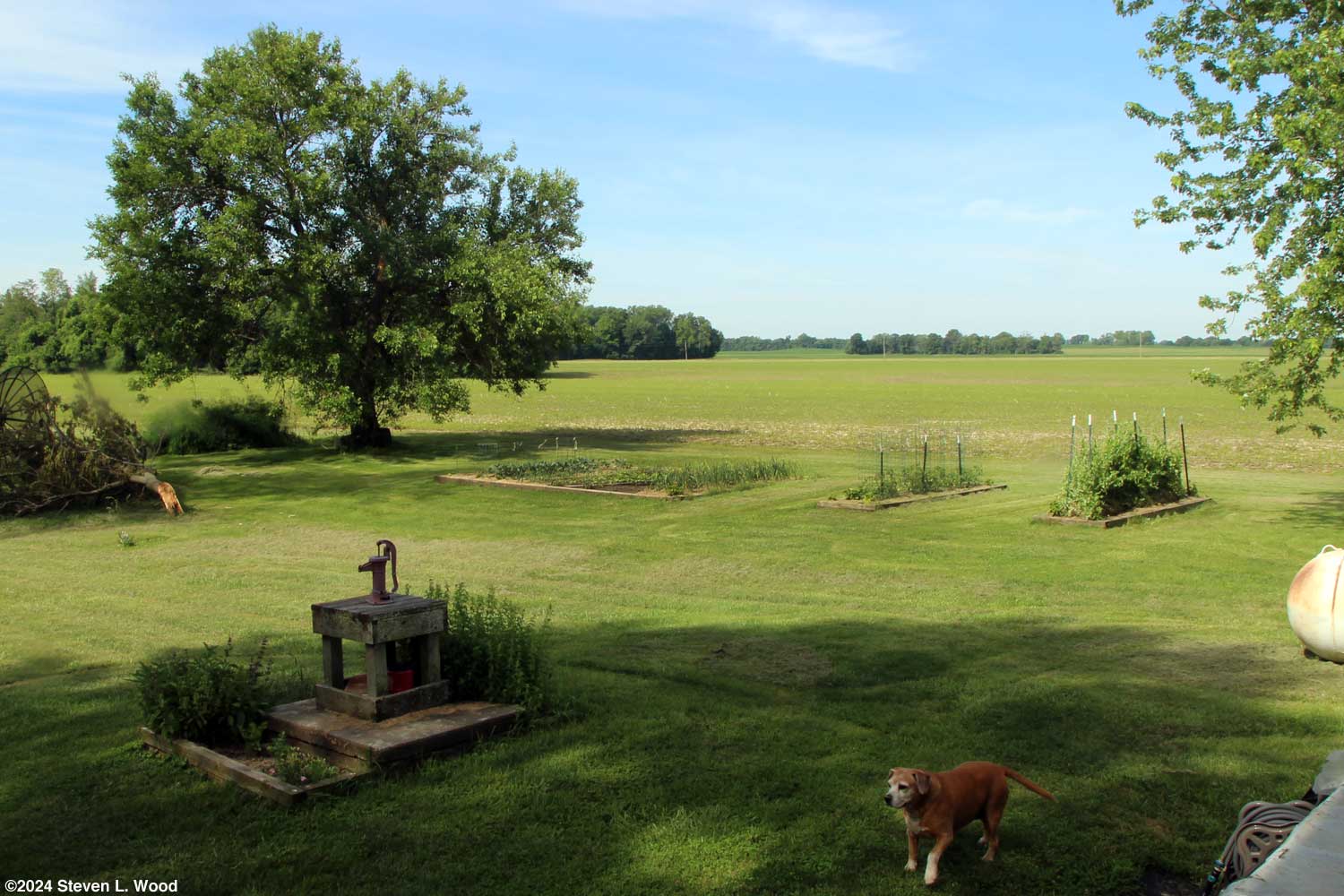
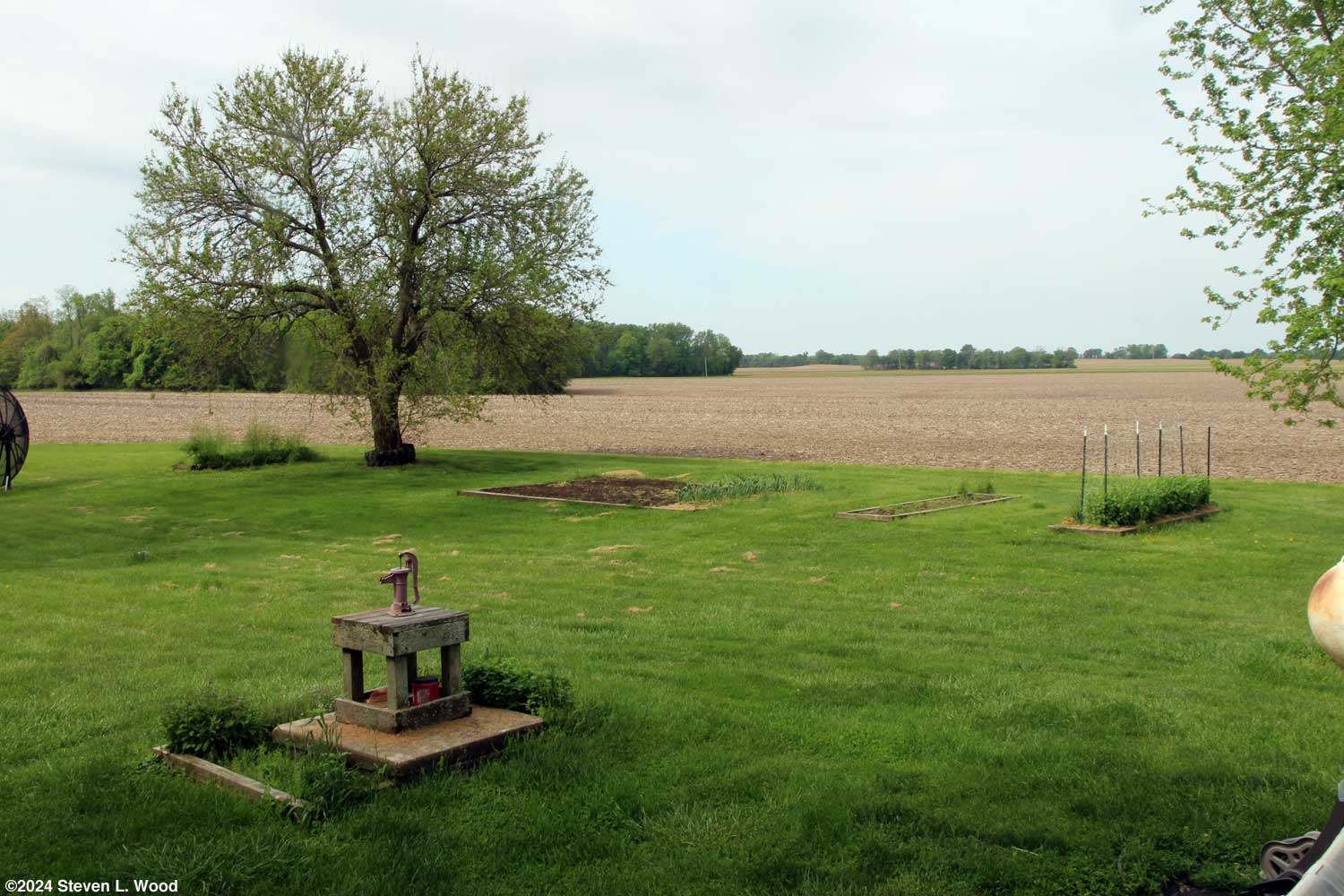
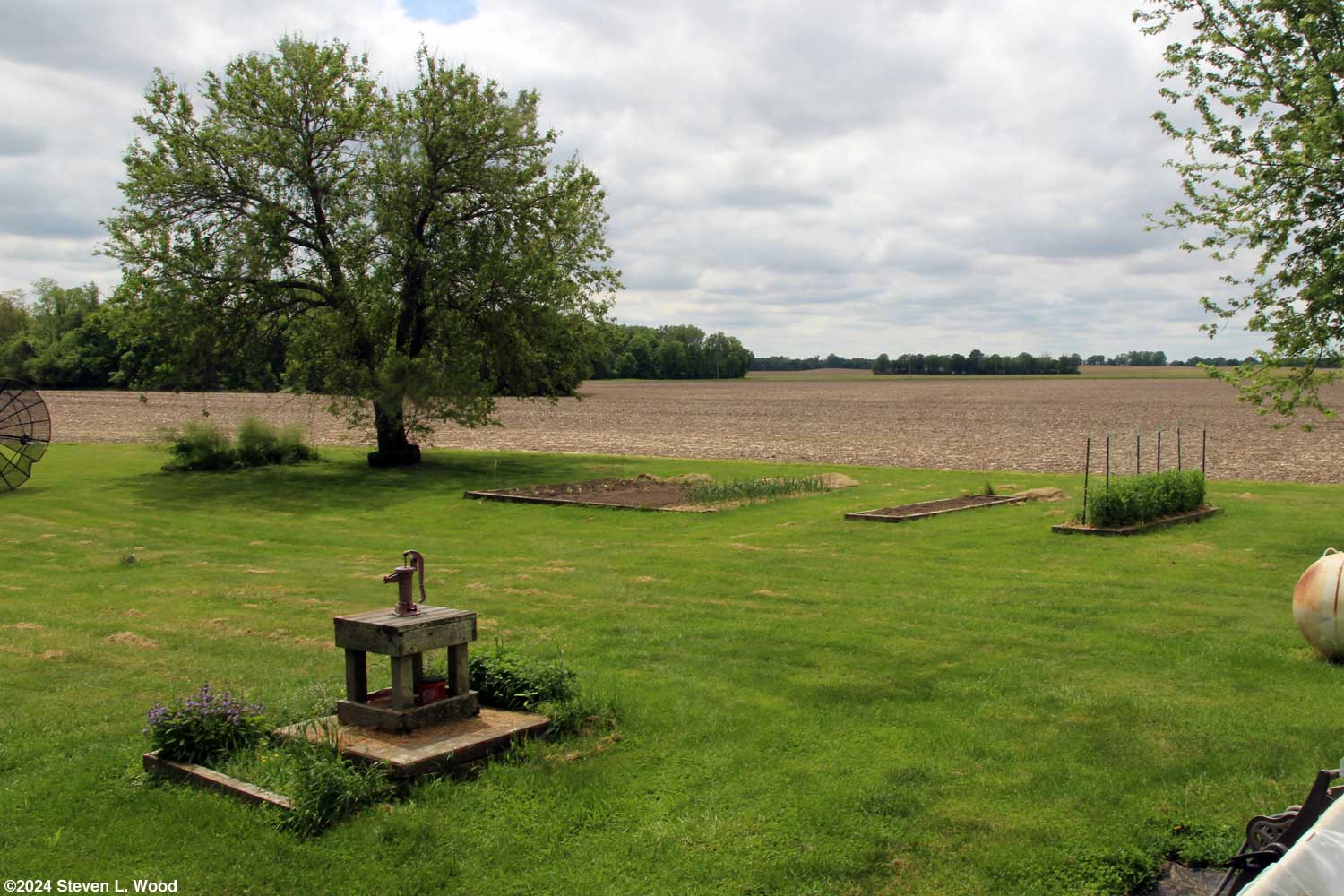
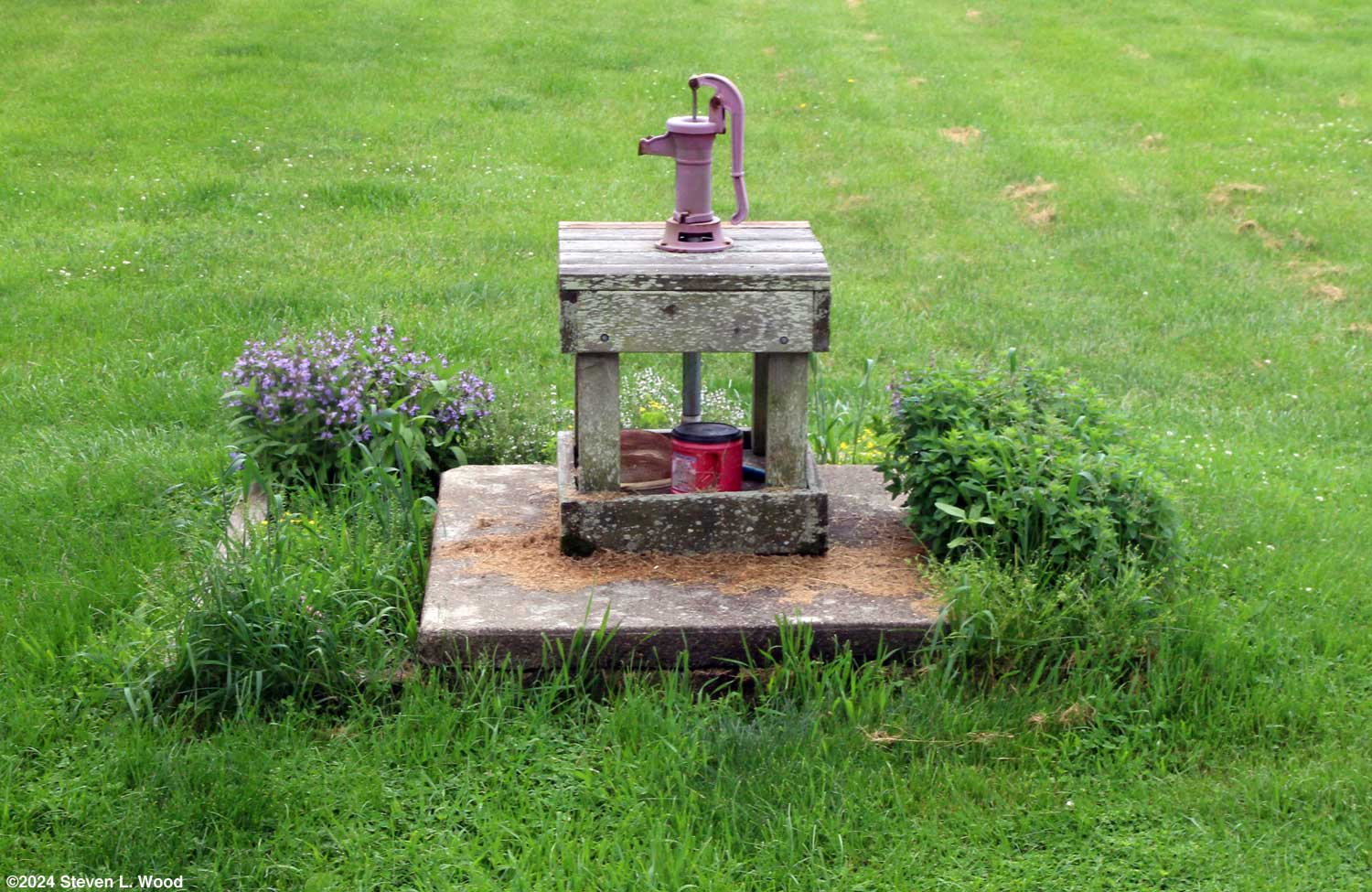
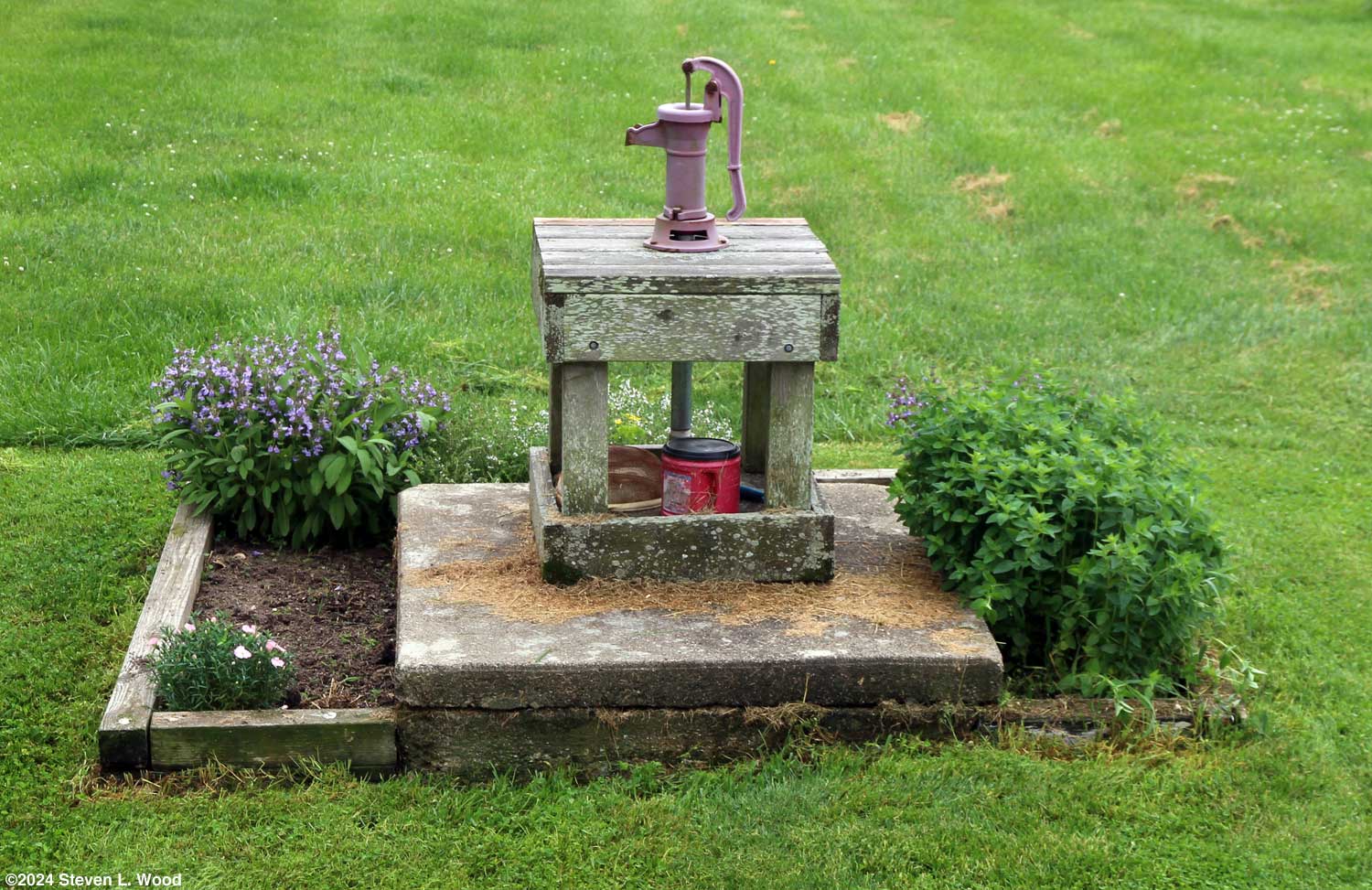
The Dianthus plant I pictured here last Tuesday is now in full bloom. Possibly of more importance is the white spots on the landscape timbers. I found that even though I'd used cedar timbers for the bed around our shallow well, the timbers began to rot where the anchoring rebar was pounded in. Slight depressions in the spots of the timbers with rebar held rain water. So I'm trying caulk in those spots. And that reminds me that I need to get out with my battery powered drill and drill holes in some stumps in our yard to promote decay. All of our sage plants are now blooming. They're all second year plants, as our old ones in the herb bed and the corner markers in our East Garden plot all grew old and weary and had to be replaced last year. Since sage is easy to grow from seed, that wasn't a problem. Our first sage plants lasted six years! Peas
One flat of Eclipse peas I started in the basement are up on on their way. Curiously, the flat of peas I started with seed saved last year germinated irregularly. Having germination tested at just 60% last year, I seeded the flat rather heavily but still didn't get much. Another flat seeded with seed saved in previous years came up great. So I went back and reseeded the mostly failed flat with older seed.
Even with this late start, the mature peas should still be sweet when picked. Once you get Eclipse peas to germinate, not an easy task, they hold up well in warm weather. And...if the heat does get them, they can always be saved as a seed crop.
I looked out our kitchen window this morning and my first gardening job of the day became apparent. I saw a small white cabbage moth flittering around our rows of broccoli and cauliflower. They, along with cabbage loopers, lay their eggs on brassicas (broccoli, cabbage, cauliflower, kale, etc.). When the eggs hatch, the larva feed voraciously on the plants. Left unchecked, the buggers can destroy a crop. Fortunately, there's an excellent organic control for the pests. Thuricide, which contains the biological, bacillus thuringiensis (BT), gives the larva or worms the equivalent of fatal stomach cramps. (I'm not sure if the worms actually have stomachs.) I still had a mix of Thuricide and Not Tonight, Deer in our organic sprayer, so I gave the brassicas a good dose of it even though it will probably get rained off tonight. While out with the sprayer, I gave our row of Earlirouge tomatoes a good covering. One more tomato plant showed leaf damage this morning. While the Thuricide probably won't deter bugs or critters, the nasty smelling (and presumably tasting) Not Tonight, Deer may deter further damage. A Bit of a Brag When reading one of my favorite Monday opinion pieces on the New York Times, The Conversation by Gail Collins and Bret Stephens, I was struck by an Indiana University ad. Pictured in the photo was one of our daughters, Samantha Rose.
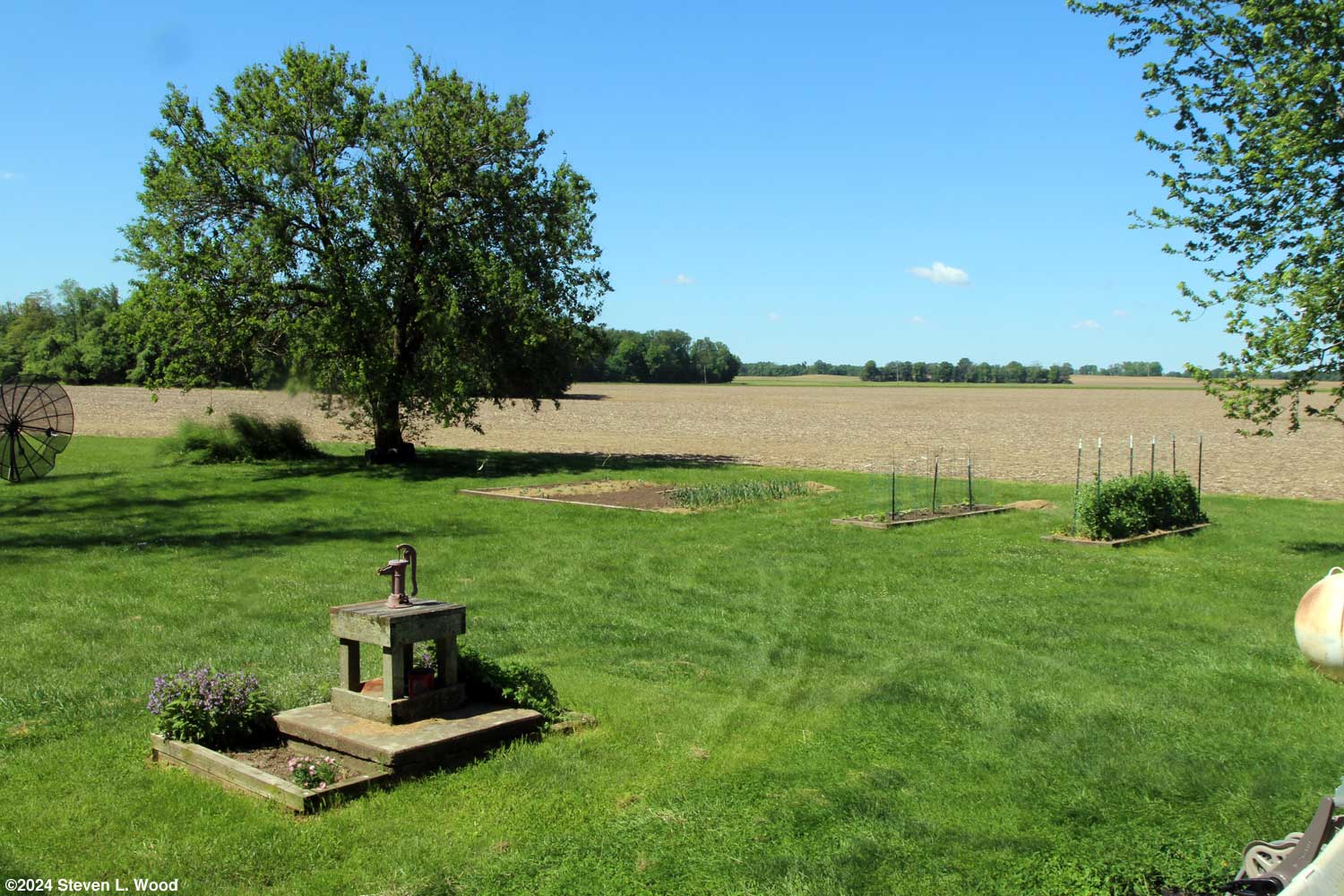
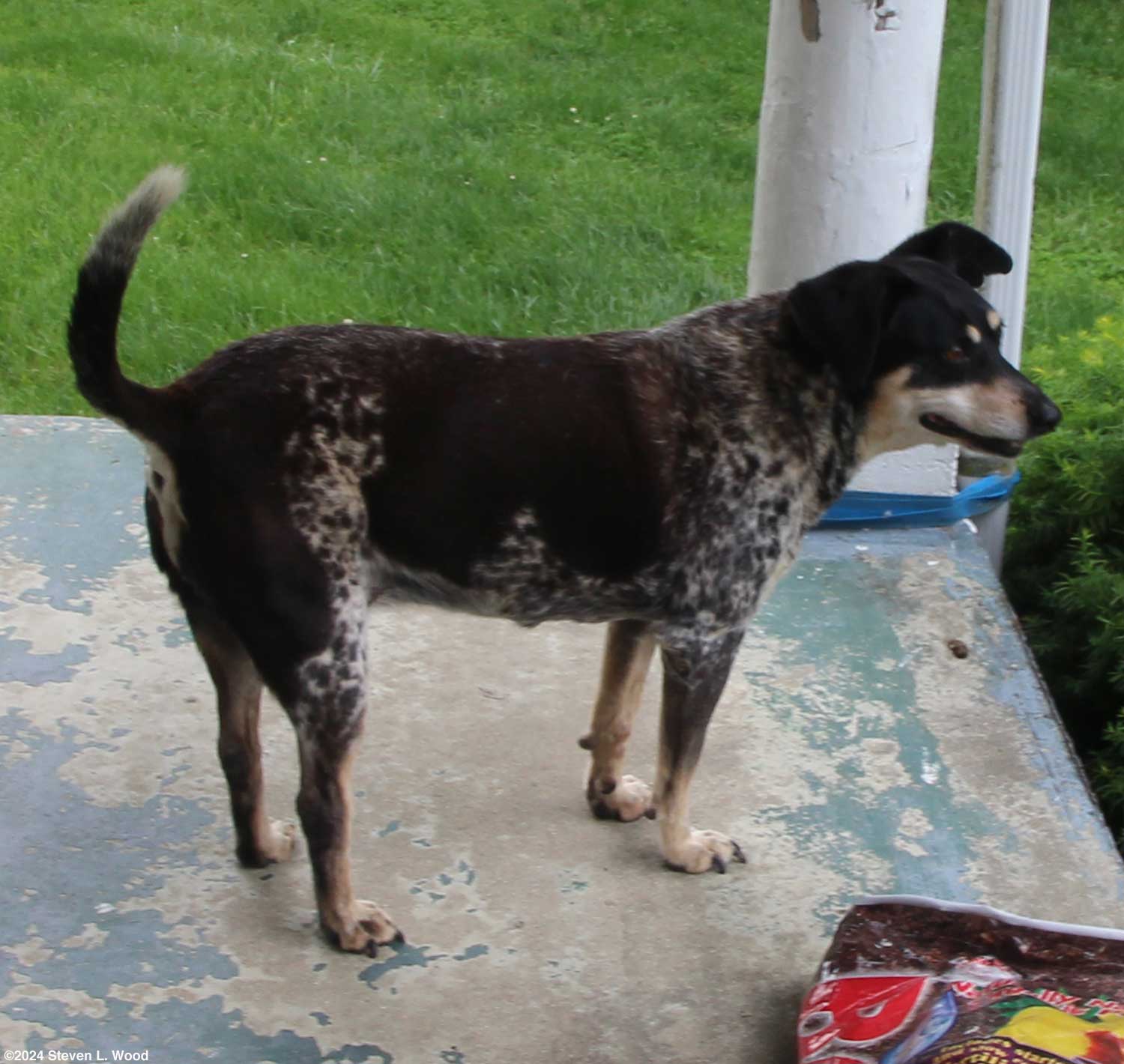
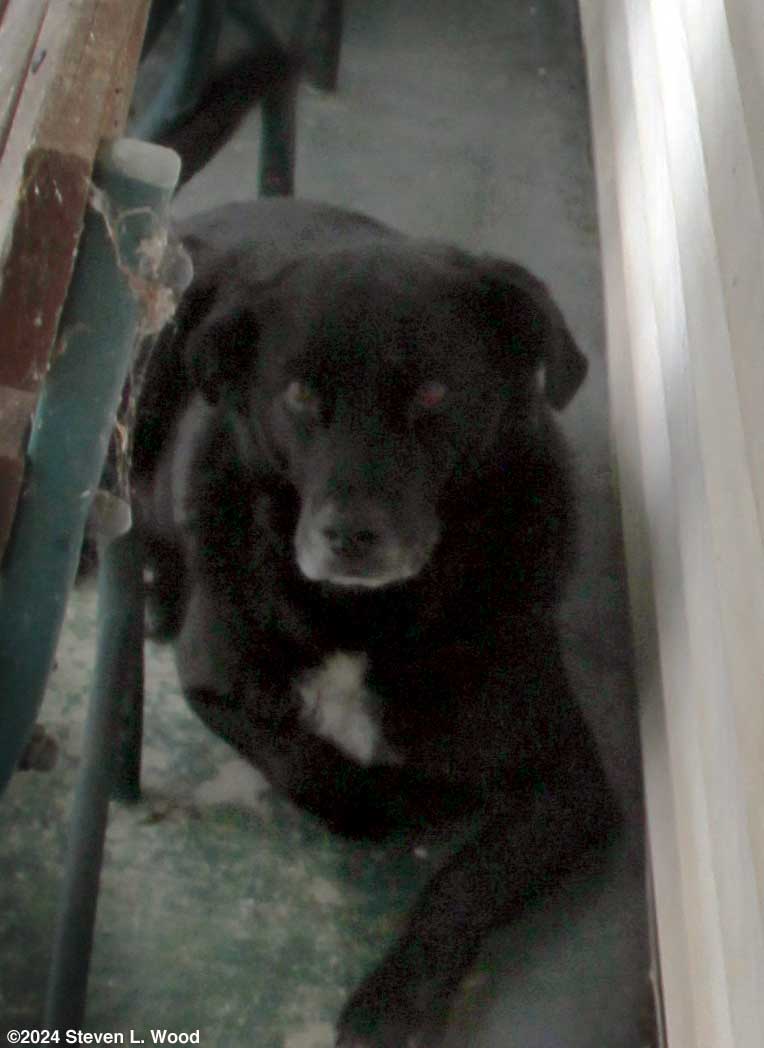
Sam is an experienced nurse practitioner currently teaching nursing at IU. Bright, upbeat, and always helpful, Sam is one of my four stepdaughters I was blessed to get to help raise when I married Annie. Dogs When I snapped the splashshot for the top of this page today, I also got shots of all three of our dogs on the back porch. Daisy, our now 72 pound beagle cross, had a cancerous tumor removed last month. She appeared at our house years ago, fully housetrained and fixed.
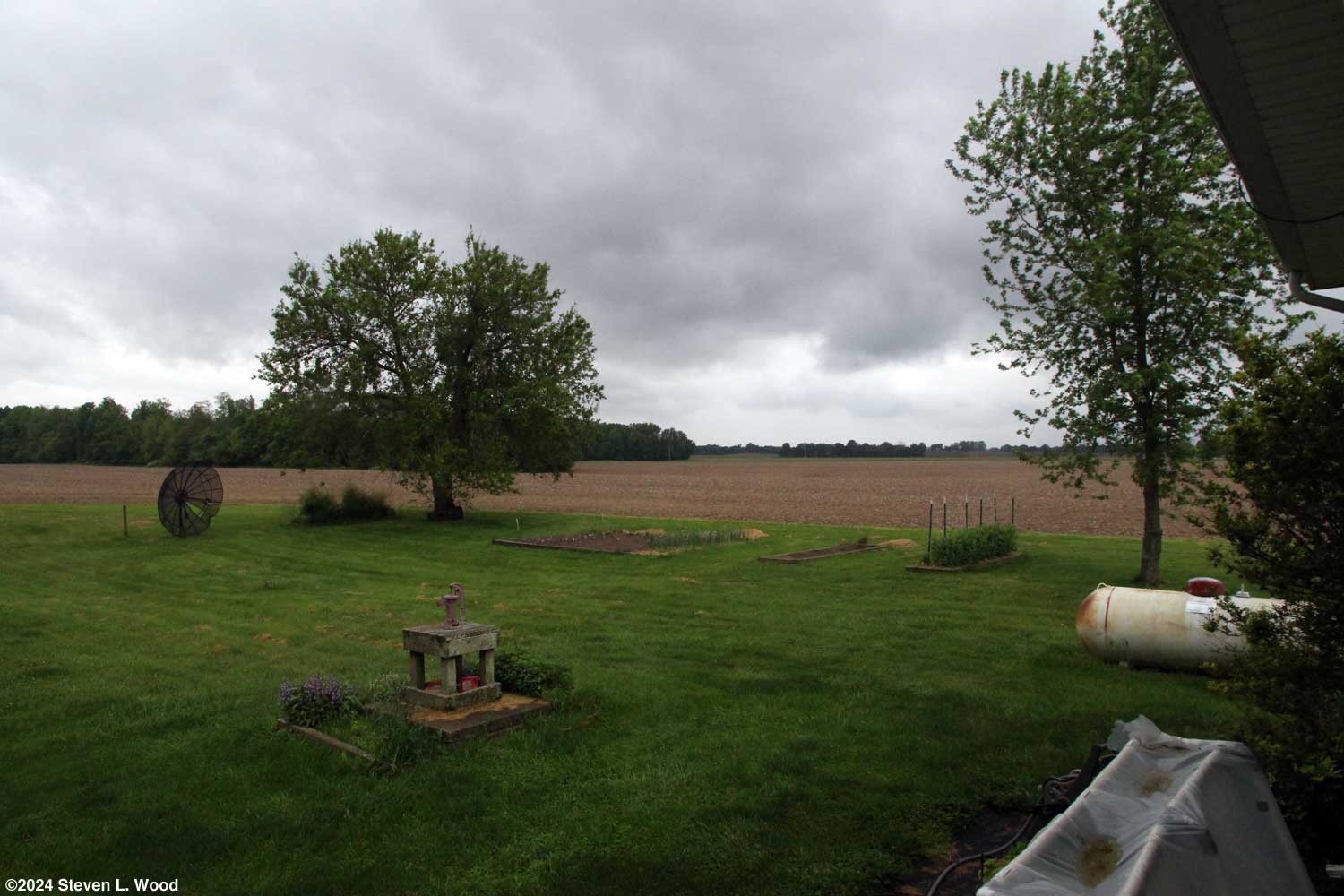
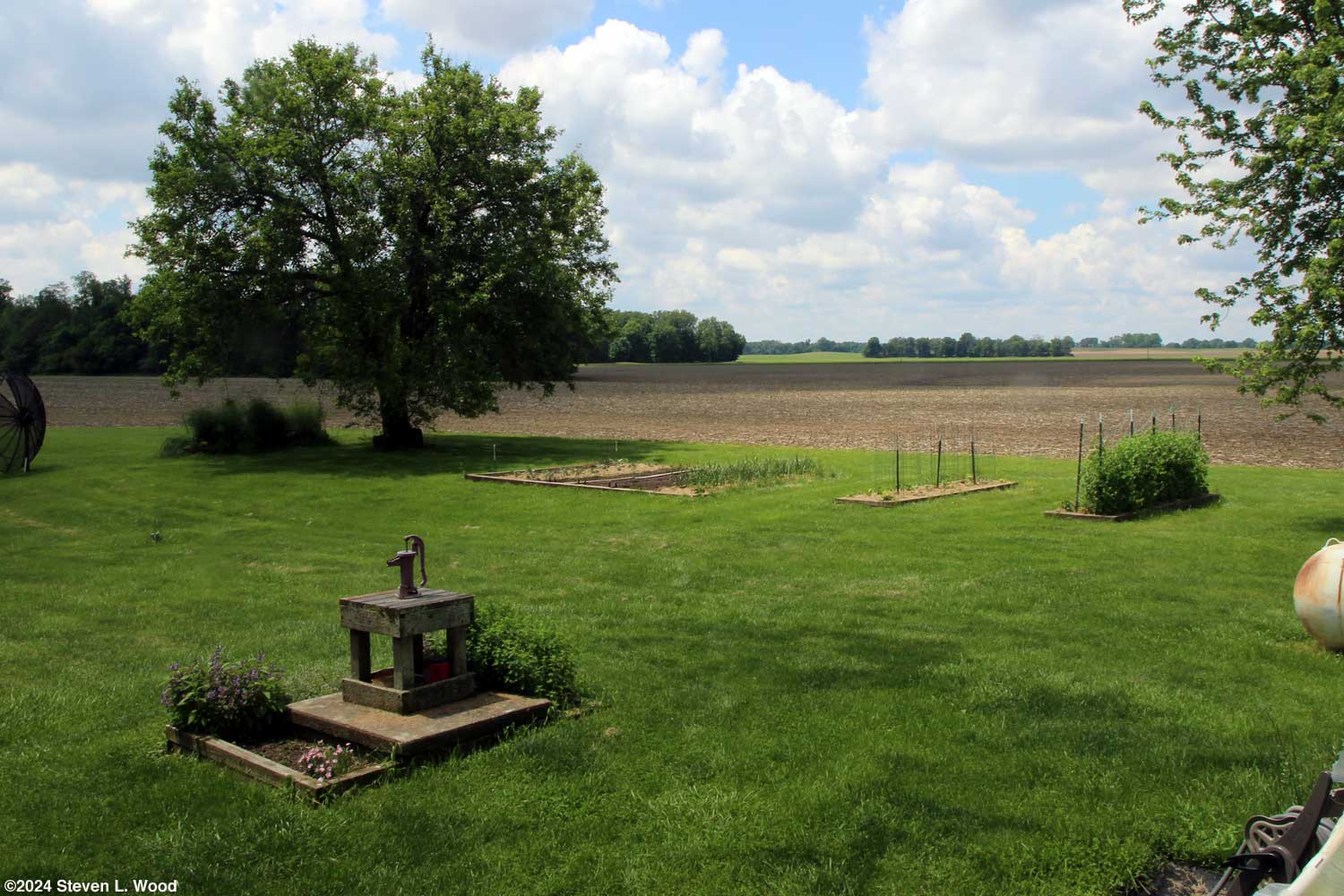
Petra is a rescue dog from the Princeton Animal Shelter, destined to be euthanized the day after we adopted her. Anne's BFF lives in Princeton and appealed to Anne to save the dog. Petra has turned out to be a wonderful pet. Pepper is another well behaved dog apparently just dropped off in our area. When awake, his tail is constantly wagging. He likes to lie behind the glider on our back porch with his tail smacking the house siding. Other Beyond the spraying and a little uppotting of the last of our tomato plants, I didn't do much gardening today. Several hours of my afternoon were occupied with mowing our front and back yards. It was breezy while mowing, making keeping my hat on a chore. But the wind also kept the blackflies away. Unfortunately, the wind had no effect on the chiggers in the tall grass. I still have about two acres yet to mow in our side yard and the field next to our property that we take care of. The trade off for caring for the field is the use of an 80' x 80' portion of it for our large East Garden plot. We also get to use the pond in that area, although I still need to throw a line into it to see if my stocking of the pond with minnows, bass, and bluegill two years ago has done any good.
I moved on to our main raised bed and was pleased to see that our Walla Walla onion plants were doing well. The red and yellow onion sets I'd planted are also sprouting. And if you look closely at the larger version of the photo at right, you'll see some carrots emerging at the very top of the photo. Those eager carrots were from some loose Scarlet Nantes seed. The rest of the carrots seeded were pelletized seed. I'm hoping that they just take a few days longer for soil moisture to dissolve the pelletizing and the seed sprouts. I only planted a single row of carrots this year instead of our usual double row. When our fall carrots come in each year, I end up dumping some leftover spring carrots.
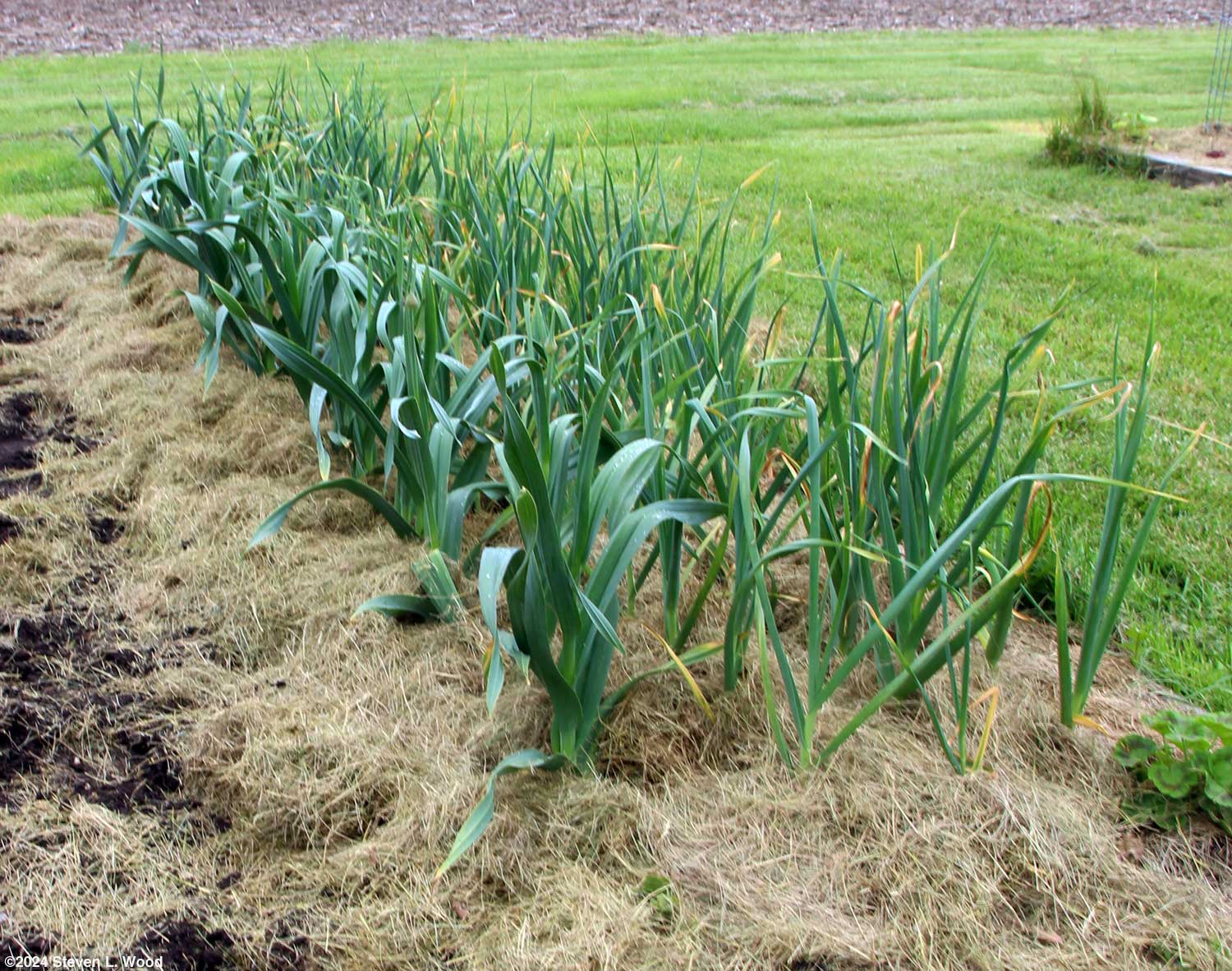
Then came finishing re-mulching our fall planted garlic that I'd first mulched in April. I'm still seeing some yellowing of the garlic leaves. I also noticed two or three of our elephant garlic plants putting up scapes. The scapes are edible, but also may be snapped off to promote larger garlic bulbs. While it rained off and on yesterday, I worked inside uppotting some plants in the basement, and in a break in the rain, our Earliest Red Sweet pepper plants.
Then I liberally seeded Burpee's Stringless Green Pod Our how-to, Growing Beans, tells a bit more about growing green beans. I moved on to mowing the acre plus field next to us, just barely getting done before the rain arrived.
My main gardening effort for today was sprinkling some dilute castor oil over parts of our raised beds to fend off the moles tunneling under our crops. I read somewhere online that moles hate the smell of castor oil. I ran across an interesting article today by Barbara Pleasant on GrowVeg, Beat Rabbits and Deer by Growing Milkweed. Our second year milkweed is up and looking healthy. I didn't know that milkweed deters rabbits and deer.
I feel like I'm way behind on getting our garden in this season. Some plant failures have contributed to that. But the big thing is mowing. I'm finding that I can only stand about two hours on our mower over bumpy ground before my neck, spine, and shoulder injuries begin to protest. This time around, I mowed our front and back yards, about an acre, on Sunday. I mowed our side yard and up to the field and pond yesterday. After doing some more sweeping up grass clippings, I'll mow the field today. When I'd do all the mowing in one day, I found that I had to take a day or two to recover from the neck and back pain. Getting old can be a bummer, but it's better than the alternative. I thank the Lord for each day.
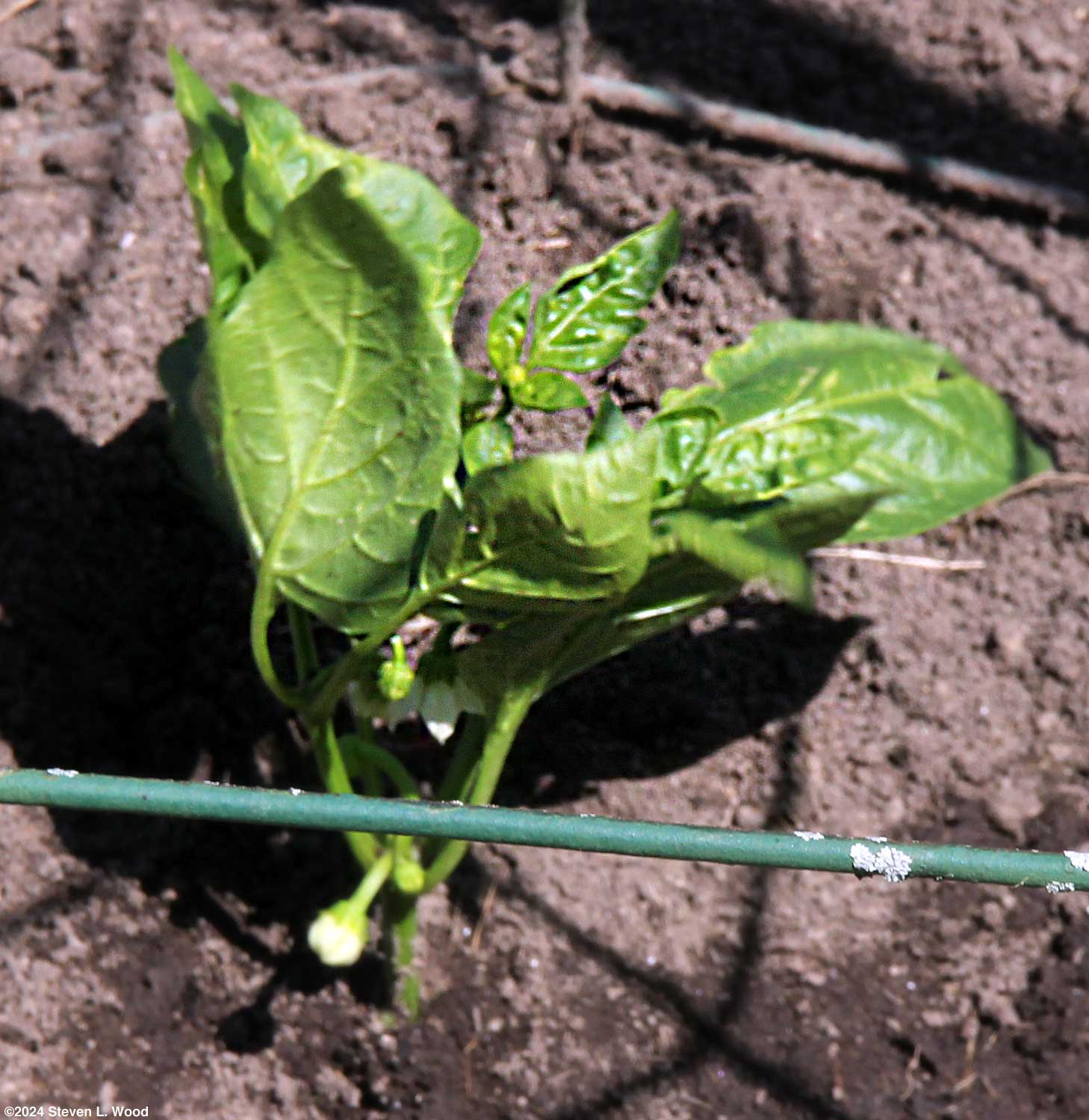
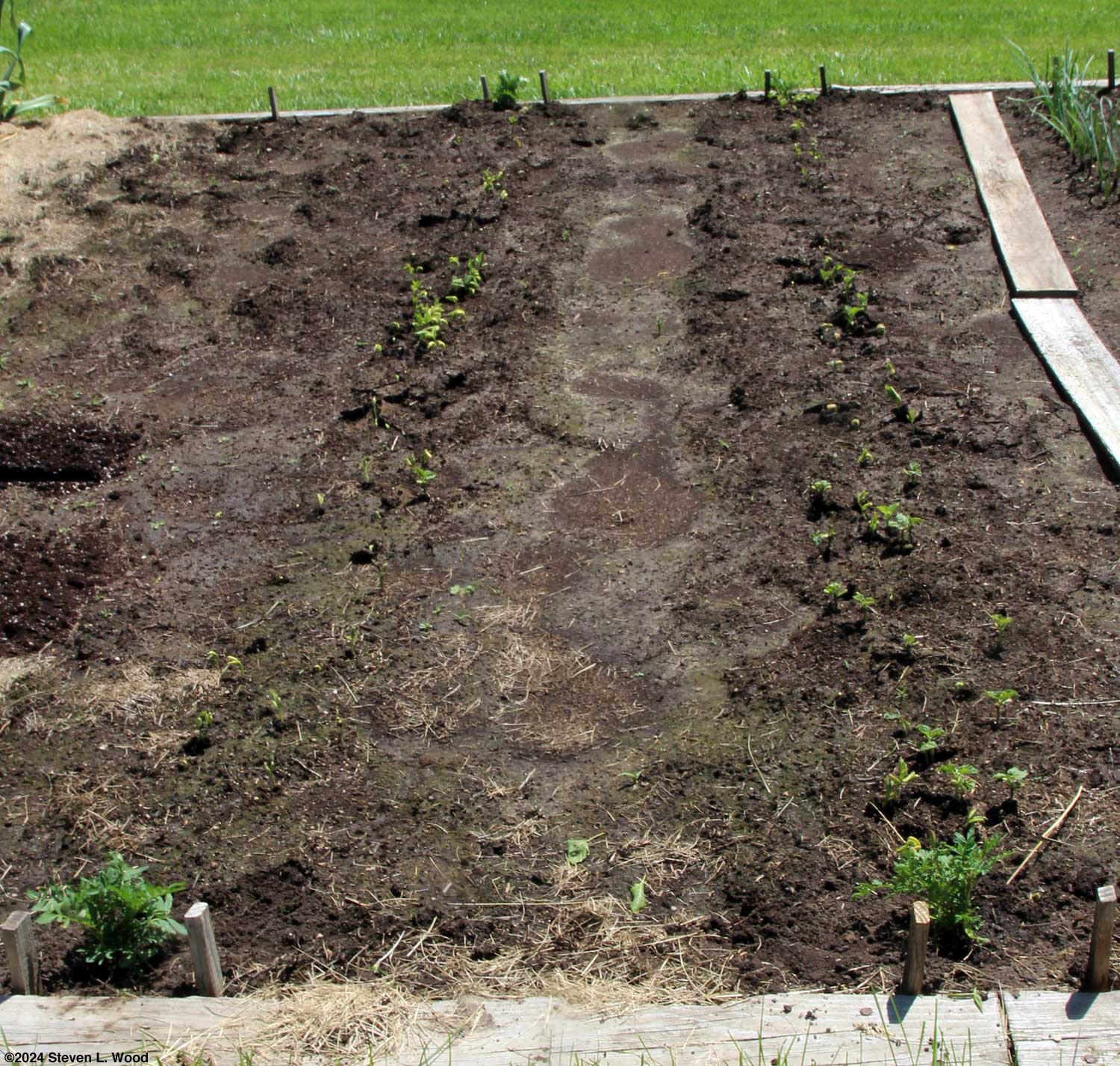
Each planting hole got a some 12-12-12 fertilizer and some ground egg shell and lime to help prevent blossom end rot. The holes were watered with a mix of Quick Start, Serenade, and Maxicrop Soluble Seaweed Powder. For years, our pepper plants would look good, bloom, and put on peppers...and then die! I've found that the seaweed solution has something in it that our peppers need. A number of years ago I began caging our pepper plants. Their stems can be a bit brittle when bearing somewhat heavy peppers. Since I had a little space at the very edge of the bed, I transplanted the onion plants pictured here yesterday. They're just a bonus planting, as our purchased onion plants and sets are well on their way. But using them got their trays off our back steps. The Earliest Red Sweet pepper variety produces early peppers a good bit smaller than popular hybrid varieties. But they excel in producing good peppers well into the fall. Here are some links to related feature and how-to articles: I put a gloxinia at either end of the pepper onion row. And then I added marigolds at either end of our wide rows of green beans. The bean seed has awakened and begun to sprout. With these plantings, the only thing left to go into our main raised bed, other than possibly more flowers at the ends of the plantings, are our Eclipse peas. Since they can be a bit iffy when direct seeded, I grow them from transplants started inside under our plant lights. Two trays of the peas went under the cold frame to harden off.
It's important for us to get our beans going early in years when the field next to our raised beds is planted to soybeans. If planted a bit later, hordes of Japanese beetles migrate from the soybeans to our green beans, necessitating using some nasty insecticides to get a crop. Planted this early, we shouldn't have too much bug pressure that organic insecticides can't handle. Later I spread some Repels All around the newly transplanted peppers and over our sprouting green beans to fend off critters.
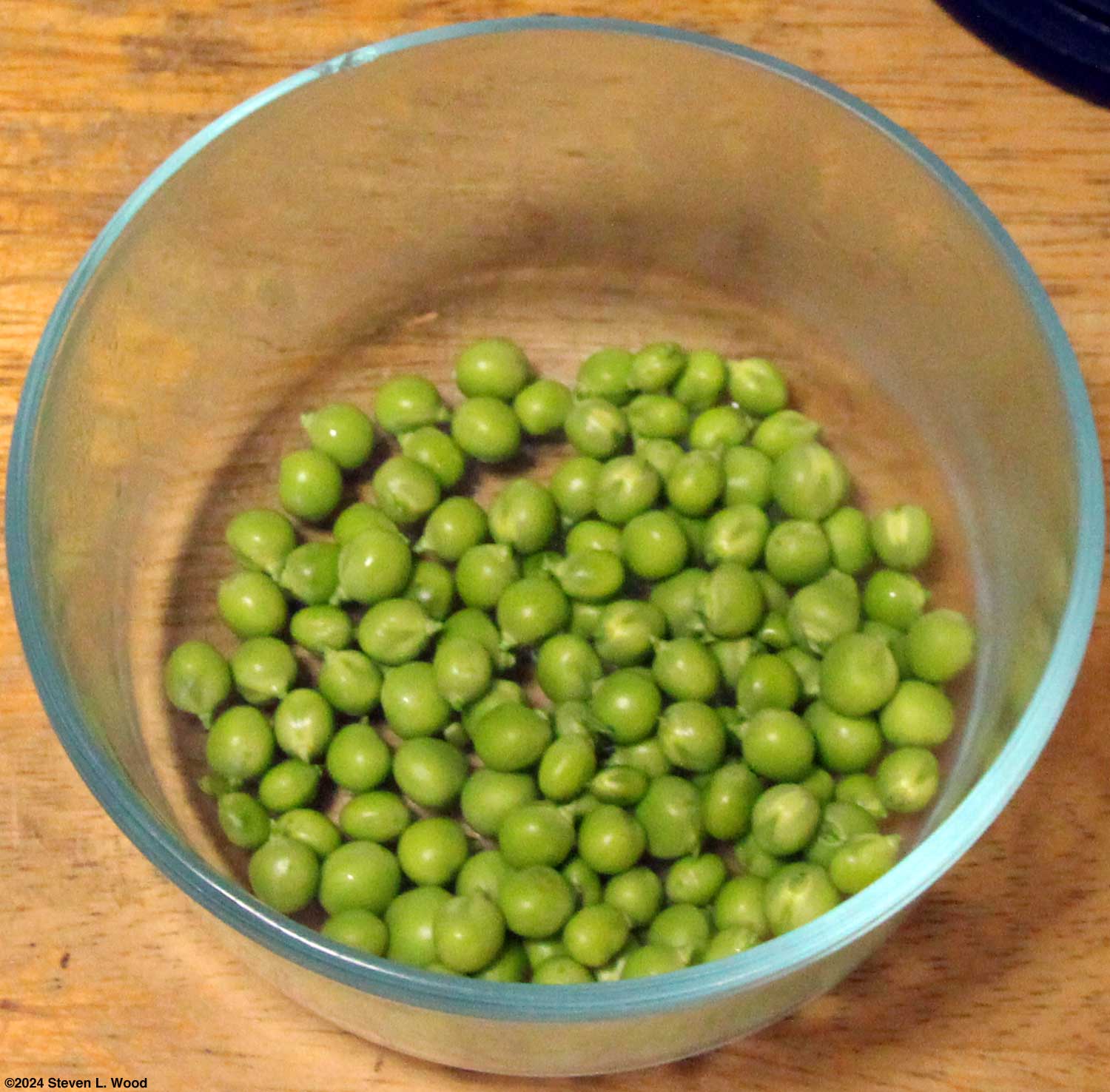
We had fresh peas from the garden for the first time this season with our supper last evening. Despite our recent hot spell, the peas were still deliciously sweet. Picking and shelling peas may soon become a pleasant morning and evening chore. Cucumbers With our tall, early peas maturing, it reminded me yesterday that it was time to start a succession crop for the peas. The tall peas grow between a double trellis to prevent wind damage to the vines. That works quite well for a following crop of tall Japanese Long Pickling cucumber plants. I seeded four deep sixpack inserts of the variety, all from saved seed over the last four years. While we use the cukes to make some great bread and butter pickles and dills, our biggest use of the variety of late is in making our own sweet pickle relish.
Sadly, the JLP variety is just so-so for fresh sliced cucumbers for salads and such. The story about our saving our strain of the venerable vegetable variety is related in A Cucumber of Distinction.
Friday, May 24, 2024 - Mulching Getting impatient for some rain to arrive, I hauled our garden hose out to our main raised bed and thoroughly watered the geraniums, onions, and pepper plants I put in on Wednesday. I wanted the soil wet before I mulched the area. Mulching over dry ground can let the mulch absorb light rainfall, leaving the mulched plants a bit dry. With the watering and some light rain predicted for later today and a serious rain on Sunday, we should be in good shape for soil moisture.
Eventually, the whole bed will be mulched with grass clippings to hold in soil moisture and prevent weeds.
I'll take the small heads when they're ready, leaving the plants to possibly recover and produce some nice sideshoots. Our five Premium Crop broccoli plants in the row show no signs of buttoning. Growing Great Broccoli and Cauliflower As I was finishing up my morning gardening, I noticed that I had a couple of very healthy parsley plants under our cold frame. After a bit of light weeding and hoeing, I transplanted the parsley into our herb bed along with a young dianthus plant. I still have a bunch of young parsley transplants under our cold frame. I'll need them, as our parsley jar is about one batch of spaghetti sauce away from being empty.
Saturday, May 25, 2024 - First Frozen Peas
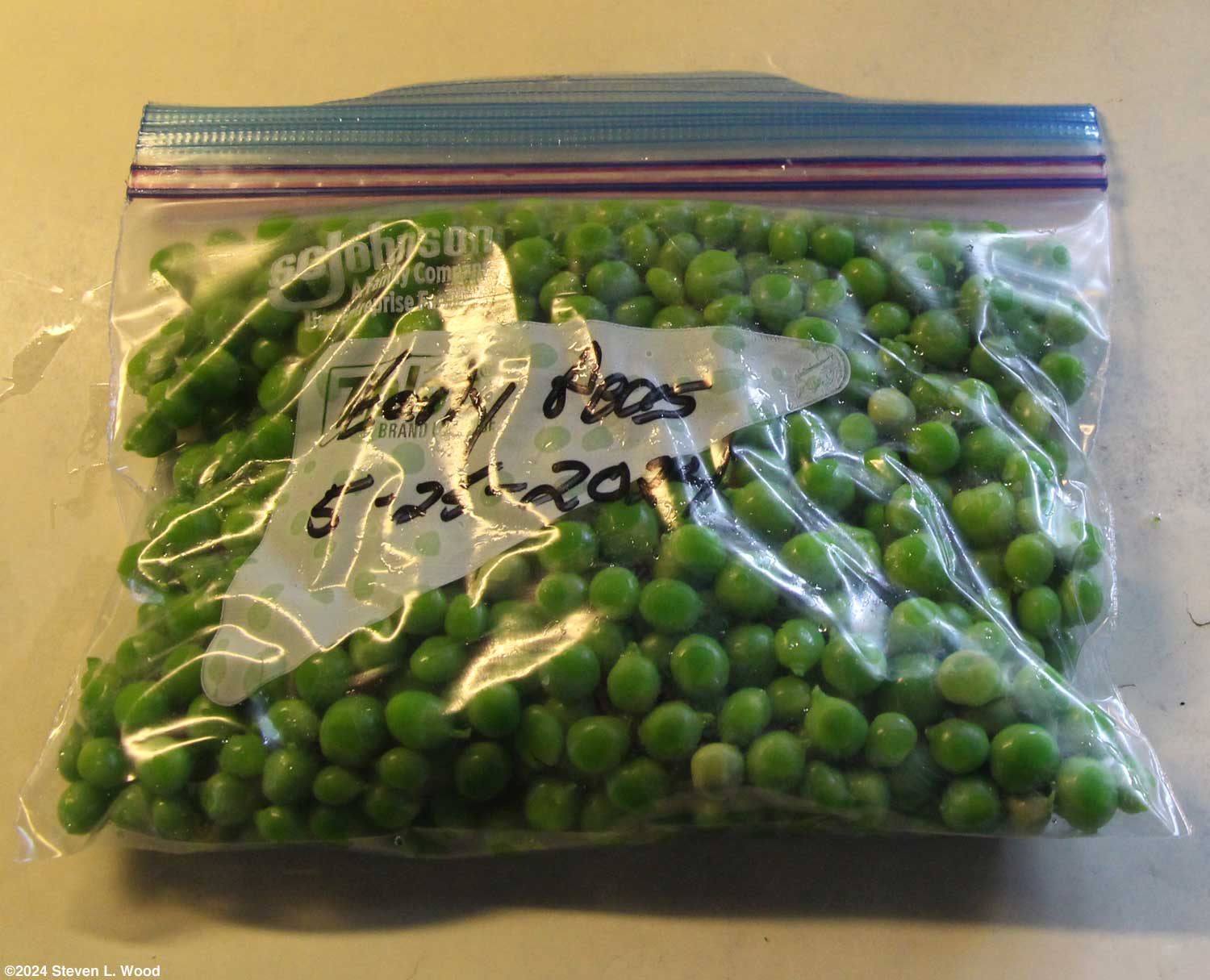
While shelling the peas takes a bit of time, the freezing process is easy. A two minute scald to fend off bacteria followed by a quick cool in ice water has the peas ready to freeze. Once drained, the peas went into a pint Ziploc freezer bag. Another Garden Delicacy: Homegrown Peas While it was cool and very cloudy out this morning. I scuffle hoed and raked smooth the area in our main raised bed where our Eclipse peas will go. Otherwise, today was a recovery day. My working on my knees while mulching yesterday demanded a day off. I'm finding at 75 years old, about one big job a day is all I can handle, often with a day, sometimes two, afterward to let my old bones recover.
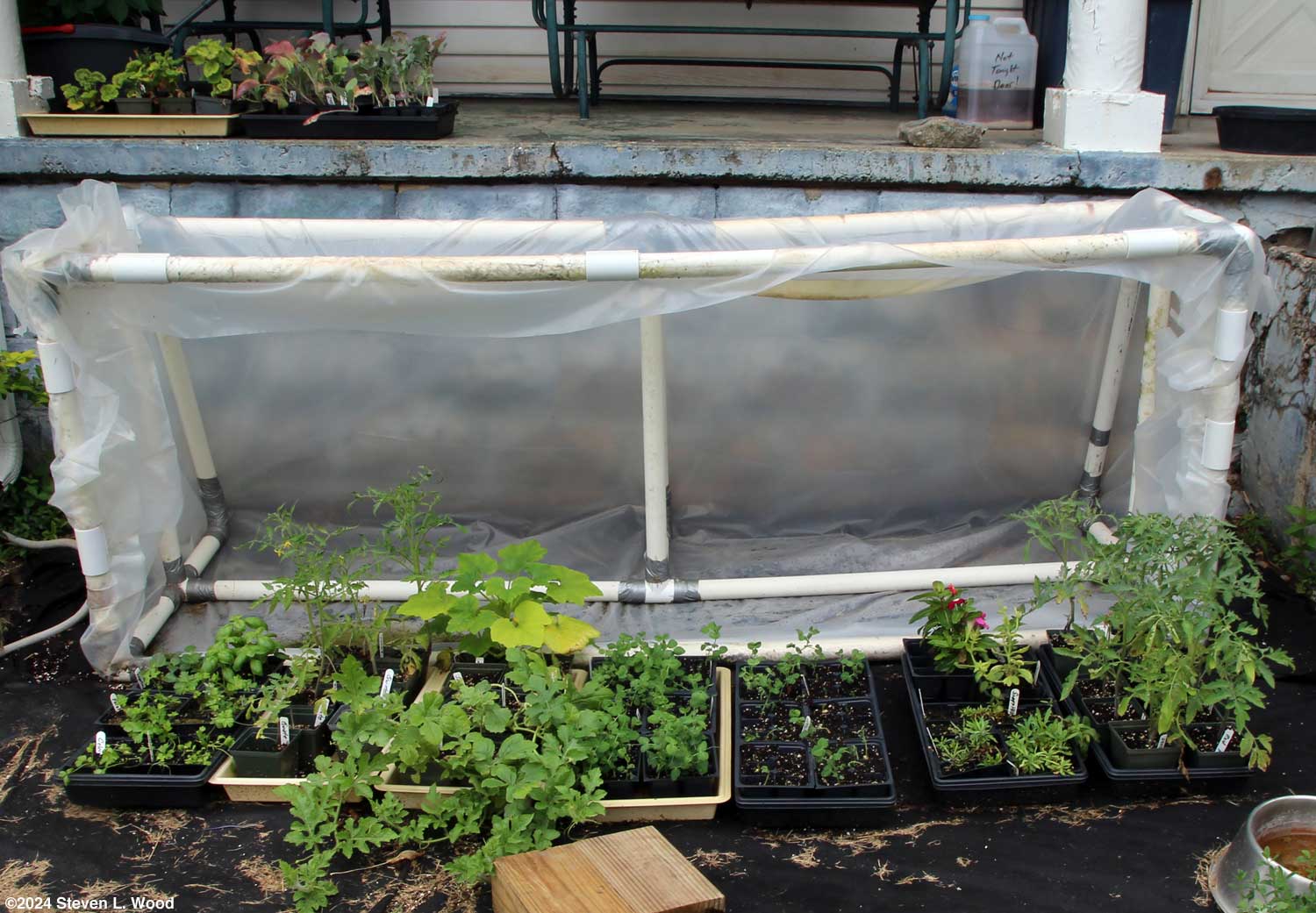
Our cold frame and a bit of our back porch are filled with transplants, mostly for our East Garden plot. At this point, it's just a matter of the ground in the East Garden drying out enough to rototill. I have lots of tomato plants, some melons and squash, and our broccoli for seed saving ready to go. Once the soil is prepped, the East Garden will also get kidney beans, sweet corn, and potatoes planted. It's an exciting time of the gardening season.
Other than picking peas this morning, outdoor gardening probably won't be a viable activity today. Instead, I'll be starting winter squash plants. I'll seed some Waltham Butternut and South Anna Butternut squash and some possibly crossed seed from seed saving of the two varieties in shallow eight inch bulb pots. Butternut squash are typically around a hundred days to maturity varieties which should bring them in well before our first frost. I usually transplant our butternuts over a previous compost pile spot outside our East Garden. The plants seem to thrive in that environment.
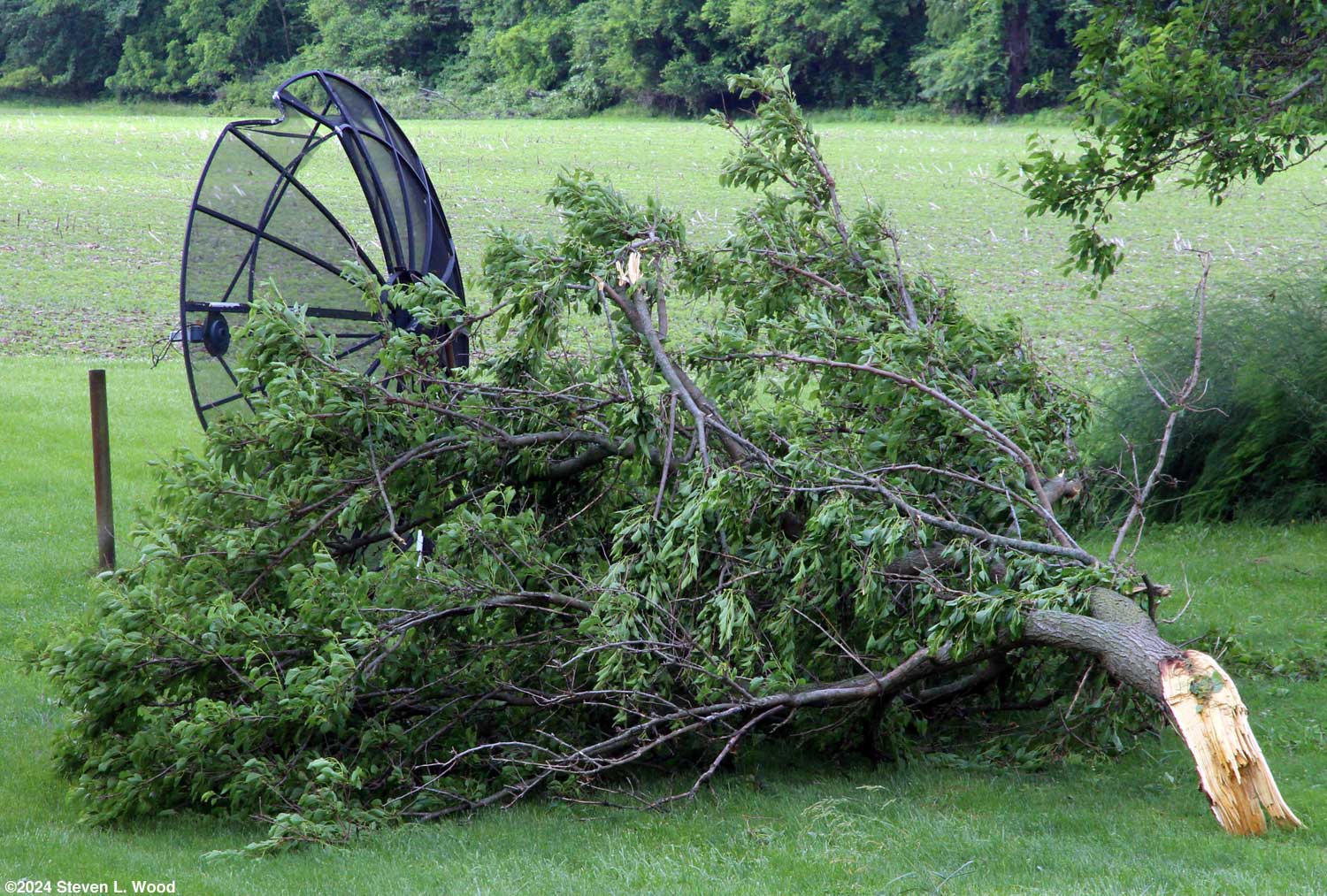
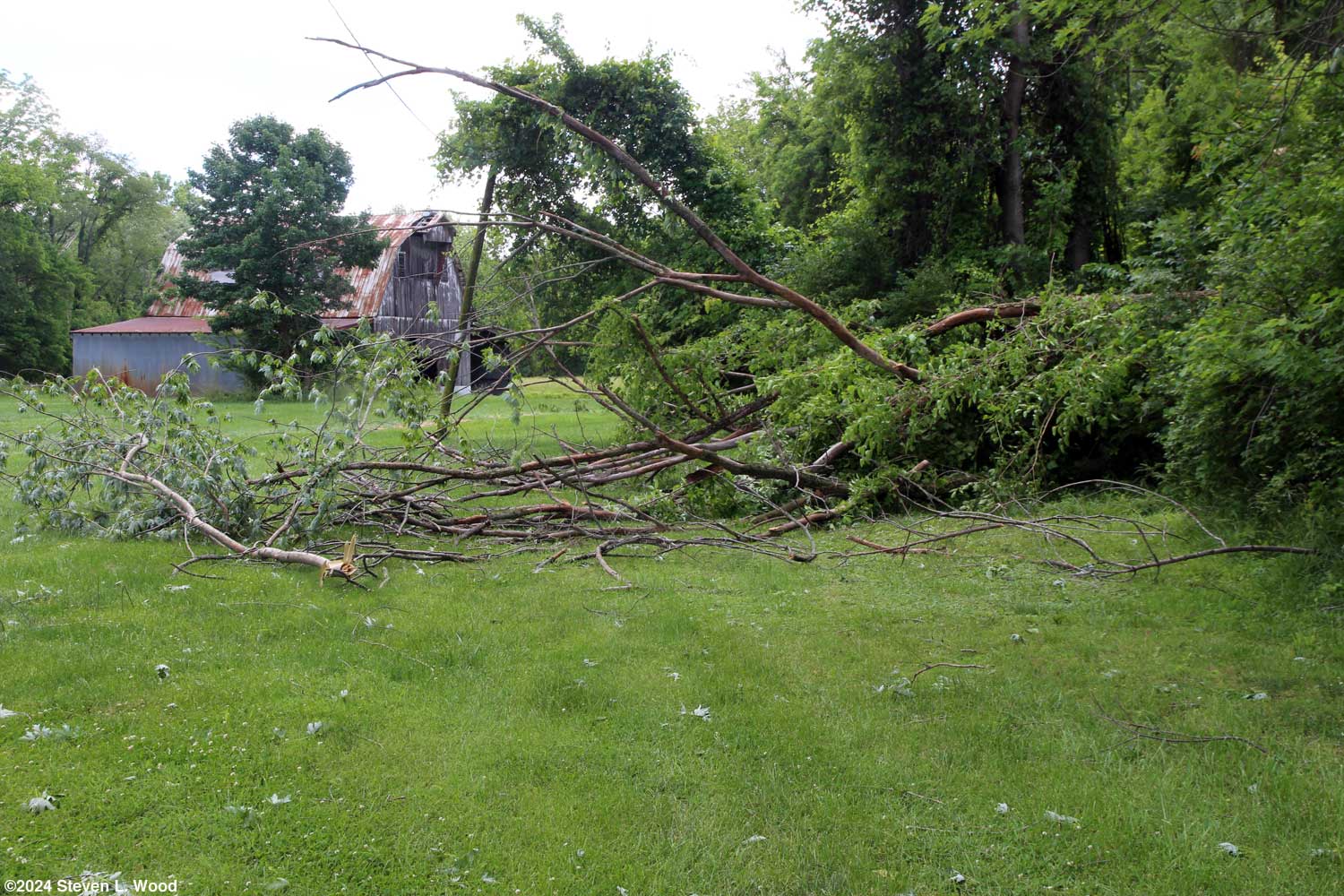
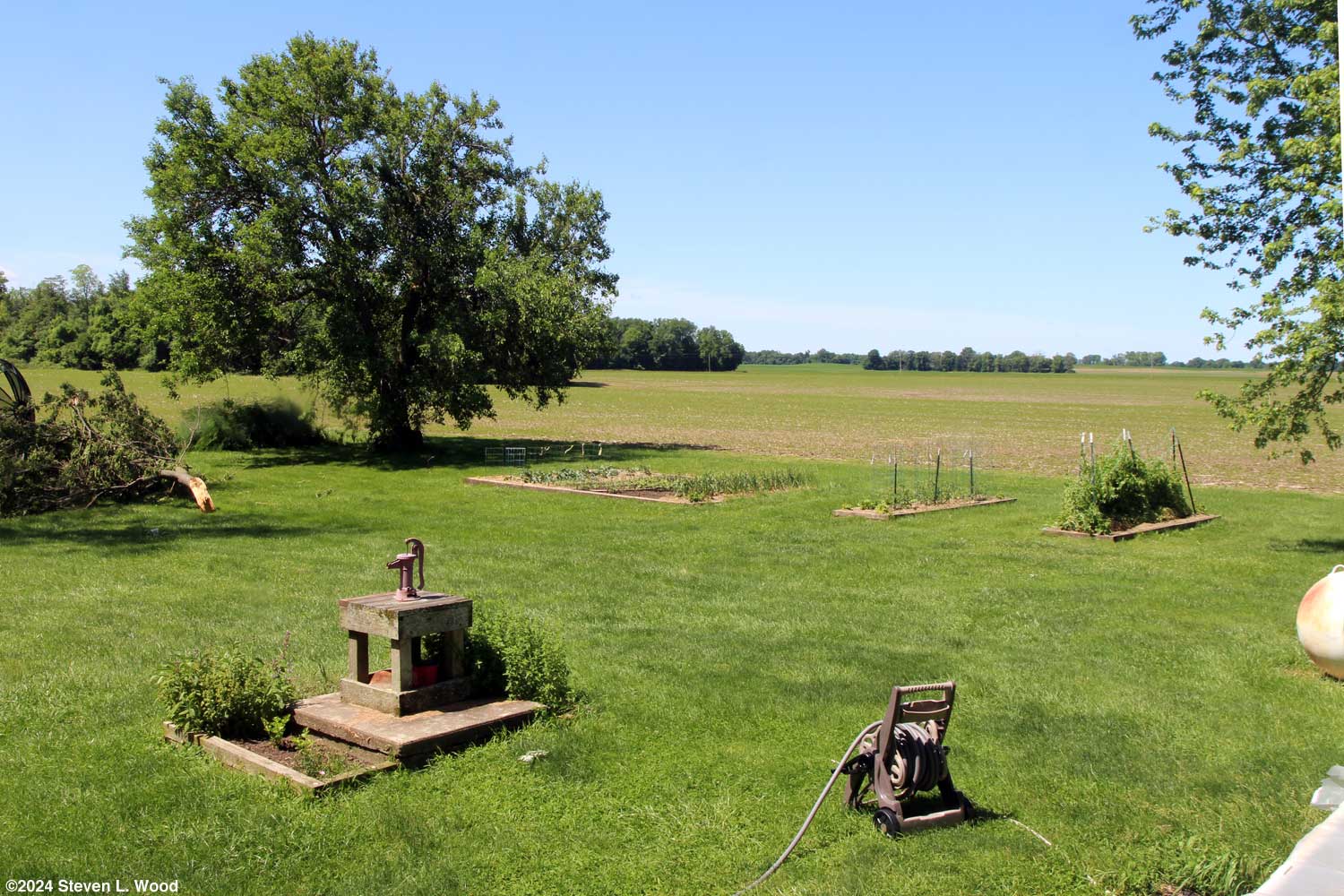
Monday, May 27, 2024 - Memorial Day (U.S.) We escaped any damage from the early storm yesterday that delayed the Indy 500 for four hours. The second storm during the night did some serious damage to our property, but apparently not to our house. It took out a major parts of an old mulberry tree I wanted to cut for years, felled a dead tree at the back of our property, and pushed our pea trellises over a bit, compressing the pea vines.
I'd not cut the mulberry tree that shades the end of our main raised bed, as my wife likes the tree. But I may now have an excuse. The dead tree needed to be cleaned up, but I knew doing so was beyond my current abilities. And the peas, oh my! They were getting hard to pick, as the ripe peas on the outside of the wide row were pretty well gone. I'd been reaching into the middle of the pea vines feeling around for ripe pods. The abuse to the vines will cut our fresh pea harvest, but peas missed fresh can be used for seed saving. I charged the battery of our dandy cordless electric chainsaw, but remembered my lovely wife's admonition that I'm doing well for 75 years old, but need to be careful. I decided to call Kramer's Tree Service, who've done some good work for us in the past. I also chose to not pick up limbs today, as the ground was incredibly wet, and my truck would have left ruts in the soil.
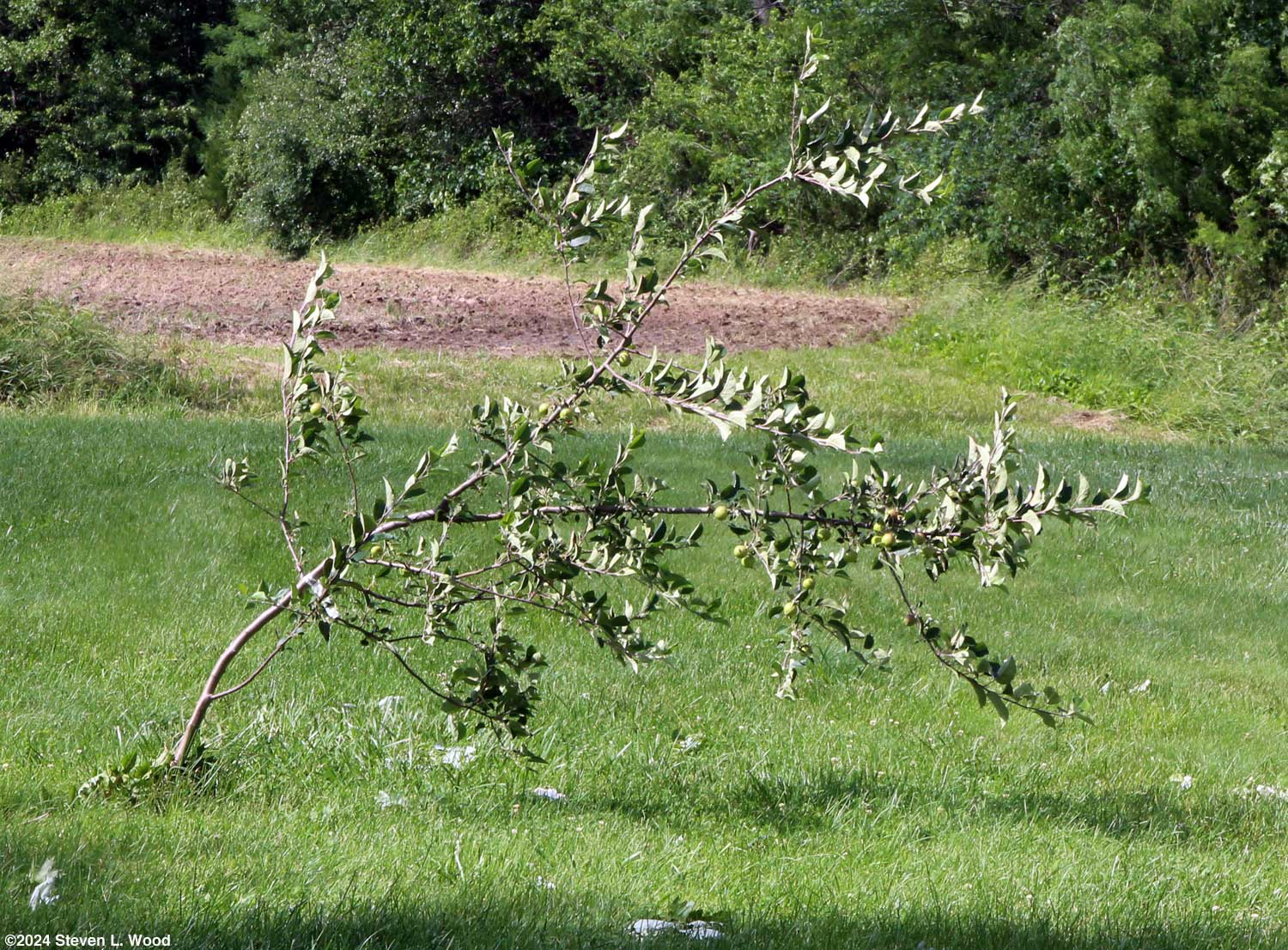
And yes, I counted. The young tree currently is bearing twenty small apples. And they all look pretty healthy, reminding me that it's about time for another round of fruit tree spray. Garlic Scapes
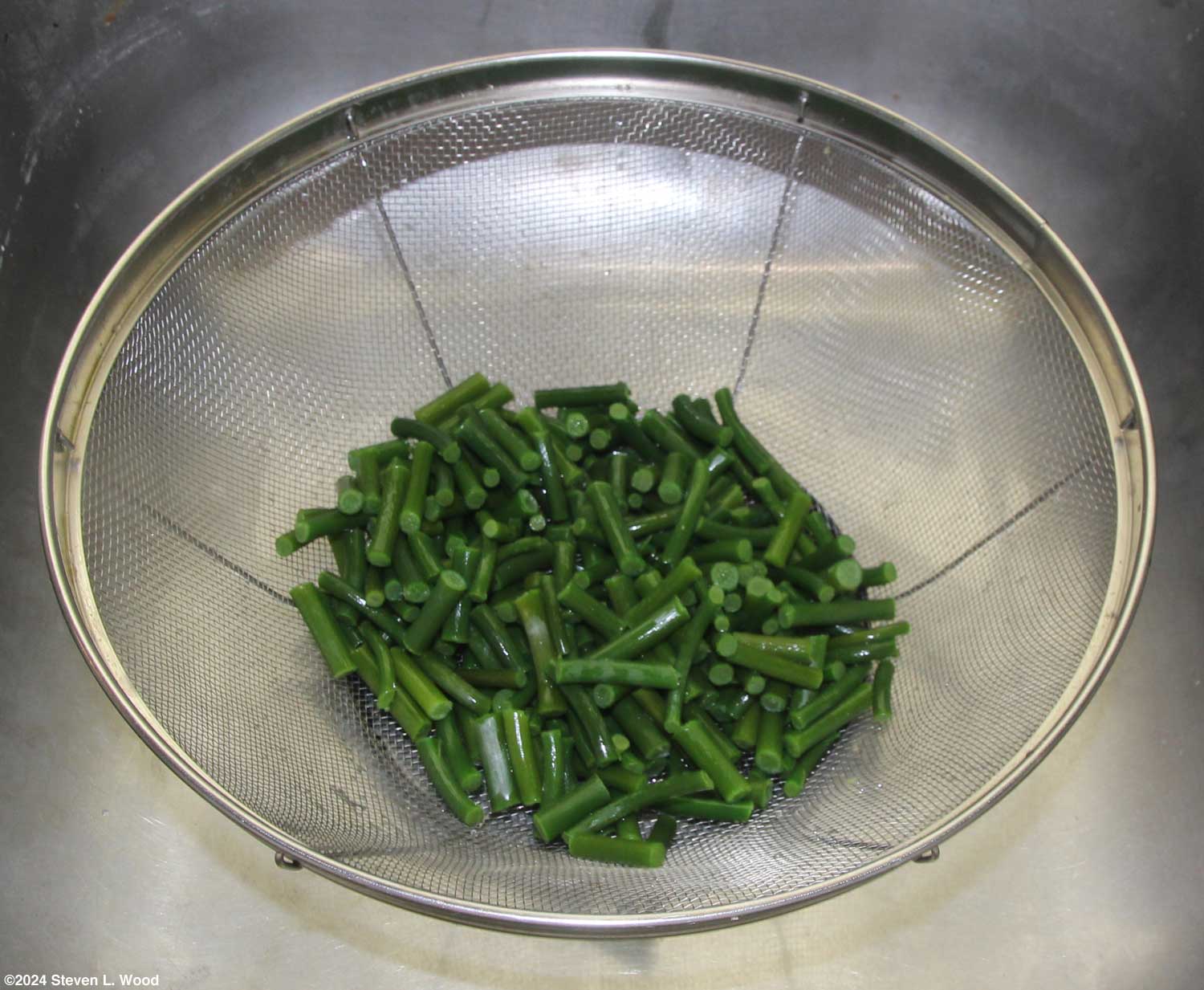
I didn't expect anything from doing the scapes. But our house is now filled with the mostly pleasant aroma of garlic...just from the cutting. I'm hoping to get some gardening done this week. But today, every step in the yard produced a squish after two plus inches of rain overnight. I guess we're just lucky we didn't get more as some folks southwest of us did. But the wind damage was just a hint of what they all got. As we move into the week, it will be interesting to see how the trial of our ex-president turns out. He's a liar, cheat, and bully. He should go to jail! Just my IHOP.
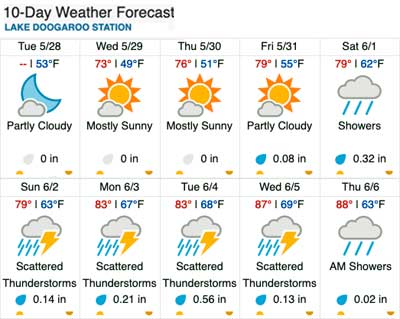
I was pleased to see that our wind damaged tall early pea vines were still ripening a good many mature pea pods. Our weather outlook for the next week or so looks like I may be able to get some gardening done and even do a first rototilling of our large East Garden plot.
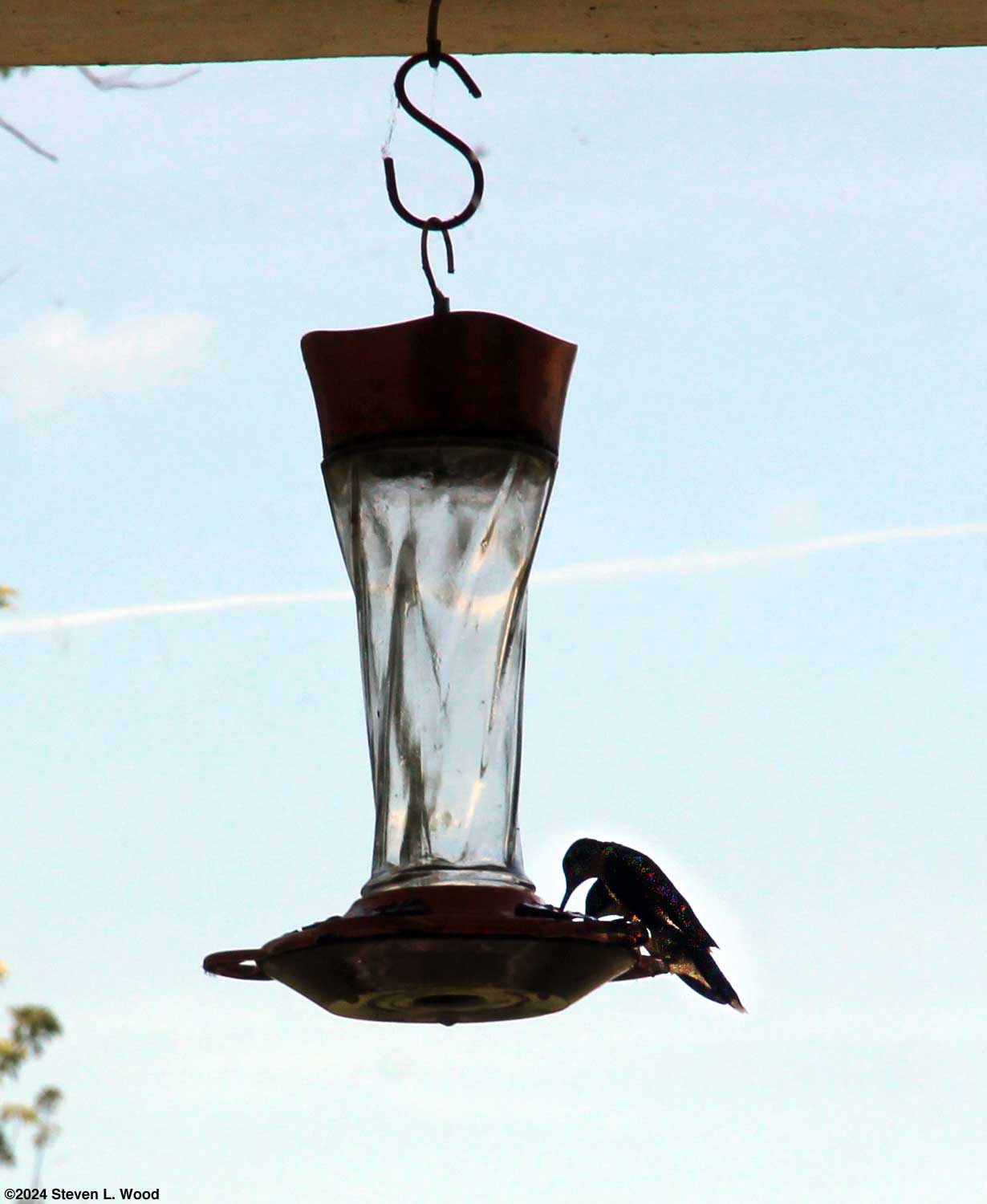
I hung a second hummingbird feeder earlier this week. That proved to be a good thing, as it seems the hummingbirds first clutch of eggs have hatched and the young birds have left their nests. I'm having to fill their main feeder (shown) twice a day. I'm winding up the month a little discouraged at my gardening progress. Our raised garden beds are almost completely planted. But a mix of weather, a severe storm, and some physical issues have prevented tilling our large East Garden plot. Also, my lovely wife has been gone nearly half the month helping our youngest daughter get ready for a move from Baton Rouge to Washington, D.C., so I've had extra chores to do each day. And I've spent entirely too much time watching TV coverage of the Donald Trump hush money trial. Fortunately, it's finally over.
Contact Steve Wood, the at Senior Gardening |





































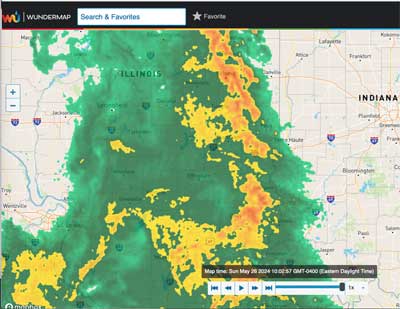 We have some serious storms rolling in this morning. As long as we don't get any wind or hail damage, that's not a big deal for me. But it has to be a real downer for the three hundred thousand plus race fans at the Indianapolis 500. Having been born and raised in Indy, the 500 was a big part of my childhood. My father and I attended qualifications together a number of times. When I began teaching, a traditional sixth grade field trip was to a practice session. The Speedway sat school groups outside the first turn of the track. Those field trips ended after a serious crash in the first turn...and a streaker running through the snake pit. And on race day, one could actually hear the roar of the engines starting at the track miles from our house. We told ourselves that we could hear the distinctive whine of the




| Affiliated Advertisers |
©2024 Senior-Gardening.com