One of the Joys of Maturity |
|

| Affiliated Advertisers |
The Old Guy's Garden Record
Clicking through one of our banner ads or some of our text links and making a purchase will produce a small commission for us from the sale.
While out, I noticed several sweet corn ears with silks beginning to brown. But the ears of the early varieties were awfully thin. I started planting with a row of Walla Walla sweet onions to overwinter. As I mentioned last month, we successfully overwintered onions in 2022-2023. That planting was based on a High Mowing Organic Seeds page, Time to Plant Fall Onions for Overwintering. Then came two rows of Vates (Dwarf Blue Scotch) kale. I watered the furrows for the plantings. Soaking the seeds could have sped germination if I hadn't had them frozen until planting time. I still had carrot, beet, spinach, and lettuce seed out to plant. But the day's heat set in around noon, and I was done for the day. While our hot spell was supposed to be over, today's high temperature was over 91°F.
|
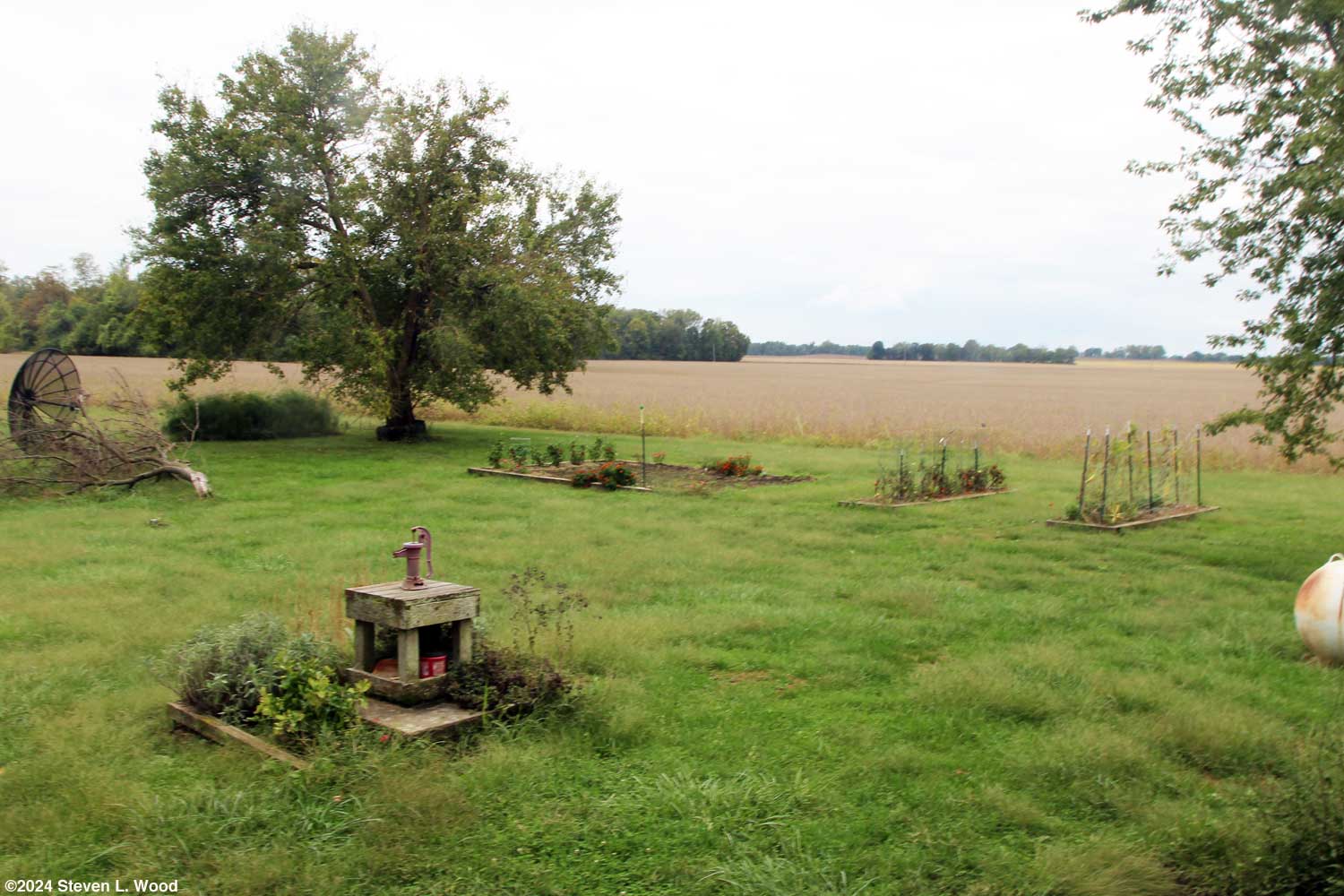
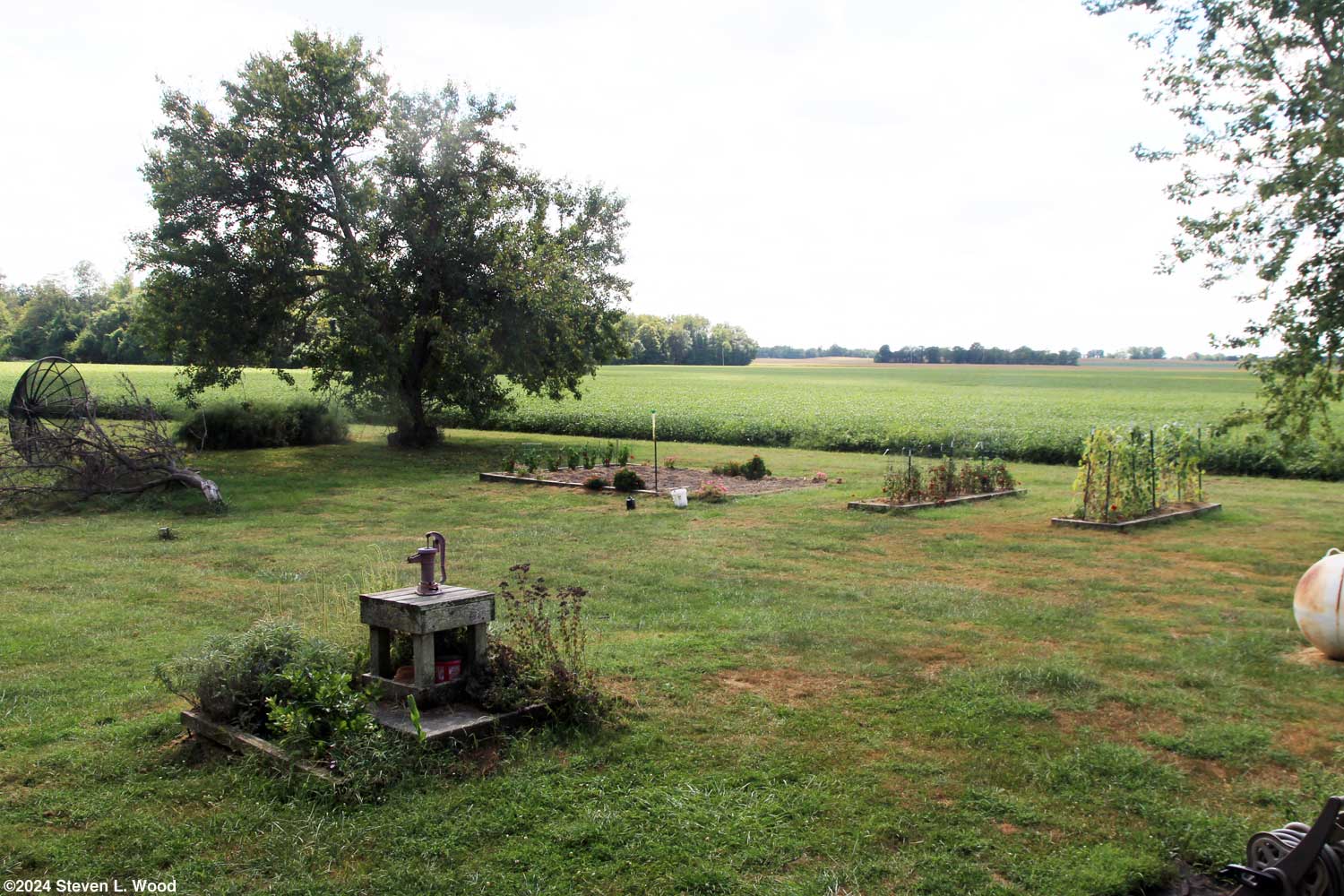


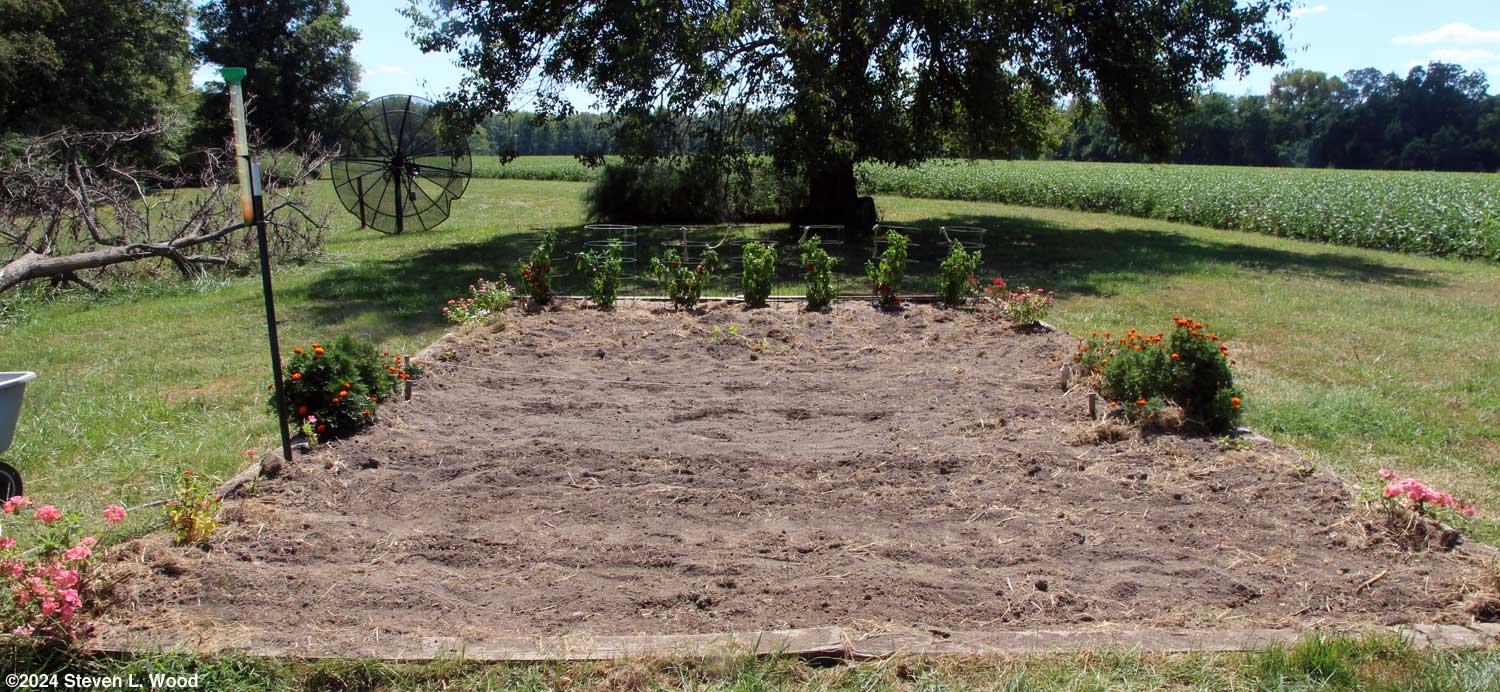
Monday, September 2, 2024 - Labor Day (U.S.) I direct seeded carrots this morning. As usual, I watered the planting furrows before seeding. The seed used was all white pelletized seed which made spacing the seeds a lot easier than with non-pelletized seed. I started with the short season Mokum variety, but only had a few seeds of it left. I finished the rows with Napoli seed, a slightly longer season variety. The two carrot rows were spaced just six inches apart. That's been a spacing that has worked well for us over the years. The carrots have a decent shot of producing a harvest...if we can get them to germinate. According to the Oregon State Extension Service: "Semi-hardy vegetables that can withstand light frost of air temperatures in the range of 28 to 32 degrees include beets, carrots, parsnip, lettuce, chard, garden pea (before flowering), Chinese cabbage, endive, radicchio, cauliflower, parsley and celery." A late first frost and the use of floating row covers just might make this planting work.
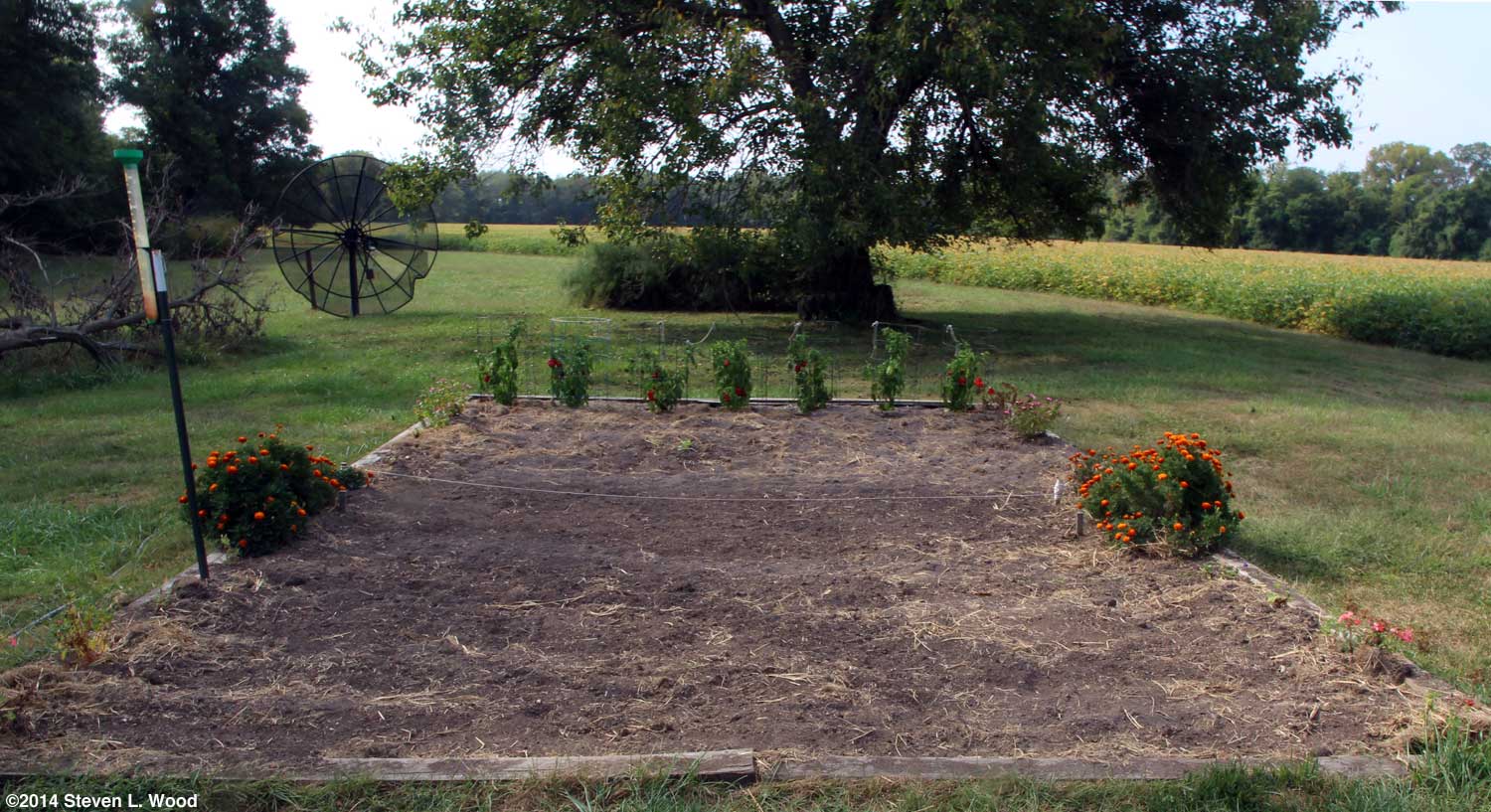
After planting the carrots, I put in a single row of our favorite spinach variety, the open pollinated Abundant Bloomsdale. This may be another one that will be tough to get up out of the ground. While Abundant Bloomsdale seed is commercially available, I used seed saved over the last two years for the planting. Besides some flowers I put in to replace row marker stakes, I also transplanted two pots of Sugar Cube muskmelon I'd been torturing by our back porch. I never got around to planting melons in our East Garden this year. With space left in our main bed, I decided to take a shot at getting something from the delicious variety. And come to think of it, I don't remember ever growing melons of any type in this bed.
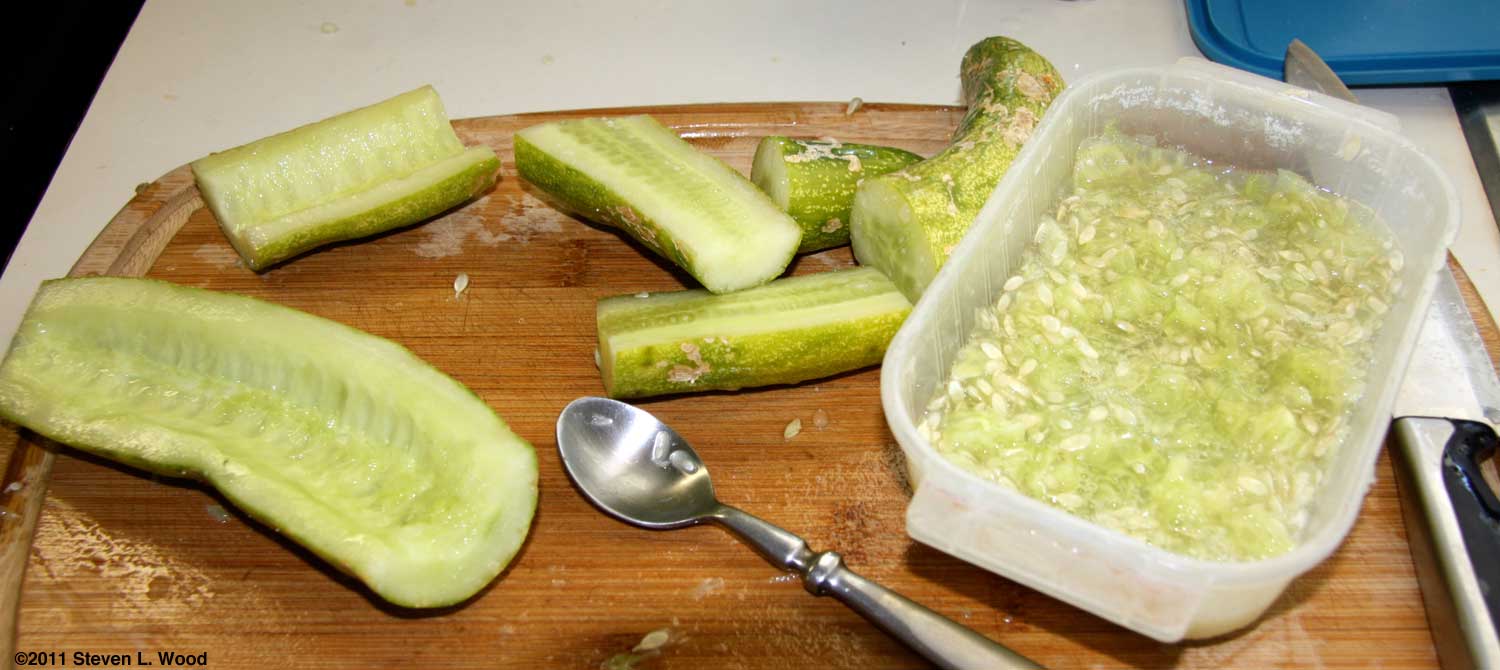
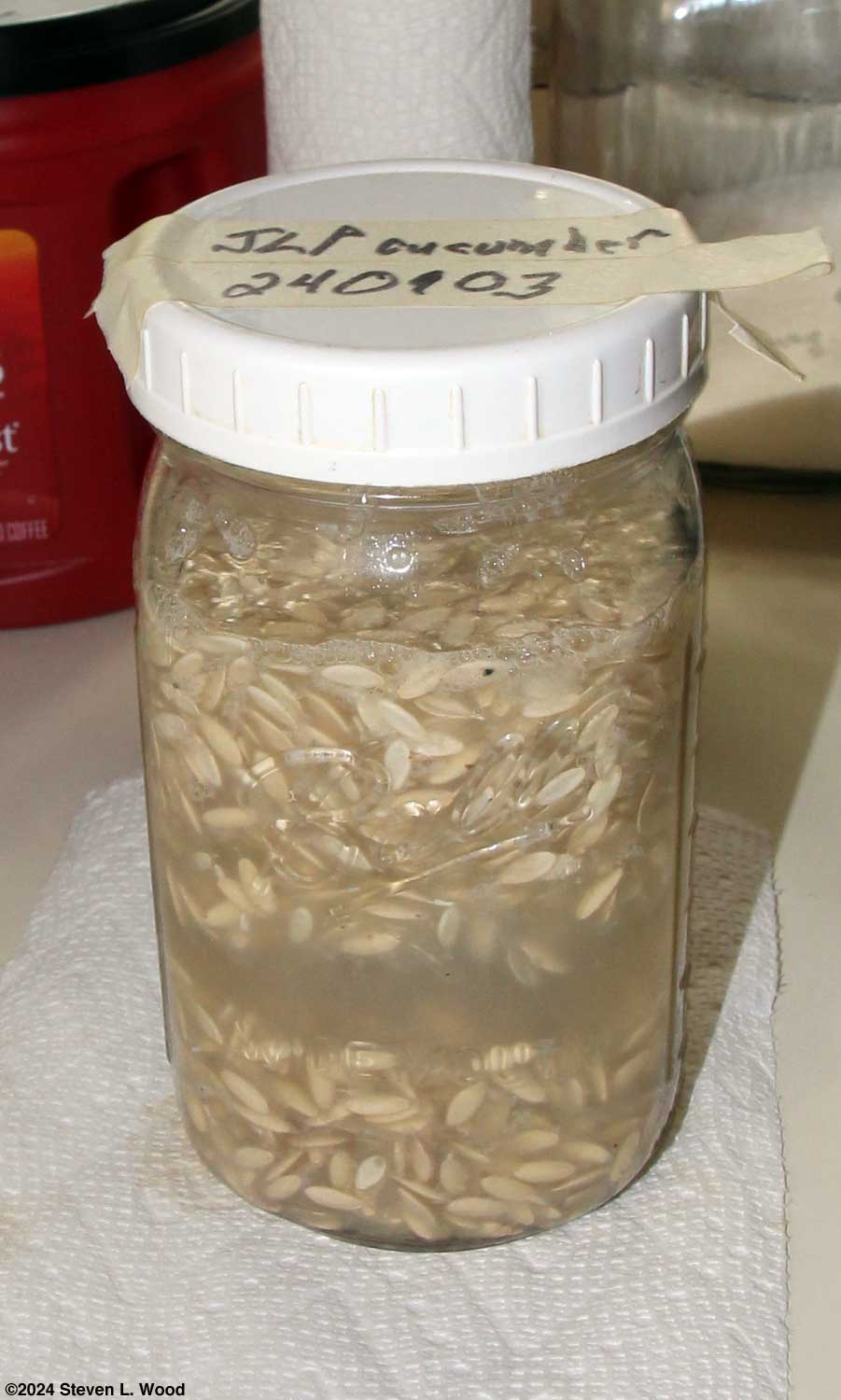
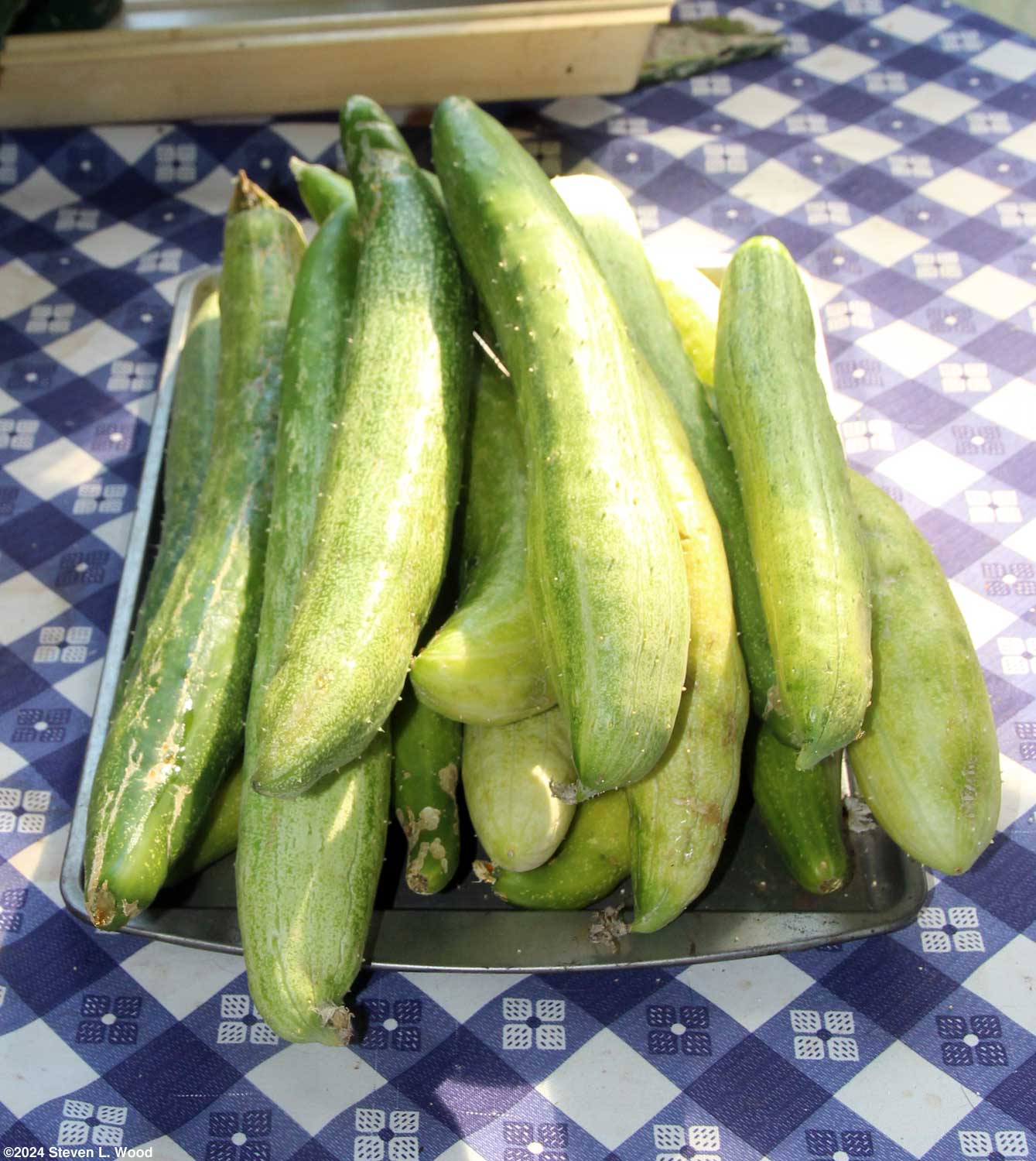
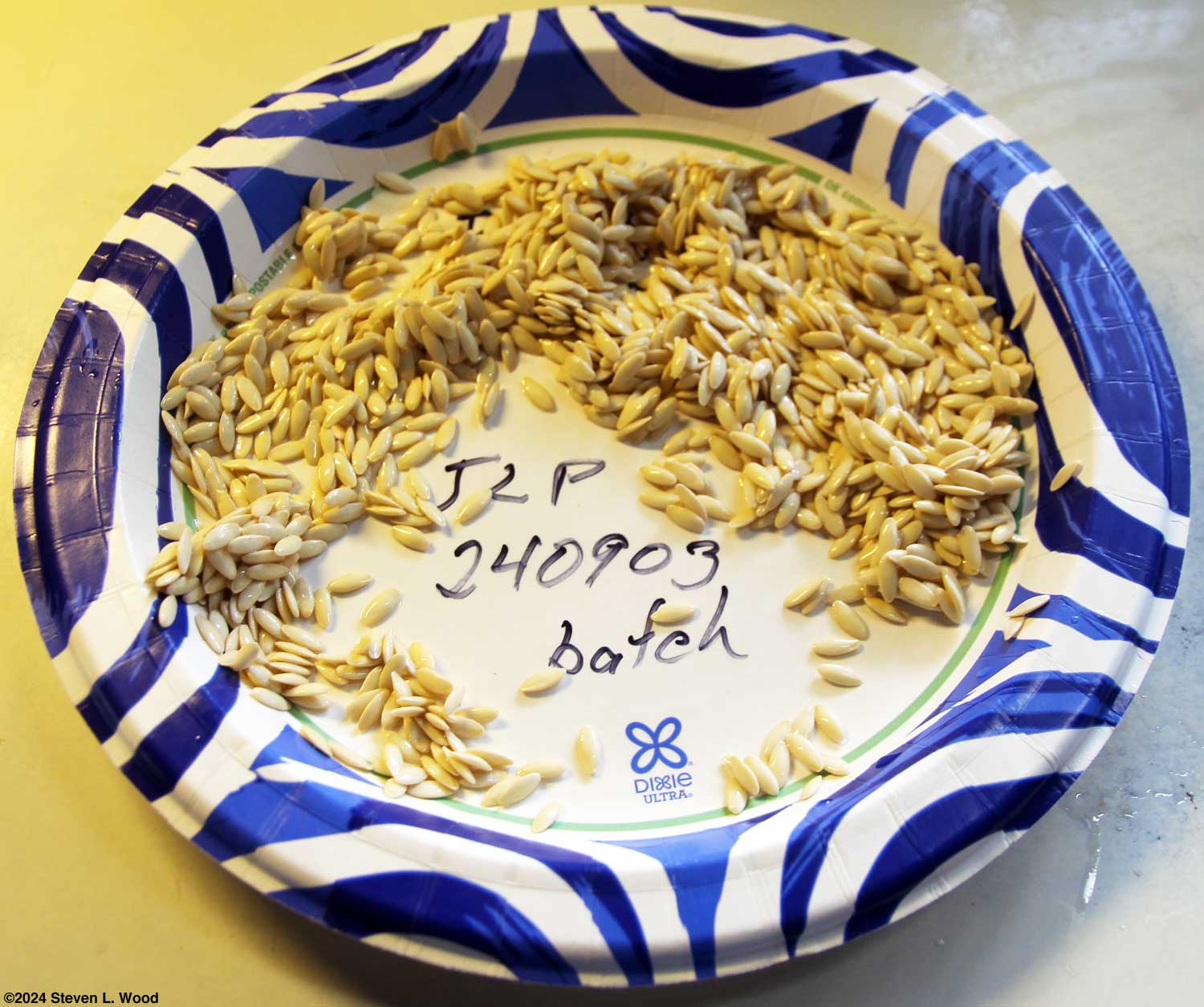
After some mundane household jobs (trash to the street, cleaning cat litter boxes, etc.), I moved on to harvesting Japanese Long Pickling cucumber seed from around twenty yellowed and cured cucumbers. I’d let the cucumbers cure for several weeks on our drying/curing table in the garage. My hands were full when I went to the garage, so the camera didn't go with me. But I have a very old shot of the process when I used to do it in the kitchen. I cut the cukes into sections using only the really fat ends of the cucumbers with the most mature seed. I slice the cucumber sections down the side, split them open, and scrape out the seed and juices. That went into a quart canning jar with a teaspoon of sugar to help speed fermentation. Fermenting the seed removes goo off of the seed and also lets immature seed (floaters) rise to the top to be skimmed off. The stuff in the jar will ferment in four days or less, depending on ambient temperatures. Then the floaters get washed off and the rest strained, thoroughly rinsed, and laid out to dry.
Thursday, September 5, 2024 - Sweet Pickle Relish
I first scrubbed around twenty Japanese
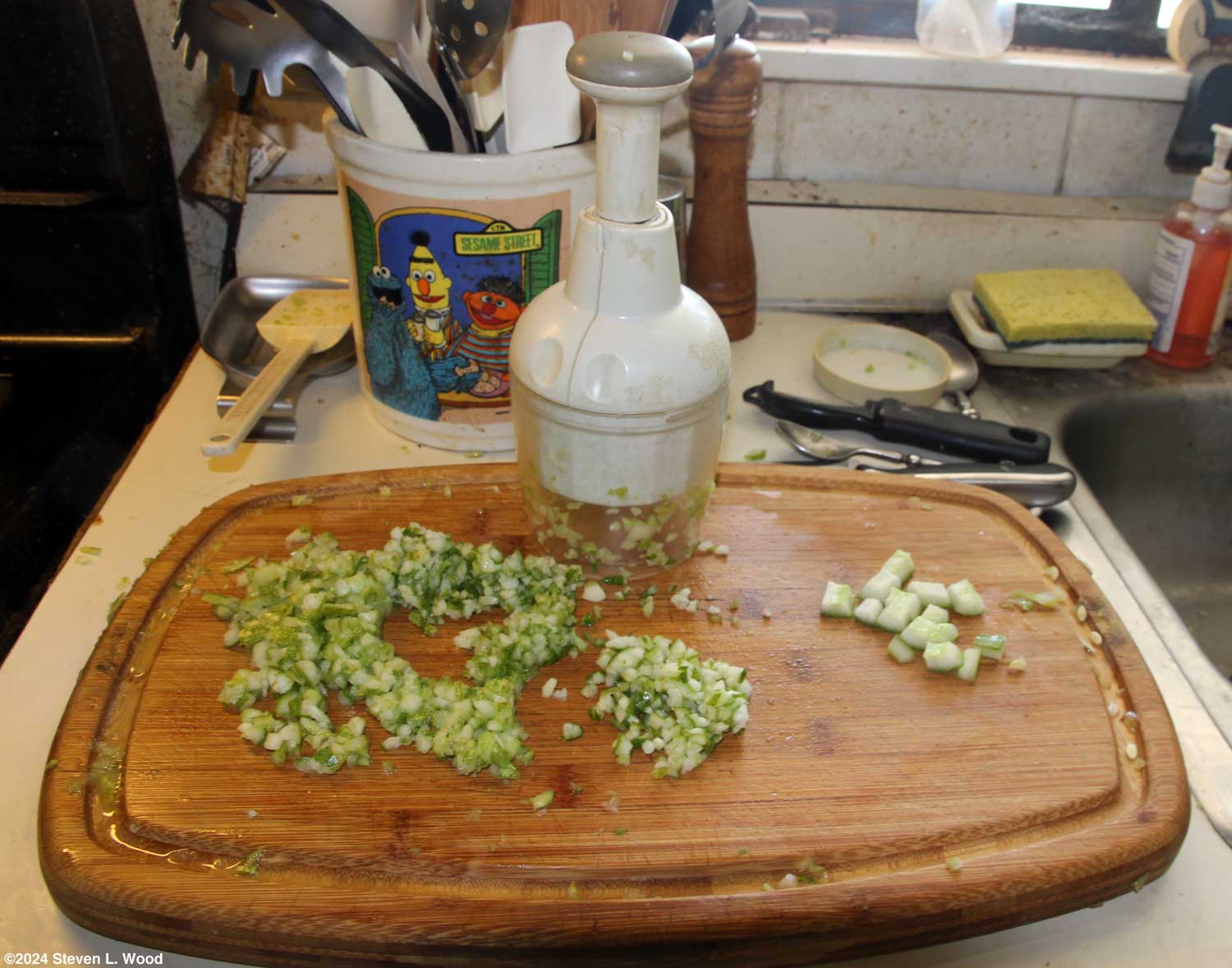
Long Pickling cucumbers with a brush to remove the spines from them. Then I trimmed off the ends and used a potato peeler to remove a few bad spots on the surface of the cucumbers. I cut the cucumbers into six inch sections and split them open. Using a teaspoon, I scraped the seeds out of the centers of the cucumbers before slicing them lengthwise and cutting the slices into fairly small pieces. The somewhat chopped cucumber pieces then got chopped into smaller pieces using our Pampered Chef Food Chopper. After a decade or so of use, I think the tool’s blades are getting dull.
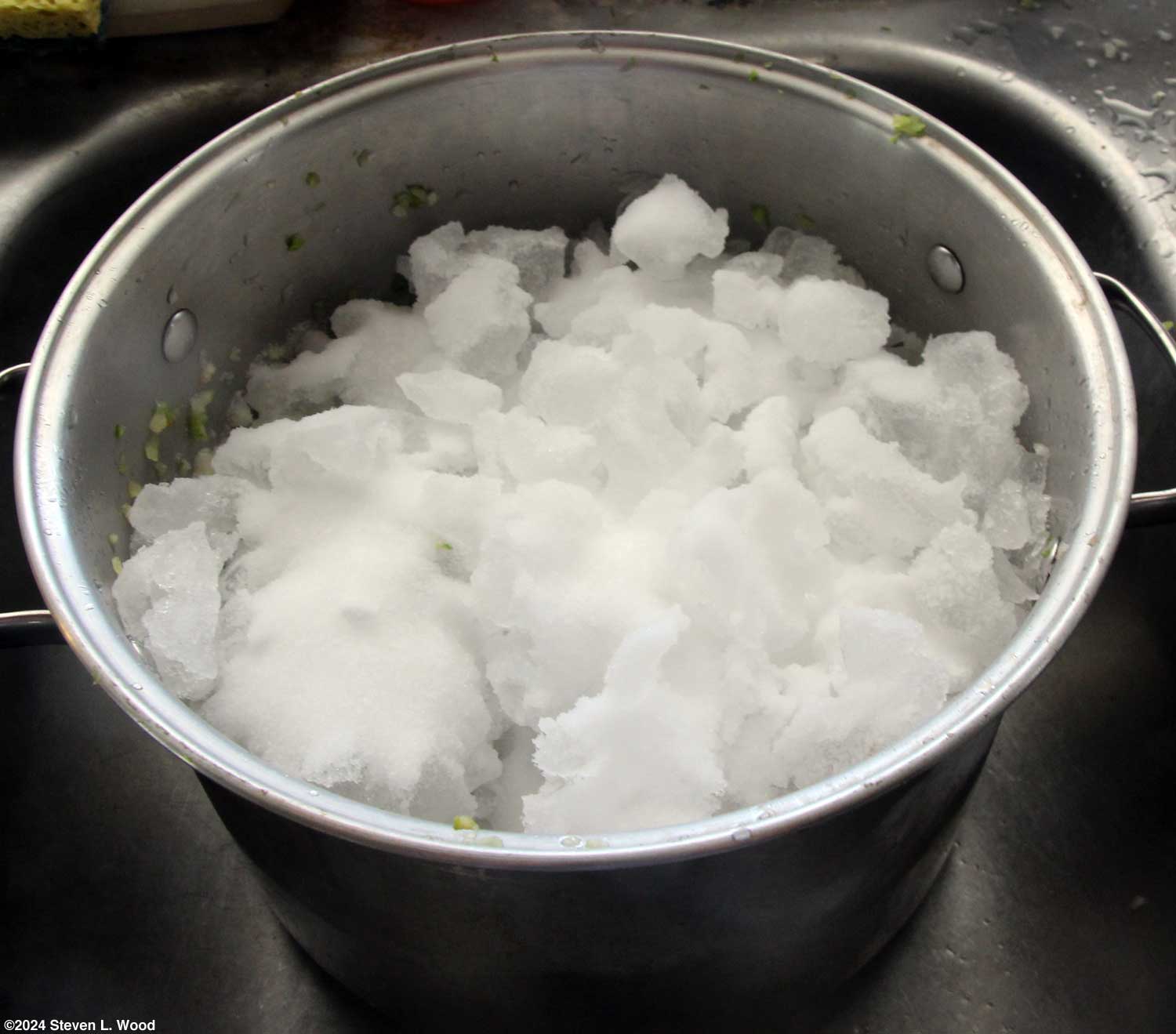
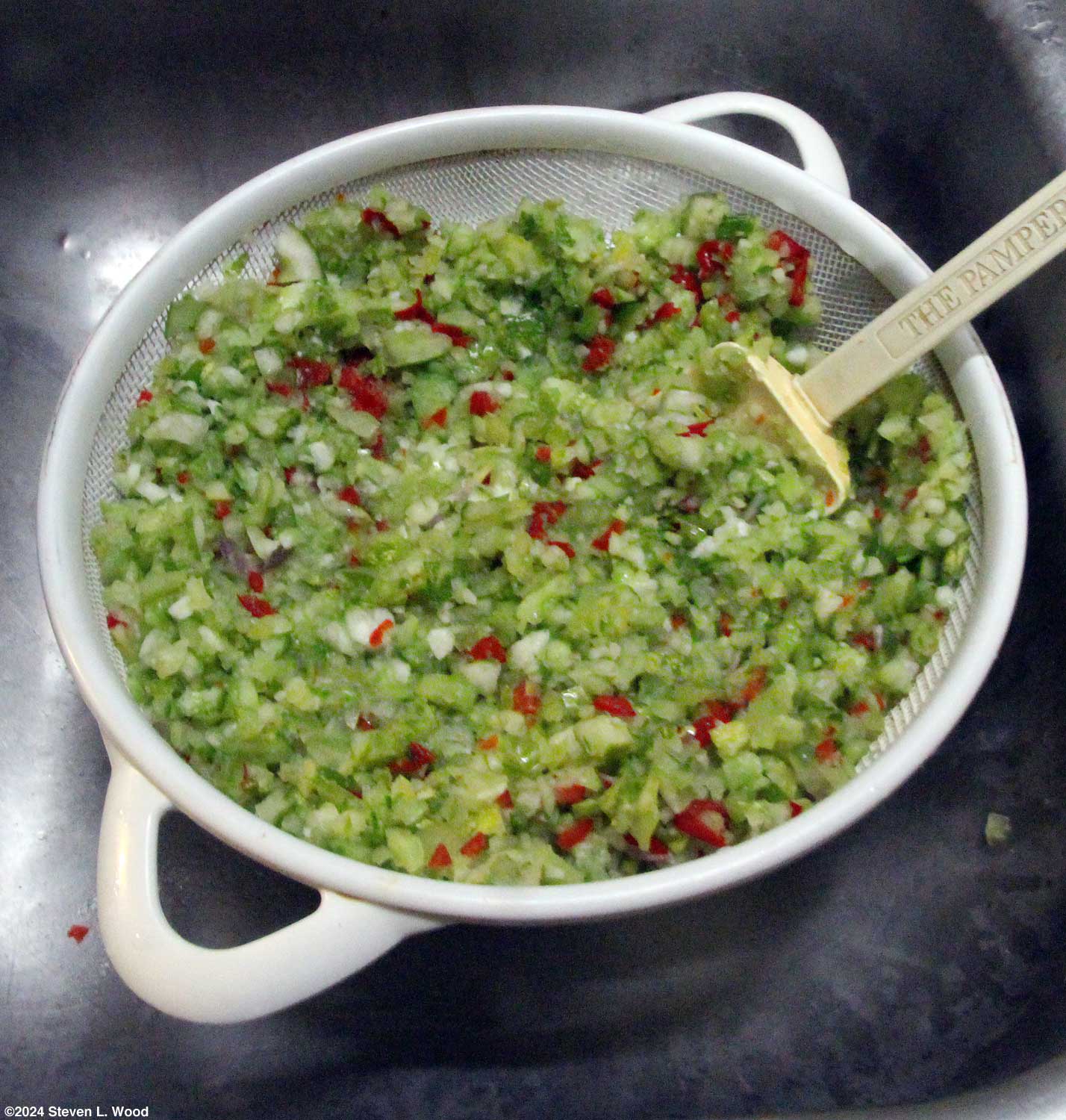
After the brining, it's important to drain or press out as much water as possible from the relish mix. I didn't know to do that the first time I made relish years ago and ended up with a disappointingly watery relish. Then the mix goes into a hot solution of celery and mustard seed, tumeric, and lots of sugar for ten to twenty minutes. After that, it's just a matter of ladling the relish into jars and water bath canning them for around ten minutes. This batch made five and a half pints of sweet pickle relish. With some leftover from our last batch of it, that should last us until next season. Note that high acid products like pickles and relish last in storage a long, long time. We use the relish on hot dogs, of course, but also in potato, ham, and chicken salad. Let me add that it takes a good bit of time to make sweet relish (at least for me). Also, here are some good sweet relish recipes:
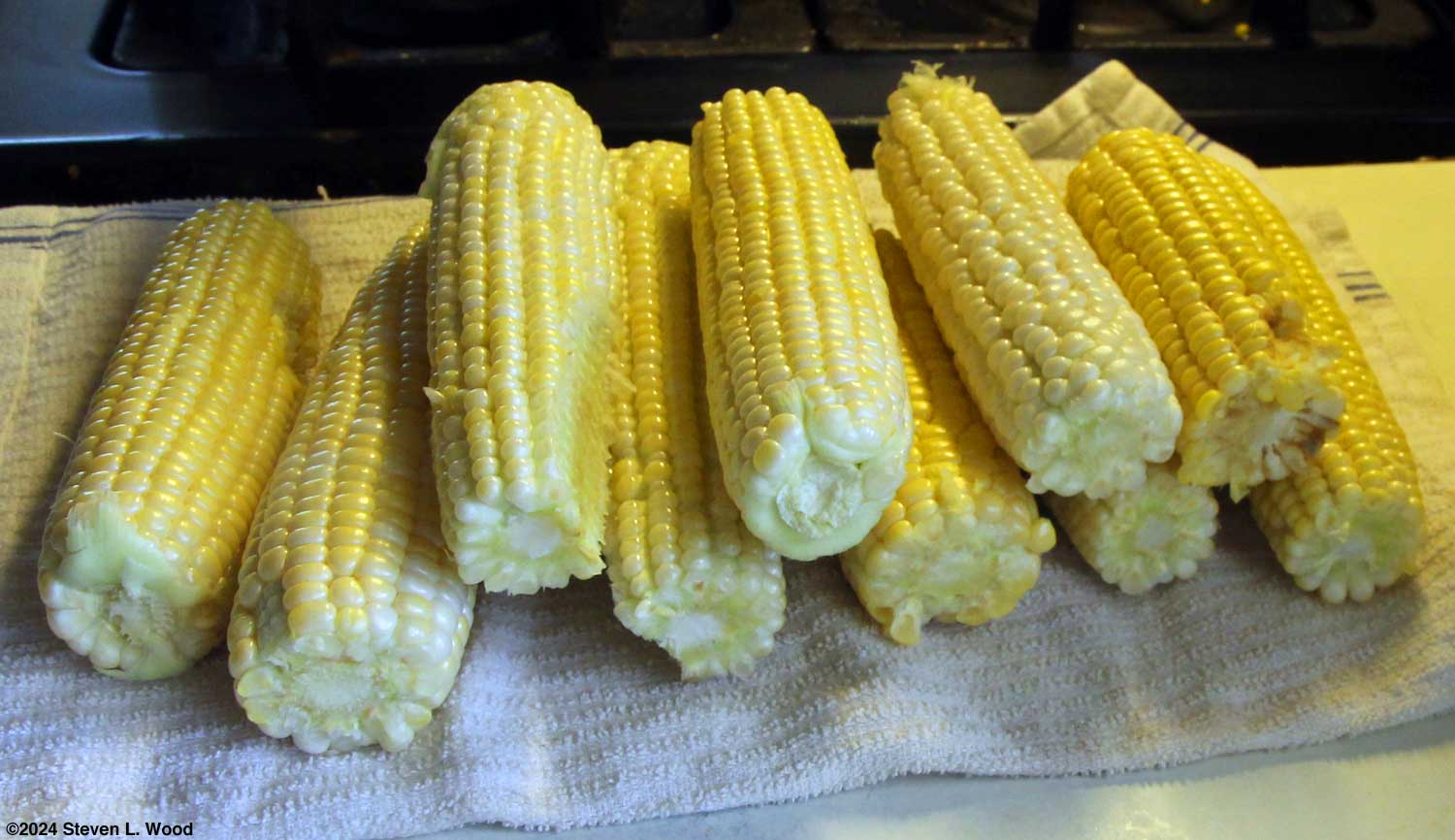
I didn't get around to writing a posting for this site yesterday. It was a busy day. The highlight of the day was probably having corn on the cob from our East Garden plot with our supper. The sweet corn was planted on July 7. Unless my math is really wrong, that's around 68 days from seeding for the Anthem XR, Vision MXR, X-tra-Tender 3473, and Yellowstone varieties I picked. They're all 74-76 days-to-maturity varieties. Online pages about degree days are a bit technical, but what has happened is that the extreme heat we've experienced at times this summer has matured some of our sweet corn a week or so early.
Cucumber and Pepper Seed
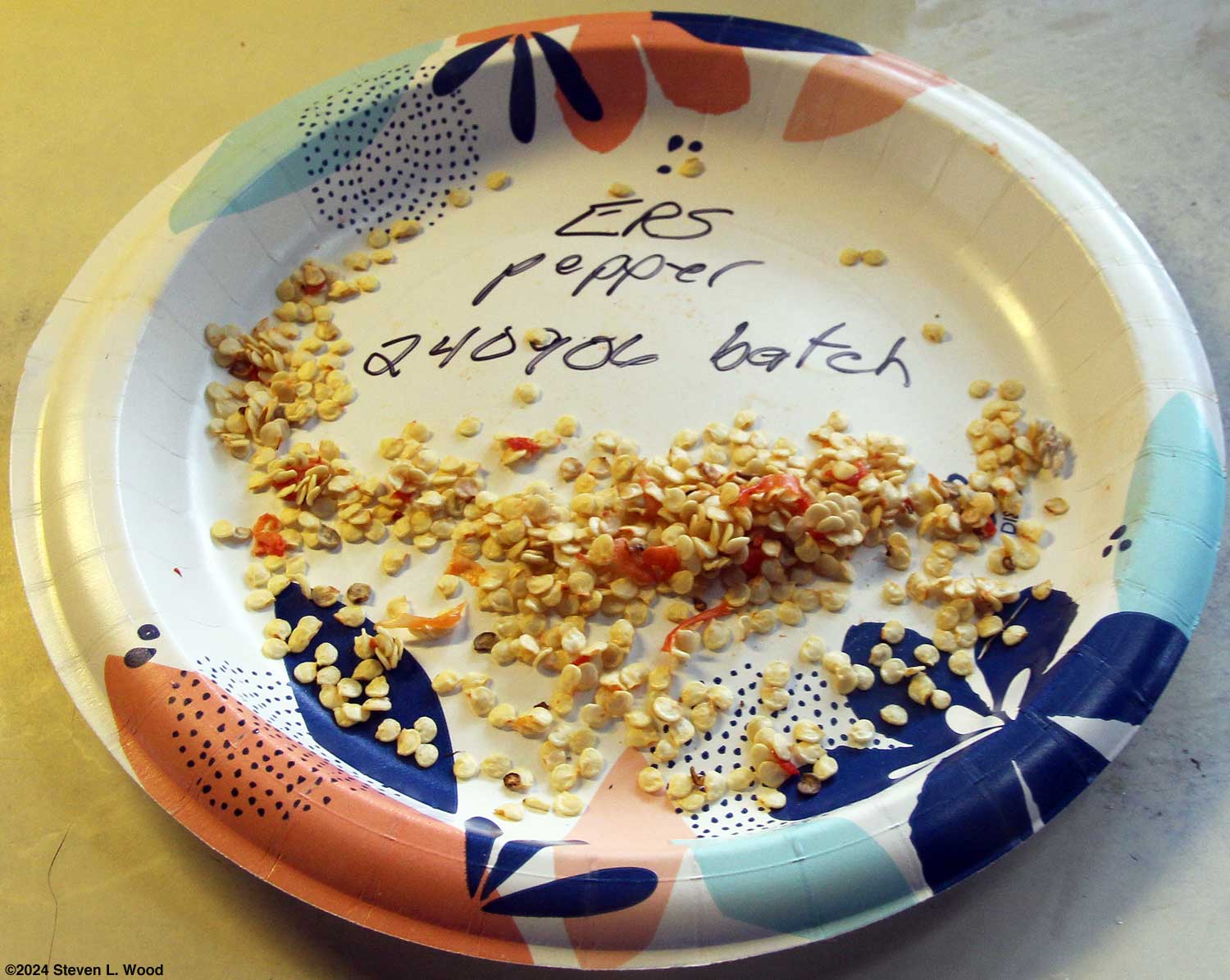
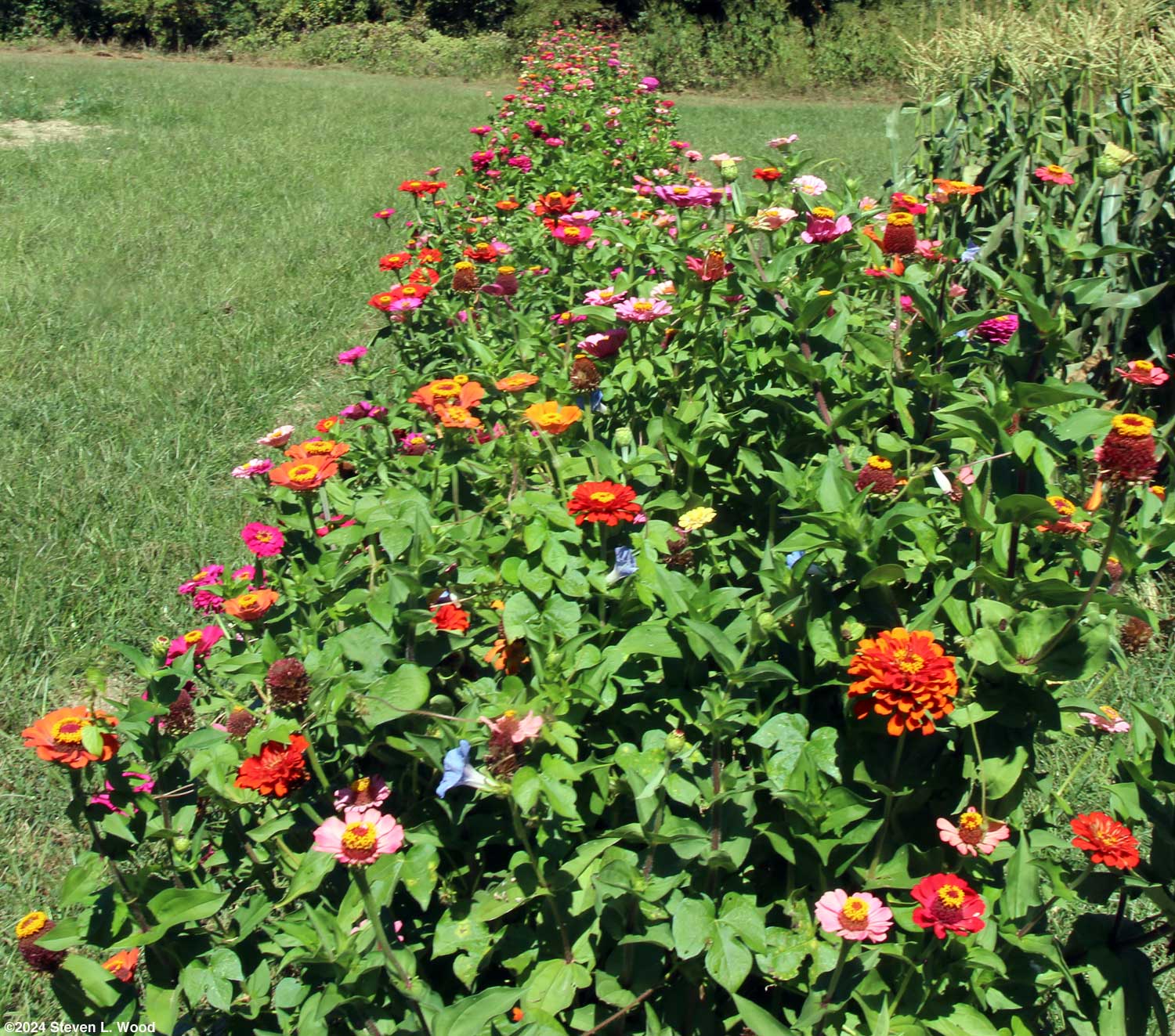
When making sweet pickle relish on Thursday, I used our best red peppers for the mix. But I'd also come across some wrinkly, slightly overripe peppers when picking. Those peppers got stripped of the seed for seed saving. Unlike tomatoes and cucumbers, peppers are a sticky seed that doesn't require fermentation. I did let the pepper seed dry a day before soaking ten of the seeds for a germination test. And while this has been a tough year for me in gardening, we have some neat stuff going on in our East Garden plot. Our usual eighty foot row of zinnias is gorgeous right now. Blooms are beginning to mature, so I'll need to begin picking and drying the mature blooms and seeds. Zinnias are really easy!
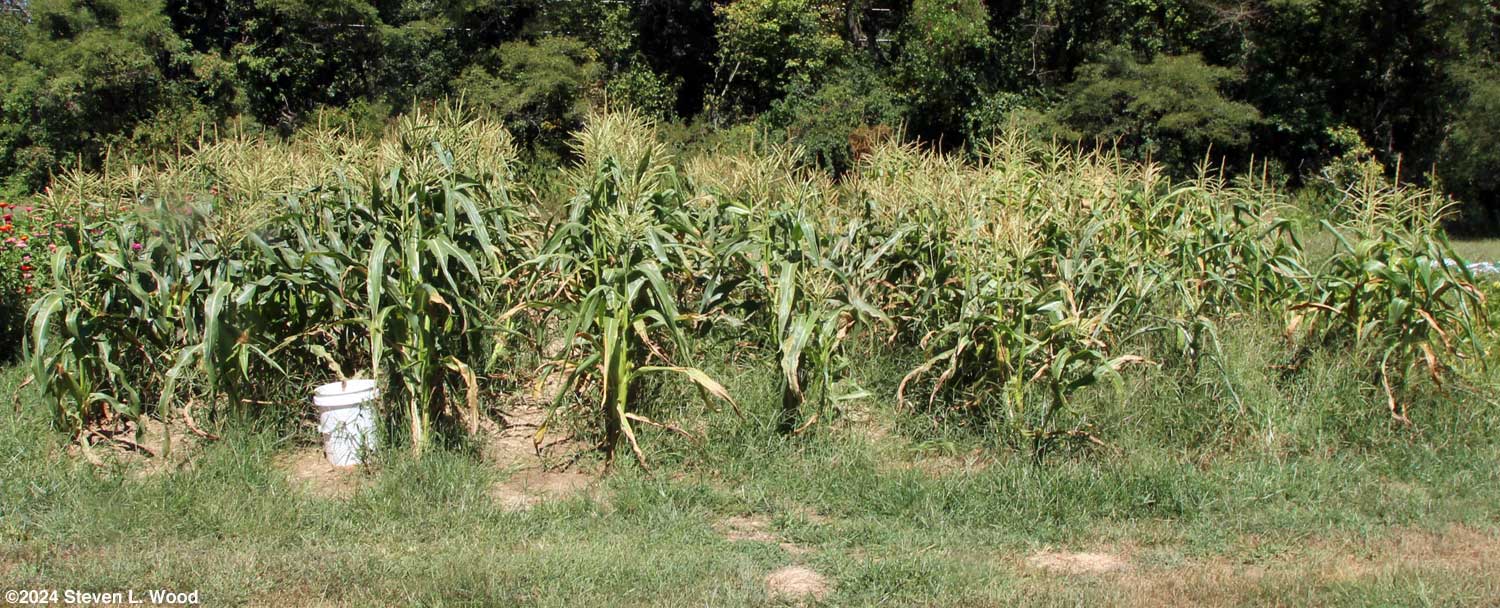
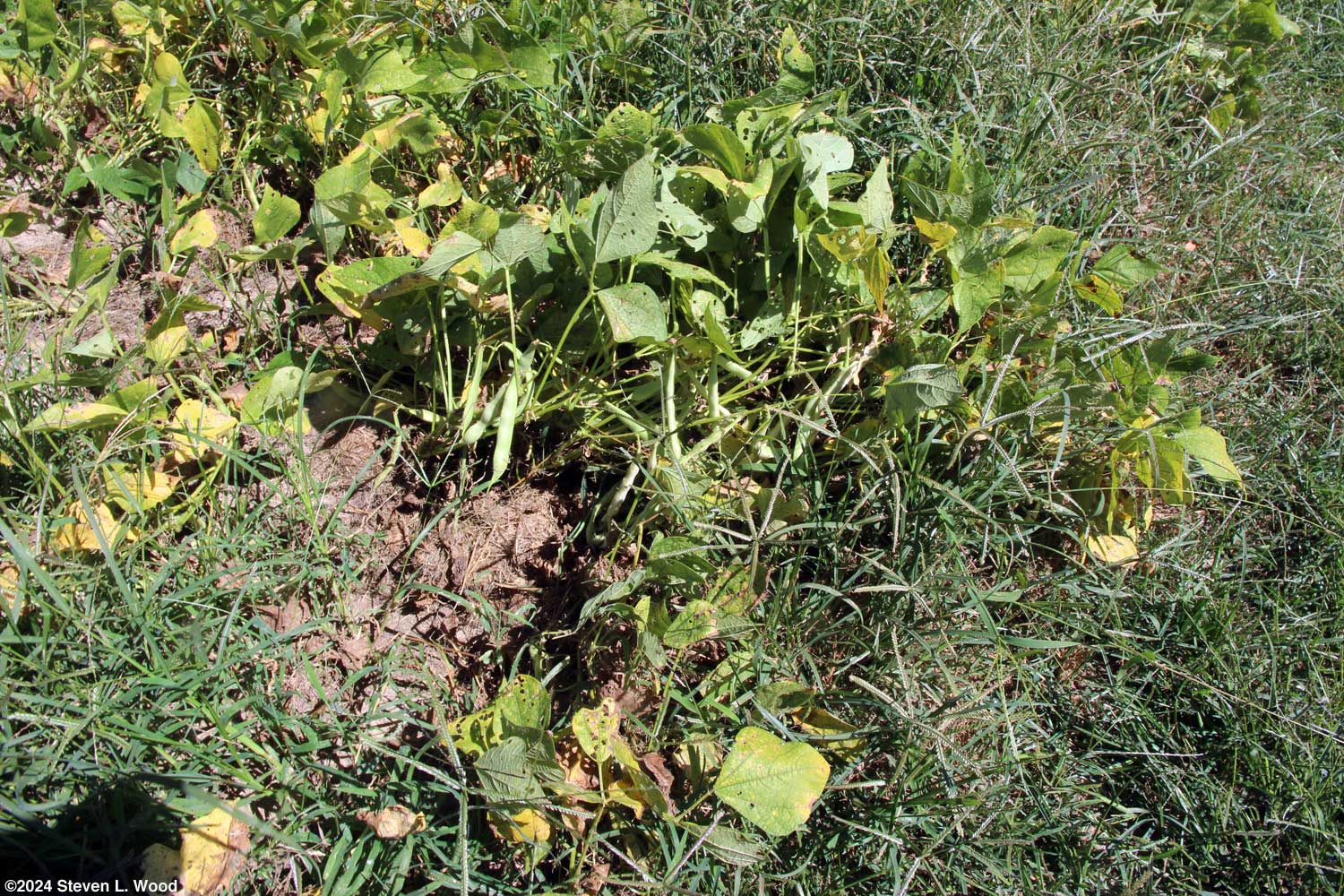
While weedy, our sweet corn is producing and our kidney beans have pods filling out on them.
I'm backing off picking any more sweet corn today. The white corn I picked the last two days was just barely ripe. One of the glories of growing sh2 sweet corn varieties is that they hold on the stalk or even in the fridge for several days before seriously converting sugars in the kernels to starch. I started growing sh2 sweet corn varieties back in the 1980s during my farming years. We grew 2-4 acres of the corn each season to roadside. Most folks at that time didn't know about supersweets and absolutely loved our sweet corn. In recent years, the sh2s have become harder to find from seed vendors as newer types of supersweets have taken over a lot of the market. Since all of these sweet corn types require isolation from other types, I've just stayed with the sh2s. About half of the varieties planted this year are new to us, so we'll see how they do. We planted Anthem XR (74), Vision MXR (75), X-tra-Tender 3473 (75), Yellowstone (76), Honey & Pearl (76), American Dream (77), Enchanted (78), and Supersweet Jubilee (85). With the dry, hot weather we've experienced, I'm really pleased with how well the sweet corn has done. Chicken Nuggets
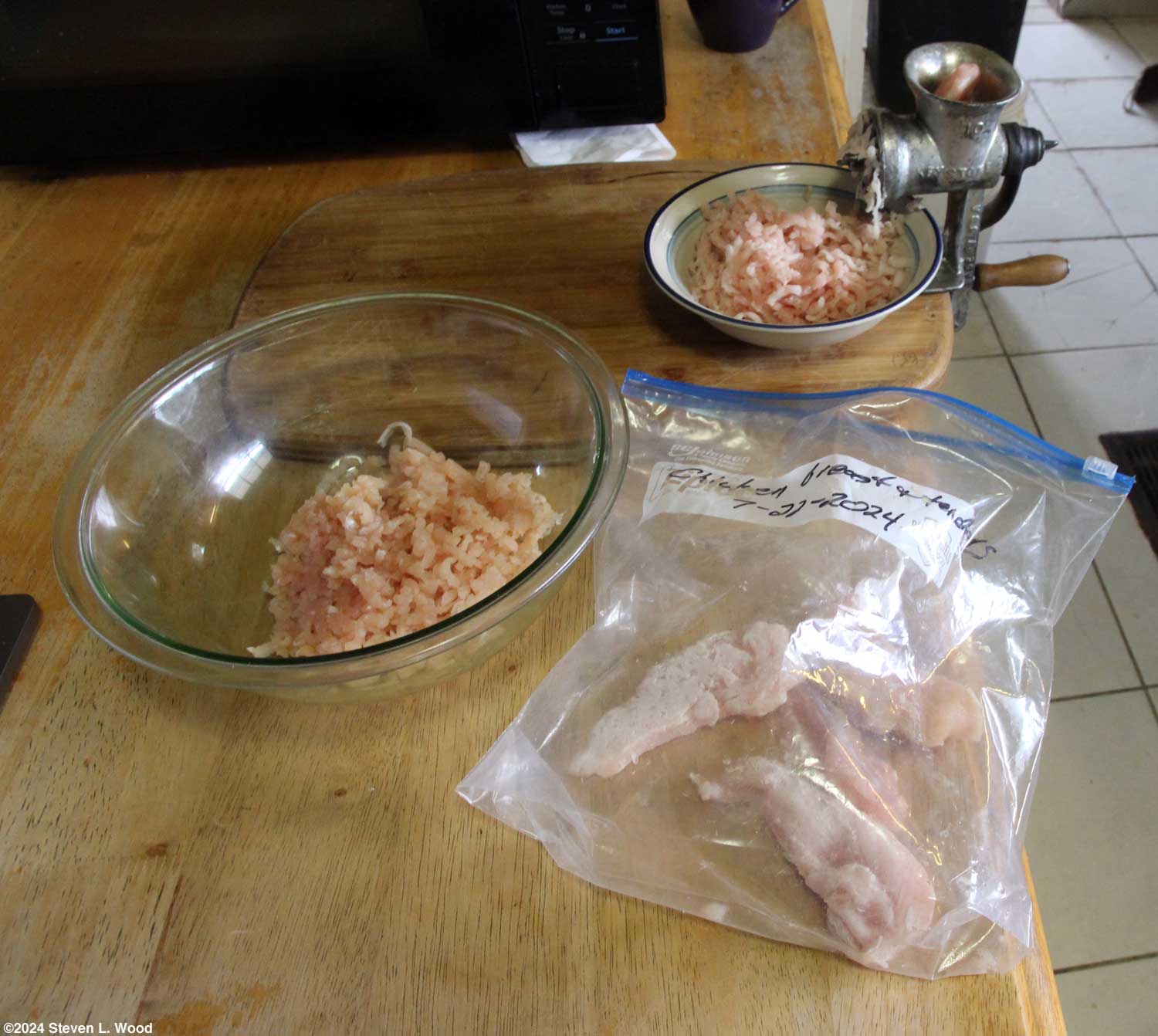
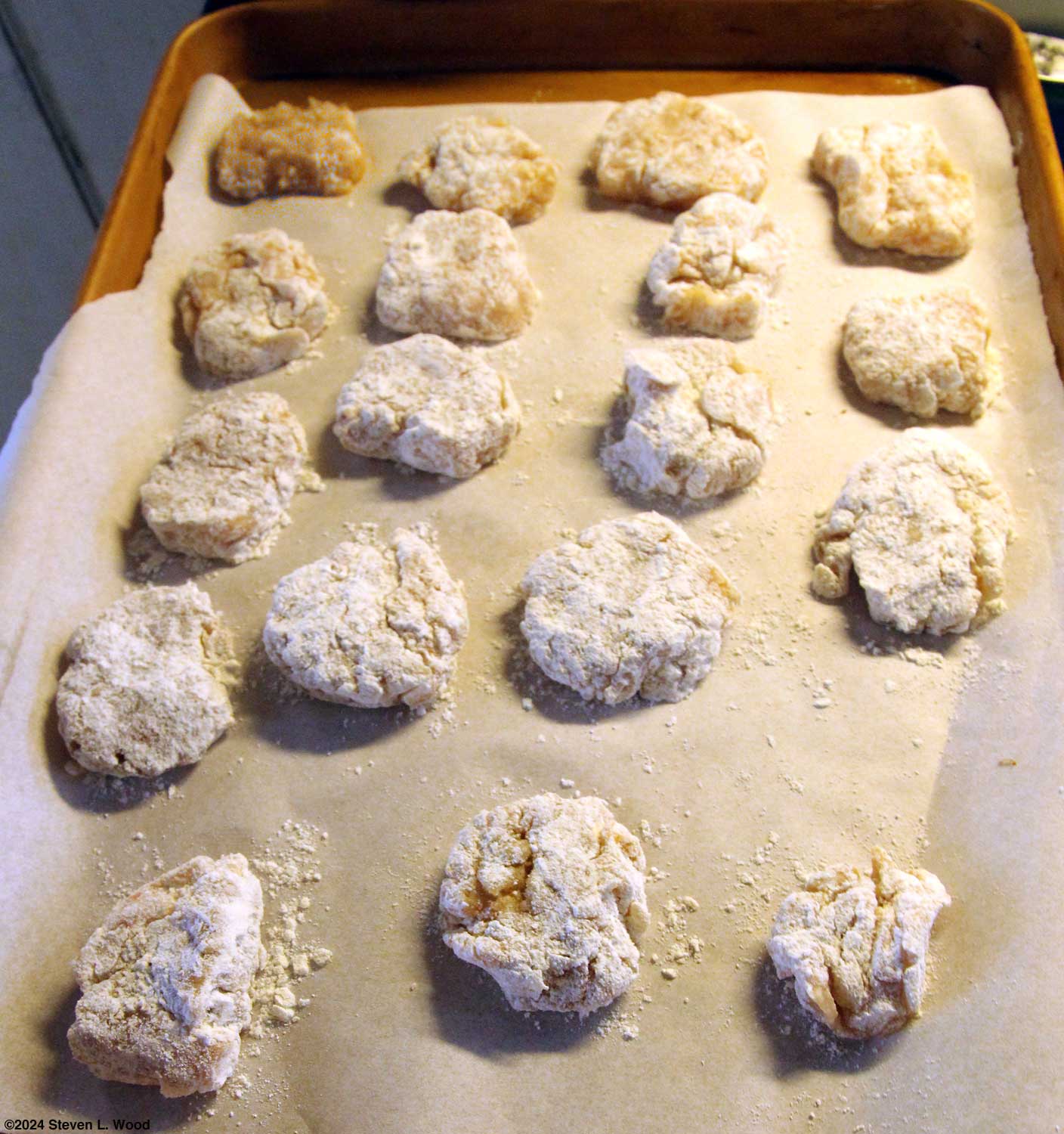
So I thought grinding the tenders, tracheas and all, might make things tender enough to use for chicken nuggets. Since I was using a really old meat grinder that binds up with really soft meats, I ground the tenders when they were still partially frozen. Most online recipes suggest grinding chicken breasts in a food processor. Ours is difficult to clean, so I went with the old fashioned meat grinder. Note that most of the online recipes I found from a search for "homemade chicken nuggets" listed some ingredients, but almost always without amounts! Since I've fried an awful lot of chicken breasts, I went with my instincts and past experience. The ground chicken got garlic powder, paprika, seasoned salt, and cornstarch worked into it. Then I formed small nugget sized pieces on a floured cutting board and coated them with flour. The nugget pieces, per an online recipe's instructions, then went into the freezer for a bit.
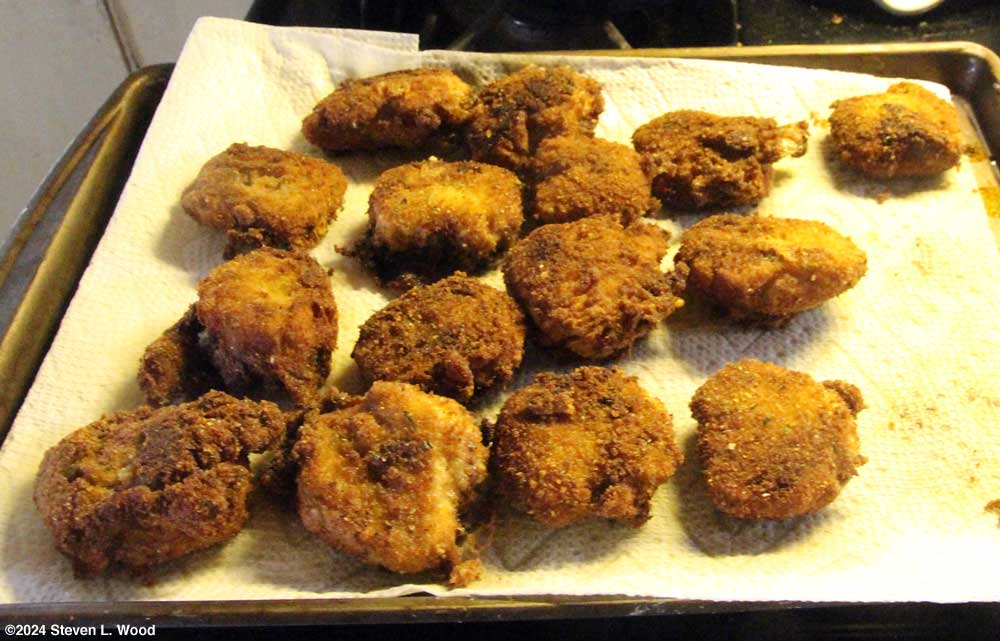
After freezing a bit, the nuggets went through an egg bath and were coated with Italian bread crumbs. Then they went into a pan of hot grease. Unlike my upbringing where there was always a can of bacon drippings on the stove, I keep a quart canning jar of mixed grease in our fridge to fry stuff in. The used grease is a bit nasty, but it does help brown stuff. Annie and I enjoyed the nuggets with the excess going into our freezer for snacks. They were delicious.
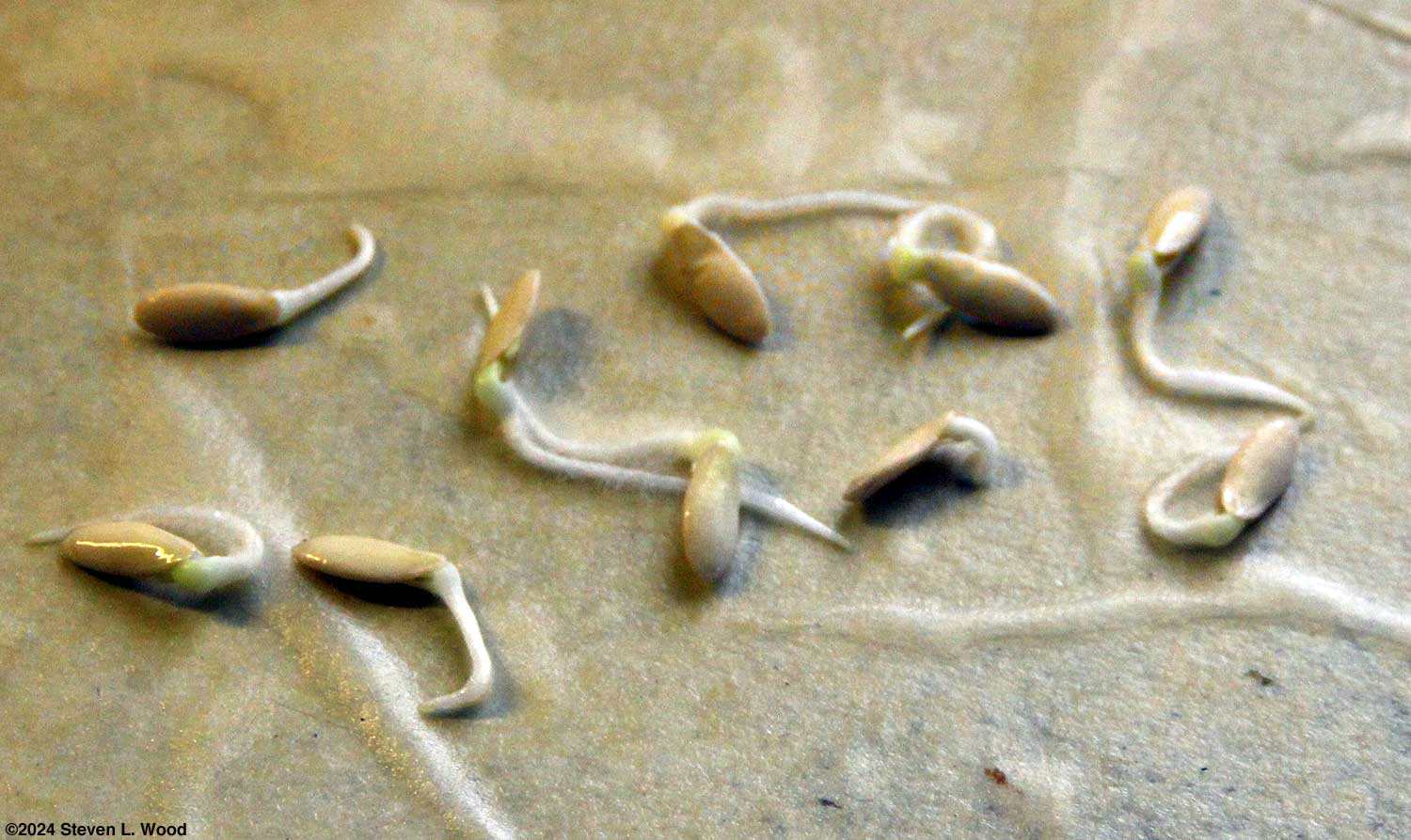
Monday, September 9, 2024 - Good News, Bad News The good news for today was that the Japanese Long Pickling cucumber seed I started germination testing several days ago germinated at 100%! That's not uncommon for the variety if one carefully floats off lighter seeds after fermenting the seed and cucumber goo. But with our JLP plants really looking bad, I was glad to get two ounces of good seed.
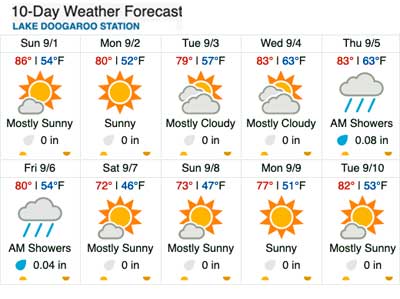
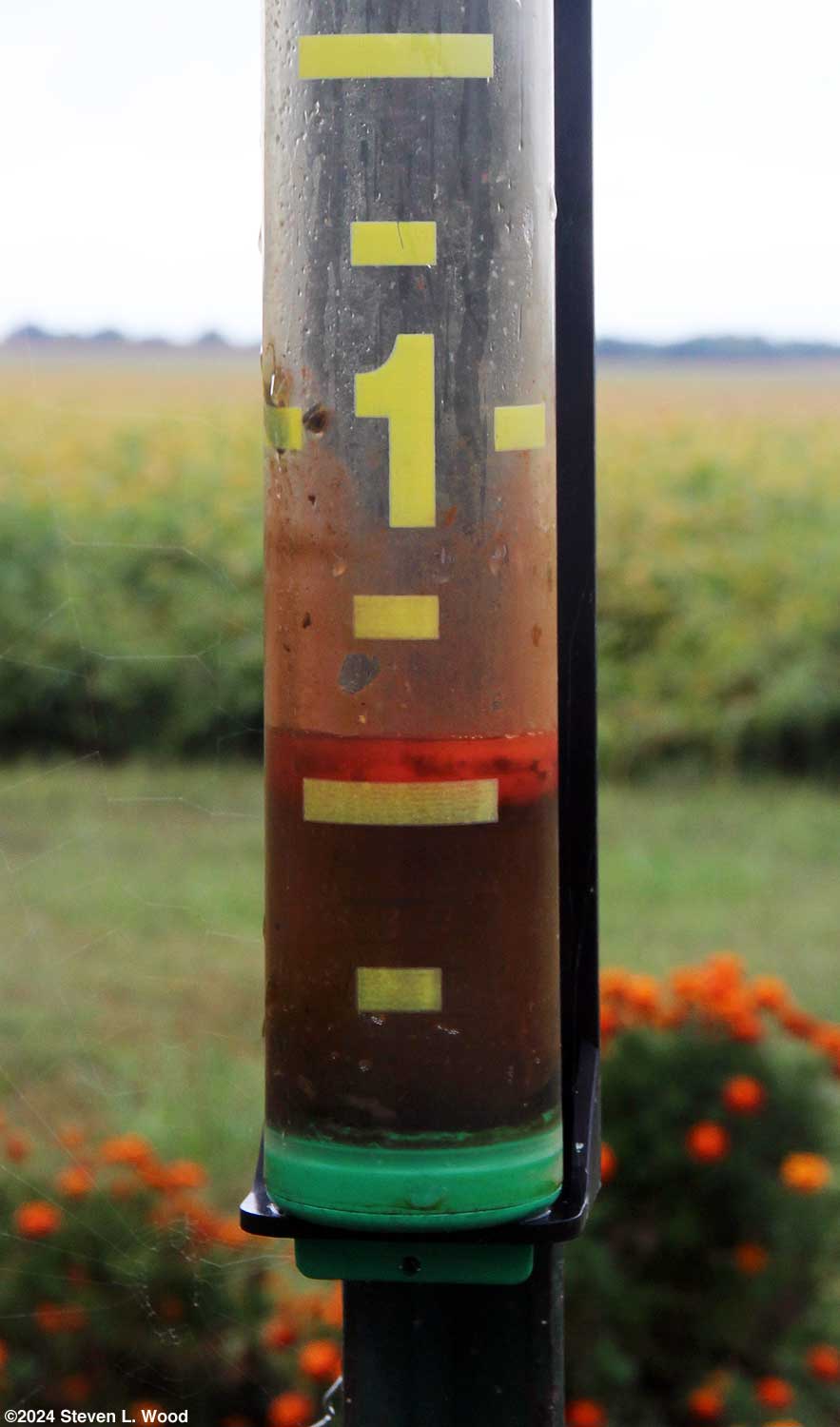
The Bad News I didn't get much done outside today as I spent a lot of time trying to light our LP gas water heater. The unit appears to be well and truly dead. Calling chain hardware stores in Terre Haute, I found that they no longer do their own installations. Checking with a local hardware store here in Sullivan, they were able to hook me up with an installer, although we'll be taking sponge baths or cold showers until the new hot water heater arrives and is installed. Somewhat Better News The bill for our air conditioning repair arrived in today's mail and wasn't excessive. Thanks, Cagle! And some significant rain is predicted for the end of the week or so. Everything here is really, really dry.
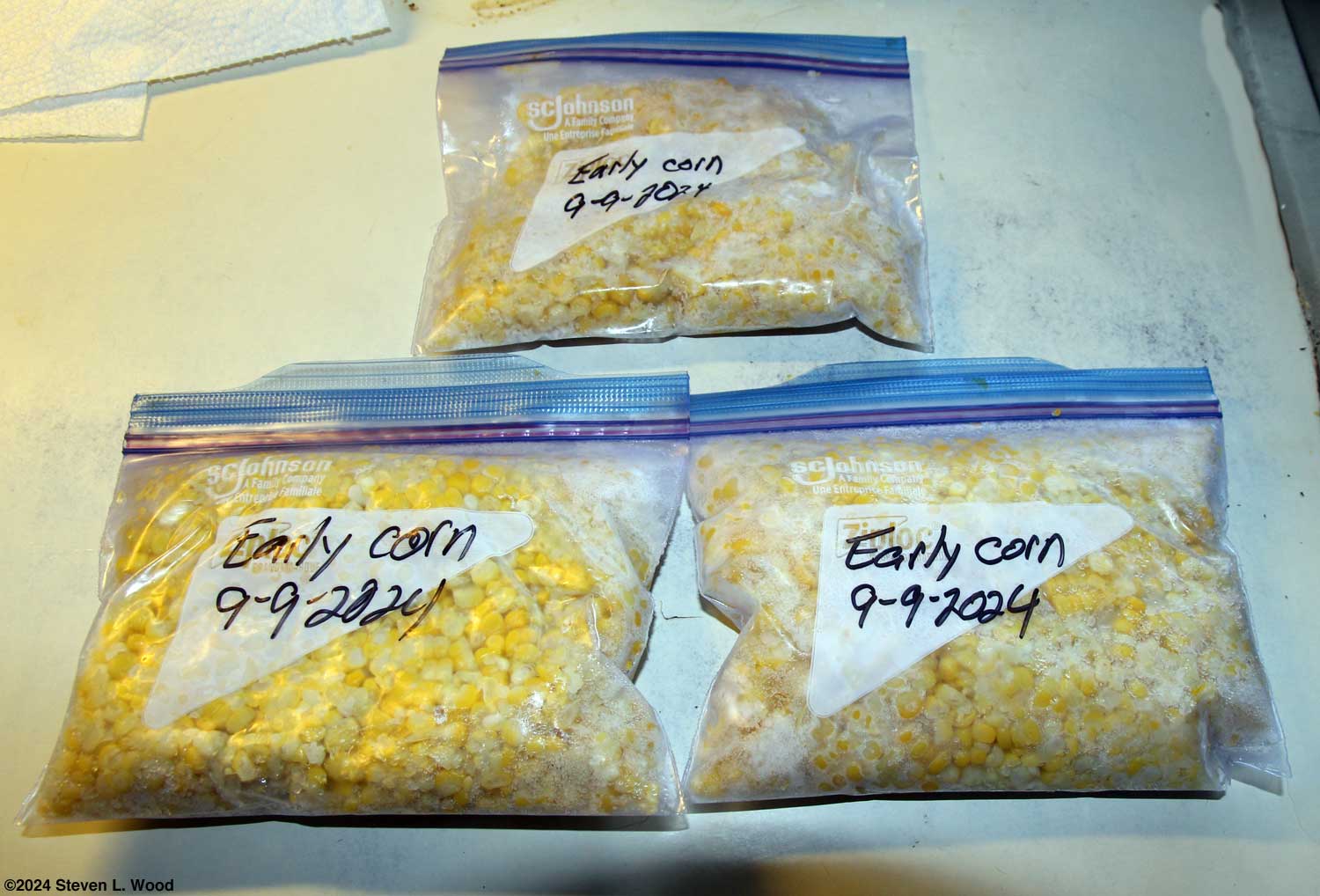
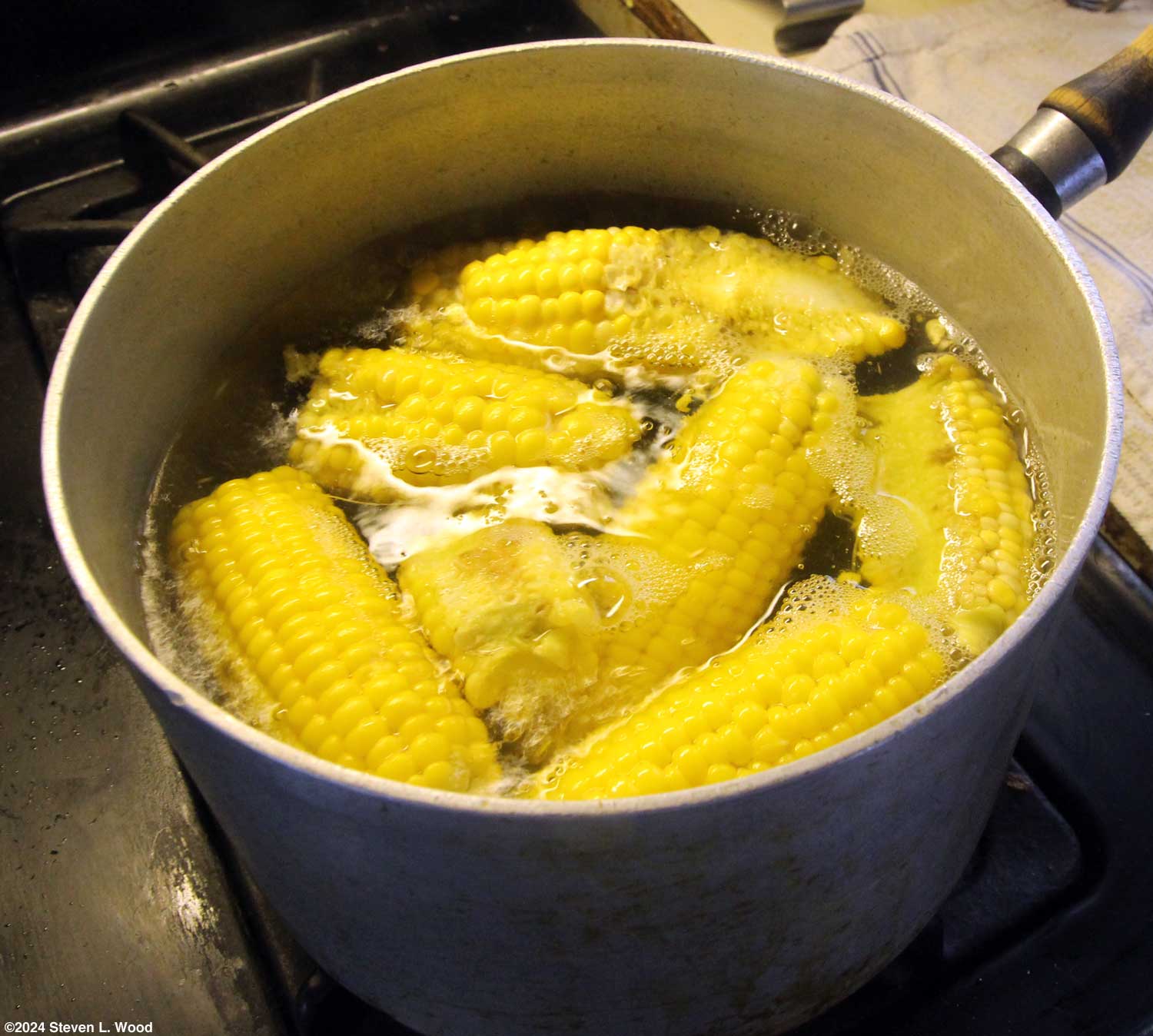
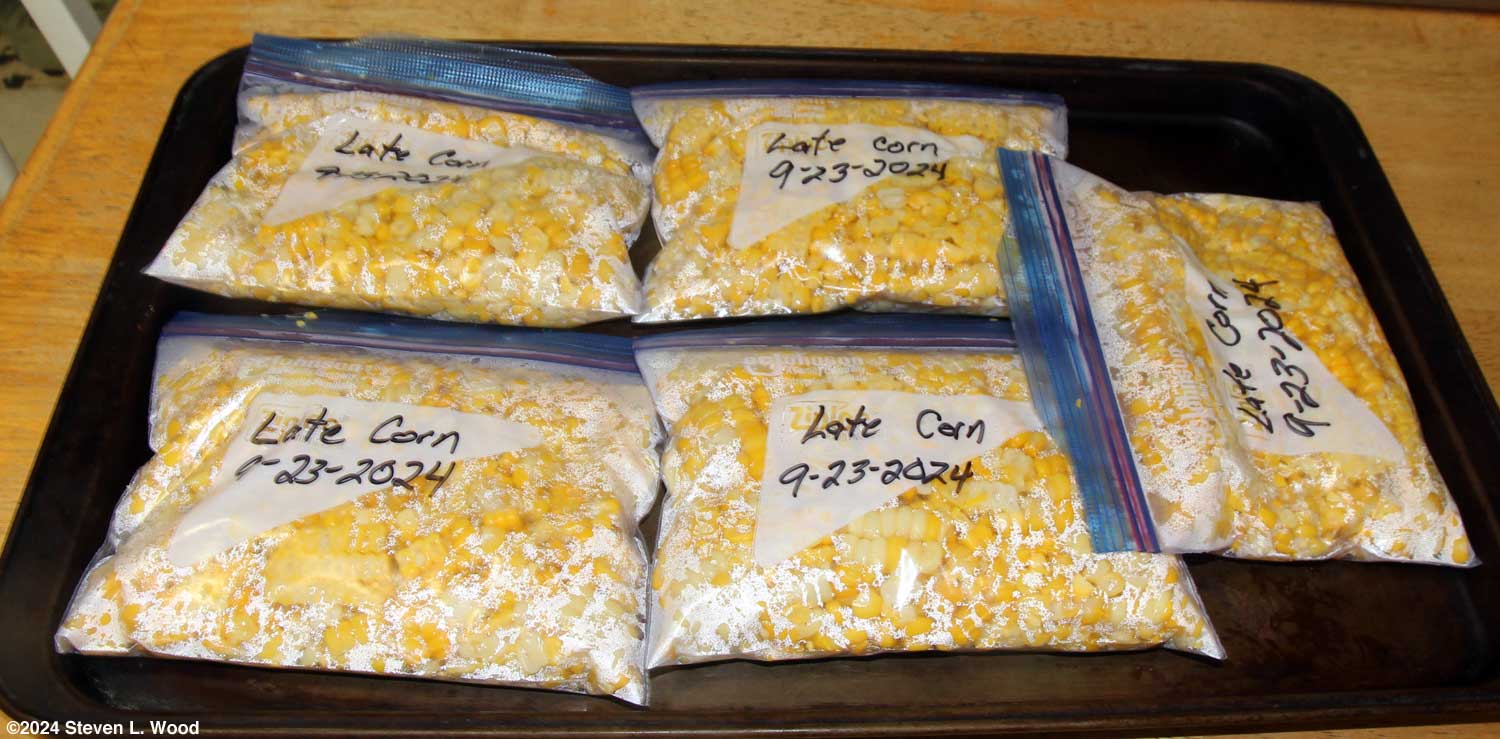
The sweet corn filled three pint Ziplock bags and went into our big freezer in the garage. One quart package of sweet corn is now on its way to my eldest step-daughter in Illinois. She absolutely loves our sweet corn.
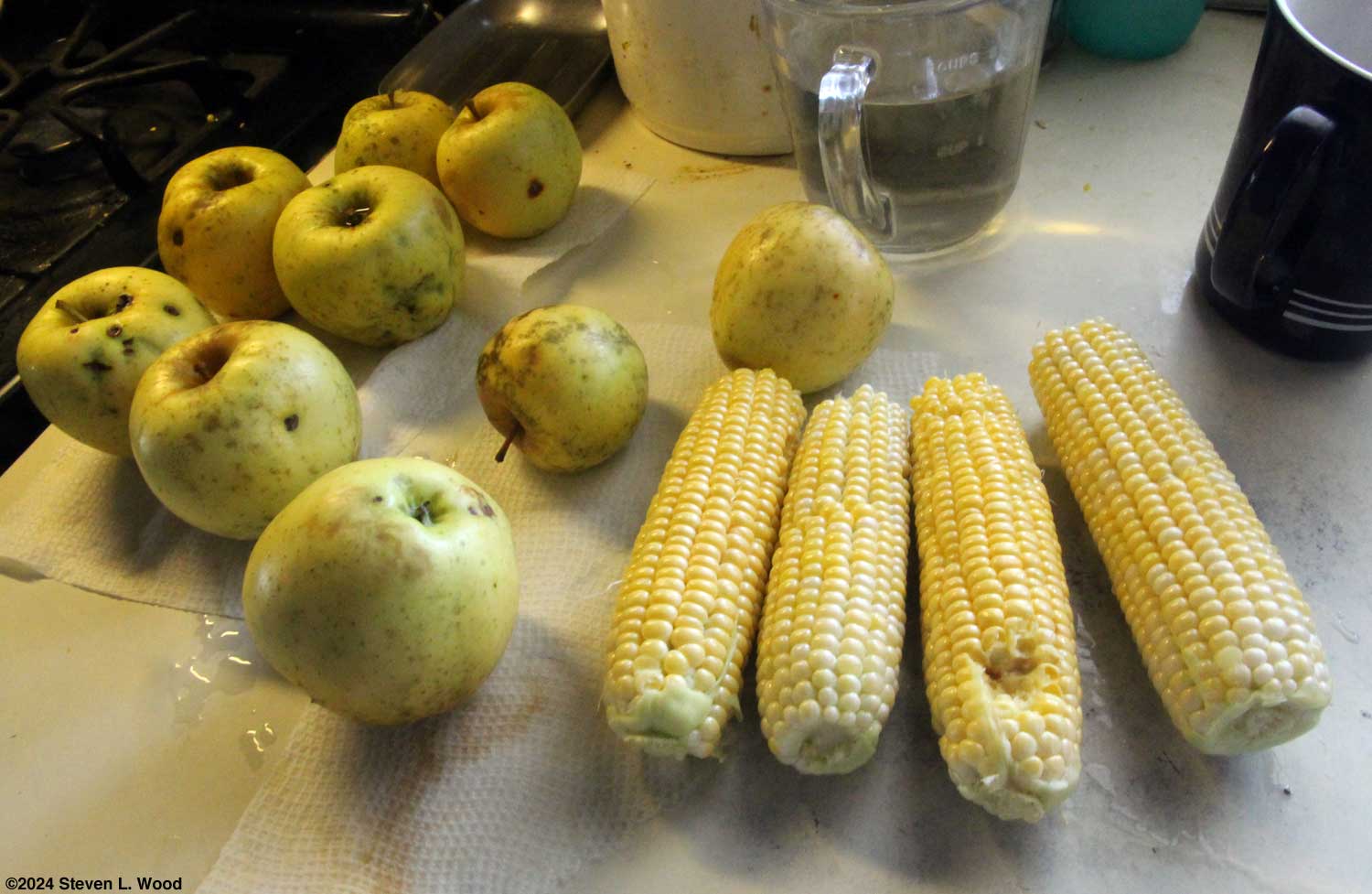
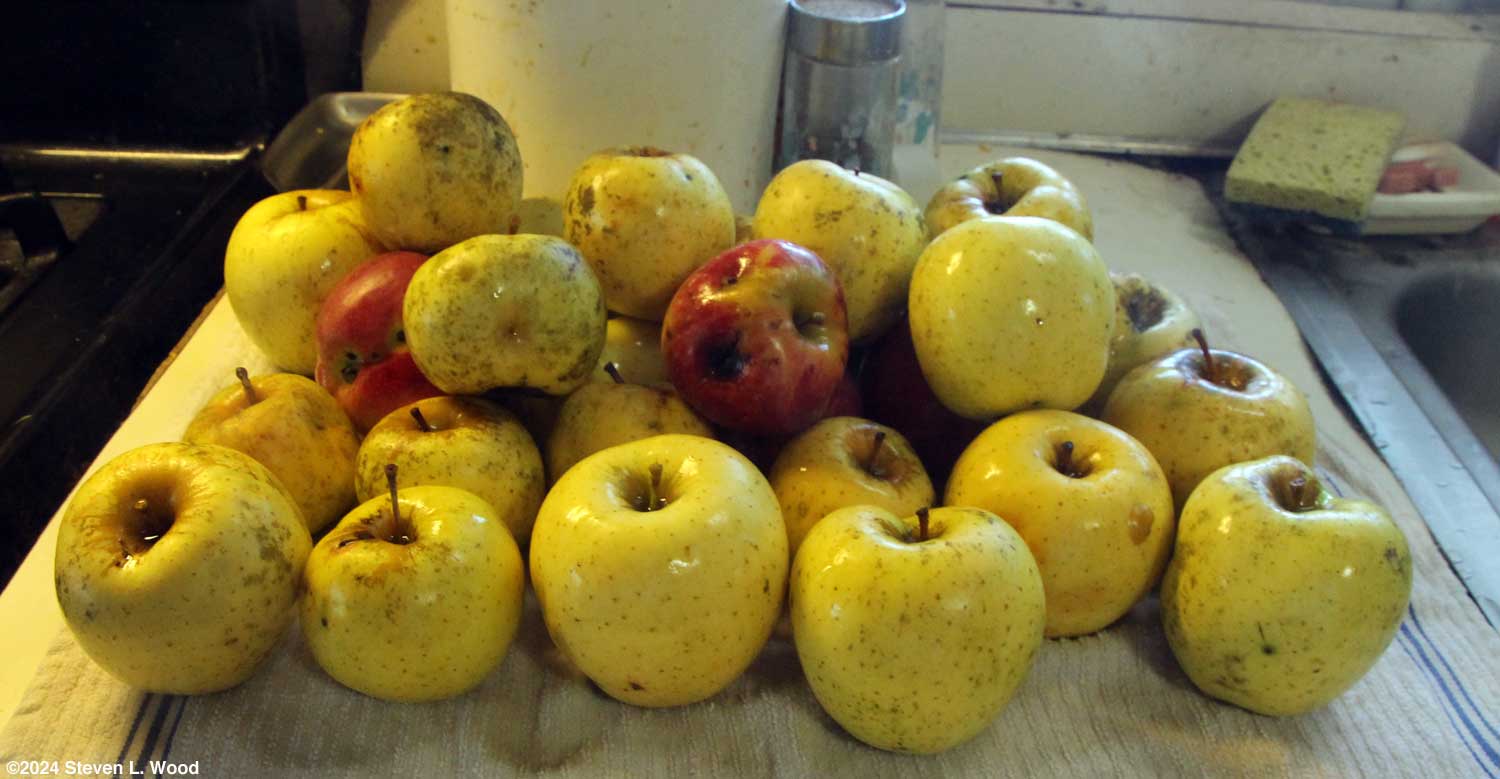
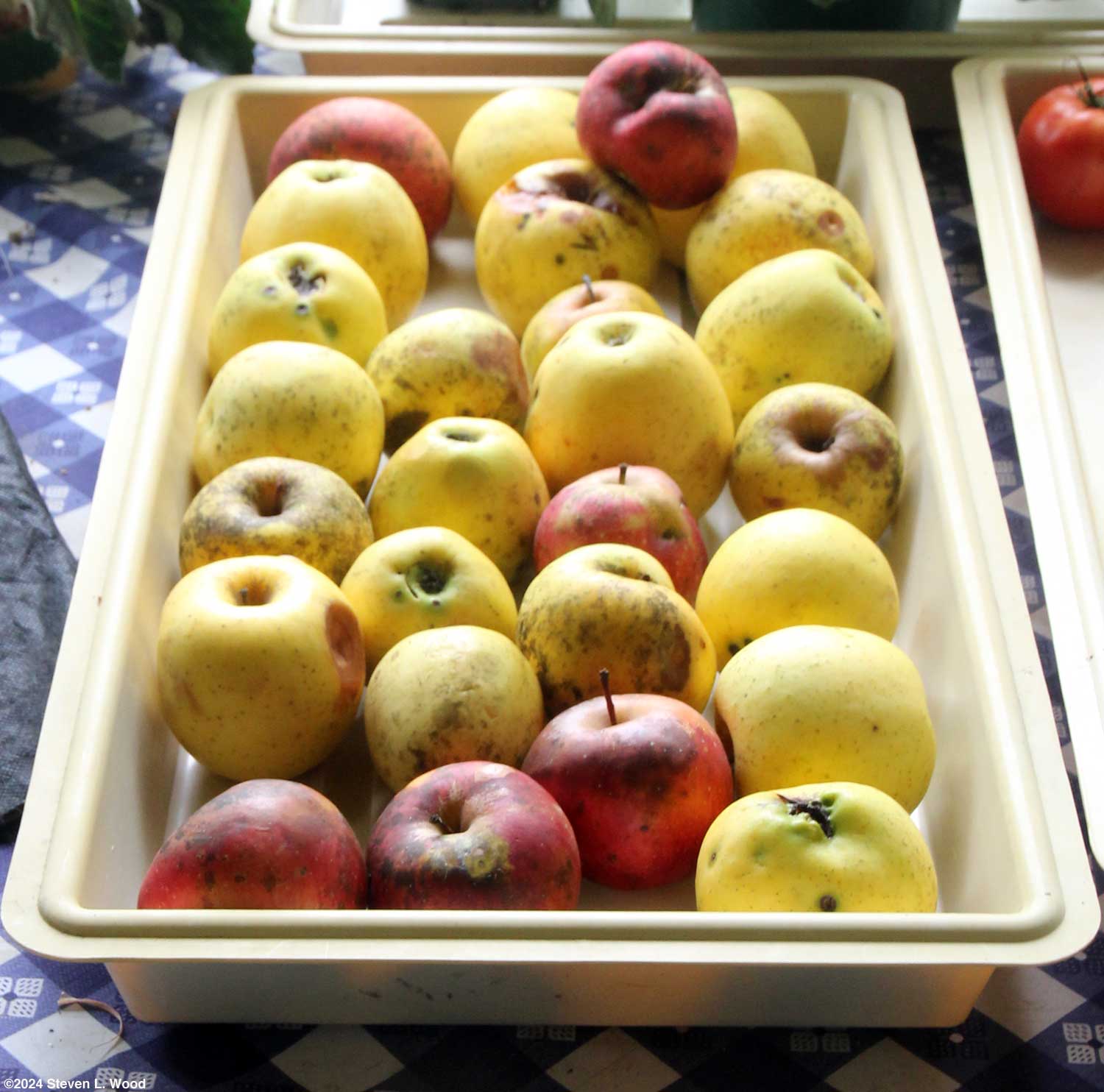
With temperatures in the mid to upper 80s today, I didn't do much outside. I did pick up groundfall apples on my way to dump corncobs and husks on the compost pile. I also gave in to my cravings and picked four ears of sweet corn. But so far, our sweet corn ears have been thin with short kernels. Hopefully, some rain predicted for Friday will fatten up our later ripening sweet corn varieties. Looking at our Yellow Delicious apple tree today, I could see that it is close to time to pick apples. That will soon make it applesauce and apple pie time.
Wednesday, September 11, 2024 - And Just Like That... No, I'm not referring to the TV series. In the last week, I've had to fill our hummingbird feeders over and over each day. And just like that, the swarms of birds have pretty much disappeared today. A week of morning lows in the 40s and 50s have induced the small birds to begin their amazing migration south to Mexico and Central America. Last year, we began to see lessening birds at our feeders in mid to late August. Our warm days here apparently induced the birds to stay a bit longer this year.
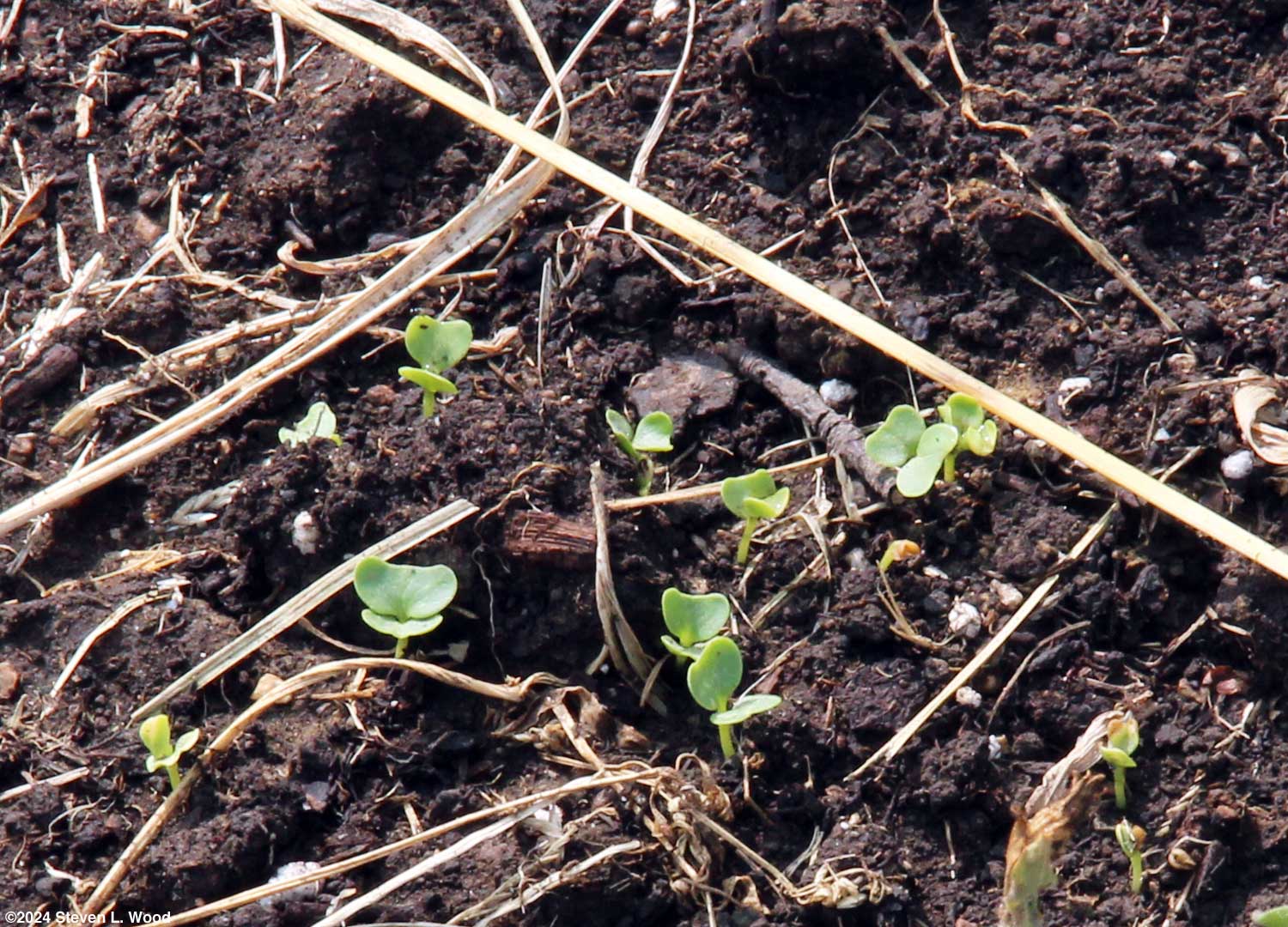
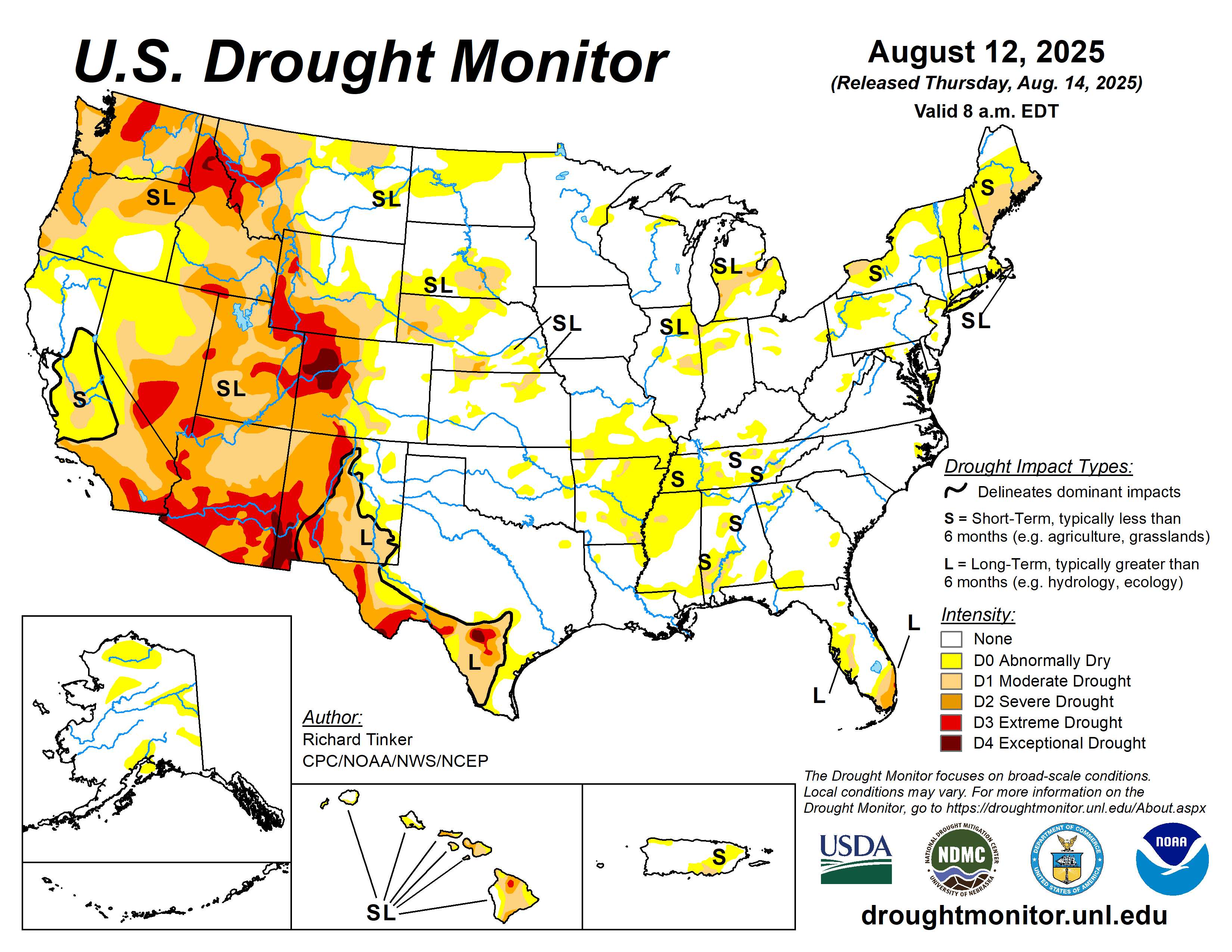
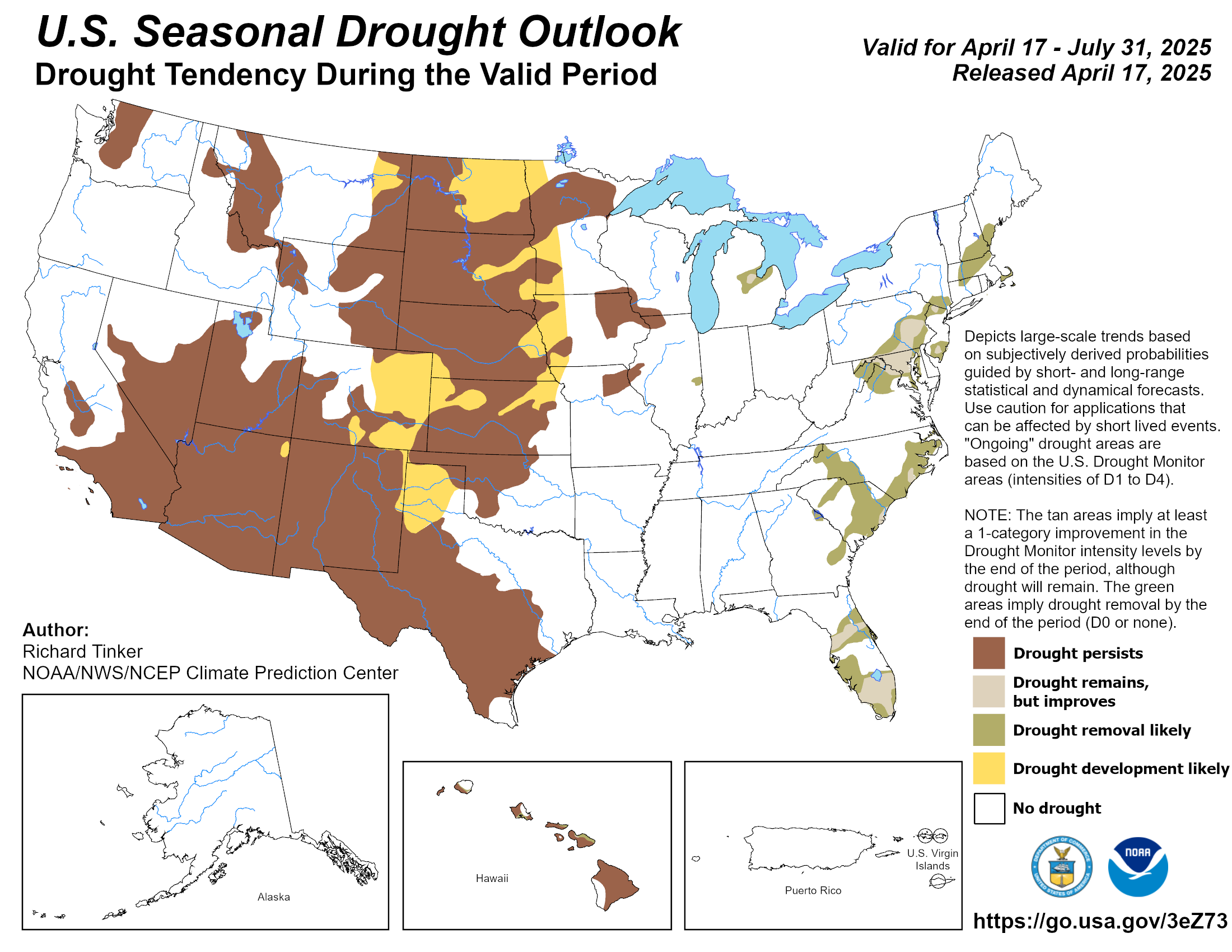
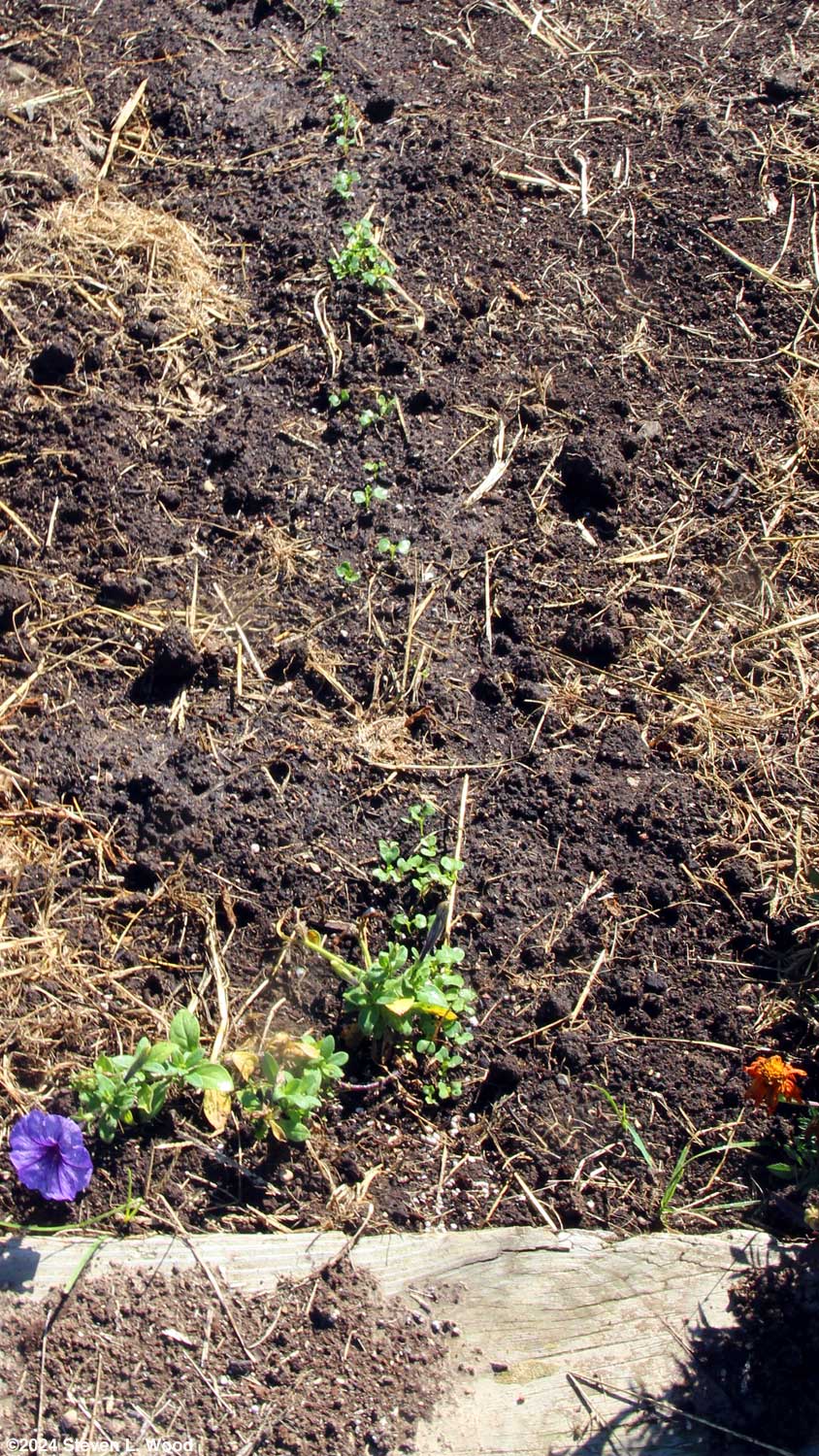
The light rain this morning relieved me of my daily morning chore of watering our succession plantings seeded on September 1 and 2. So far, I’ve only seen a few stray kale plants that have come up. Today's rain is the remains of Hurricane/Tropical Storm Francine. It flooded major areas in Louisiana and a bit north, but stalled out over Missouri. Below is the full Drought Monitor release from yesterday. Do note that the way I set up the graphic, it will update with each succeeding Thursday's release.
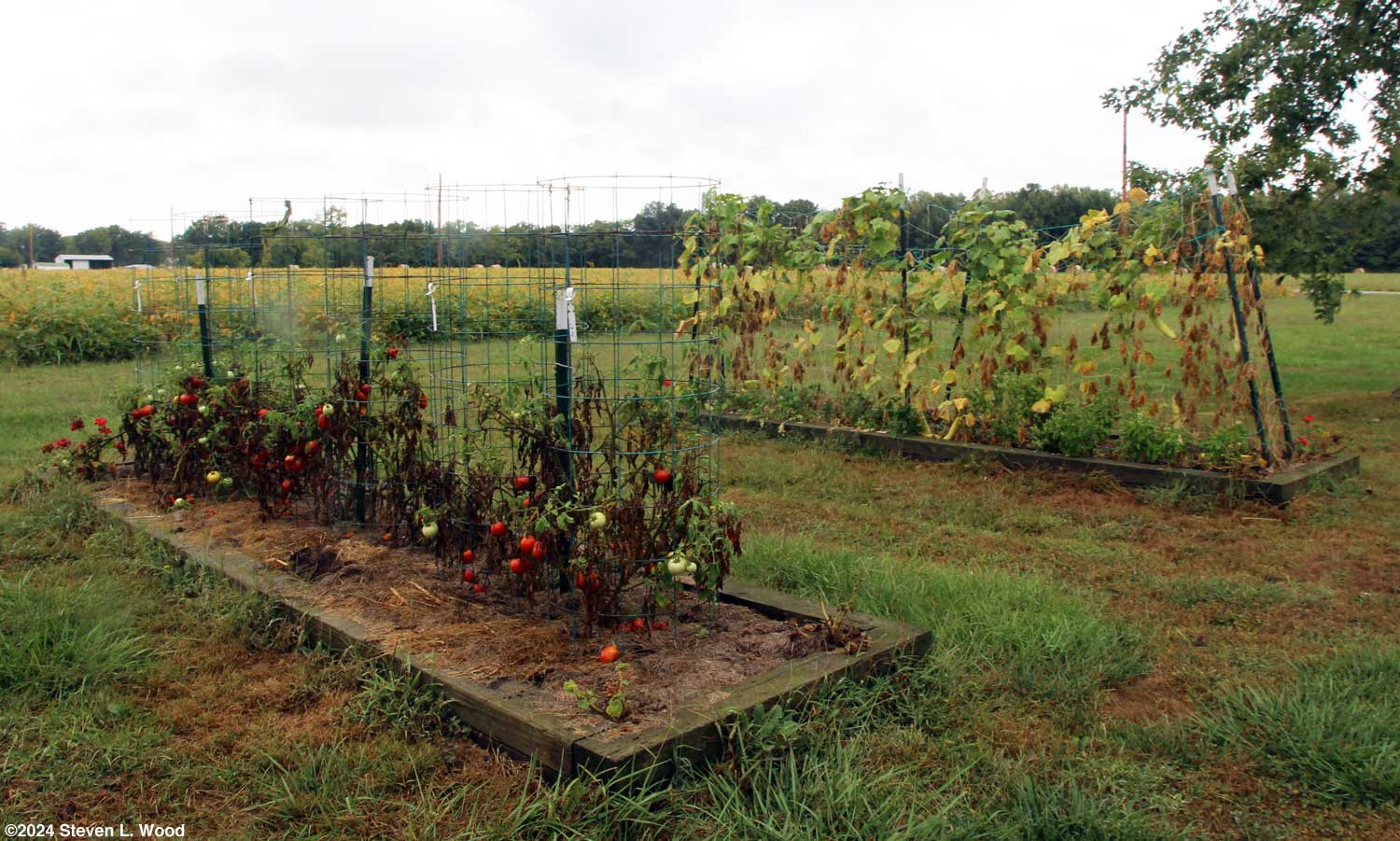
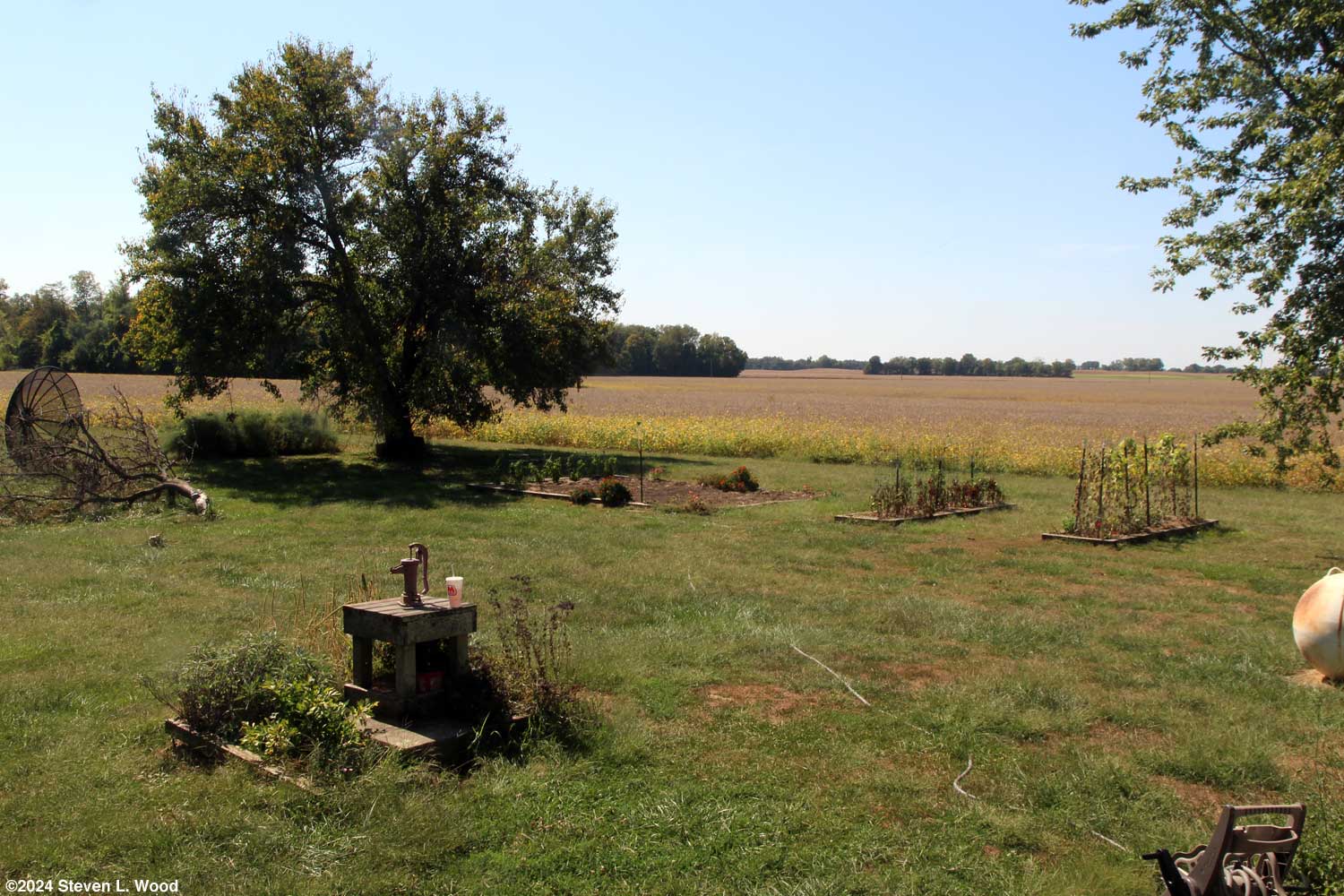
Mostly due to the drought, our Earlirouge tomato and Japanese Long Pickling cucumber plants are about dead. I'll probably take them out in the next week or so if they don't remarkably improve. Likewise, my succession plantings in our main raised bed haven't germinated (other than the few kale plants). If this rain doesn't pop some things up, I'll till the bed other than the Earliest Red Sweet pepper plants at the very end of the bed.
Regular readers of this site know that I'm big on storing purchased and saved garden seed in the freezer. Doing so, for me at least, extends the seeds' useful life longer than the often recommended "cool, dry, dark location." But... the Seed Savers Exchange has a good guide for saving seed if you're not into freezing: How to Store Seeds.
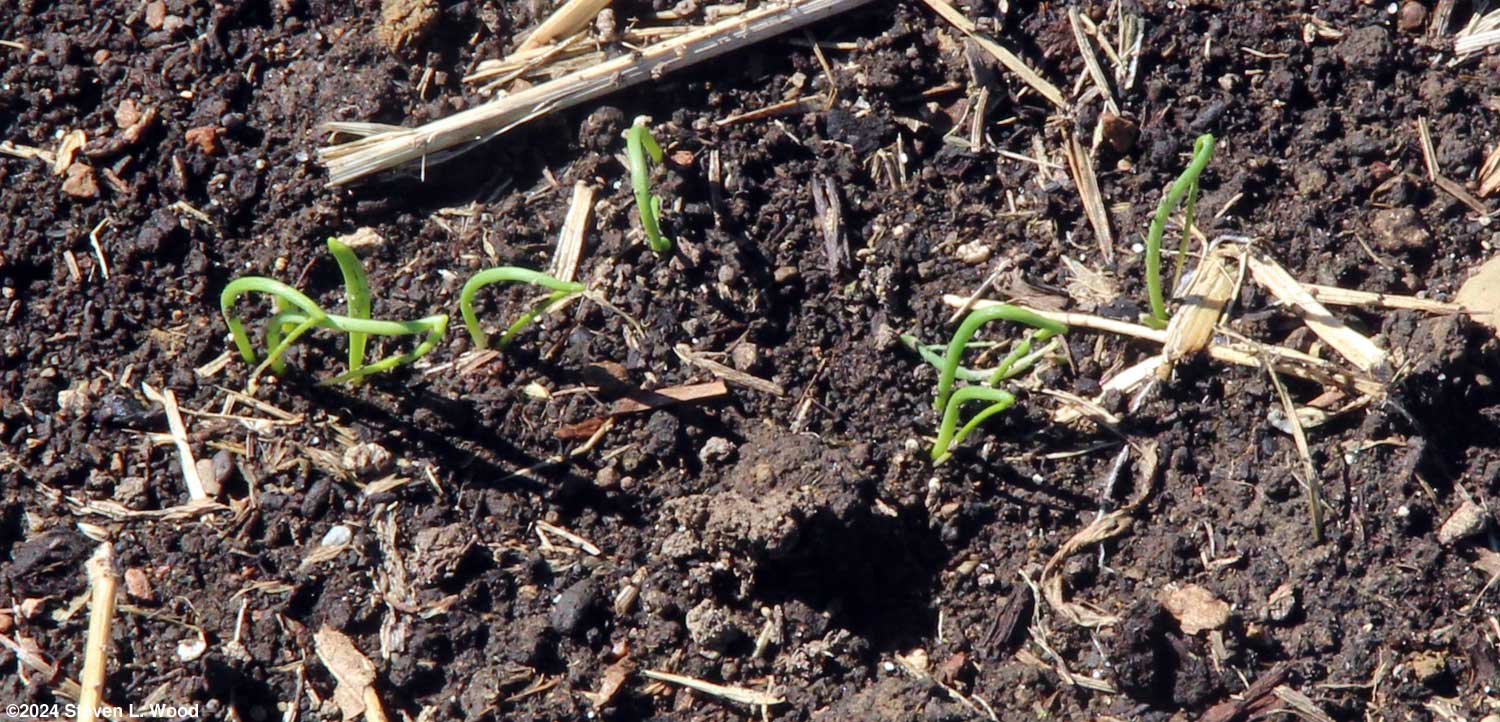
Our Vates kale that had some scattered plants up has filled in one half of a row. The other half row plus another full row and our carrots and spinach aren't showing any emergence. We have a month until our first frost date. That's not enough time to mature most of what I've planted. But I'm hoping for a late fall and will employ some floating row covers to try and nurse the crops along...if they emerge. I also got out last evening and picked some full sized Moira tomatoes. While they'd probably be delicious on a BLT or salad, I'm going to use them for seed saving. Our seed saving so far hasn't been all that great. Our first batch of Earlirouge tomato seed germinated at only 20%. I threw out the second batch that had no germination! Our only big seed saving success has been with our Japanese Long Pickling cucumbers. They germinated at 100%. That's a very good thing, as the drought has pretty well taken the cucumber vines.
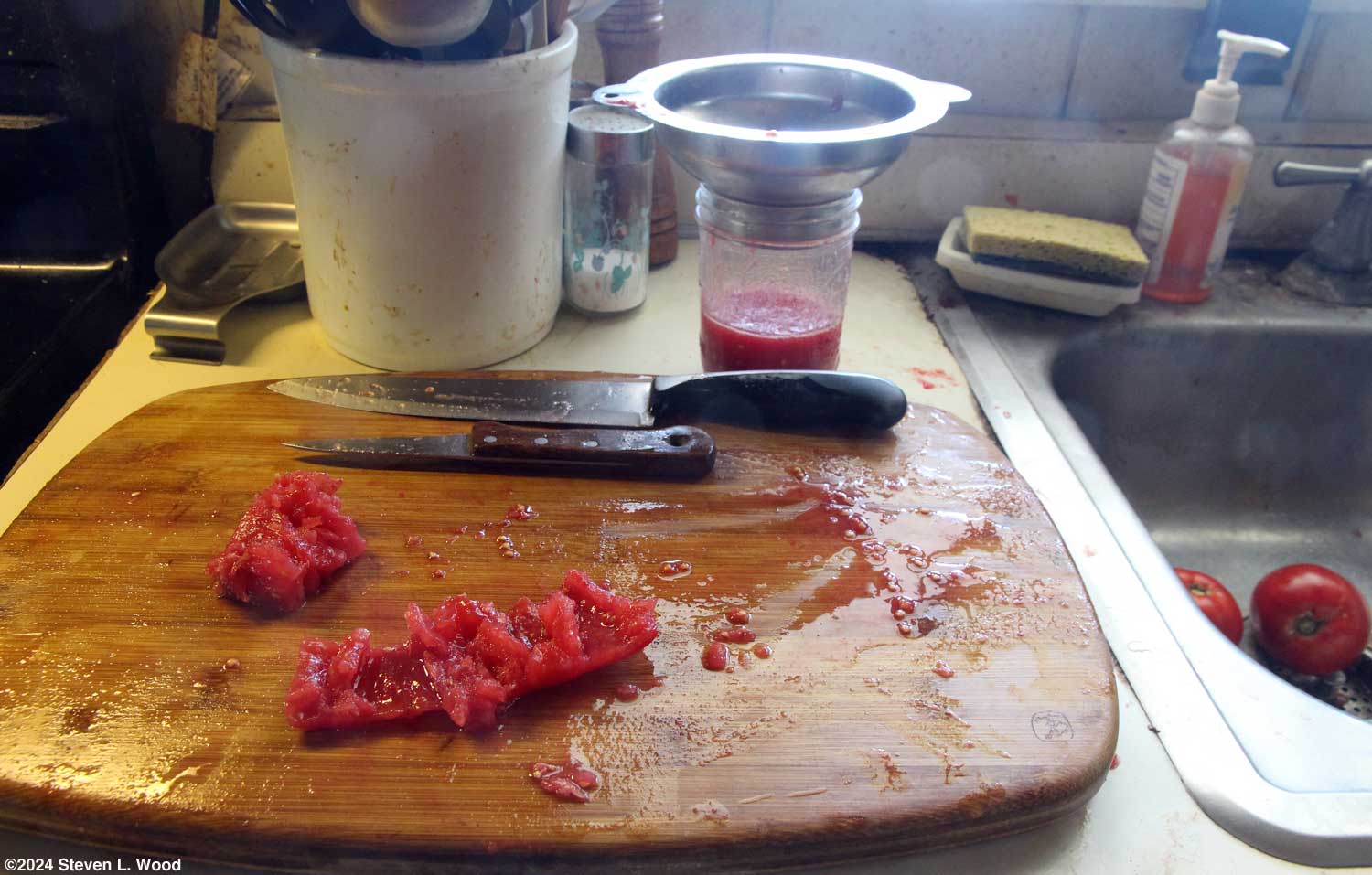
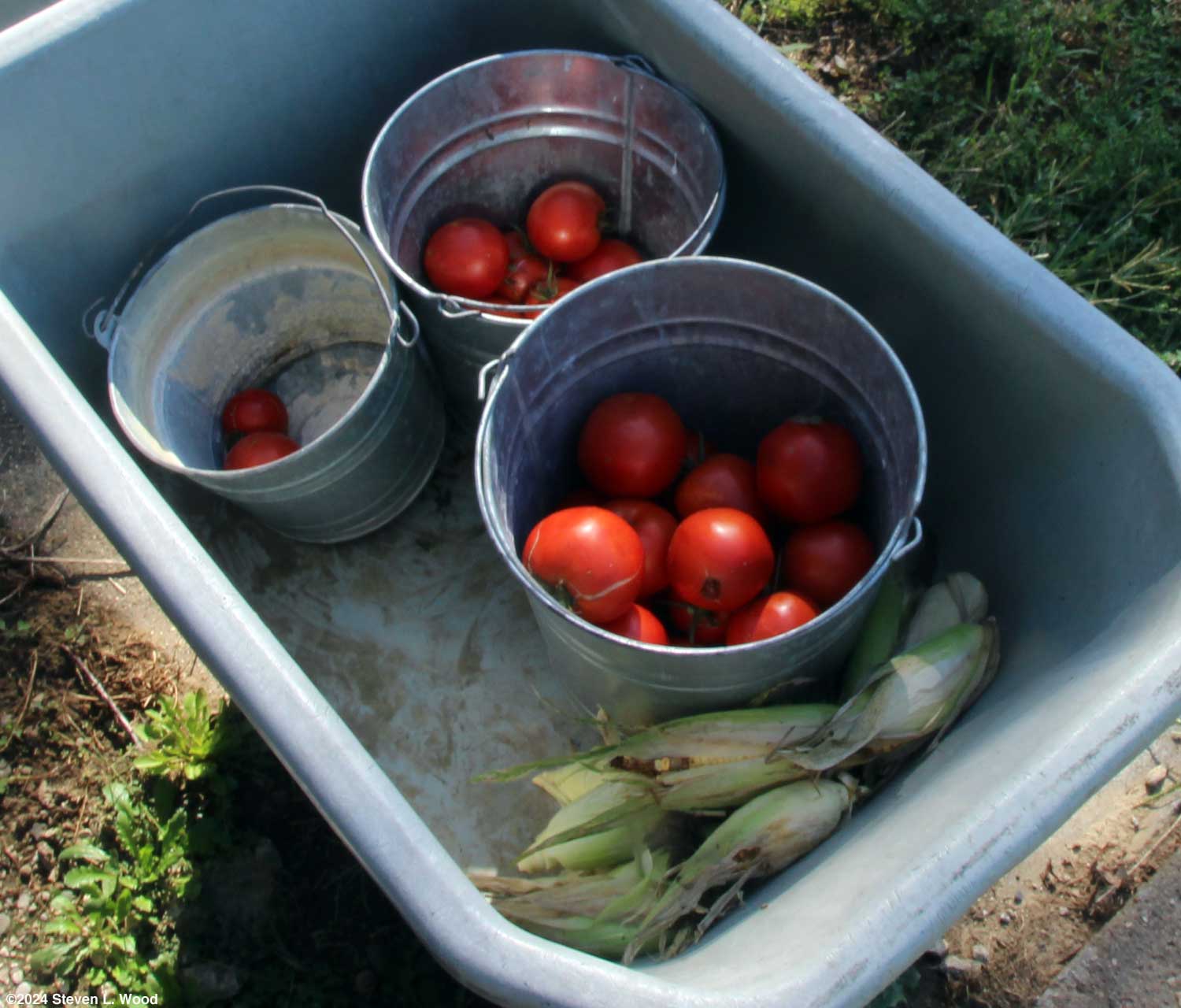
We have just ten tomato plants along the back edge of our East Garden plot. Two of those plants got overgrown with weeds and aren’t producing. The remaining eight plants overwhelmed me with fruit this morning. I sorted out the best of the tomatoes for seed saving, reserving the rest for our local food bank. And while I picked Moira, Quinte, and Earlirouge tomatoes, I only saved seed from the Moiras and Quintes. The Earlirouges were disappointingly small, so I'll wait a bit and hope the plants mature some larger fruit in a week or so. Saving seed from the tomatoes took a lot longer than I thought it would. By the time I was done, it was too hot out to do any more outdoor gardening. I tell how I save the seed in our how-to, Saving Tomato Seed. It's pretty much a process of cutting off the top and bottom of each tomato and squeezing it to push the juice and seeds out into a canning jar. I do then cut open the tomato to harvest seeds that didn't push out.
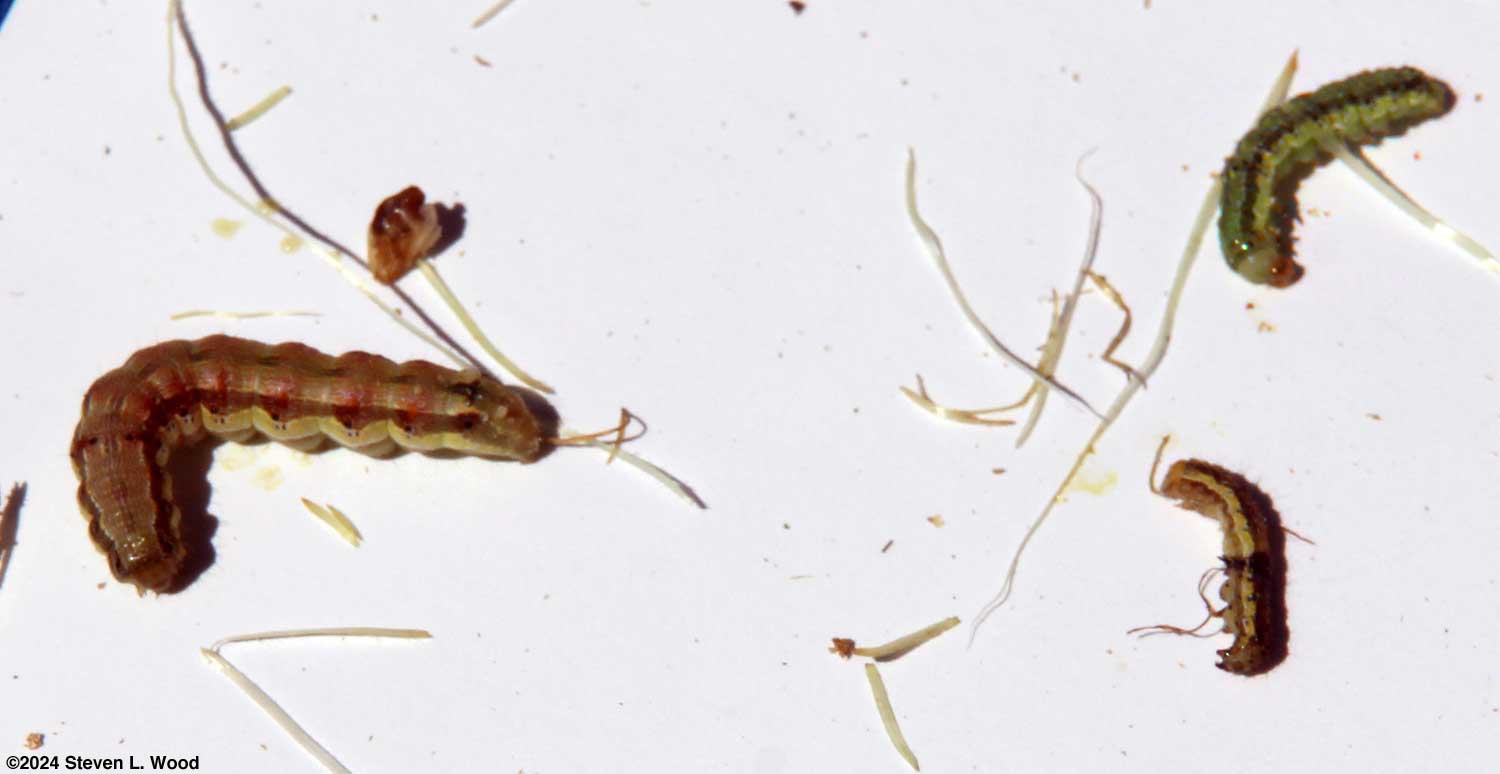
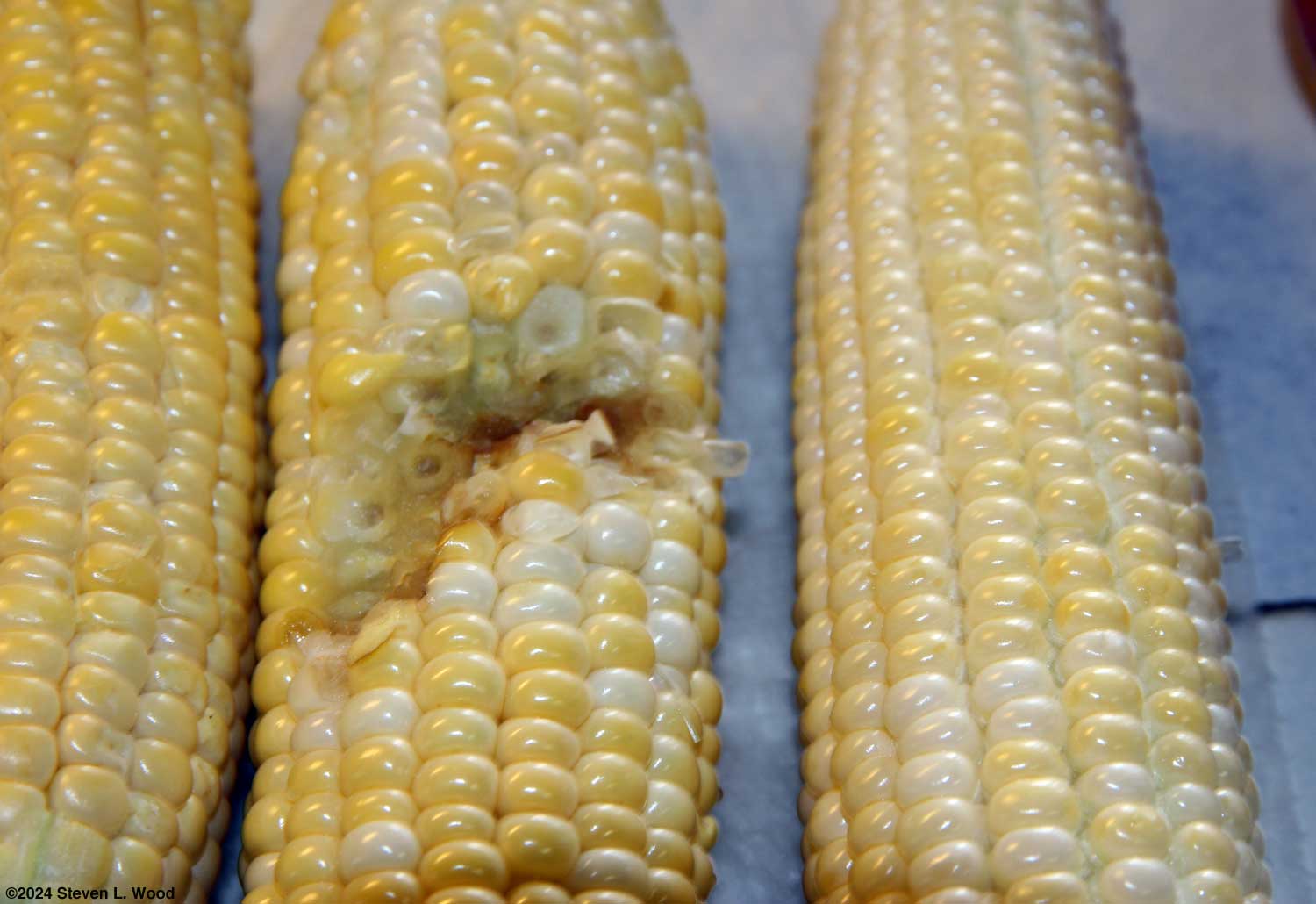
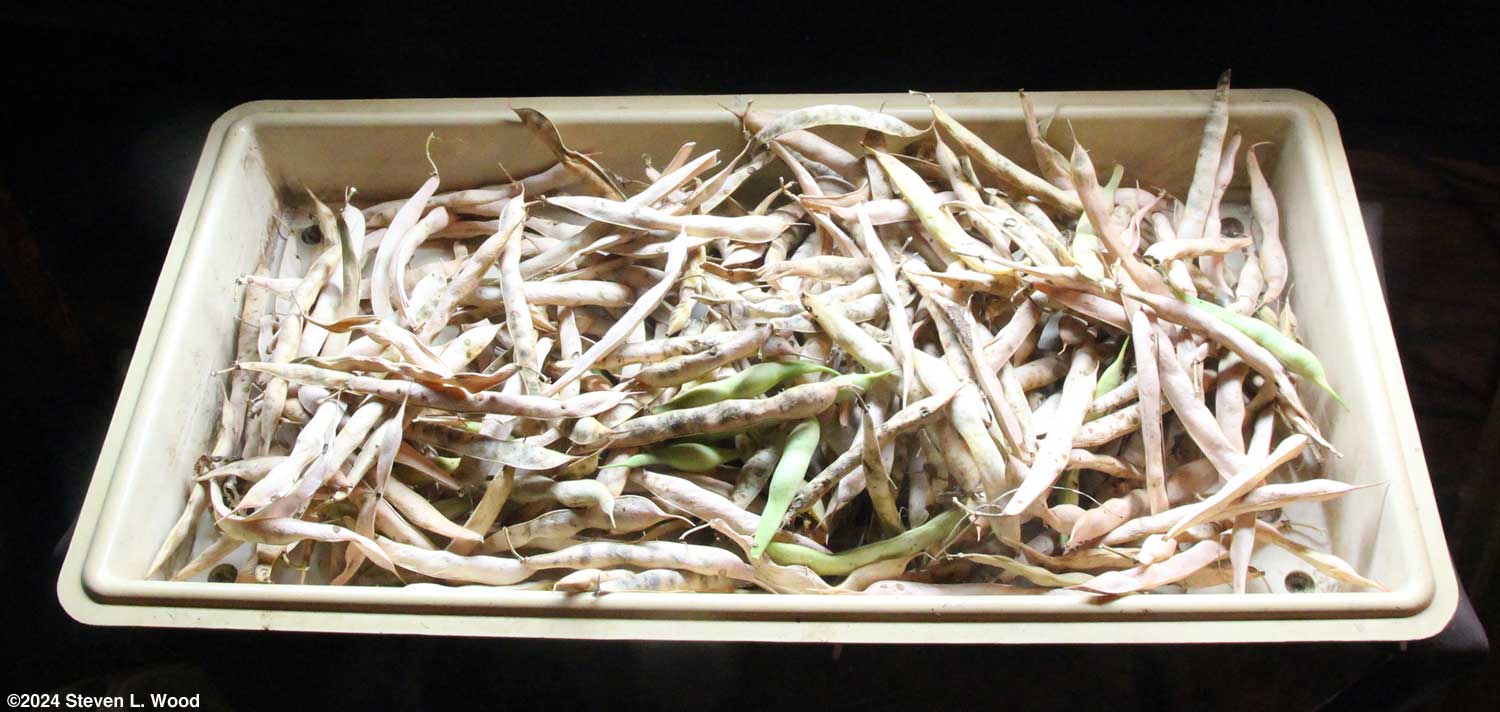
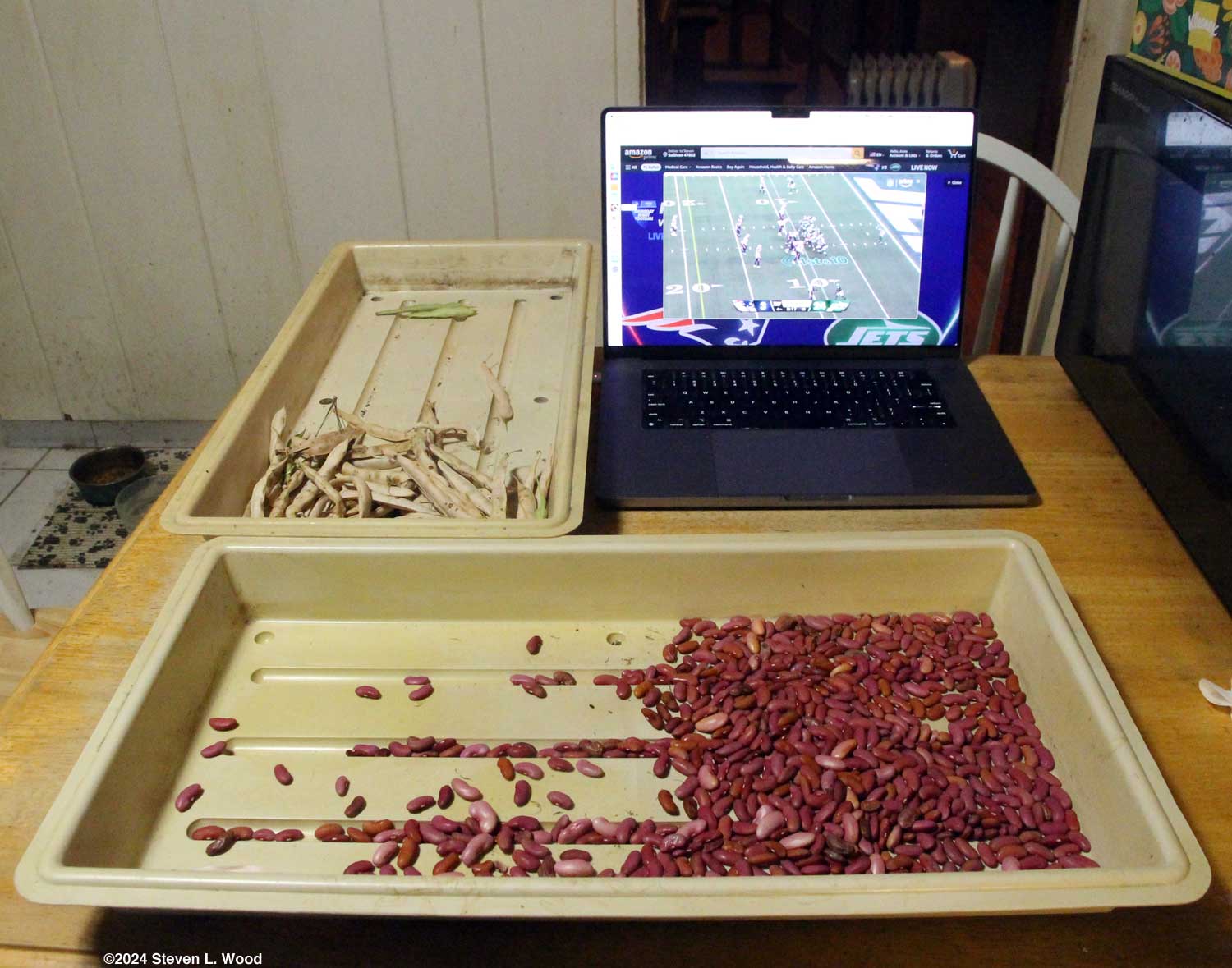
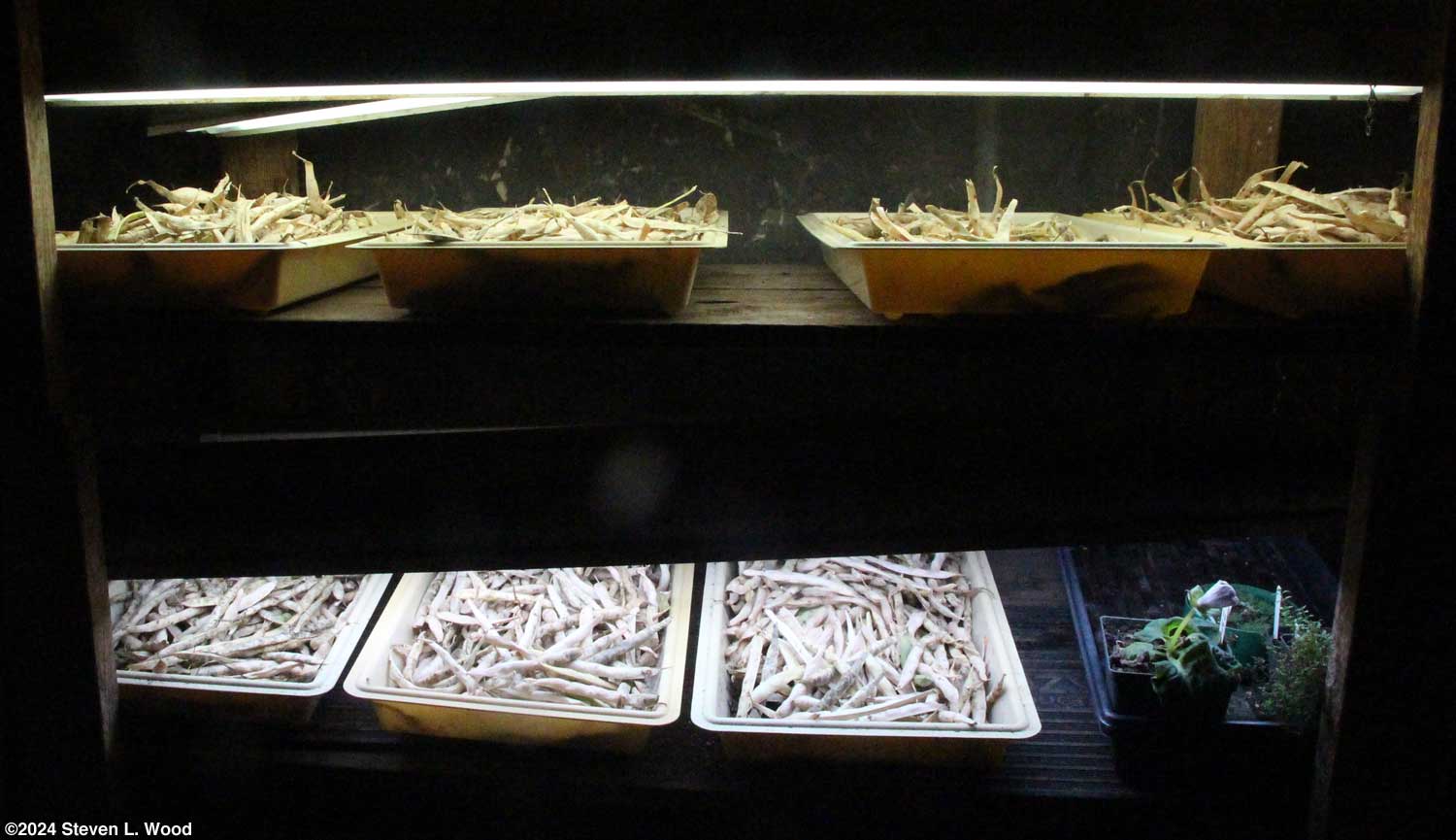
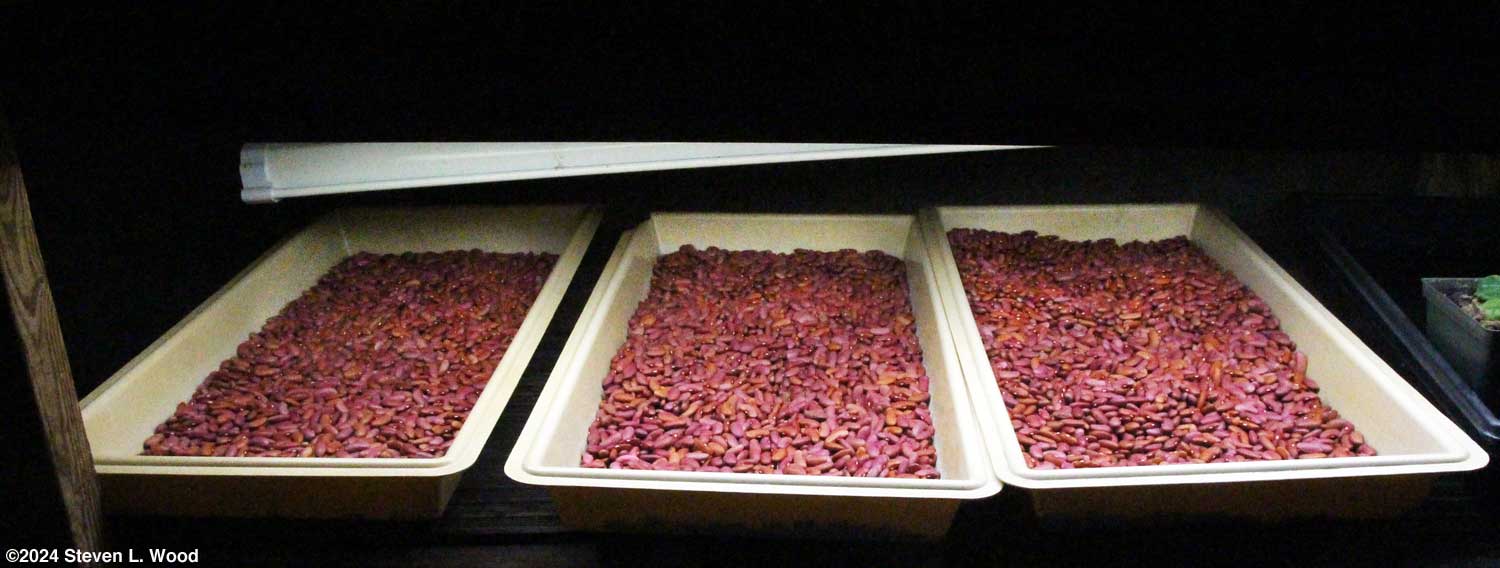
The bean plants, some alive and some dead, were filled with bean pods. With our dry summer, some of the pods weren't filled out very well. A few others were still very green. And a couple of the tan pods popped open when I picked them. What I picked pretty well filled a couple of Perma-nest trays for drying (in the basement). It appears that we should have plenty of kidney beans for canning, refried beans, kale soup, and planting next season. While out picking beans, I also picked a few ears of sweet corn. The ears were ratty with bug damage, but made enough for a nice mess of cut corn for lunch. I'm wondering if I may need to leave the beans alone and switch to picking and freezing sweet corn. I'm still working at picking and shelling our kidney beans.
I started shelling the beans last night as I watched Thursday night football. I shelled another bunch this morning.
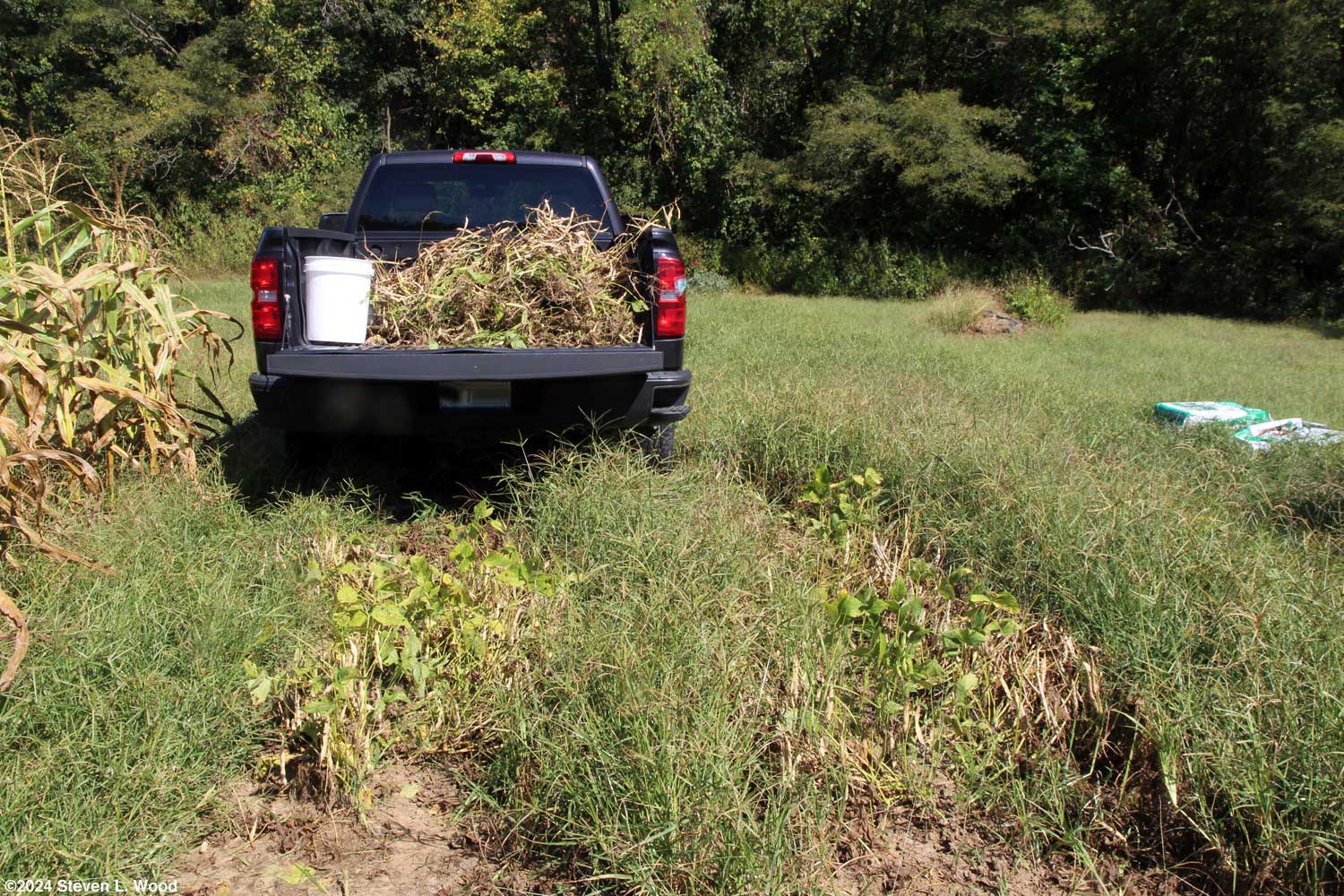
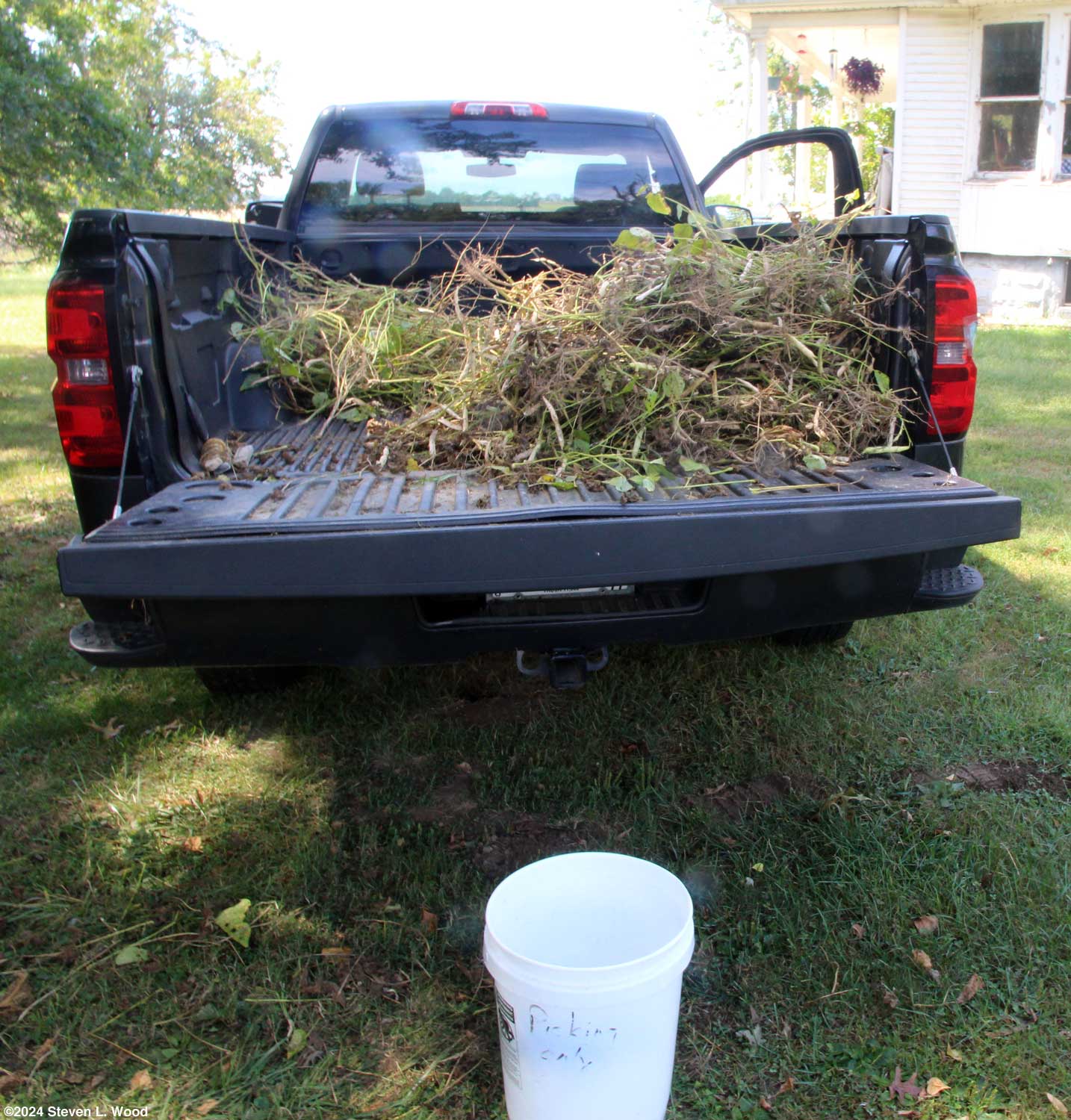
A bit disgusted at the pace of my harvesting of our two rows of kidney beans, I took our truck to the East Garden and picked all the bean plants, throwing them in the bed of the truck. With an eventual high temperature of 96°F today, I parked the truck in the shade to work removing the bean pods from the plants. I ended up filling seven trays like the one pictured on Thursday with kidney bean pods. Some of the bean pods were a bit wet, so I put the trays on our back porch and steps to let them dry out a bit. When clouds moved in, the trays went to shelves in our basement plant room. I'll gradually shell the pods as time permits. It's time to move on to harvesting sweet corn and apples.
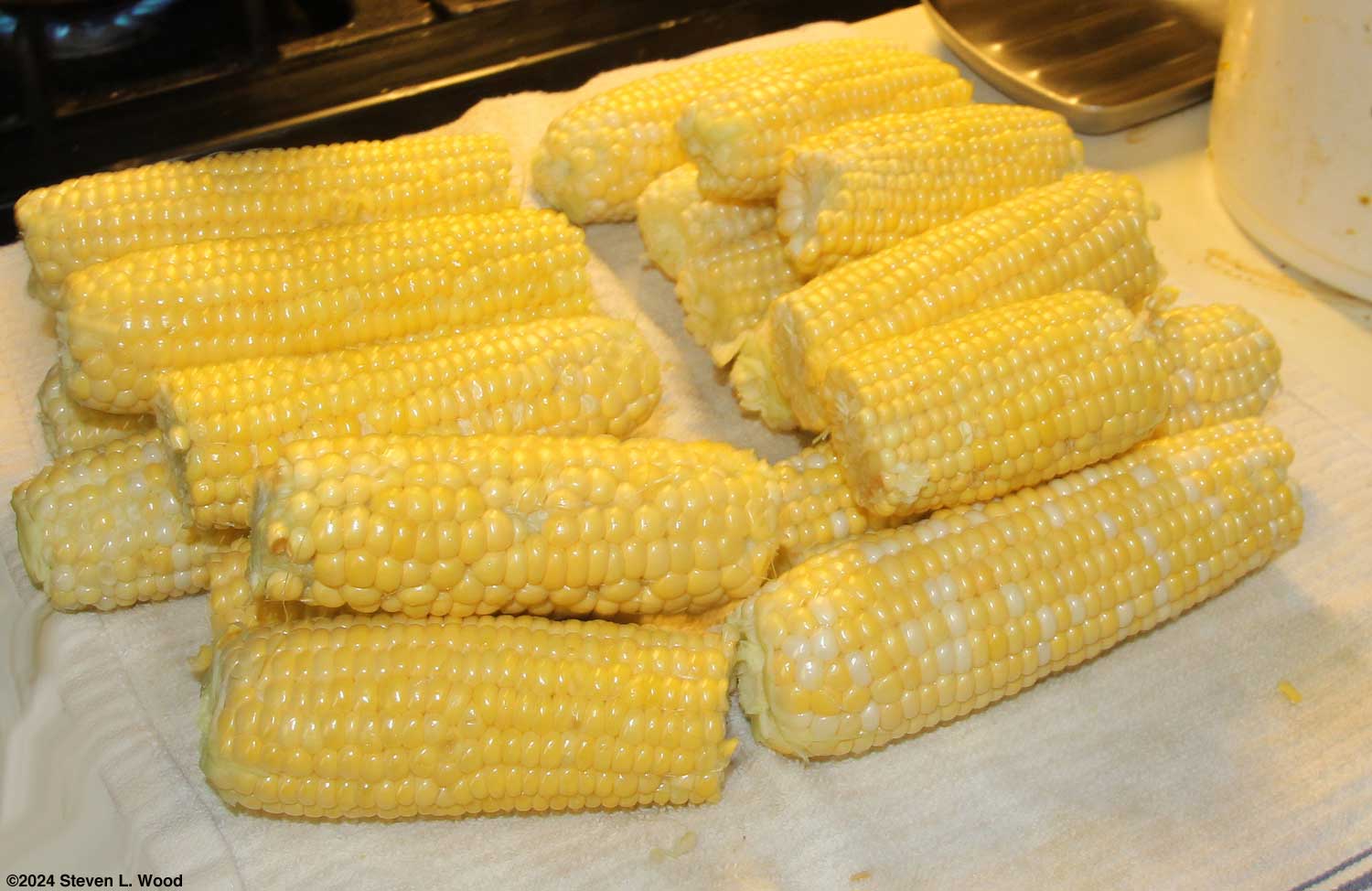
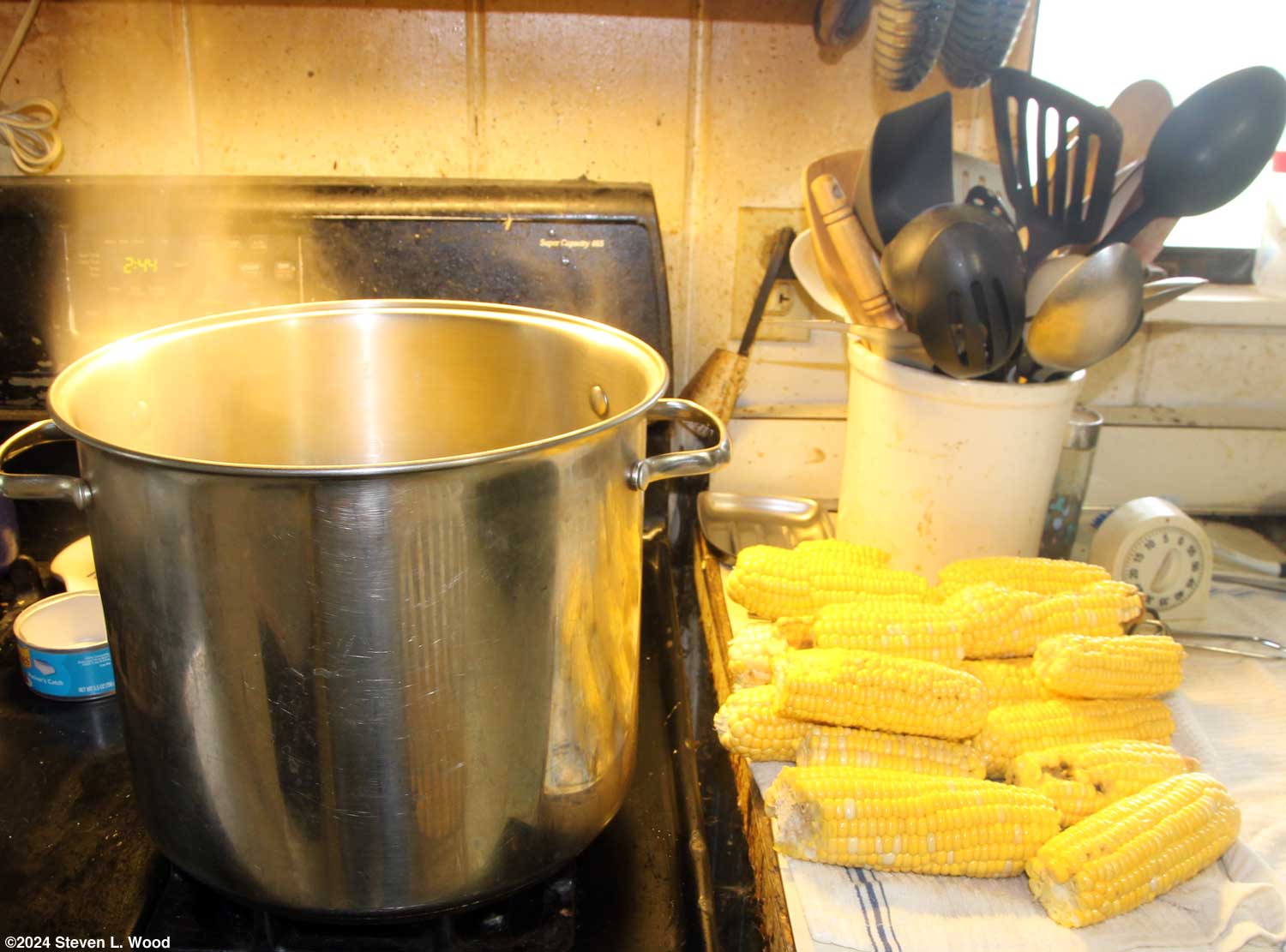
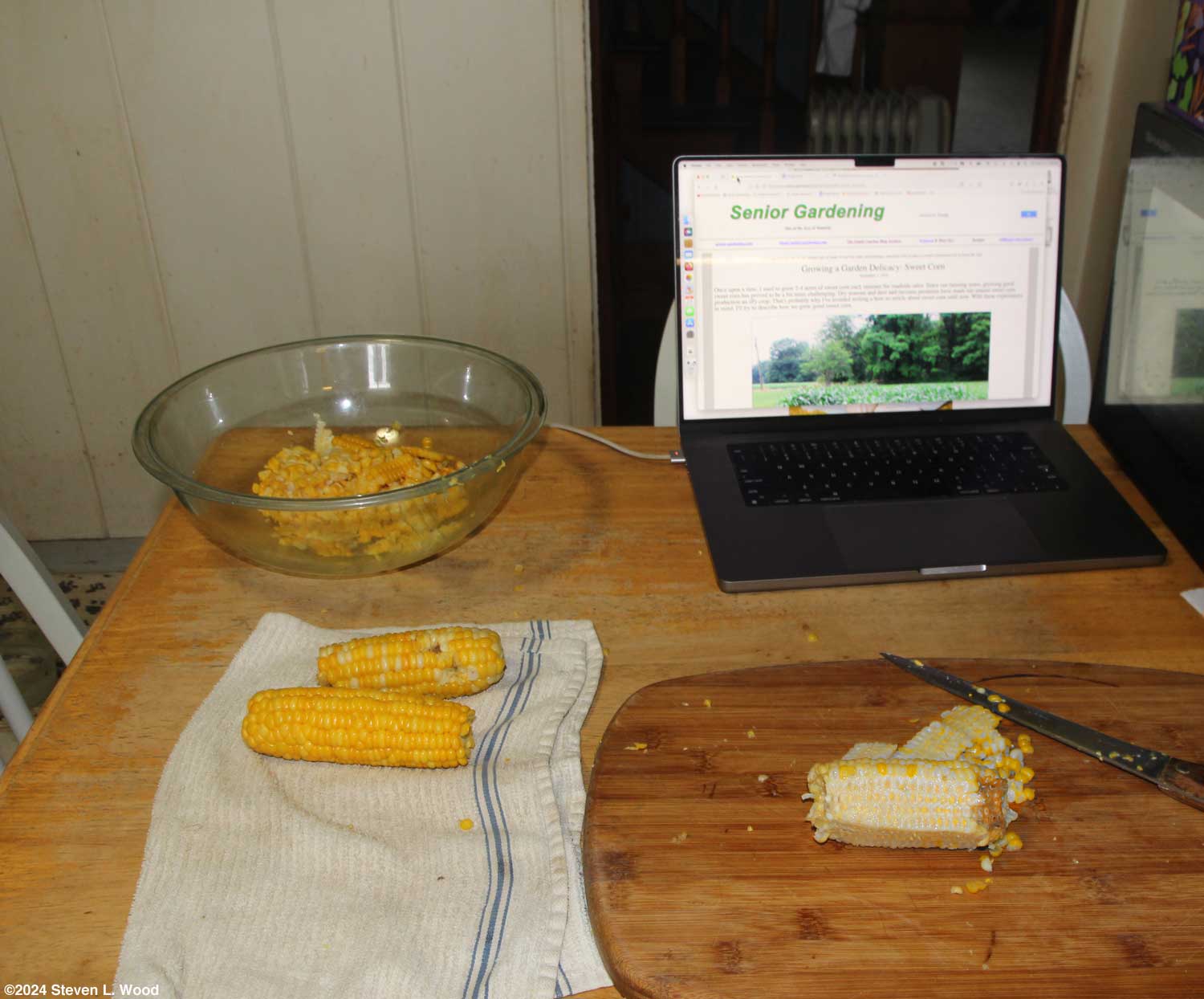
Monday, September 23, 2024 - Sweet Corn I picked and froze sweet corn today. When I went out to pick, I found that local critters, probably deer and raccoons, had gotten to our sweet corn patch first. Along with droughty growing conditions, giving away too much corn, bug damage, and the critter assault, there wasn't much good corn left to pick. But you go with what you've got. I shucked, silked, and blanched the corn before cutting it off the cob. The picking produced only five pints to freeze. Even so, this year's corn seems especially sweet.
If the Lord grants me another season of gardening, I'll need to get our sweet corn planted earlier. And I'll probably be less organic in my efforts in bug control. Kidney Beans I still have six of the seven trays of kidney beans shown to shell. The delay in shelling them may give the pods time to dry down a bit more, making shelling a bit easier.
No pictures today other than our splashshot at the top of the page. I was too busy shelling kidney beans today to do much of anything else. A few of the bean pods had split open on their own. And most of them popped open with just a squeeze between my fingers. It was definitely time to finish the job. The shelled beans weighed in at ten pounds, ten ounces, far more that our previous record of seven pounds in 2017. Of course, I expect the beans to dry down to something near ten pounds in a week or two. Then I'll freeze around a half pound of them for future plantings and can the rest. And then some of the canned beans will get used to make Refried Kidney Beans. I've found crushing the beans for refried beans much easier with canned beans than beans that have just been cooked. And for the uninitiated, raw kidney beans are poisonous! With the beans out of the way, I can move on to picking apples for applesauce and tomatoes for tomato purée.
After cleaning the apples, I went to our East Garden and picked tomatoes. I'm not sure I have quite enough tomatoes yet to make a batch of tomato purée. If I don't have enough tomatoes by Monday, they'll go to our local food bank that is always appreciative of donations of our tomatoes. I also walked our corn rows, finding about six second ears of corn that are useable. With that, the corn stalks are ready to come out and be composted. I also took time to stir our shelled kidney beans a bit to promote even drying. I selected ten beans to start a germination test.
There's lots of garden cleanup yet to be done, but I'm finally going to mow our lawn this afternoon. During the drought, I let it go for weeks.
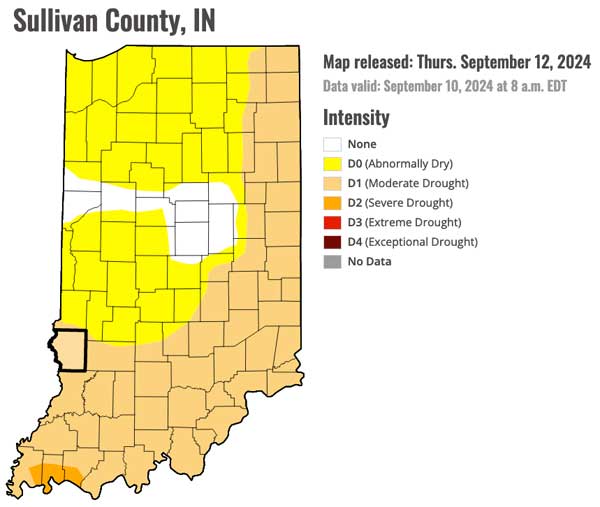
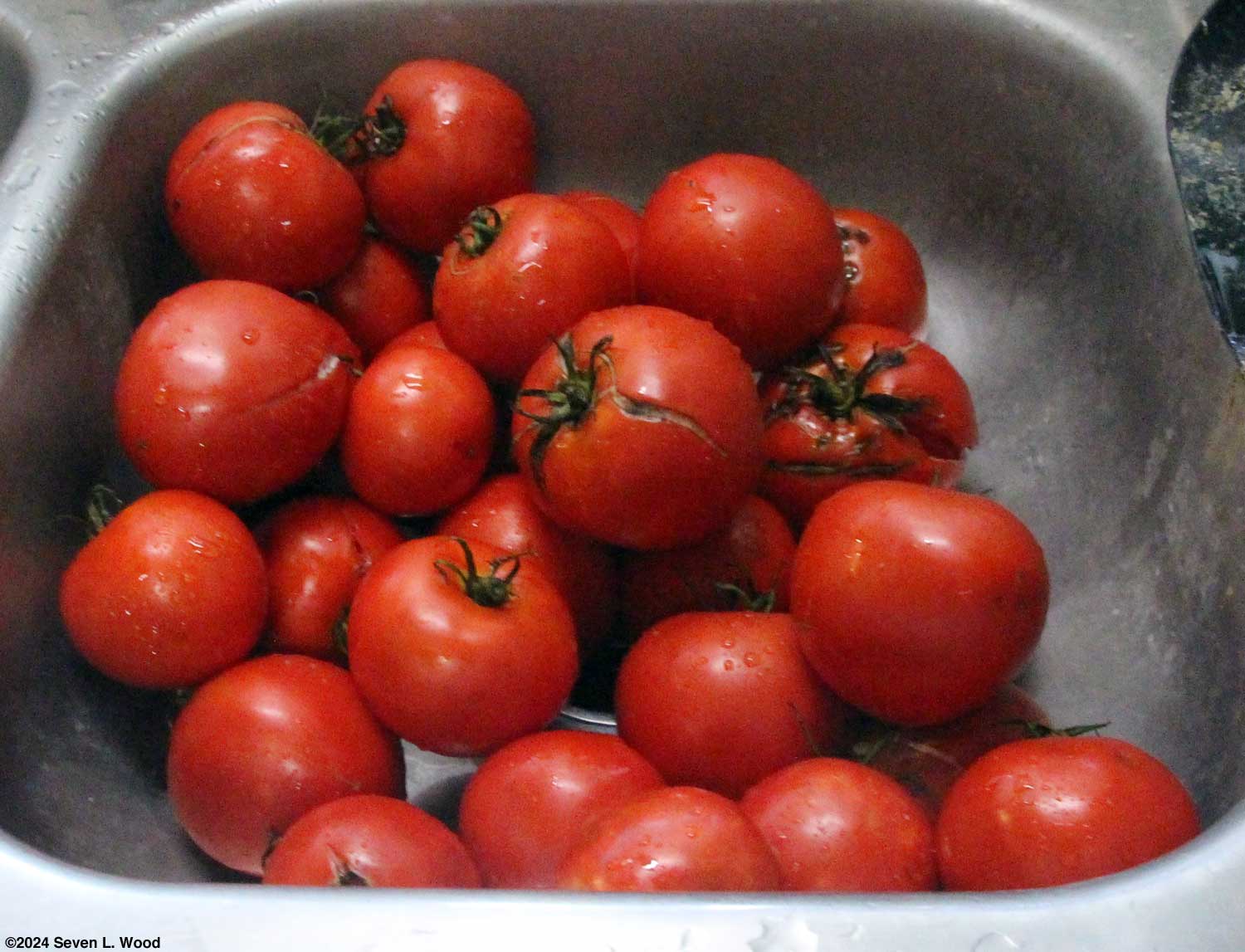
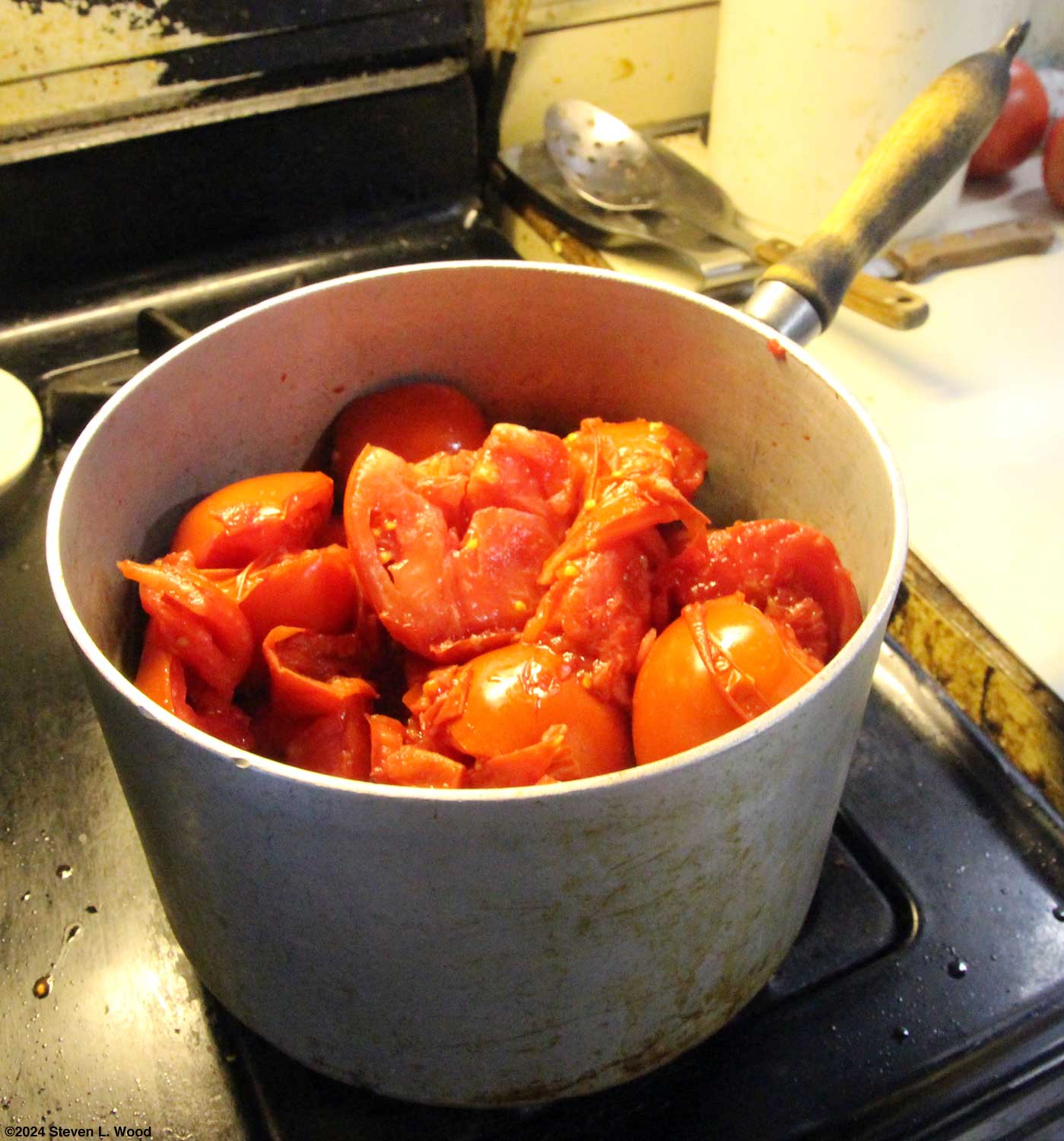
Saturday, September 28, 2024 - Making Tomato Purée Well, the grass didn't get cut on Friday. It turns out that sitting at our kitchen table shelling kidney beans for hours left me with a kink in my neck that wouldn't permit mowing our rough ground. We have several days of rain in our current forecast from the remains of Hurricane Helene. So the grass will be a mess when I finally get to it. Thursday's release of the U.S. Drought Monitor still showed our county in the "Moderate Drought" classification. With the remains of the hurricane dropping well over an inch of rain on us, we may be in better shape on soil moisture. BTW: The rather nasty dozen or so ears of corn I picked on Thursday made just over a pint of corn for our freezer. The overnight storms blew over a lot of the spent corn stalks and almost half of our lovely row of blooming zinnias. Our caged tomato plants were fine, as their cages are anchored to T-posts. I'd considered donating the tomatoes I'd picked on Thursday to our local food bank. Then I saw a notice on Facebook saying the food bank would be closed on Monday instead of its usual distribution. So on to plan B, making tomato purée.
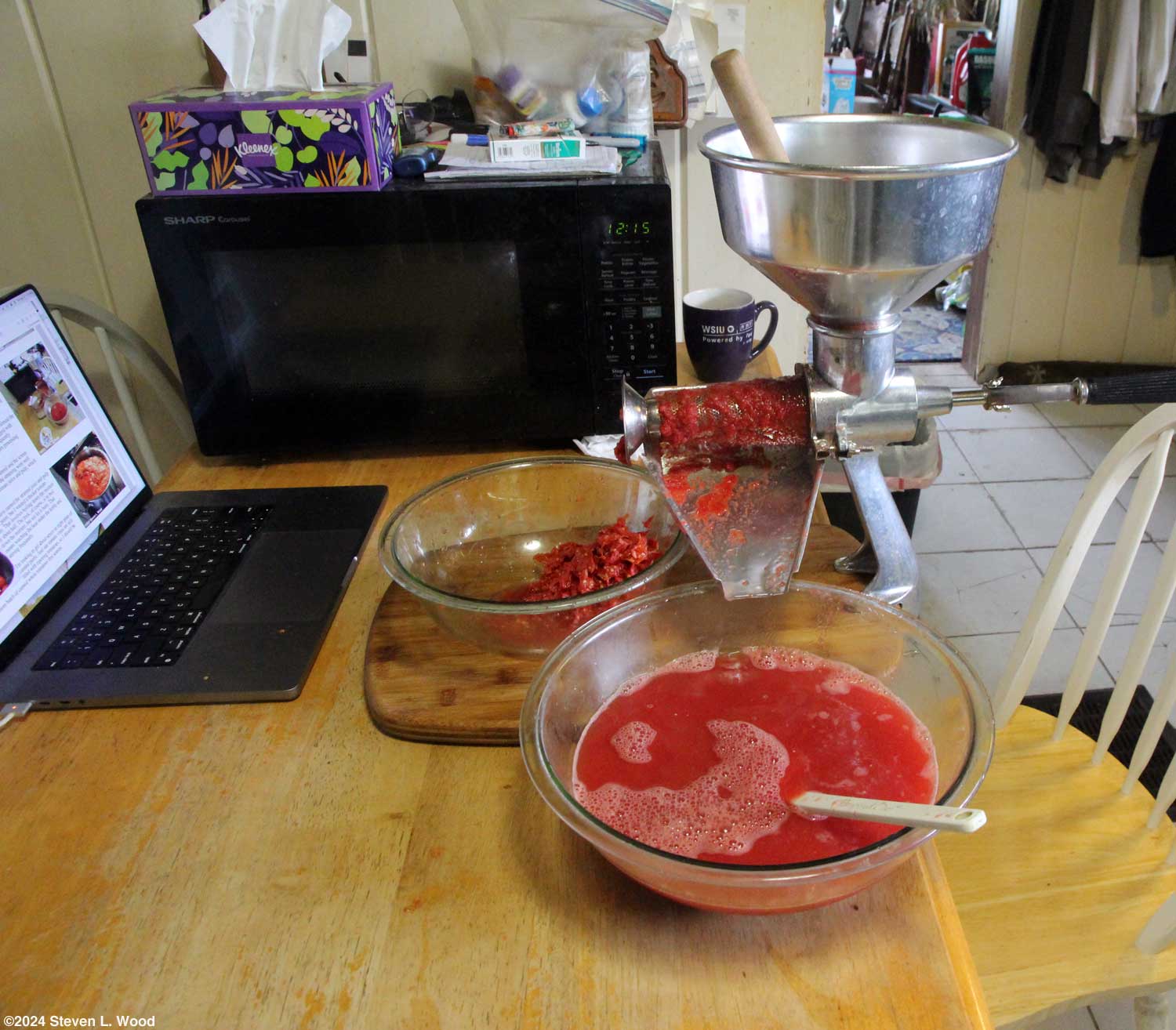
Once heated, the tomatoes and juice go through our Squeezo Strainer to separate juice and pulp from seeds and skins. Our current Squeezo is a mix from our original one plus some parts donated by my wife's best friend. It still leaks a bit through the handle hole, but does the job.
Our old Squeezo will stay upstairs for a few more days, as I need to make applesauce soon.
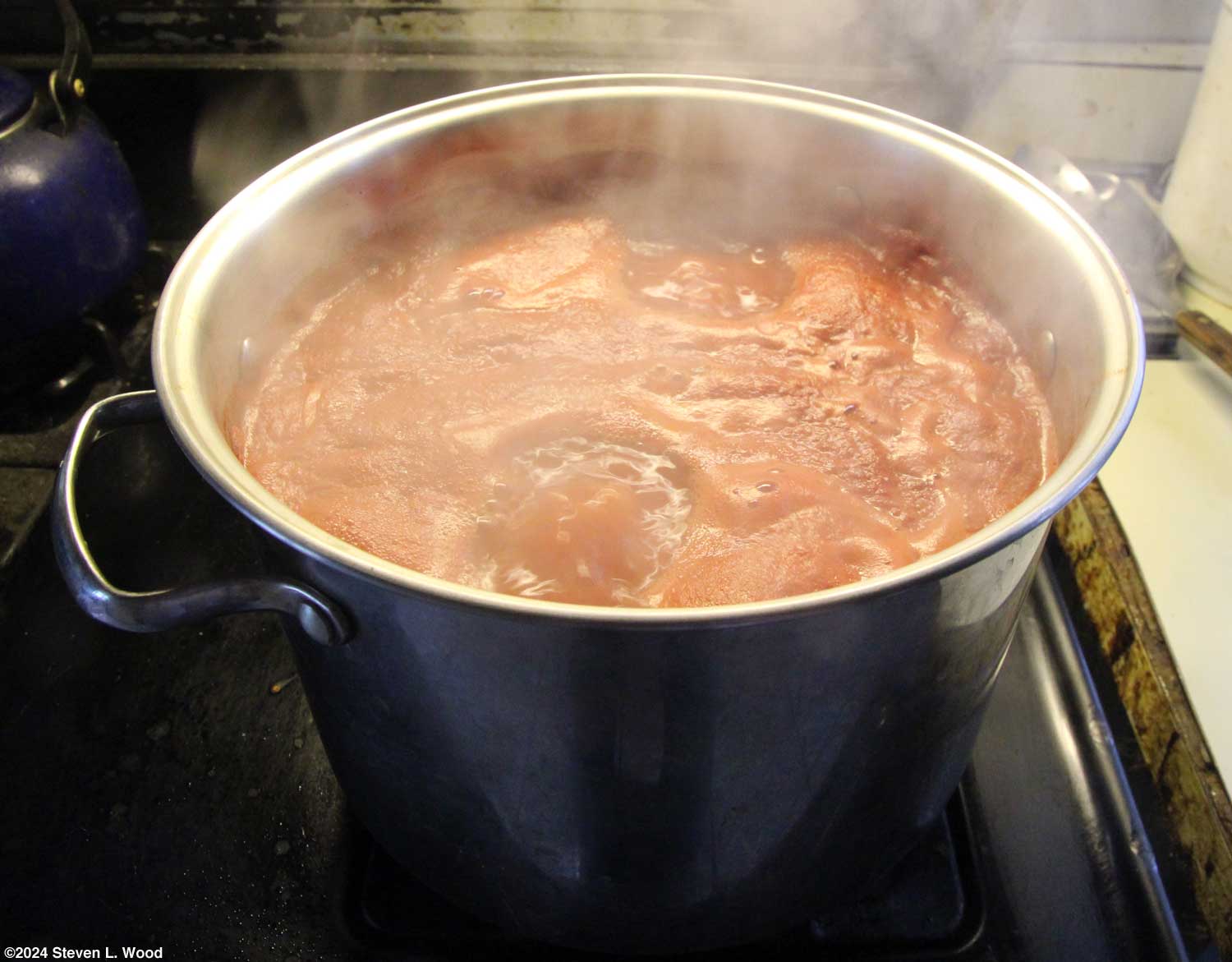
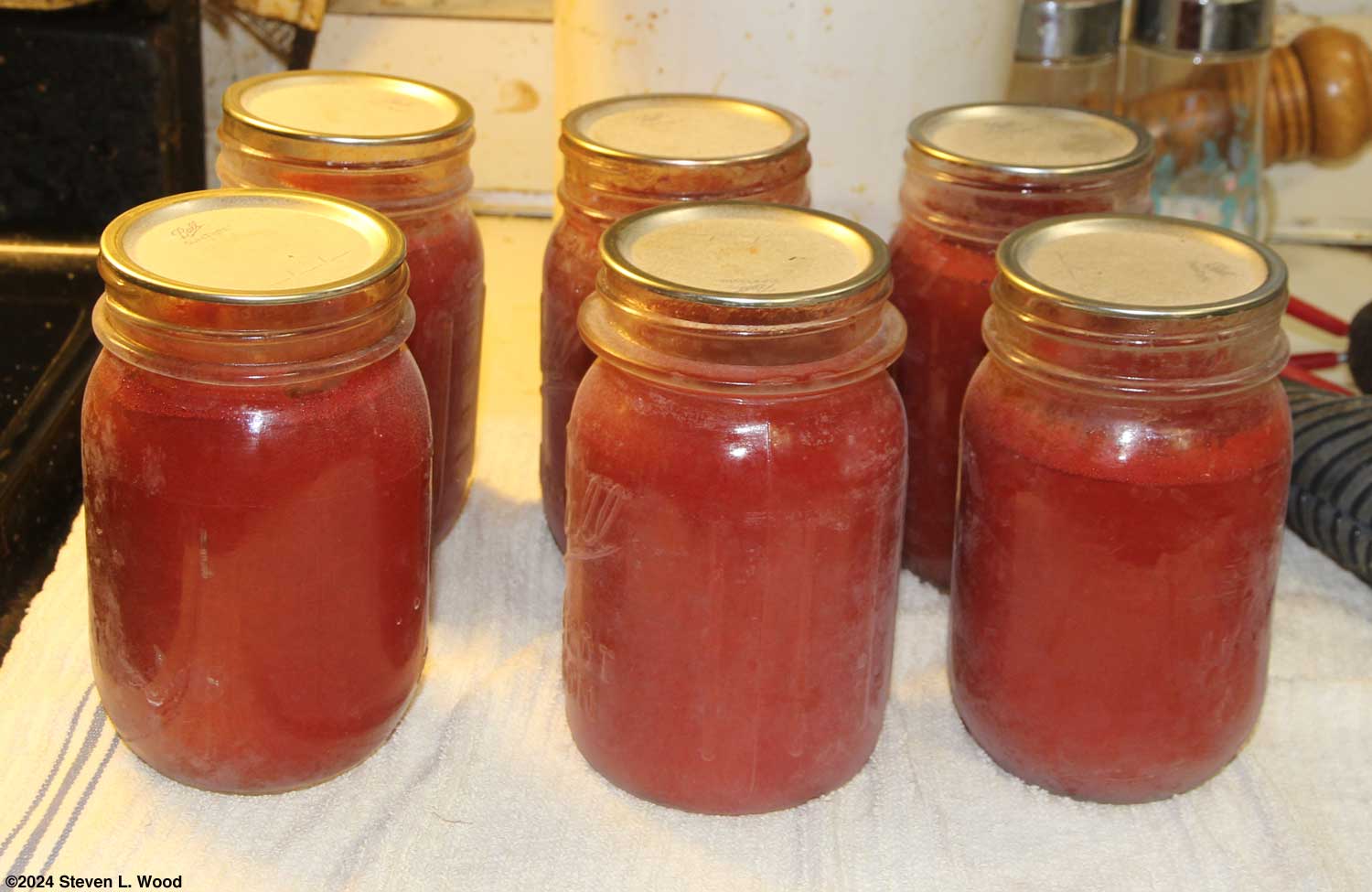
It took boiling with lots of stirring for four or five hours for the tomato juice to halve in volume. The rule in our house is that if you walk past something boiling on the stove, you stir it. Boiled down, the eight quarts of tomato juice and pulp made six pints of canned tomato purée. I'm not sure if that will be enough to satisfy our needs for spaghetti/lasagna sauce for the next year. When I make our sauce now, I start with a quart of canned tomatoes and a pint of tomato purée. We do like our spaghetti!
Spending almost a whole day on producing tomato purée might seem like a waste. But it's one of those things that in retirement one can joyfully do. That, and some serious naps along the way.
Monday, September 30, 2024 - Making Applesauce
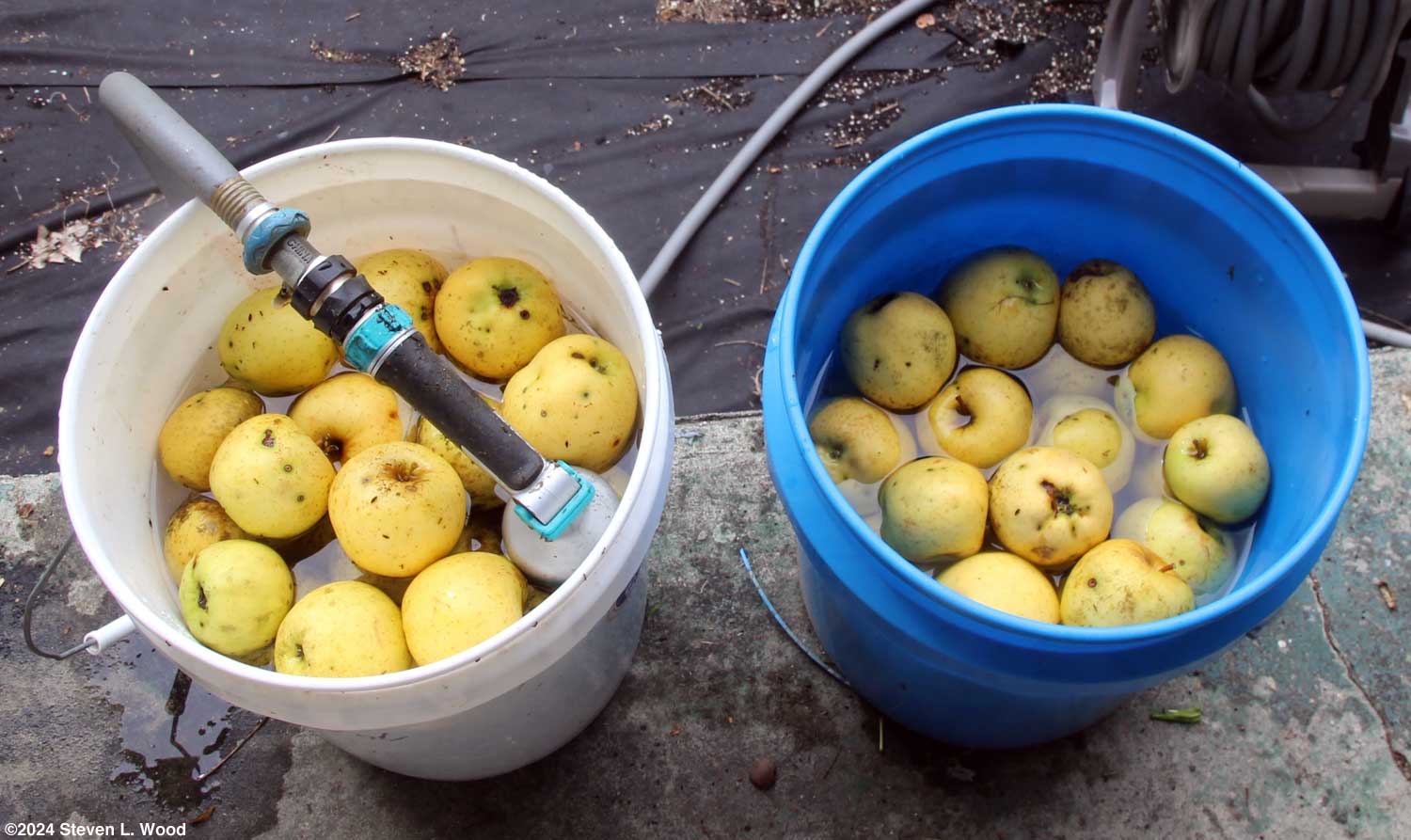
I'm fortunate to have an old Squeezo Strainer which makes the process easier. While it's not required with the strainer, I core the apples first before cutting them into pieces that fit through the strainer. There also were a lot of bad spots to be cut out of the apples. Our apples are mostly Yellow Delicious with a few Stayman Winesaps from a couple of young trees. I'm hoping the Winesaps will add a little zing to the sauce that our last batch in 2022 lacked. I also followed some online directions to add some lemon juice to the sauce to make it more acid for safe water bath canning. I didn't, however, add any sugar or cinnamon to the sauce as many online recipes suggest.
Contact Steve Wood, the at Senior Gardening |
||||||||||||||||||||||||



















| Affiliated Advertisers |
©2024 Senior-Gardening.com