One of the Joys of Maturity
One of the Joys of Maturity |
|
| Affiliated Advertisers |
Clicking through one of our banner ads or some of our text links and making a purchase will produce a small commission for us from the sale. Thomas Jefferson reportedly said "to sow a thimble full of lettuce every Monday morning from February 1 to September 1." That practice simply doesn't work in our climate zone. We do, however, try to harvest a little lettuce before the summer heat turns it bitter rather early each spring and enjoy lots more in the extended cool days of fall.
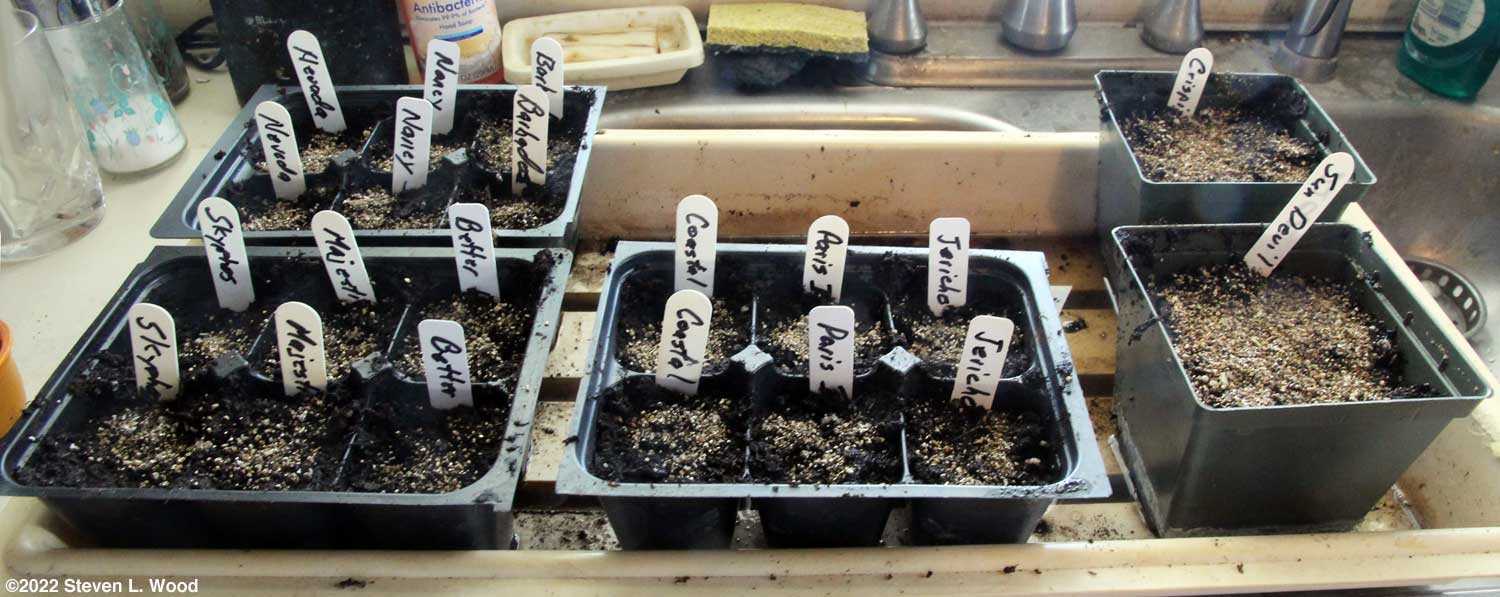
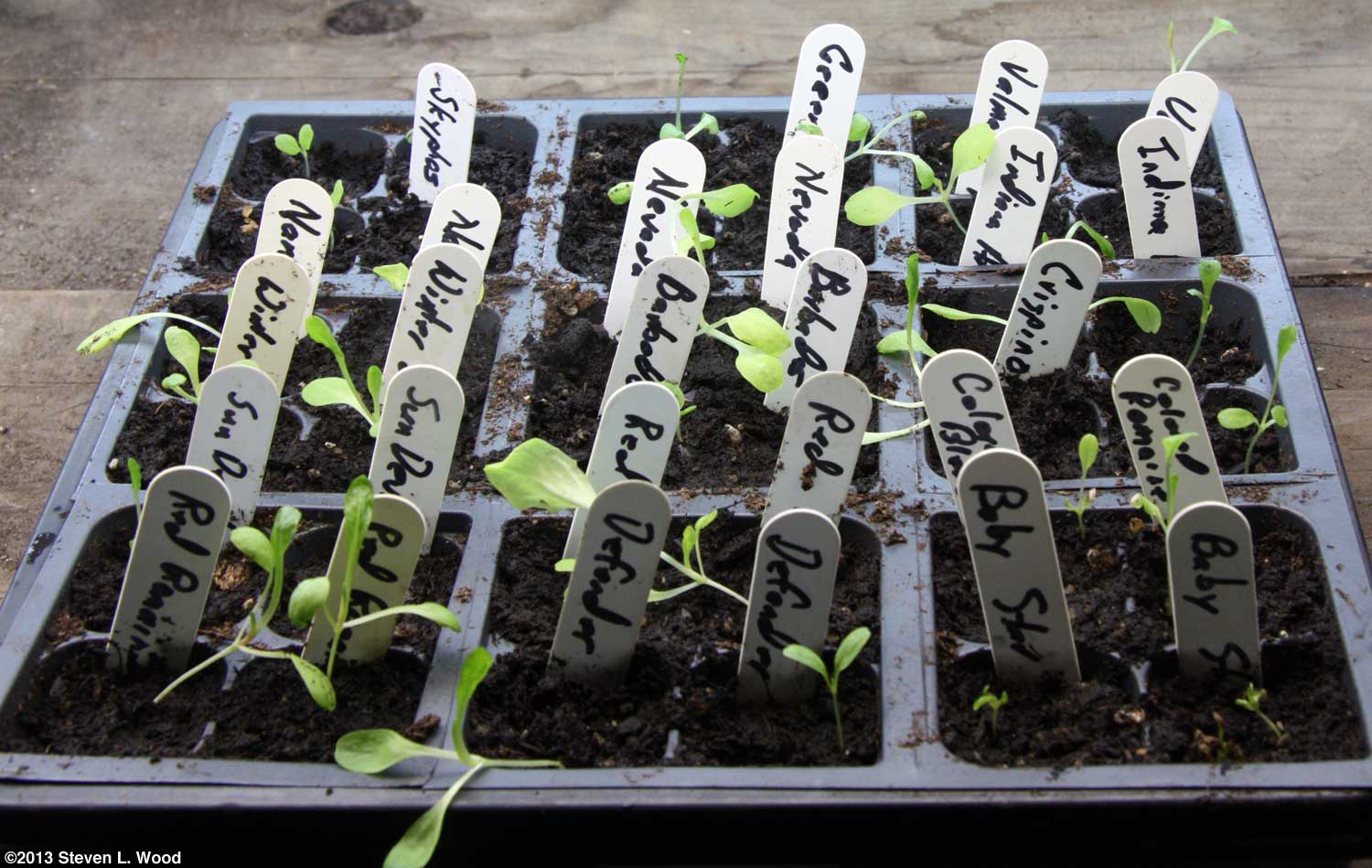
Lettuce isn't a difficult crop to grow. One can direct seed it into the garden or use transplants. We use transplants exclusively to give our lettuce a head start on beating the summer heat. We also have better results with transplants in the fall, as lettuce seed doesn't germinate well in the very warm soil of late summer. Of course, if one has a hotbed or a heated cloche, one can grow lettuce far earlier and later in each growing season. (See pp 29-30 in Crockett's Victory Garden for good building instructions for both.) We have neither, so we have to try to get our lettuce out as early as possible each spring and sometimes use floating row covers to extend our lettuce growing season past the first mild frosts of fall. In 2011, we had fresh lettuce from the garden for our Thanksgiving Day feast. Of course, that warm fall and winter preceded the summer Drought of 2012. I learned something new a few years ago. Some varieties of lettuce germinate better when the seed is exposed to a little light. (See, old geezers like me can still learn new tricks.) I now seed our lettuce in inserts by putting the seed atop sterilized potting mix and lightly covering it with vermiculite. If spread thin enough, the vermiculite still supplies the moisture the seed needs to germinate, but also allows some light to reach the lettuce seeds. An NC State web page suggests that "lettuce seed will germinate at 35°F, but optimum germination is at 70 to 75°F. I rely on past experience and a very helpful interactive tool from Johnny's Selected Seeds, their Seed-Starting Date Calculator for when to start our transplants. Obtaining our average frost free date from a Dave's Garden page, the calculator suggested starting lettuce transplants from February 10 to February 24. I didn't get ours seeded this year (2024) until March 14, but that should do nicely for us. Starting Lettuce Transplants
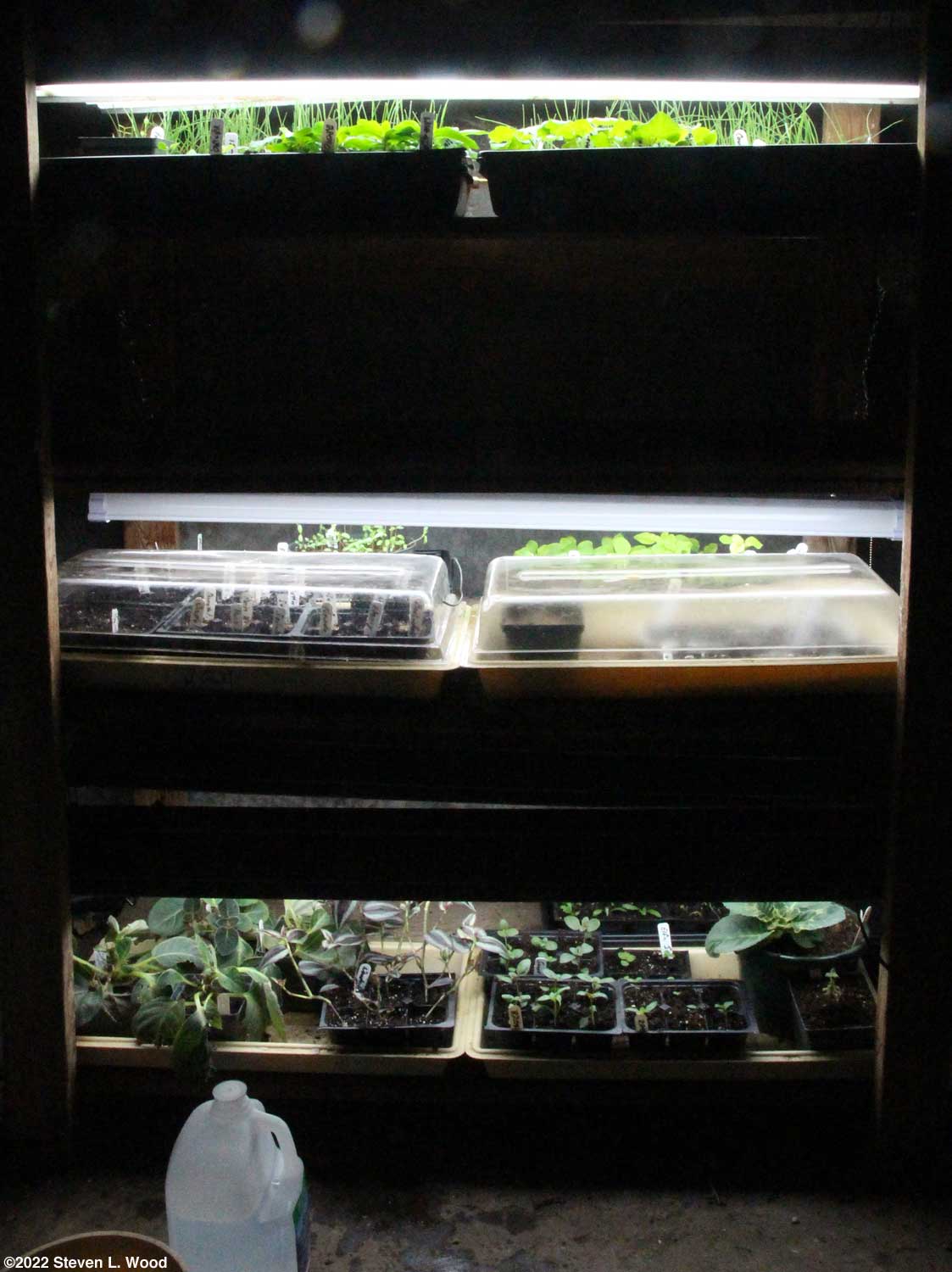
As I mentioned earlier, I lightly cover the seed with vermiculite to hold in moisture around the seed while still permitting some light to reach the seeds. An image at left shows white lettuce seed on the soil surface before being covered with vermiculite. Note that not all lettuce seed is white. Some varieties have black seed. Even though lettuce has a wide range of temperatures in which it will germinate, I still germinate our lettuce over soil heating mats with the temperature set to 70-75°F. The trays holding the inserts or pots are covered with clear humidity domes to hold in moisture and heat while still permitting some light to reach the seed. Once the seed germinates, the trays get uncovered and moved off the heat mats to grow under plant lights in our basement. Our plant rack isn't fancy. It's constructed with wood and has 48" shop lights with 6000K bulbs in them. Folks lacking such a setup might have a sunny windowsill that would do just as well.
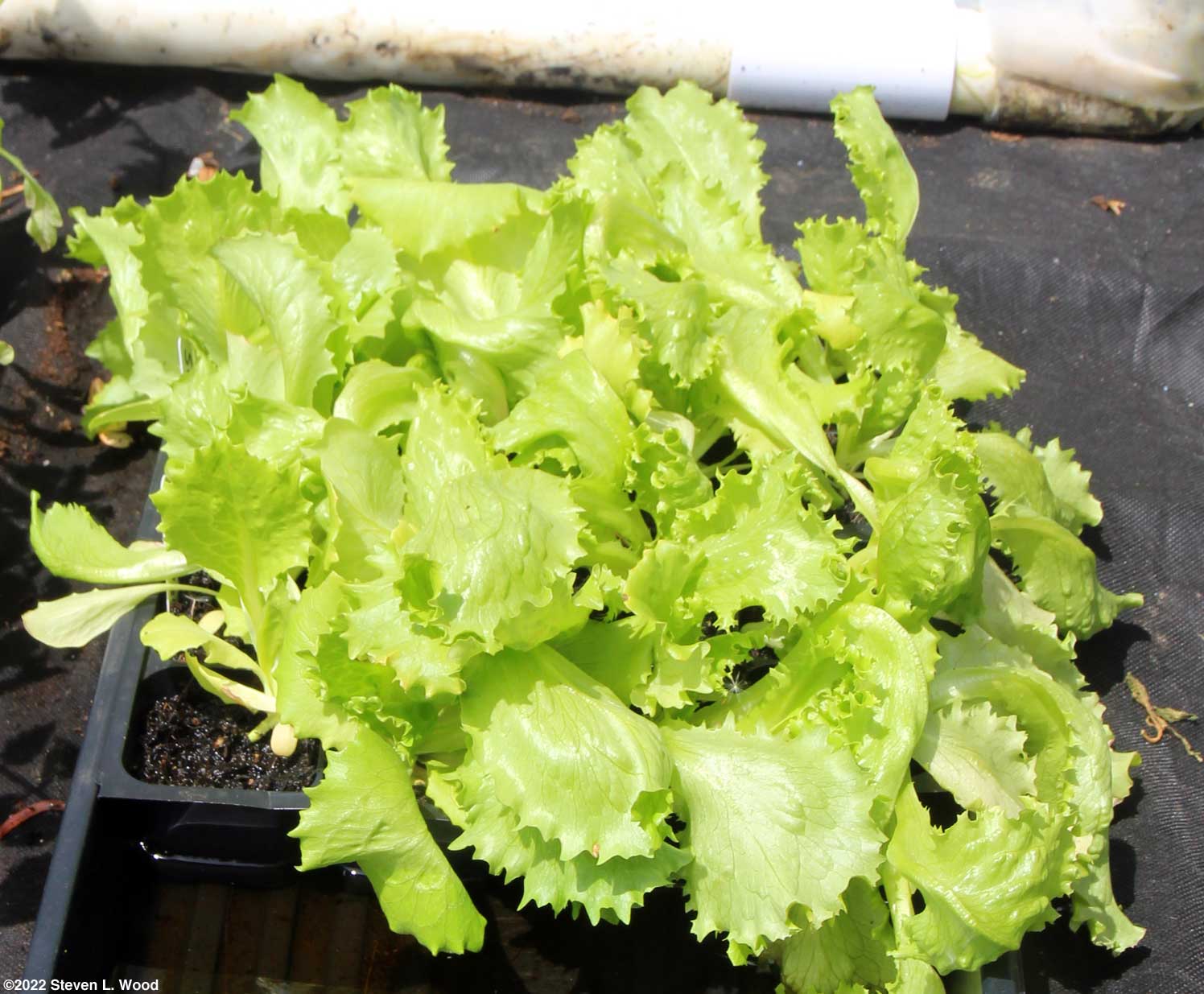
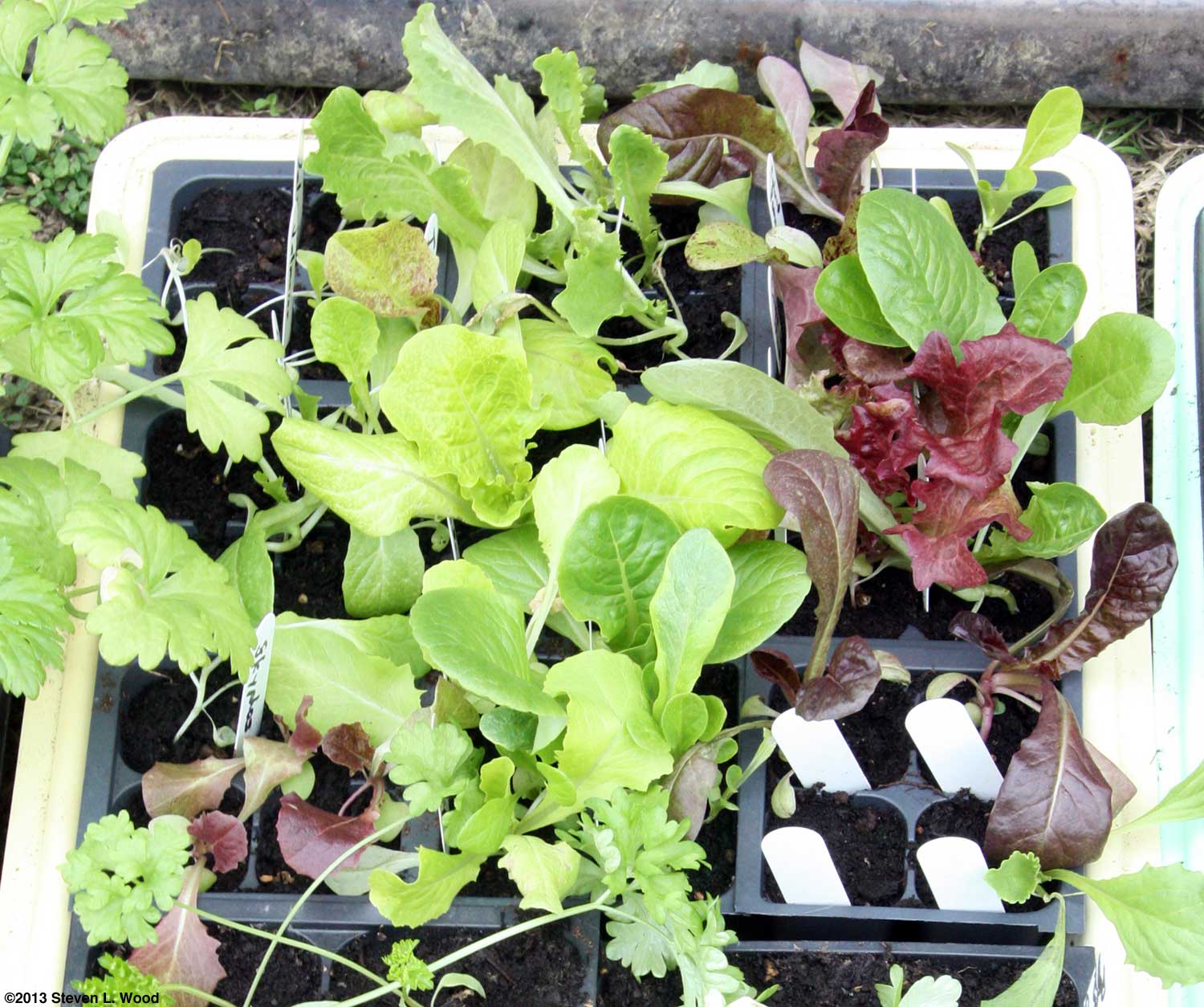
After a few weeks under our plant lights, the lettuce transplants are ready to go out under our cold frame. There, they harden off for a week or more before being transplanted into our garden. Because the lettuce was started in fairly rich potting mix, there's no need for fertilization until the lettuce goes into the ground.
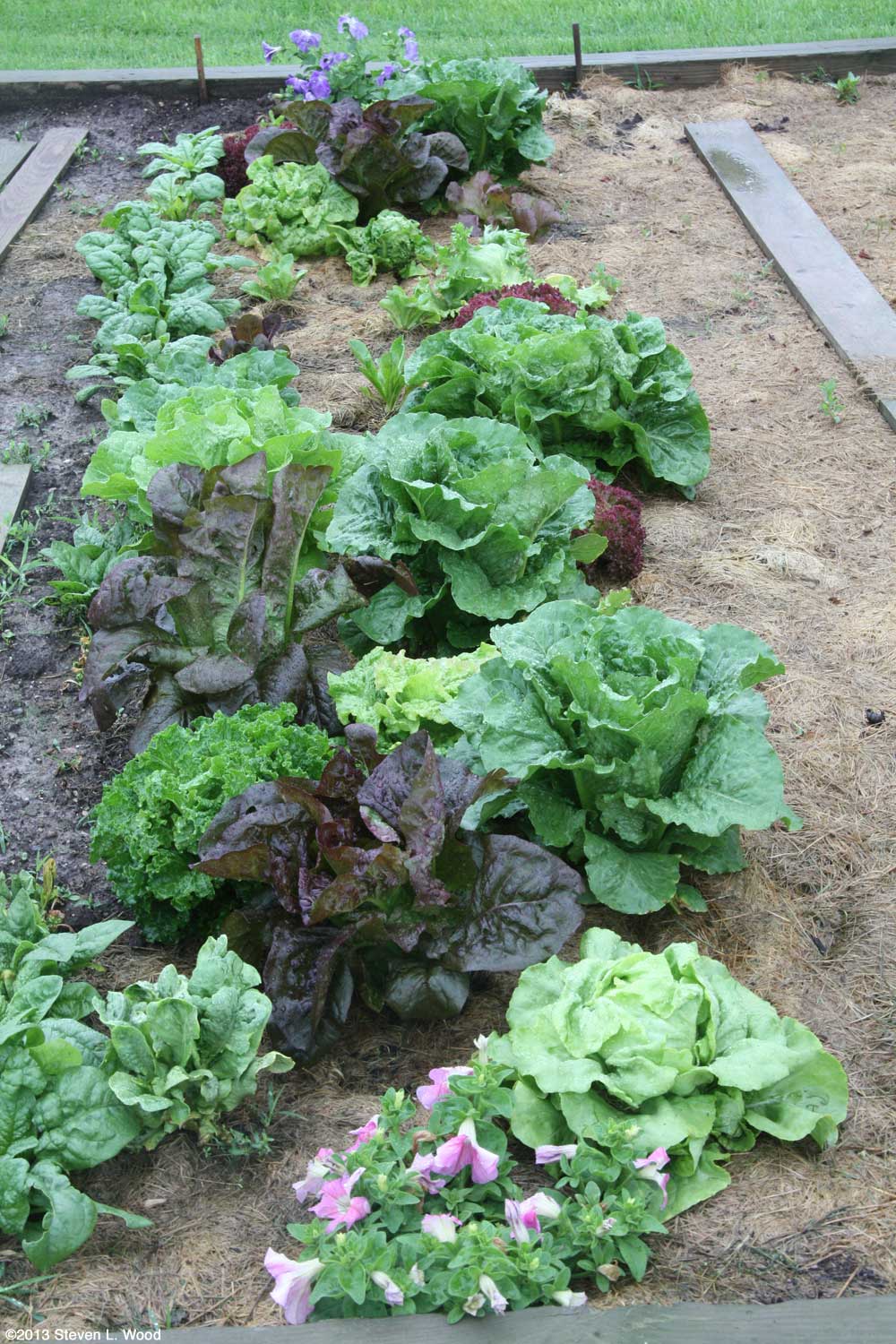
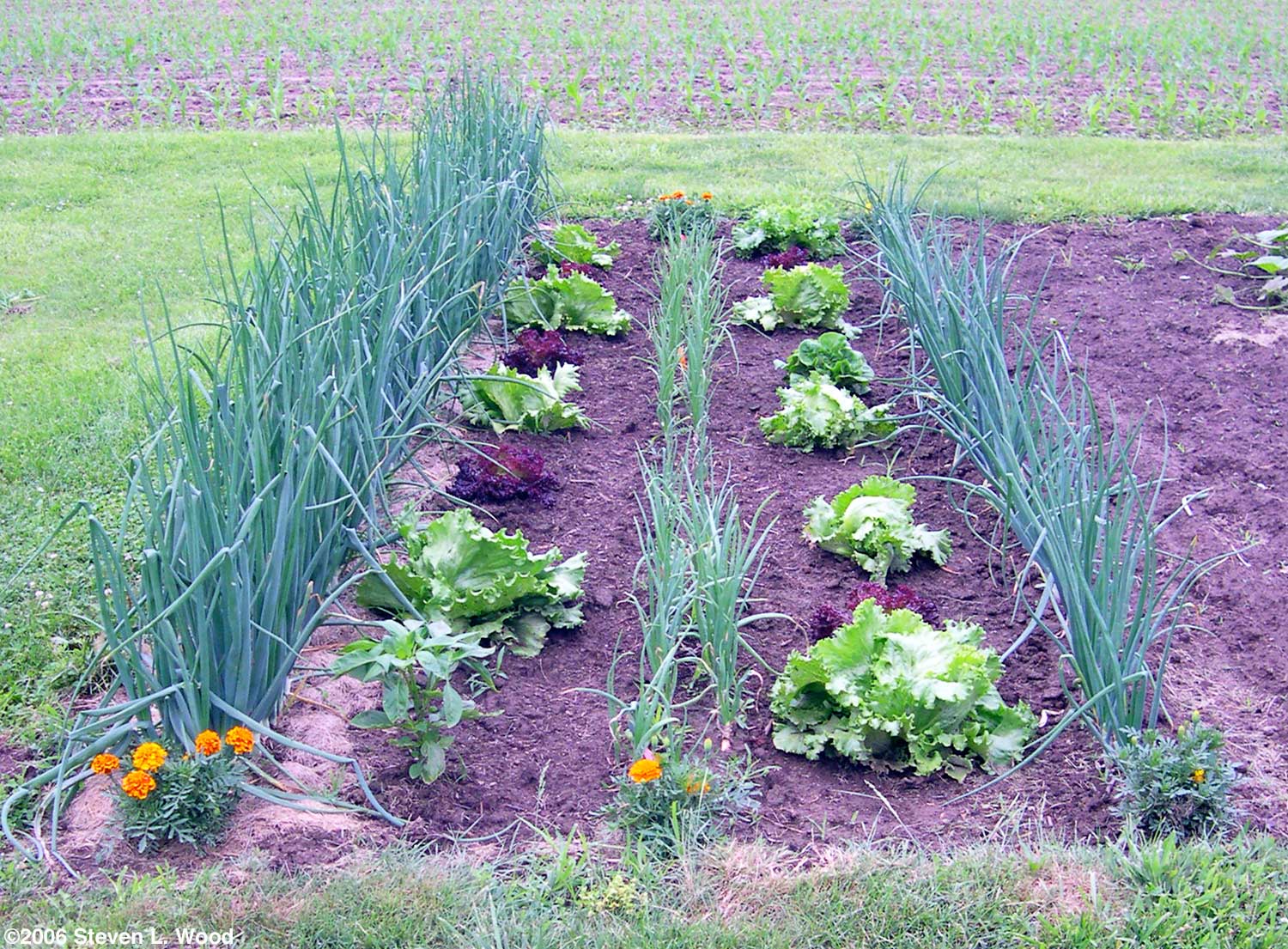
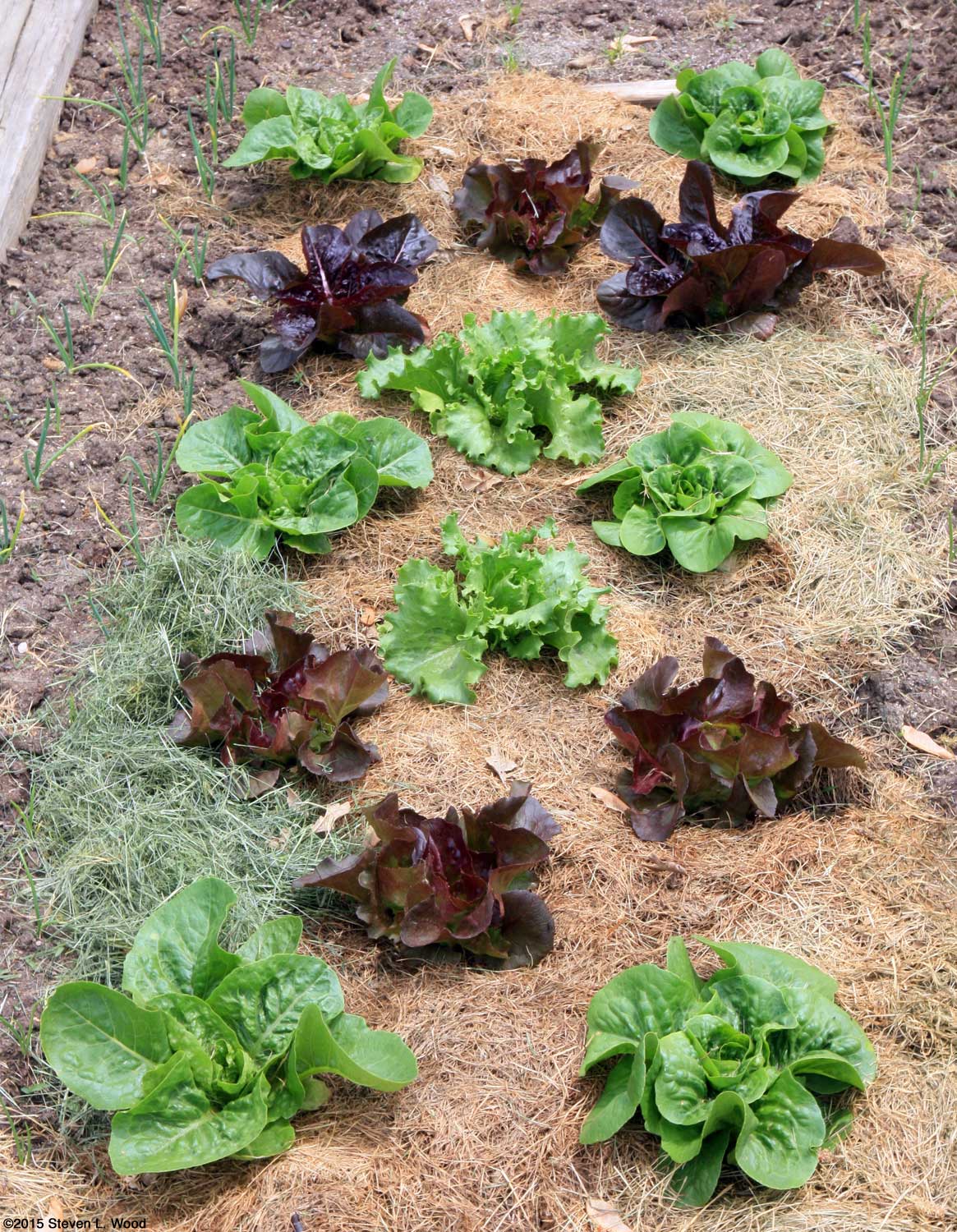
Into the Garden We usually grow our lettuce in clusters somewhere in our raised garden beds. Sometimes the lettuce is all by itself, and other times it grows between double rows of onions or has to share space with an odd celery plant or two.
Transplanting lettuce for us is a pretty simple process. I dig a hole with a trowel, pour in some starter solution (dilute Quick Start Since our lettuce goes into our raised beds with rather fertile soil, I often don't have to fertilize the plants in their short growing season. When I do feel the need for fertilizer, I use a liquid fertilizer instead of a solid. Direct Seeding Lettuce Because lettuce seed can germinate at fairly low temperatures, direct seeding early in the season is possible. The seed needs to go into a well worked seed bed, possibly with a little balanced solid fertilizer worked in. A shallow furrow is enough for the seed. I like to water such furrows before seeding down them. Once the seed is in (spaced as best as one can), just a little soil firmed over the seed should have it on its way. Diseases and Insect Pests A variety of plant diseases and insect pests can limit or ruin ones lettuce harvest. The Almanac lists lettuce mosaic virus, powdery mildew, and white mold as common lettuce diseases. We've not had a lot of disease in our lettuce, but have relied on the now discontinued Serenade biofungicide to control stuff like powdery mildew on other crops. Fortunately, a successor to Serenade with the same active ingredient is now available under the brand name Cease. Copper Fungicide and Fungonil Fungicide may also be effective in controlling lettuce diseases. As a rule, I'm pretty shy about spreading any sprays on leaf crops we'll eventually eat! SFGate suggests that caterpillars, beetles, and wireworms can damage lettuce. They suggest using pyrethrins as an organic pest control. The Almanac adds aphids, cutworms, earwigs, slugs and snails, and whiteflies to the list of possible insect pests. I again recommend avoiding spraying leaf crops with anything toxic. For cutworms control, we rely on cutworm collars for control, although usually around brassicas and not with lettuce. For bugs, we rely on non-toxic sprays of Thuricide and Neem Oil. Due note in the next section where I totally violate my rule on not spraying leaf crops! Critters Rabbits and deer love lettuce. In 2021, they took out both our spring and fall crops of lettuce and brassicas! Instead of going to a hot wire, I chose a multi-pronged defense against the critters in 2022. Our lettuce and cauliflower had Repels All granules spread around the plantings. I sprayed the lettuce and cauliflower with a mix of Thuricide, Sticker Spreader, and our homemade Not Tonight Deer. I also cut up a bar of Irish Spring bar soap and spread it around the raised bed. Deer apparently don't like the soap's odor. Going all out, I put a tomato cage in the raised bed and hung our two new Predator Eyes and two old Nite Guard Solar Predator Control Lights
Note: The little white spots in the photo above are Irish Spring bar soap chips liberally spread around our lettuce and cauliflower. I've used them to protect sweet corn as well and found them to be pretty effective! Harvest
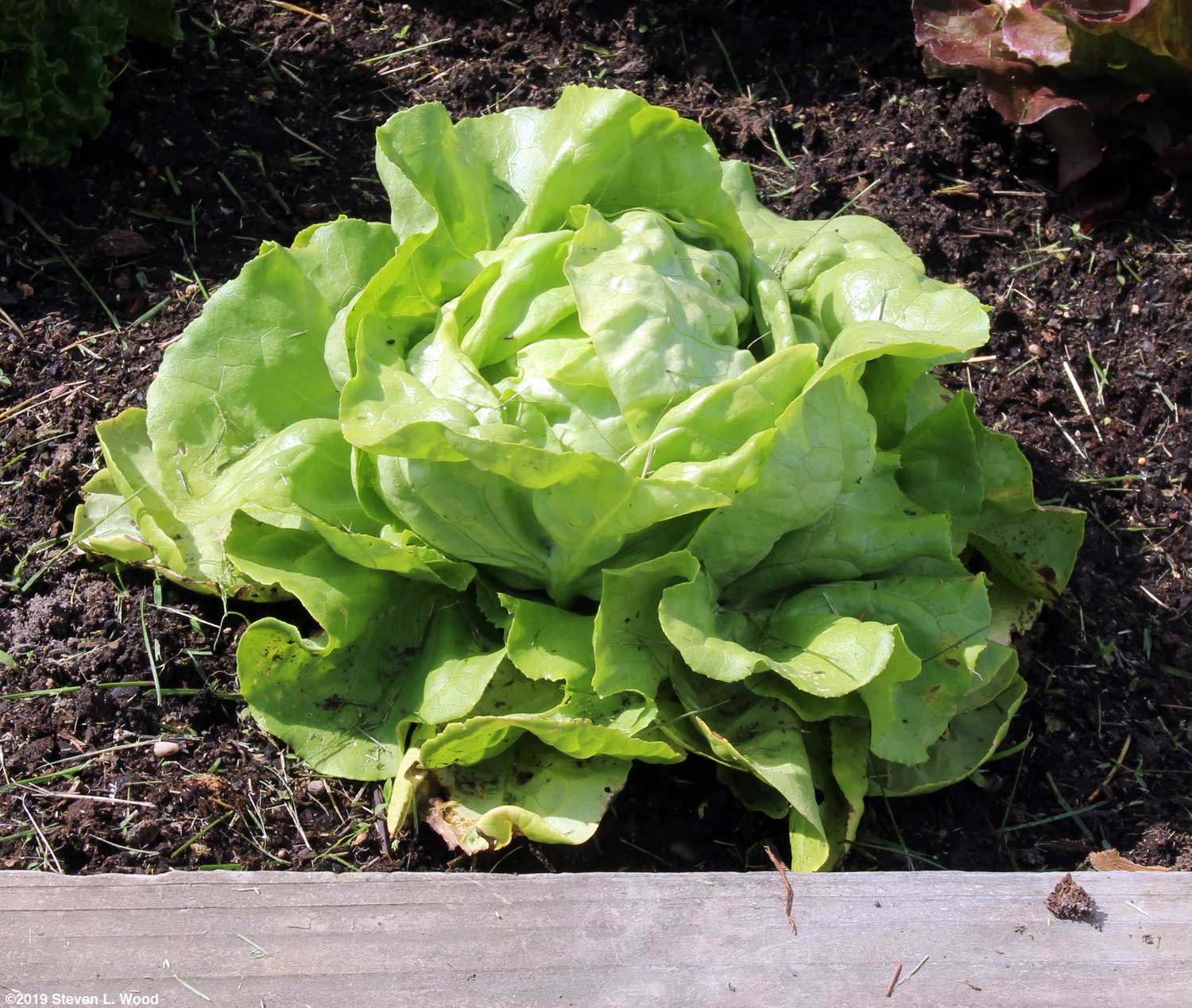
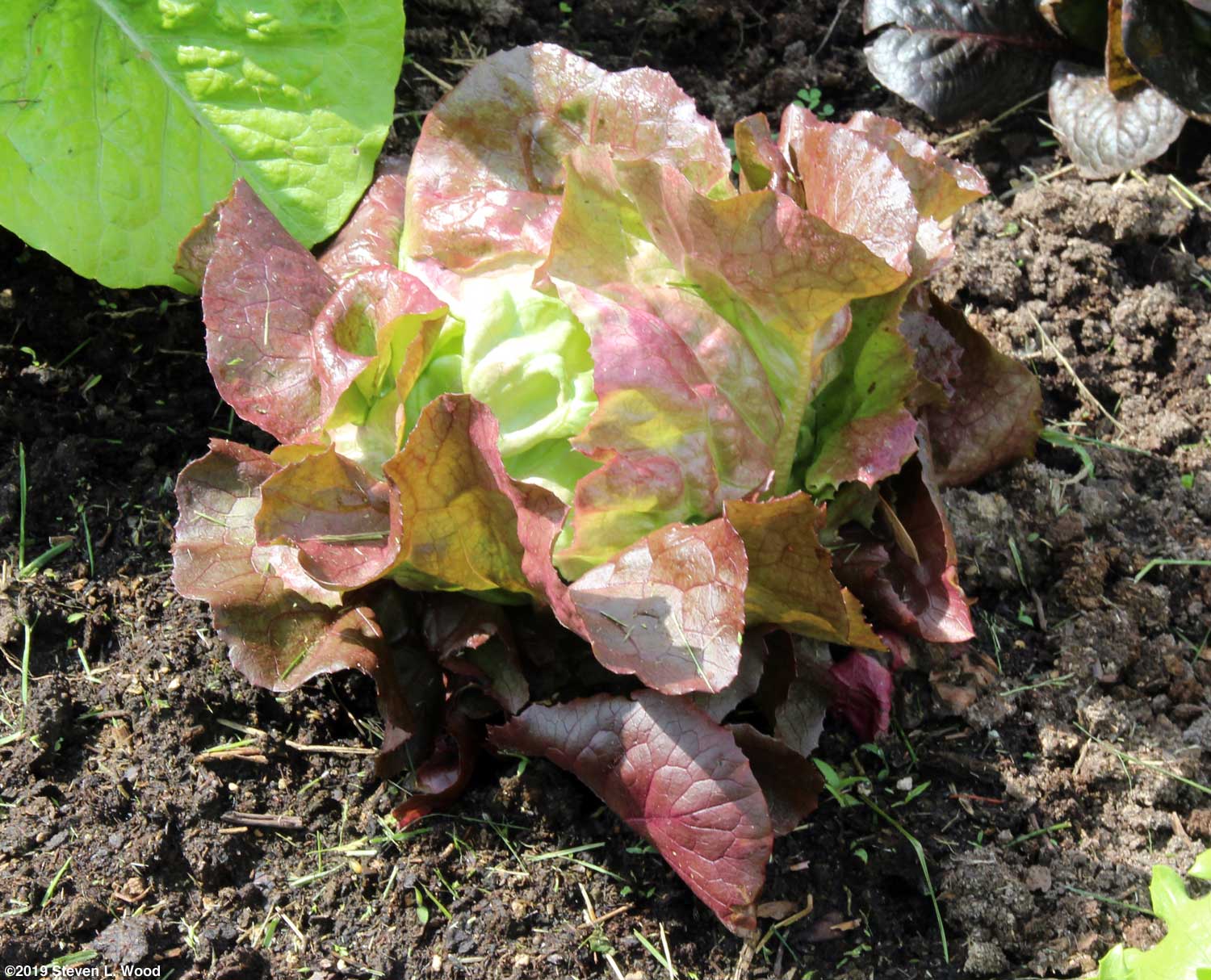
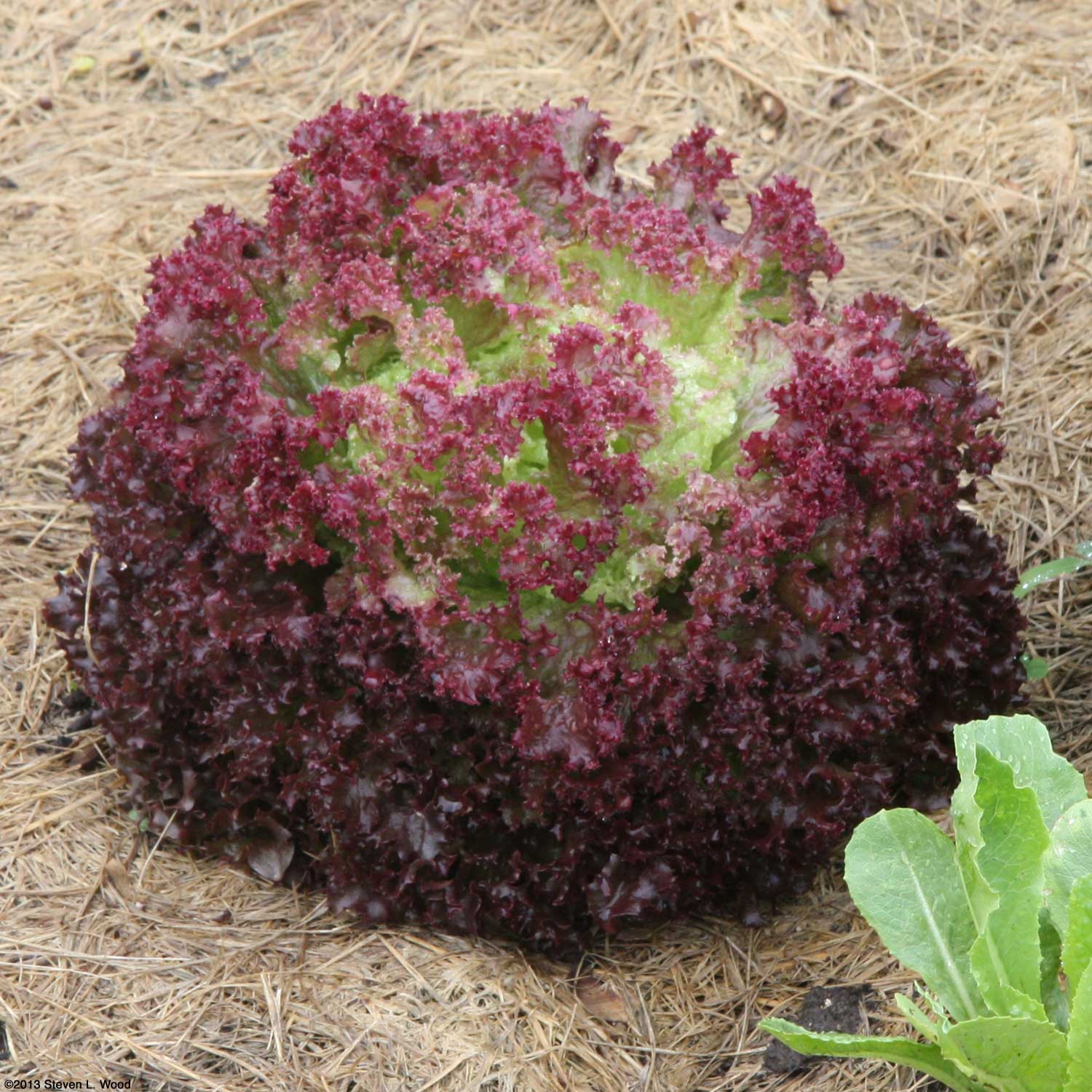
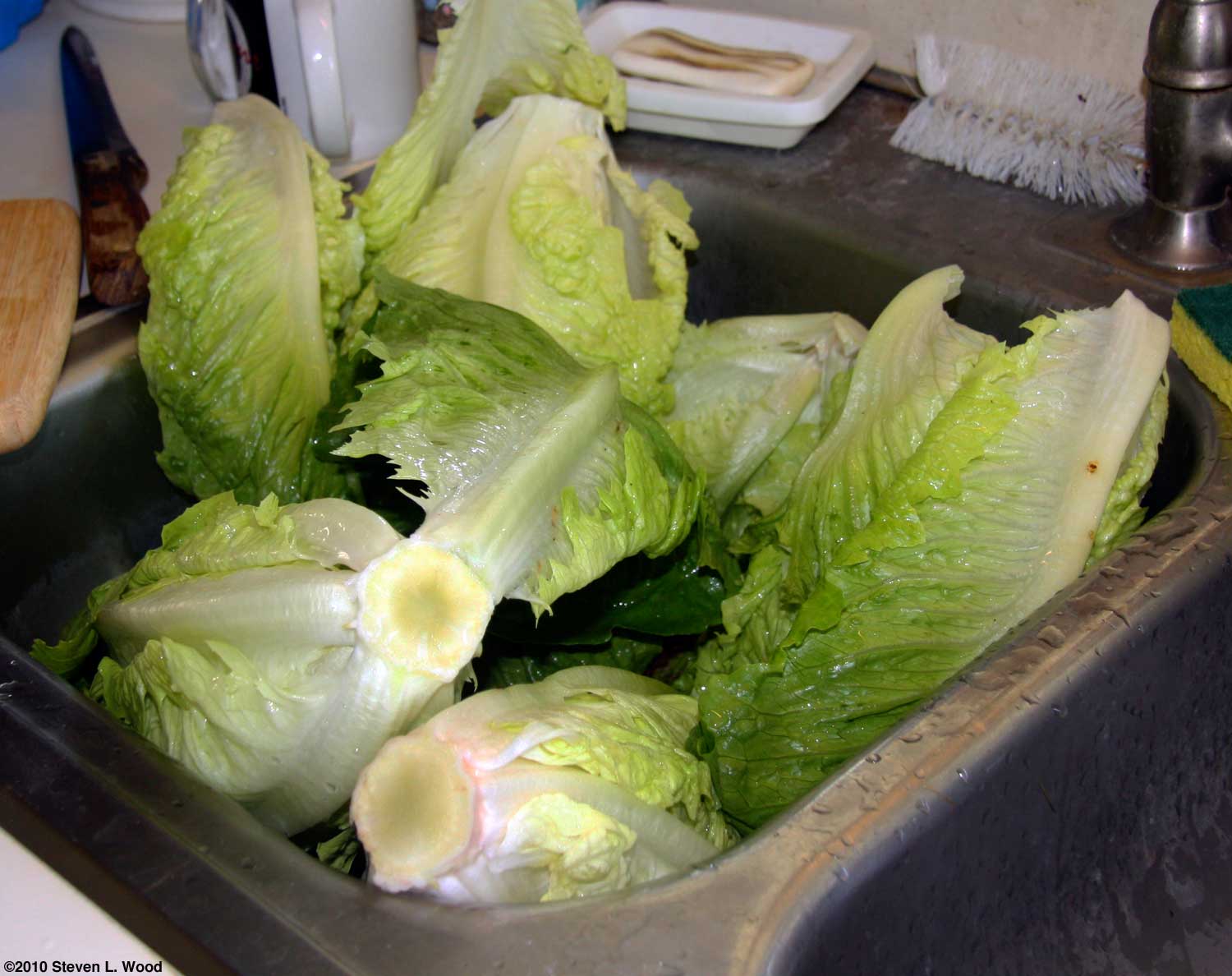
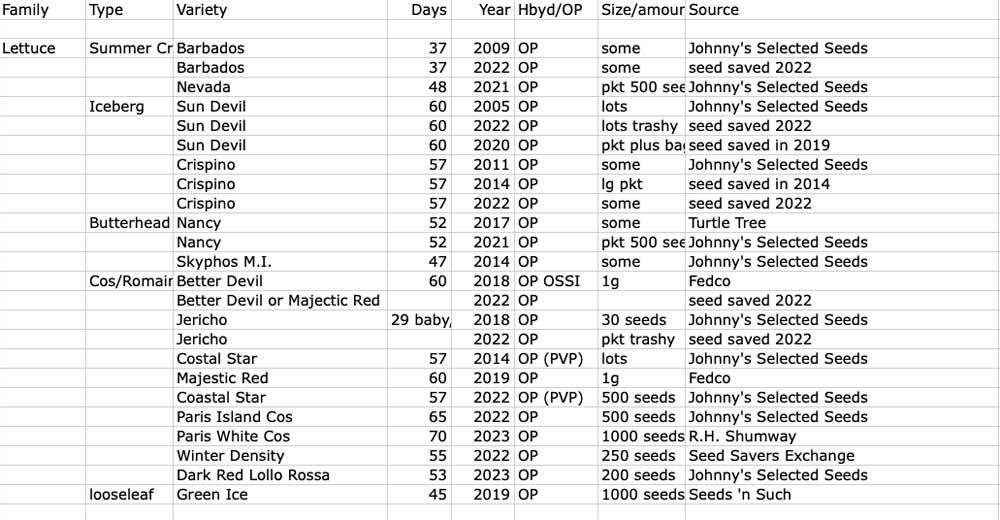
I harvest the lettuce with an old butcher knife, cutting the lettuce off at ground level. A good bit of dirt and grass clippings have to be washed out of the outer leaves, or the outer leaves removed. Lettuce salad from freshly picked lettuce is one of our early gardening season treats most years. Lettuce Varieties Our best lettuce seed always comes from Johnny's Selected Seeds. While their lettuce listings can be a bit overwhelming, they carry the varieties of loose (non-pelletized) lettuce seed we like. Our current lettuce seed inventory:
For our head lettuce, we rely on the Crispino and Sun Devil varieties. For romaines, we really like Jericho and Coastal Star. Eventually, our discontinued Barbados seed will run out, but until it does, we'll keep planting it along with the Nevada summer crisp variety. And the Nancy variety for a soft butterhead variety is excellent. Saving Lettuce Seed
After the surprise producing Crispino seed, I began trying to save seed from the once patented but discontinued Sun Devil variety. It took several years of trying, but eventually we got a nice seed crop from one plant. The job could have been easier. A gem from both Rob Johnston, Jr.'s Growing Garden Seeds and the late Nancy Bubel's The New Seed Starter's Handbook
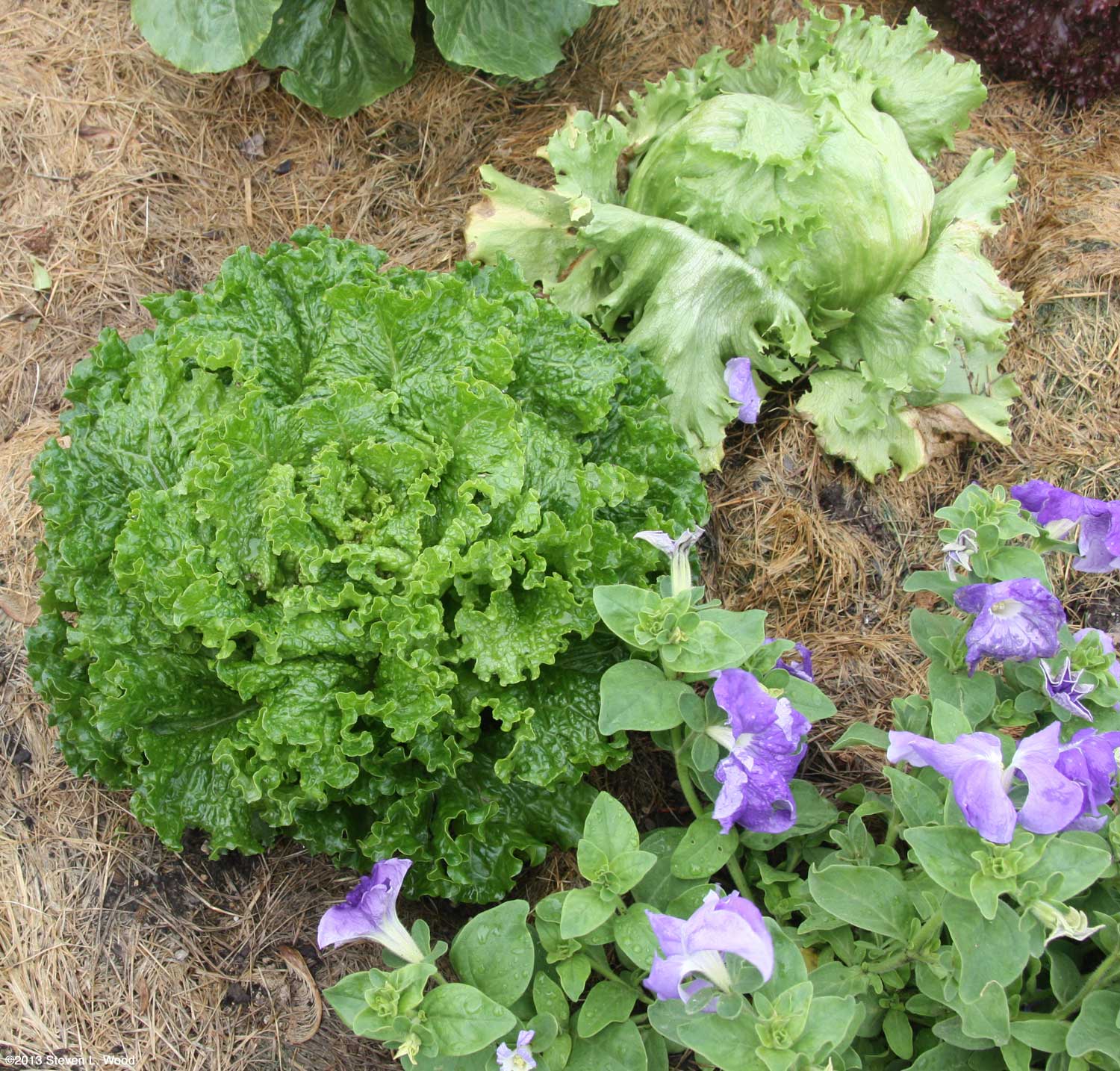
And with our seed saving plans, we have sixteen gorgeous Crispino and Sun Devil transplants ready to go into the ground...if we don't make a salad out of them first. Of course, with any seed saving, one wants to save seed only from open pollinated varieties. Saving seed from hybrids may not produce offspring true to the variety. Note that we were able to save a lot of lettuce seed in 2022, especially some varieties no longer commercially available. Commentary I started the file for this how-to in 2016! Finally publishing it in 2022 reveals how uncertain I feel about my lettuce growing skills and advice. But when I did a Google search for lettuce photos from this site, I realized I had a lot of material I could use. Since it's my site and I really like lettuce, here are some shots that didn't make the main story.
Some helpful links on the subject...
From Steve Wood, the at Senior Gardening |
| Affiliated Advertisers |
last updated 3/14/2024
©2022 Senior-gardening.com



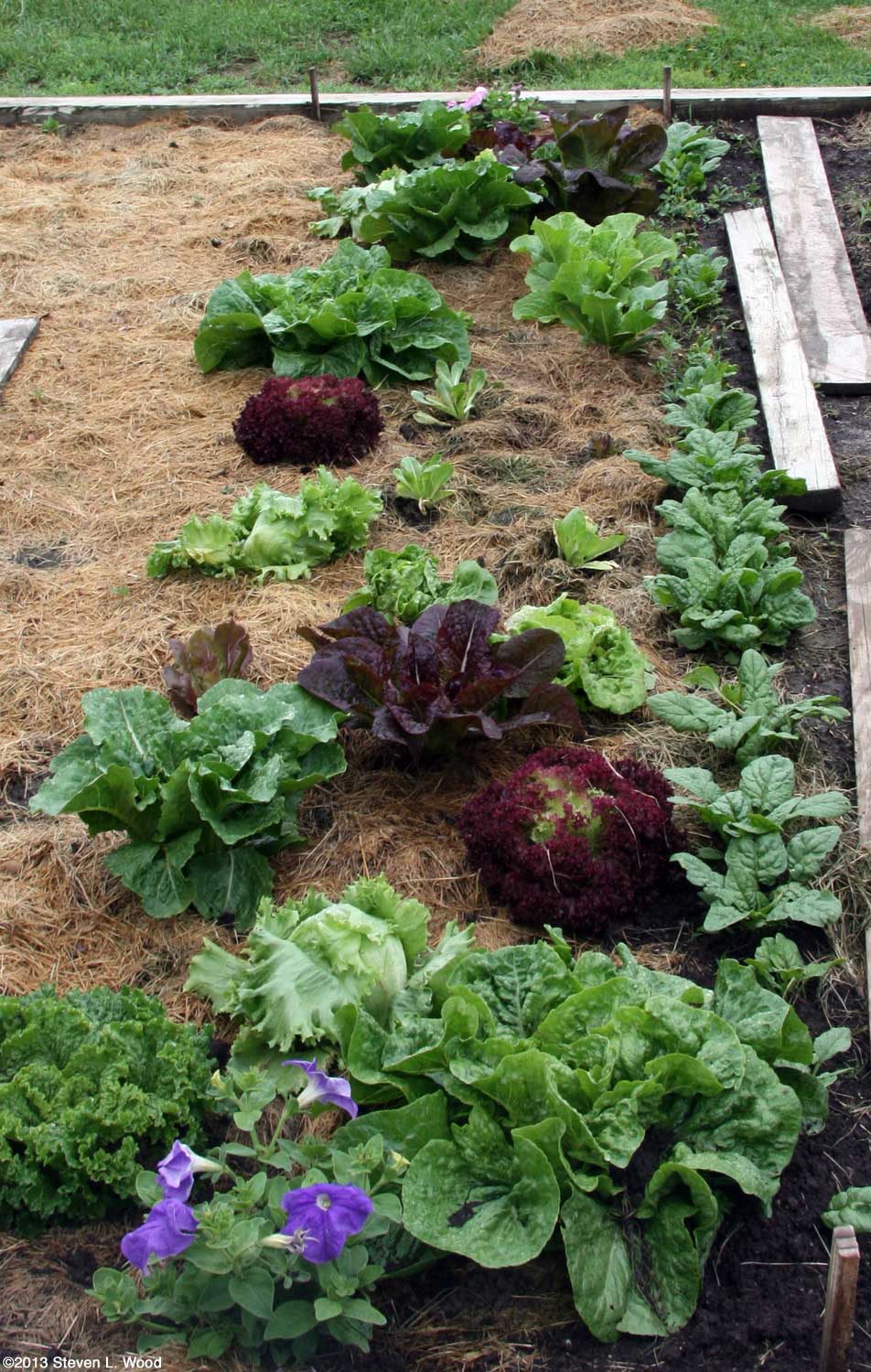
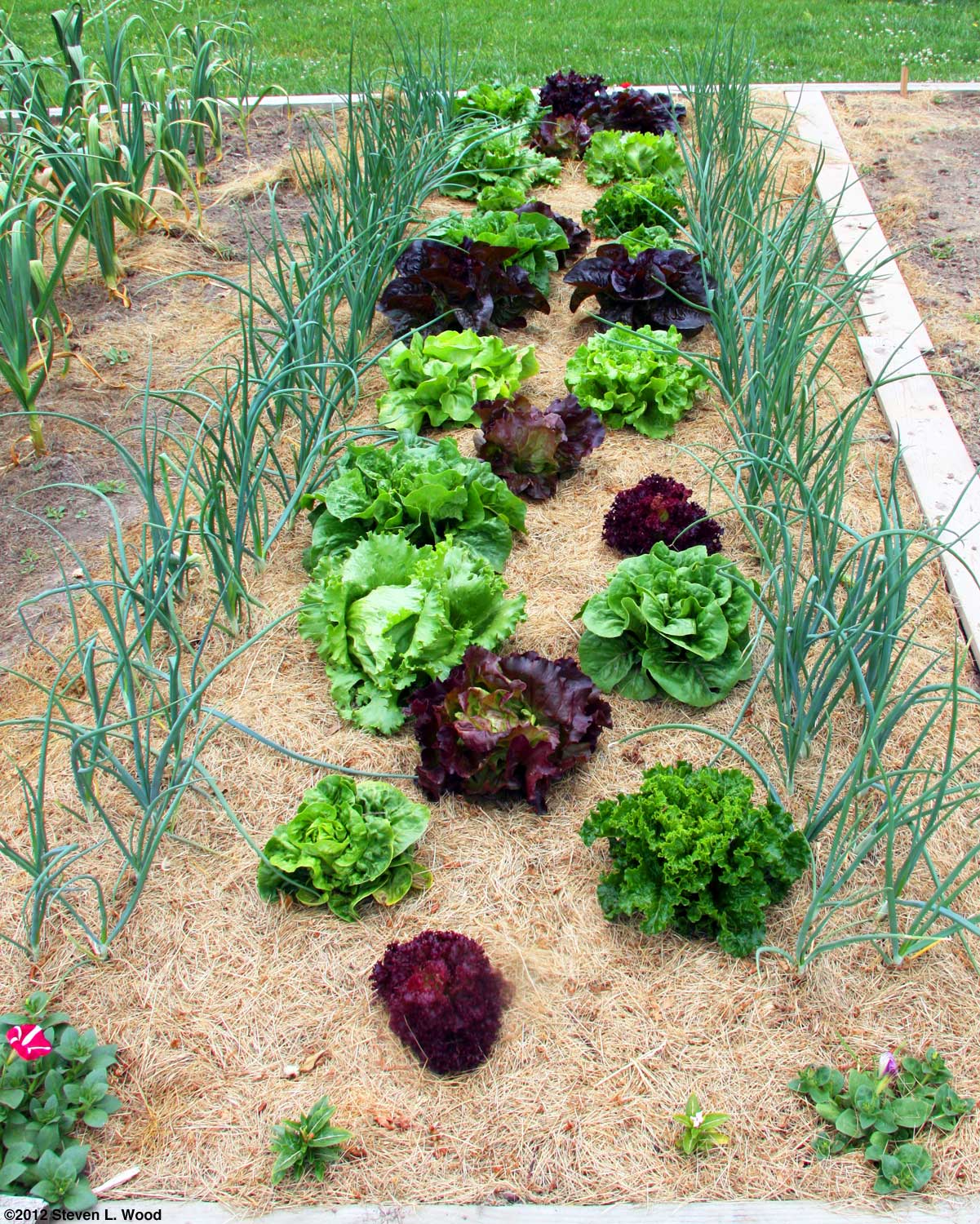
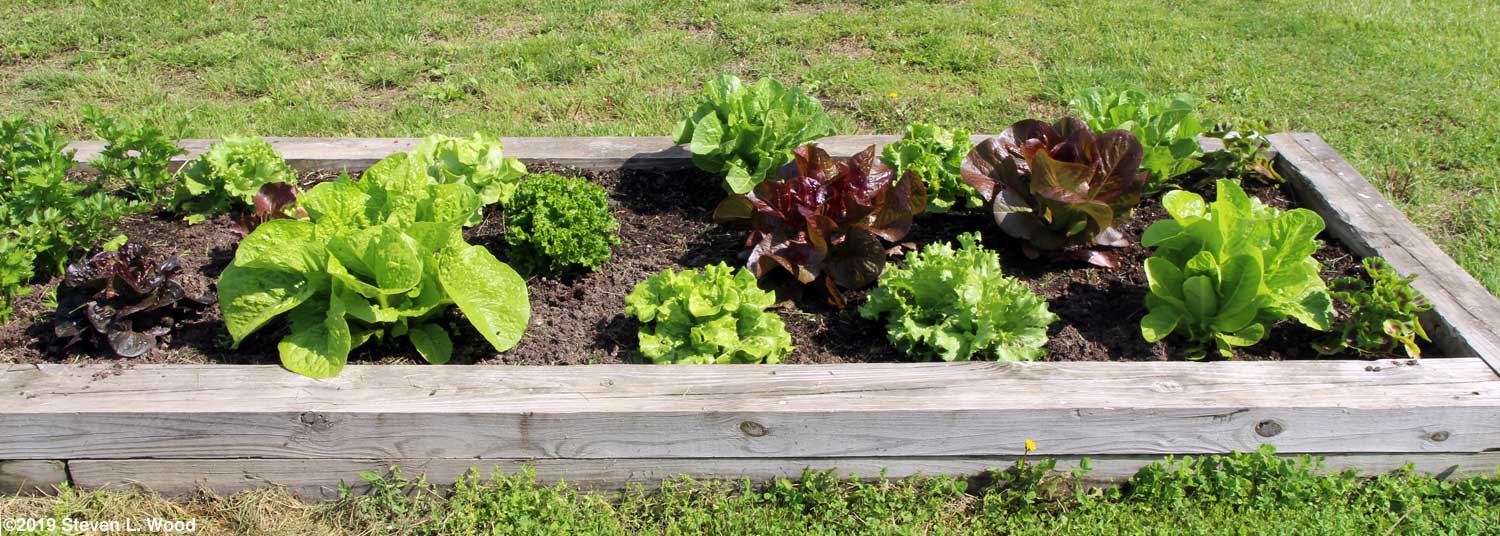
 and
and  ), and pop in a lettuce transplant, firming the soil around it. If I have it available, I mulch the transplanted lettuce with grass clipping mulch. The mulch holds in soil moisture and holds back weed germination. The downside of it is the lettuce plants when mature often have grass clippings in their base leaves at harvest.
 from it. So much for not spraying leaf crops, I've gone back and sprayed the lettuce and cauliflower several more times after heavy rains.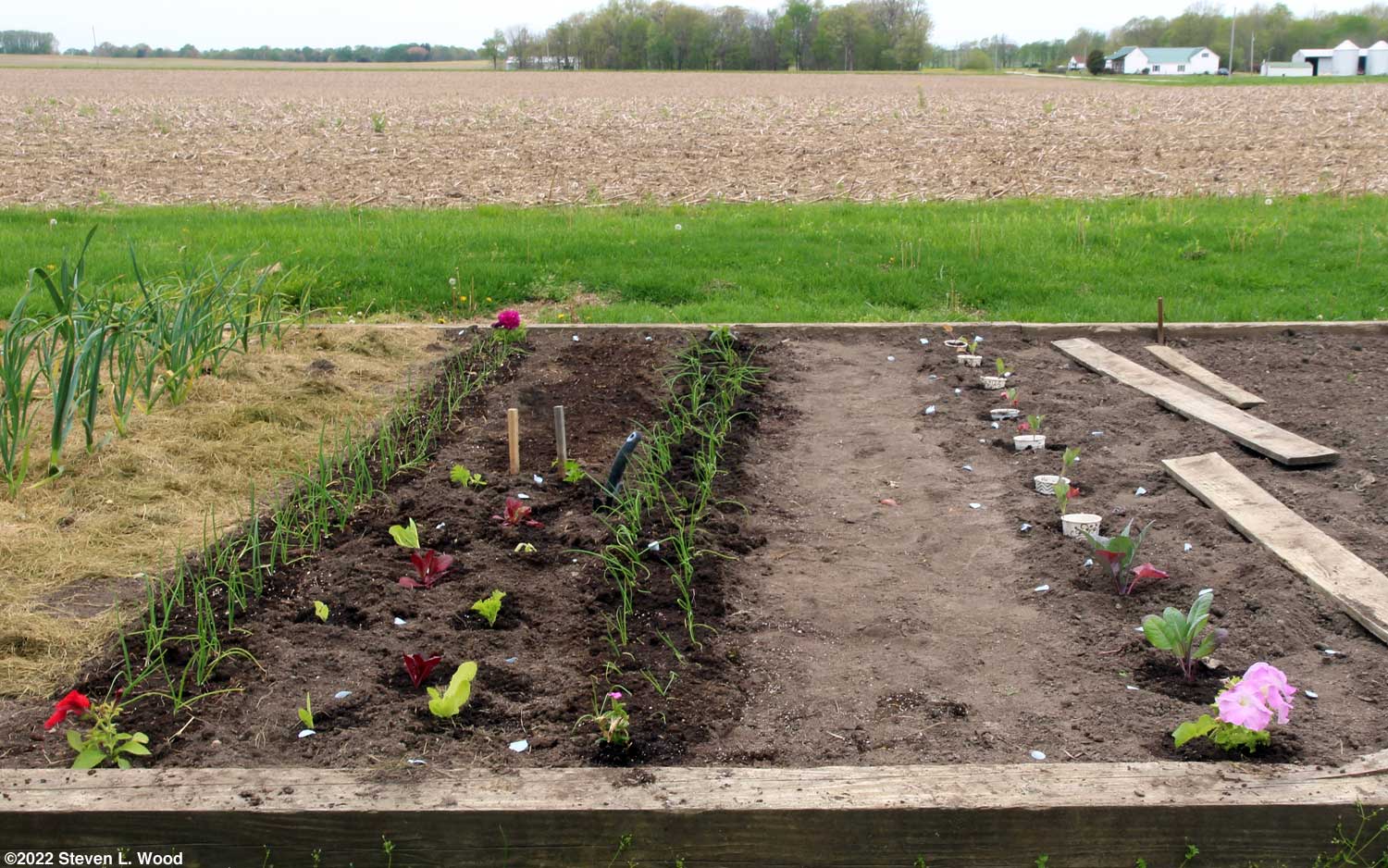


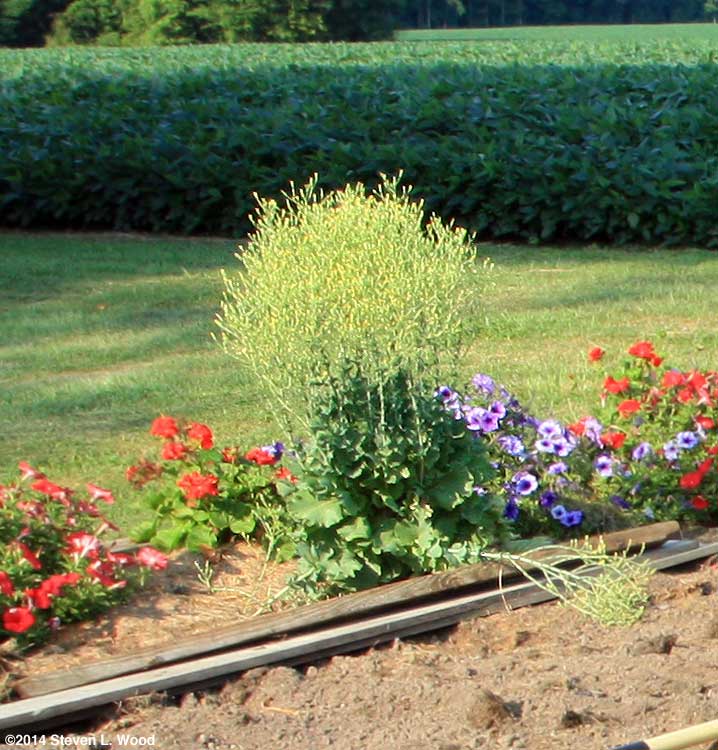
 suggests removing outer leaves from head lettuce plants and/or cutting inch deep slits in the head (an "X") to promote seed stalks emerging. Apparently, tight heads can trap the seed stalks inside the head, preventing seed production. I feel a little silly after unsuccessfully trying to save Sun Devil seed for several years. The answer to my problem