One of the Joys of Maturity |
|

| Affiliated Advertisers |
Clicking through one of our banner ads or some of our text links and making a purchase will produce a small commission for us from the sale. The Old Guy's Garden Record
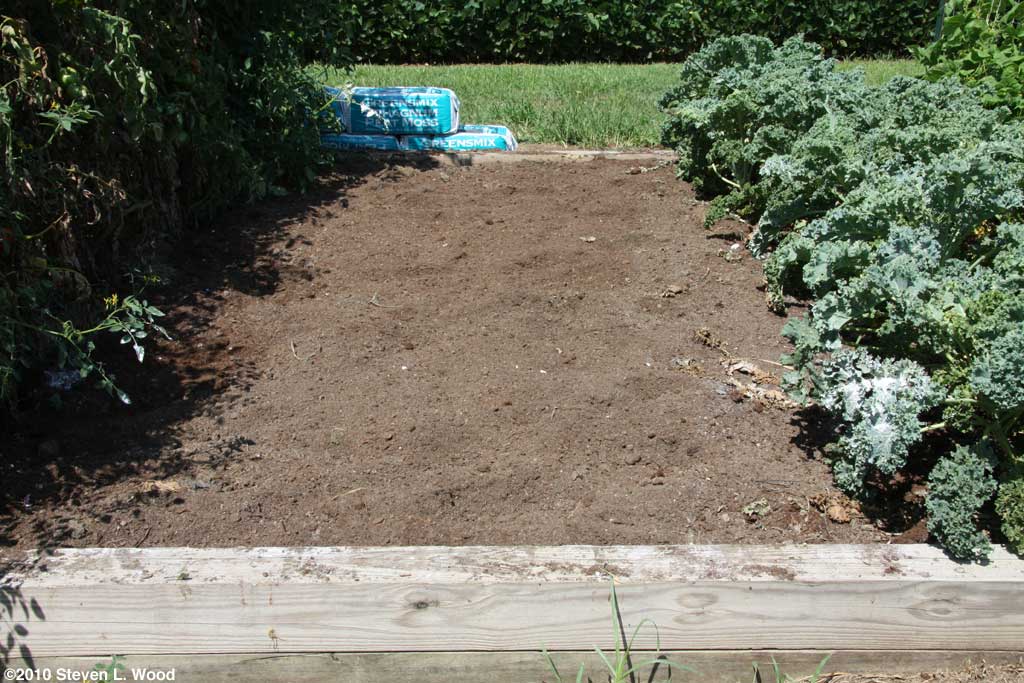
With the heat index hovering around 115o several days this week, I tried to get my gardening done in the mornings. I had several areas of the garden that needed tilling that I'd turned with a garden fork last month when I cleared them out. Wet weather, surgery, and a tiller breakdown put off a good tilling until this week.
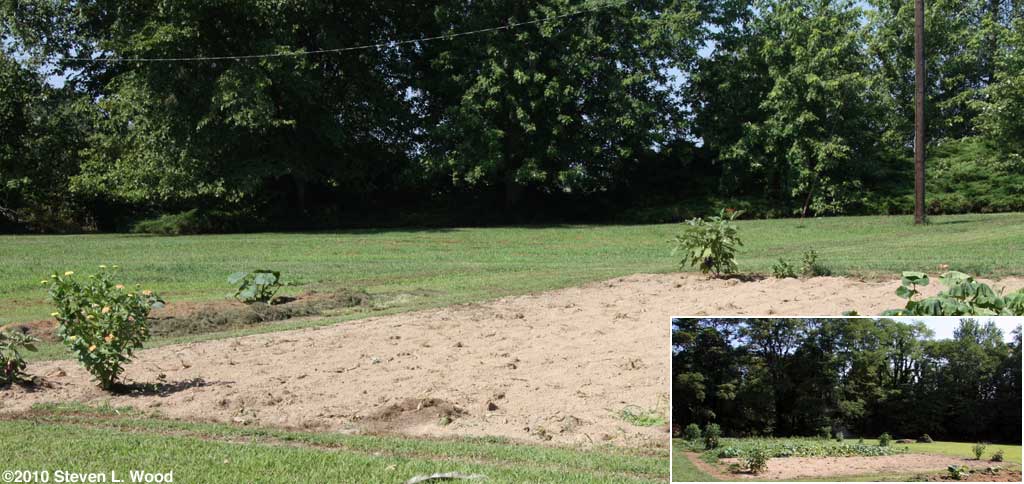
I finished cutting and composting our corn stalks yesterday and immediately tilled the ground. As I finished tilling, the mail conveniently arrived with some buckwheat seed I'd ordered from the Territorial Seed Company. I haven't grown buckwheat in years, but it's an excellent green manure crop to add tilth to tired soil. I broadcast a pound of buckwheat seed over an area 20' x 40' and raked a bit of soil over the seed. I'm not sure what I want to grow on this ground next year, and the buckwheat is definitely just an experiment.
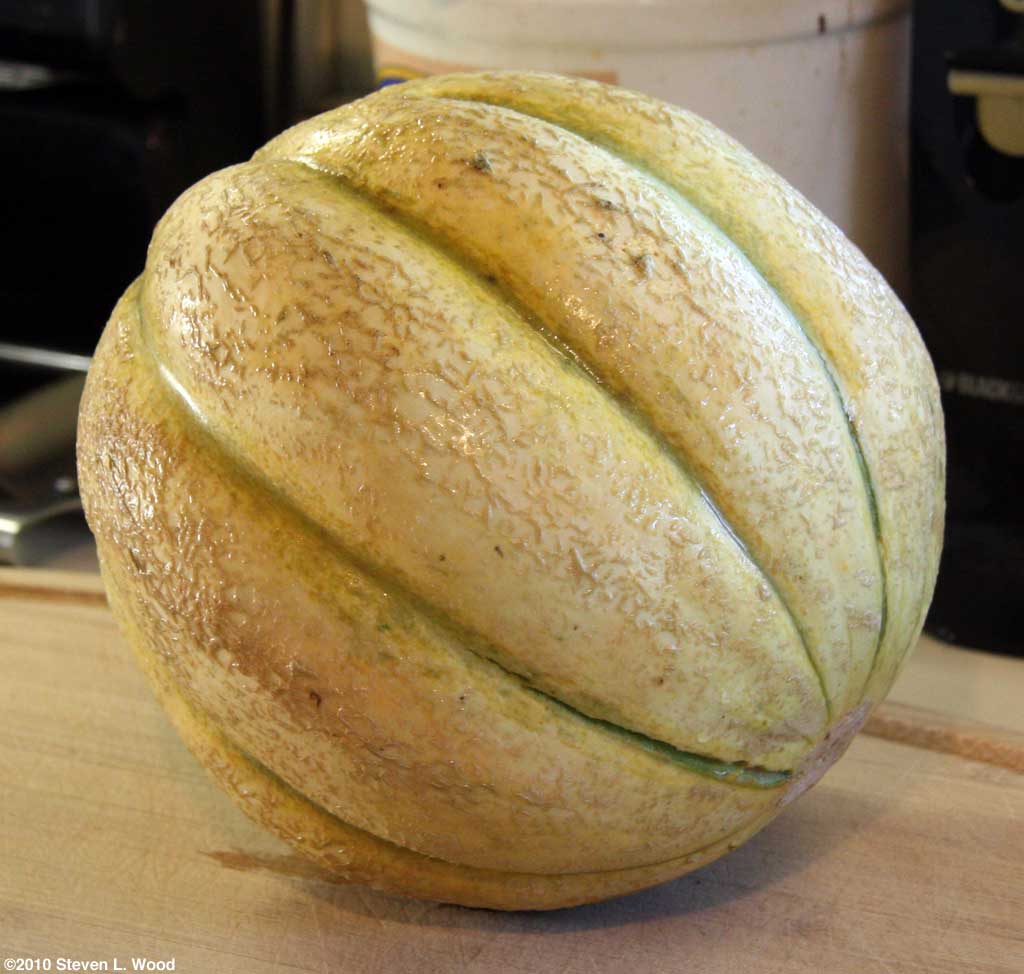
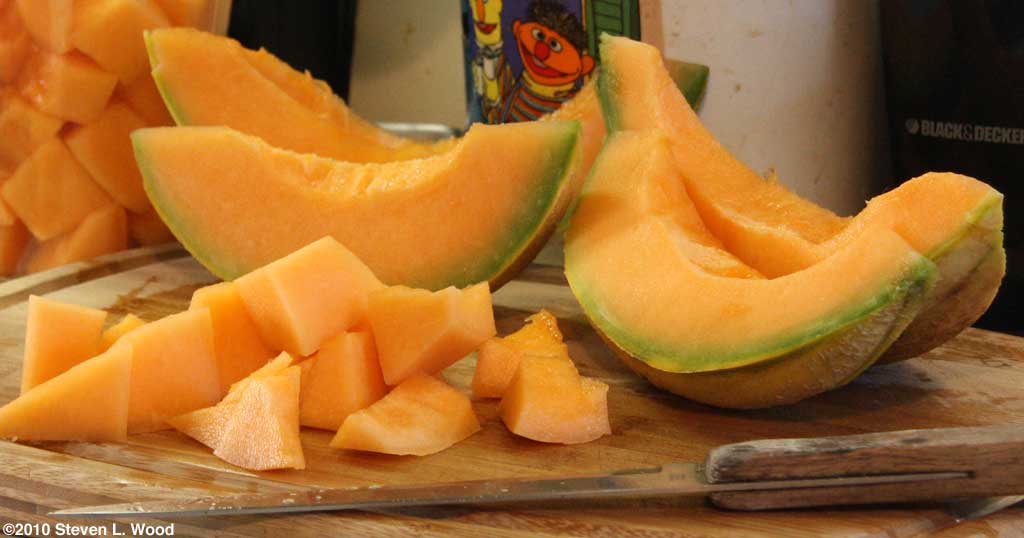
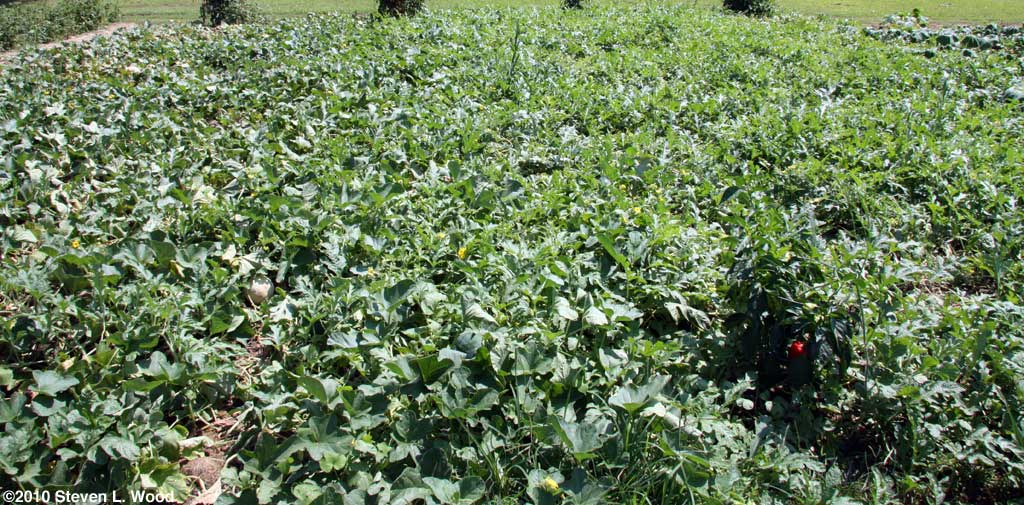
The East Garden has produced a bounty of melons this year. I really planted too many, but wanted to try several new varieties. When we'd given all the melons our family, co-workers, and friends could use, I took a marker and wrote "Free Melons" on a big box. I filled it with cantaloupe and some smaller watermelon and put larger watermelons around it and set it by the road. It's worked well.
Our Athena melons have been good, although for some reason, they didn't go to half slip or full slip when ripe for a while. Our new varieties, Sugar Cube and Sarah's Choice, both have produced good crops of tasty melons as well. Our one hill of Crimson Sweet watermelon produced several large, good tasting melons early on, but hasn't done much since then. Crimson Sweet is still one of my favorite watermelons. I wish I'd planted more of them. Our hill of Moon & Stars watermelons has produced six or seven large melons. Our new seedless variety, Farmers Wonderful, produced six or seven medium sized melons and is still setting new fruit. The melons had some seeds, but not many. This is a variety I'll definitely want to try again next year, as the melons had good color and flavor. Our hills of Kleckley Sweets watermelon (also called Monte Cristo melons) are producing lots of monster melons in the forty to fifty pound range! Kleckleys have a great flavor, but their rinds aren't all that tough, so commercial growers don't mess with them. They also have a lot of seeds, and for me, are difficult to tell when ripe.
Our local grocery is running a special this week on bone-in chicken breasts with skins, so we're stocking up in anticipation of making our first batch of Portuguese Kale Soup of the year. I remove, filet, and freeze the chicken breasts, before boiling and boning the rest to make a meaty condensed chicken broth that will be the base of our soup. I freeze the breast meat on cookie sheets coated with olive oil spray and then transfer them to freezer bags for storage in our big freezer.
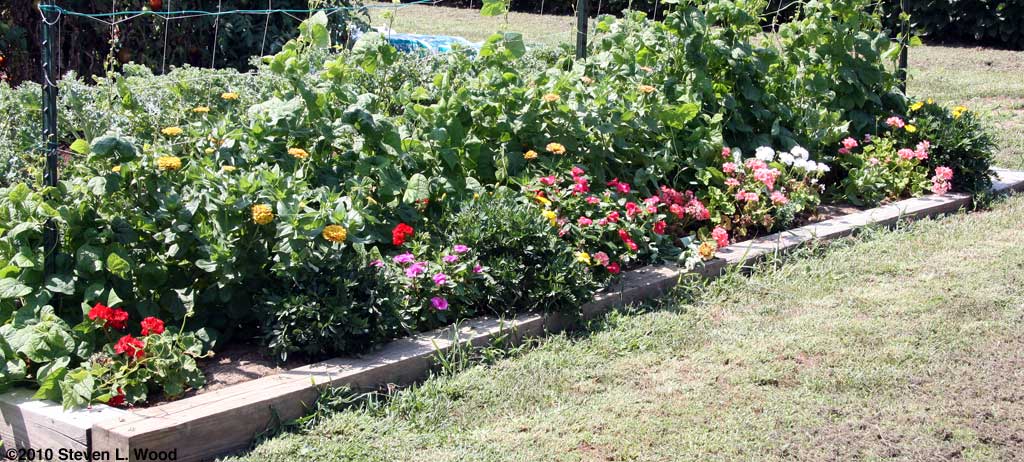
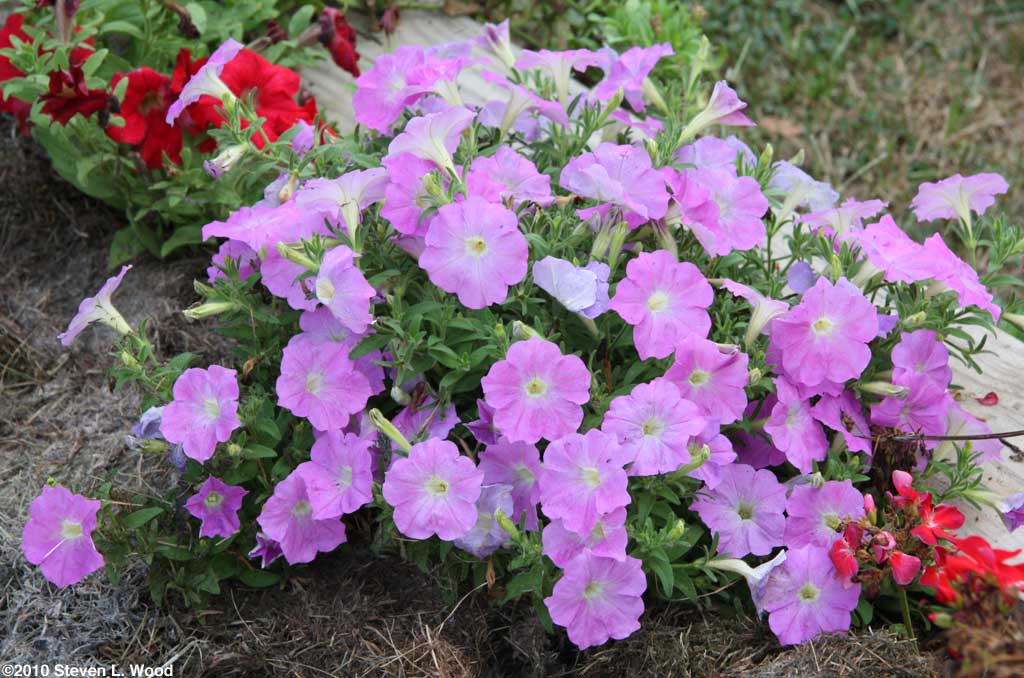
Of course, the kale soup has to compete with chicken and noodles for the chicken broth! But with the broth condensed and frozen, we're only waiting on potatoes from the garden to make our soup. We have lots of flowers in bloom around the garden this year, although not quite what we've had in the past. I foolishly got our pea trellis too close to our flowers, and the peas overwhelmed the flowers early in the season. Fortunately, most of the flowers survived being covered with pea vines and are now in full bloom.
Sunday, August 8, 2010 - What's This? While cleaning up our kale row today, I got a surprise. What I think was an immature mockingbird had taken refuge amongst our kale leaves. It persisted even when I broke away a few kale branches to get a better photo of it. After grabbing a few shots, I carefully moved the young bird before resuming my efforts with our buggy kale row.
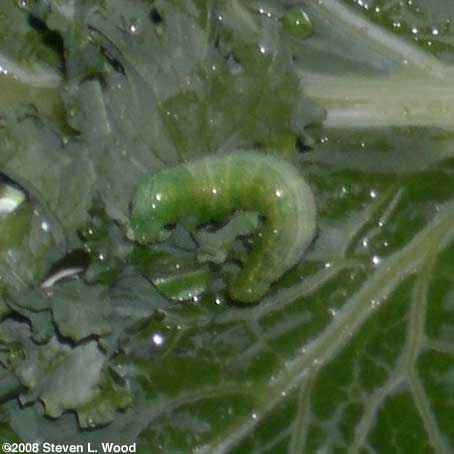
I'd gotten behind on our spray regimen for the kale, so I had a lot of nasty leaves and branches to remove. The recent hot, dry weather also has been hard on the kale. After cleaning the row, I worked in some lime and 12-12-12 fertilizer around the plants before running our soil soaker hose close to the base of the plants and mulching it in with grass clippings. Then the row got a heavy dose of the biological, Thuricide (BT - bacillus thuringiensis). The row should have enough time to put on some clean, new growth by the time we dig potatoes and need kale to make our first batch of Portuguese Kale Soup.
As I write this evening, I'm waiting for it to cool down outside and also listening for the well pump. (It makes a nasty noise when it runs dry.) Later, I'll poke seed into the bottom of the furrow one at a time before pulling soil back to cover the row. The seed will be in about 4" deep. Monday, August 9, 2010 - Sun Protective Clothing
My introduction to UV protective wear came ten years ago when I had my first skin cancer removed. The surgeon was pretty stern in his admonition of a maximum of one hour in the sun each day and that only with maximum sunscreen. For an avid gardener, it sounded like a death sentence. It takes an hour just to mow our back yard.
Let me wind up this orgy of imbedded advertising by saying that the sun protective shirts do seem effective. I still have to do the cream chemotherapy bit (Efudex) periodically to remove actinic or solar keratoses. And from time to time, I still have to have a squamous cell carcinoma removed. But putting up with wearing a treated long sleeved shirt over a T-shirt and always wearing a hat and gloves (or using sunscreen on my hands) in the garden and while mowing has allowed me to continue my passion for the outdoors and gardening.
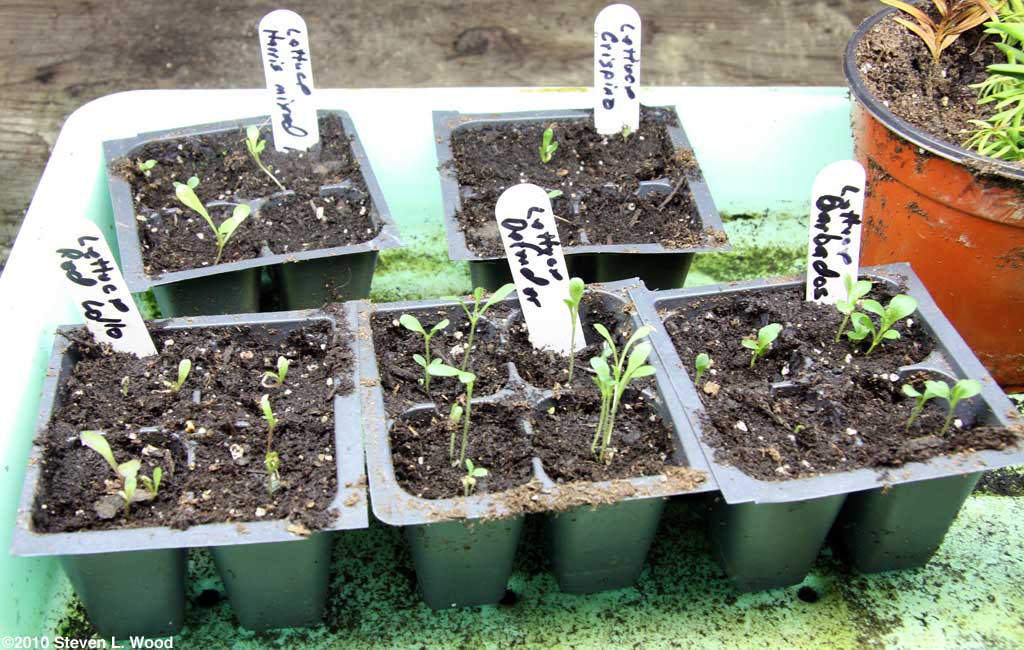
The flat above is a Perma-Nest You may also notice two, very old bottom reinforcers from coke bottles of years ago at the back of the flat. I've saved three of them for starting gloxinias. They're just the right size to hold around 20 seeds and are fairly shallow, so I don't waste potting mix. I had to restart my Double Brocade and Empress, as I forgot to add Captan Even though my "play clothes" are now treated and dry, the heat index has already reached 108o in the early afternoon. I think I'll stay inside and mop the kitchen floor (where I started the seeds and made a mess). BTW: While Amazon is a Senior Gardening affiliated advertiser, Rit, Coolibar, Johnny's Selected Seeds, and Harris Seeds are not. Links to the latter are provided for your convenience. Tuesday, August 17, 2010 - Bagworms
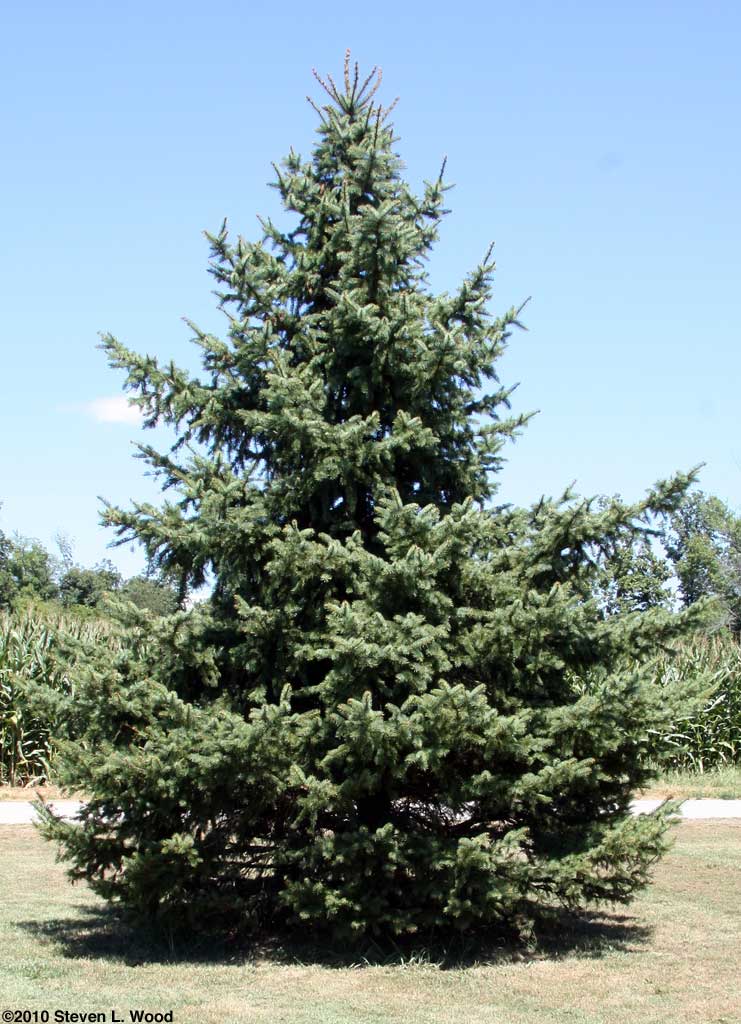
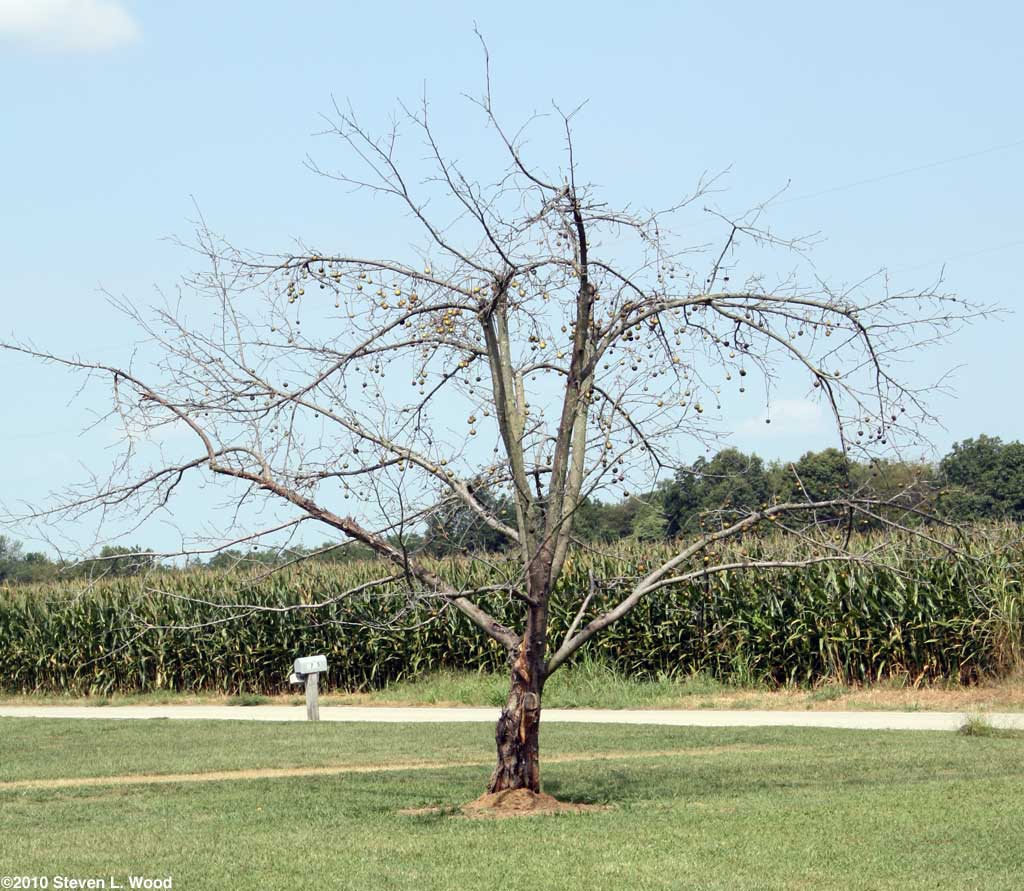
After the picking, I thoroughly sprayed the tree and the surrounding trees with the biological, Thuricide (BT - bacillus thuringiensis). Since the systemic insecticide, Cygon, was taken off the market a few years ago, I've found BT to be quite effective in controlling bagworms on our pine trees. I'll have to be vigilant next spring for any signs of infestation, as this isn't really the time to be using BT for bagworm control. That's usually in May and June. I dumped the bagworms in an open trash can I was getting ready to put out for the scavenger service. When I came back with a second load of bagworms to dump, some of the original group were hatching from their bags! One looked as if it had wings. At that point, I decided I needed to learn a bit more about the life cycle of bagworms and consulted an Ohio State University Extension Fact Sheet, Bagworm And Its Control, Penn State's Bagworm Fact Sheet, and PestProducts.com's Bagworms. It turns out that bagworm eggs hatch out from the mother's bag in mid-May, begin building their own bag and feed until August. Then they pupate for several weeks before emerging. Females don't fly, but the males do and mate with the females, only to die shortly thereafter. The female then builds the overwintering bag which is somewhat smaller than ones I picked off today. Peppers
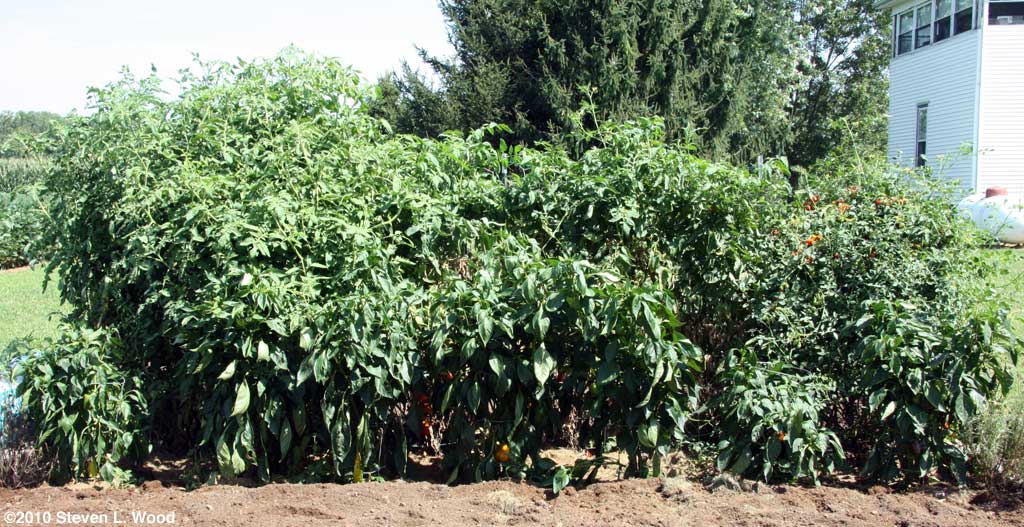
And while I noted last month that our Paprika Supreme plant had appeared to have been a cross of that variety with a bell pepper (saved seed from last summer), our Alma and Feher Ozon paprika peppers are now beginning to ripen. The Alma plants seem to be tolerating the heat better than the Feher Ozon, one of which required a bucket of water yesterday to revive it.
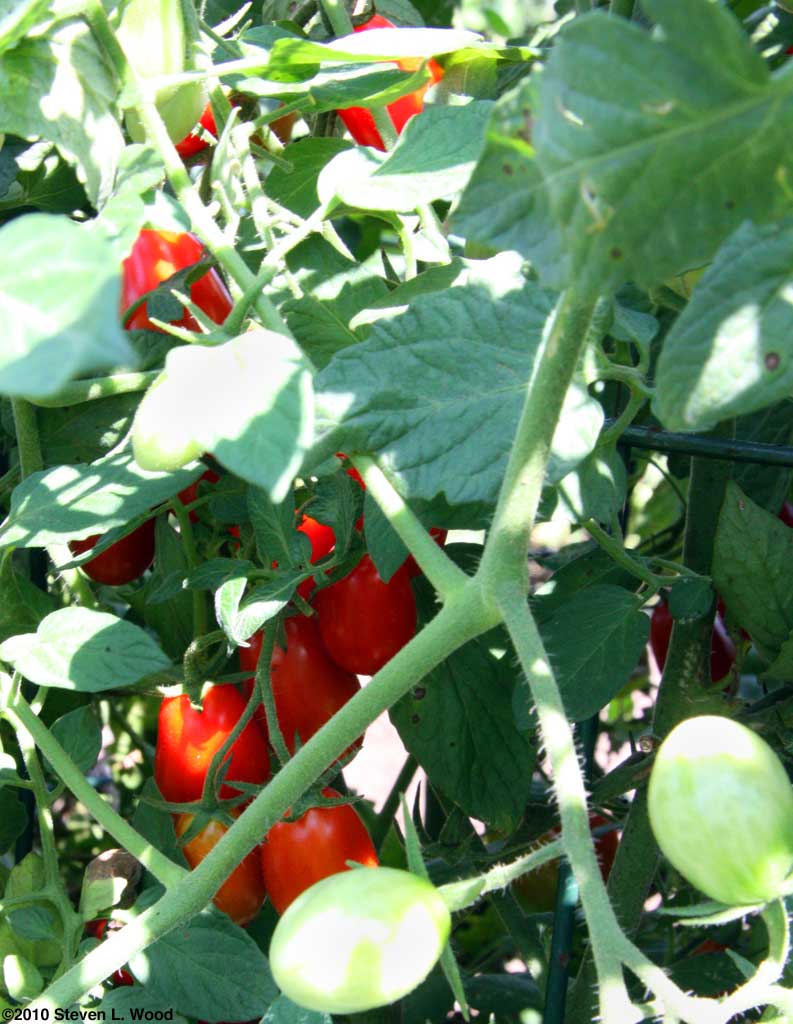
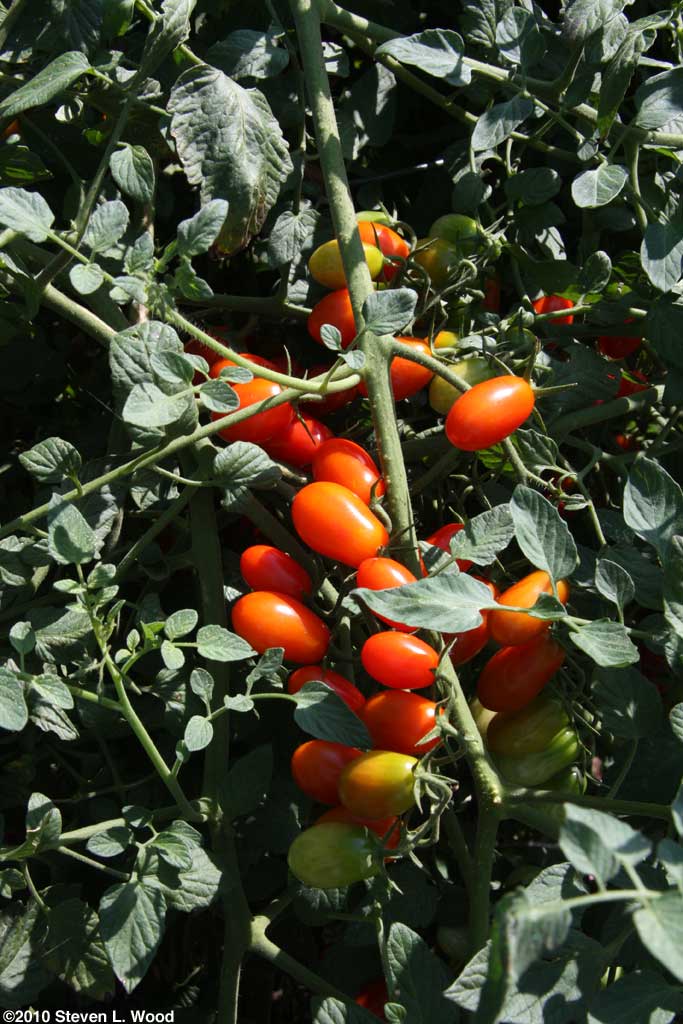
Melons We're still picking lots of melons from our East Garden. We're also getting to know lots of passers-by and neighbors who stop to pick up free melons we leave by the roadside. One neighbor commented that her young son especially liked our small Sugar Cube muskmelons. They're a bit larger than a softball and have good flavor. Our Athena melons are done for the year. They're a commercial hybrid designed for a concentrated fruit set and picking. But our Roadside Hybrids have set on several new melons, so I hope to get a few more of the delicious muskmelons. Our Everglade "seedless" watermelons have come in over the last week or so, producing nice 10-12 pound melons that look a lot like a small Crimson Sweet (striped) melon. They have good flavor, but like our other seedless varieties this year, have too many seeds to really be called seedless. We're still getting a few Farmers Wonderful "seedless" melons. They also seem to be setting on new fruit in spite of the extremely hot and dry weather. And we're still picking some Kleckley Sweet watermelons. Tomatoes I picked over a gallon of grape tomatoes yesterday and could easily have picked over twice as much. The Red Candy variety has turned out to be and excellent producer with good disease resistance. I ate a dozen or so of them while picking. They're sweet with a good, tangy tomato flavor. Our main crop tomatoes have been a disappointment so far this summer. We appear to have several tomato diseases. We're also getting a lot of cracked fruit and have had lots of bird damage to what would otherwise be good fruit. Other Stuff I've held off transplanting our fall broccoli, as the upper 90 temperatures might do in both the transplants and the transplanter! We've had a brief respite yesterday and today in temperatures, with highs only in the upper 80s and low 90s, so I may yet get the brassicas in.
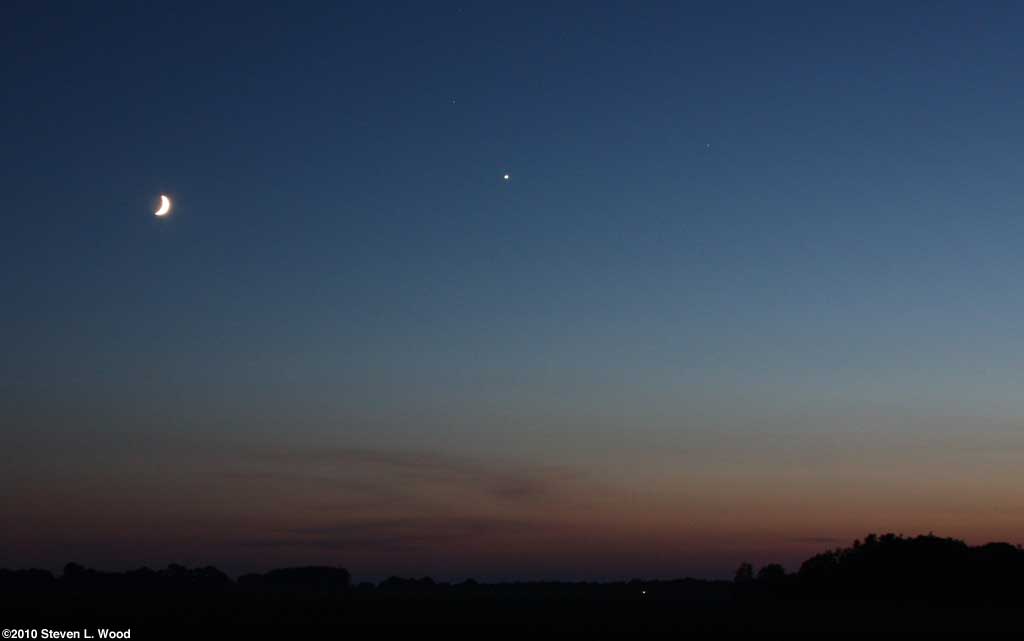
Conjunction No, I'm not getting ready to do a lesson on parts of speech here. Last week, I did several posts on my Educators' News site about the conjunction of Mars, Venus, and Saturn in the western sky. The best viewing for it was supposed to be, coincidentally, last Thursday, the height of the Perseid meteor shower. Our evening sky was cloudy, so we missed the conjunction that night, but did see a few shooting stars later on when the skies cleared a bit. But the next night, we were able to catch the conjunction in twilight. I had my camera set up on a firm tripod and got some nice photos of the conjunction. The prettiest is below. Several other shots are on the EdNews posting.
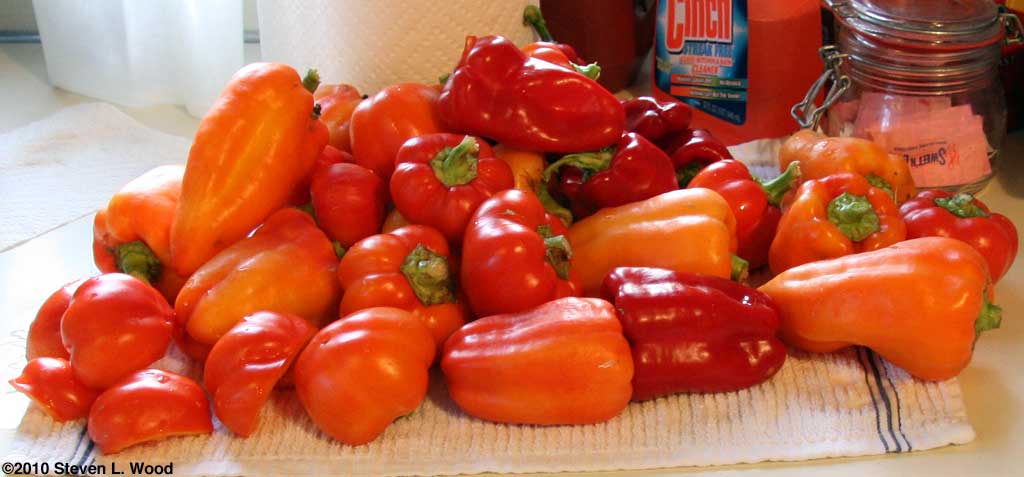
Saturday, August 21, 2010 - Paprika Peppers I wrote briefly last September about drying or dehydrating paprika peppers. We had one Paprika Supreme plant that produced enough fruit that we were able to dry and grind enough paprika for our use and our family for a year. This year we planted five paprika peppers: two Almas; two Feher Ozons; and one plant that was supposed to be a Paprika Supreme. I'd saved seed from the Paprika Supreme last year, but the plant appears to be a cross of the Paprika Supreme and a sweet bell pepper. I really didn't want to up our production of paprika this year, but I did want to try some other varieties.
The photo at right shows our small, red, round Almas, the elongated, orange Feher Ozon, and the bright red Paprika Supreme crosses. As I write, the cleaned and sliced Almas are in the food dehydrator (at about 120o F). Since we had far more than our dehydrator could hold, I decided to dry the peppers by variety and then experiment with using the paprika both straight and blended. Our main use for paprika is usually in browning chicken, but the Alma and Feher Ozon are supposed to be good in stews and hash. As I mentioned last year, Things to Do with Chile Peppers from Mike's Pepper Garden is a good page on the preservation of peppers. Possibly the World's Most Expensive Row of Green Beans
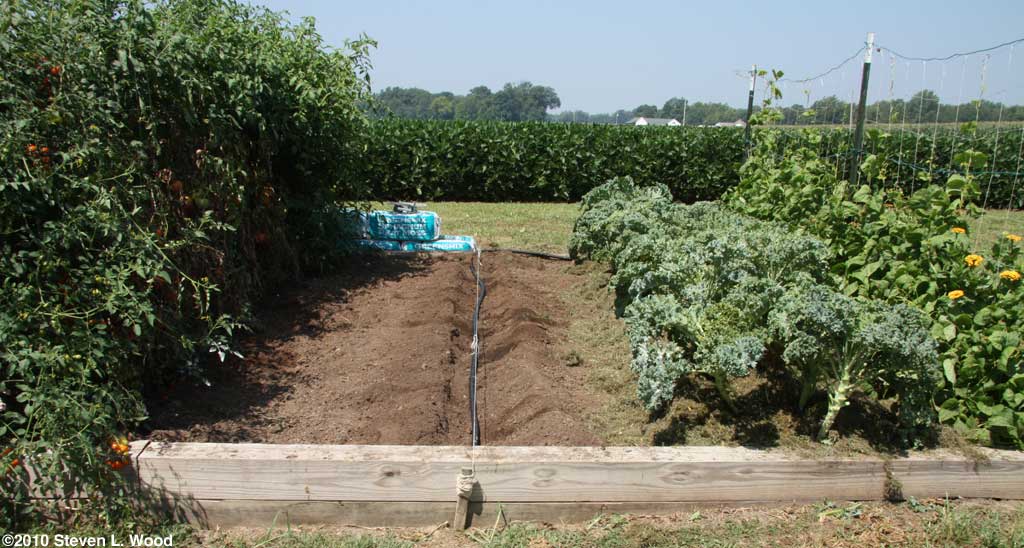
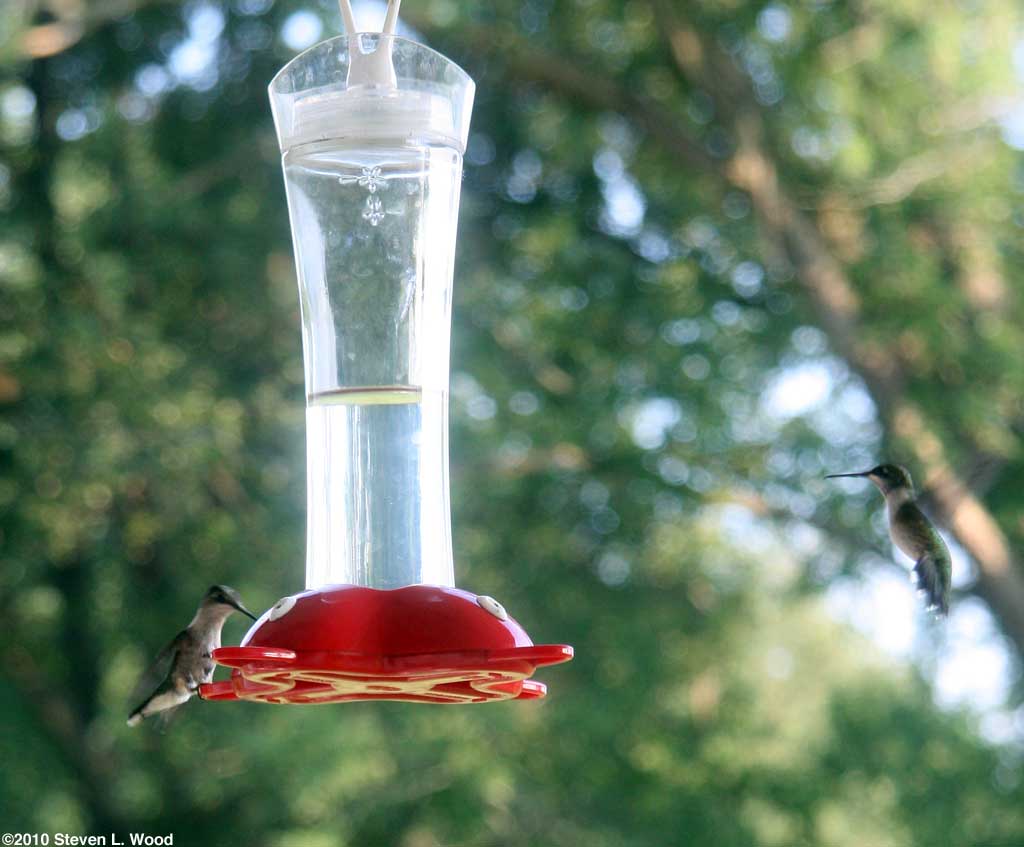
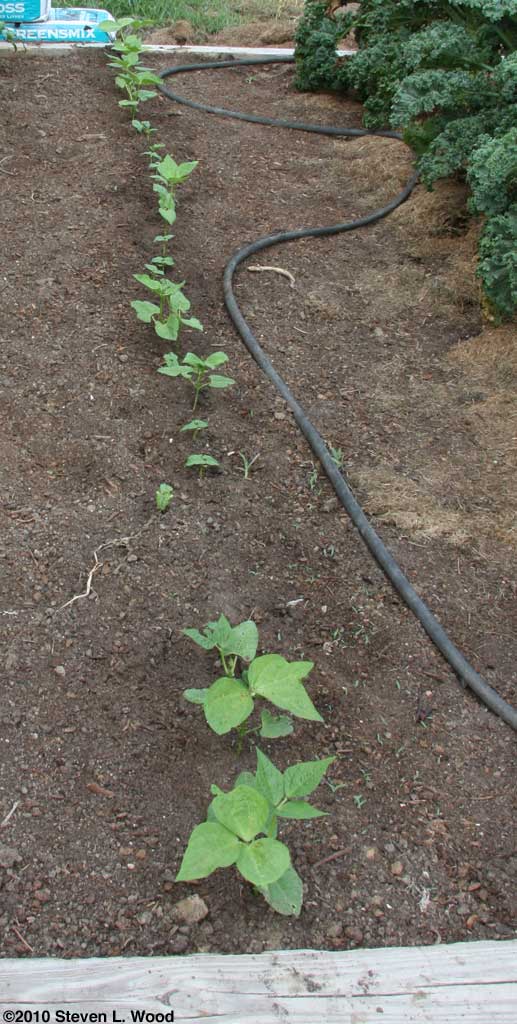
I noticed this week that we had a few, irregular green bean plants up in the row. Since the soaker was still in place, I turned on the hose to see if I couldn't help the germinating beans a bit. The soaker also runs past our kale, which definitely needs all the moisture it can get right now. I'm known in our family for being a bit absent minded. I once flooded the kitchen while taking pictures of barn swallows nested under our front porch and writing a column. Our daughters often have a good laugh at my searches at local stores for pots and pans identical to those my wife has bought...and that I've forgotten when boiling sugar water for iced tea or hummingbird nectar. Having gotten caught up in writing something for another site, I didn't hear our jet pump grinding away in the basement until it was too late. I shut off the overheated pump, but when it had cooled and the well recharged, the pump was locked up. A quick trip to the hardware store and five hours of plumbing fun restored our house to the glory of having indoor running water again. I hope those beans are the best green beans I've ever tasted. Twilight Gardening I didn't get around to picking (cutting) watermelons until around 9 P.M. on Thursday. Part of my twilight picking was due to the hot weather and part due to wanting to stay out of the intense sunlight. I had just barely enough light to fill our garden cart with a few small cantaloupes and some watermelons. It probably was our last big picking of melons. Our cantaloupe are pretty well done for the year, other than a few Roadside Hybrids that may survive the dry weather. We still have a few watermelon growing, but with the heat and the damage to the vines from walking through them to pick and carry out melons, we may be done there, too. Several of the melons went to work with Annie for distribution to coworkers. The rest went by the side of the road with our now worn "Free Melons" sign. Maybe I should put out a tin cup to help pay for the new well pump! A Good Idea
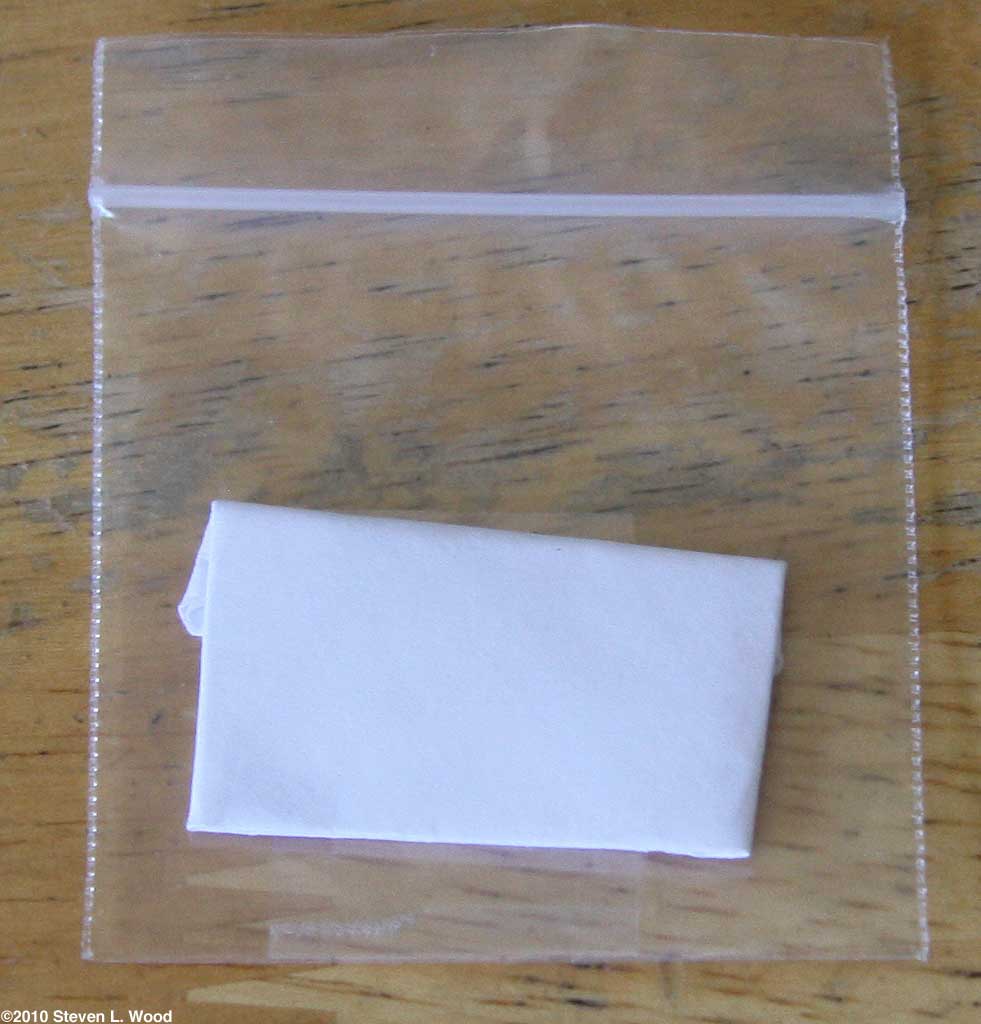
When I opened up the package of seed from John, I got a very pleasant surprise. John sent his seed in one of those small, plastic ziplocks commercial seed vendors sometimes use. Dustlike seed such as gloxinia often sticks to the plastic, and I often seem to lose some of the seed. But John took the extra step of carefully putting a generous amount of gloxinia seed in a paper wrapper, secured by a piece of tape, before sealing it from outside moisture in the plastic bag. BTW: The gloxinias are germinating in a perma-nest flat with a clear plastic cover. I uncovered them to get a clear photo. Gloxinia seed requires light to germinate, along with adequate moisture. The moisture part can be a problem. If you get the soil too wet, you end up with mold and moss taking over the planting. With good fortune, this seeding of gloxinias should begin producing blooms in January if I don't pinch the plants back to promote branching. It won't be until March or April that we'll see full flowering plants. And gloxinias do even better in succeeding years after their required period of dormancy.
My homemade plant rack holds six, four foot fluorescent shop lights. In peak plant production time, all six may be in use for just a few weeks. We generally have four units working through most of the winter, but currently are down to just three. Our Begonia Three years ago I happened to notice some marked down hanging plants at a local discount store. While I like to grow most of our flowers from seed, a red begonia just sorta called out to me that it needed a good home. Since that time, the begonia has summered on our back porch and wintered under our plantlights in the basement. It's been repotted several times, and at one point looked pretty sad. But this summer it's returned to more than its original beauty.
Wednesday, August 25, 2010 - Fall Brassicas
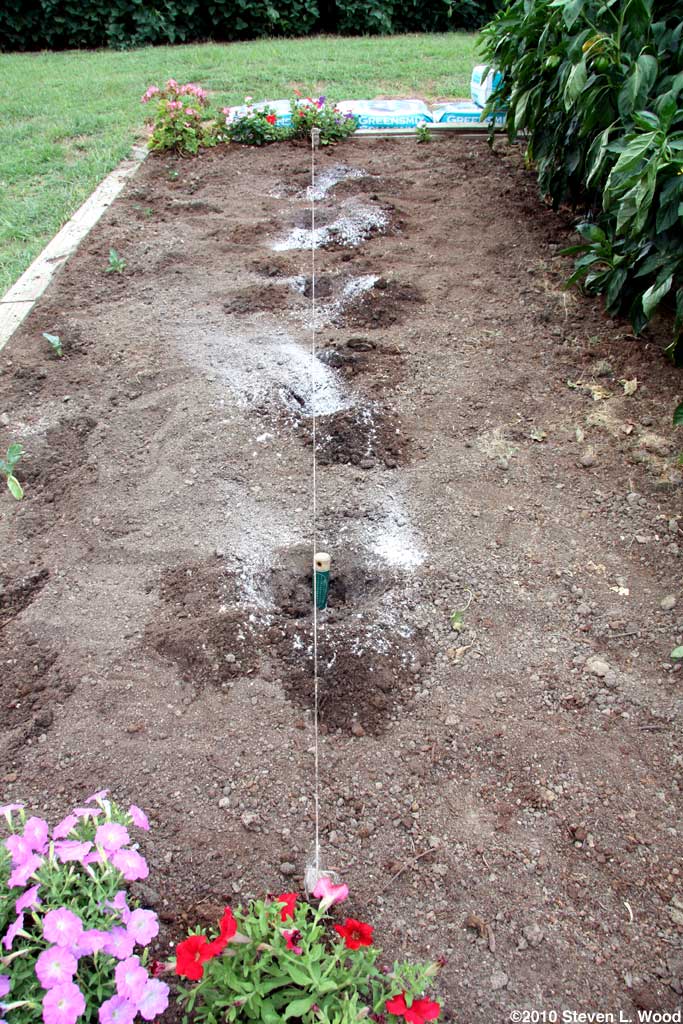
I planted three Premium Crop broccoli, six Amazing cauliflower, and one each of Super Red 80 and Alcosa cabbage. I would have planted more broccoli, but that was all that survived the rigors of hardening off on the back porch. The fall brassicas went into the area that had been open since I harvested the last of our carrots, onions, and lettuce. I'd taken two shots at renovating the area. In mid-July, I spread lime, peat moss and a bit of bone meal and turned the area as deeply as I could (10-14") with a garden fork. Going so deep, I managed to turn up some really ugly orange and gray clay.
My hard work in renovating the area was rewarded, as when I dug holes for the plants and mixed in some lime to control clubroot and some 12-12-12 fertilizer to feed the new plants, I was easily able to mix the soil a foot deep. Each hole got a generous watering of a gallon or more with a bit of transplanting fertilizer mixed in. Having enough water wasn't a problem, as I hadn't emptied the grandkids' wading pool from last weekend and used that water for most of the watering. Planting in such dry weather, I'll have to regularly haul buckets of water for the brassicas until we begin to get some good rains.
Our row of green beans is now beginning to fill in a bit after the shower on Saturday and me sticking in a bit of seed to fill the bare spots. This section was tilled at the same time as the brassica area. Saving Seed
Our Senior Gardening feature, Saving Tomato Seed, gives a bit more detail on the process. According to the Seeds of Diversity site, the Moira tomato variety was developed by Jack Metcalf at the Agriculture Canada Smithfield Experimental Farm, in Trenton, Ottawa. It was released in 1972 as part of a series of tomatoes developed there that included the famous Earlirouge variety. Although Moiras never gained the following the Earlirouge has, they are my favorite variety for canning whole and are also an excellent slicing tomato. I had Moiras and cottage cheese for lunch yesterday. Their biggest claim to fame is their deep red interiors, but the taste is great as well.
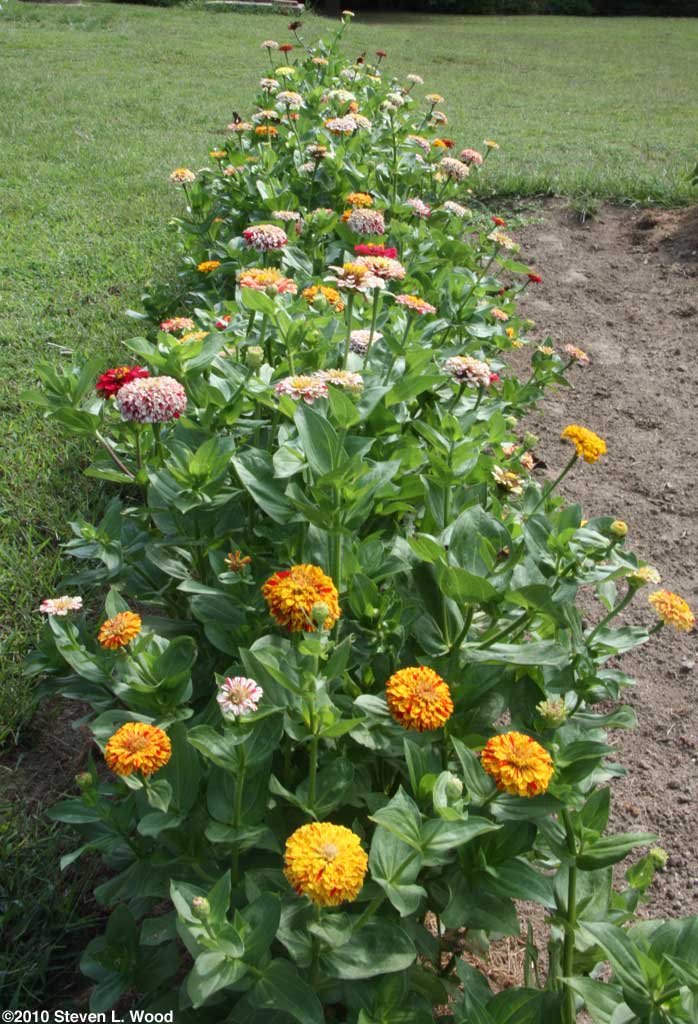
Flowers
I also noticed today that our second round of yellow squash are putting out fruit, but it's considerably thinner than usual. The dry weather continues to take its toll.
The Shumard Oak I planted on the west side of the house to replace a grand old maple that got hit by lightning too many times died out early in the summer. When I dug it up, I found that its taproot had been cut. Somehow I didn't notice that when I planted it. Rather than get a replacement from the tree vendor, I moved a volunteer oak that had sprouted in the garden to the spot where the shumard had been.
The volunteer oak is still a tad less than a foot tall, but seems to be doing okay in the heat. To protect it from critter damage and fools (like me) on riding lawnmowers and with weedeaters, I put a small tomato cage around it. To make things a bit more difficult for mice, I also wrapped some hardware cloth around the tomato cage. Together, the protective barriers often create a gleaming image when I take shots of the garden. It will be long past my lifetime before the tree provides much shade, but by going with a native tree, I hope it will be a good, healthy one.
From the
at Senior Gardening |


 )
) 





 on Amazon while hunting for protective garments some time ago. When I checked the reviews, I found one that directed me to a site that had
  garments that are all several years old and probably have all their protection washed out.

 , my favorite of all my garden hats, was on sale there, too, with free shipping. So, while writing this posting, I ordered two more hats and a
  !
! 

 tray. They're a bit expensive, but much heavier than standard flats.
 to the soil mix last month. I ended up with a nasty mess of mold over what should have been my new gloxinias for this winter.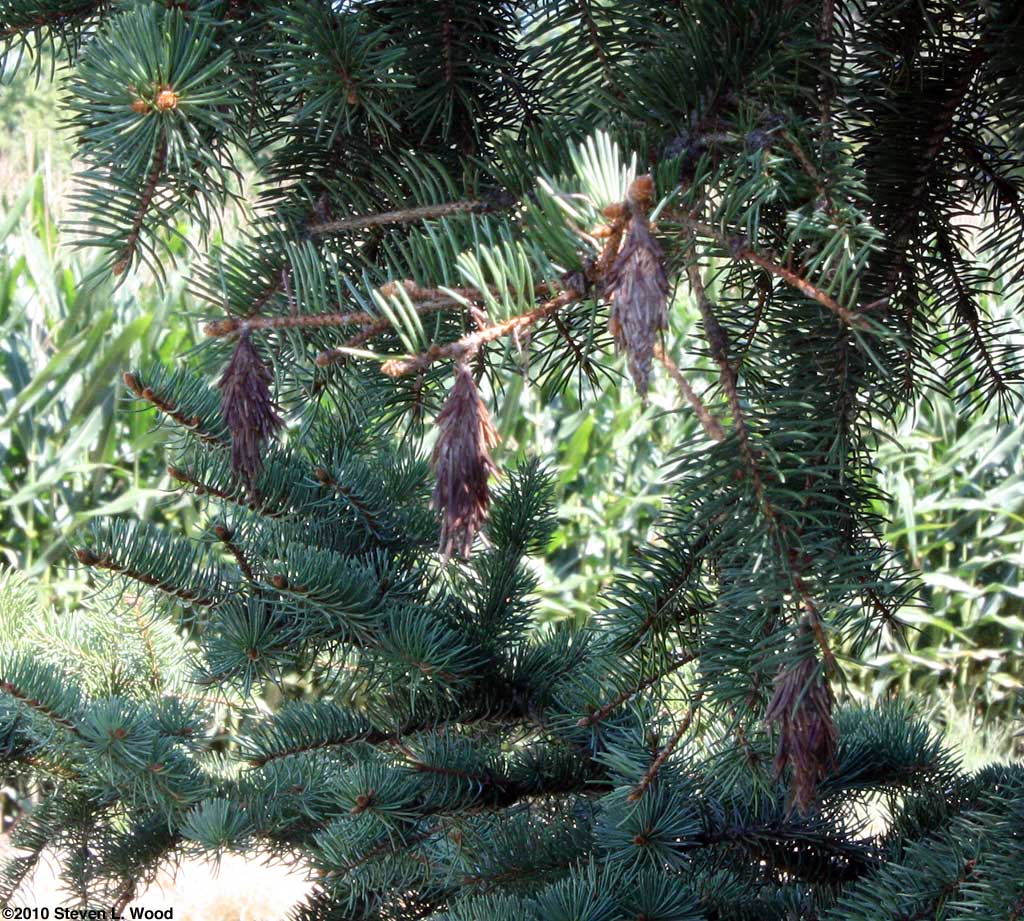












 was still accurate for holding the tomato seed at the required 122o F for 25 minutes.
©2010 Senior-Gardening.com