One of the Joys of Maturity |
|

| Affiliated Advertisers |
| < | Clicking through one of our banner ads or some of our text links and making a purchase will produce a small commission for us from the sale. The Old Guy's Garden Record
We're beginning June after a fairly dry month of May. Most of the crops we have mulched with grass clippings seem to have adequate soil moisture right now.
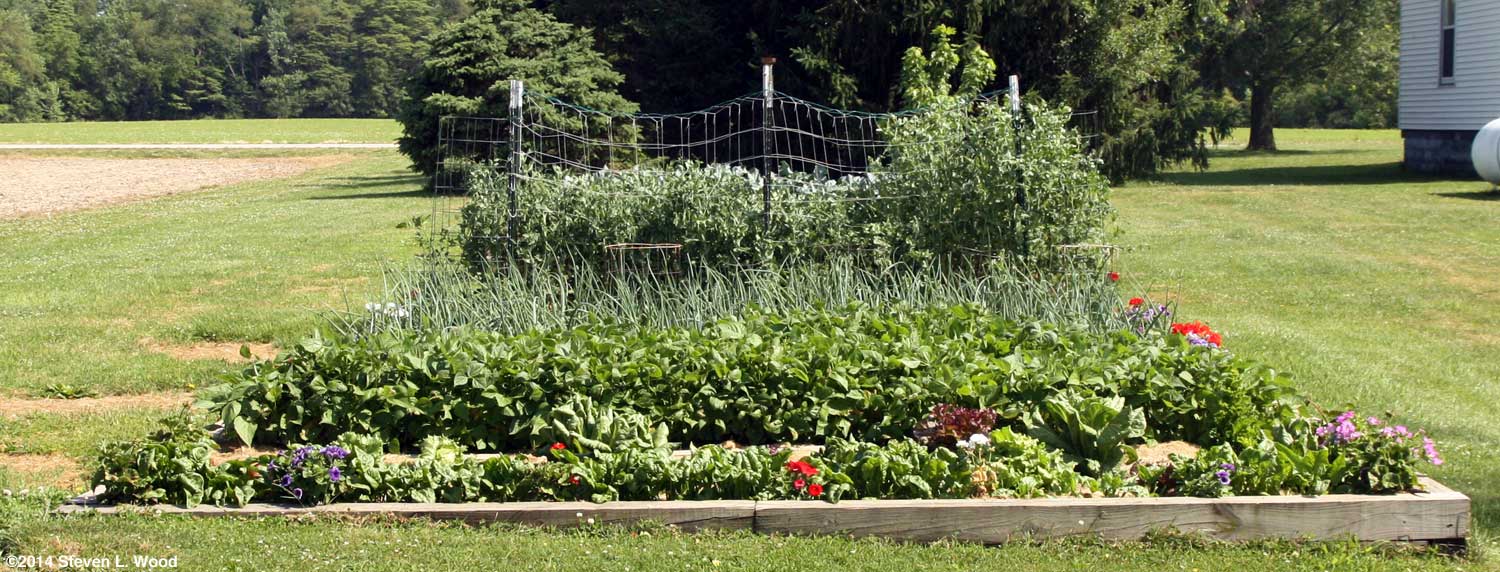
Despite the lack of rain, this is a pretty time in the garden. Crops are maturing and our flowers around the borders of our raised beds are coming into bloom.
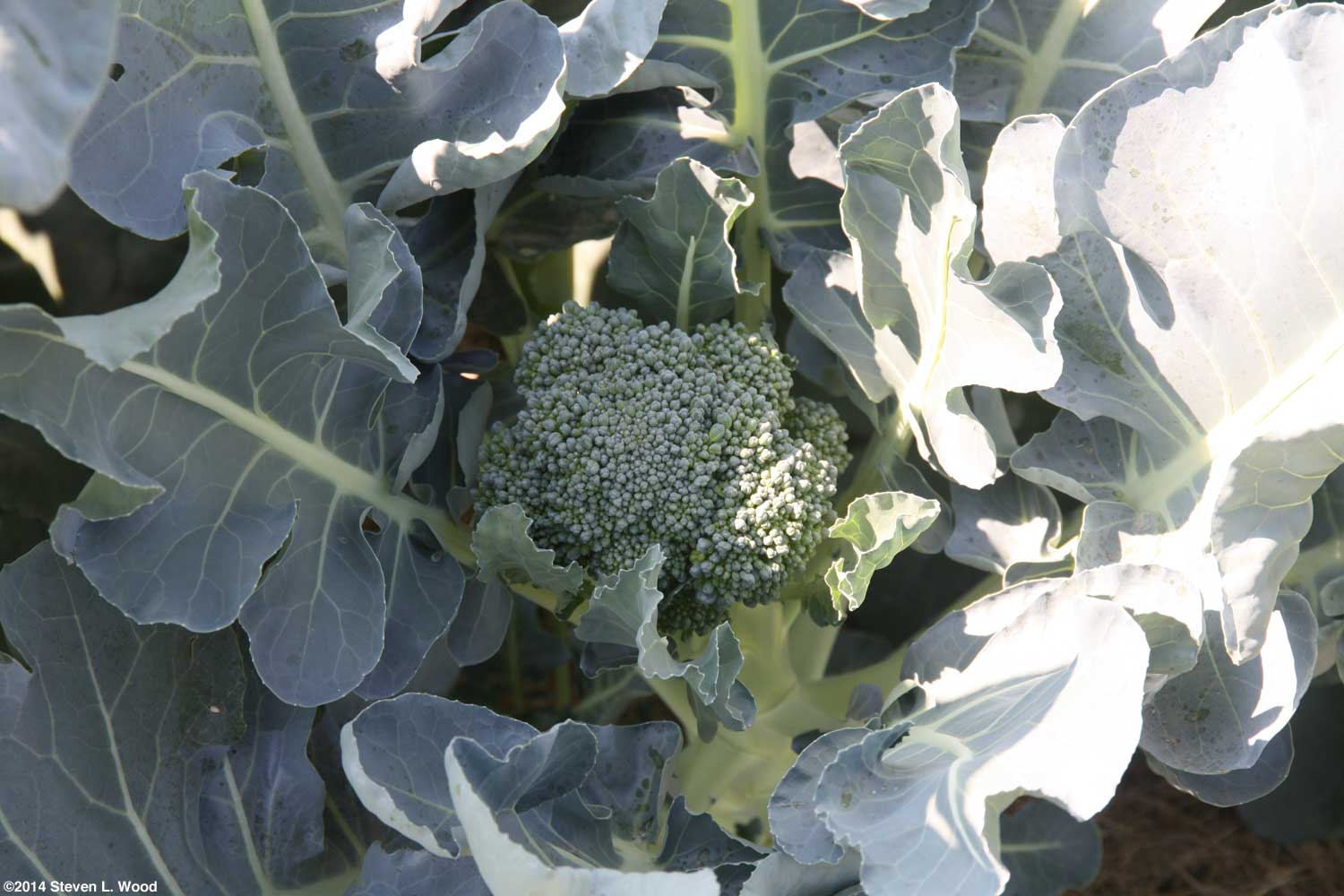
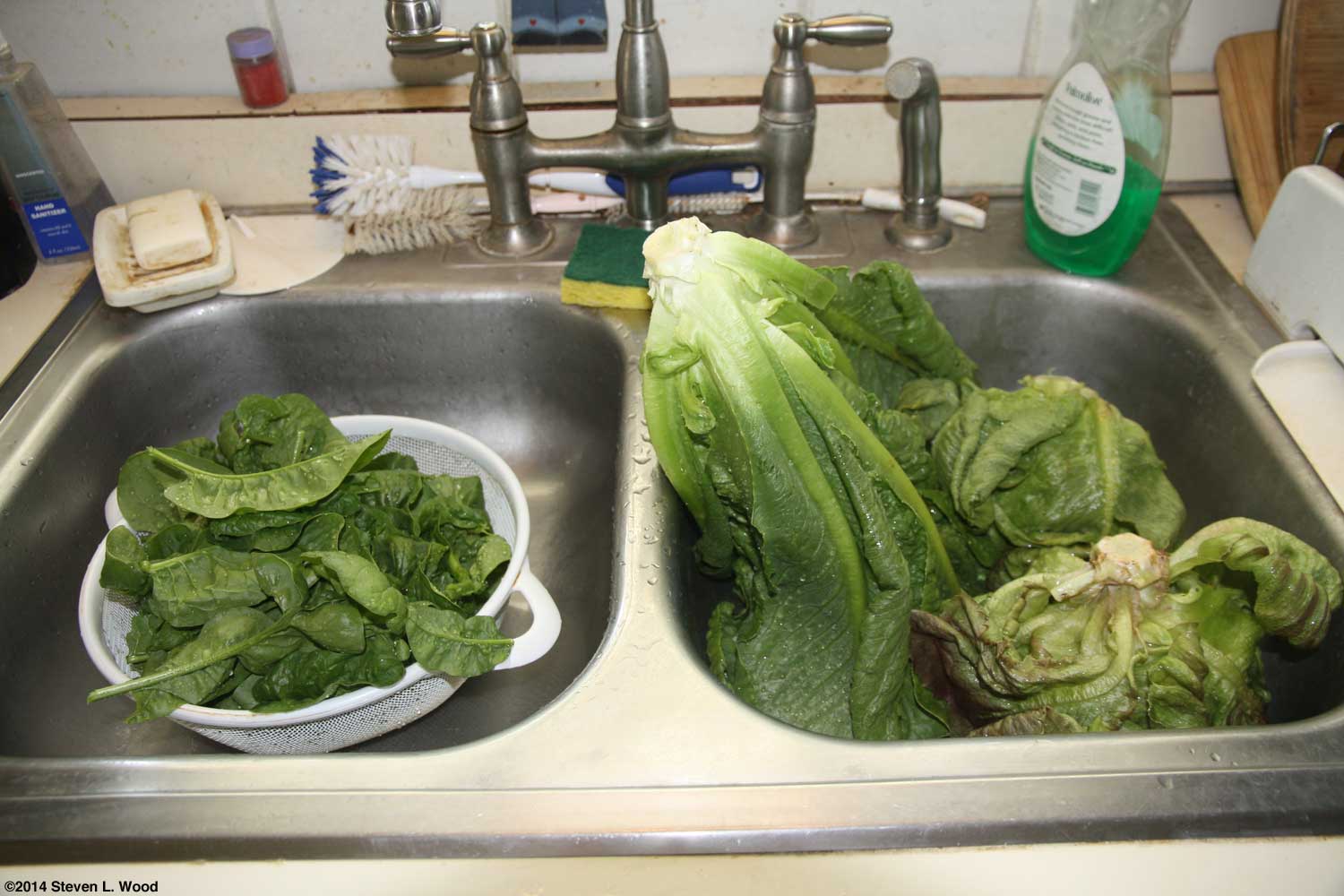
Daily high temperatures in the 80s have pushed our early broccoli into setting much smaller heads than normal. There's not much to be done for that, other than to pick and enjoy the small heads and then wait for sideshoots to appear on the plants. We also are beginning to have lettuce bolt just as we were ready to begin picking. The Barbados lettuce at right should have been picked several days ago, but had gone to seed by this morning. Fortunately, we grow a lot of varieties of lettuce each spring, knowing full well that some will bolt before we can use them. But we also picked three good lettuce this morning and some very nice spinach.
While I didn't snap a picture of them during my morning garden chores, I noticed that our tall peas are trying to fill out their pods. We have a good chance of rain tonight that could really help them along.
This evening, I'll need to spread the contents of our vacuum cleaner around the area and also spray the plants with some smelly, nasty tasting stuff to keep the deer from feasting on the newly emerged corn. The sweeper bag has "human odors" which may scare off the deer, and the Bobbex I think we're off to a good start for June!
|





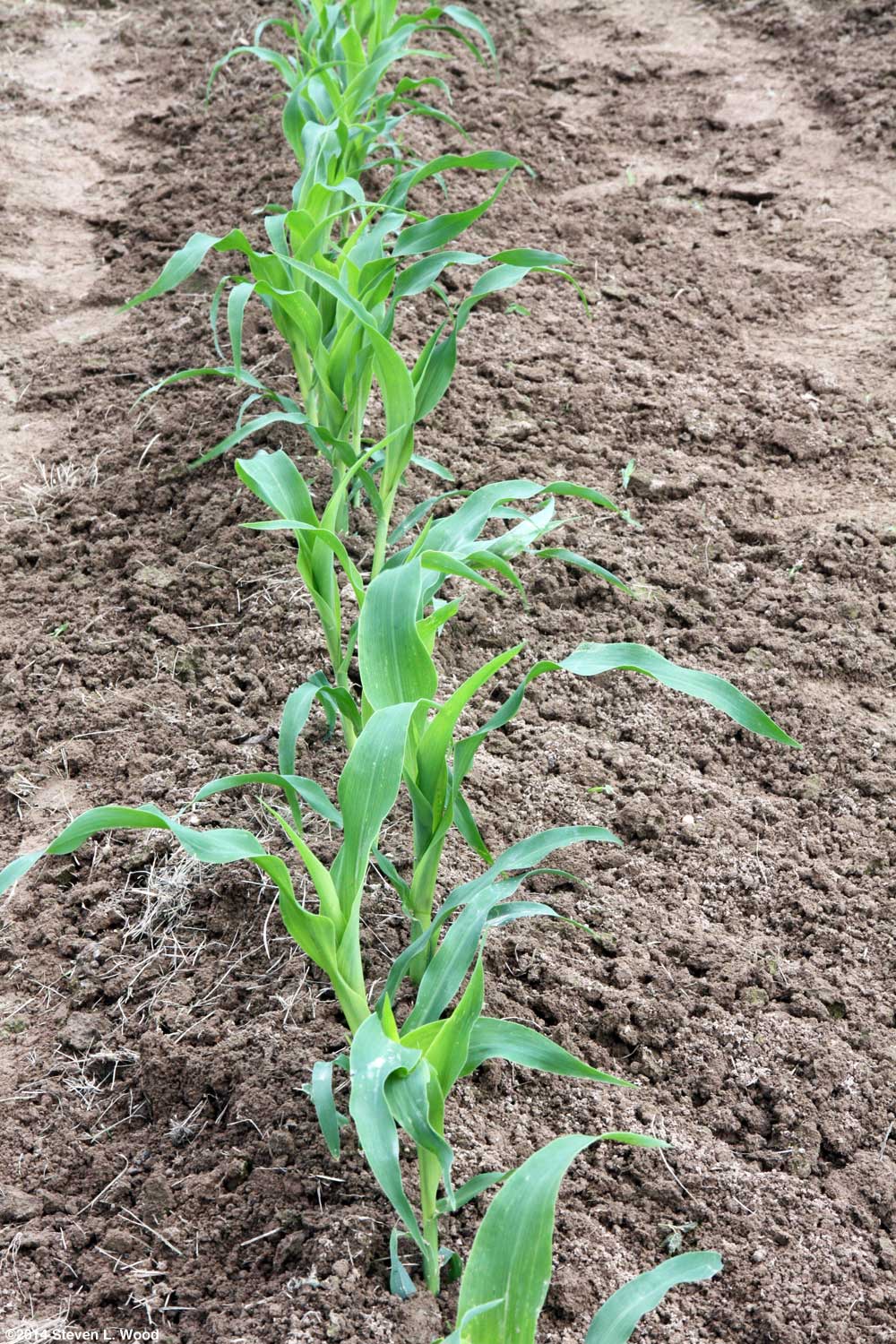
 As granddaughter Katherine and I took some kitchen and garden refuse out to the compost pile early this afternoon, she must have thought her grandpa had lost it. Passing the area of our East Garden where I planted sweet corn last Monday, I grabbed my camera and dove to my stomach. I had to get a shot of the emerging sweet corn (as if it might disappear if I didn't record it). With the soil surface like powder, the sweet corn had no business finding enough moisture to germinate, but it did!
The area looks a lot better than it has due to a half inch of rain yesterday, plus a bit more as I finished up the transplanting job. Most of our sweet corn is up an inch or more, although there are two or three five foot gaps in the seven rows of corn. If the current rains we're experiencing don't cause seed in those gaps to germinate, I have around 24 corn transplants growing in fourpacks on the back porch to fill in the gaps. While rainy periods such as the one we are in are essential to growing good crops, they can also be a time when your garden gets away from you. Heavy rains and muddy conditions may interrupt outdoor work, but the weed seeds in the ground don't go on vacation. They seem to increase their rate of germination at such times. We've had several years where weeds have almost taken over our sweet corn patch during similar wet periods. That may explain why I was out with my scuffle hoe working the ground in between our emerging rows of sweet corn yesterday and pulling the odd weed I could reach this morning from the edges of the patch. Hopefully, that will slow down the weeds until I can get back into the patch with the rototiller or scuffle hoe to cultivate and possibly work a bit more fertilizer into the ground parallel to the corn rows.
Knowing we had rain predicted for today, I mowed and raked our lawn yesterday. The amount of grass clippings was a good bit less from previous mowings, but enough to allow me to re-mulch our raised bed of garlic, beets, and celery. The initial layer of mulch I'd put down around the plants in early May had begun to wear thin in places, allowing seedling weeds to emerge. As grass clipping mulch decays, the need for such reapplications isn't all that unusual and is far easier to do than constantly hand weeding our raised beds.
Lacking old washtubs and having planted our celery in a row, I'll eventually need to use some old boards along the sides of the celery to continue hilling the plants. Note that the grandpas also kept their celery washtubs close to the back door of the house.
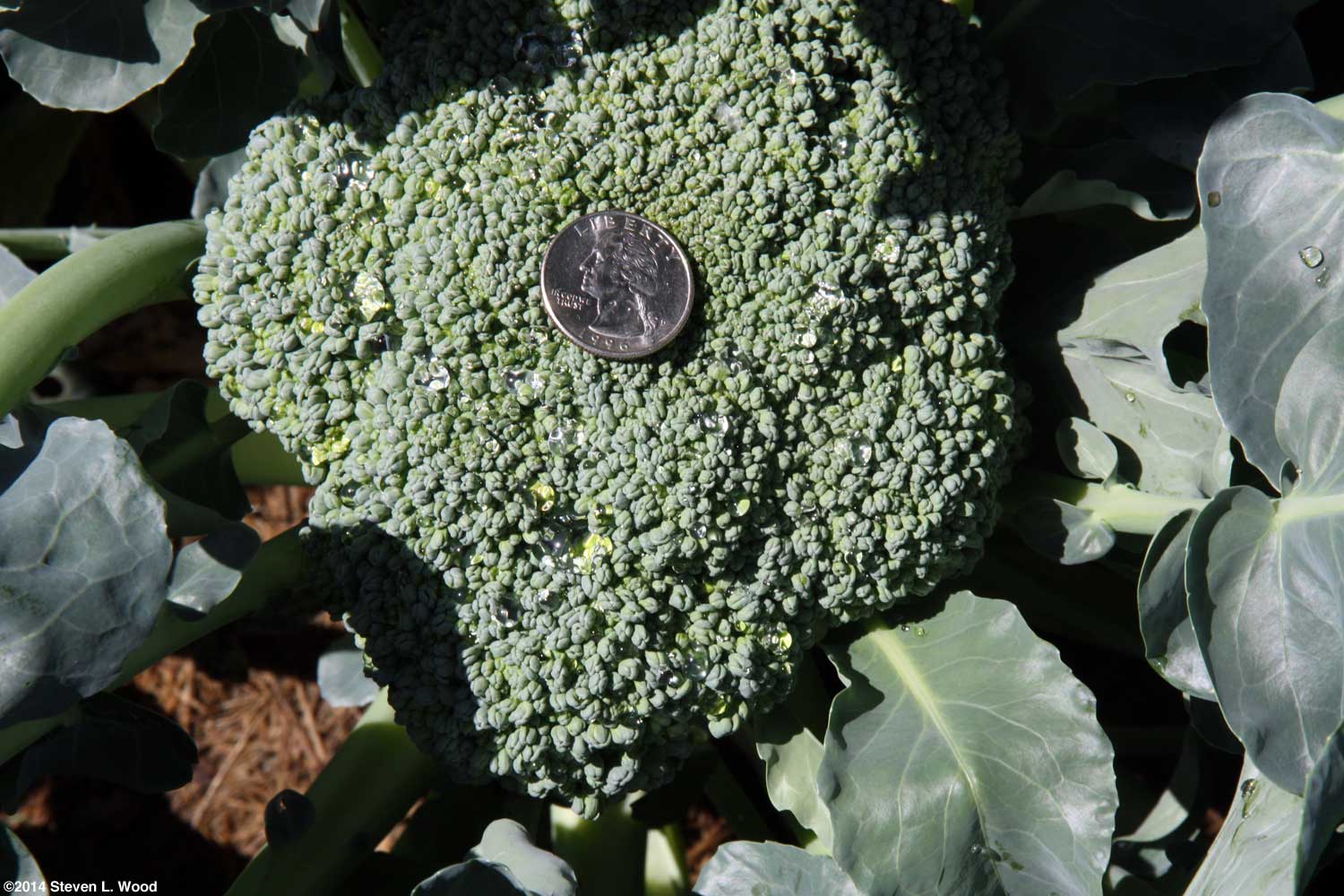
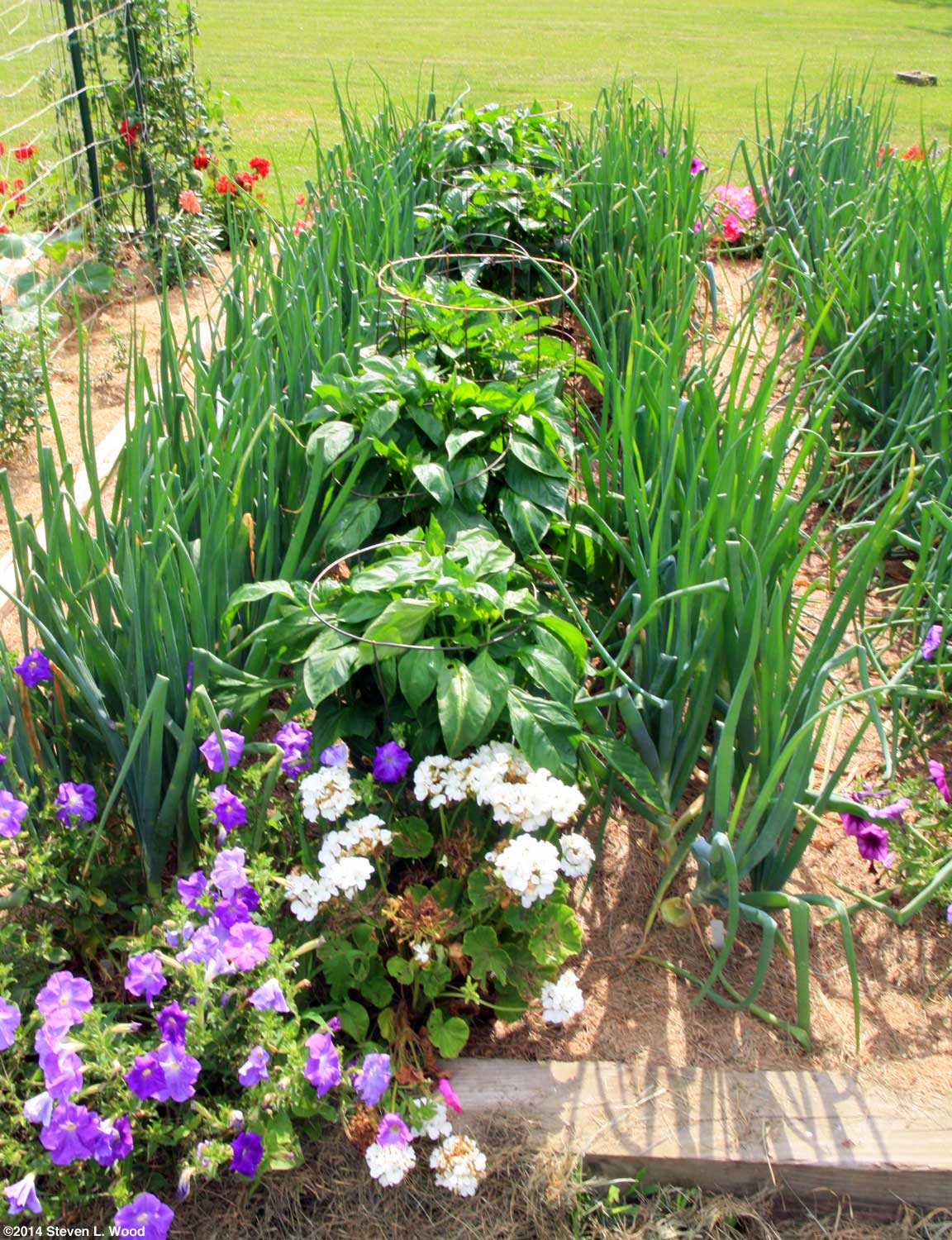
We had steamed broccoli with cheese sauce with our dinner Monday night, the first pickings of the season. It was delicious. But from the look of the head shown at left, I'd better get picking (well, cutting) again soon, or I'll have opened yellow broccoli flowers and bitter heads. Once the main heads are picked, the plants should begin putting on sideshoots, smaller but still tasty heads that come in some volume for several weeks. We also have more broccoli in our East Garden, but it's coming along very slowly and also is suffering from some rabbits that like broccoli as much as we do. Our tall peas planted between a double trellis seem to have mostly grown outside the north side of the trellis. I'd put up the double trellis in hopes that it might protect the pea vines from falling over when filled with heavy pods in the strong winds we get here. Today's windy weather may be a good test of the double trellis, as the vines are now filled with long pods that are slowly plumping. The flowers we've planted as row markers and more later as edging to our raised beds are bursting into full bloom now. While our vegetable crops will come and go in succession, the flowers stay all season, providing a continuing delight for the eyes.
Planning for the Fall Garden
Johnny's Selected Seeds provides an excellent, downloadable spreadsheet tool that can help one know when to start and/or set out stuff for the fall garden. If you lack a spreadsheet program on your computer, the one in the free, open source OpenOffice Suite works quite well. You will need to enter your approximate first frost date and then the Fall-Harvest Planting Calculator calculates the appropriate planting or transplanting dates for a good number of fall vegetables. Later
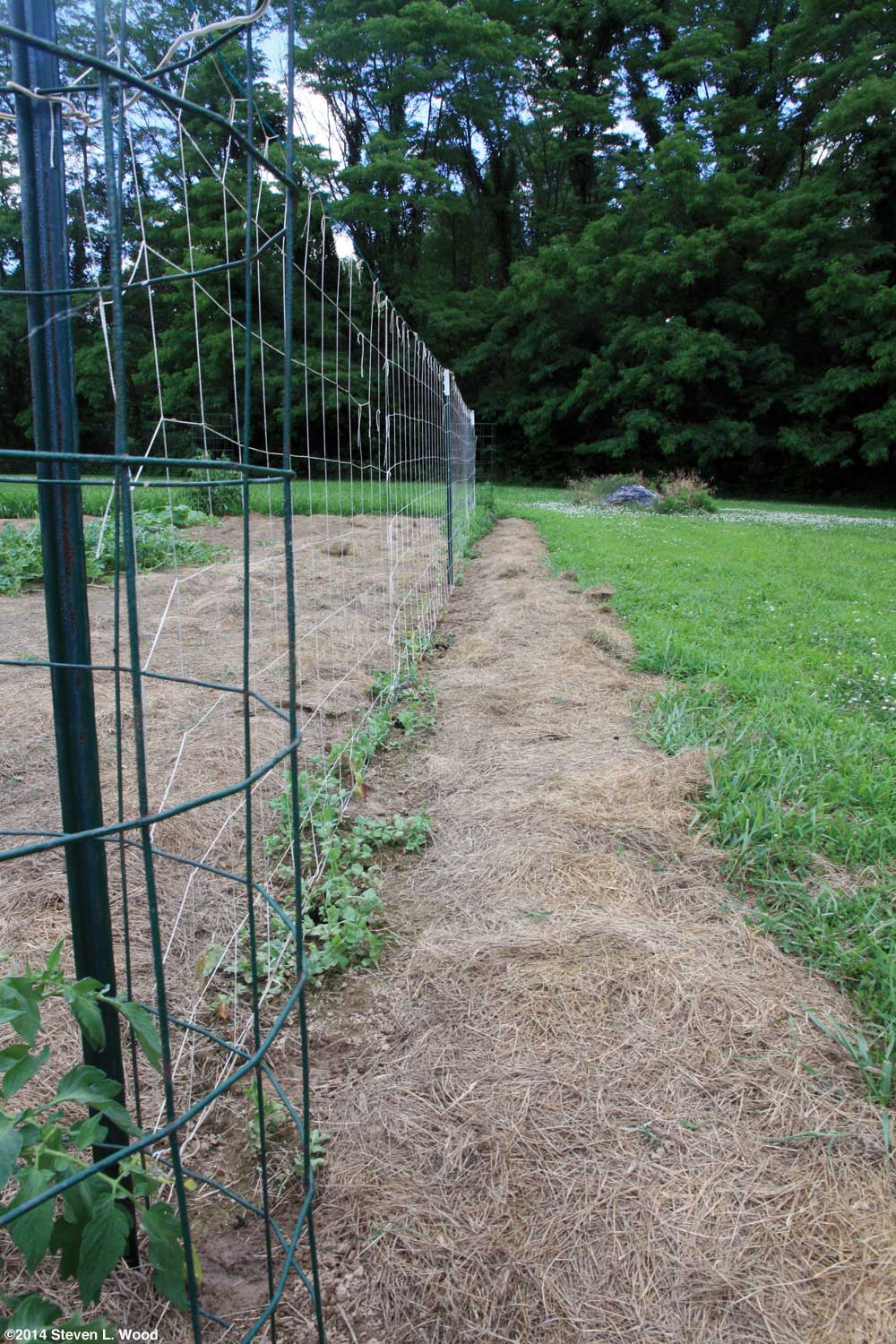
I drove a T-post into the ground between the tomato cages for support. Wiring the cages to the T-posts helps prevent the cages from blowing over when they're top heavy with fruit. Also, many of the "legs" at the bottom of the old cages have broken off.
Later, Annie and I cut broccoli and cauliflower. We got four nice heads of broccoli and two very heavy heads of cauliflower. As I twisted the cauliflower plants from the ground, Annie commented, "I guess cauliflower plants don't produce sideshoots." Sadly, they don't. We have one remote, isolation plot yet to plant. It will go to a couple of Quinte tomato plants (and my last two, very beat up tomato cages) and a short row of Mohon's Greasy Beans, a family heirloom pole bean Dennis Mohon sent me a few years ago. While we have soybeans planted all around us, the isolation plot is back by the barn, has woods on three sides of it, and is over a hundred yards from any other beans (soy or ours) that might cross with the pole beans. While we'll definitely eat some of the beans, the planting is more of a seed crop, as I'd like to help preserve this variety.
When you look closely at the ground and see grass seedlings such as the ones shown at left from our sweet corn patch, it's time to do some scuffle hoe I started working on the weeds last evening and finished the job this morning, hoeing the aisles between our seven rows of corn and the nasturtiums and kidney beans adjacent to the sweet corn. With care, one can use a scuffle hoe right up beside plants in a row, seriously cutting down the amount of bending down and hand weeding in the row one has to do.
After I finished scuffling the corn rows, I took the time to spread some grass clipping mulch along one side of our row of just emerging nasturtiums. The mulch will help keep grass from overwhelming the now tiny seedlings. Weeding on the other side of the row will be accomplished with the scuffle hoe and tiller.
This evening just before sundown, I ventured back out to the sweet corn patch with some seed I'd soaked for several hours and some ACcentuate MRBC bicolor corn transplants to fill in gaps in the rows where seed hadn' t germinated. Most of the transplanting and reseeding took place in the area I'd seeded to the Mirai 002 variety. I'm waiting on a controlled germination test I started today with some of the seed before making more than a suggestion here that we may once again have seed quality problems.
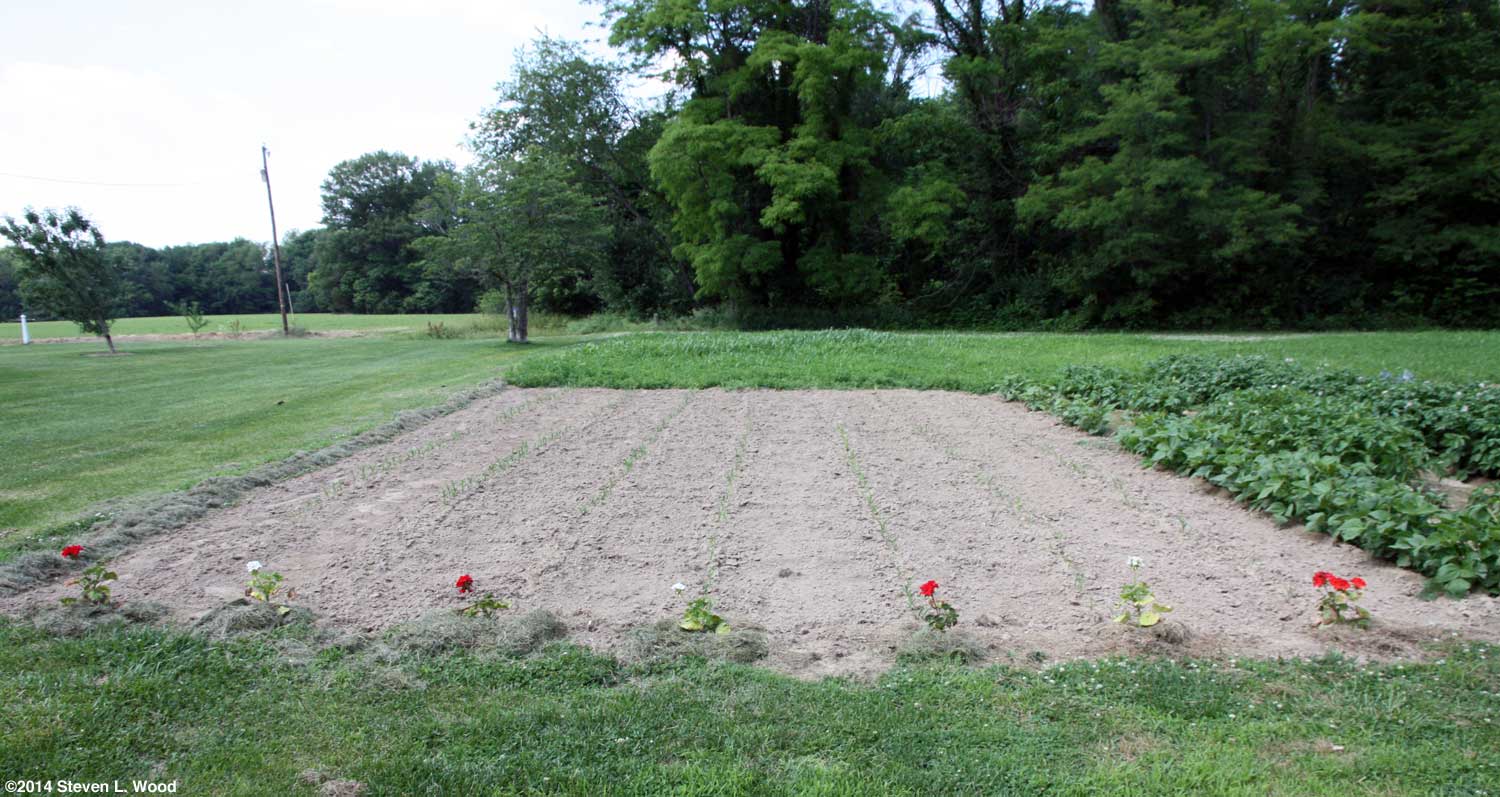
While I'm pleased with our sweet corn so far, I'm even more pleased to see the row marker geraniums in the foreground still alive. When we first started gardening this ground, geraniums transplanted into it would almost immediately die. Bell pepper plants also didn't do well, producing dwarfed plants and fruit if they survived at all. After five years of green manure crops (mostly alfalfa and buckwheat) and lots of grass clippings and other organic matter turned into the soil, I'm finally seeing some improvement in the heavy clay soil. I hope I haven't jinxed the geraniums and peppers, as they're both doing well...so far. Some of our tall pea vines were ready for a picking today. The Maxigolt variety had the most pods ready, although many proved to only have one or two mature peas in them, possibly because of our dry weather of late. There were a few pods ready on our Champion of England vines, with our Mr. Big
We should get several more good pickings from the vines before it's time to compost them and move on to the next crop. The picking produced about a pint and a half of peas for the freezer. Peas take an awful lot of time and work for what one gets. They're certainly not a crop to grow to save money over buying at the grocery. This is one we grow for the quality of what we get. When I finished picking peas today, I moved on to our raised bed of brassicas. I found one more mature head of broccoli and three heads of cauliflower to cut. I really jumped the gun on cutting the reddish Violet of Sicily variety. When I looked online later, it's supposed to ripen to a uniform red when mature. But I was pleasantly surprised to have found another good, self-blanching variety of cauliflower to go along with our two favorite white varieties, Amazing and Fremont. Violet of Sicily blanches and/or cooks to a green color, but has great cauliflower taste.
The broccoli and cauliflower also got blanched and frozen today. Sunday, June 8, 2014 - "Just Add Water"
I'd run the photo at right of our rather fragile looking sweet corn on Friday after finishing scuffle hoeing weeds from the area, reseeding some gaps in the rows, and transplanting corn plants into other bare spots. With last night's precipitation, the corn seems transformed, having jumped up several inches and now having a very healthy, deep green color. Obviously, four-tenths of an inch of rain isn't going to carry the corn patch and East Garden for long, but we have a good chance (70%) for more rain on Tuesday and Wednesday. While lots of little rains make it hard to get back into areas of the garden with the tiller for weed control, if frequent enough, such rains probably are more beneficial to the crops than downpours that often run off. Give me four-tenths of an inch of rain two or three times a week, and I'll be a very happy gardener.
Tuesday, June 10, 2014 - Rewards
The peas were outstanding, tender and incredibly sweet, having been picked and shelled just hours before we ate. Our last main head of broccoli from our main garden plot was excellent. We're hoping our broccoli plants in our East Garden bear a few good heads before warm temperatures make them bitter. Since we usually grow both spring and fall crops of broccoli, we're just happy to get what we can in the spring, knowing we'll probably have more in October. I picked several heads of romaine lettuce yesterday, but only one of them was partially good. All had burnt leaf tips and some insect damage. I also picked a large, sweet head of Crispino icegberg lettuce and a soft head of Skyphos butterhead lettuce. I was really surprised the head lettuces had held up to the heat and not gone to seed. That about does it for our spring lettuce. I left one immature plant in the ground, but we're probably done with lettuce until fall. Beyond harvesting, my main "garden" chore yesterday was mowing the field the East Garden is in, including the rotated out garden patch of alfalfa. Mowing the field was easy, but the thick alfalfa mixed with a good bit of giant foxtail was just about too much for my mower. Last year, I probably mowed our alfalfa too early and just before a dry spell. It died out pretty quickly after that. This year, I waited almost too long to trim it. But with rain in the forecast for a couple of days, I'm hoping our cover/turndown crop will rebound. As you might have guessed, this posting is either a really late Monday posting, or a really early Tuesday posting. I'm writing a bit after midnight as a thunderstorm rolls in from the southwest. I obviously focused yesterday on harvesting and mowing, at the expense of taking any garden photos. But as Annie and I were watching (and napping through) some TV, I noticed that our "senior dog," Mac, had fallen asleep with his favorite toy. We're not sure how old Mac is, but he's at least 13 years old and showing his age a bit. So we've let him become an indoor dog, by his choice, although he occasionally shows his old spirit by running back to the house from the barn...before begging to be let inside again to sleep away most of the day and night.
Annie had always been curious about Mac's breed, so I gave her a Wisdom Panel 2.0 Breed Identification DNA Test Kit
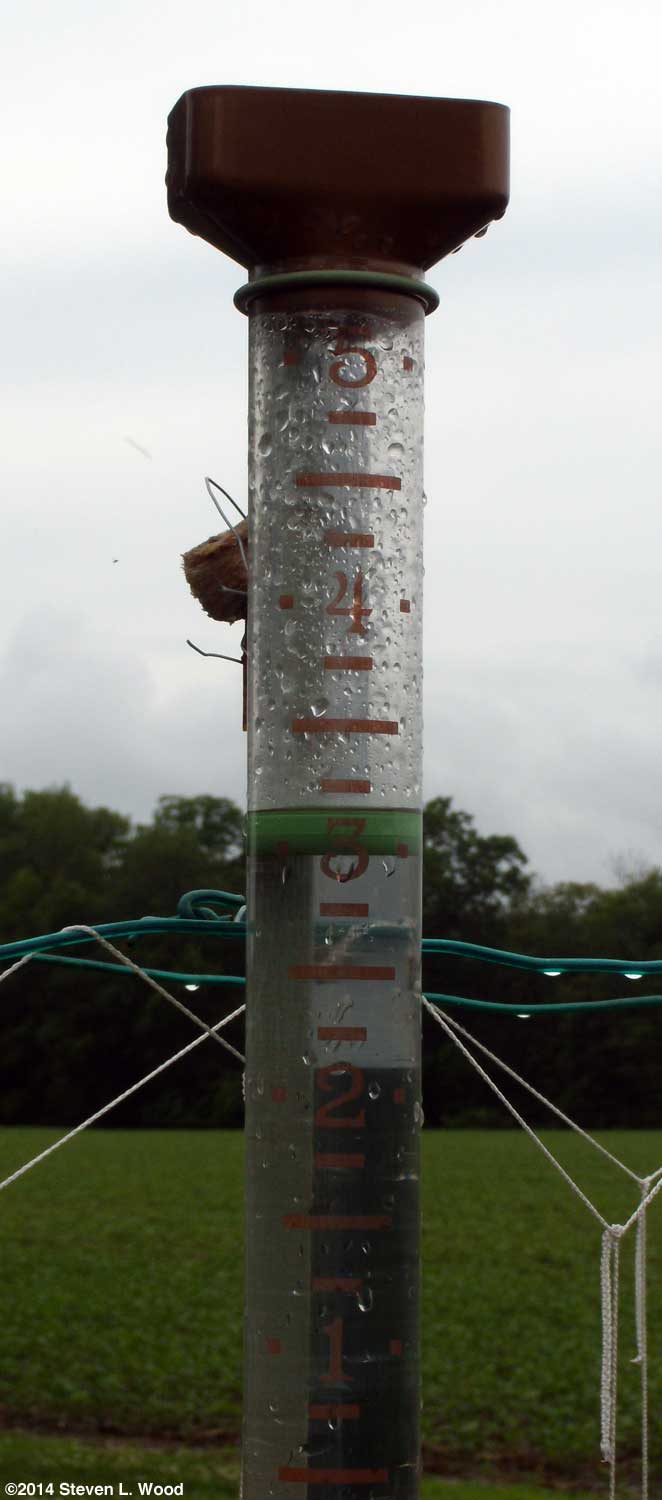
I began writing this posting from our back porch, enjoying the breeze as a thunderstorm tried to blow in. Other than picking some peas and pulling a few early carrots and some oversized beets, I didn't do much gardening today. I did take the time to drop the sprouted sweet corn seeds from a germination test I'd started four days ago into bare spots in our sweet corn rows. I spent a pleasant hour on the porch shelling peas and watching hummingbirds jockey for position at the feeders. From the increased activity at the feeders, I'd guess we've had a clutch or two of newborn hummingbirds leave the nest recently. Until this week, we had only a few hummingbirds visiting our feeder. Things picked up enough yesterday that I hung a second feeder. We received a full inch of rain overnight. I carefully checked the rain gauge twice before dumping its contents, as we've not had that much rain all at once in some time. But I was pretty sure it was accurate, as our "backup rain gauge," otherwise known as our garden cart, had about the same amount of water in it. The overnight rain brought our June running total of precipitation to 3.25 inches. That's a very healthy figure for this point in the month and is certainly enough to sustain our garden crops for now. Last June, we experienced some torrential storms late in the month that severely damaged our spring carrots and our onion crop. So I think I'll be thankful for moderate precipitation and hope it continues...at a moderate rate. The beets, which I simply forgot about until they were way too big, will go to work with Annie tomorrow, in case someone there wants them. The peas and the five carrots had a small yellow squash added to them as part of our supper. And the thunderstorm went somewhere else without getting us wet. But I had a great time shelling peas, watching the hummingbirds, and looking out over our main garden.
Thursday, June 12, 2014 - Weeding Sweet Corn (Again)
After several days of rain, the ground was far too wet to rototill. The corn I'd reseeded was also too small for tilling, as it would get buried from such an action. So I resorted once again to my scuffle hoe. I first hoed down the sides of the corn rows (in sections), getting as close to the corn plants as possible without cutting them off or disturbing them too much. In some of the interior rows, I could hoe between the corn plants, as I leave more space between plants in the interior rows which receive less light than the edge rows. But for the most part, I hoed the sides of the corn rows and then went back and hoed loose soil into the rows, burying the seedling weeds I hadn't hoed out or hand pulled. I didn't worry too much about the centers of the aisles between the corn rows. We may have several dry, sunny days ahead of us. If so, I should be able to rototill the aisles and throw a bit more loose dirt into the rows of corn. And if it stays too wet, I'll just have to go back with the scuffle hoe again to clean the centers. The job of hoeing seven, forty foot rows ended up taking almost two hours. I was fortunate that it was partly cloudy and rather cool this morning. But by the time I was finished, I was soaked with sweat and totally worn out.
As it turned out, we had one of the best crops we've had. That's not saying much, though, as we've been plagued with poor seed germination, wind damage, corn smut, and critters feasting on our sweet corn and plants over the years. Our family joke about the East Garden is that if you'd go out there at midnight, you might find lots of deer and raccoons wearing party hats and blowing noisemakers as they feast on our sweet corn (and melons too, in the case of the raccoons). A second reason I'm trying really hard to keep our sweet corn patch as weed free as possible is simply pride. I started growing sweet corn as a kid in our back yard in Indianapolis. When I was farming, two to four acres of our tillable ground were devoted to sweet corn for roadside sales each year. We kept those corn patches clean, although a fifty horsepower tractor and a four row cultivator helped in that effort. So I've been a bit embarrassed at the appearance of our sweet corn patch in recent years and resolved to do better this year at staying up with the weeds.
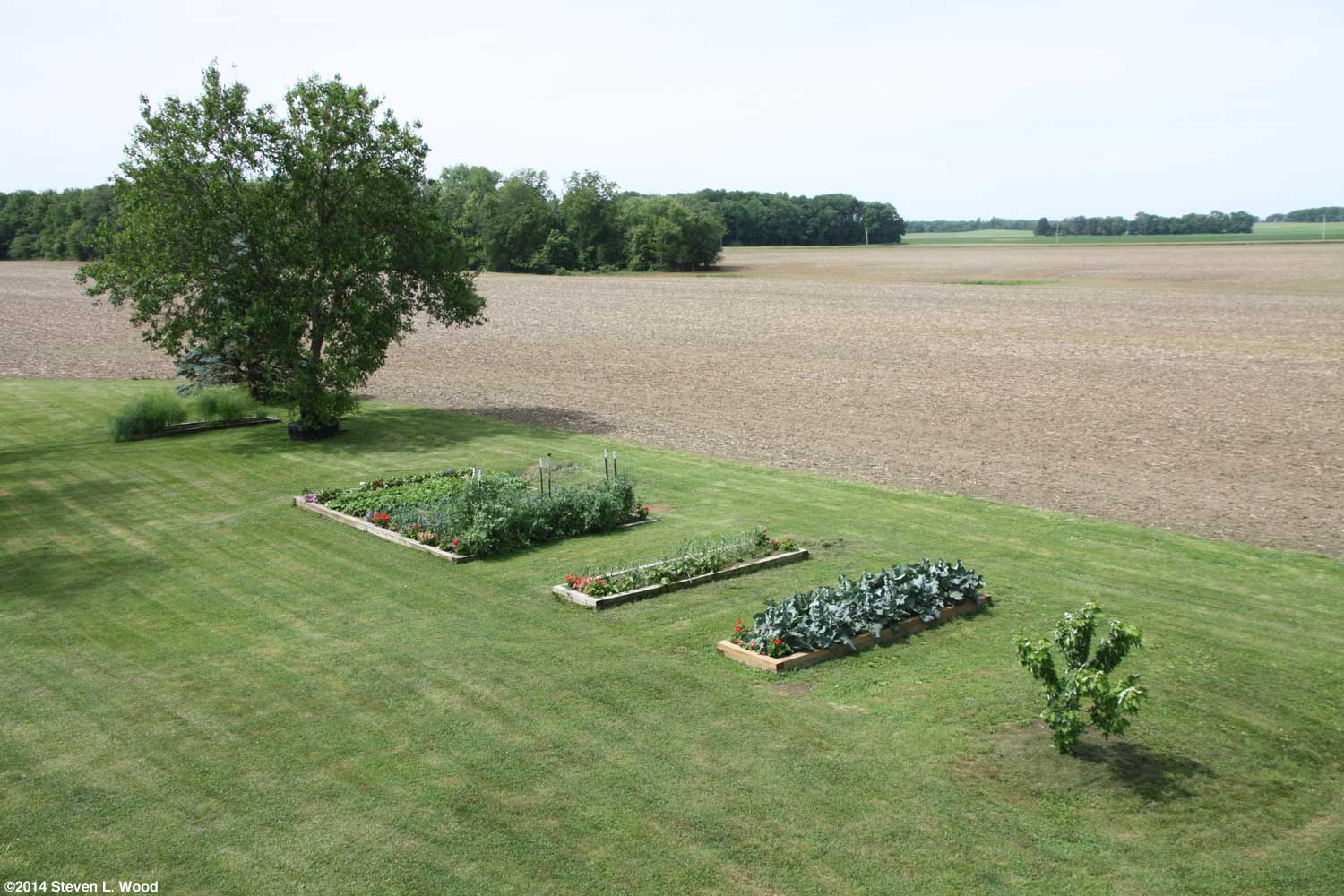
Sunday, June 15, 2014 - Father's Day We're now halfway through June and are enjoying a wonderful gardening season so far. The weather has been cool (highs in the 70s) and sunny with a light breeze for several days. Rather than launching any major garden projects during this time, I've sorta taken it easy, picking peas, cutting brassicas, pulling a few weeds, and mulching a bit. Sitting on the back porch with a glass of iced tea, enjoying looking out over the garden and fields, has also figured nicely into that downtime.
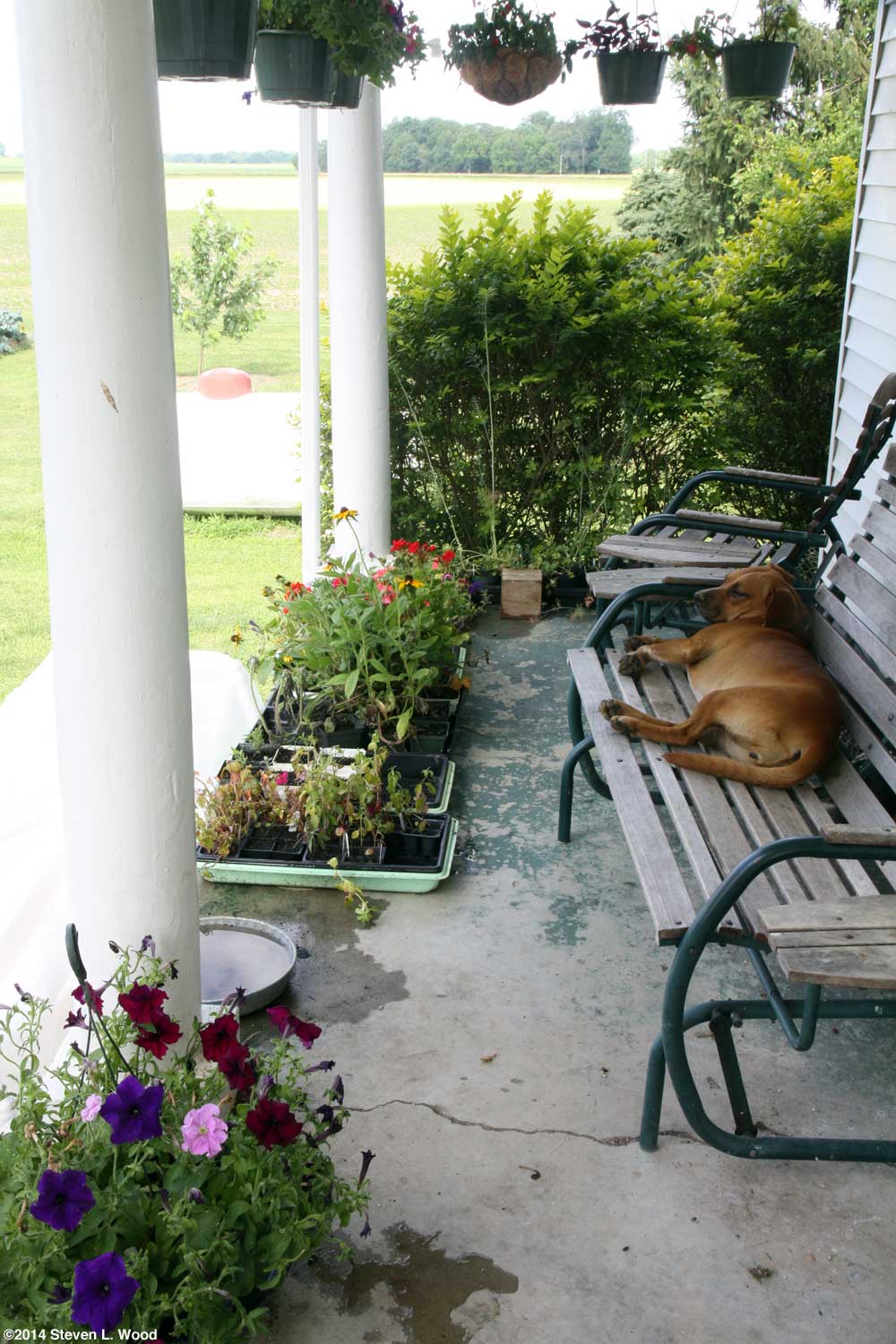
All of our transplants are now lining our back porch, as I moved them there to mow around our cold frame. I may just leave them there, as it's time to put away the cold frame until fall. Most of what is left are herbs and flowers, with just a few vegetable transplants.
When I cut cauliflower (or pull broccoli plants), only the leaves from the plant go into our compost pile. The base or stem of the plants are too fibrous to break down quickly, so they all go in a wash I'm filling in the field (along with used cat litter and anything else I can find to throw into the hole). When I got out to the compost pile with the leaves, I passed our surprisingly good looking rows of potatoes. We've not had very good success with our potatoes the last few years, but are off to a great start this year.
The Red Pontiacs now have lots of blooms on the plants, with the Kennebecs just starting to bloom. Generally, when potatoes bloom, it's just about the right time to dig some new potatoes (small, early potatoes with very thin, tender skins). Cooked up with fresh peas, new potatoes in butter make a great treat from the garden.
Monday, June 16, 2014 - Larger Than Expected Surprise
My game plan for today was to dig some new potatoes before moving on to some other gardening tasks. Being a bit cautious about the possibility of bringing disease into our potatoes, I carefully washed some compost residue off our garden fork before getting started. As I walked to our East Garden, it began to sprinkle just a bit. As I started to dig a hill of Red Pontiac potatoes, the sprinkle turned into a shower. Since I was only going to dig one hill of small, new potatoes, I used my sun shirt to protect my camera from the rain and proceeded with the digging. I was a little surprised when I lifted a baseball sized spud from under the plant. When I got the full plant dug up, it produced four good sized red potatoes along with just two of the expected small, new potatoes! I planted our potatoes on April 24 this year.. I guess I waited too long to dig new potatoes. Getting Ready for a Succession Planting
The cucumber plants will eventually go between the double trellises in our main raised garden bed. Our early peas, which currently occupy the trellises, will be done bearing soon. Having the cuke transplants ready to go will allow me to pull the pea vines, work the soil up a little, and move on to a succession planting with plenty of time for the cucumbers to mature. The rain continued to tease all day, sprinkling a bit with other periods of bright sun. We need another good rain, as when I stole a few carrots from the end of a row for our dinner, the soil beneath the mulch was fairly dry. But out flowers seem to love the mix of sunshine and light showers.
I used my gardening time this morning to put in our front flowerbeds. Doing so this late in the season may tell you how focused I've been on our vegetable garden plots (or...how lazy I've been
While I've used a variety of commercial wood mulches in the beds over the years, I chose to go with grass clipping mulch to hold back weeds and hold in moisture this year. The wood mulches are a mess after the first year and often seem to have their own crop of weed seed included. I mulched as I planted today, leaving a heavy layer at the back of the beds where only weeds seem to be able to survive. I also applied a fairly heavy layer of Shot-Gun Animal Repellent, as our dogs love to lay on fresh grass clippings. Vegetable gardening today was limited to picking a few peas, cutting a head of cauliflower and a few broccoli sideshoots from our main garden, and cutting two heads of broccoli from our East Garden. It's really nice that we're to the point where there's usually something to pick in the garden each day.
While my plan for new potatoes and peas yesterday crashed and burned because I'd waited too long to dig new potatoes, we ended up having pork roast last night with potatoes, carrots, and onion from this year's garden. I also threw in some garlic from last year's garden.
I've been a bit less careful with this row of peas than I was with last year's row of Eclipse peas, when I thought I was saving a variety headed for extinction. Eclipse pea seed isn't readily available, but that's because Seminis/Monsanto aren't producing the patented variety anymore. While I can't sell Eclipse seed, I can grow and save as much as I can use, and I'm really looking forward to freezing some of the supersweet peas this year. The Encore variety, another patent protected variety (PVP) which figured into the Eclipse variety's parentage, is also a very sweet pea, although not quite as sweet as Eclipse, but much easier to germinate. We have an incredible stand of Encore so far, as I dumped an half pound bag of seed I'd soaked along a 16-20' section of the row. I started the job in the morning, thinking it would only take an hour to do. I hadn't figured on all the weeding I found it necessary to do before stringing the trellis. I worked on it until just after noon, leaving the job half done when it began getting really hot outside. I got back to it around 8 P.M. and finished just at sunset.
I picked a few peas and cut several broccoli sideshoots in our main garden this morning, but the main action for the day was to come in our East Garden. I'd noticed yesterday that several of our broccoli plants in the East Garden were putting on nice heads and made a mental note to check them each morning. With the heat we're having, broccoli can quickly go to seed and/or get bitter if allowed to get even slightly overripe. And sometimes, it's just too hot for it, and it gets bitter from the heat anyway.
An unexpected bonus to the broccoli was five yellow squash ready to be picked. I'd picked several undersized squash in the last week. Now, both our Slick Pik and Saffron We're to the point now that I'm checking those plants and our butternut squash daily for signs of squash bugs and/or powdery mildew. We'll almost certainly see both in the near future. Of course, not everything in the East Garden and the field around it is sweetness and light. I had to replace the two Moira tomato plants I put in an isolation plot way too close to the woods. They and several paprika pepper plants around them got nipped by something. Several of the nipped Paprika Supreme plants have put on new leaves, so all may not be lost. I also had to put down a heavy layer of Bobbex And after all of that, I finally got to the main event of my gardening morning. While we really need a good rain, I'd been sorta hoping the rain would hold off long enough for the soil in our sweet corn patch to dry out enough to be rototilled. While much of our area had scattered but heavy popup thundershowers yesterday, we got missed. So this morning, the soil in our corn patch was perfect for tilling.
I put down a fairly heavy layer of 12-12-12 fertilizer beside each row of sweet corn before tilling. Since the shield on one side of my tiller has broken off, I tilled with the open side closest to the sweet corn, throwing as much soil as I could into the row to suppress weeds. Today's tilling was gratifying. It's one we've missed in the last several years when our sweet corn patch was too wet at this point to till. I'd still like to get one more pass through the patch with the tiller in a week or so, but also can hold off weeds with the scuffle hoe if things get wet again. With this tilling out of the way, all we have to worry about in the sweet corn patch is getting enough rain, keeping the deer and raccoons out of it, cutting out any corn smut that might appear, hoping it doesn't all get blown down in a strong storm... Yeah, there's still a lot that can go wrong before we have roasting ears on the table for supper. Now all I have to do is mow, freeze broccoli, cauliflower, and peas, and maybe even get our fall brassicas seeded. It feels good to be busy!
I got started this morning pulling our tall pea vines off our double trellis and composting them. Once the vines were removed, I tightened the clothesline wire the string trellis hangs on, as it had gotten droopy in the heat. I also hiked up the bottom of one side of the trellis to make cleaning up and renovating the area a bit easier.
I'd hoped to transplant Japanese Long Pickling cucumbers between the trellises this morning. The transplants appear to have leapt up several inches in the days I was away and may be too big to survive transplanting. As it was, I ran out of time before it got too hot for tranplanting. The cucumber plants will have to wait until this evening or tomorrow morning to go into the ground. And then, I'll just have to hope it rains soon.
I moved to cooler quarters inside to start our fall brassicas. Since we've already frozen a good bit of broccoli and cauliflower, I only seeded four fourpacks (16 cells total). Eight broccoli and and eight cauliflower plants will pretty well fill the area I have saved for them in our main raised bed. About 8:30 P.M., taking advantage of one of the longest days of the year (in hours of daylight) and slightly cooling temperatures, I began transplanting our Japanese Long Pickling cucumbers. The soil in the raised bed was incredibly dry, so I ended up using about fifteen gallons of water to transplant just eight plants along the twelve foot row. By transplanting late in the day, the plants have the overnight hours to begin adapting to their new conditions before enduring another hot day. I had taken a tray of impatiens and snapdragons to transplant outside the double trellis, but ran out of time as sundown and mosquitos closed in. The snapdragons will join several I transplanted earlier this season on the south side of the trellis. The impatiens will go on what will be the shaded north side of the trellis.
Even though I had more transplanting to do, I went ahead and laid several inches of dry, grass clipping mulch around the cukes and in the bed to hold in soil moisture. I'll have to pull back the mulch when I put in the snaps and impatiens. For readers interested in photography, the shot of the mulched cucumber bed was taken at 9:34 P.M. (EDT) at 1/13 second and f/8 and an ISO of 800. While I used to take sharp handheld images at 1/4 second with a heavy, Mamiya RB-67 when I was younger, stronger, and had a steadier hand, I have to attribute the sharp image above at the slow shutter speed to the amazing image stabilization incorporated in today's modern lenses.
Tuesday, June 24, 2014 - Rain!
As expected, our first sign of squash bugs has appeared on a leaf of one of our yellow squash plants. A cluster of the telltale eggs let me know that it was time to begin spraying the squash, melons, and cucumbers for bugs. While I've tried some organic controls in the past with mixed results, I've found that a spray or two of Sevin
Between showers this afternoon, I transplanted our pumpkins into the area previously occupied by our current compost pile and also put in another yellow squash plant. The Howden pumpkin transplants had gotten quite big in the last few days. I put on my farm boots and waded through several inches of water in places to get to the new pumpkin patch. The pumpkins got our usual deluxe hole of added peat moss, fertilizer, and lime mixed deeply into the soil, but it wasn't pretty, as everything was mud.
The cucumbers I transplanted on Sunday are already sending out tendrils to anchor the vines to the trellis. If the double trellis works as I hope, it should help keep the Japanese Long Pickling cucumbers off the ground, preventing both curling of the fruit and rot. We allowed our JLPs to cross-pollinate last year with some plants we grew from JLP seed from Reimer Seeds. Our strain was from one lone seed I got to germinate years ago, and appeared to be losing some of its vigor and disease resistance due to inbreeding depression. The plants grown from the Reimer seed appeared to be true to variety, so I'm hoping our strain has been revitalized by the possible cross. Busy Week(s) Ahead Sometimes things sort of creep up on you in the garden. While we've been picking stuff out of the garden for some time, I realized over the weekend that my mind was still in planting and nurturing mode, rather than in harvesting and storing mode. While we have some minor planting to be done before getting into succession (or second) crops, it appears that the next week or two will be harvesting, storing, and canning time.
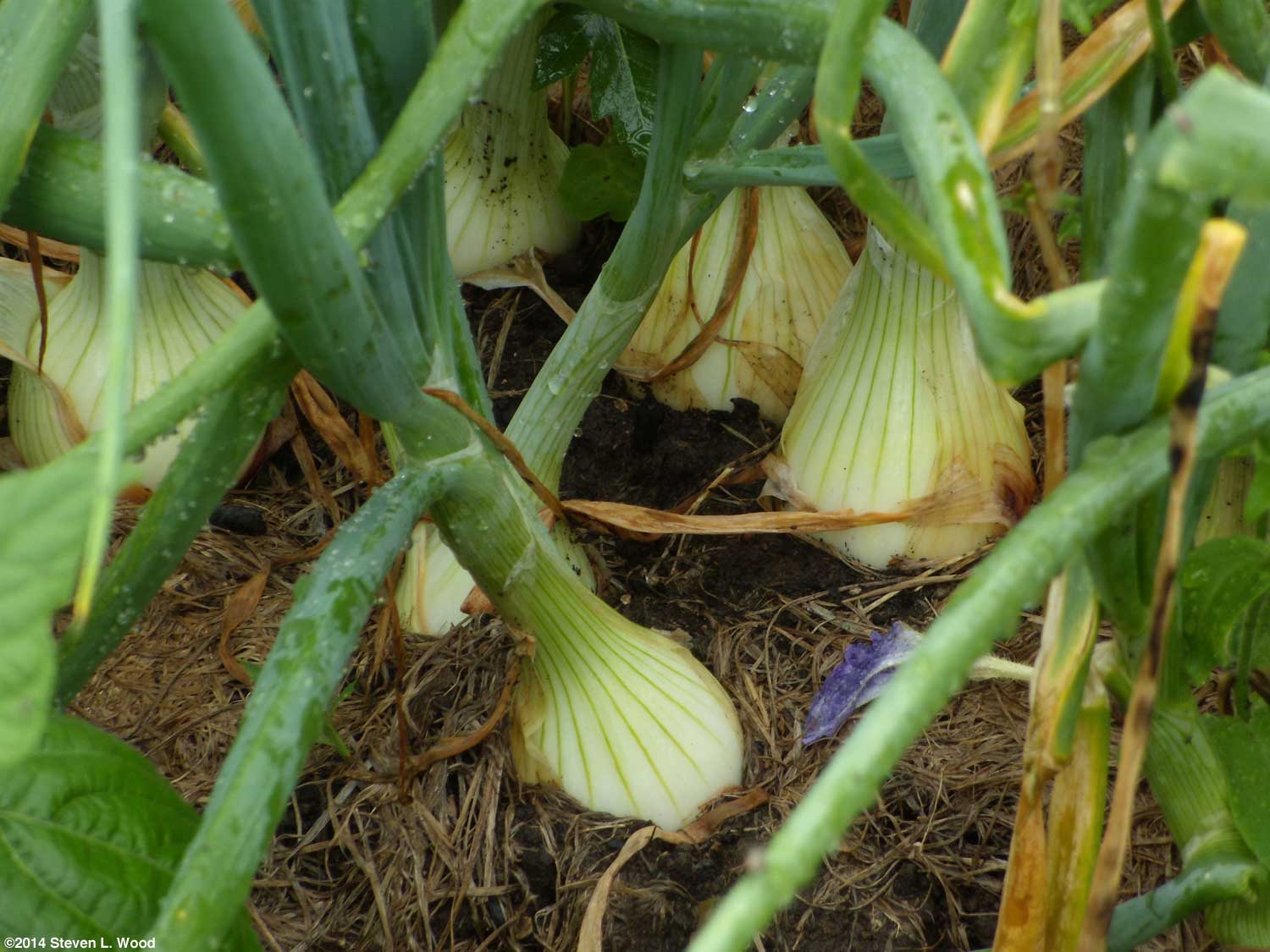
Most of our onions are beginning to bulb. Having planted thirteen different varieties of onions this year, there will be some differences in when they mature. But with today's rain and hot weather returning in a few days, they'll quickly grow in size before the tops begin falling over in a few weeks. I purposely planted far more onions than we can use this year. Seed for two of our favorite, hybrid storage onion varieties is getting hard to find. I decided to try a number of new-to-us varieties, mostly open pollinated, so that we'd be prepared for when seed for our favorite hybrid storage varieties disappears from the marketplace. As for the trials, all thirteen varieties are doing smashingly well. I guess it's a good year for onions. That doesn't tell me much, however, about how the varieties will do under lesser growing conditions. Note: The onions bulbing image above right is of the Jaune Paille Des Vertus variety. I think the variety description from Baker Creek Heirloom Seeds is well worth sharing here:
This heirloom variety may or may not be the answer for our future storage onion needs, but you may be able to tell that I'm having lots of fun testing out new varieties. About All That Rain Having substantially raised the soil level in our raised garden beds this spring and also improved the drainage around them, we're not seeing any standing water there from today's heavy rain. Our East Garden is another matter altogether. Some of our sweet corn got blown over by the storm, although corn can usually right itself if not plastered flat into the mud. Some rows have standing water in them, partially because I lowered the soil level in the aisles between the corn rows by throwing soil into the corn rows.
While the images above may not be what you'd want to see in your garden, the only one that really bothers me is the standing water in the row of new peas (at far right). And as long as the water drains before the sun gets on the pea row, the new pea plants should be okay. And as dry as it has been, I really don't expect to see any standing water tomorrow morning...as long as it doesn't rain some more this evening. We really needed this rain. Wednesday, June 25, 2014 - Oops!
The onions I identified yesterday as Jaune Paille Des Vertus, weren't! When I walked our garden this morning with a chart of what I planted where, I realized that I was a couple of rows off in identifying the onions. But when I looked at my chart, the onions I photographed were, according to my garden record, supposed to be Red Zeppelins. And on down the row, there certainly were some red onions, but the ones at the end were definitely something else that I didn't record properly. I'd guess they'll cook up just fine, though. The standing water in our row of late, short peas had soaked into the ground before the sun got on the plants this morning. The peas and a lot of weeds still in the row looked pretty good. Besides checking the pea row on my morning garden walk today, I wanted to make sure our green beans were ready for a first picking today. It turned out that while there are some mature beans, I may be better off waiting a day or two for the pods to plump a bit more before picking. (My wonderful wife, Annie, prefers "beany" green beans.) So if things dry out, today may be mowing day. Of course, I could just get lazy and enjoy looking at our lovely garden!
I really don't like going to my chemical "heavy hitters" at the first sign of insect or disease damage. While our garden certainly isn't organic, we try to use organic methods and biologicals such as Serenade biofungicide and Thuricide (BT) for disease and insect control whenever possible. But when I planted our potatoes, I'd used Serenade as a soil drench at the labeled rates for its sister product, Serenade Soil. So I was pretty well out of organic options for the potatoes. When I sprayed, insects flew everywhere, so we may luck out on this one. If the problem is blight, fungicides may hold it off for a while, but we've not had much luck going that route in the past. The best defence against blight is using certified disease free seed potatoes and planting on clean ground (ground not infected with blight in the past). One can also do preventative sprays with copper based fungicides I saw no new damage in the potatoes this morning, but I'll probably need to spray again. If the problem is from insect damage, I may be able to back off to more organic insect controls such as insecticidal soap Photography Note Since switching to a Canon digital SLR camera five years ago, I've been mostly satisfied using my Canon Digital Rebel XSi. One area I haven't liked about the camera was the color saturation it produced in its pictures. Compared to my old Nikon point-and-shoot camera (which only works in the fully automatic image mode because Nikon refused to properly repair or replace it under warranty), the Canon's images often looked a bit washed out. When I was dancing between the raindrops (and outright downpours) yesterday getting images of our pumpkins and such, I grabbed the old Nikon because I didn't want to get the Canon wet. Once again, I was impressed with the color saturation it produced, although at times the saturation is a good deal more than than the eye sees.
Finally getting a clue after five years of using the XSi, I dug out its manual and found out how to increase its color saturation level. Today's photos were all taken with the Canon with its color saturation settings bumped up a notch. I may bump it up another click, but really don't want to be sharing images whose rich color only exists inside the camera. And having just washed the kitchen windows yesterday, I had to include a shot of "our hummingbirds" at the feeder taken through the kitchen window.
The close end of the row pictured at right is planted to Eclipse peas. The far end is planted to Encore. Both varieties are very sweet peas. I did have to reseed a few bare spots in the Eclipse planting once again. The center of the row was seeded with some Eclipse/Encore crossed pea seed I'd saved in 2009. Very little of it came up, so I scratched in some Mohon's Pole Beans in that area. I'd planned to put up a separate trellis for Dennis Mohon's family heirloom beans in one of our isolation plots, but never got around to doing it. Since this planting is going in pretty late, I'm pretty sure our kidney beans in the same garden plot will be done blooming by the time the Mohon Beans start to bloom and won't cross-pollinate with them. I should be able to save seed from the planting as well as take some for table use. Funny Follow-up to Image Color Saturation Issues I wrote yesterday about finding the way to bump up the color saturation of images taken with my my Canon Digital Rebel XSi. This morning, I went ahead and bumped up the color saturation setting a second notch on the camera. When I took the "splash shot" for the top of this page (and posting), the color saturation in the full sunlight shot was much improved. Later, when I took the shot above right of the pea row, the sun had drifted behind some clouds, creating the ideal cloudy bright conditions outdoor photographers love. But when I started to process the photo a few minutes ago, the image was terribly oversaturated. I ended up having to Photoshop out a ton of color saturation from the photo to make it look natural! Hot and Humid While I was weeding the pea row, the sun was fully out, and I came in at around 1:30 P.M. absolutely soaked in sweat. I pretty quickly decided picking our green beans and mowing the lawn could wait until at least this evening, if not tomorrow. That's tough for me to do. After six years of retirement, I find I'm still establishing artificial and often unreasonable goals and expectations that really are no longer necessary. But for today, at least, I'm going to sit on the back porch, have a glass of iced tea, and enjoy looking at our garden and watching the hummingbirds at our feeders. We use two Birdscapes 279 Deluxe Rose Petal 12-ounce Glass Hummingbird Feeders Having gotten most of our mowing and raking done yesterday, I was able to return my attention to some lovely green beans in our main garden this morning. Only the southernmost row of Provider, Contender, and Strike was ready to pick, as those varieties are a few days earlier than the other row of Bush Blue Lake, Burpee Stringless Green Pod, and Maxibel. A none too thorough picking of the one row yielded 4-5 gallons of raw picked beans that canned out to six quarts.
On the way back to the house, I couldn't help but take a few shots of the main garden bed. After we harvest beans, carrots, and onions from it, it probably won't look as nice until about this time next summer.
Monday, June 30, 2014 - June Wrap-up
Most heavily impacted by the dry spell were our early, tall peas that didn't seem to have enough moisture to fill out all the peas in their long pods. We got some nice peas, but not what we should have. But the day after I pulled the pea vines from some bone dry soil, I moved to another raised bed to dig a couple of early maturing garlics. The soil in that bed was still quite moist! The difference between the two raised beds was that the garlic bed had received generous amounts of organic material in the form of compost and peat moss, while the pea bed had not. So even though our pea harvest was somewhat disappointing, I got a good reminder about why keeping high levels of organic material in ones soil is important. The June dry spell gave us a chance to thoroughly cultivate our sweet corn this year, something wet ground has prevented in the last few years. I kept our sweet corn rows fairly clear of weeds with a scuffle hoe until the ground dried enough to permit rototilling. Then I laid a fairly heavy layer of 12-12-12 along the sides of the corn rows and tilled, throwing as much soil as possible into the rows.
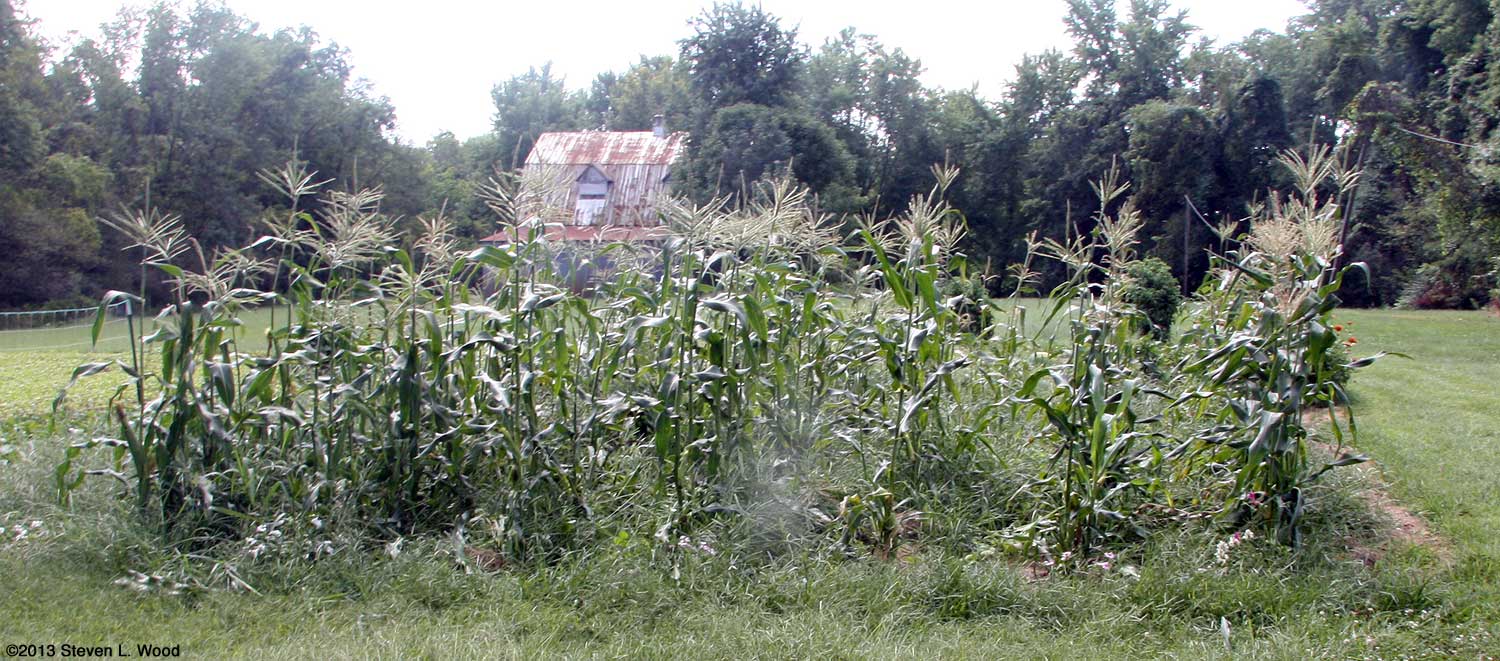
With the heavy rain that followed the fertilization and tilling, our sweet corn leapt up about a foot in height almost overnight. Most of it is very close to forming a canopy that will exclude most sunlight from the ground which will diminish weed germination. I'll still need to walk the rows with the scuffle hoe, but we're not going to have sweet corn overgrown with weeds as we have had in the past.
We quit harvesting asparagus in late May. In June we watched the asparagus once again fill the beds with its lacy foliage. Both of our asparagus patches required a lot of weeding in June, along with some gentle applications of fertilizer. Both beds will also require rather heavy applications of compost yet this summer to allow the roots to gain the energy for another good spring harvest next year.
The heavy rain we received last week really made our crops look good, but it also helped the heavy layer of grass clipping mulch in our East Garden begin to decay. With weed breakthroughs becoming common, I've begun re-mulching our melons and squash plants. The two giant hills of plants in the photo below are both yellow squash.
Our alfalfa cover crop on the back half of the East Garden seems to have survived its first mowing and has bounced back nicely. There's a lot of grass in the planting, but also enough alfalfa for us to let it grow all summer. Last year, our alfalfa mostly died out after the first mowing, so I turned it down and grew a dandy turndown crop of buckwheat. Slowly, slowly, the heavy clay soil in the East Garden is improving. I didn't realize how much it had improved until I dug a hole just outside the East Garden for our pumpkins. The soil there was some nasty, greasy, gray clay, other than the inch of new soil/compost on the surface, as we plant our butternut squash and pumpkins outside the East Garden on the previous sites of compost piles. Most of what we have in the ground now is looking good, although I still worry about disease in our potatoes. As we move into our usual period of drier weather through much of July and August, what rainfall we get will be critical to our full season crops and those we'll be starting to replace what we'll be harvesting in the next week or so. But it's sure nice to have gotten off to such a good start this year. Contact Steve Wood, the at Senior Gardening |
|||||||||||||||||||||||||||||||||||||||||||||||||||||||||||||||||||||||||||||||||||||||||||||||||||||






 weeding. While our ground is still too wet to run the rototiller up and down the rows of sweet corn to clean up the weeds, a scuffle (action, or hula) hoe makes fairly quick work of them by cutting the weeds at the soil surface while also fluffing the top half to three-fourths inch of soil a bit.



 for her birthday last year. We knew he had some lab in him, but were interested in the full report. It turned out he's half Labrador Retriever and half Chow Chow and Rottweiler cross.







 ). I'd started pulling weeds in the beds last weekend, only to discover that using a scuffle hoe was effective and a whole lot easier. I scuffled again this morning to catch the weeds I'd missed.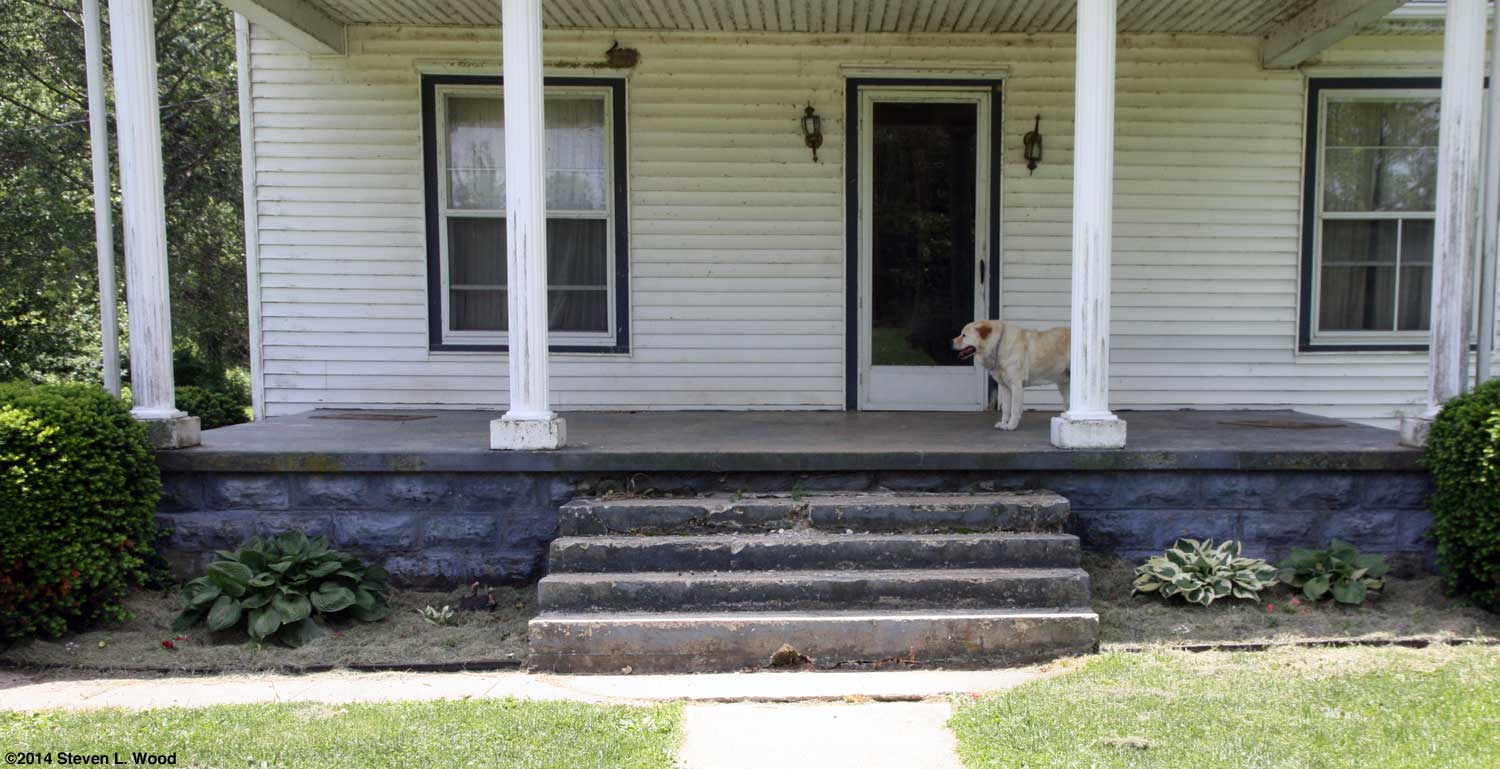


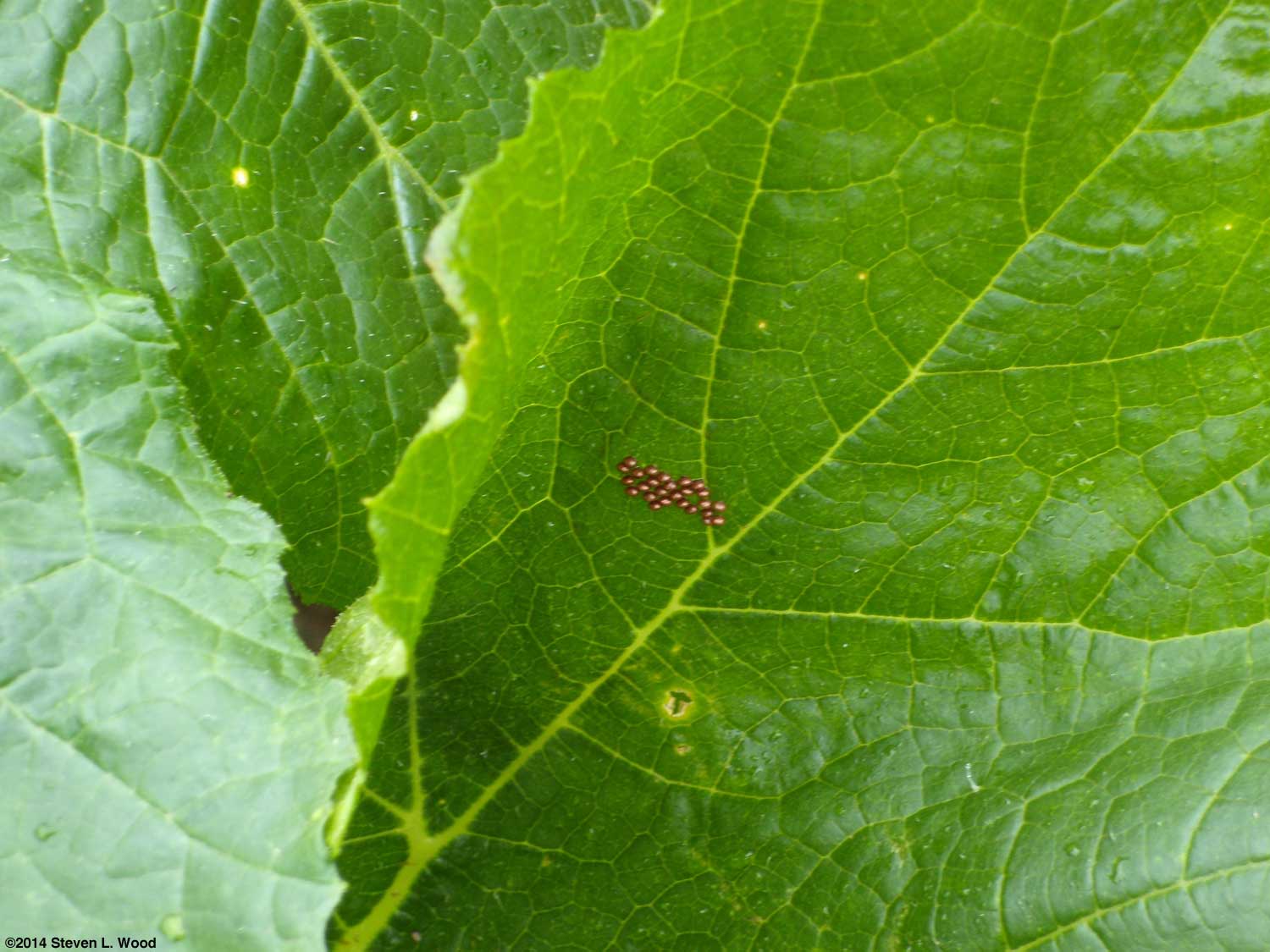
 pretty well takes care of the squash bug problem.




 , but I thought we had that one covered with the Serenade drench.
 or
or 


 . At this time of year, I generally have to fill both feeders each day, as the hummingbirds have already had their first clutch of eggs hatch out and the birds leave the nest. The Birdscapes feeders work pretty well for us as long as I carefully wash out the feeding holes each time I fill them. A weak spot in the construction of the feeders is the perches. If you drop or bang the feeder, the perches easily break off.


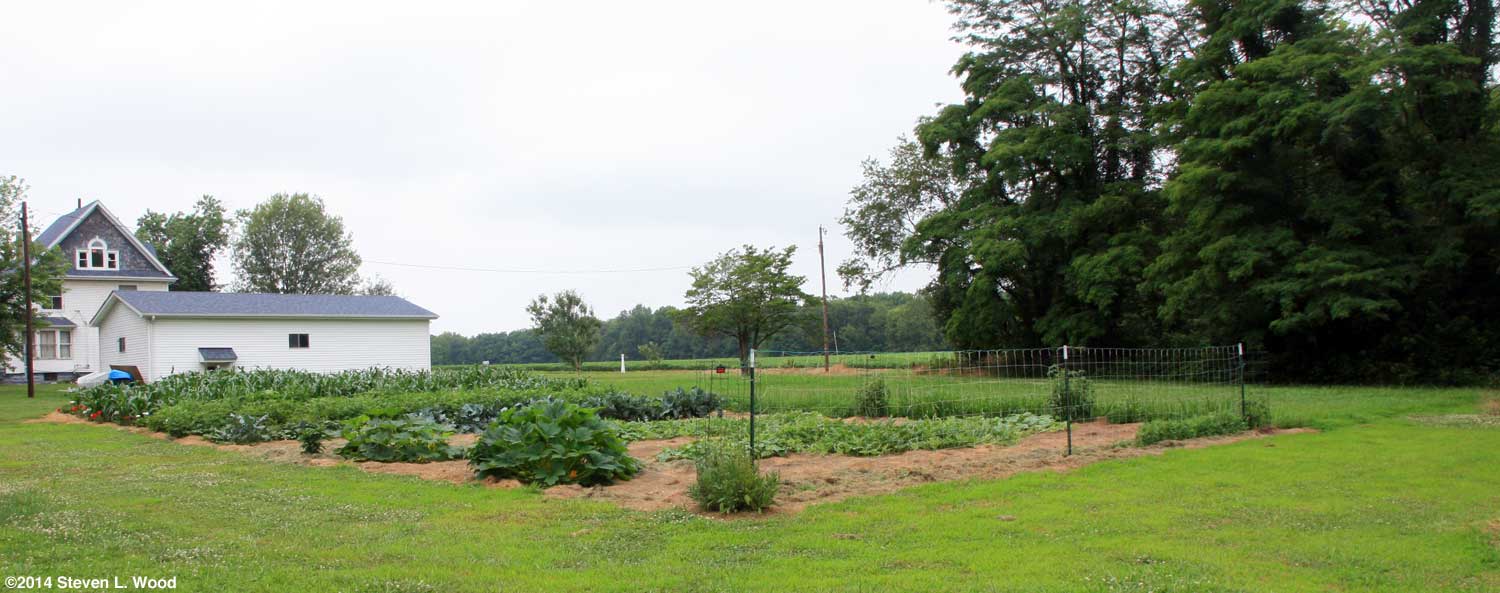
 For a good bit of this month, it appeared we might be once again facing a dry gardening season. Heavy rains on June 24 (3.1 inches in 24 hours) broke a dry spell that actually had allowed us to do some critical tilling of our sweet corn in the East Garden, but also diminished some of our harvests.


 and too lazy to chop the stems, I put ours into a wash we've been filling with plant trash and used kitty litter. While rotting broccoli and used cat litter both really stink, the wash is at the edge of the woods, far away from our house. (Note: Our nearest downwind neighbor is over a quarter mile away.) Of course, you don't want to accidentally step into the muck until it's had a few months to set up.
| Affiliated Advertisers |
©2014 Senior-Gardening.com