One of the Joys of Maturity |
|

| Affiliated Advertisers |
| < | Clicking through one of our banner ads or some of our text links and making a purchase will produce a small commission for us from the sale. The Old Guy's Garden Record
We'll also continue to prepare for our fall garden. Harvested areas of the garden will need to be renovated with a healthy dose of peat moss and/or compost. Our fall broccoli and cauliflower have already germinated in flats on the back porch. We'll start seeding lettuce about mid-month in fourpacks at two week intervals and continue into August, as we plan to use our new cold frames over the lettuce to extend the growing season as long as possible. We'll also be seeding a fall crop of Sugar Snap peas, something I didn't get started this spring. Even though it appears we'll be harvesting a good crop of spring seeded carrots, I'll be direct seeding carrots late this month. After last year's disaster with spring carrots (flooding and puppy damage), I grew our first crop of fall carrots last year...and had fabulous results. One can never have too many carrots, even if you have to send the surplus to the food bank.
While Debbie Meyer Green Bags
Like me, Crockett liked to start his kale in July, allowing it to become even more flavorful when frosted a bit in October and November. But direct seeding crops into our garden in July is always an iffy proposition due to dry soil conditions and our deep well running dry (briefly, thank goodness) when pushed too hard. One of his suggestions that I can't follow is to plant a late crop of green beans in July, noting that "bush beans seem to be at their most tender late in the season." We grow our green beans late every other year, this year being an early bean crop year. The reason we don't grow late beans in alternate years is that we have soybeans planted in the fields around our garden plots every other year. Bugs from the soybeans quickly migrate to tender, young bean plants late in the season, requiring all manner of deadly sprays to control. While our beans aren't organic, as we used some treated seed and commercial fertilizer, we haven't had to spray our green beans as yet for insect control. When I picked beans on Saturday, I did see some squash bugs and spotted cucumber beetles in the beans. If I have to spray, I think we can get by using insecticidal soap |
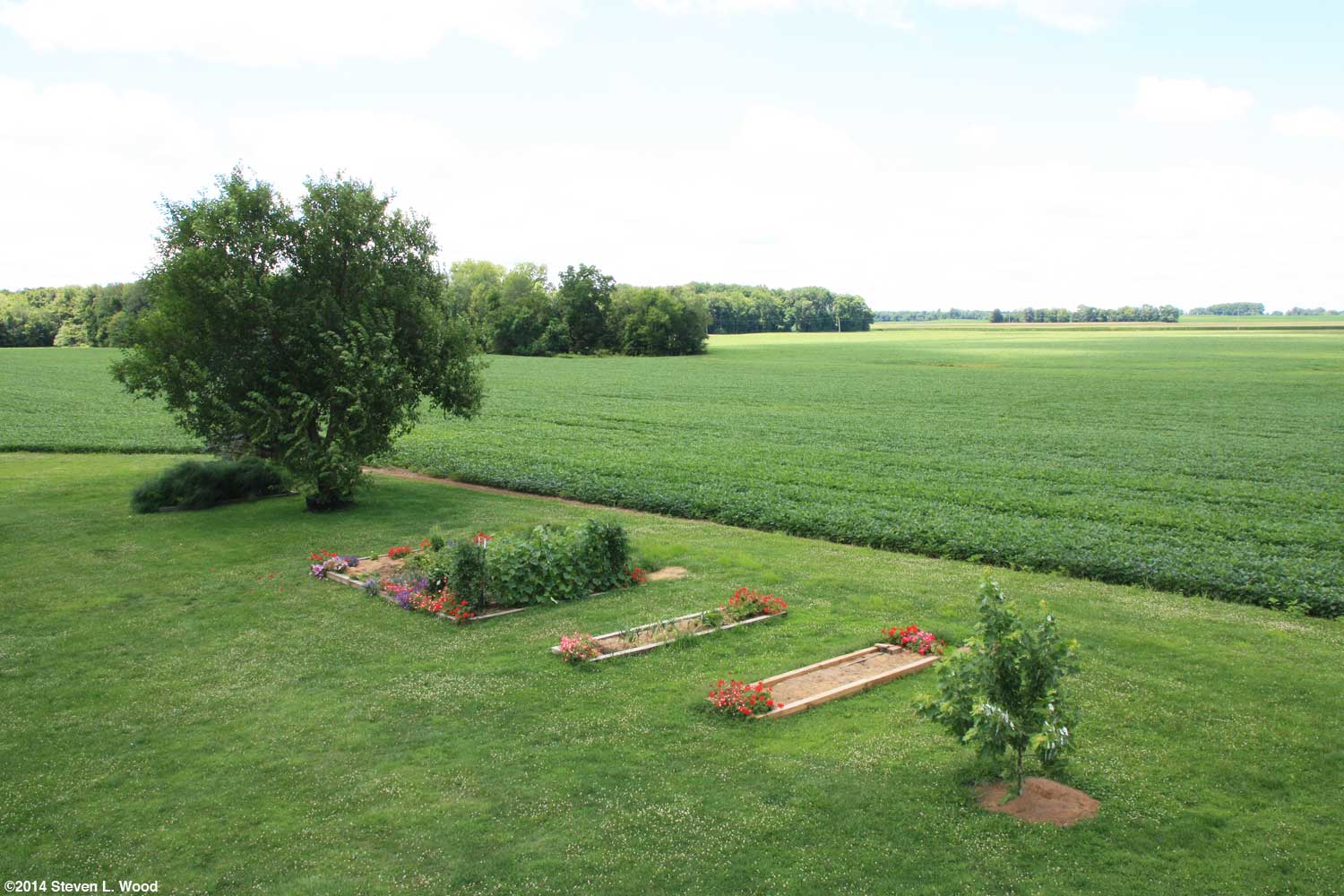
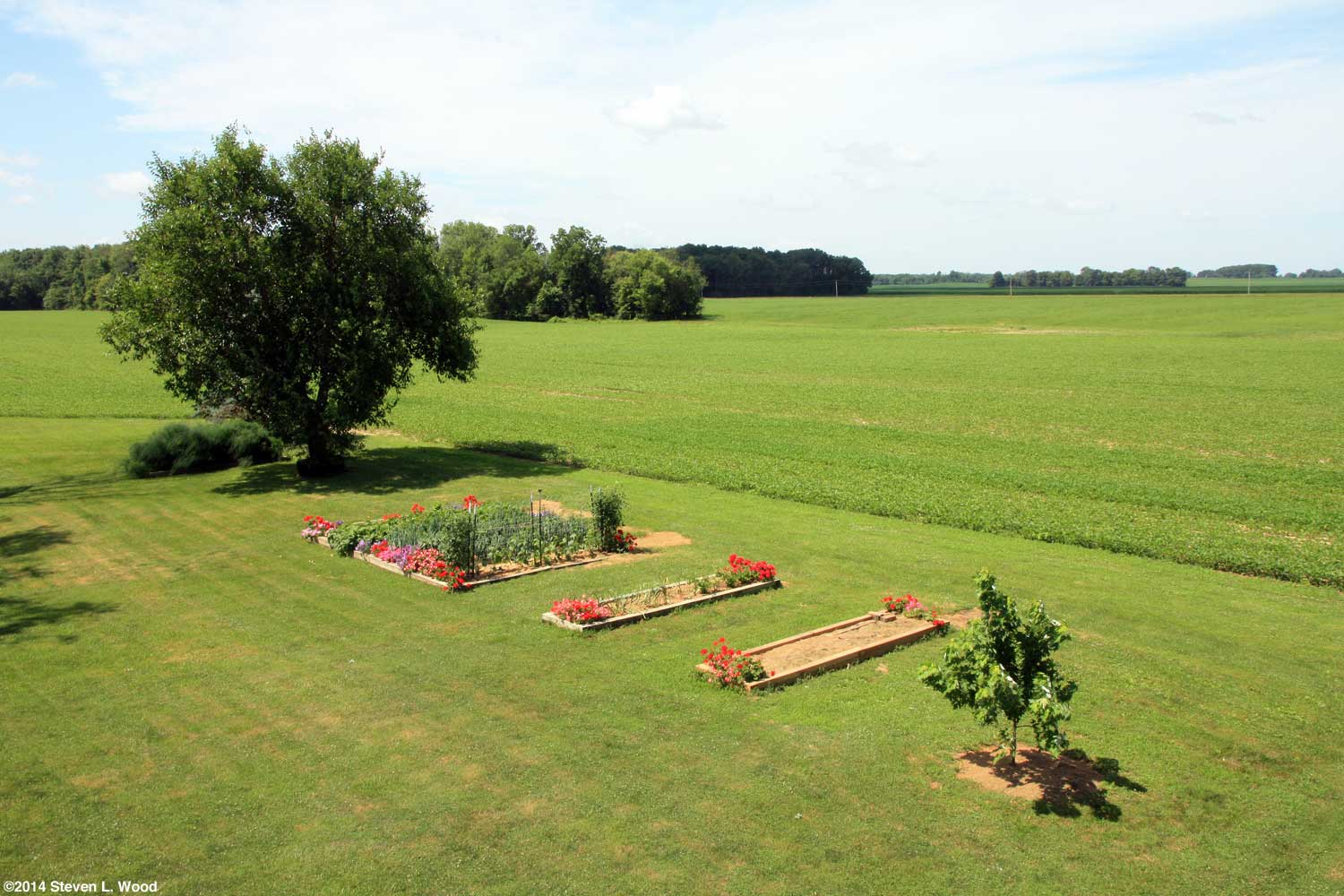

 BTW: I should mention here that while I'm already stealing fresh carrots from the ends of our carrot rows, we still have a few good, albeit a bit hairy, carrots stored in the refrigerator from last fall's harvest. They'll probably end up in the compost pile.
 and/or
 |
Friday, July 4, 2014 - Independence Day (U.S.)
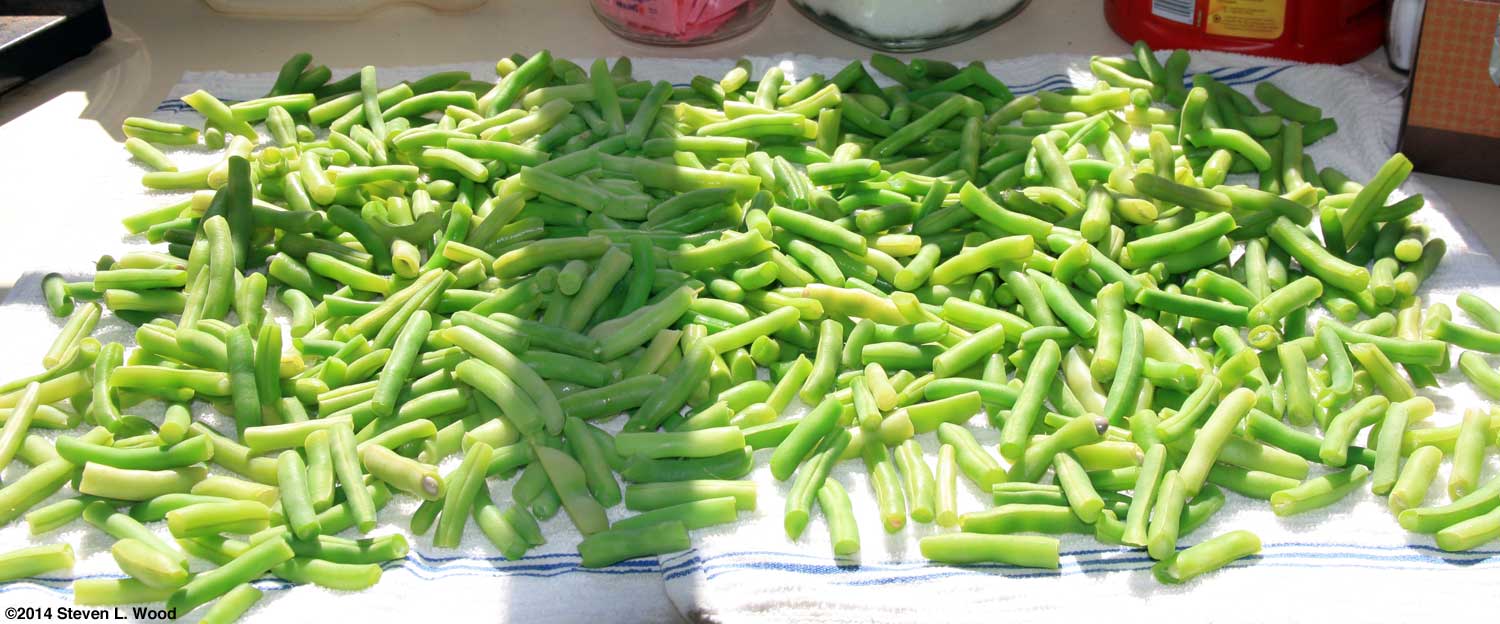
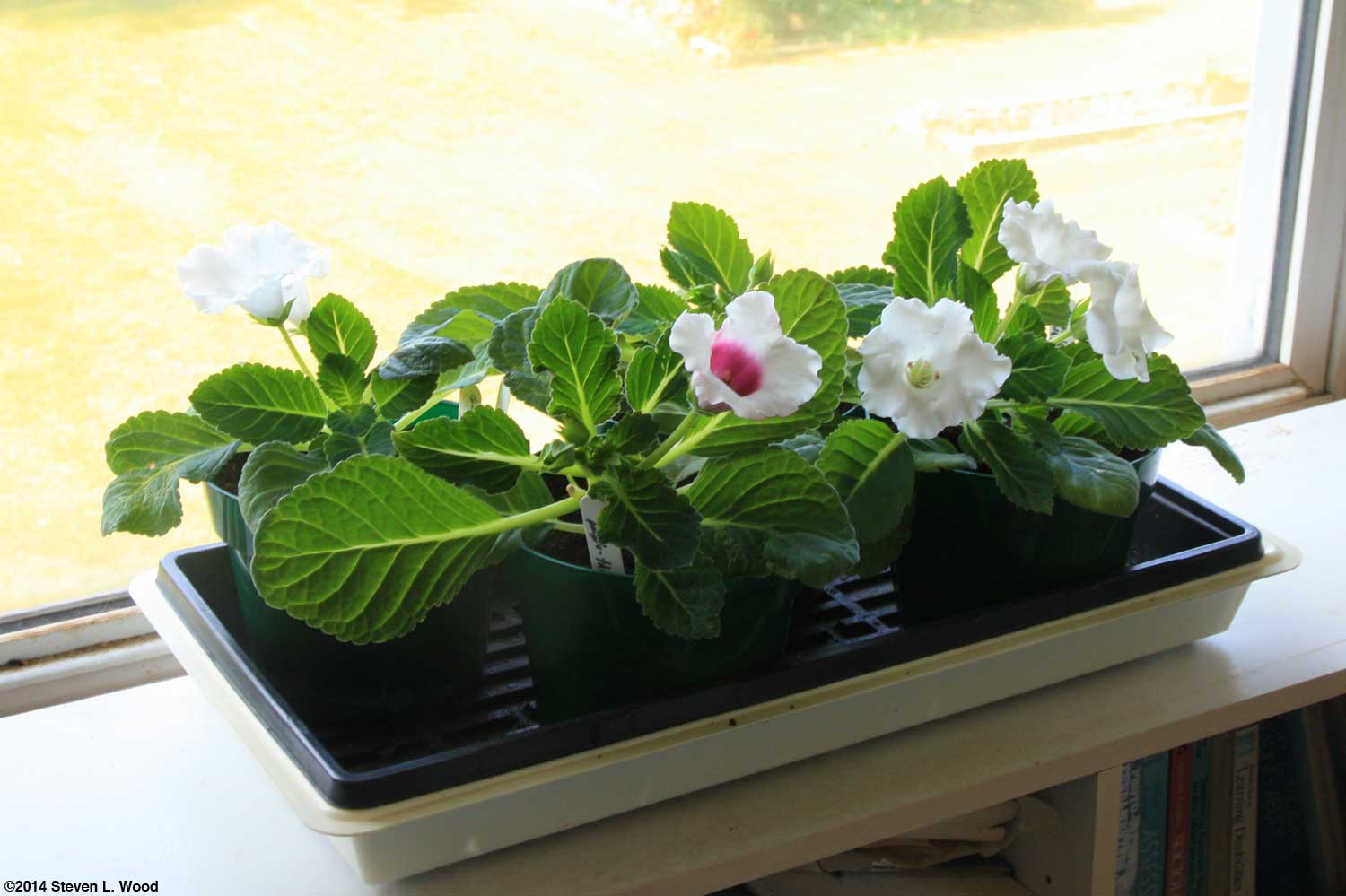
A nice surprise this morning was that one of our new gloxinia plants seeded in late February put up a single bloom with white petals and a purple throat. We lost almost all of our mature gloxinias last year to an apparent INSV virus infection. I had to destroy all of our plants under our plant lights, only allowing a few dormant plants that were stored away from the infected plants to resume growth (outside and segregated from our new gloxinias). A second picking of our green beans produced about a gallon of frozen beans. When it appears that we have less than four quarts or so of beans, I hate to get the canner out. Freezing small batches is a lot easier. It involves cleaning, snapping, blanching and quick cooling the beans before letting them dry on clean kitchen hand towels. Then the beans get spread on cookie sheets to go into the freezer. When the beans have frozen hard enough to snap easily, they go into a ziplock freezer bag. The process is possibly easier to do than describing it.
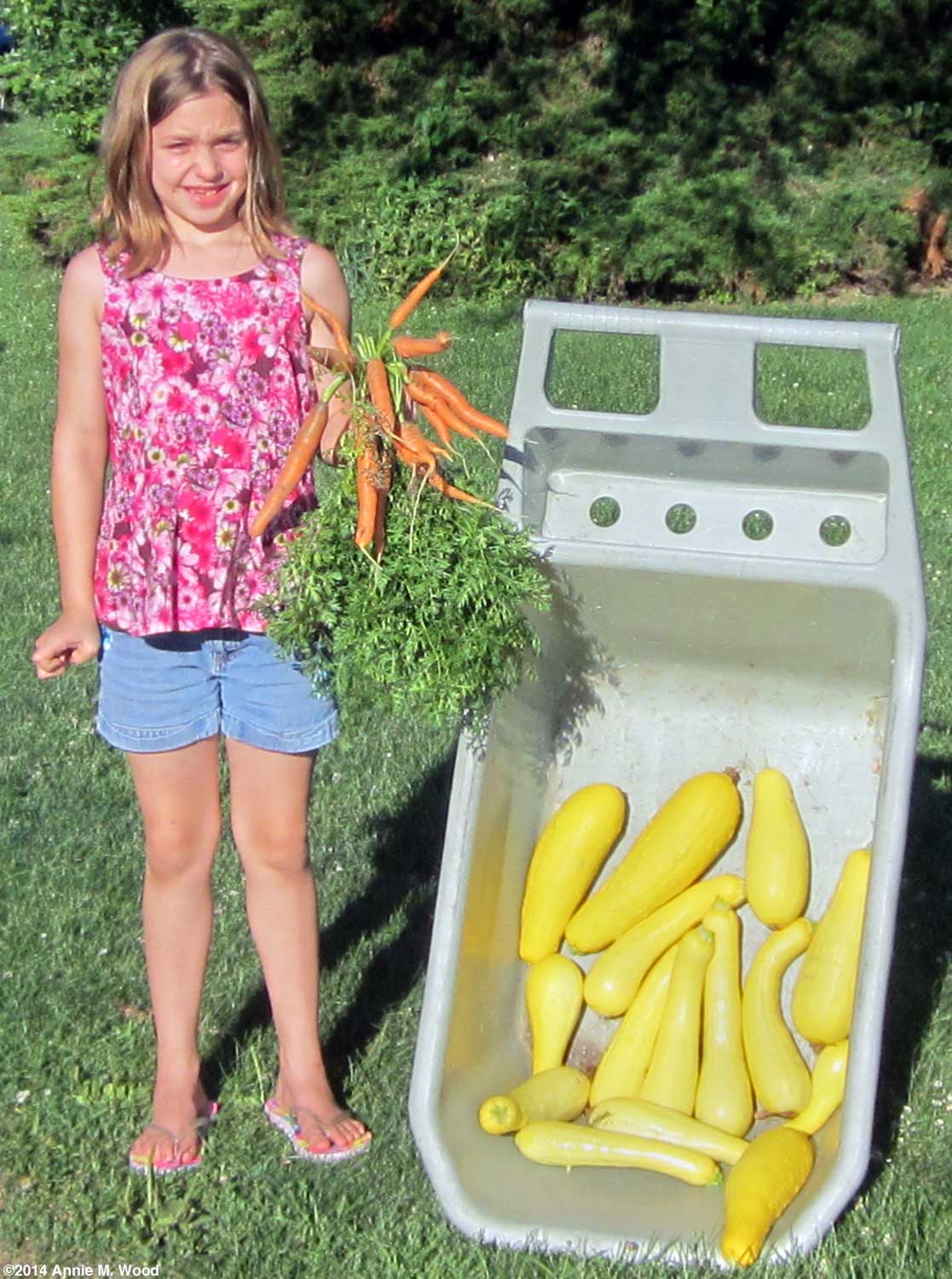
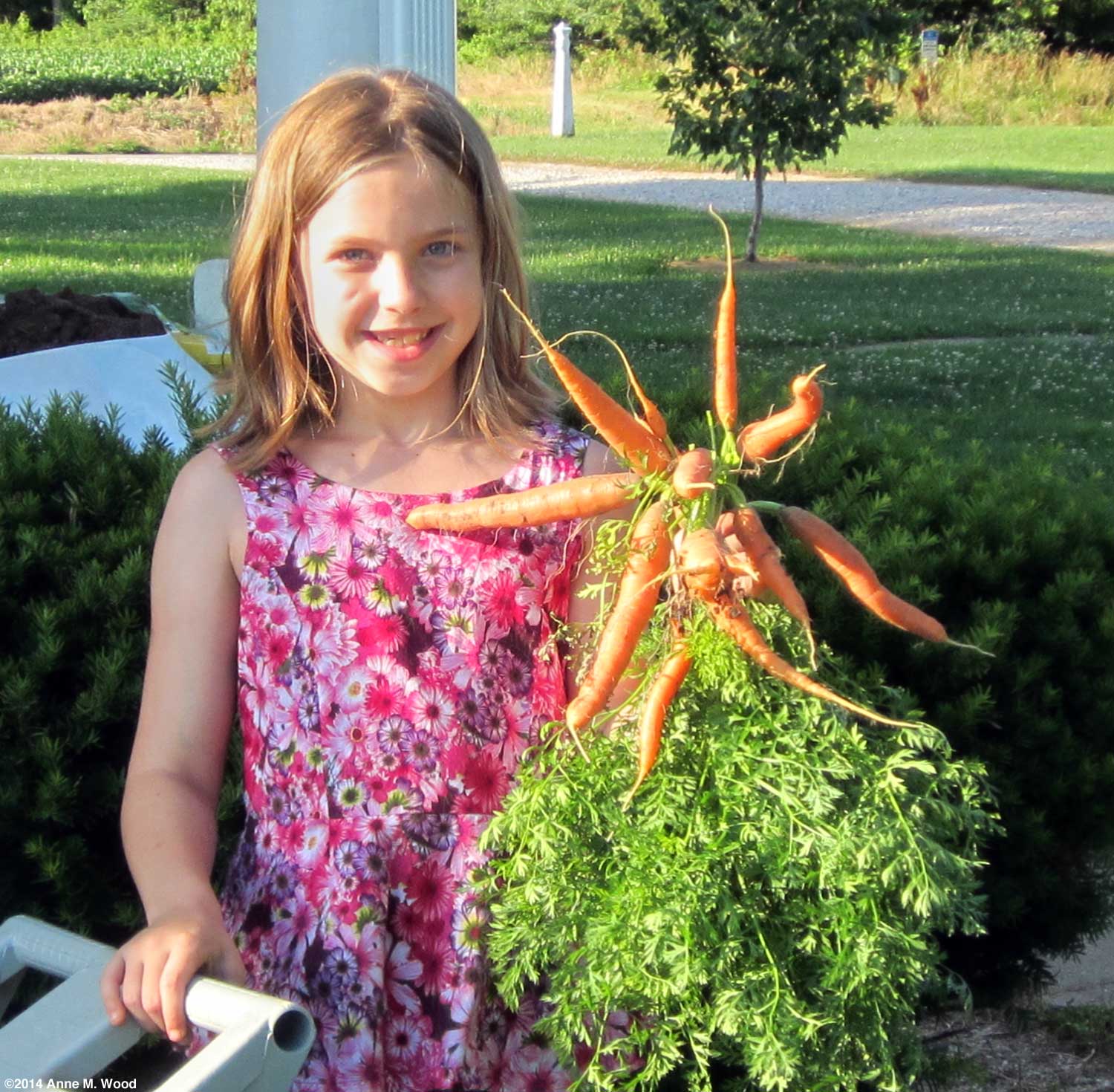
After bringing in quite a few, almost too large yellow squash, she wanted to pull carrots. I suggested we use a garden fork to first loosen the soil in the middle of the row where I've been digging a few carrots already. Then the pulling went easy. We didn't take all that many carrots, just enough to satisfy her desire to pull carrots. The rest will come out next week when I have time to dig, clean, and sort them all for storage, a job that can take a day or two. Katherine spent a good bit of the afternoon munching on fresh carrots. You sure can't complain about a kid's eating habits when they tend towards healthy stuff.
Sadly, I'm on the sidelines of gardening for a while. I'm not sure what I did to cause it, but my right shoulder simply quit working on Sunday. A trip to the doctor on Monday produced some really scary initial possibilities that might have me out of action six months or more. A later reading of the x-rays now suggests calcific bursitis and a separated shoulder. Either of those will also take some time to heal, but are a much brighter prognosis than the original suggestions of a torn rotor cuff and/or frozen shoulder. When I see the orthopedic specialist, I should know more. Today is the first day since Sunday that I can sit at the computer and type without a lot of pain. (I'm still mousing and brushing my teeth left handed, as I can't raise my arm above my chest.) But I've seen improvement each day. The novelty of being a bit buzzed on painkillers wore off after just a day! My wife, Annie, is doing what she can to help keep up in the garden, but for the most part, stuff will just have to wait.
I'd been using the same mousepad for years, simply because I liked it. The mousepad was on my desk at school and later at a college I worked at, and carried a funny and often all-too-true message. But it was also absolutely black from coffee spills and such. Finding a replacement Dilbert mousepad took a bit of work, as they're apparently no longer in production. I found a new one on eBay, so Dilbert once again is visible on my computer desk with his funny message about the Pointy Haired Boss's (original comic strip) computer literacy. Instead of throwing the old, nasty mousepad away, I soaked it in Dawn detergent for a couple of days. Most of the mess washed out, so it moved to my computer workshop area of our sunroom. The switch to a clean mousepad made my computer seem much more responsive. Apparently, the old, dirty mousepad was preventing my optical mouse from functioning very efficiently. I'll be back when I have some useful gardening info to share.
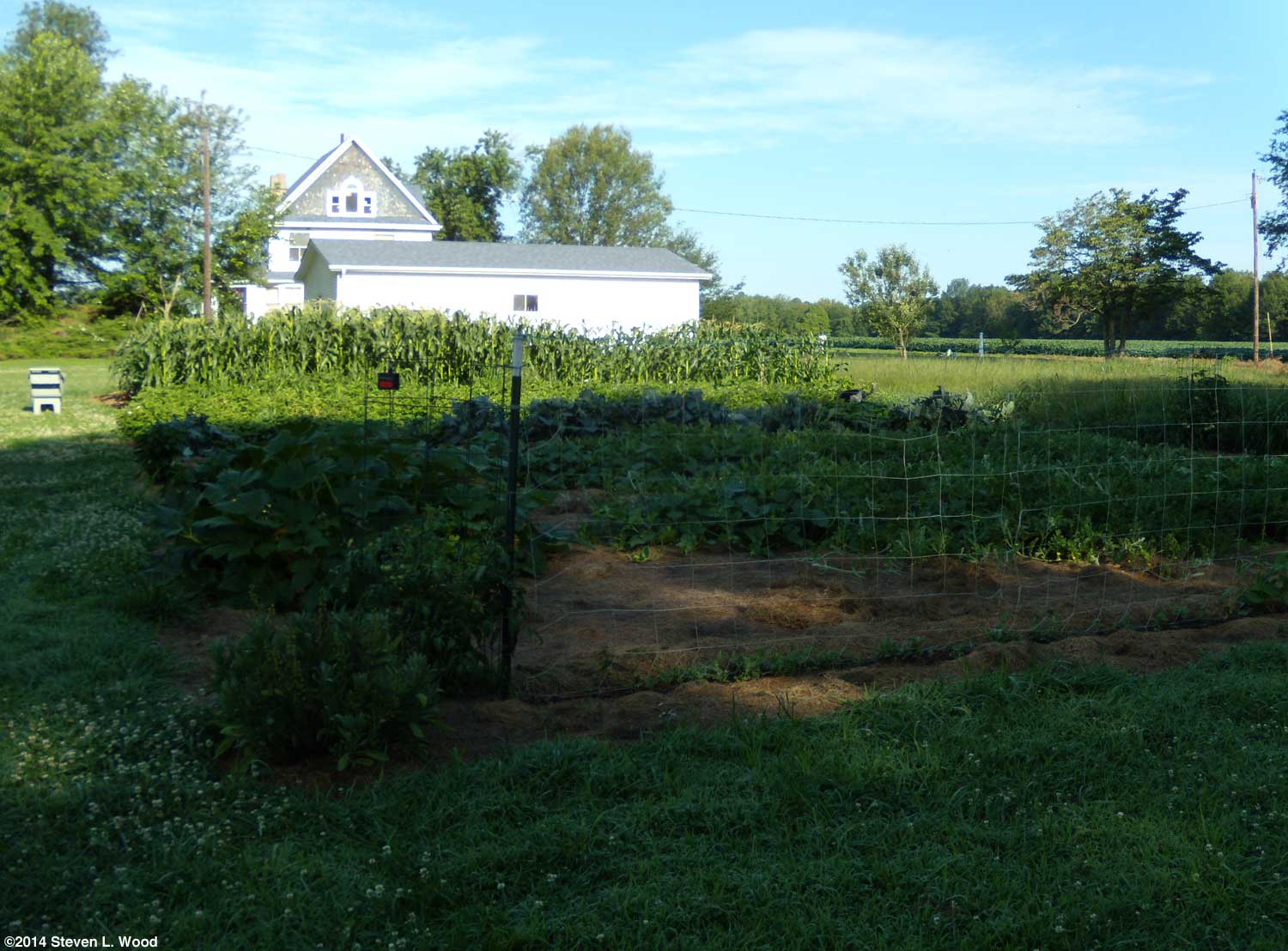
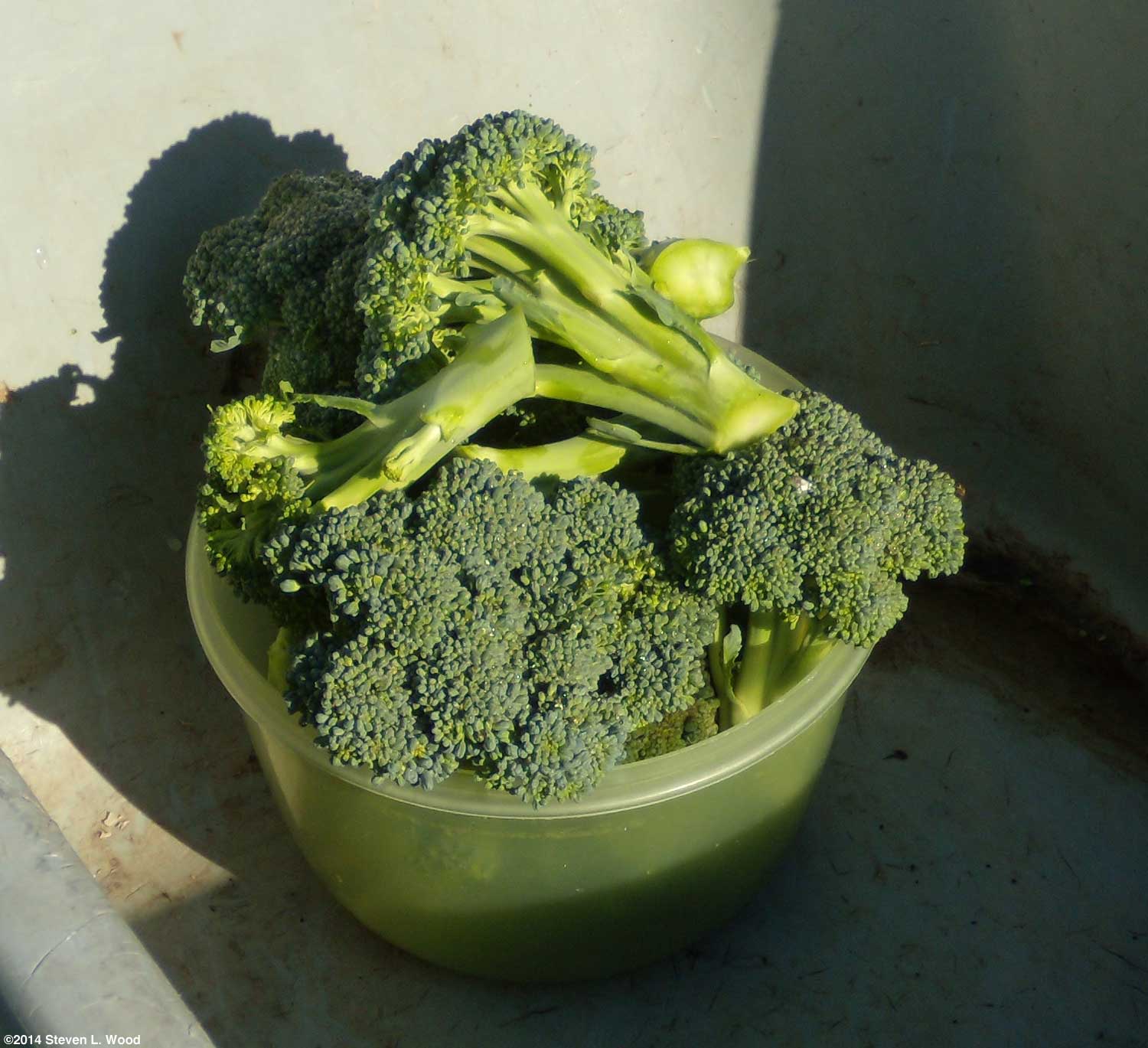
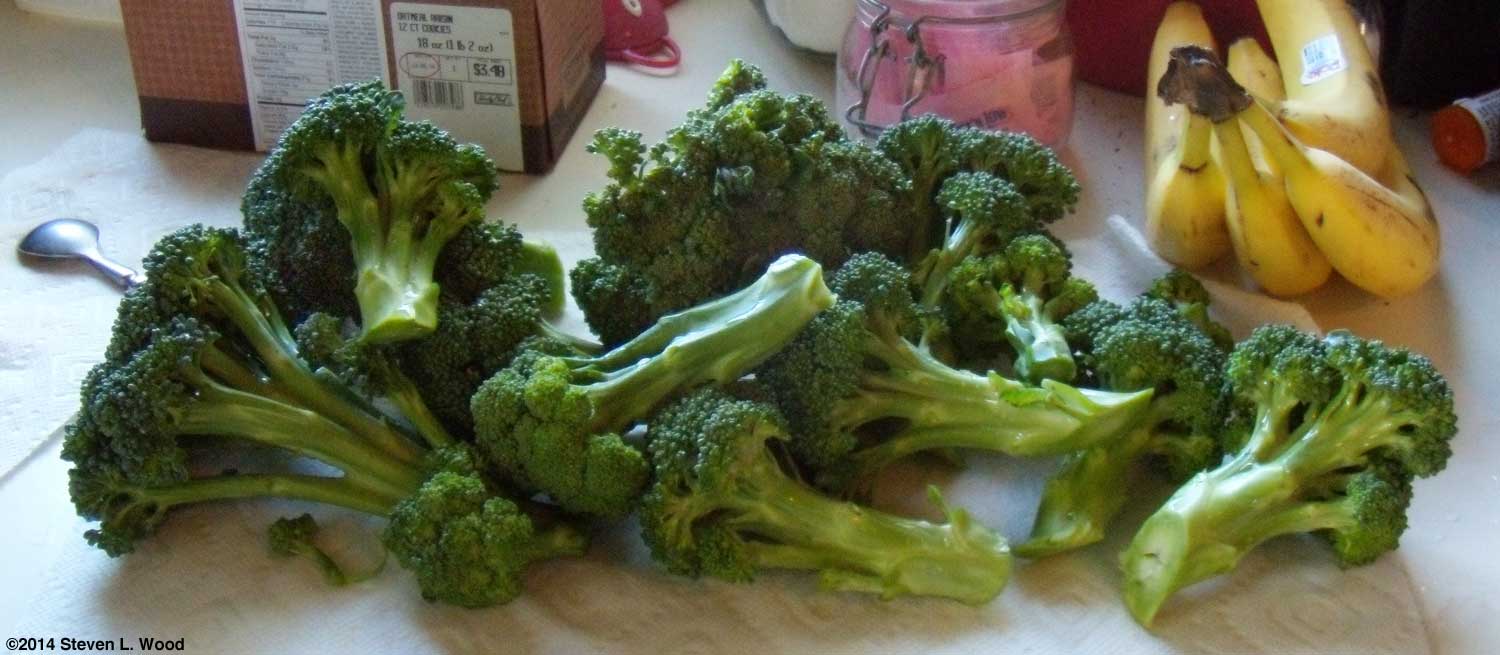
I'd noticed some rather large broccoli sideshoots in our row of brassicas in the East Garden yesterday. So I grabbed a sharp knife, a bowl, and even took our garden cart to the East Garden to check the late broccoli for sweetness and cut it if good. When I got to the East Garden, the brassica row was still in the morning shade produced by the woods to the east of the plot. I spent a few minutes surveying our sweet corn, checking it as best I could from outside the patch for corn smut. Not seeing any smut, I moved on to the broccoli which was by then in the sun. (The sweet corn was too wet from dew to walk the rows.)
When washing and trimming this cutting of broccoli, I did remove five or six green cabbage worms. That's not unusual for broccoli picked this late in the season. Despite regular applications of Thuricide (BT), I've noticed lots of small white cabbage moths fluttering around our garden plots. The moths and cabbage loopers seem to build up through the middle of the summer unless one resorts to stronger, chemical based controls. I'd rather just pick off a few worms. While I was out picking this morning, I was working with my old point-and-shoot Nikon, as my Canon digital SLR is still to heavy for me to easily lift to eye level. The Nikon tends to produce darker and more heavily saturated images.
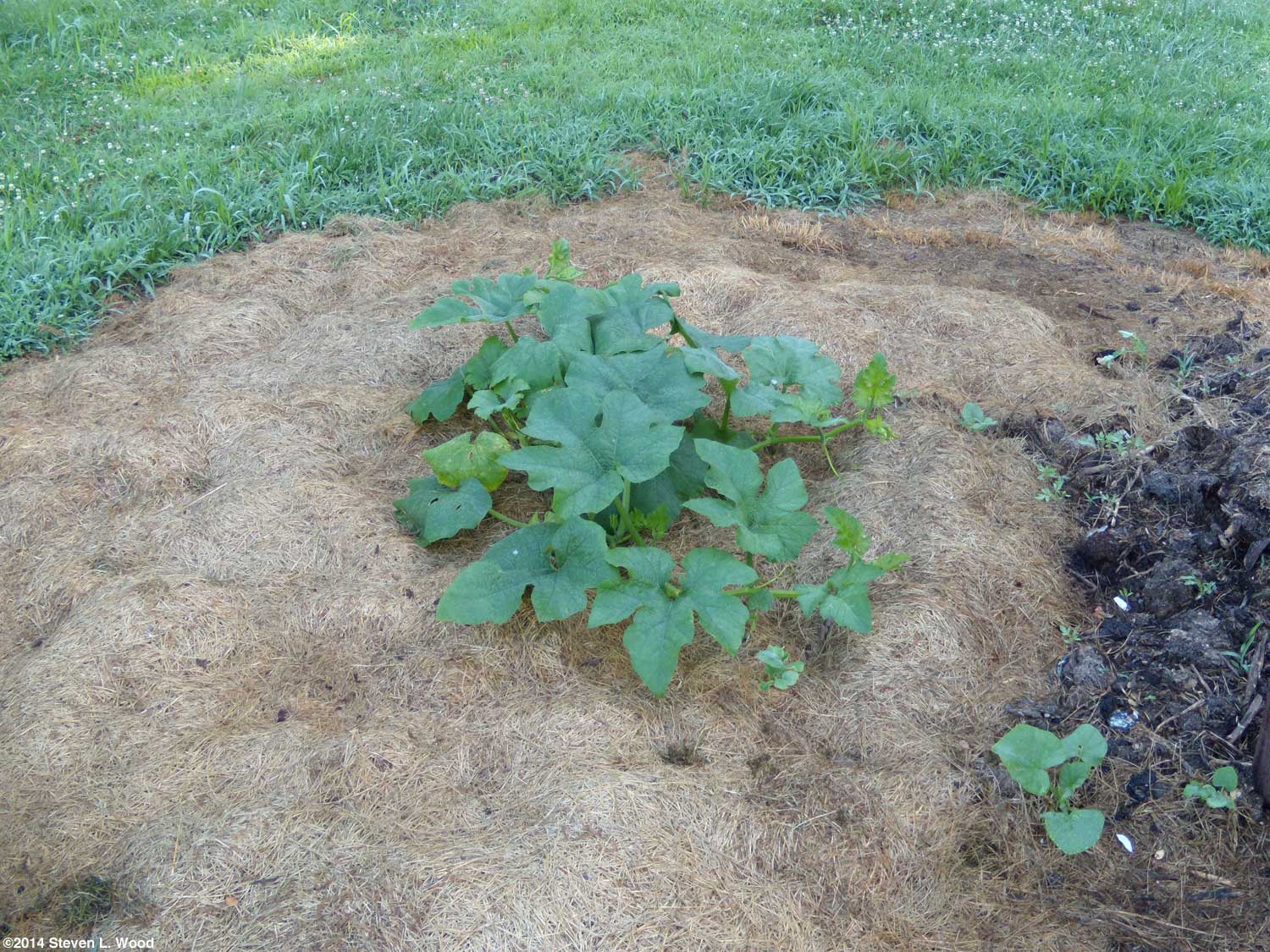
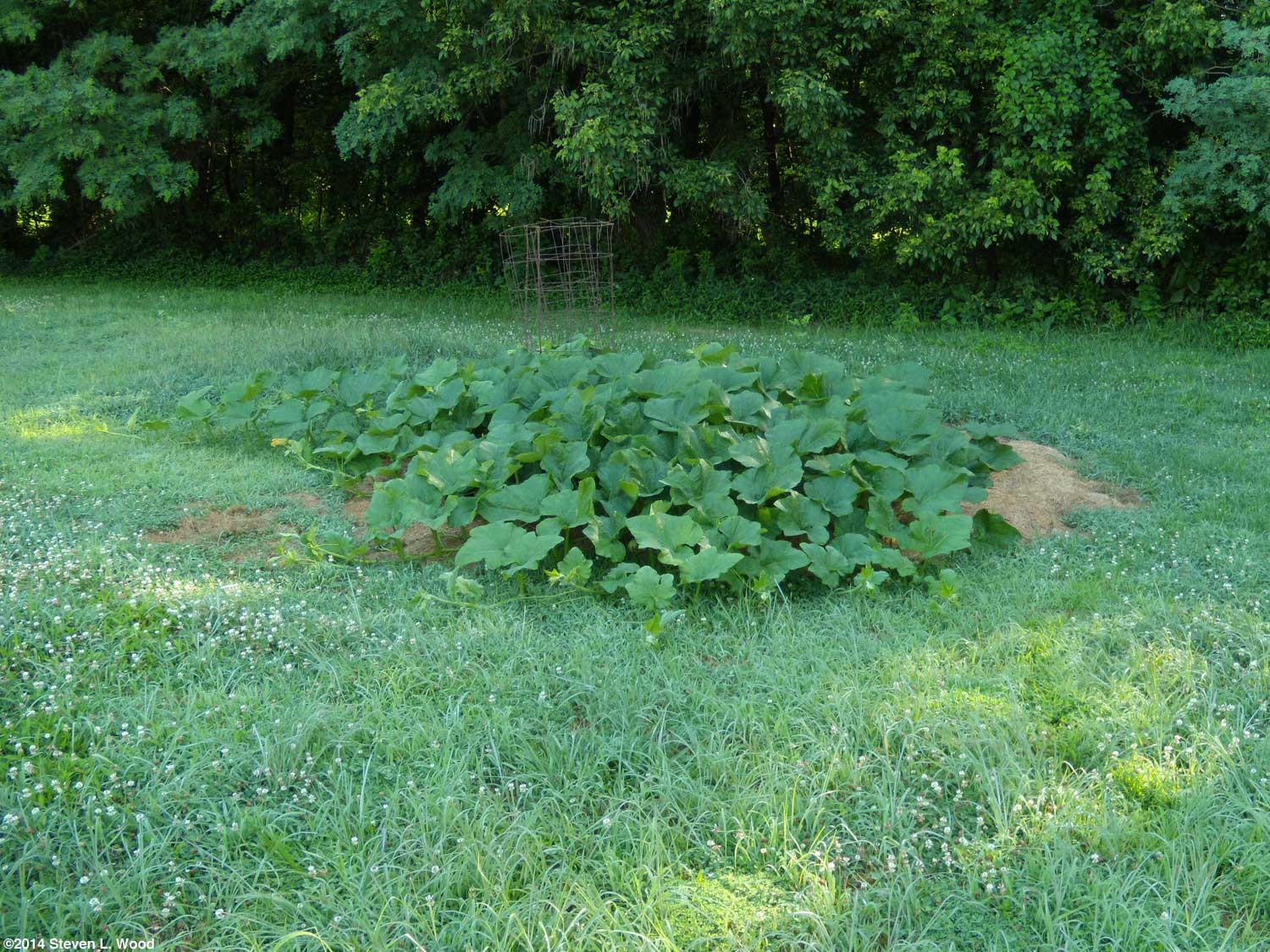
The butternuts have outgrown their ring of mulch, as I should and would have mowed last Sunday or Monday, if possible. The squash vines can compete a bit with grass growing under them, but it's not the best growing environment for them. When I can mow and rake again, I'll try lifting vines and throwing mulch under them. I may even resort to ringing the planting with Roundup. It was really nice to get back into the garden this morning, even if only in a small way. When my wife called later, she exclaimed, "You cut the broccoli left handed, didn't you?" I rather jauntily told her I'd done it with my bad arm, but also paid for the deed in pain later in the day. But the good news is that I'm totally off the heavy duty pain killers now, relying on aspirin and ibuprofen, which has to be a good sign that my shoulder is healing. Saturday, July 12, 2014 - Lots of Rain
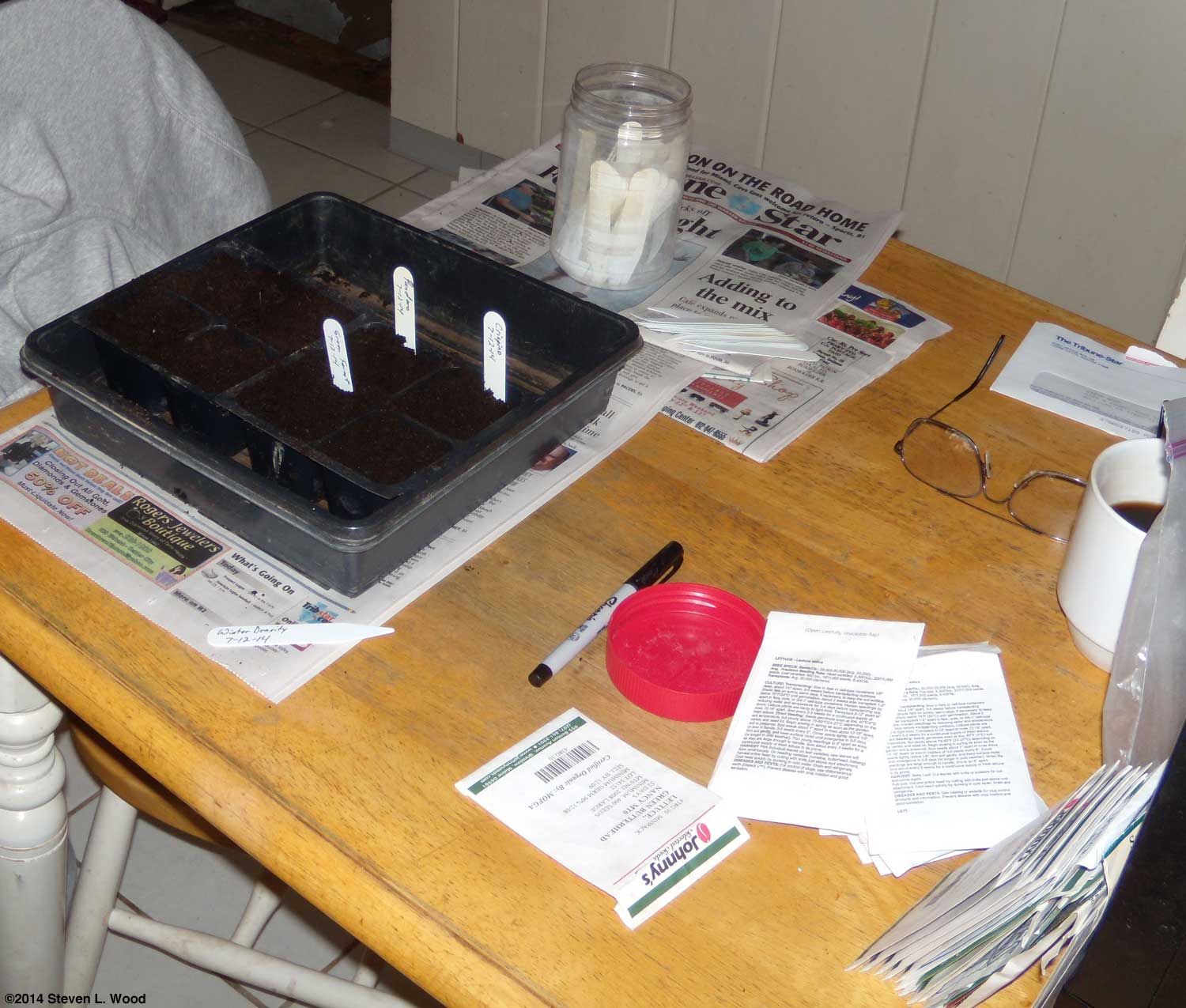
With rain outside and a sore, but no longer stiff shoulder, I limited my morning gardening to getting some fall lettuce started. I seeded two fourpacks with a different lettuce variety in each cell. I seeded some head, soft head, and romaine varieties I like into sterile potting soil. The half flat went outside to germinate, as we previously had great success germinating our fall brassicas in a shady spot on our back porch. The lettuce seed, which I'd walked to the garage in the rain to retrieve from our big freezer, went into our refrigerator's freezer for the time being. I'll need to seed more lettuce in a week or so, and possibly a bit after that to give us a continual fall harvest.
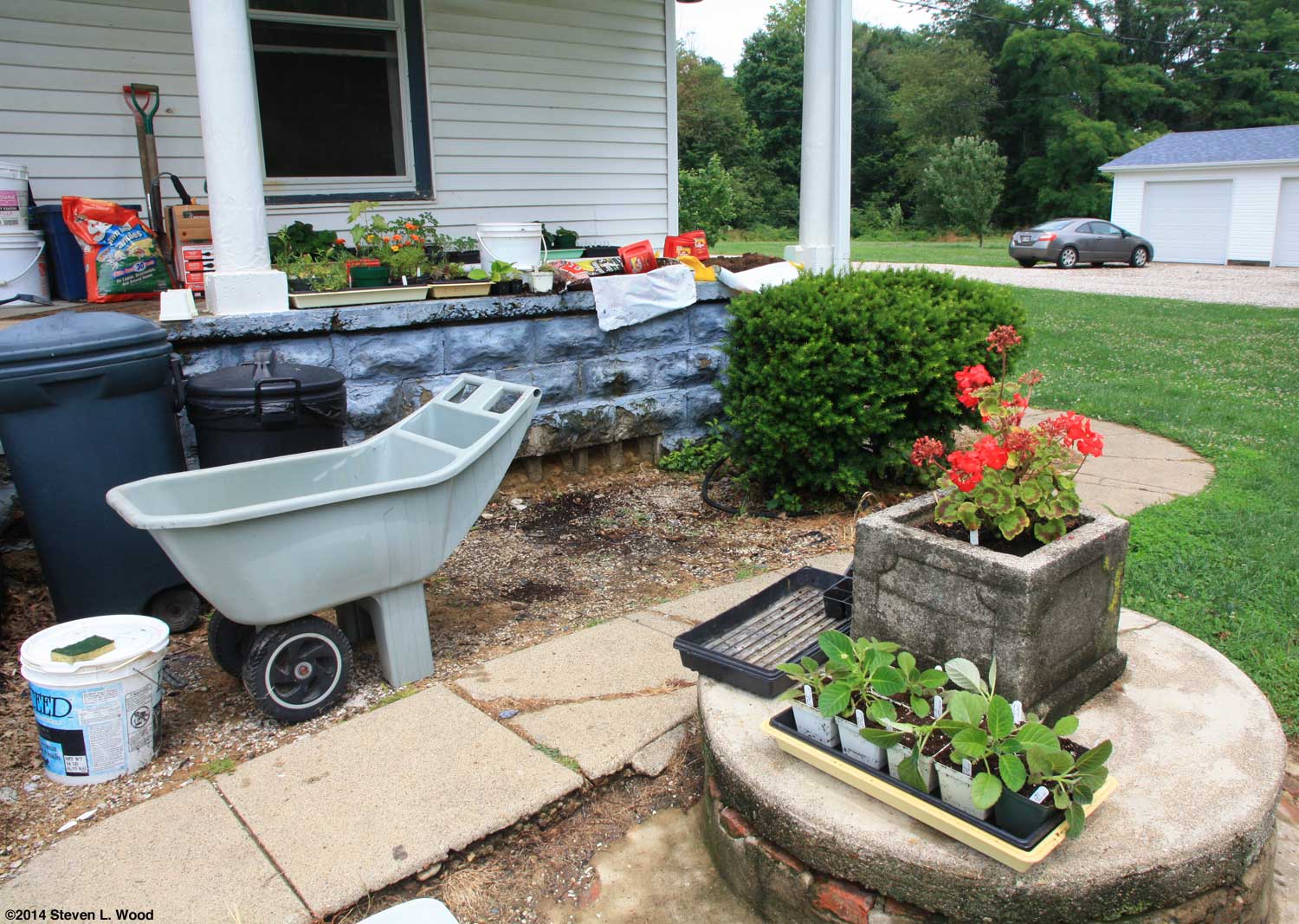
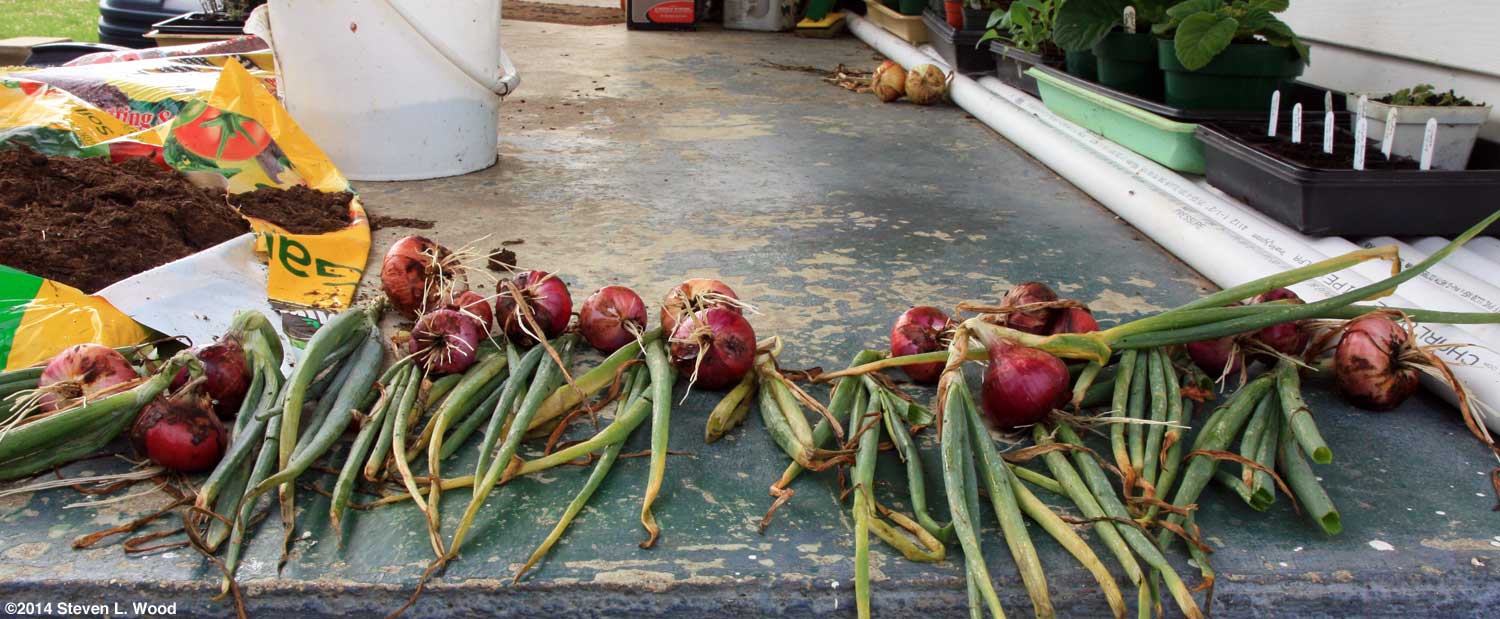
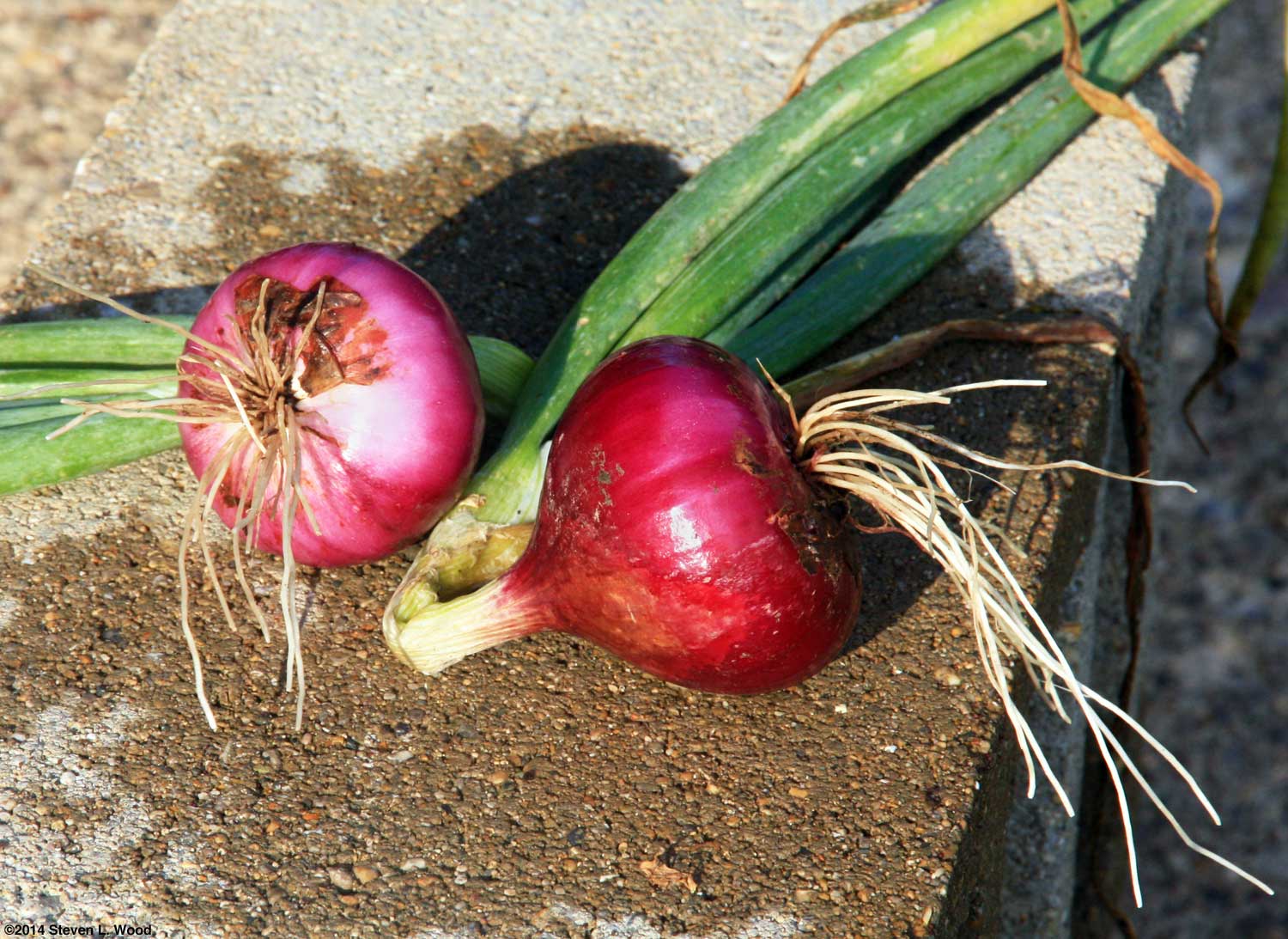
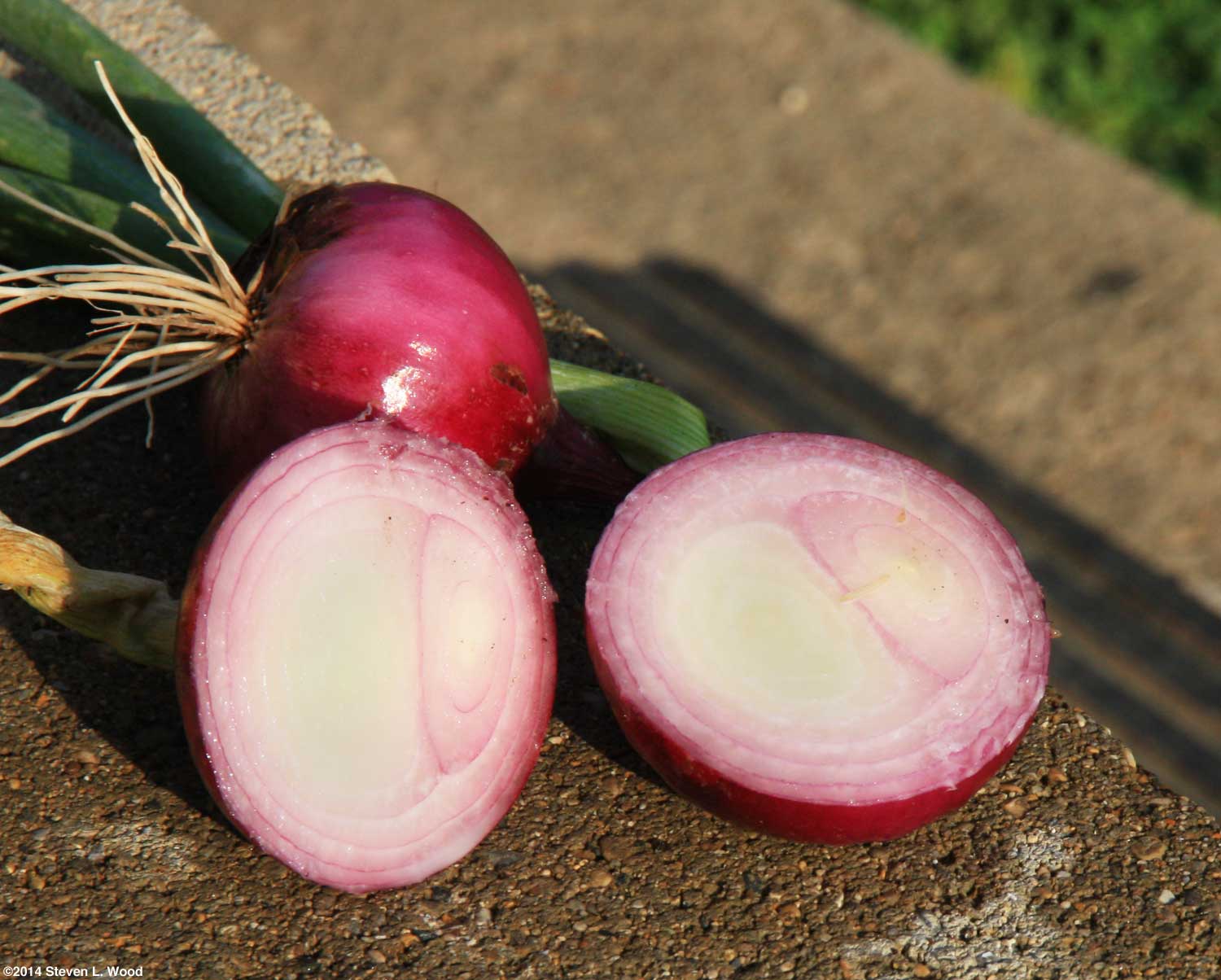
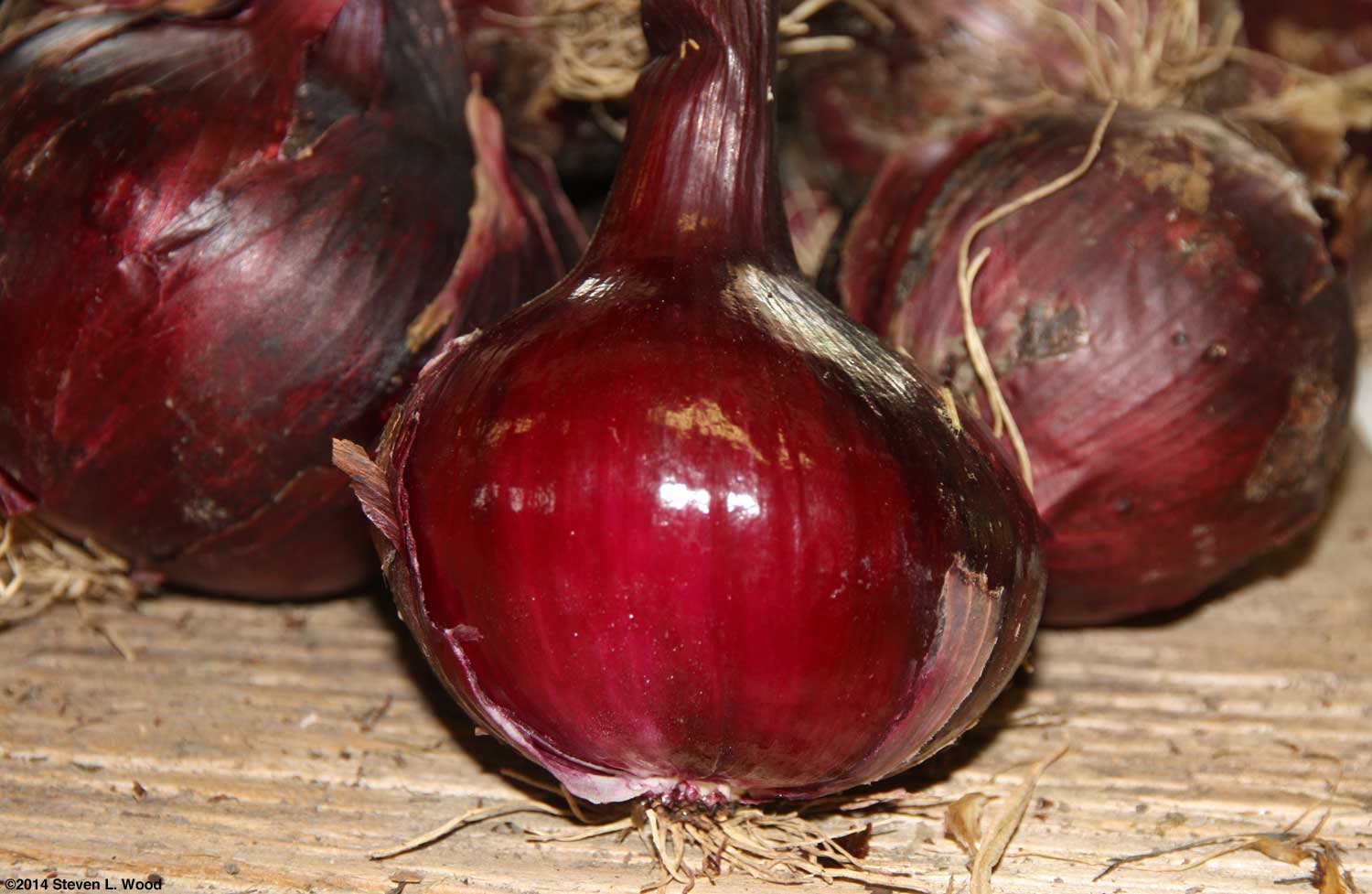
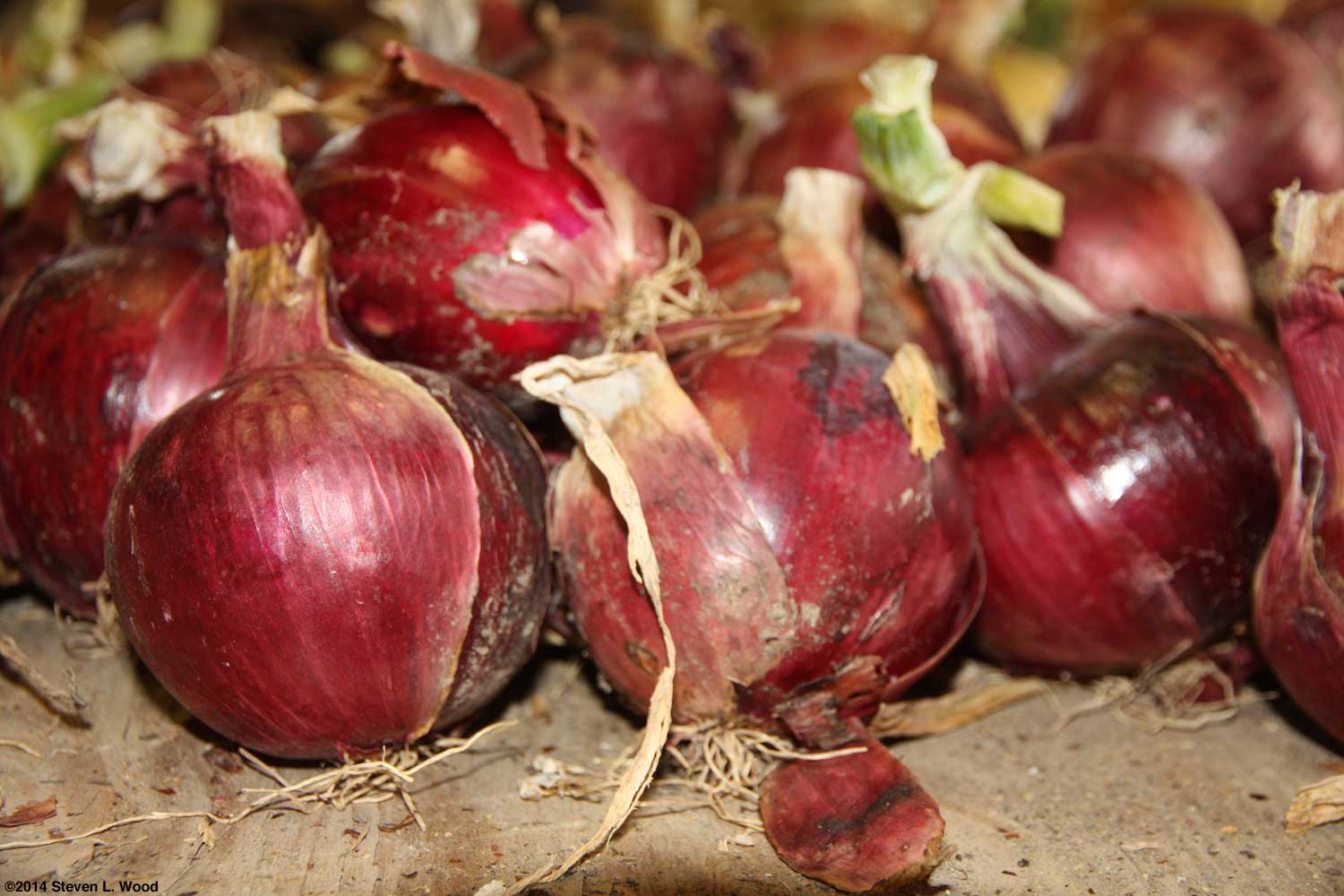
All of the pots and trays I'm now using for our gloxinias have been through a bleach rinse at least once. I keep a five gallon bucket of bleach water beside the back porch for that purpose, always covered with a lid so the dogs don't drink from it. The potting mix I used was Baccto Lite cut with peat moss, a touch of ground limestone, and a liberal sprinkling of systemic insecticide. After the rain, I noticed that about half of our onion plants had tipped over. A heavy rain can push them over prematurely, but these onions were ready to tip over anyway, as they're nearly mature. I'll let them bulb for several more days, up to a week or so, before pulling and beginning to cure them for storage. Our Red Creole onions were another matter. They're a much shorter season onion (85 day) than the rest (104-125 day) and had been tipped over for nearly two weeks. It was time this evening to get them out of the ground or possibly face them beginning to rot or mold.
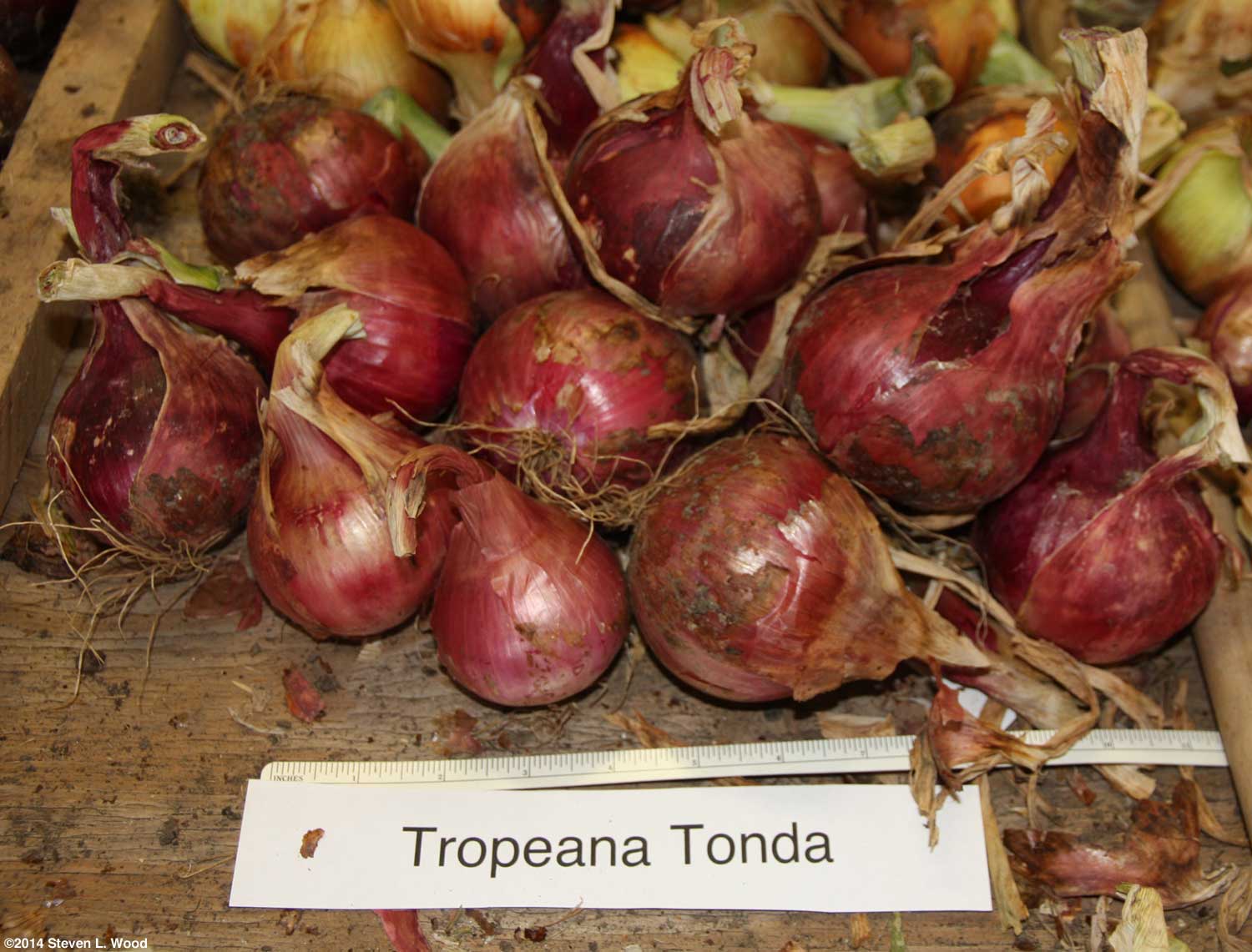
Our small Red Creole planting is part of a larger test of mostly open pollinated onion varieties to possibly replace some of the hybrids we currently depend on. Our two favorite storage onion varieties, Pulsar and Milestone, are now down to a single source on one and just two sources on the other. Both are hybrids and are likely to be replaced at some point with something "new and improved." Likewise, our favorite red onion, Red Zeppelin, is also a hybrid and could disappear from seed catalogs at any time. So we're planning ahead this year and testing nine new-to-us onion varieties, seven of which are open pollinated. If the Red Creoles store well, they could become part of our regular onion planting, despite the small size of the onions we got this year. They grew well and have good flavor. Of course, all of our onions have done well this year, making it a bit difficult at this point to pick one variety over another. But it's nice to get a good return on our efforts. Tuesday, July 15, 2014 - Carrots
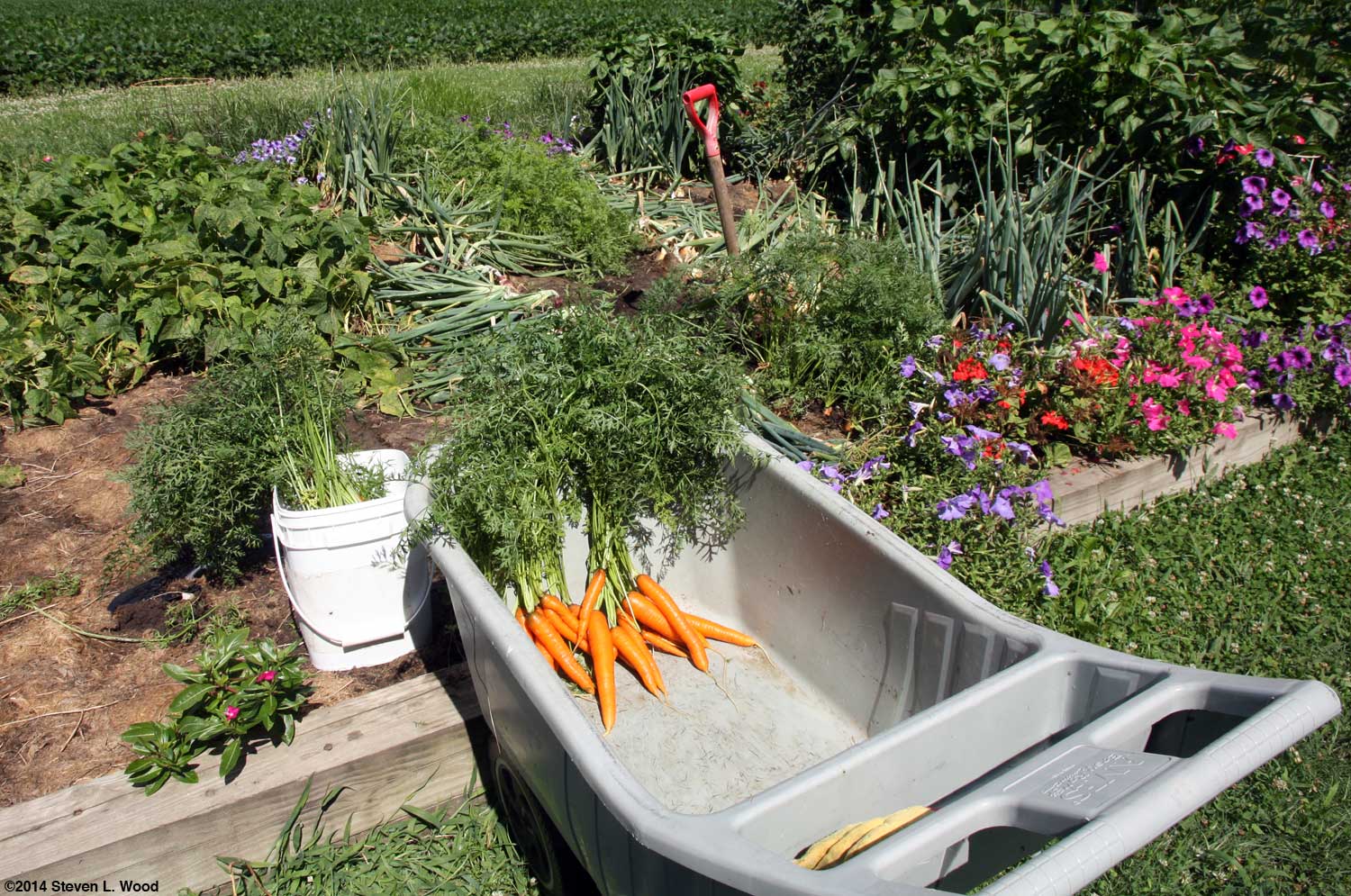
I got out fairly early this morning and dug our carrots. While there were lots of other jobs that needed doing after a week or so of neglect, the carrots were shading our now mostly toppled over onions that need to dry down. Also, I was at least a week late, if not two, in digging the carrots, making them rather large and also inviting rot to set in. Digging our normal varieties went fairly well, although I had to dig more with the garden fork than usual. When conditions are just right, all one has to do is loosen the soil with the fork beside the row before gently pulling the carrots. Because of the size of the carrots, I was having to actually dig deep to loosen the soil enough that the carrots wouldn't snap off when pulled. When I worked my way towards the last third of the carrot rows, I realized that I was in for some real work. Since I'd run short of some of my favorite carrot seed, I'd finished the double row of carrots with a new, long variety, Sugarsnax. These carrots were extremely long. Growing in our best garden soil, most of them were a foot long, with one carrot going about 15" deep!
Desktop Photos After years of neglect, I used my recent downtime from gardening to redo our Desktop Photos page on mathdittos2.com. We'd had 200 x 150 pixel sample shots there for over ten years. With my eyes not getting any better as the years pass, I updated the sample images to 400 x 267 pixels. Of course, once you get into opening images, there are corrections and improvements to be made, and even a few new shots to add to what is now two pages of free desktops (or wallpapers), plus another page of castoffs. I even added a new image size to the download options, as 1366 x 768 pixels became the most popular desktop screen size a couple of years ago. Wednesday, July 16, 2014 - Garlic
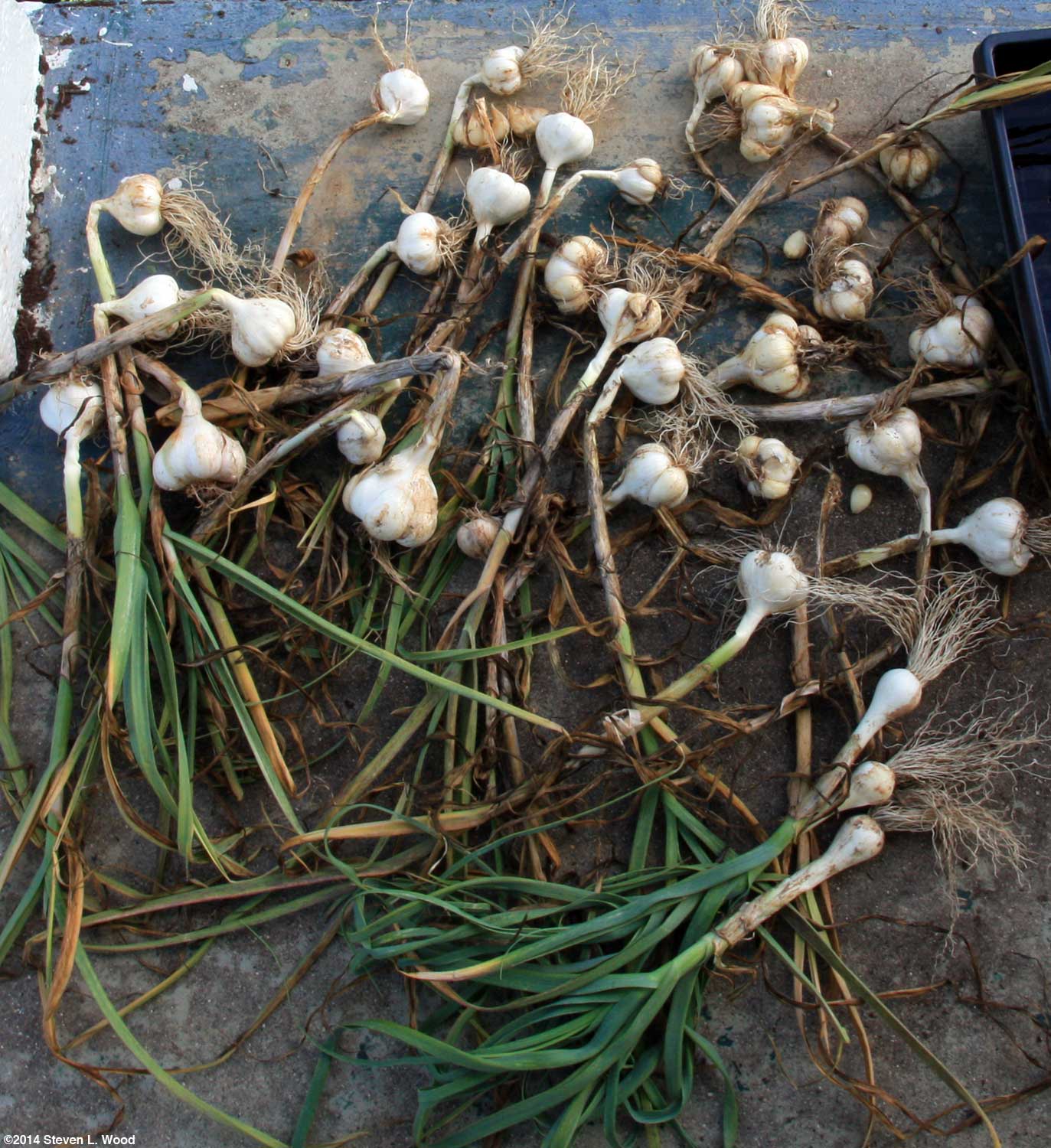
Once I realized we had a very poor stand of garlic, I went back and poked in a few more garlic cloves to fill in the bare spots in the raised bed. I also used one bare section for our celery, which I hilled again today. The mix of mature fall garlic interplanted with immature spring planted garlic made for some interesting digging. In the end, I dug all of our standard garlic, but transplanted a few tender spring shoots into some remaining bare spots in the elephant garlic row. Digging garlic is just a matter of getting deep enough with a garden fork to lift the garlic and surrounding soil so one can easily remove the garlic without breaking the leaves off from the garlic bulb. I hose off our garlic to remove mud stuck to it and its roots before letting it dry in the sun for a few hours. The washing can invite rot, but I like to get our garlic clean before curing it. The garlic will go onto a makeshift table in our garage to cure for a couple of weeks. Then it goes into old potato mesh bags for storage in our basement.
Having now grumped about all of our problems with our garlic, we actually harvested more than enough for us to use for the next year. We probably didn't get enough, though, for cooking use and planting this fall, so I may need to order garlic once again. Our carrot harvest yesterday produced sixteen pounds of cleaned carrots that I stored in our refrigerator. We'll need to share some of that bounty, as it's far more than we can use, and we may have a fall crop of carrots. Rather than cut out bad spots, slice, blanch, and freeze the cull carrots from yesterday, I just sent them to work with Annie for her coworkers. Annie related that one coworker was having fun "walking" the splits of the carrots across a table. The long Sugarsnax carrots produced "legs" or splits that were often 6-8" long. A split, or division of the carrot root into two or more parts, often occurs when the carrot root hits a rock or pebble in its downward growth. Still Catching Up
A Product That Works?
I noticed today that we have had some minor damage in our sweet corn, apparently from browsing deer. But the damage was confined to a few plants on the ends and outside rows of our sweet corn, and most of what had been damaged hadn't been eaten. Deer usually like the tassels and the ears of corn, but I found that what had been knocked over wasn't consumed. I guess our Bobbex treated corn left a bad taste in their mouths. Here's hoping! Friday, July 18, 2014 - Starting Kale
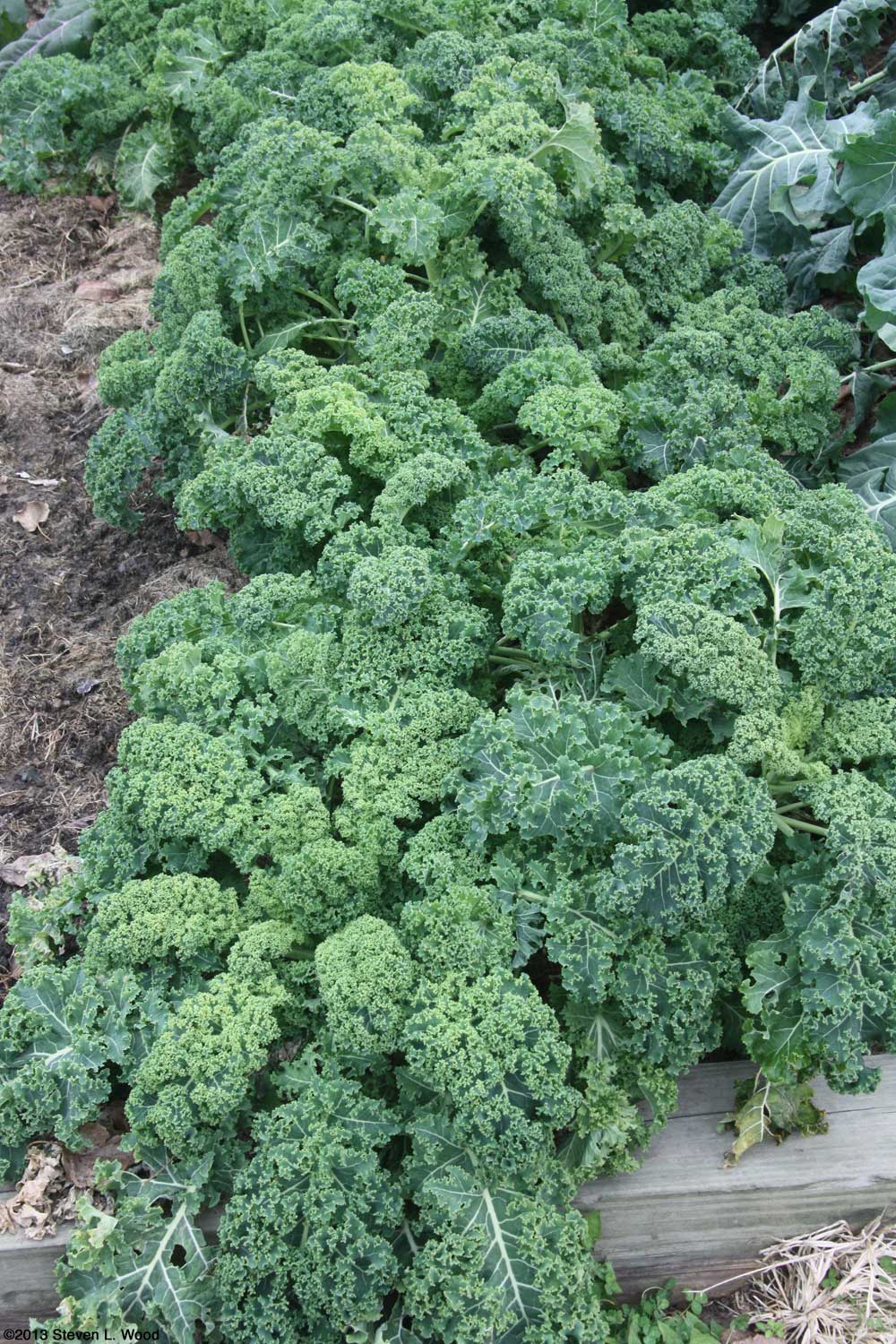
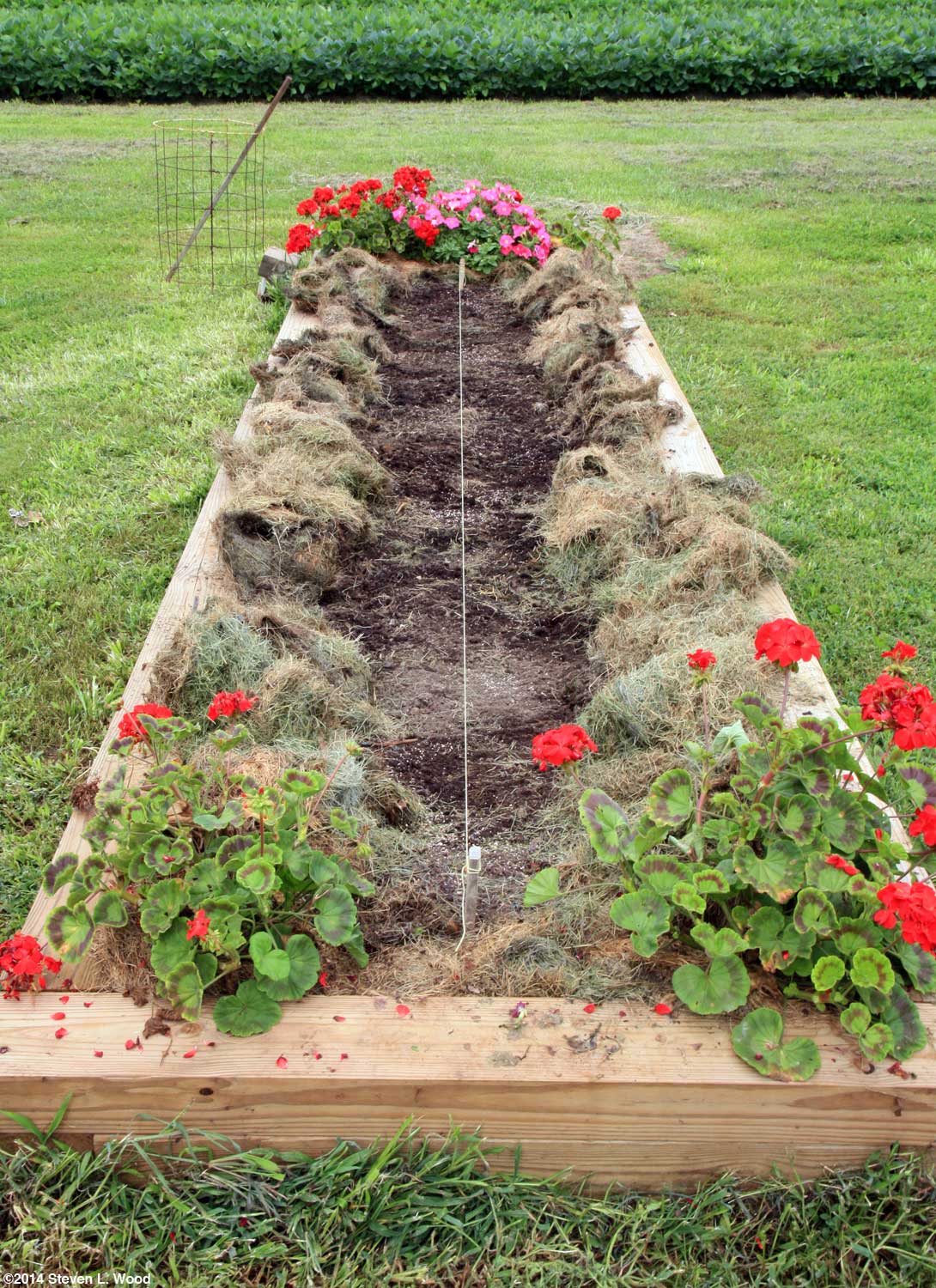
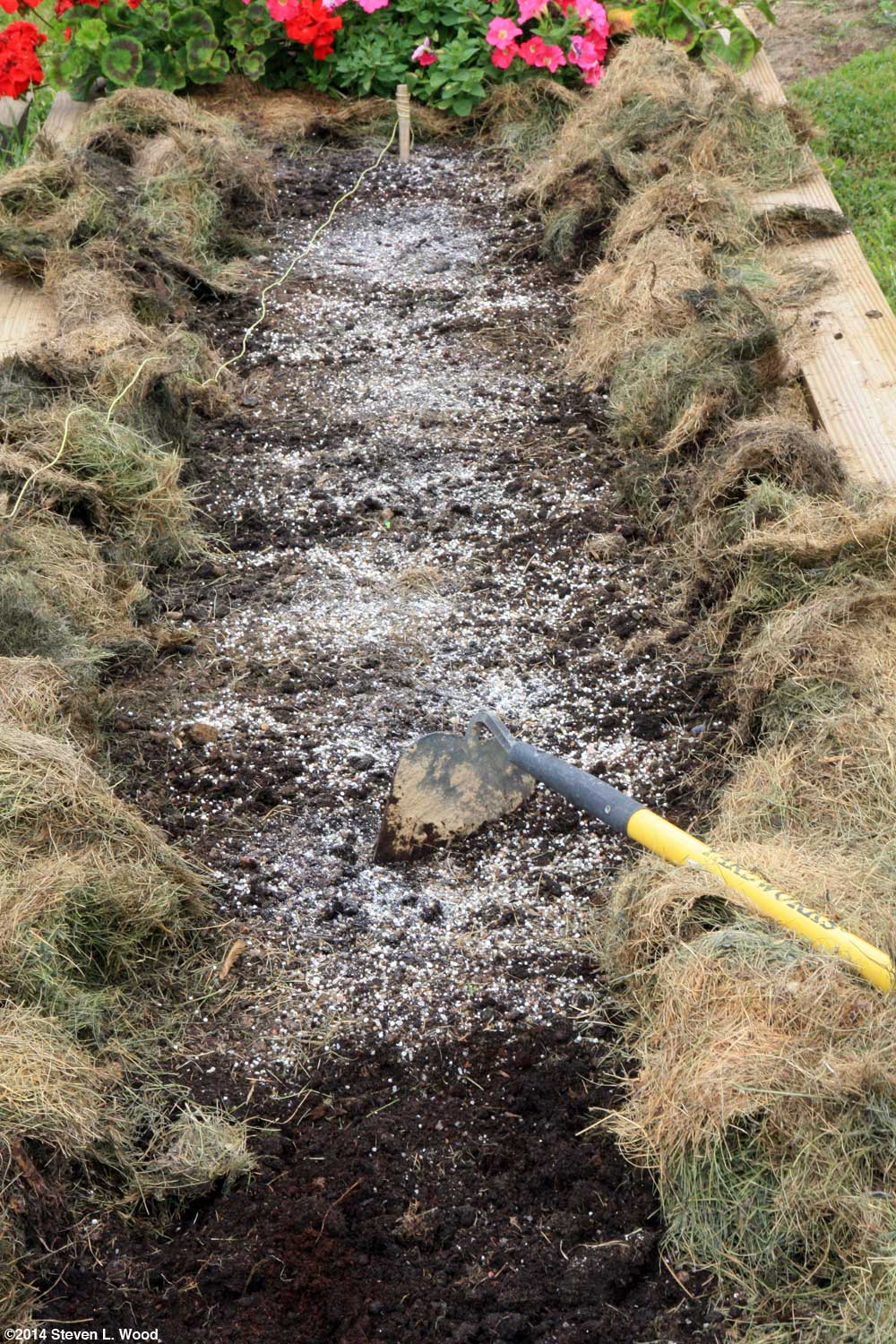
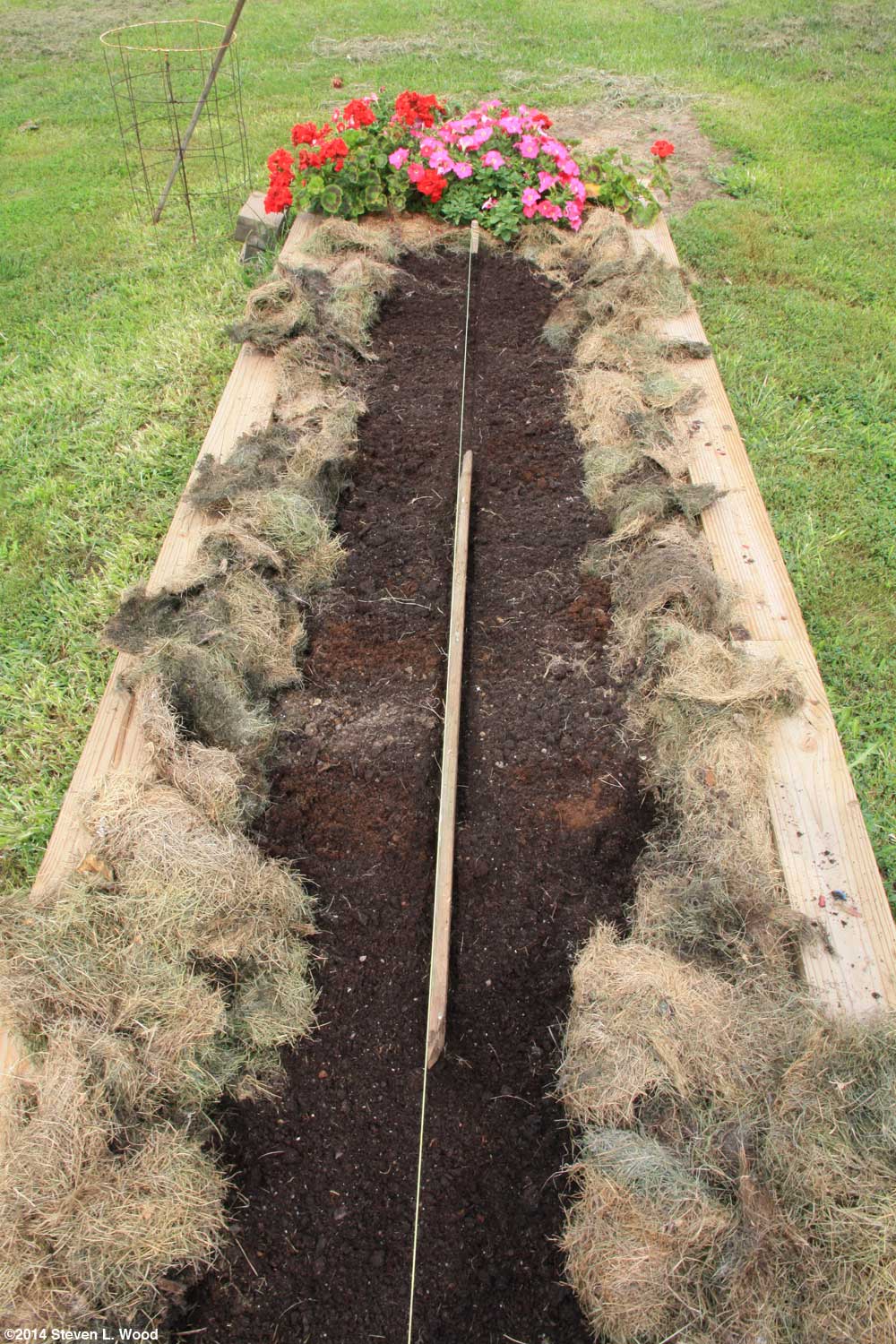
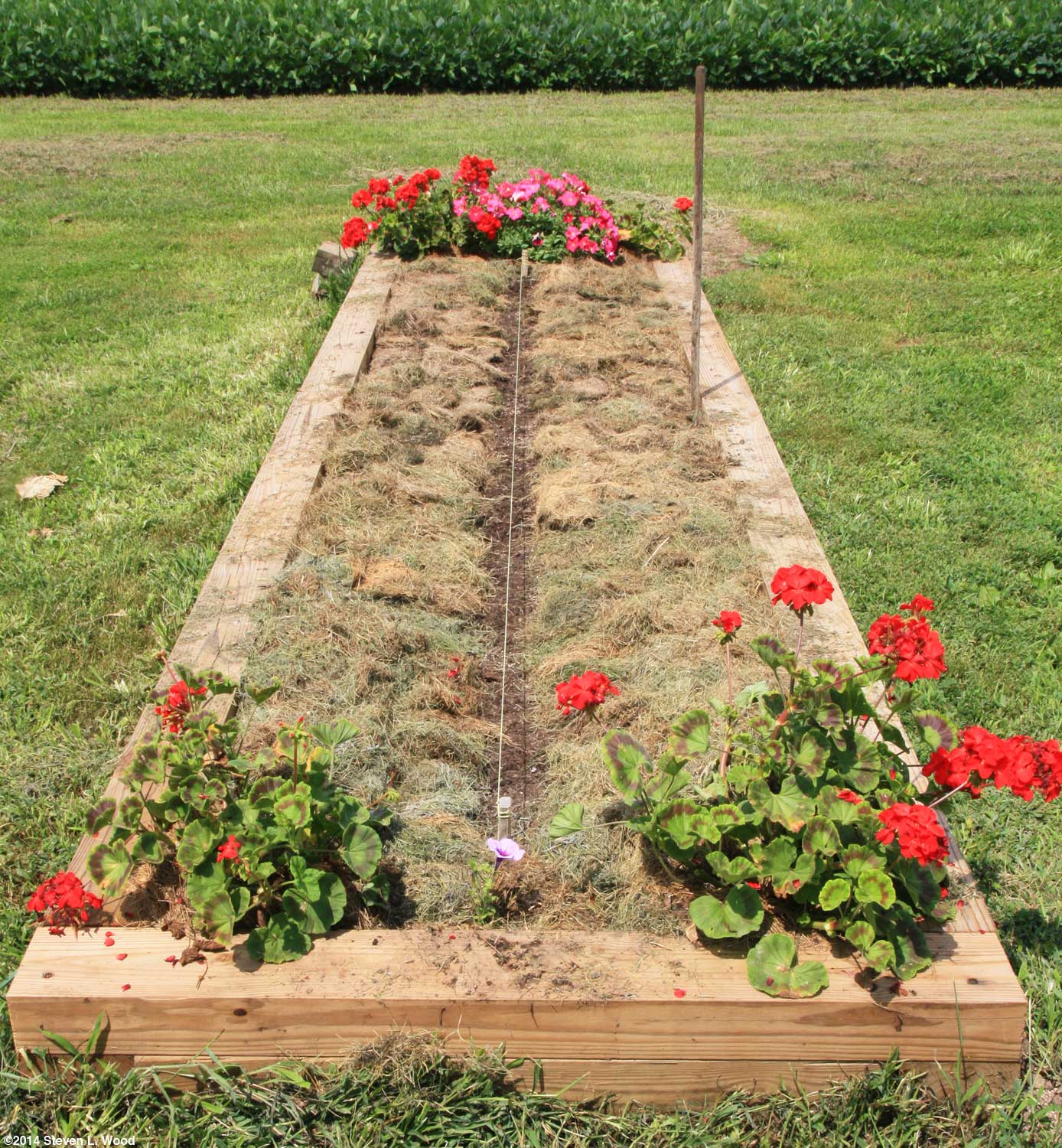
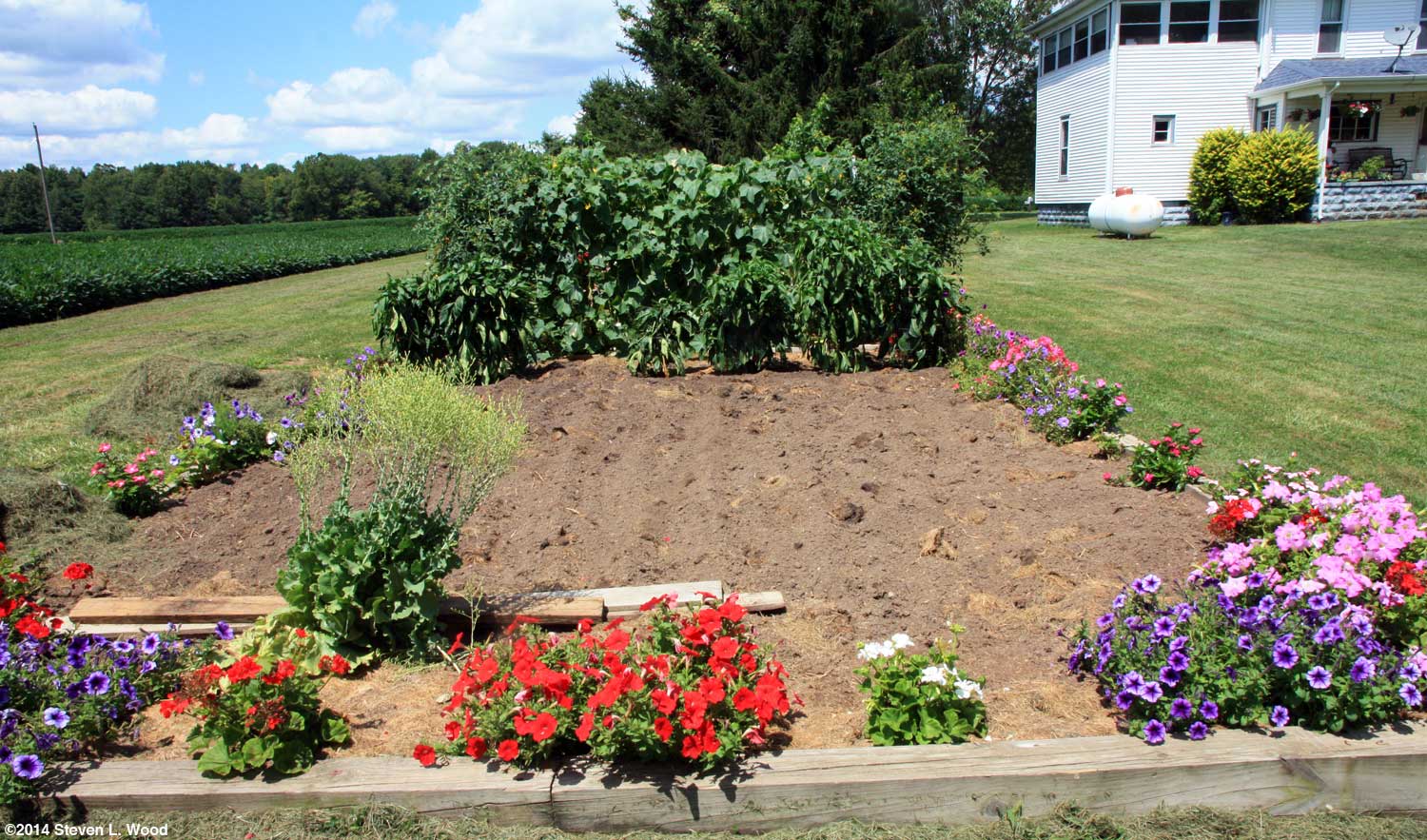
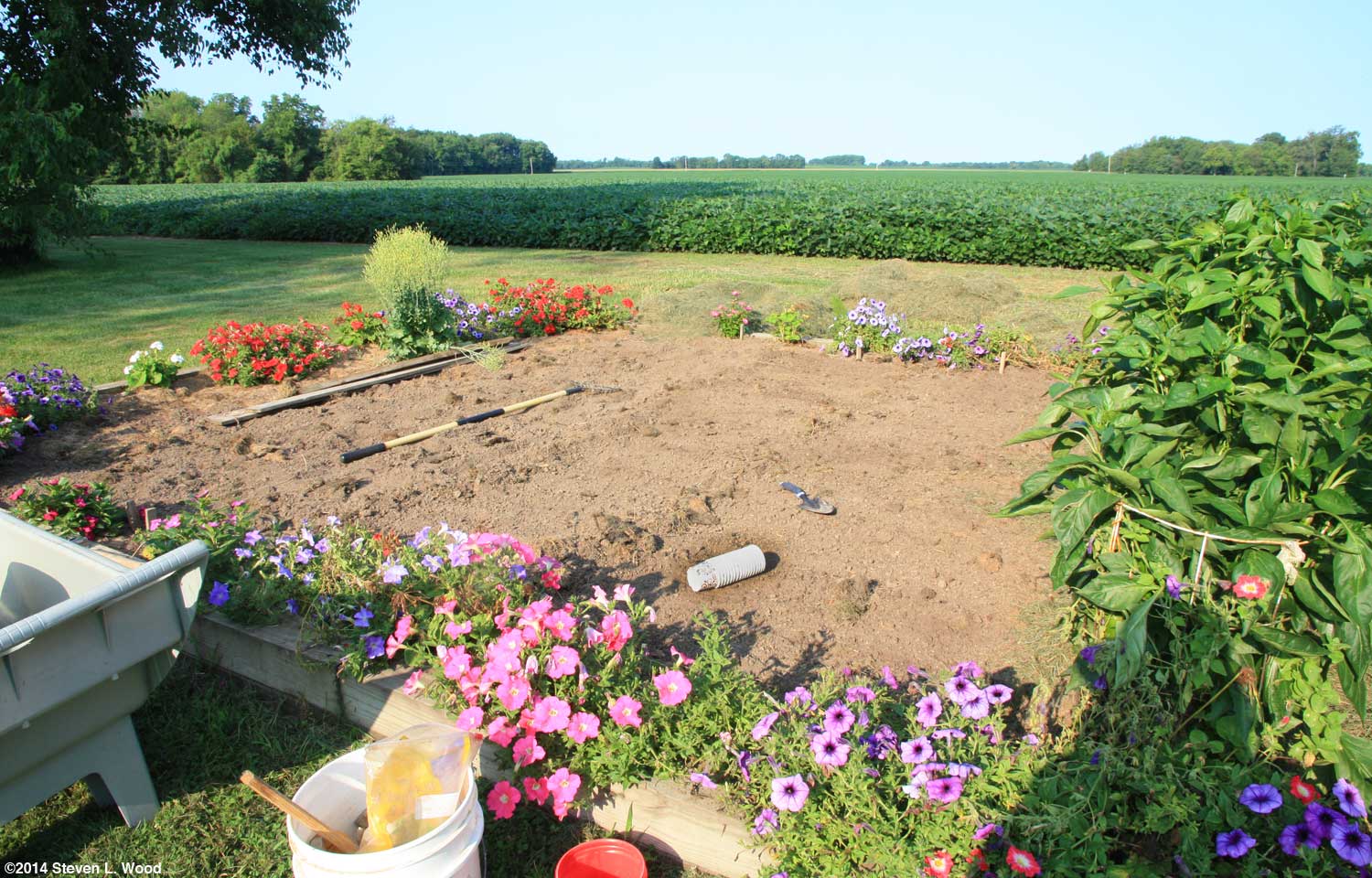
I also like to time our kale picking to come after we've harvested onions, garlic, carrots, green beans, tomatoes, potatoes, and this year for the first time, kidney beans, all important ingredients in our annual batches of Portuguese Kale Soup. While I'd enjoy an occasional pot of kale boiled with a bit of bacon drippings earlier in the season, kale takes a good bit of space as the plants get tall and wide as they mature. By mid-summer, lots of space has opened up in our main garden as other crops are harvested. Having direct seeded our kale last year on July 21, I thought it high time today to get this season's kale seeded. Had I been able to, I would have seeded it a week or so ago. I'd originally planned to put our kale in our main raised bed, but decided over the last two weeks to cheat a bit and seed the kale in our new, narrow raised bed. The "cheating" part comes from planting kale, part of the brassica family, immediately after cauliflower and broccoli, also brassicas, grew in the same bed. But the kale will run down the middle of the bed, where the cauliflower and broccoli were planted towards the sides of the bed. The planting was pretty easy. I pulled back the grass clipping mulch that I'd spread over the bed after pulling the cauliflower and broccoli plants and worked in a healthy dose of 12-12-12 fertilizer and a touch of lime with my hoe. After raking the area smooth, I used a piece of one inch lumber to make a shallow furrow down the center of the bed.
I seeded most of the row to (Scotch) Vates Blue Curled kale, leaving only a couple of feet of Lacinato When done planting, I returned the mulch within an inch or so of the newly planted row. I also replaced a petunia on the near center of the bed that got uprooted while I worked. The petunia was gorgeous, but sorta clashed with the Maverick Red geraniums on either side of it. I replaced the old pink petunia with a blue flowering one I still had in a pot on the back porch.
Tuesday, July 22, 2014 - Onions Today was my day to get our onions out of the garden and onto a makeshift curing table in our garage. I actually started the day by clearing out the last of our green bean plants, but that was just to satisfy my compulsion to have a somewhat tidy garden. Then, I began moving our onions that had been pulled and curing in the sun to a dry, dark area in our garage to continue the curing process.
I've been evaluating nine new-to-us varieties of onions this year, comparing them with the four varieties we've grown for years. I've learned a bit about the characteristics of the new varieties, but mostly found today that I grew an awful lot of onions! All of the onions, except a few Walla Wallas and some culls that will go to work with my wife tomorrow for distribution, went onto a 4' x 8' sheet of plywood sitting on some old furniture for their final curing. While I have a fan moving air in the garage, I'll need to spread the onions out a bit more tomorrow to facilitate their drying.
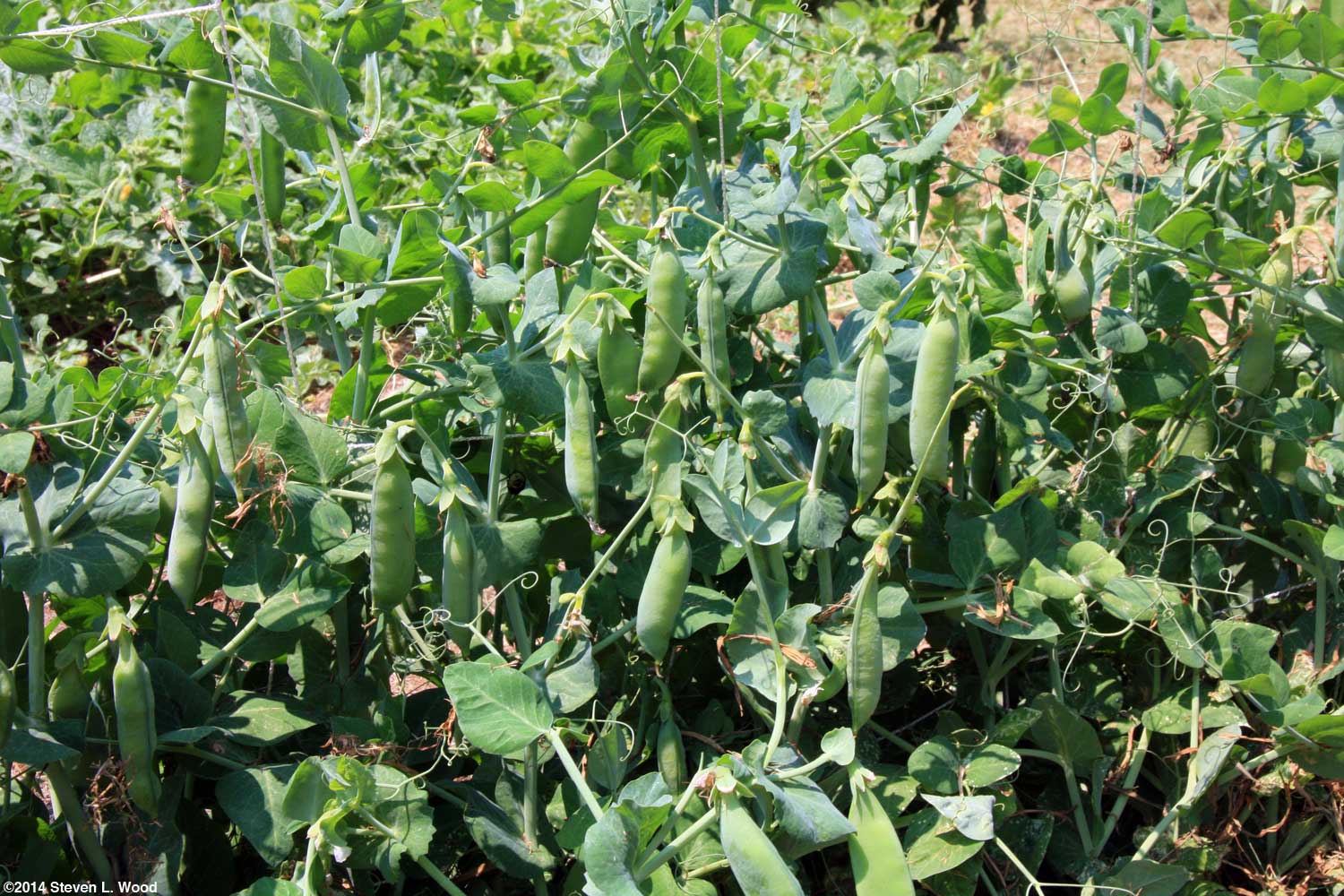
Peas I'm sorta blown away that we were able to shell out about three pints of very sweet peas this evening that I'd picked this afternoon. I'd planted some Encore peas along with some Eclipse peas late this spring, thinking I'd use them for a seed crop. But the Encore peas came in with a heavy, for peas, crop this week. So Annie and I shelled peas as we watched the evening news tonight. I ended up freezing three pints of peas, which is a nice return for what we'd seeded. Note that I view peas as a gourmet crop, something I grow for the taste and not for saving money over buying them at the grocery. Our onions curing on a sheet of plywood in the garage needed a bit better air circulation to dry down properly. While I prefer to not trim tops until they've dried, I went ahead yesterday and trimmed the tops to within 2-4" of the onion bulbs. I think the onions dry down better with the leaves on, but the trimming got a lot of green matter off our drying table, giving the bulbs a lot better air circulation.
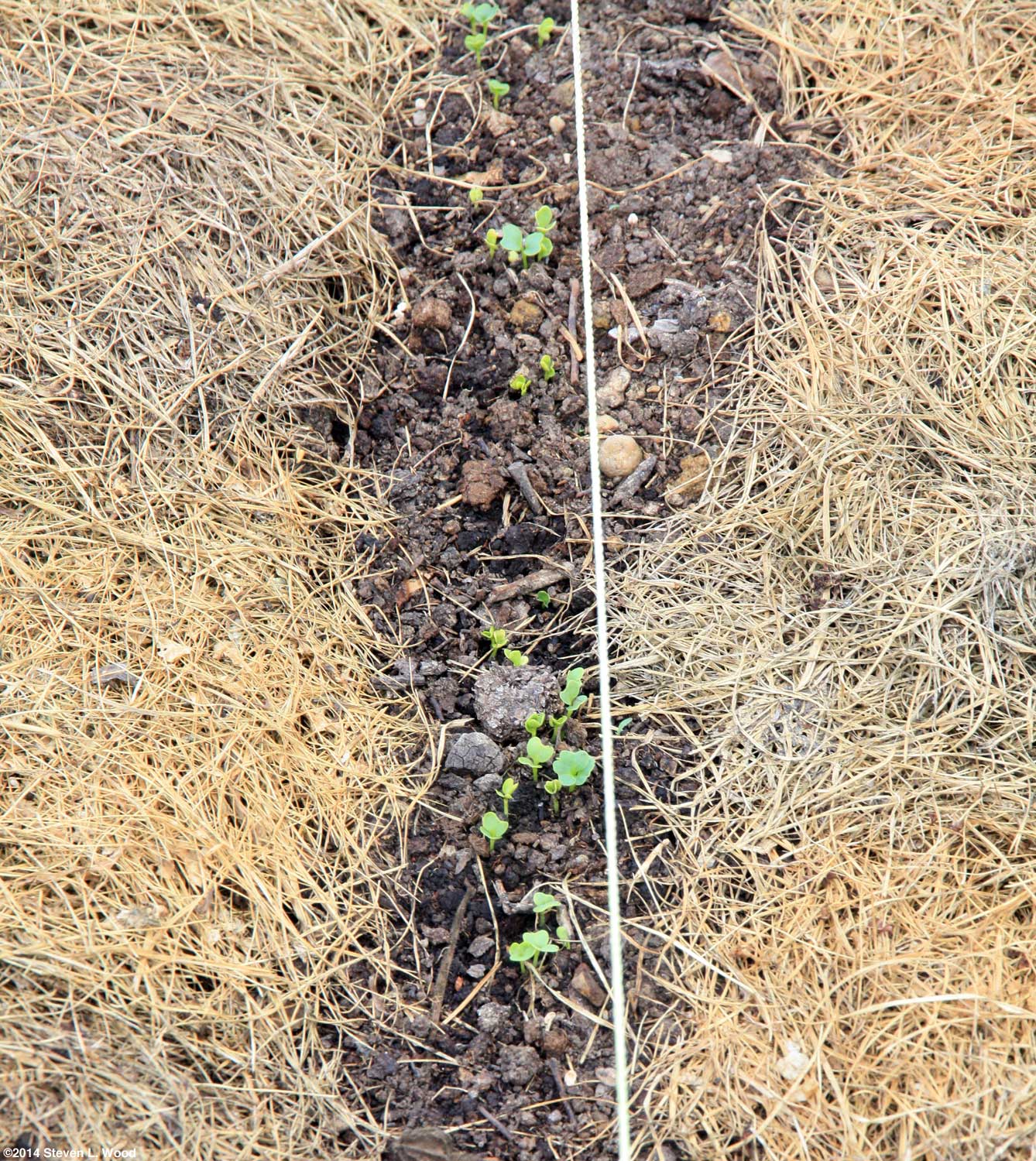
I noticed yesterday some tiny green specks in our kale row. When I looked this morning, the specks were clearly kale plants emerging here and there along the row I planted on Friday. I've been watering the row just a bit each day, using the drainings from our grandkids' wading pool for a few days. Once the kale is up all along the row, I shouldn't need to water it as long as we have fairly regular rains. As soon as the kale doesn't need watering, I can transplant our fall broccoli and cauliflower into our main raised garden bed, as they'll need a bit of watering to get going. After that, we'll direct seed fall carrots and spinach, and transplant fall lettuce. Spacing out our fall plantings allows us to water them a little to get them going despite our puny well at this time of year.
Our first tomatoes and peppers are finally ripening. I managed to find two early maturing ears of sweet corn over the weekend and quickly devour them. And I'm now checking our cantaloupe daily, waiting for them to go to half and then full slip.
I also wrote up our results so far with our trials of new-to-us onion varieties in Onions We Grew in 2014. Since we haven't cooked with all the varieties we grew yet and won't know about their storage potential until this winter, the column will be a continuing feature story. Tuesday, July 29, 2014 - Transplanting Fall Broccoli and Cauliflower I got an early start on gardening today and had our fall brassicas transplanted by eleven in the morning. While it's not supposed to be too hot today, transplanting in the early morning or late evening stresses the transplants less than planting in the heat of the day.
I'd tilled the area to be planted a couple of days ago. While there still was a lot of plant trash on the soil surface that hadn't tilled under, I only had to rake it aside before stringing my row and getting started. Since I was going to mulch the area after planting, and especially since I wasn't direct seeding, having a perfect seedbed wasn't really necessary. Spring and "fall" transplanting of brassicas aren't a lot different from each other. Just as I did in the spring, I used saved, used, paper coffee cups with the bottoms cut off as cutworm collars. I dug a hole for each plant, deeply worked in some lime and 12-12-12 fertilizer, and then watered the hole with some starter fertilizer
Then I backfilled the hole by drawing the edges in. I placed the cutworm collar in the wet hole and popped a plant in each one, pushing the plant into the wet soil. I filled the cup with soil to just below the plant's first true leaves. Then I firmed the soil around the cup, making sure the top edge of the cup was over an inch above the surrounding soil surface, a barrier that cutworms usually can't climb. I also formed a trough around each cup to hold in water before watering both in the cup and around the cup. Each plant ended up getting about a gallon of water total in its hole and around it. After transplanting nine broccoli and a similar number of cauliflower, I mulched the bed, being careful not to get the mulch too close to my cutworm collars. I don't want to make a grass clipping ramp for any cutworms still in the soil. Some extra steps were necessary today to prevent any disasters such as we had last year when rabbits ate every one of our fall brassica transplants. I first sprinkled some dog and rabbit repellent
BLTs Annie and I enjoyed our annual treat of bacon, lettuce, and tomato sandwiches last night made with our first tomatoes of the season. We've been enjoying grape tomatoes in salads (and right off the vine when I'm working in the garden) for several weeks now. But we always have BLTs the day we pick our first full sized tomatoes. And actually, the tomatoes weren't all that large. We had to cut out some bad spots, using two small tomatoes to make just a couple of sandwiches. But it's officially tomato season for us now! Thursday, July 31, 2014 - July Wrap-up
As with any gardening season, we've had some successes and failures this month. Our carrot harvest was incredible, producing more poundage than ever before. And our large (for us) crop of onions that included trials of nine new-to-us varieties was also excellent. Our garlic harvest, still incomplete as I mess around with letting our elephant garlic bloom and set bulbils, was disappointing. I've already placed orders for fresh garlic to plant this fall. And although our green beans bore heavily, I was incapacitated and unable to make much use of them beyond a light second picking. We've had fantastic yellow squash all month, and we've begun picking our early varieties of sweet corn. Although Annie and I were able to make a couple of BLTs from some small, early tomatoes, we're still waiting on our tomato plants to really begin producing. Our Encore peas produced an excellent first picking that got put up for winter use. While we could have made a second and even a third picking, I chose to let the rest of the Encores mature a seed crop for next year's use. Our planting of Eclipse peas continues to struggle just to survive. Our succession planting of long cucumbers on the double trellis that previously bore our early peas is doing well. They're producing far more cucumbers than we can consume or even give away. I need to make a big batch of bread and butter pickles with them. I got our fall brassicas in the ground this week, and direct seeded kale mid-month. The broccoli and cauliflower have a ton of nasty smelling stuff poured and sprayed on them to prevent a rabbit disaster such as we had last year. I also thoroughly sprayed them with Thuricide (BT) a bit earlier than usual, as we have lots of cabbage moths flying around the yard. What kale has emerged also got sprayed, but the kale row is germinating very slowly, despite daily waterings.
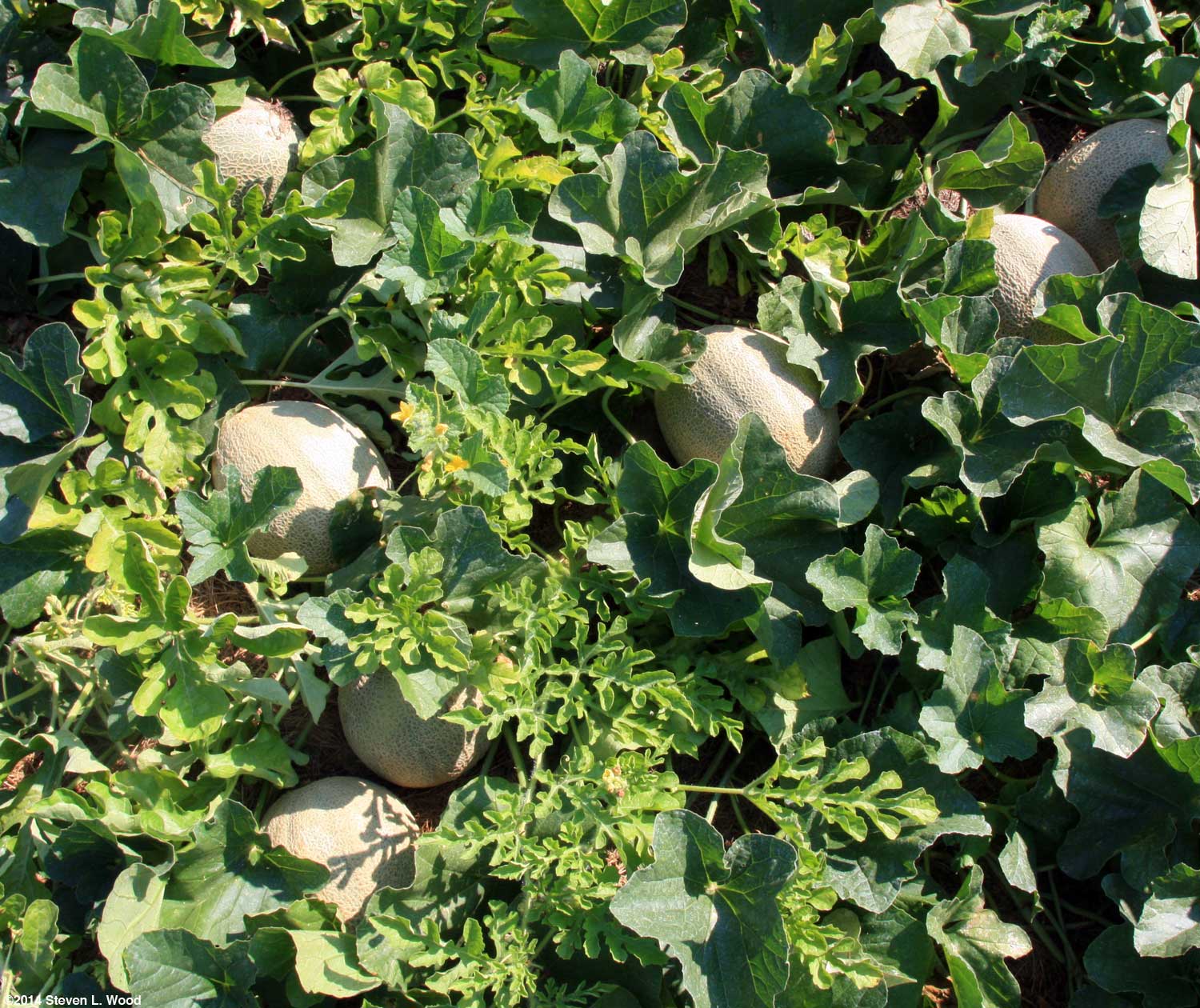
We're still waiting to pick any melons from the East Garden. The cantaloupe, honeydew, and watermelon all have lots of fruit on the vines, some very near maturity.
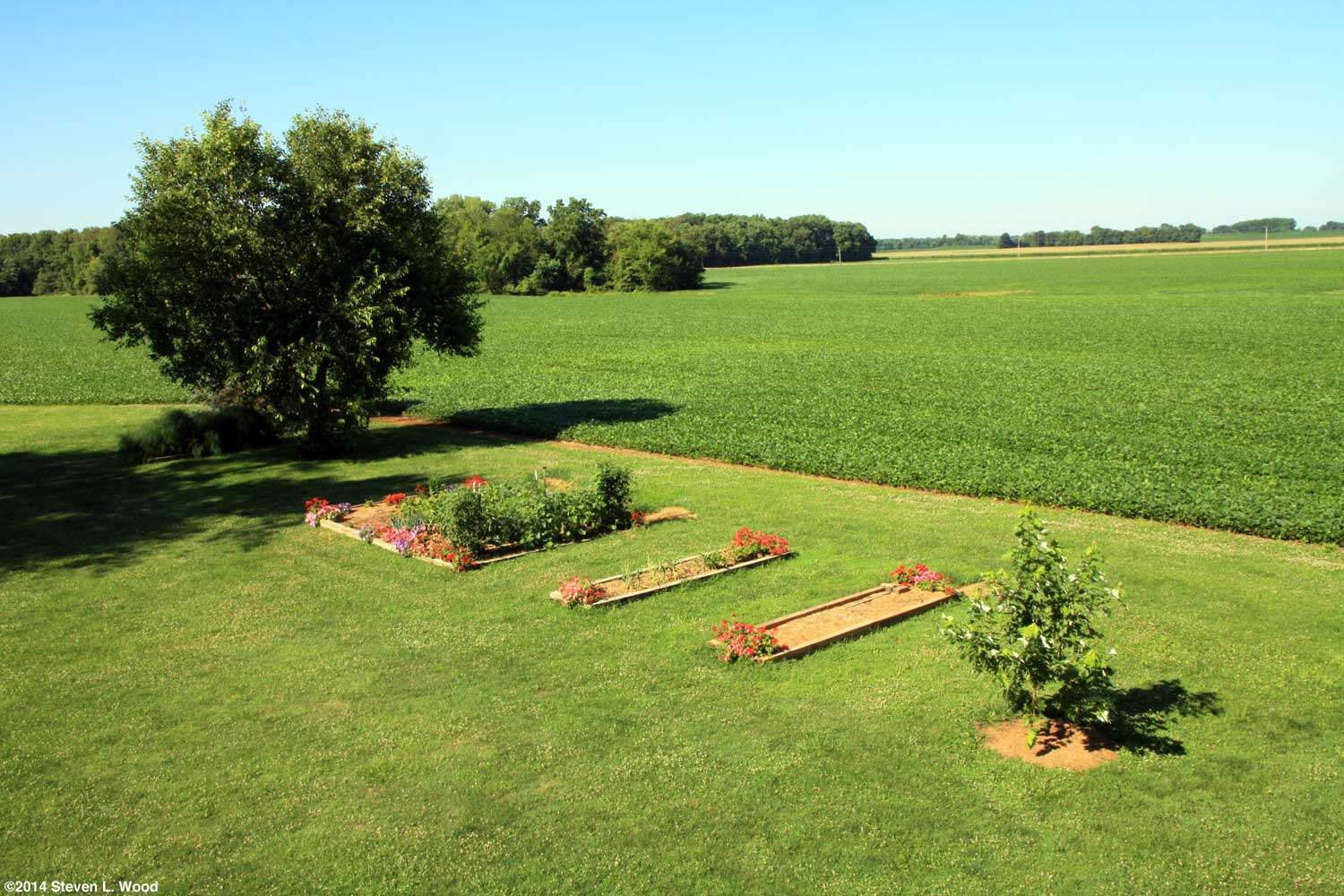
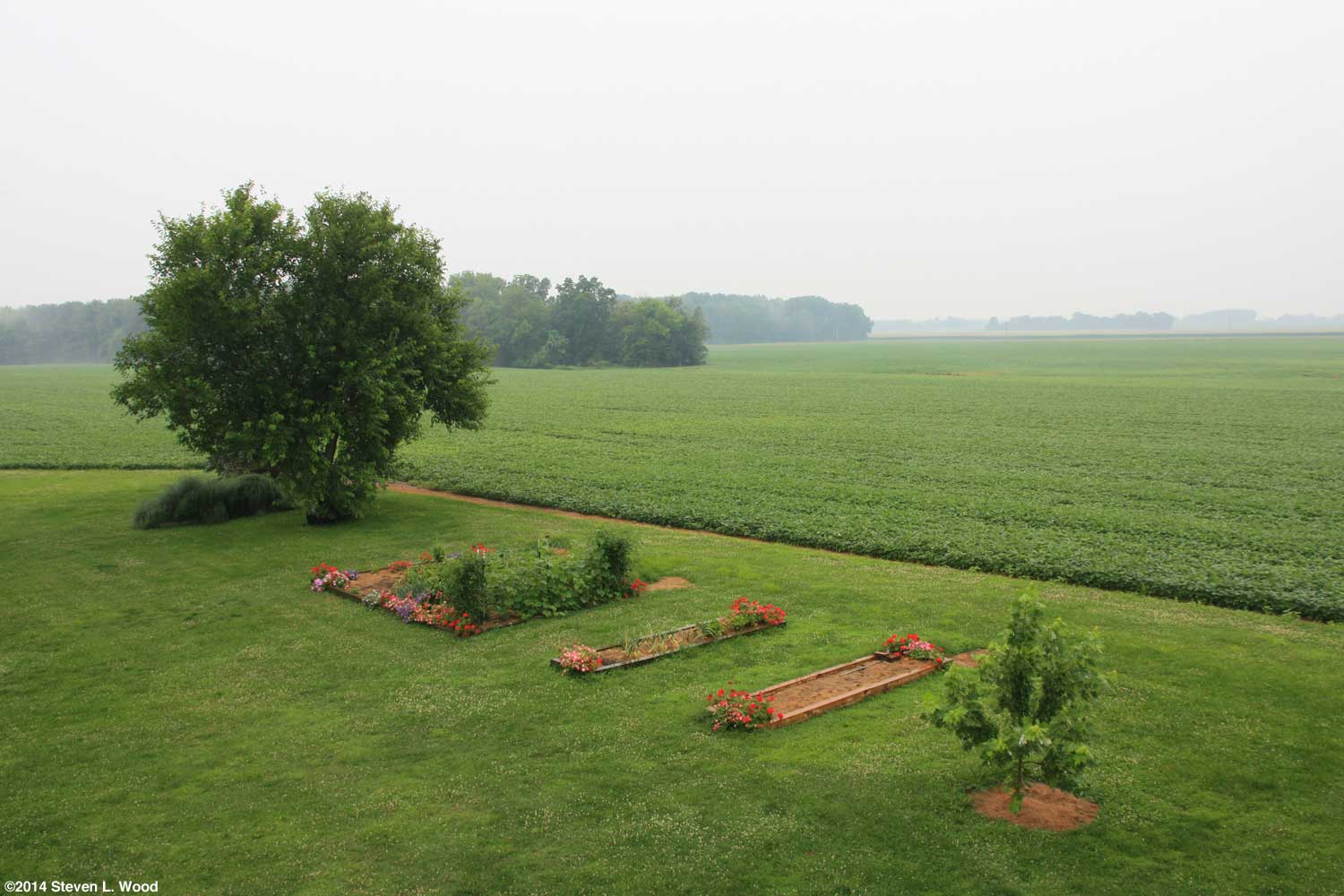
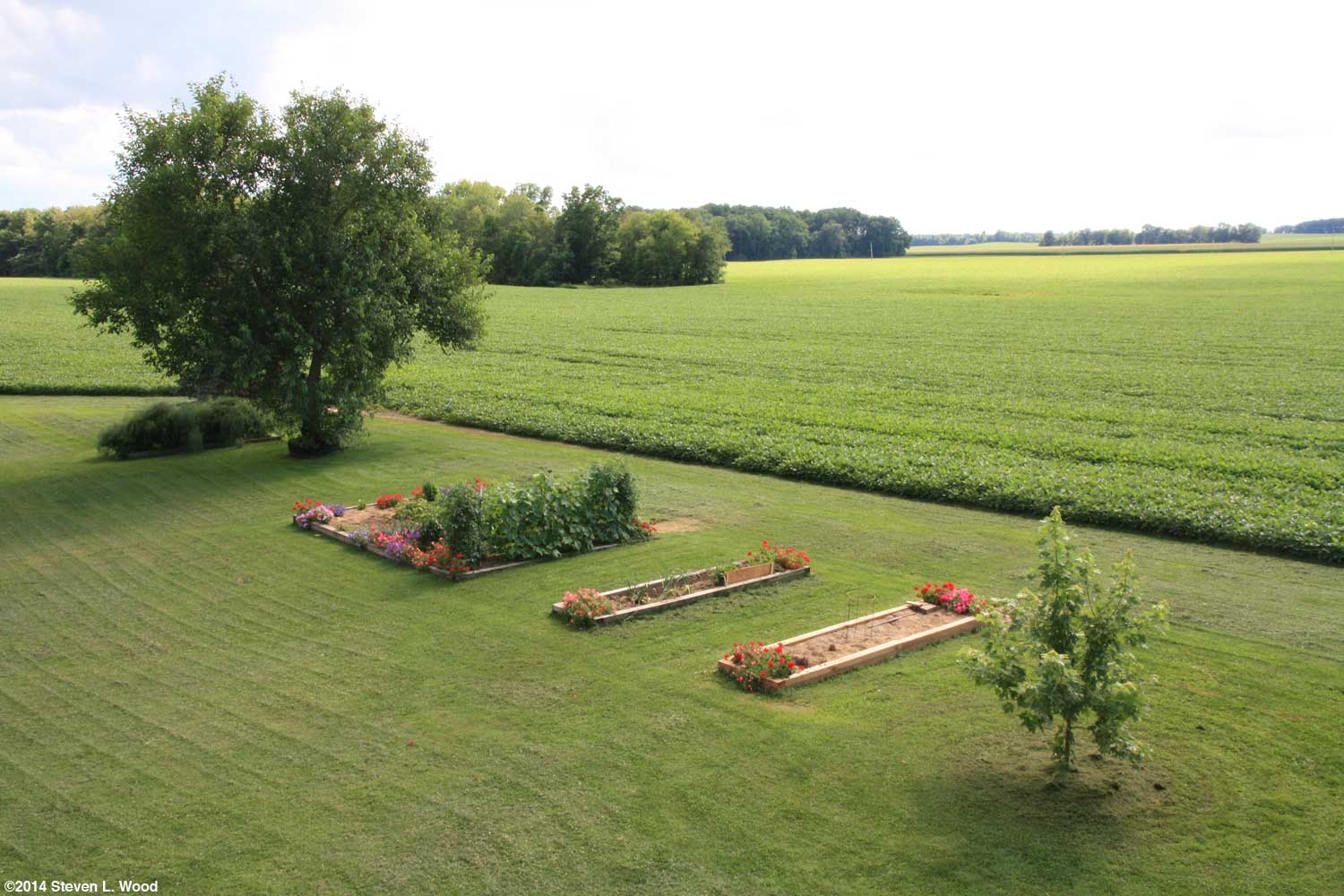
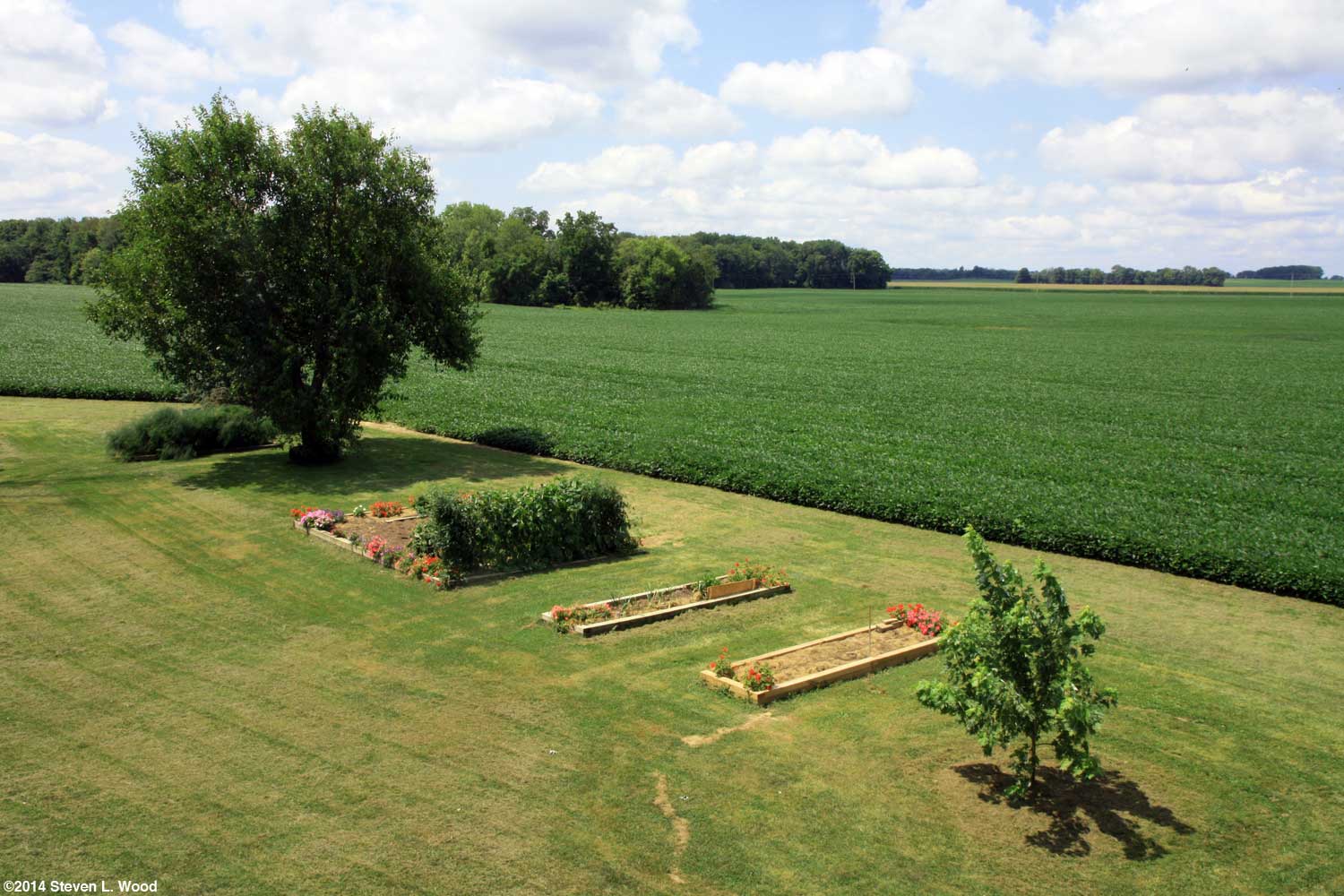
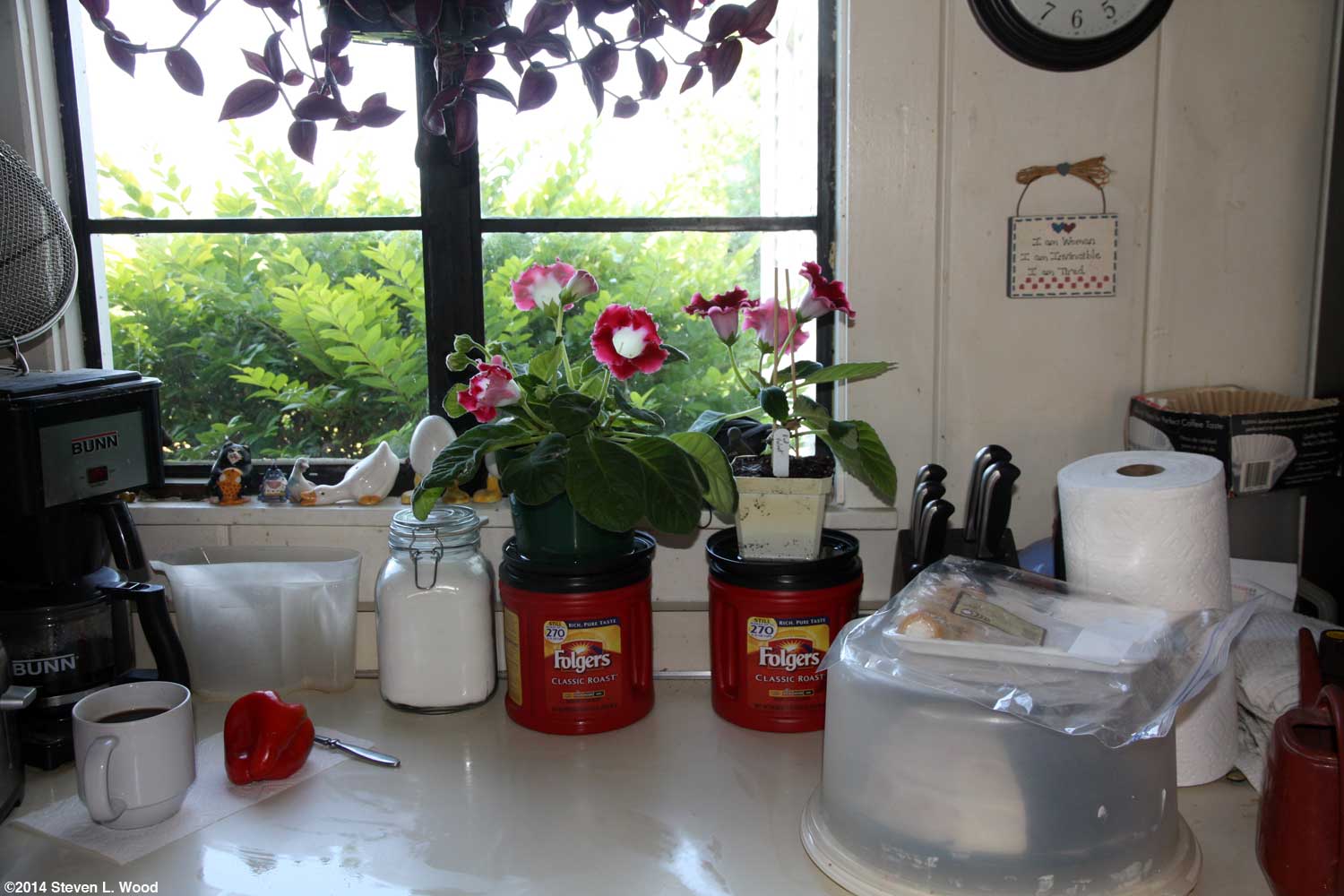
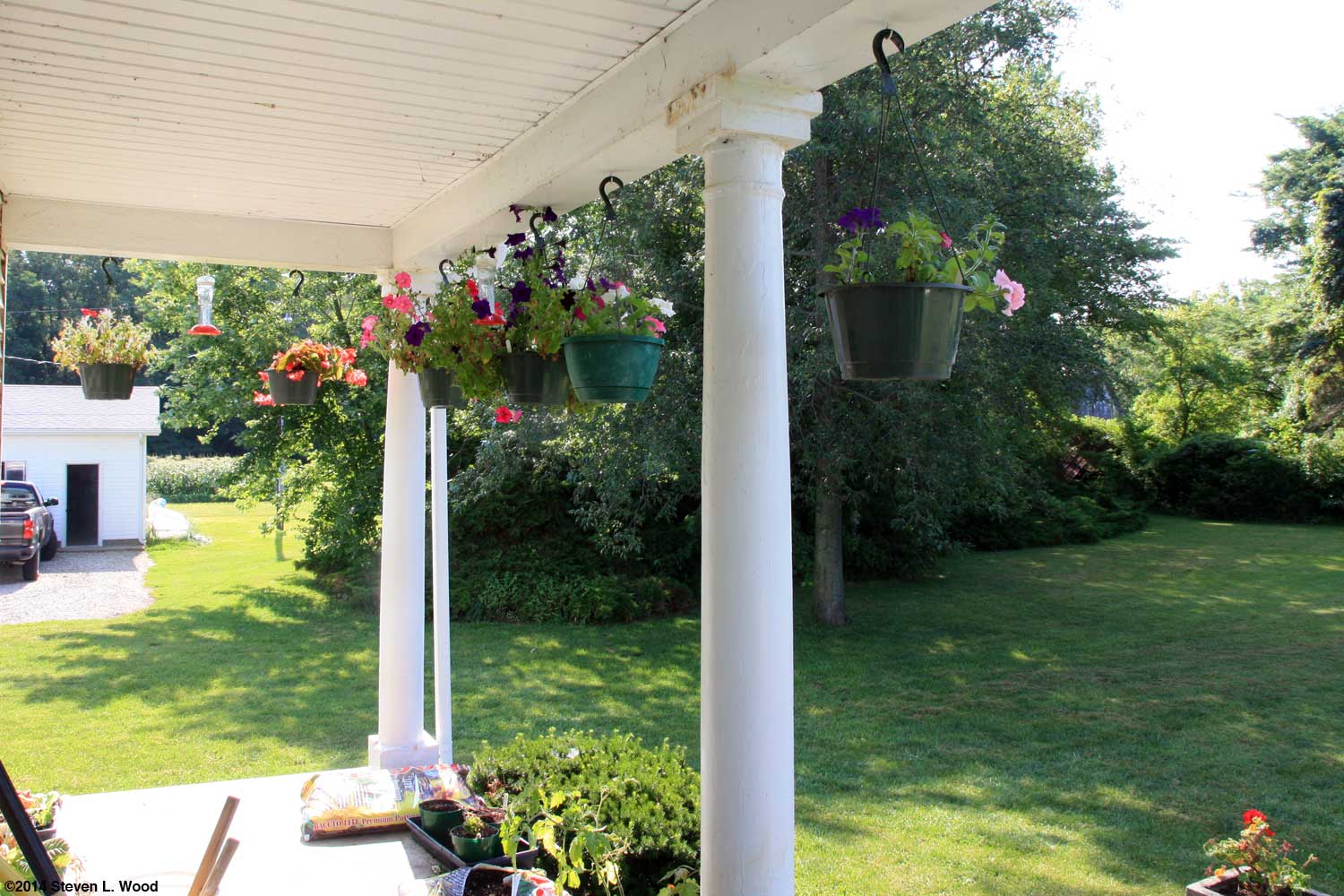
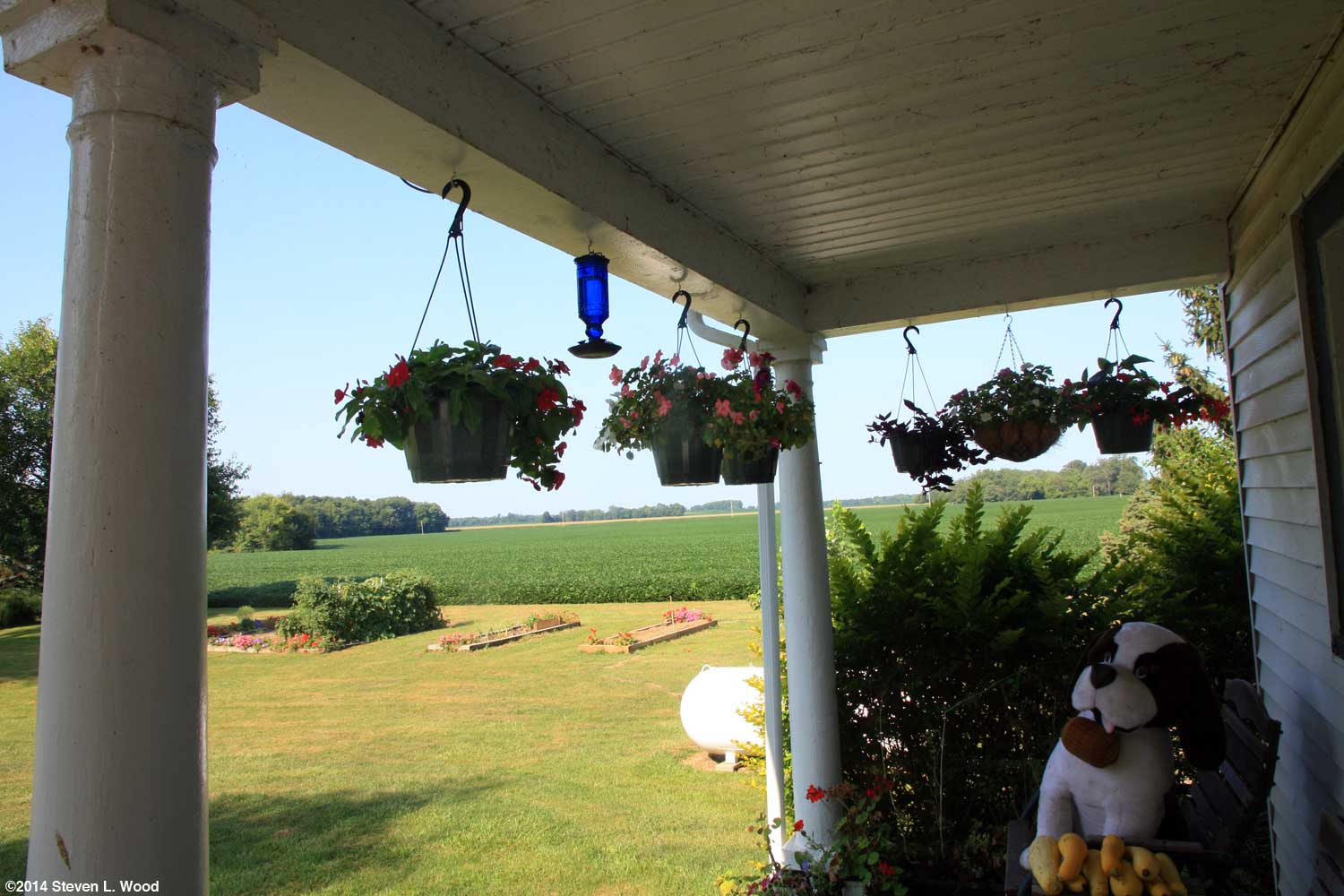
Gloxinias in bloom once again grace our kitchen counter and even more are blooming in our sunroom. After losing almost all of our gloxinias to disease a year ago, we're especially enjoying the few survivors of the plague and a bunch of new plants started from saved seed. We've moved a couple of trays of the new plants back under our plant lights in the basement. They're a bit of a test to see if my efforts at disinfecting the area were successful. Looking left and right off our back porch shows flowers in bloom in hanging baskets, in planters, and in the garden. It's been a good year for the flowers we edge our raised beds with, although they've had to compete with overhanging vegetable crops at times. While the veggies come and go in succession plantings in our garden plots, the flowers stay for the full season, usually until frost claims them. Even the fields of soybeans around our property are a treat for the eyes right now. They are a deep, rich, dark green as they begin to bloom and set beans. While our recent, relatively cool weather has probably slowed down the maturation of both soybeans and field corn, it looks as if area farmers are going to have a good harvest this year. Contact Steve Wood, the at Senior Gardening |
||||||||||||||||||||||||||||||||||||||||||||||||||||||||||||||||||||||||||||||||||||
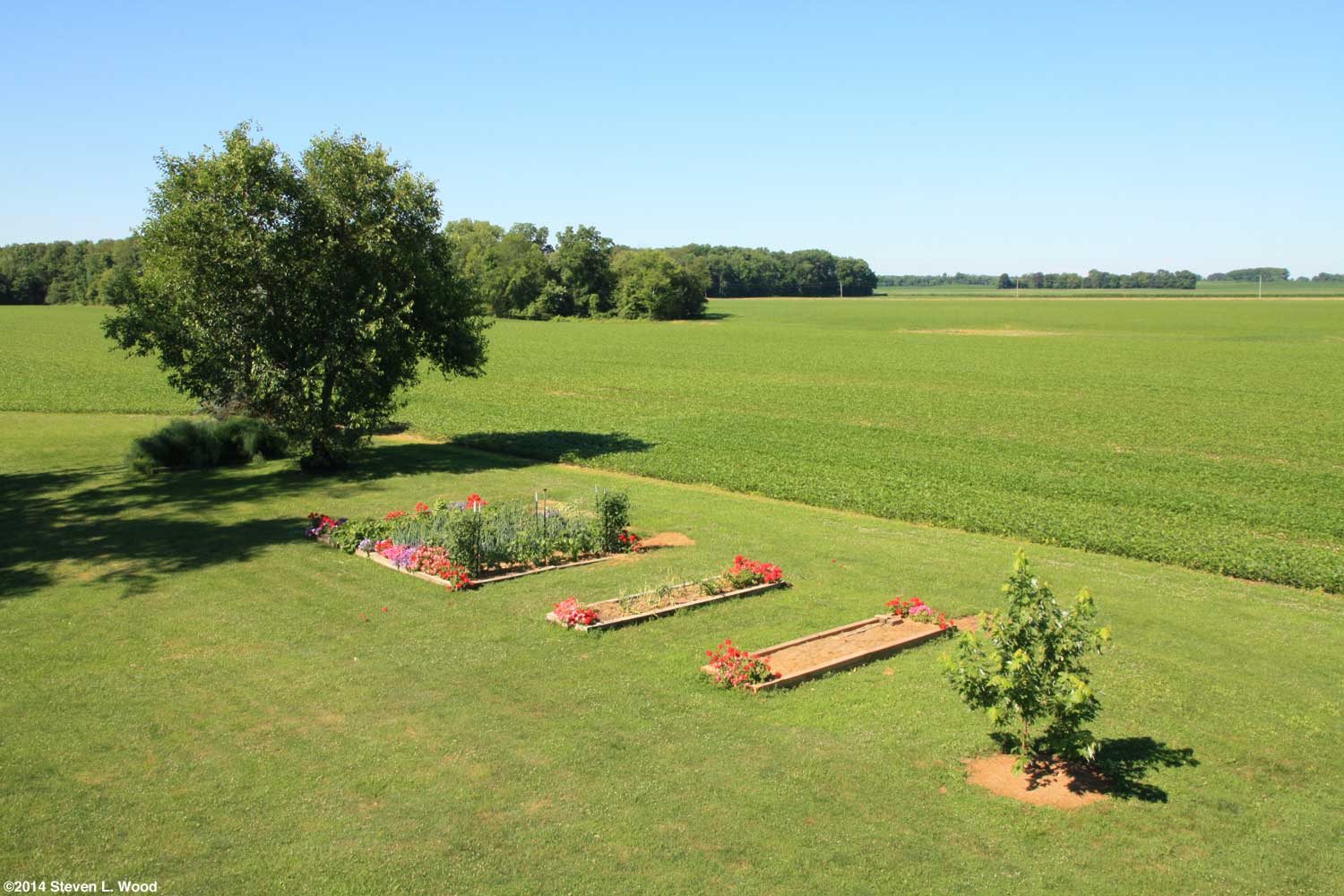


 last evening with my good arm. It was a gift from one of our daughters and is a good bit more attractive than our other feeders. The hummingbirds seem to like it. It has the advantages of holding a bit more nectar and being easier to clean than our other feeders.





 I finally found a deer repellent spray last year that actually worked on our sweet corn. But when I tried to reorder some Not Tonight Deer, I found that the manufacturer had gone out of business. After a bit of searching and reading reviews, I decided to try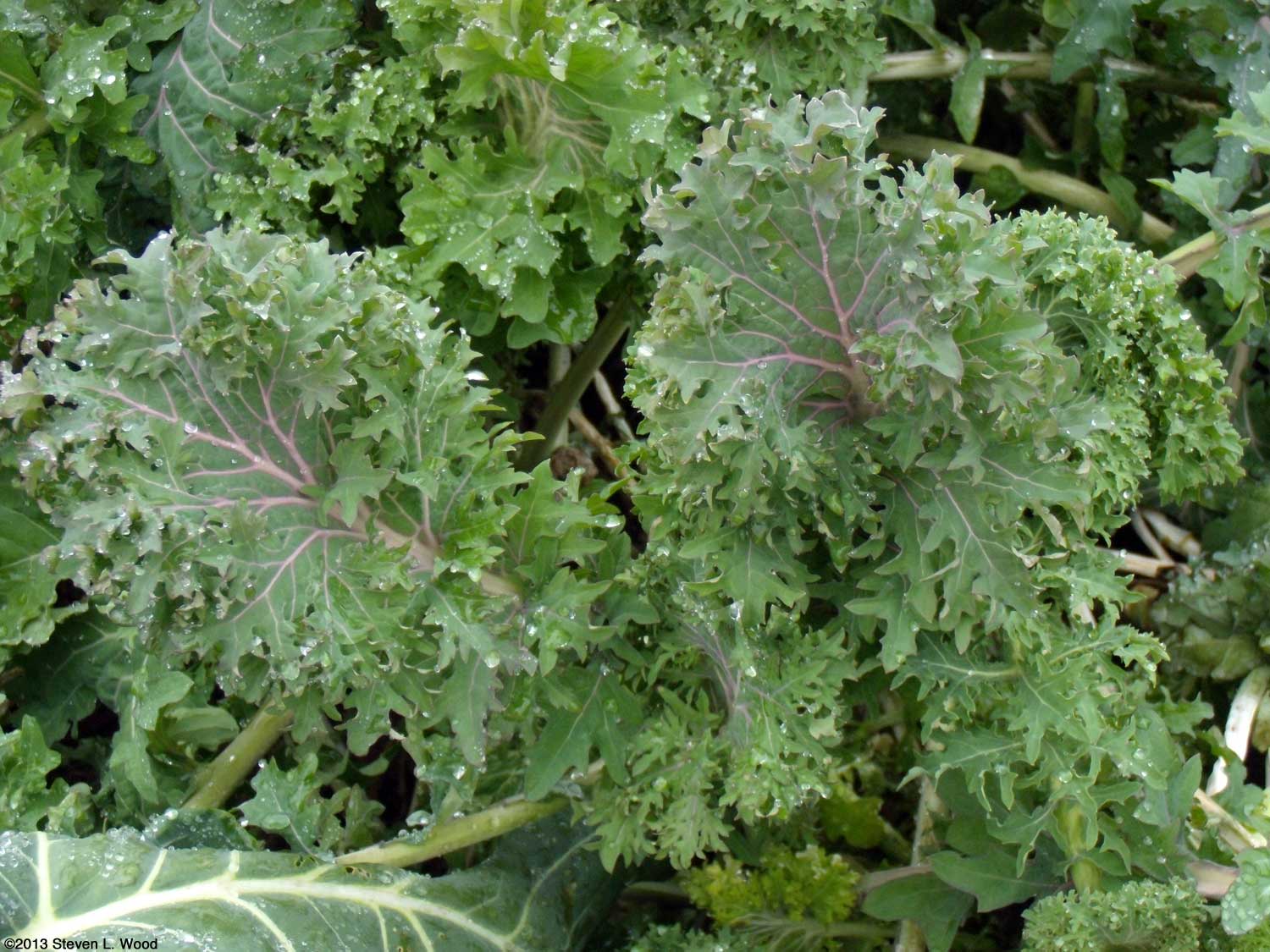



 that had a dash of
  added (to add trace elements). The lime wasn't to sweeten the soil, but it helps fend of


 on the area. But since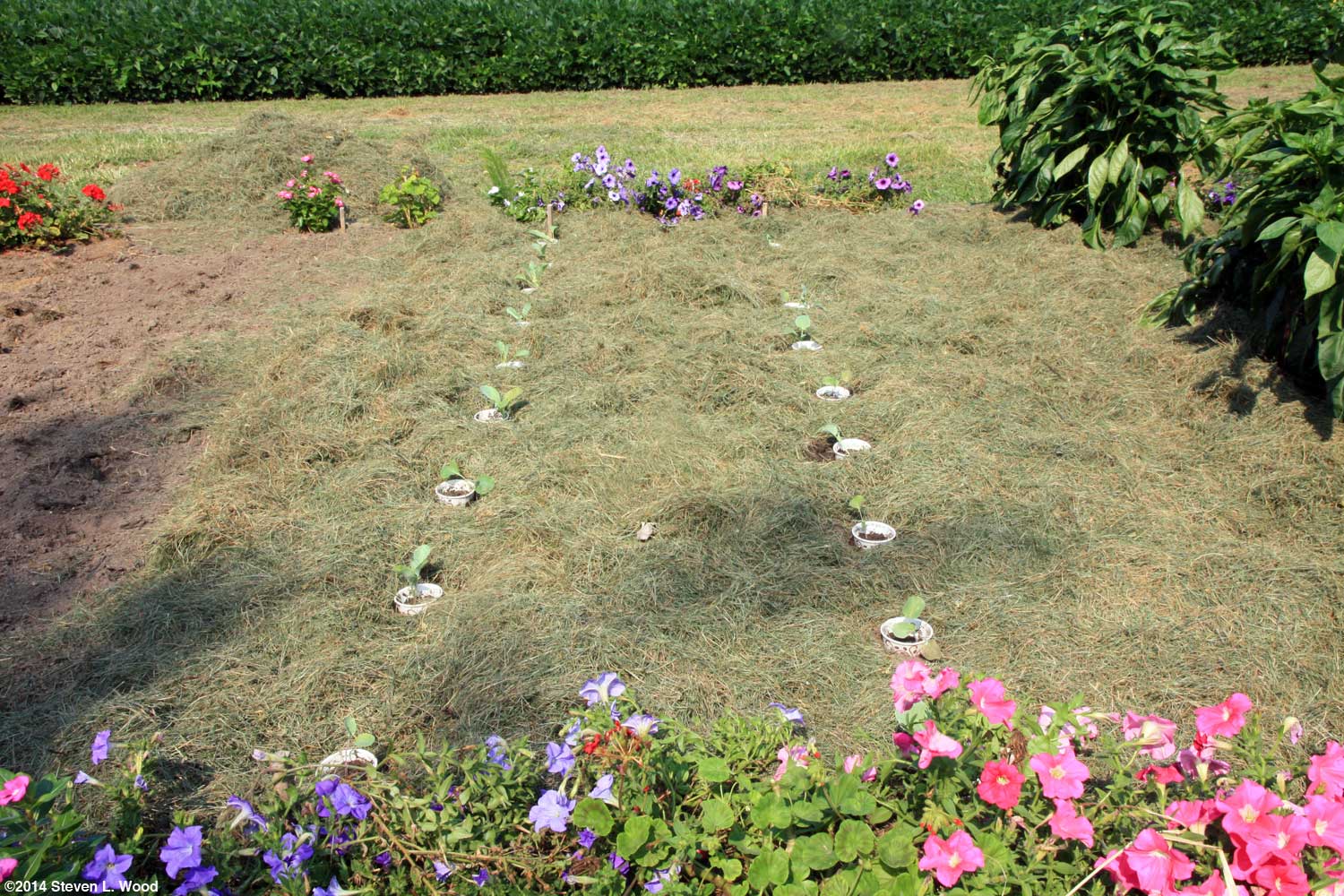
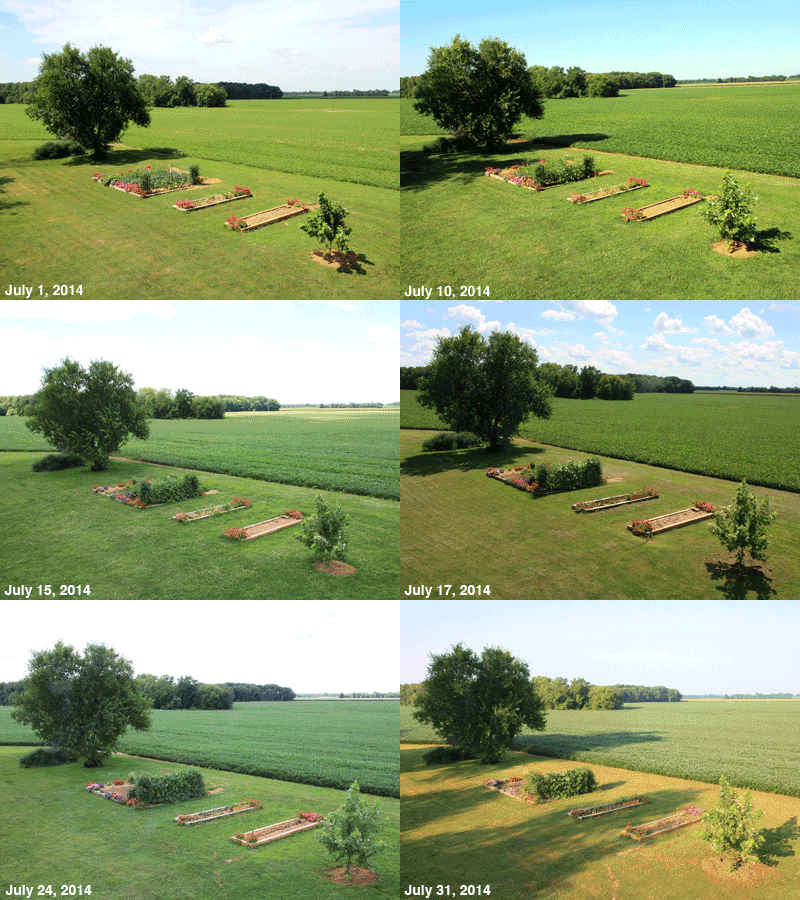 We've had some unusually cool weather this month, making working in the garden quite pleasant. Our rainfall for the month is a bit below average, but what we've gotten has been fairly evenly spread out.
| Affiliated Advertisers |
©2014 Senior-Gardening.com