One of the Joys of Maturity |
|

| Affiliated Advertisers |
Clicking through one of our banner ads or some of our text links and making a purchase will produce a small commission for us from the sale. The Old Guy's Garden Record
I can feel the excitement and anticipation for a new gardening season beginning to creep into my old bones. The occasional warm, sunny day we now experience makes me want to get started as soon as possible. Plants in our sunroom and on a kitchen windowsill hint at the coming of spring. But the harsh reality is that our last frost date is still two and a half months away. Most of what we'll start this month will be flowers, with several exceptions. We'll probably start our cauliflower over the weekend. It takes a good bit of time to be ready to transplant and needs to mature before the heat of summer arrives. Later this month, we'll start our broccoli transplants. And at some point in the month, we'll get some parsley going. Our jar of dried parsley is just about empty!
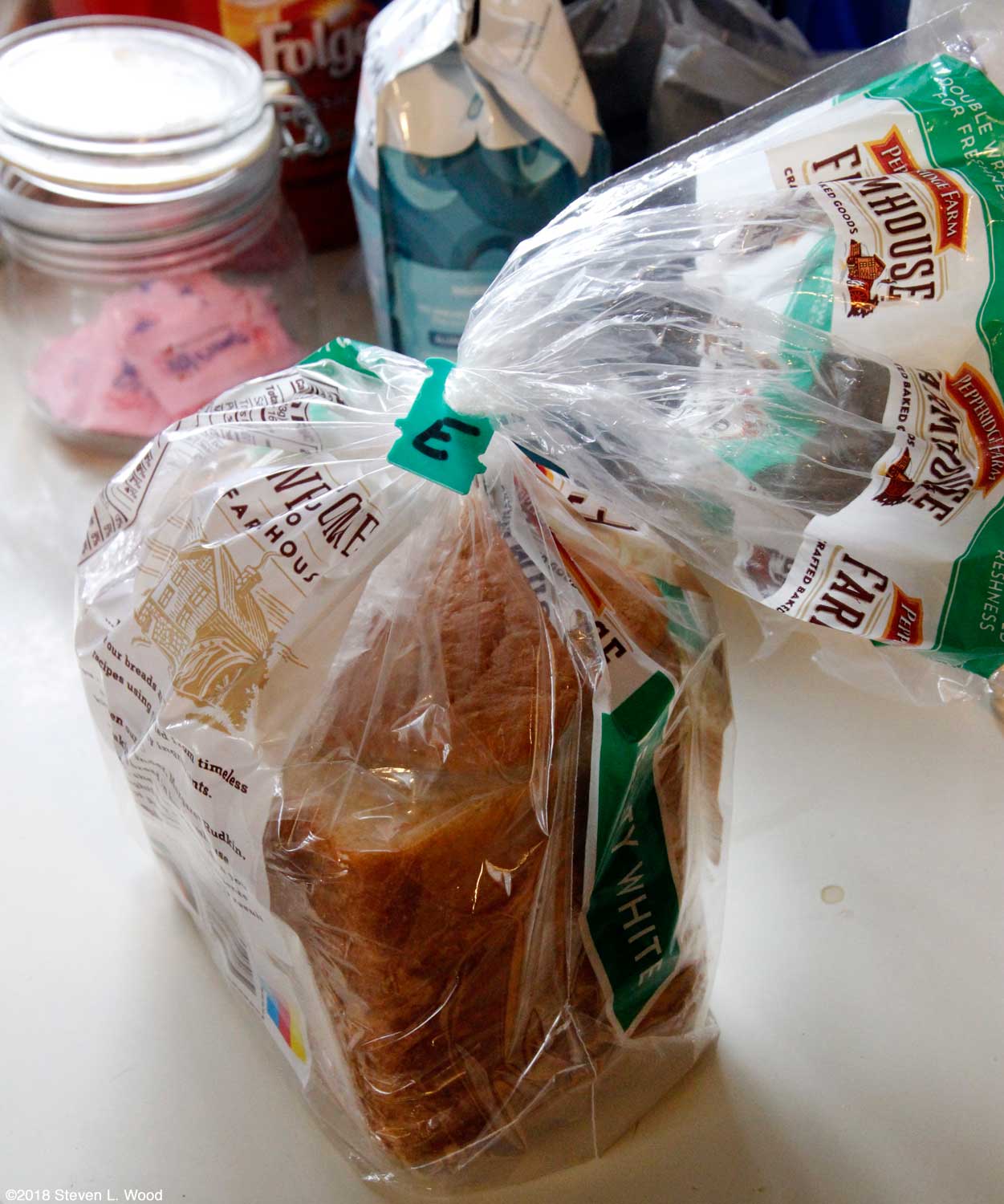
Last week, a reader inquired about acquiring some hot water treated tomato seed. His tomatoes last season had been struck with bacterial canker, a devastating and often seed-borne tomato disease. He had a good plan for fighting the disease, as he planned to let the affected ground rotate out for several years while he grew his tomatoes in containers from all hot water treated seeds. We've been fortunate here to have never experienced bacterial canker, but we have faced other sometimes seed-borne tomato diseases (bacterial speck, spot and anthracnose). Good crop rotation, effective fall garden cleanup, and hot water treatment of our seed for a few years eliminated those disease problems. The reader's question got me starting thinking about hot water treating the seed we plan to plant this year. We'll be growing tomatoes from seed from several new, outside sources. I believe our previous disease problems came in with some contaminated commercial seed. So today, I started treating bunches of seed we'll use for our own plantings this year. While I usually treat only one variety of seed at a time, I realized that I'd need to treat several varieties at a time to cut down the time required. I put about a hundred seeds of Earlirouge, Moira, and Quinte tomatoes in separate cheesecloth bags, secured with old bread bag fasteners with labeling and a bit of scotch tape to make sure the packets didn't come open in the hot water.
Then it was just a matter of following the process I describe in our how-to article, Saving Tomato Seed. For the reader who wrote, I offered him some of the last treated seed we had on hand from 2014 and 2015, but also steered him to the seed saving article. I never heard back from him, so I'm guessing that I didn't have the tomato varieties he wanted, or he chose to treat his seed himself. A final step in the process was to return the bread bag clips where they belonged. Weather While it got up to 51° F yesterday, it appears that we'll start February with some normal, wintery weather.
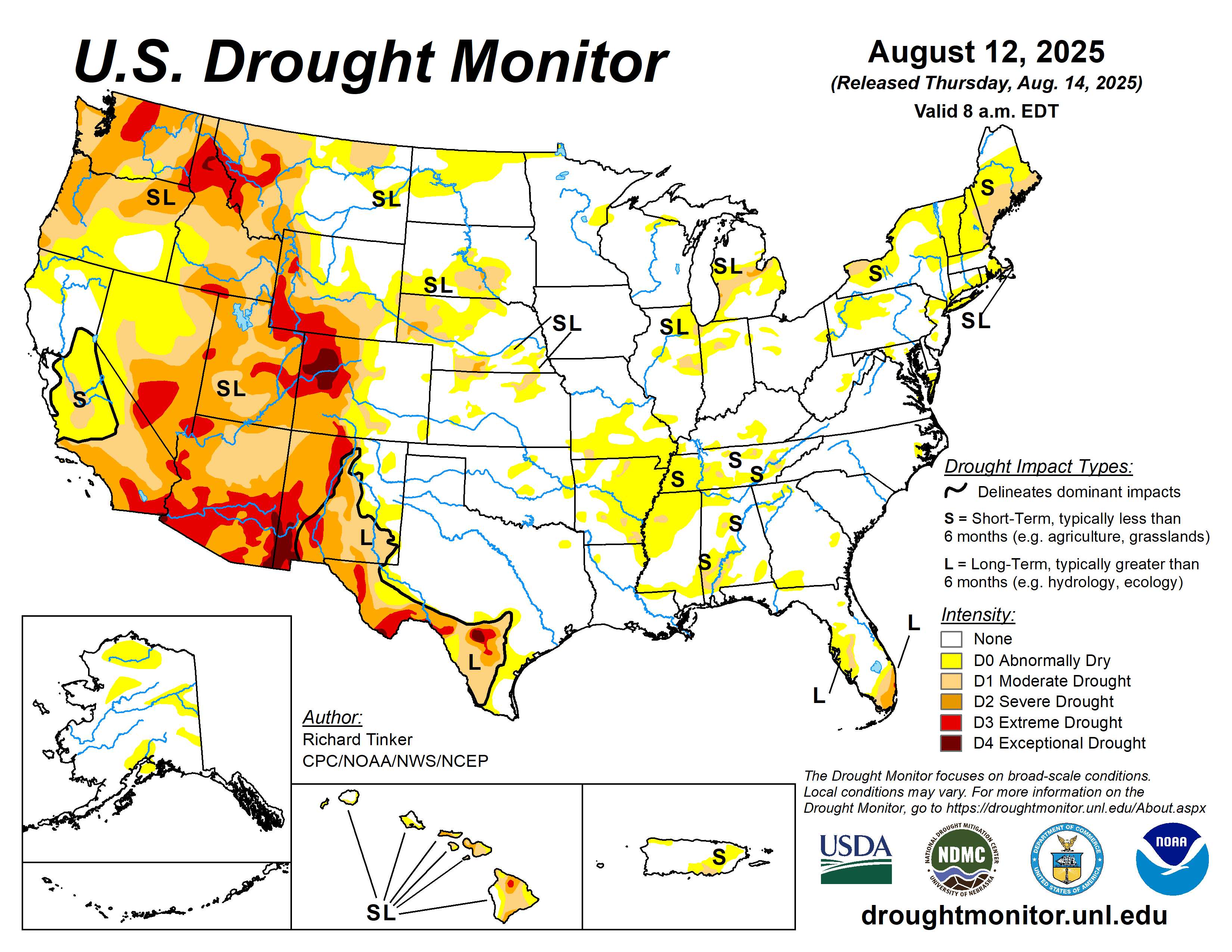
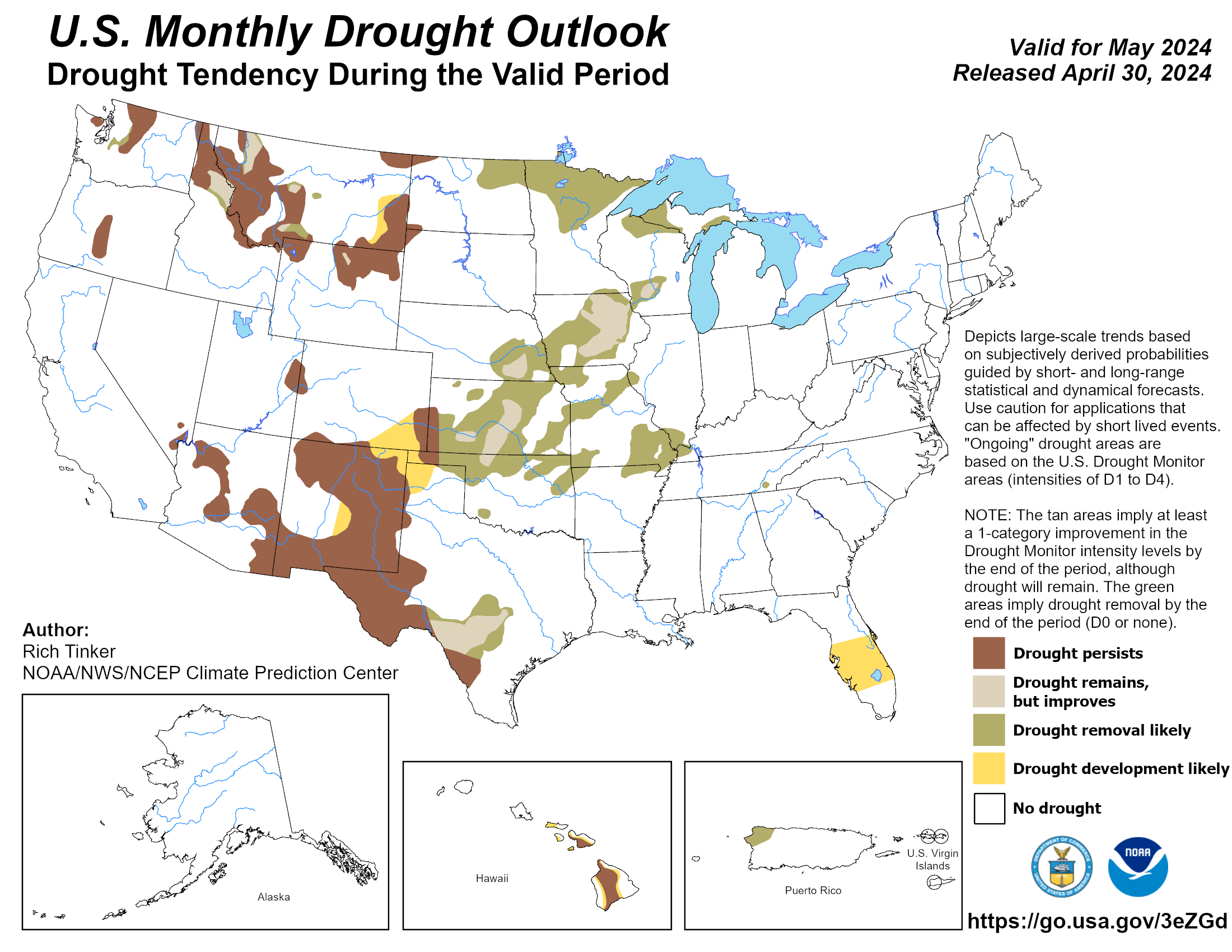
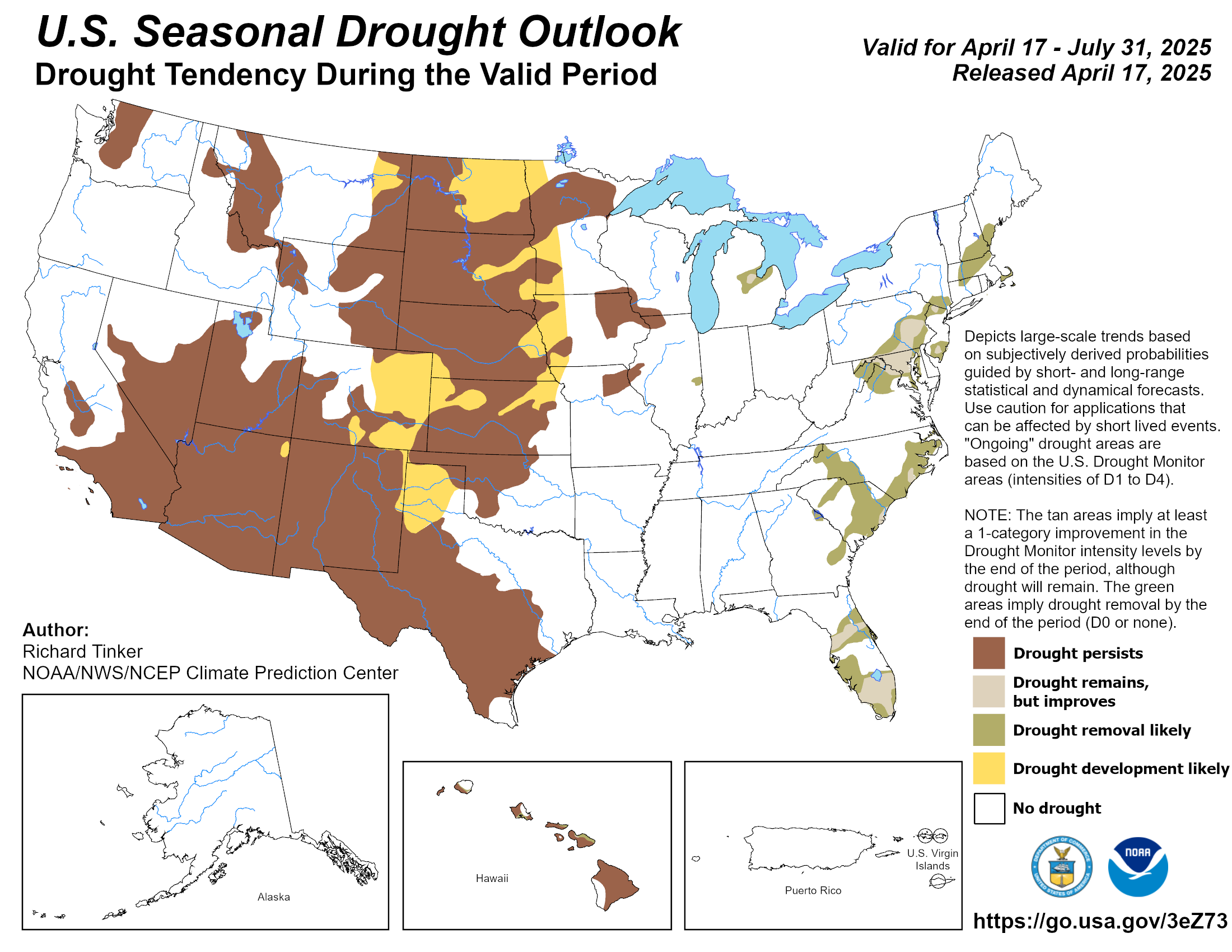
Looking a bit further into weather, I'll again reproduce some drought data our government provides.
The last frame in the table above doesn't look too favorable for gardeners across the south and up the east coast. Good Gardening Books
A couple of other volumes I wouldn't be without are Rob Johnston, Jr.'s Growing Garden Seeds and the late Nancy Bubel's The New Seed Starter's Handbook. Johnston's brief but informative booklet has about all the information one needs to begin saving garden seeds. While there is a substantial shipping charge on orders from Johnny's, the booklet itself will only set you back $3.02! Bubel's volume on starting seeds runs just over five bucks shipped for a used paperback copy and exhaustively covers starting garden plants from seed.
|
|||||||||||||||||||||||||




 ,
,  are still available used at very reasonable prices through
|
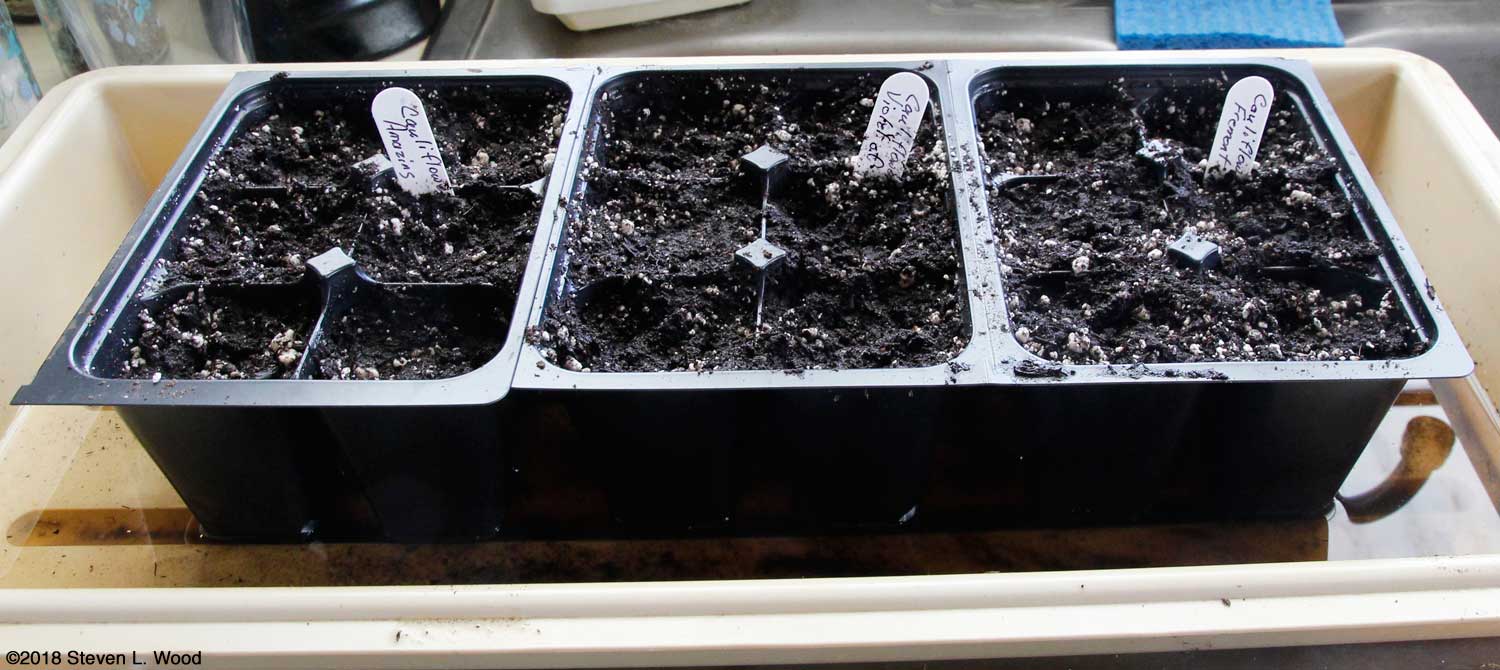
I followed our usual practice of using sterile potting mix watered with very warm water. Once the soil cooled a bit, I used a finger to make an indentation at the center of each insert cell and dropped in a seed. I covered the seed with an eighth inch or so of potting mix. I also put a few extra seeds at the corners of each insert in case the centered seeds don't germinate. The inserts are now in a tray covered by a clear humidity dome on our plant rack. The clear dome serves to hold in moisture and allow the emerging plants some light as soon as they emerge. Our how-to article, Growing Great Broccoli and Cauliflower, tells how we grow our brassicas from seeding to putting them into the freezer. Texas Nachos
The delicious nacho cheese is still available from Amazon and Walmart
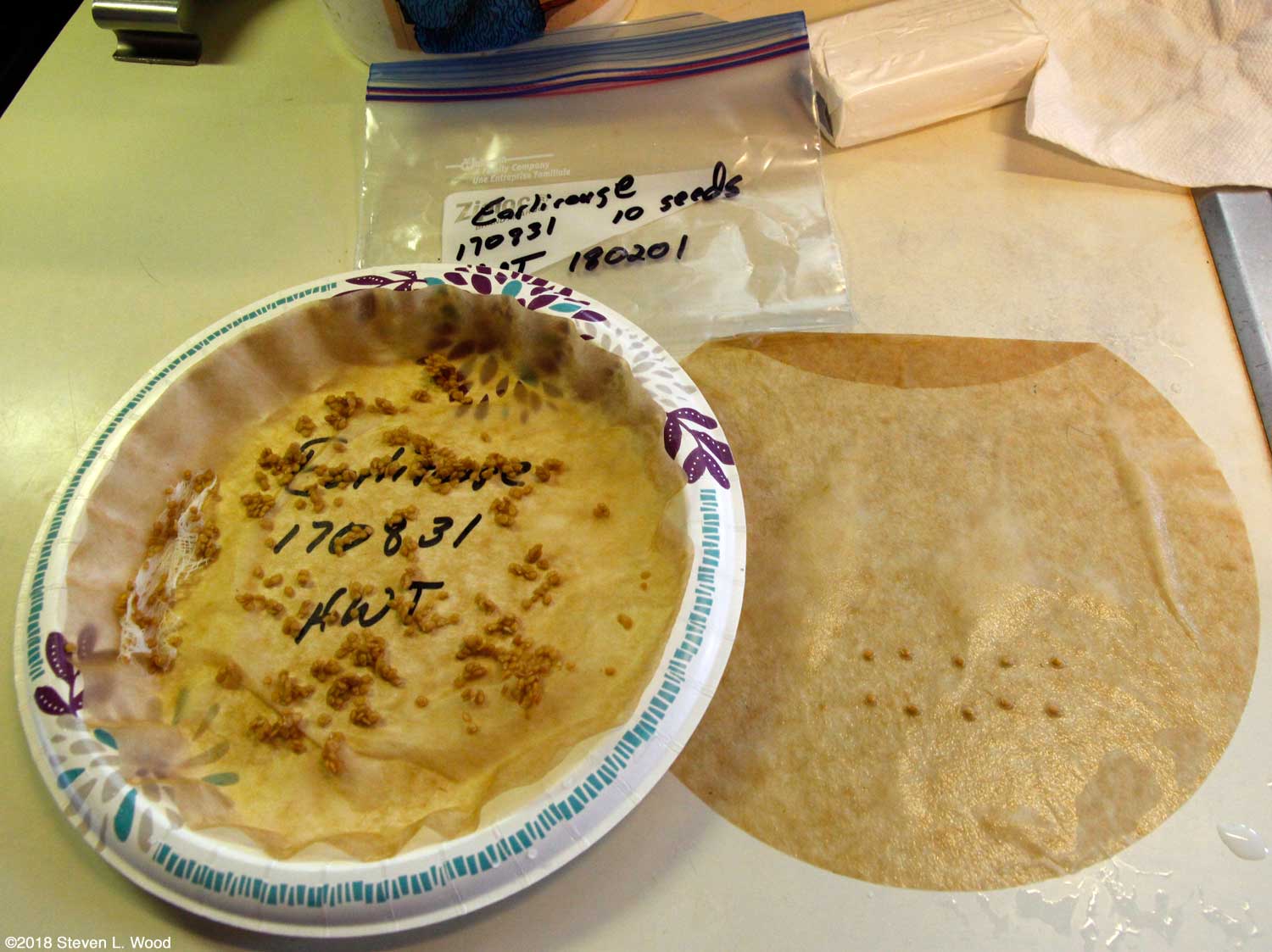
Monday, February 5, 2018 - Starting More Geraniums I was quoted in Ashley Kindergan's article, Planting the Seeds for Better Health, as saying "The magic of putting a seed in the ground and watching a plant grow from it is, for me, an incredible part of God’s creation." Of course, the flip side of that statement is that sometimes seeds just don't grow. In a flashback to 2009 and 2010, our first seeding of geraniums (thirty-plus seeds) only produced one plant! The seed was from two different companies and three different seed packets. Some of the seed was on coffee filters and some in soil. I even split one packet of seed, scarifying half of the seed and not the other. Interestingly, the seed on the coffee filters didn't seem to rot. It just didn't germinate, leading me to believe I'd once again received some hard seed from the sellers. Still having time to produce some good geranium transplants for our garden, I started more geranium seed today. Mindful of the quote often attributed to Albert Einstein, “The definition of insanity is doing the same thing over and over again, but expecting different results,” I changed my planting routine a bit. I had one unopened packet of fresh Pinto mix seed that I spread across a moistened paper towel and placed in a ziplock bag. Two other opened packets of Maverick (one red and one mix) got scarified before going onto paper towels and into ziplocks. I accomplished the scarification by wetting a finger, getting seed on the finger, and drawing the seed across the fine side of an emery board. While I'd scarified a few of the seeds in my first planting, I was pretty gentle with the scarification and may not have broken the seed coating or seed itself. I wasn't so gentle this time. Instead of placing the seed under a plant light over a soil heating mat, the seed went into a brown paper bag with some other ziplocks holding germination tests on a shelf over a furnace register. While geranium seed is said to germinate a bit better with some light, I decided to just go back to my old tried and true method of germinating the seed in darkness on paper towels in a warm location. About Thursday's Germination Tests I held up each ziplock bag of hot water treated tomato seed to the light this morning and could clearly see sprouts emerging from most of the seeds. That produced a "Whew" from my lips, as hot water treatment can kill ones seed if you get the water too hot. I'll wait until tomorrow to do the actual "read" of the tests, where I open the bags and folded paper towels to count germinated seeds and calculate germination percentages. But for now, I know the Earlirouge, Moira, and Quinte tomato seeds I subjected to 120-122° F temperatures for 25 minutes on Thursday are still viable.
When laboratories do germination tests for seed houses, I believe they test about a thousand seeds, leading to far more accurate numbers than we get with our limited tests. But the seed we're testing isn't for sale: It's for our personal use. I only need to know a general figure of how viable the seed is.
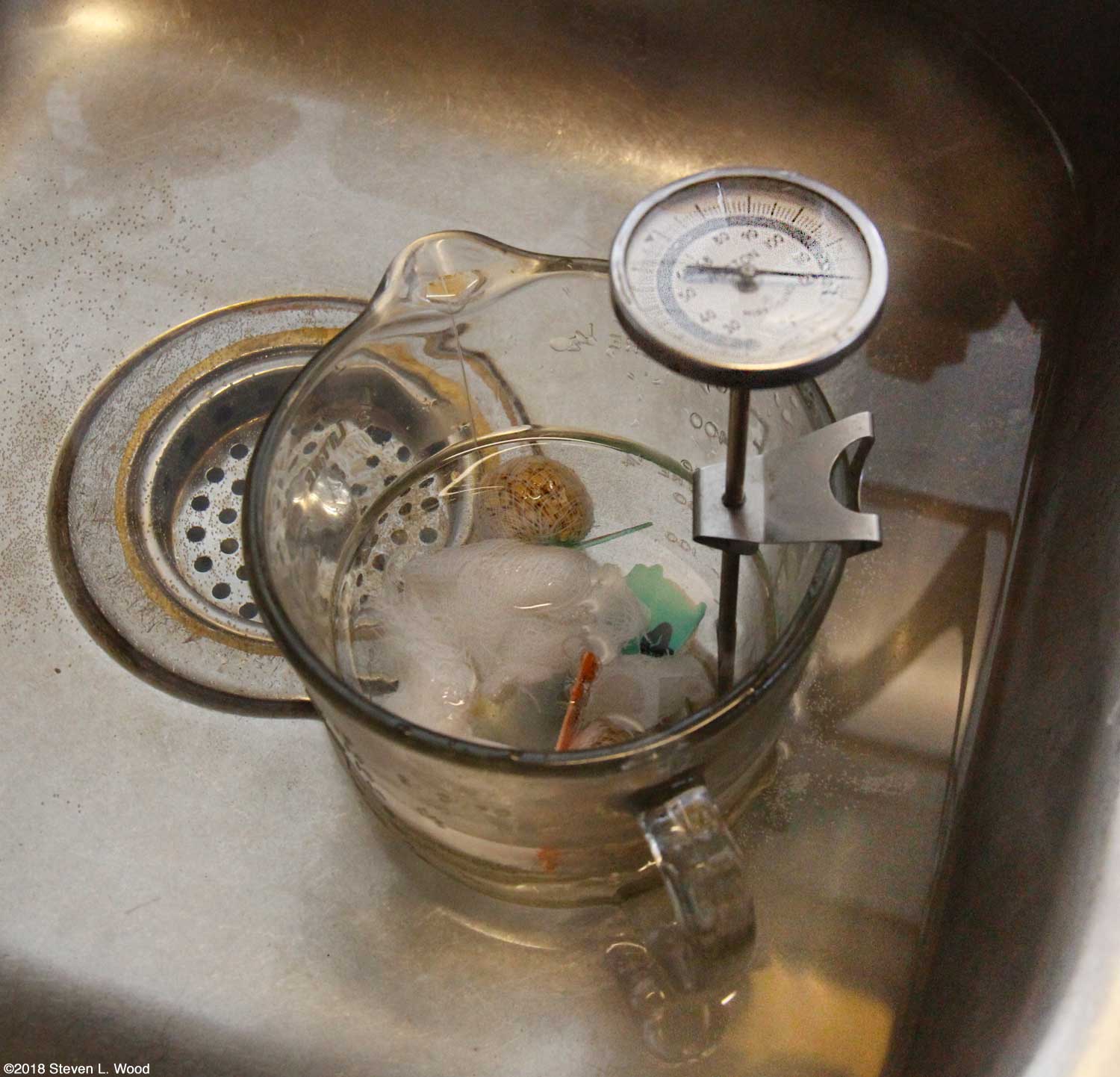
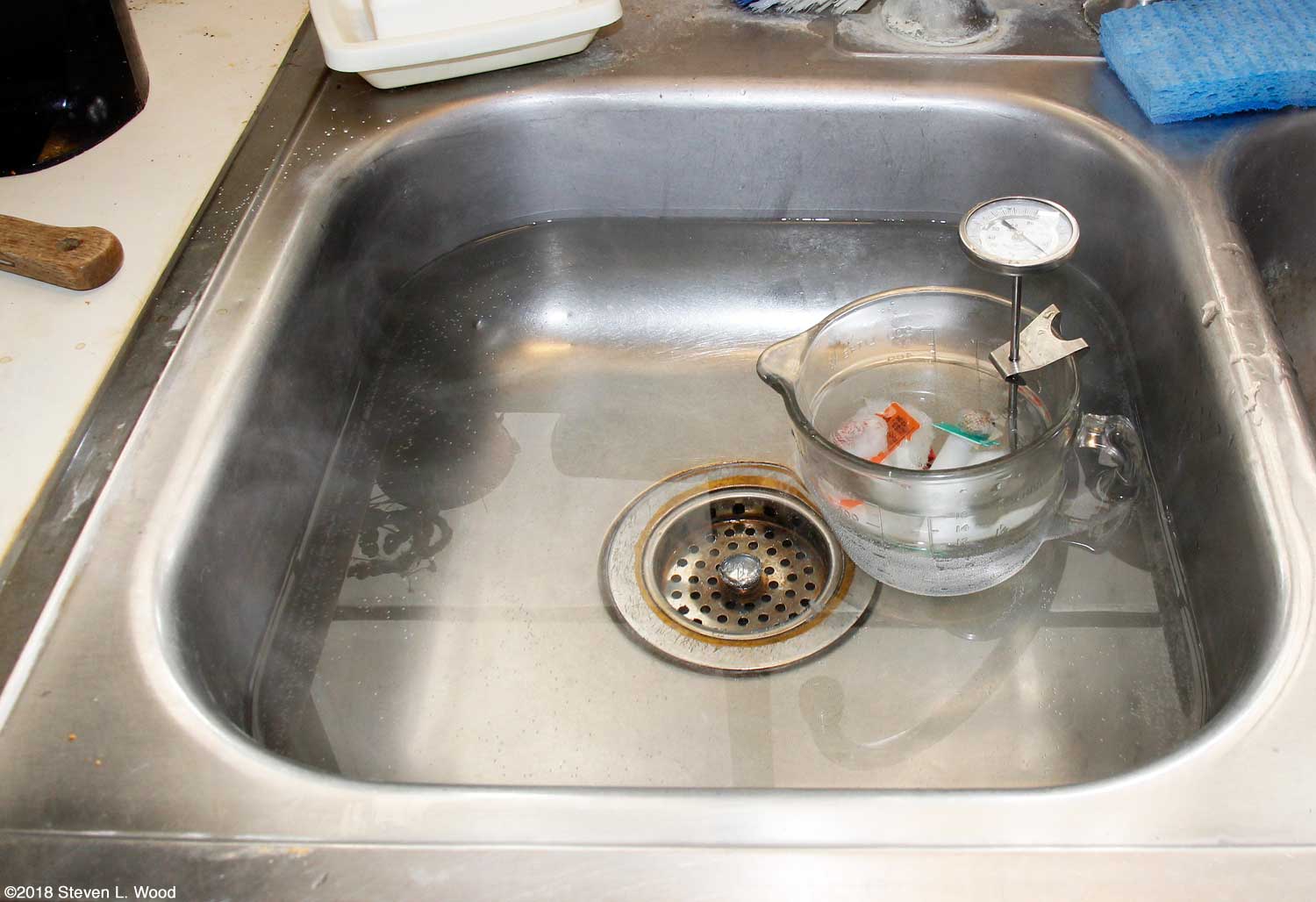
I should add a note here that I use our kitchen sink as a hot water bath around the pyrex cup that holds the seed. Keeping the water in the pyrex cup at the proper temperature is a lot easier with very hot water surrounding the cup.
Wednesday, February 7, 2018 - Computer Changeover I'm working through a computer changeover. I would like to call it a computer upgrade, but it isn't. I replaced my old 2010 Mac Mini with a relatively new one I found on eBay. The old Mini was showing the effects of six years of hard use, but I couldn't find an acceptable or affordable upgrade. The only part of the changeover that could be described as an upgrade was the new 2TB hybrid hard drive I'm only part way through this changeover. My office desperately needs a thorough cleaning which will include replacing the KVM box that allows me to run several computers through one keyboard, mouse, and display combination. Two of the four ports of the old unit had failed, but I've used the thing for so long that I can't even find the receipt for when I bought it. There's also a new keyboard and power strip to add to my office computer setup. Gardening News - A Pleasant Surprise
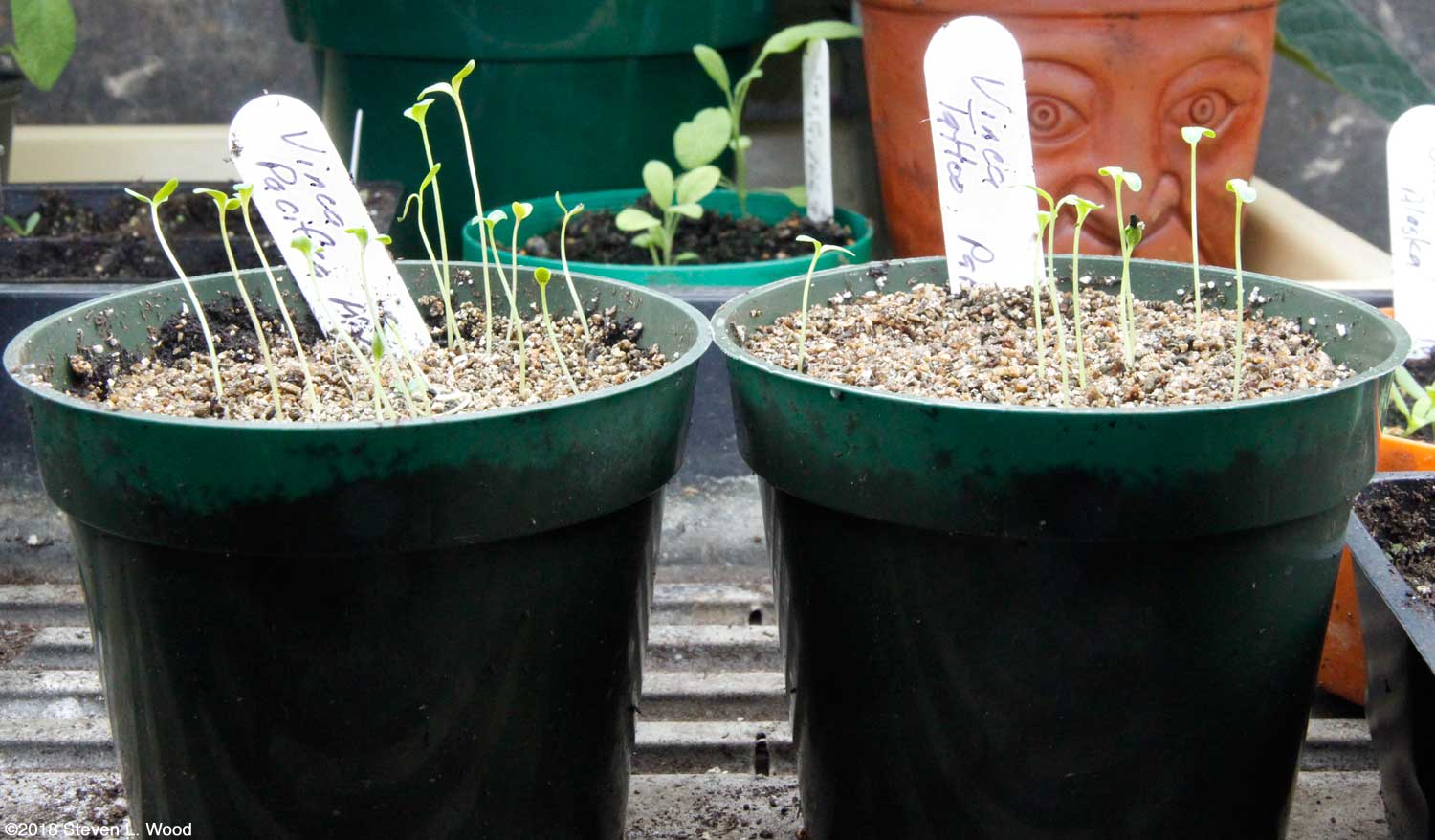
After moving just seven seeds from one bag of sprouting seed, I ran out of sterile potting mix, so I had to stop. I have another kettle of potting mix sterilizing in the oven right now, sharing the oven with some rather tough steak leftovers I thin sliced and covered with beef broth. Hopefully, the beef won't pick up any off odors or flavor from the covered kettle of hot potting mix. We have vinca, daisies, and onions up and on their way. Vinca is said to be a bit slow to germinate, but ours popped up in just a few days. We have three different varieties of daisies up. And after a little re-seeding, our tray of onion transplants is filling in some bare spots in the rows.
I moved about thirty geranium seeds from the paper towels they germinated on to 3" pots today. All but four of the thirty-some seeds I put on moist paper towels on Monday showed some sign of germination. The big difference in germination rates between this seeding and a failed one in January is that I scarified the seed this time around. I'd sorta forgot about them, but noticed this afternoon that our cauliflower is mostly up. One variety may need a little re-seeding, but we already have enough plants up to supply our spring planting needs. Computer Changeover Woes My efforts to switch to a fresh computer this week came crashing down this morning. After doing a complete backup of my internal and external hard drives (which took about 15 hours), I tried to restart my "new" Mac Mini. It repeatedly hung during startup and refused to start from a DVD or the external drive. After switching the position of the RAM chips to no avail, I began unhooking peripheral items, often the cause of hangups. When that failed, but wondering why the computer wouldn't accept the keyboard commends to boot from a DVD or the external drive, I swapped in the new keyboard. That allowed me to use a key command at startup to boot into Mac OS 10.13.3 (High Sierra) on an external drive. The new, main drive was still a mess. I tried using Apple's Disk Utility to fix whatever was wrong with the drive. When that operation failed, I tried to repair the disk with Tech Tool 7. Again, no dice. I finally turned to a rather old (version 4) utility, Alsoft's Diskwarrior. It was able to rebuild the new drive's directories and mount the drive. Running Disk Utility revealed no more errors. The repaired disk then successfully booted from Mac OS 10.6.8 (Snow Leopard). I continue to stubbornly stick with it as my main OS so that I don't have to replace a bunch of software that is incompatible with Apple's latest and greatest operating system. Just to make sure, I did another backup of the drive to see if that was what corrupted it in the first place. All went well with the backup, so I assume the bad keyboard was the cause of the troubles. That's good, as I need to use that computer to get started doing taxes soon. I wound up my computing efforts by ordering an upgrade to Alsoft's latest version of Diskwarrior. It saved the day today.
I seeded the verbascum to a small pot, covering the tiny seed with just a bit of vermiculite. (Thanks again to reader Mike Bryce for his tip about using fabric softener sheets to break the static electricity of tiny seeds in plastic pouches.) The pot went into a tray covered by a clear humidity dome and over a soil heating mat. I did have to reset the mat's thermostat back down to 75° F. I'd previously had it set to 78 to try to pop up some of the hard geranium seed I've written about recently.
I took advantage of some nice weather today to do a job I missed doing last fall. I trimmed our lone rose bush which blooms each summer no matter how badly I treat it. The bush came from one of those small, potted rose bushes sold at Walmart and other outlets around Valentines Day. I bought ours on sale after the holiday and after its blooms had faded. On my way to the rose bush, I noticed that we have three or four clumps of daffodils up. While we still have a good bit of winter ahead of us, spring can't be too far away.
Our communal pot of Alaska Shasta Daisies was ready for transplanting today. Since the plants may be in their next containers for a good while, I chose to transplant into deep sixpack inserts instead of the shallower fourpack inserts I often use. The deep inserts obviously give the plants a bit more room for root development.
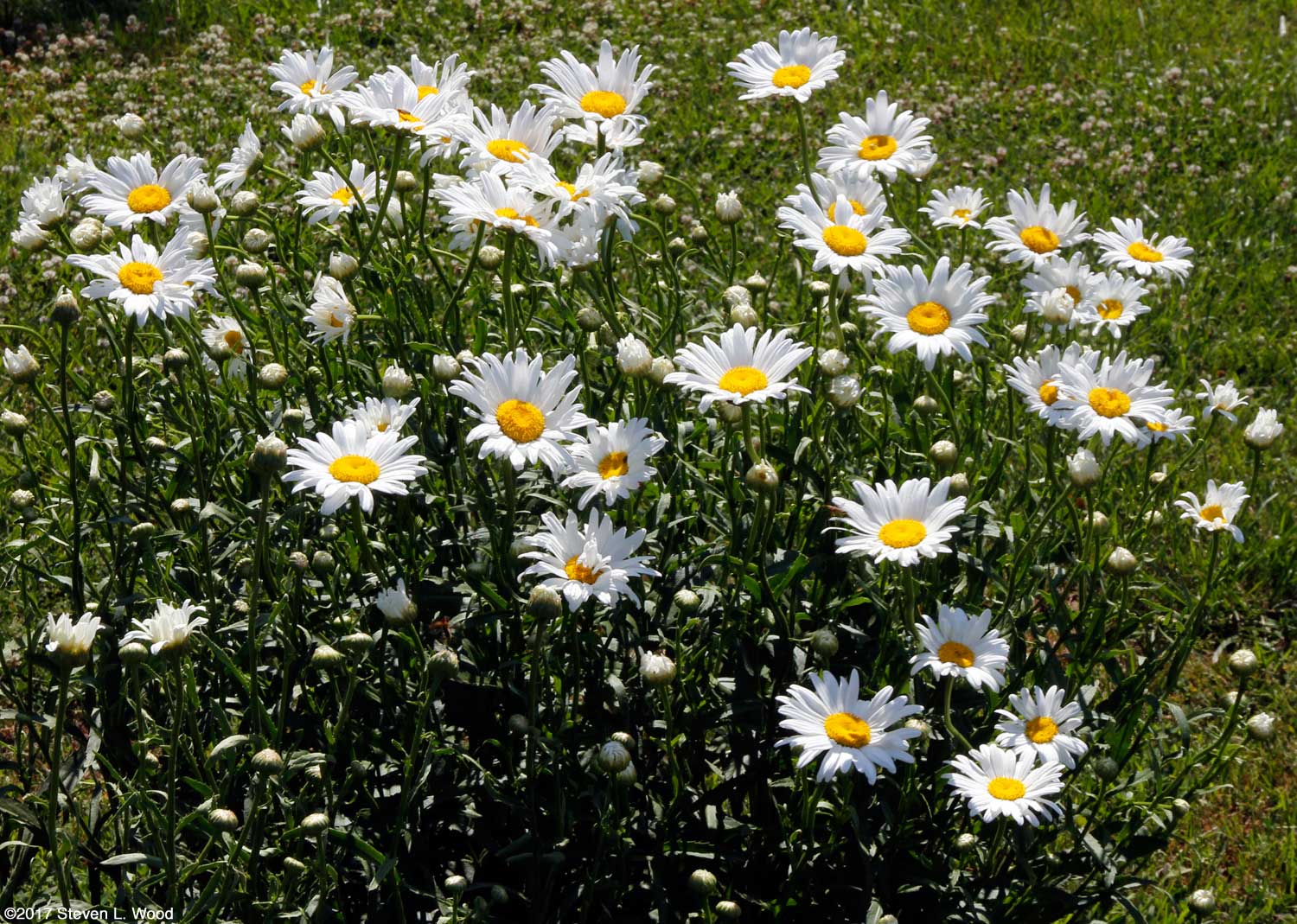
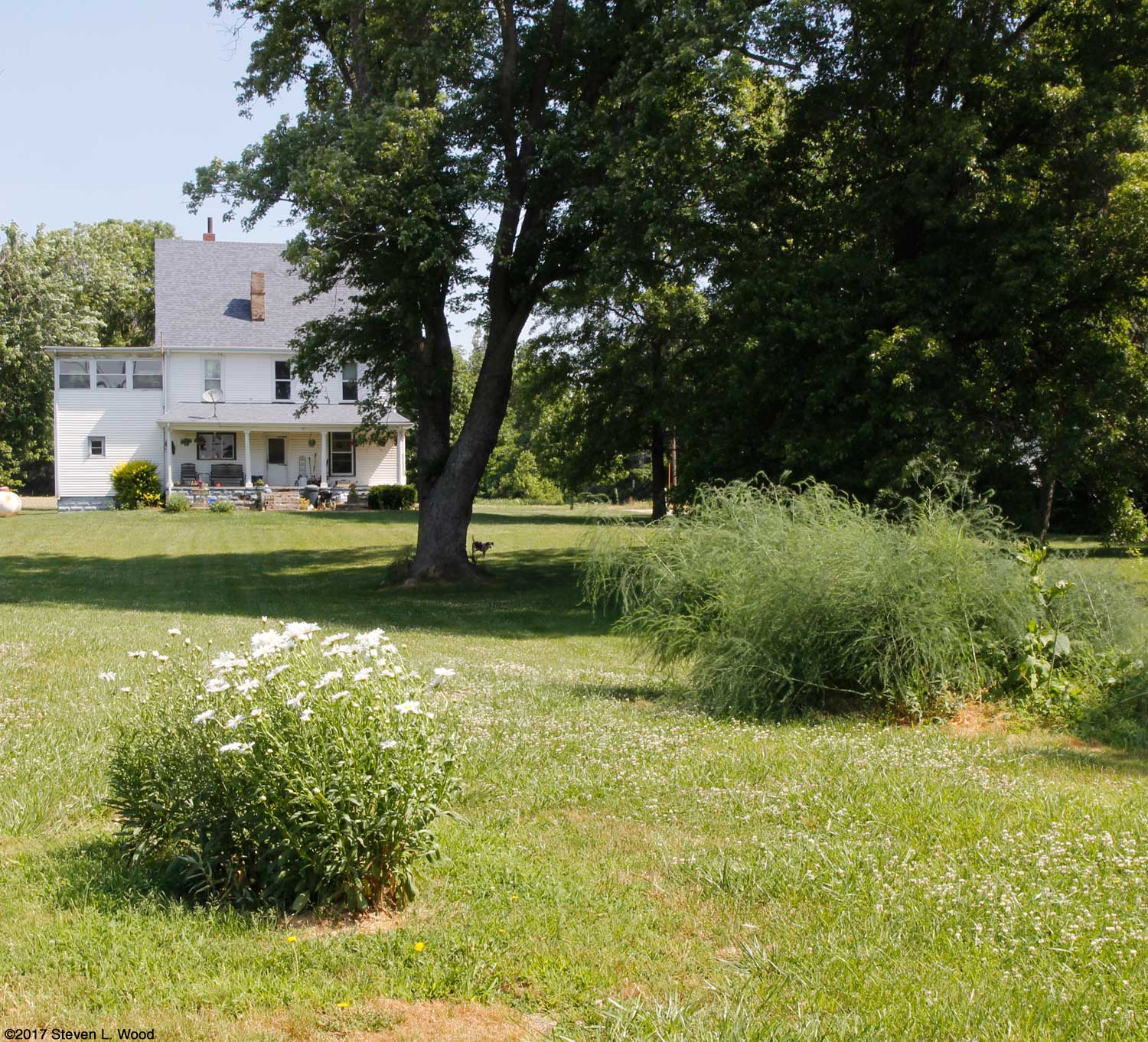
Our tall shasta daisies grow in what once was an isolation plot at the back of our yard. There soil there is nasty, gray clay and didn't grow much of anything well as an isolation plot. When our beloved dog, Mac, passed away, I buried him in the plot, planting daisies over him. I've been pleasantly surprised that the daisies took, although we lost several plants in last summer's dry conditions. We need just a few more plants to fill out the previous garden bed. The family joke now, of course, is that Mac is pushing up daisies. Computer Challenges Continue The "new" Mac Mini has continued to experience some random software crashes. Wondering about the RAM I had installed, I ran an Apple Hardware Test late last night, using its extended memory testing. Sure enough, one of the two 8 gig RAM chips in the machine had problems. Fortunately, the RAM upgrade had come from our longtime Mac hardware supplier, Other World Computing. They have a good record of standing behind the products they sell, including a lifetime warranty on RAM chips. While getting a replacement set of matched chips will save me a good bit of money, it may also result in our main computer being down for a few days. As with most returns, I have to send back my current chips before OWC sends a replacement. Although I have some compatible 2 gig chips, they may not be enough to power my Mac Mini setup. Hopefully, I can update this site in the interim using my MacBook Pro laptop.
I was going to write about the incredibly cute card my wife got me. We have a pact that we often fudge on to not buy gifts for each other for Valentines Day. The card's cover read "Love you honey." A small bottle of honey accompanied the card. For my part, I gave Annie Ed Sheeran's latest CD, Divide. She'd been looking for it in Terre Haute, but the places there were sold out. I found it at our Sullivan Walmart hidden along with all the other S's. Gardening
It's still a bit early to be starting a lot of stuff for this year's garden, although it seems like we have a lot going already. Our tray of onions was ready for its first "haircut" today. I snipped the plants to about three inches tall which will encourage thicker stems and additional root growth. Our cauliflower plants also required a little attention today. I moved several plants from cells where two plants were growing to open cells. The cauliflower is sharing its tray with some daisies. I'm still finding another sprouted geranium or two every day or so from our last planting. Even having scarified the seed, some of it has taken a long time to germinate.
I hadn't checked our dormant gloxinias for a month or so. When I finally did inspect them, I had sixteen of them to repot, water, and move under our plant lights. Fortunately, gloxinias are pretty forgiving and enduring when they begin to regrow from their corms after months of inactivity.
I wandered out to our planting of garlic this afternoon, but found no sign of emergence as yet. Often, we have garlic leaves visible by this time. Since this winter has been fairly cold so far, I suspect it will be a week or two before we begin to see some activity in the garlic bed. Computer Stuff I decided to try writing this update on my "new" Mac Mini despite its limited 4 gigs of RAM. (I'm rather impatiently waiting for the "guaranteed" replacement of the 16 GB of memory that failed after just four years of use.) For those of you who remember such stuff, it was almost shades of working in System 6 or DOS where you could run only one application at a time. I could run a couple of apps, but when I started working photos, I found myself dancing in and out of virtual (extended) memory (never a good thing). Other Stuff I'd expected to receive our copy of the Seed Savers Exchange Annual Yearbook in the mail last week. While I'd been assured by two SSE staffers that listed members, even paperless members like me, would receive a yearbook, I haven't seen one as yet. While the seed listings of the print yearbook are available via the online exchange, there's lots of other information in the print edition that is not online or is more easily accessed via the print yearbook. Publishing the yearbook this late appears to be another example of SSE's continuing de-emphasis of their members' efforts and listings.
Monday, February 19, 2018 - Presidents Day (U.S.)
During the winter months when our rain gauge is safely tucked away in our garage, I rely on a number of nearby Weather Underground reporting stations to figure our monthly precipitation. One of the cool things about Weather Underground is that you can use a custom feature to pull up things such as total precipitation for a month. I usually access the data from about six nearby stations, throw out the high and low figures, and average the rest to determine a reasonably accurate figure for a given month. We're fortunate to have lots of folks in our general vicinity who go to the trouble of maintaining a weather reporting station.
Sharing the tray with the sage plants is what was supposed to be a hosta plant I brought inside last fall. Plants brought back inside no longer go under the lights in our sunroom to prevent bringing insects or diseases into our plant room. Apparently, the hosta died, as what I'm now seeing the pot is a very healthy, volunteer petunia! Hmm... After finishing yesterday's posting rather late last evening, I sent emails to the heads of Other World Computing and the Seed Savers Exchange. Within an hour, I had a response from both! Do those guys ever sleep? My RAM chips should ship tomorrow. OWC's Larry O'Connor related that his employees have been hit hard recently by the flu, and things are a bit slower than usual at OWC. SSE's Lee Buttala is going to look into whether my yearbook has shipped as yet. He related that yearbooks had gone out and been received by at least some members last week. Of course, a solve to the yearbook problem would be for SSE to get it done and shipped in early January when it would be more useful to SSE members completing their garden plans and seed orders.
Wednesday, February 21, 2018 - Rain
I seeded one communal pot to lettuce today. I'll seed the rest of our lettuce in a week or two, but the Pandero red, mini-romaine lettuce seed has proven to be slow to germinate in years past. I'm giving it a head start, as I gave up on it last year, only to see it emerge about two weeks after the rest of our lettuce varieties.
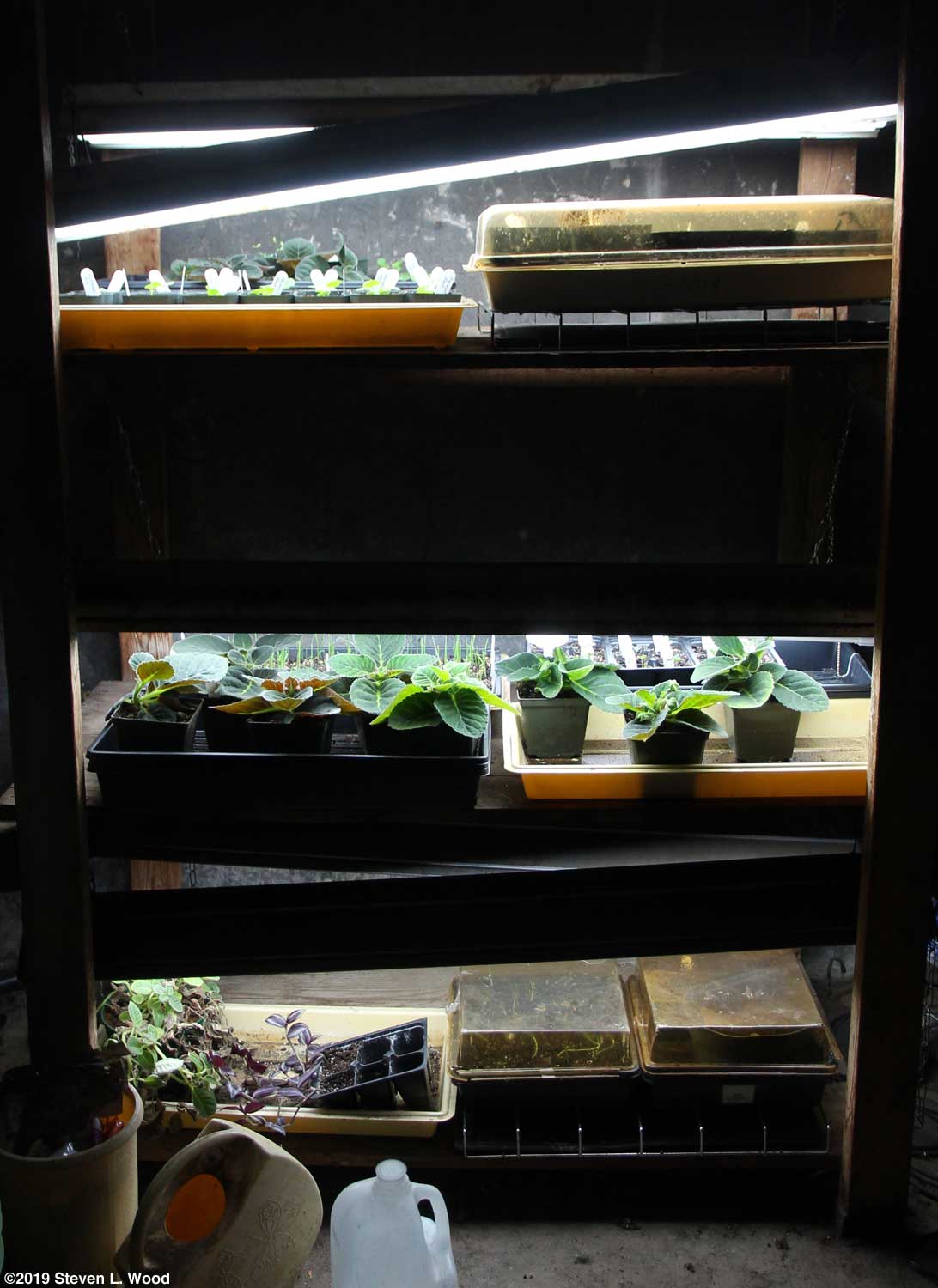
Our plant rack is filling up as it always does at this time of year. Two of its three shelves are filled, with some plants already having been moved to our sunroom. Note that I use Photoshop to cut out some of the dark, empty area between the shelves in photos. I have a bunch of vinca to transplant from communal pots into fourpacks, so I'll soon need to turn on the lights for the bottom shelf of the plant rack. The rack was designed to hold twelve standard 1020 seed flats. When I built the rack, I never imagined we might need more space than that.
Thursday, February 22, 2018 - The Exchange Annual Yearbook
While the Seed Savers Exchange maintains an extensive collection of open pollinated and heirloom vegetable seed in their seed bank, they lack the resources to save everything. Many other good open pollinated vegetable varieties are preserved and shared by members of the Exchange via the Annual Yearbook, both in its print and online versions. In a departure from previous years' offerings, both SSE members and non-members (with free registration) may now offer and/or order seed from the Online Exchange. We have six listings in the current yearbook, although only five of them are endangered varieties. The sixth variety we share, Abundant Bloomsdale Spinach, is readily available from both High Mowing Organic Seeds and the Southern Exposure Seed Exchange. I only listed it because I'm hoping that our saved seed is beginning to adapt to our specific growing and climate conditions and might be useful for gardeners in our immediate region. I've often referred to the five varieties shown below as endangered, but hadn't recently checked online for seed availability. On one of those nasty, blustery, snowy nights last month, I did a check. I was pleased to find one other SSE member (in Illinois) offering both Moira tomato and Earliest Red Sweet pepper seed via the Exchange. Beyond that, I found one US commercial offering for Moira tomato seed, what probably is Earliest Red Sweet pepper seed from another, rather new, small seed vendor, and the Japanese Long Pickling seed we used to break our inbreeding depression from one other commercial seed house.
Beyond those offerings, all of the other listings were from Canadian seed houses. That's not really surprising, as the tomato varieties we offer were all developed by Jack Metcalf at the Agriculture Canada Smithfield Experimental Farm, in Trenton, Ontario. While individuals can often mail a packet of seeds to or from Canada, seed houses operate under much stricter requirements, causing many of them to ship only to their home nation. Earlirouge Tomato - This was the most commercially successful of a number of Jack Metcalf releases through the 1970s and 1980s. The tomatoes range from small to large, but have deep red interiors and incredible homegrown tomato flavor. A friend with whom I shared some tomatoes last summer called them the best tomatoes he'd ever tasted!
Moira Tomato - This one is our longest saved tomato variety. They produce an abundance of small to medium sized tomatoes with deep red interiors and excellent flavor.
Quinte Tomato - This release was subnamed 'Easy peel." I'm not sure the tomatoes really peel any easier than other varieties, but they do have great flavor and deep red interior coloration.
Earliest Red Sweet Bell Pepper - This is a relatively small pepper variety by the standard of today's hybrid pepper varieties. It excels in producing red peppers without a lot of rot early and late in a growing season. While we grow some large hybrid pepper varieties each year, our Earliest Red Sweets almost always outproduce the the hybrids!
Japanese Long Pickling Cucumber - While hybrid bush cucumbers have overtaken the market, I think the Japanese Long Pickling cucumber variety still outshines them all for producing long pickling cucumbers for canning. It's a vining variety that requires a trellis, but produces an abundance of long cucumbers for slicing or canning. This year's yearbook has listings from 358 SSE members (down from 404 last year). But those members offer 15,636 unique varieties of seed (up from 15, 272 last year). Hot Water Treating Tomato Seed
I had a devil of a time maintaining a constant water temperature of 122° F for 25 minutes. I think I effectively treated the seed without cooking it, but it was more difficult than usual. While a similar process, I'm many years away from the times I developed color slides in a developing can in our kitchen sink at, I think, a hundred degrees. I have added two more open pollinated tomato varieties to our prospective plantings for this season. I'd ordered some Crimson Sprinter seed from SSE member Steve Strickler. He's located nearby in Bloomington, Indiana, so his seed may be somewhat adapted to our growing region. Steve was kind enough to include several other tomato variety samples with my order, including the Bogeywine, a cross he developed from yellow Brandywines.
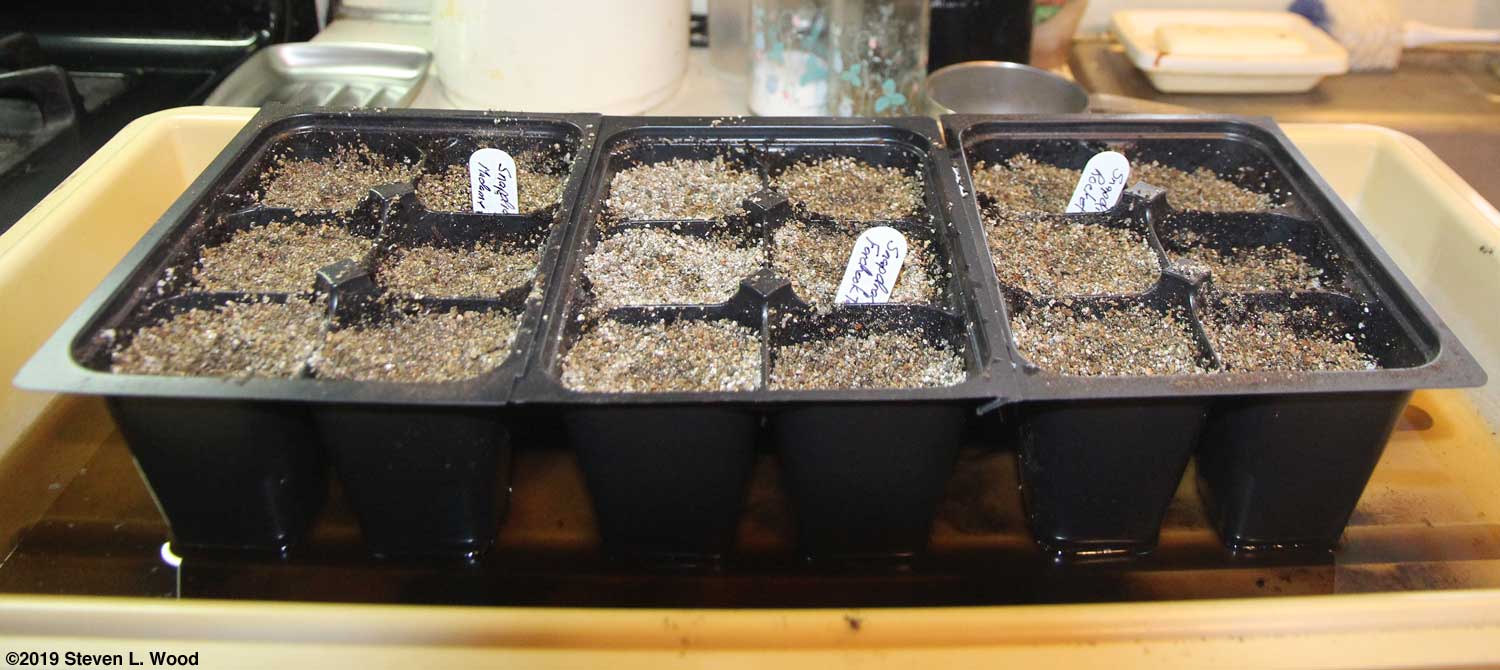
I started Madame Butterfly, Rocket Mix, and Fordhook Talls. Since snapdragons require light to germinate well, I lightly spread the seed over pots filled with sterile potting mix covered by a good bit of vermiculite. The seed went on top of and in the vermiculite. Burpee's Learn About Snapdragons We plant our snapdragons along our trellises to give the tall plants some support. The plants have to compete with tall peas and vining cucumbers growing on the trellises, but usually survive to produce some beautiful displays of blooms by mid-summer that last right up to our first frost. Monday, February 26, 2018 - Little by Little
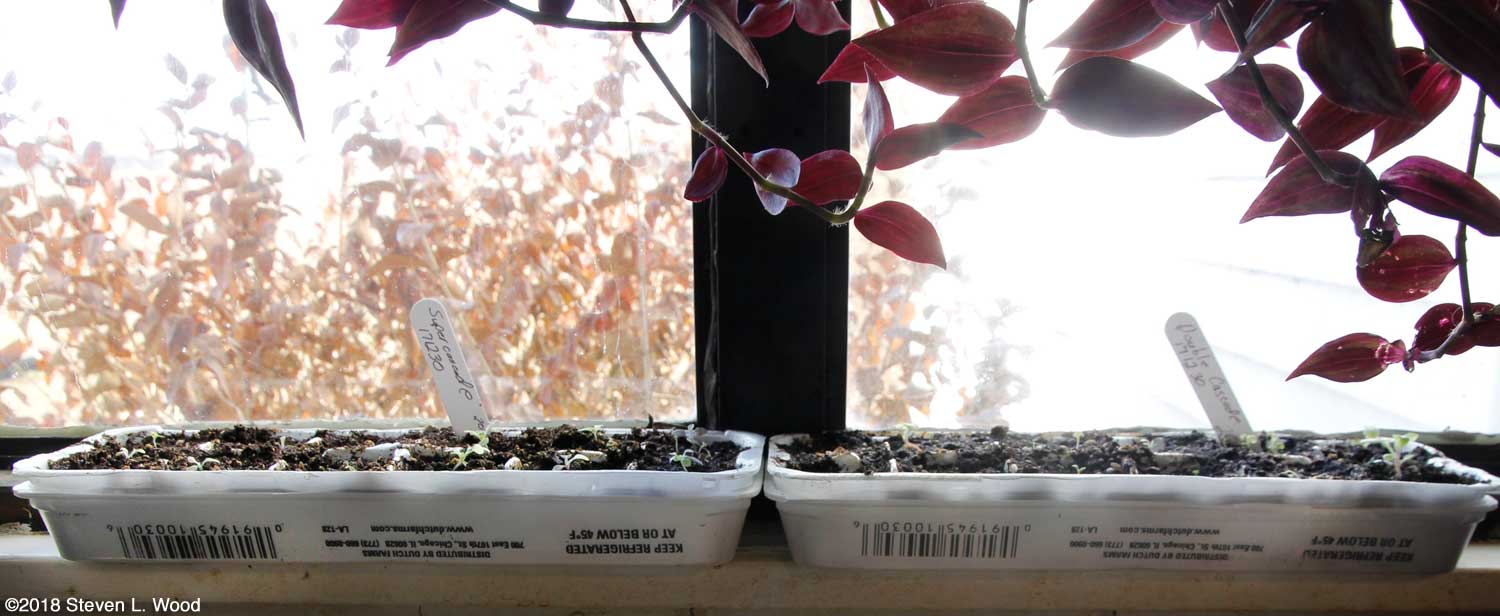
While I was doing a few chores outside, I was happy to see that some of our garlic is up. It is coming up a bit later than usual, possibly an effect of the cold weather we had for a while. I also got the garlic planted a bit late last fall. Petunias - Again Sunday's job was a sad one. The egg carton petunias that we grow on our kitchen windowsill have done poorly this spring. I'm not sure of the cause, but moved the few surviving plants into fourpacks and under our plant lights. I started new plantings of both Supercascade and Double Cascade petunias, putting them over a soil heating mat. They're the varieties I use for hanging baskets and are often just about ready to go outside at this time of year. I also started some Celebrity petunias for our garden plots. I did switch planting mediums for the petunias this time around. I used straight Pro Mix instead of a blend of it and commercial potting soil. I also did a lot of rearranging of plants and trays under our plant lights. Seemingly failed pots of geraniums and such got shuffled to a bottom shelf. Broccoli, Brussels Sprouts, and Cabbage Started
I seeded one deep sixpack insert to Premium Crop broccoli and another to Goliath. Both varieties usually produce nice main heads, followed by lots of sideshoots. I used fourpack inserts to seed two each of Alcosa (savoy), Super Red 80, and Tendersweet cabbage and Dagan Brussels sprouts. When possible, I like to transplant our brassicas into the garden during the first week in April. That's just six weeks away, so it's definitely time to get these transplants going.
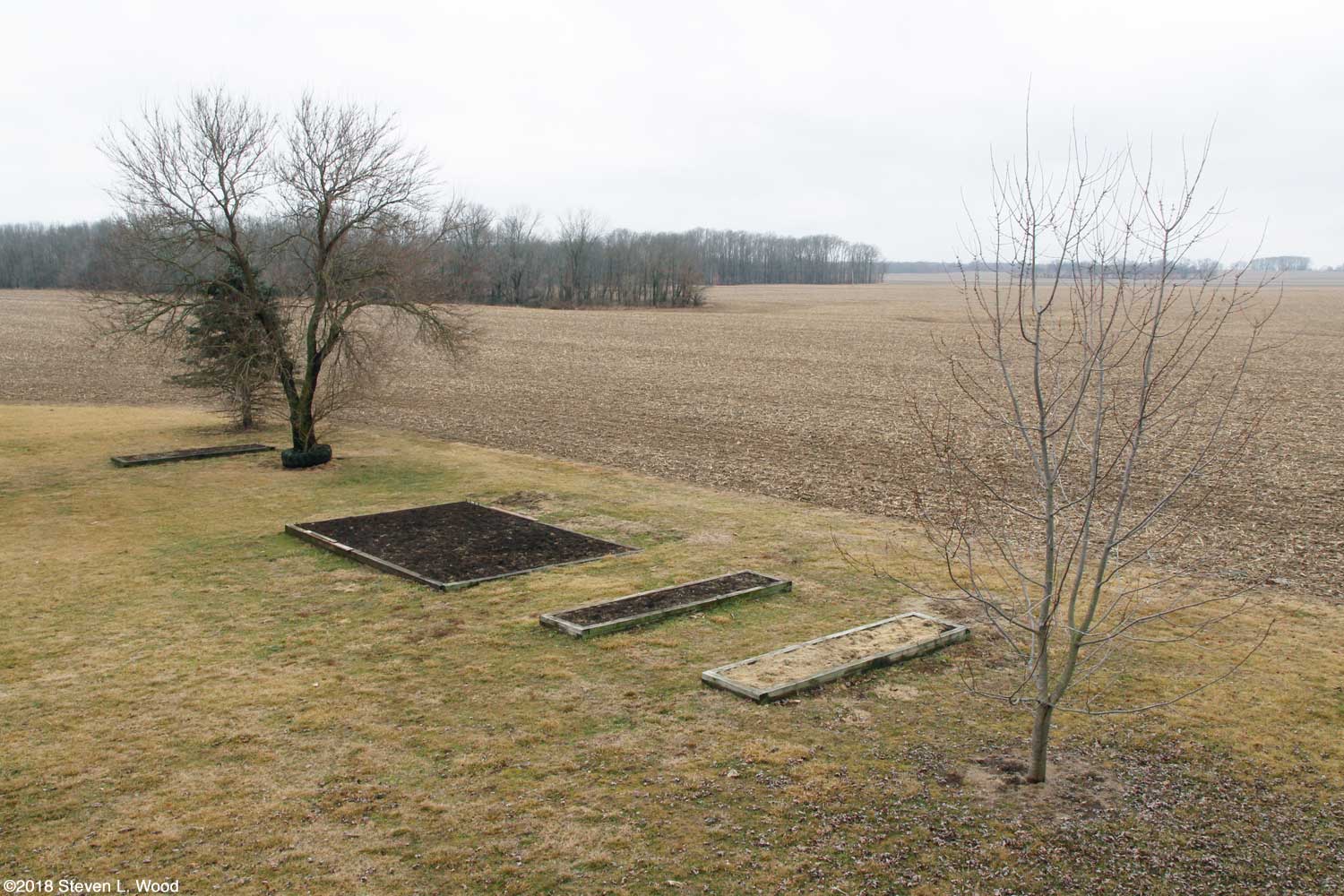
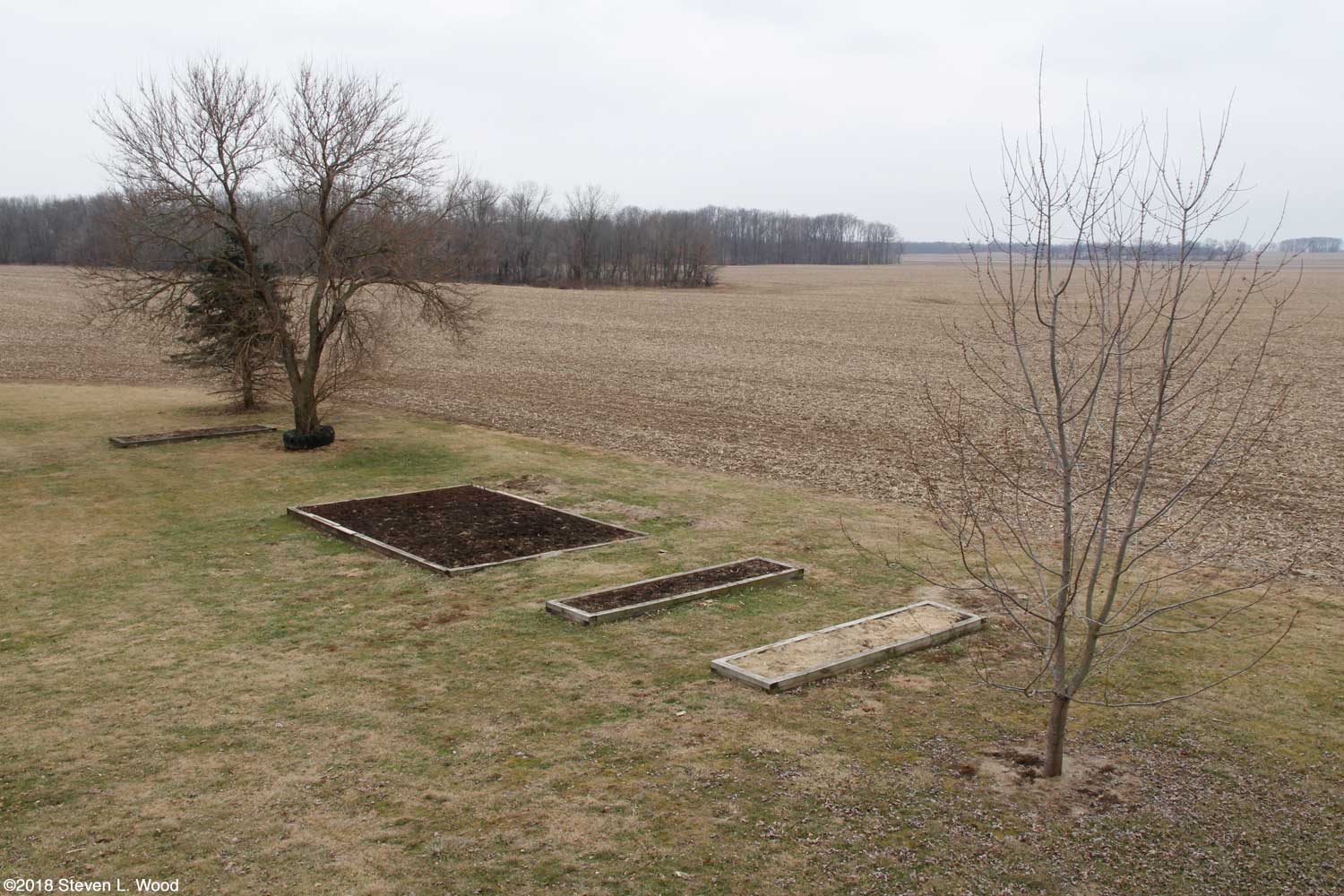
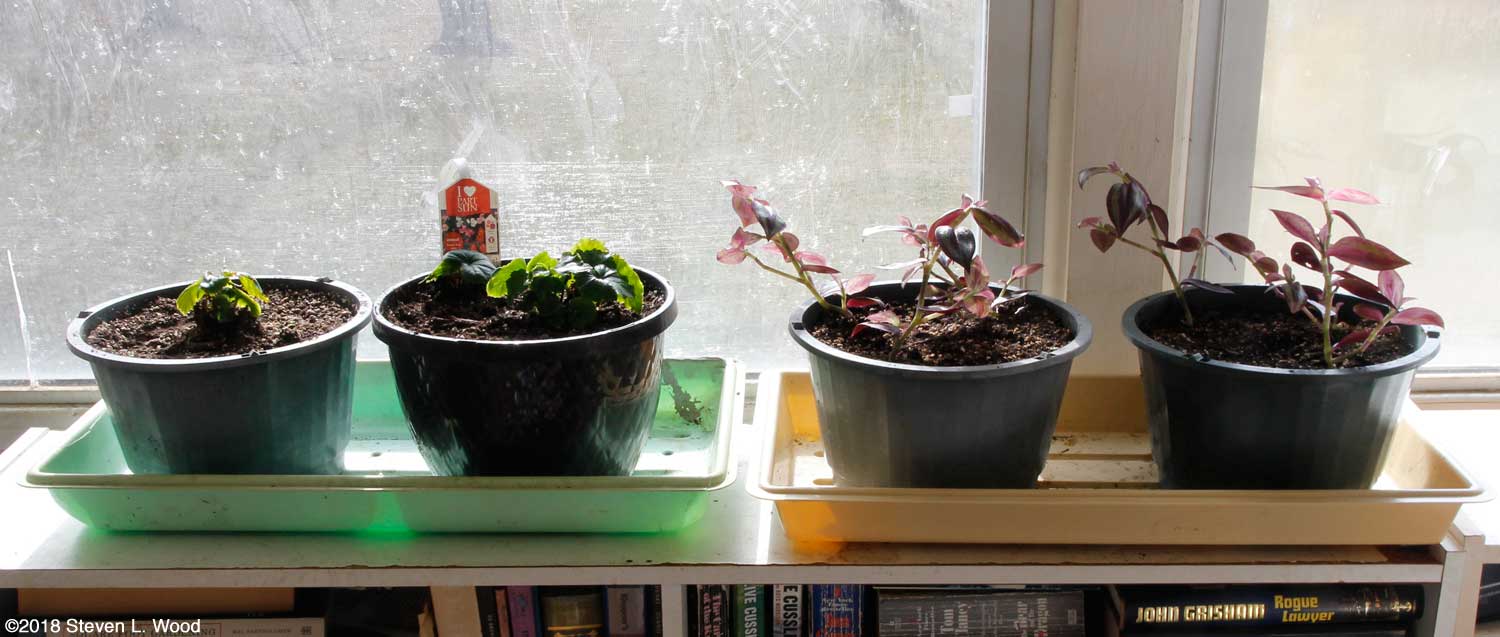
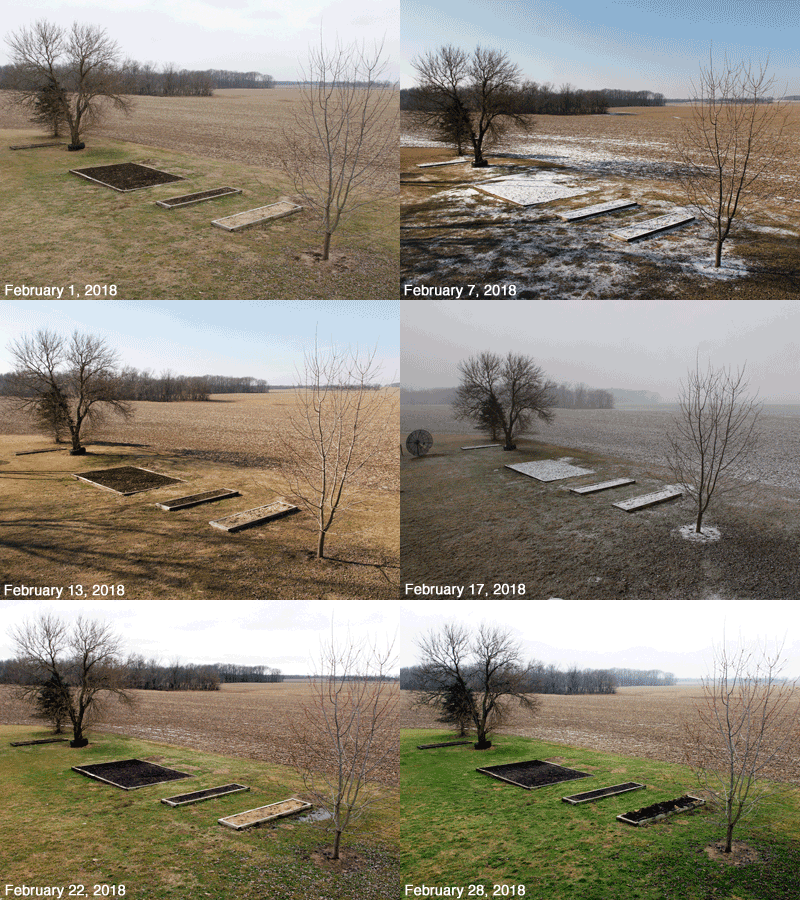
Vinca I transplanted the vinca I started in January from their communal pots to fourpack inserts on Friday. I'd lightly seeded the communal pots. Even so, I ended up with twenty cells of very healthy vinca plants for our garden. Wax Begonia Bloom When taking the garden splashshot that tops this page from our sunroom window over the weekend, I got a pleasant surprise. One of the wax begonias on a bookshelf by the sunroom's south windows had a lovely, little bloom on it. I'm not sure if that's a sign of spring or the last gasp of a dying plant. The plant is one that our kittens dug up, using its potting mix as a litter box. Onions
Geraniums
We've obviously had some setbacks with our transplants so far. The good news is that the germination problems were all with flowers that will eventually bloom.
Wednesday, February 28, 2018 - February Wrap-up
Indoors, we got a lot of stuff started, including brassicas (cauliflower, broccoli, Brussels sprouts, and cabbage) and a lot of flowers (verbascum, petunias, hostas, daisies, snapdragons, and more petunias). Not every planting went well, but overall, we're on our way to another garden with lots of delicious, homegrown vegetables and beautiful flowers. While not totally complete, my month-long computer changeover took a big step towards completion yesterday. The replacement RAM chips for some failed chips arrived and were promptly installed. I appreciate Larry O'Connor and his Other World Computing for standing behind their lifetime warranty on their memory chips. Sadly, it seemed to take forever for the chips to arrive. When the Post Office tracking said the chips had reached Sullivan, Indiana, last week, someone must have decided the chips needed to visit the eastern United States. They ended up going to Wilmington, Delaware, before heading back to Indiana.
Sunday, February 10, 2019 - Starting Daisies and Snapdragons
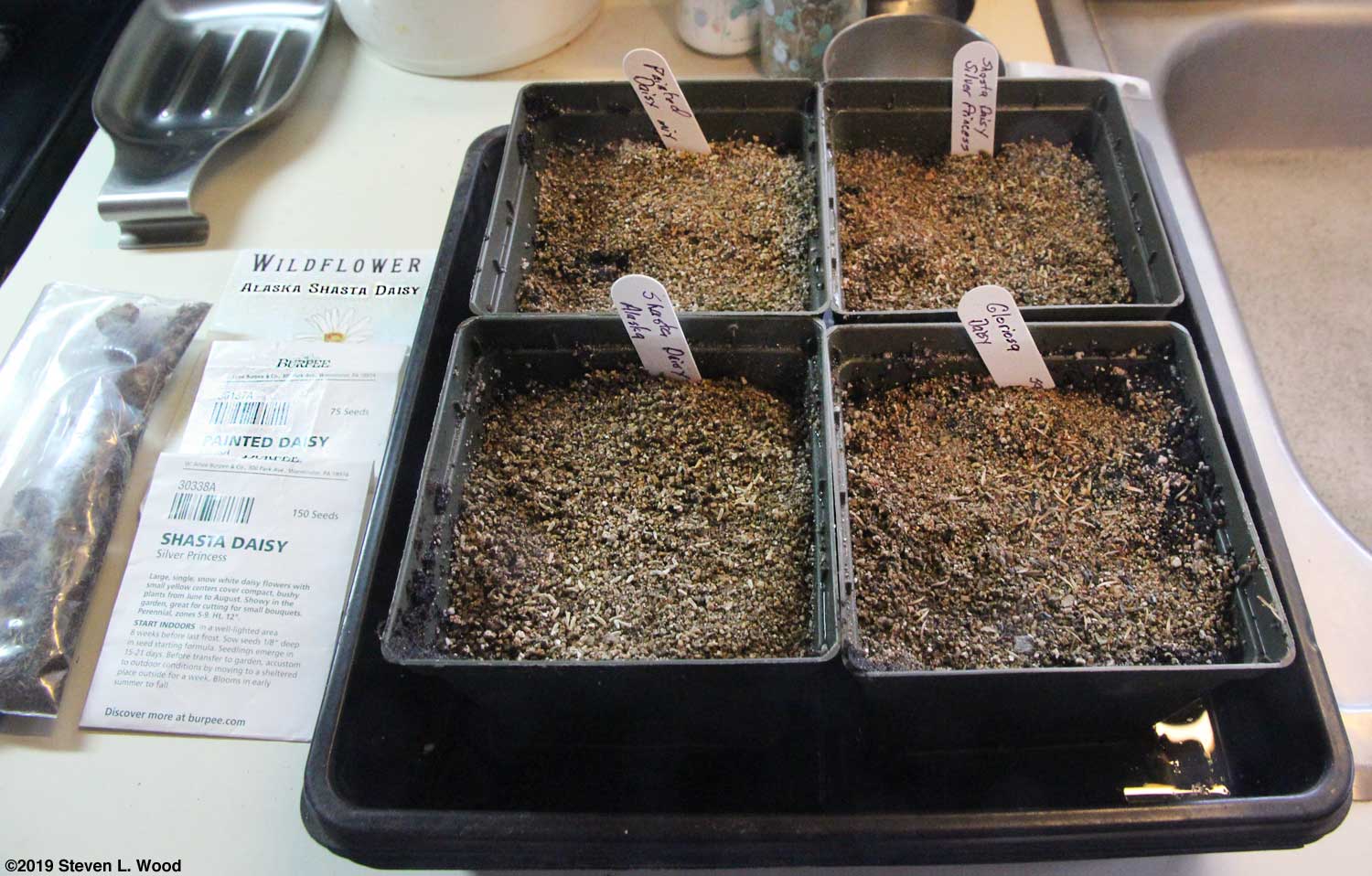
I started daisies and snapdragons today. The daisies will go into our flower beds and one spot in our back yard while the snapdragons will go along the trellises on which we grow peas and cucumbers. We've had some gorgeous daisies in the past, but have made some mistakes with them. I planted tall daisies in a flowerbed beside the house and they took over the bed and adjacent sidewalk. Since that time, Gloriosa Daisies and Alaska Shasta Daisies only go on the site of an old isolation plot where we buried one of our dogs. The soil there is terrible, and we lost all the daisies we had started there a couple of years ago. This time around, I'll add a good bit of peat moss and/or compost to the site when transplanting the daisies. For our flowerbeds, I seeded the much shorter Silver Princess Both daisy and snapdragon seeds need light to germinate well, so the small seeds went on top of some vermiculite spread over sterile soil. I used 4 1/2 inch communal pots for the four daisy varieties seeded. The snapdragon seed got planted in deep sixpack inserts, as the snaps often have to wait in their growing containers until I get around to transplanting them. The pots and inserts then went into a tray covered with a clear humidity dome and over a soil heating mat. While our original gloriosa daisy seed came from Fedco Seeds, I chose to use some seed I saved in 2014 for this planting. For snapdragons, I started Madame Butterfly
We love having snapdragons growing in our garden plots. They often get a bit overgrown by the plants growing on our trellises, but most survive to give us a wonderful display of blooms in late summer and fall. My Planting To-Do List
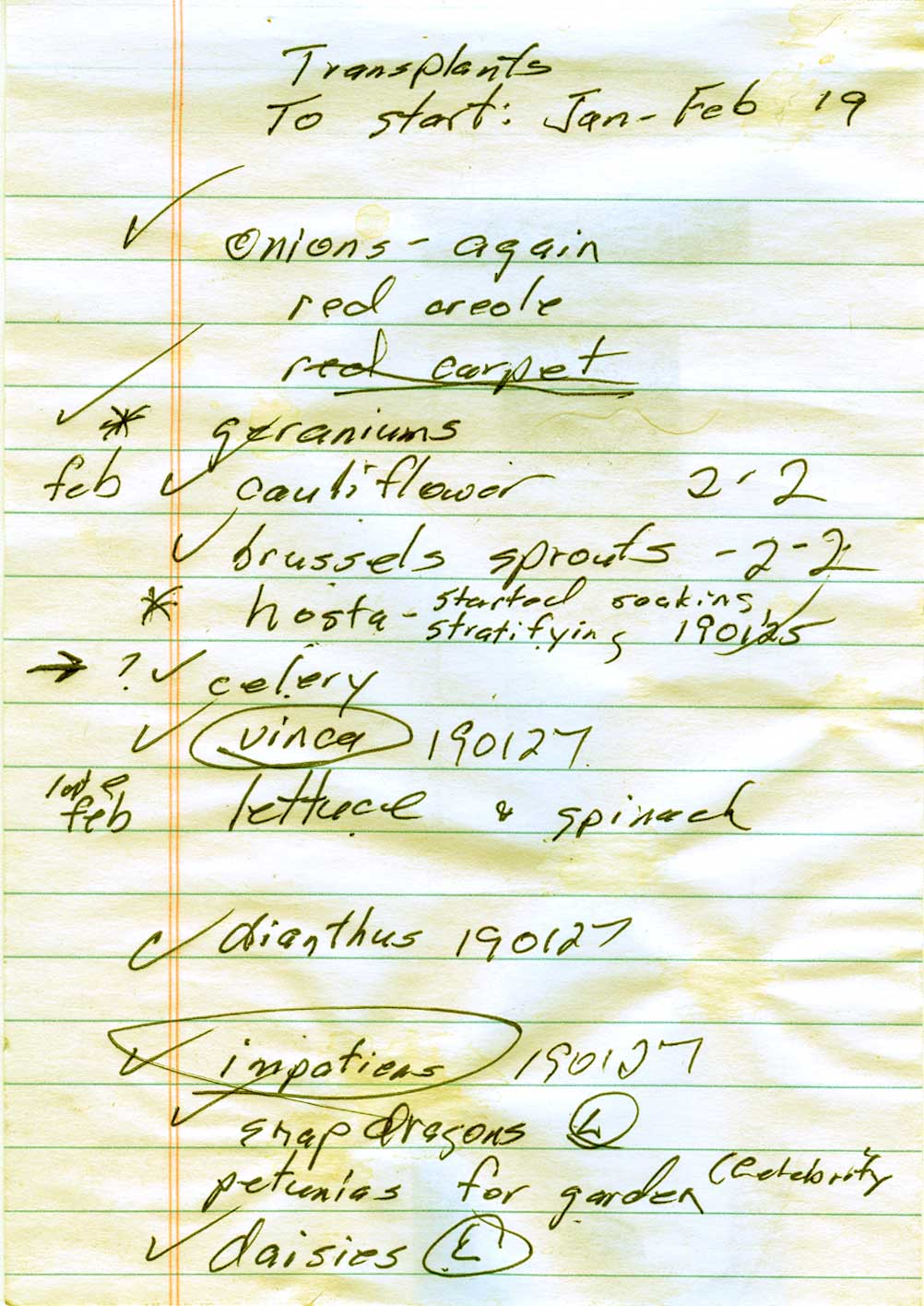
You'll have to excuse my poor penmanship in the image at left. When I transferred from teaching in an open concept setting in 1978 to a class for developmentally delayed third graders, I was required to take some extensive training in using the Project Read, Orton-Gillingham inspired, VAKT reading program. It changed the way I taught reading for the better the rest of my career. But I was also required to take a cursive handwriting workshop, as the folks who hired me had seen my handwriting. I was able to clean things up enough to get the wonderful new job, but obviously, the improvement didn't last. With all the stuff we've started so far, our plant rack is becoming a little crowded. We still have a bit of open space on a couple of shelves, but as stuff germinates and communal pots get split up into individual pots or inserts, we'll quickly run out of space. When this happens, we begin moving some cold hardy plants to our unheated sunroom which already has some overwintering sage and daisies along with several hanging baskets of wandering jew plants. As that space fills up, I employ our dining room table by our bay windows for the overflow. While the dining room table doesn't received as much light as the sunroom or plant rack, it does get good sunlight in the morning.
Contact Steve Wood, the at Senior Gardening |



















| Affiliated Advertisers |
©2018 Senior-Gardening.com