One of the Joys of Maturity |
|

| Affiliated Advertisers |
The Old Guy's Garden Record
Clicking through one of our banner ads or some of our text links and making a purchase will produce a small commission for us from the sale.
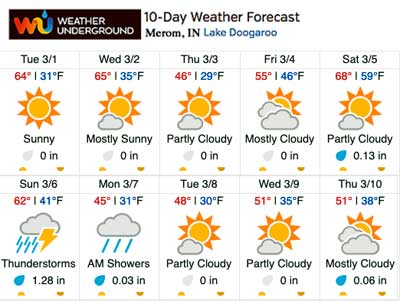
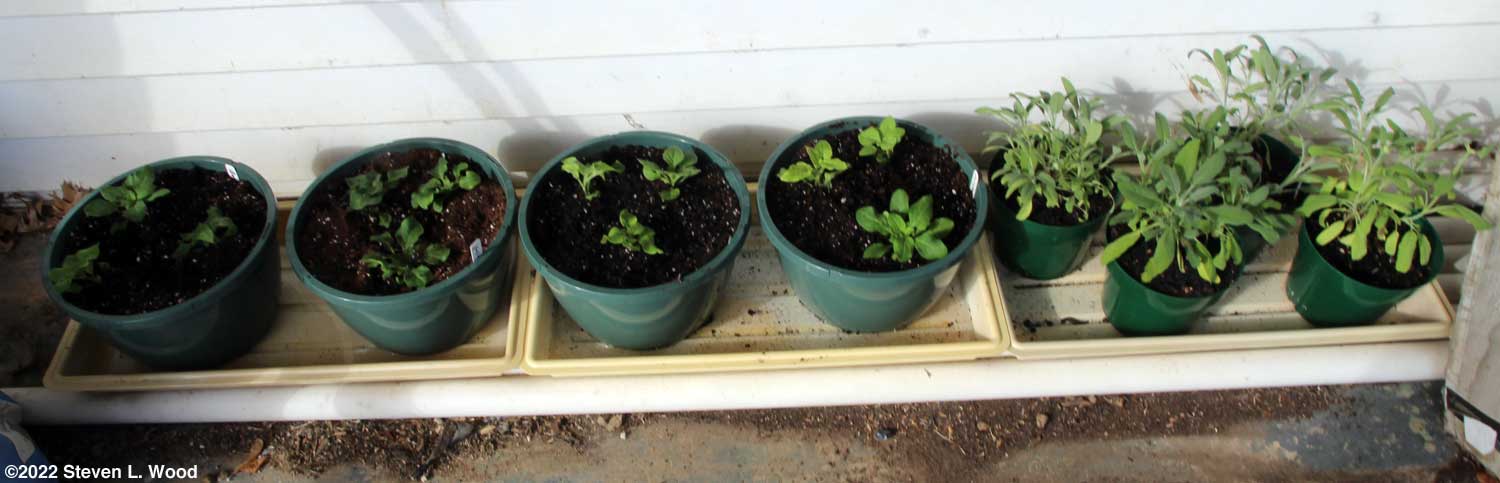
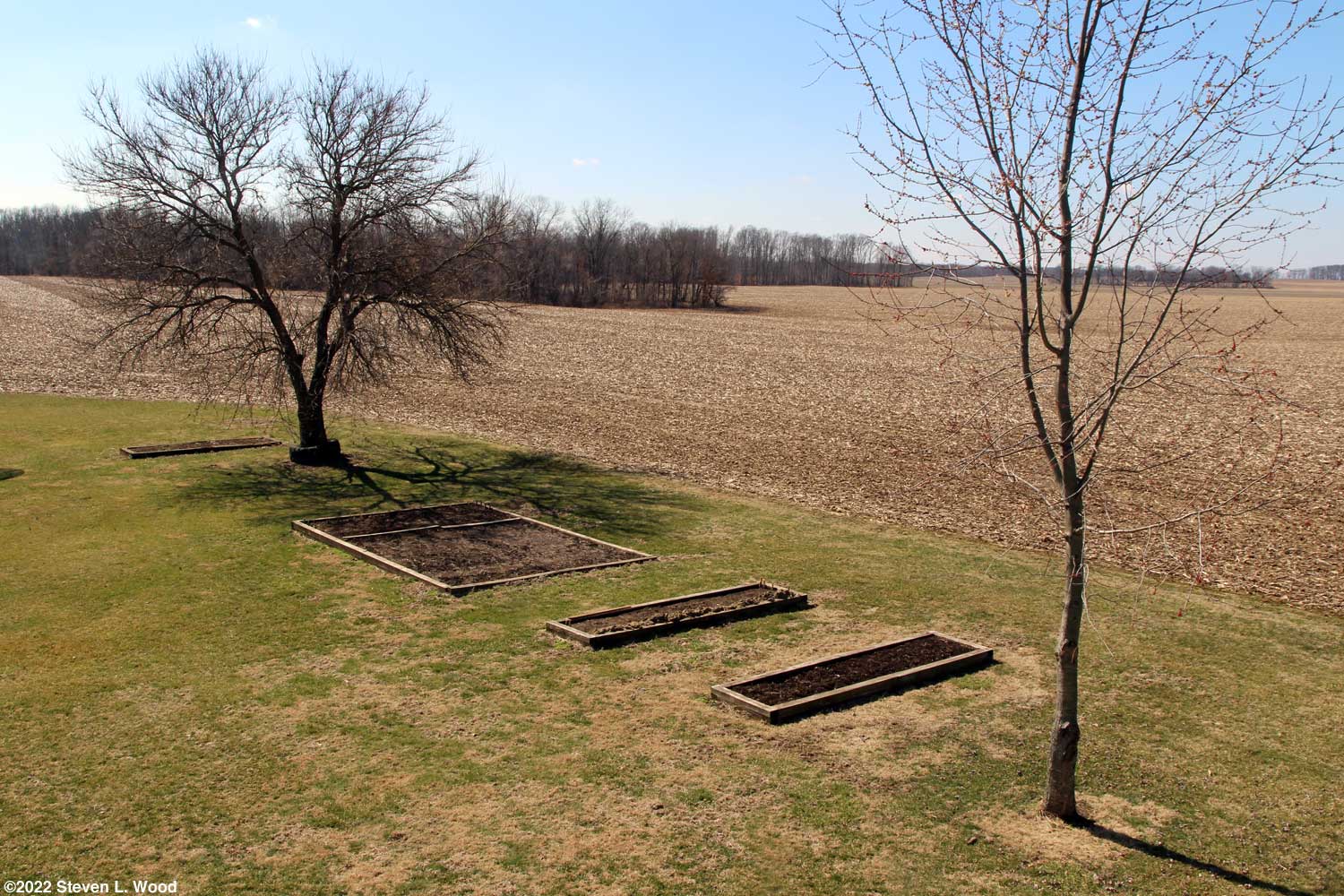
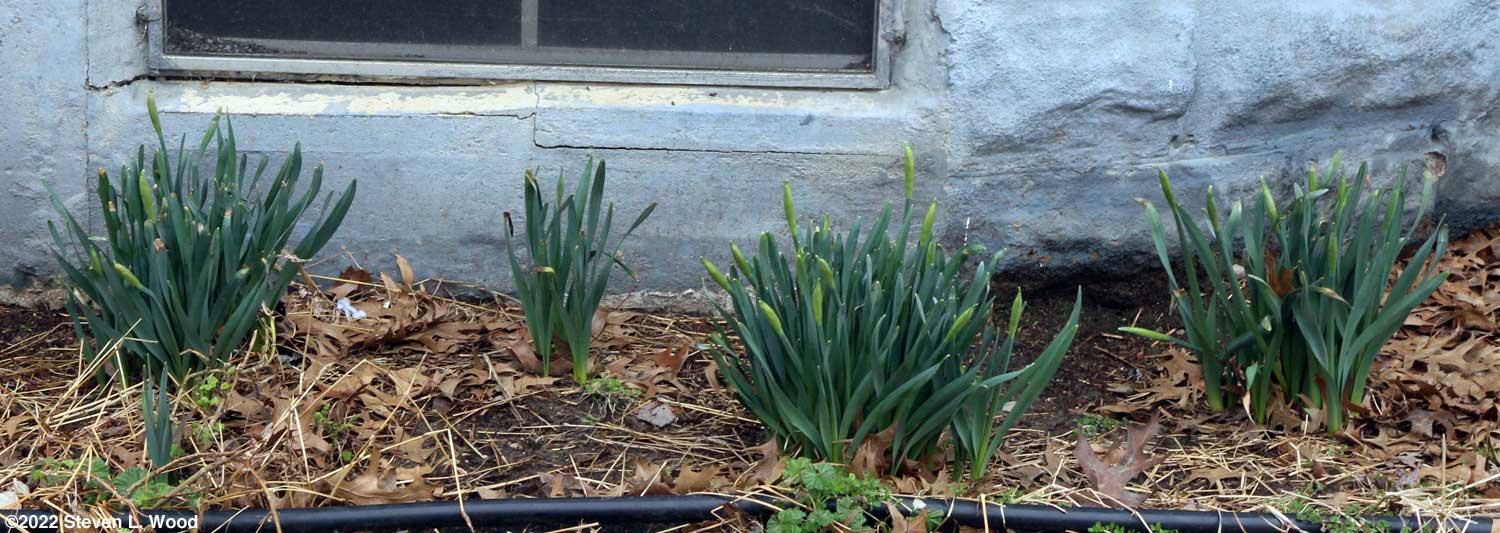
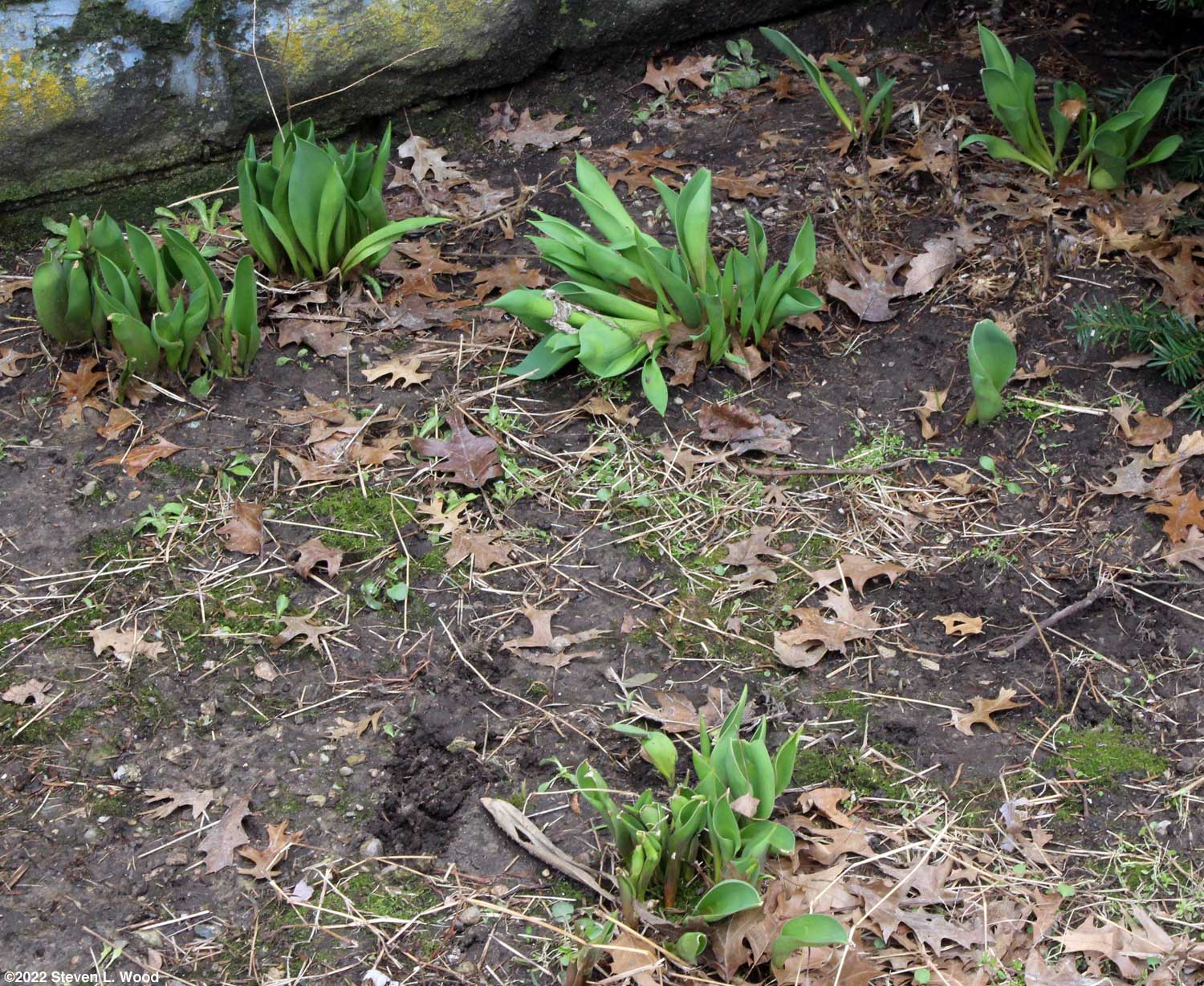
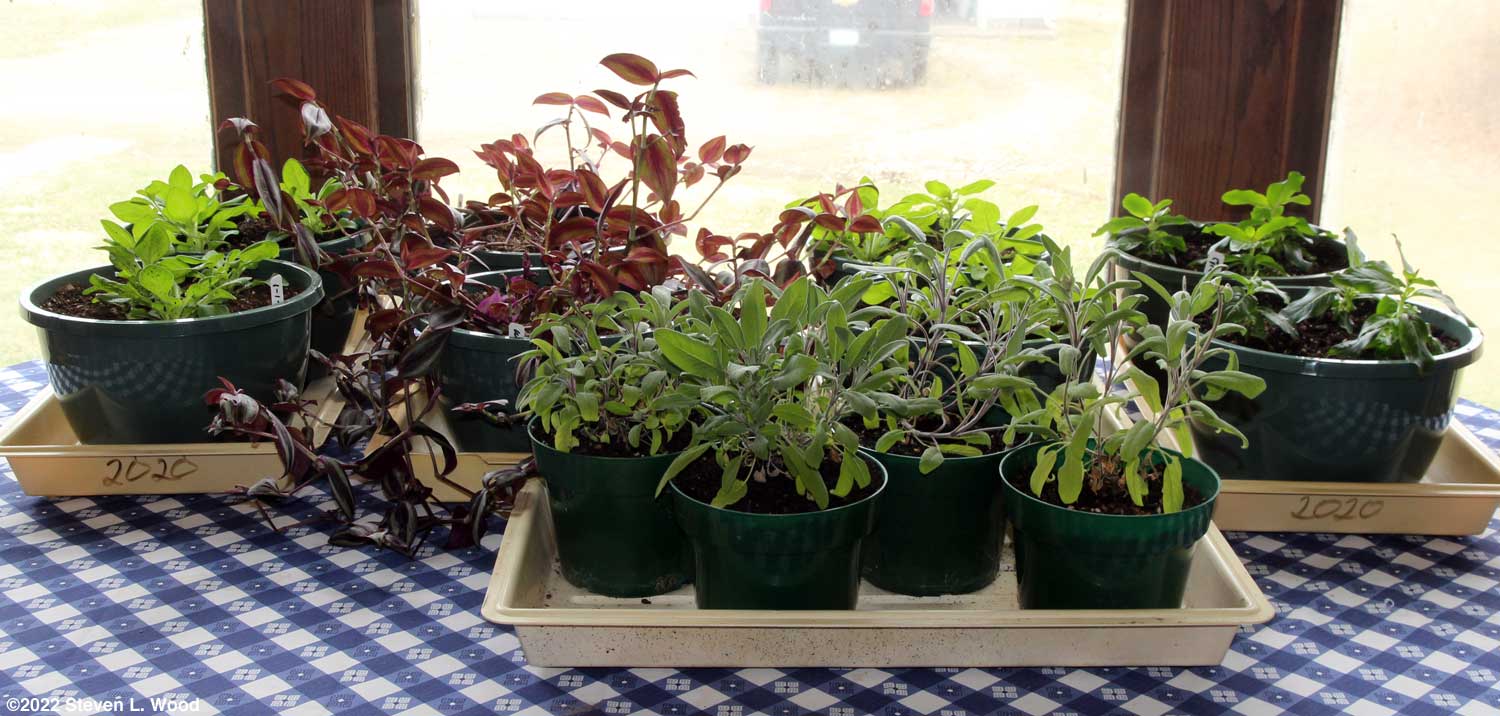
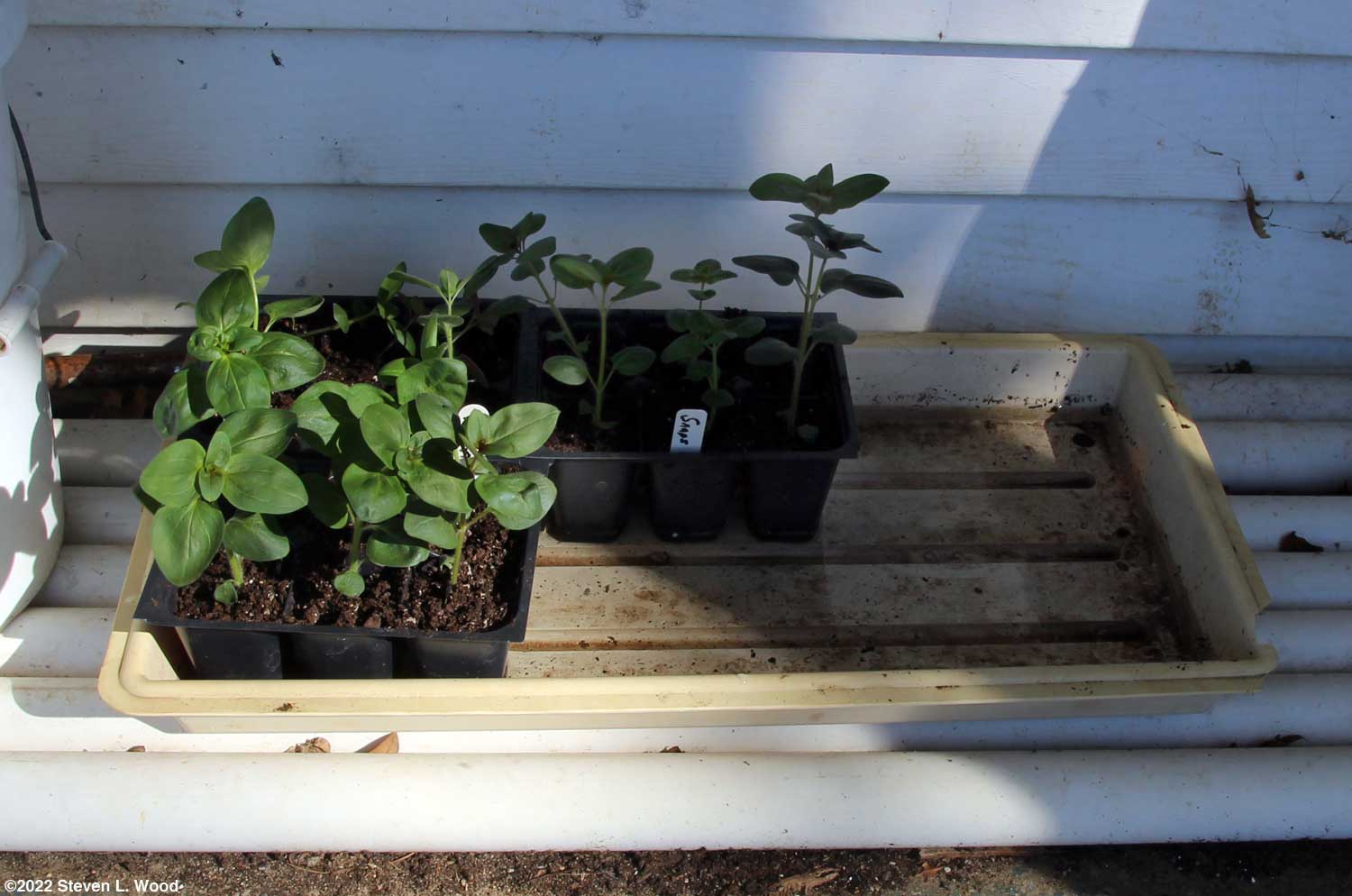
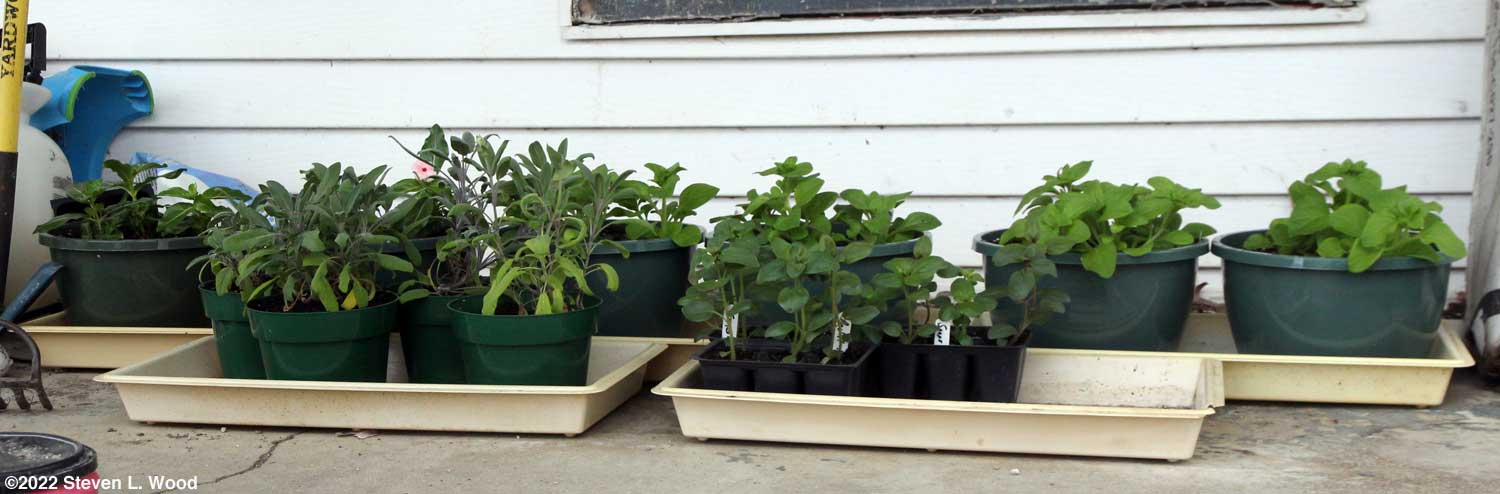
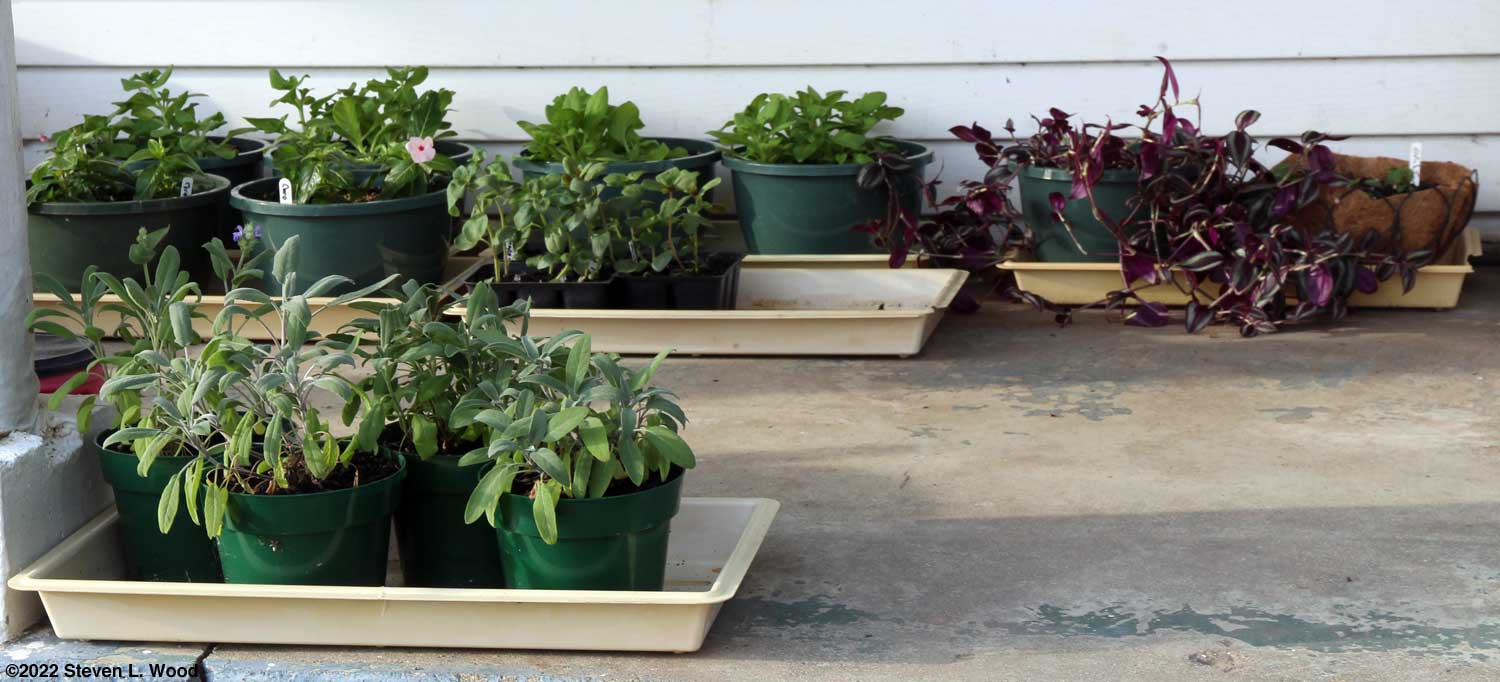
Wow! We're starting off March with a gloriously sunny 66° F day! And it appears that we'll have some moderate weather for the next week or so. I'm trying not to get ahead of myself. While this weather is great, we've frequently had a hard freeze or even snow around March 24-25! Even with some cold mornings in our forecast, I moved four very healthy sage plants from our sunroom to a protected area of our back porch. They should do well hardening off there before being used as corner markers for our large East Garden plot. Not wanting to waste a nice day, I trimmed a rose bush and worked on cleaning up our flowerbeds this afternoon. While I'd previously noticed daffodils up in one bed, I found some tulips up in another.
|
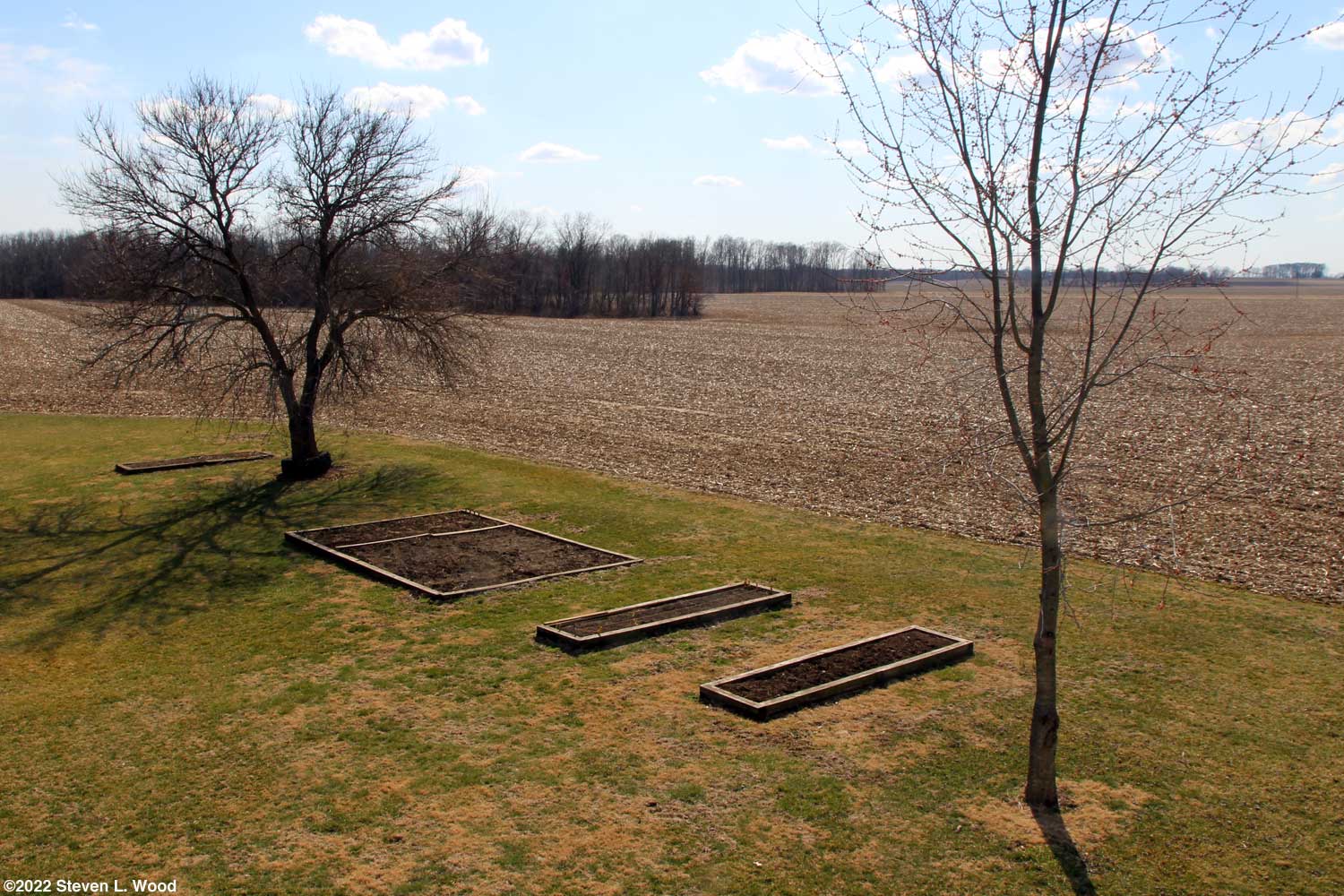
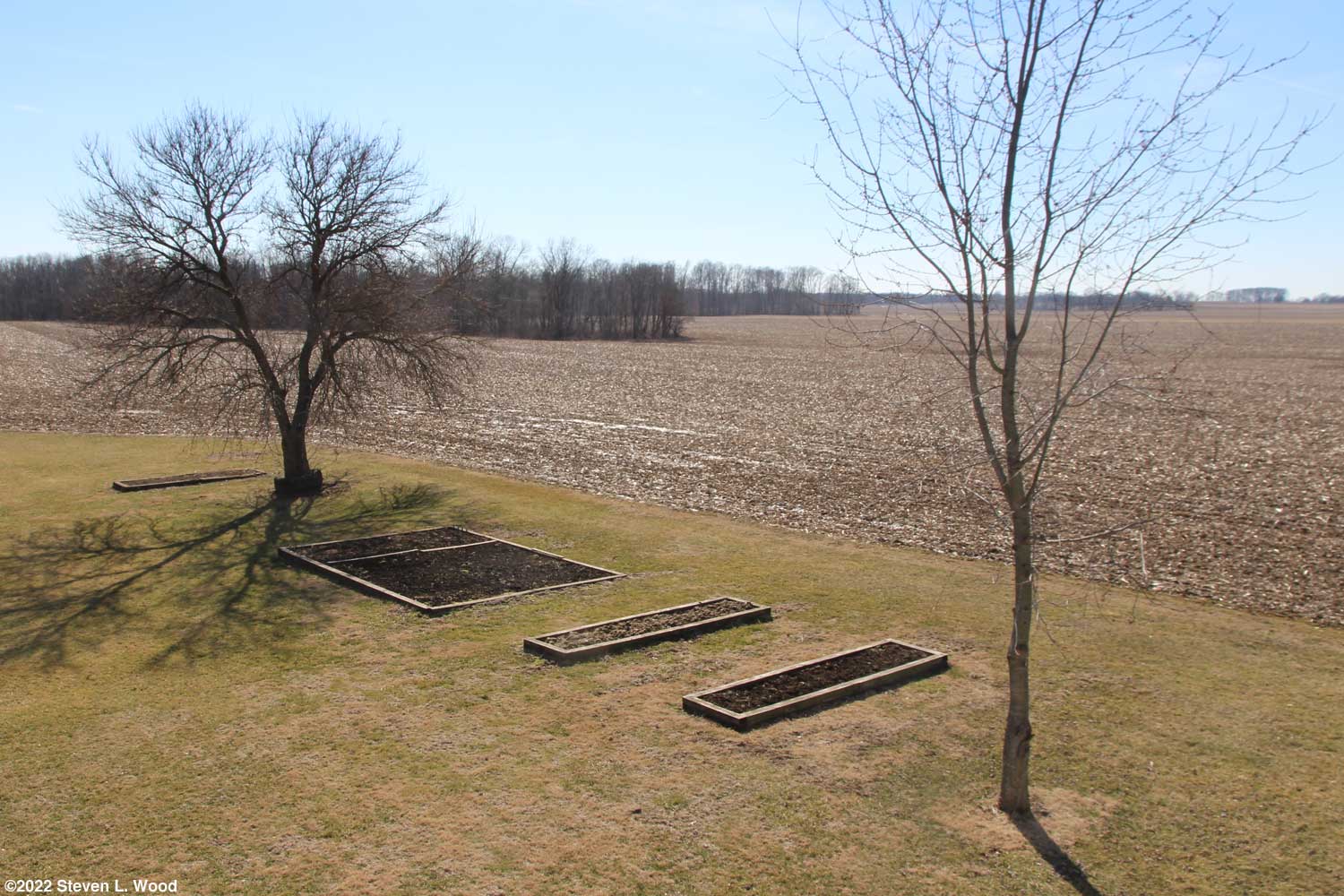


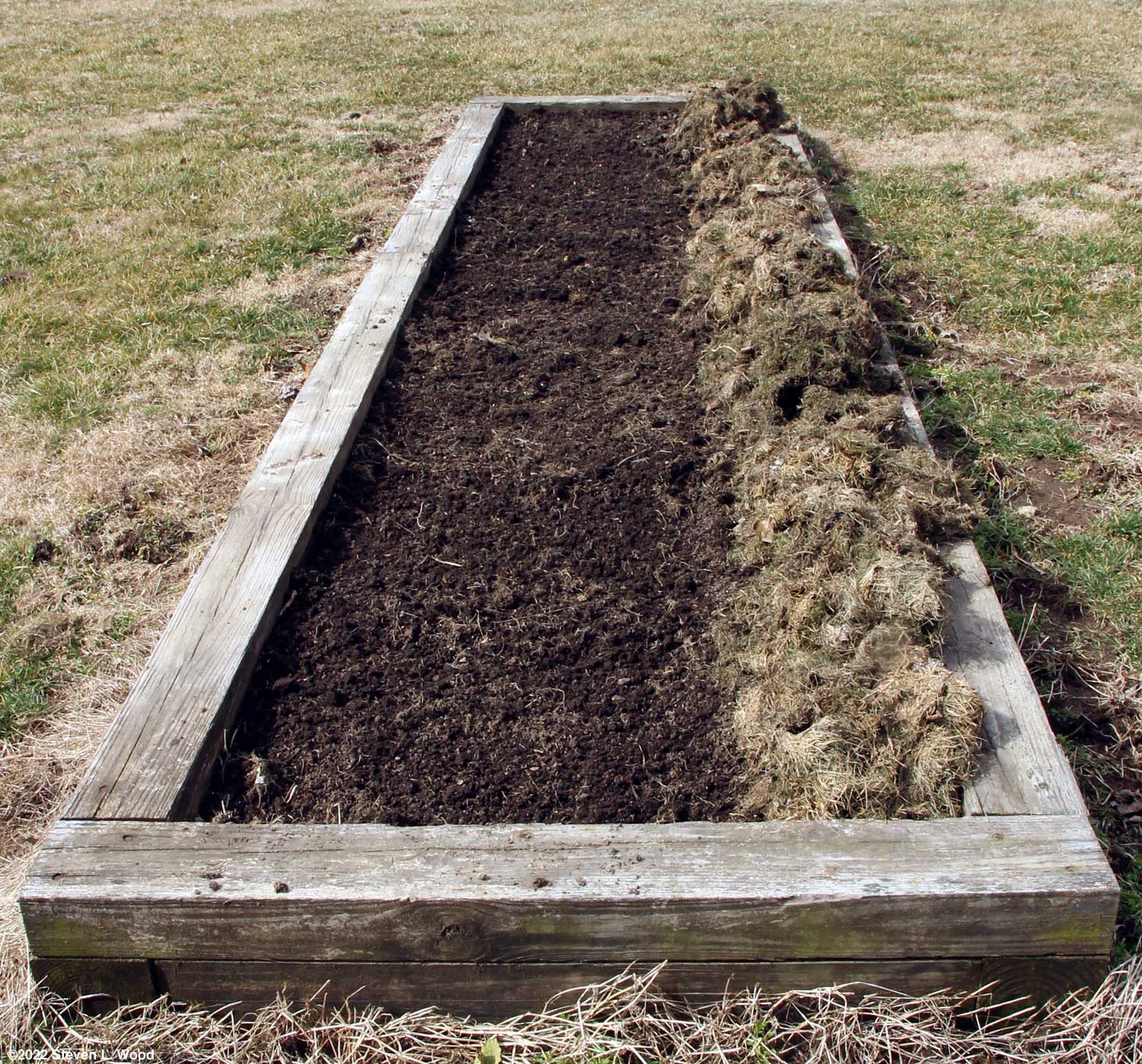
Wednesday, March 2, 2022 - Winter Weeds
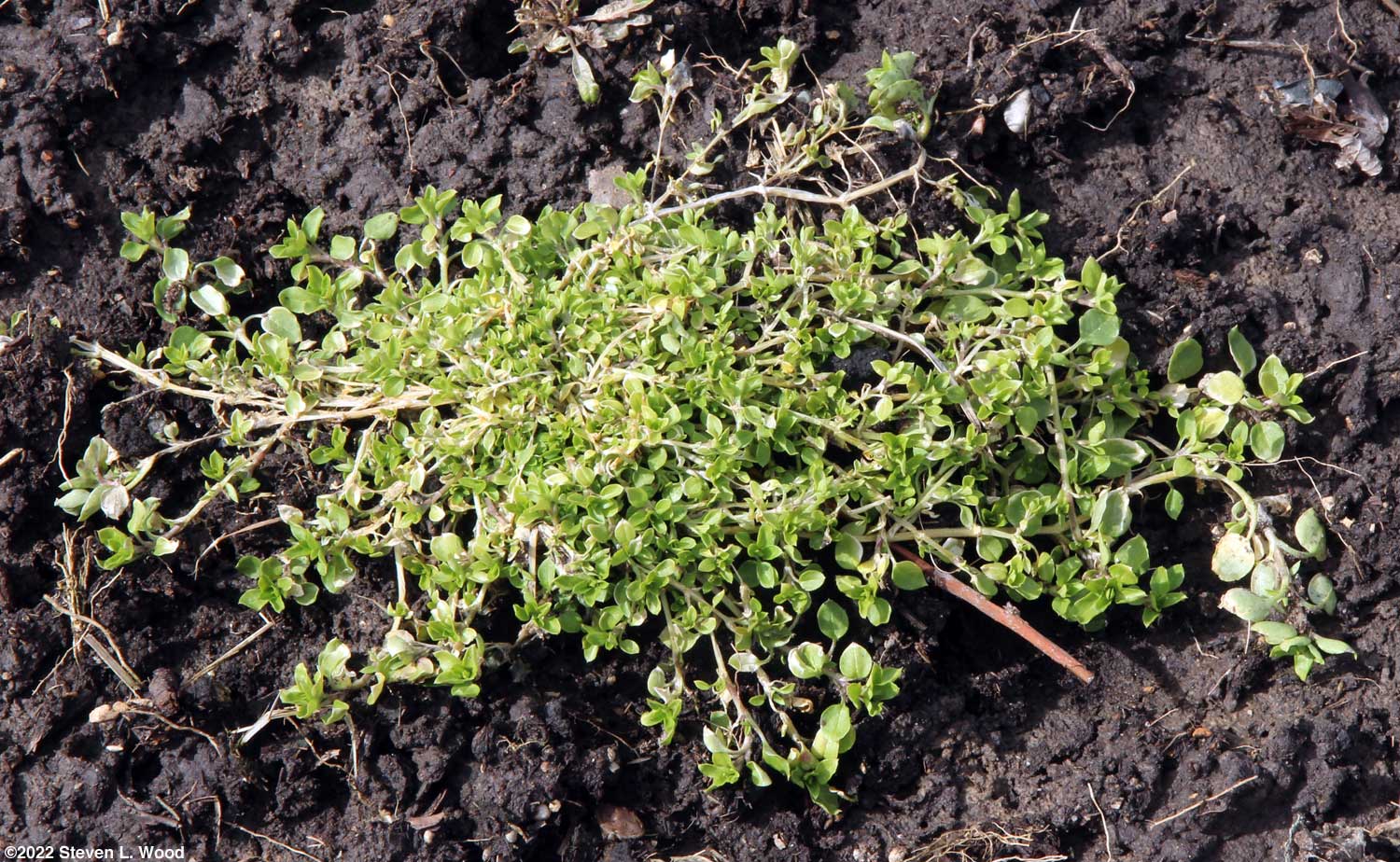
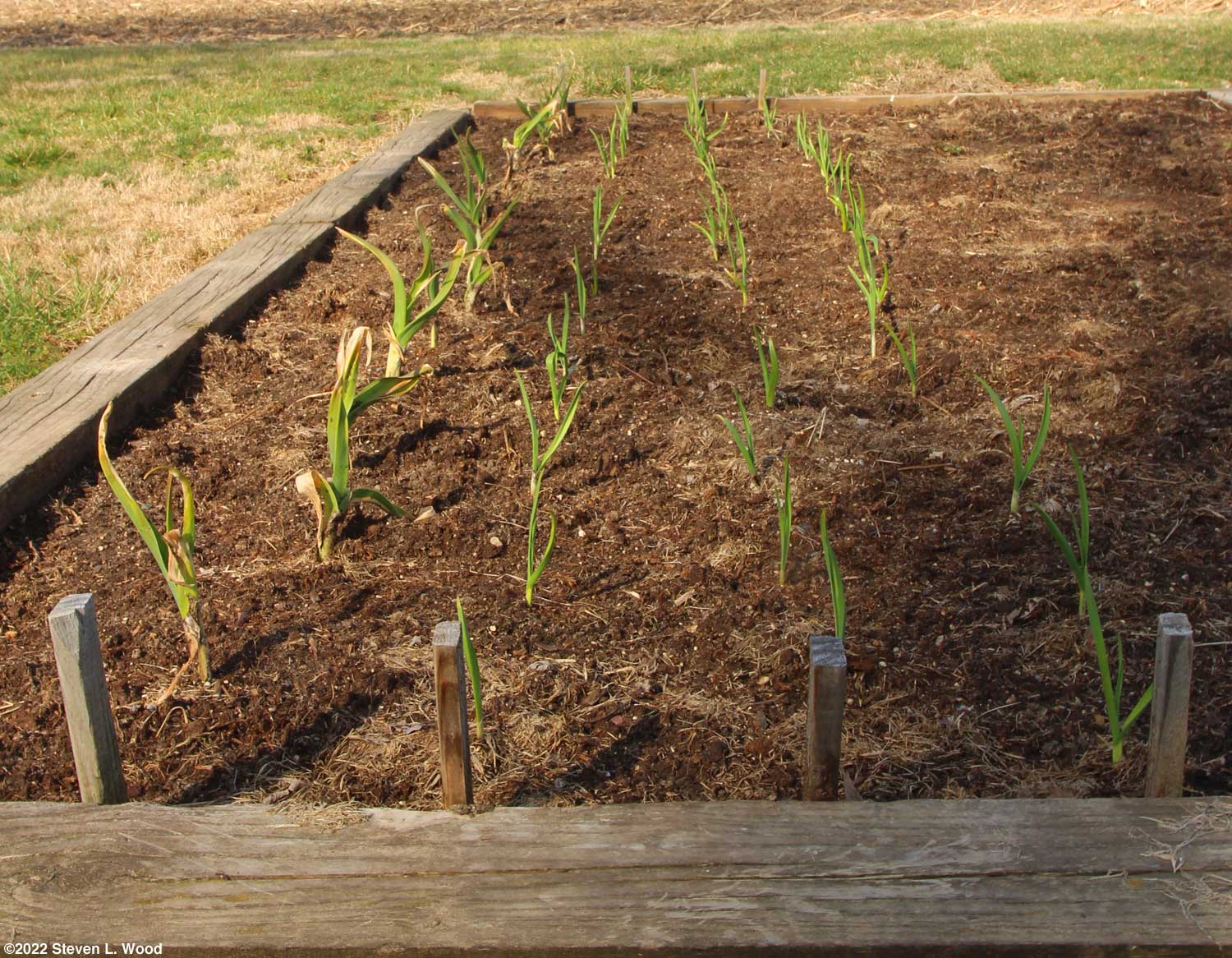
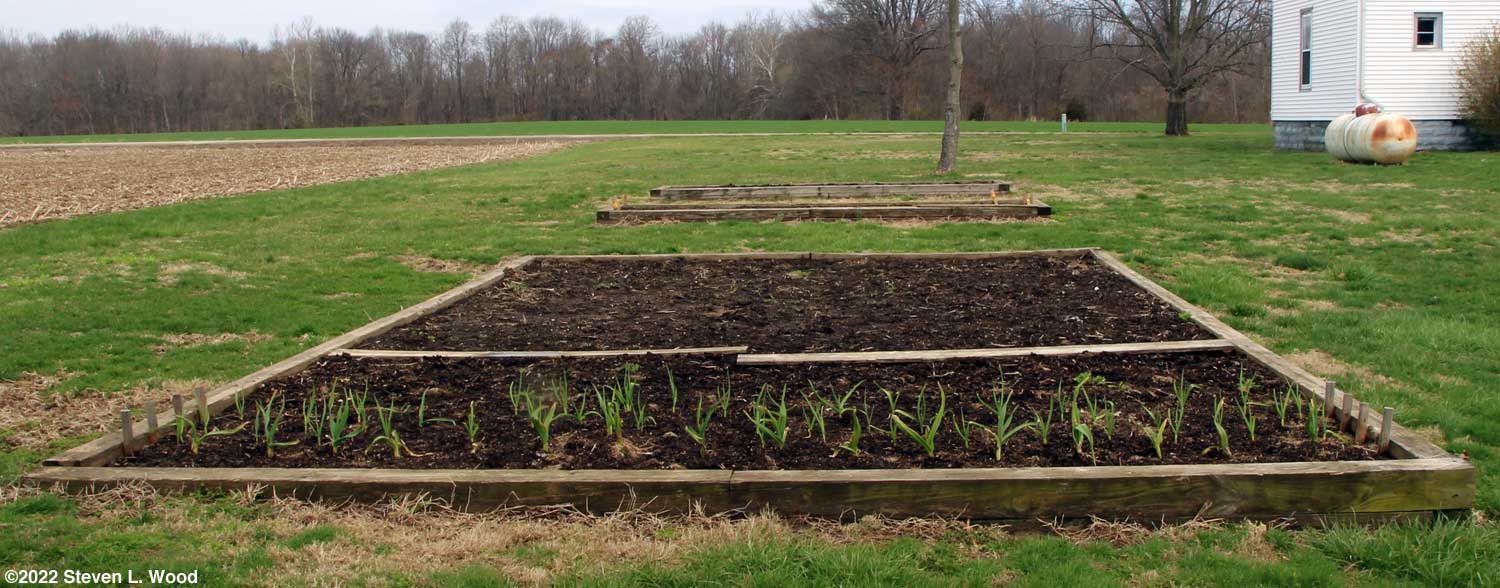
I moved on to our garlic area. It had some holes in it, possibly from a snake, but more likely from moles. I spread some Milky Spore over the bed discourage the moles and some Repels All to discourage our cats and dogs from digging in the bed. While all of our elephant garlic have been up since December, our regular garlic is finally emerging. The rows aren't full as yet, but I'm hopeful. Getting back to those winter weeds, I pulled a lot of chickweed from our raised beds, possibly some bittercress, and a few henbit. I've linked to several articles about winter weeds. It's important to get those weeds pulled early, as some (chickweed) go to seed pretty quickly.
Compost Pile(s)
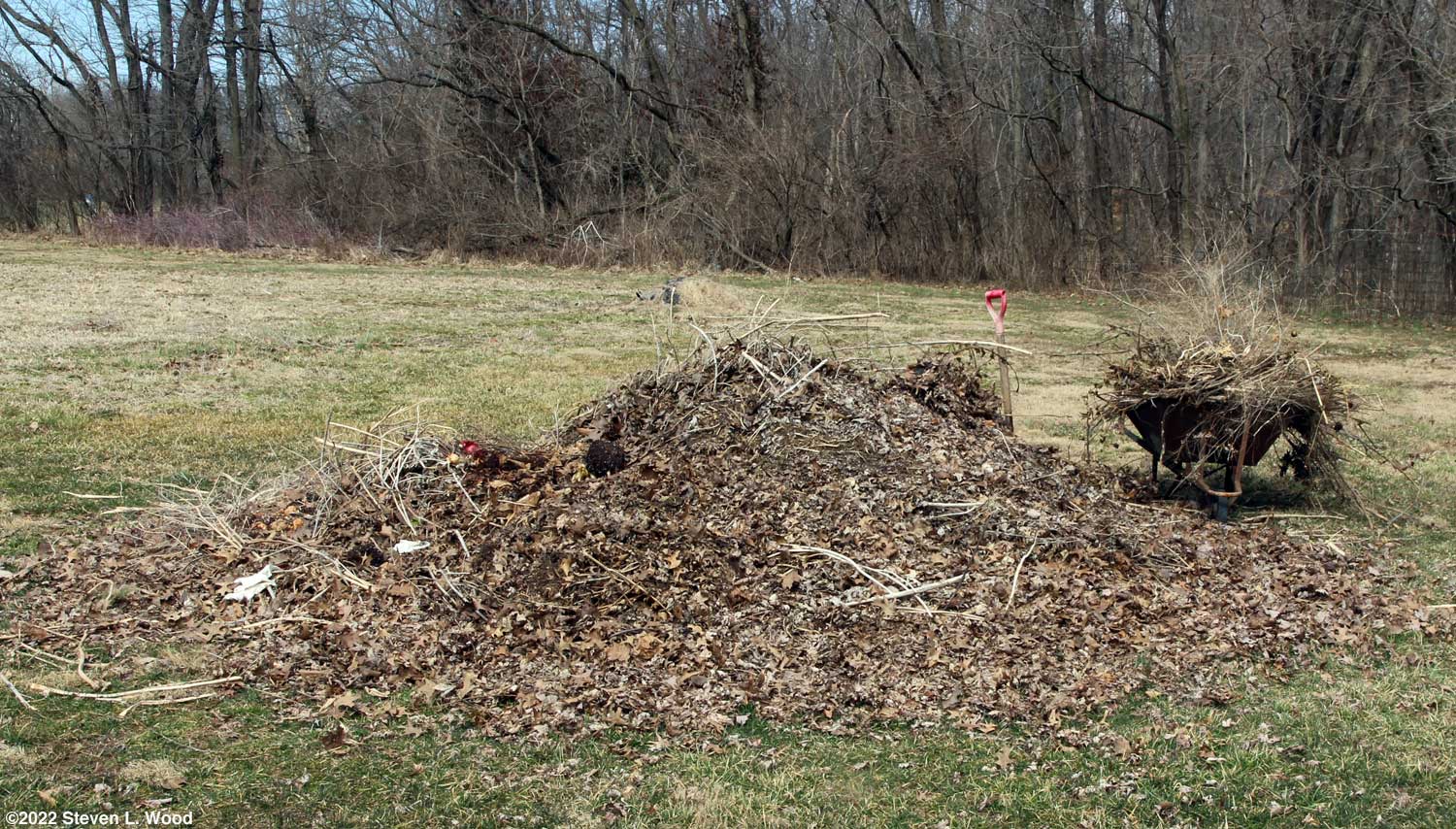
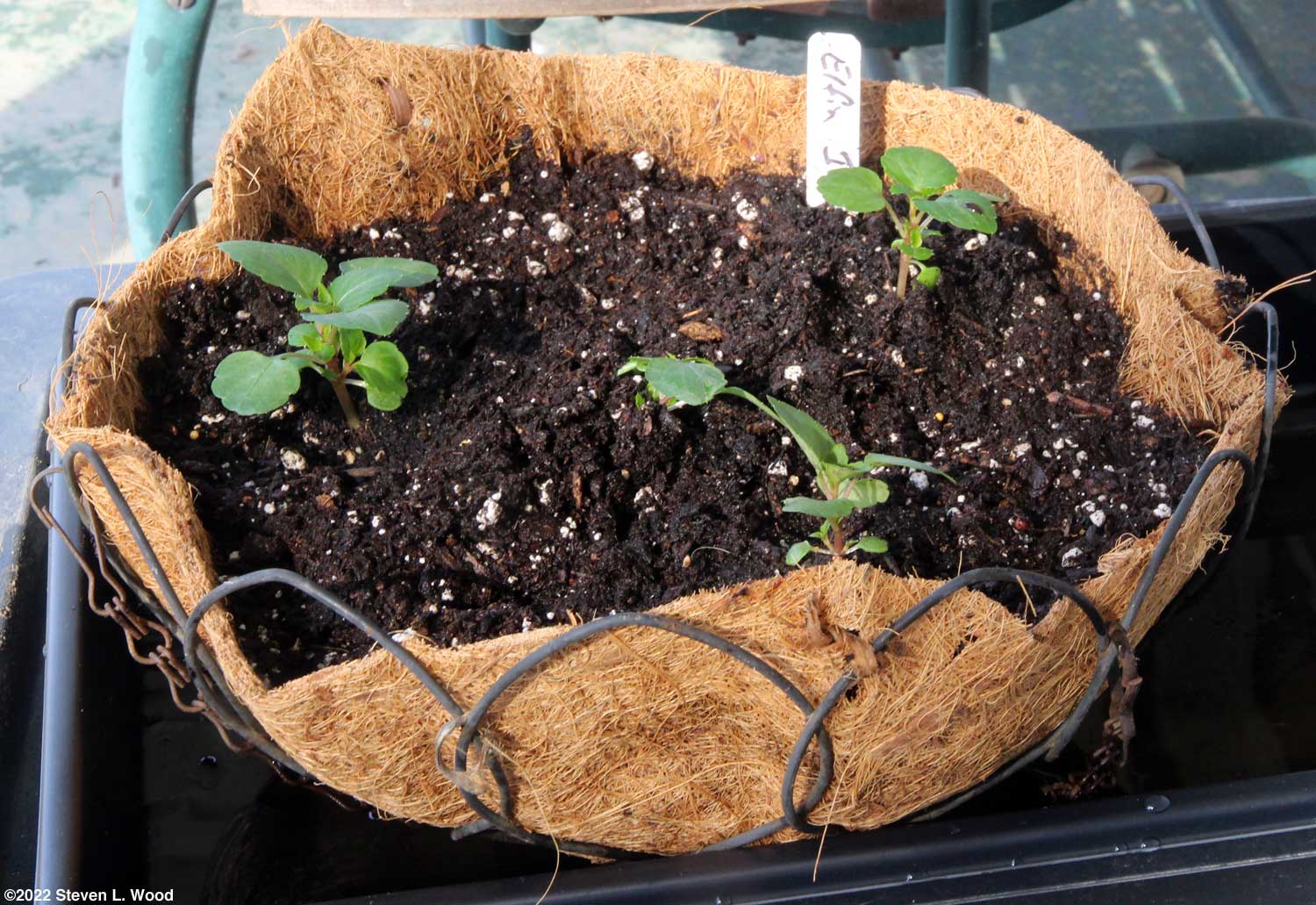
In a couple of spots, I got down to what looked like compost. But I had to quit moving the pile, as the arthritis in my back said it was time to stop. I did spread some Jerry Baker Compost Tonic over both the old and new piles. I'll eventually get down to some finished compost in the old pile. Most of that compost will go to our asparagus patches. But I found last year that our tomato plants in our East Garden plot really benefitted from a shovelful of compost mixed into the soil at planting time. Petunias for Hanging Baskets Some of the petunias I started in egg cartons in January got moved to their final pots today. I transplanted three plants each to four ten inch hanging basket pots. Two of the pots went to Double Cascade petunias while another two got Supercascades.
I'd made a trip to our local gardening center, Colonial Landscaping and Garden Shop, to pick up potting soil. Since I had some Miracle Gro Lite potting mix on hand, I made the transplanting a bit of a test. I planted a pot of each variety in Miracle Gro and another in Baccto Lite potting mix. Sat on the Porch It's been a long time, but I again sat on our back porch marveling at the view. It got up to almost seventy degrees today, and sitting on the porch in a light breeze felt like heaven. At 73 years of age, I'm thankful for each day and such experiences our good Lord grants me. Hummingbird Supplies When I selected an ad for today's posting, hummingbird supplies was a natural choice. We won't hang any of our feeders until next month. The first of "our hummingbirds" usually arrive around April 24-25. But if you're planning on feeding the tiny, interesting birds for the first time, now would be a good time to order a feeder or two. Do skip the red nectars sold online and in stores. The red food coloring does nothing good for the birds. Instead, mix granulated sugar in water in a 1:4 ratio. The hummingbirds will love it.
After two really nice days with temperatures in the upper 60s, it's a good bit colder outside today. And the overnight/morning low will be below freezing. Even though it stays a bit warmer close to the house than ambient temperatures, I brought the hanging baskets of petunias I transplanted yesterday back inside.
These plants will undoubtedly be in and out over the next few weeks as our March weather fluctuates. While the ground is still a bit too cold for planting peas and spinach, I did start soaking some of our saved Abundant Bloomsdale spinach seed today. The spinach seed we save always seems to turn out to be hard seed. But with a good soaking, it should germinate well. I won't soak the pea seed until just a couple of hours before I seed it. While some sources suggest soaking pea seed for up to twenty-four hours before planting, I get split peas when I soak pea seed that long. Another Seed Library and their Seed Swap I had a pleasant conversation this afternoon with the Monroe County Public Library's Maggie Hutt. Along with her other duties, I think she's currently functioning as their seed librarian. I'd written offering free seed, and Maggie got back to me yesterday. They're gearing up for a Seed Swap on March 19, 2022, from 2:00 to 5:00 PM at their 303 E. Kirkwood Avenue, Bloomington, Indiana location. I'll be sharing around forty packets of our favorite seed varieties with them for the library and seed swap. If you live in the area and are interested, the seed is free. Of course, the ask is that folks receiving seed save seed and return some of it to the library for other gardeners.
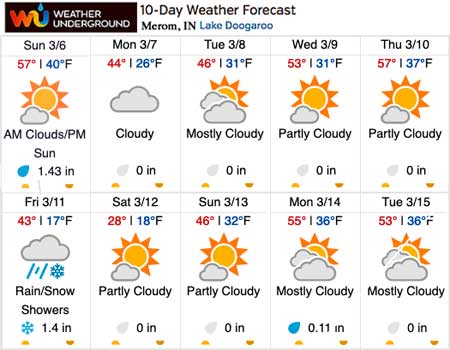
While I've been working toward getting our early peas planted this week or next, our extended weather forecast has deterred me. We'll have a streak of freezing mornings next week, one predicted as low as 17° F. I checked my records and saw that our early peas didn't get planted last year until March 27, and we still got a great crop. So I'll wait a bit on planting peas. Since I'd soaked some Abundant Bloomsdale spinach seed, I went ahead and seeded it today. For small seed like spinach, I use an old one inch board to make a shallow furrow for the planting. I went down the row spacing the seeds 1-2" apart. When I reached the end of the row, I still had a few seeds left that had been soaked, so I spread them in the furrow. With this seeding, contributions to seed libraries, and a couple of orders, I'm now down to just enough 2021 Abundant Bloomsdale seed to re-plant if necessary, or a fall planting. So, I've closed off orders for that variety on the Grassroots Seed Network and the Seed Savers Exchange. I still have lots of seed saved in 2020 and earlier years, just in case I need it.
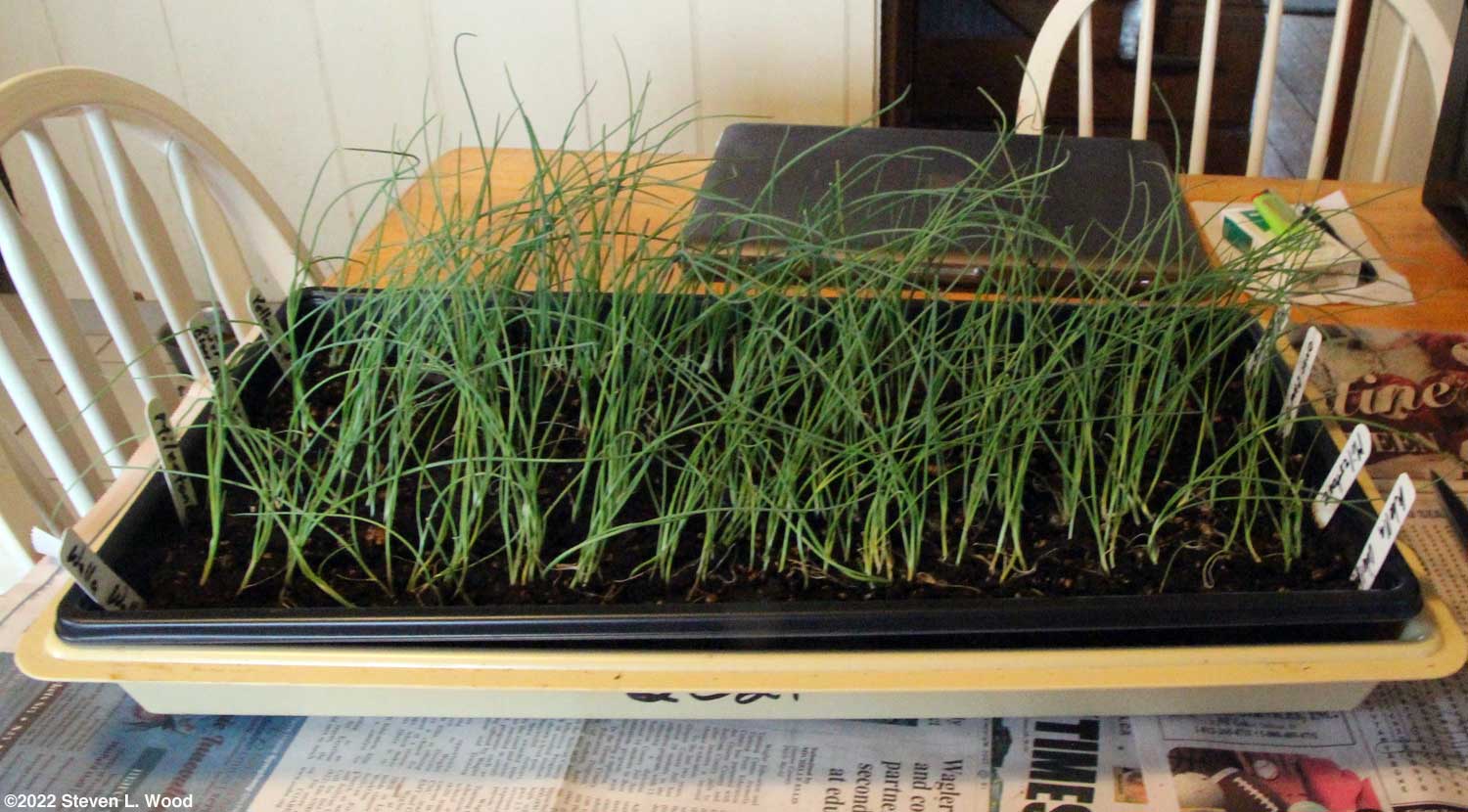
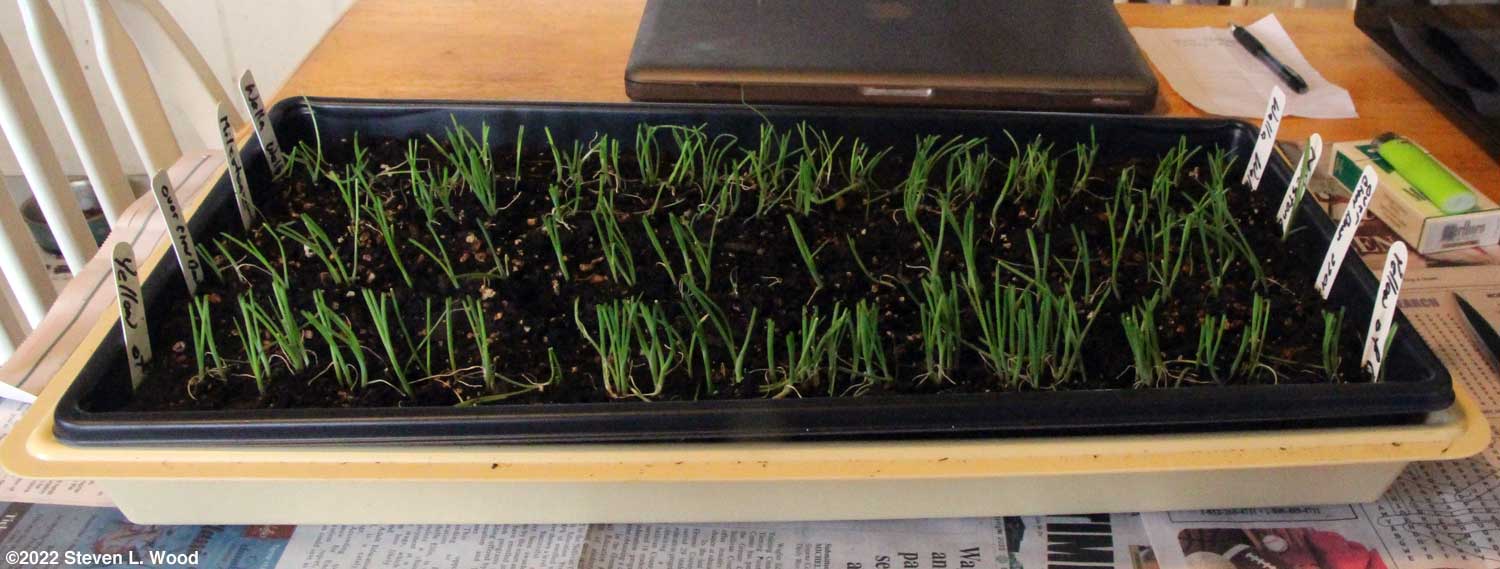
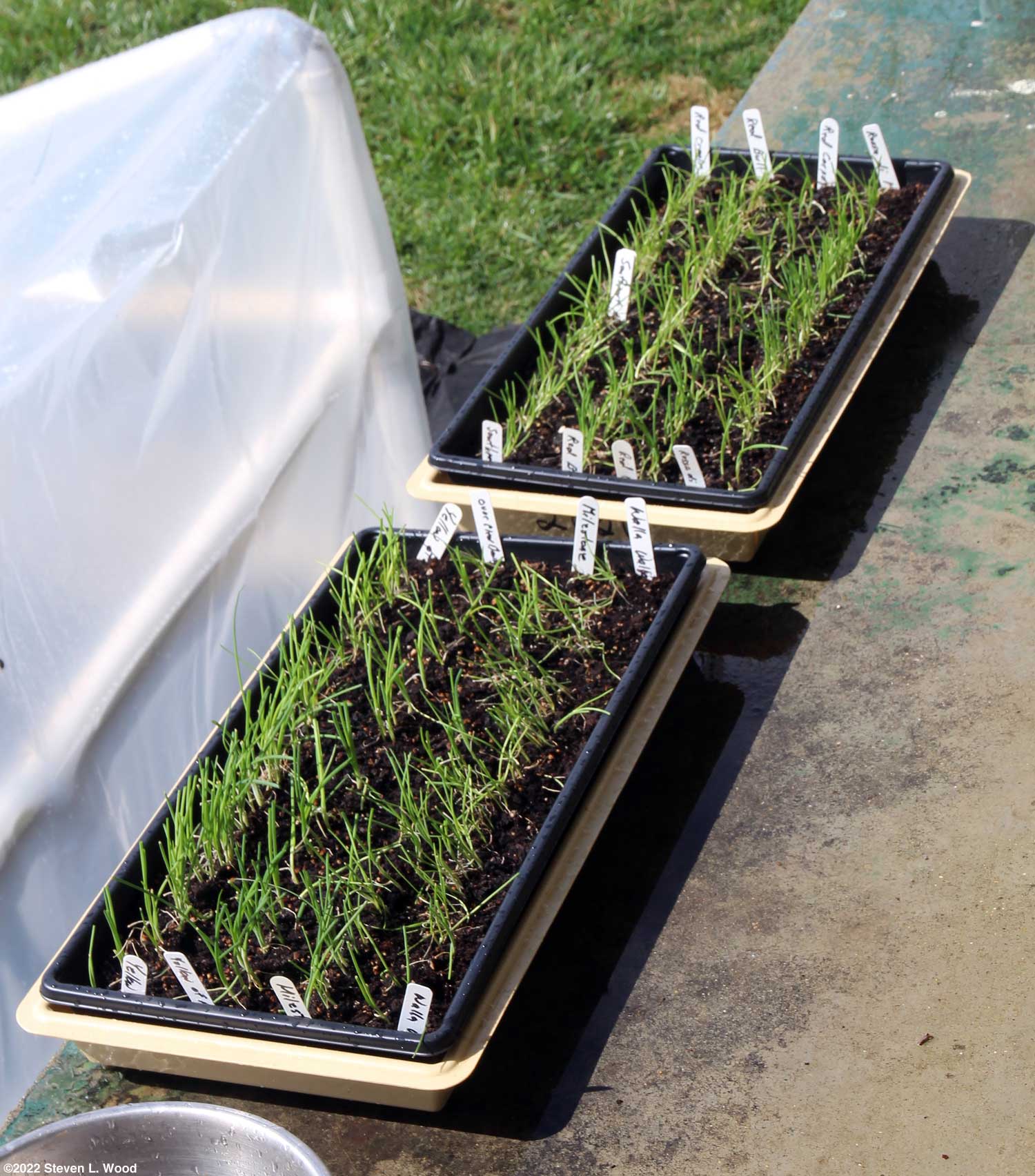
Our trays of onions were ready for their second trimming today. They will probably require one more trimming before they get transplanted early next month.
The new cold frame will be our third here at the Senior Garden. The first one I built with a pressure treated wood frame in 2008 rotted out after seven years. So in 2015, I went with a frame made of PVC pipe. It was much lighter to move around, but that proved to be its downfall, as the strong winds we have here got under it and blew it away repeatedly. I kept it together with lots of duct tape, but it's now broken beyond repair. Hopefully, my past experiences will guide me to engineering a better cold frame. The new one won't be quite as tall as the old PVC frame and I'll better weight the bottom pipes by partially filling them with concrete.
While I like the Cora Cascade variety of vinca for hanging baskets, I started some Pacifica and Pacifica XP to go into our garden. Vincas take a long time to develop, but when they do, they're beautiful in a garden or flowerbed. Working in our basement plant room, I thinned our cauliflower and lettuce transplants to one plant per cell. I had more plants to uppot from their communal pots, but ran out of sterilized potting mix.
I still have five or six geraniums under lights in our plant room that were too small for the rigors of life in our sunroom.
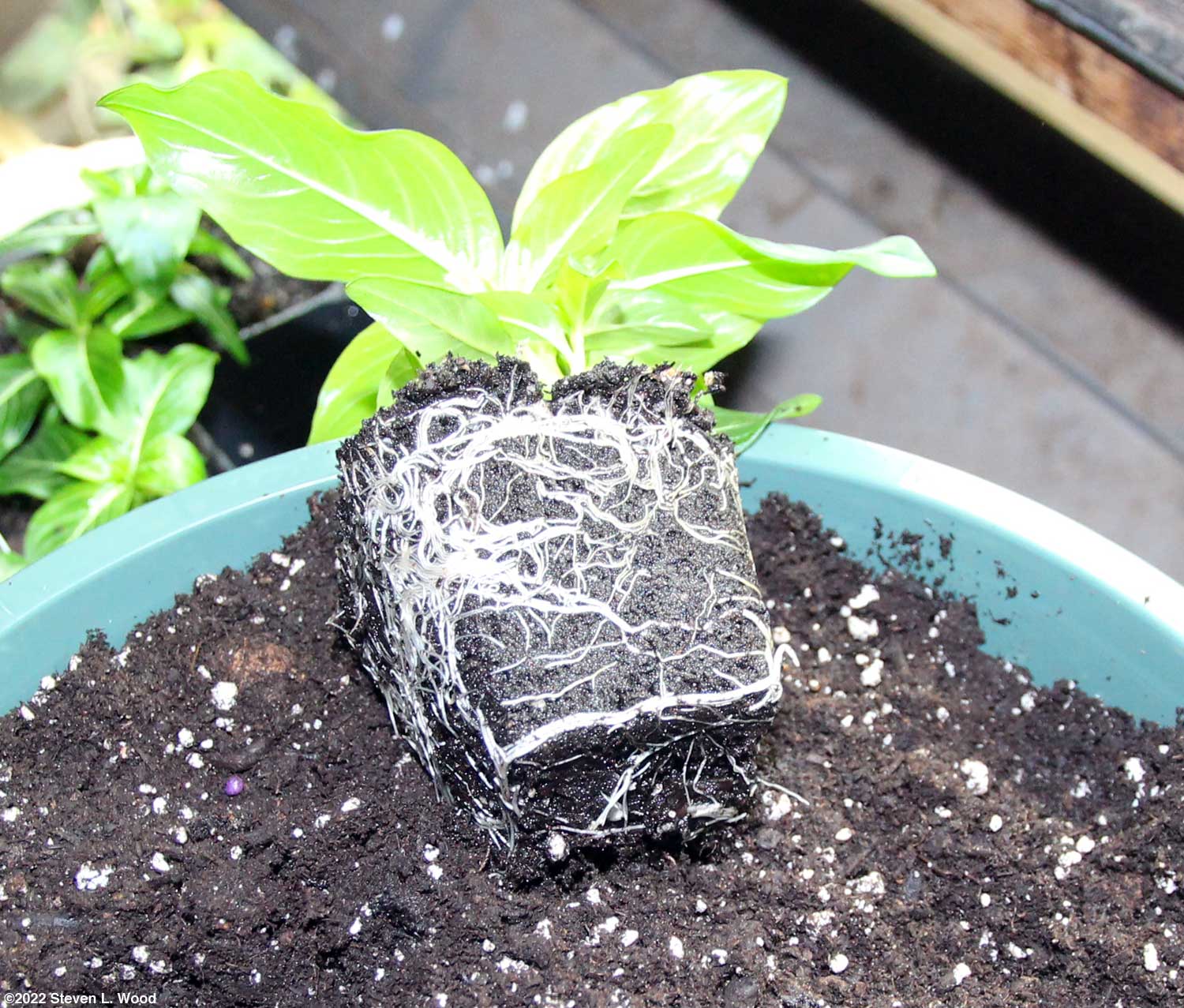
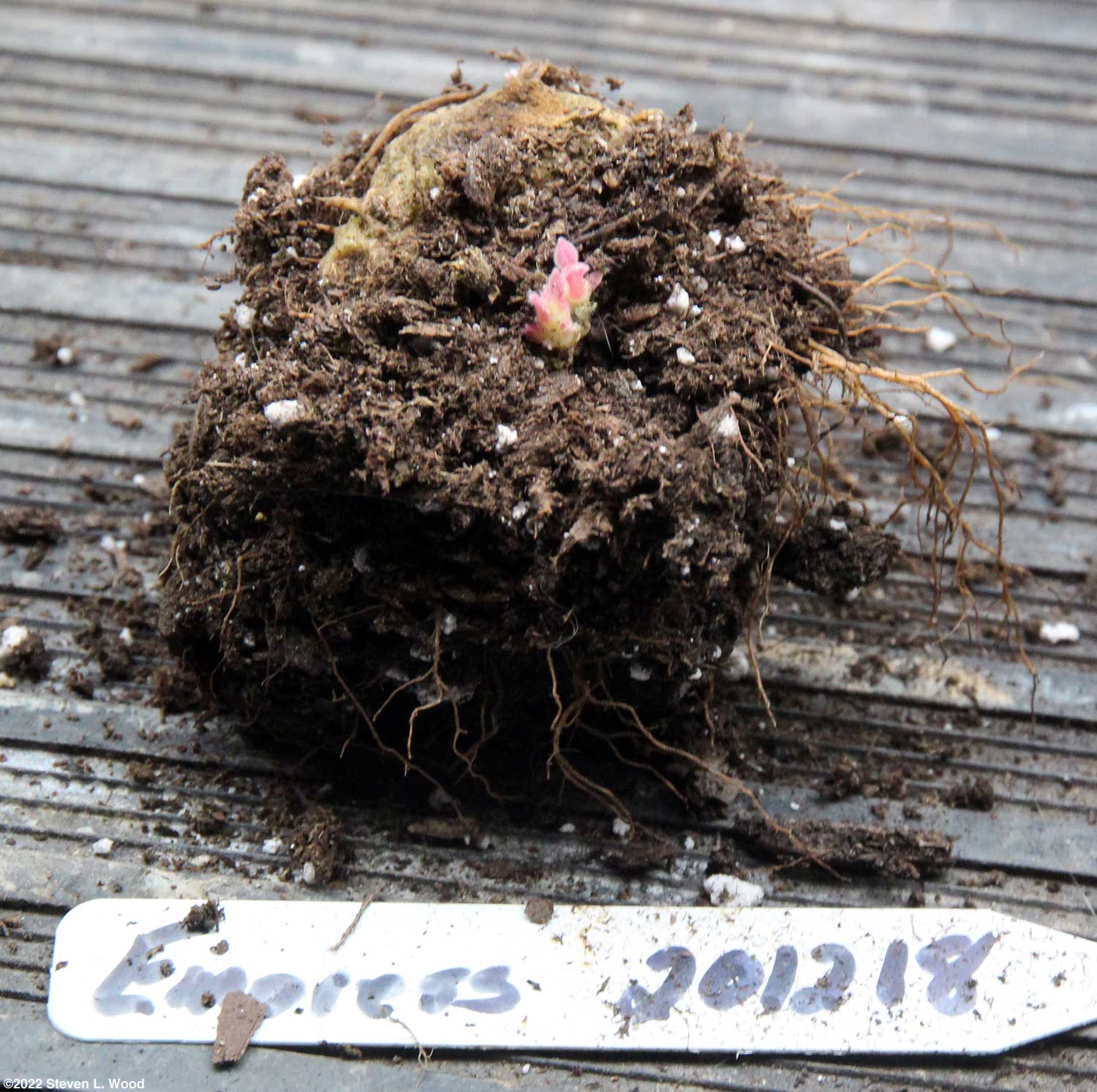
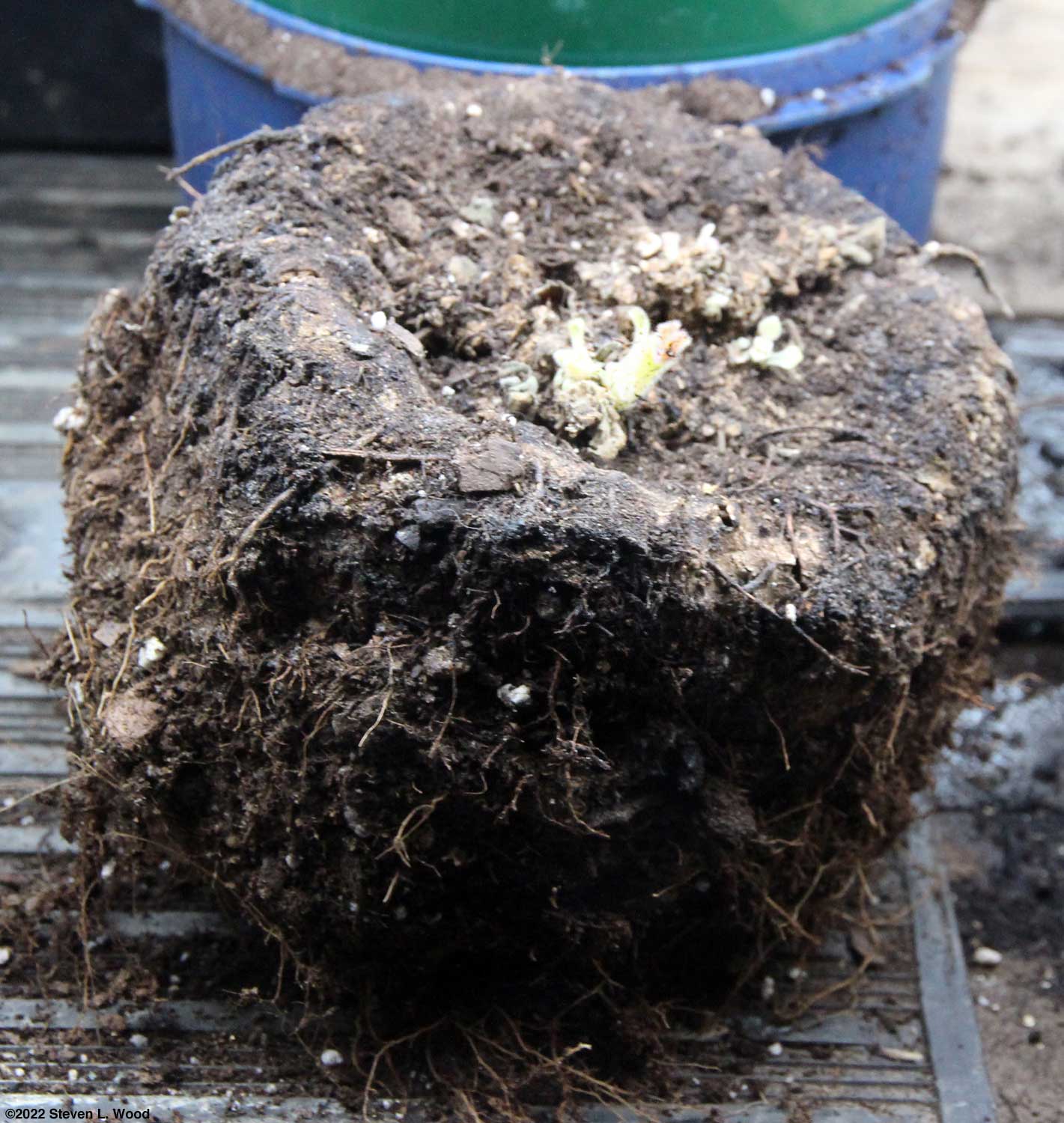
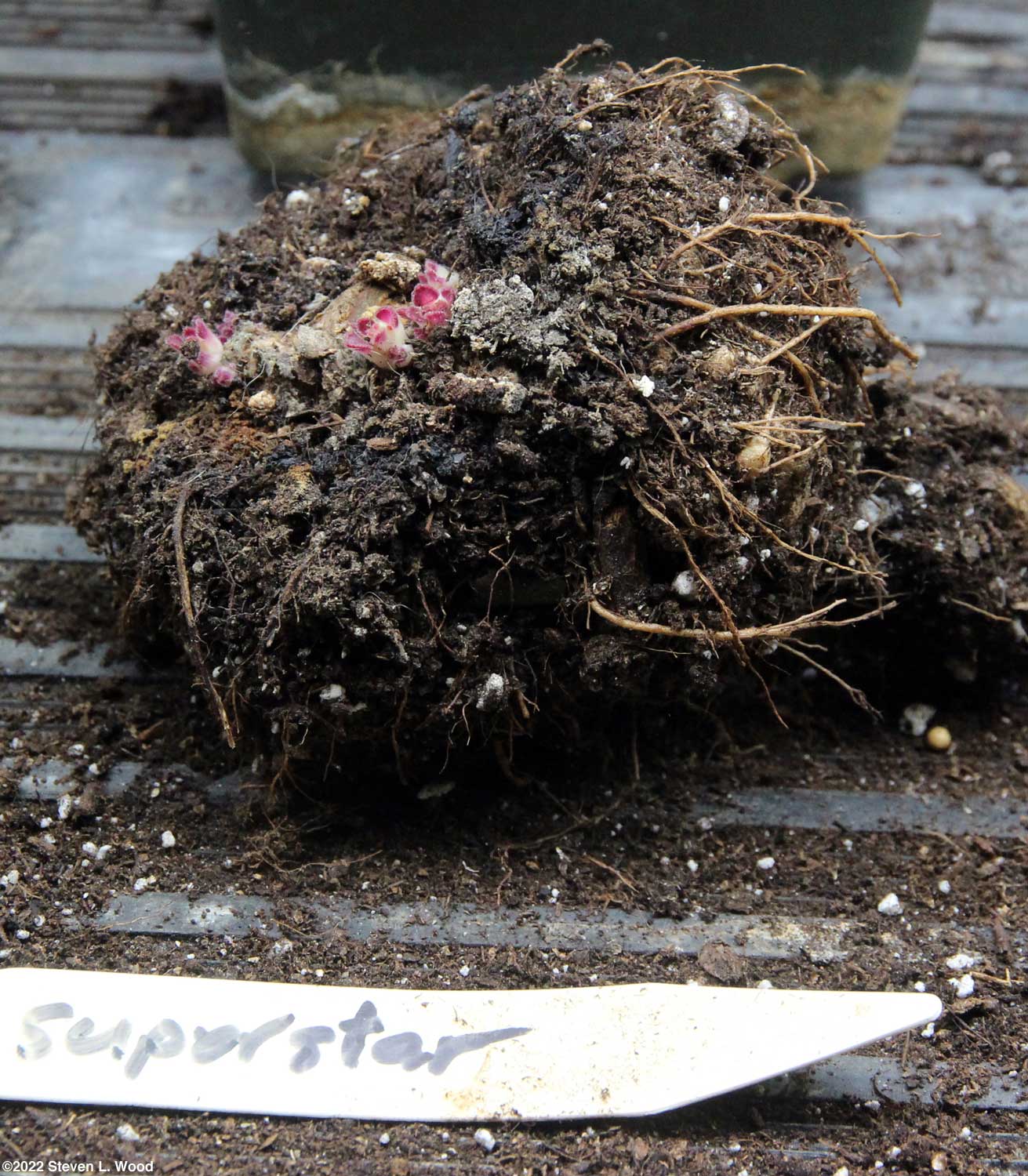
Tuesday, March 8, 2022 - Gloxinias Emerging from Dormancy I'd planned to uppot some parsley, celery, and snapdragons today along with starting broccoli. But I thought to check our dormant gloxinias on a rack in a dark corner of our plant room. Fourteen plants had broken dormancy and put on fresh growth. So...today became gloxinia day. Gloxinias have to go through a period of dormancy about once a year. The plants fade and begin to do poorly after a blooming cycle or two. When that happens, it's time to quit fertilizing and liberally watering the plants. They begin to have leaves brown and can be cut back to their corm and allowed to rest for several months in a cool, dark area. After one to four months, the corm will begin to put on new growth. Depending on how quickly one finds it, it may be just a tiny white to pink sprout growing from the corm or possibly a stem with leaves. At that point, it's time to repot the gloxinia corm in fresh soil and bottom water its pot.
I invert the pots and usually the gloxinia falls into my hand. I crush off soil from the bottom and sides of the corm that doesn't have roots in it. Typically, our gloxinias don't put roots down over halfway in four or six inch pots. I refill the pot with potting mix and squish the corm into the soil so its top is level with the sides of the pot. A little more potting mix often has to be added around the corm. The trick is to cover the gloxinia roots without smothering the new growth on the corm. The repotted gloxinia goes in a tray under out plant lights and gets thoroughly bottom watered. After several months, the plants come into bloom for another season. Sometimes a plant only blooms once for a month or so. Some plants will go through two blooming cycles a year.
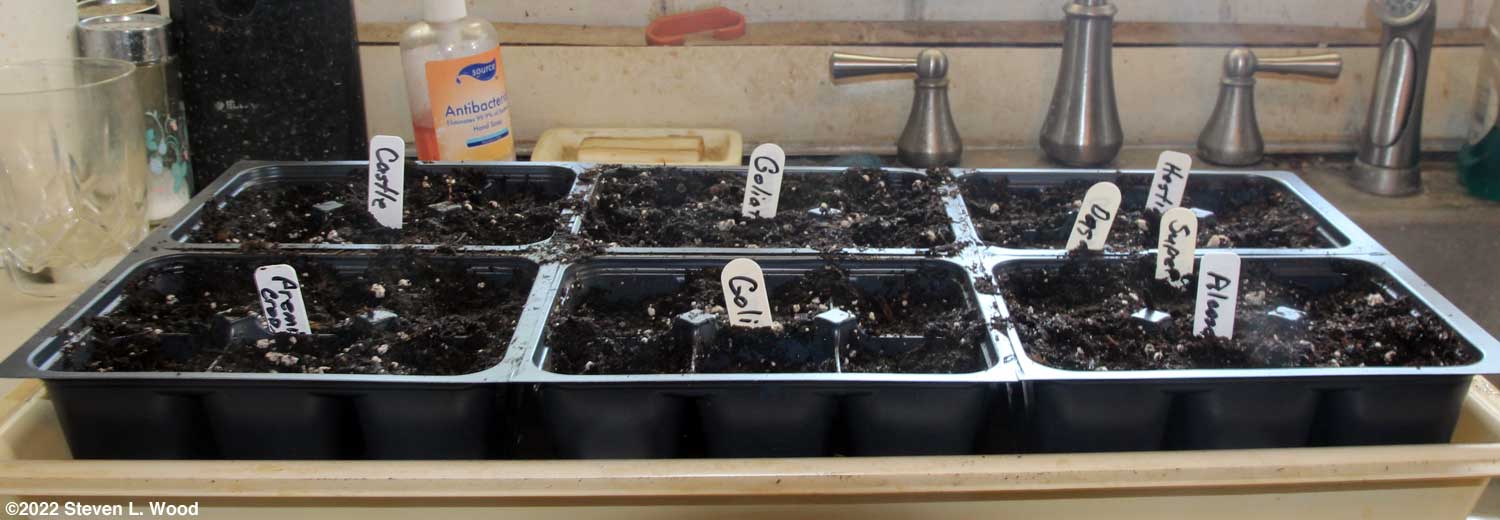
I'm working to preserve the old Stokes Seeds strain of Goliath broccoli. That didn't go so well last year, as critters ate all of our brassicas! And I was pleasantly surprised to see several vendors carrying the excellent Premium Crop broccoli variety again. It had disappeared from seed house offerings for several years other than from Reimer Seeds. I'm guessing some entity has begun producing that seed variety again.
I also started a sixpack of cabbage (Alcosa and Super Red 115) and another of Brussels sprouts (Dagan and Hestia). We haven't had much luck growing Brussels sprouts, but are going to try again. It appears another hybrid variety has returned from the dead. I noticed a couple of outlets offering Red Zeppelin onion plants this year. That onion variety disappeared from seed houses several years ago. It was our favorite red. Seeing Red Zeppelin plants offered, I did a search for Red Zeppelin seed and found that Hazzard's Seed Company had seed for sale. The seed is a bit expensive, and onion seed doesn't store well for over a year, but I bought some anyway. Signs of Spring
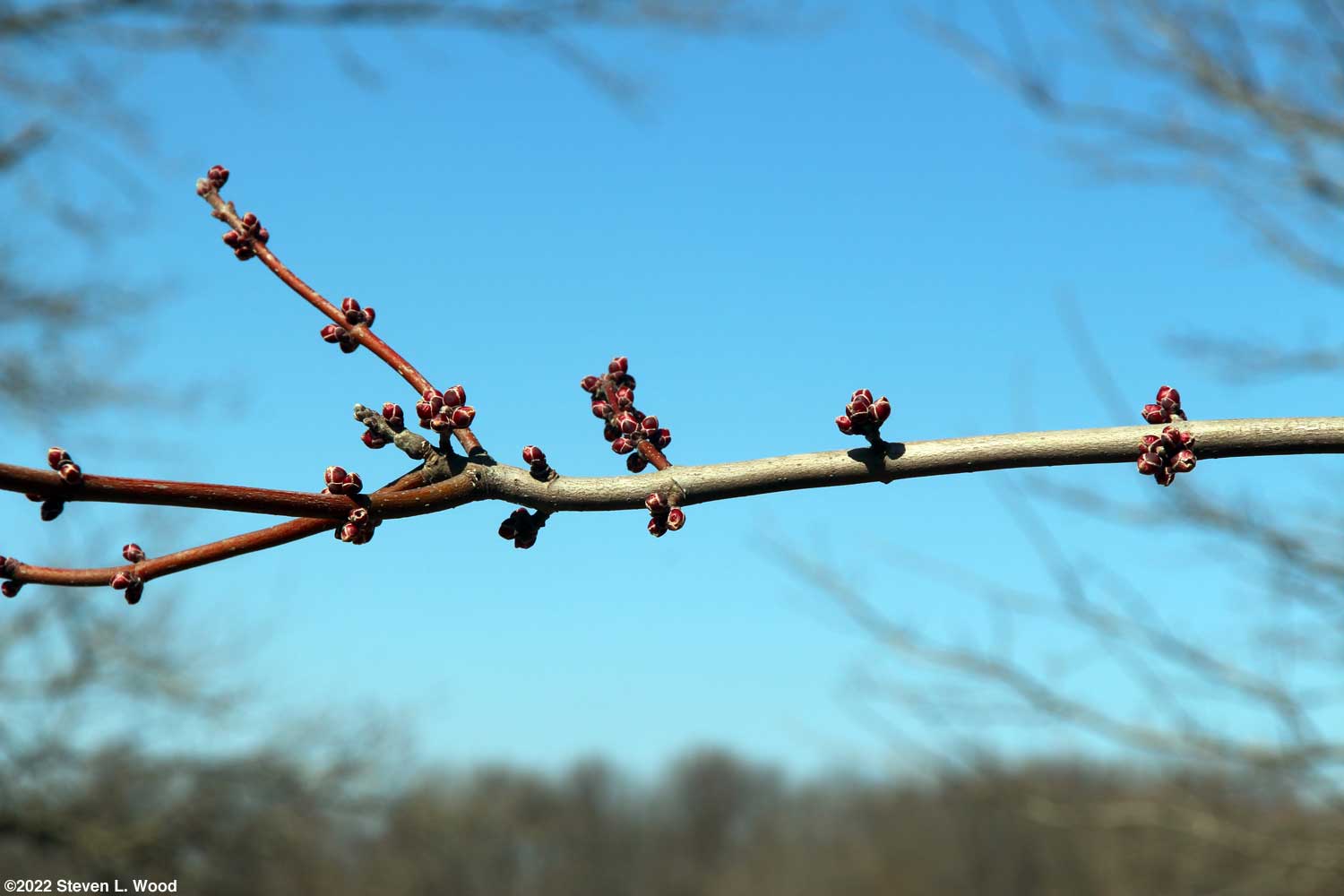
Our one rose bush now has buds on it. It's a bush from one of those miniature rose plants sold as a novelty in stores. I kept ours going and moved it outside about ten years ago. It has rewarded us with lots of lovely blooms year after year. Elsewhere, we have daffodils getting ready to bloom along the lee side of the house and some rather sad looking tulips in our front flowerbeds. While our oak trees are still napping, a maple tree had buds swelling.
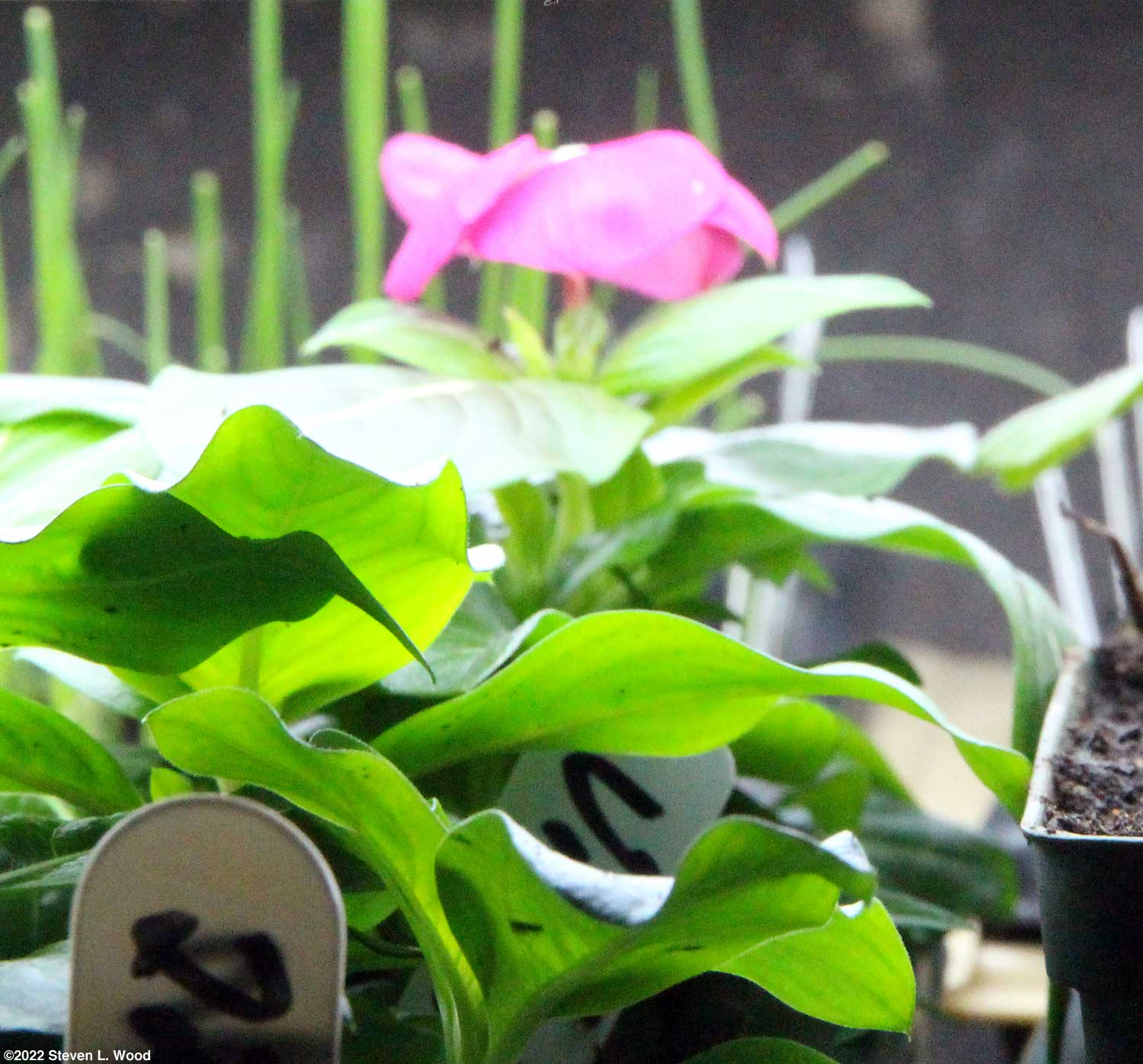
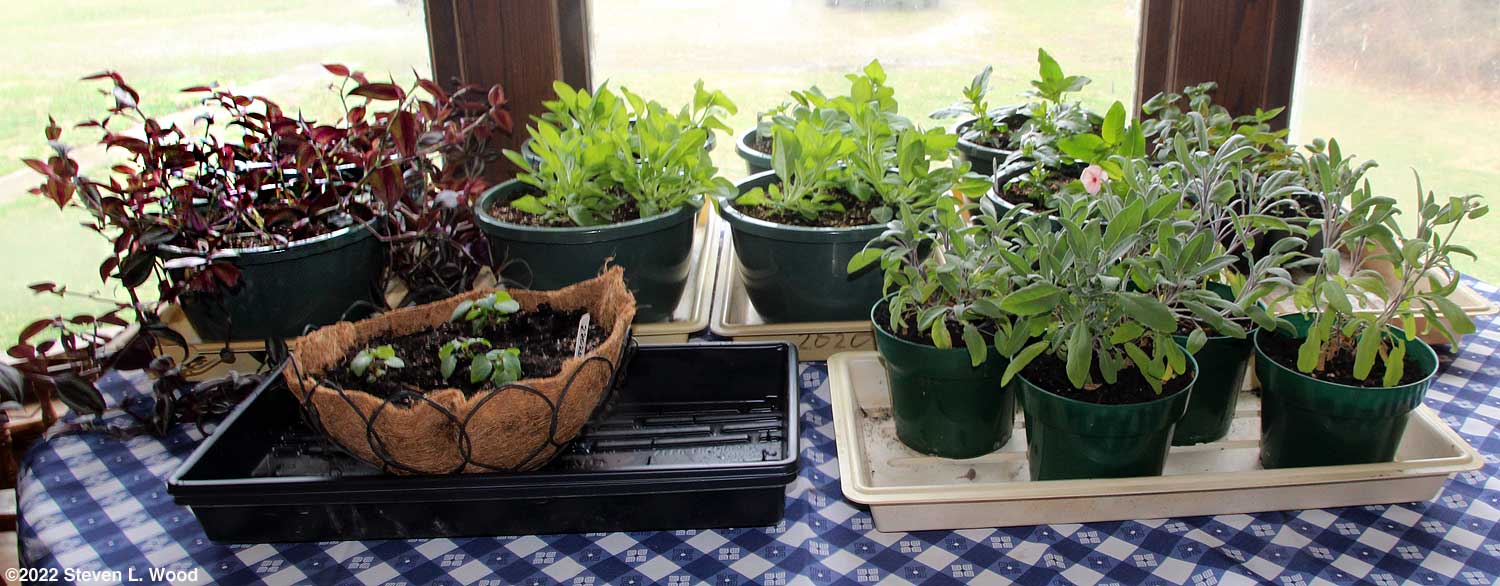
All three shelves of our plant rack are now full. There are still a few open spots in the twelve 1020 seed flats the rack holds. A splash of color on the middle shelf caught my eye today. A vinca had opened a bloom. In contrast to today's weather, we had a fairly warm, sunny day yesterday. I got out and collected fallen branches and even trimmed one of our trees with my new, cordless electric chainsaw. (It's a dandy!) Since it wasn't windy, I was able to burn a bunch of boxes and the limbs I'd collected. Living out in the country, open burning is still allowed.
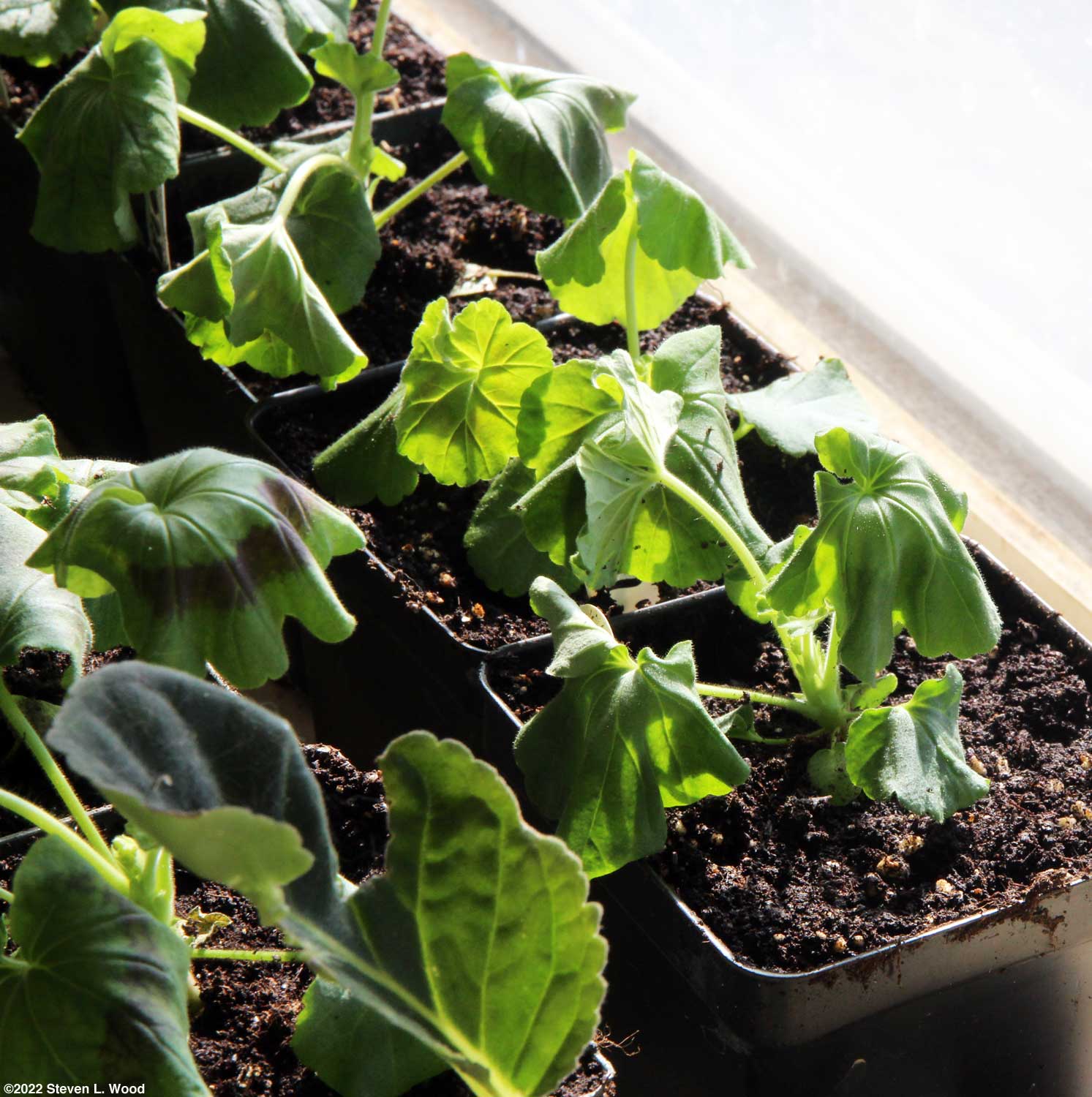
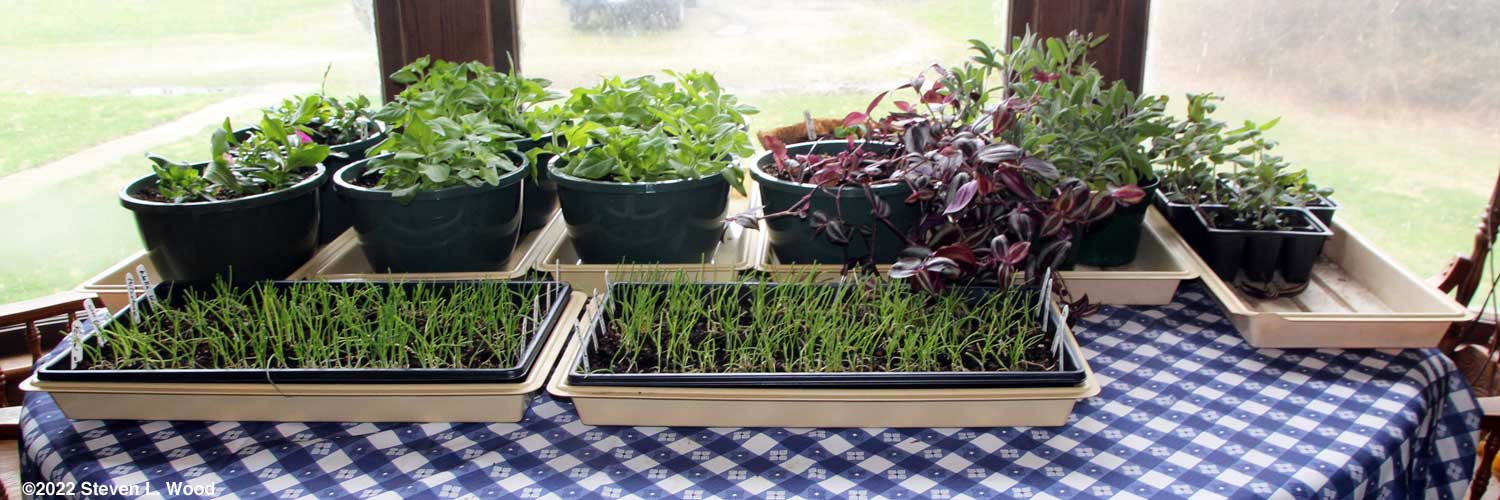
When I took today's splashshot from our sunroom, the max-min thermometer there said it had gotten down to 41° F in the unheated room. Our tray of geraniums showed that it might have been a bit colder close to the windows. I'm hoping the geraniums will bounce back. If not, we'll have vincas at the corners of our raised garden beds. We have another cold morning predicted for tomorrow. Beyond that freeze, we should see improving temperatures next week with highs in the 50s and 60s. That should let me get seed for our early peas into the ground.
I took a few minutes late last night/early this morning to run through the seed vendors listed on our Recommended Seed Suppliers page. The last two years, seed houses have been overwhelmed with orders, leading to significant delays in orders getting shipped. It appears that things are a bit better this year...providing all the vendors are playing nice and telling the truth about their shipping times. I did, however, find three sites that had posted warnings of possible delays in shipping.
If you're still planning to place a seed order, it's time to get that job done. This obviously is the busy season for seed houses. What got me thinking about orders was a surprise that arrived on our porch yesterday. When I started the last of our brassicas last week, I pulled out a whole sheet of deep sixpack inserts. Strangely, there was only one sheet of inserts left in the box. I was sure that I'd ordered more, but forgot all about it when starting the broccoli, cabbage, and Brussels sprouts seeds. A box from the Greenhouse Megastore made me wonder if they hadn't cancelled a bad order I'd placed and cancelled. Instead, it was ten sheets of deep sixpack inserts I'd ordered in December! That's a pretty long backorder. We'll go through several of those sheets when we start our tomatoes and peppers next month. Other than a braid of softneck garlic, I cleared out all the rest of our saved garlic today. The braid will supply us with enough garlic until I start stealing fresh garlic in early June and doing our main harvest in late June or early July. I had to pitch several garlics that were shriveled and going bad, but had three small bags of good garlic that will go to our local food bank tomorrow. Our onions haven't stored as well as the garlic. Of the thirty-five pounds of onions harvested last summer, we stored twenty pounds, sharing the rest with the food bank. At this point, I think we only have two yellow onions left in storage!
Monday, March 14, 2022 - Planting Early Peas
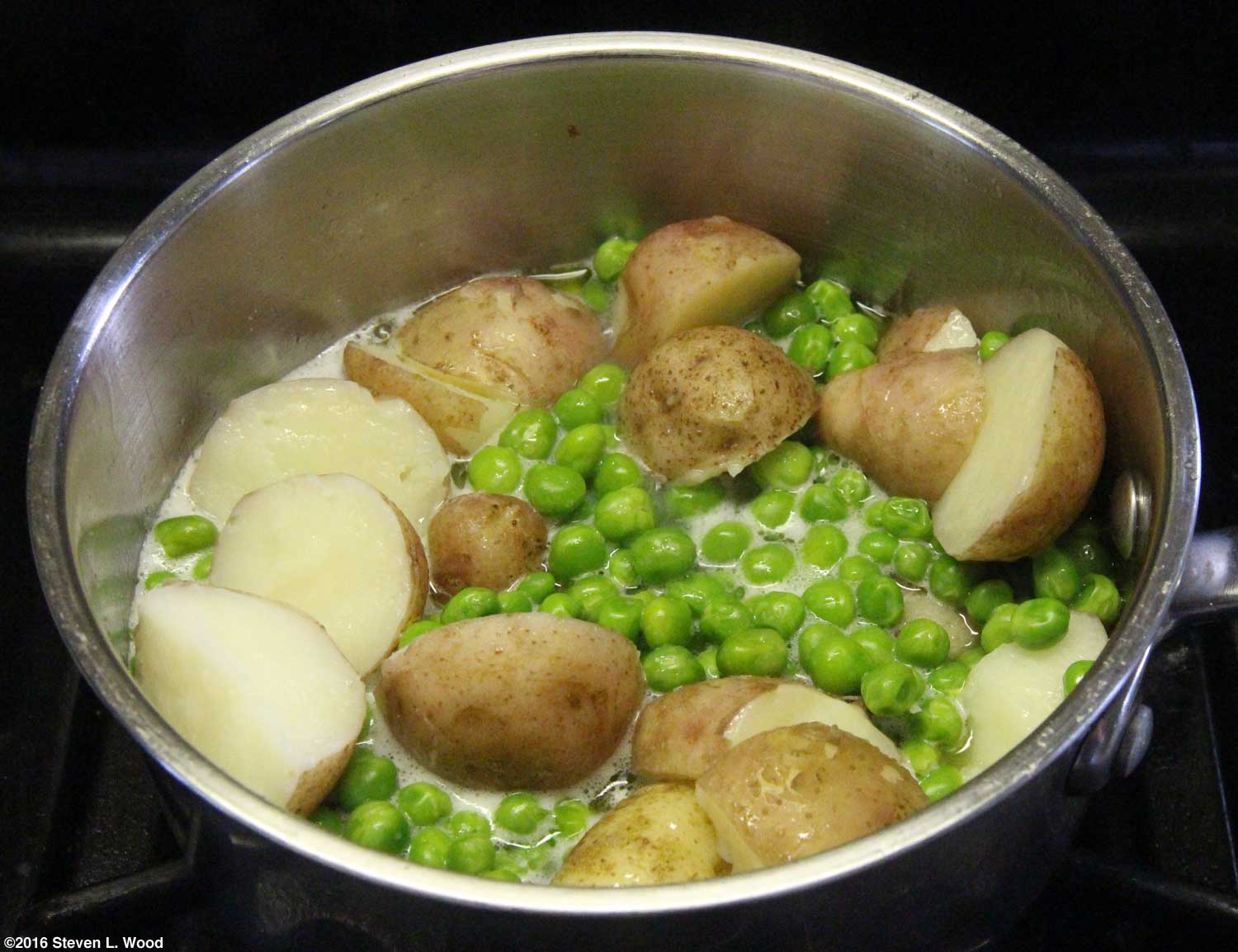
One of the garden crops we especially enjoy at mealtimes are peas. As I wrote in our how-to, Another Garden Delicacy: Homegrown Peas, "Growing peas is a labor of love. If you don't crave the slight improvement in flavor of homegrown peas over what are really pretty good name brand grocery store frozen peas, growing and preserving peas probably isn't worth the effort involved." Since we like peas so much, we go to a lot of trouble each season growing them. Part of that effort is getting some early peas started in March. After a stretch of freezing mornings, we now appear to be past most of those days, and it's time to get some pea seed in the ground.
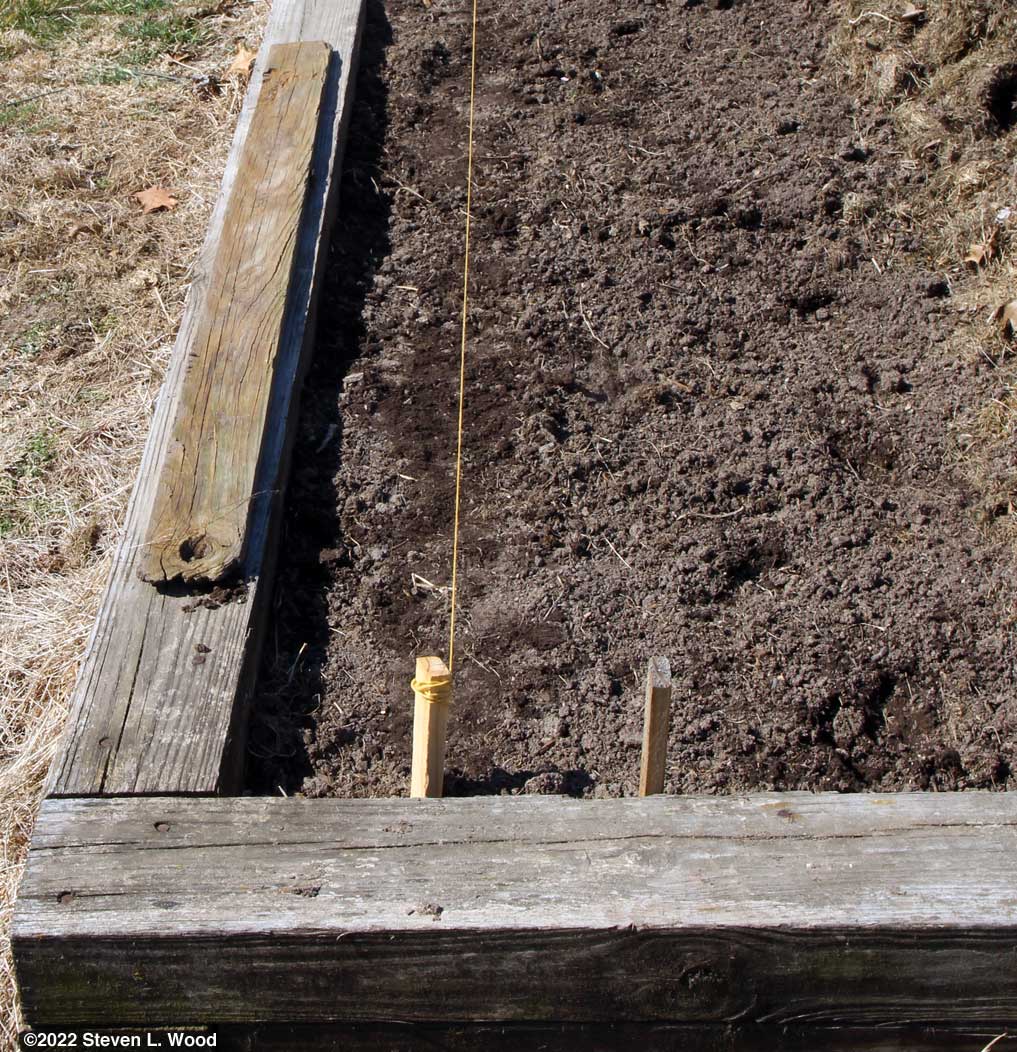
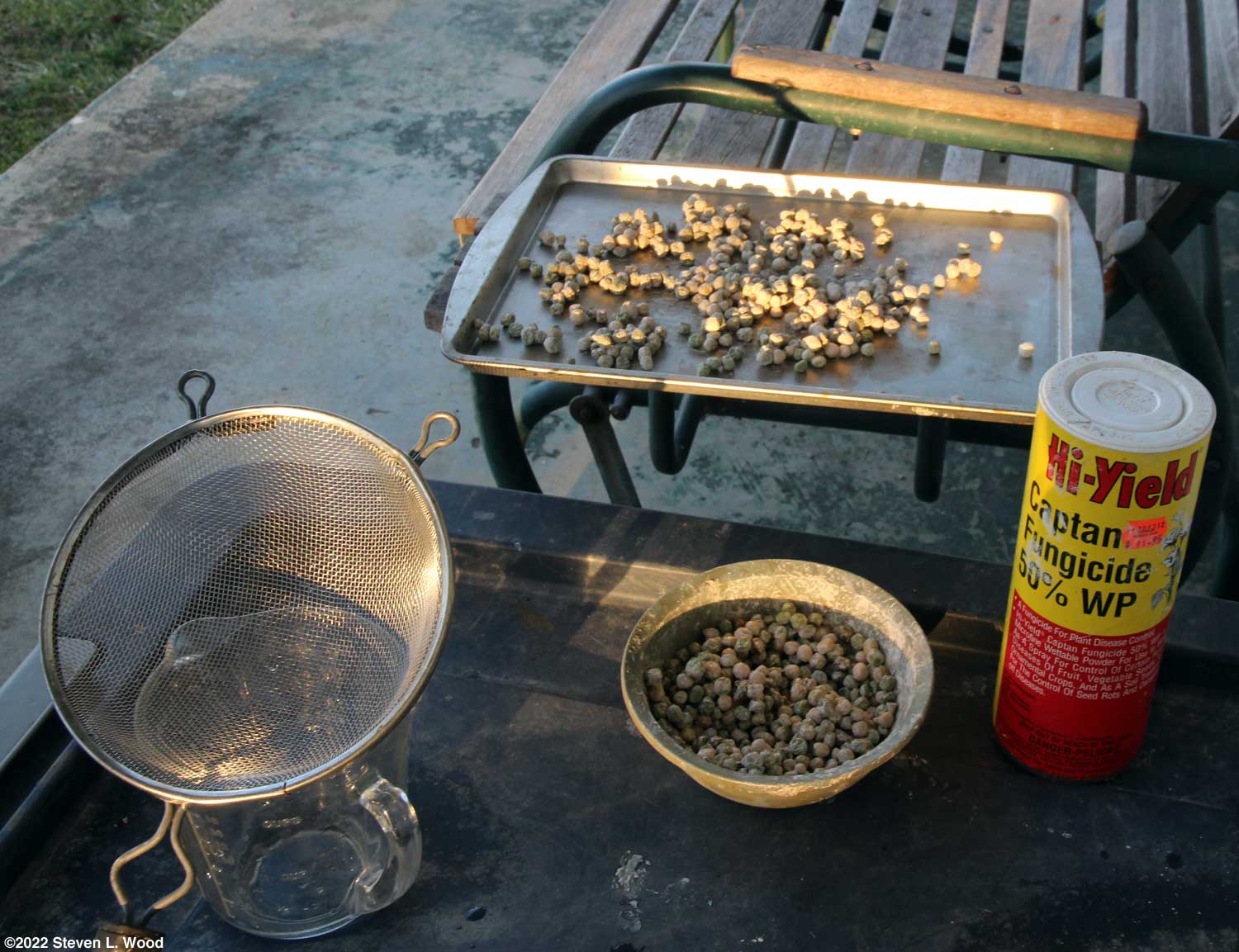
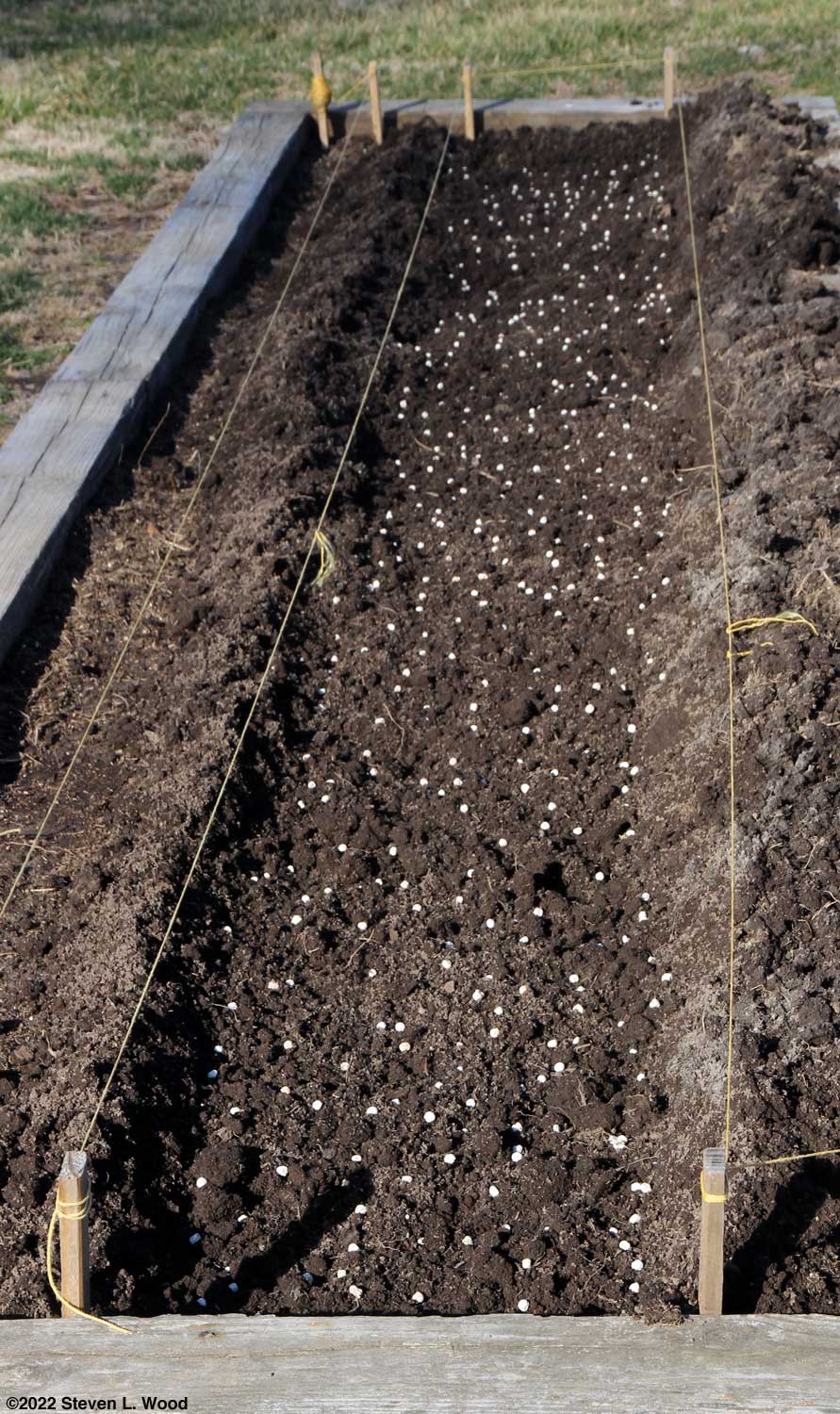
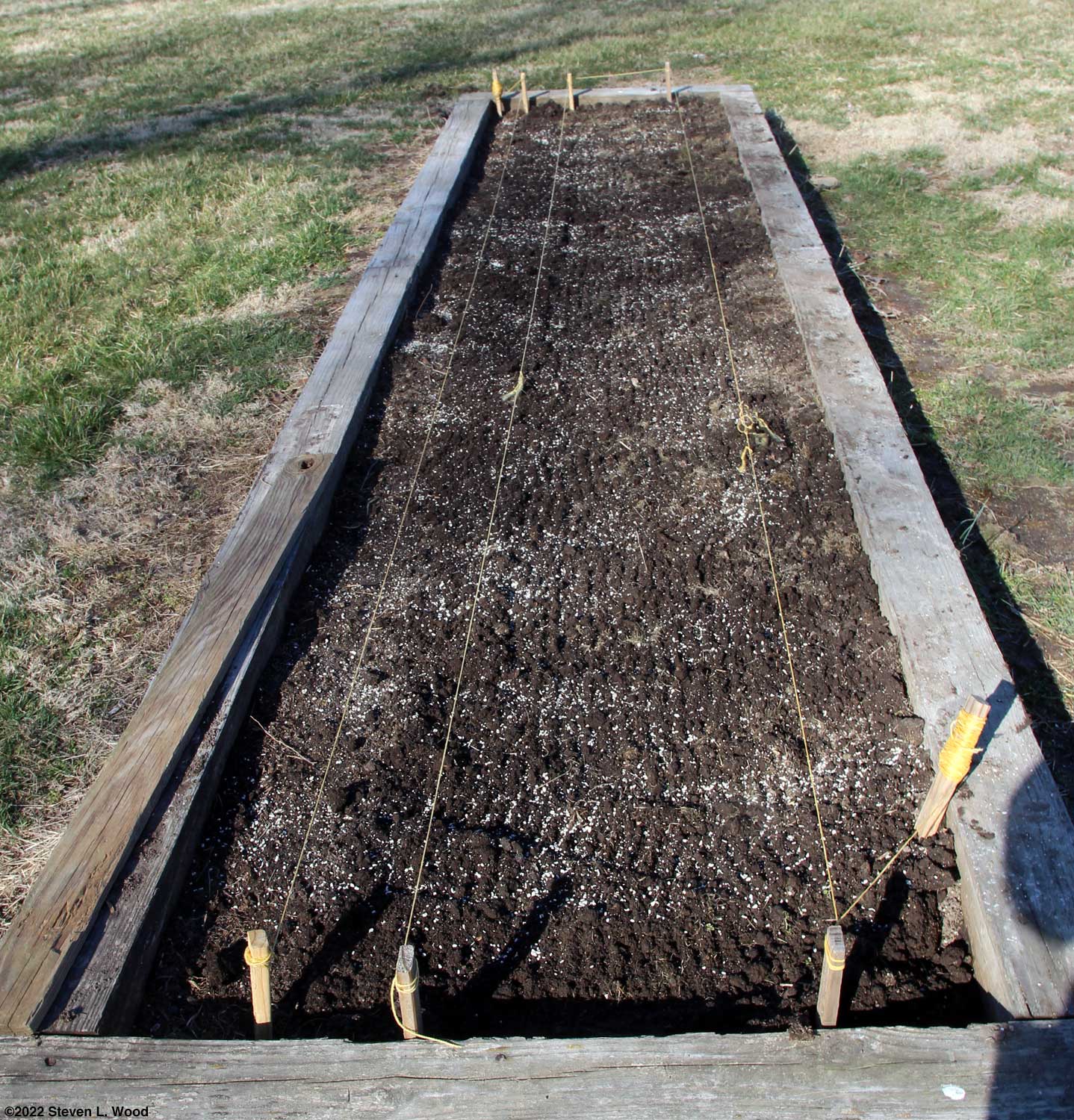
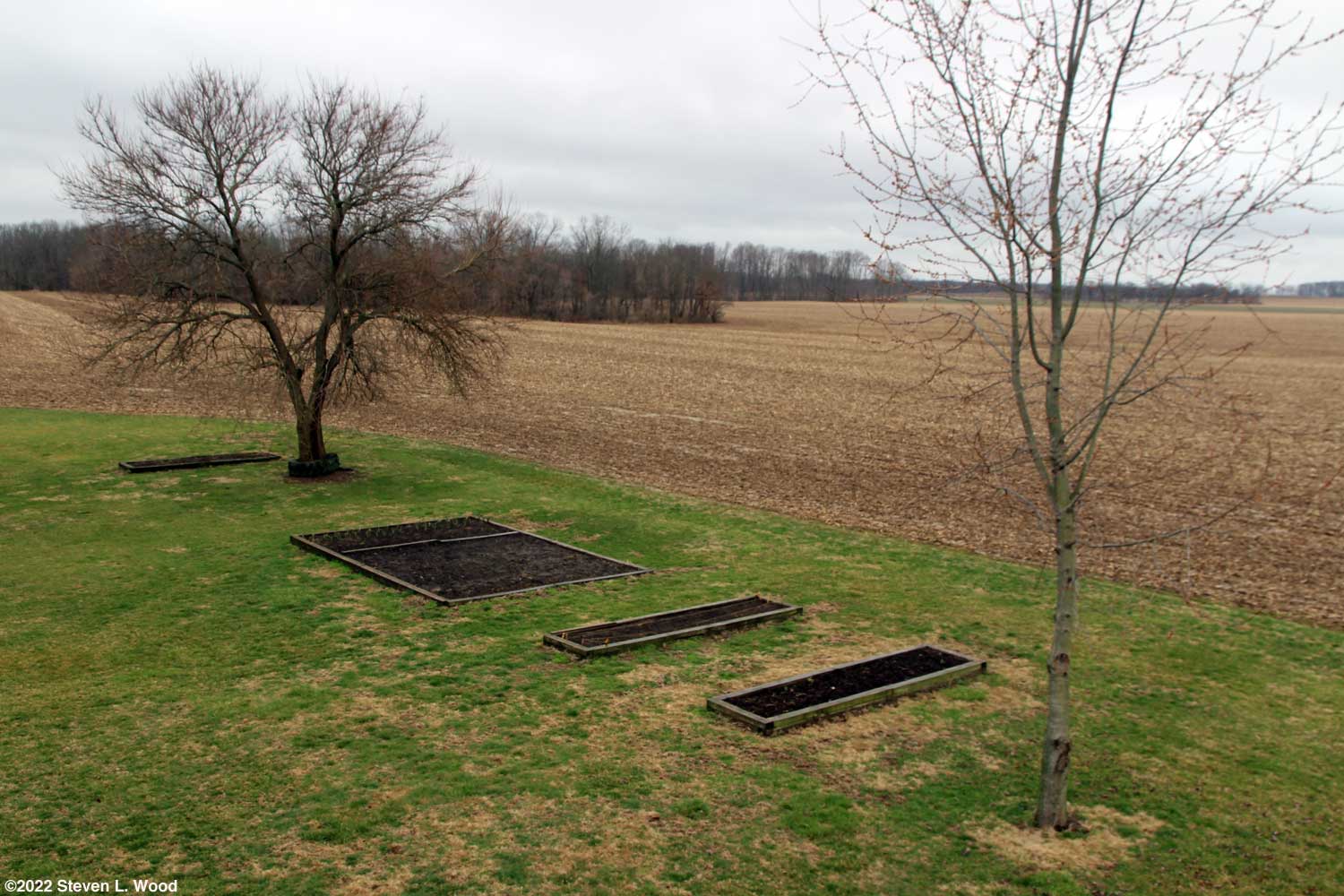
The bed for the peas had been tilled late last fall. I staked the area for the peas in the narrow raised bed a day or so ago. I plant our peas in a wide, sixteen inch row that eventually is enclosed by trellises on either side. I used a garden rake to pull back the soil over the area to be planted. The wide furrow was one to two inches deep. Then I spread granular soil inoculant, lime, and 12-12-12 fertilizer and hoed it into the soil. Then, again with latex gloves on, I carefully spread the pea seed down the furrow, trying my best to space the seeds one to two inches apart. I used the rake to pull and inch or so of soil over the seed and tamped it down with the head of the rake to ensure good seed to soil contact.
While our harvest varies from year to year, we usually have enough peas frozen each year to last well through the winter. One more step that sort of fits here is that I brought some snapdragon plants to the back porch to begin hardening off. As soon as the pea plants emerge, I'll put up our trellises on either side of the pea row. I like to have snapdragons along the edge of the row, at least on the sunny side. Prices of Garden Supplies While writing this piece, I was shocked at what has happened with the price of some gardening products and chemicals. The price of Captan appears to have tripled or more since I last bought some. I ran out of granular soil inoculant, but couldn't afford to order more. Everywhere I looked, either the price was too high or shipping charges were prohibitive.
Thursday, March 17, 2022 - St. Patrick's Day
With a few warm days lately, our garlic is really looking good. It shouldn't require any care for a couple of weeks other than maybe some light weeding. After I do our first lawn mowing, I'll lightly cultivate around the garlics before mulching them with grass clippings. They then shouldn't require any special care until June, when I'll give them a light foliar watering of nitrogen fertilizer. Even though it's supposed to rain tomorrow, I went ahead and watered the narrow raised bed where I have spinach and peas seeded. New Cold Frame
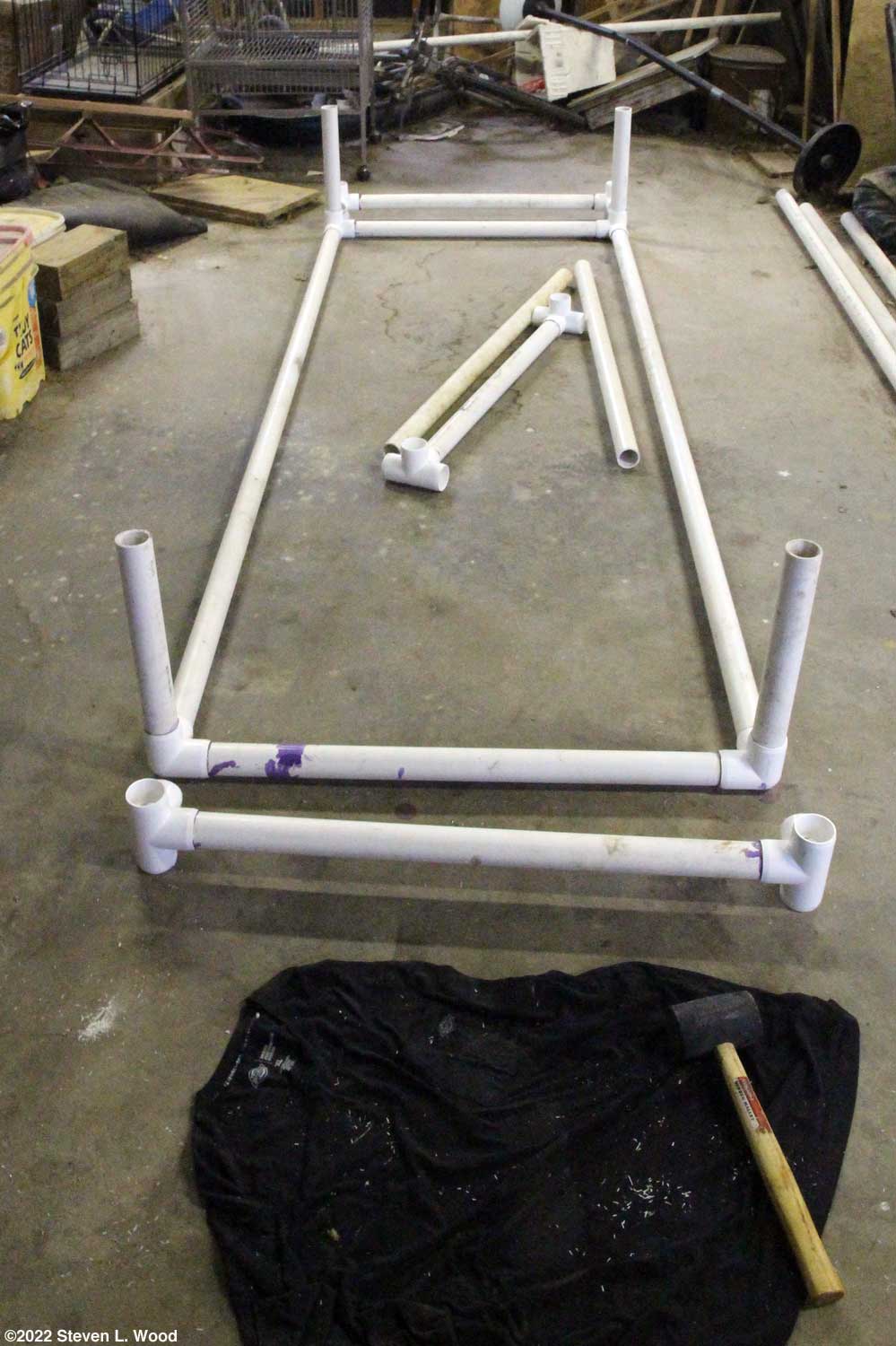
Worried that I might not have enough new PVC pipe for the new cold frame, I harvested lengths of pipe from the old frame. I was going to have to cut it up anyway to put it in the trash. You'll notice from the photos that I worked in the garage. I cleared the clutter from an area of it so I'd have a nice, flat surface to work on. I put together the base of the new cold frame first. I actually push the parts together, as the corner couplings lift the main pipes a bit and could cause some misalignment. Then I pulled apart the ends, treating both the pipe and fittings with PVC primer and cement. It's important to get the pipe into the fittings quickly, as the cement can grab in just ten seconds or so. Also, a good whop with a rubber mallet helps move the pipe and fittings fully together.
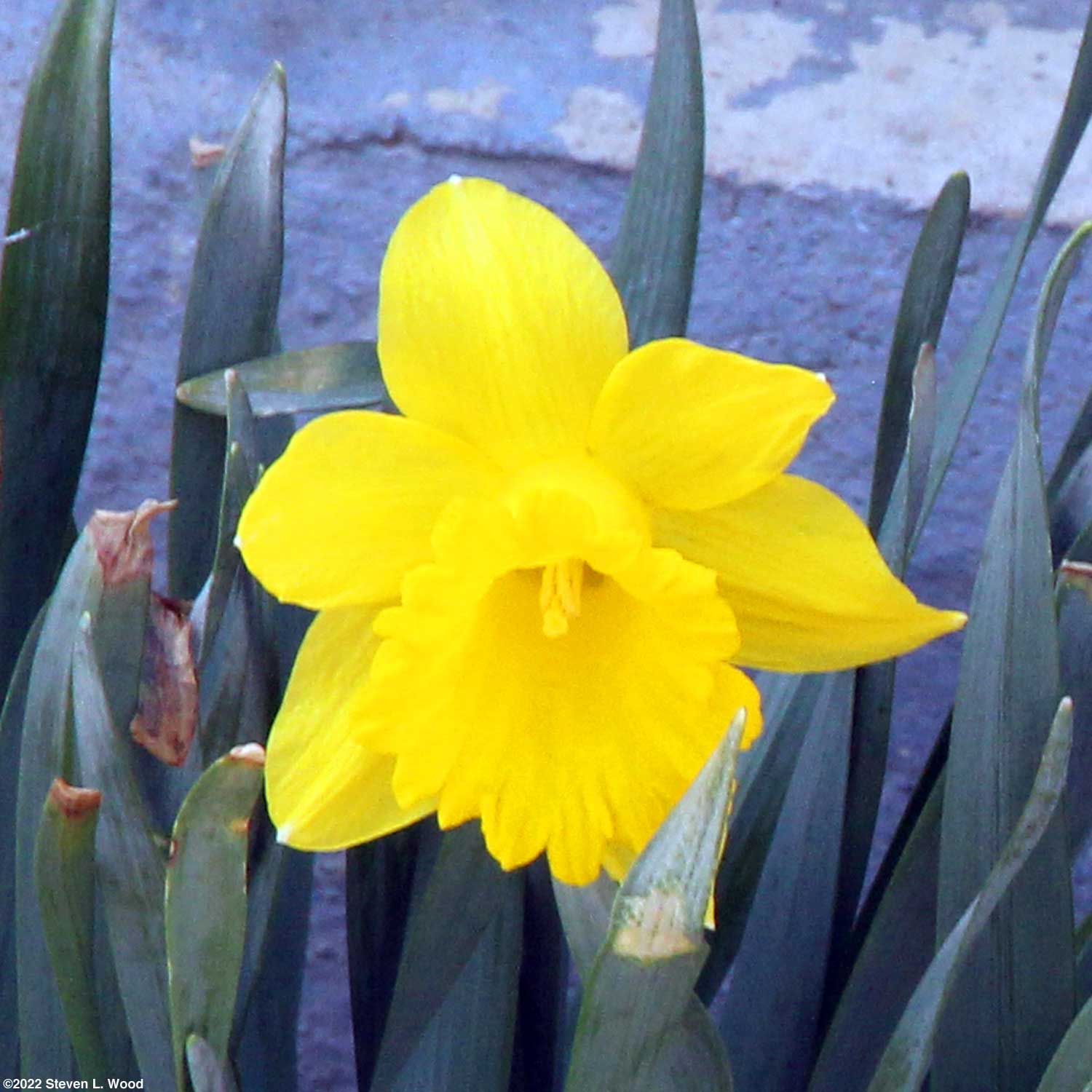
I'm not going to get in a hurry finishing this cold frame. I've made that mistake before, stressing joints before they were fully bonded. I hope to have the frame done and in use by Monday morning when we have a 33° F morning low predicted. Concerned that I might be overdoing things (working our compost piles), my lovely wife came out to rescue me from my labors. After a wonderful hug, we both were delighted to see that our daffodils had come into bloom.
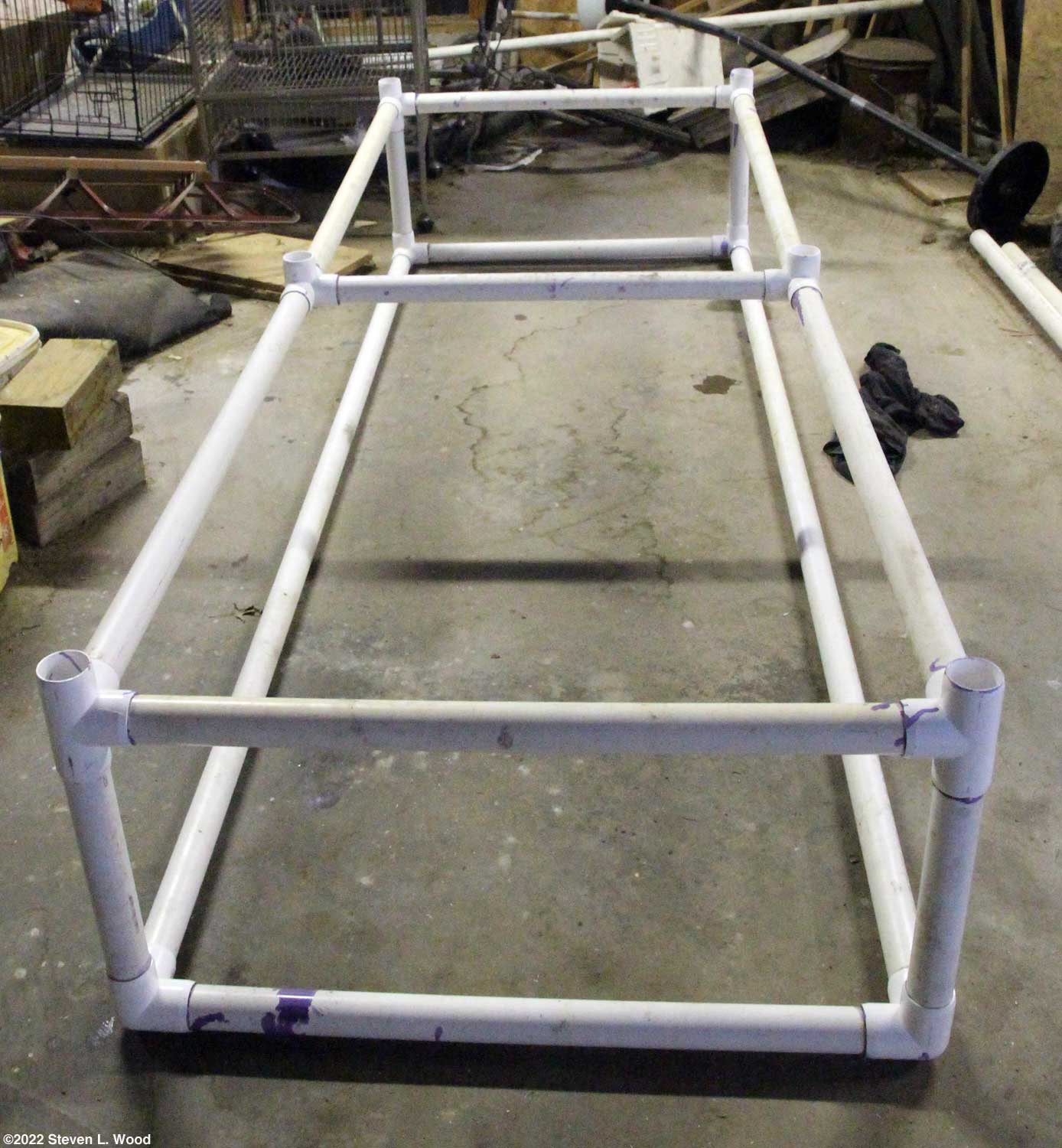
Progress on our new PVC cold frame continues, but is slow. I added upright pipe pieces to the cold frame, finished the second layer of pipe using some really expensive 4 Way PVC Connectors, and mounted the second layer on the base. The uprights used were 14" pieces, a good bit shorter than my last cold frame...as it turned out to be a bit too high. The last step of building the frame is the angled pieces that give the top of the frame some slope to shed water. Finding the right bend connectors is always a bit fun. I have a bunch in a box, but may yet have to run to the hardware store for more. Once I get the frame completed and covered with 6 mil plastic, I have onions and geraniums that are ready to go under the frame to begin hardening off. Close behind are lettuce, celery, and various flowers. Not nearly ready are our brassicas. They're usually the first or second transplants into our garden, but I got our broccoli started late, and then had to re-seed some of it. Projects like this one are always interesting, if challenging.
My cold frame construction is on hold for now. PVC cement sets and cures better at warmer temperatures. It's supposed to be twenty degrees warmer tomorrow. That's March in Indiana. Not really frustrated by the weather, I transplanted eight Crispino and eight Sun Devil lettuce starts to fourpacks this morning. These are plants from seed we've saved. I hope to save seed from both varieties this year, especially the Crispino variety, as our saved seed from it is getting really old (saved in 2014). So I've started enough plants for us to enjoy head lettuce this spring and possibly still save some seed. I'm not sure how I forgot it, but the image below taken yesterday is a bright spot in our early season gardening.
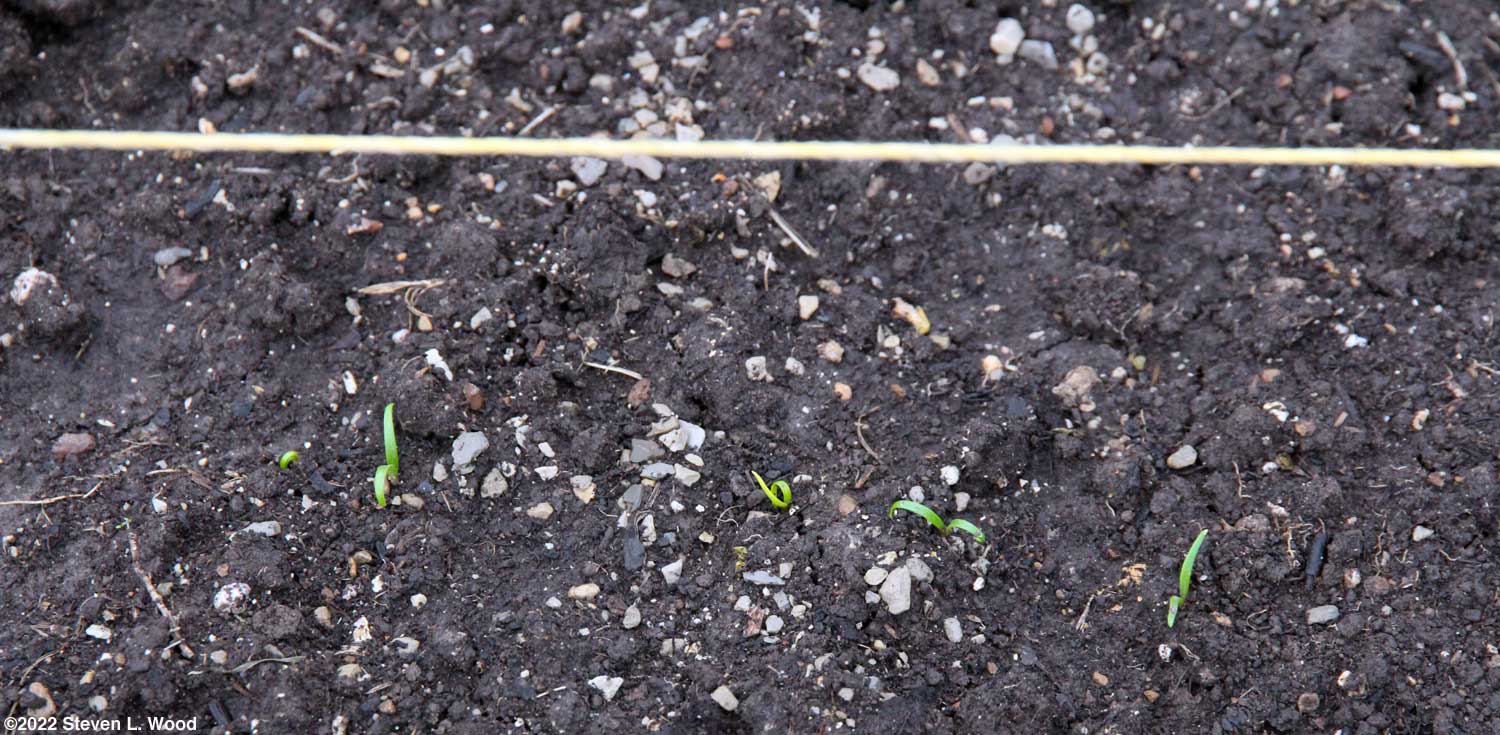
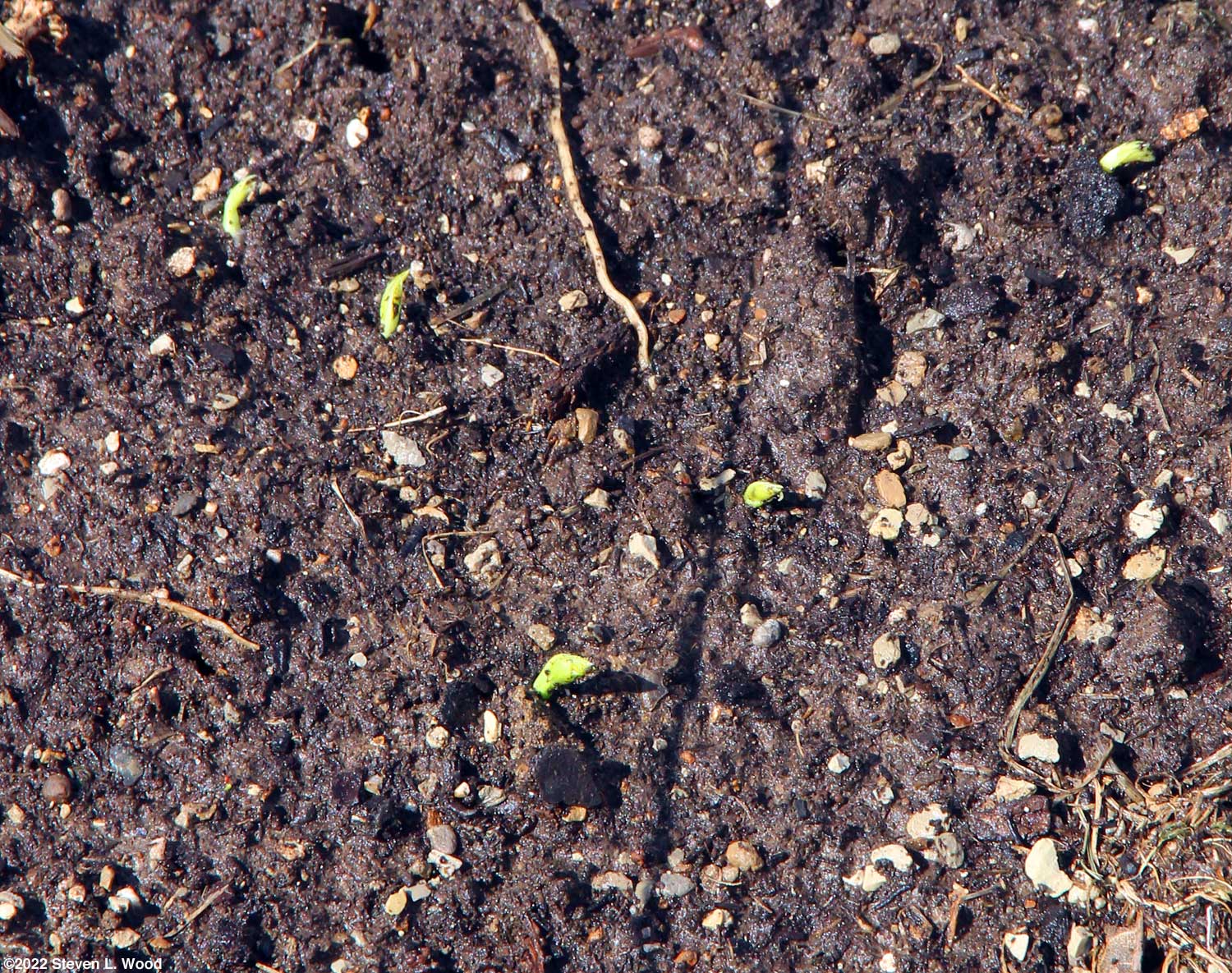
The Abundant Bloomsdale spinach I direct seeded on March 5 is coming up. With our variable March weather, I'd feared I'd have to re-seed the spinach, but the sprouts I saw yesterday were a relief. I've given away, sold, and planted all but a little of our saved seed from last year. I have just enough seed left for our fall crop. But if you're desperate for Abundant Bloomsdale spinach seed grown in the Midwest, I still have lots of saved seed from 2020.
Tuesday, March 22, 2022 - Starting Tomatoes
Six of the plants started today will go into the fertile soil of our main raised garden bed in early May. And since the plants are for both fresh use and seed saving, that bed is about a hundred yards away from any other tomatoes we grow. I'll be starting eight to ten other varieties a bit later that will go into our East Garden plot. The Earlirouges give us early tomatoes and also ones for canning. The East Garden varieties sometimes don't get transplanted until June, but then yield well into the fall. I filled the deep sixpack inserts with sterile potting mix and thoroughly watered them with warm water. To plant the seed, I just make a shallow depression in the soil with a finger, drop in a seed, and push a little soil over the seed. Of course, I add a few extra seeds at the corners of the sixpack cells, as every seed isn't going to germinate. The batches of seed used today germination tested at 80% late last fall. The sixpacks of tomatoes went over a soil heating mat set to 75° F. For folks lacking soil heating mats and such, a warm spot (windowsill, top of fridge) should give the seed a little extra heat to speed germination.
While it's possible to get tomatoes going earlier with some heat supports, I find that waiting until the soil warms a bit eliminates the possibility of plants stunting in cold ground. I tell how we grow our tomatoes, start to finish, in our how-to, Growing Tomatoes. New Cold Frame I finished putting together a PVC frame for a new cold frame yesterday. While the initial layers of the frame were carefully built with new materials, I sort of cobbled together some parts from our last cold frame plus some new pieces to finish the angled top of the frame. I'm hoping that the concrete I added to the two long base pieces of PVC will keep this frame from blowing away. The last one repeatedly blew away in some of the strong winds we experience here each spring.
Our last two cold frames have lasted seven years each. With the cost of parts for this cold frame, I'm wondering if simply buying a commercial cold frame might be a better idea. Anyway, the frame is ready to be covered with 6 mil plastic to protect our transplants from the wind and cold as they harden off. Other
Four more of our gloxinias have broken dormancy. I moved the plants into light and watered them today. I'll give them some fresh soil to grow in tomorrow. We're into some rainy, cooler weather now. That's fine, although a predicted overnight low for Sunday morning of 27-28° F has my attention. We typically have a snow or freeze towards the end of each March, so I'm not surprised. As we get closer to the predicted freeze, I'll move plants to safety when warranted. Funny! In this time of rising prices, I had a funny one this week. My lovely wife, Annie, had added Campbell's Cream of Mushroom Soup to my shopping list. On a whim (from previous experience), I price checked Sam's Club
The concrete I added to the base PVC pipes actually saved the cold frame. The wind hadn't gotten under the frame. Had it done so, the frame would have flown through the air and probably broken upon landing as the old cold frame did. But I'm going to have to find a way to anchor the frame in place.
I'd trimmed our onion plants this morning. Fortunately, I'd put them on the edge of the porch to catch a little rain instead of under the cold frame. I cut the onions a bit taller than in previous trimmings, leaving them four to five inches tall. And after the sliding cold frame incident, the trays of onions got shoved under the glider on the porch (where they can't get blown away) and the cold frame is shoved up against the lee side of the house. A bit of happier news is that I think I saw some pea plants emerging from the soil today. I had to look closely, and the ones coming up are all in one small area. But even that is encouraging. Not so encouraging is our current weather forecast. It calls for morning lows Saturday, Sunday, and Monday of 32, 27, and 29° F respectively. Our last cold frame protected down to about 28° F. This new one is a bit shorter and should provide a little more protection for plants. But even so, I now think I'll need to bring in everything back inside, possibly other than the onions, for those cold mornings. I recently found that Hoss Tools had Nature's Aide Granular Soil Inoculant for a reasonable price and fair shipping & handling charges. Ours arrived in today's mail. Only the larger, 8.7 ounce size is in stock. That's okay with me, as I'm pretty liberal in applying the inoculant when seeding beans and peas.
They go on to recommend:
For those of you champing at the bit to get started gardening this spring, Lindsay Sheehan has an interesting page on Rural Sprout, 15 Vegetable Seeds to Sow Outside Before the Last Spring Frost. Here are a couple of pieces about growing onions:
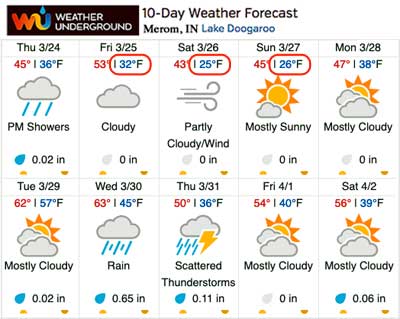
Our extended weather forecast has changed...and not for the better. The forecast image I posted yesterday had three mornings marked for freezing weather. The new forecast, shown below, now has eight out of ten days marked with possible frost/freeze temperatures.
Unless things get worse, I should be able to begin moving plants under our cold frame on Tuesday. But this weather will set back my plans to transplant onions and direct seed carrots and beets.
I promised myself that I'd stop writing and
Samantha seems to be thriving on running the bookstore. We visited just once since it opened, but it was a great experience. I'll get back to gardening soon. But I had to brag a bit today.
Plants under the cold frame include two trays of onions, cauliflower, lettuce, celery, parsley, snapdragons, daisies, milkweed, a couple of geraniums, vinca, and hostas.
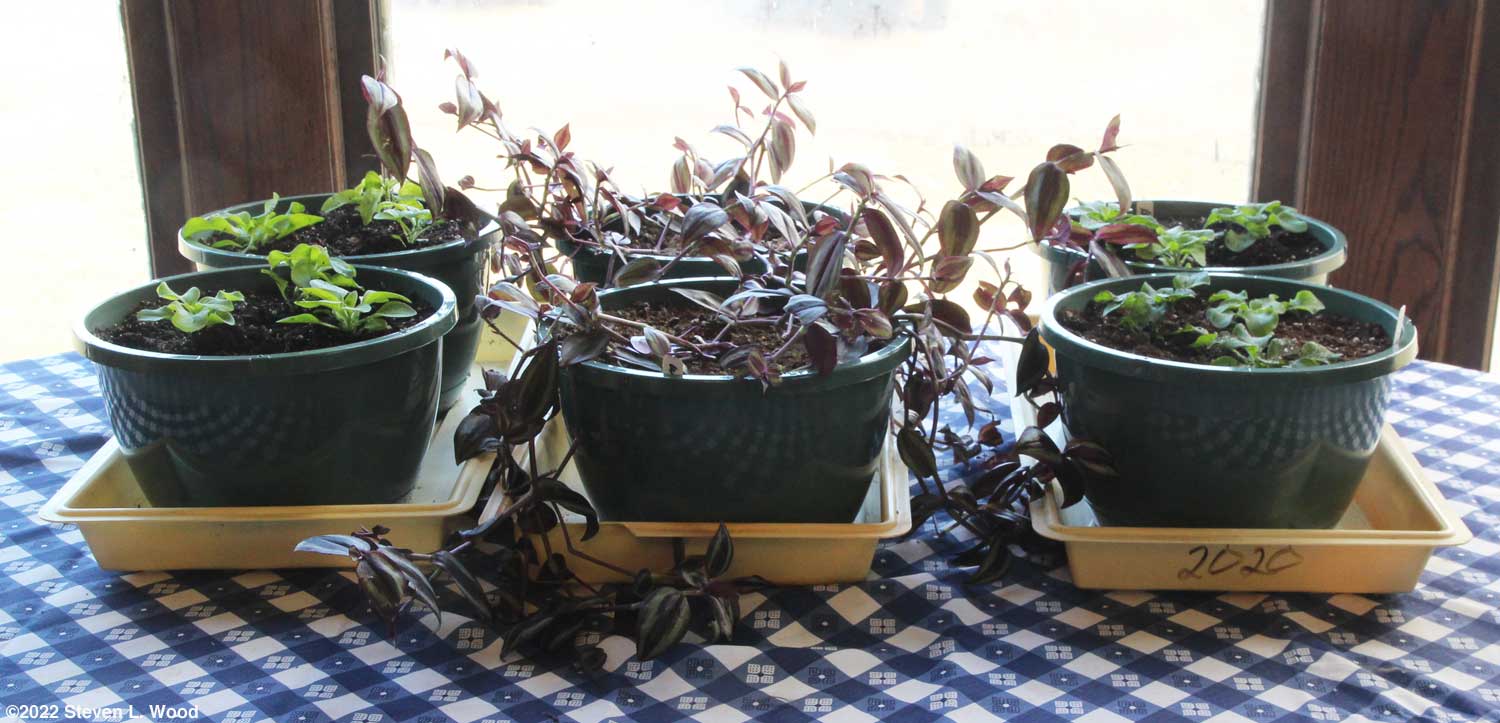
I moved the geraniums I had growing in our sunroom to the dining room table today. While the geraniums would probably get more light in the sunroom, they'll hold down the pretty, but slick tablecloth that our cats and dogs seem to like pulling off the table.
We grow at least two batches of peas each season. Our first peas are tall peas, this year a landrace cross of the Champion of England and Maxigolt varieties. Later, we grow some short, supersweet peas. The Eclipse and Encore supersweet varieties have been held hostage by Monsanto for twenty years under PVP patents. Those patents are expiring, and we hope to be able to share seed from the excellent varieties in a year or so.
It's an exciting time to be gardening.
Thursday, March 31, 2022 - March Wrap-up
Our big accomplishments this month, other than constructing a new cold frame that only slides and rolls instead of flying (and breaking), was getting our spinach and peas direct seeded and up in a narrow raised bed. I also got lots of transplants for the garden started.
Carhartt T-shirt Sale through April 17
Contact Steve Wood, the at Senior Gardening |
|||||||||||||||||||||||||||||||||||||||||||

































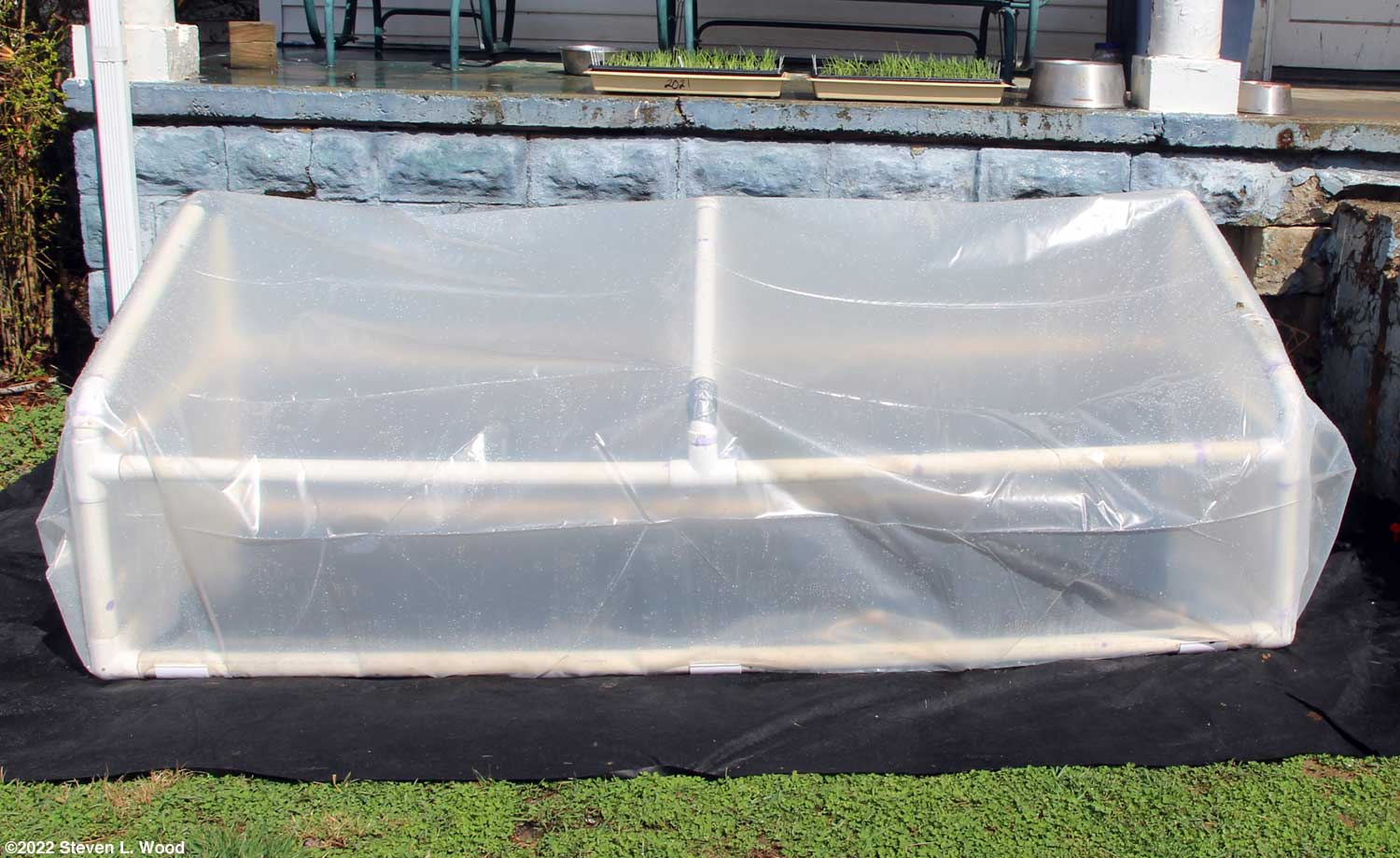







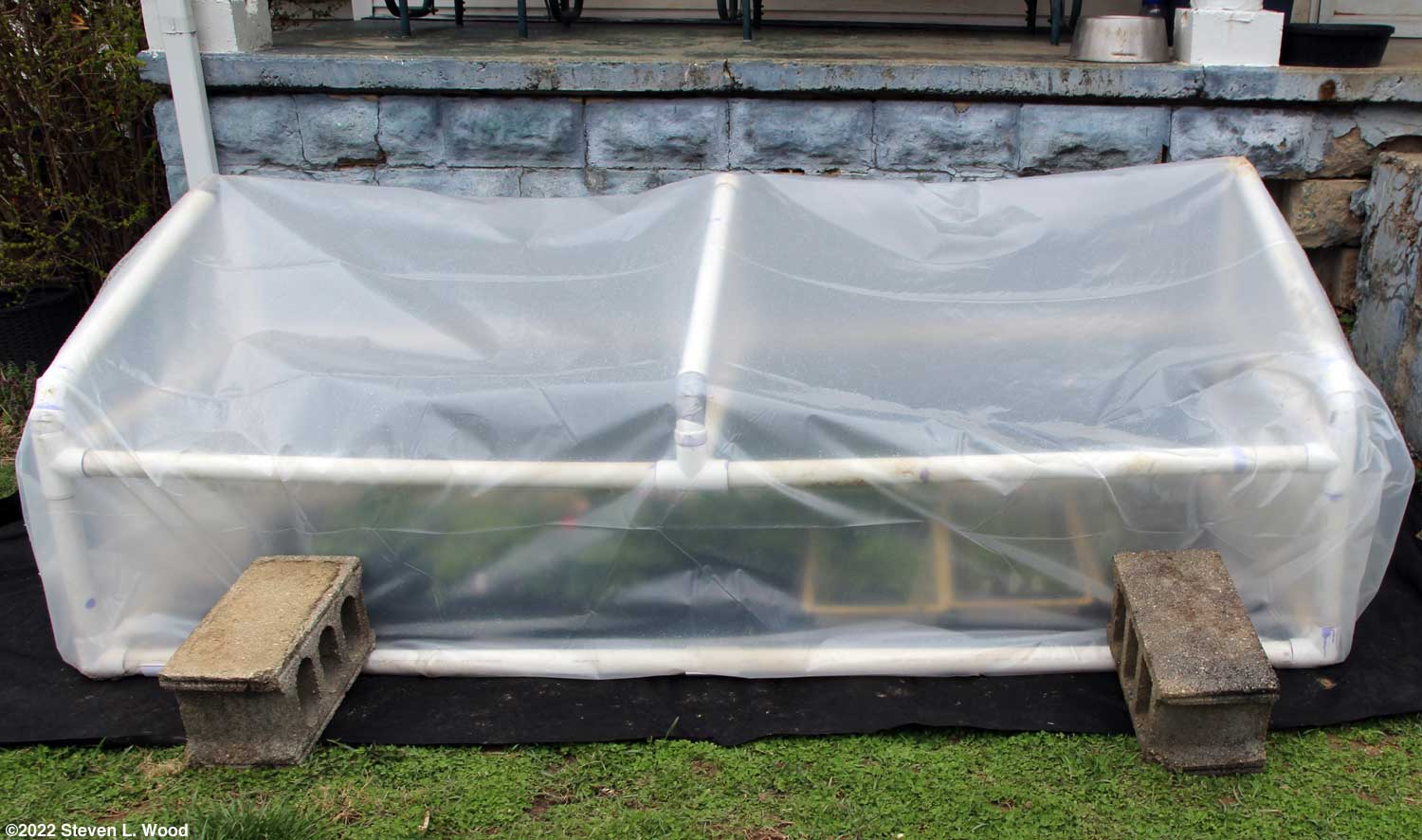
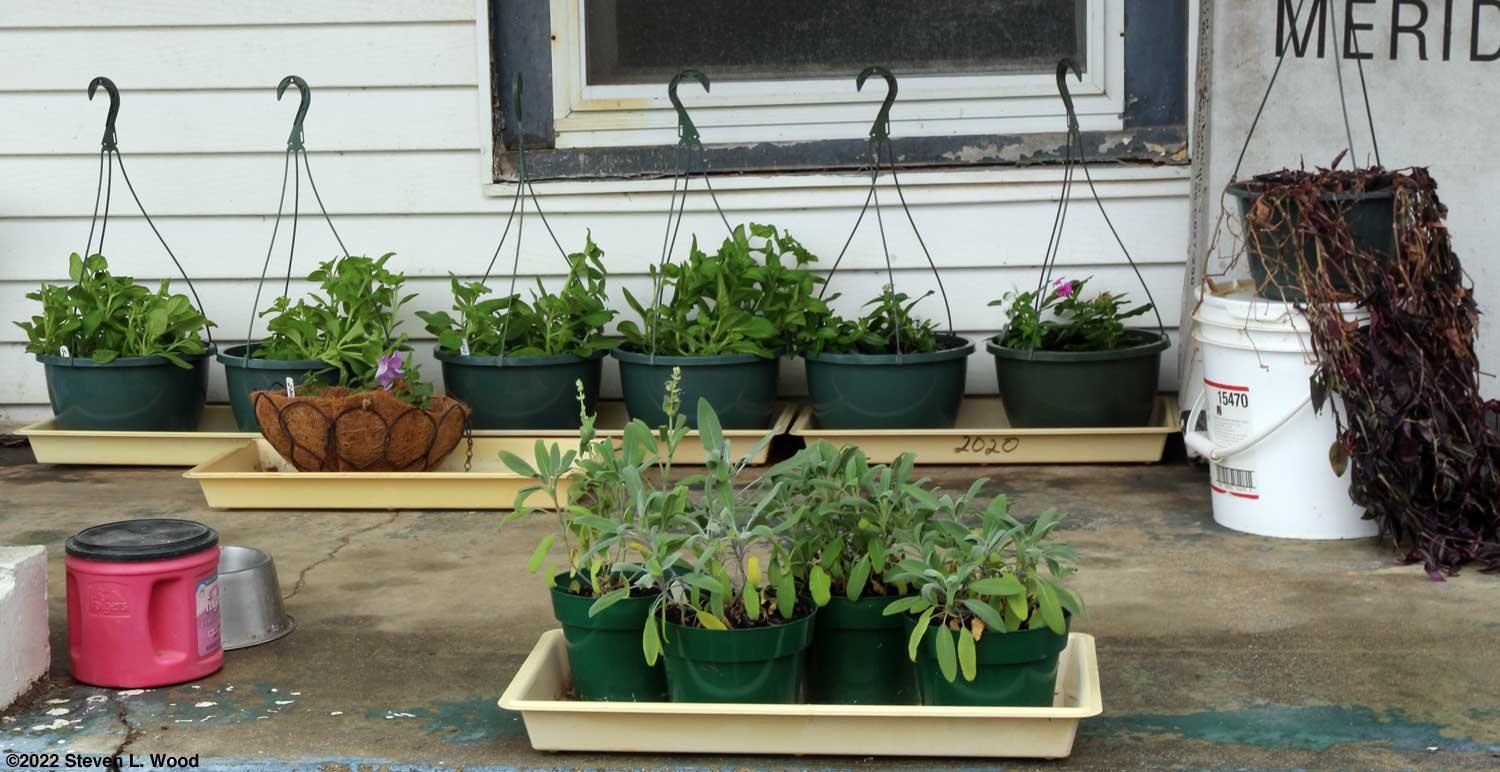
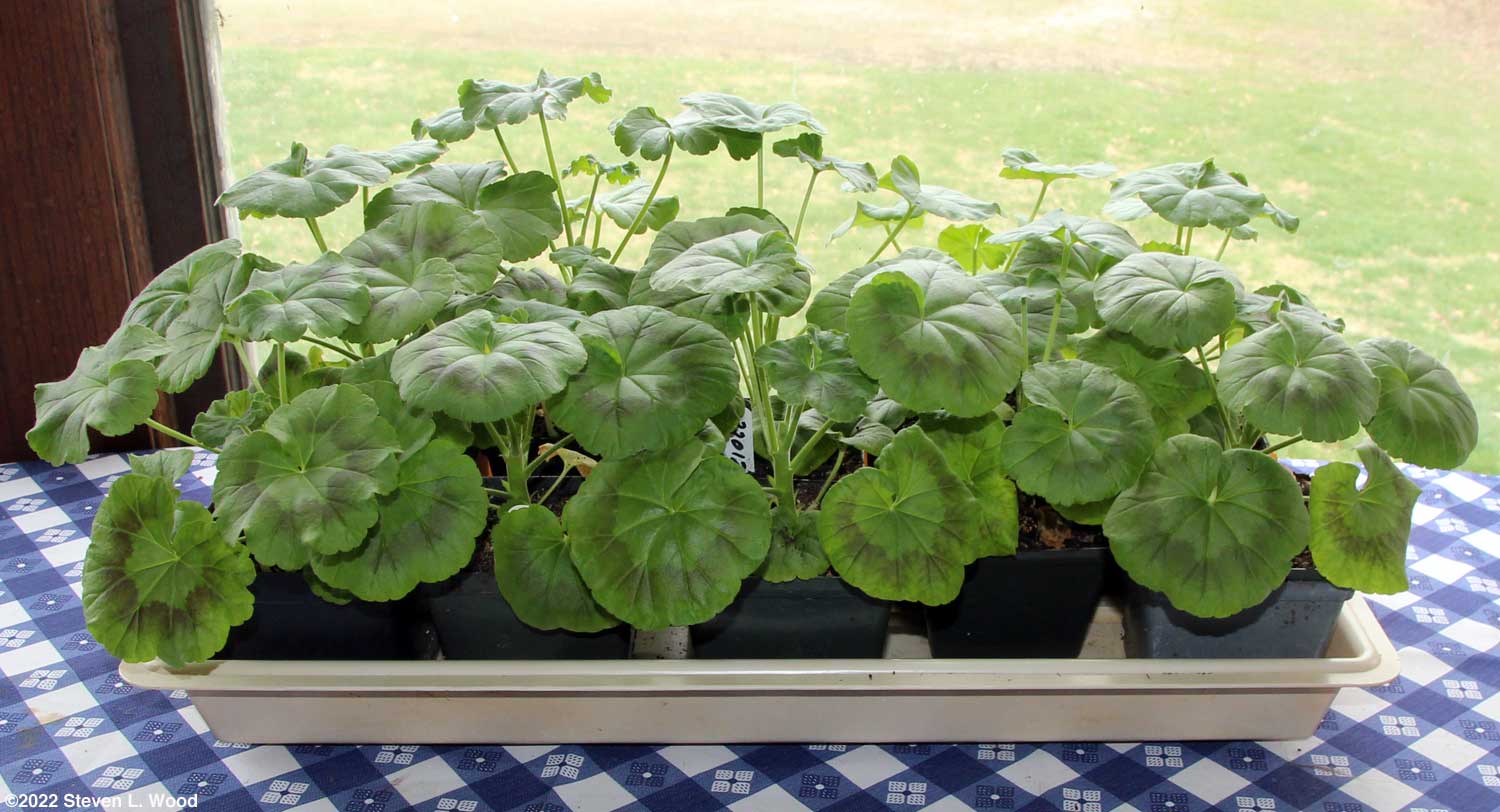
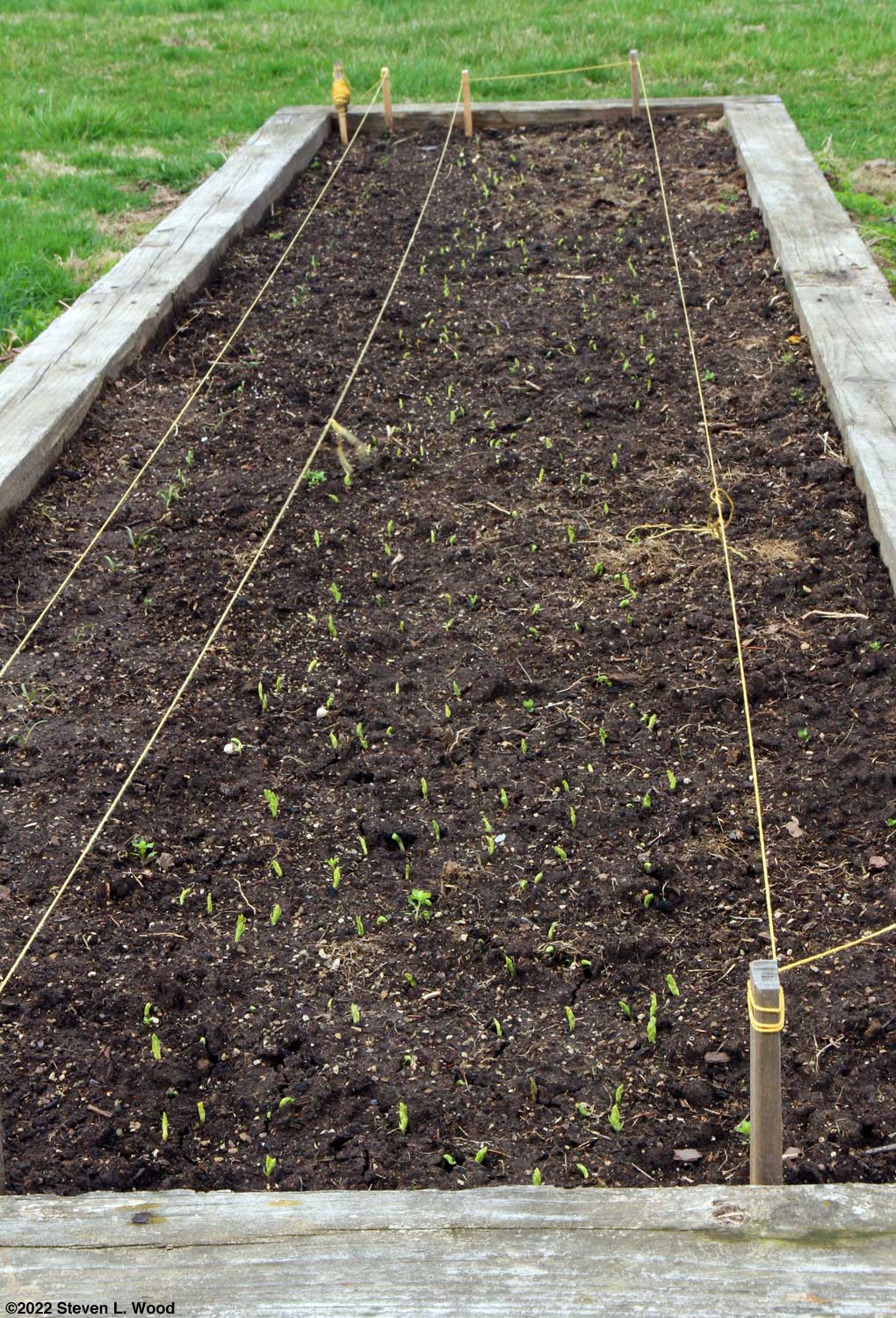

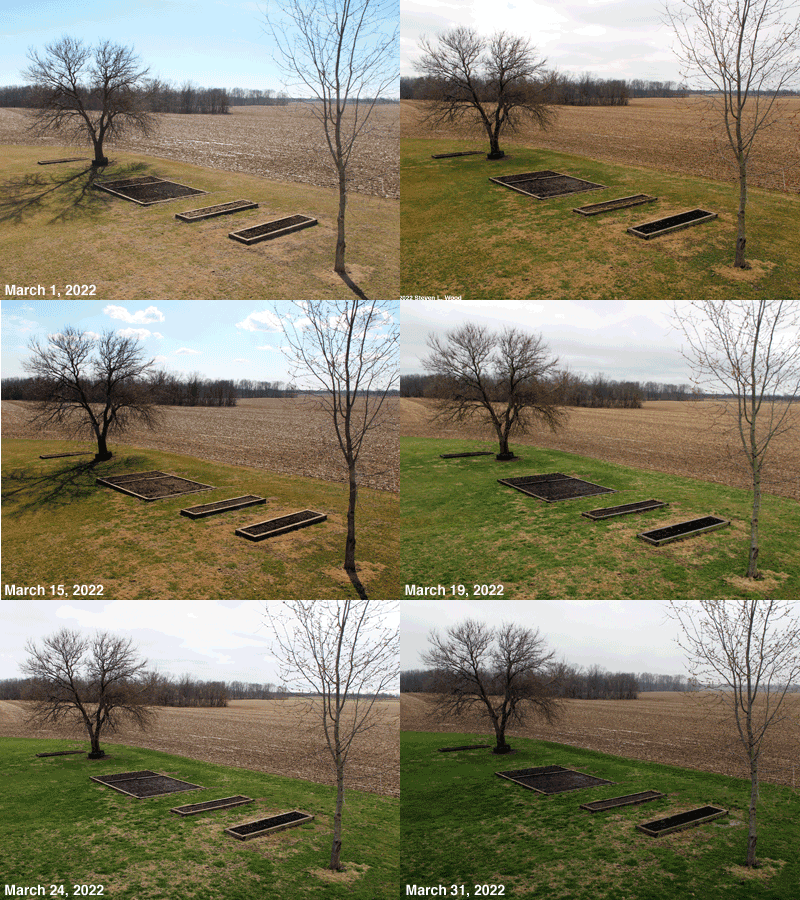 When I looked out our kitchen window this morning, I saw our new cold frame...in the bushes. My efforts at anchoring it in some really strong winds had obviously failed. But the weighting of the new frame apparently kept it on the ground. The wind rolled it to the bushes. And amazingly, none of the plants under the cold frame were damaged. With the 40+ MPH winds behind us, the cold frame will hopefully protect our transplants the next two mornings when freezes are predicted. At least there's no snow predicted in our
| Affiliated Advertisers |
©2022 Senior-Gardening.com