One of the Joys of Maturity |
|

| Affiliated Advertisers |
The Old Guy's Garden Record
Clicking through one of our banner ads or some of our text links and making a purchase will produce a small commission for us from the sale.
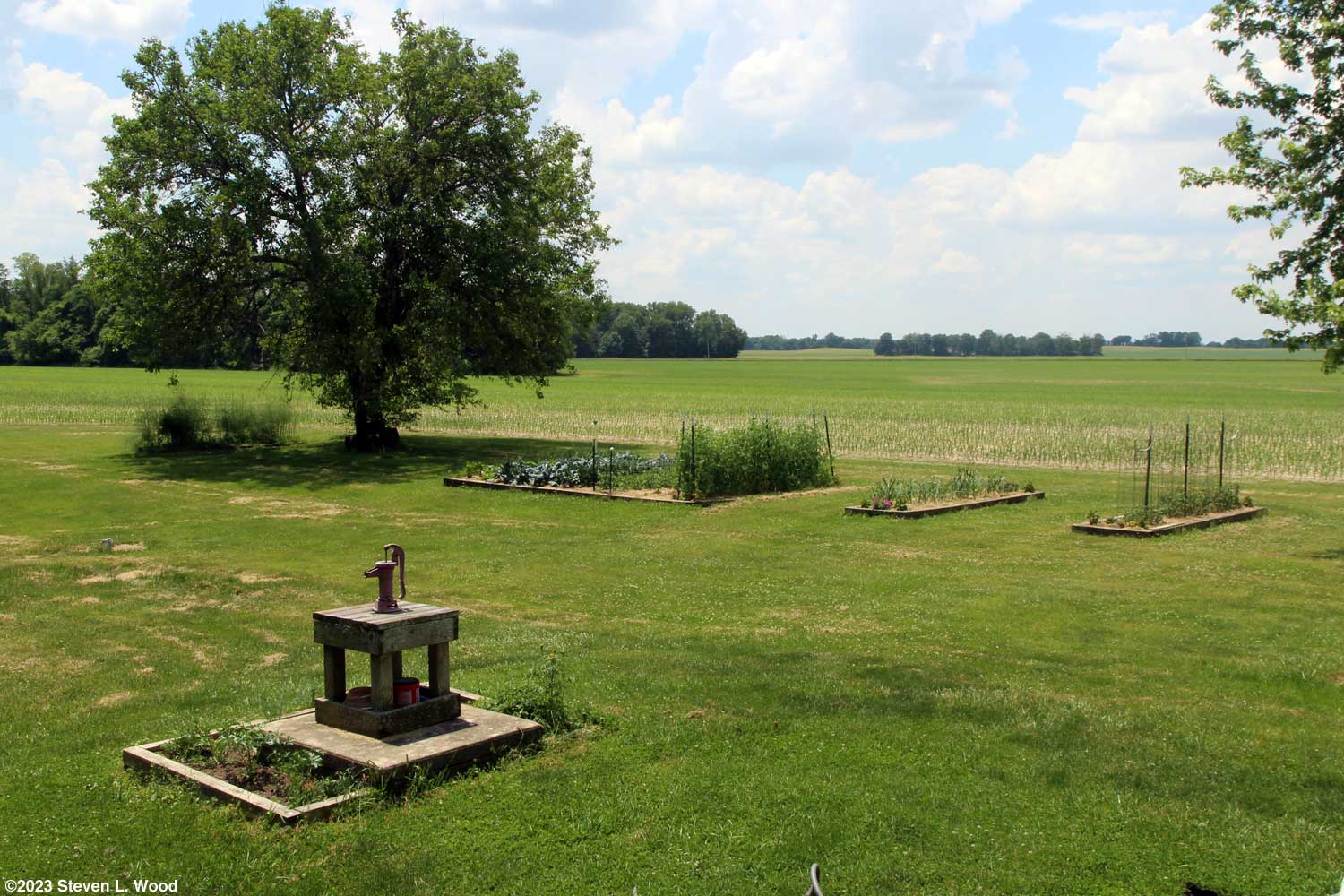
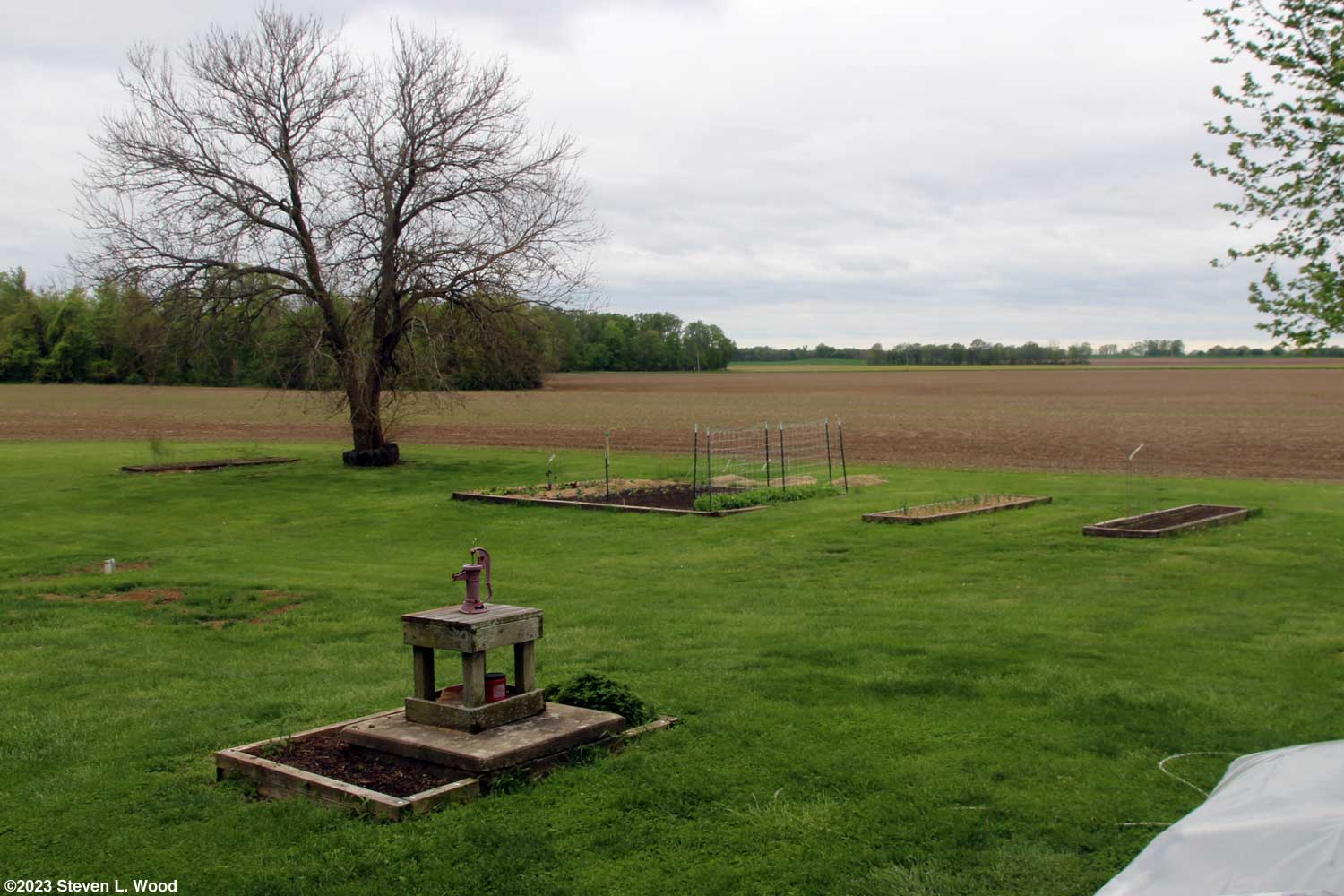
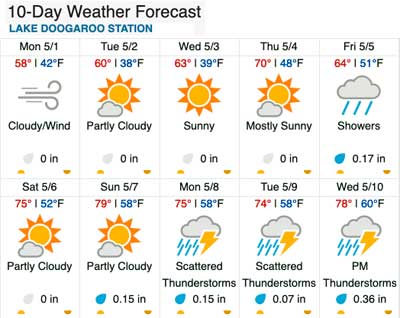
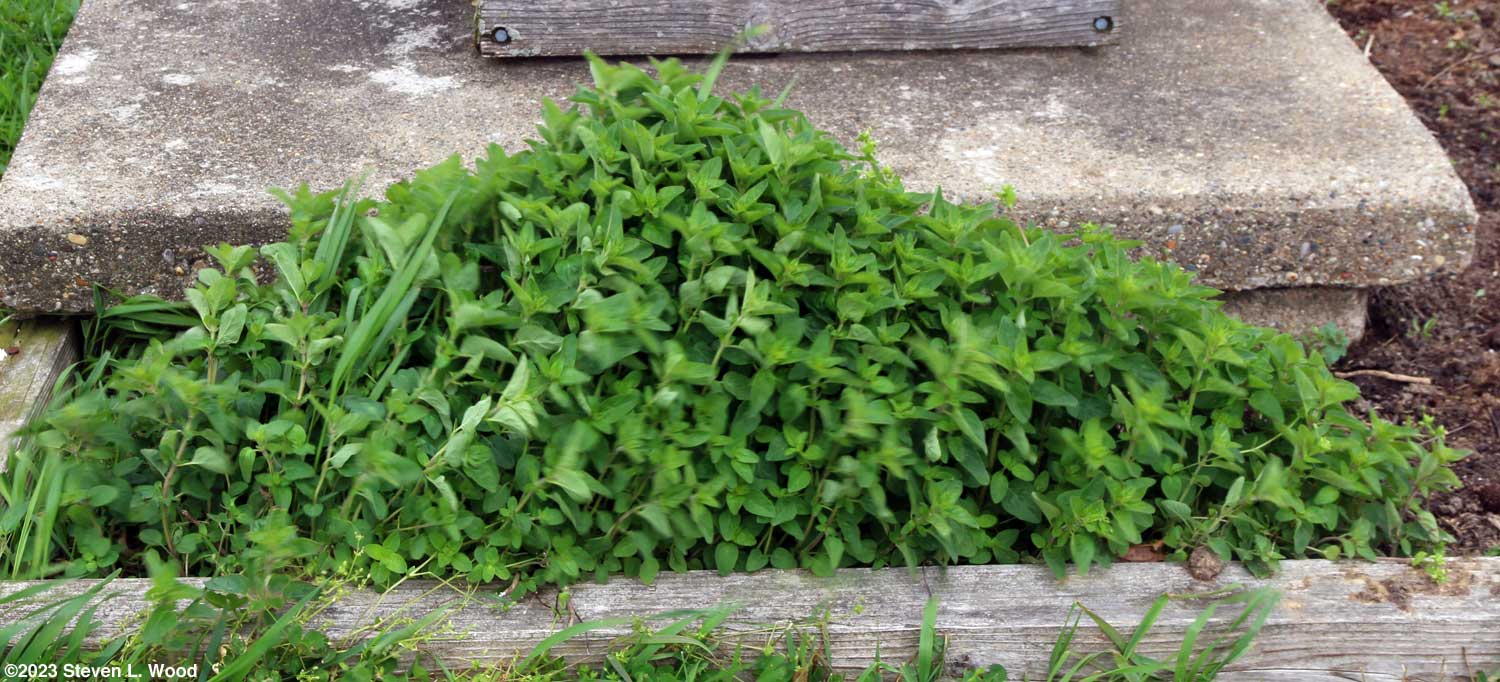
I hope to finish planting and mulching our raised beds in the next week or so. We have tomato, pepper, and pea transplants yet to go in. I'm waiting for the soil to warm up a bit before the tomatoes and peppers get transplanted. The Eclipse pea transplants need another few days of hardening off under the cold frame. Oregano Other than harvesting asparagus for supper, my one big outside job today was harvesting oregano. I'd noticed yesterday that a few blooms were forming. The flavor of dried oregano is said to be better if it is harvested early before the plants bloom.
Around noon, I used a hose to wash the oregano. By mid-afternoon, the sun and wind had dried it. Then I used an old pair of grass clippers to harvest the oregano, holding a fist of it and cutting it with the clippers. It all went into one of our picking buckets (buckets that never have chemicals in them).
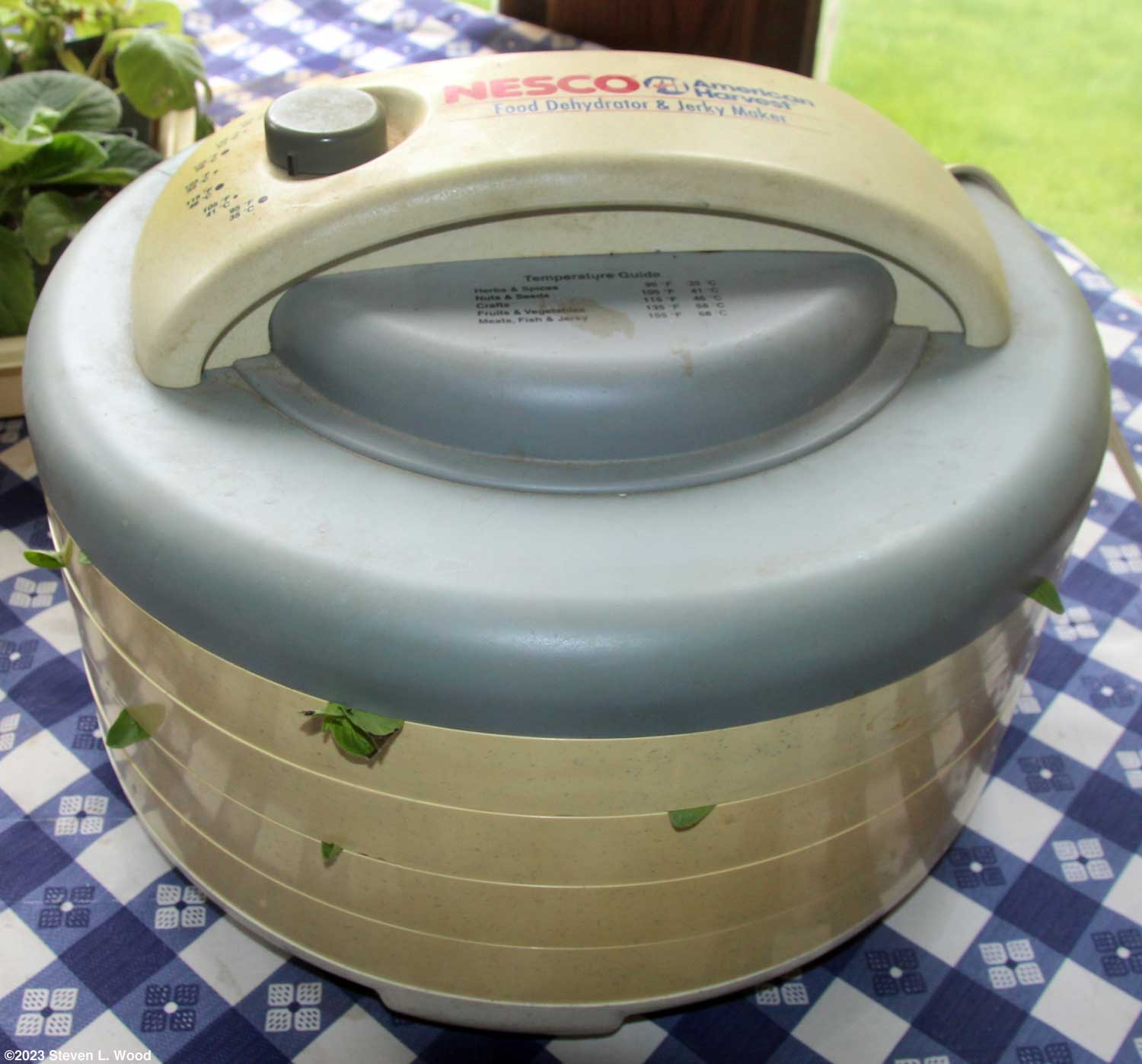
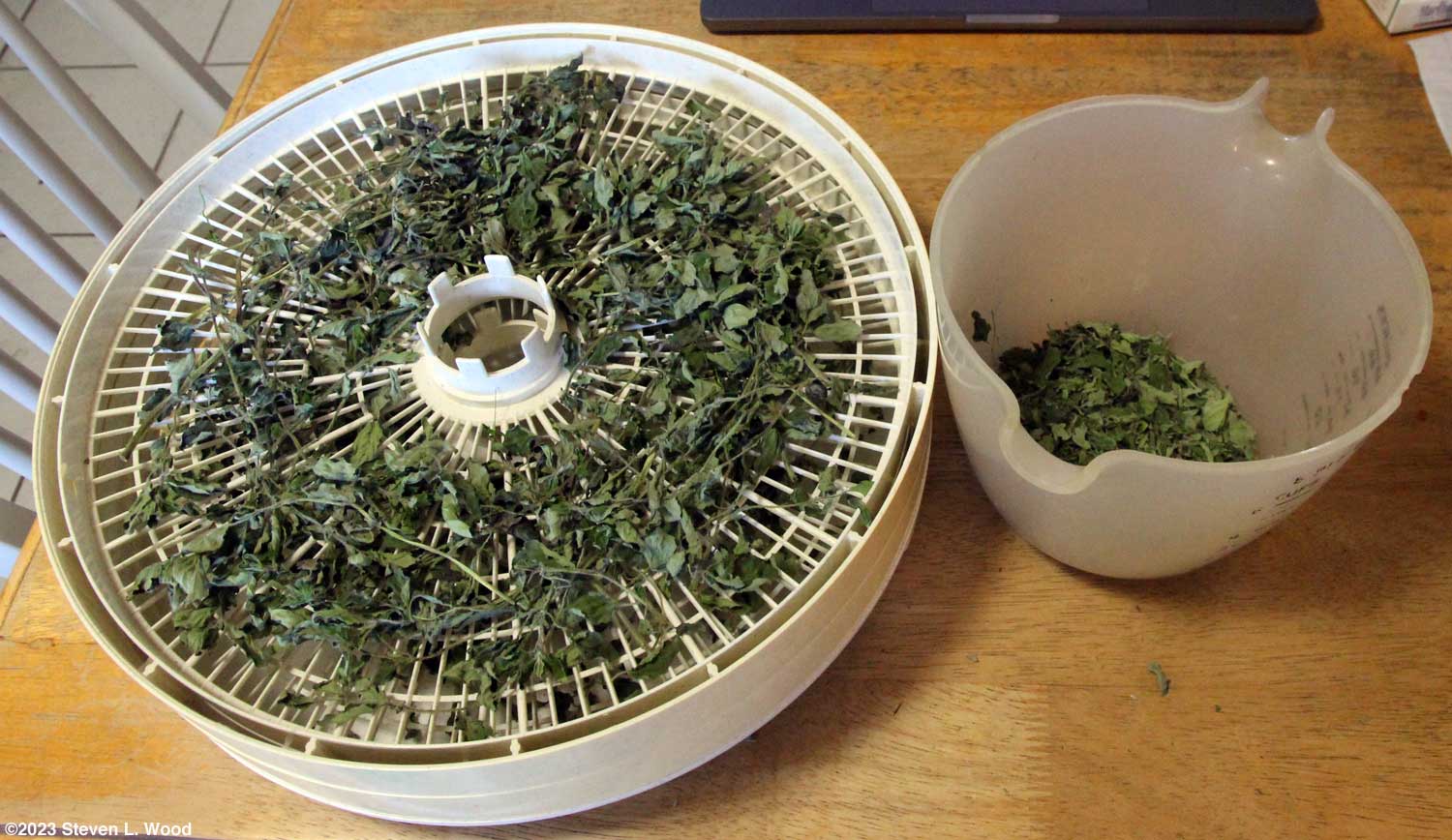
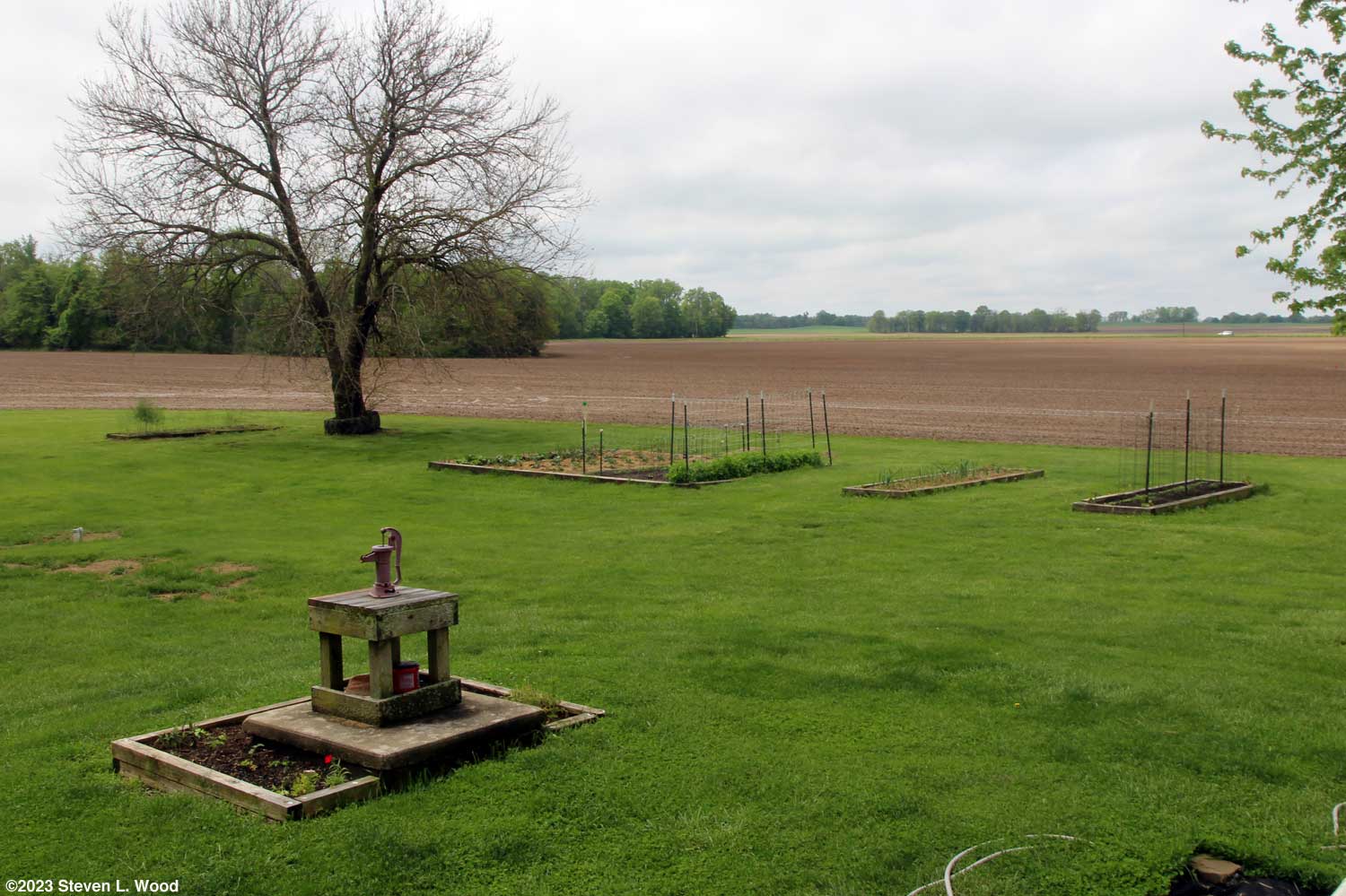
I chose not to stem the oregano as I'd done in the past. I just stacked it thickly on the trays of our food dehydrator. Most guides suggest only a single layer of items to be dried, but the oregano is mostly stems, leaving a lot of room for air passage between the leaves. Relying on an online guide, I set the dehydrator to its lowest setting, 95°F. I checked it after about four hours, and the oregano was drying down nicely. The guide suggested a drying time of "about six to eighteen hours," so I'll check it again before bedtime and probably again tomorrow morning. When completely dry, I'll strip the leaves off the stems and either crush or grind them. We haven't saved oregano for several years and still have a good bit left in a jar. I also will need to dig out some of the aggressive herb, as it tends to totally take over one side of our raised herb bed. A Walk Around Our Raised Beds Pretty much keeping the wind at my back, I walked around our raised beds this afternoon taking pictures of the various crops. Sadly, I got to picking and forgot shots of our asparagus patches.
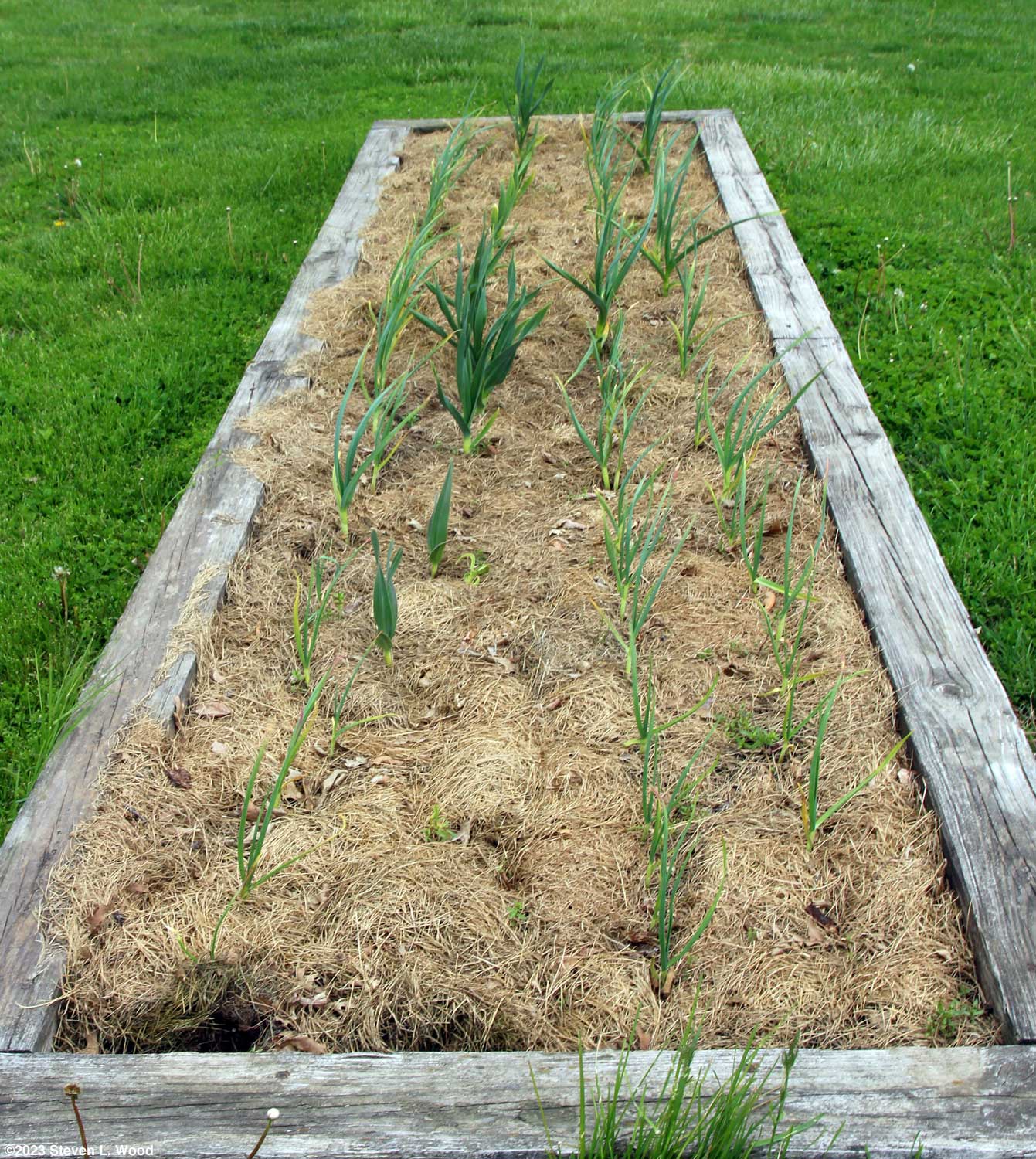
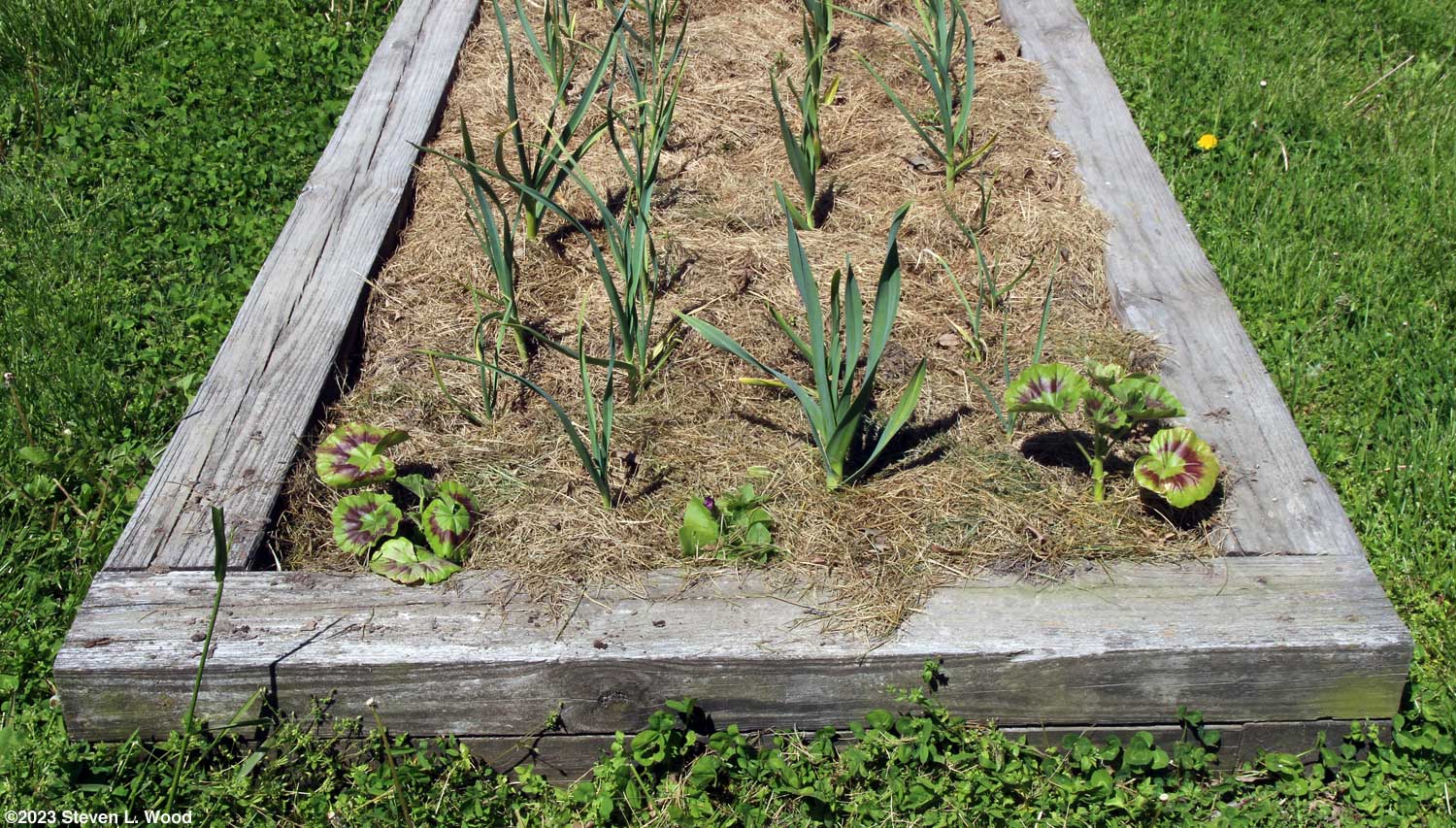
Our Abundant Bloomsdale spinach and Eclipse peas are emerging. Our fall planted garlic is now fully mulched.
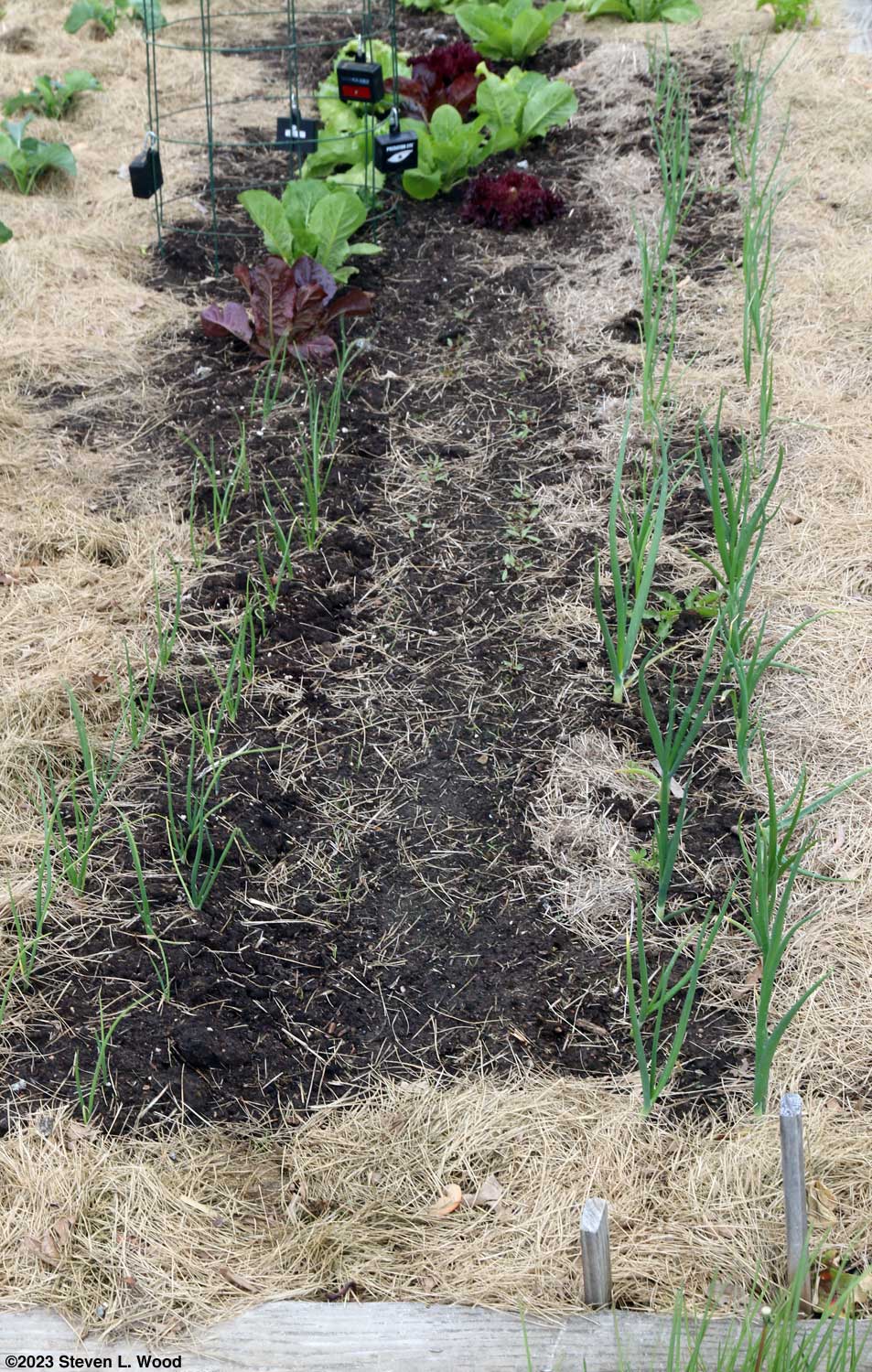
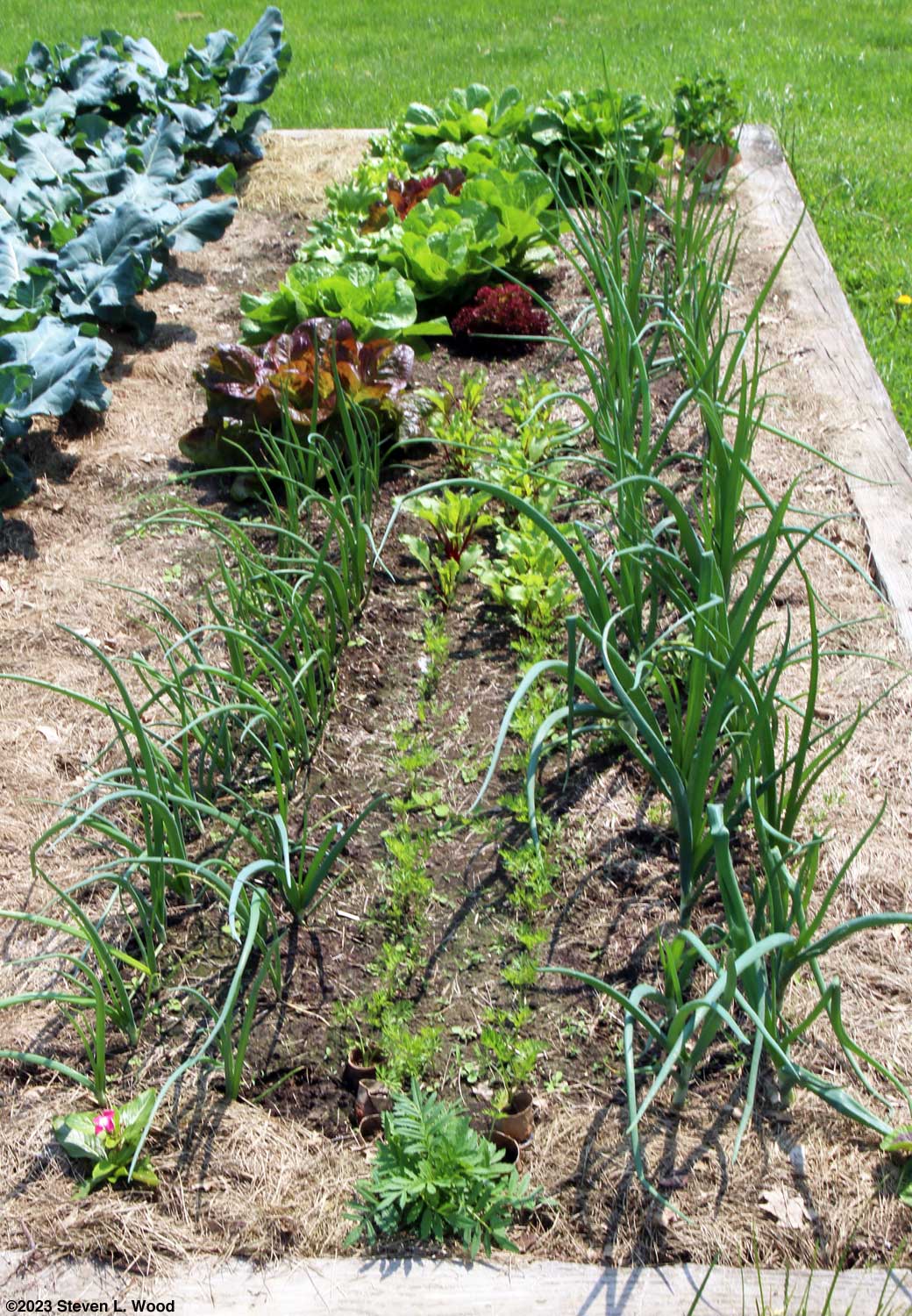
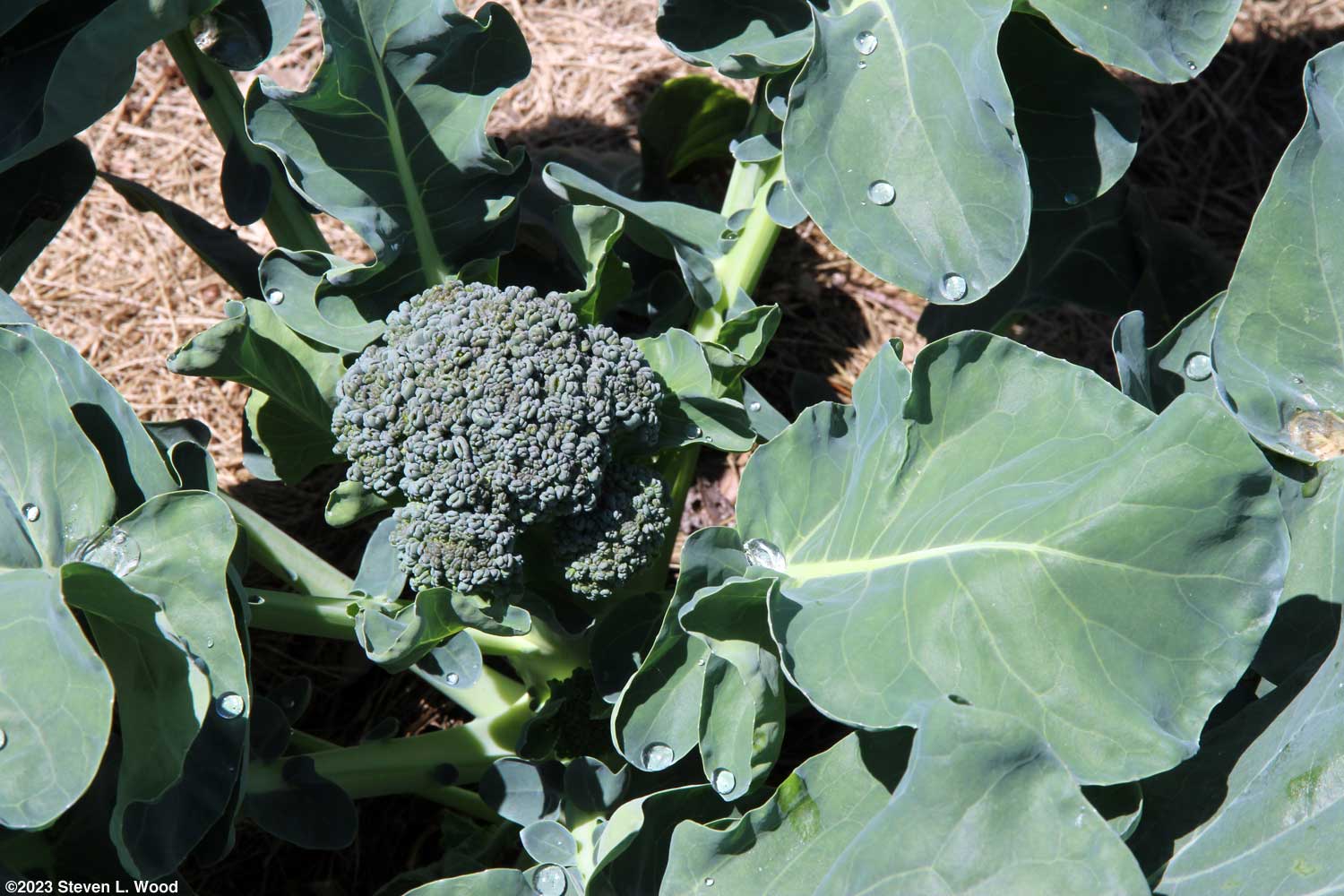
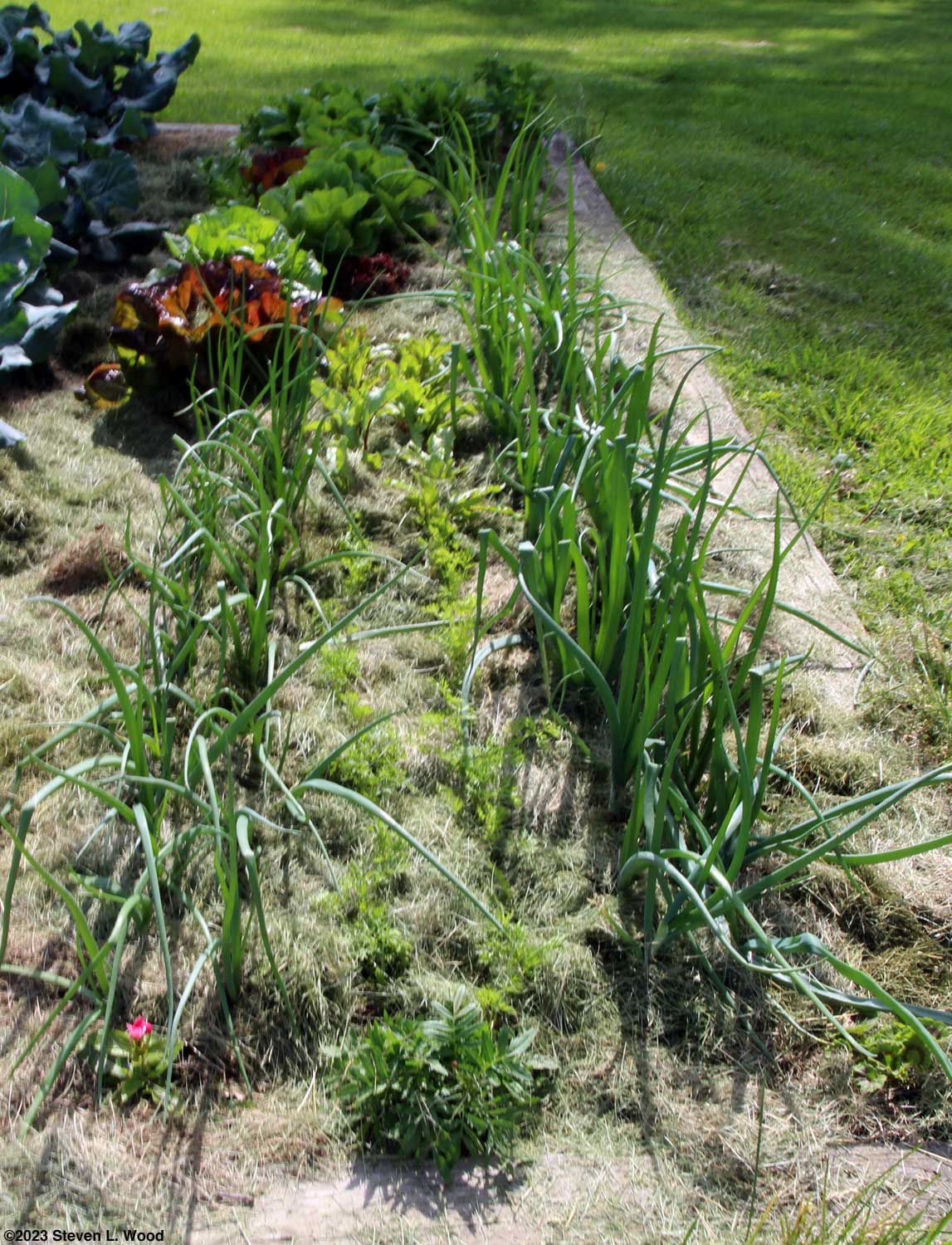
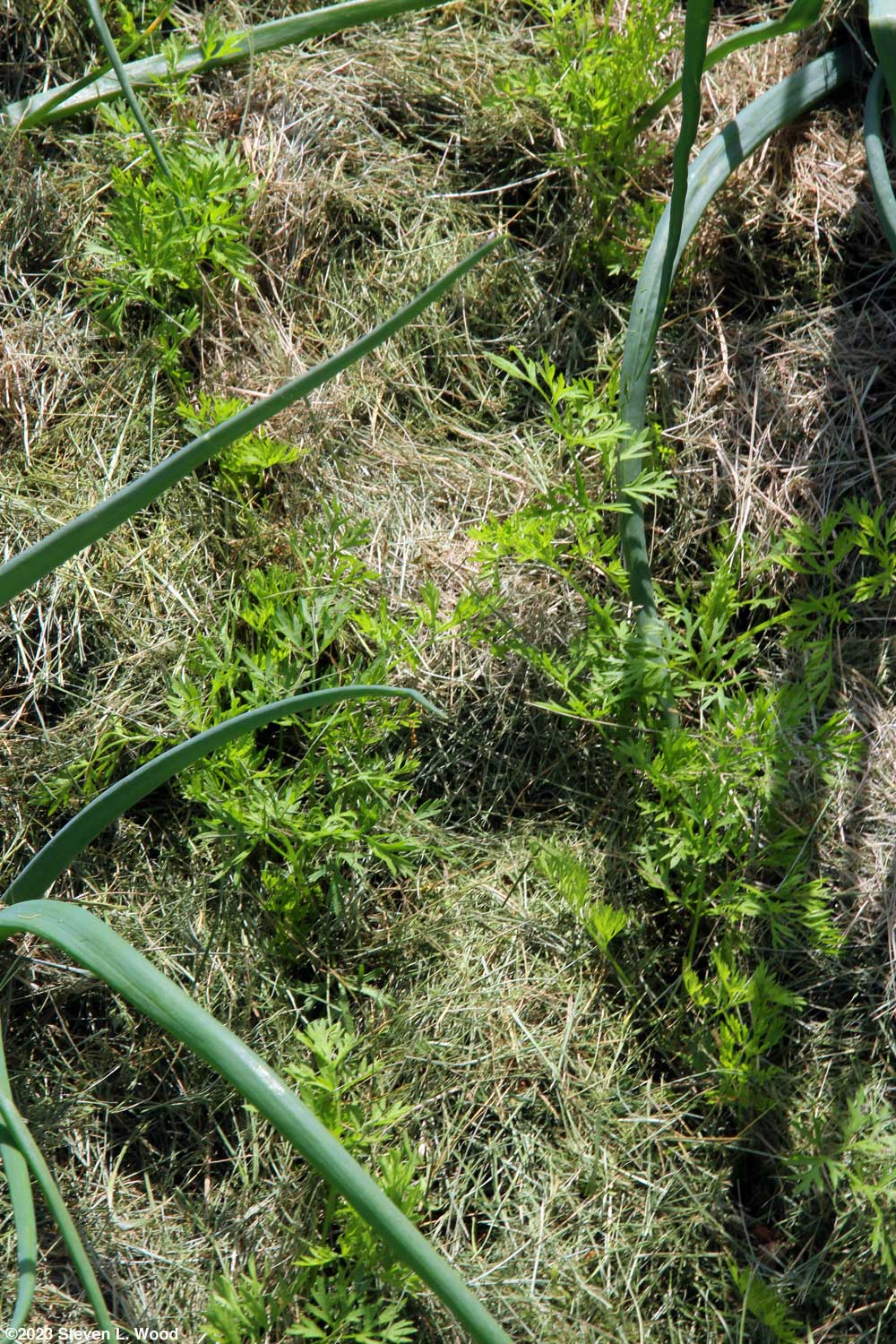
Our cauliflower and hybrid broccoli look good. I think I got the mulch on too soon on our open pollinated Goliath broccoli for seed saving. We've lost a few plants. Our intensive bed of onions has almost invisible carrots and beets. I may have to re-seed some of the carrot rows.
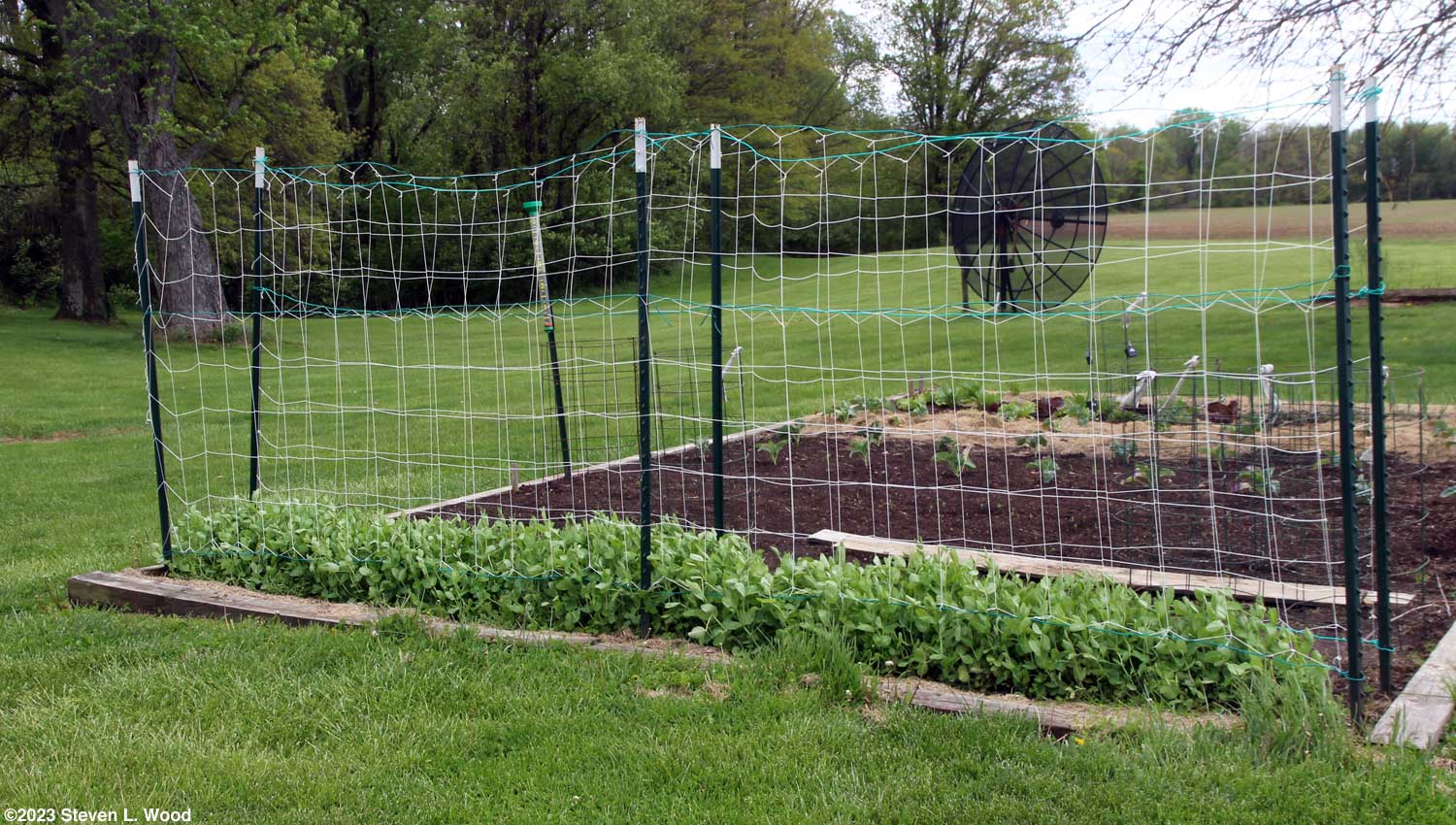
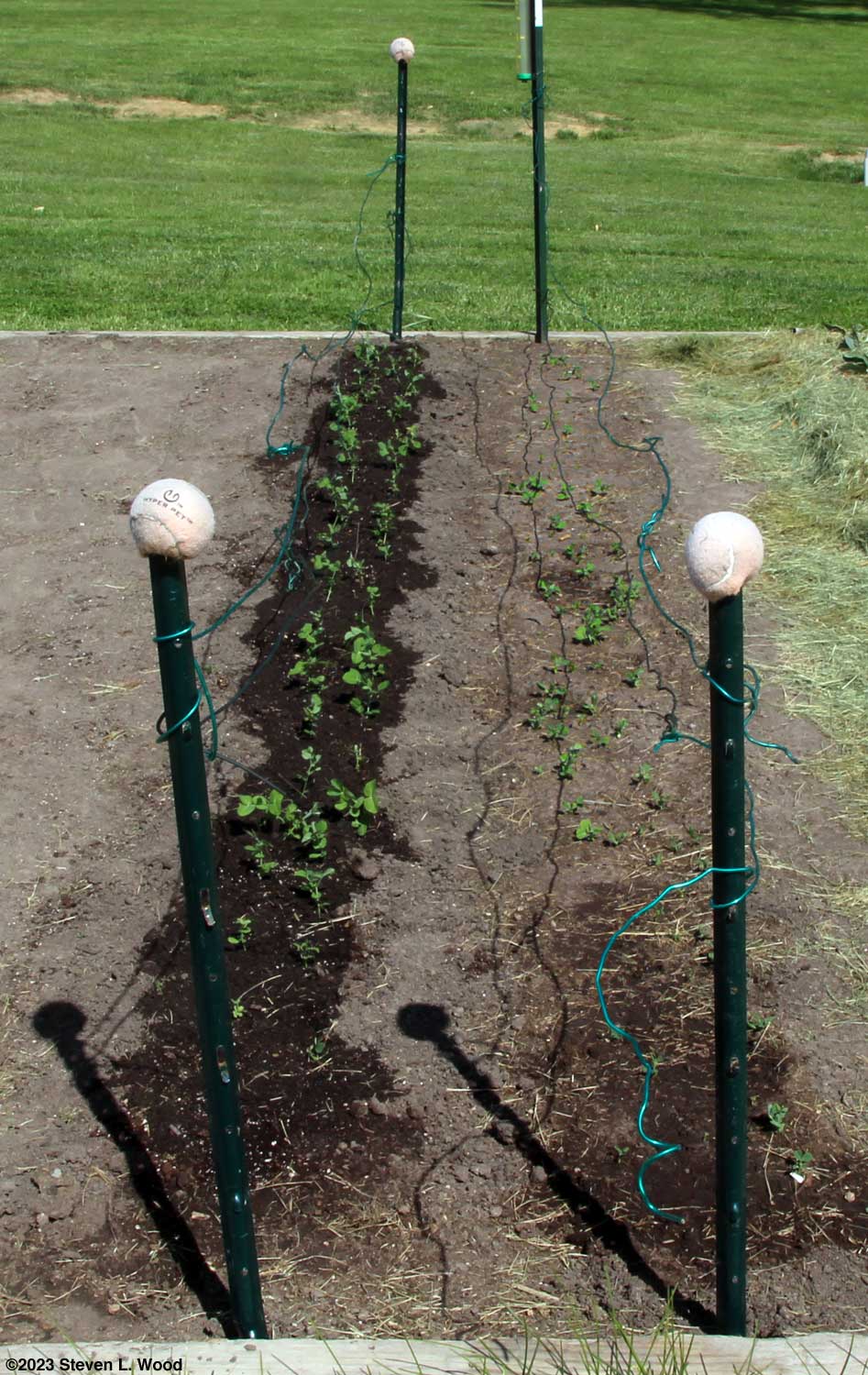
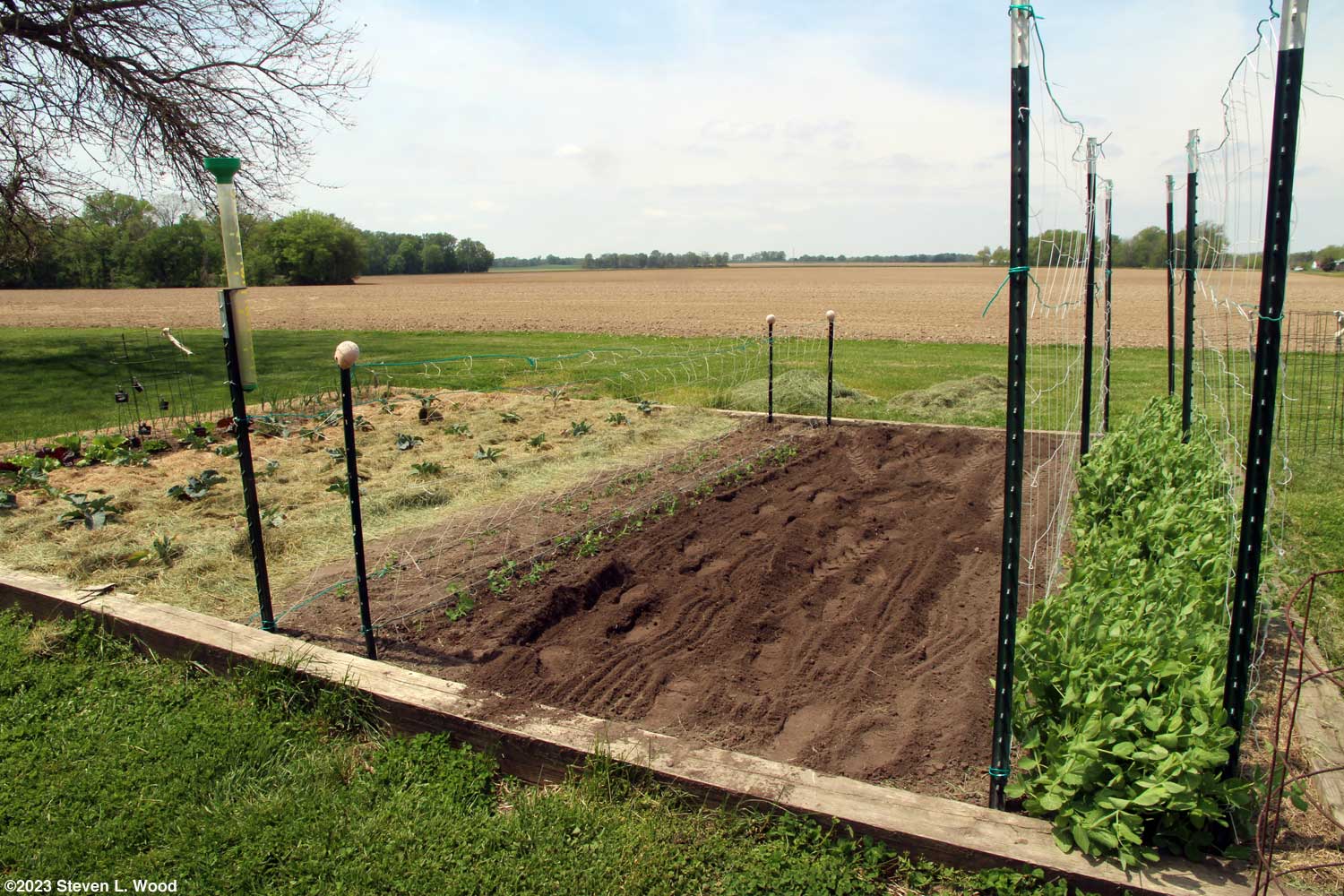
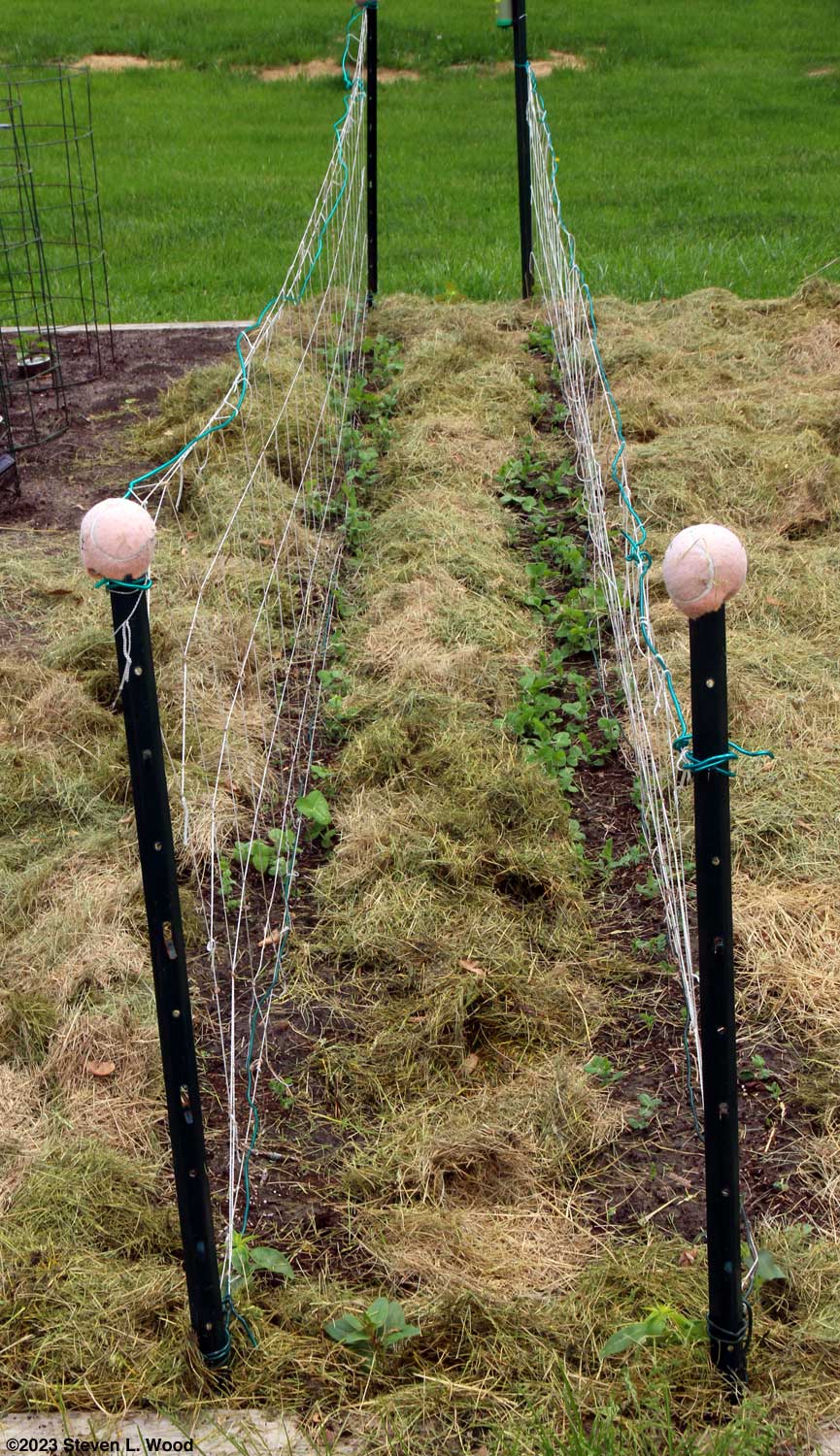
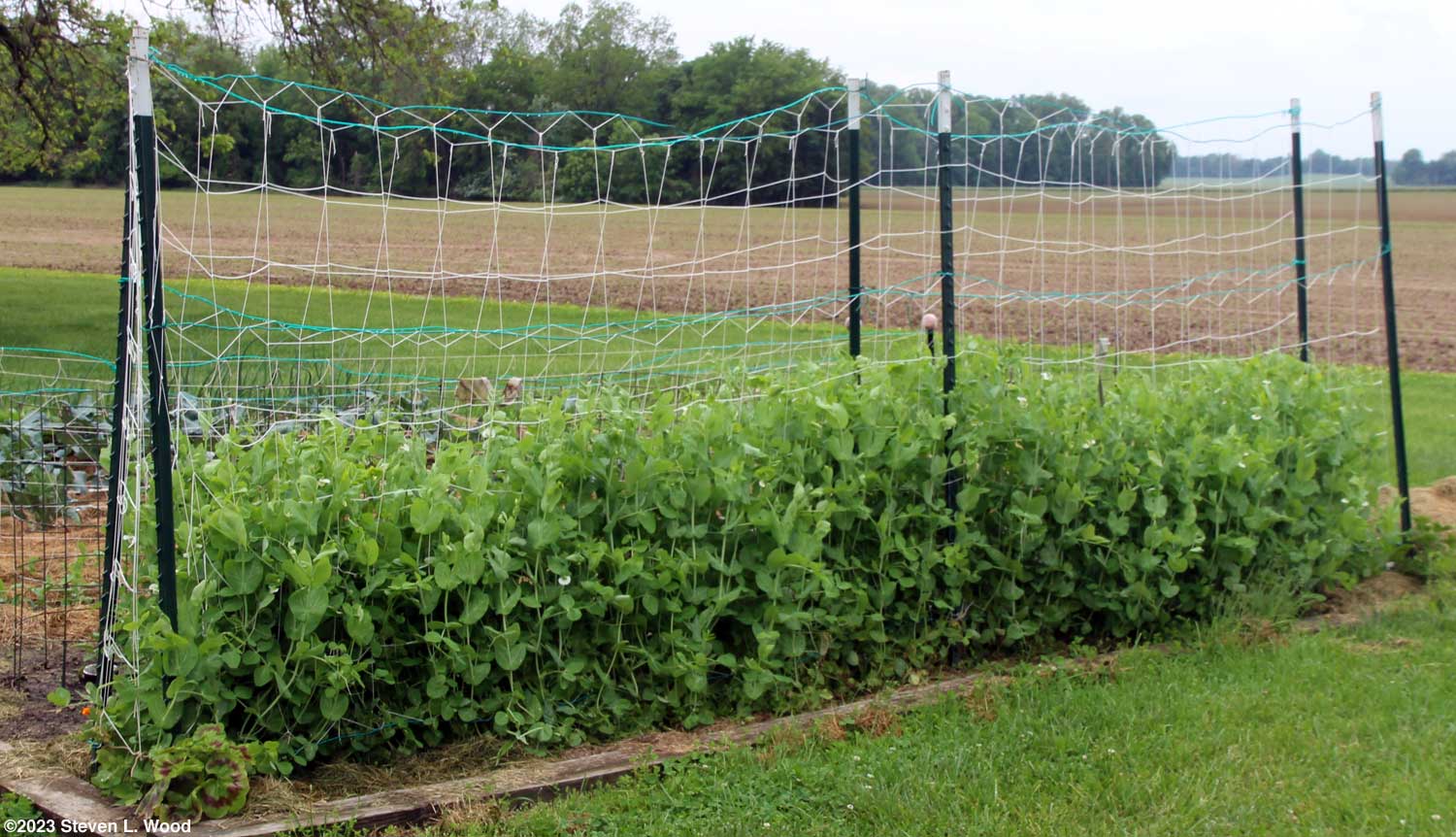
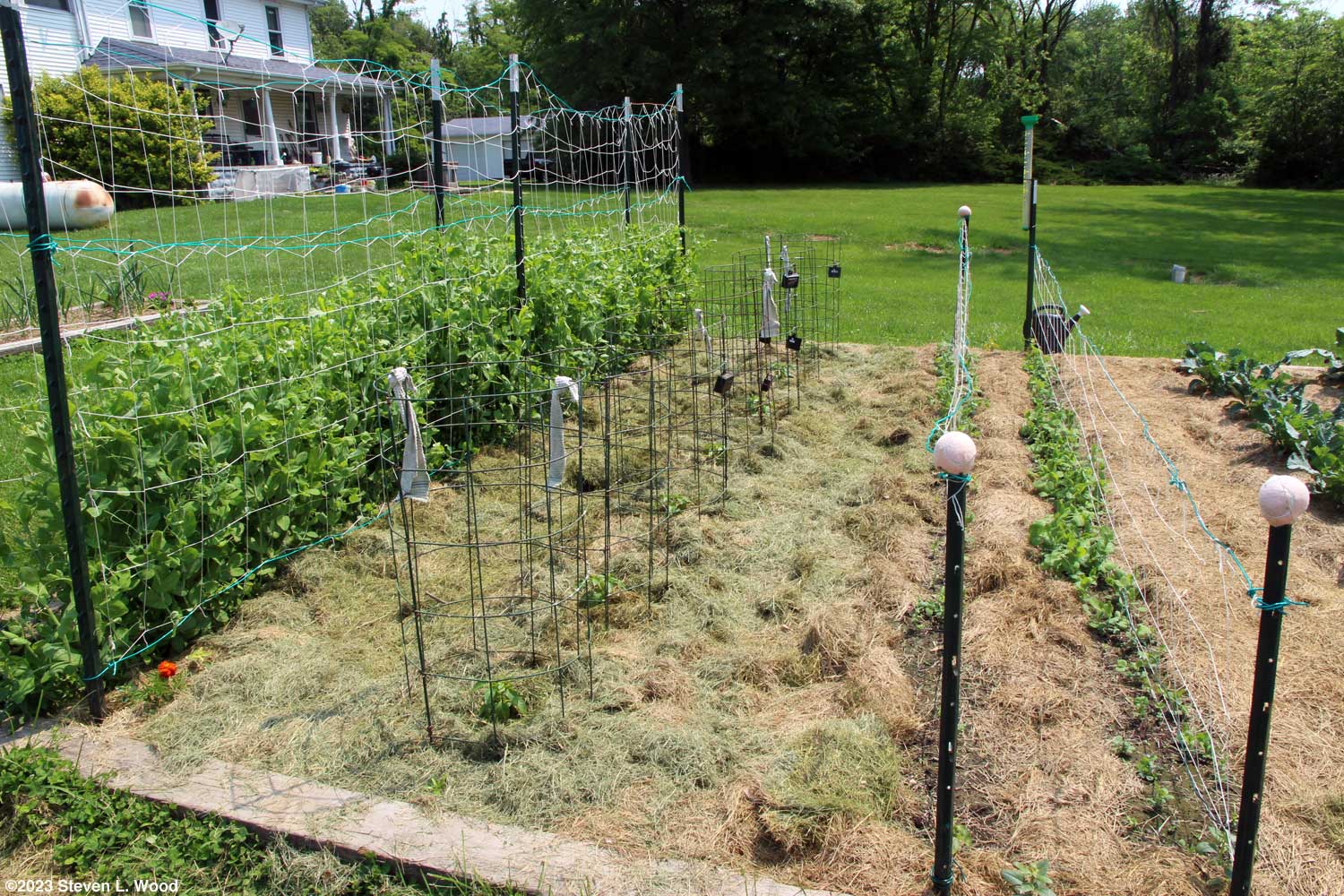
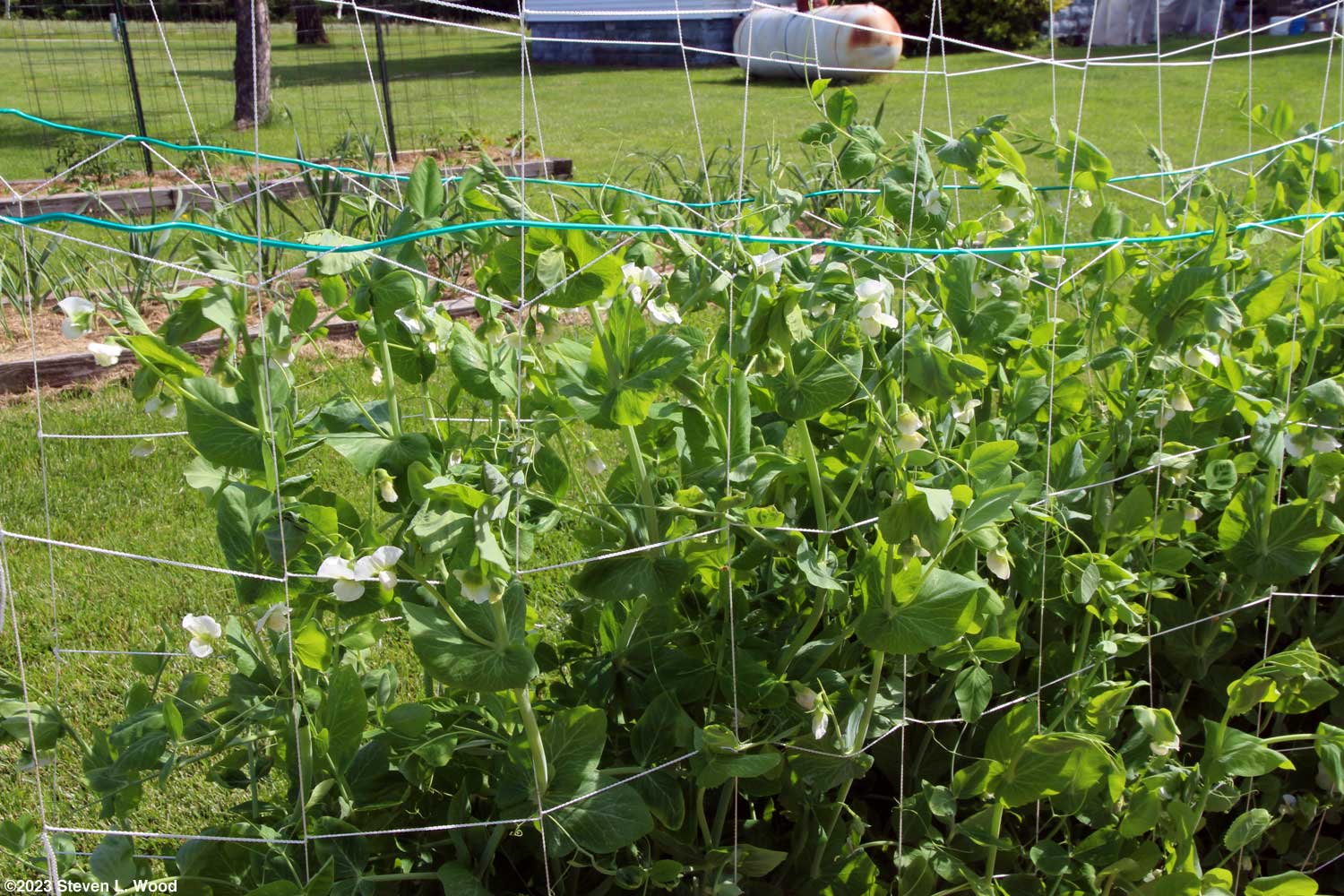
Our early, tall peas are beginning to climb their trellises. Planted in early March, they're consistently one of our most dependable crops.
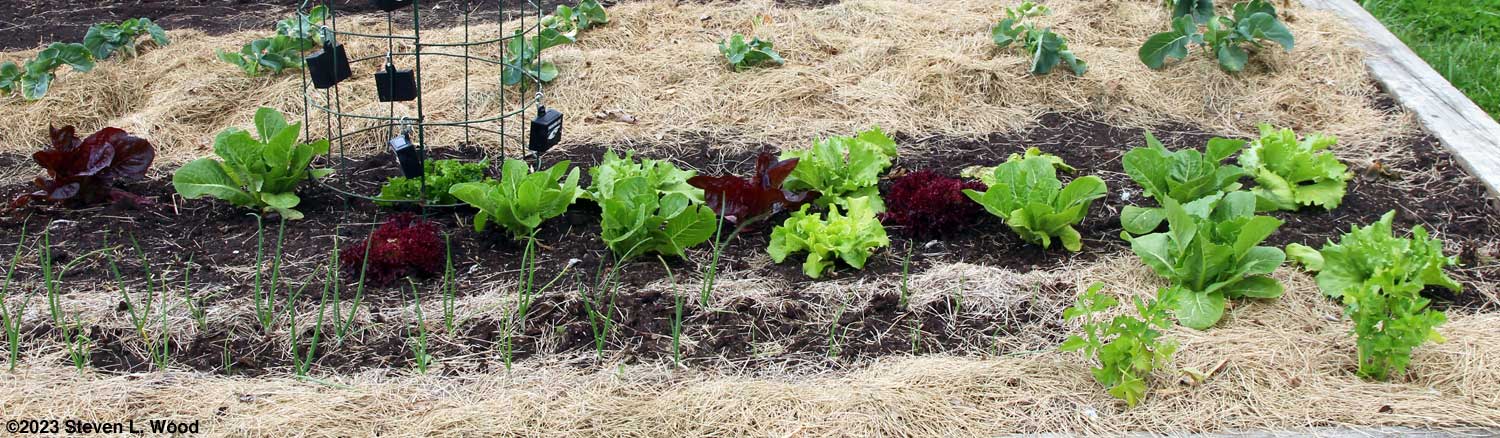
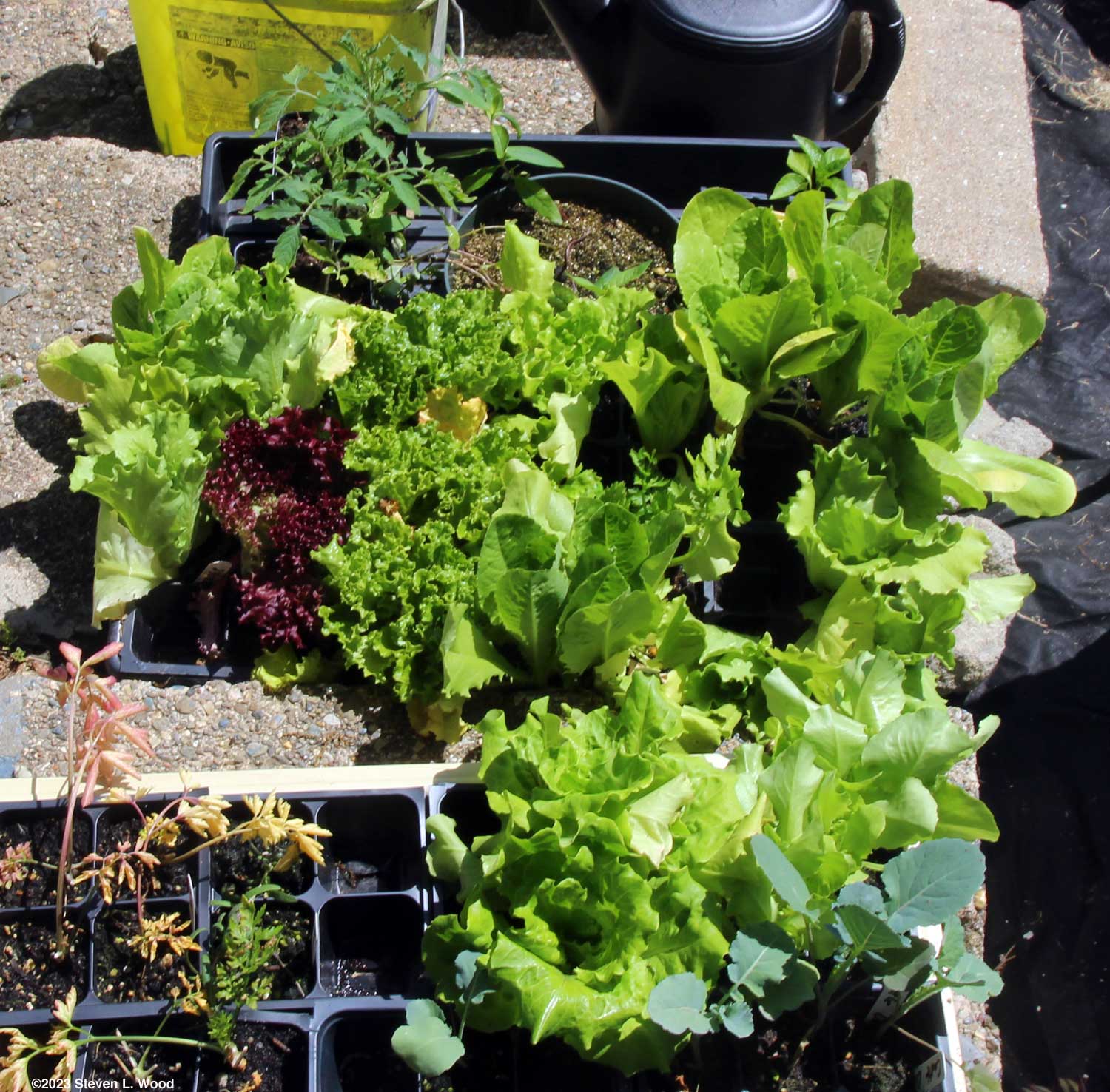
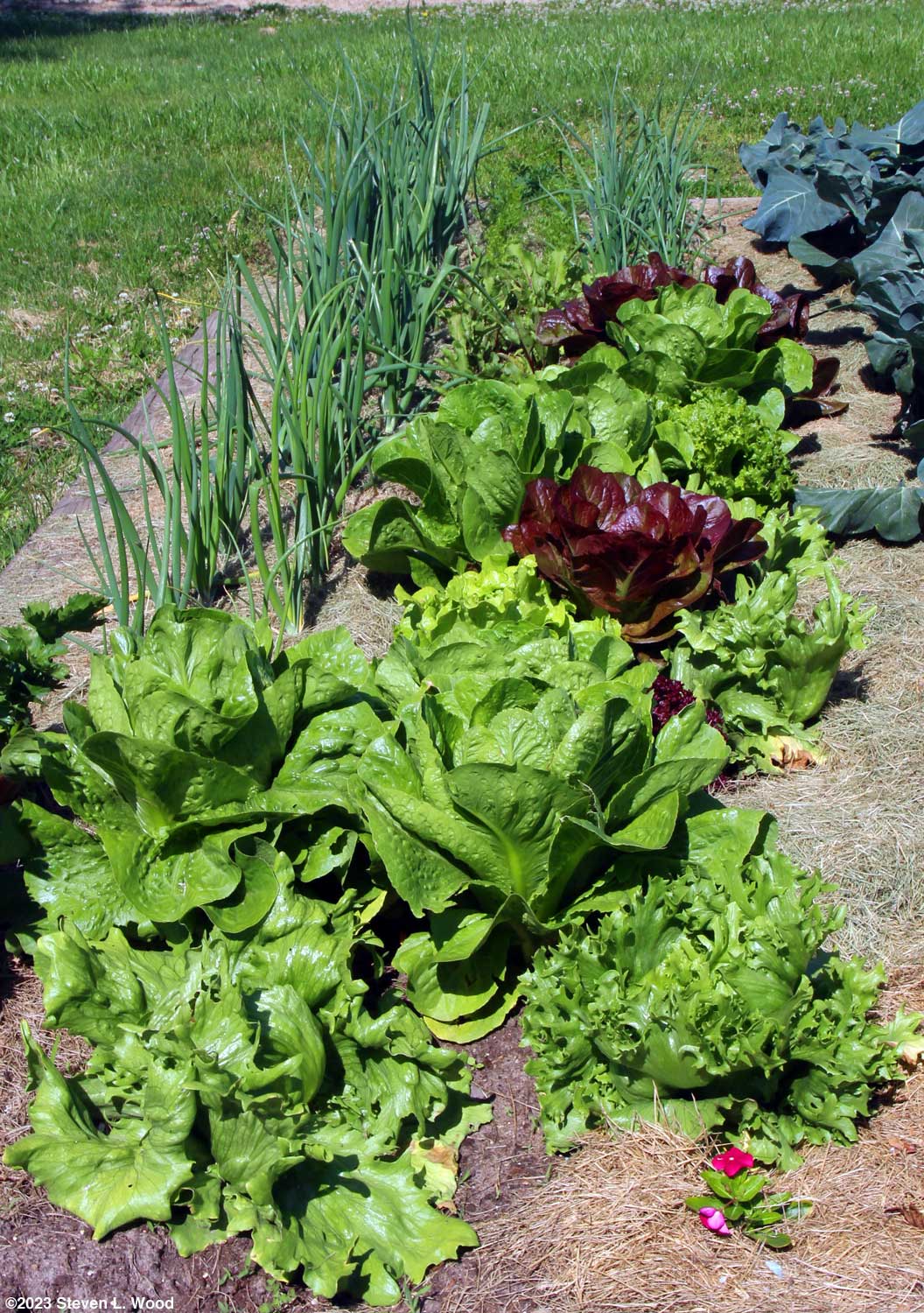
I'm pleasantly surprised that our celery and lettuce hasn't had any critter damage as yet. I'll soon start harvesting some of the leaf lettuce for salads. It's all edible from this stage on. As I pick, I'll replace with our leftover lettuce starts. I offered them to nearby Facebook friends, but didn't have any takers! Looking Ahead I brought in our melon and squash seed from the big freezer today. While most of our transplants get around six weeks to grow before transplanting, melons and squash grow so fast that about four weeks from seeding is what they'll need. By six weeks, they outgrow their pots and stems break at transplanting. If the weather cooperates, I'll soon rototill our East Garden plot for potatoes, sweet corn, yellow squash, and melons. It's an exciting time of the gardening year.
|
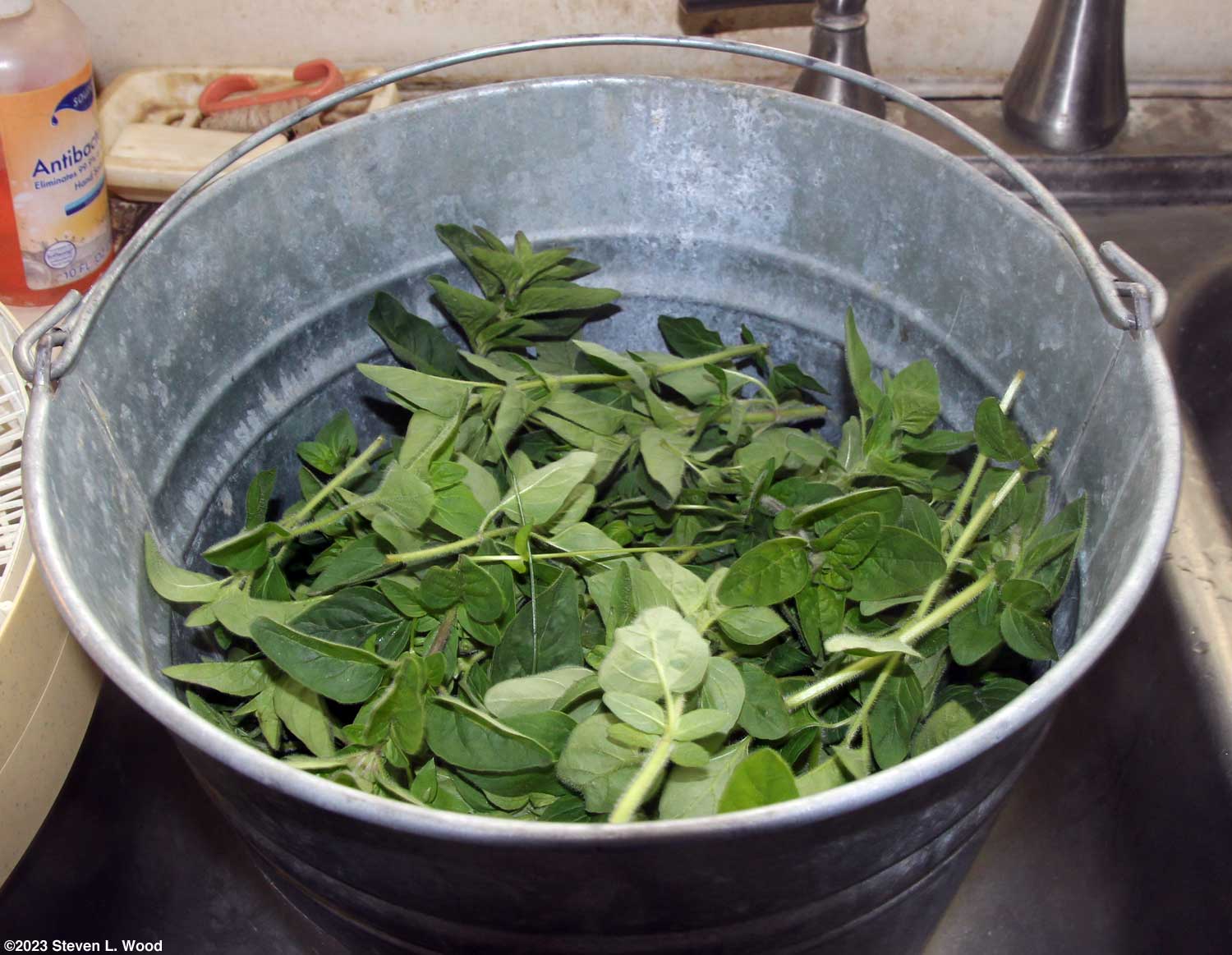
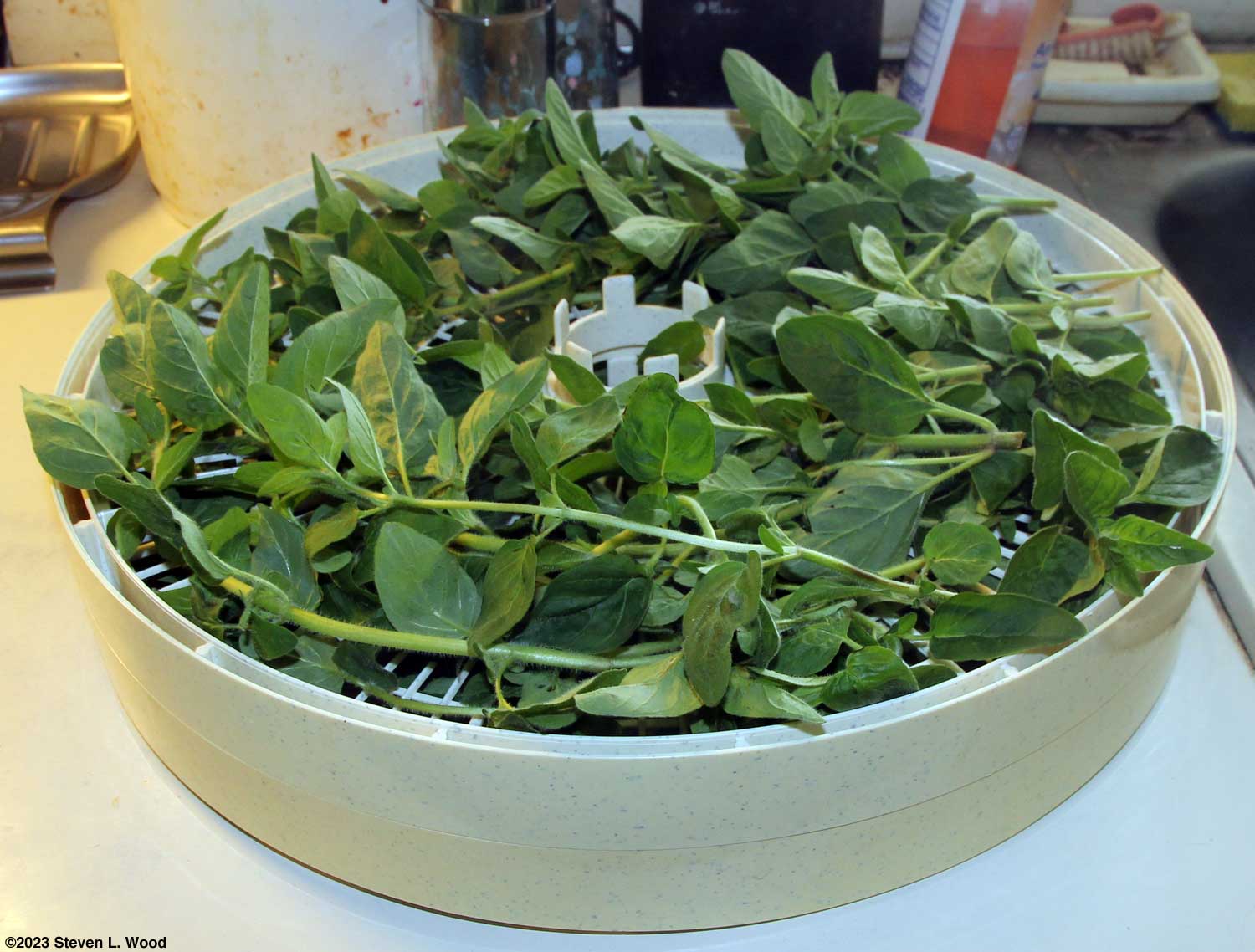




Tuesday, May 2, 2023 - Oregano
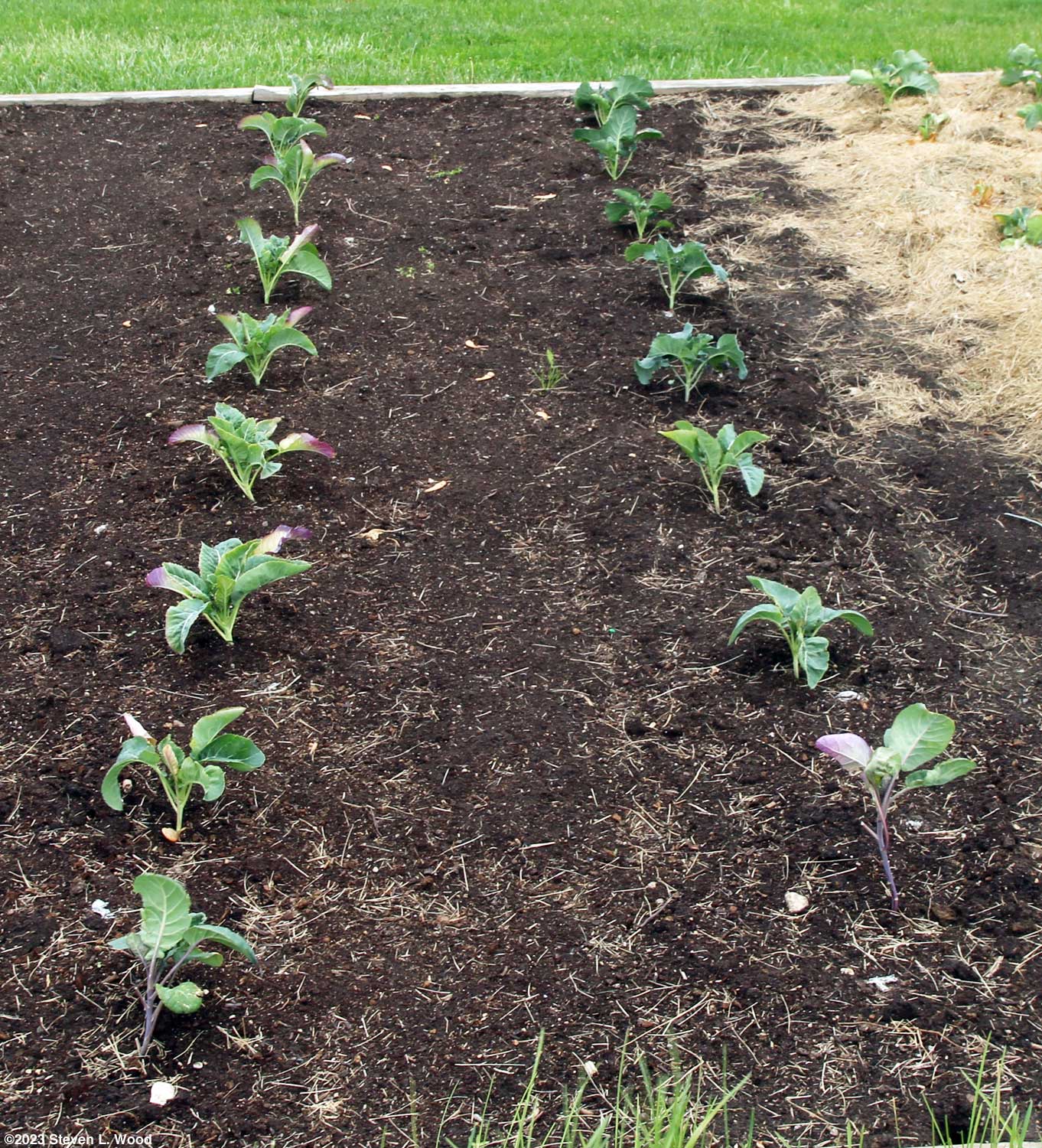
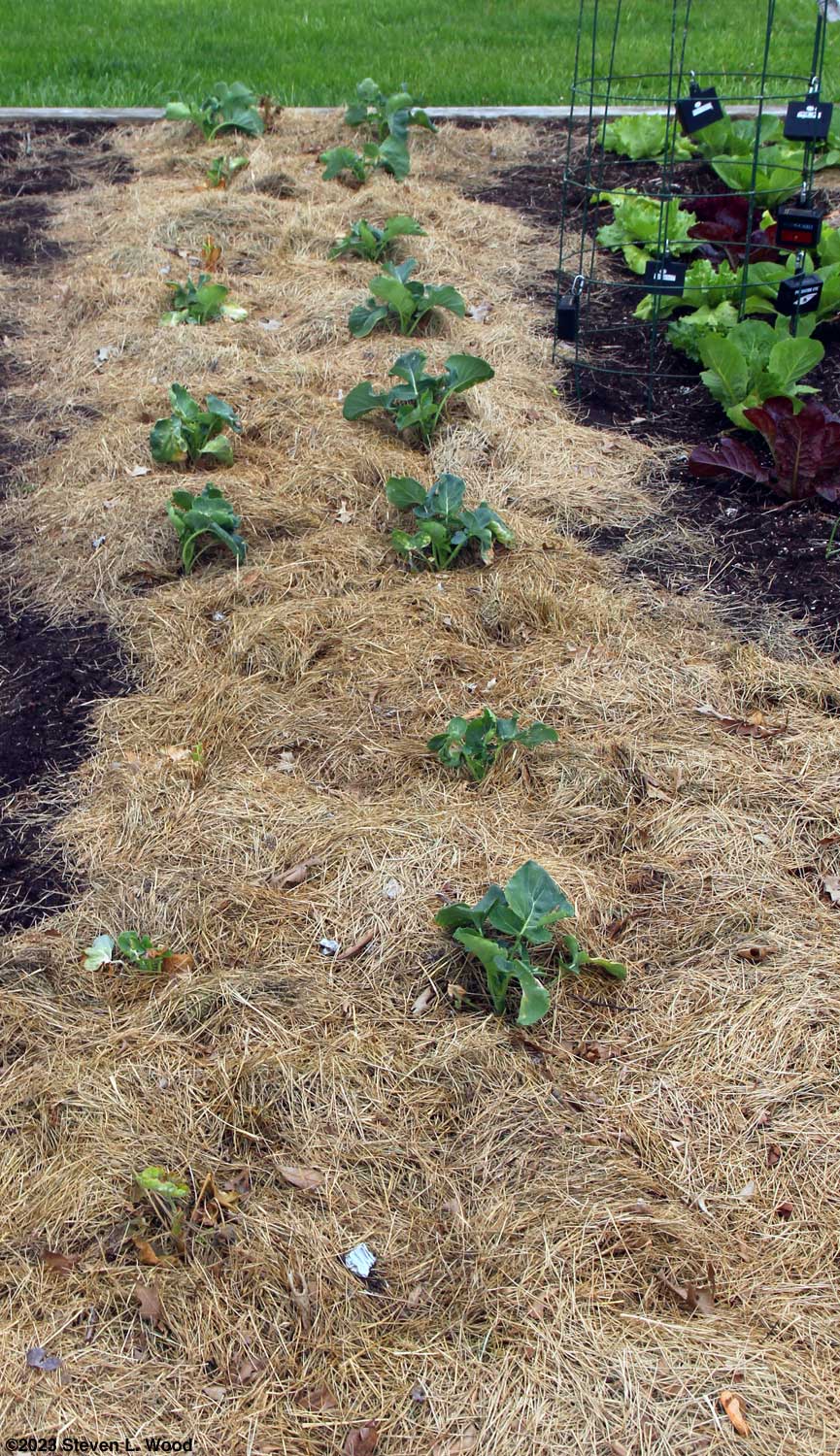
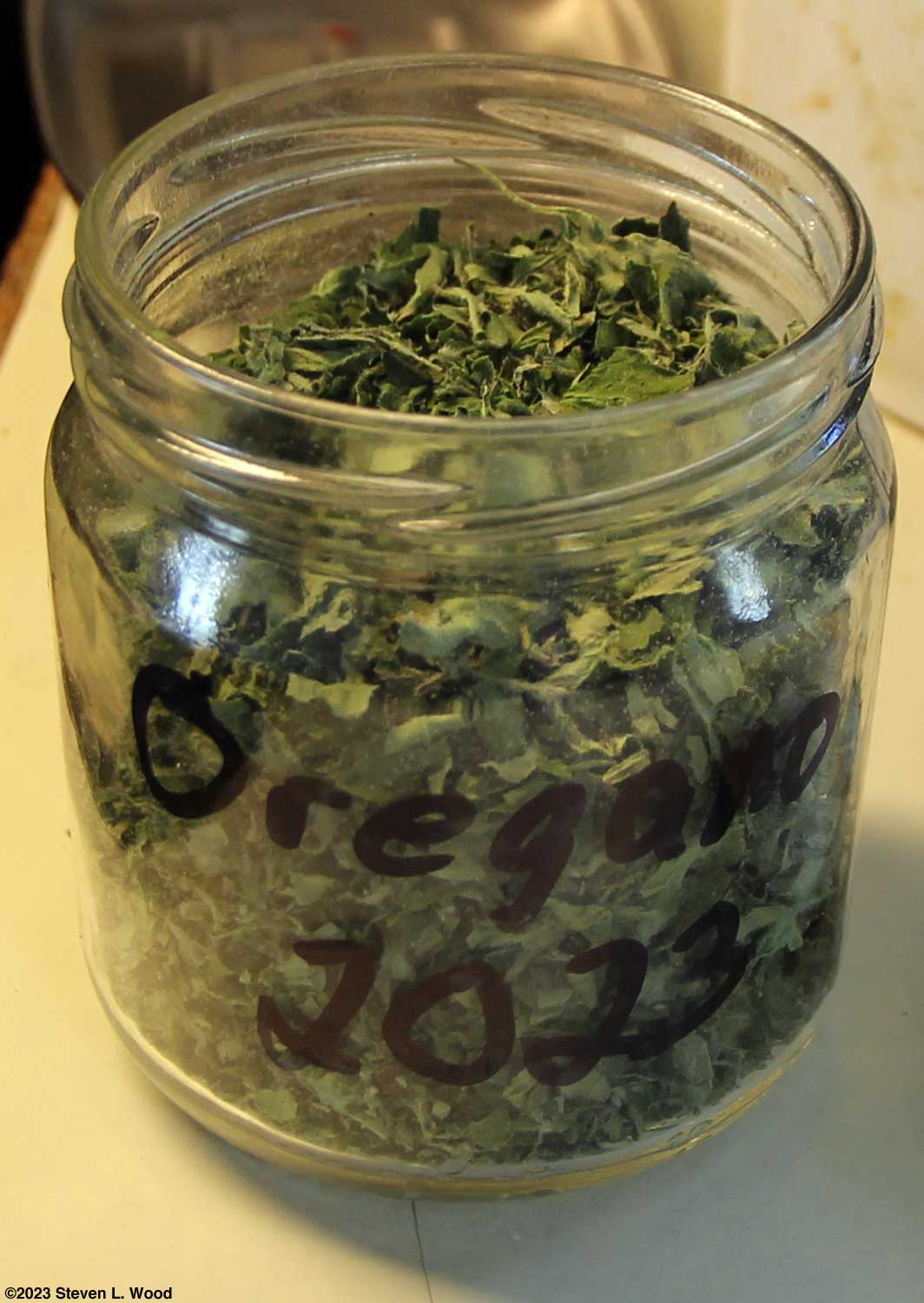
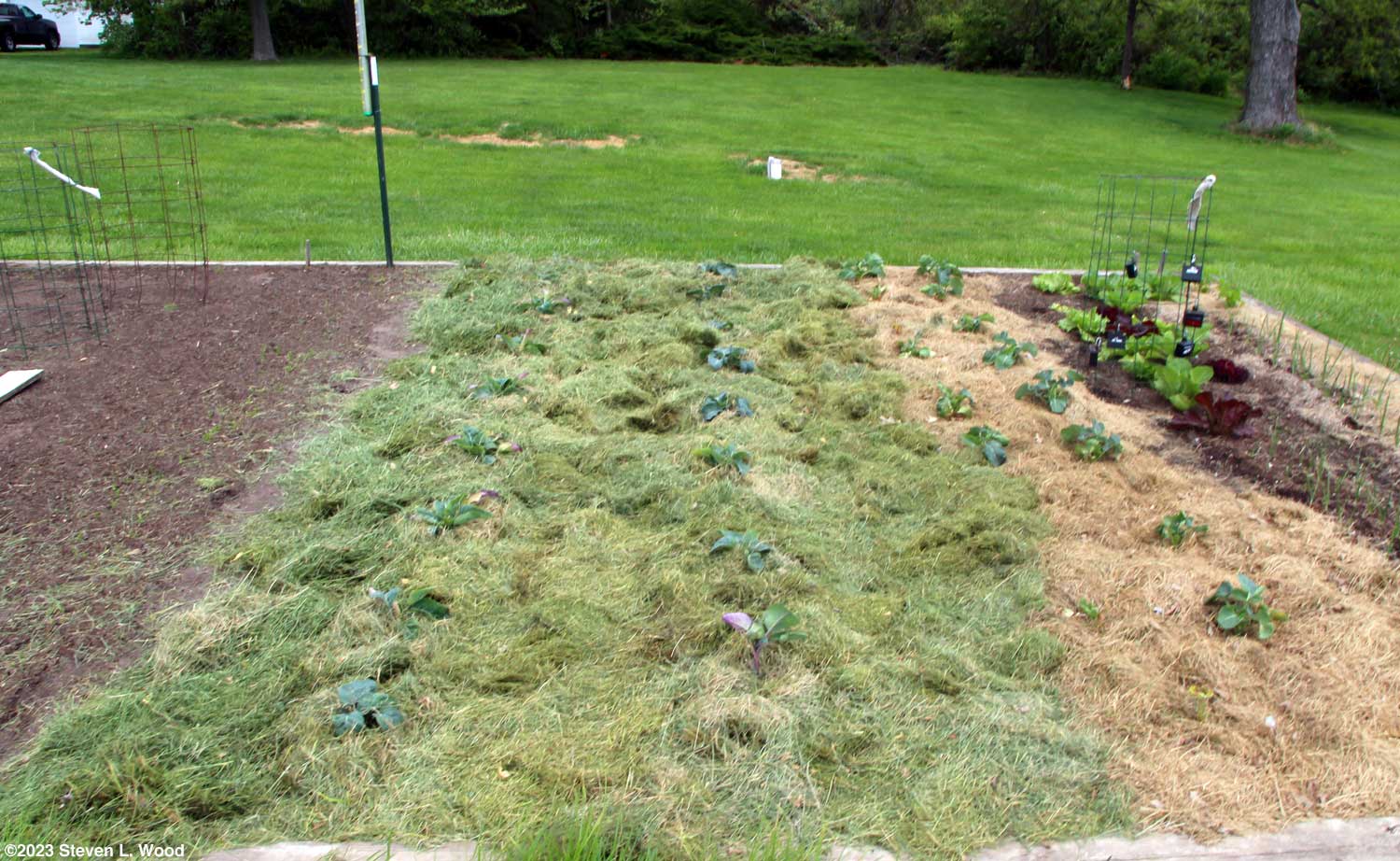
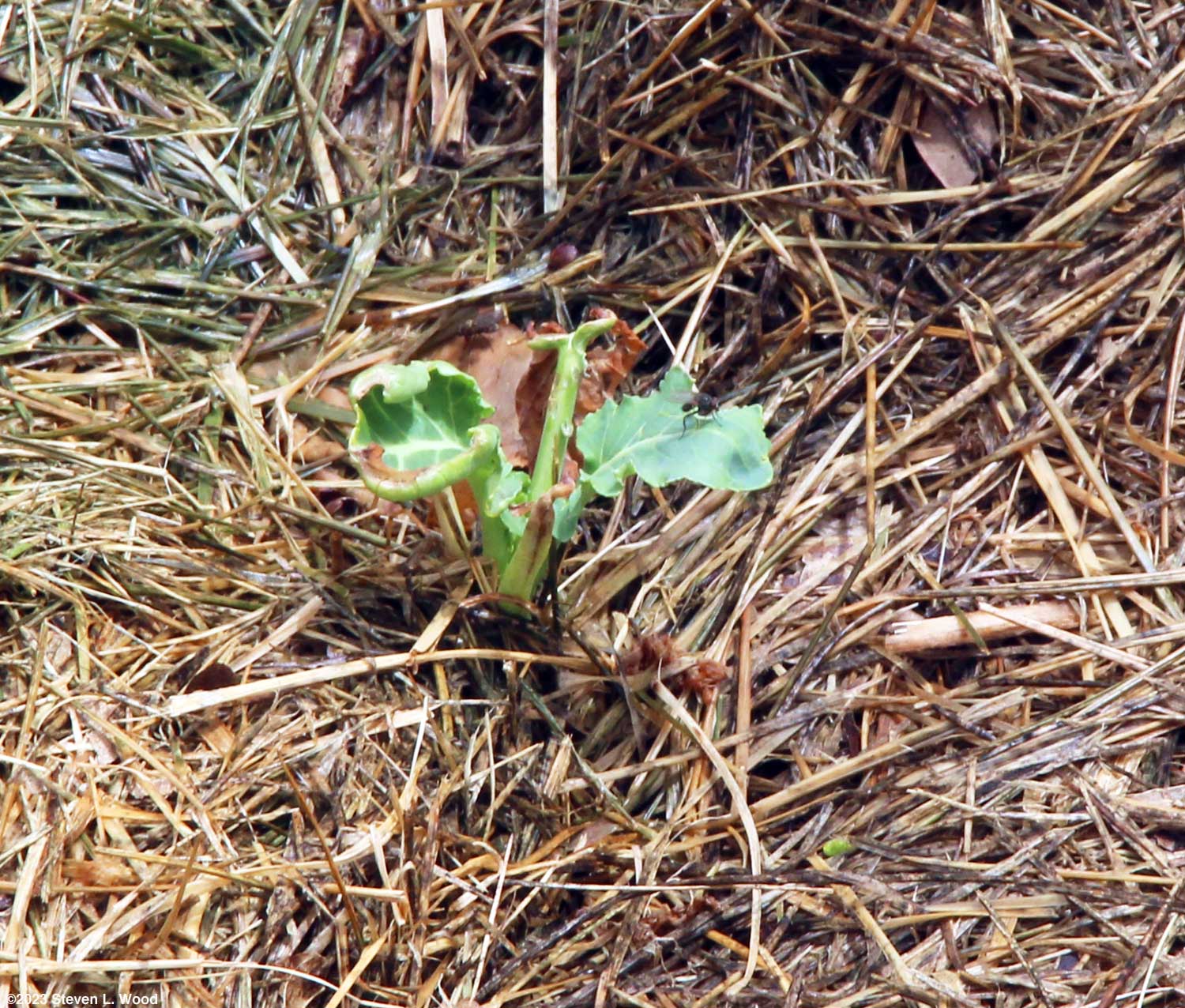
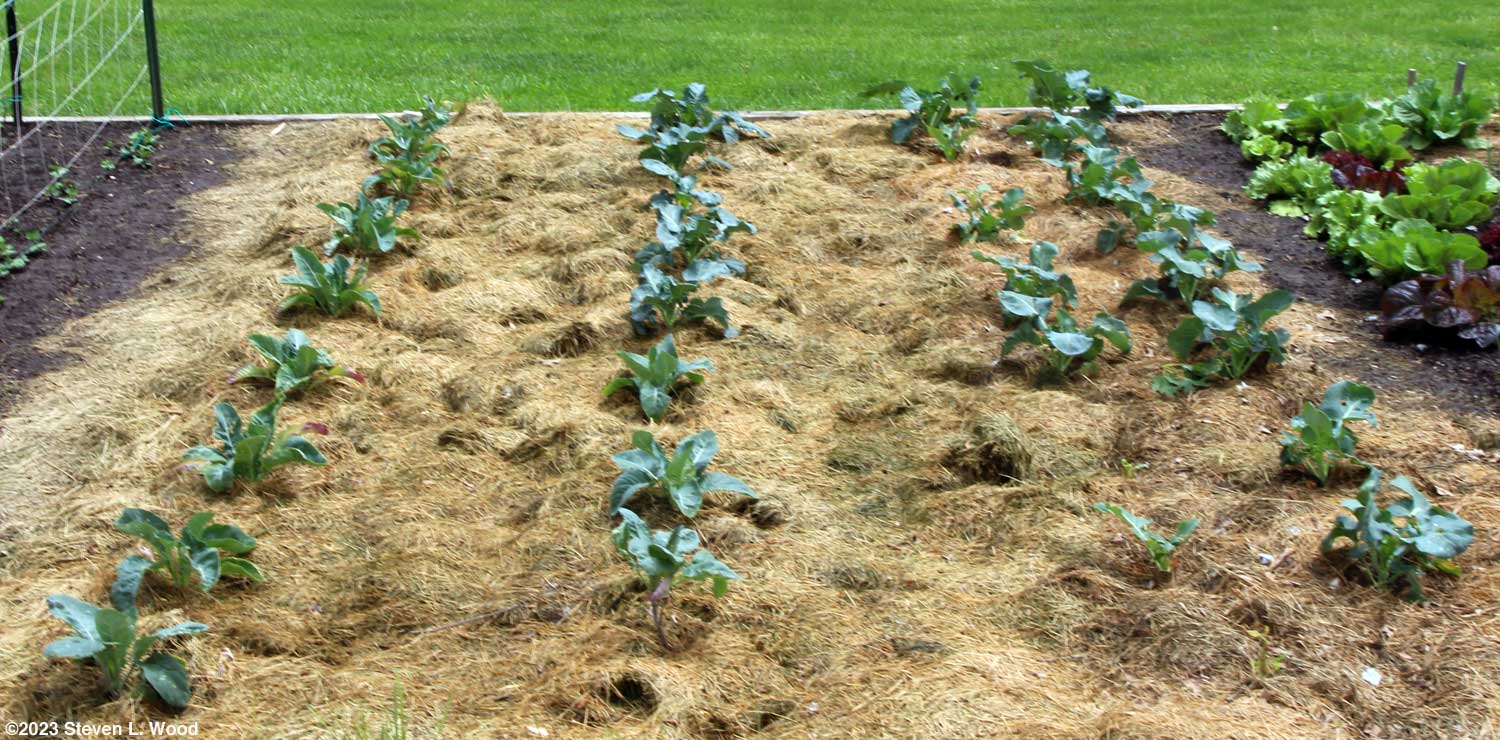
When I looked at our old jar of oregano, it was dated 2019. So it was high time for a refresh. Not Tonight, Deer! I also worked our homebrew of Not Tonight, Deer! It needed some water added and a good stirring as it continues to rot. In the past, the combination of rotting eggs, white pepper, and habanera sauce has been effective in deterring deer from our sweet corn. Mulching Being very careful to only get fully dried grass clippings around the plants, I mulched our remaining two rows of brassicas this afternoon. There's one row of hybrid broccoli with an odd red cauliflower at the end and another full row of cauliflower.
The double row of Goliath broccoli is recovering after I got some too hot mulch close to a few of the plants. I think I'll have to replace one or two plants that got burned. And surprisingly, the geraniums I though a frost had killed are coming back from the roots and stems. I saw new growth at the base of all four plants I thought were dead.
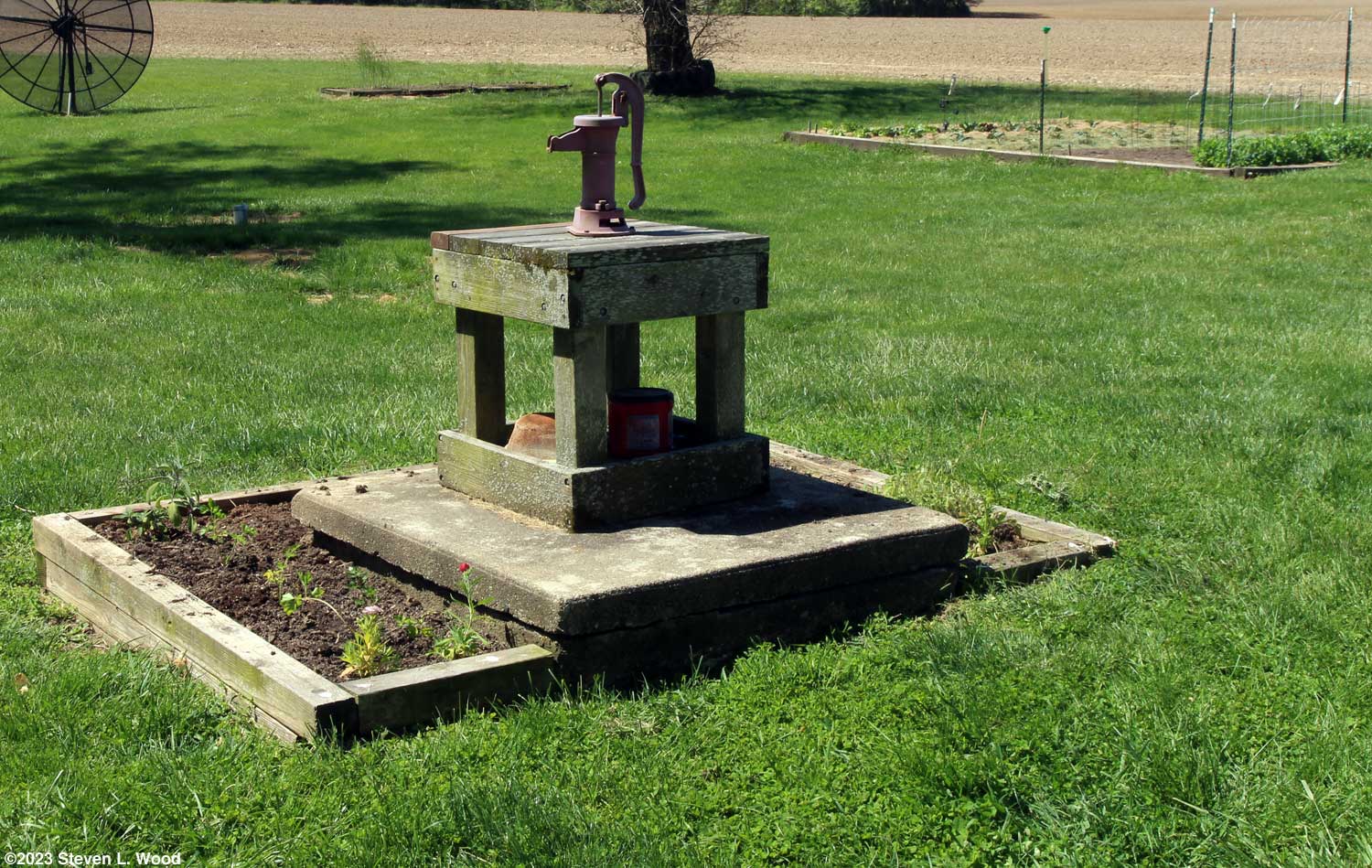
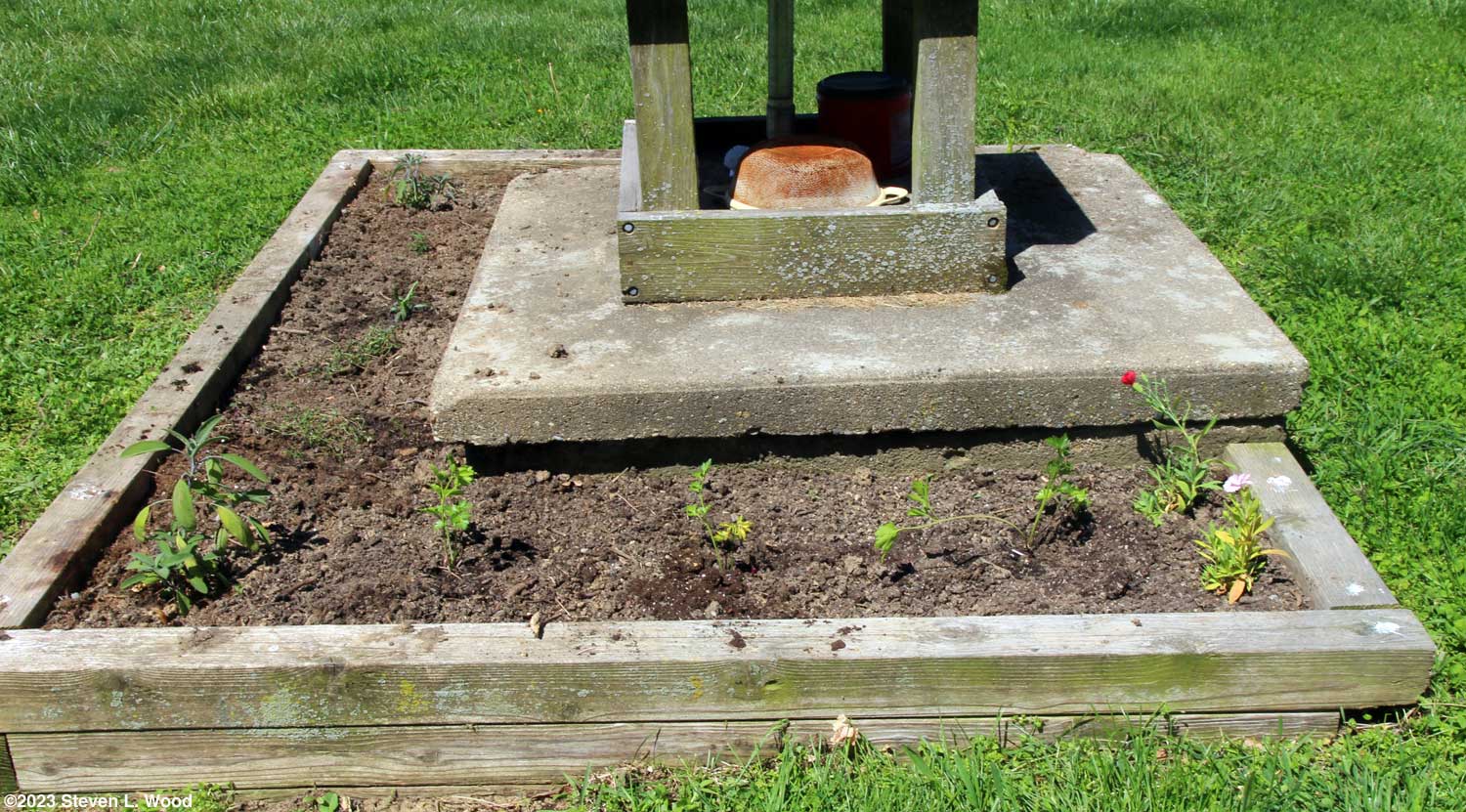
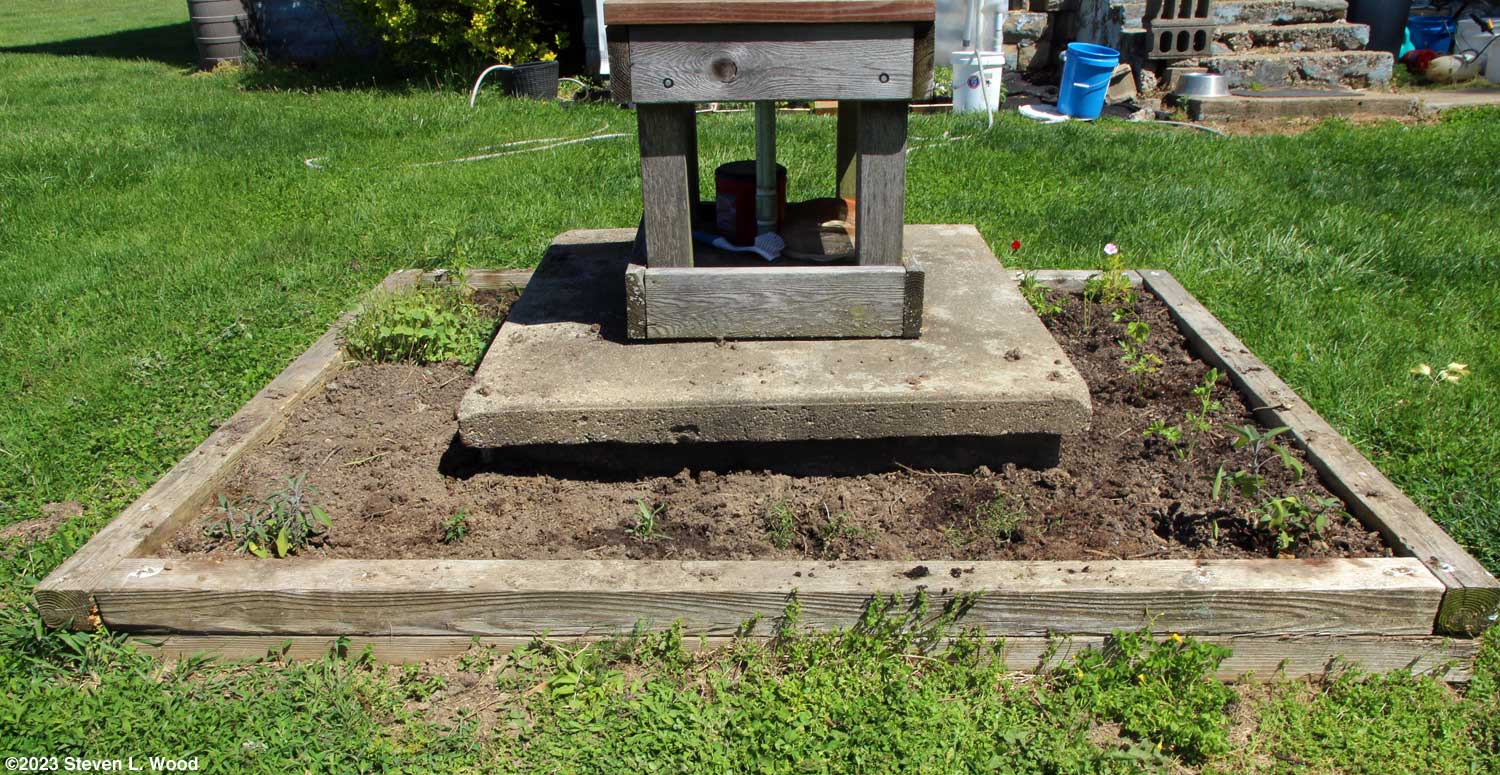
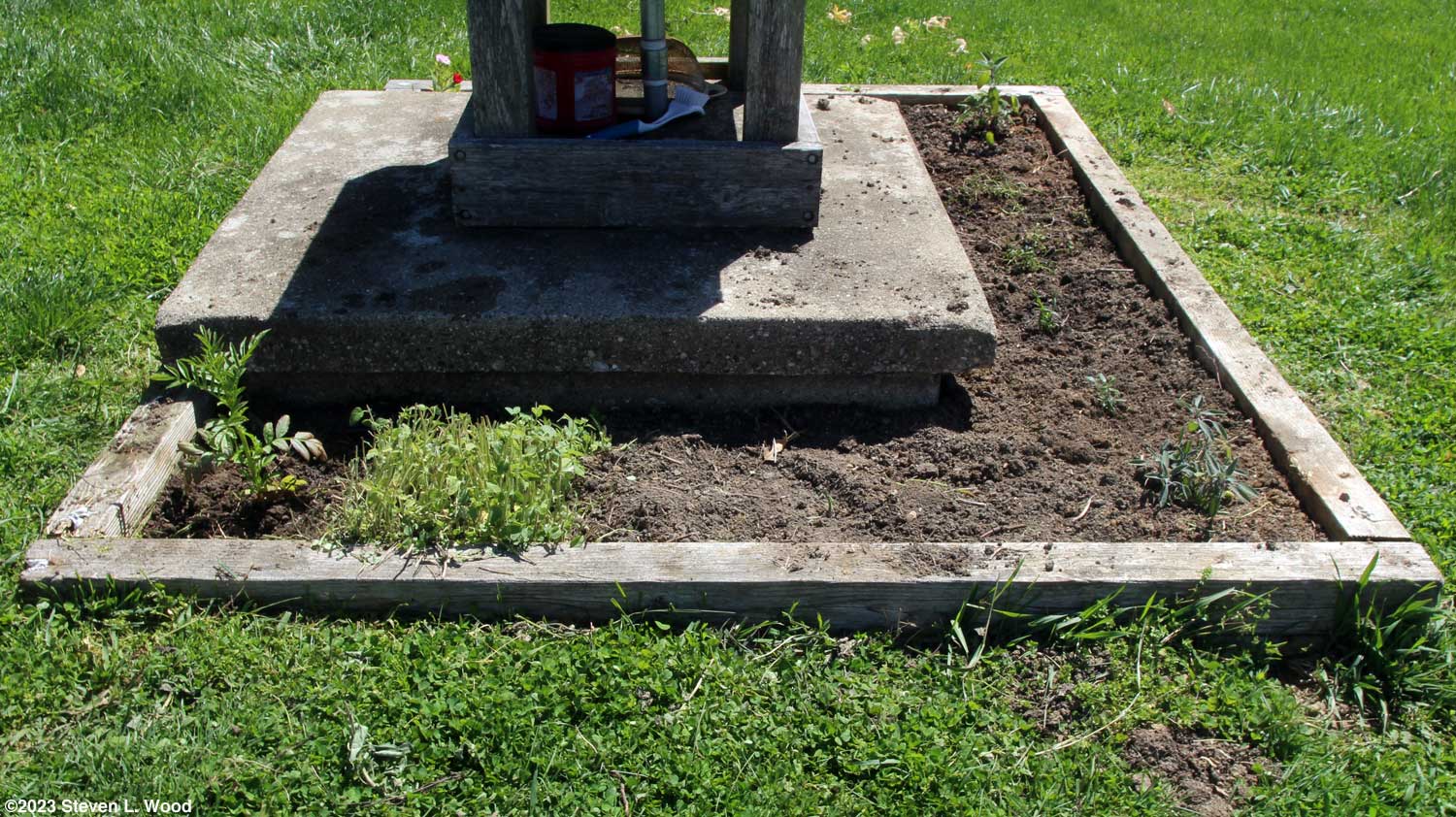
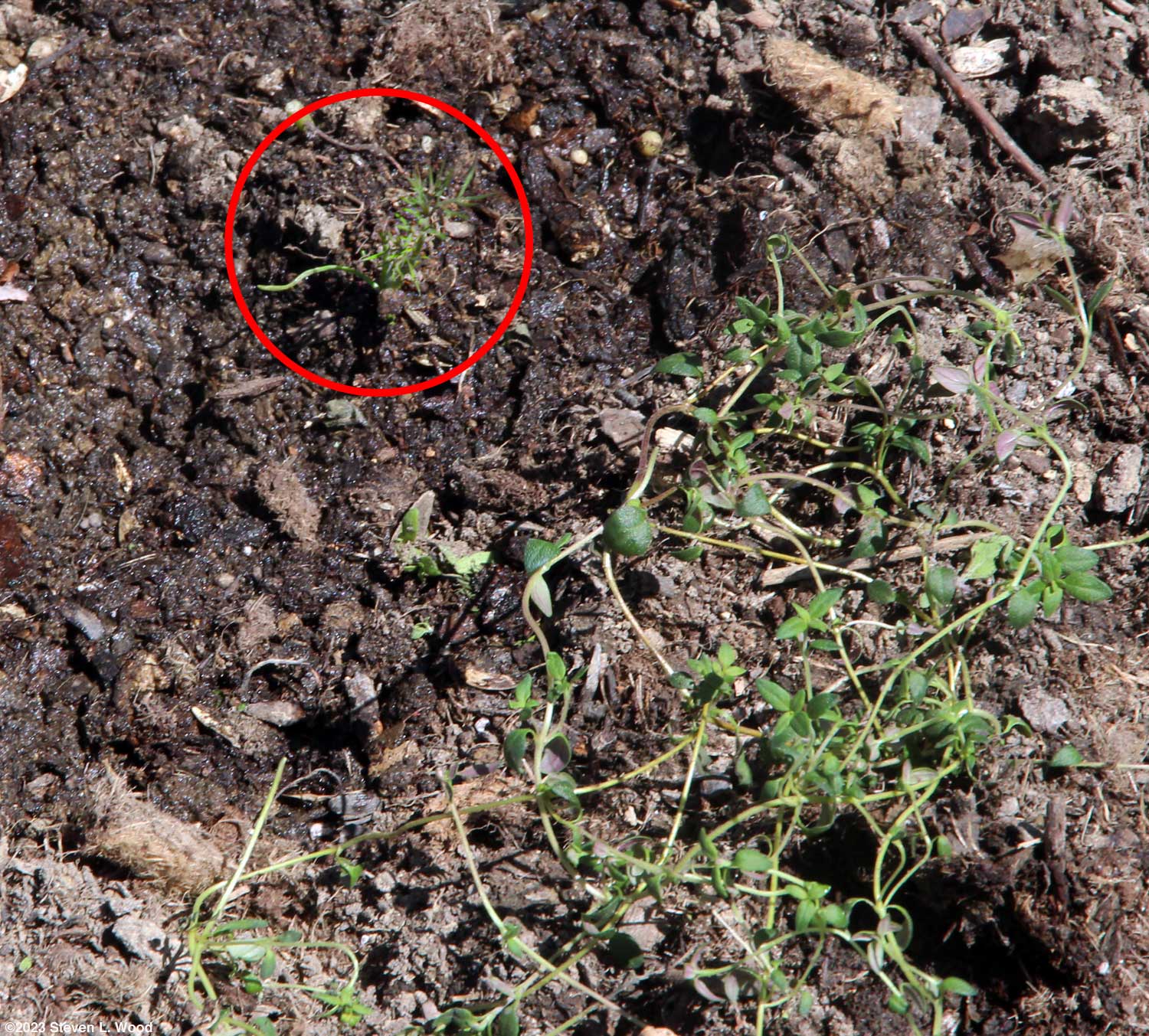
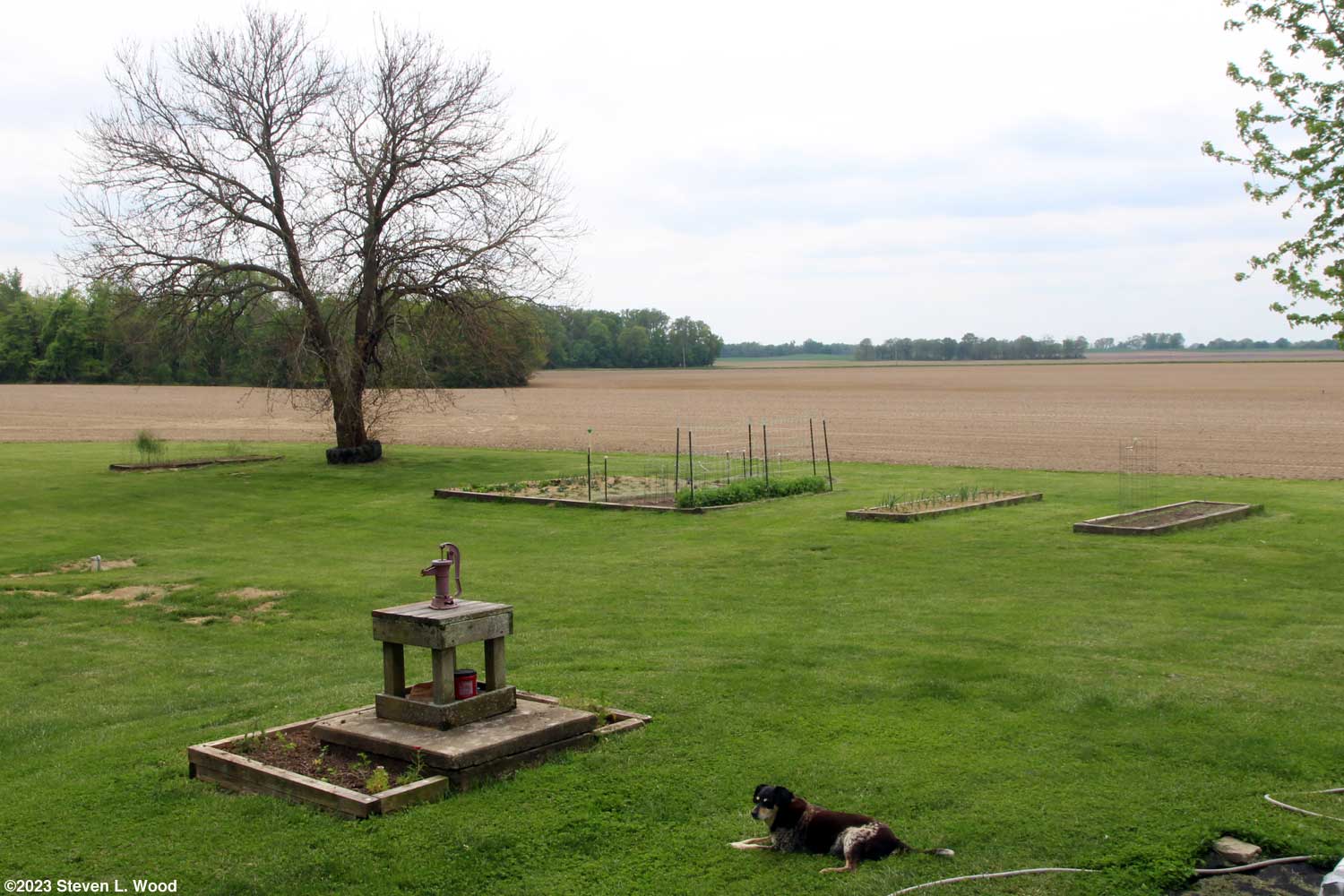
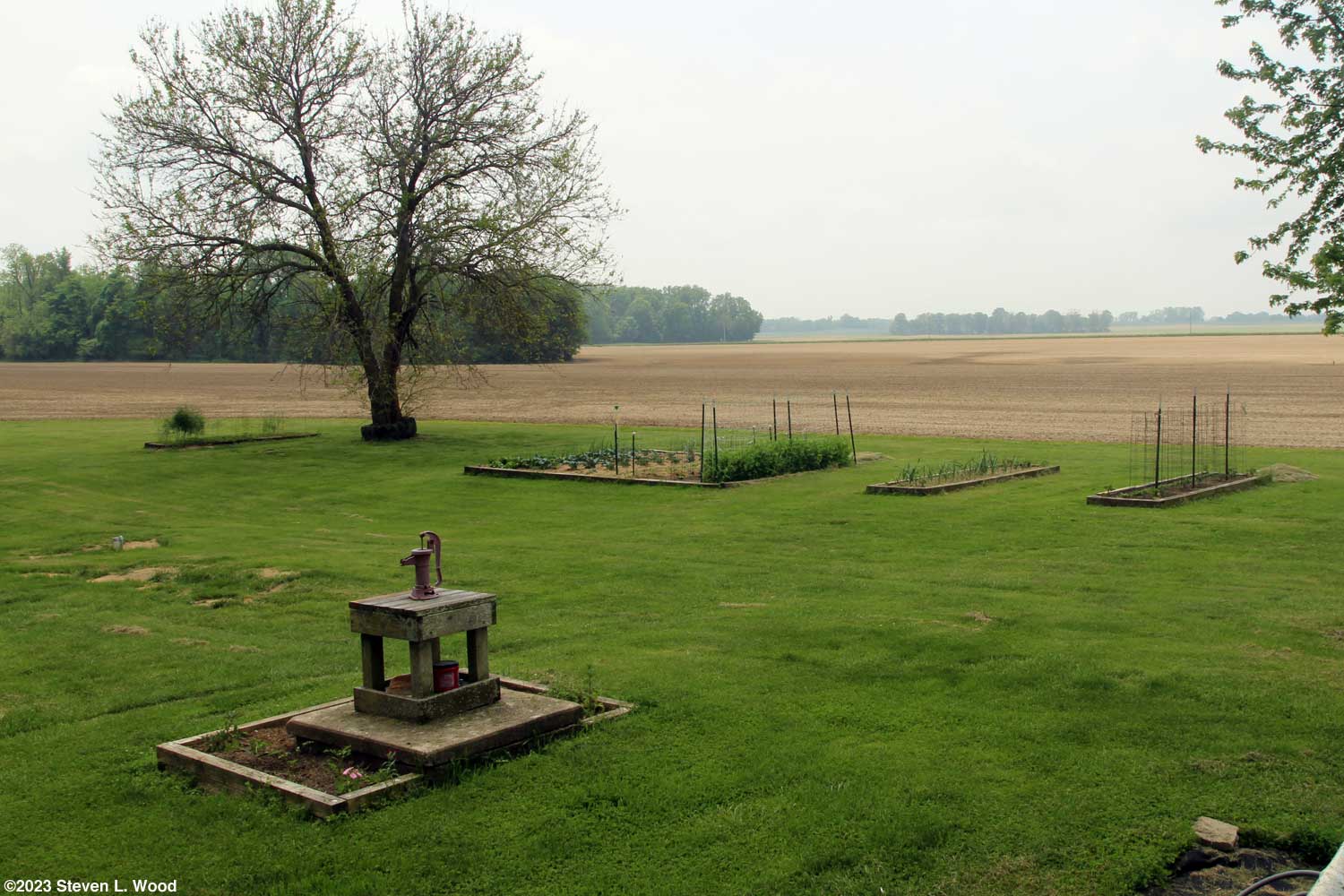
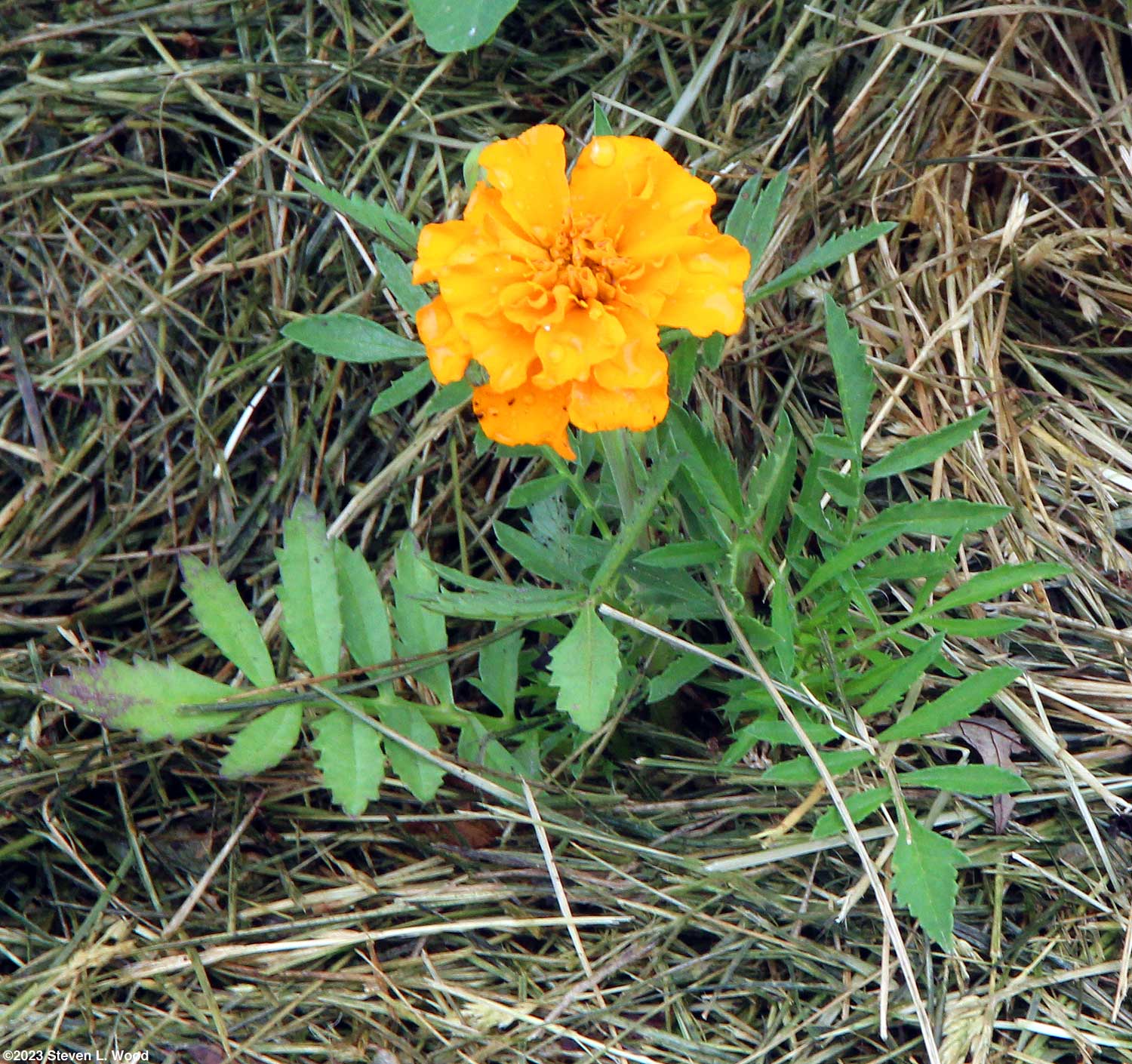
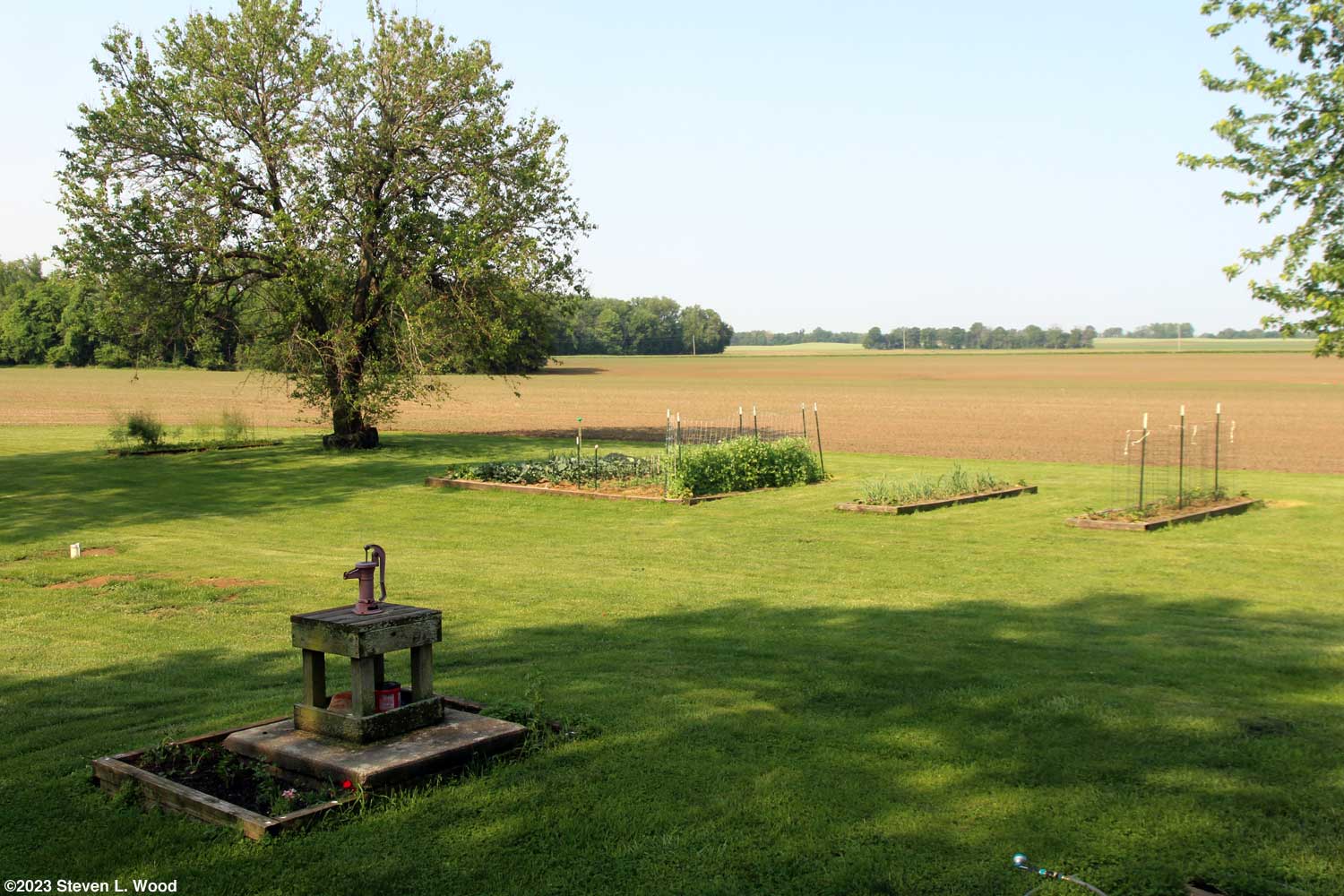
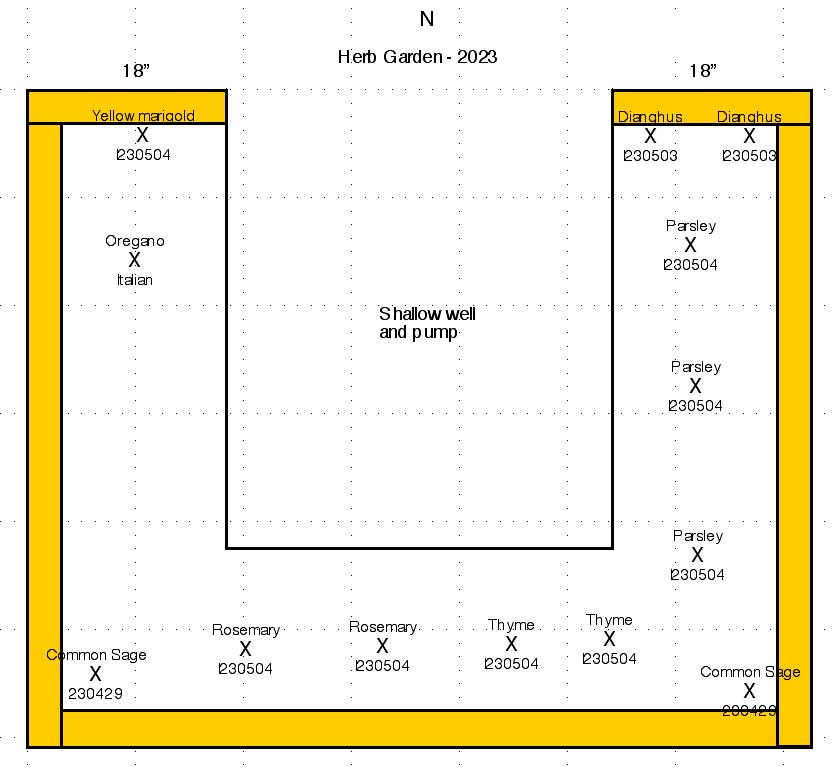
My focus this morning was getting some herbs transplanted into our herb bed around our shallow well. Three parsley and two each of thyme and rosemary went in. Other than a big yellow marigold, the oregano side of the bed is open. I forgot to start any basil and assumed we'd have volunteer dill again this year.
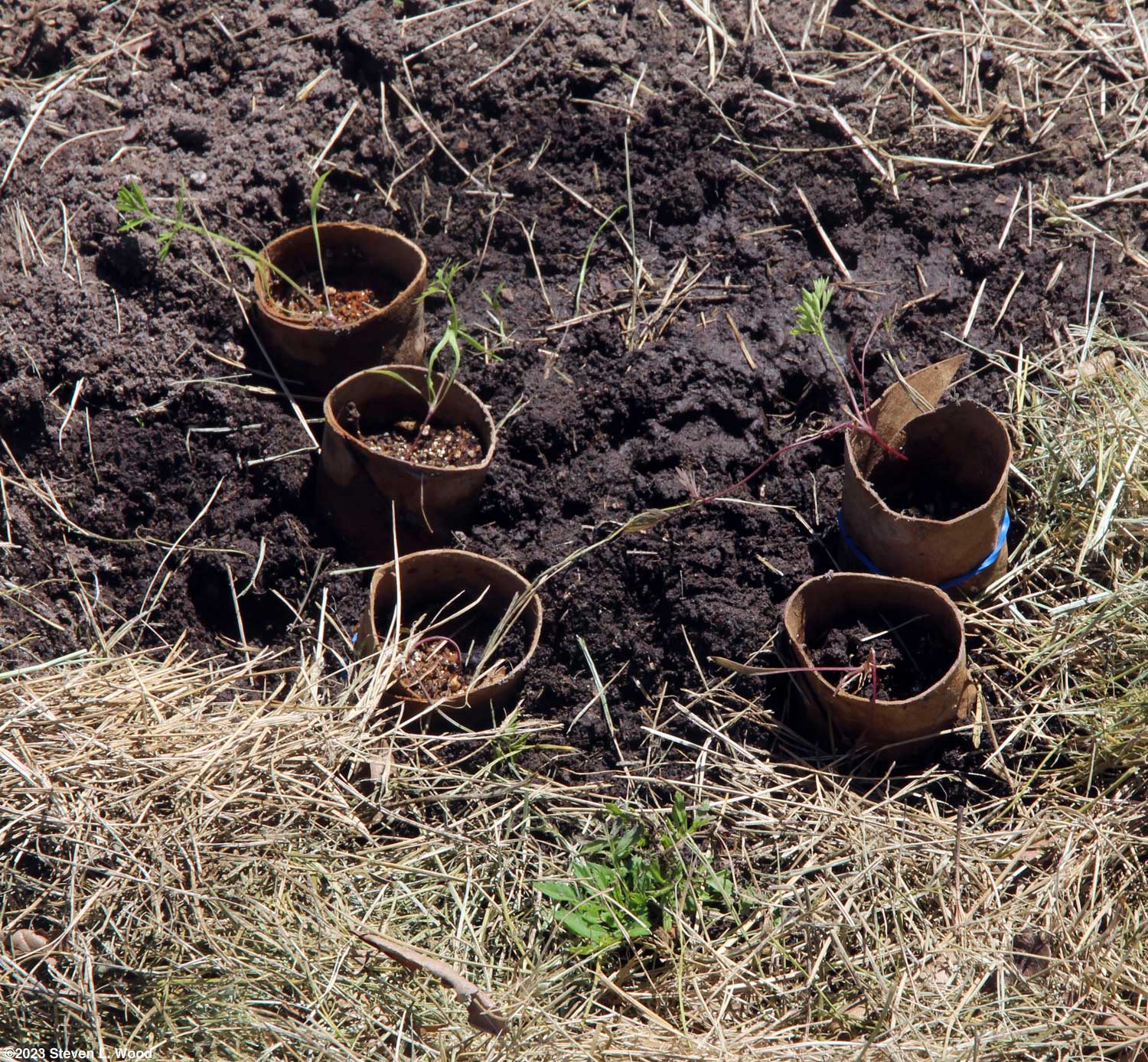
Talking about tiny, the carrots I started in toilet paper rolls, à la Barbara Pleasant, look pretty fragile now that they're at the end of our carrot rows. So that was my morning. This afternoon I need to mow and rake. Our grass is getting high, and I'll soon need lots more grass clipping mulch for our early peas, peppers, spinach, and tomatoes..
Each transplant hole got a good watering of starter solution before being firmed into the ground. While I put in end posts for the trellises for both plantings and hung clothesline wire for the netting, the wind picked up and made stringing the netting today unadvisable. That spoiled my plans for putting snapdragons at the ends and middle of the rows woven into the trellis netting. I did put in three snapdragons at one end of our wide row of early peas. Because Eclipse seed is somewhat adverse to germinating in cold ground, I've started transplants of it inside the last few years. With a good bit of seed saved in 2019 just getting old in storage in our freezer, I decided to direct seed a slightly wide row with the old seed besides starting transplants with seed saved last season. The old seed came up fairly well, although I went back and poked in some 2022 seed in bare spots in the row. Our efforts to grow and save seed from the Eclipse variety is a long term experiment. While we freeze some of the delicious peas each year, most of our efforts go towards seed saving. As we began the journey in 2013, I wrote a feature about Eclipse peas, Working to Save a Pea Variety. If you're new to growing peas, our how-to, Another Garden Delicacy: Homegrown Peas, may prove helpful.
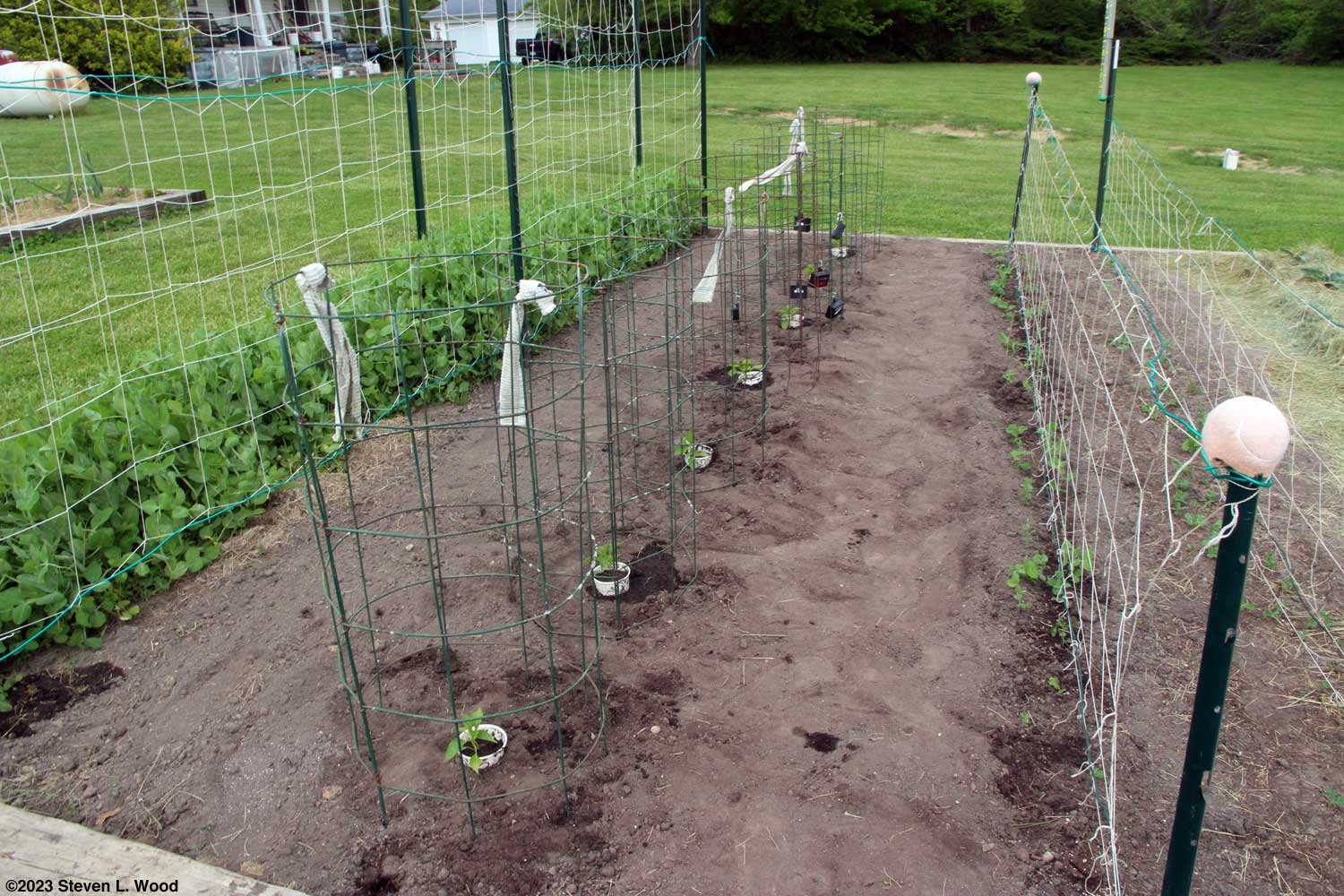
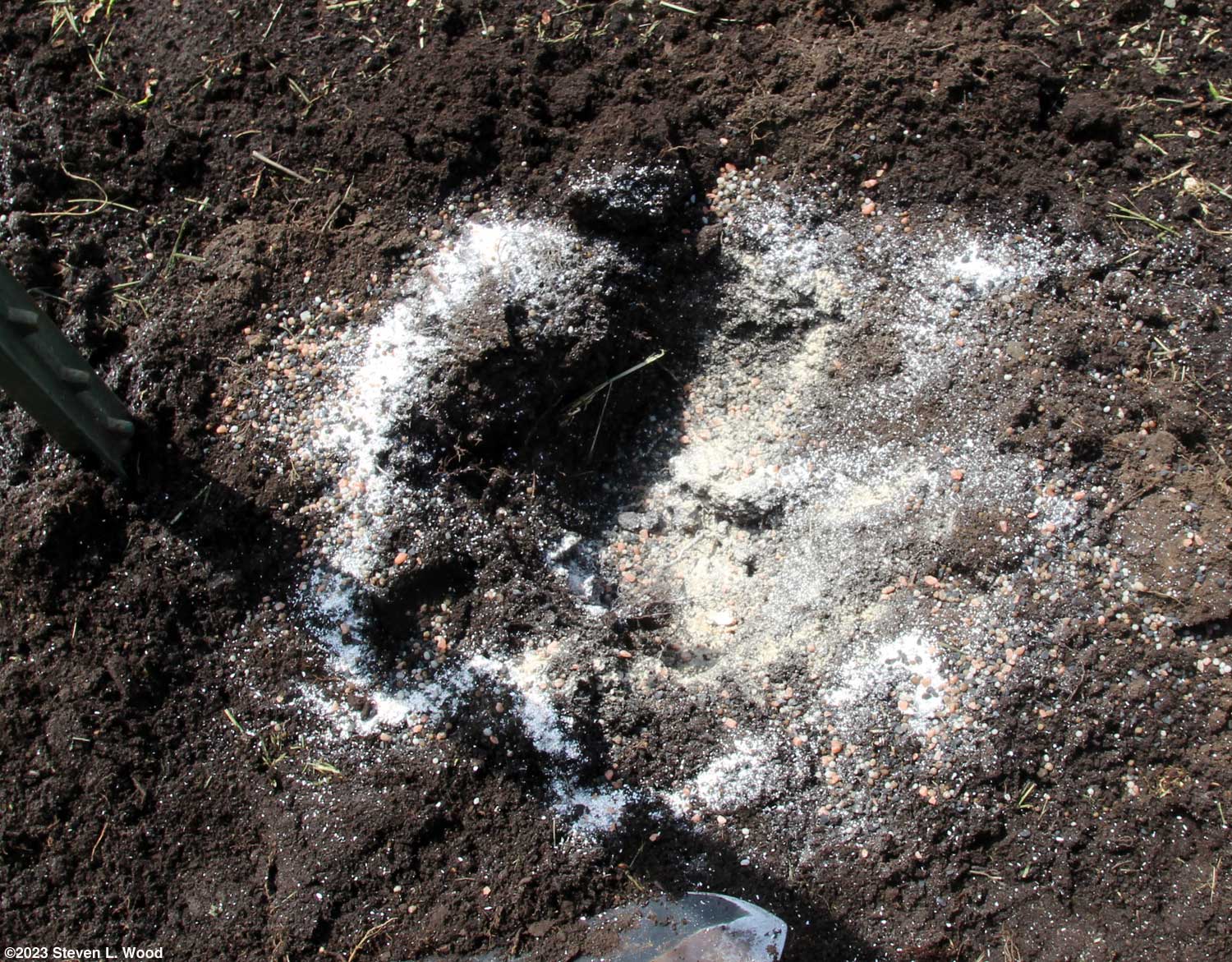
With that job out of the way by noon, I moved on to putting in our Earliest Red Sweet pepper plants. Since I'd been walking over and compacting the area where the peppers would go, I first rototilled the ground. On my first pass with the tiller, it would only dig in a few inches in some areas. But on a second pass, our old senior tiller dug down six to eight inches in the soil. After raking the area and spacing seven pepper cages, I dug an eight inch deep hole for each pepper. The holes got a touch of lime, some 12-12-12 commercial fertilizer, and a generous amount of powdered egg shell. Both the lime and egg shell provide calcium to help prevent blossom end rot. After working that stuff in, I watered each hole with a starter solution of Quick Start and Maxicrop Soluble Seaweed Powder. The Maxicrop has been essential for us in growing peppers, as it seems to have something peppers need that our soil lacks.
Our how-to, Growing Peppers, gives the skinny on how we grow some really great peppers each year. With today's planting, our main raised garden bed is completely planted, other than some flowers to go in at the ends of the rows. It's not completely mulched as yet, but will be done so as our collected grass clipping cool a bit. I still have a narrow bed reserved for Earlirouge Tomatoes to transplant before I move on to planting our large East Garden plot.
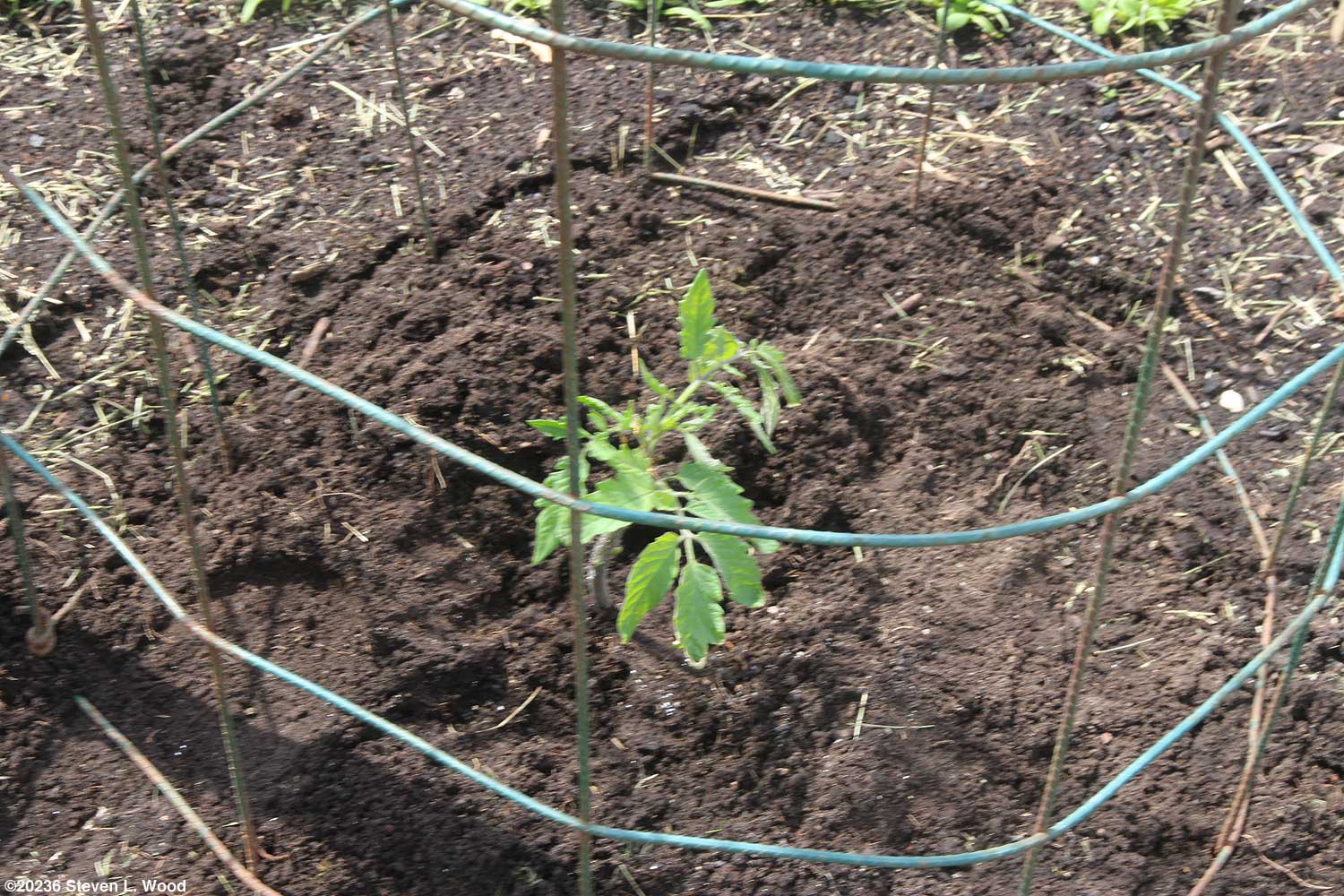
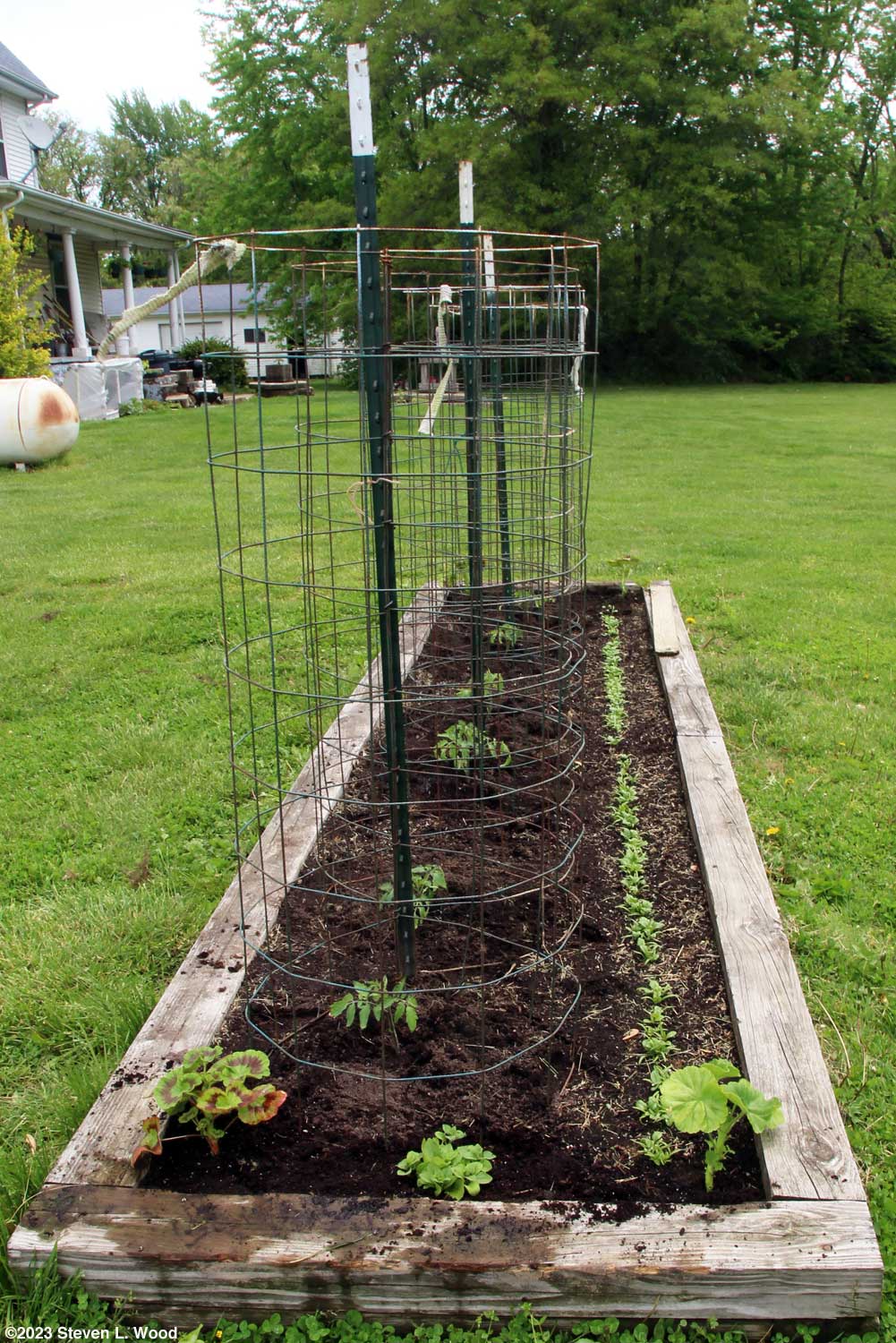
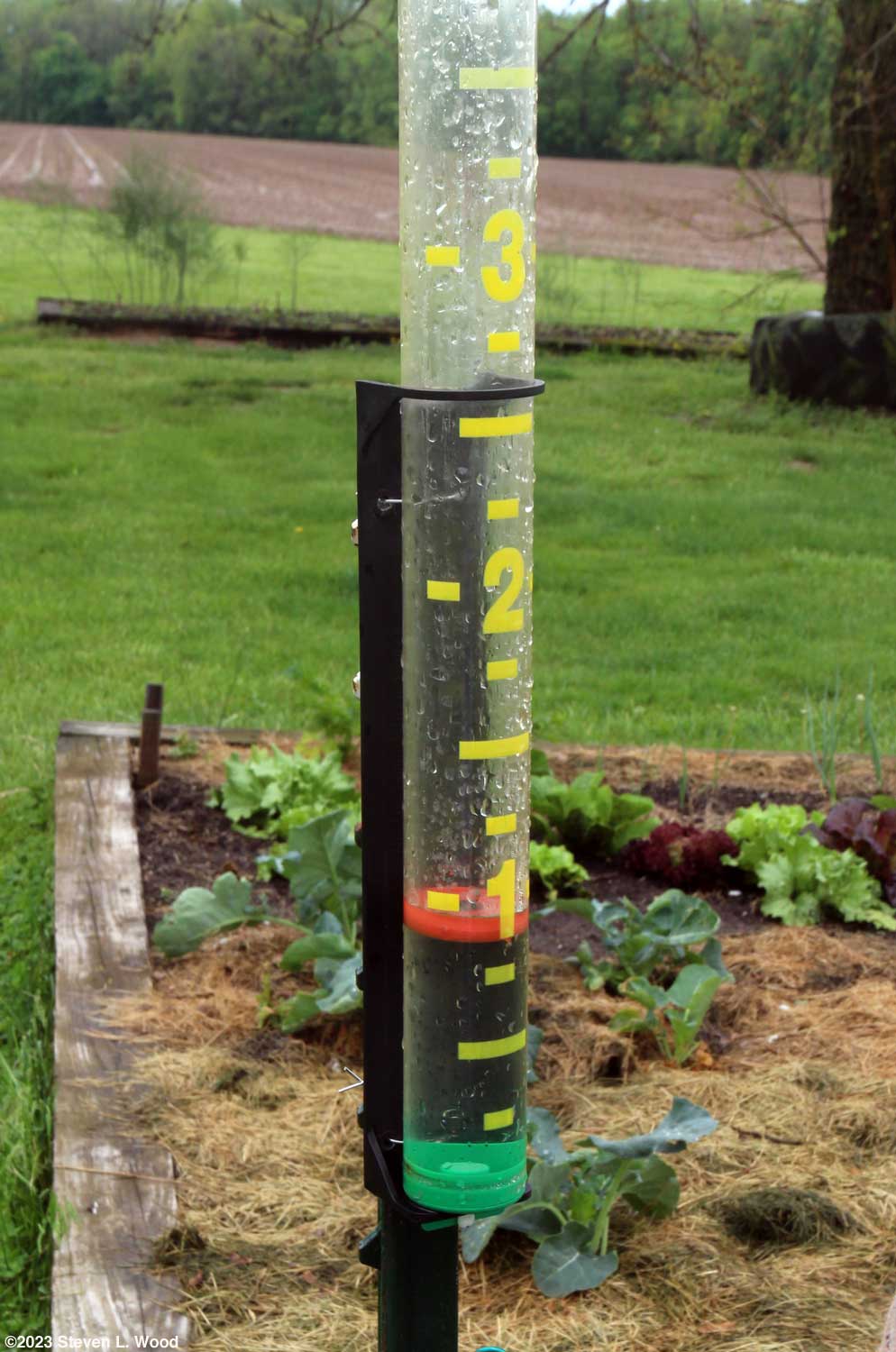
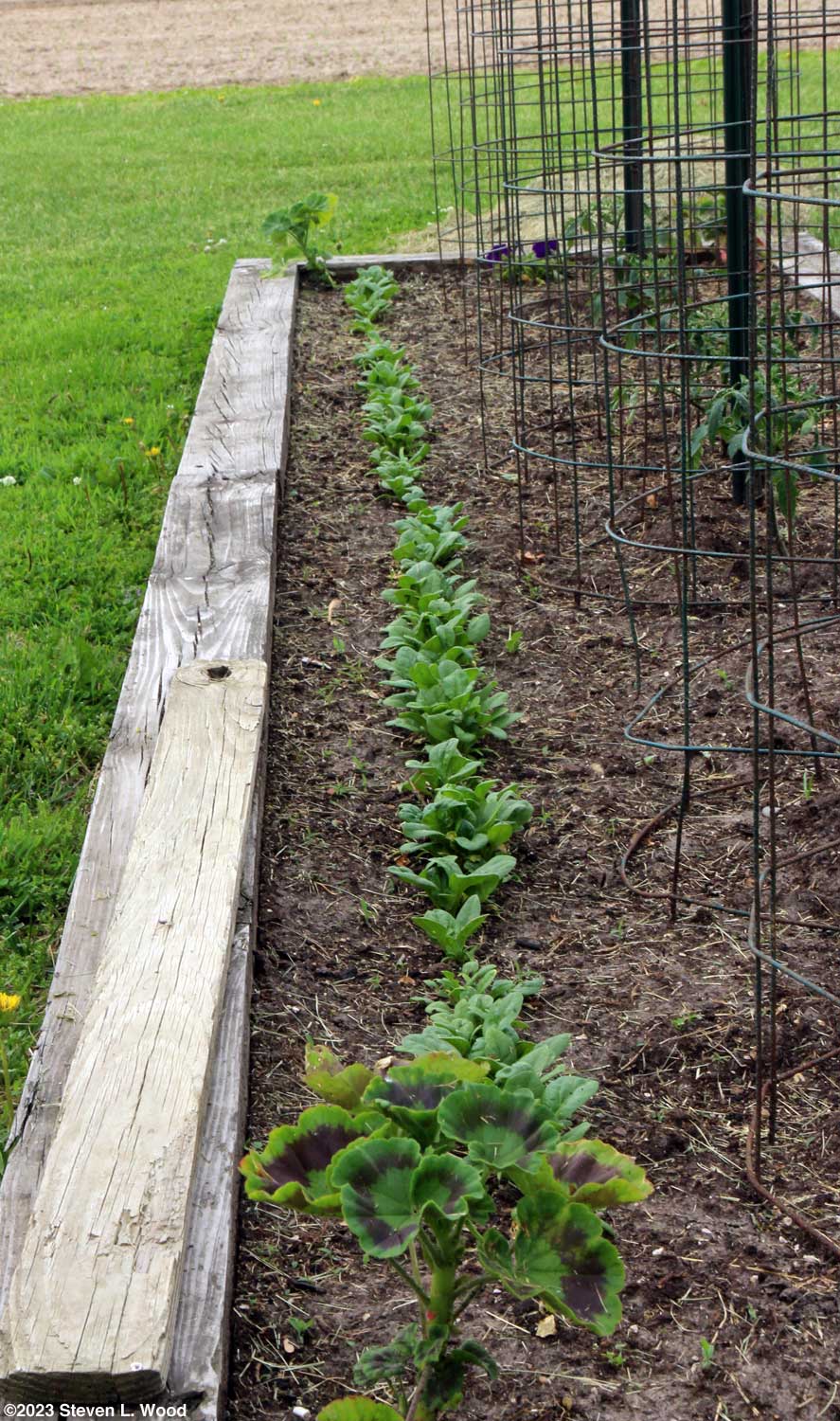
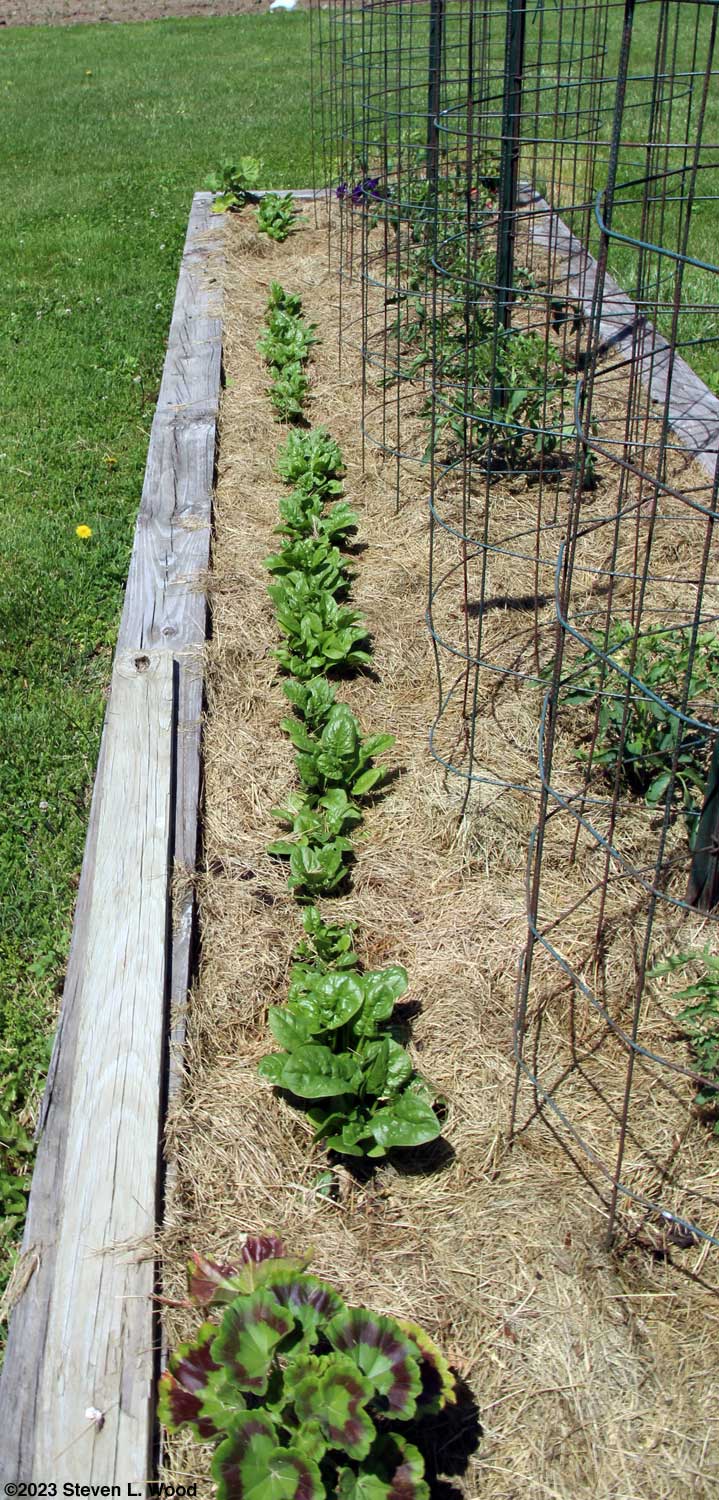
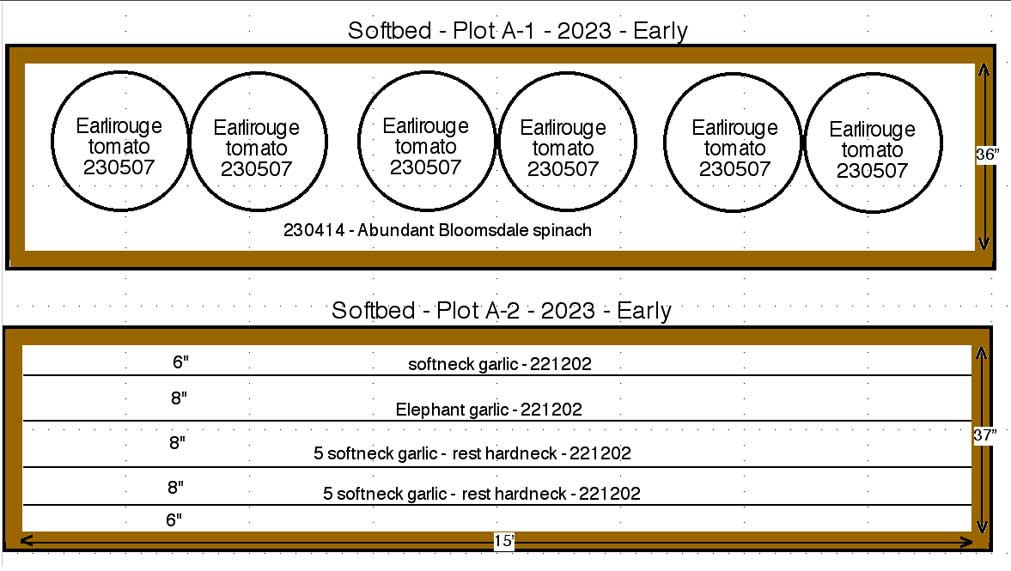
We received a welcome half inch of rain overnight. Agreeably, the weather cleared and the sun came out mid-morning. I collected my supplies and went out to transplant our Earlirouge tomatoes. While rated as a canning tomato, Earlirouges have fantastic tomato flavor with deep red interiors. I suspect they're classified as canners due to their medium size. We have a three year rotation for our Earlirouge tomatoes, moving them from one narrow bed to the next narrow bed to our main raised bed through the rotation. They're the only tomatoes we grow in our raised beds to ensure they don't cross with another variety for seed saving and sharing. The narrow raised bed had been thoroughly rototilled a few weeks ago. I direct seeded Abundant Bloomsdale spinach down one side of the bed and kept the bed clean with a little hand weeding.
Each planting hole got a coffee can of starter solution of dilute Quick Start and Maxicrop Soluble Seaweed Powder fertilizers and Serenade biofungicide. Serenade helps prevent disease in the tomatoes. It's no longer on the market, but we still have a big jug of it left. Cease biofungicide is said to have the same formulation, only lots more expensive. Lower leaves get pinched off the tomato plants before they're squished in the mud created by the starter solution. I push and firm soil around the plants, also making a shallow trough around each plant to hold in water.
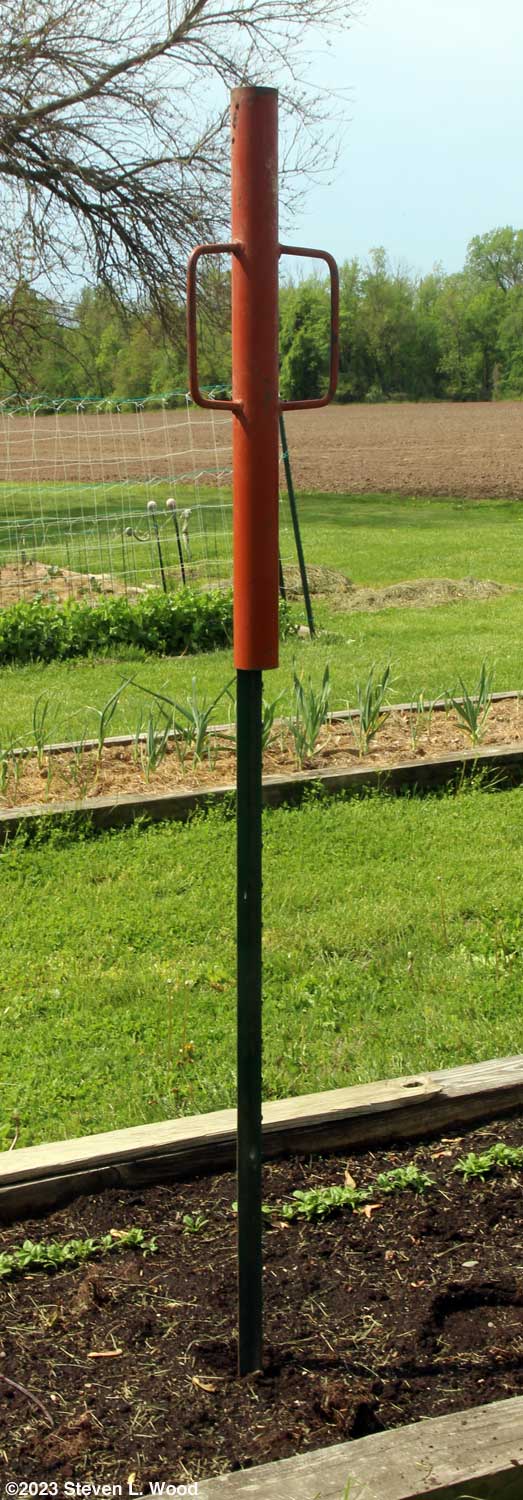
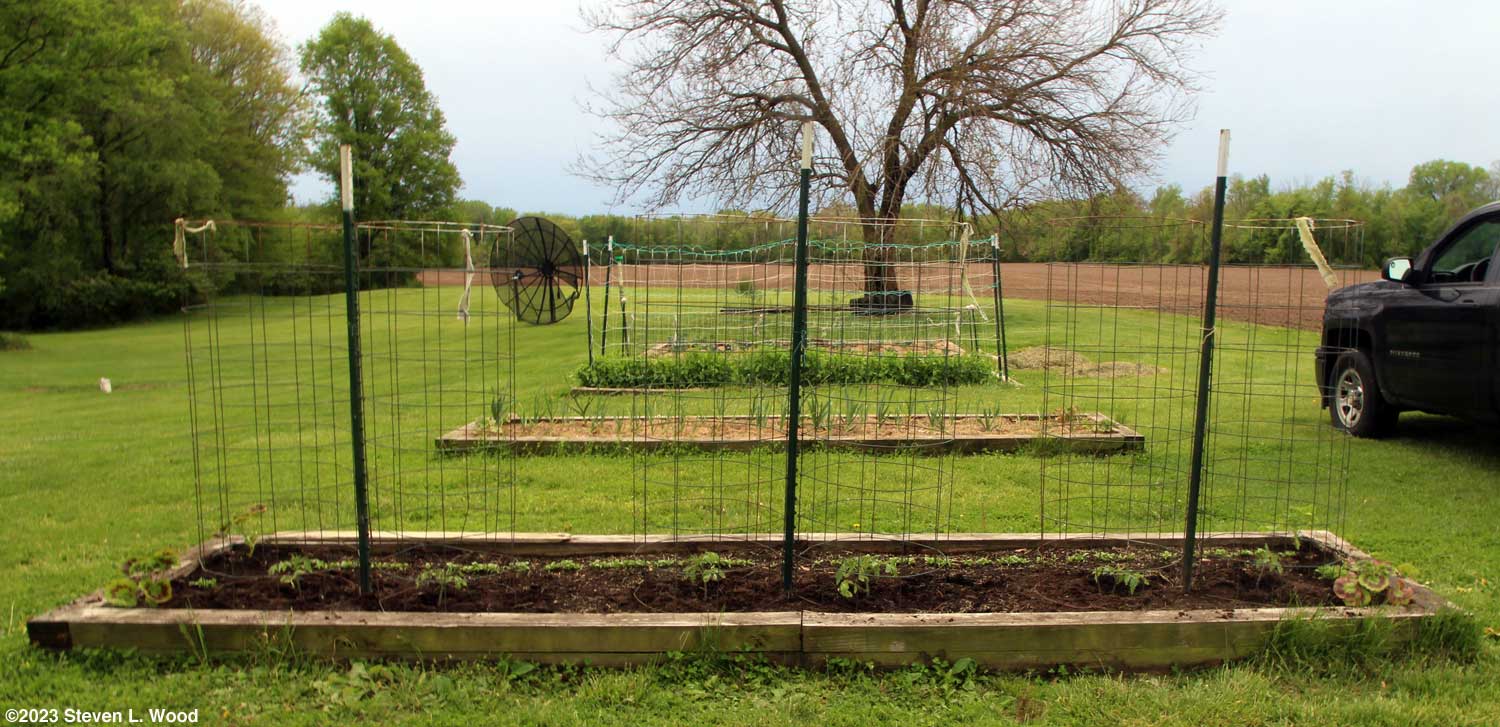
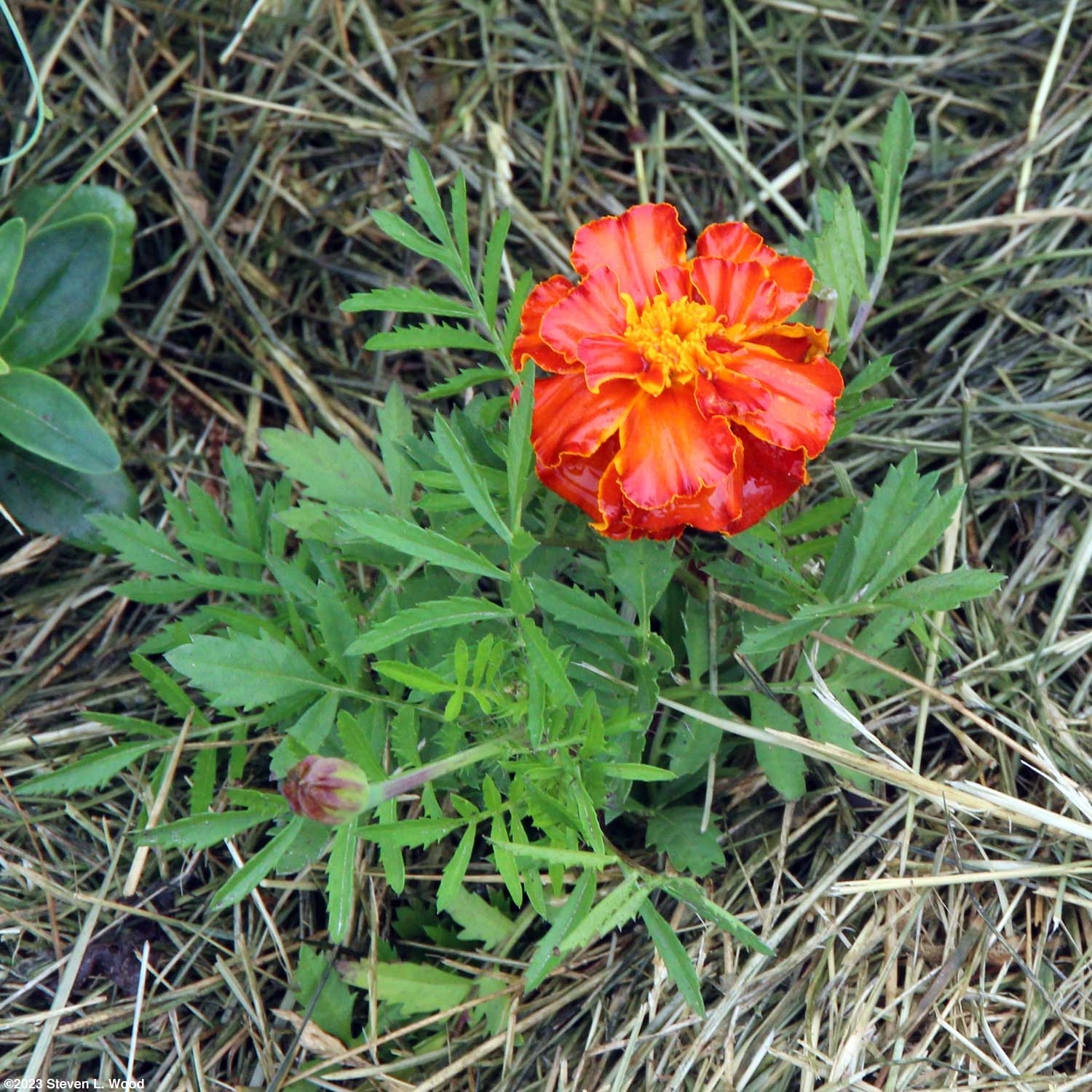
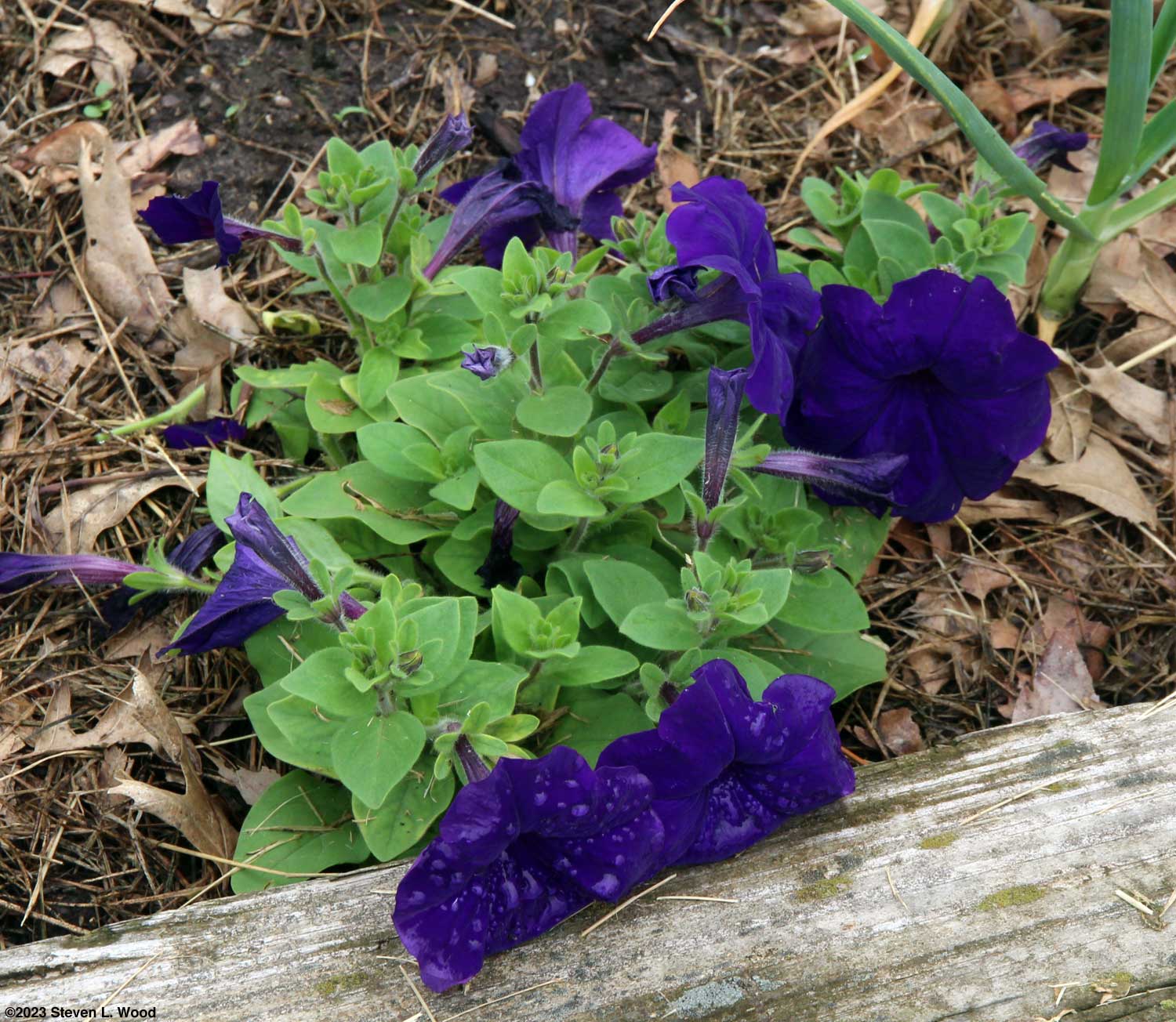
Even though our East Garden with our other tomato varieties is somewhat protected from the wind, I still anchor pairs of tomato cages there with T-posts. Sometime in the past, I went nuts buying tall T-posts for some now forgotten project. Getting our Earlirouge tomatoes in completes our first plantings of vegetables into our raised beds. I did put in a couple of geraniums and a petunia at each end of the tomato bed. And I have lots of flower transplants yet to go at the ends of our vegetable rows.
Our how-to, Growing Tomatoes, tells how we and others grow great tomatoes. I saw a white cabbage moth flying around our back yard yesterday. Since I still had some left in our organics sprayer, I quickly sprayed our brassicas again with Thuricide. It gives the worms the cabbage moths lay fatal stomach cramps, keeping ones broccoli, cauliflower, cabbage, and kale pretty much worm free. As I finish today's posting, we've had showers off and on. I can hear thunder in the distance and storms are showing on the weather radar, so we may get some more much needed rain. As I've planted stuff over the last week, I've been surprised at how dry our soil has been in places. With our raised beds now fully planted, I'll move on first to getting those areas fully mulched for moisture retention and weed control. Then it will be time to till and plant our East Garden plot. I'm looking forward to having sweet corn, melons, yellow squash, butternut squash, potatoes, and kidney beans this year in that plot.
I'm on another old age day off. I've found that at 74 years of age, I have to take a day, sometimes two, to recover from strenuous gardening. I blame the heavy post driver for most of my discomfort today, although one knee is in total protest from working on my knees transplanting yesterday. On the upside, I'm still alive at 74. I have a loving wife who puts up with her much older husband (10 years difference). And the good Lord has granted me so far another summer of the vocation I love: gardening.
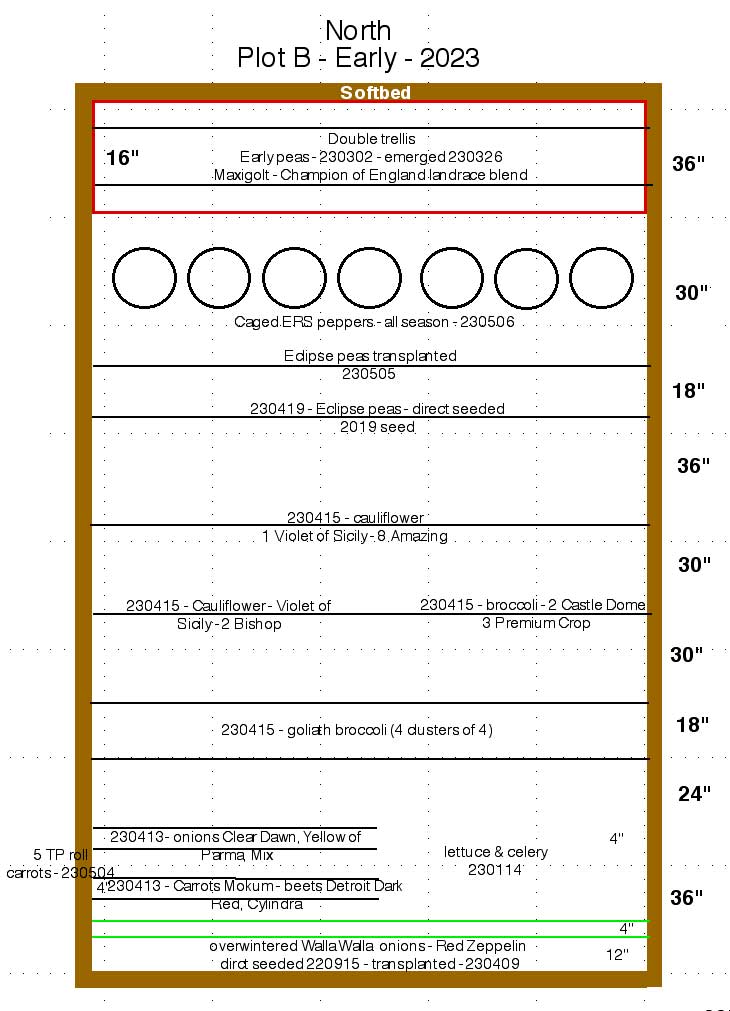
The center of our main raised bed is dominated by brassicas. There's the double row of Goliath broccoli planted in clusters of four mainly for seed production. Then there's a row with some of our old favorite hybrid broccoli, Premium Crop, and some Castle Dome. Beyond that, there's a whole row of cauliflower planted early enough that it may produce good heads before summer heat turns the heads yellow and bitter tasting.
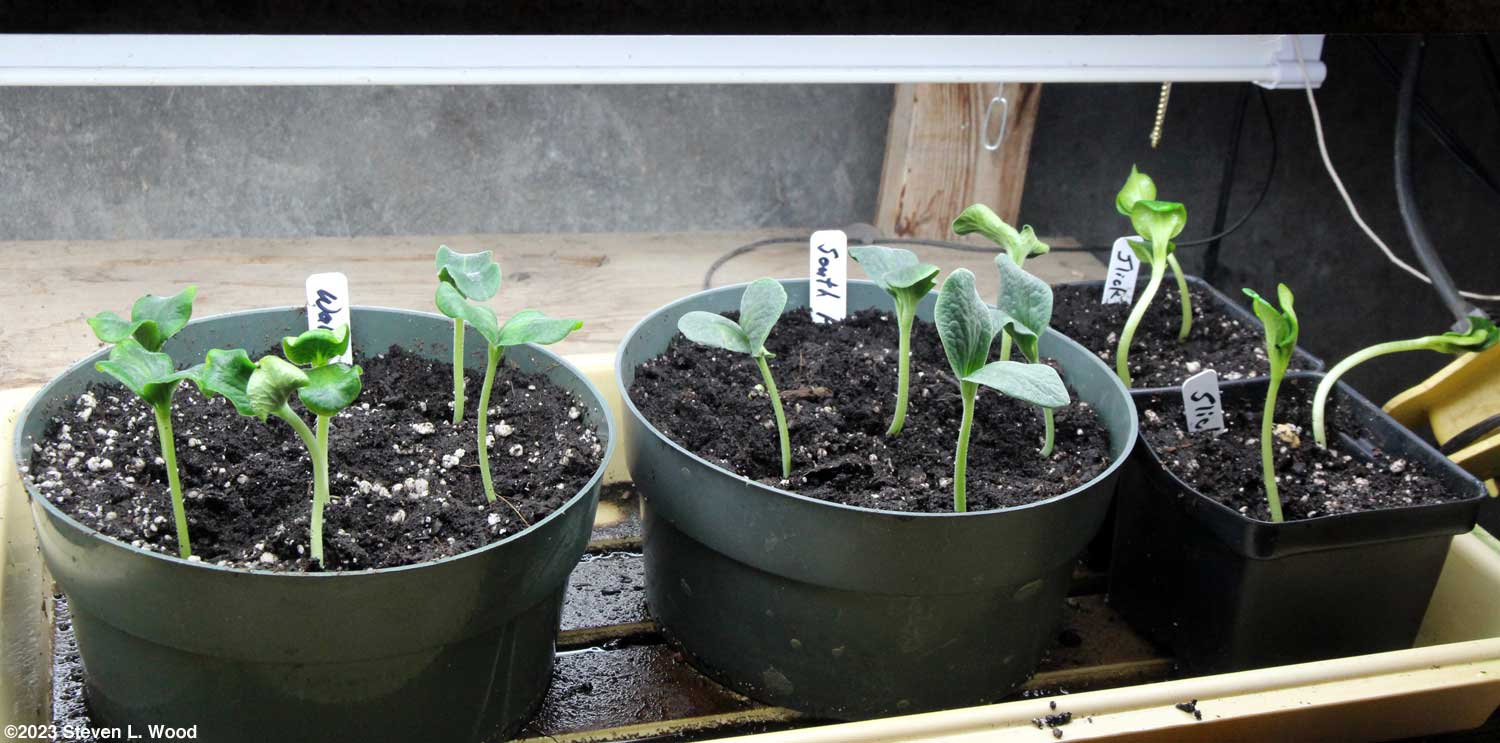
With our melons seeded to four and a half inch pots filled with sterile potting mix, I moved on to some squash. I ran out of sterile soil, so I did the quick substitute of pouring boiling water over some potting mix, but then had to wait for the soil to cool down. I seeded a eight inch bulb pan from the Greenhouse Megastore each to Waltham Butternut and South Anna Butternut. I also seeded a couple of pots to the excellent Slick Pik thin yellow squash variety we so enjoy.
For our melons and squash, I usually use large pots instead of inserts. That lets me plant two to three seeds per pot and mature without having to uppot the plants before transplanting. A note on Slick Piks: I've found that it's a good idea when you transplant them to start more of the variety inside. The plants are heavy producers, but also wear themselves out fairly quickly. For season long yellow squash, I start more each time I transplant some into our garden. Lettuce
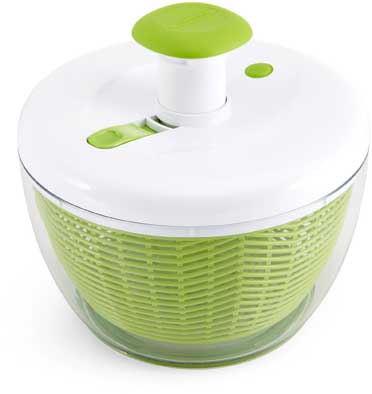
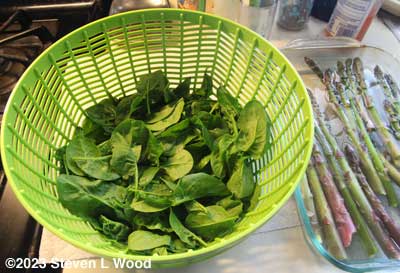
In most years, excess transplants go to our local food bank. Since it was destroyed in the March 31 tornado, I lost the outlet for our garden extras. The food bank and clothes closet are planning to rebuild soon on the same location. BTW: The salad spinner is a really cool new toy! Looking Ahead As our weather allows, I'm hoping to rototill our large (80'x80') East Garden plot. I've also covered an old compost pile site with grass clippings where I hope to transplant butternut squash.
The second job was mowing our lawn and then using our lawn sweeper to collect more grass clippings for mulch. I needed more mulch for our rows of peppers and tomatoes. By the time the clippings sit and cool down, it should be safe to pull the cutworm collars from the pepper plants and mulch right up around them. While I felt pressed for time today, I still spent a few minutes transplanting some snapdragons at the ends of the pea rows. The trellis netting around the peas helps support the snapdragons which will bloom well into fall.
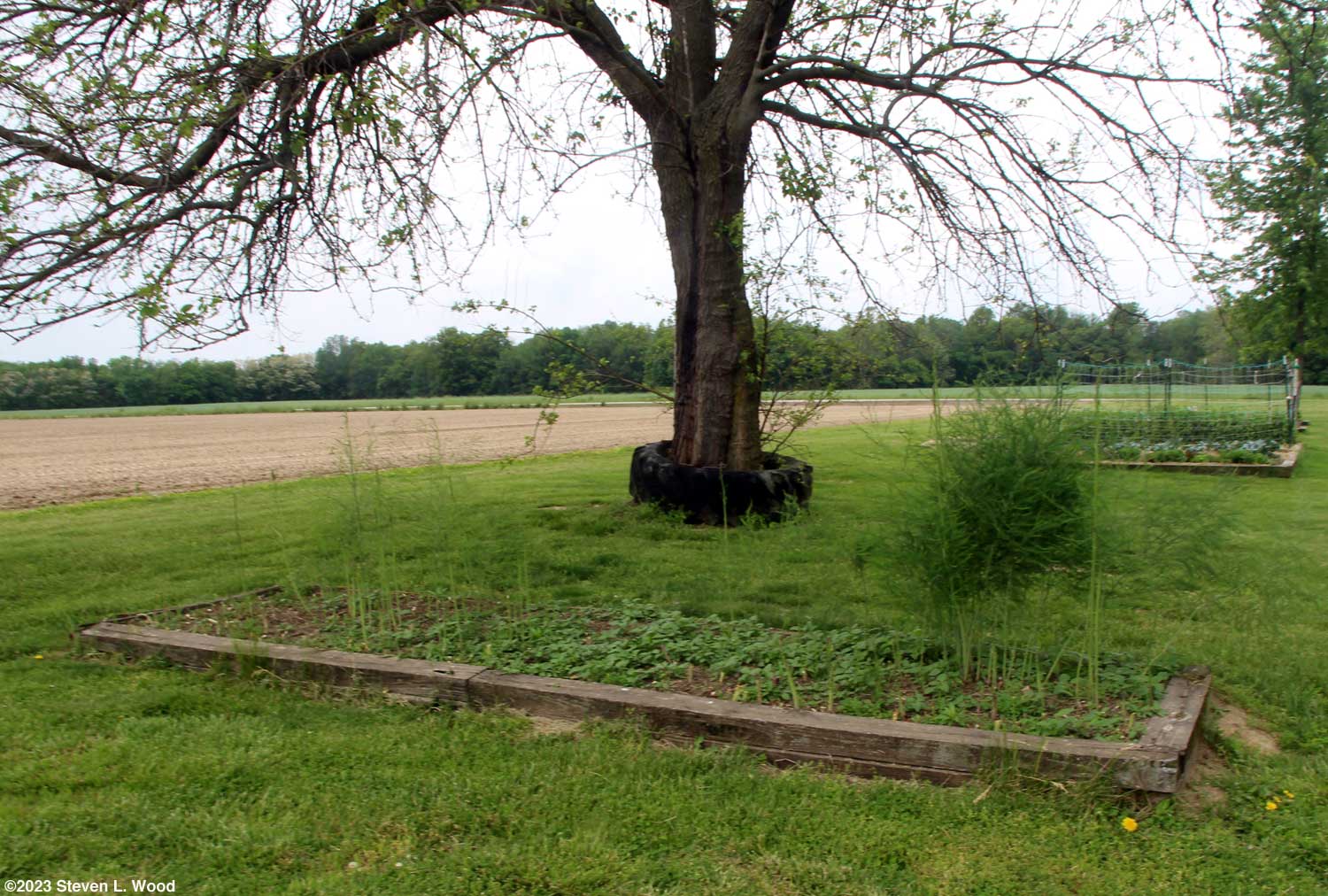
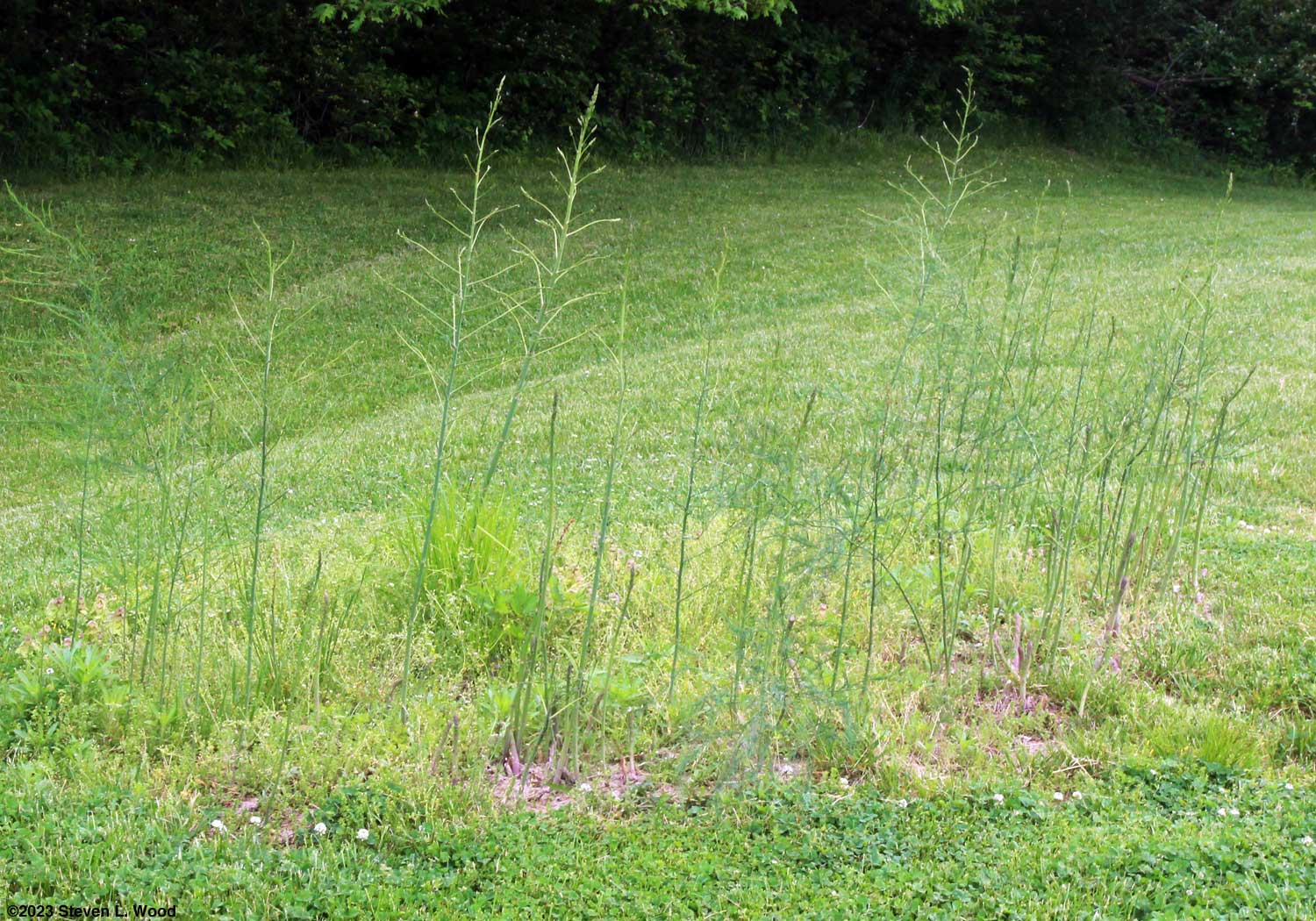
Other than having lots of weeds, both our raised asparagus bed and Bonnie's Asparagus Patch look healthy. When our harvest ends, I'll begin fertilizing and weeding using our soil scratcher.
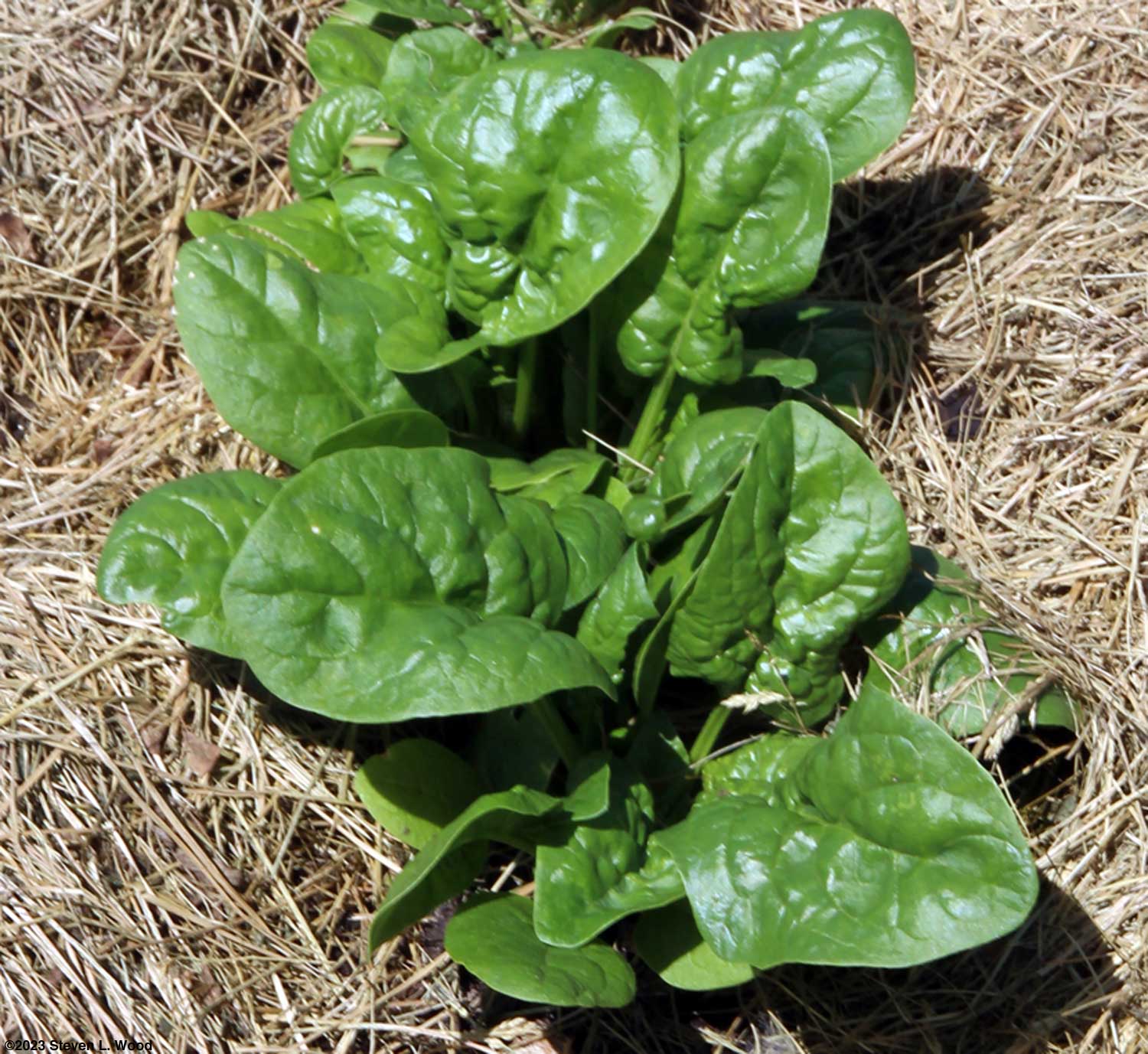
Our row of Abundant Bloomsdale spinach is doing well, but...I got it planted over a month later than usual. Whether we'll be enjoying spinach salad again or just be growing a seed crop remains to be seen. Our current warm spell suggests this may be a short season for spring spinach. But as soon as the plants grow just a little more, I'll begin thinning them, saving the thinnings as baby spinach for the table. Speaking of warm weather, we'd been sweating out the current hot spell. But Annie made an executive decision this afternoon to turn on our air conditioning. Fortunately, the unit still works well, although I turned the thermostat up a degree a few minutes ago. I'd begun sneezing from the cold air the unit puts out.
Annie's big news is that she turned in her retirement notice on Friday. She'd worked as a computer tech for a regional banking concern for twenty years. Three years ago, the bank outsourced its tech department to an Indian company that has steadily dropped or forced onto contract most of her previous co-workers. They offered her a new contract with a raise but no overtime. She told them "no." Both her immediate boss and even a bigwig from Chicago called to try to talk her out of leaving. But she knows that when doing banking branch computer changeovers. the task often lasts well into the night. For her, promised comp time doesn't compare to overtime. And at 65 years-of-age, she deserves to hang it up. I'll certainly enjoy the extra time with her. Tomorrow is Mothers Day. It's also our 29th wedding anniversay.
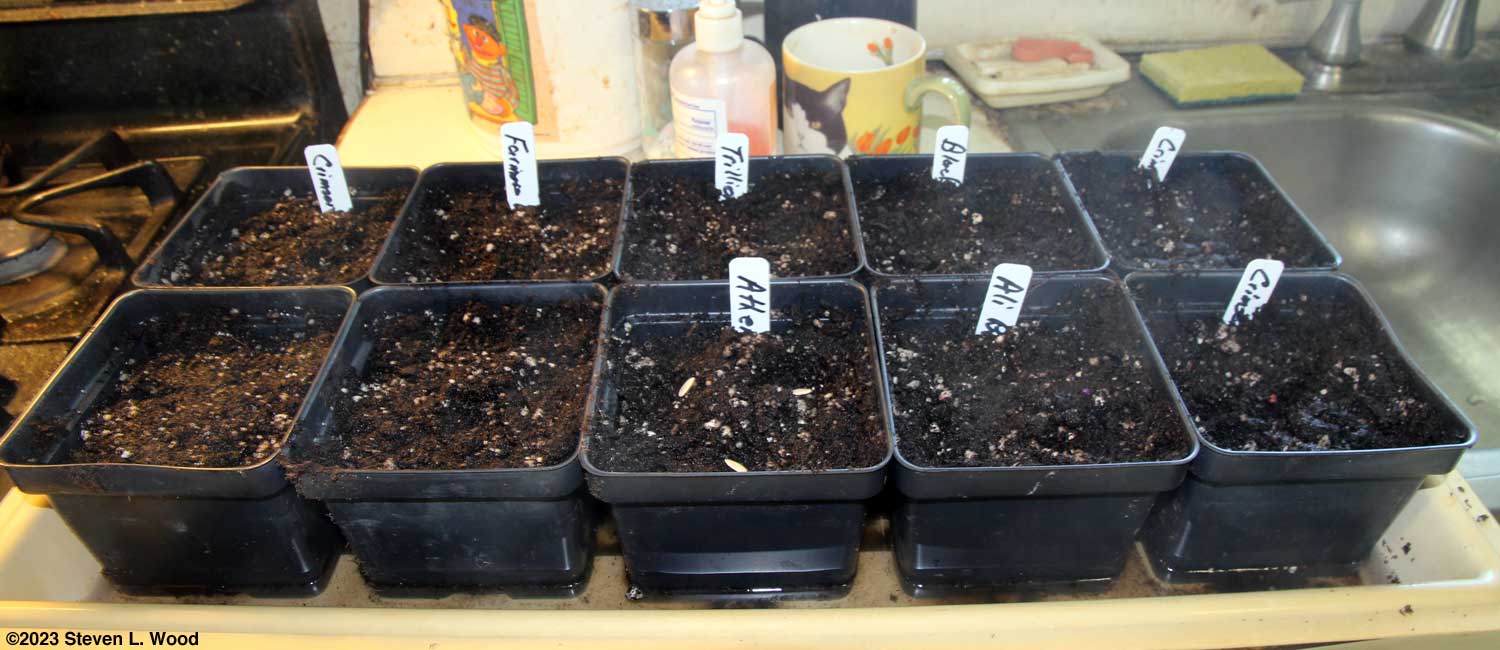
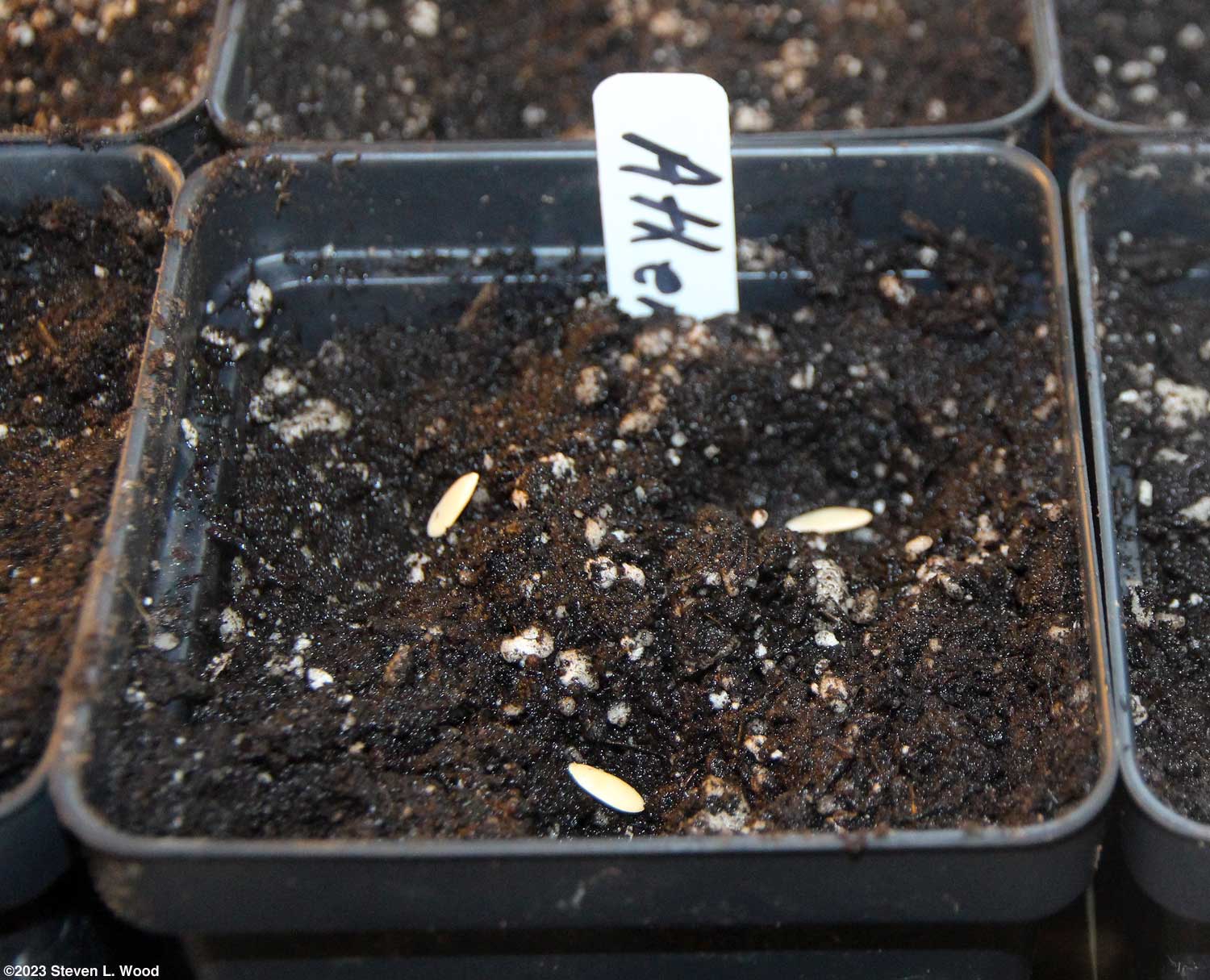
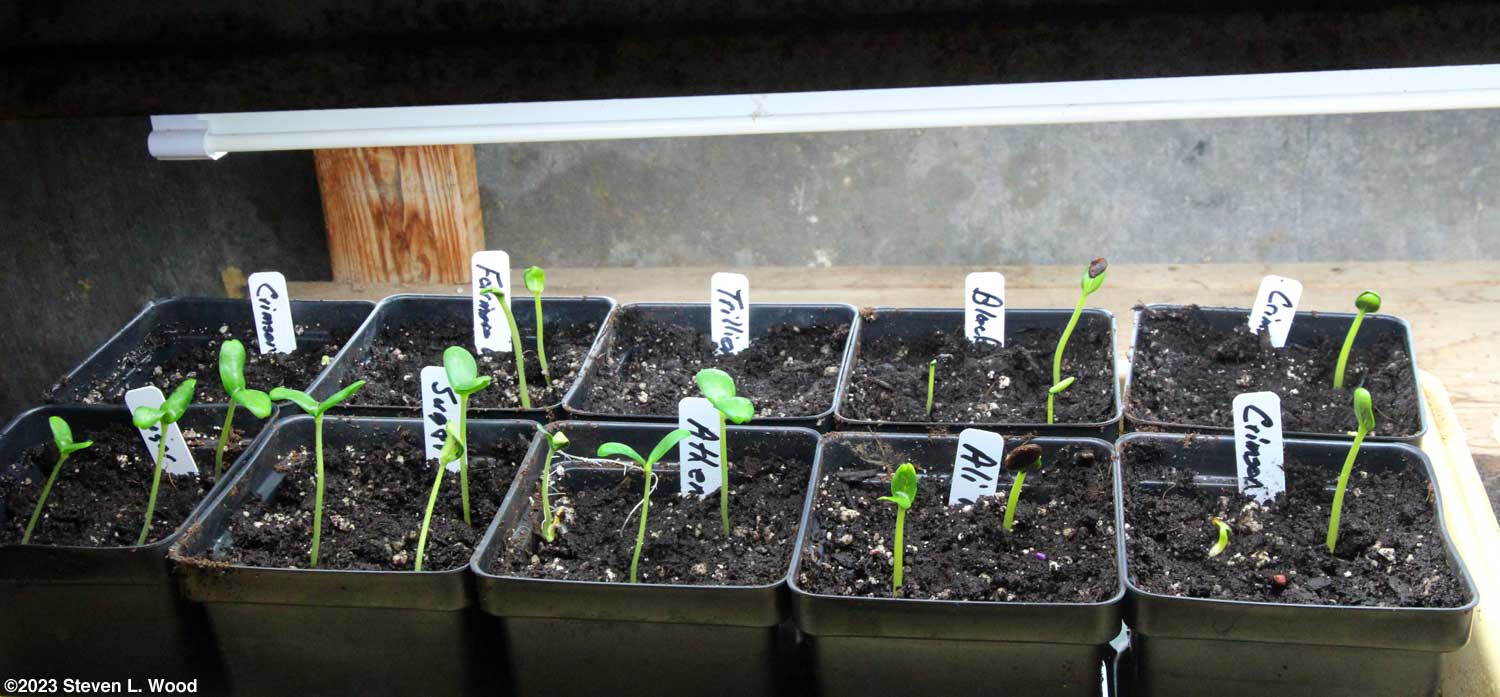
Sunday, May 14, 2023 - Mother's Day I hadn't planned on doing a posting today. But around nine o'clock this evening, I thought to check the melons and squash I'd seeded on Wednesday. To my pleasant surprise, nearly everything was up, other than two varieties of watermelon where I'd used five year old seed.
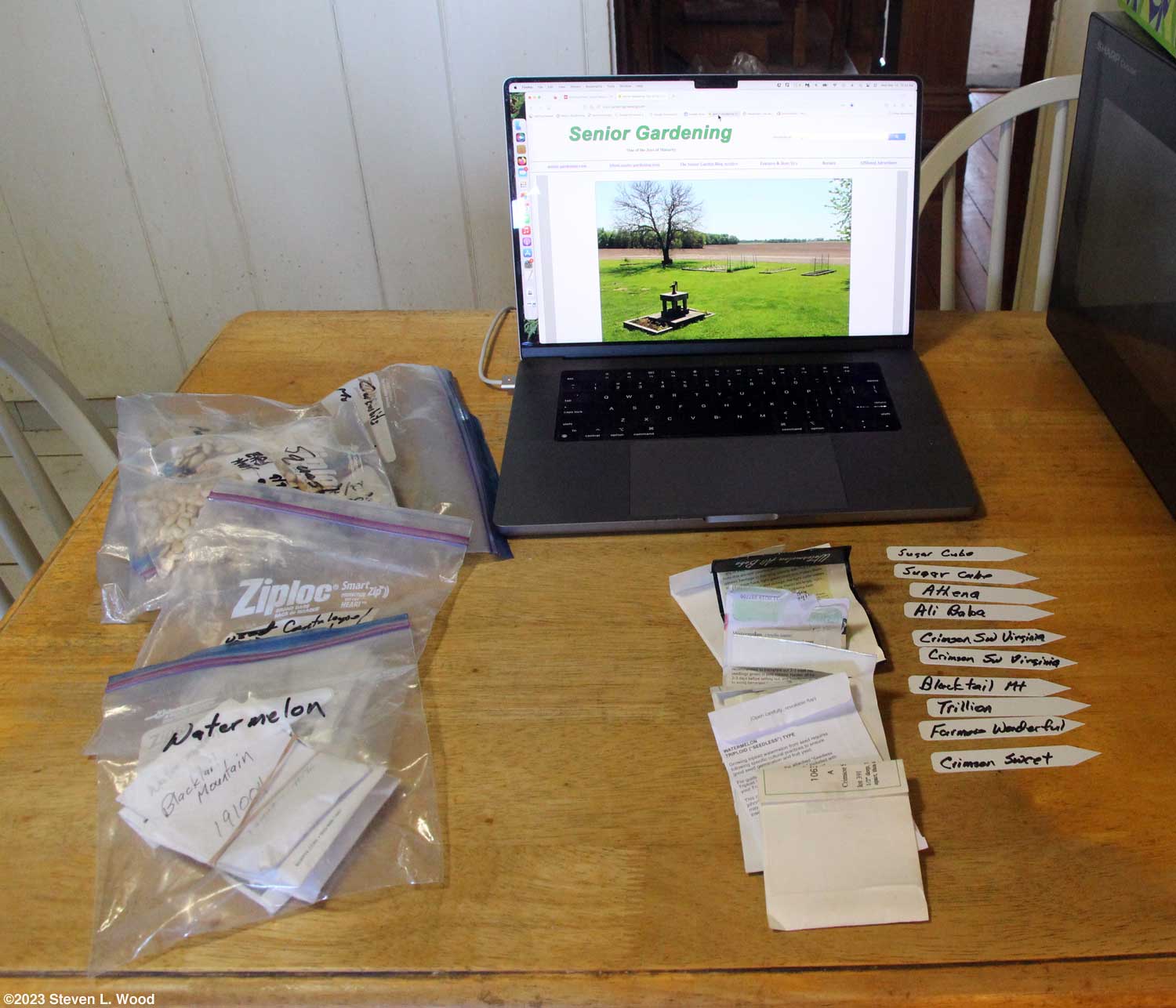
Our regular Crimson Sweet and seedless Trillion watermelon seeds haven't germinated as yet. They're the five year old seeds I used. While there are more starts showing, I generally thin the watermelon and cantaloupe pots to two plants each.
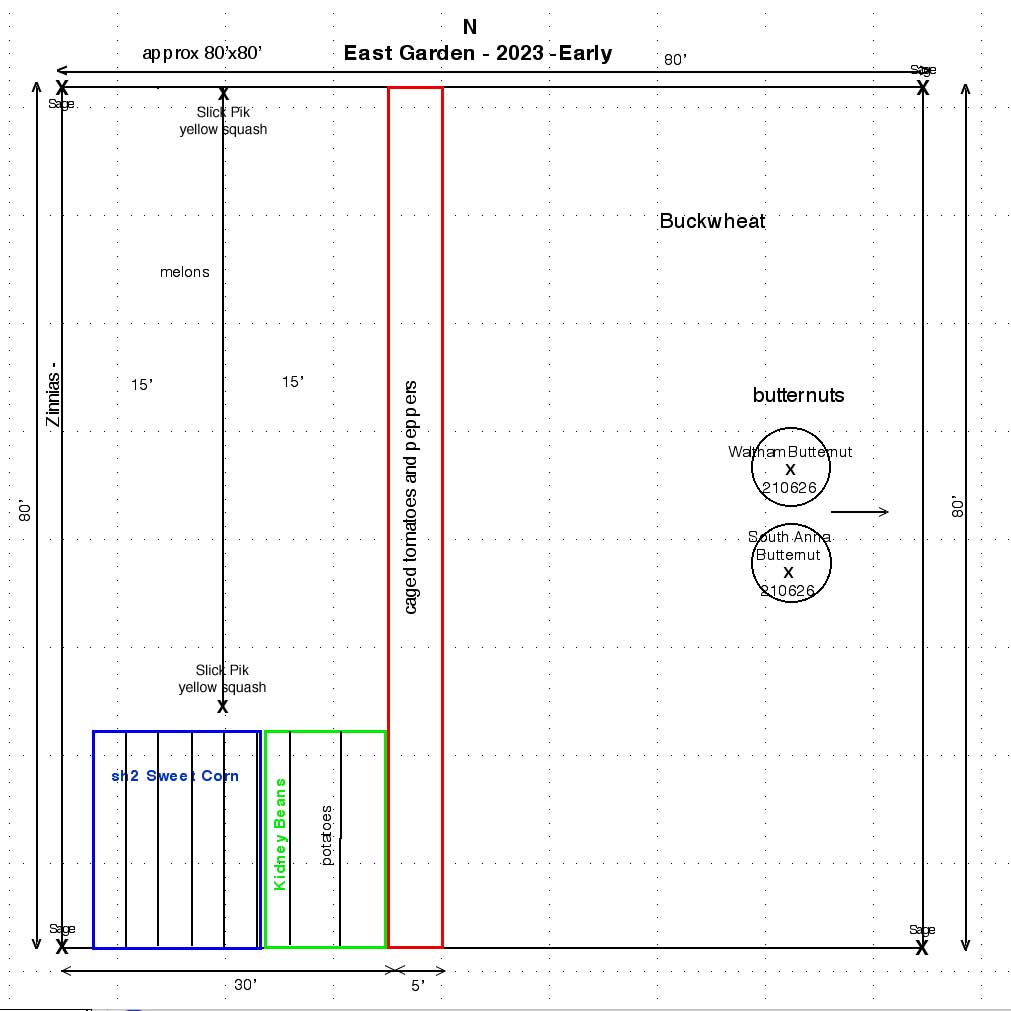
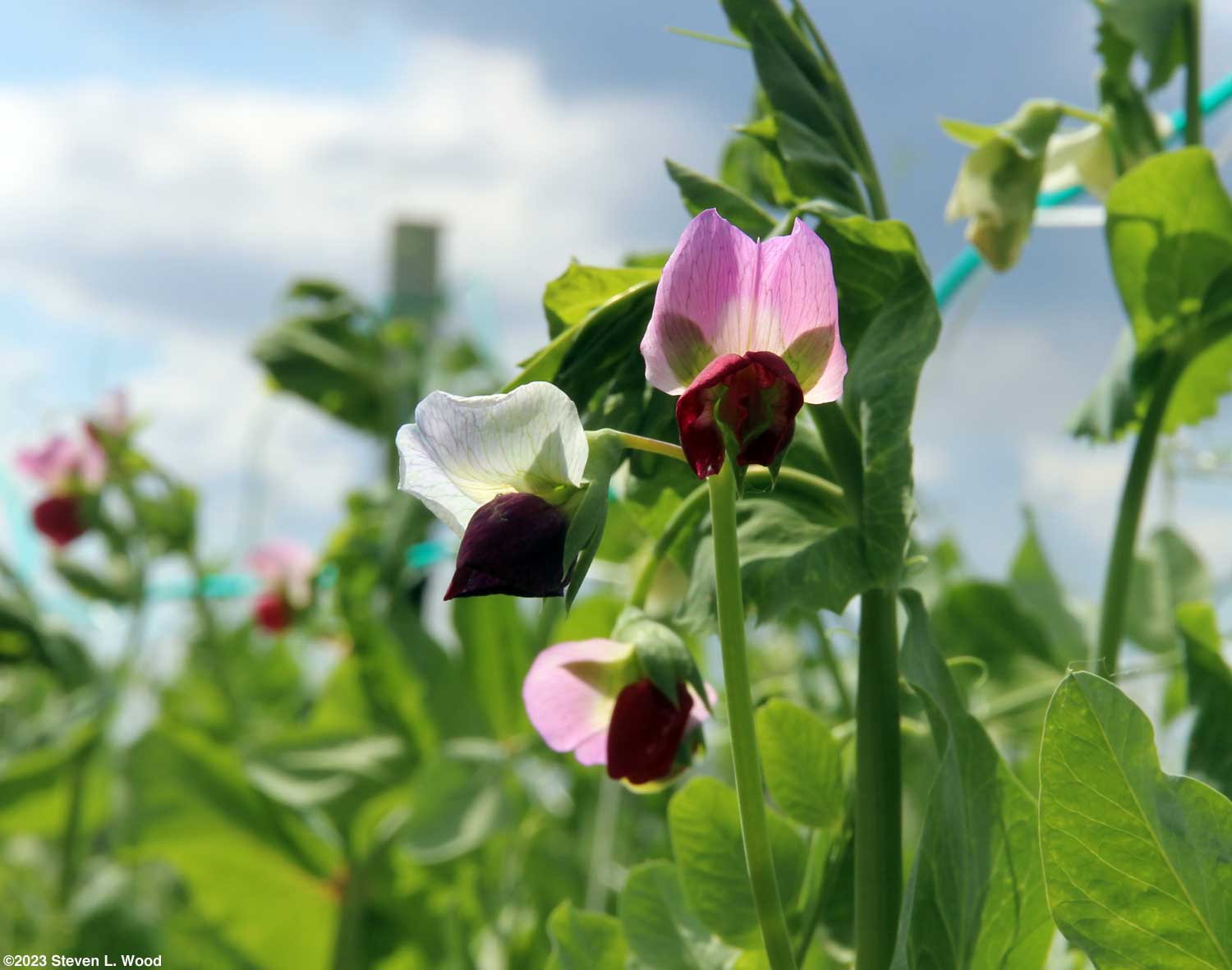
I wanted three butternut plants per pot from this planting, so I'll definitely need to thin them at some point. For the Slick Pik yellow squash, two plants per pot usually works for us. The butternuts are in eight inch bulb pans. The melons and yellow squash are in four and a half inch pots. I started my gardening day today transplanting flowers at the ends of vegetable rows in our raised beds. While doing so, a granddaughter who was spending the weekend with us pointed out our first pea blossom on our early pea vines. My afternoon was less exciting, as I mowed the field next to us. It's rather rough ground in places, and I'd let the grass get pretty high, skipping mowing the area last week. As I mowed, I was happy to see lots of Dutch white clover growing. That told me that I probably won't need to lime the field again this season. Because we take grass clippings, the equivalent of taking hay, from the field each year, I periodically lime and fertilize the field. Our 80'x80' East Garden plot is in the field. I'm hoping to be able to rototill the plot this week. My garden plan for the area this year calls for melons, yellow squash, sweet corn, potatoes, and kidney beans, along with a long row of tomatoes and paprika peppers. While I hope to plant and care for a 30'x80' area in the plot this year, the rest is planned to get a cover/smother turndown crop of buckwheat.
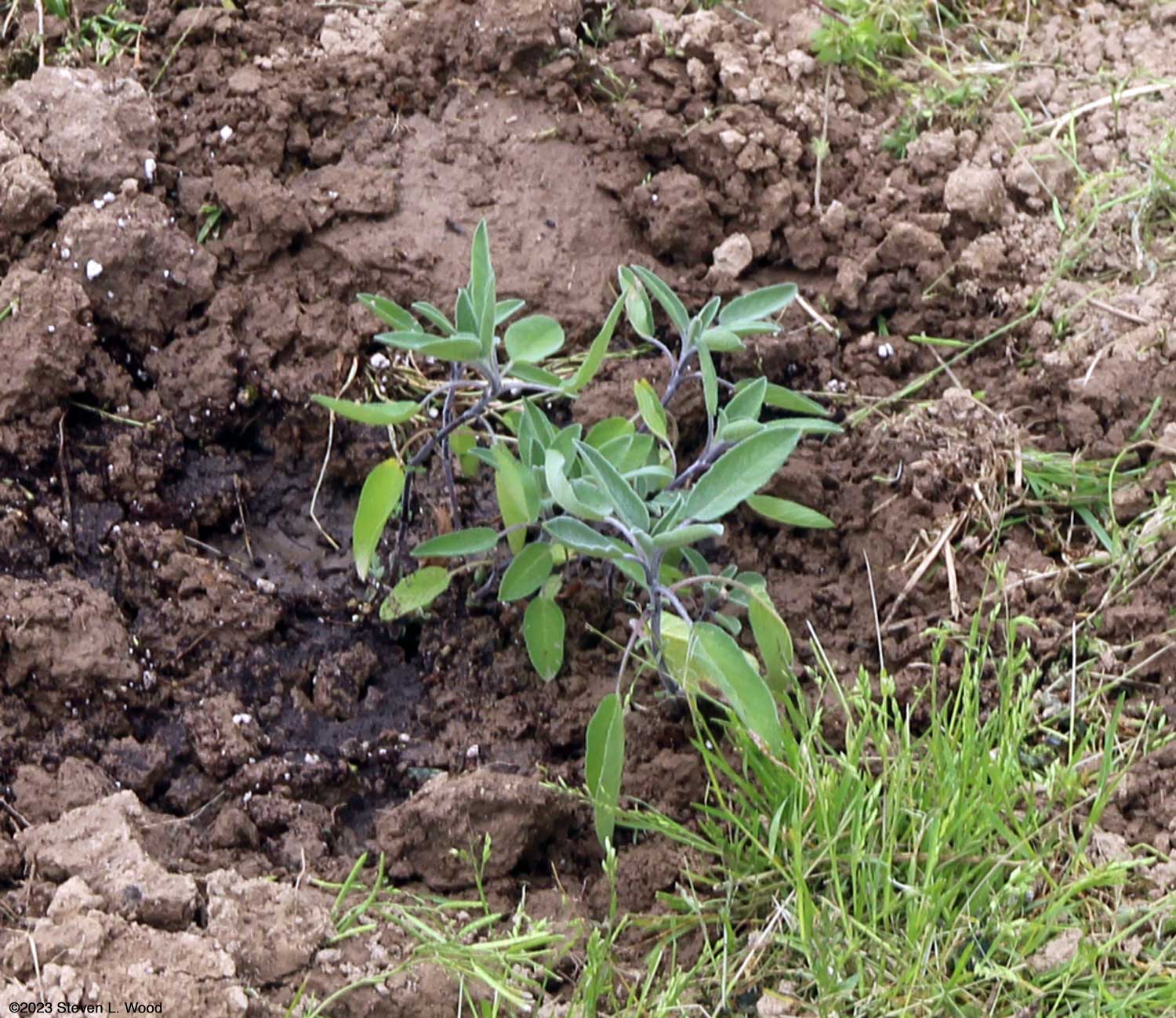
It's a very welcome rainy day here today. As I moved flower transplants into the ends of vegetable rows in our main raised bed over the weekend, I became aware of how dry the soil there was. Yesterday, while putting sage plants at the corners of our East Garden plot, I saw that the heavy clay soil there was also fairly dry.
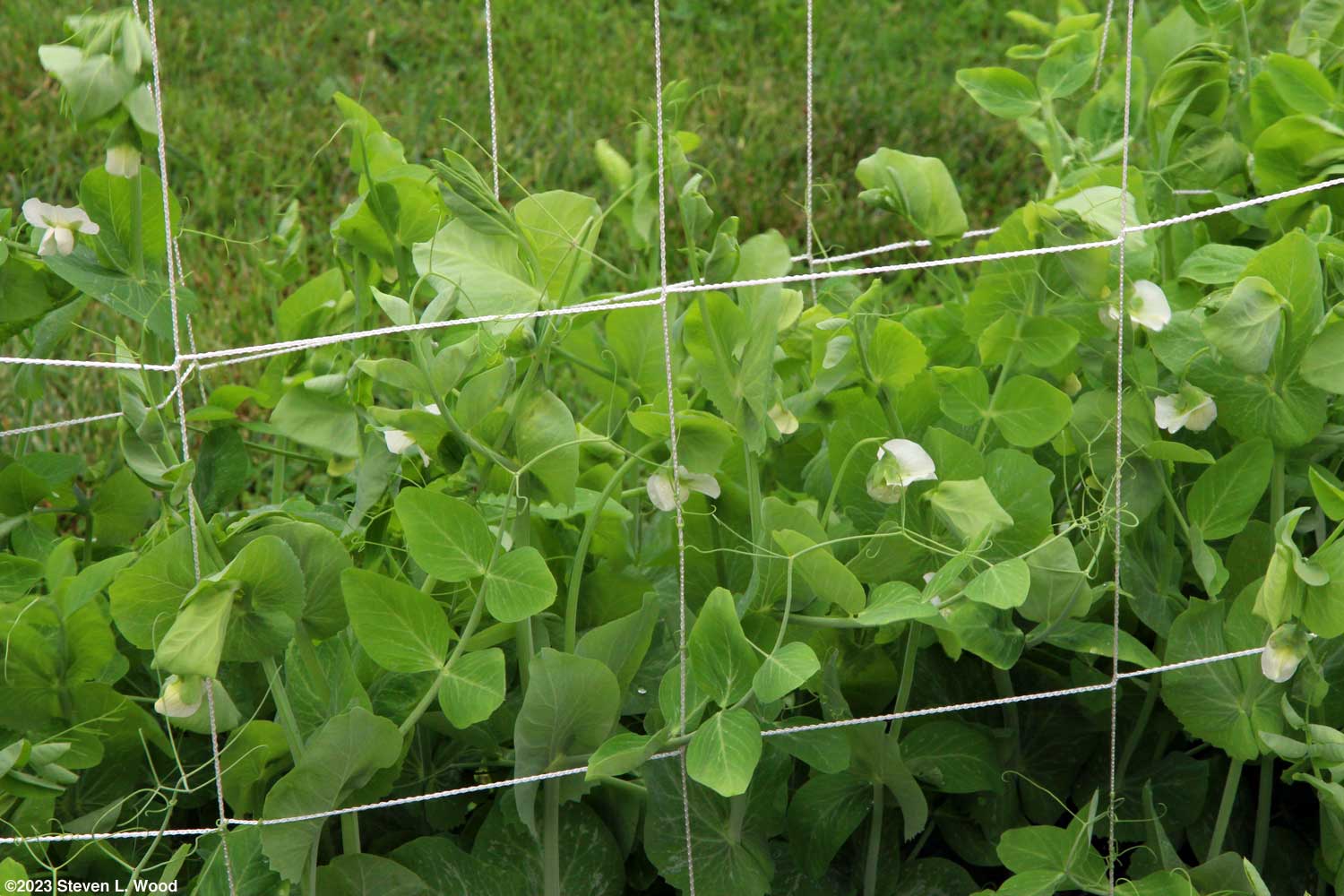
While doing the flower transplanting, a lovely granddaughter staying with us for the weekend spotted our first pea blossom of the season. By today, there were lots of blooms on our tall, early pea plants.
Yesterday's main gardening chore was marking the corners of our 80'x80' East Garden plot. I've used sage plants as corner (and halfway) markers for years, but all four of our last markers had died out or been mowed to death. Fortunately, remnants of the black landscape fabric I'd used around them remained for three of the corners. That made staking the plot a little easier, although I'm guessing it might be more of a trapezoid now than a square.
Instead of using landscape fabric around the plants this year, I'll use grass clipping mulch to hold back weeds and hold in soil moisture. I usually get several years out of our sage plants. The ones I recently replaced in our herb bed lasted seven years. The East Garden is a much tougher growing environment that our raised beds, so I hope for several years for plants there. And if you're wondering why I picked sage for the corner markers, I did so because they are perennials and I'd read somewhere that sage can deter deer. That last one hasn't been my experience.
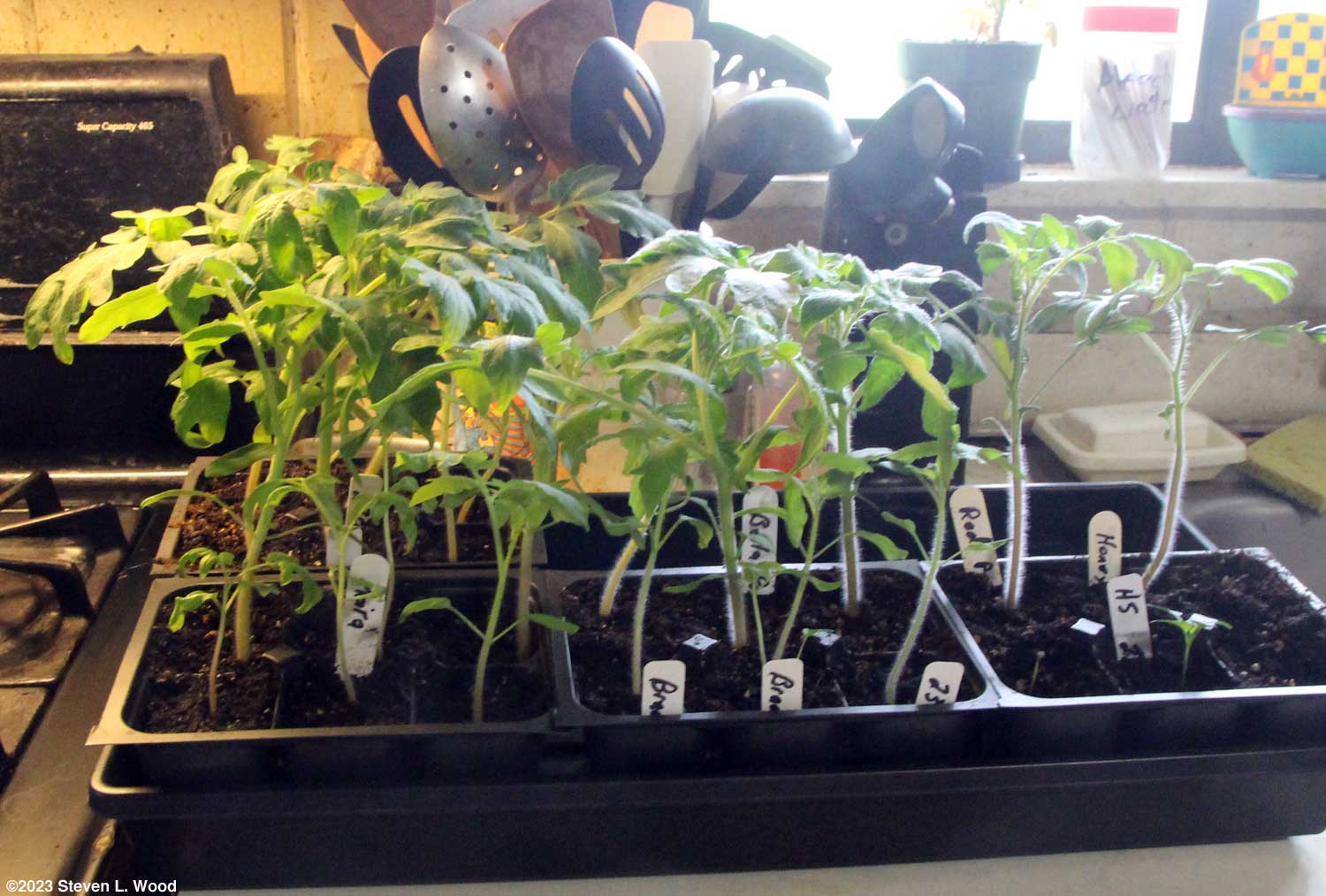
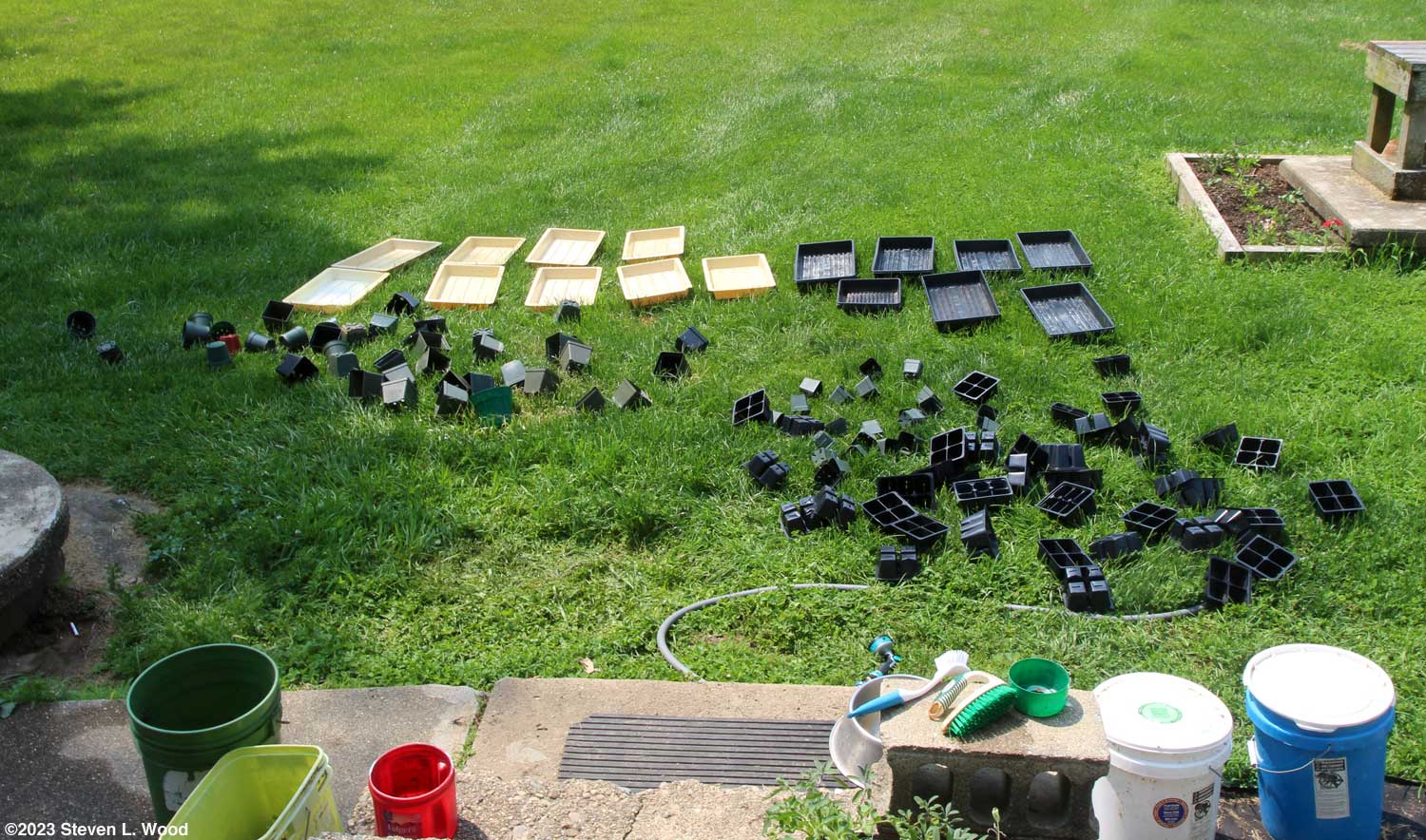
The tomato plants had grown almost into our plant lights in the basement. So I decided to uppot them from deep sixpack inserts to four inch pots and move them under our cold frame. All went well with the transplanting, other than snapping off one poor plant. (I had an extra of that variety.) To protect the plants, I decided to close the cold frame, only leaving it propped open a few inches. And that's where I made my mistake. The cold frame had water hanging in the plastic which absolutely clobbered the tomato plants. I drained the excess water from the plant trays, but fear I may have killed some of the plants. A last chore of the morning was filling our garden cart with dirty, used garden trays, inserts, and pots and filling the cart with bleach water. After somehow bringing in the INSV virus years ago that killed all of our gloxinias at that time, I wash and hopefully sterilize any garden stuff going back into our plant room.
I’d forgotten to bring some dirty pots up from the plant room when I started the soak, so I added them this morning. They soaked with the rest of the pots and inserts for about two hours before being rinsed. I was lucky today was sunny without a lot of wind. Trays and such tend to fly away in strong winds.
With a good bit of mulch left and our grass due to be mowed and raked again soon, I mulched our bed of tomatoes and spinach. There were still some grass clippings left. They went onto spots in our garlic bed where the mulch had thinned.
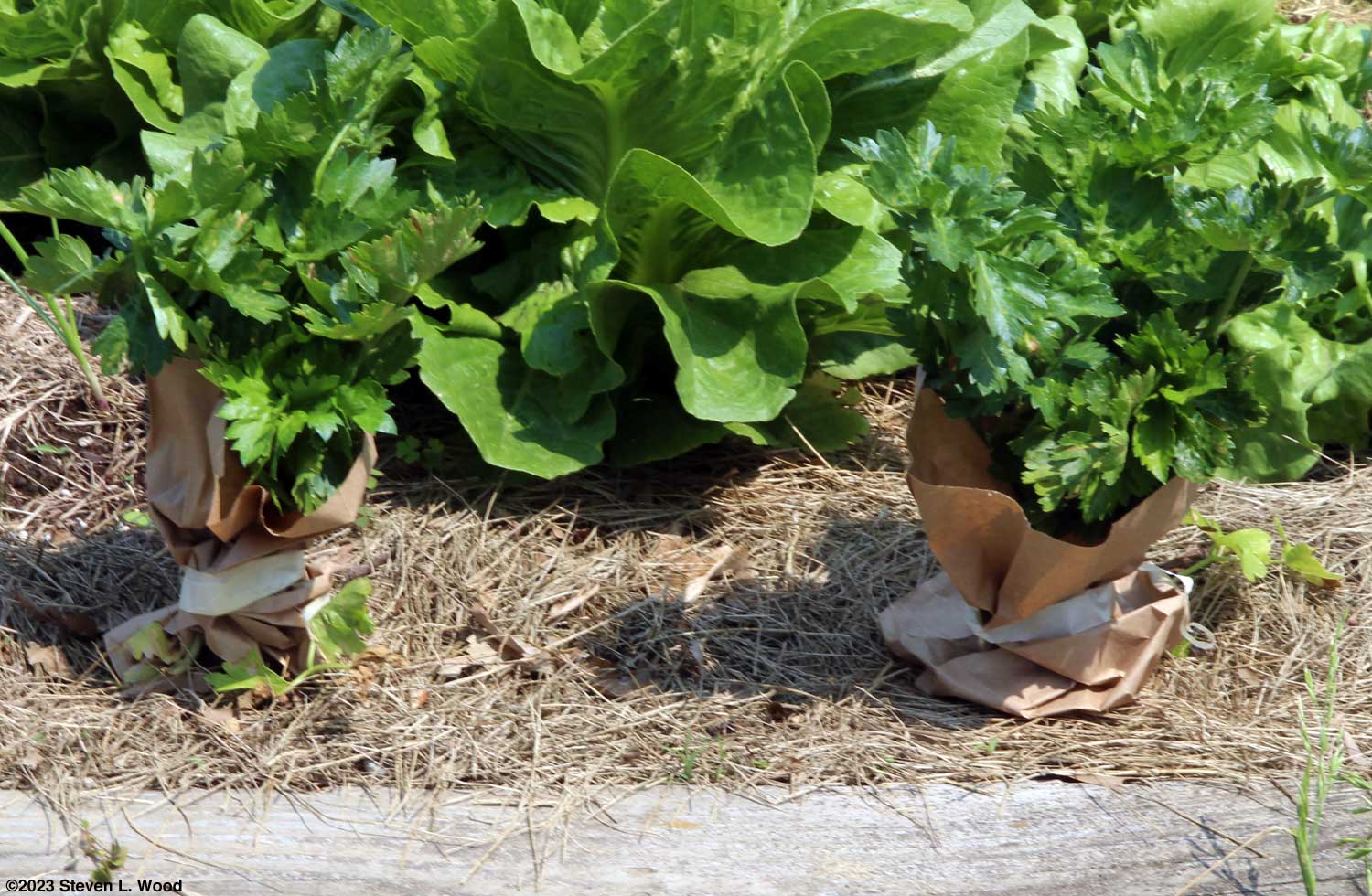
When I started planting this spring, I had a little extra room left at the end of a double row of onions. I snuck in a couple of celery transplants. I'm not good at blanching celery, but gave it another try today. I cut the bottoms out of a couple of lunch sacks and pulled them over the very healthy celery plants, securing them with a wrap of masking tape. The Old Farmer’s Almanac suggests that celery is "one of the more difficult crops to grow at home." I'd have to agree. I started our celery on January 31. While the Ventura variety is listed with a 50-100 days-to-maturity figure, ours may take a bit longer to mature. And of course, as hot weather sets in, that may make the celery bitter. But trying new things is one of the perks of gardening.
Seed Sale! Save 50% Off All Seeds with Code SEEDS523
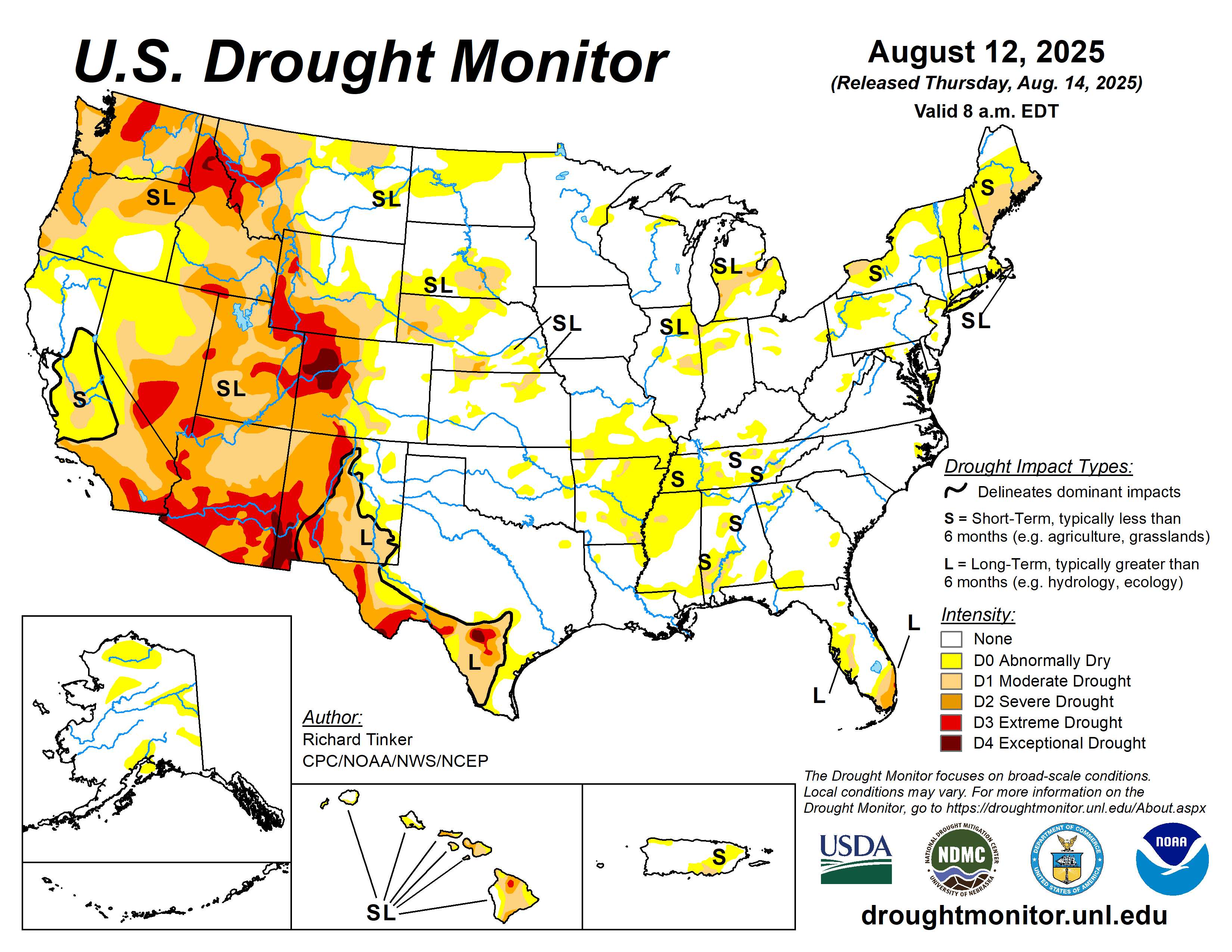
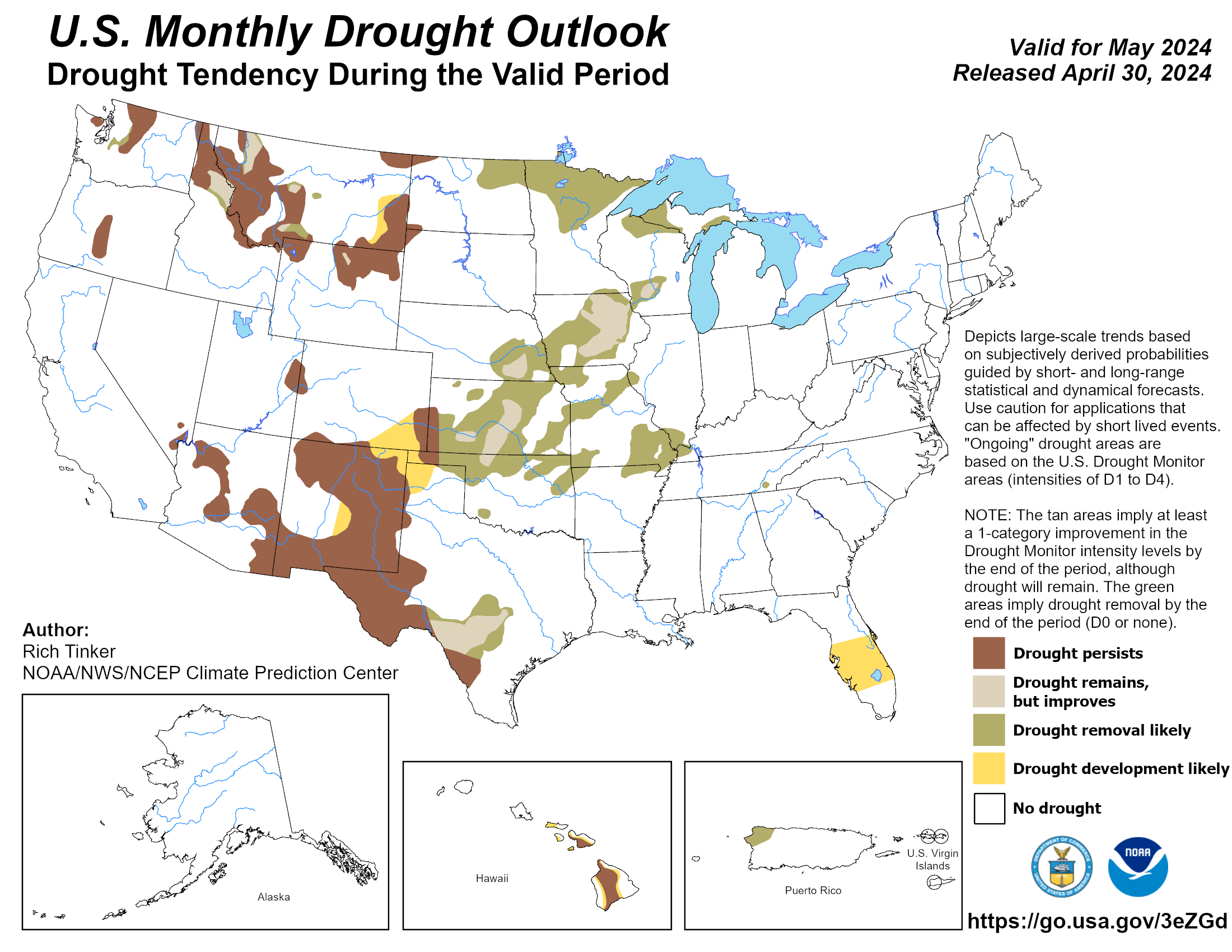
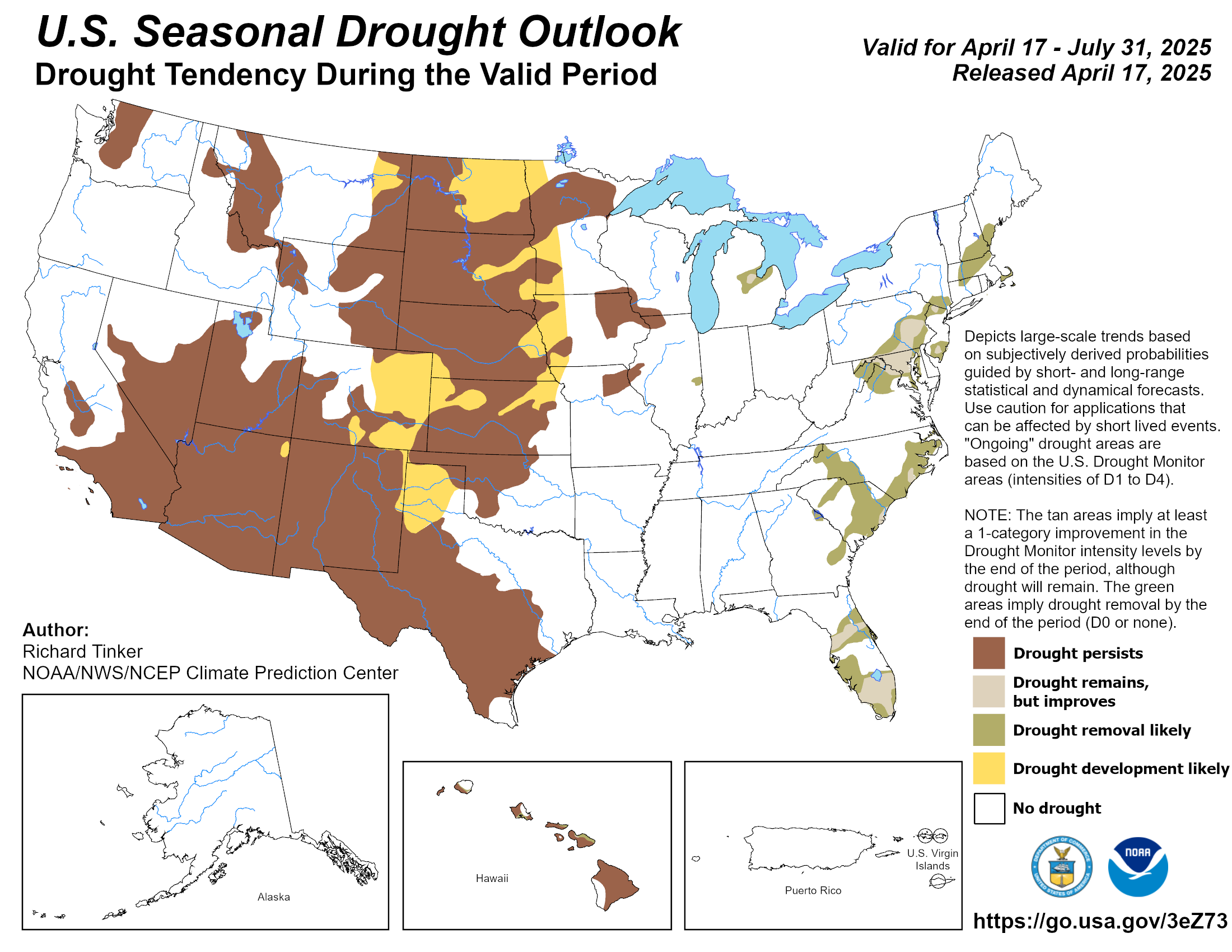
A local weather person suggested on Thursday that while we're not yet in the abnormally dry classification from the U.S. Drought Monitor, we probably will be by next week's report. Such an early dry spell can stunt garden plants. And while last night's rainfall was welcome, our current extended forecast looks pretty dry. That's good for getting our East Garden tilled and planted. It's not so good for the crops in our raised beds. Those beds dry out more quickly than surrounding areas or the East Garden.
Not so good for the East Garden is that I'm fighting a mower arm that refuses to release the mower deck. The mower deck has to come off for me to mount the tiller attachment. On top of that, I had to replace the mower's battery this morning. It failed a week or so ago. I'd been starting the mower with our battery charger hooked up to it. But if I'd killed the engine while mowing, I'd have been in a mess requiring jumping the mower with cables from my truck.
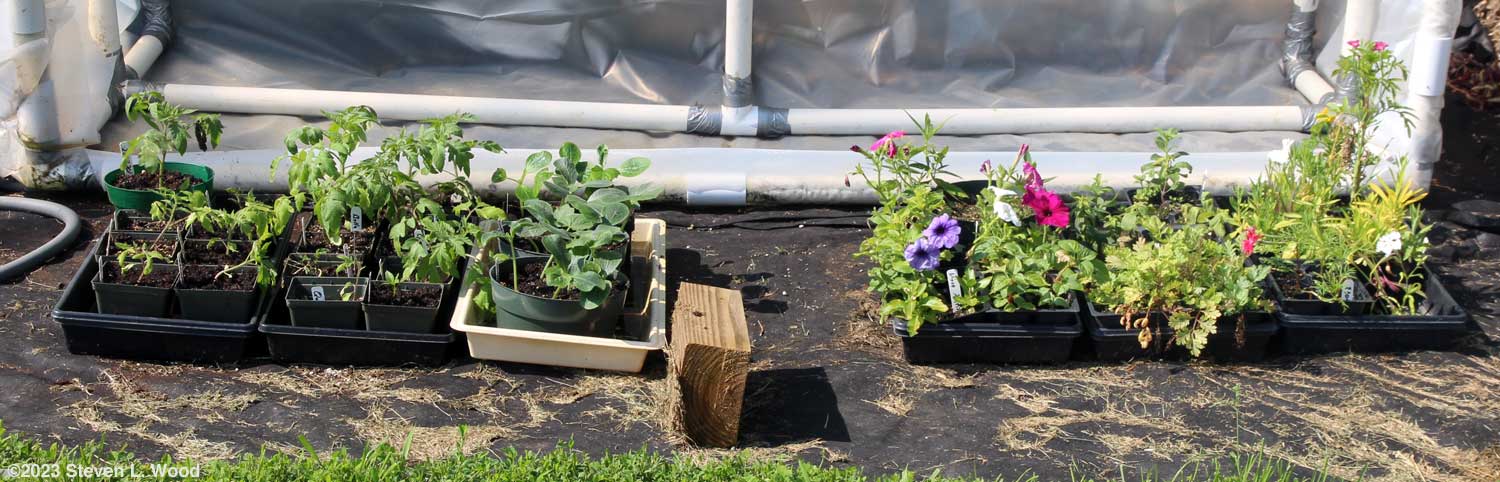
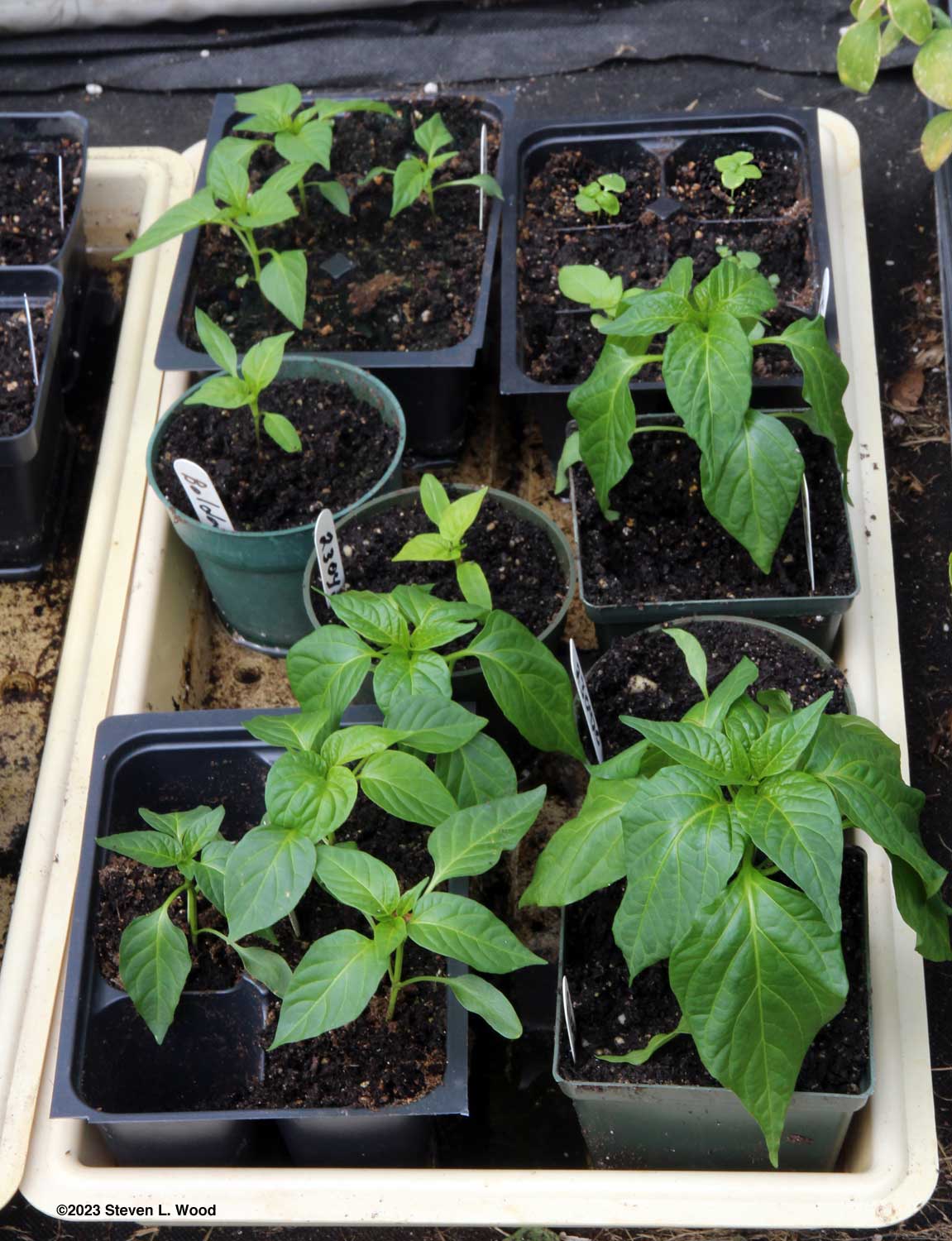
I'm doing lots of little gardening jobs these days. I uppotted some paprika pepper plants in the basement that had been slow to germinate. I also worked on our tomato plants for the East Garden. Our butternut and yellow squash plants were ready to be moved to our cold frame to harden off. The melons I started the same day as the squash haven't as yet put on their first true leaves, the point at which they'll go outside. In making room for the squash by moving our leftover geraniums to our porch steps, I realized that I still have a lot of flowers remaining to go into our garden plots and flowerbeds.
Sunday, May 21, 2023 - Broccoli
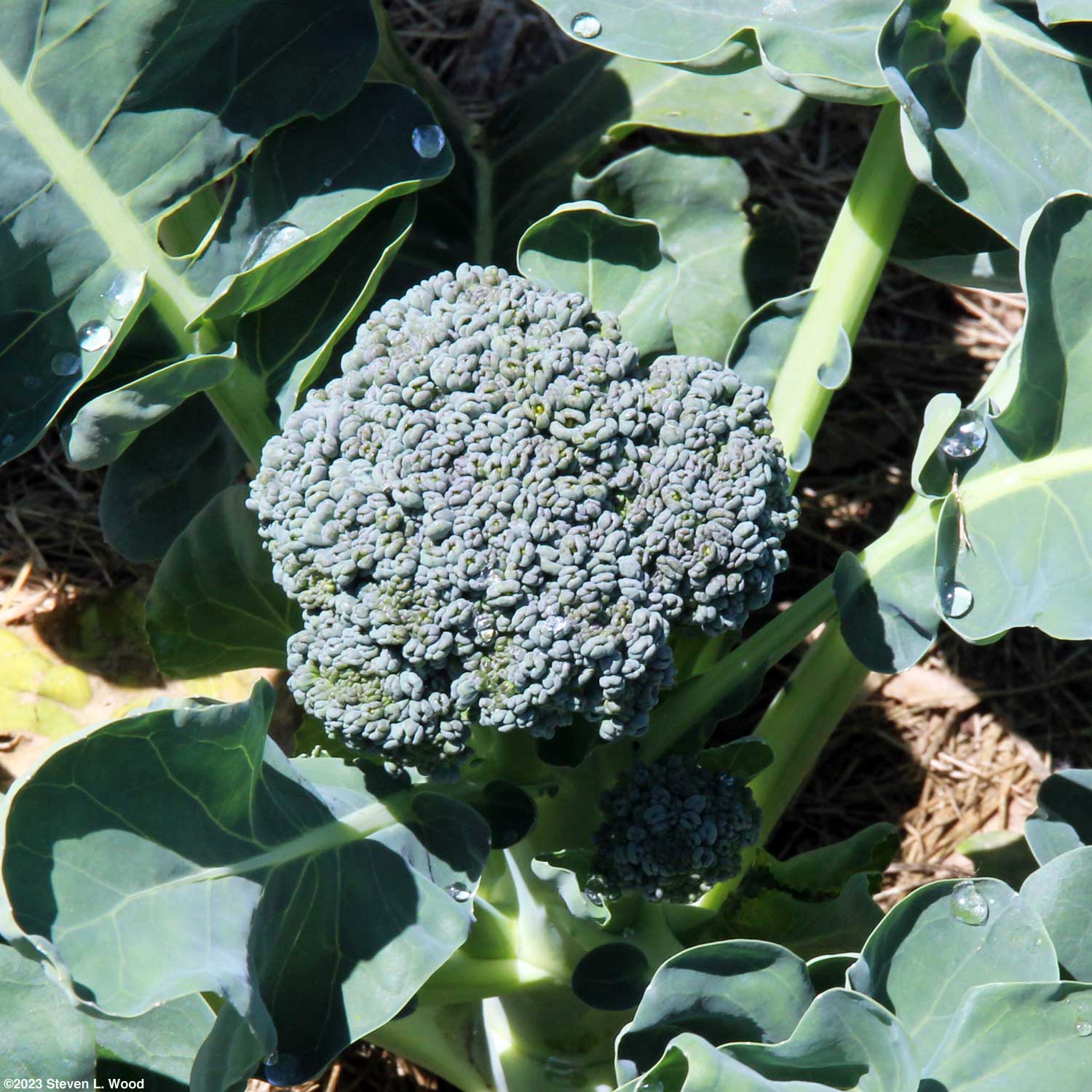
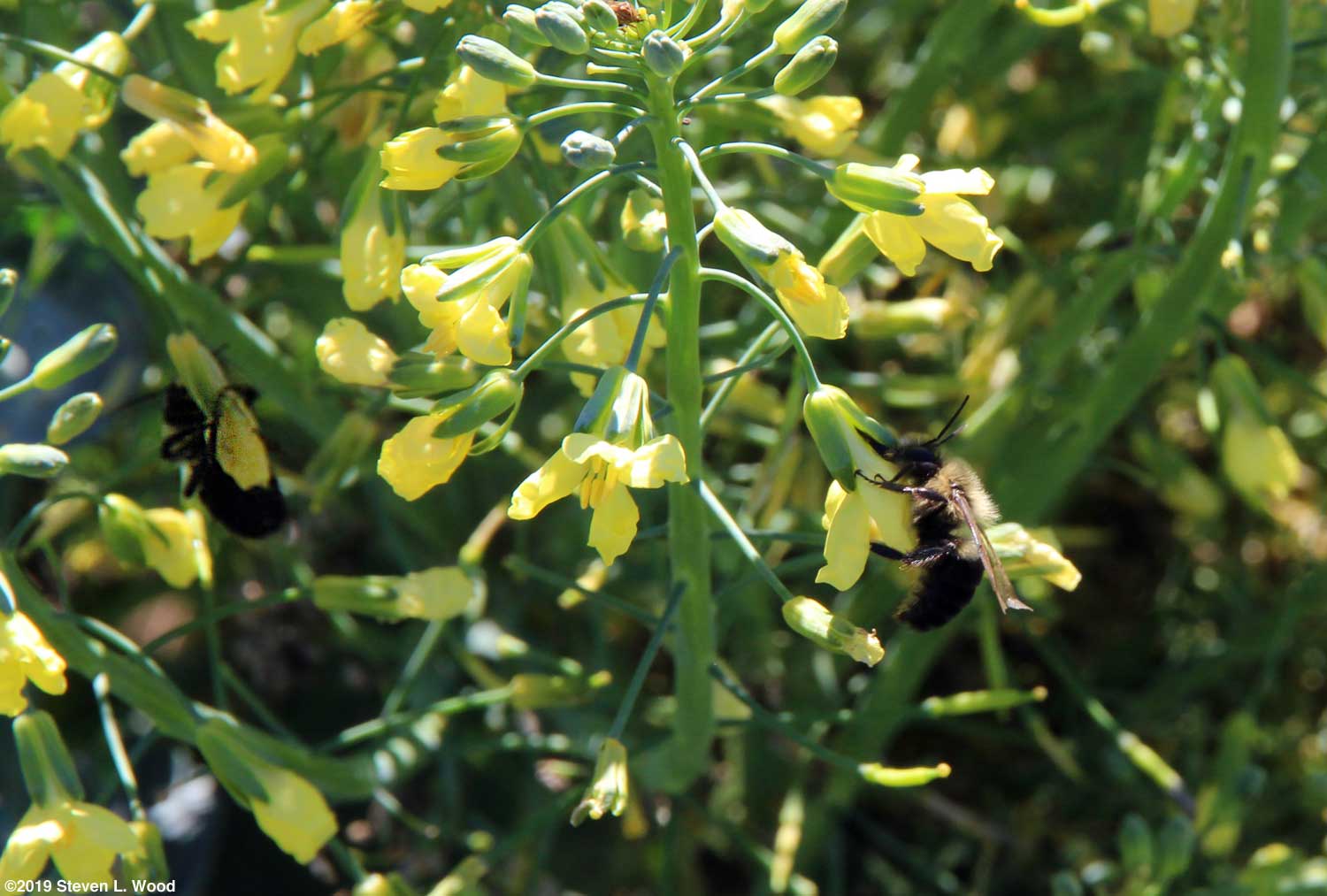
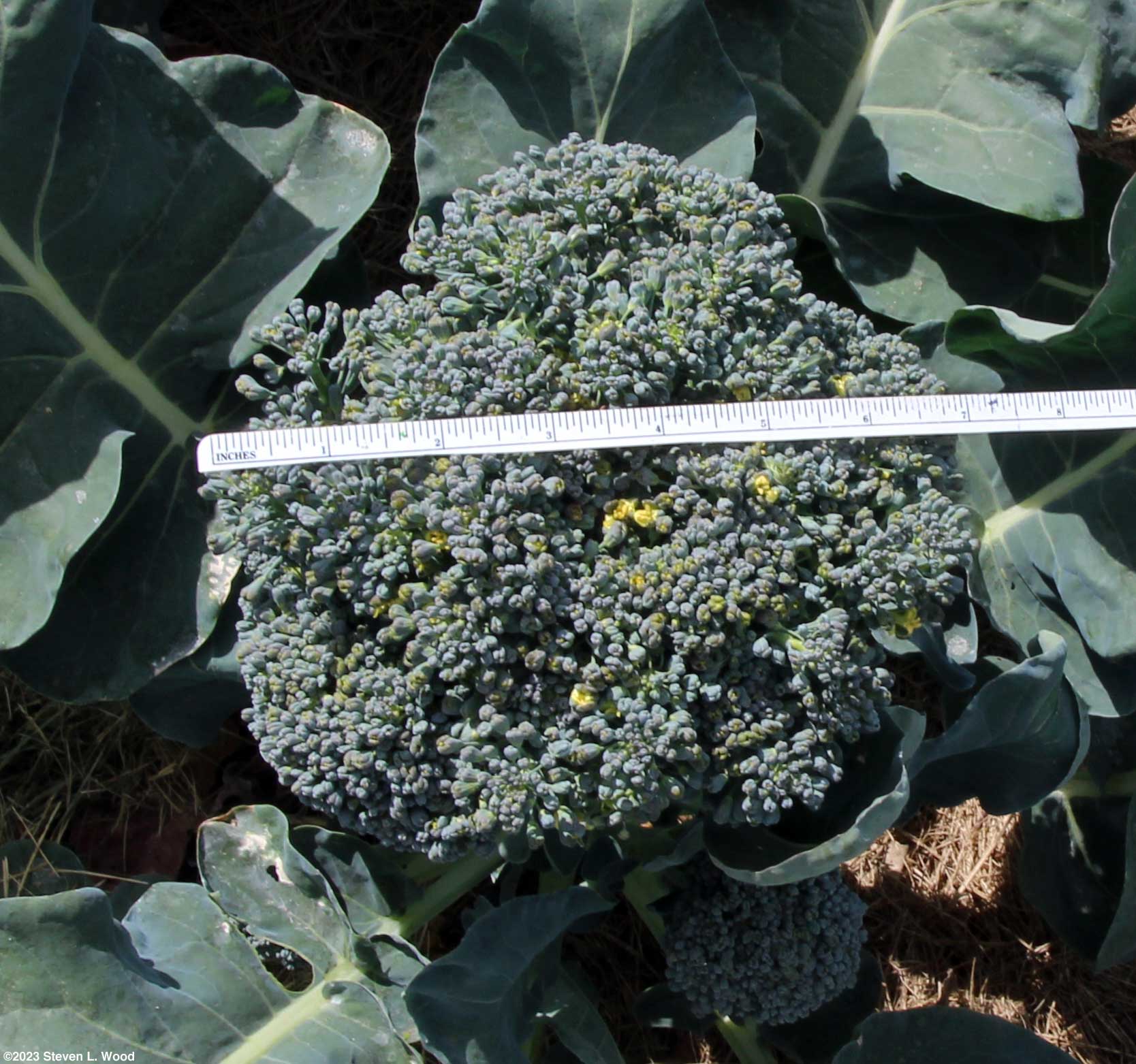
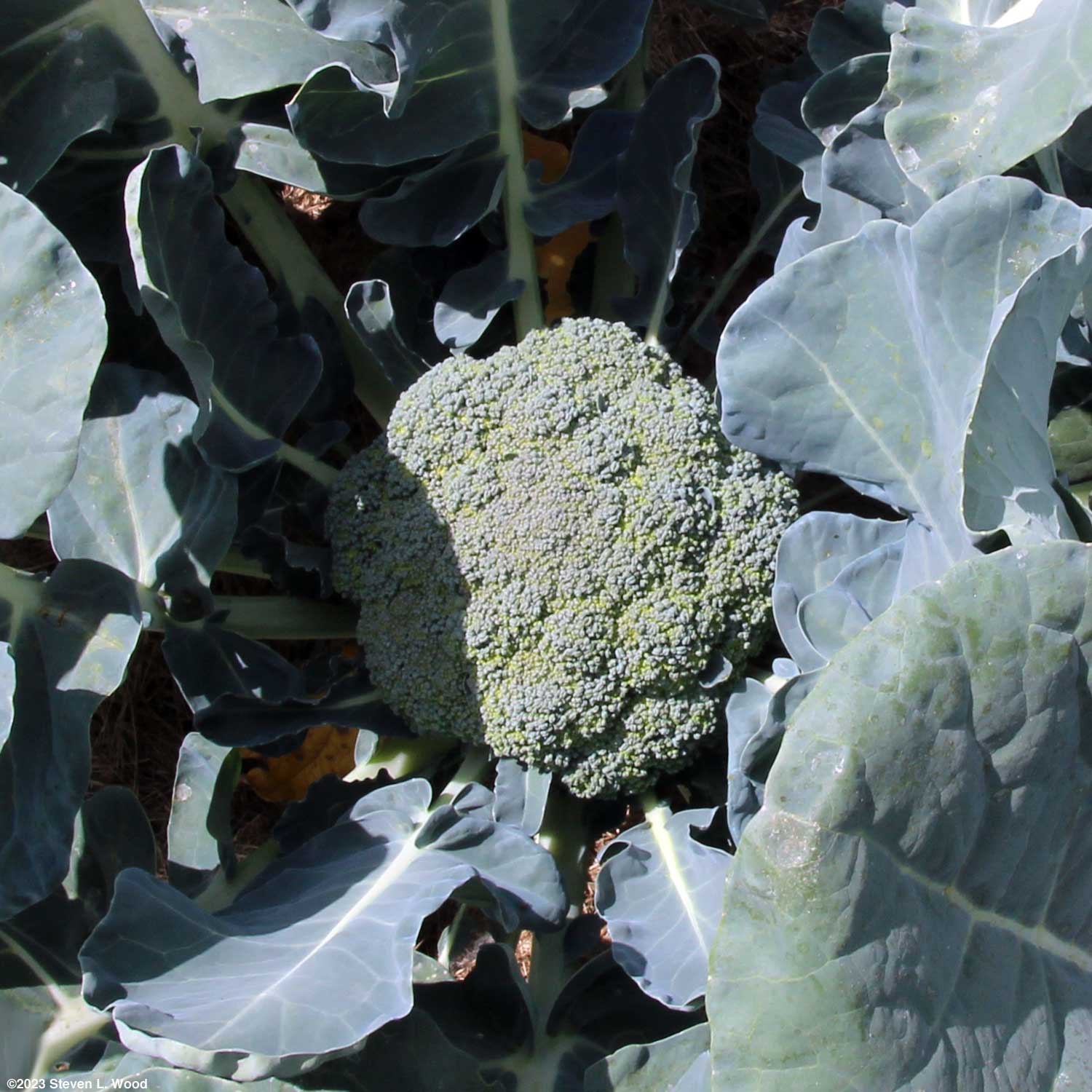
While I'd love to have broccoli smothered in cheese for supper tonight, our Goliath plants are for seed saving. Once they begin to bloom, I can take sideshoots from the plants for the table and/or freezing.
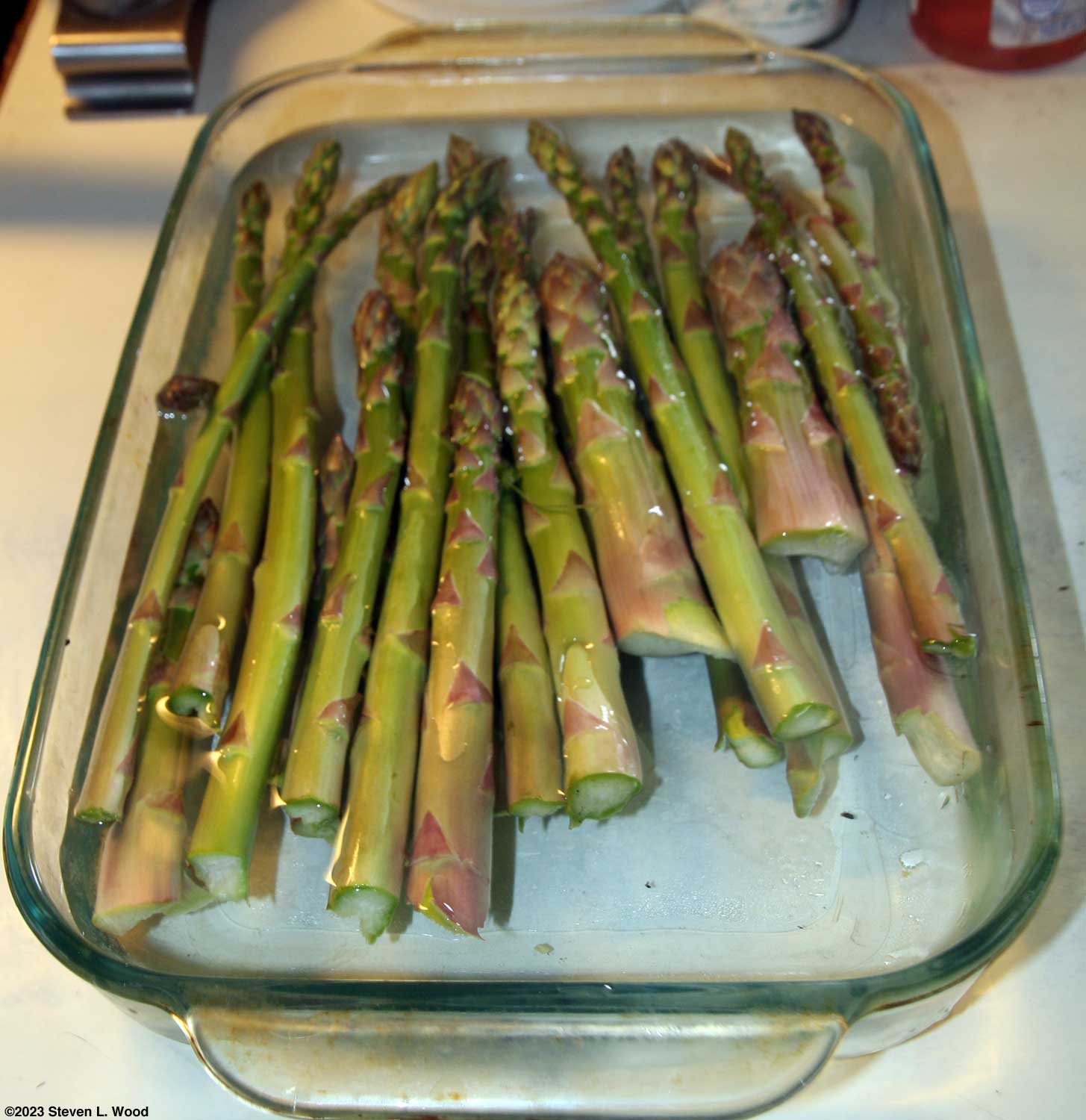
If I were growing this variety for the table or freezer, I'd be in the old dilemma of wondered whether or not to let the head grow a bit more or taking it now. Harvesting broccoli can be a bit tricky, as the heads grow fast and go to bloom and seed very quickly. This time around, I'll let the heads grow and bloom, waiting for bees to do the necessary cross pollination of plants to produce viable broccoli seed. Asparagus I picked asparagus again today. The picking was probably the last from Bonnie's Asparagus Patch, as it only yielded one good asparagus spear. Our raised bed of asparagus is also winding down, but still produced a nice picking today. This is about as late as we've ever had an asparagus harvest last. Spinach
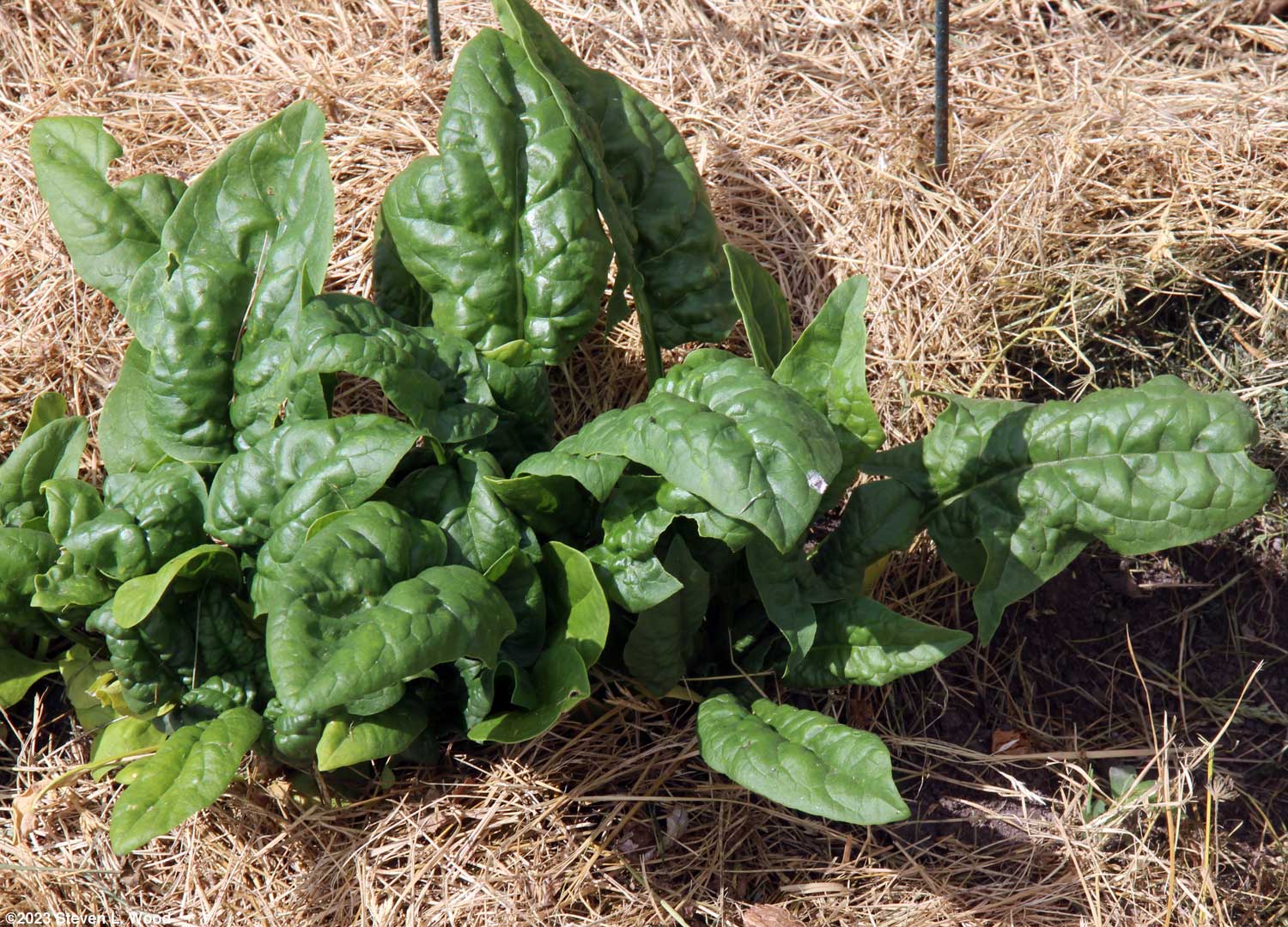
Our row of Abundant Bloomsdale spinach was ready for a thinning and a light picking today. I used some of the thinnings to replant an area where one of our dogs had gone after a mole. Abundant Bloomsdale was bred by the Organic Seed Alliance (OSA) in partnership with organic farmers. It's named after the Abundant Life Farm where the breeding project started in 2002. The variety was released in 2015 under the Open Source Seed Initiative. In contrast with Monsanto/Seminis bred and patented plants, the OSSI pledge states: "You have the freedom to use these OSSI-Pledged seeds in any way you choose. In return, you pledge not to restrict others’ use of these seeds or their derivatives by patents or other means, and to include this pledge with any transfer of these seeds or their derivatives."
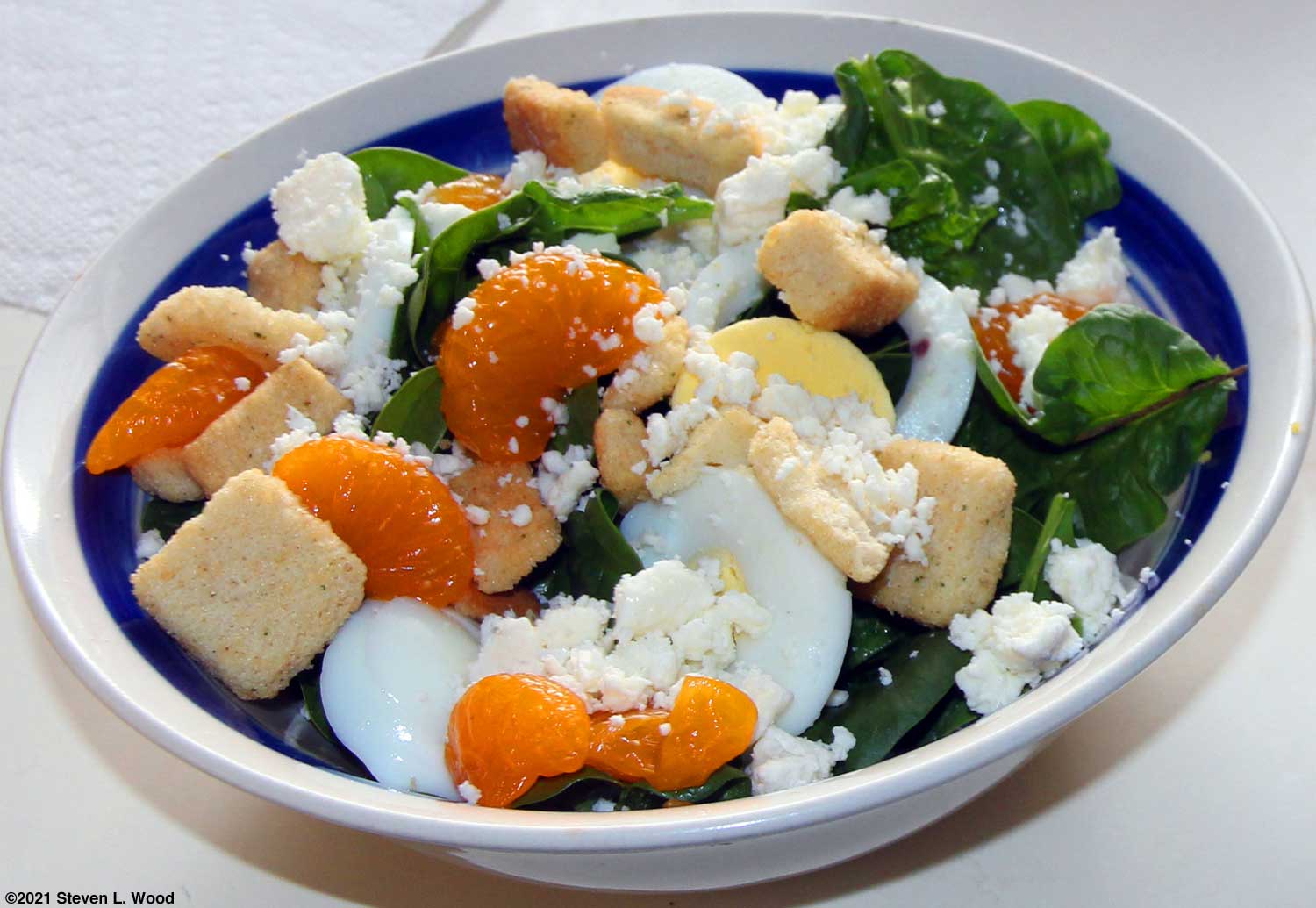
After washing the baby spinach leaves harvested today, I ran them through our new salad spinner. When I purchased the item, I had my doubts about its effectiveness and durability. I'm now pleased with the spinner's effectiveness, but still wonder how long the device will remain functional. Currently, we're in an unusual lull in gardening chores that need to be completed immediately. With a little time on my hands, ignoring some household chores that needed doing, I cleaned up my garden plan records. I still use the old Appleworks draw program for them on a very old computer. Each document also contains multiple images of the plots for recording succession crops. Our Narrow Beds
Our Main Raised Garden Bed
Our Herb Garden
Our Large East Garden Plot (yet to be planted this year)
Doing these plans helps me lay out what goes where in our garden plots each year. Possibly as important, it also provides a record of our planting, essential for crop rotations.
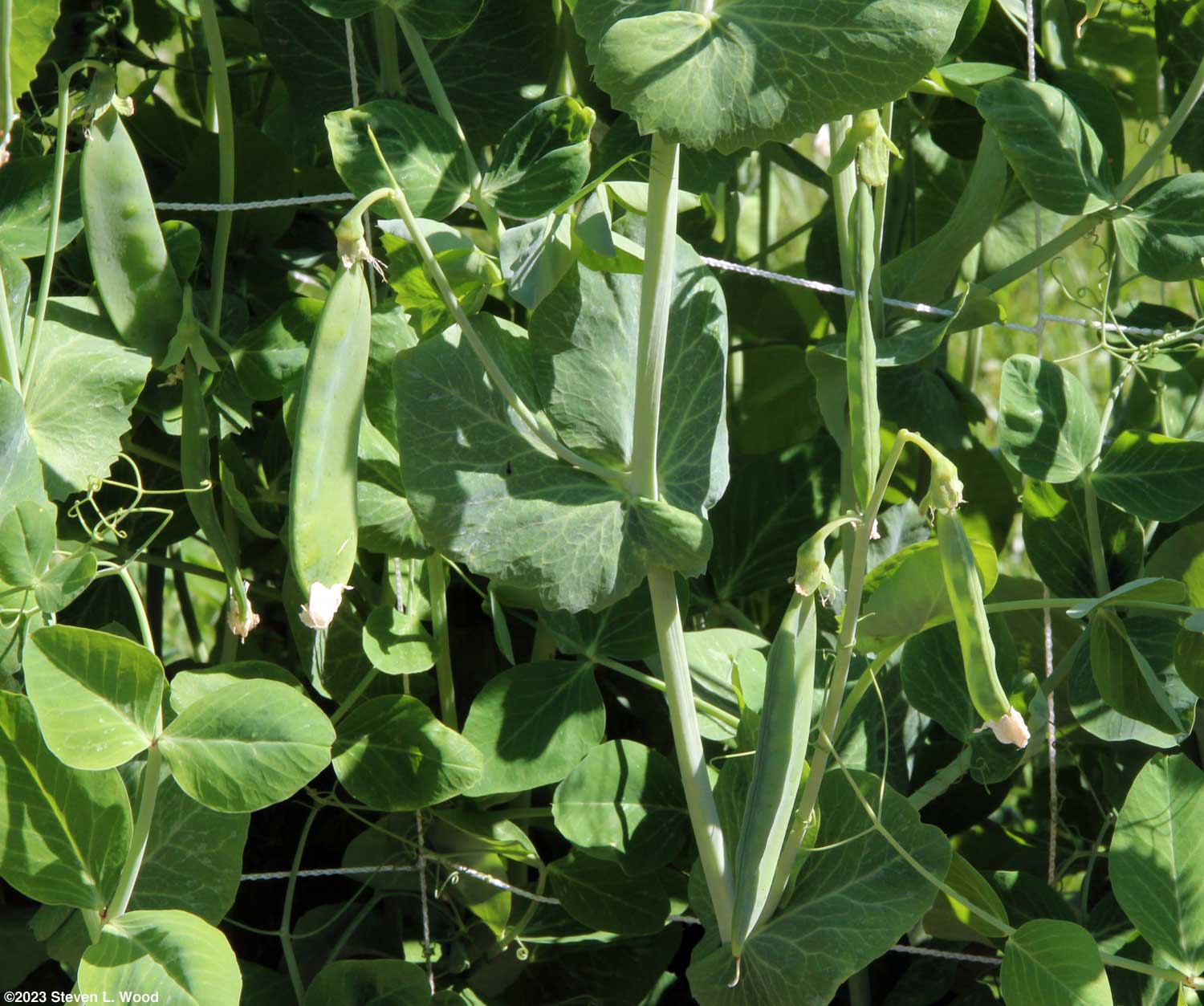
With plenty of grass clippings remaining, I finished remulching our bed of garlic. I'd started remulching it about a week ago, but ran out of mulch then. The garlic also got a foliar watering with some Miracle-Gro Liquid All Purpose Plant Food (12-4-8). Another morning job was to spray our brassicas. I had some Thuricide left in my organics sprayer and added to it a bit of Not Tonight, Deer! Yesterday, I cut slivers of about half a bar of Irish Spring bar soap around the broccoli and cauliflower plants. We've had deer bite off the broccoli heads at this stage in the past. Our lettuce is just about ready to pick. I still have lettuce in the fridge from the transplants I harvested last week. And our early peas, a cross of the Champion of England and Maxigolt varieties, are now blooming like crazy. I haven't seen any pea pods as yet, but it shouldn't be long.
I could have picked much earlier, but we were still enjoying salads from the unused transplants I harvested. I'm pretty sure we won't be able to consume all the lettuce remaining before our weather turns really hot and makes the lettuce bitter. Our extended weather forecast still shows nighttime lows in the 50s. According to the North Carolina State Extension, "Lettuce can tolerate a few days of temperatures from 80 to 85°F, provided that nights are cool." I'm hoping. I'd been trying to switch out our mower deck for our pull-type tiller for days without success. A support arm jammed and I couldn't get it to release the deck. Instead, since our grass was getting really high, I re-installed the deck and mowed today. And that seems to have freed the jammed part. In breaks from fighting the mower, I got all of our flowerbeds cleared of weeds this week. I have painted daisies, petunias, dianthus, impatiens, and cosmos just about ready to go into the beds.
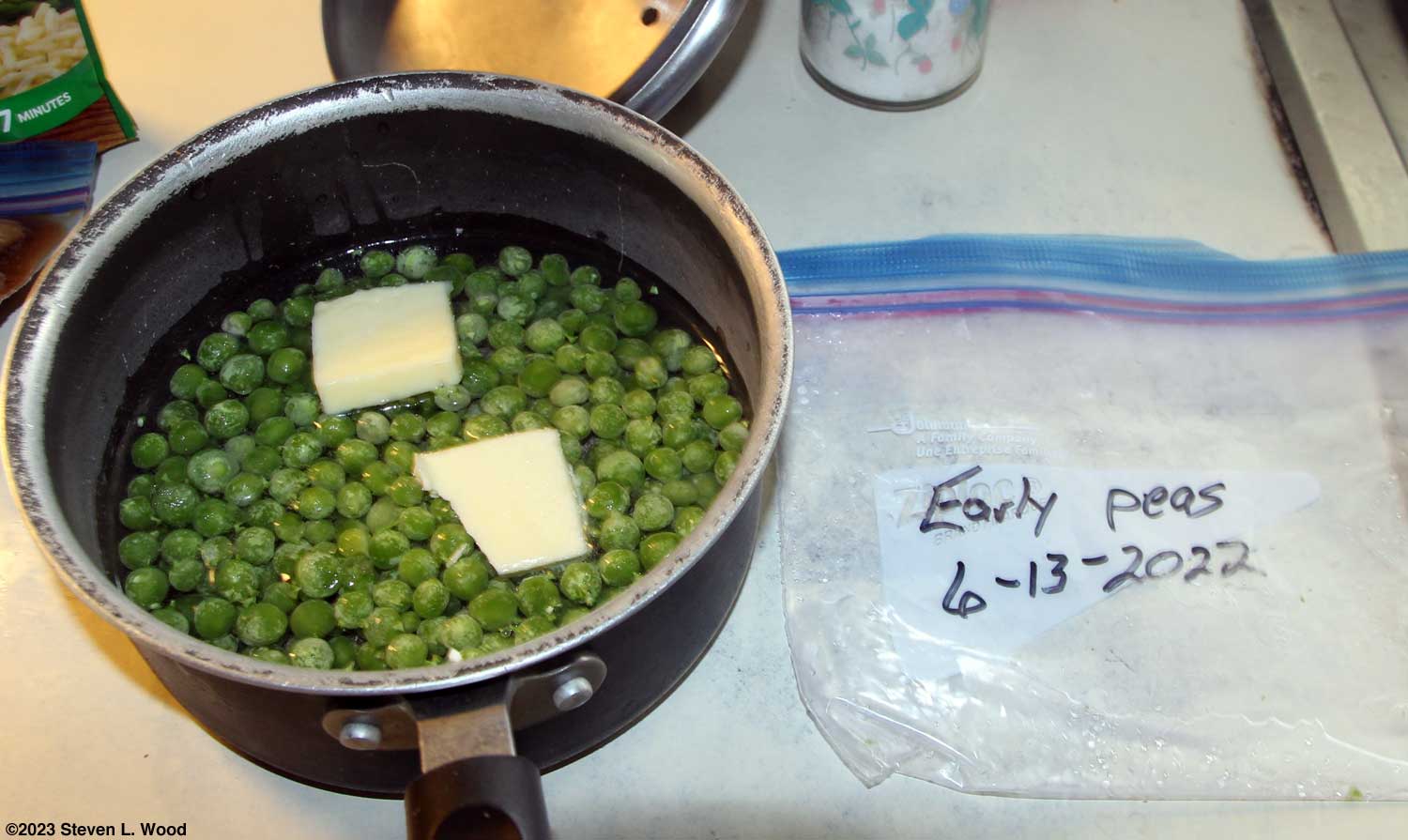
While rummaging around in our kitchen freezer, I saw that we still had about a half pint left of peas from last spring. We'll have them with our supper tonight or tomorrow. And hopefully, in just a week or so, we'll be enjoying fresh peas from the garden. • Growing Lettuce
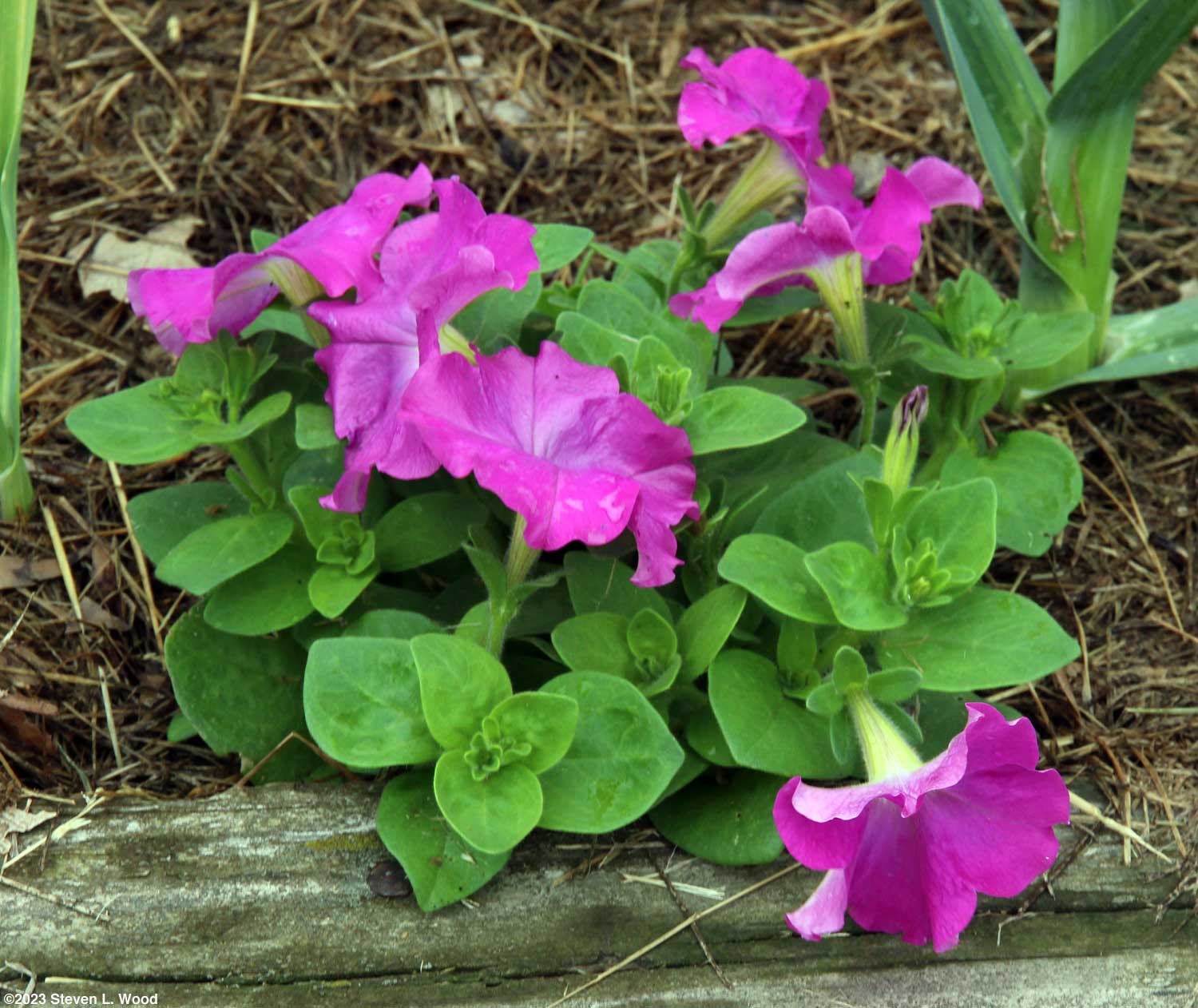
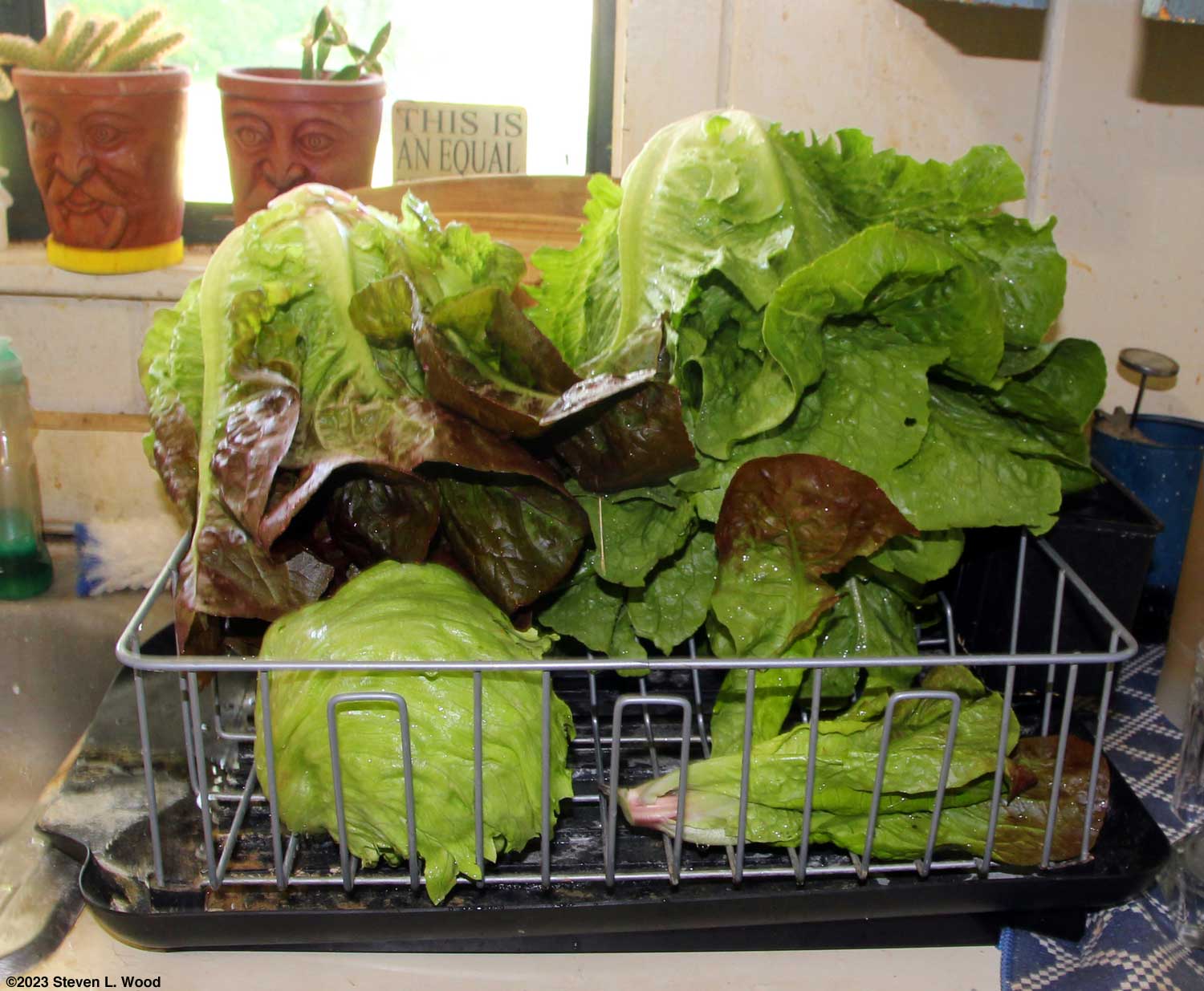
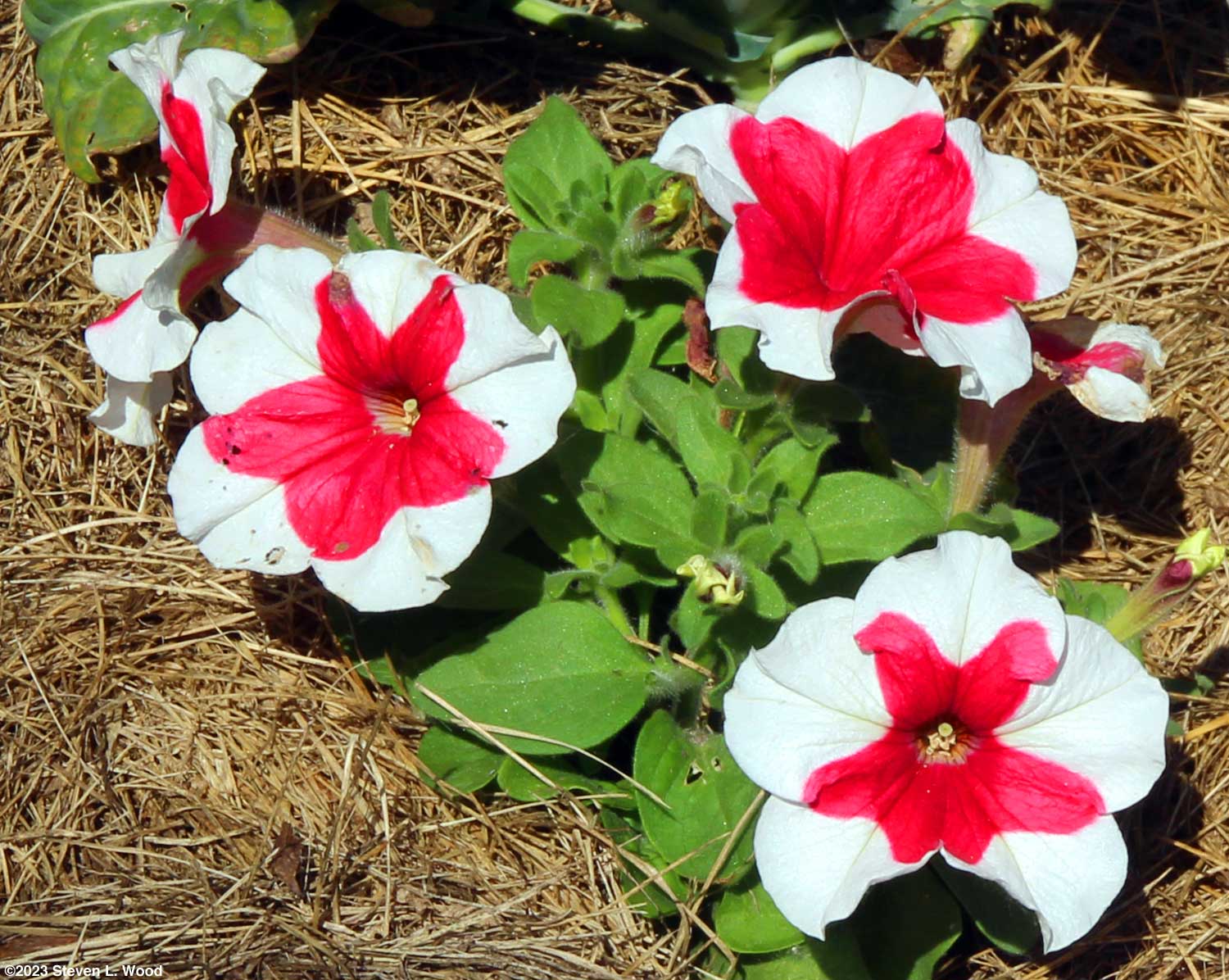
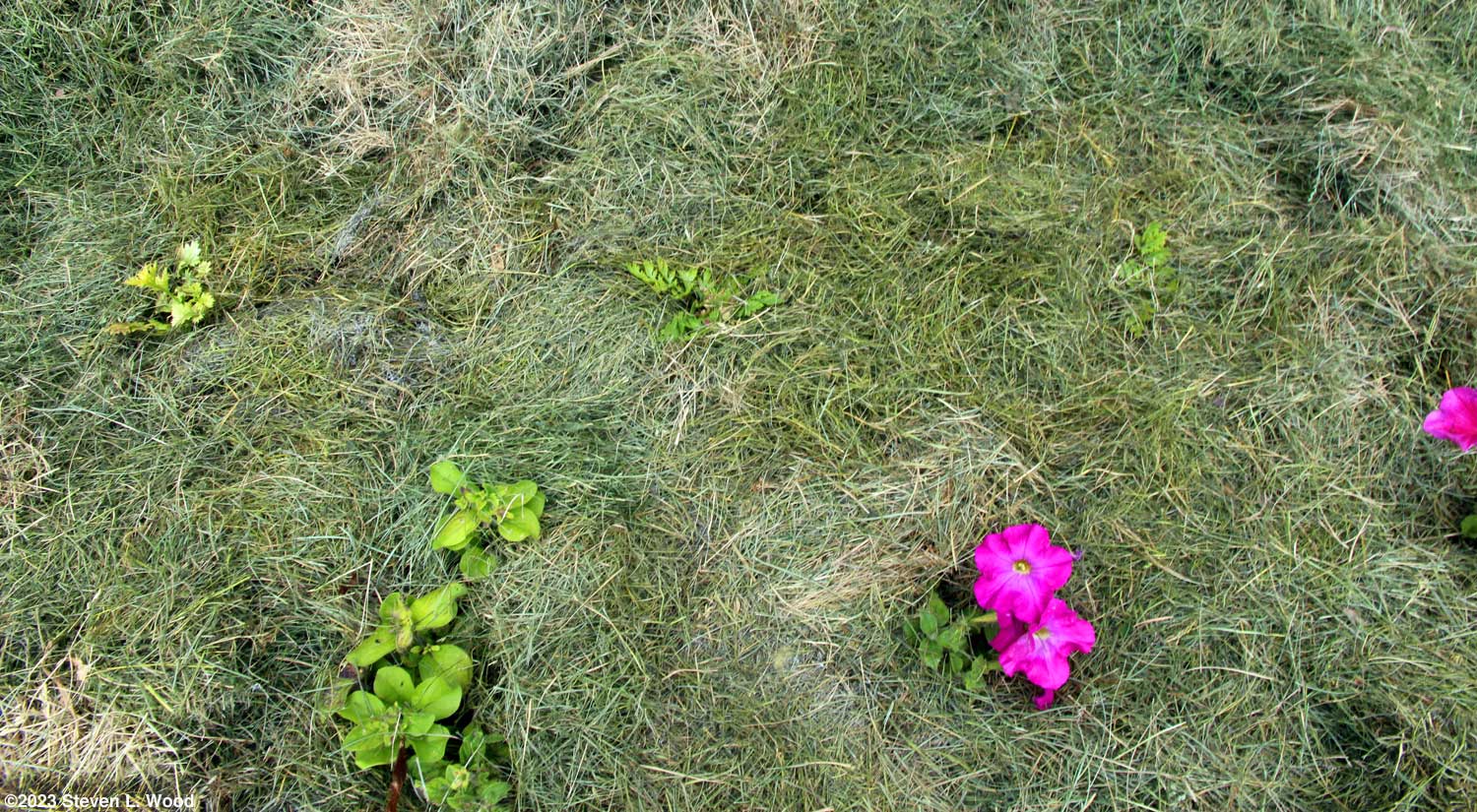
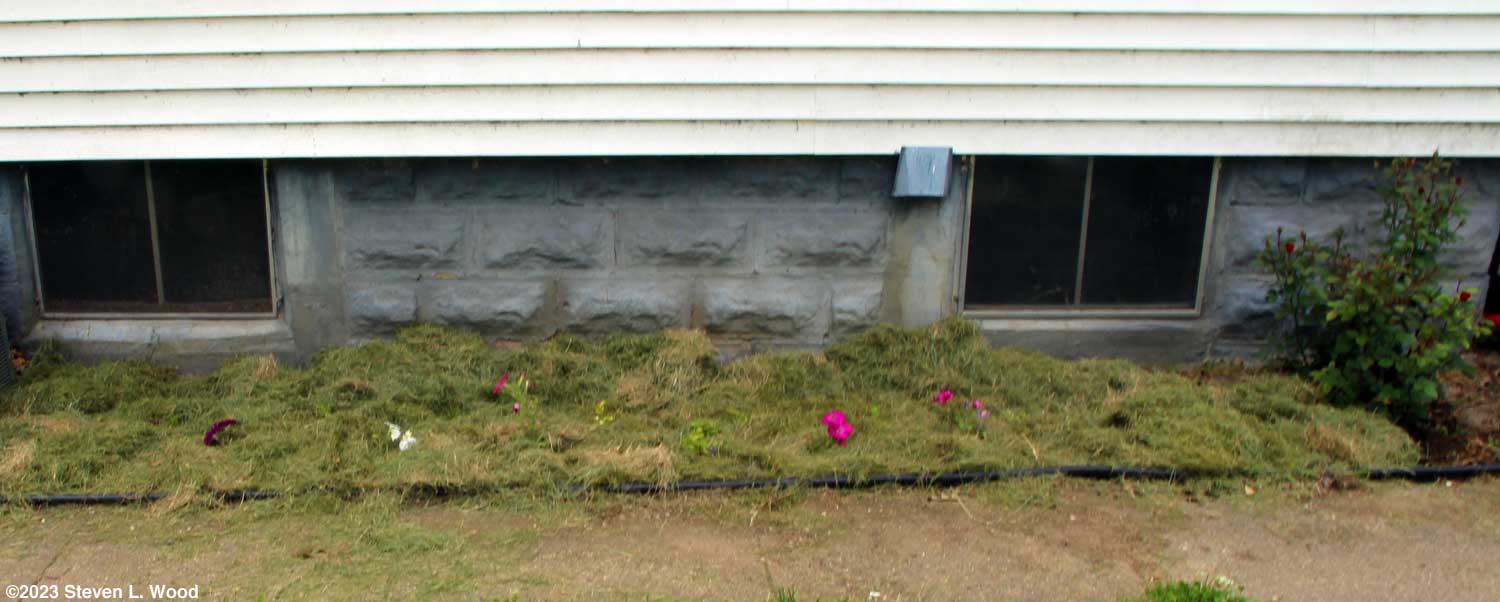
To serve my daisy fantasies, I transplanted Painted Daisies into a flowerbed along the east side of our house. I also put in a few petunias. Painted daisies are perennials, although I'm not sure they'll bloom this season. I mulched in the daisies and another flowerbed along the side of the house. I've not used grass clipping mulch by the house, as when it dries, it could be a fire hazard. We'll see. And both Annie and I enjoyed our first lettuce salad out of the garden today. We'd previously had salads from extra transplants, but our salads today were from a couple of huge romaines and a small iceberg. The lettuce cut and cleaned yesterday was cold, crisp, and sweet.
With lots of pea pods now showing on our early pea vines, Annie and I enjoyed the last of our 2022 peas with our supper tonight.
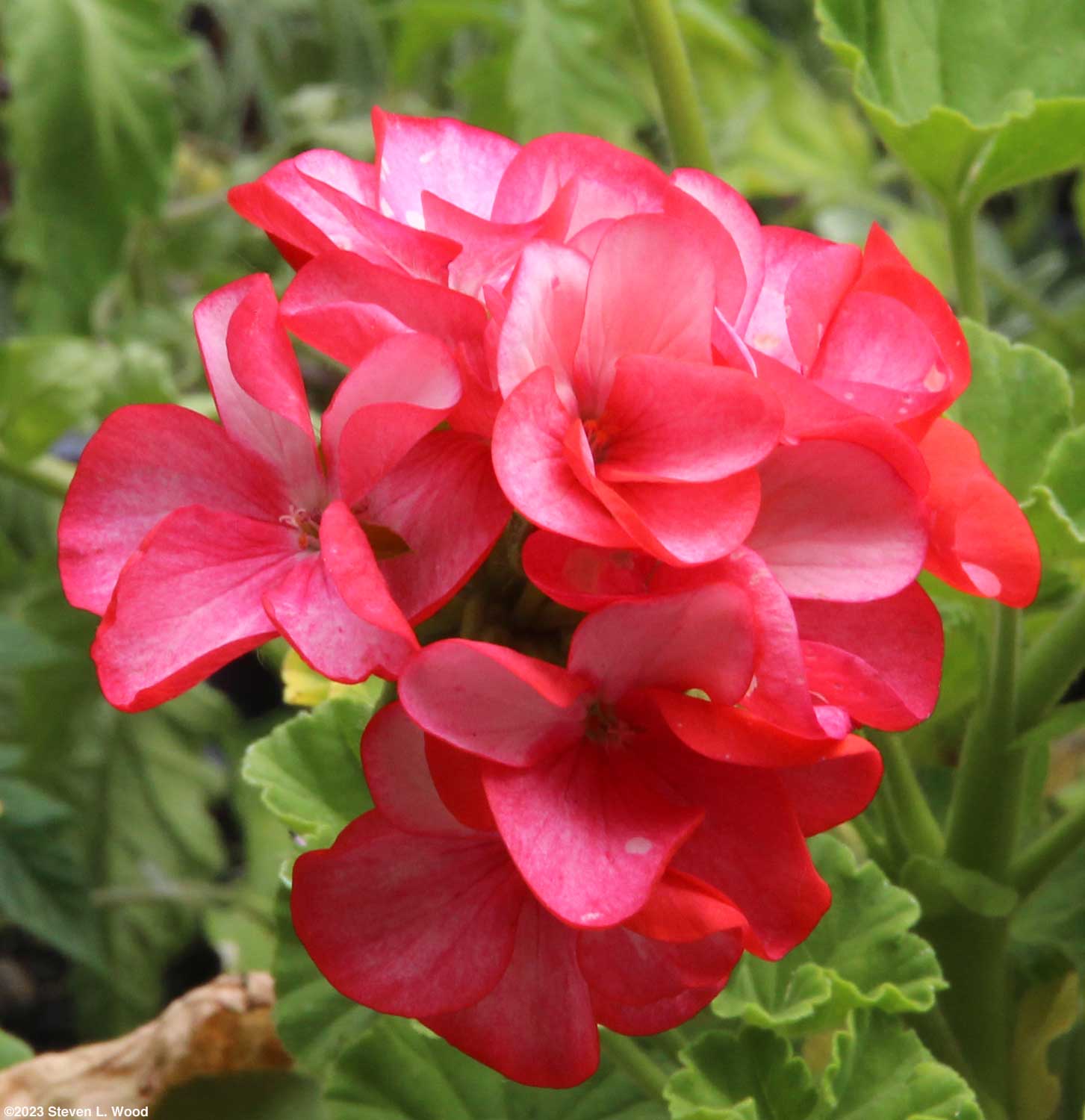
I also found that a Pinto Salmon geranium plant still on our back steps had burst into bloom. It's our first geranium to so bloom. I need to get the last of our geranium transplants into the ground. The no gardening part of the day was because I was glued to the TV watching the Indianapolis 500 race. Growing up in Indy, I have fond memories of attending track practice at the Speedway with my father. Later in life, we took our sixth grade students on field trips to the track to see the museum and practice...until streakers in the snake pit thrilled the boys and made future ventures there a no-go.
All of our new geranium seed this year came from True Leaf Market. Monday, May 29, 2023 - Memorial Day (U.S.) This information might have been more helpful before the holiday, but I still think it's worth sharing. CNN writes in How to pick the perfect watermelon in 3 easy steps, "It can be difficult to determine if that watermelon you've grabbed at the store will be ripe or not. New York Times bestselling author Suzy Karadsheh shares these simple tips that will make this watermelon season the tastiest yet." Karadsheh, of course, was writing about picking a melon at the grocery or a vegetable stand. But her description of thunking a melon to test for ripeness is spot on. I've had to admit in our how-to, Growing Great Melons on Heavy Clay Soil, that I have to re-tune my thunking skills each time we grow watermelons.
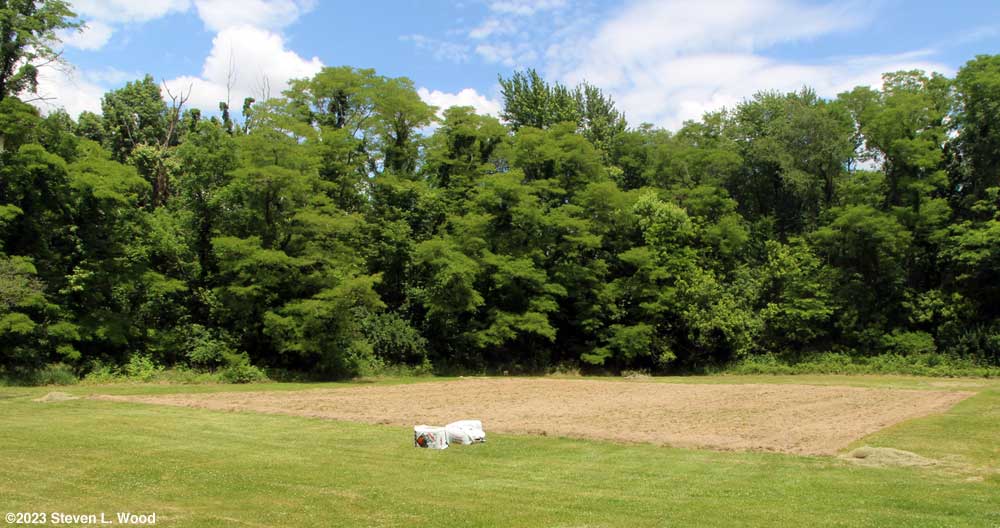
After finally wrestling the mower deck off of our John Deere X570 series lawn tractor, I got our pull-type tiller mounted. Due to several dumb user errors, it took about three hours to till our 80'x80' East Garden plot. Because the soil was bone dry and hard, I had to rototill at a crawl.
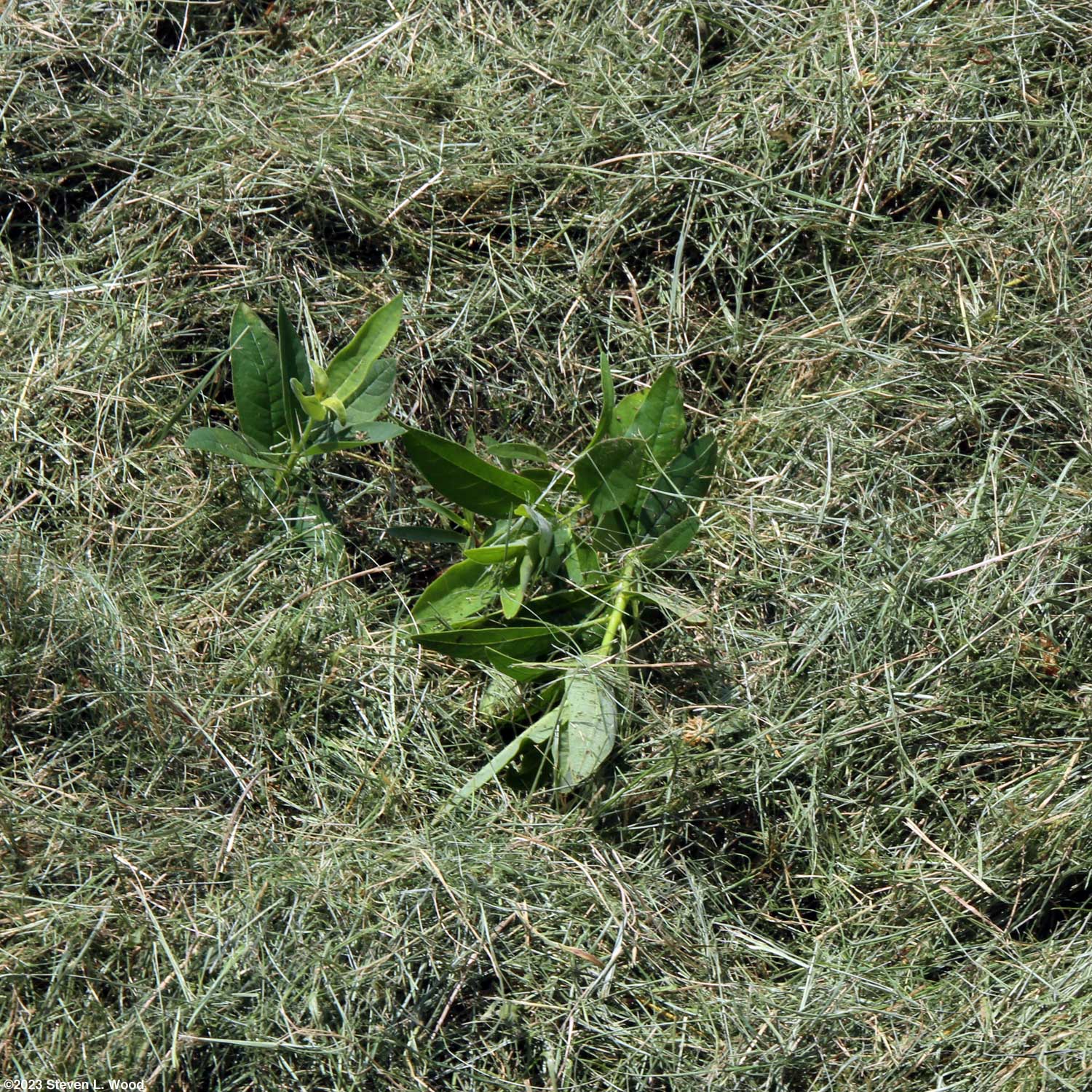
Traveling that slowly, one can notice what is getting tilled under. Besides plentiful weeds, there was lots of white clover and even some hairy winter vetch that had re-seeded itself from a planting several years ago. I hope to plant a 35'x80' section at the front of the plot with the rest going to a cover/smother/turndown crop of buckwheat. The area will require at least one more pass with the tiller before planting. Planned plantings include a long row of zinnias, yellow squash, melons, sweet corn, kidney beans, and potatoes. Outside the East Garden, a big hill of butternut squash will go in.
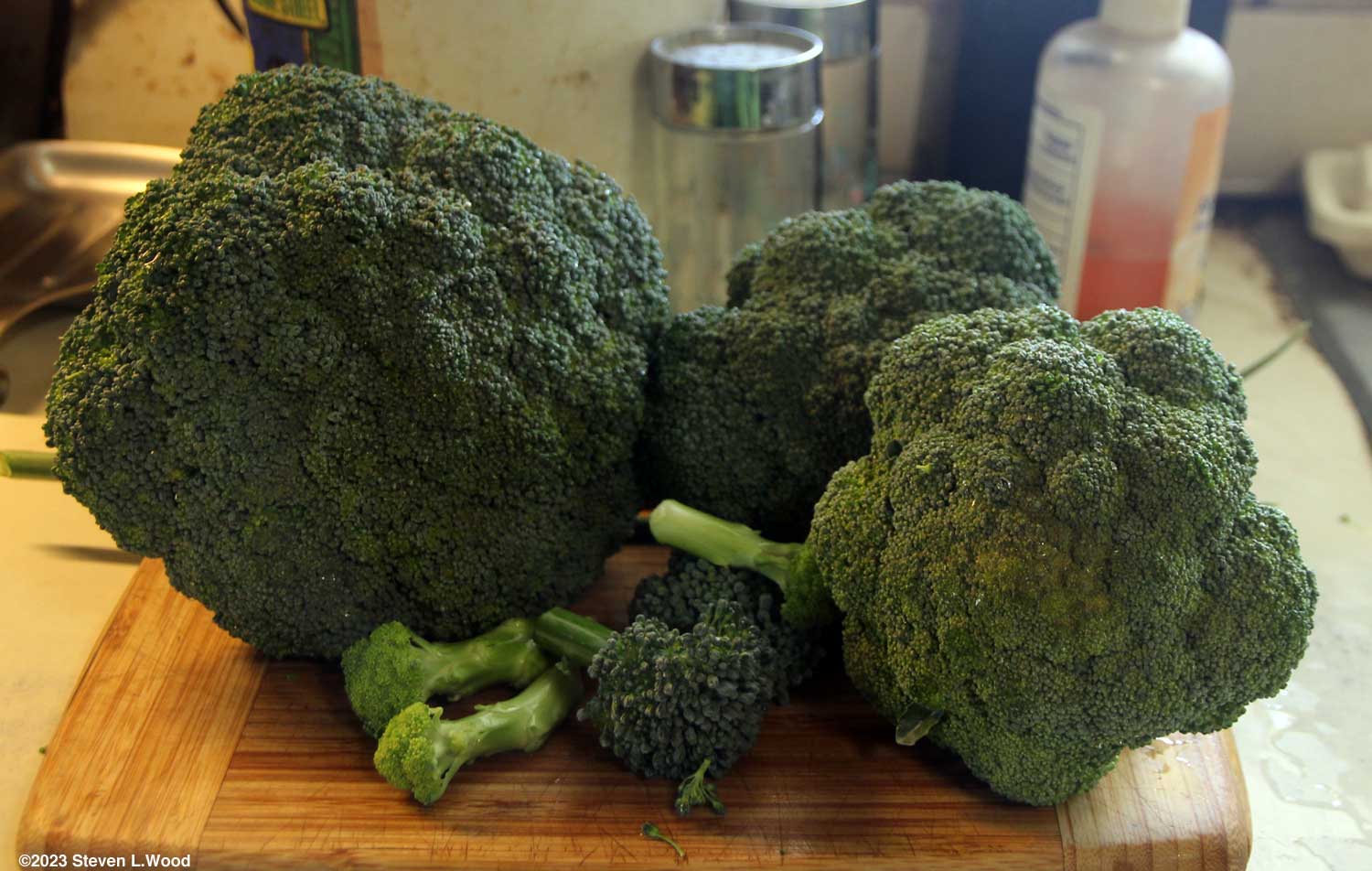
Our Premium Crop and Castle Dome broccoli are also now producing heads. Since these varieties are for table use, I'll cut the heads fairly small to ensure sweetness. Our weather outlook is pretty challenging. We have no rain in our extended forecast with temperatures reaching the 90s. That will spell an end to our short lived, but delicious lettuce harvest and may make our spinach bolt. Our cauliflower, all self blanching, aren't showing much sign of heads and will probably will produce yellowed and bitter tasting heads in the heat.
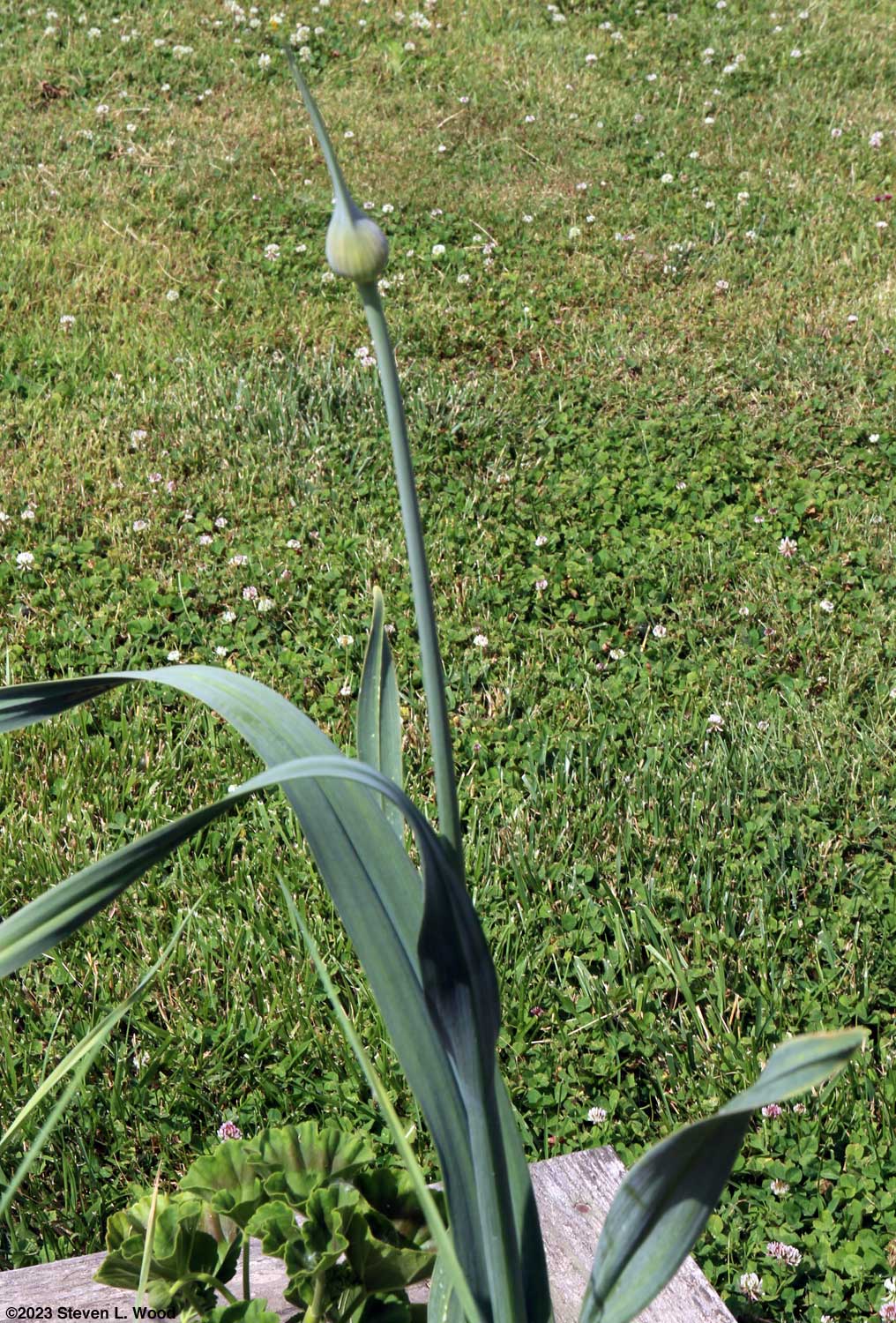
A couple of our garlic plants have put on scapes recently. That's not usual for hardneck and elephant garlic. The rather rigid, central stalks will eventually appear to bloom, but may also reduce the size of the bulb from which it grows. While it's best to snap off such scapes early, I've been known to let them grow to maturity. Note that picked garlic scapes are edible. There are a lot of recipes online for cooking with them. Our Best Garden Photo of 2014 was of a scape I let "bloom." Our current scapes will probably get snapped off. We may cook with them or just put them into our compost bucket. Our late planted spinach has only produced one round of spinach salad for us so far. With temperatures into the 90s over the weekend, our spinach for the table and canning is probably over. But since we save seed from our spinach plants, we'll still get something out of our spring spinach.
With many of our spring crops such as lettuce, brassicas, and spinach, we get another shot of growing them in cooler fall conditions.
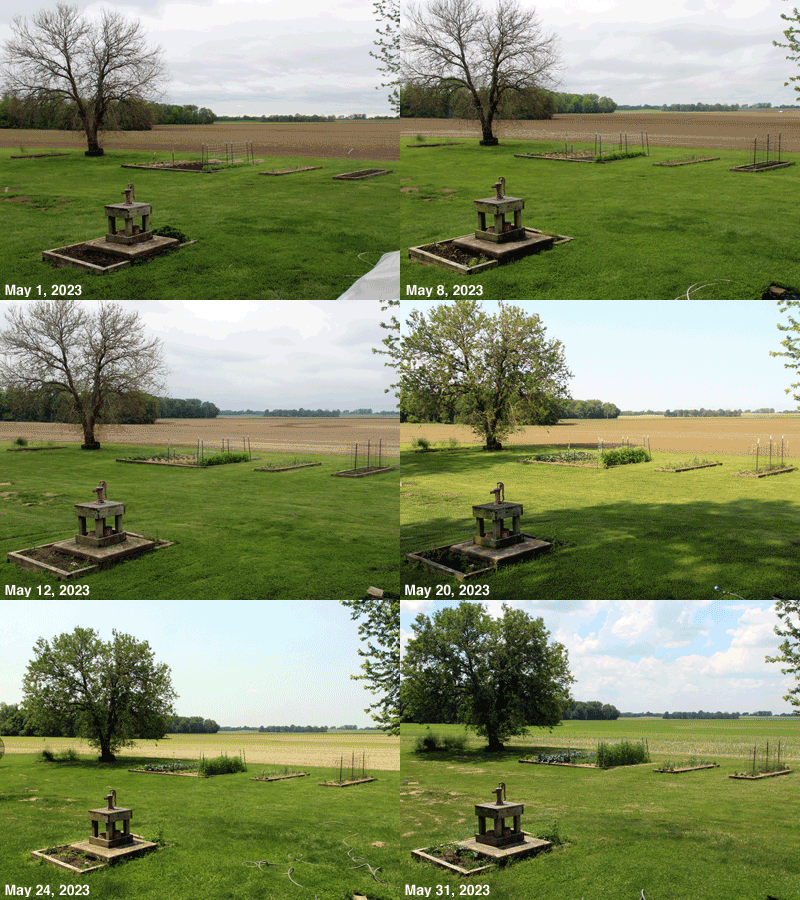
Wednesday, May 31, 2023 - May Wrap-up
Our Goliath for seed broccoli could have been cut for the table and freezing several days ago. Instead, I'm letting it bloom and hopefully produce a good seed crop. There are seven or eight broccoli heads showing signs of blooming. I did, however, harvest some sideshoots from the Goliath plants. I finished planting and mulching our raised beds this month. As a giant plus, I did a second tilling today of our large East Garden plot. The half of it that will be seeded to a buckwheat cover/smother crop got a single pass with our pull-type tiller. The half I'll be planting to garden crops got a double pass, as I re-tilled half of each row just tilled. Doing so produced nearly ready planting soil. Planting the East Garden plot is going to be a challenge. There's almost no moisture in the soil, and our weather forecast outlook doesn't include any rain. I'll probably start by direct seeding our long row of zinnias along the west border of the plot. Direct seeding our sweet corn and kidney beans is a no-go until we get some rain. I'll probably begin transplanting tomatoes, paprika peppers, yellow squash, cantaloupe, and watermelon soon, as I heavily water their planting holes. And I have a couple of bulb pots of butternut squash transplants ready to go into an area in the field where a previous compost pile was. It's been heavily mulched for almost a month. I'm sort of celebrating this season so far. At 74, almost 75 years-of-age, I'm thrilled to be able to do the gardening things I love. I thank the Lord each day for such pleasures. The last few seasons, I've had some senior injury that prevented planting our East Garden or a full gardening season. Another giant blessing is that Annie, my much younger wife, is now entering retirement. She's actually currently "benched" from her employer, which means she collects full pay for being available. The company that bought out Old National Bank's tech staff offered her a "promotion" that actually would have cut her pay by putting her on contract and eliminating her overtime hours. Annie wisely told them to go to hell, in much nicer words. So now, she's benched, collecting full pay from Infosys while they decide whether they can cover all the things she did in repairing computers, printers, networks, etc. while fully employed. My advice: If you get a job offer from Infosys, tell them to go f*ck themselves. They've certainly f*cked over my wife.
Contact Steve Wood, the at Senior Gardening |
||||||||||||||||||||||||||||||||||||||||




















230520-400x285.jpg)








| Affiliated Advertisers |
©2023 Senior-Gardening.com