One of the Joys of Maturity |
|

| Affiliated Advertisers |
The Old Guy's Garden Record
Clicking through one of our banner ads or some of our text links and making a purchase will produce a small commission for us from the sale. April is an exciting time of the year for gardeners. It's the month when we can finally begin direct seeding and transplanting crops into our garden plots. Of course, April can also be a bit fickle with late frosts, so one has to watch their weather forecasts and provide protection for tender young plants.
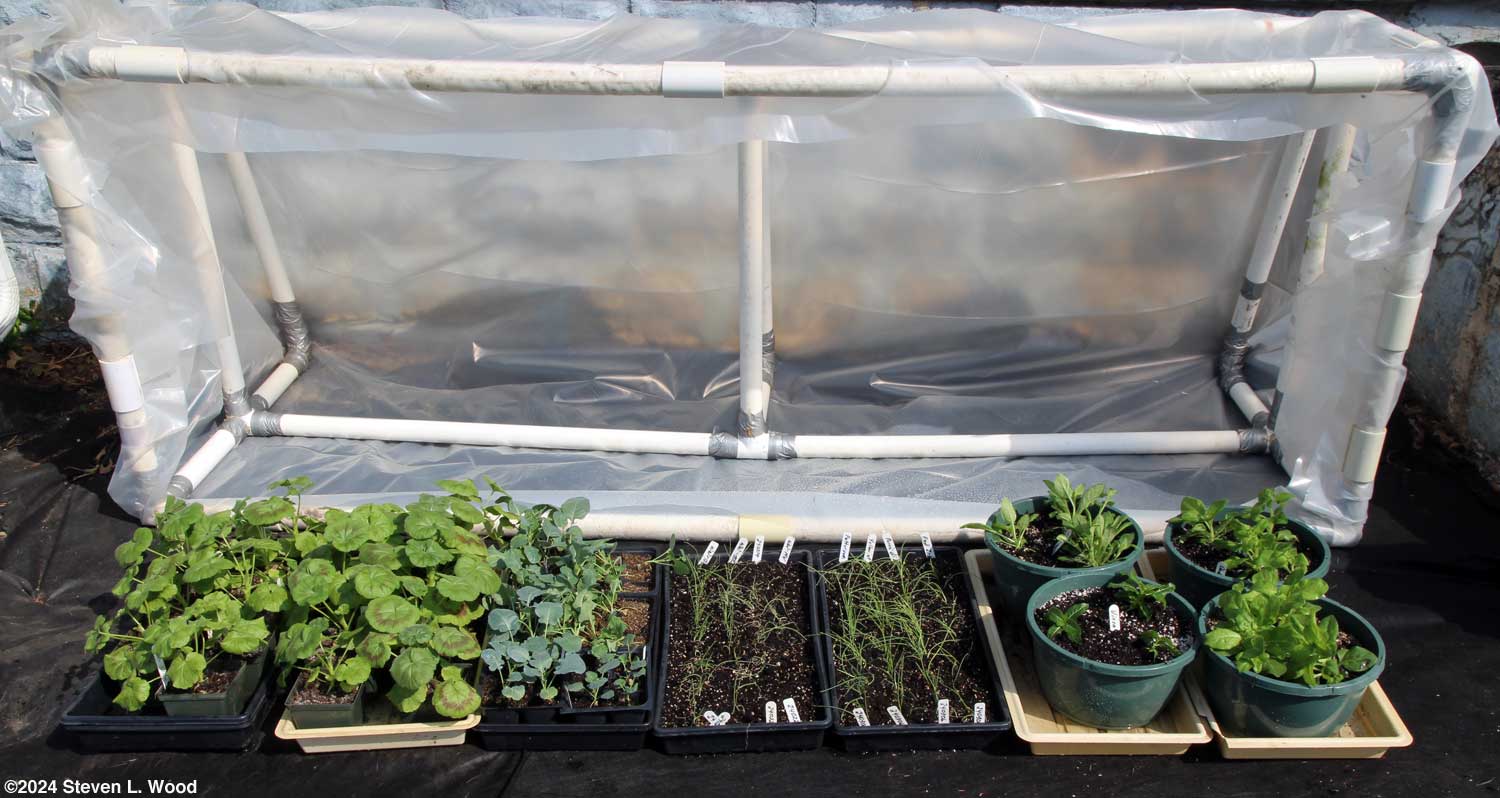
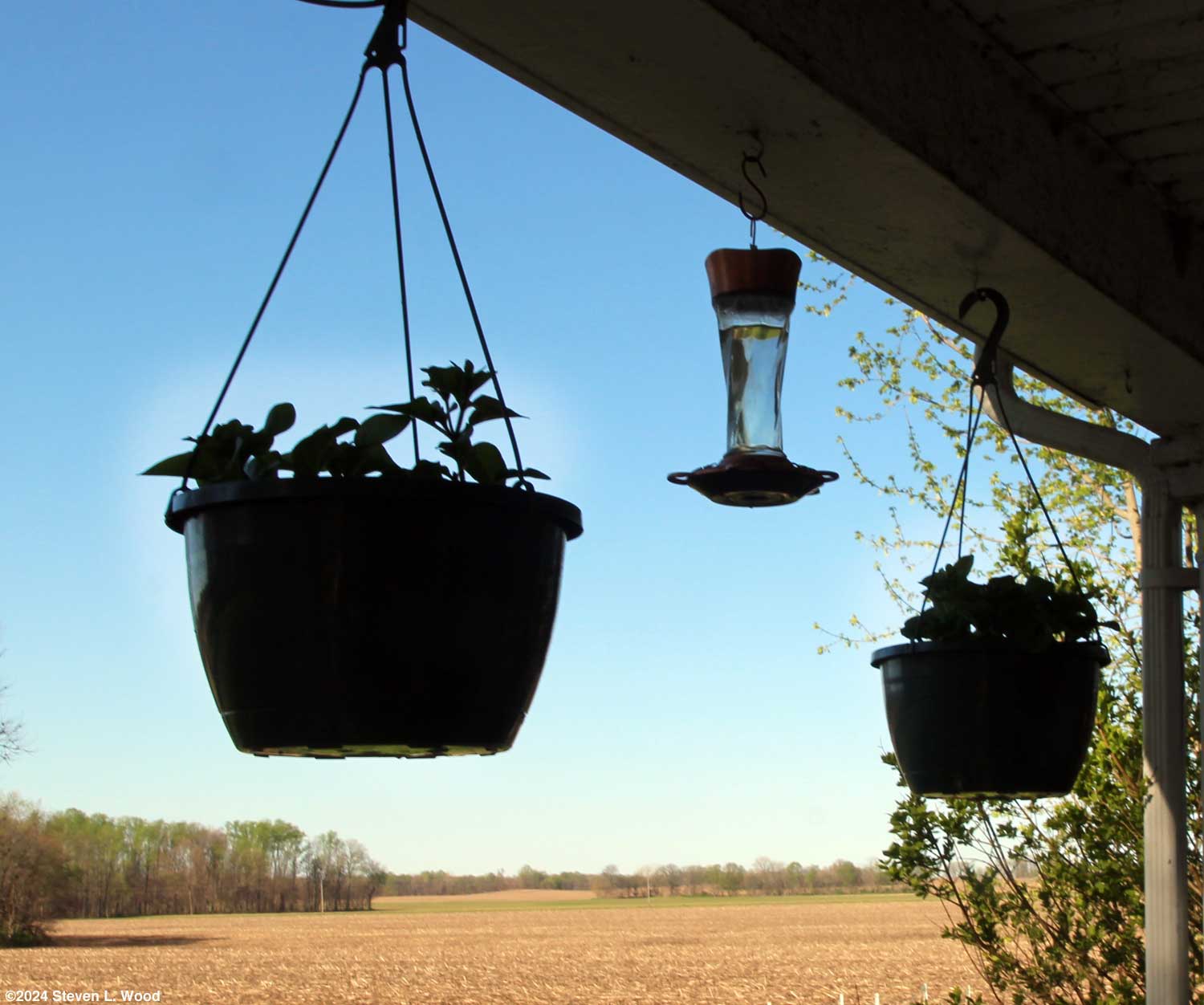
With our cold frame in place, it was time today to begin moving plants under it to harden off. That's a process where plants started inside are gradually introduced to strong sunlight, UV, wind, and rain. We have a chance of frost Thursday through Sunday mornings, so our cold frame's four or five degrees of protection should keep our transplants healthy. While the cold frame appears to be at capacity, the large hanging basket pots will get hangers and be moved under our back porch soon. Left to right, there are geraniums, broccoli and cauliflower, onions, and trailing petunias and vinca. From the emails I receive, I'd guess most of the readers of this site are veteran gardeners. But for any folks looking to start a new garden, Kate Morgan's Washington Post article, A beginner’s guide to vegetable gardening, is a good one. And of course, there's my Some Thoughts on Where to Put a Vegetable Garden.
|


|
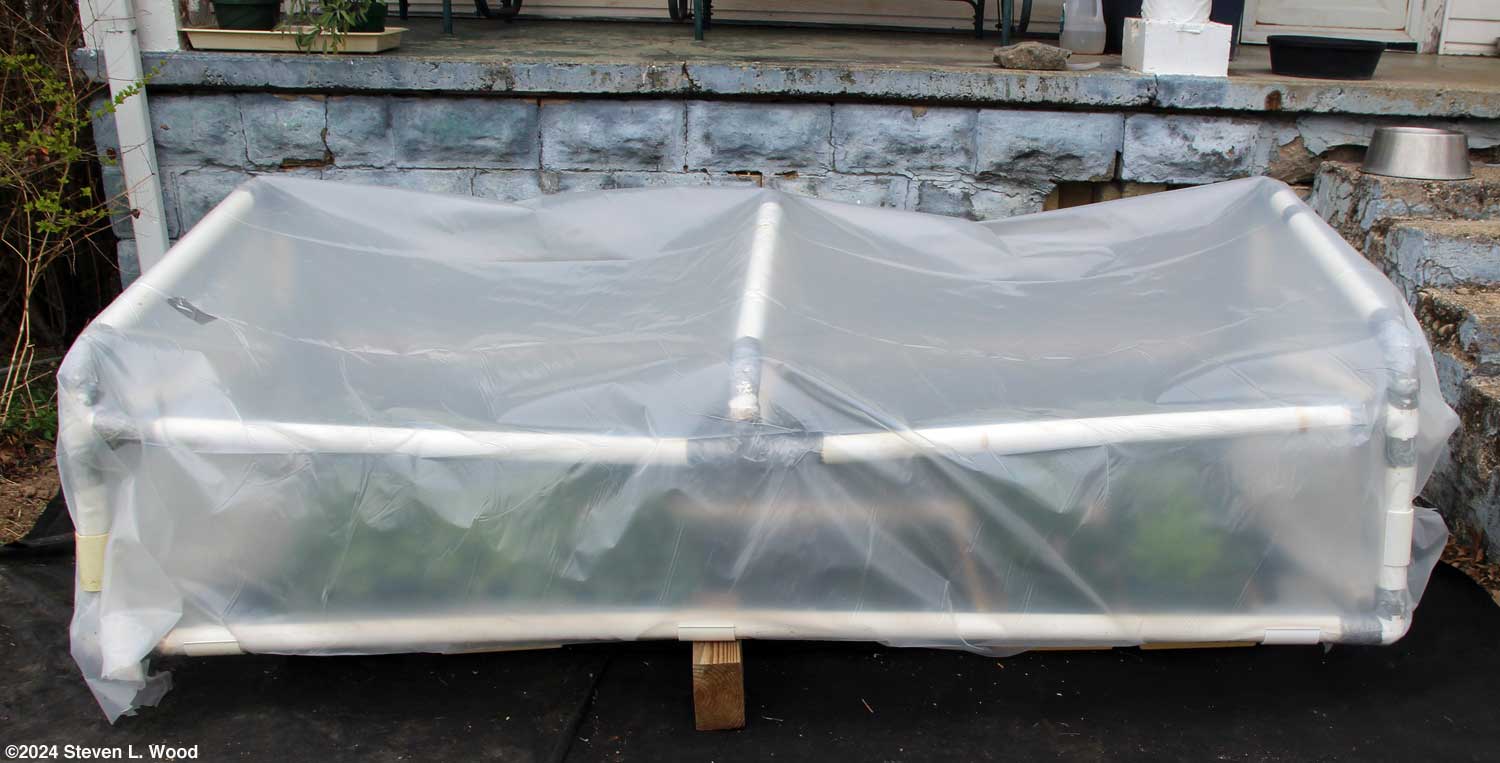
I was pleased to see our cold frame still in place this morning. Last year, I saw it shoot straight up into the air as the tornado apparently passed over. The cold frame landed in pieces thirty yards away. I had the frame propped open last night, risking letting the wind get under it, but got away with it. This afternoon, the frame is once again propped open about four inches, as we have another storm coming in.
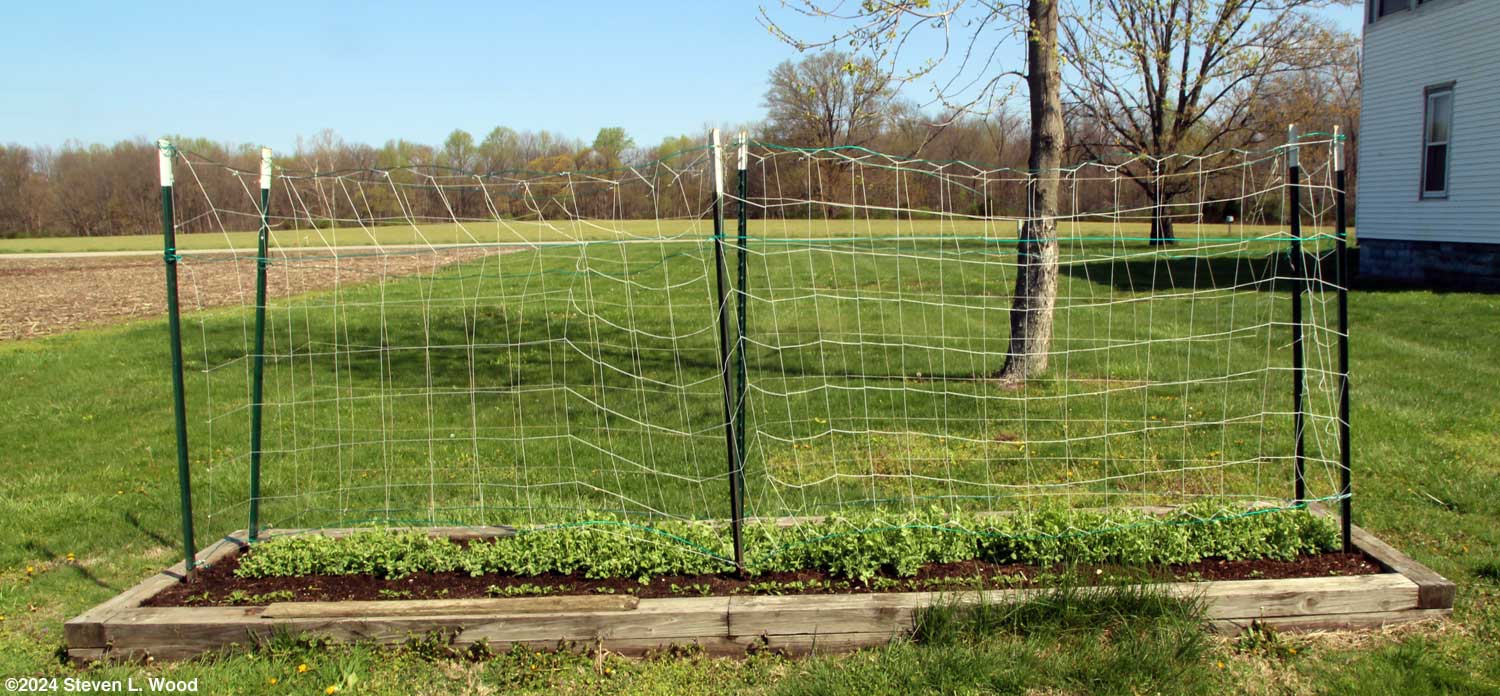
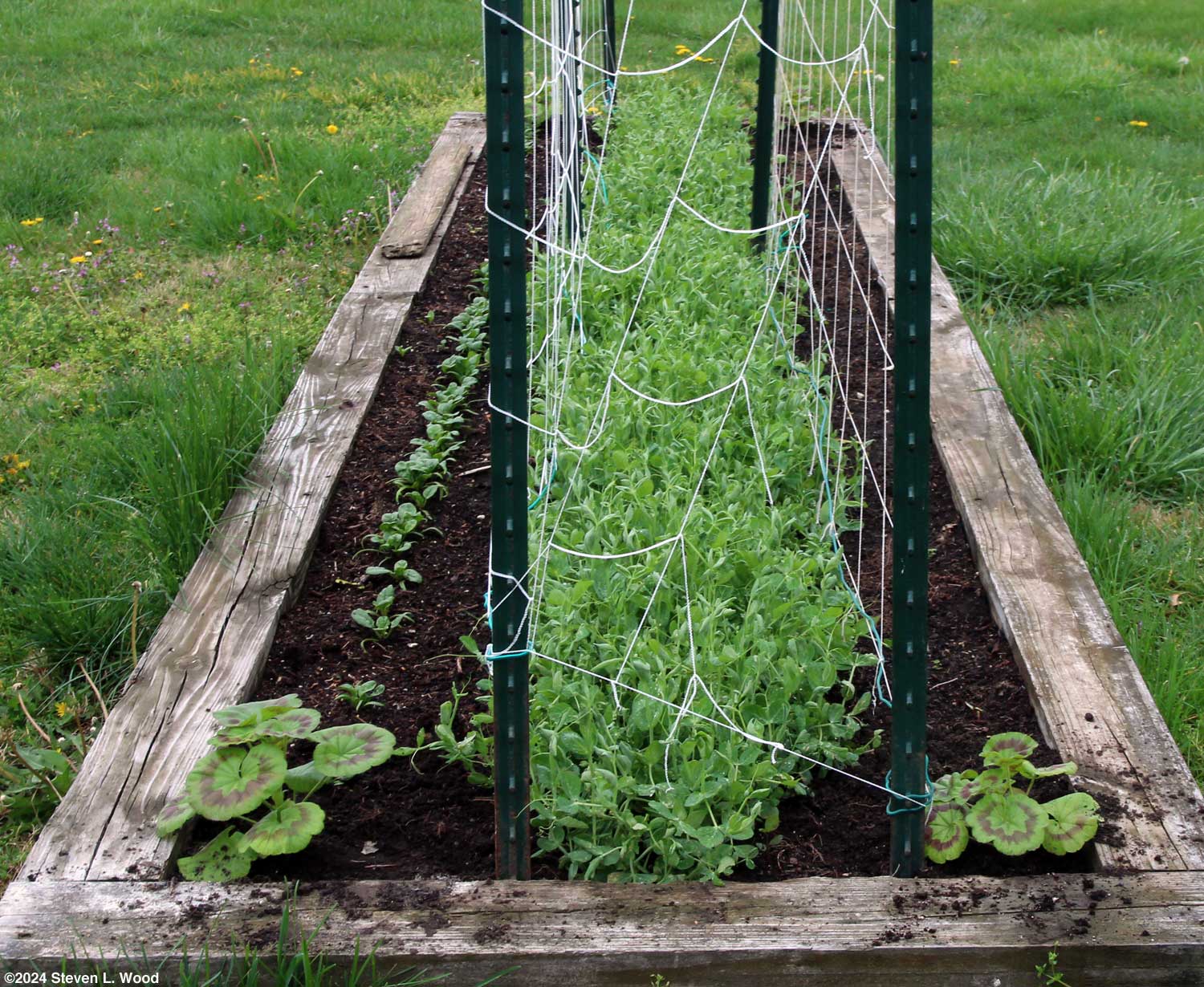
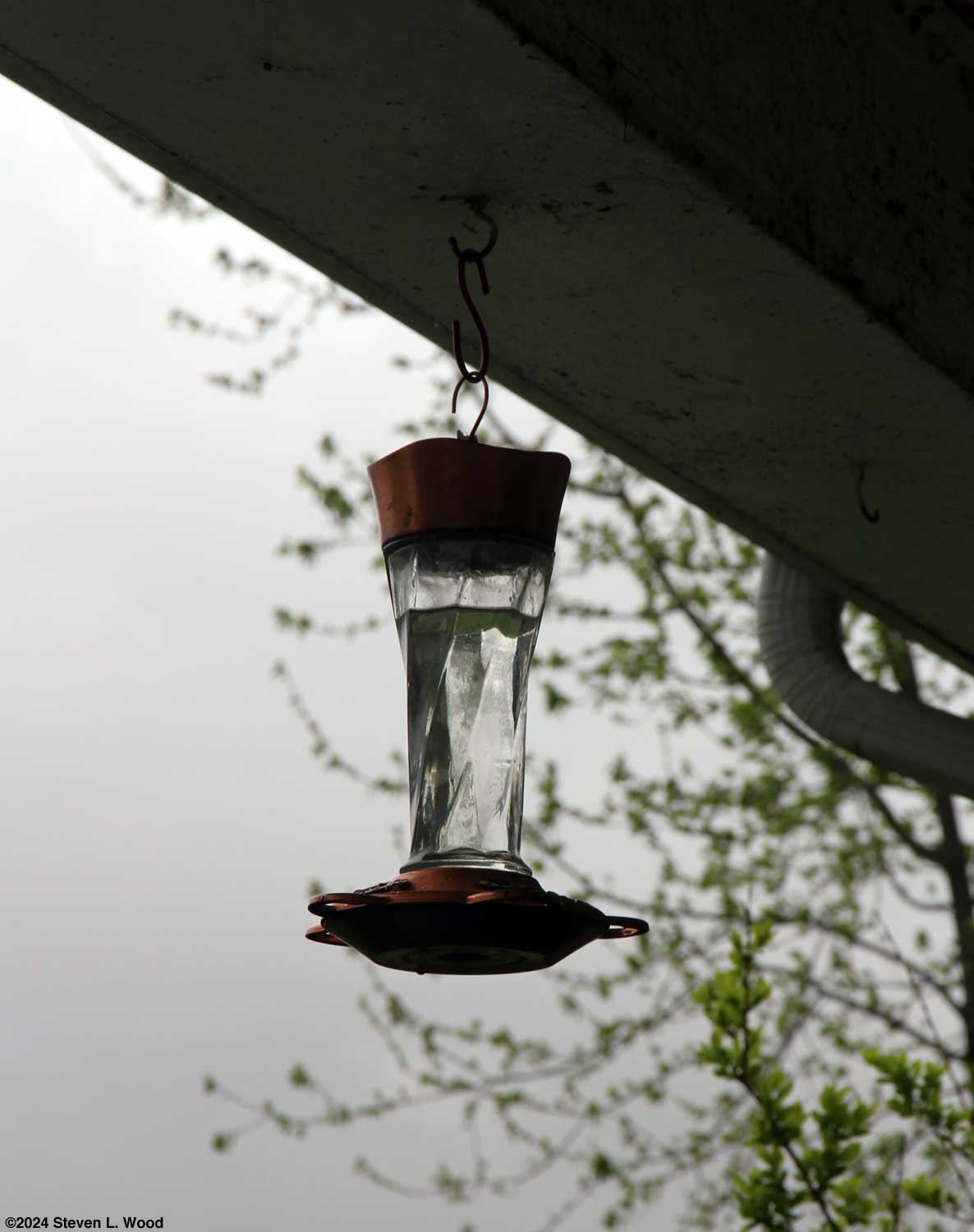
As I walked out to pick asparagus this afternoon, I saw that our tall early peas are ready to be trellised. Because of the high winds we frequently have in our area, I grow our peas between two trellises to keep them from getting blown over. After the peas are done, I grow a variety of tall, vining cucumbers, Japanese Long Pickling. It's an old variety that long ago disappeared from seed catalogs. The long cucumbers are okay for slicing, but excel for making bread and butter pickles (dills, too) and sweet relish. I checked the Hummingbird Central migration map this afternoon and saw that the ruby throated hummingbirds we feed each summer have made it as far north as Kentucky. I'll need to get out, clean, and hang a feeder soon.
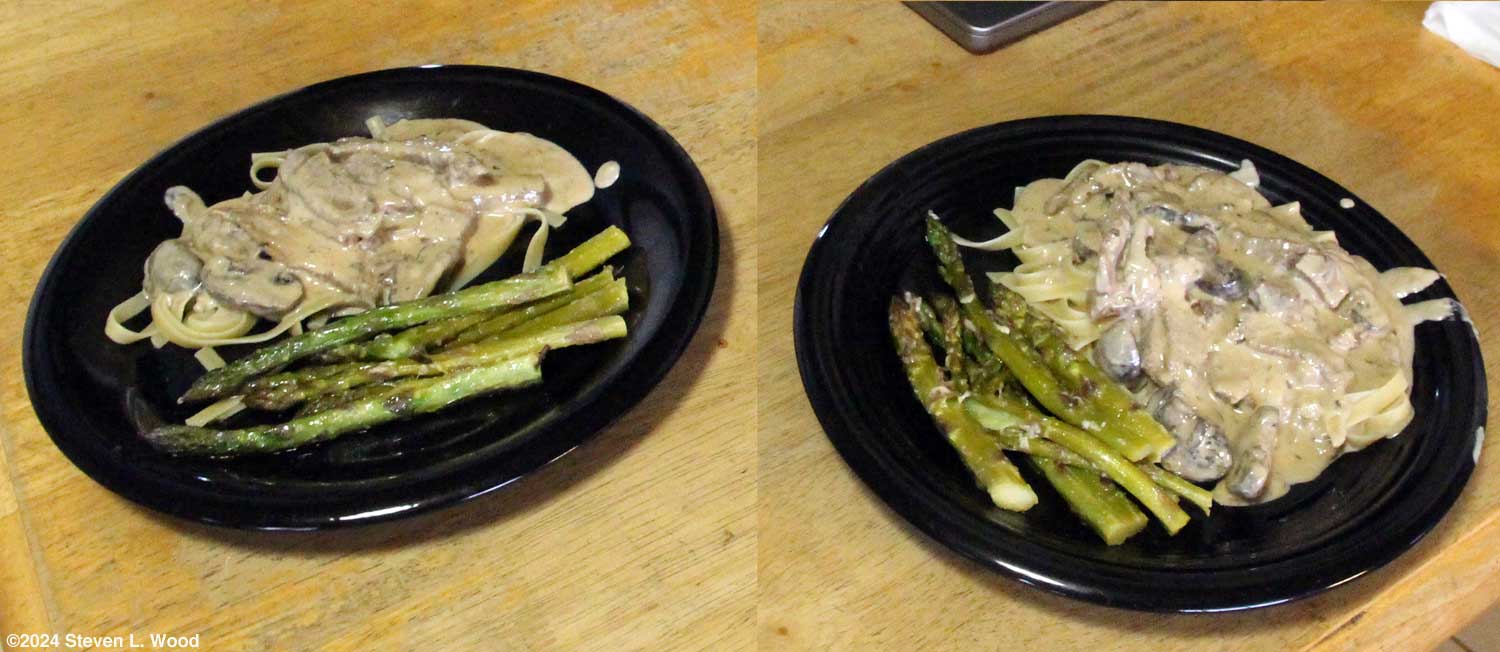
We're into a cold spell with high winds (40-50 MPH). That pretty well ruled out any outside work today. Instead, I worked at re-planting some things that had failed under our plant lights. Several starts had dried out and others just didn't take. So I seeded more parsley, basil, dill, and impatiens. I'd forgotten to seed marigolds, so I started a pot of them as well. Our two thyme plants in our herb bed now look well and truly dead. So I very carefully transplanted four tiny thyme starts to a fourpack today. I hate doing a posting without pictures, so here's a shot of our supper last night.
I've been buying $3.99/lb T-bones and $5.99/lb boneless ribeye steaks from our local Save-A-Lot. Their beef can be pretty tough, but is chewable after being marinated for 24-48 hours. I'd frozen the ribeyes two to a pack, hoping to grill them outside. So after a steak dinner one night, I began a search for what to do with leftover steak. Between us, Annie and I can only eat one steak. My current marinade is a mix of Dale's Steak Seasoning, ReaLemon lemon juice, and Swanson Beef Broth. When I panfry steaks, I do so with the marinade added to the pan. It turned out that creamy steak fettuccine is a popular online recipe. I used two online recipes as a guide to making a delicious dinner for us last night.
And of course, asparagus was our vegetable for the night. After going to town shopping and several trips to the garage to fetch and return seed, I decided not to pick asparagus today. We have a bunch left from yesterday's picking, and the wind was just too strong to go out into it again!
From the image at right, one can see healthy asparagus growing amongst lots of weeds that need to be pulled in Bonnie's Asparagus Patch. We're really blessed to have such an abundance of asparagus each spring. Earlirouge Seed Saved in 1988 Still Germinates
We have a nice bunch of Moira plants that will go into the improved soil of a narrow raised bed. While our Earlirouge and Quinte varieties are now commercially available, the Moiras are only protected by our seed saving the the Seed Saver's Exchange's seed bank. After a chilly morning, I was pleased to see the plants under our cold frame had done well overnight.
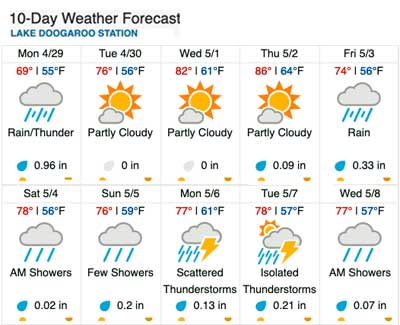
I'll need to close the cold frame this afternoon, as we have a frosty morning predicted for tomorrow. Our forecast also includes a freeze for Saturday morning. After that, I think we'll be in the clear for plant damaging weather. Apple Trees in Bloom
Iowa State's Aaron Steil answered the question, Will fruit trees be harmed if they begin to leaf out or flower and are then subjected to freezing temperatures? "At full bloom, a temperature of 28 degrees Fahrenheit will kill approximately 10 percent of the flowers on apple trees, while a temperature of 25 degrees will kill approximately 90 percent of the flowers." I'm hoping he's right and also hoping things won't get quite as cold as predicted. Getting Ready for the Eclipse The weather forecast for Monday's solar eclipse is for partly cloudy weather. Hoping that we'll get a good shot of the eclipse, I'm charging camera batteries today for both of my Canon EOS cameras. I also dug out the darkest filter I have since I can't afford an expensive eclipse filter. If we get a sunny day before the eclipse, I'll mount my Canon Ti5 on its Slik tripod and test out the dark filter. The second camera is to grab shots of the horizon during the eclipse. The European Space Agency site suggests that one may "witness the colors of sunrise and sunset around them in every direction. This 360-degree sunset effect is caused by the light from the sun in areas outside of the path of totality and only lasts as long as the face of the sun is covered by the moon."
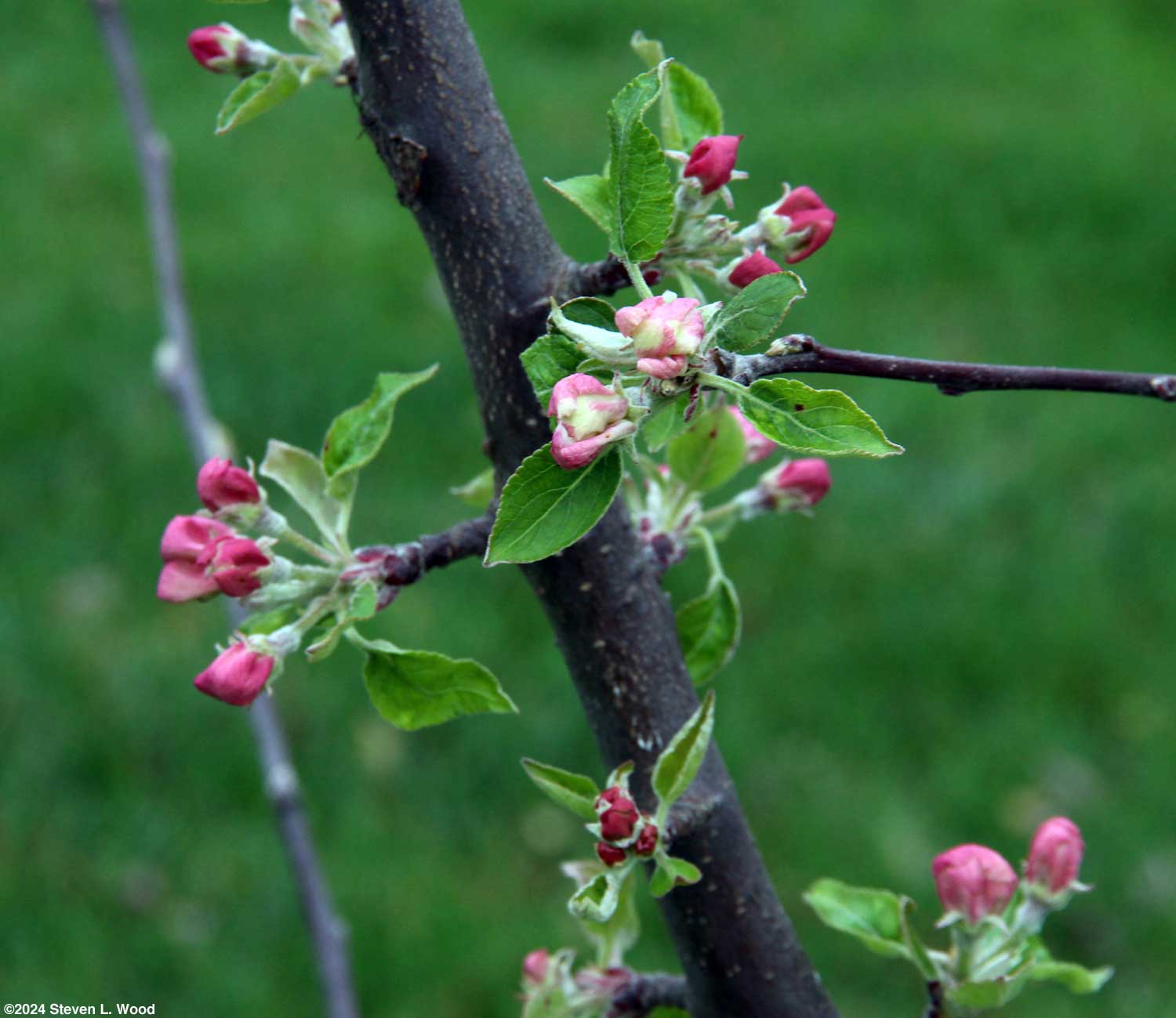
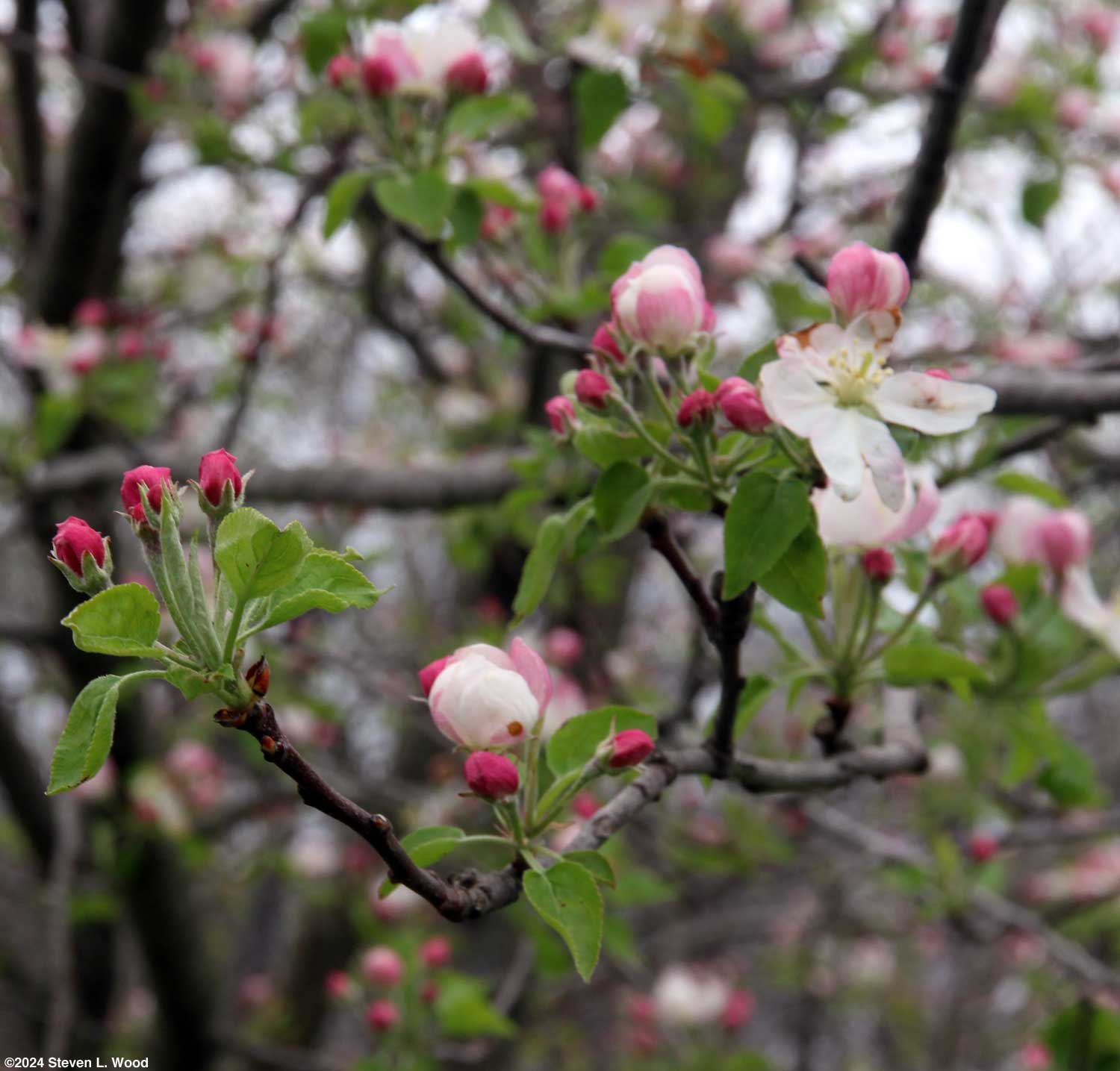
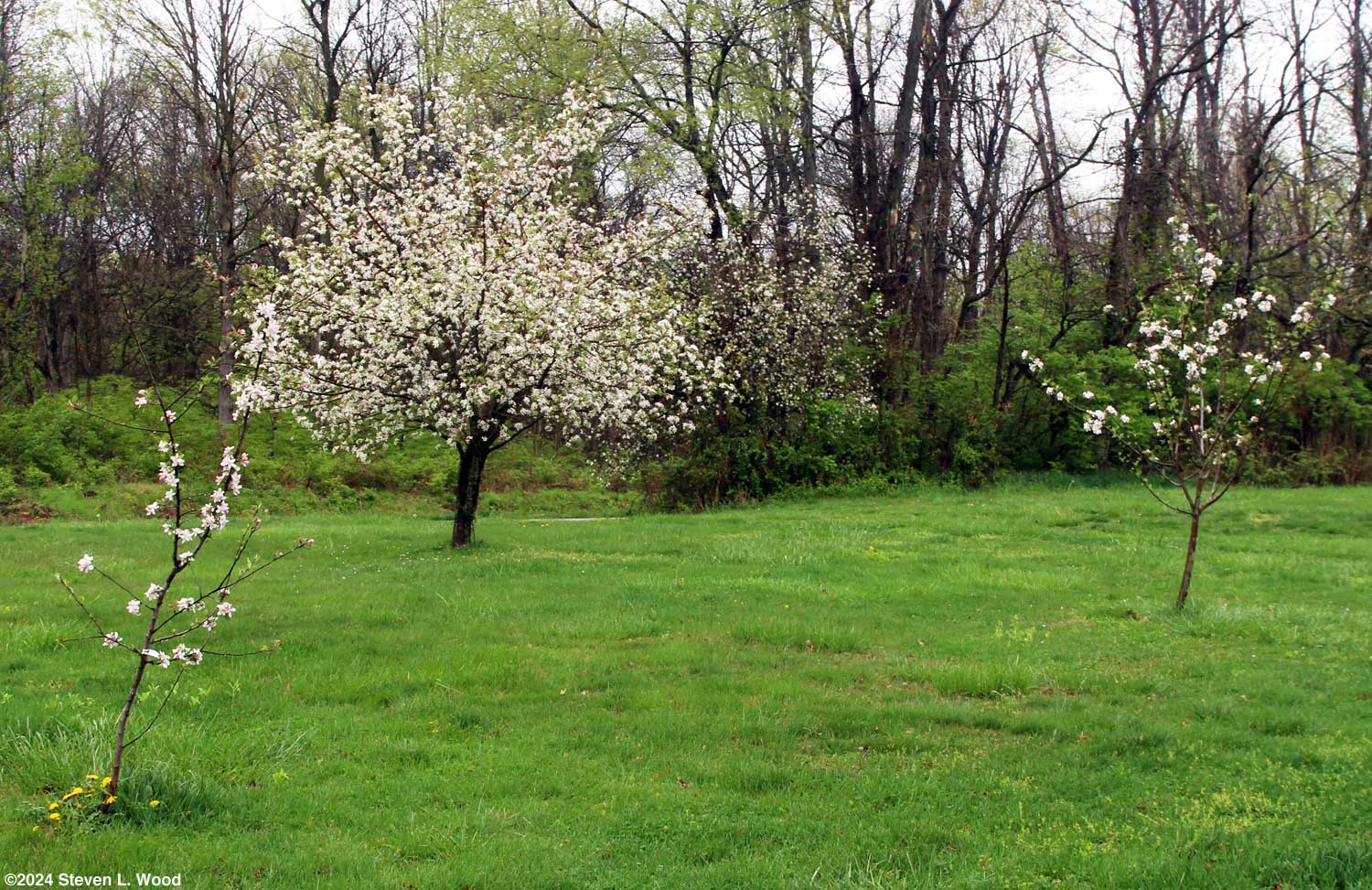
I did run across a possibly helpful article this morning for eclipse fans on the Washington Post, How cloudy will your area be for the solar eclipse? See the forecast. It suggested we might luck out on Monday and be able to see the total eclipse. Unfortunately for folks who drove to Texas to view the eclipse, it predicts a cloud cover there. Apple Blossoms With a potential hard freeze coming tomorrow morning, I got out and grabbed some apple blossom shots from our four apple trees. They're all in bloom right now, although I saw no bees pollinating the blooms this afternoon.
Our apple trees were planted in 2010, 2018, and 2022. One other tree is a very old volunteer from bad apples dumped along the side of a field just off our property from our first apple tree.
I got our double trellis mostly up yesterday. I had a little finishing to do today. I'll have to go back and tighten the clothesline wires that support the trellis netting, as the wires stretch in the sun after a few days.
Once the trellis was up, I admired our Abundant Bloomsdale spinach that is planted beside our early peas.
I direct seeded the spinach on March 7 using some seed saved in 2019!
It turns out that my Tiffen 72mm Polarizer Filter may be dark enough to get some good shots of the partial phases of tomorrow's solar eclipse. Here's hoping for clear skies.
Watching the eclipse through my eclipse glasses was a wonderful experience. To make it an even better day, I get to watch Purdue play for the basketball national championship tonight. I got a lot of my history teaching major during a year at Purdue Extension in Indianapolis.
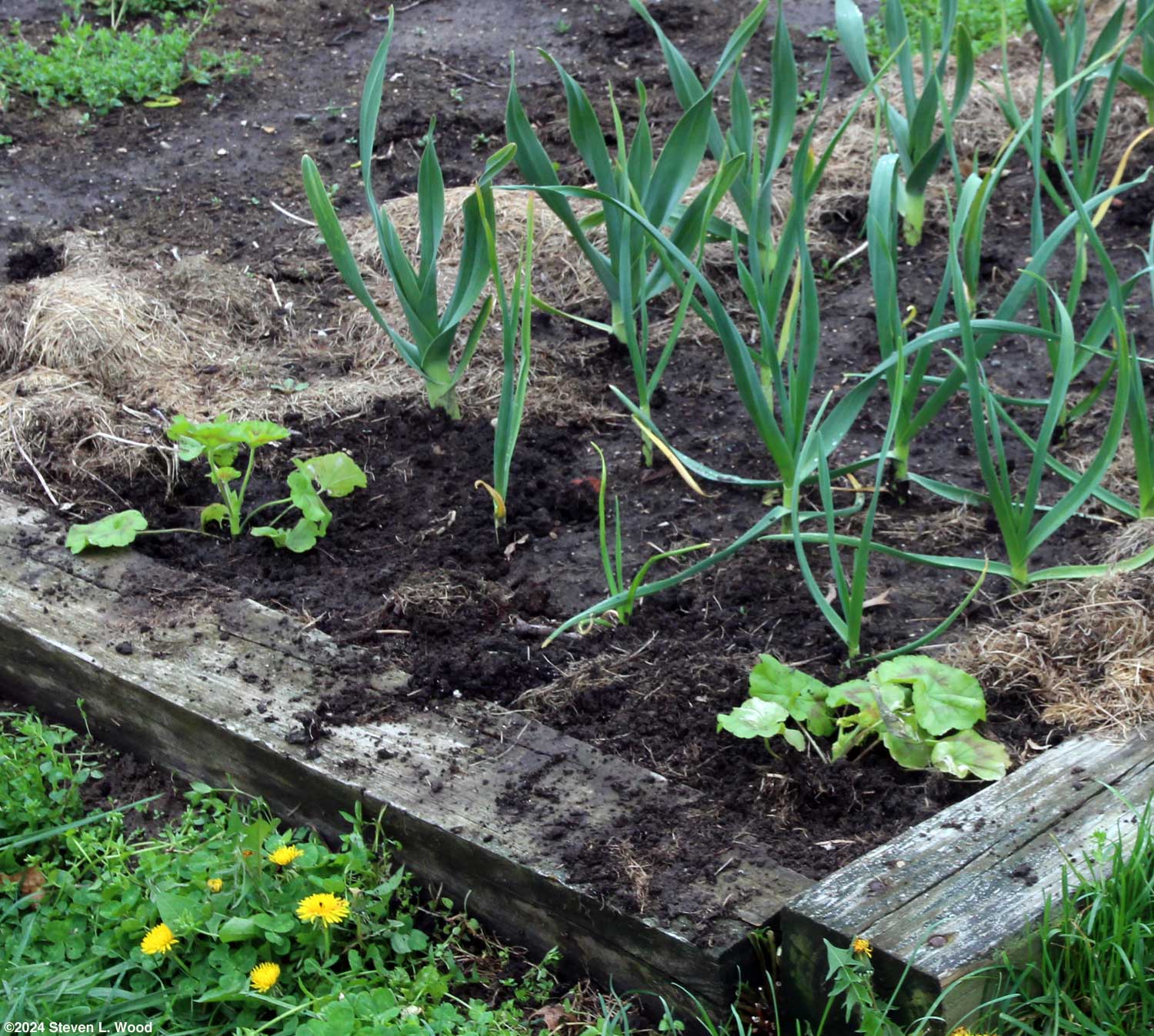
I worked this morning in our plant room uppotting some plants from communal pots and rearranging things to make room for melon and squash starts. Melon planting is delayed, however, as I ran out of sterile potting mix. A little frustrated with not being able to mow today or do any serious gardening, I transplanted eight geraniums into our raised beds. Four Maverick Reds went at the corners of our narrow bed of peas and spinach. Four Pinto Salmons went at the corners of our fall planted garlic. Each planting hole got a little 12-12-12 fertilizer and lime worked into it. Then I watered the holes with a transplanting solution of dilute Quick Start and Maxicrop Soluble Seaweed Powder. I made a quick trip to town in the rain this afternoon. When I got home, I was blown away by the beauty of our apple trees in bloom.
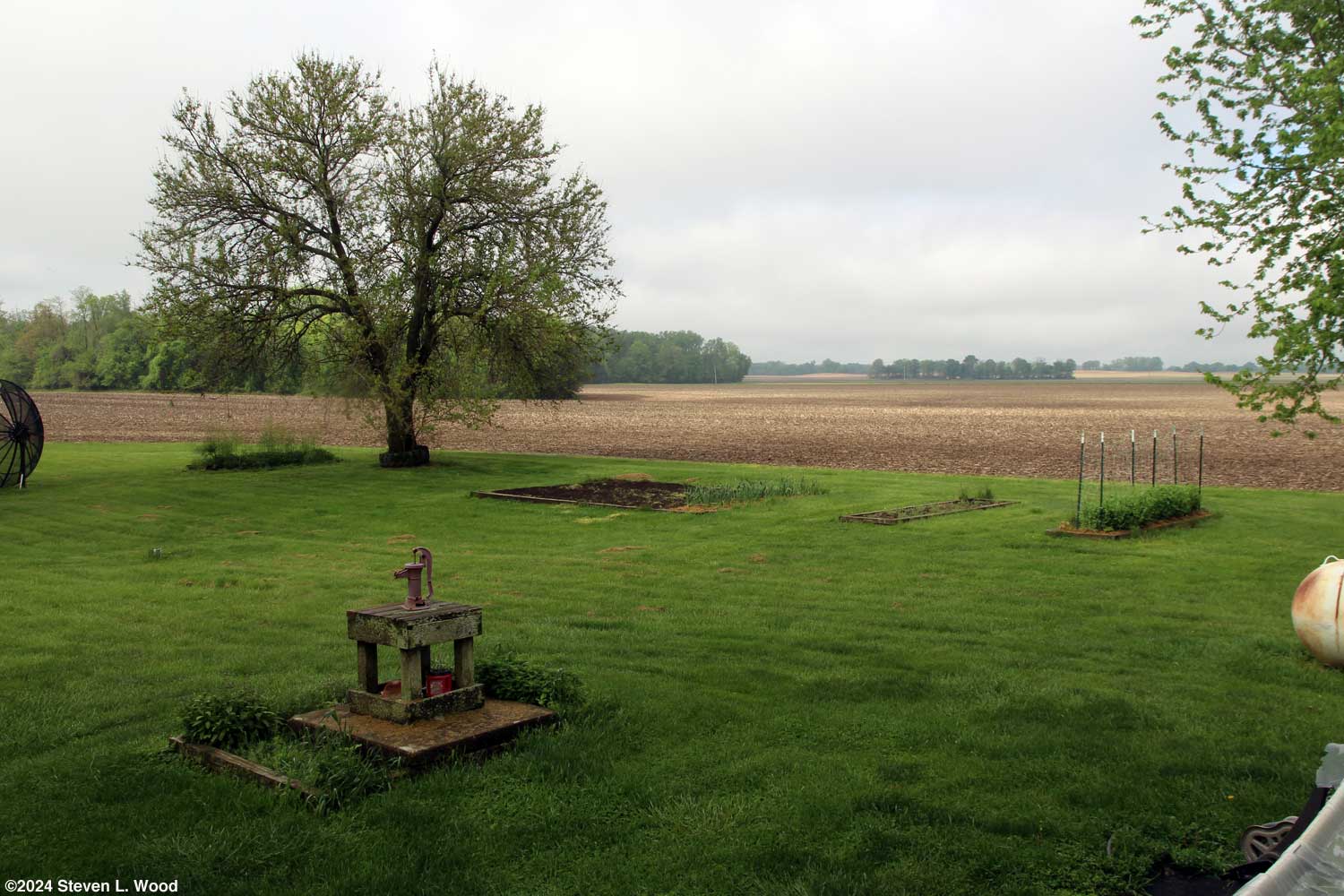
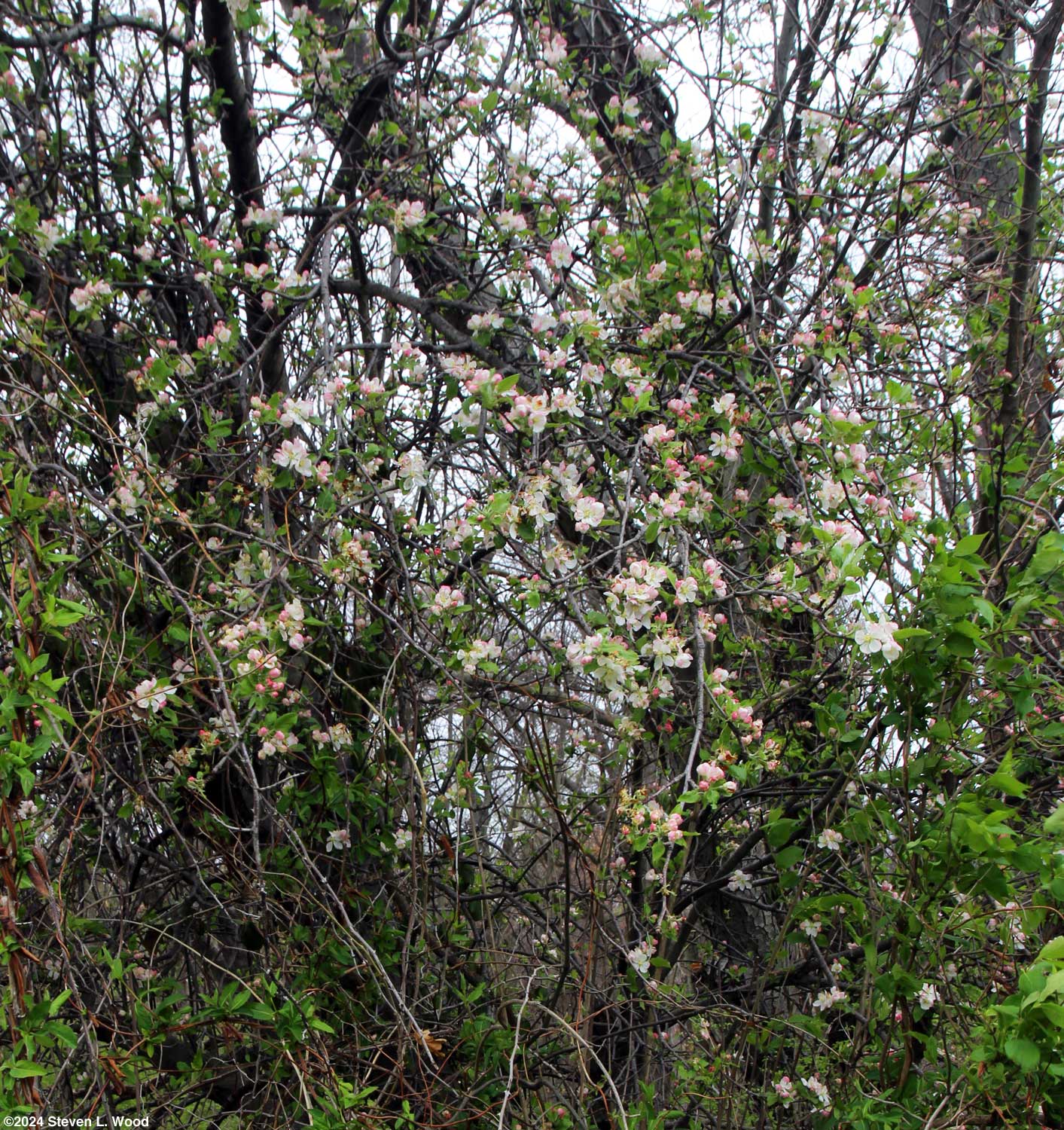
The volunteer tree in the background of the photo is fading a bit, as it was the first to bloom this year. And while it is quite variable in producing apples, it does serve as a good pollinator. Annie and I sat together at the kitchen table this afternoon marveling at how blessed we are to live where we do.
Thursday, April 11, 2024 - Rain, Lots of it!
Hummingbirds Once I'd procured a new pair of boots from Walmart and checked out the pump, I brought a hummingbird feeder upstairs. Over the years, our first hummingbirds usually appear at a feeder around April 20 or so. Starting Squash and Melons I started some squash and melons last evening. The squash started was the excellent long yellow Slick Pik variety. When I'm on my game, I start more Slick Pik when I transplant plants into our garden, as the variety tends to wear itself out! For cantaloupe, I started a couple of pots of the Sugar Cube variety. It's our favorite cantaloupe. It produces small melons that are incredibly flavorful. I also started a pot of Athena, another great tasting melon.
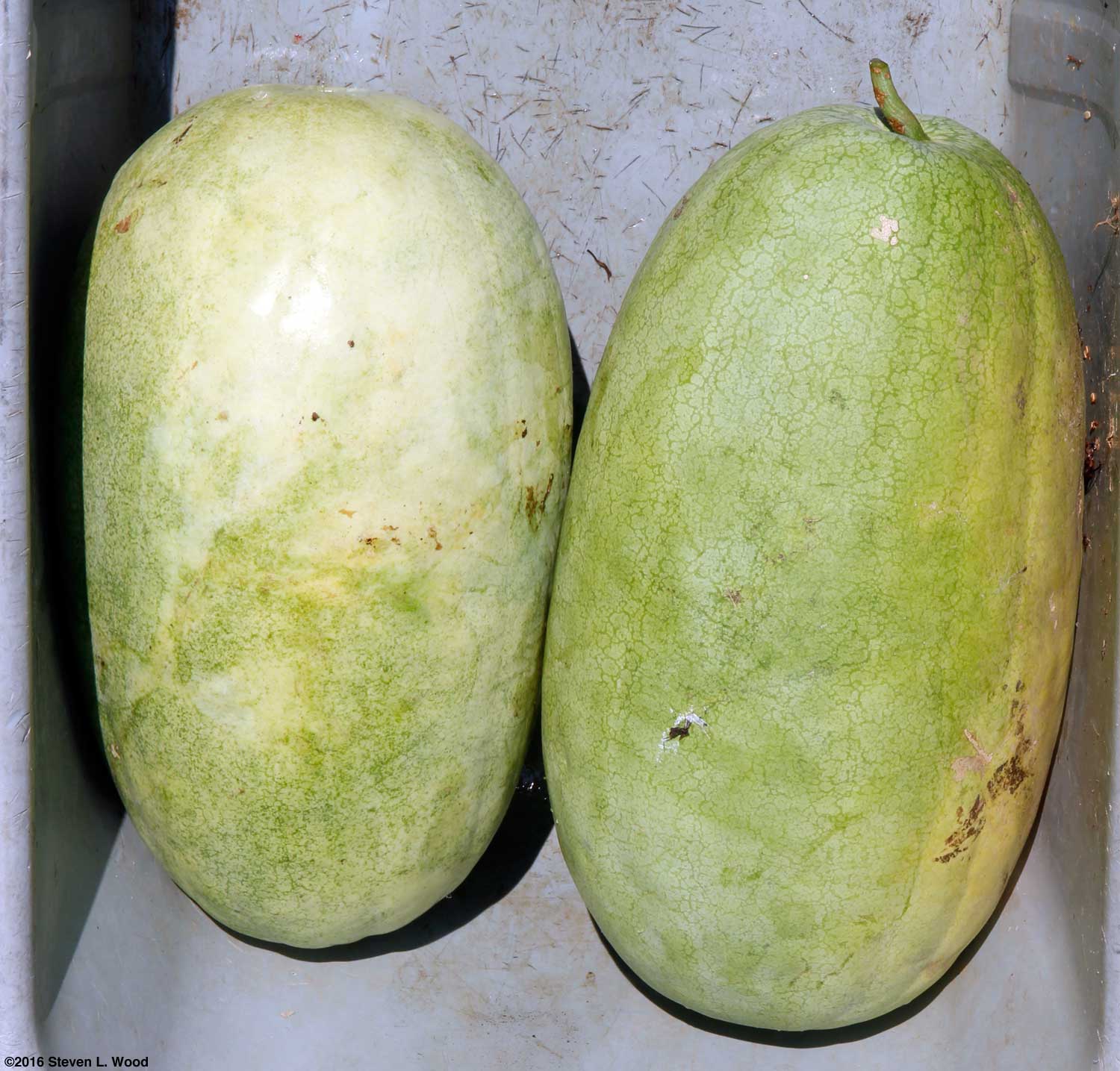
What I wasn't able to start were any seedless watermelon varieties. My seed inventory showed some seed left, but when I opened the watermelon Ziplock, none were there! I looked online, but with triploid watermelon varieties running two to three times the price of seeded varieties, I think we'll just spit seeds this year.
It was also time today to move one of the Tradescantia Zebrina (Wandering Jew) cuttings I took in December to our other kitchen window. The old Wandering Jew plant went outside along with an extra one I'd started in December.
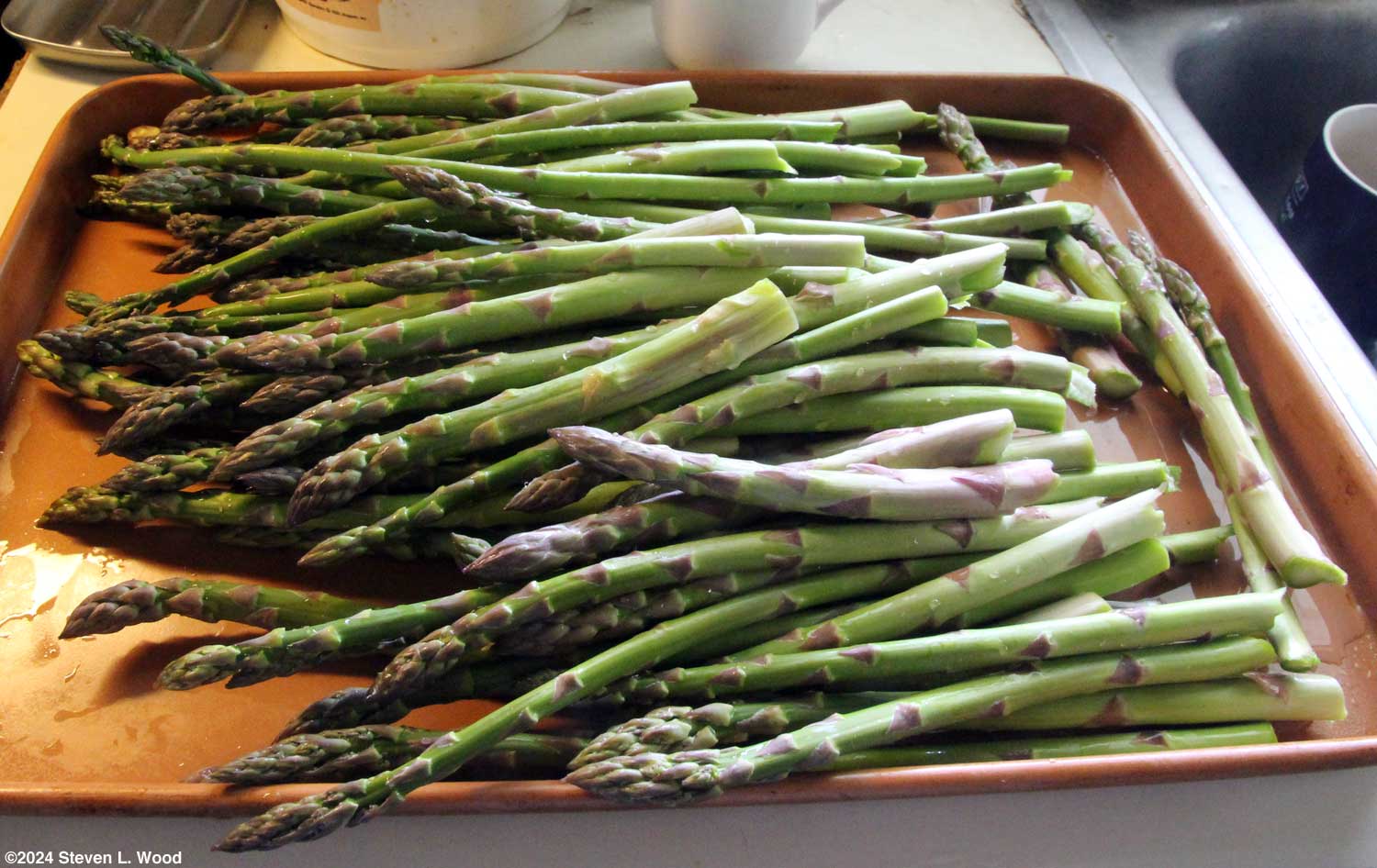
Rain had held up mowing until today. And even with the sun out and a breeze, the grass is really too wet to mow. I'm leaving terrible wheel marks and mowing through puddles. But our grass has gone nuts growing and has to be knocked down. Asparagus Our asparagus patches today provided a bounty of fresh asparagus spears. With what is left from a previous picking, there's way more asparagus than Annie and I can eat. I'm trying to decide whether to try freezing some or just bundling it for the food bank's Monday food distribution. I've often suggested here that new gardeners start an asparagus patch. It's a long term investment, as asparagus takes two to three years to mature, but lasts a long, long time. Bonnie's Asparagus Patch, just off our property, but in an area we now mow and take care of, is a testament to that. I discovered the patch when we began mowing the area. It had been mowed down a couple of times each summer by the farm renter, but recovered quickly with a little care. The patch is well over thirty years old! Our how-to, Growing Asparagus, tells all about starting and caring for an asparagus patch.
It's a beautiful day here today. We're into that time of year when you open windows or turn on the air conditioning during the day and turn on the heat overnight. I've been moving lots of stuff from under our plant lights to our cold frame outside. One glaring failure in the center of the photo is our second try at growing onion starts. A cat has used the flats as a litter box! But even then, the plants weren't doing well. I'm not sure what went wrong. But the failure motivated a trip to our local garden center, Colonial Landscaping and Garden Shop, for some onion plants and sets. I haven't grown onions from sets in over twenty, maybe thirty, years.
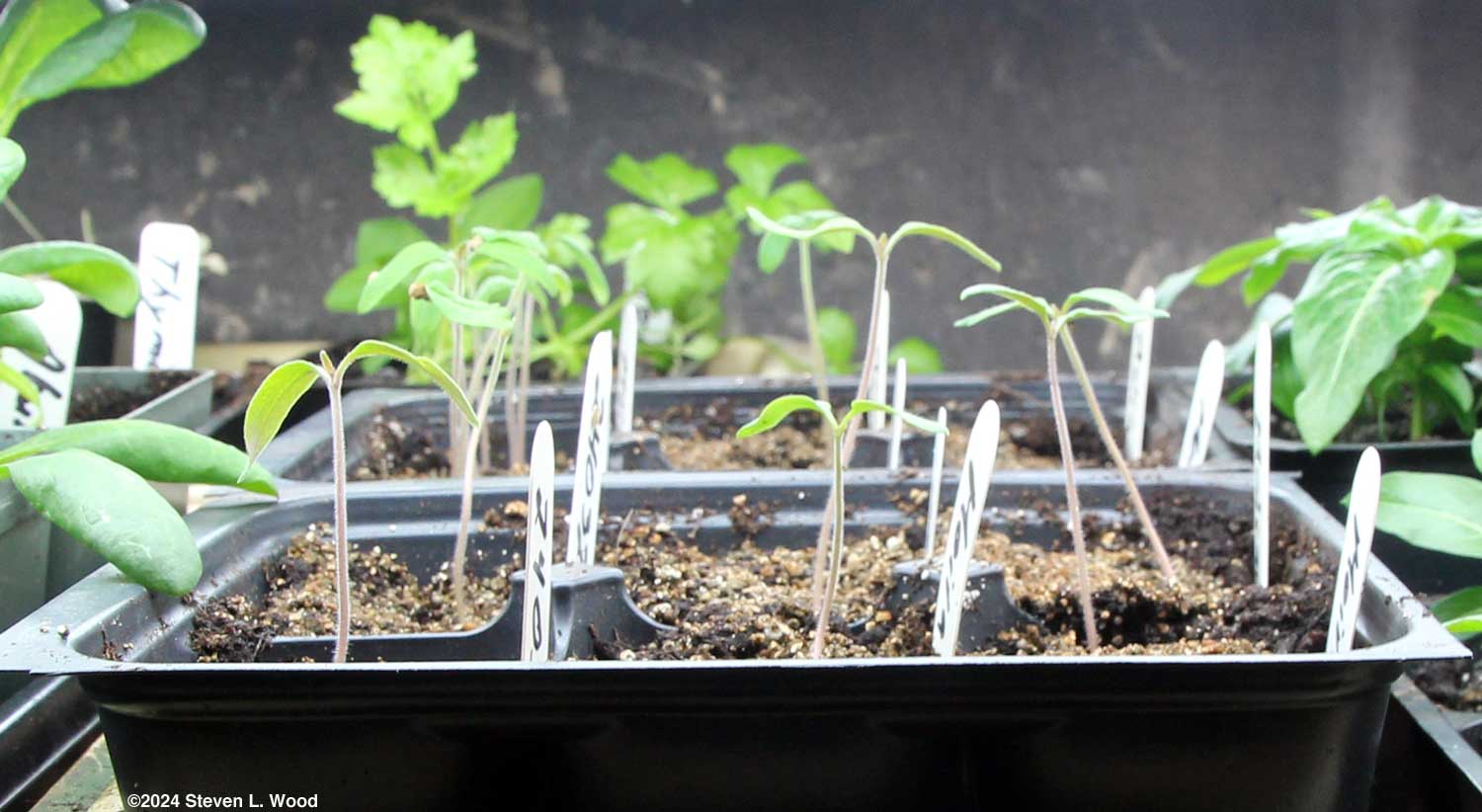
I moved our Earlirouge and Moira tomato plants to our cold frame yesterday to harden off a bit. While the earlier planted Earlirouges are getting pretty big, the later planted Moiras will go into the ground first in one of our narrow raised garden beds. And yes, there's one sixpack of Goliath broccoli in the back right of the photo. And while we're past most chances of a late frost, our cold frame remains in work. I have it just propped open this afternoon, as twenty plus MPH winds were beating up the young tomato plants.
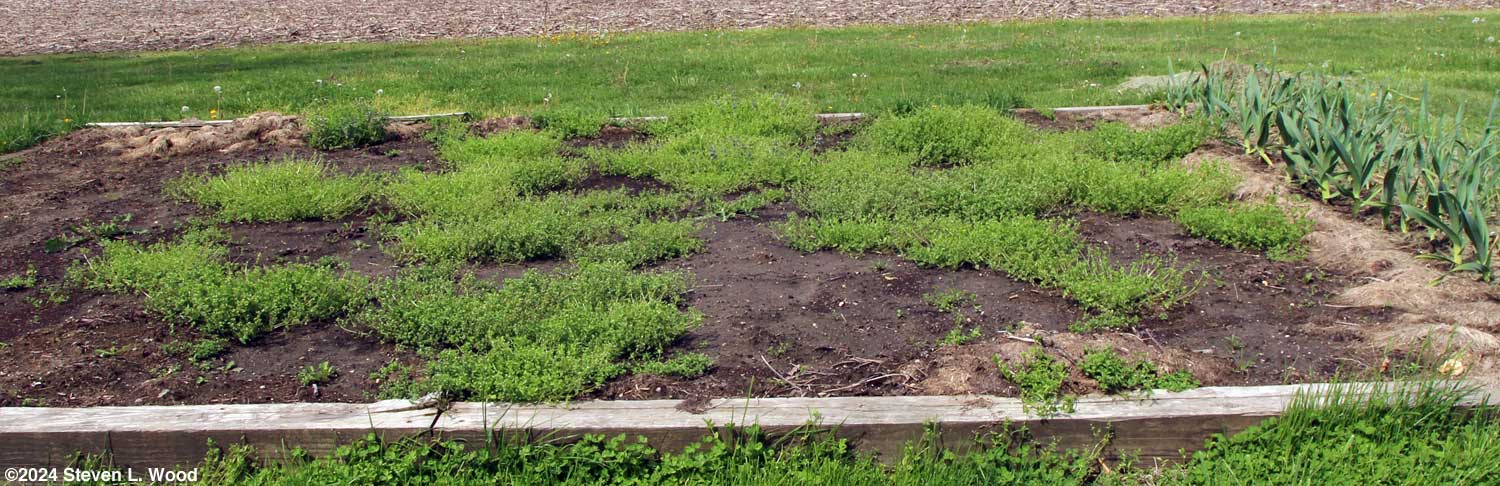
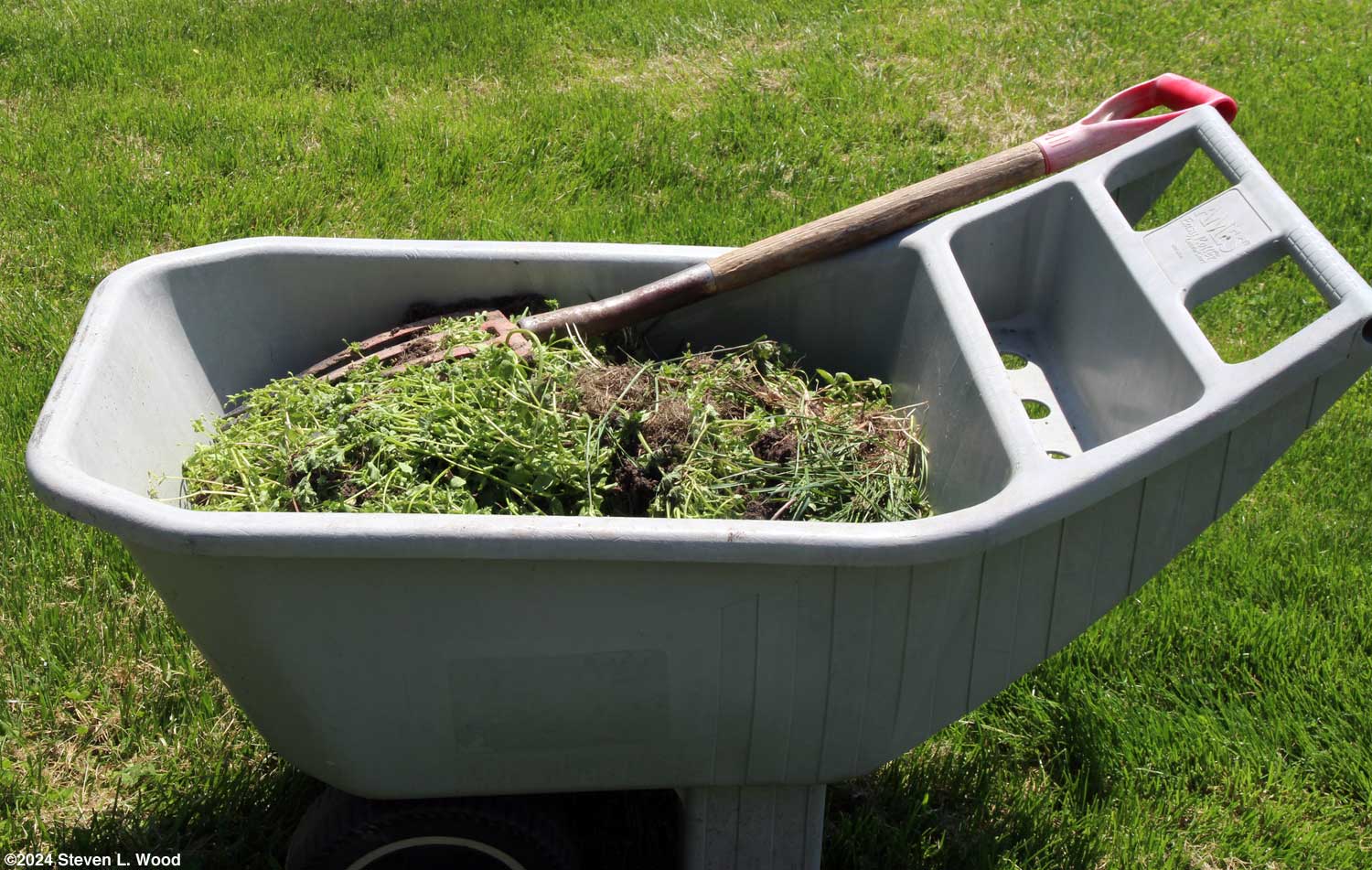
I started a few Quinte and Red Pearl tomatoes from saved seed on Sunday. The Quintes have developed over the years into a larger tomato variety. I'm not sure if they crossed in the past with one of our hybrids. The Red Pearls are our favorite grape tomato for flavor. I usually grow both Red Pearls and Honey Bunch grape tomatoes, as the Honey Bunches are tasty and much more productive. But somehow, I've run out of seed for the latter variety. So I'll grow more Red Pearls this season. Last evening, I put up ten grocery store sized bundles of asparagus for a luncheon with Annie's former co-workers. She surveyed them over the weekend to see if they wanted asparagus. They did. Chickweed Day? Chickweed was overtaking our main raised garden bed. So today was a day for weeding. But I hardly made a dent in the weeds before my garden cart was nearly full. That prompted a trip to our working compost pile with the chickweed and compost buckets from our kitchen and plant room.
I could just turn the chickweed under with the rototiller. But that would just put more chickweed seed into our garden plot. So this may turn out to be chickweed week.
I'm still trying to get some old Ventura celery seed to germinate. I had some going, but let it dry out under our plant lights. I like the variety as it produces, gets cut, and comes back from the roots. I also started soaking some very old milkweed seed for a planting. I keep trying on this one. Last year's milkweed apparently didn't attract any monarch butterflies.
I briefly opened our cold frame this morning to check on the plants there. They were okay, and the frame got propped open about six inches, probably for the rest of the day. Beside the cold frame sits a new Hosemobile Hose Reel Cart. I got disgusted with fighting a tangled, kinking garden hose and invested in the reel cart. It came fully assembled and seems to be what I needed.
Each pot got two or three seeds. I'll thin the pots to two plants each. When things dry out and I can till our East Garden plot, the melons and squash will go into some deluxe planting holes I describe in our how-to, Growing Great Melons on Heavy Clay Soil.
Our apple trees have dropped most of their blossoms, so it was time to apply our first non-organic spray of the season. I used the old Bonide Fruit Tree Spray. It is a mix of Captan, Malathion, and Carbaryl, some powerful products. There's a newer, organic, Captain Jack's fruit tree spray that I may switch to closer to harvest. While spraying, I wore a mask, gloves, and eye protection from the chemicals. Even so, I had to strip down for a shower after spraying and wash my clothes to get rid of the Malathion odor!
On a nice day, I switched to trying to mow our lawn. The mower was making some noises and eventually refused to go. I think the clutch went out despite the unit recently being serviced by Alliance Tractor in Vincennes. When I called them, they were incredibly unresponsive, not being able to pick up the lawn tractor up until Monday at the earliest. The person I talked to on the phone was new, possibly reflecting Alliance's recent purchase by another ourfit. I'm just guessing I'll need to shop for another mower/farm equipment supplier, as our John Deere X570 is getting old.
In my grumpy mode, I reacted negatively from a past due notice from Indiana Farm Bureau Insurance. The insurance on my wife's Honda was due on April 4. My bank shows that they cleared the check for the insurance on April 2. Yet, the greedy bastards at Farm Bureau want a $25 late fee for the payment. Our homeowners and car insurances have increased dramatically this year. This latest affront has me shopping for more affordable coverage.
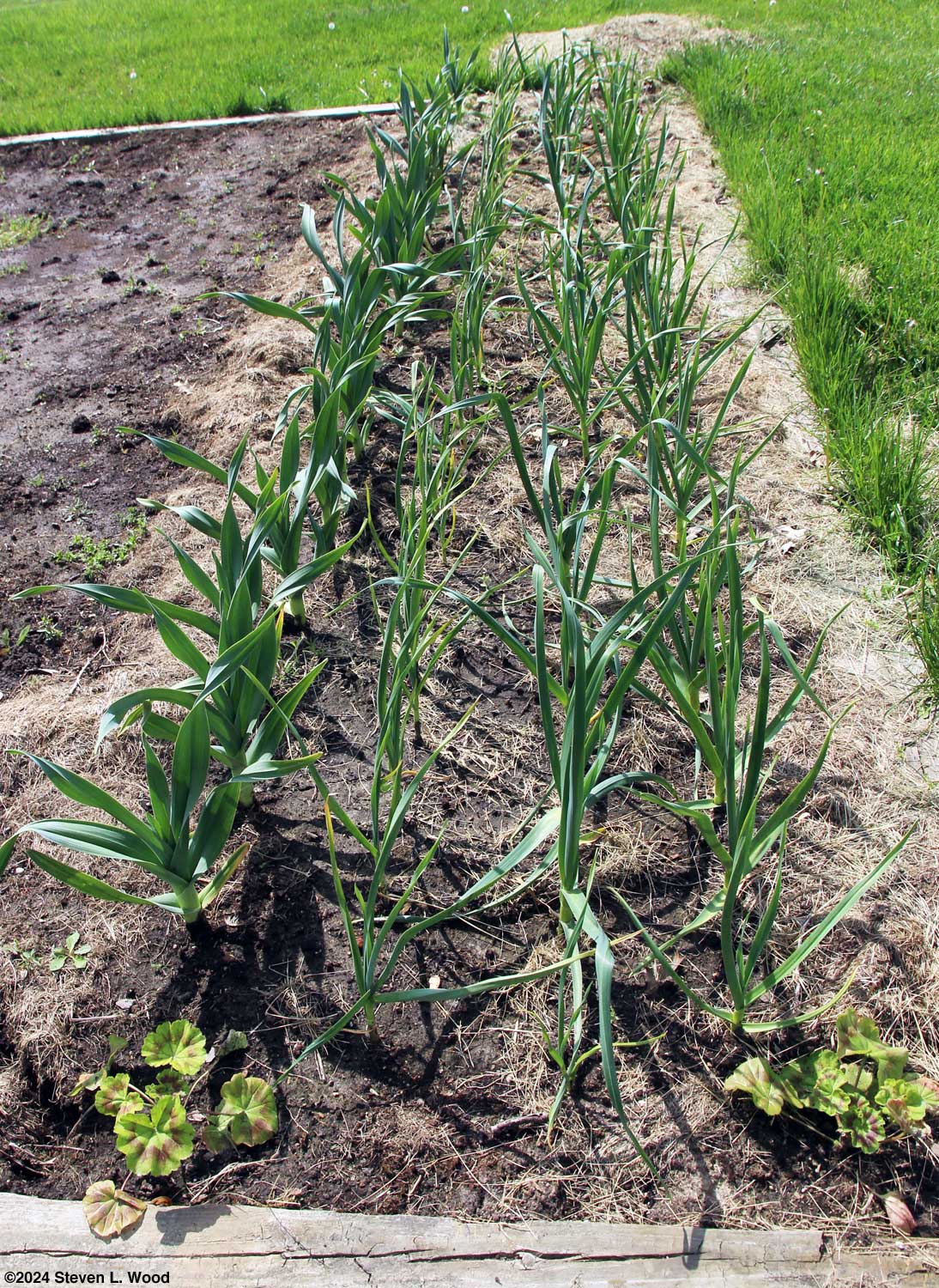
One job I got out of the way this week was fertilizing and mulching our garlic. There was some old mulch around the garlic, but I added fresh grass clippings between the rows after treating them to a light sprinkle of 12-12-12 fertilizer. Some of the garlic leaves were showing some flashing (yellowing), which can be a sign of too much water or a lack of nitrogen. In another month or so, I'll give the garlic an application of foliar fertilizer. And other than pulling the occasional weed breakthrough and a little re-mulching, that should do our garlic until a July harvest. While I was at it, I mulched along the sides of our double trellised early peas. One outdoor job that can't be skipped is a now daily picking of asparagus. The colder weather will slow the asparagus down some. But when I skipped daily picking, we ended up with some very tall asparagus shoots. Today's picking only yielded seven shoots.
All of this photo stuff came to mind as I was backing up my laptop this morning. Annie's photo was the desktop photo being displayed at the time.
Save 20% on an Exclusive Collection of Mother's Day Fruit & Dipped Berries with code FBMOM20. Code can be used 4/25through 5/6! Sunday, April 21, 2024 - Leftover Steak?!!
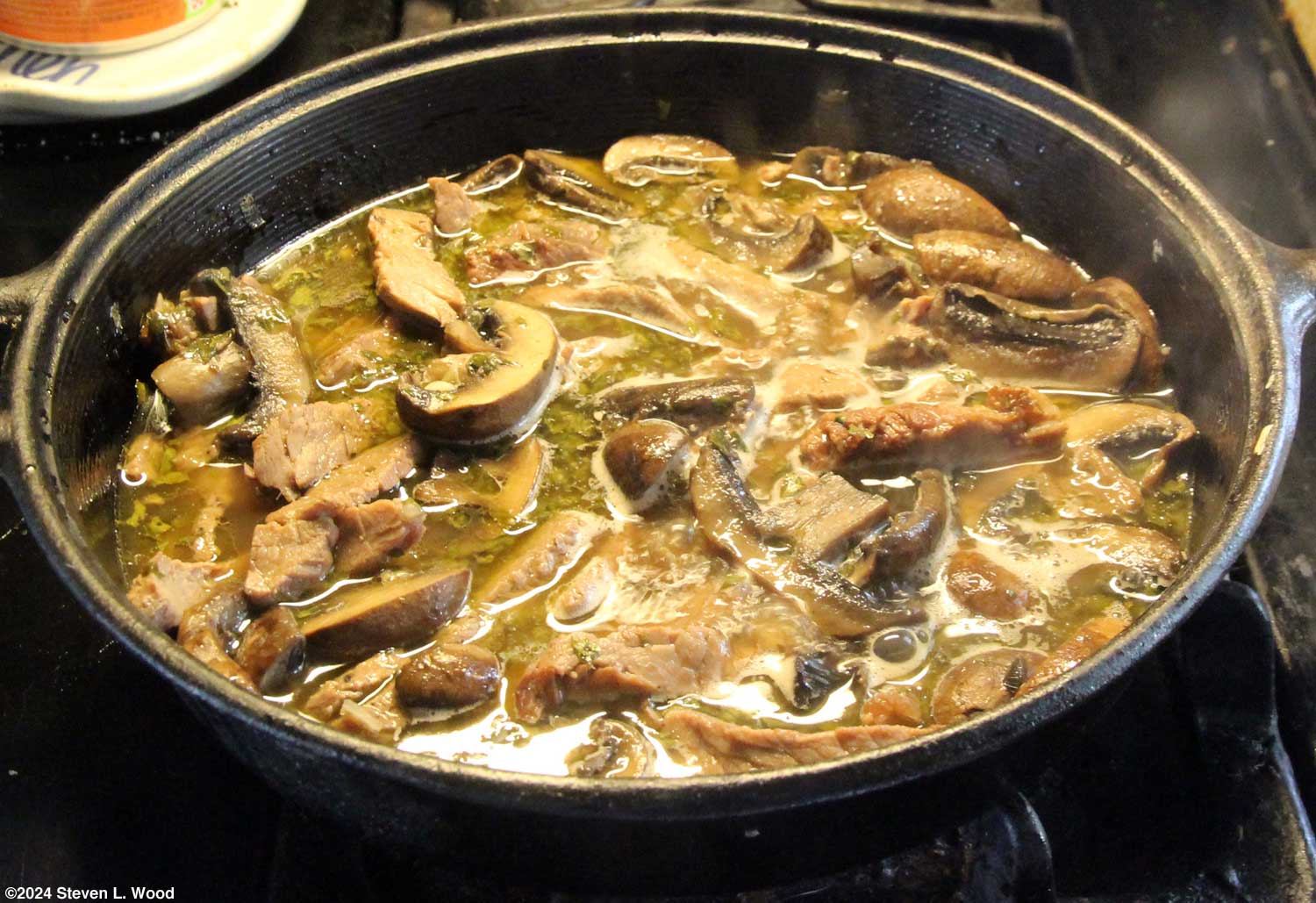
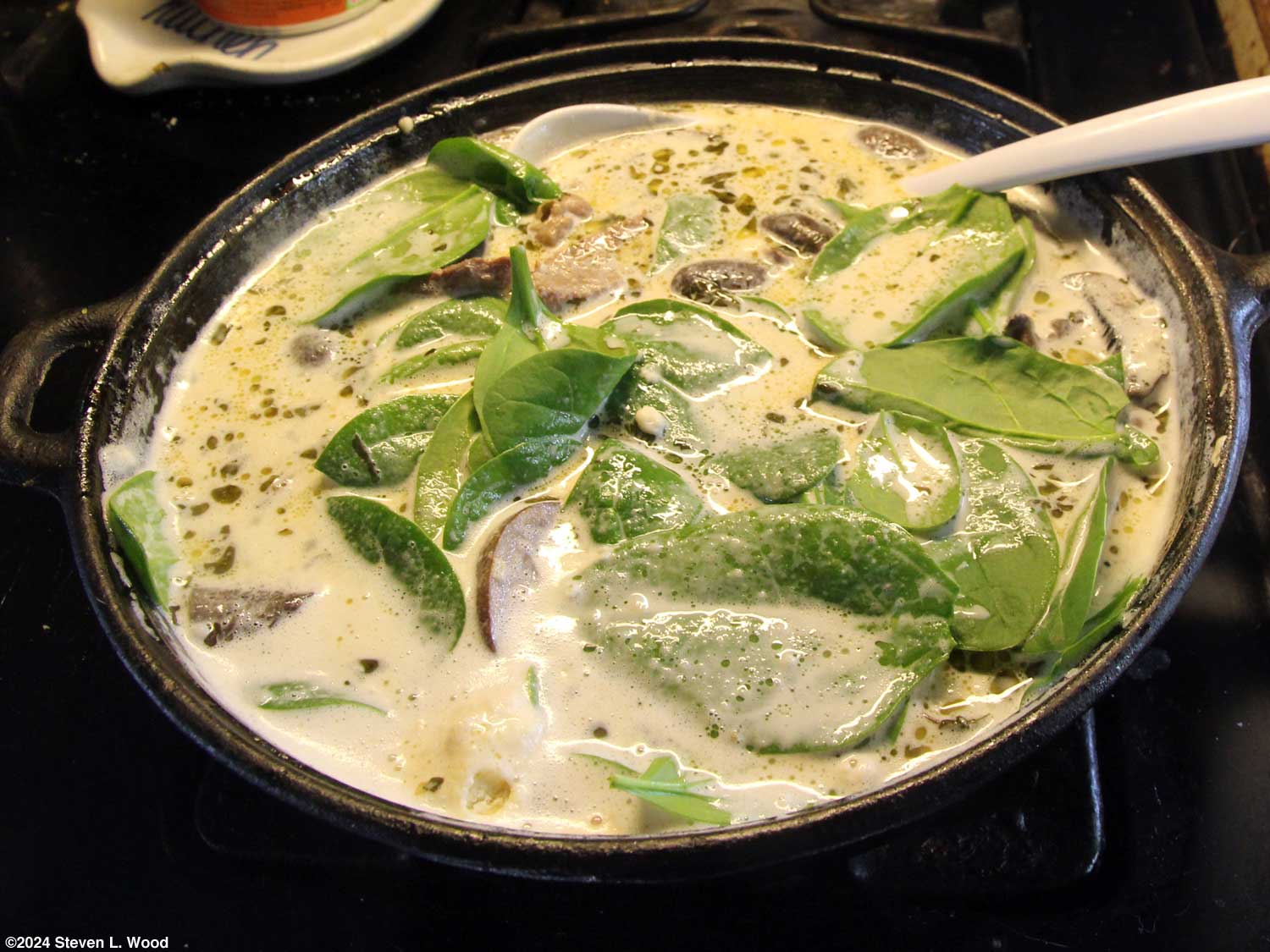
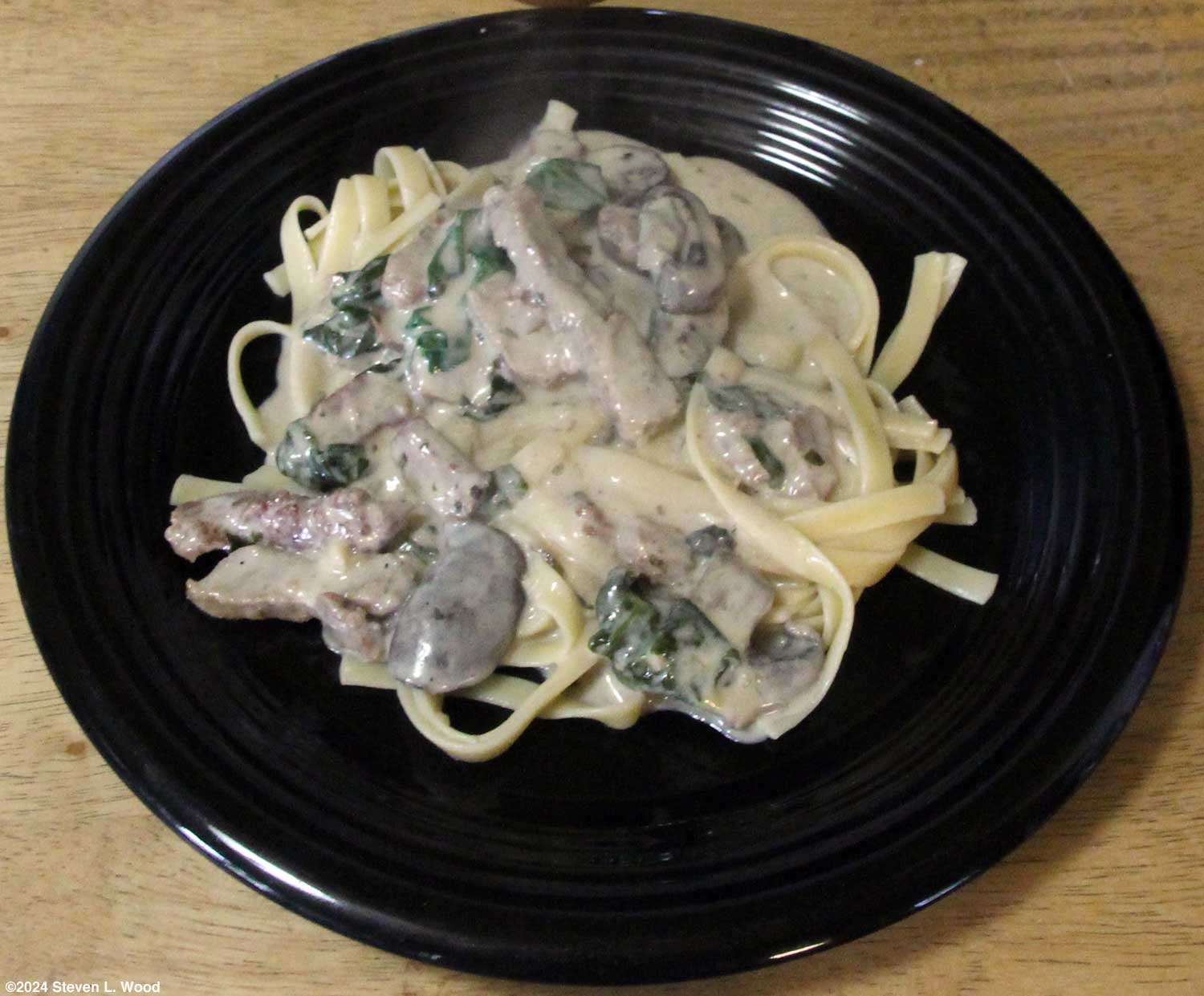
So for a second time this month, I worked on making creamy steak fettuccine adapting a couple of popular online recipes. As usual, the steaks had been marinated before grilling with our now standard marinade of Dale's Steak Seasoning, ReaLemon lemon juice, and Swanson Beef Broth. I varied from the recipes below in using portobello mushrooms, ground pepper, and no tomatoes. And this time around, I remembered to include baby spinach in the mix.
I'm getting better with this dish, as last night's dinner was far better than the previous try. Of course, if I can start thawing frozen steaks one at a time, we'll have less leftover steak to work with.
As the season moves on, we'll have hummingbirds dropping in front of us at eye level as we sit on our glider on the back porch and others zooming past us. The tiny birds are lots of fun to watch. Our power was off for a while this morning while a line crew replaced the utility pole our transformer hangs on. I wasn't too offput, as I have our internet modem on a backup power supply and just kept on surfing while the juice was out.
An email from Fedco Seeds this morning alerted me to an excellent article from the University of Maine Extension, Cover Cropping for Success. It has some good tables on types of cover crops and when to seed them. I found the article good enough to add to my list of articles on cover crops in Growing a Buckwheat Cover/Smother Crop.
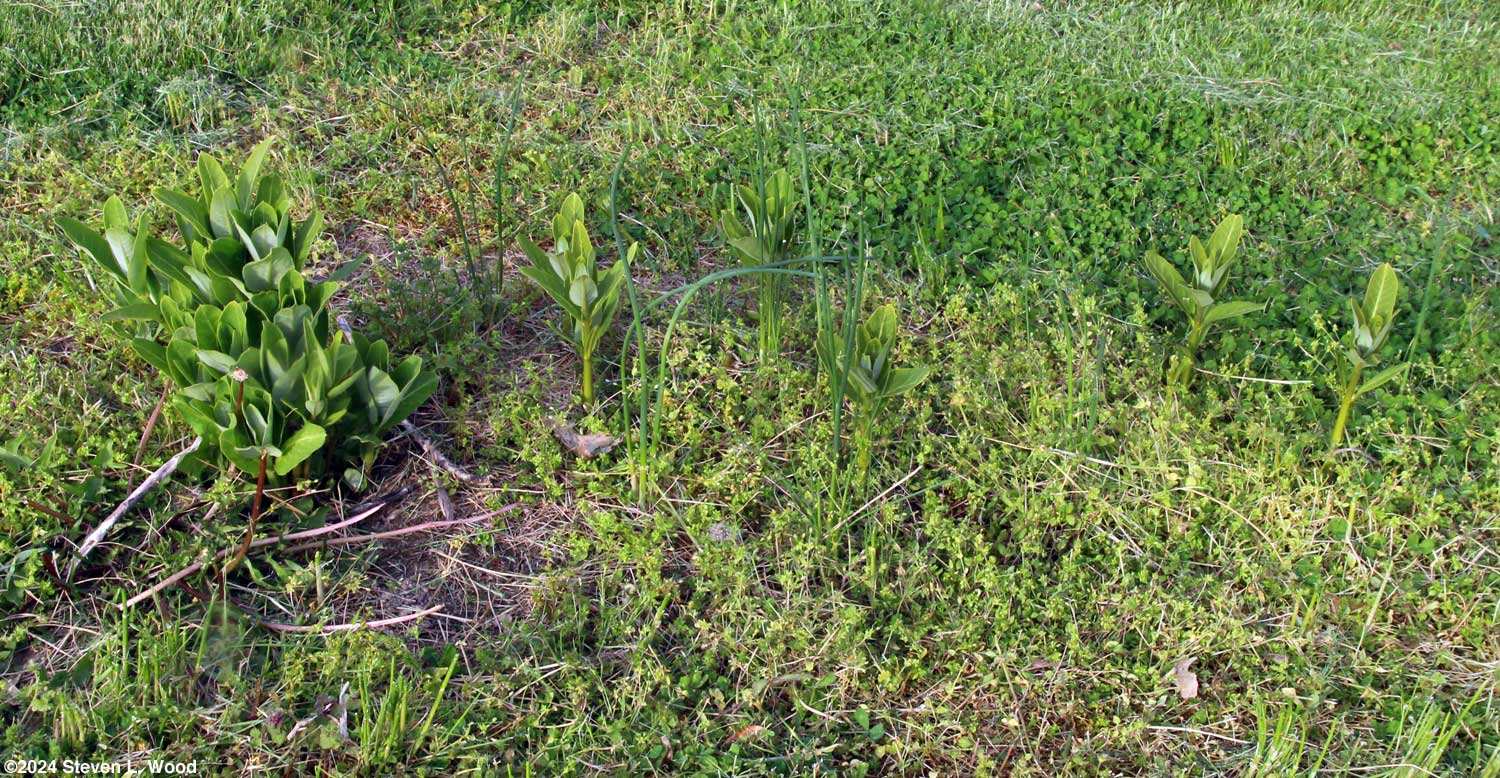
When mowing today, I got a pleasant surprise. Our milkweed from last year is up. I didn't know or had forgotten that milkweed is a perennial. I have milkweed seed conditioning in our refrigerator, so we may get some more milkweed plants. But the year old ones are really looking strong. So maybe we'll see some monarch butterflies this summer.
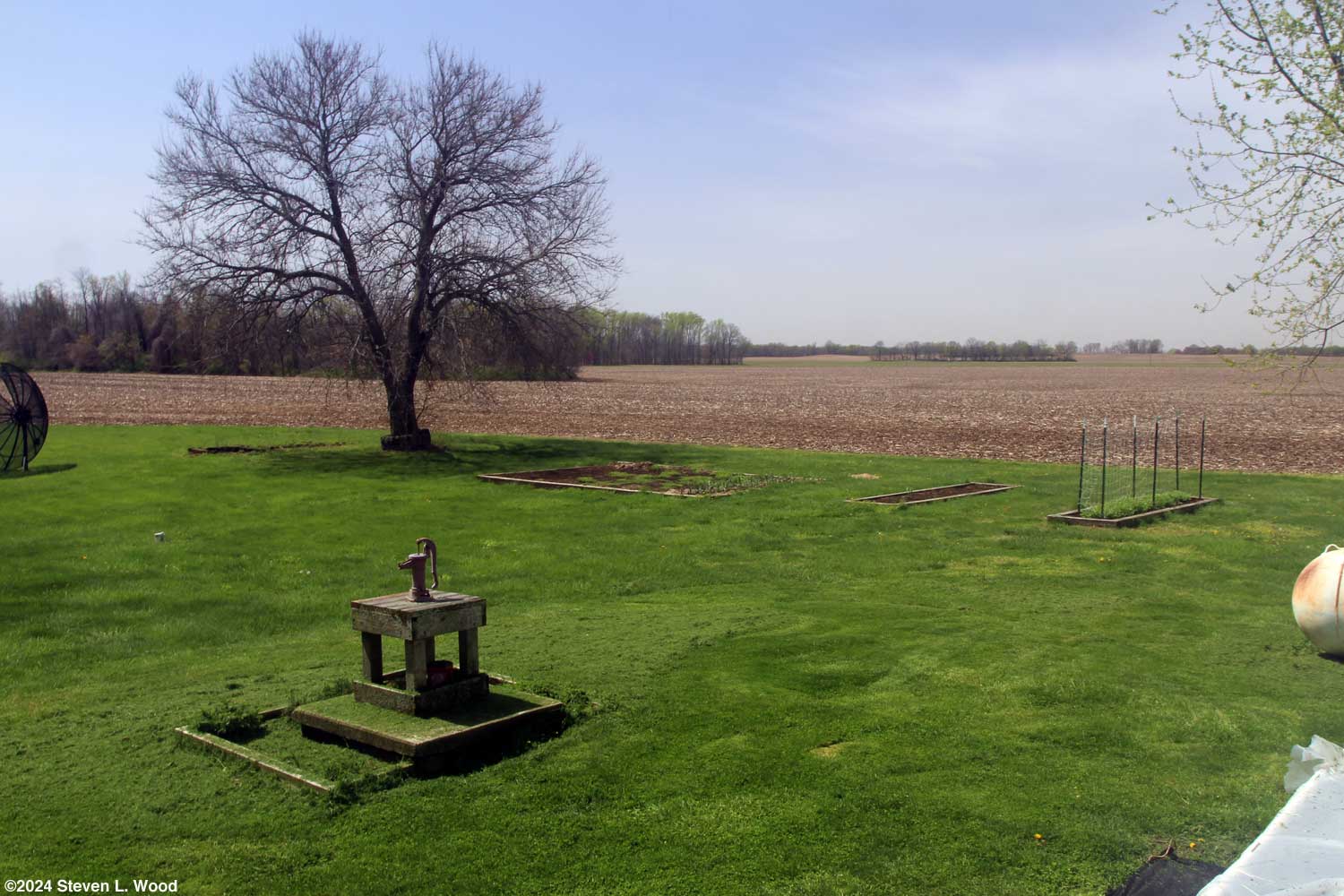
Even so, I got out and rototilled our main raised garden bed today. Chickweed kept clogging the tines of my 30 year old tiller, but tossing the chickweed clumps aside allowed giving the plot a good turning. I'd hoped to turn a narrow bed as well, but its six to eight inch timbers made getting the tiller into it difficult. I'll add a few lumber stairsteps along it to eventually get the tiller into it.
Since I didn't pick asparagus yesterday, today's picking produced lots of tall spears. While I was picking, it was lightly misting outside which was rather pleasant. I'm trying to decide whether to bundle the asparagus for the food bank or Annie's buddies from work or to freeze it. Looking a bit ahead, we have a mixed weather outlook. We may have lots of rainy days that will slow planting, but there are a few gaps where I may get some transplants in the ground and some direct seeding done. Later
• goodFOOD: How to freeze asparagus Today's picking along with what we had stored from the last few days made five packages of frozen asparagus in portions about right for dinner. I also held out enough for supper this evening. That probably will be all the asparagus I freeze this year. Mixed in with other things, it's good, but nothing like fresh asparagus from the garden. Grocery store asparagus is good, but by the time it gets to the grocery, it's a week or two old, seriously lessening its flavor. (IMHO)
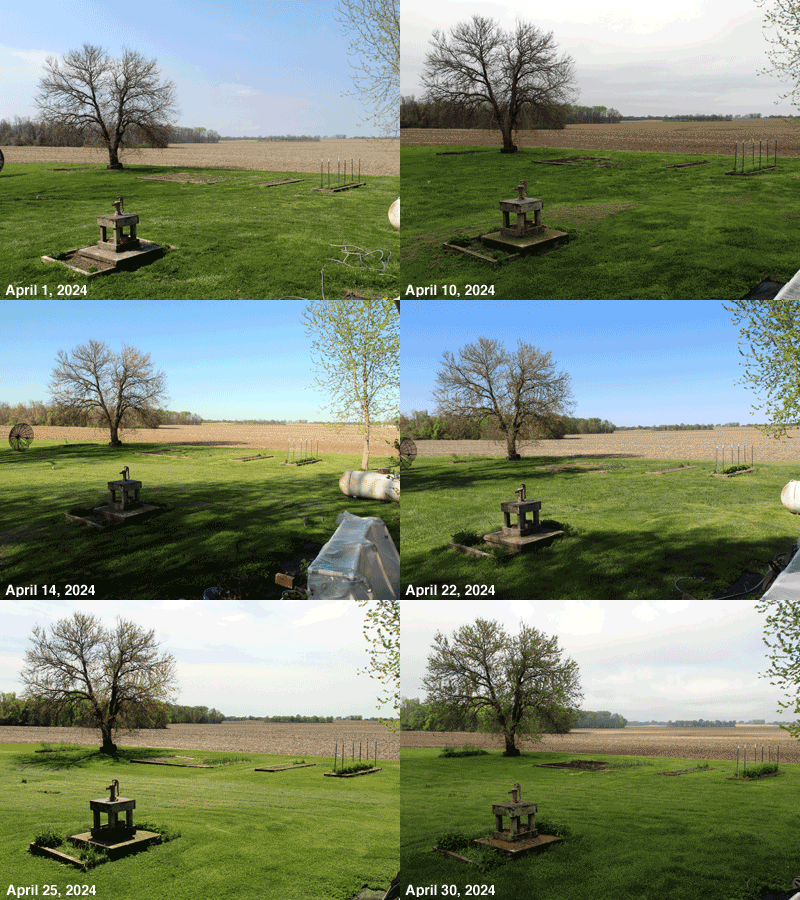
Tuesday, April 30, 2024 - April Wrap-up
What did get done in April was planting our tall early peas and a very nice row of spinach beside the peas. I also got our fall planted garlic fertilized and mulched in. And of course, we've had a wonderful harvest of asparagus. I'm not sure how much longer that will last. But it's been great. We've had all the asparagus we wanted to eat, shared some with family and friends, frozen some, and donated some to our local food bank.
Contact Steve Wood, the at Senior Gardening |














 Even though the weather was beautiful today, it wasn't a gardening day. My efforts were devoted to the total solar eclipse. Despite my photography trials using a polarizing filter on my camera, I didn't get any good shots of the partial eclipse. I did get a good shot of the total eclipse.





















| Affiliated Advertisers |
©2024 Senior-Gardening.com