One of the Joys of Maturity |
|

| Affiliated Advertisers |
The Old Guy's Garden Record
Clicking through one of our banner ads or some of our text links and making a purchase will produce a small commission for us from the sale. Monday, January 1, 2024 - Happy New Year
|


Tuesday, January 2, 2024 - When to Start Seeds
This season, onions will probably be the first item I'll start in January. I plan to seed Walla Walla onions in a few days, as they seem to take far longer for us than their days-to-maturity rating to be ready to harvest. I didn't get any Walla Wallas planted this fall to overwinter, so a good spring/summer crop is important. And since Walla Wallas don't store well long term, I froze most of ours from last season. We're still enjoying them in cooking. Our other onion varieties started mid-January last year will probably also get an earlier start this year. Last year's onion transplants were pretty spindly when they went into the ground. I'll start Patterson and Yellow of Parma for our yellow storage onions. I'm switching from the open pollinated Clear Dawn variety, as the seed I've received for it the last few years hasn't been good. Onion seed only stores well, even frozen, for a year or two, and seed houses seem to be pushing things selling old seed! Our red onion varieties will be Red Zeppelin, Rossa di Milano, and Red Creoles. The hybrid Red Zeppelins have been a favorite for us for their good production and excellent storage. The Red Creoles are a short day variety, producing small red onions a few weeks before our other varieties mature. The rest of our red and yellow onion varieties are all intermediate or long day varieties. Johnny's Selected Seeds has a good page telling about short, intermediate, and long day onion varieties.
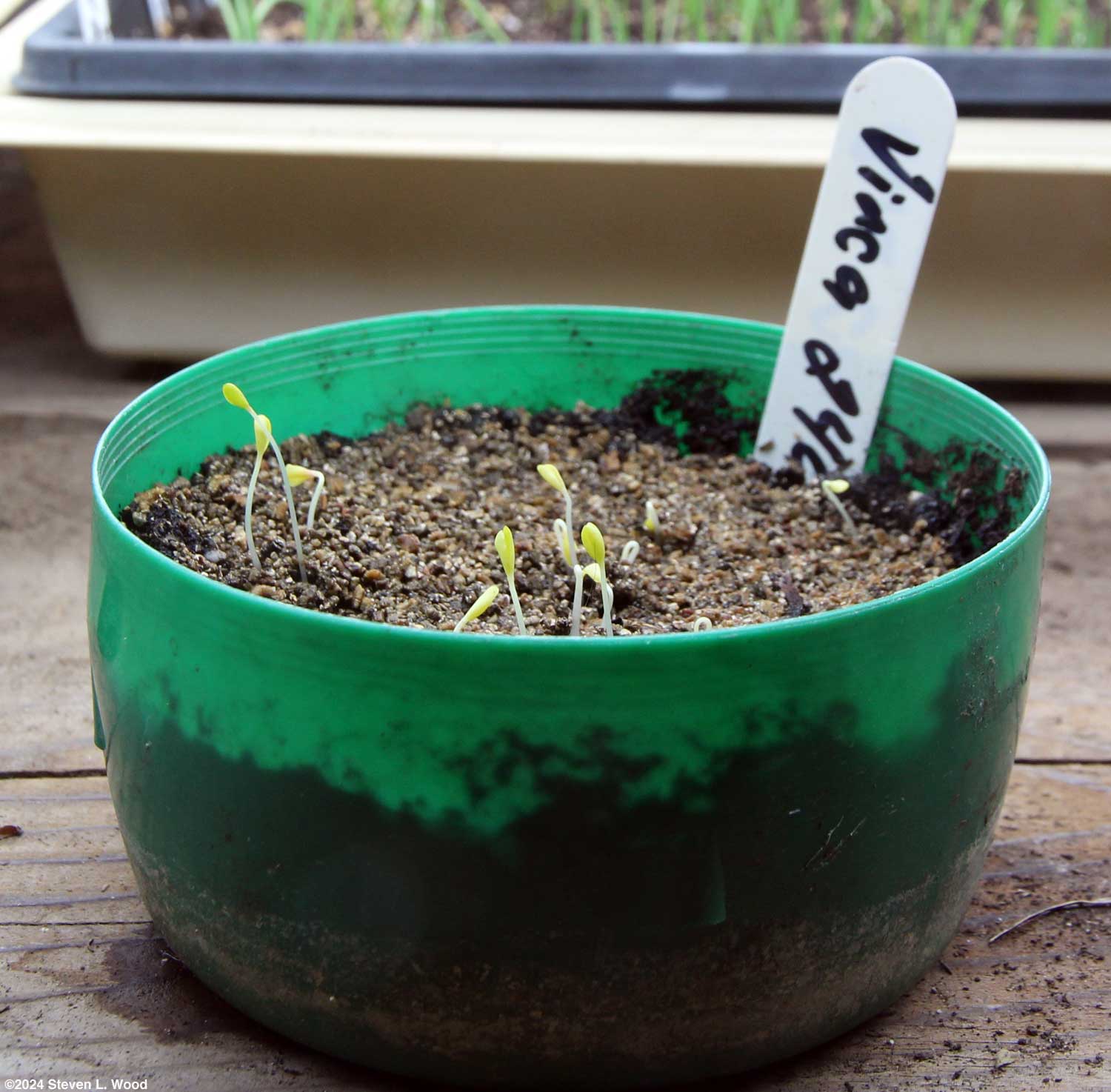
I'll also start some of the beautiful, but always slow to mature vinca for hanging baskets and the borders of our raised beds. Cora Cascades and Pacifica XP always do well for us. Another early start will be some Ventura celery. I put out two plants of the variety last year, cut them when ripe, and thought that was it. But the deep rooted celery produced more stalks which got harvested in late summer and got cut yet again the last of November!
Wednesday, January 3, 2024 - Our Seed Listings for 2024 We're certainly not in the business of selling garden seed. I do share some of our favorite seed varieties through the Seed Savers Member Exchange (SSE). While we save seed from lots of vegetable, herb, and flower varieties, we only share our superstars. Listed below are our seed offerings for 2024 from seed grown out this and last year. Days-to-maturity are in parentheses. Deep Red Tomatoes
Quinte (70) - Also known as Easy Peel, our Quinte plants produced unusually large tomatoes in great volume in 2021. Quintes are another Jack Metcalf variety. As with most of his releases, they are an early, semi-determinate, open pollinated plant. Quinte tomato seed is also available from the Turtle Tree Seed Initiative, grown out from seed we gave them. Both our Quinte and Moira tomatoes have increased in size in recent years. Rather than some special breeding, I'm guessing that is due to me adding a shovelful of compost to each planting hole.
Our how-to, Growing Tomatoes, tells all about how we grow our tomatoes. Earliest Red Sweet (65) - The Earliest Red Sweet bell pepper variety produces peppers a bit smaller than popular hybrids. But what its peppers lack in size, it makes up for with an incredible volume of peppers, especially late in the season.
Note that I often add some ERS peppers to our Hungarian Paprika peppers when making ground paprika. Here's a tip from our Growing Peppers how-to that suggests a solution if your pepper plants don't perform well for you. For years, out pepper plants looked good right up until the time they set fruit. Then they'd languish and eventually die. On a luckshot, I began adding a little Maxicrop Soluble Seaweed Powder to my transplant solution for the peppers. Our pepper problems magically vanished! Apparently the seaweed had some necessary element in it that our soil lacked. Maxicrop is a bit expensive, but it doesn't take much of it to do the trick. Paprika Peppers
Of the three varieties, the Boldogs were the most productive. But they may have been due to my irregular watering patterns during a drought. Cucumbers
Squash
Note that the squash make absolutely fabulous butternut squash yams.
Flowers
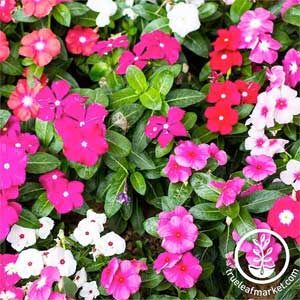
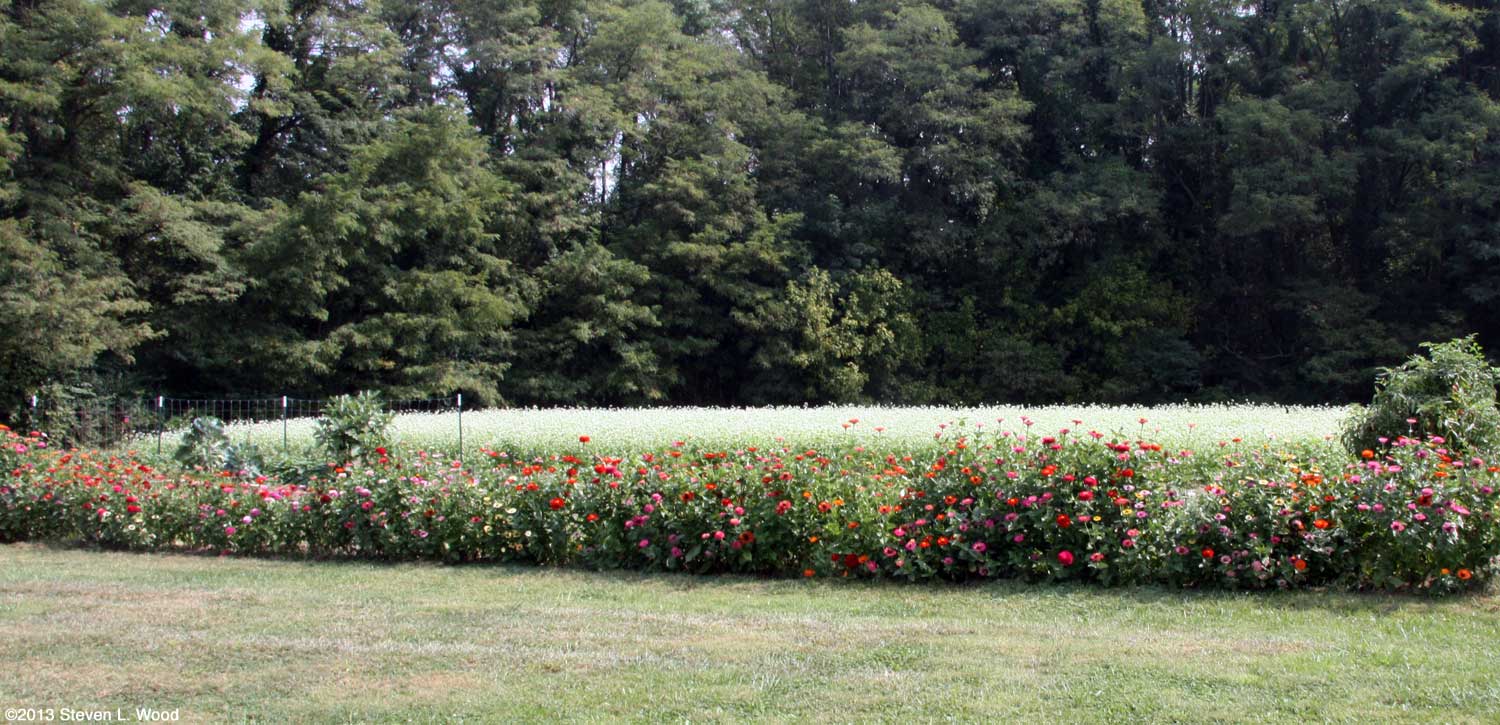
Zinnias - Zinnias were my mother's favorite flower. In honor of her, and because they do so well in our East Garden plot, I often border the plot with an eighty foot row of them. Our zinnias were originally from the State Fair variety, but over the years I've bought seed packets of other varieties and mixed them in. The result is a mix of very tall and shorter zinnias with a wide variety of blooms.
Removed from this year's listings are the excellent spinach, Abundant Bloomsdale, and red kidney beans. Our spinach plants perversely produced mostly male plants last year, limiting our seed production. The surviving female plants with seed all blew over in the strong winds we expeience here. Our kideny beans just got grown over with weeds, and I accidentally mowed them down thinking I was mowing the aisle next to them.
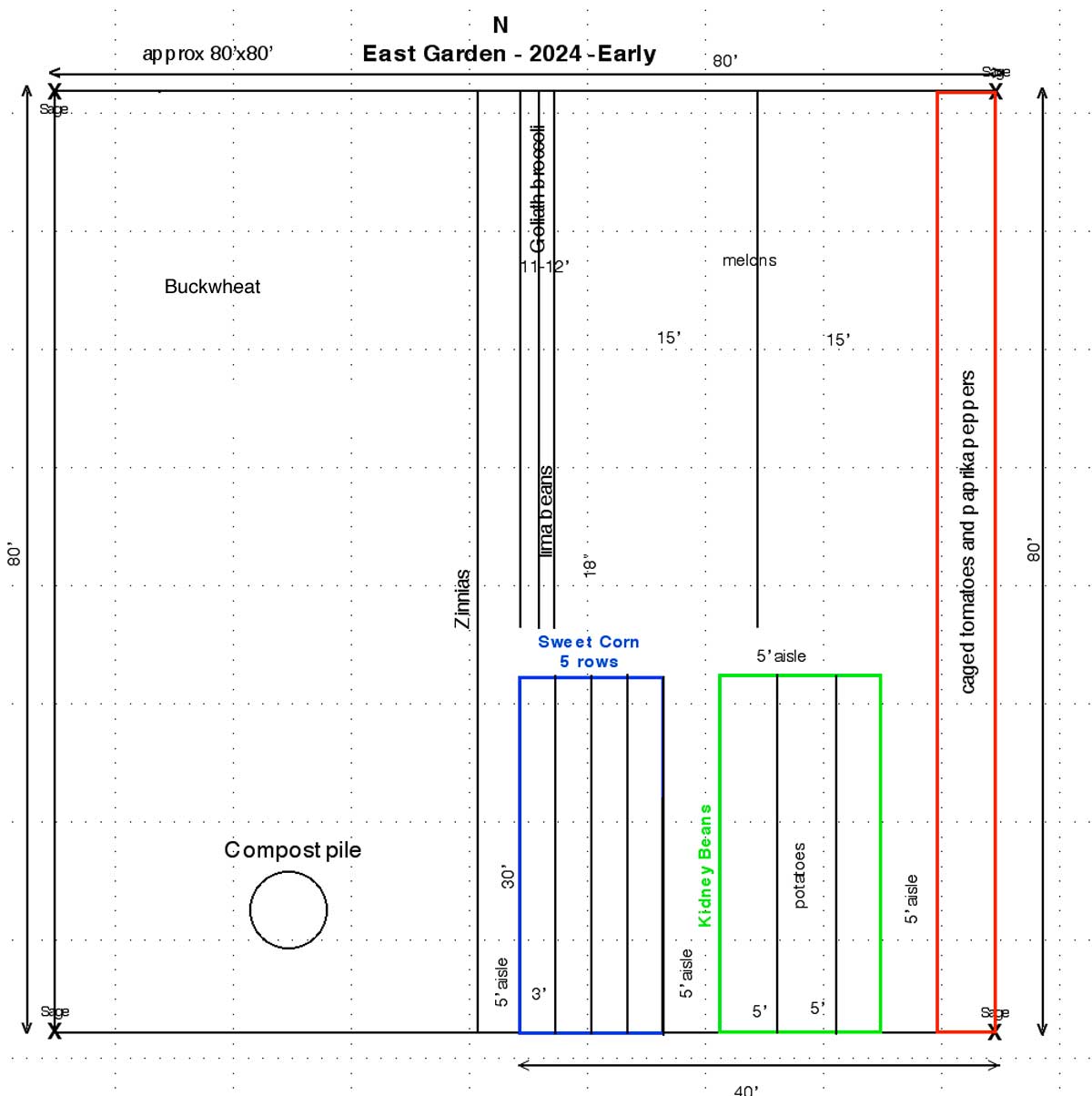
Along with deciding what I want to grow as spring crops and ordering seed, somewhat finalizing our garden plot plans is important. I started working on the plans back in August when we were just beginning fall succession crops. I still do our garden plans/maps in the old Appleworks 6 application. And I do most of the work on them on a now ancient 2010 Mac Mini. It runs Appleworks natively, although I can also access and modify the files via the Sheepshaver emulator on my newer machines. These are our plan/garden maps as they now stand. Once in the garden in the spring with tools in hand, things can and sometimes do change a bit.
Plots A1 & A2 are 3'x15' (interior measure) raised beds that function with a similar sized soft bed at the north end of Plot B in a three year rotation. Tomatoes, early peas and cucumbers on a tall double trellis, and whatever else I want to put in rotate each year. Doing so makes planning rotations easy and also keeps the tall crops from shading nearby crops.
Plot B is an enormous 15'x23' (interior measure) raised bed. I first terraced the bed adding landscape timbers on the two low sides of the bed to stop soil erosion from the sloped bed. I went ahead and enclosed the area the next season. Doing so took away the advantage of not stepping into a narrow raised bed, but it has worked out fairly well using walking boards to prevent soil compaction. There actually is a Plot D, Plot C being returned to yard, that encloses one of our asparagus patches. It obviously doesn't require yearly planning. The patch is now about fifteen years old. And once I got the asparagus enclosed in a raised bed, we discovered a really old asparagus bed behind our property when we began mowing it. With a little TLC, the thirty plus year old patch returned to productivity. Due to the generosity of the farm renter and land owner, we have use of an acre plus field adjacent to our property. It houses our 80'x80' East Garden plot. Due to some neck, spine, and shoulder injuries, I didn't get the plot fully planted for two years. Last season was the first in years where it was fully employed.
The East Garden is where we grow our space hogs such as melons and sweet corn. I generally only plant half of the plot, seeding the rest of it to successive turn down crops of buckwheat. Currently, the area I intend to plant next spring has a nice cover of hairy winter vetch. Some years I've grown butternut squash and pumpkins in the rotated out portion of the plot. More recently, we grow our butternuts on the site of old compost piles outside the East Garden. Since our local grandkids have outgrown Jack O'Lanterns, I've given up growing pumpkins. At 75 years of age, I'm thankful that I can plan for a full garden for the coming season. Thank you, Lord. Food Pantry, Clothes Closet I saw today on Facebook that our local food bank, Our Father's Arms, hopes to reopen in its new building by the end of the month. The old building was damaged beyond repair in the tornado that came through on March 31. That should be a boon to needy folks in our area. For my part, I need to sort out and bag some of our bounty of stored garlic for the food bank.
Friday, January 5, 2024 - Starting Onions I started onions yesterday and today. I got an early start on them this year as I didn't get any Walla Wallas in to overwinter. The variety takes a long time to mature for us. I also wasn't satisfied with how spindly our other onion transplants were last spring. And this year, all of our onion seed is fresh with only one rather expensive variety of seed used from last season.
I started a full tray of Walla Walla sweet onions yesterday. As usual, I filled a slotted 1020 tray with sterile potting mix and watered the soil with boiling water. To handle the weight of the wet potting mix and hold in water, the slotted tray went into a heavy duty PermaNest tray. After the soil cooled down a little, I made rows with a fifty year old thirteen inch plastic ruler. It's been great for making and tamping down rows over the years. My furrows for the seed were about an eighth inch deep. I had to stop after that, as I'd used up all of my sterile soil, and a new batch of soil in our soil sterilization kettle was too hot to use after an hour and a half in the oven at 400°F. Today, I started a second flat of onions with Patterson and Yellow of Parma yellow onions and Red Zeppelin and Rossa di Milano red onions. For more information on growing onions, see our how-to, How We Grow Our Onions. Gloxinias When working in our plant room yesterday, I thought to check our pots of gloxinias in dormancy. I was pleasantly surprised to find four pots with tiny sprouts emerging from the corms.
The gloxinias got fresh soil with a shot of systemic insecticide granules. One of the corms had almost outgrown its four inch pot and got moved to a six inch pot.
A bit closer to my heart was the PDF 2024 catalog from the Turtle Tree Seed Initiative. Turtle Tree is located on the grounds of Camphill Village, "an integrated community where people with developmental differences are living a life of dignity, equality and purpose." As a retired special educator, I appreciate that Turtle Tree employs those with disabilities. I'm also indebted to them for helping preserve and offering the Earlirouge and Quinte tomato varieties from seed I sent them. They graciously give me a credit for their seed start in their catalog! While I thought I was done with seed orders for the season, Turtle Tree got an order for just three items, only one of which was for garden seed.
Early next week, it may get really cold with some possible sub-zero mornings! We've been spoiled by a warmer than usual fall and early winter. Even though I knew it was too early, I've been checking the onions I seeded last Thursday and Friday daily. But today, I was rewarded to see that some of the Walla Walla onions seeded on Thursday had begun to germinate. Not so rewarding was seeing some stringy white mold getting started on the soil surface.
I'd somewhat expected the mold, as a warm, moist area with limited airflow is an ideal environment for it. But I was prepared, as I had some Captain fungicide (caution about use) on hand to knock down the mold. Once the humidome cover comes off the onion flats, the mold threat is greatly reduced.
Our gloxinias that were so gloriously in bloom in November and December have faded a good bit. As the last of our first year plants move towards their annual required period of dormancy, we have corms in the basement emerging from dormancy, ensuring more blooms to enjoy.
Our second tray of onions remains on its soil heating mat with a humidome over it. The seed in it is just beginning to germinate...rather irregularly. With a pretty miserable weather outlook for the next ten days, outside work is at a standstill. I still have asparagus patches to clean up, T-posts to pull and store, and zinnias to cut down. But those are all jobs that can wait for warmer, dryer weather. I couldn't do any outside work anyway, as I have a nasty cold. I've done cold medicine, kale soup, and orange juice without much relief. I'm now on to scotch whiskey and Christmas chocolates, which probably won't help the cold much but may make it easier to tolerate.
Please note that the Droll Yankees feeder has gotten horribly expensive over the years. I paid fifty-some dollars for ours in 2015. The price for the feeder has almost doubled over the years. Hung from a chain from a pin oak tree, ours has lasted over the years and defeated hungry squirrels. When I went out to run into town, my truck door was frozen. When started, the truck advised me that all of my tires were low. I drove into town anyway, but pumped up the tires when I got home as they'd heated up a bit from the driving. Our Turtle Tree order arrived in the mail yesterday. While it contained a packet of Giant Italian Plain Leaf parsley, I restrained myself from seeding it today. The packet and our Johnny's seed-starting calculator list suggest a late February to March seeding. I noticed that our jar of dried parsley was getting low when making beef stew this week. I think that pushed me into considering an early start for our parsley. BTW: Parsley is an easy herb to grow, dry, and save...unless you're trying to grow it in a drought as we did this last season.
I made a loaf of Vienna bread this weekend from a new recipe I found online. While the recipe calls for splitting the dough multiple times for rolls or baguettes, I chose to bake it as a loaf this time around. Since the recipe is a keeper, I may try making it as baguettes at some point in the future. The crusty bread gets its coloring from an "egg wash" over the bread. That did make a bit of a mess of the baking pan, but added something to the bread that I may try with other bread and rolls recipes. I also made a meatloaf to go with the bread. I used a combination of meatloaf recipes and baked the loaf with cut carrots and potatoes. What got me started on the meatloaf was an on sale chuck roast I'd picked up at the grocery. I cut off and ground about a pound of the two pound plus roast with our ancient meat grinder. The rest of the the roast got frozen in a chunk for a future dinner. With the price of ground chuck now running six to seven dollars a pound at our local grocery, I may end up thawing and grinding the rest of the $5/lb chuck roast for burgers, spaghetti sauce or whatever. Getting back to the weather, it's sunny and clear today with a high temperature just reaching 11°F. Wednesday, January 17, 2024 - More Seed Catalogs
A chippy customer service representative at the Southern Exposure Seed Exchange got them bumped from our Recommended Seed Suppliers list to Others to Consider to the edge of my When Hell Freezes over list. But to their credit, they carry several somewhat hard to find, excellent vegetable varieties: Abundant Bloomsdale Spinach; Crimson Sweet Virginia Select Watermelon; and South Anna Butternut Squash. We still have lots of the watermelon seed in frozen storage and have saved seed in recent years from the other two varieties. During my farming years, we ordered big bags of very expensive sh2 sweet corn seed from Twilley Seeds, as we planted and roadsided 2-4 acres of the supersweet corn varieties. Twilley fell out of our favor for selling old seed that didn't meet federal germination standards, something I believe they've corrected. We like their offerings of Cora Cascade Vinca, Maverick series geranium seed at really good prices, and lots of very expensive sh2 sweet corn seed. They get no product links here as they persist in not offering online ordering!
Seeds 'N Such offers a variety of low cost seed. Weather We're still in weather conditions that sap ones the desire to do anything outside. I bundled up and filled our bird feeder this morning and was rewarded with lots of birds at our Droll Yankees 18" Bird Feeder and on our well and cistern covers. My lovely wife also drops dog food on the back porch that the birds seem to appreciate.
Thursday, January 18, 2024 - Testing Sweet Corn Seed I started germination tests last night on all of the sweet corn seed I had in the freezer. The varieties being tested are Anthem XR (74), American Dream, (77), Vision MX (75), First Lady (76), Yellowstone (76), Supersweet Jubilee (85), Northern Yellow Xtra-Sweet® (67), Enchanted (78), Accentuate (80), Who Gets Kissed? (78-84), and Damaun KS Super Sweet Corn (80). While the last two varieties on the list are open pollinated varieties, the rest are all sh2 superweets. The oldest seeds in the group are from 2021. The rest were purchased in the last two years and should still be good.
A bad experience with one vendor's sweet corn seed in 2018 makes me a little cautious. I spread unbleached paper towels over a large cookie sheet, wet the towels, and put the seed on. It got a little tricky as the labels and seed tried to float a bit. The cookie sheet is now on a soil heating mat in the basement with the mat's thermostat set to 70°F. Planting
A small article along the right of today's New York Times, Hakim, Meet Hakeem: How a Young City Farmer Got to Know a Congressman, tells the story of a similar named young Brooklyn gardener and community leader in New York City public housing and gardening meeting the House minority leader. It's an interesting read.
Over the last few years, there's been an apparent change in advertising. We used to receive several wall calendars each year from various businesses. That stopped a year or two ago. So this year I bought a Cat Naps calender for our kitchen wall. It's the one we keep birthdays, anniversaries, doctors' appointments, and other important information on. For my office, I ordered a James Webb Space Telescope 2024 Wall Calendar. It took forever to arrive. I think I should get a 21 day discount from Amazon, although the beautiful calendar cost only $3.99! With the weather, not any outdoor gardening is getting done these days, although I'm hopeful for some warmer, dry days to get a few last garden cleanups done.
It's a dark, gray day here today. BUT...the temperature has reached 53°F. Most of the snow has melted off, and the heavy fog we've had the last two days has cleared...unless you're driving by a creek, river, or reservoir. One of my first jobs after a trip to town was to turn down several thermostats around the house! Without a howling wind and near zero temperatures, our house is now no longer drafty and is nicely warm.
The sweet corn seed that shared their cookie sheet over a soil heating mat is also beginning to germinate. You have to look closely (possibly at the larger size image) to see small roots emerging from some of the seeds. That seed remained over the soil heating mat with its thermostat set to 70°F. The results of the germination test will determine what we plant this spring. Hopefully, I won't have to order any more sweet corn seed. Prices for sh2 sweet corn varieties have gone through the roof this year.
I noted our listings in the Yearbook here earlier this month. Inside the print catalog, each lister is recognized with the number and type of their listings. Individual listings are brief, but hopefully informative. Over the last seven or eight years, there's been a serious drop in the number of gardeners listing seed to share, although the number of varieties shared has remained fairly stable. The Moira tomato listing at left is the only one in this year's yearbook. Previously, there have been several other gardeners working to preserve the variety. That's a concern to me, as we older gardeners die off, valuable varieties could disappear with no one to save and share them. All of the other varieties we grow, save, and share are backed up by other seed savers or commercial vendors.
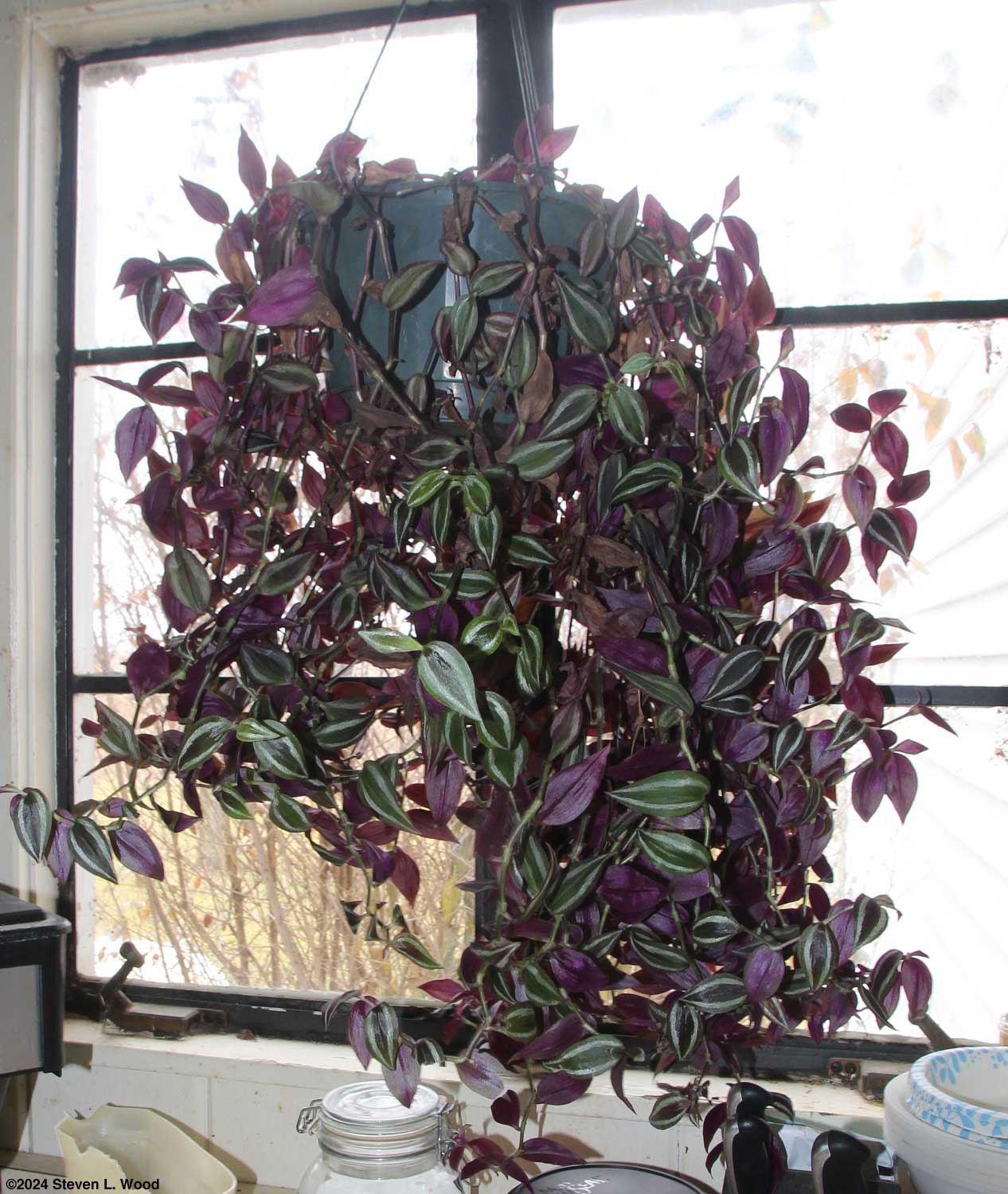
Tradescantia Zebrina plants tend to wear out after about eighteen months, so we've replaced our kitchen plant each year for over a decade with cuttings. Our current plant, a descendant from one a daughter gave us years ago, currently needs to be cut back to make room for some egg carton petunias on the kitchen windowsill. After potting up the Tradescantia Zebrina cuttings, I checked our trays of dormant gloxinias and found three had resumed growth and needed to be re-potted. And some very good news: Our local food pantry and clothes closet is expected to reopen next month. The old Our Father's Arms building was destroyed in the tornadoes that swept through Illinois and Indiana last March.
The idea of starting the seed in egg cartons came from my mother who often started stuff in egg cartons on a windowsill. While I germinate the seed over a soil heating mat under plant lights, the plants quickly get moved to a kitchen windowsill for several weeks before going into fourpacks when they outgrow their egg carton cells. While I'd bought fresh seed for the planting, I found its pelletized coating a bit thin, making the seed hard to work with. I dropped back to some older pelletized seed I still had on hand. And with this and a later planting where the seed needs light to germinate and has to stay on the soil surface, I went back after seeding and pushed a bit of warm water over each seed with a syringe without a needle. I suspect that an eyedropper would work as well. I moved on to filling three inch pots with sterile potting mix, but ran out of it before I'd filled enough pots for a planting of geranium seed. So I mixed some Baccto Lite and Pro Mix and popped a kettle of it into the oven at 400°F for an hour and a half.
Once the potting mix cooled, I had twenty-one pots of moist potting soil ready for geranium seeds. I seeded fifteen Maverick Red and six Pinto Salmon seeds. They went over another soil heating mat under our plant lights. I mostly use geraniums at the corners of our raised beds and in a planter over our cistern cover. The Tradescantia Zebrinax (Wandering Jew) I moved to large hanging basket pots yesterday got moved to our sunroom. They join a couple of sage plants I'm overwintering there. While the room isn't heated, it only rarely drops to around freezing temperatures. And I keep an extra heater in the room for those occasions.
Once our geraniums are well on their way and transplanted to four inch pots, they'll move to the sunroom. Cooler temperatures are said to encourage root growth of geraniums.
The two trays of onions I started January 4 and 5 were ready today for their first "haircut." Onions started inside under lights often get floppy. To encourage more sturdy growth, I trim them to about two inches tall several times in their growth process. The flats of onions also got bottom watered with some Quick Start fertilizer.
Our how-to, How We Grow Our Onions, tells how we grow our onions from seeding to harvest and storage.
Wednesday, January 31, 2024 - January Wrap-up
Garden seed catalogs continued to arrive this month. Pinetree Garden Seeds, the Turtle Tree Seed Initiative, Seeds 'N Such, the Southern Exposure Seed Exchange, Twilley Seeds, and the Seed Savers The Exchange got print catalogs to us. I ran a sweet corn seed germination test this month and was terribly disappointed with the results. Only one of the varieties tested came close to our standards with a 70% germination rate. Before ordering more seed, I'm going to re-run the test, as I think I may have messed up somewhere along the line. A small pot of Cora Cascade trailing vincas came up nicely. The early start is so the slow growing variety may be ready to bloom in April. I cut back our Tradescantia Zebrina (Wandering Jew) plant and potted up the cuttings from it in large hanging basket pots.
With our soil heating mats already covered with trays of geraniums and egg carton petunias, any more seedings will have to wait until next month. An f/16 Day at Last
Cooking Stuck inside through some nasty weather lately, I've been on a cooking kick. Spaghetti sauce for spaghetti one night and lasagna the next, Vienna bread twice, meatloaf twice, and last night, a fantastic pineapple upside-down cake made with the online Betty Crocker recipe. Some Really Good News The Facebook posting pictured below announces the re-opening of our Sullivan county food bank, Our Father's Arms. Its building was destroyed in the tornadoes that swept through here last March. The companion clothes closet won't re-open for several more weeks.
Contact Steve Wood, the at Senior Gardening |
















 January has been a good month for indoor gardening. Cold temperatures and snow limited much outside work. Inside, I started off seeding our onions on January 4 & 5. Other than the oldest seed, they came up well and have all had their first haircut/trimming.



| Affiliated Advertisers |
©2024 Senior-Gardening.com