One of the Joys of Maturity |
|

| Affiliated Advertisers |
Clicking through one of our banner ads or some of our text links and making a purchase will produce a small commission for us from the sale. The Old Guy's Garden Record
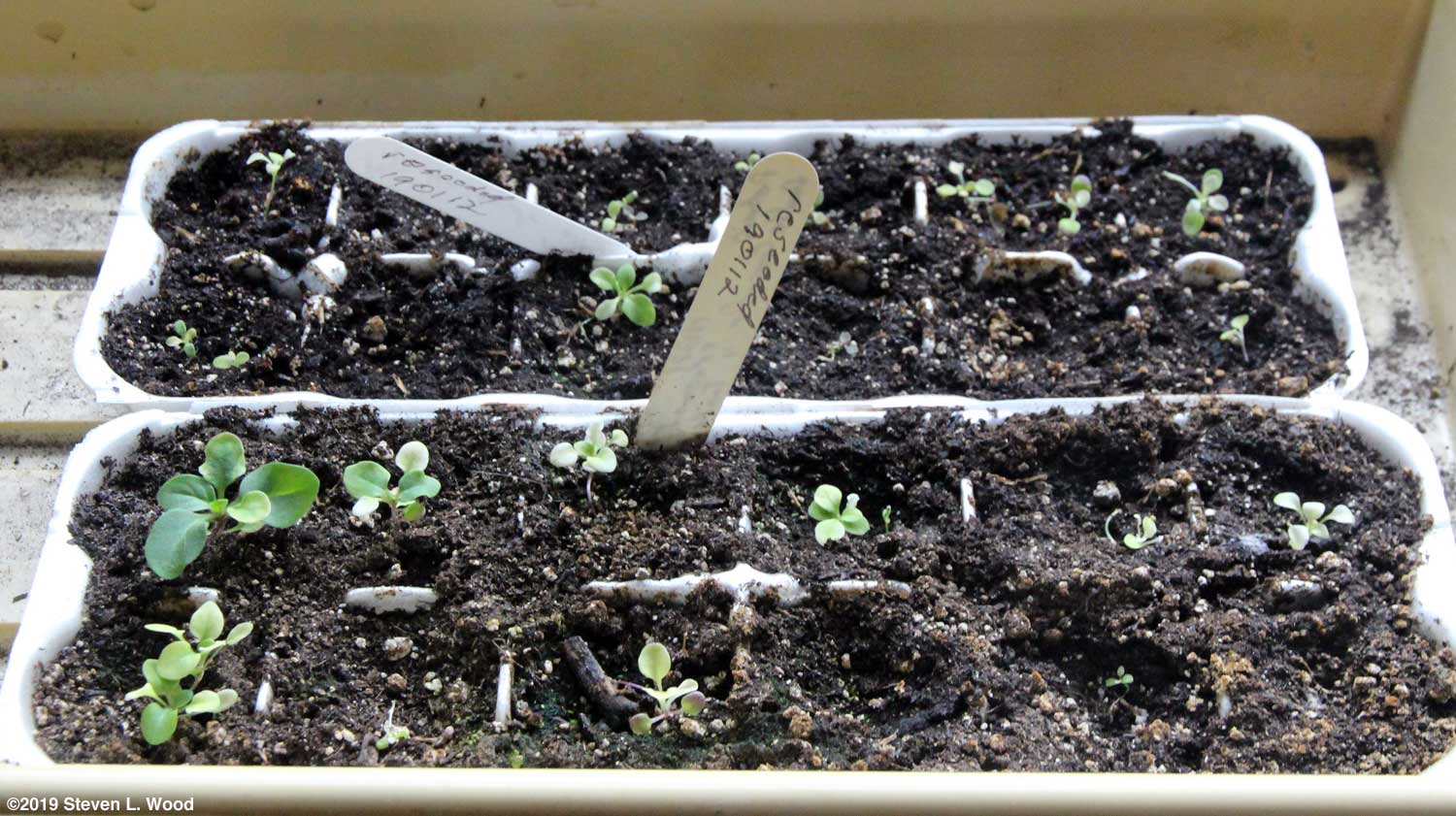
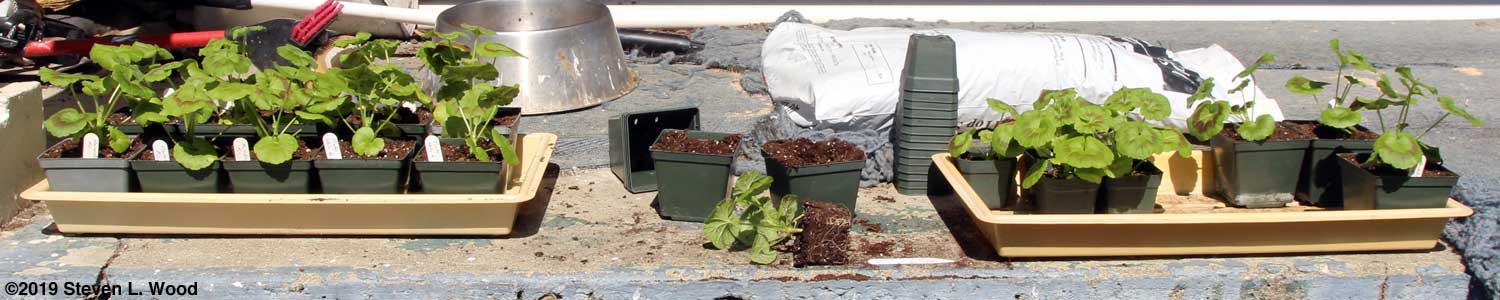
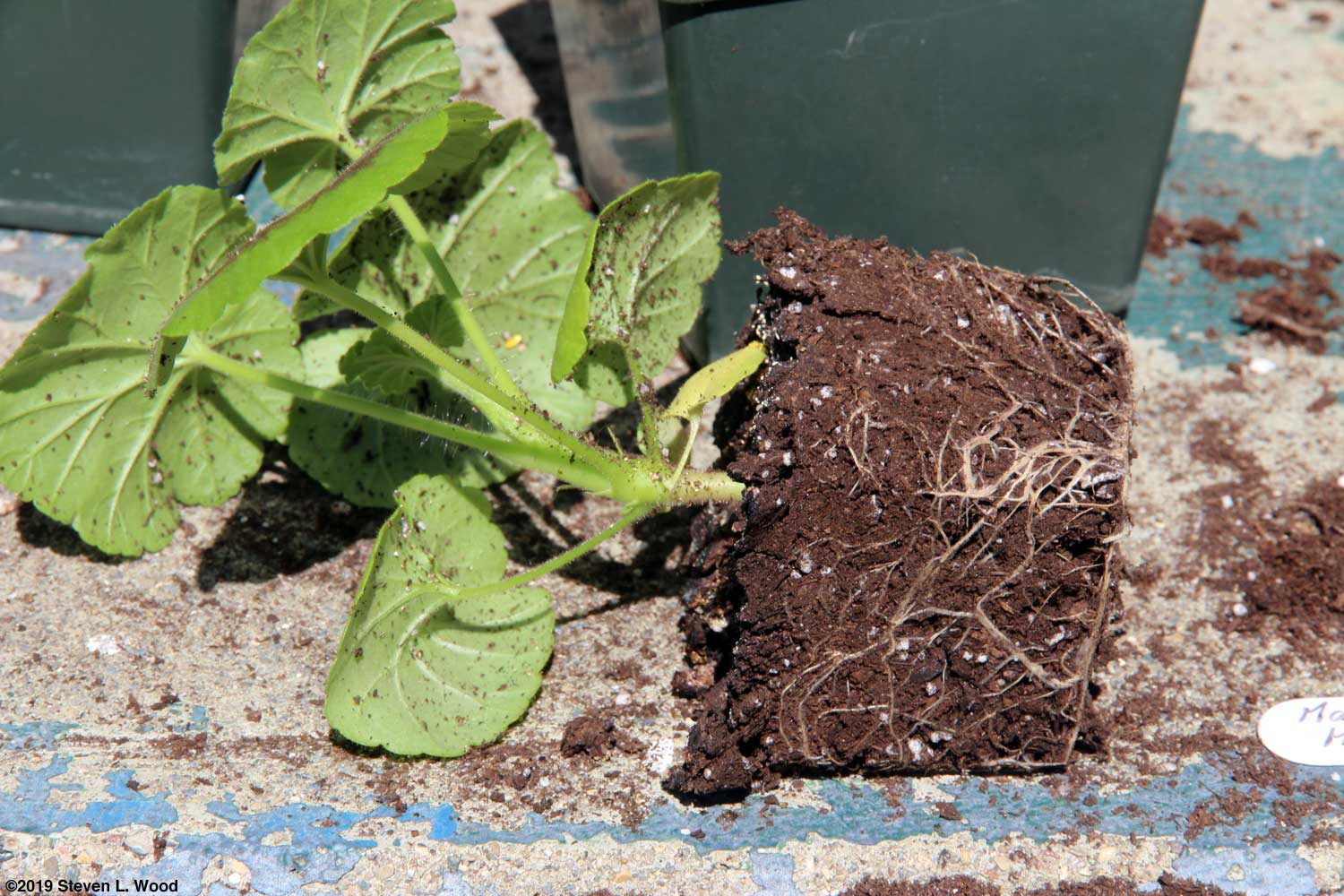
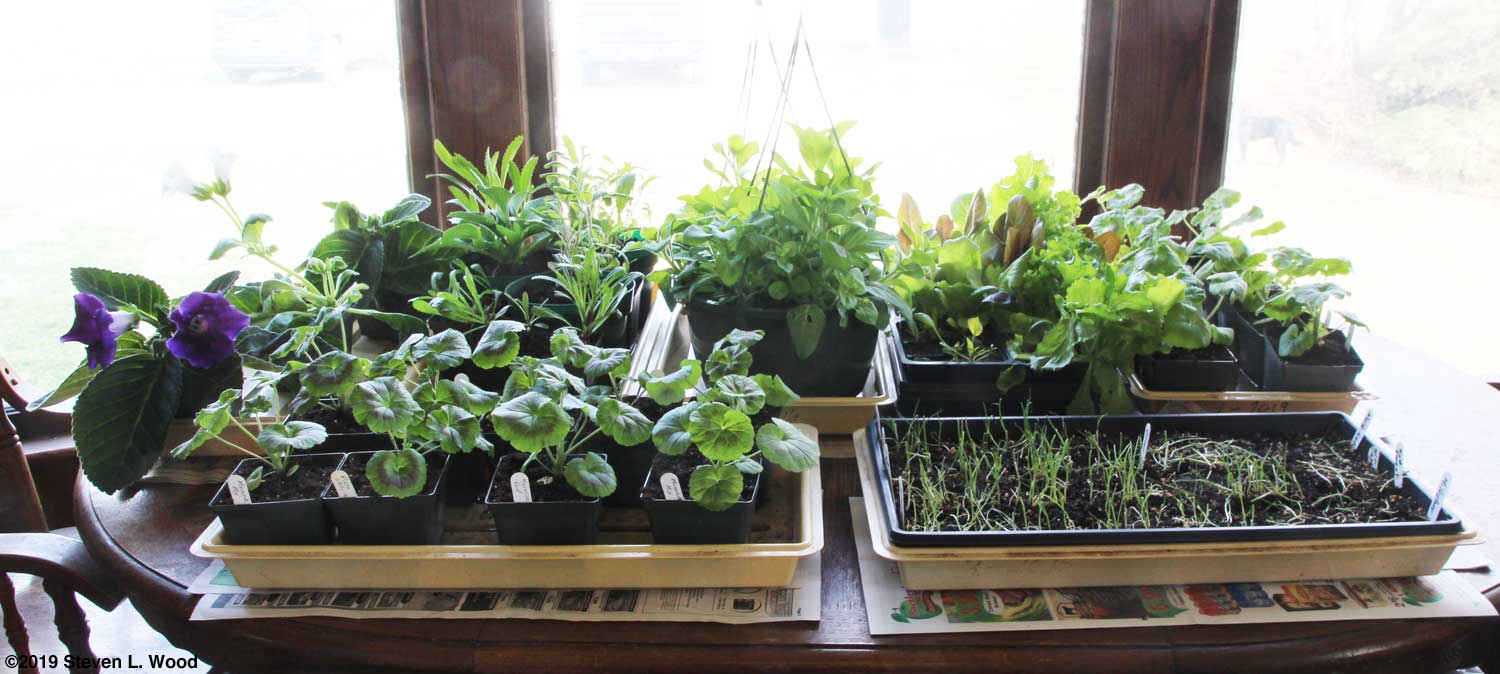
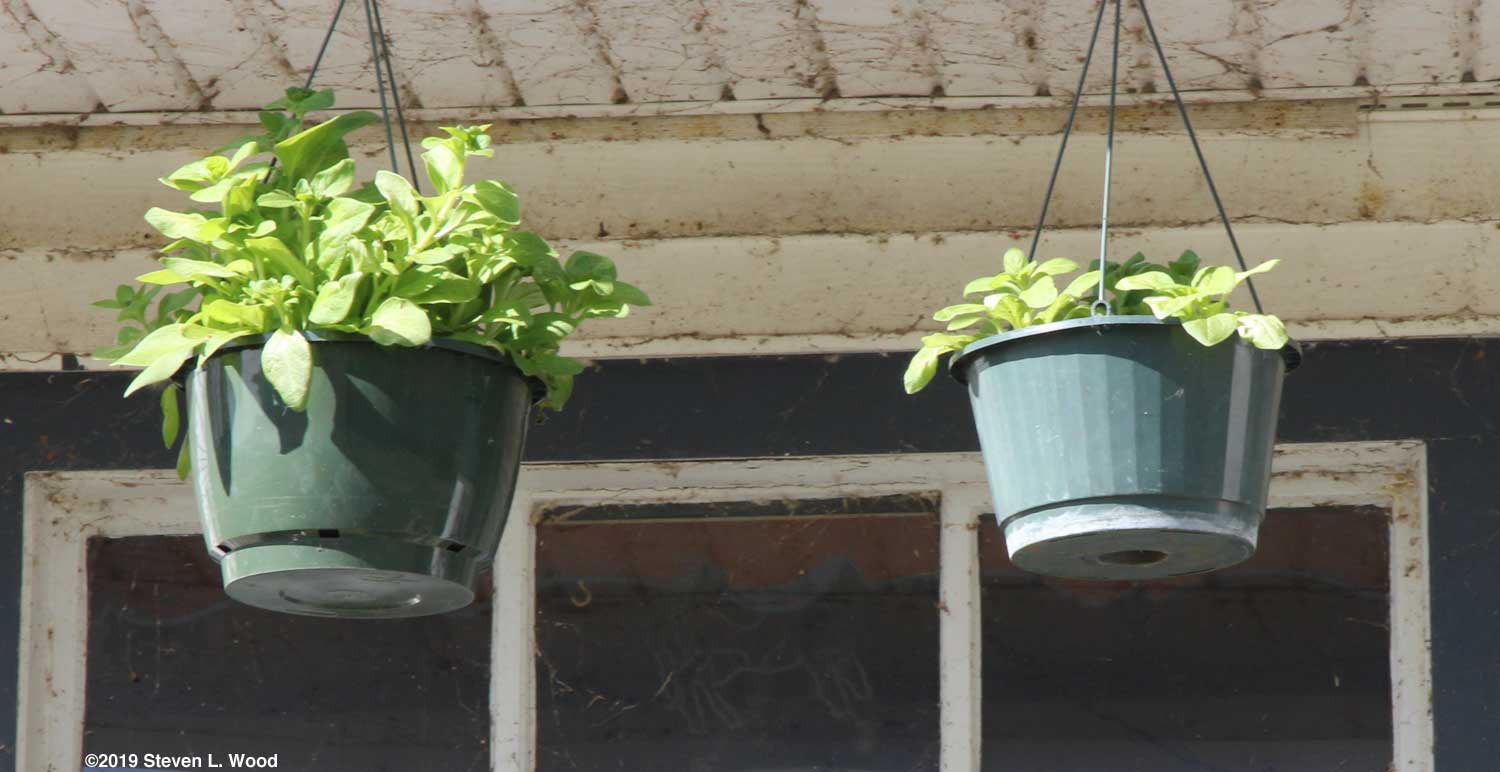
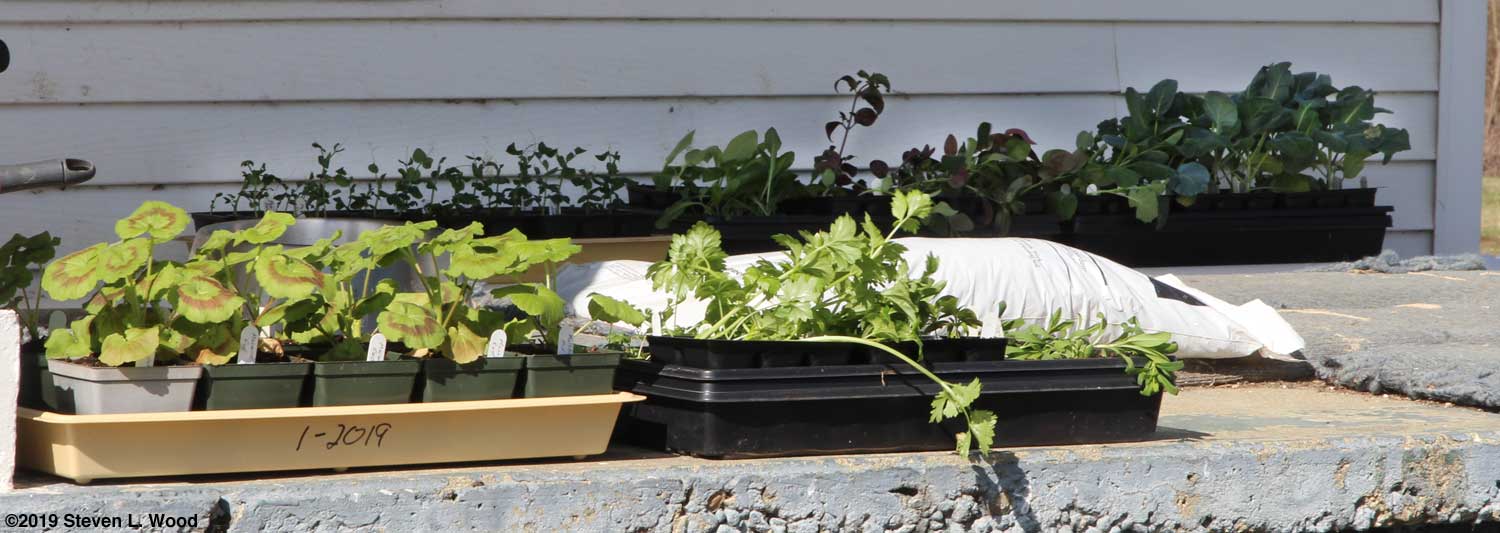
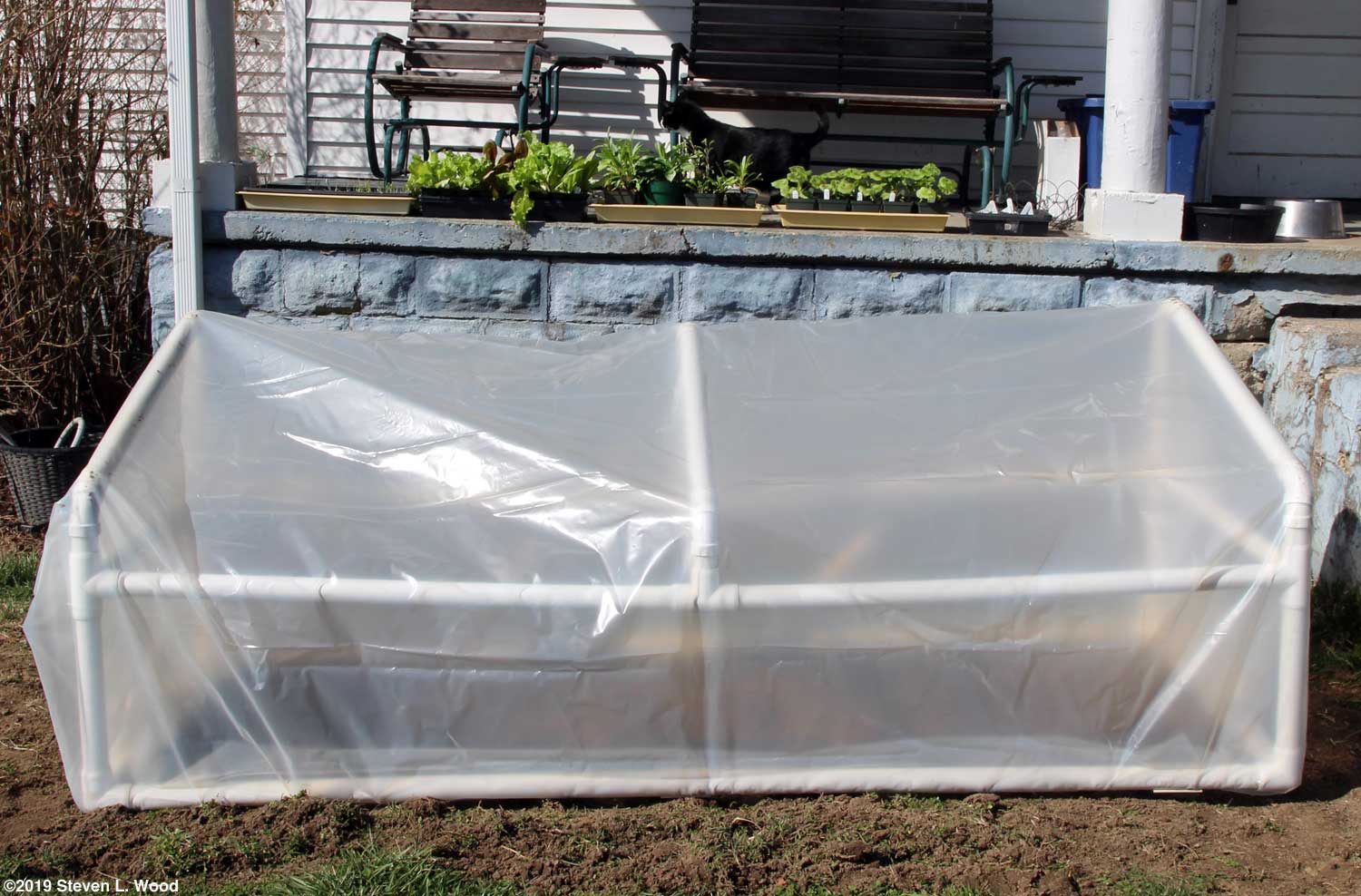
Most of our March gardening action happens inside or on our back porch or under a cold frame. We'll be starting our tomatoes and peppers this month, as well as basil. Plants under our plant lights will need regular watering, repotting, and towards the end of the month, move under a cold frame outside to harden off. Hanging basket plants that can easily be brought inside on cold nights will hang from our back porch soon. I need to put together another PVC pipe cold frame, as I'd like to get some lettuce transplanted into the garden well before our last frost date (April 14). I'll need to protect the lettuce with a cold frame and/or a floating row cover. Our old cold frame will need some repair before being covered with 6 mil clear plastic, as some of its joints have come loose. The original frame received a lot of abuse in its first year of use, as it was so light the wind would catch it when open and blow it fifty feet or so. I corrected that problem last year by cutting open the base of the frame and putting some concrete in the PVC pipe as ballast. I started lots of flowers and some celery in communal pots last month. I began moving some of those plants from their somewhat crowded communal pots into fourpack and deep sixpack inserts yesterday and today. I started with the largest plants and worked my way down. About the time I ran out of sterile potting soil, I also ran into some plants that were still too small to move. Using sterile potting mix is necessary while the plants are still tender and susceptible to damping off.
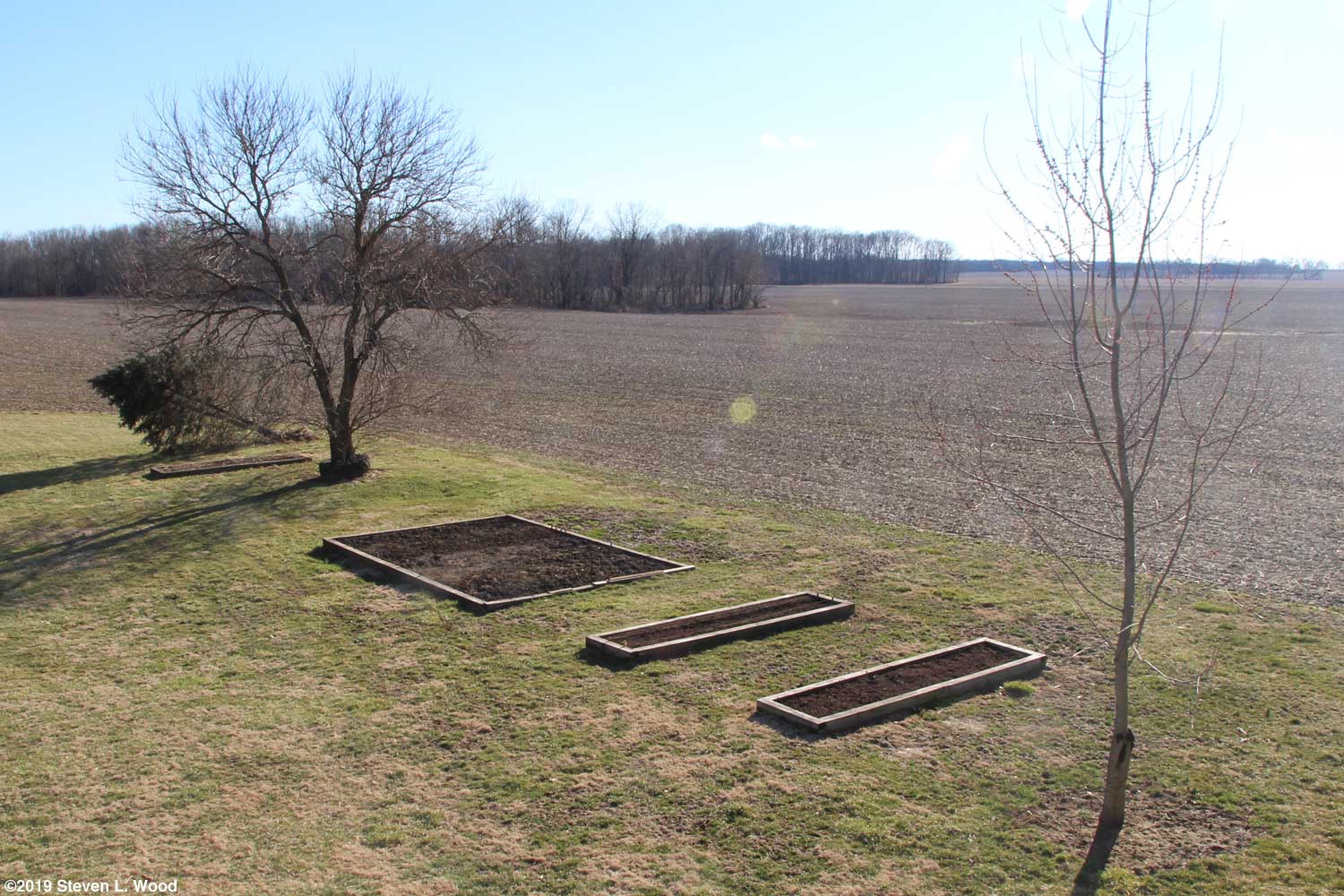
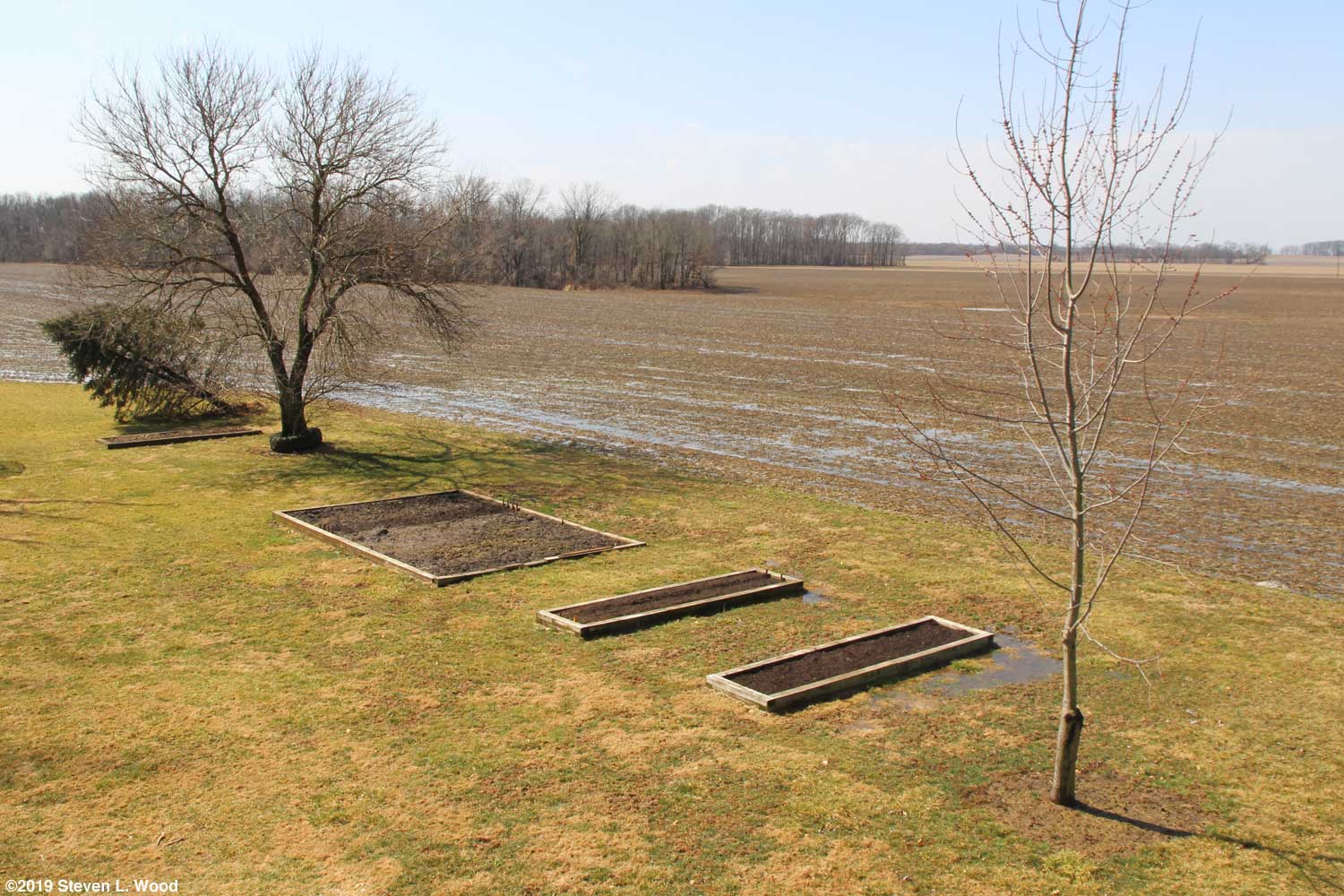
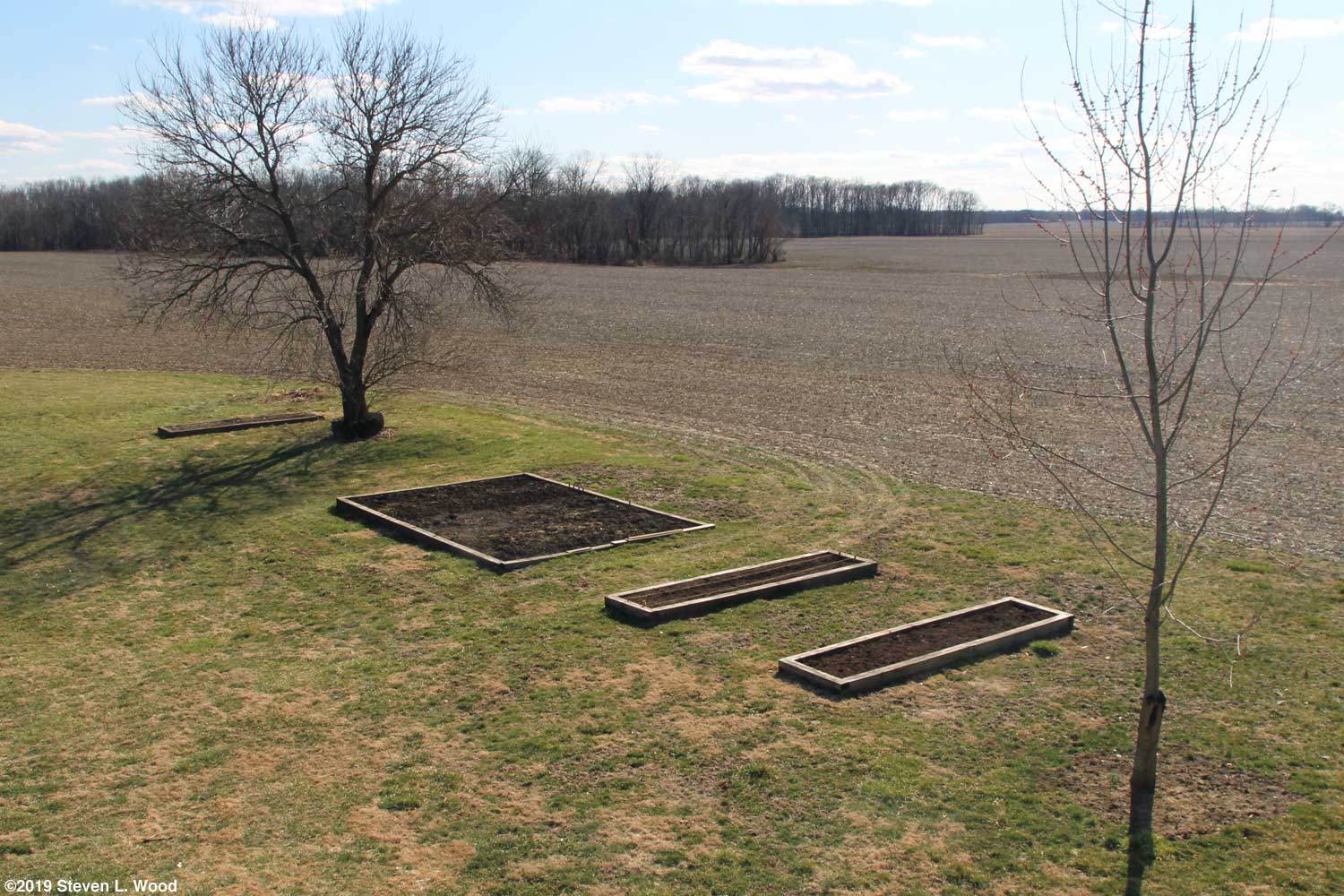
If we have an extended warm, dry spell, I'd love to get a first tilling done of our garden plots. Some were tilled last fall, but even those areas could benefit from the soil being loosened a bit.
|




|
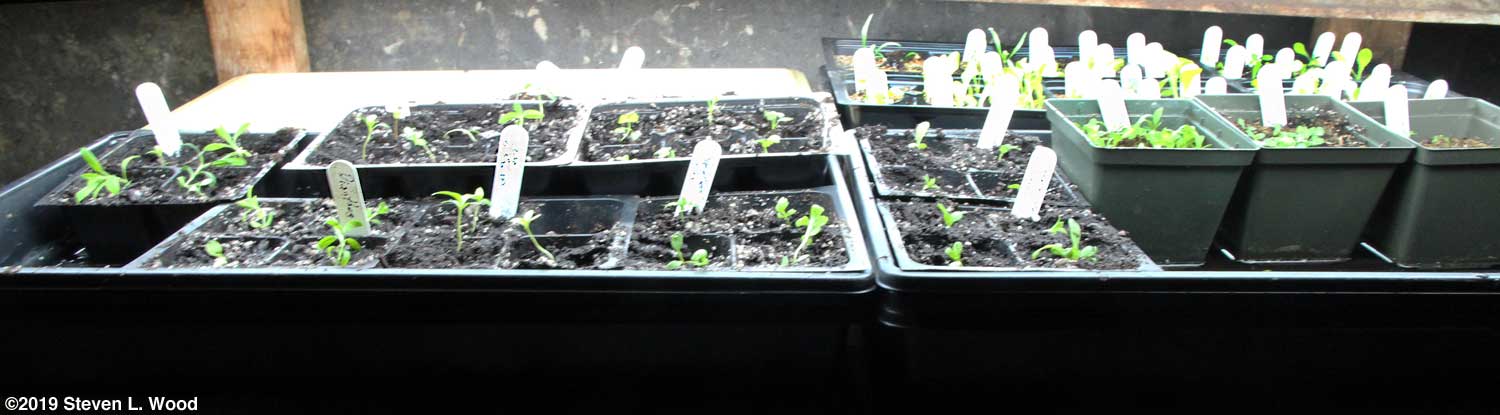
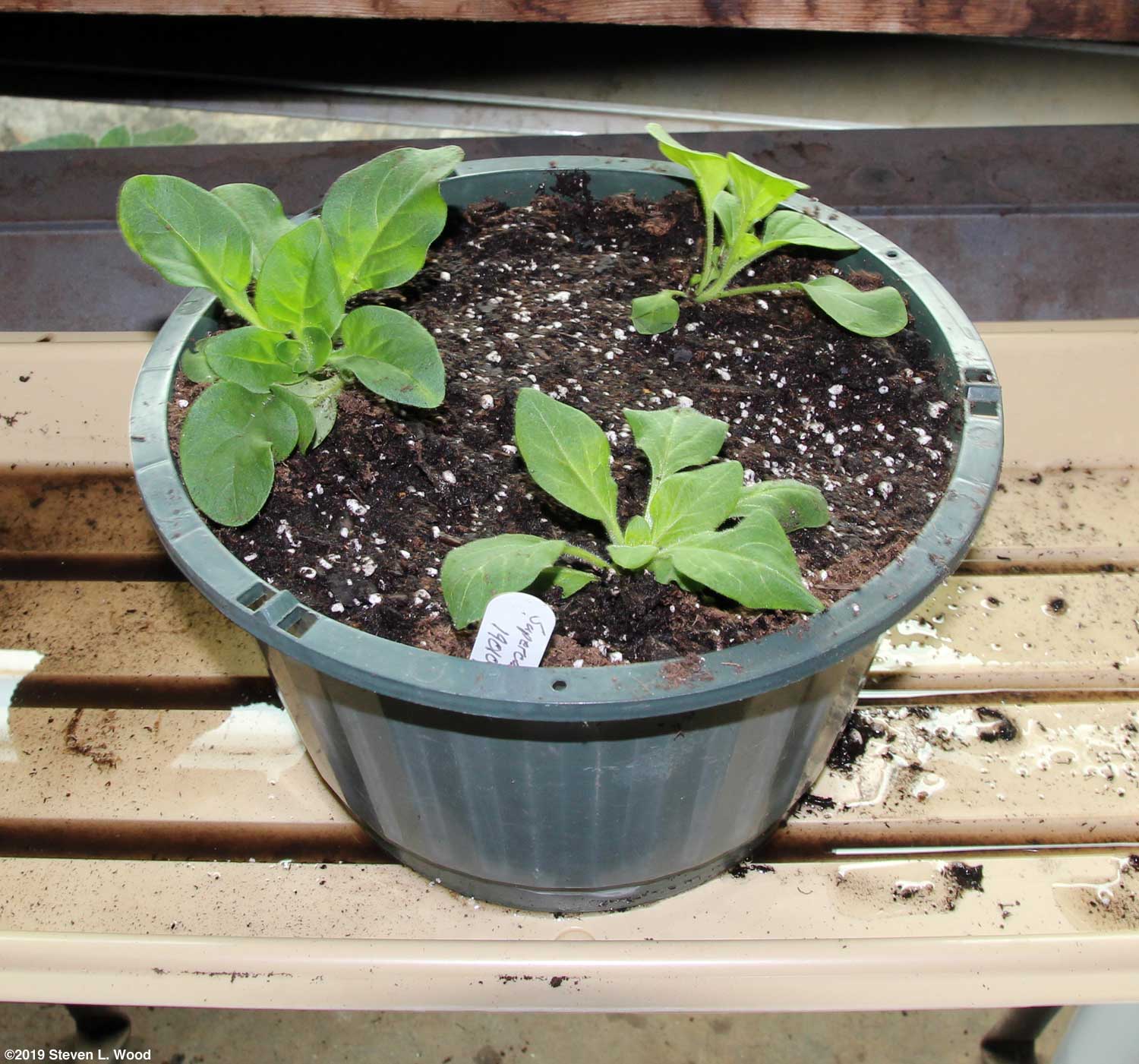
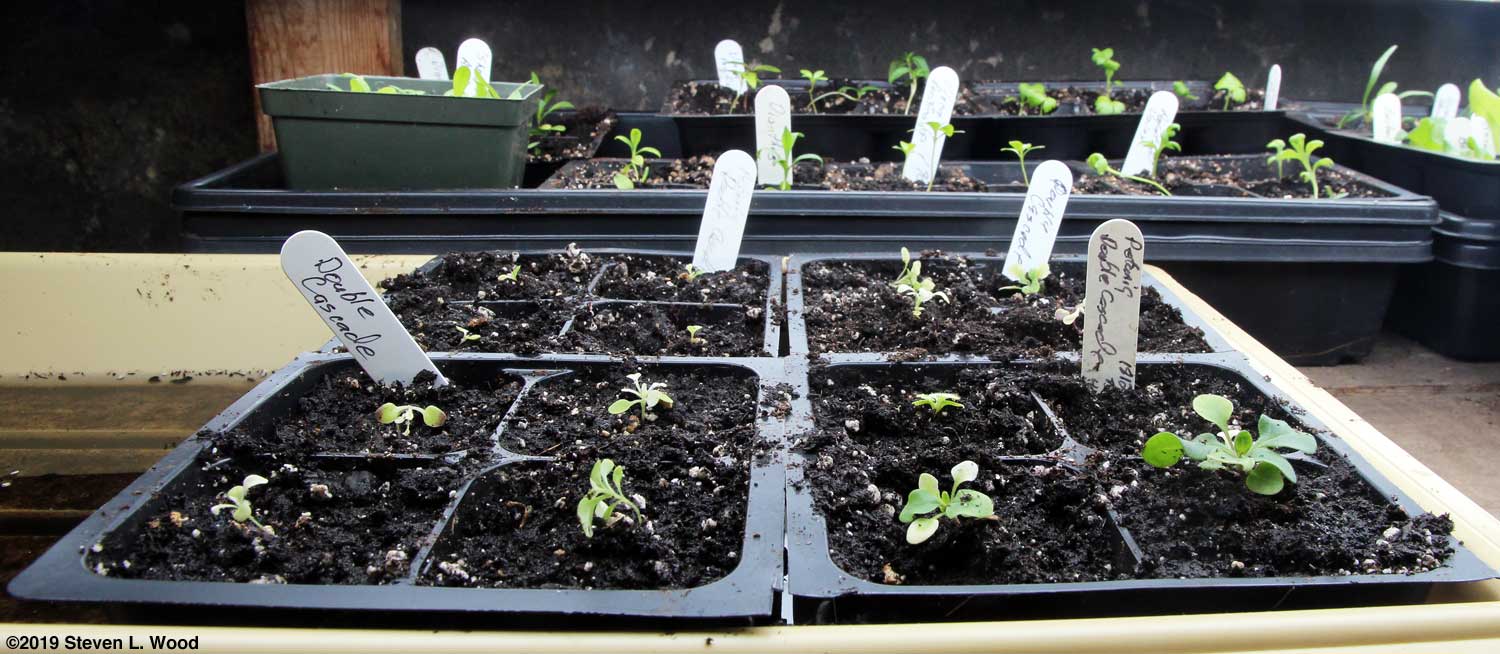
Inside, I transplanted three Supercascade petunias into an eight inch hanging basket pot. Doing so now should bring the plants into bloom in April. Our Double Cascades appear to have stunted in the egg carton cells they were seeded in. I moved them into fourpack inserts to see if I can get them growing again. The good news was that I got sixteen good plants from the twenty-four cells that I seeded. There were actually more plants than that, but I mangled some moving them from the egg carton cells to the fourpacks. I still find a teaspoon to be the best tool for scooping the plants and soil out of the egg cartons.
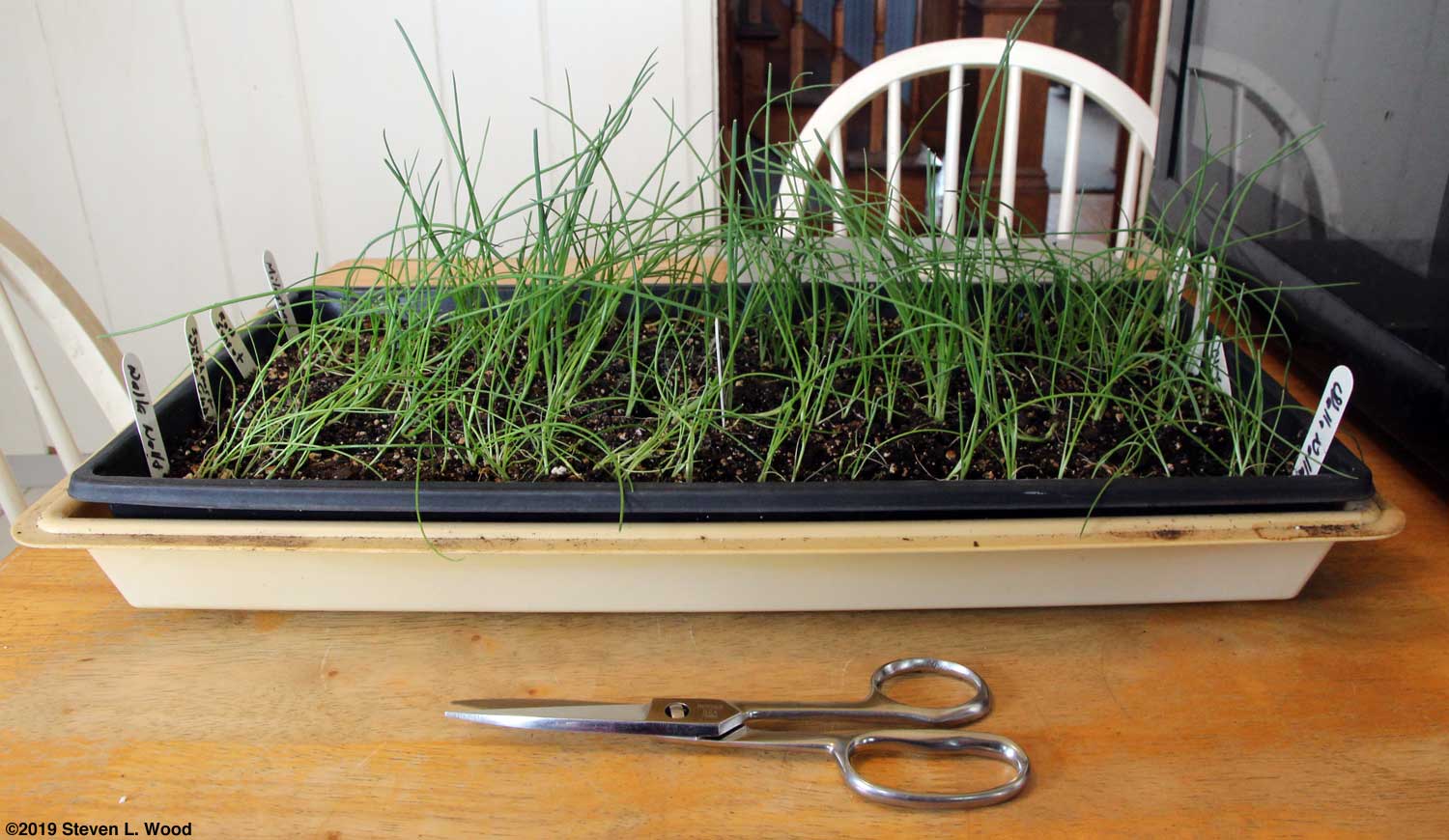
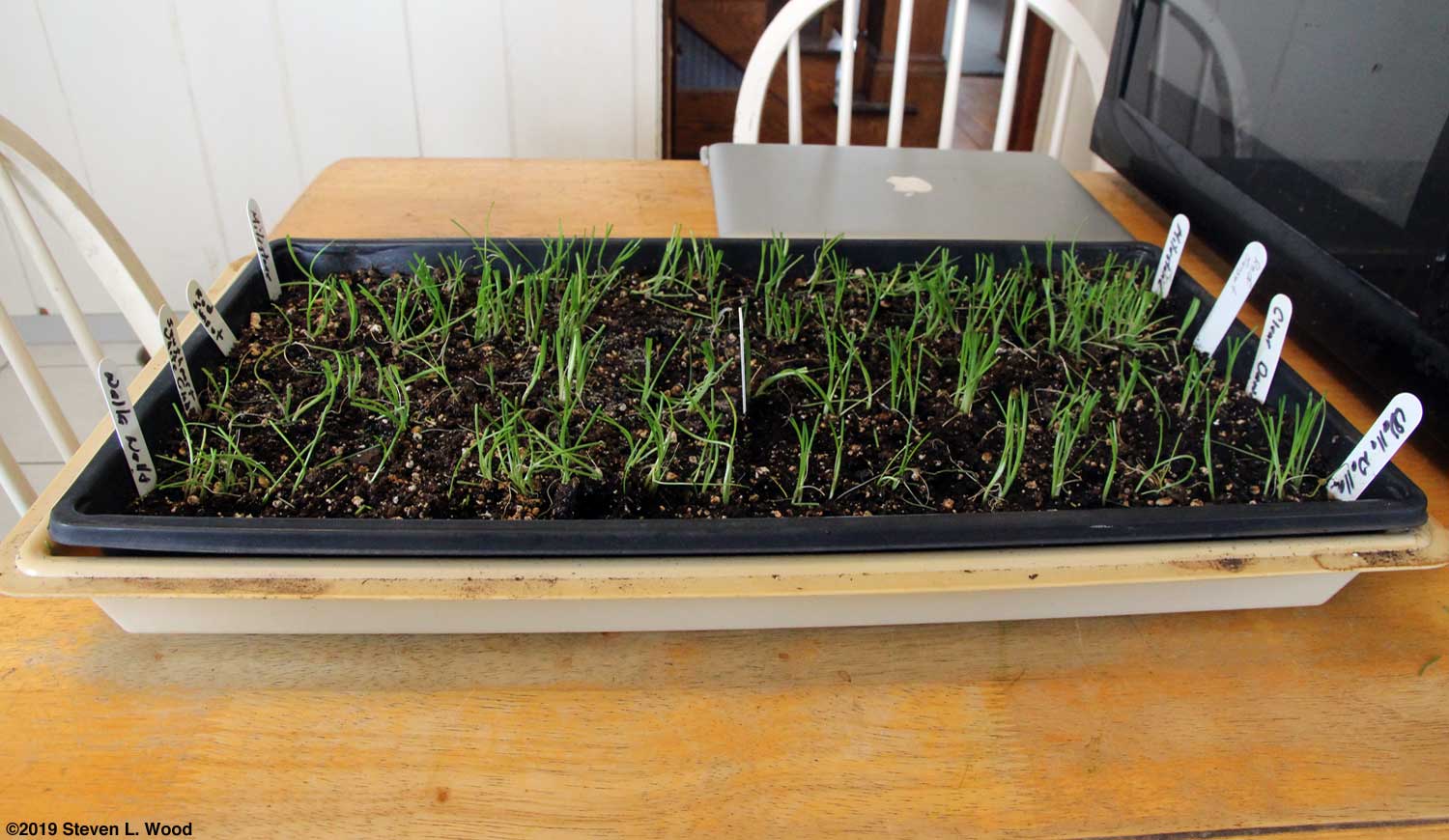
Our tray of onions were ready for another trimming today. For some reason, the plants seem to need trimming far more often this year than in years past.
I use a pair of Heritage Kitchen Shears for the trimmings and many other garden and household chores. They're made of stainless steel and come apart for thorough cleaning. I did notice when creating the link above today that the price for the shears has gone up about ten bucks. I'd guess that is partially due to the import tariffs the President recently enacted. Even at the new price, the shears are a good buy. For years, I was always buying cheap scissors, as the handles would break or come off.
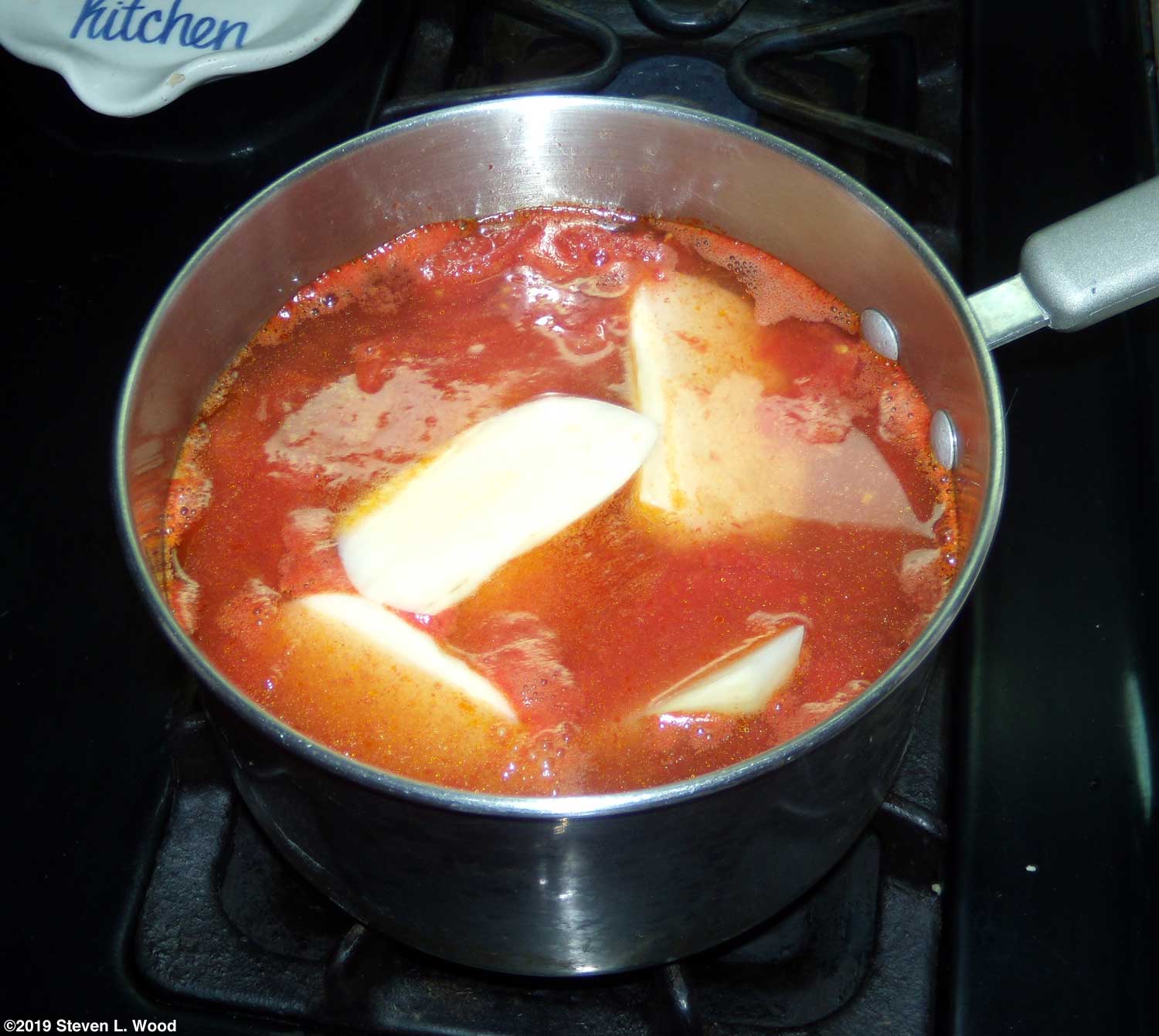
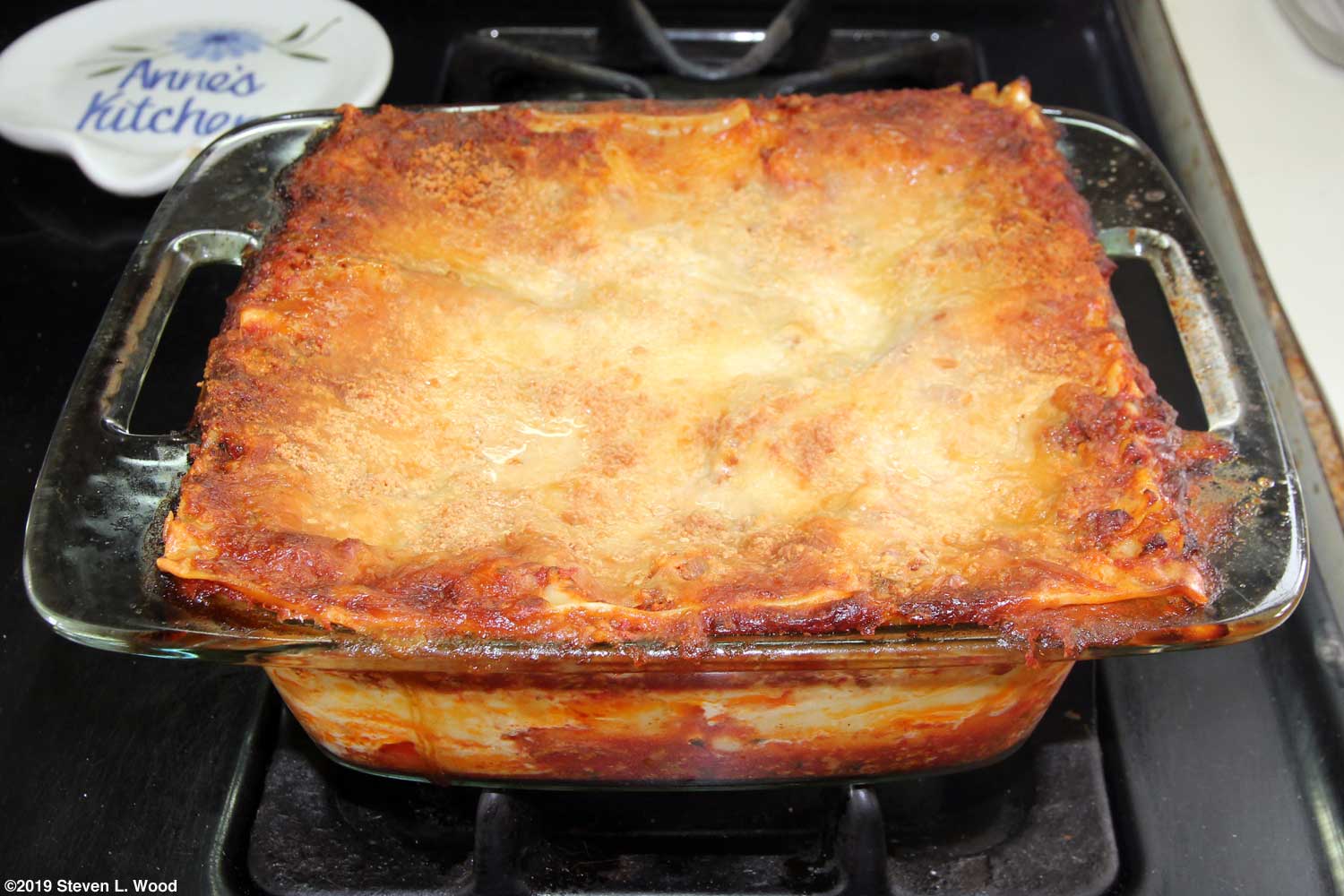
As I prepared the lasagna sauce, I was again reminded that we need to have a good crop of basil this year. Our jar of dried basil from our garden is almost empty. And while our dried basil is a second choice to picking fresh basil, it's far better than using store bought, as we know it wasn't sprayed with anything harmful. Not as low as our jar of basil is our saved oregano. We shouldn't have a problem saving lots of it, too. Our oregano plants tried to take over one side of our herb garden last summer.
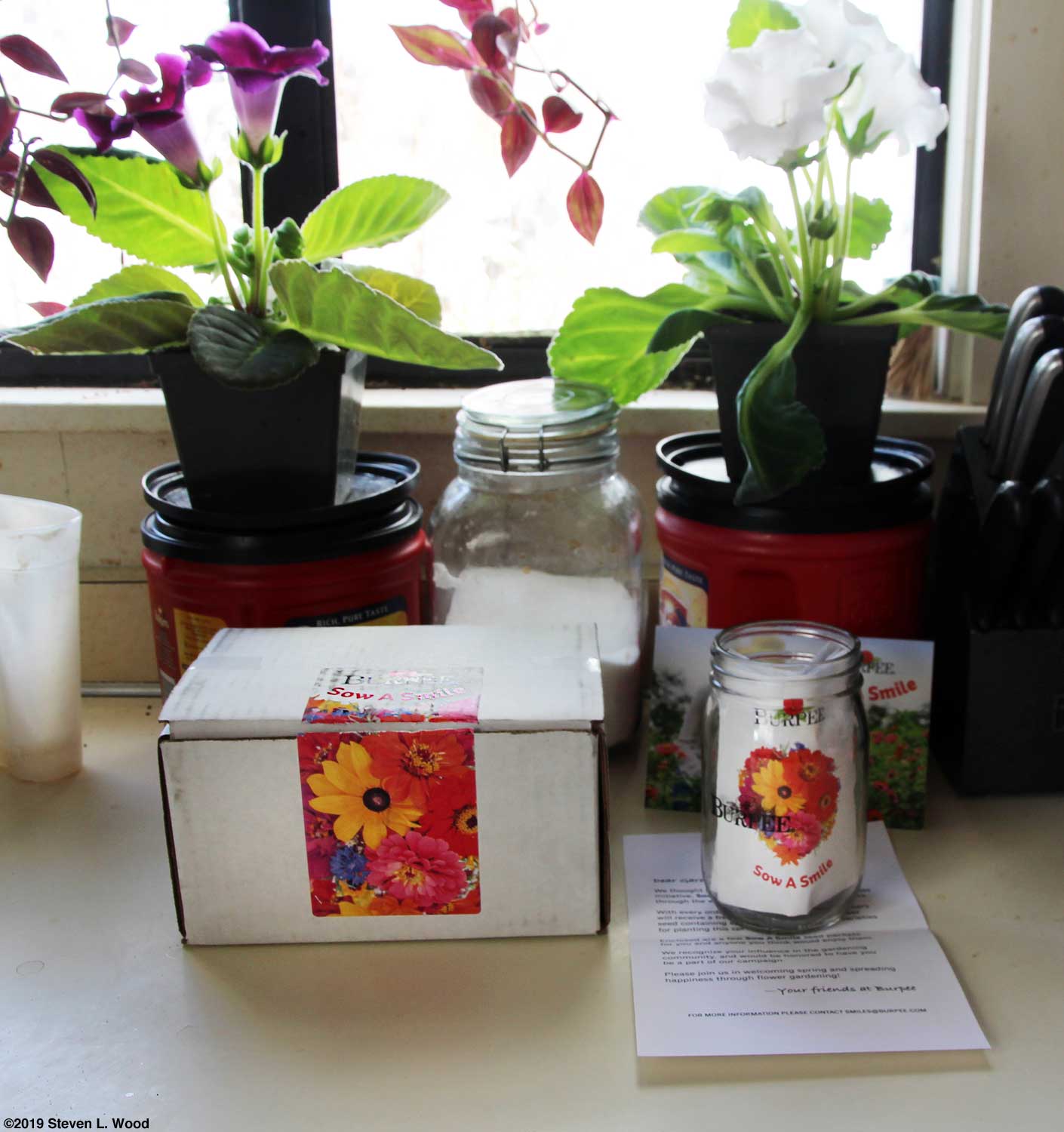
Upon opening the well packed box, I found a jar with nine or ten packets of mixed flower seed in it. An accompanying letter explained that Burpee was kicking off their Sow A Smile The promotion involves Burpee throwing in a generous packet of Sow A Smile flower seed with each order that includes an annual flower seed order Burpee then asks if you might "share your smile-story images" on a Facebook page they've created for the campaign. (It appears the link for sharing images and stories isn't active yet.) The freebie seed packets contain an assortment of annual flower seed, including annual baby's breath, annual candytuft, scarlet flax, red corn poppy, calendula, cornflower, zinnia, sulphur cosmos, catchfly, gloriosa daisy, and plains coreopsis. Other packet info says the flowers grow from two to four feet tall in full sun and can cover twenty-four square feet. I don't have that much space to devote to such a planting, but have a little spot in our back yard where I can sow a little of the seed. Please don't write me for advice on growing seed from this sample. Of all the flower seed included, I only have experience with growing gloriosa daisies. Of course, Burpee's idea in sending out samples was probably so writers like me would publicize the campaign. The number of seed packets sent also suggests they hope we'll share the seed with others. I dropped off seed today with my favorite checkout people at Walmart, a local grocery, and a liquor store whose checker is an avid gardener. Tomorrow, my wife will share seed with her co-workers at the bank. Weather
March weather here is a bit fickle. We're supposed to be back up over 50 degrees by the weekend. Of course, we'll still have a good number of nights below freezing. But eventually, winter will break. Other than bottom watering a few trays of transplants, I really didn't do any gardening today.
Friday, March 8, 2019 - Egg Shells and Coffee Cups
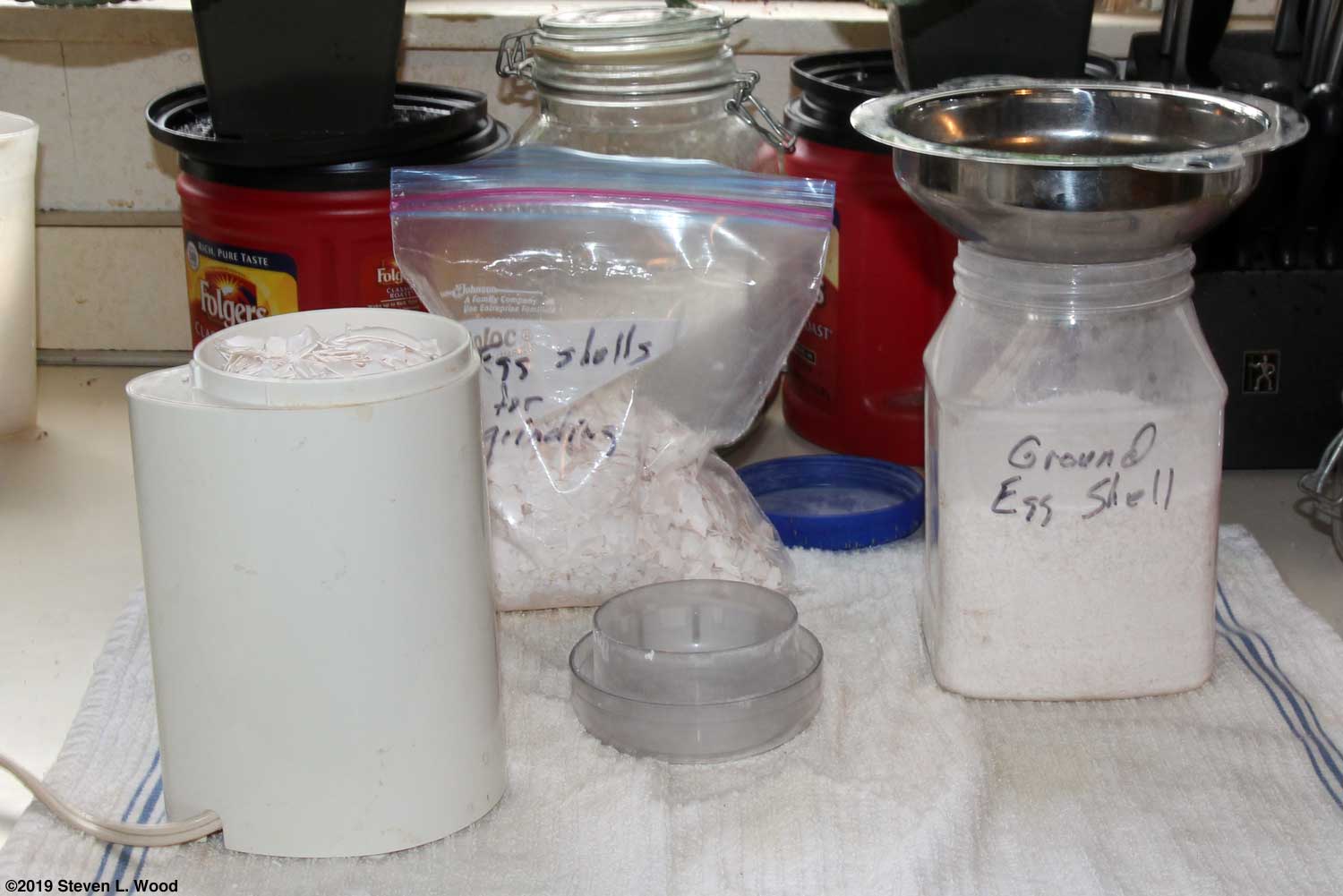
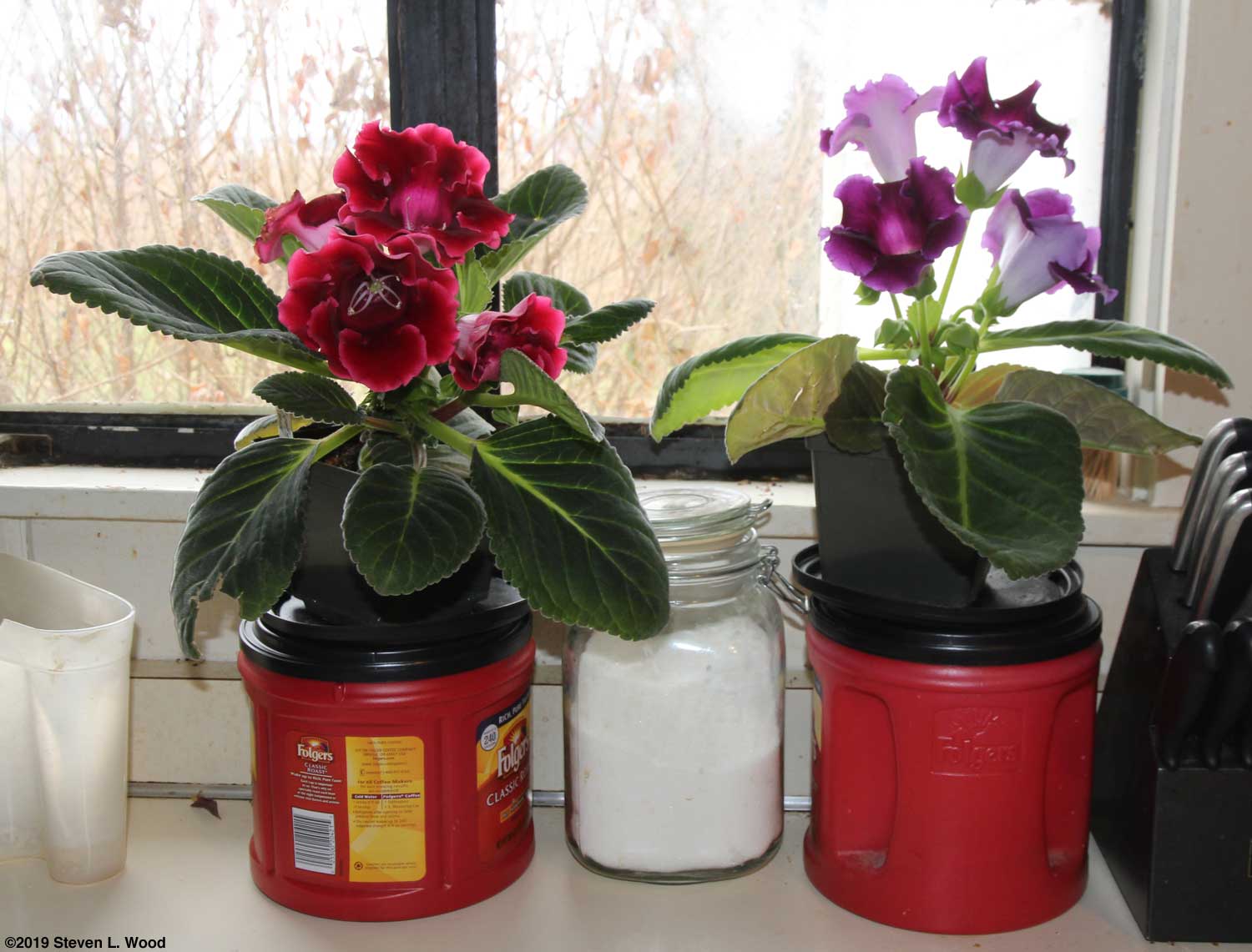
We somewhat irregularly save our egg shells by rinsing them out, drying them, and crushing them a bit in a ziplock freezer bag. The crushed egg shells go into our kitchen freezer until the bag gets fairly full. Then, I get out an old coffee grinder and grind the shells down to a powder, saving them in an old mayonnaise jar. We started using ground egg shells under our tomatoes and peppers about three years ago to reduce blossom end rot. Before that, we'd used lots of calcitic limestone under those plants, but tomatoes don't much like the sweet soil that an excess of limestone can produce. I've not found any research about using egg shells to provide calcium to crops, but it has worked well for us the last few years. Although scattering crushed egg shells around plants is said to discourage cutworms, we grind our egg shells to help them break down and supply calcium to plants. I've noticed that when we have egg shells in our compost pile, they don't break down very readily. We're also saving used paper coffee cups to use as cutworm collars around a variety of plants. Our broccoli, cauliflower, and pepper transplants all get a cutworm collar around them the first week or so they're in the ground. Cutworms seem to especially like our pepper plants.
Sunday, March 10, 2019 - Hot Water Treating Tomato Seed I spent some time this afternoon hot water treating all of the new tomato seed we ordered for this year's garden. Hot water treatment can kill seed borne disease organisms, but normally is not necessary or recommended when dealing with seed from trusted vendors. I'd gotten a little iffy about where we got some of our seed last year and ended up hot water treating all the tomato seed we started for that garden. I had one packet of seed this year that worried me a bit, so I went ahead and treated all six packets of new tomato seed we had come in. So all the tomato seed we start this year will be hot water treated, either last year or today. Again, hot water treatment should not be necessary for seed purchased from reputable vendors (Burpee, Johnny's, Stokes, etc.). Saved seed is another matter, as we've had seed and soil borne diseases in the past in our tomatoes. The hot water treatment process can slightly reduce germination rates. And if you goof and get the water too hot, you can kill the seed! (Yep, been there, done that!) But the process is really fairly easy, especially if you're an old hand like me at working in a photo darkroom where developing solution temperatures have to be strictly maintained. An excellent page on Cornell's Vegetable MD Online, Managing Pathogens Inside Seed with Hot Water, carries the advisory, "While this is a well-documented procedure, any treatment done to seed after purchase voids any guarantees of the seed company." The page also has a good listing of vegetable seeds' time and temperature requirements for hot water treatment. A chart on a University of Massachusetts Amherst page, Hot Water Treatment of Seeds, adds all the nasties that can be carried in or on tomato seeds. I've underlined the diseases we've identified and had in our garden over the years:
Getting to the nitty gritty, I should mention here that our Saving Tomato Seed how-to has a section on hot water treatment of seed.
I still use my trusty, 40+ year-old Weston darkroom thermometer
After twenty-five minutes, I began dumping out some of the hot water from the pyrex and adding cooler water. I did so several times, gradually getting the water temperature down to the nineties. Then I dumped out the water and moved the cheesecloth bags onto some paper towels to dry a bit and cool some more. After a few minutes, I used scissors to snip the cheesecloth just above the seed, opening up the cheesecloth to reveal the seed. Each bunch of seed went into a paper bowl marked with the seeds' variety name. The paper bowls of seed now sit atop a high bookcase (where our cats can't get to them) to dry for several days. Hot Water Treatment of Tomato (and other) Seed
Tomato Varieties We Hope to Grow for 2019 I'm planning on making a larger than normal tomato planting for us this year. We had all the tomatoes we could use fresh, can, and give away last season from just six Earlirouge tomato plants, but there are several new-to-us varieties I want to try. And after building a whole bunch of dandy new tomato cages in 2017, I'd like to see them all in use for the first time this year. Last year, there were three tomato varieties (Bellstar, Crimson Sprinter, and Dixie Red) we hoped to try for the first time. They didn't get a fair trial because I messed up my knees and couldn't properly care for the plants. We're adding two more new-to-us tomato varieties this year (Bradley and Chef's Choice). Open pollinated tomato varieties for 2019: Earlirouge, Moira, Quinte, Crimson Sprinter, Bradley (open pollinated slicer/canners), Bellstar (OP paste), and Red Pearl (OP grape). Hybrid tomato varieties for 2019: Bella Rosa, Dixie Red, Better Boy Just listing the variety names has my mouth watering for a really good, homegrown tomato. I'll be seeding the first of our tomatoes in a week or so.
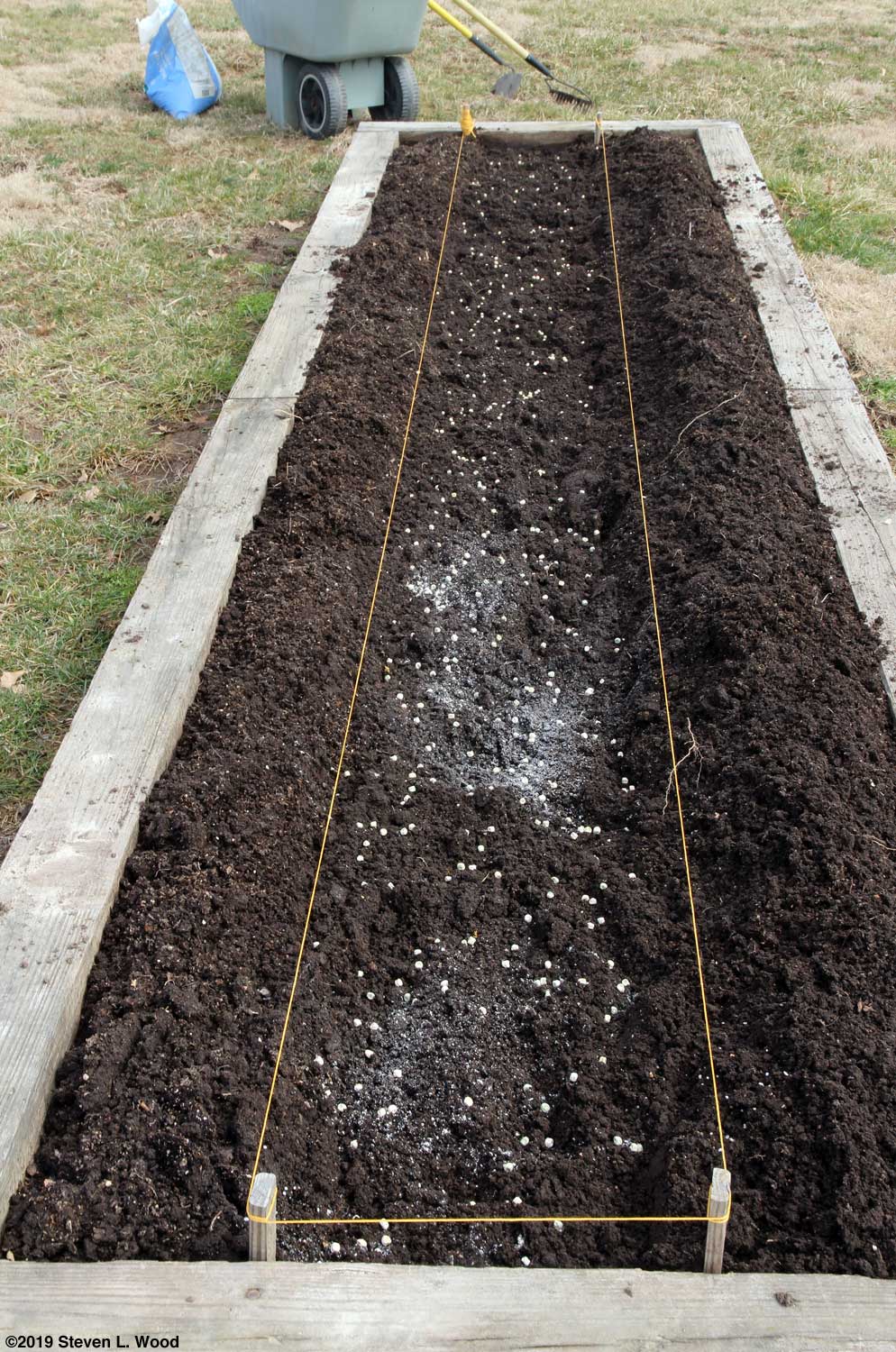
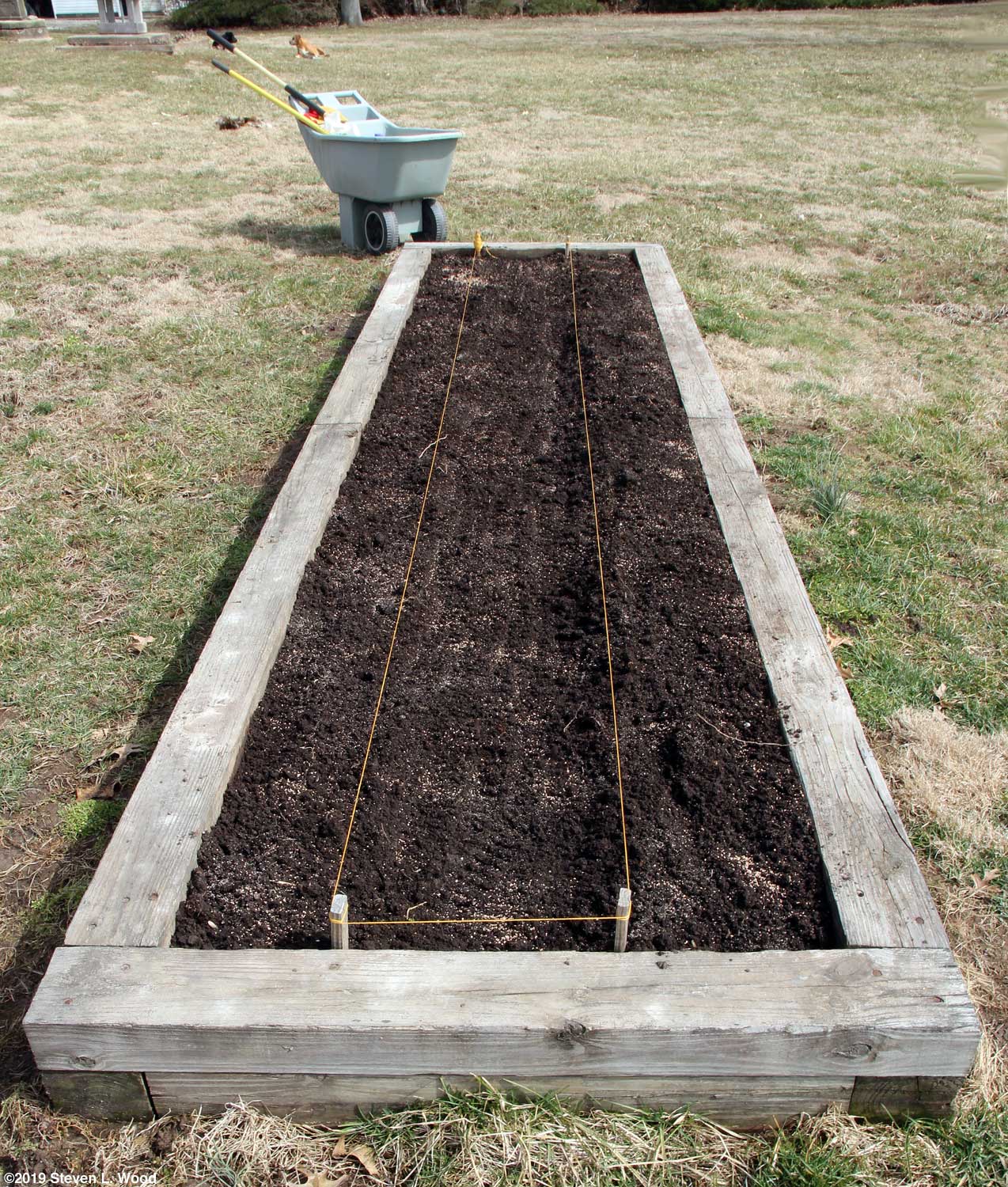
Monday, March 11, 2019 - Direct Seeding Early Peas We try to plant our first peas sometime in early March. One exception to that over the last ten years was when we seeded them on February 28, 2012. Of course, that was the year of the drought that followed an extremely warm winter. The latest in that period we've started peas was on April 3, 2011. The driving force for such early plantings is, of course, to mature a crop of sweet shelling peas before hot weather sets in. Our early pea varieties are Champion of England and Maxigolt, which germinate well in cool soil. Both varieties are tall peas, growing to five feet or more. While tall peas require trellising, I like them because there is less bending involved in picking the mature peas. We've also tried the All American winner, Mr. Big, and really liked the peas, but found the variety didn't fill its pods very well. I also grew some Spanish Skyscrapers one year. True to their name, they totally outgrew our trellis. I'm still trying to find a spot where I can hang a very tall trellis to try the variety again. The peas we harvested from our Spanish Skyscraper vines were excellent before the vines all fell over after outgrowing our trellis. Since our ground has thawed and was tilled last fall, I was able to use a pretty traditional planting method today. After raking the soil in the raised bed smooth, I staked and strung an area for a sixteen inch by fifteen foot wide bed planting. While one can grow great peas in a narrow row, we have to use a double trellis around our peas to keep the wind from blowing them off the trellis, so we might as well have a wide bed of peas.
Using the strings as a guide, I raked out a wide furrow about three inches deep. I spread some 12-12-12 fertilizer and granular soil inoculant in the furrow and hoed it in. It felt really good to be back out in the garden again working with a rake and hoe! Then I shook some Captan
After covering the seed, I sprinkled some Repels All and Milky Spore over the entire bed. The Repels All is to help keep our dogs from digging in the bed (usually after a mole). The Milky Spore kills Japanese Beetle larvae and other grubs that moles feed upon, denying them a purpose for tunneling under the bed. I omitted watering the newly planted bed. I hope to seed a row of early spinach tomorrow along the edge of the bed. And, we're predicted to get some light rain for a couple of days beginning tomorrow night. I describe this method of planting, narrow rows, and a couple of alternate methods for seeding when the ground is frozen or nearly so in our how-to feature, Another Garden Delicacy: Homegrown Peas.
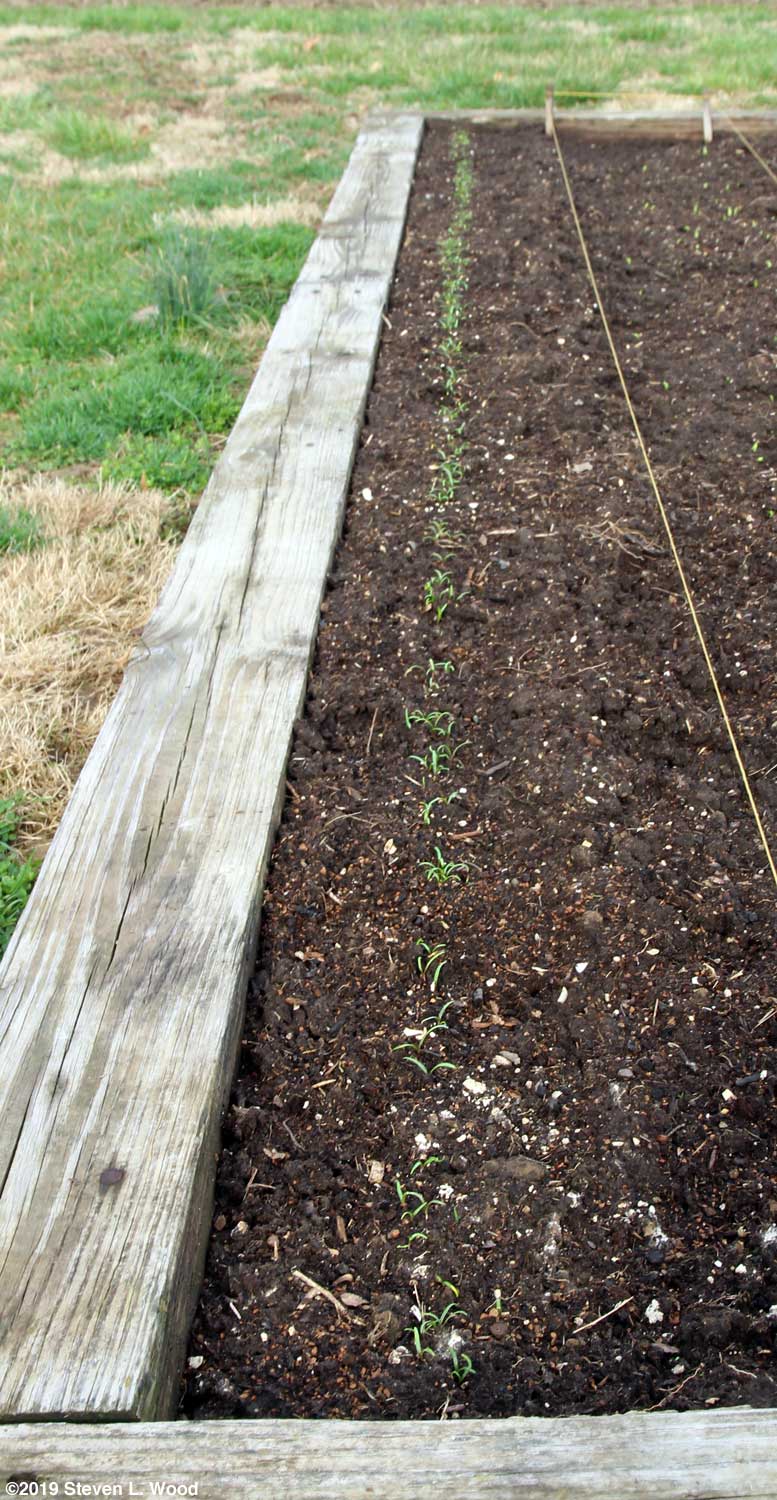
Tuesday, March 12, 2019 - Spinach As I mentioned yesterday, I wanted to seed a row of spinach beside the early peas I sowed yesterday. Doing so was easy. I used a piece of scrap one inch lumber to carve out a shallow furrow, sprinkled seed down the row, and pinched the soil back over the seed. One interesting thing about the planting became apparent as I seeded. I had soaked some Abundant Bloomsdale spinach seed overnight that we had produced in 2017. It had been stored in a jar in a dark area of our basement. This morning, I drained the water off the seed and dumped the seed in a bowl with some Captan
Here are some interesting pages I found on growing spinach.
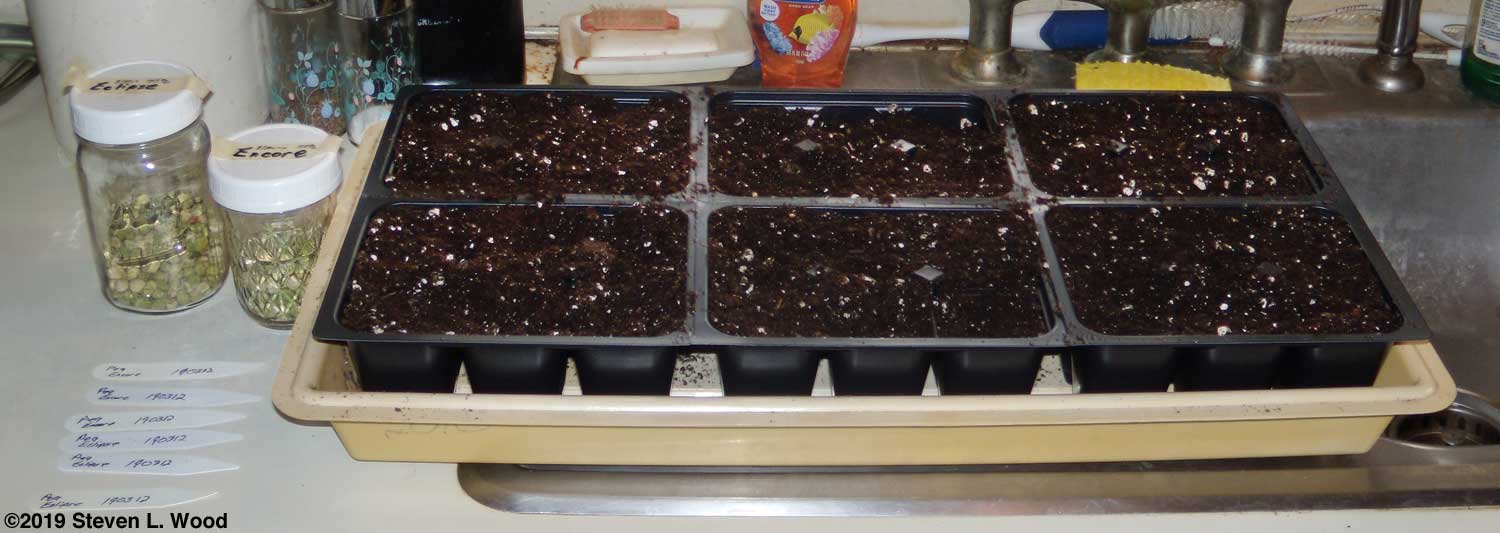
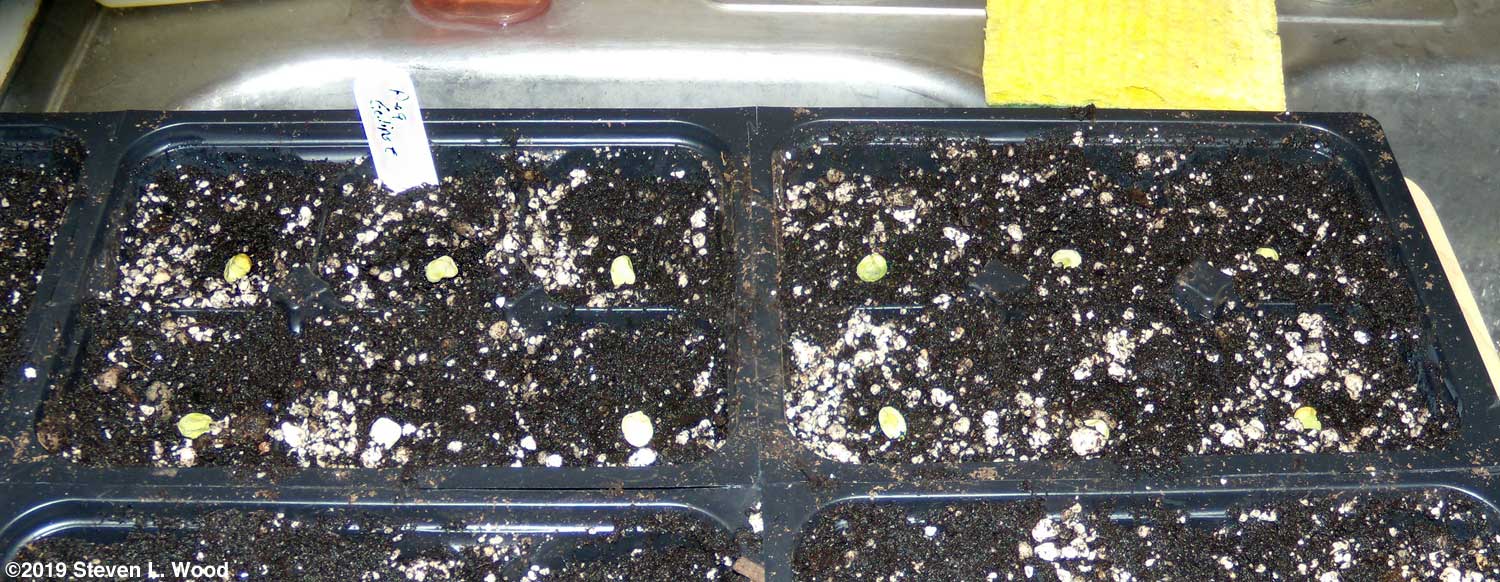
More Peas We grow two varieties of supersweet short peas each year. Since the Eclipse and Encore varieties don't germinate well in cool soil, we usually wait until mid-April to direct seed them. We'll probably try to get the varieties direct seeded in early April, but I also started some Eclipse and Encore peas today to transplant into the prospective pea row.
I seeded a full tray of deep sixpack inserts (36 cells) half and half to Eclipse and Encore. As usual, I used sterile potting mix for the seeding. I used a finger to make a hole in the center of each cell, dropped in a seed, and covered it with a quarter to half inch of potting mix. The tray went over a soil heating mat set to 70° F, covered with a clear humidity dome, and under our plant lights.
When the Eclipse pea was introduced, it was advertised as being a supersweet pea. We found that to be true, but also found that the shrunken peas didn't germinate all that well. That may have been a cause of the pea variety being discontinued. We also grew the Encore pea which is part of Eclipse's parentage. Encores are just about as sweet as Eclipses and germinate slightly better. I went on a mission to save the Eclipse variety years ago, only to find out that both the Eclipse and Encore pea varieties are patented. Even under very restrictive plant patent laws, I could grow the varieties for our use and even save seed from them. But I can't (and won't) share seed with others...until 2021 when the patents expire. I'm hoping to outlive the Bayer/Monsanto/Seminis patents and share seed with other gardeners in 2022.
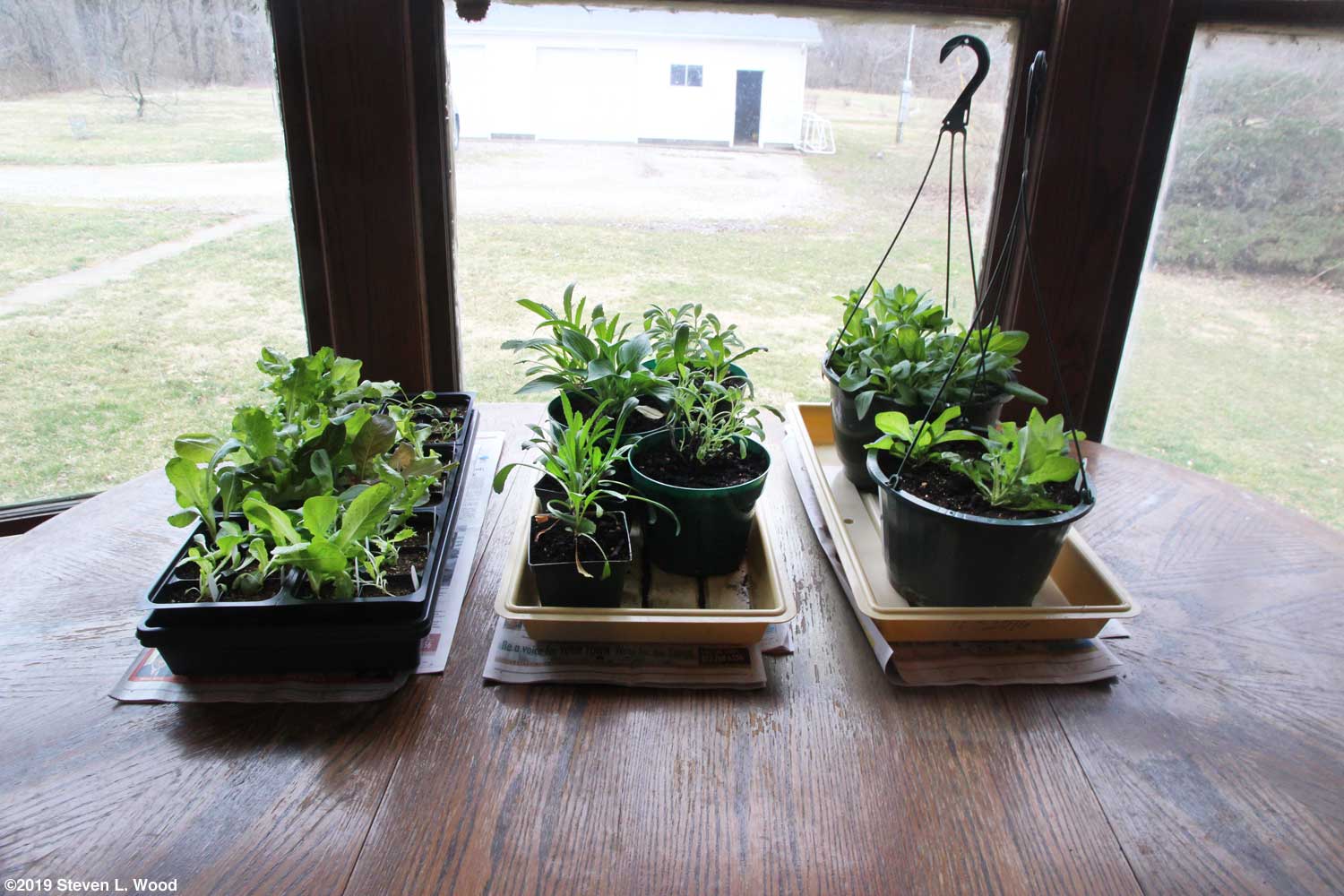
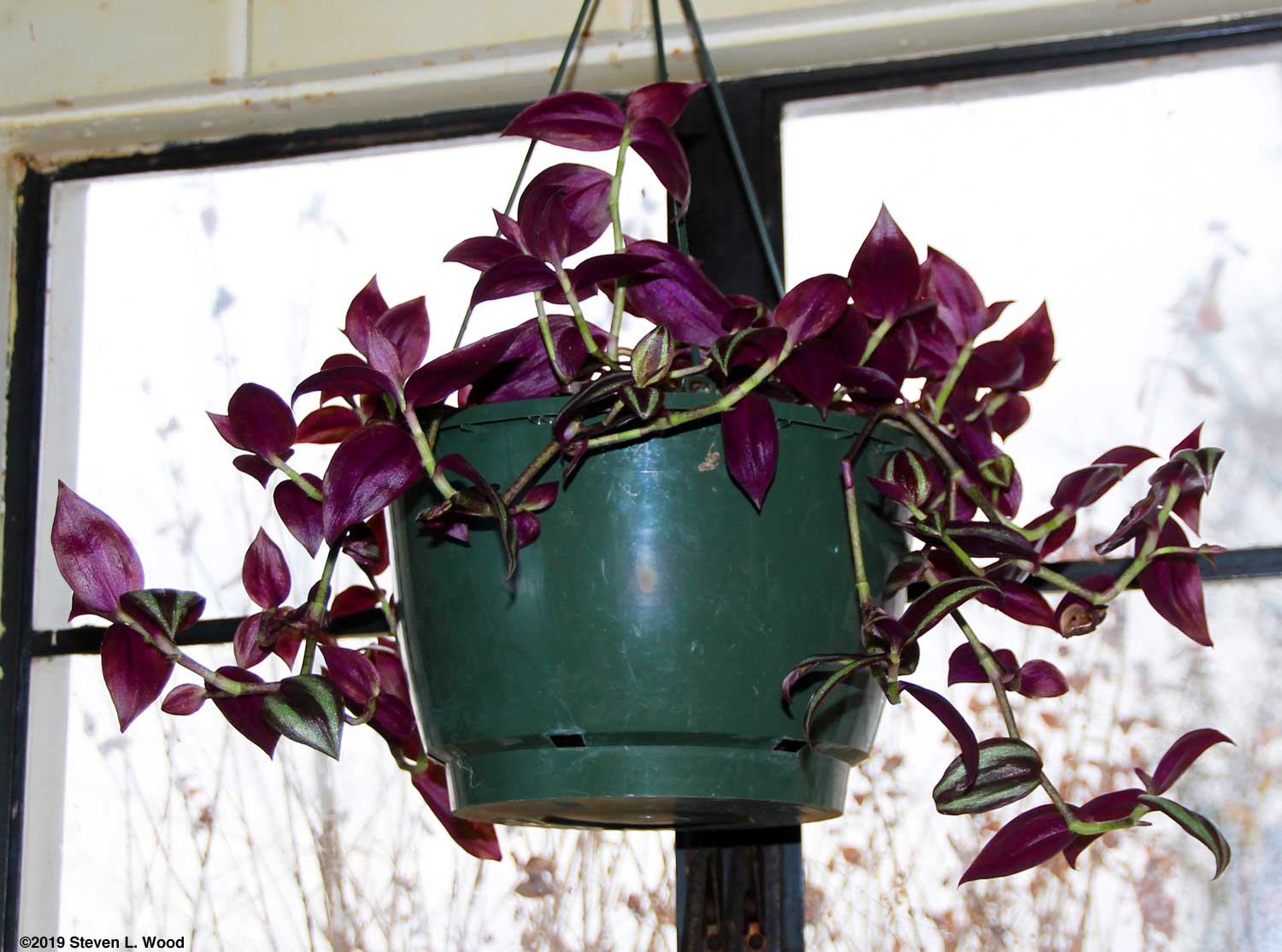
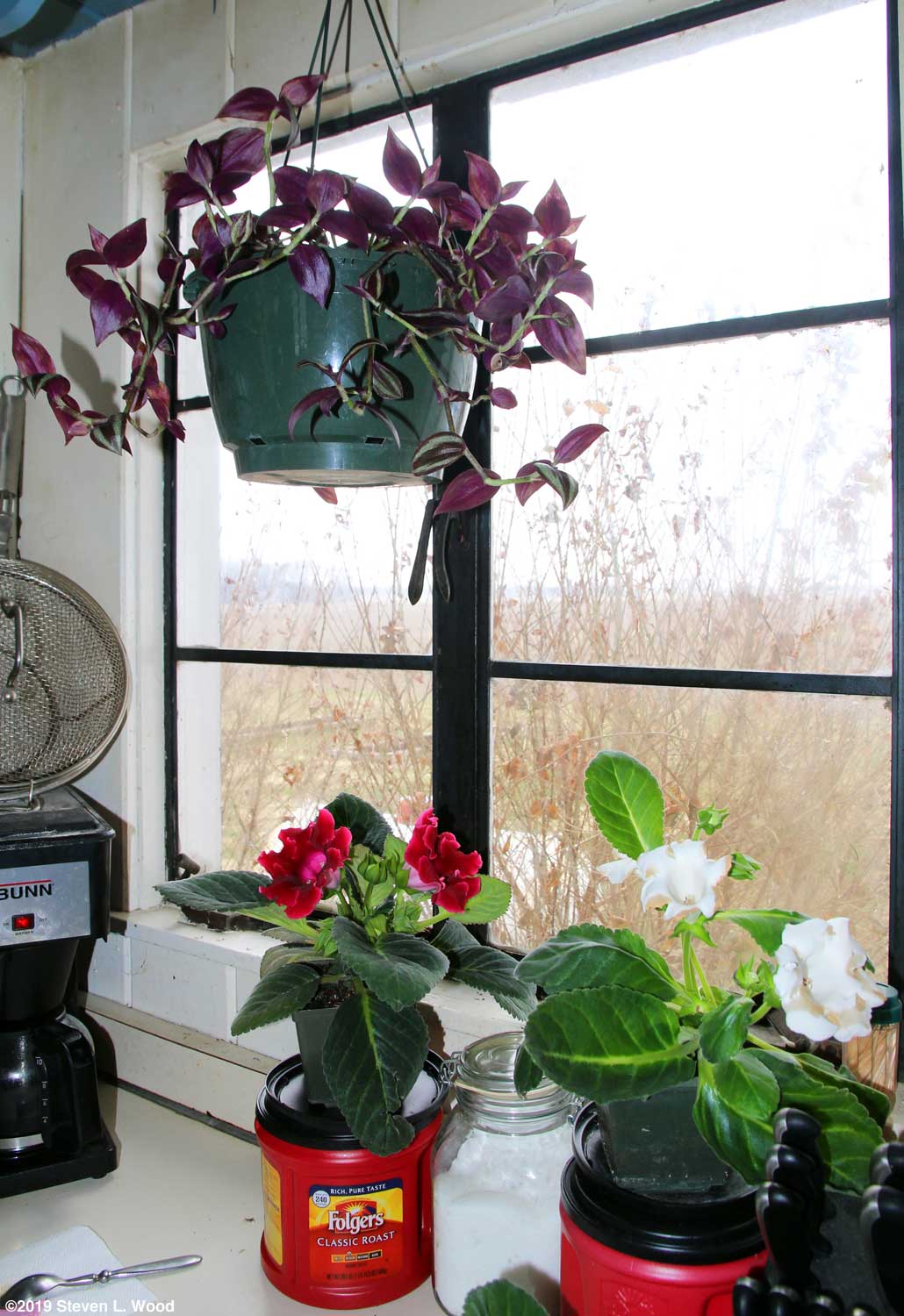
I know I'll need to bring the plants back inside or move them under a cold frame on a few frosty, possibly freezing nights we'll have the rest of this month. As the wind howls outside as I write this posting late at night, I wonder what I'll find with the plants in the morning. Sometimes, I get a little overeager. When plants and trays come back inside, they don't go back to our sunroom or basement plant room. They go onto our dining room table, or in the case of hanging baskets, line one wall of our kitchen. After losing all of our gloxinias to the INSV virus several years ago, I've become very cautious about bringing plants back inside. Our general rule is that such plants never go to our basement plant room, only to the dining room table or our upstairs, semi-unheated sunroom. Part of my hurry up on moving plants outside is because I want to move lettuce transplants into a raised bed yet this month. I know I'll need to protect the plants with either a floating row cover or a cold frame (or both), but can hardly wait until we have our own spring lettuce for a month or so. Talking about things we're anticipating, I dropped off a packet of Earlirouge tomato seed with my dentist's receptionist today when I went in for a teeth cleaning. She and her husband are avid gardeners, and I'd promised her some seed from our current favorite tomato variety. Things were slow for them at the time, and the receptionist, dental assistant, and dentist and I all engaged in a conversation about missing the taste of real, homegrown tomatoes. Please note that I'm no longer offering our Earlirouge tomato seed to SSE members, GSN members, or readers of this site, as the Turtle Tree Seed Initiative grew out some seed I'd sent them and is offering the variety commercially. Getting an endangered tomato variety back into commercial production and sale may help secure the variety's survival. Boy! That didn't take long! The plants that I'd moved outside over the last few days and wrote about yesterday are back inside already. Overnight temperatures are predicted to drop below freezing for the next four nights. The plants will do nicely on our dining room table, as long as the cats leave them alone.
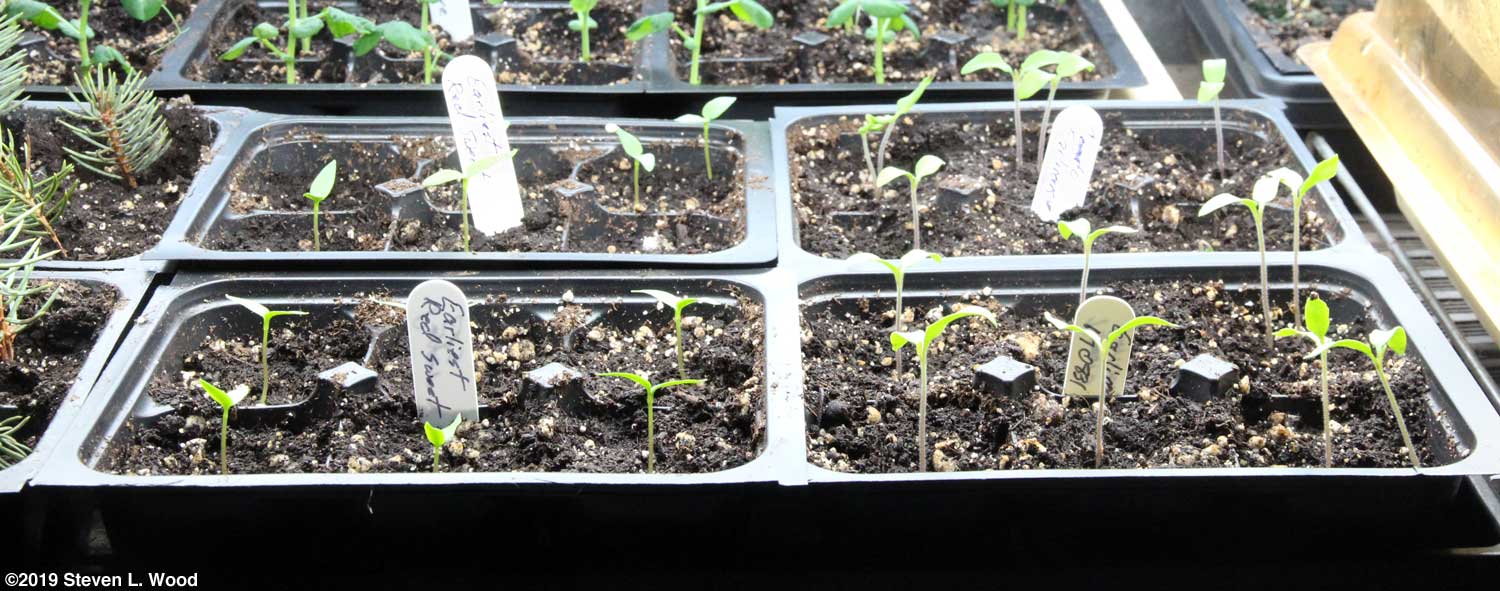
Starting Earlirouge Tomatoes and Earliest Red Sweet Peppers With a target transplanting date seven weeks from today, I started our Earlirouge tomatoes today. I seeded a deep sixpack insert with seed from the Turtle Tree Seed Initiative. Their seed was grown out last summer from some of our seed! I started another sixpack with our own saved seed from 2017. (Our Earlirouge seed saved in 2018 had generally poor germination rates.) And I started a communal pot with some of the original 1988 saved Earlirouge seed from our farming years. I also started our Earliest Red Sweet peppers today. The ERS variety produces lots of medium sized red peppers. Unlike some early peppers, the ERS variety continues to produce prolifically until frost. Both the tomatoes and peppers went over our second soil heating mat. It doesn't have an external thermostat, but has its own internal shutoff when it gets too hot. I'll be starting several other tomato and pepper varieties early next month. They'll go into our East Garden which often doesn't get worked up until sometime in May.
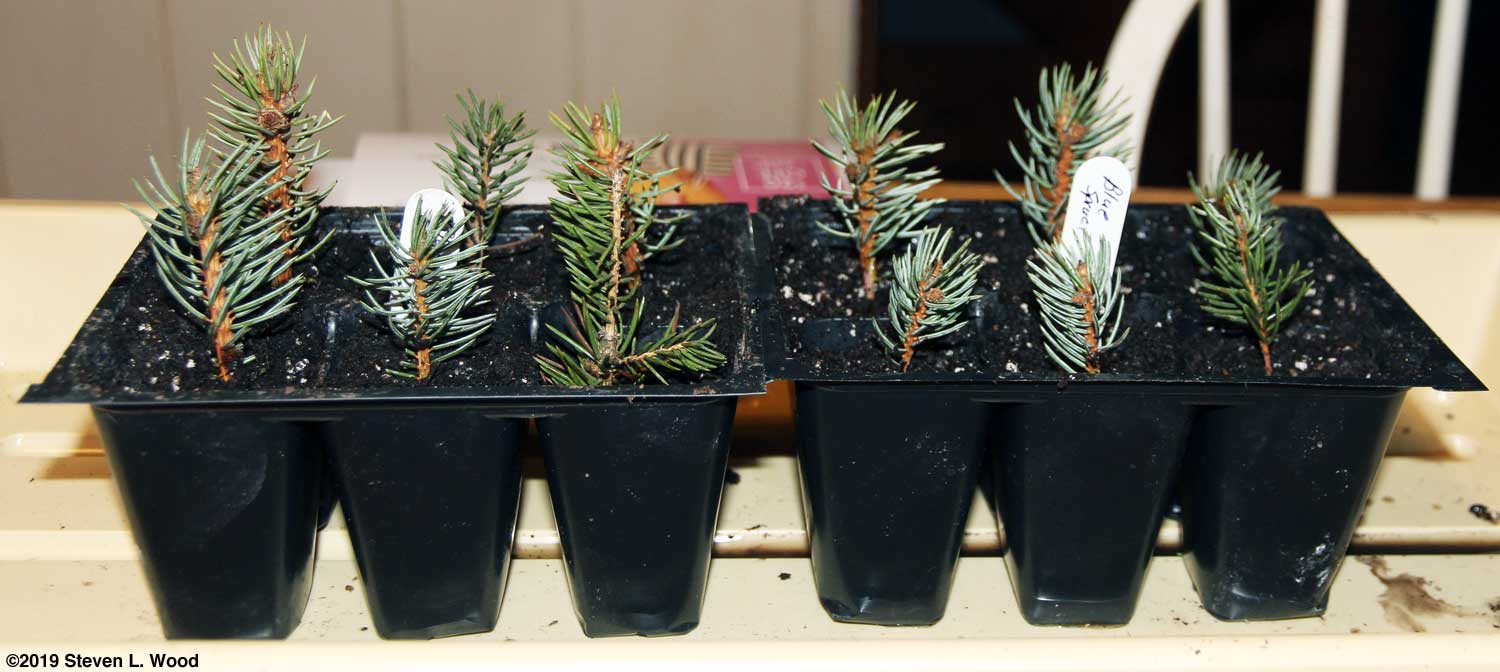
With the chainsaw out, I also cleaned up our Granny Smith apple tree that succumbed to root rot last summer. We had three blue spruce trees uprooted in the wind, but two of them were already dead. Since the tree I was cleaning up today was still alive, I took cuttings from it. Roughly following some good directions from the San Francisco Chronicle, I dipped the ends of the cuttings in rooting gel and put them into deep sixpack insert cells filled with Promix. Samantha McMullen, the author of the how-to article, suggests one "check for roots in two months," but also advised not to "be shocked if it takes nearly four months for the blue spruce cuttings to root." Most of the Earlirouge tomatoes I seeded a week ago are up. Some of the Earliest Red Sweet peppers seeded the same day are also emerging. That should clear one of our soil heating mats so I can start the rest of our tomato and pepper plants in the next few days. The tray of our short, supersweet peas started ten days ago are mostly all up. Sadly, the early peas I direct seeded into the garden March 11 aren't showing any signs of emerging. I may need to start a tray of transplants of them!
Wednesday was the official first day of spring, astronomically. While we now have at least twelve hours of daylight each day, lengthening until the summer solstice, we're still a little more than three weeks from our frost free date and six weeks away from our target date for transplanting tomatoes and peppers. With some frosty/freezing nights of late, I've kept busy moving some of our plants outside during daytime hours and back inside on nights when a freeze is predicted. I haven't gotten into a hurry to cover our cold frame, as some of the cold nights predicted may be colder than our cold frame can protect the plants under it. Even with a frost free date of April 14, I hope to move lettuce into our garden yet this month. I'll also try to transplant broccoli and cauliflower early in April.
It was a gorgeous spring day to be working outside today. With very little wind for the first time in a week, I quickly raked up the last of the sticks and vines where I cut our uprooted blue spruce and lit our burn pile. It had grown to over six feet tall with blue spruce and apple limbs. We're fortunate that we're still able to open burn where we live, but have to be cognizant of strong winds that can quickly spread a fire.
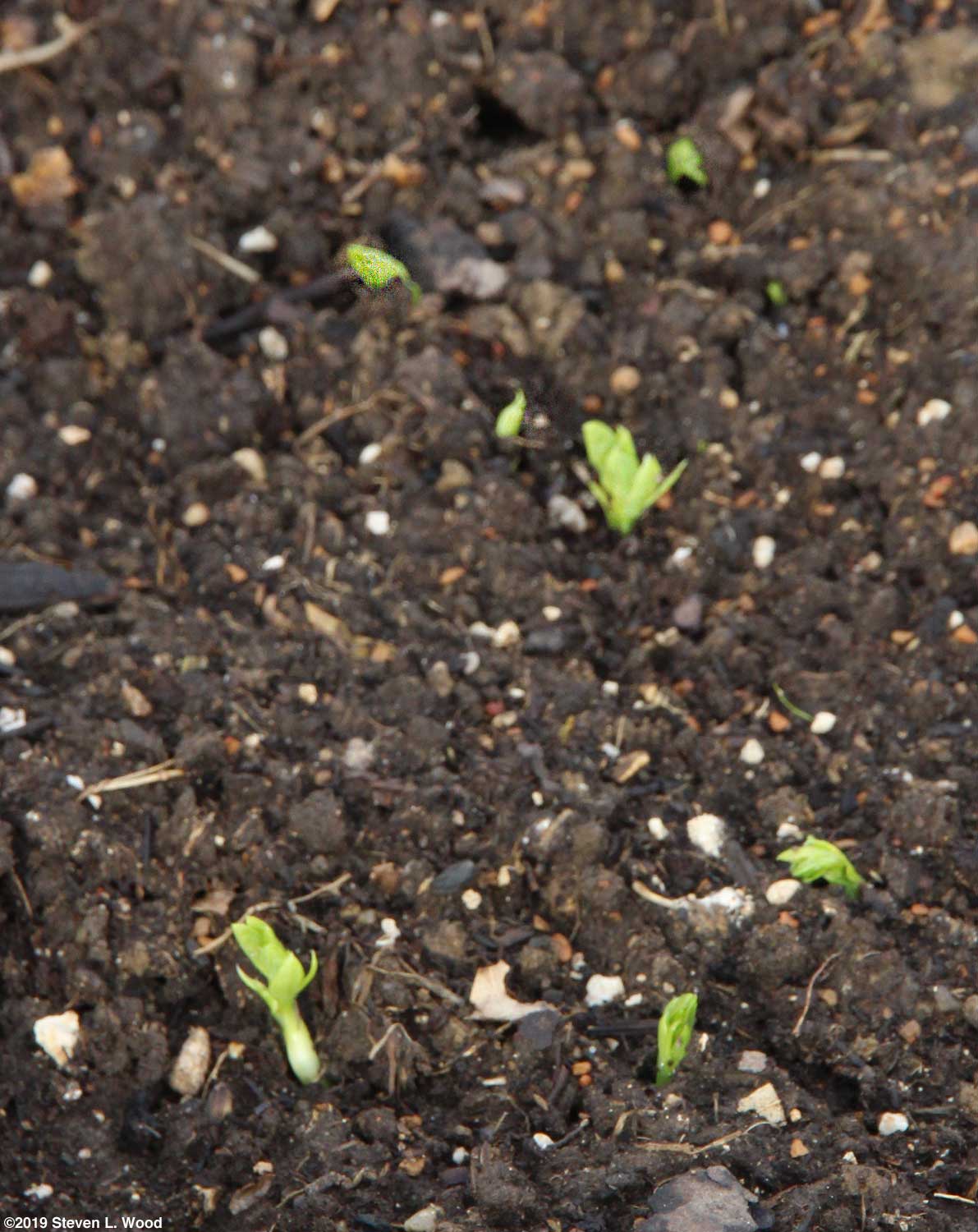
Next up was spraying our remaining apple trees with dormant oil. One needs a day or two with no frost or rain for the spray to be most effective in smothering bugs and bug eggs on the bark of apple trees. In a few days, I'll spray the trees with a fungicide, as I noticed lichens growing on one tree. I also cut a young branch from the Stayman Winesap apple tree I planted last spring. Cutting the small branch into two sections, I grafted them onto some fire blight resistant rootstock I'd bought last year. Since I've never had a successful graft, I'll let readers search elsewhere for good advice on how to graft apple scions. My scions weren't quite a match for the older and larger rootstock, but I'm hoping to get lucky and get one good tree from this grafting. A final job today was to start soaking some trays in bleach water. I had a about fifteen solid and slotted 1020 plant trays that didn't get cleaned last fall. I also threw some pots into our garden cart of bleach solution. With all the potting and uppotting we've done this winter and spring, I'd accumulated a good number of used pots that needed to be cleaned and sterilized before using them again. Our extended weather forecast for the rest of this month still has a couple of 27° F nights predicted. While our transplants will remain outside tonight, they'll have to come in or go under a cold frame on those cold nights. Our seeding of transplants will shift into high gear soon. We have tomato and pepper plants to start, flowers, and lots of melons and squash to get going. I also have two or three more dead trees to fell, while I'll let some true pros deal with three failing trees close to our house that need to come out. Obviously, I'll be planting a lot of replacement trees this year and next. BTW: I scraped a bit of soil off our early pea seeding and found that our seed is now germinating! Yippee! I also saw that some elephant garlic had finally emerged. While our standard garlic is pretty much all up, the elephant garlic hadn't shown any signs of coming to life until today. Whew!
Monday, March 25, 2019 - Starting Tomatoes, Peppers, and Basil
While I only have tomato cages for twenty-three tomato plants, I started far more plants as insurance. Even with that limited number of tomato cages available, I seeded two or three each of Moira, Quinte, Crimson Sprinter, and Bradley open pollinated slicer/canner tomatoes. I also seeded some Bellstar paste tomatoes and Red Pearl grape tomatoes, both open pollinated varieties. Our hybrid tomato varieties seeded were Bella Rosa, Dixie Red, Better Boy I began filling a tray of deep sixpack inserts with sterilized potting mix on Sunday, but ran out of it before fully filling the cells. So instead of starting the tomatoes yesterday, I filled our 18 quart kettle we use for potting mix sterilization with a half and half mix of Promix and potting soil and popped it into the oven for an hour and a half at 400° F. I topped off the cells with more potting mix today. Then I watered the stuff with some near boiling water. Promix and other peat moss products need warm water applied for the peat to absorb the moisture quickly. After letting the soil cool for an hour, I made a depression in the center of each cell with a finger and dropped in a seed. I covered the seed with a light layer of potting mix, just enough to exclude light and hold moisture over the seed. The tray of tomatoes went over our main soil heating mat with its temperature set at 77° F. Peppers
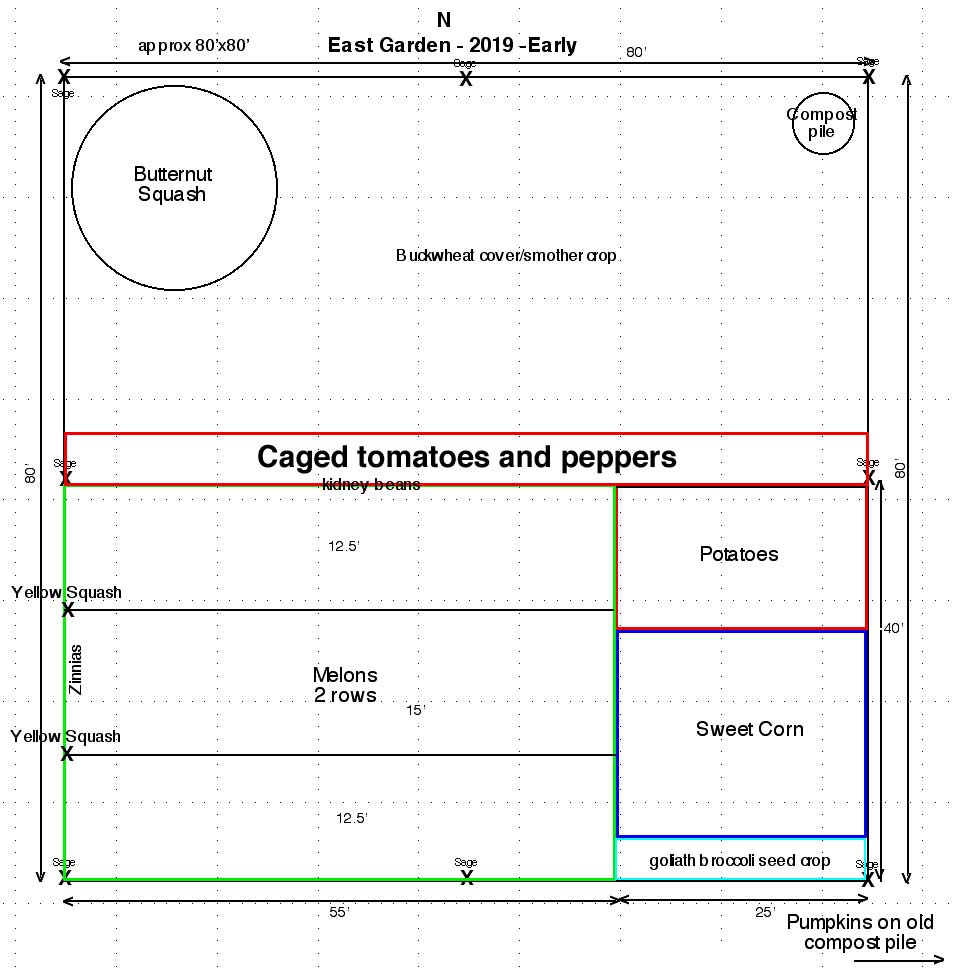
While we have a couple of sixpacks of Earliest Red Sweet peppers already up, I also seeded a couple of cells to a variety the Turtle Tree Seed Initiative calls Early Red Sweet. I want to see if Turtle Tree's offering might be the same as our saved Earliest Red Sweet variety. For large red peppers, I started some Ace and Red Knight. Both varieties usually do well for us. For yellow/gold peppers, we're again trying Abay and Gold Standard. I also seeded two cells to the old hybrid Sunray. It was a dandy yellow pepper that has long been discontinued. While I seeded most of the peppers as I did our tomatoes, I liberally sprinkled seed across the cells with some very old (2009) Sunray seed in hopes of getting something to come up. These peppers will get transplanted into our long row of tomatoes and peppers in our East Garden plot. I often put a couple of pepper plants between different open pollinated tomato varieties from which I hope to save seed. Basil My wife informed me last week that our jar of saved basil was almost empty. I didn't save any basil last year and possibly the year before. Last summer, our basil was all dwarf basil from saved seed. While the variety forms lovely roundish plants whose leaves are good for fresh use, the small leaves aren't quite what you'd want for drying. I still seeded a couple of cells of the dwarf basil, but also seeded four cells to a landrace of a Genovese/Large Leaf Italian cross. Plants Back Inside
I brought our transplants from our back porch inside again this afternoon. Our next two morning lows are predicted to be 27° F. After that, our extended weather forecast looks pretty good. And while I haven't seen any of our early peas emerging as yet, I did see a bunch of tiny spinach plants pushing up through the soil!
Wednesday, March 27, 2019 - Cold Frame
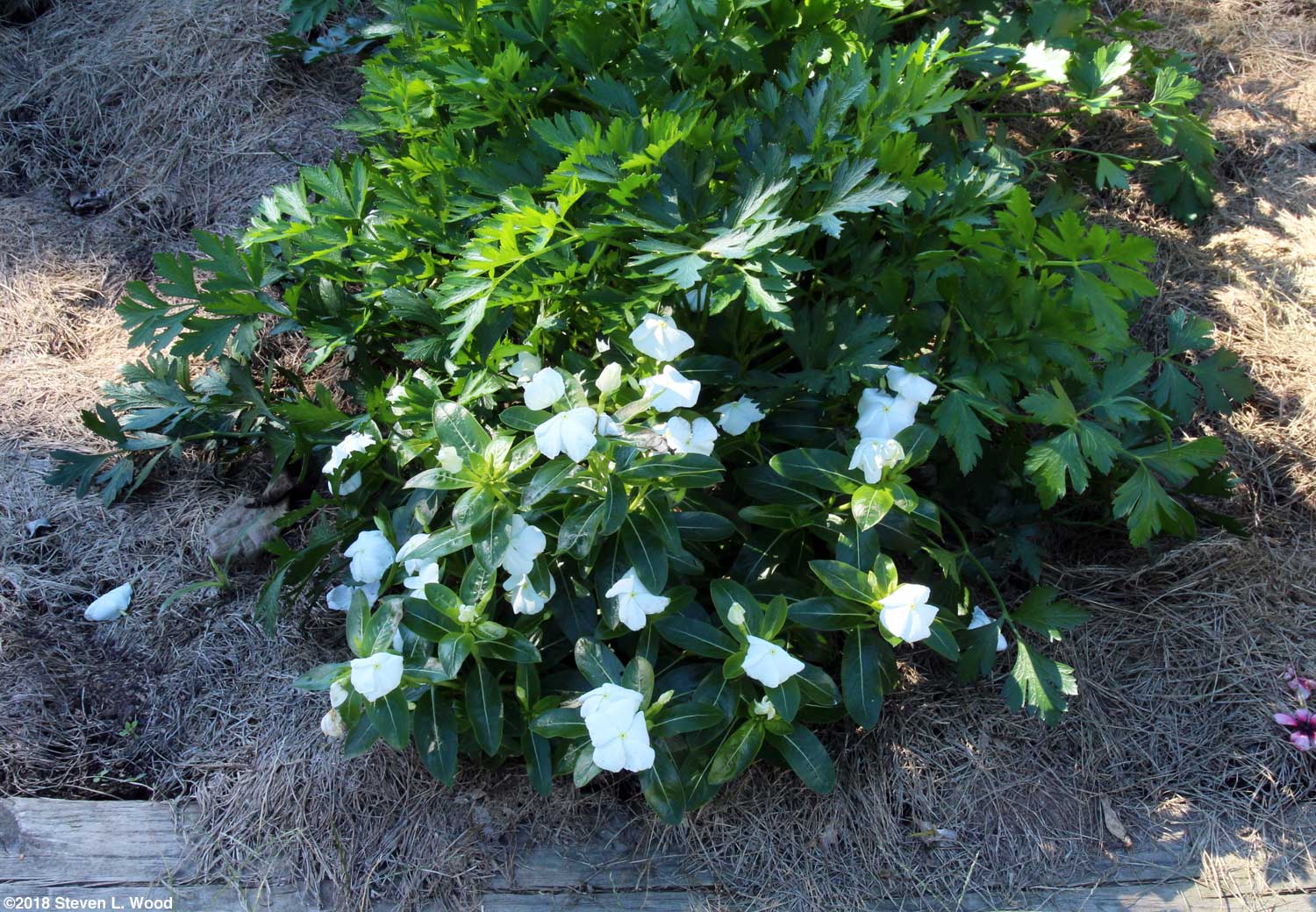
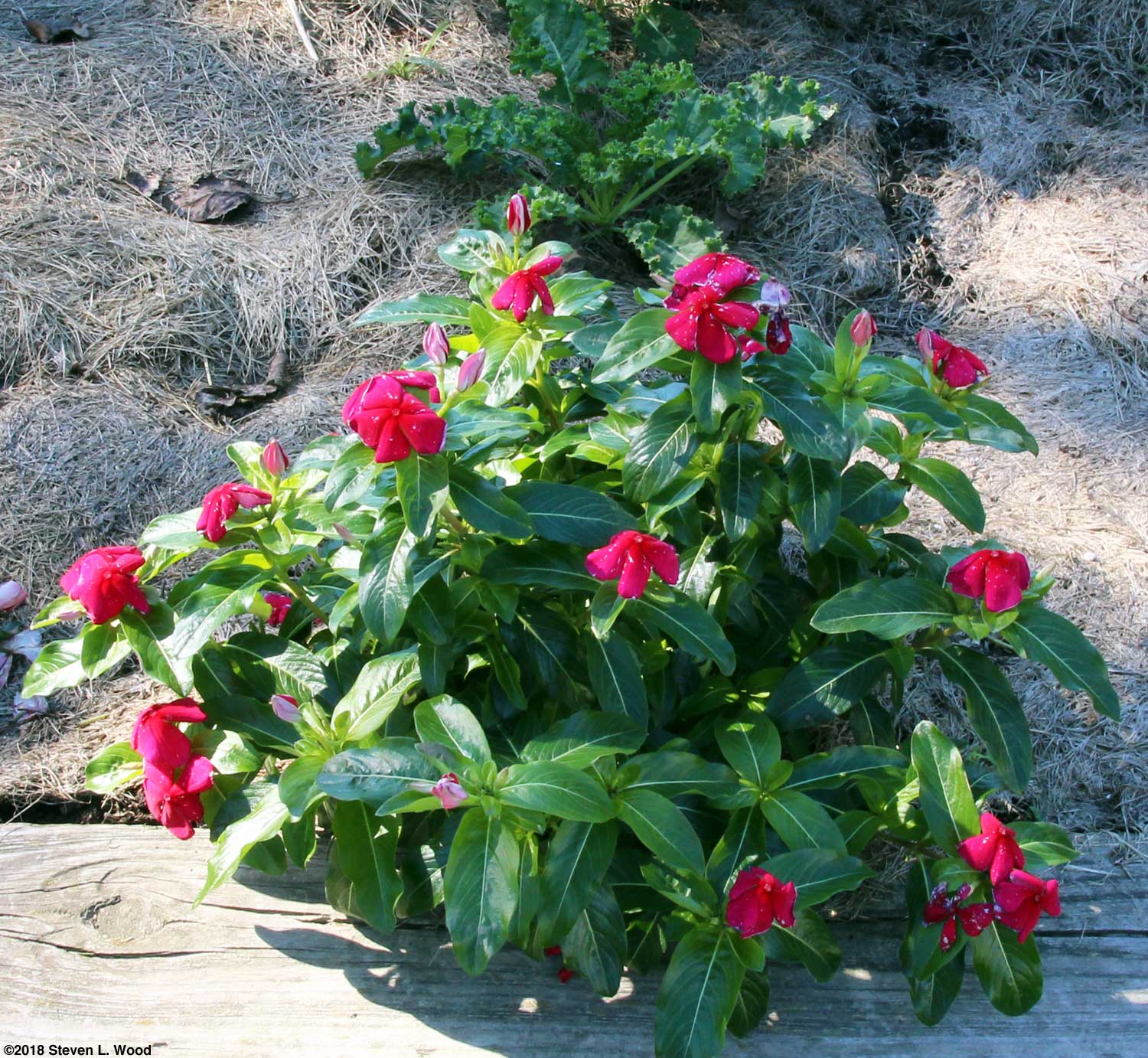
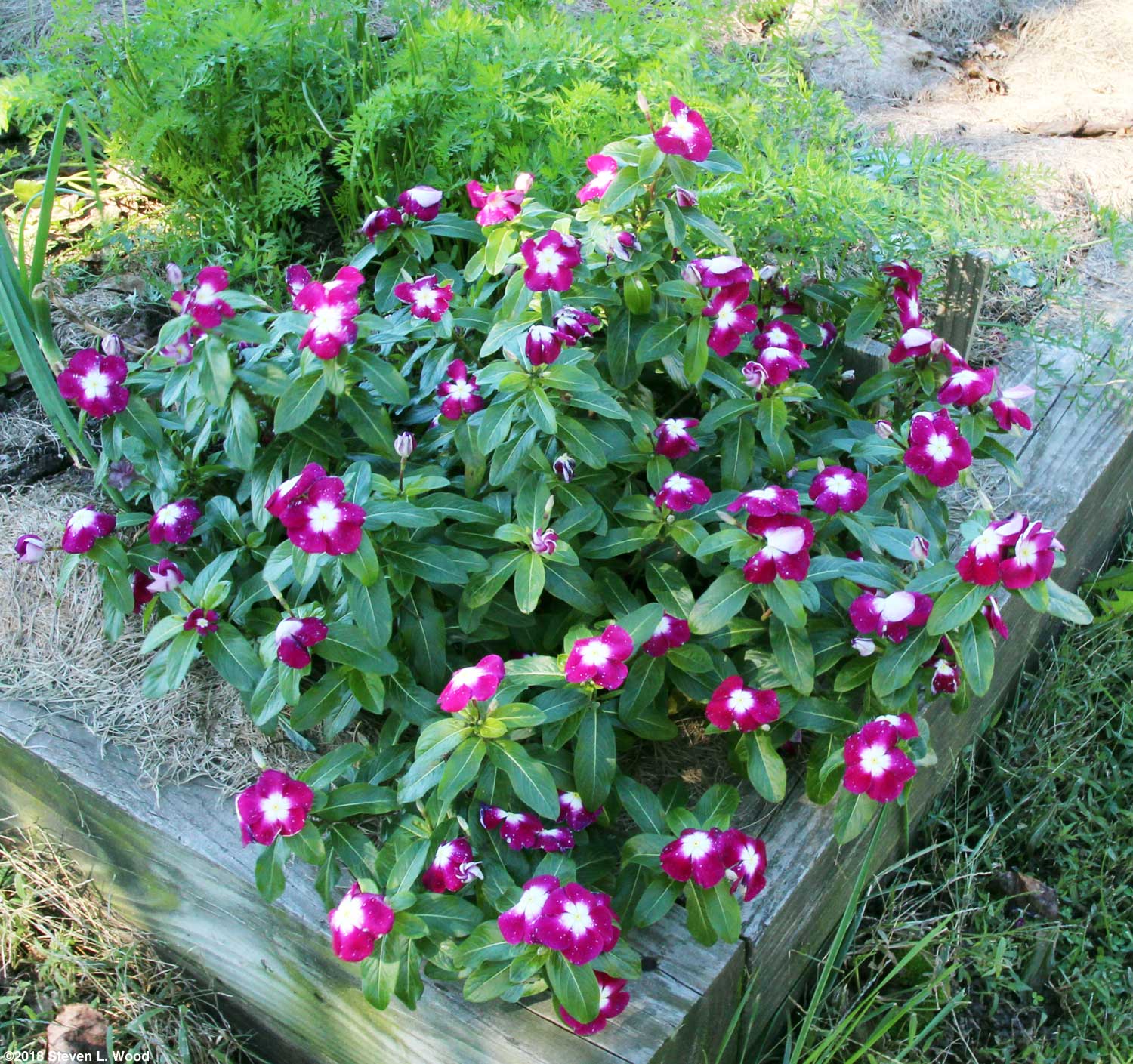
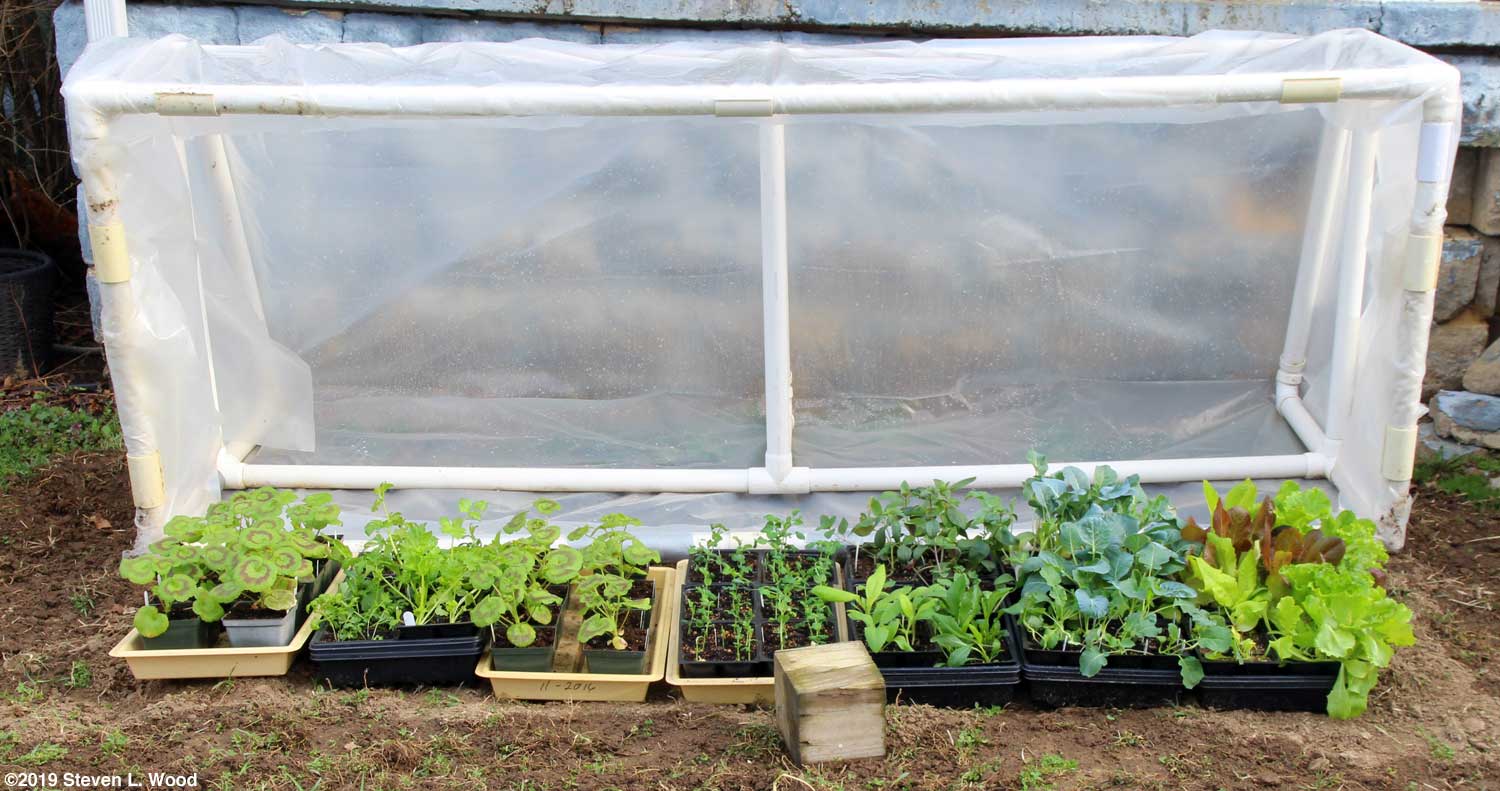
I also covered our PVC cold frame with 6 mil plastic. I didn't move any plants under it today, as it's supposed to stay warm overnight tonight and tomorrow night. But we have a couple of nights early next week when temperatures are predicted to drop well below freezing. Before moving the cold frame into position, I tilled the area that will be under the frame. Loosening the soil allows me to hill up soil against the bottom pipes of the cold frame to seal in heat. Our twenty-five year old tiller took a bit of starting fluid and six pulls on the starter cord to fire up. But it started and ran well. Yesterday, I started a communal pot of Pacifica vinca to adorn our garden borders. Vinca seed needs bottom heat and total darkness to germinate. I put the pot over a heat mat and rubber banded a couple of layers of black trash bags over it to hold out the light. I like to use Pacifica for our garden, but use Pacifica XP for hanging baskets. A couple of fourpacks of Pacifica XP were part of what I brought up from the basement today. Vinca take a good bit of time to come into full bloom. But by fall, they're spectacular. Here's a few shots of our vinca in the garden from last October.
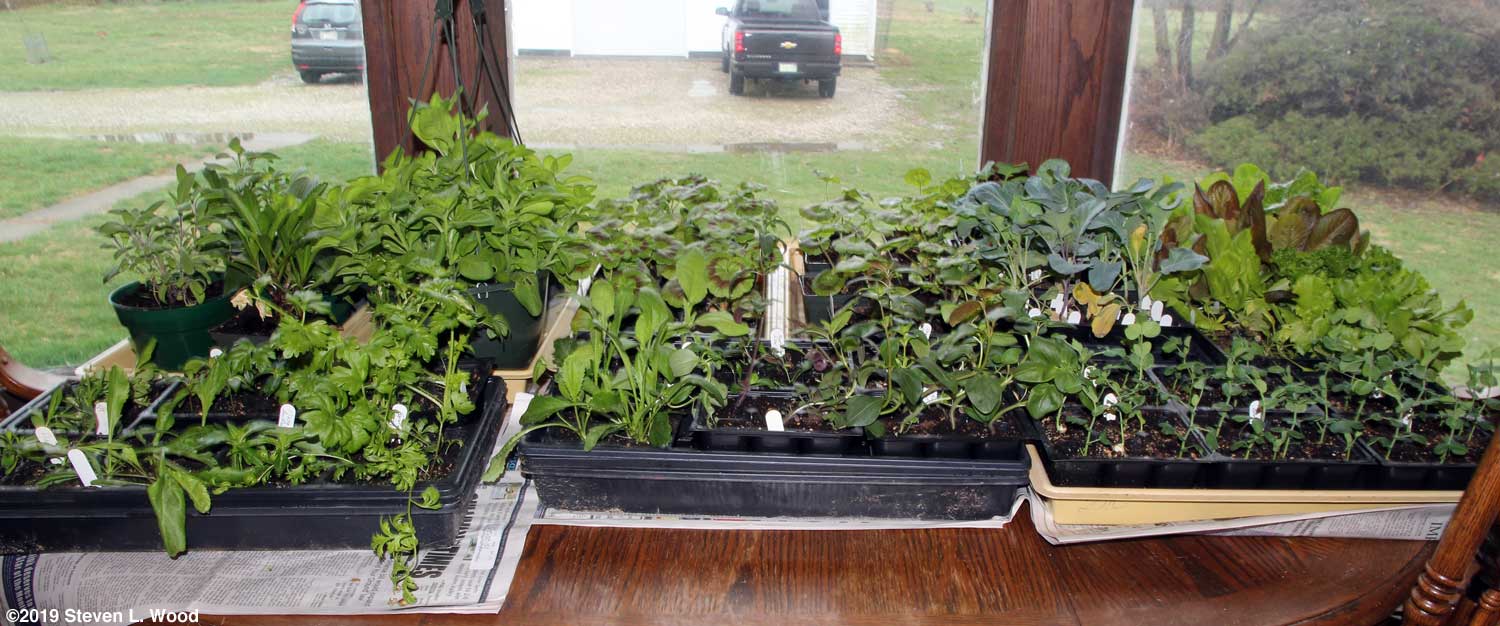
Our celery transplants didn't do well with the move, all falling over by the time I got them upstairs and outside. I also moved snapdragons, dianthus, peas, daisies, broccoli, cauliflower, and Brussels sprouts to the porch to begin hardening off.
I began my gardening day today with a pleasant email from a reader in Australia. I'd attempted to send him some of our saved gloxinia seed. Weeks passed, and we both assumed that Australian customs had confiscated the seeds. But after six weeks, the seeds finally arrived in his mail! The gloxinia seeds I've been sharing with readers were saved last summer. I started some of the seeds presumably as a germination test in October. Now after just five months from seeding, some of the new gloxinias are coming into bloom. That's a good thing for us, as most of our older gloxinias are still dormant or just emerging from their annual required period of dormancy. Outside, I filled our cold frame with seven flats of transplants yesterday. We still have three trays of our cold hardiest transplants along the edge of our back porch. The cold frame is already filled to its capacity.
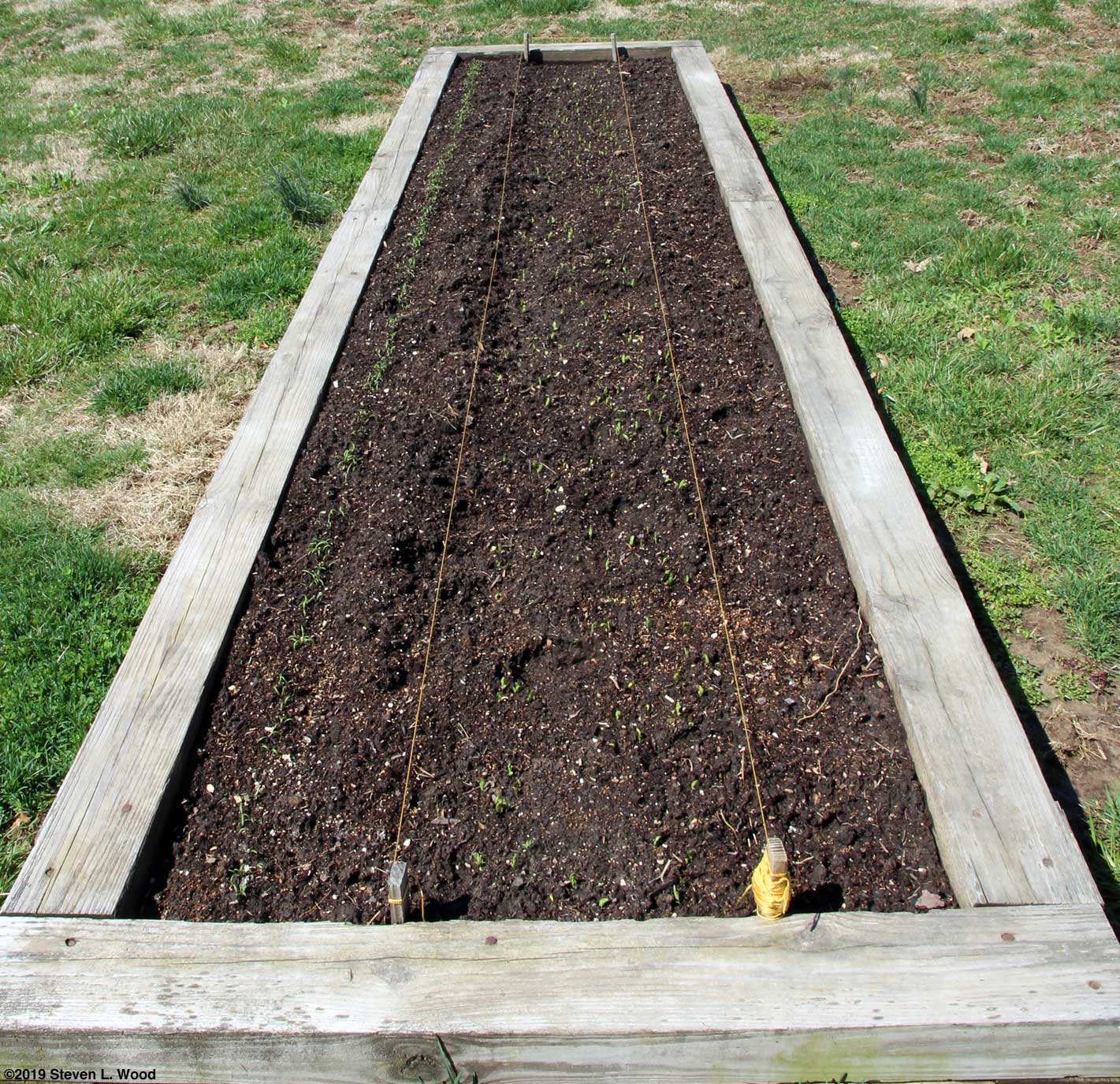
I'm watching our extended weather forecast closely. We have one overnight low predicted that will outreach our cold frame's 5-8° F ability to protect our transplants. If that prediction holds, we'll again have to bring almost all of our transplants back inside for a night (or two). I took my good camera with me this morning as I walked our raised garden beds. I'm glad I did. I found that our early peas seeded March 11 were beginning to emerge. Beside them, one could clearly row the spinach seeded on March 12.
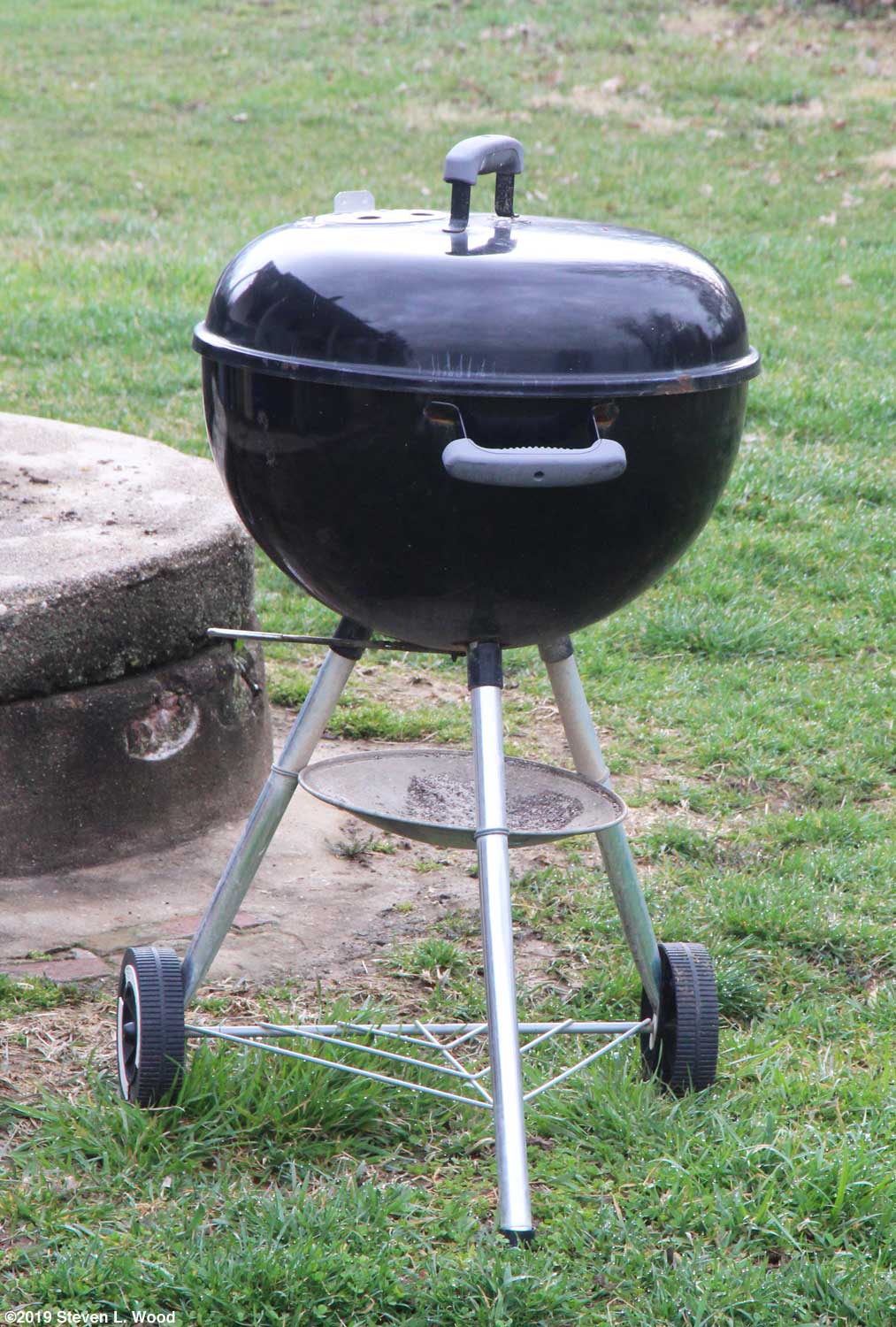
One thing I didn't see was any sign of asparagus coming up. I can hardly wait until we begin our annual spring asparagus feast. And in a giant victory over wintery weather, I fired up our grill to cook a couple of steaks for Annie and I last evening. I didn't have to wear a coat while grilling, as our high temperature yesterday was in the low 70s! A sign of aging crept into that victory. Annie and I split the largest steak, as both our appetites have shrunk with age. I used to laugh at my parents going to Waffle House and ordering one bargain breakfast with an extra plate. Now, I understand. The extra steak is slow cooking this morning in the oven at 250° F in beef broth. It will end up this evening as either beef and noodles or in an Olive Garden copycat recipe for Braised Beef and Tortellinis.
Our morning lows for the next two days are probably beyond the limit of our cold frame's ability to protect. While I left a couple of trays of sad looking onions our cats had laid on under the cold frame, everything else came inside. After all my hard work raising these transplants to this stage, I'm unwilling to risk keeping them outside under our cold frame in freezing weather. Looking at those sad looking onion plants, I started another full flat of onions today. They'll be way behind where our transplants usually are when they go into the ground, but I really think the onions I started in January are goners. I'm hoping to avoid a complete wipeout on onions this year. Late update: It started snowing at about 6 pm tonight!
Sunday, March 31, 2019 - March Wrap-up
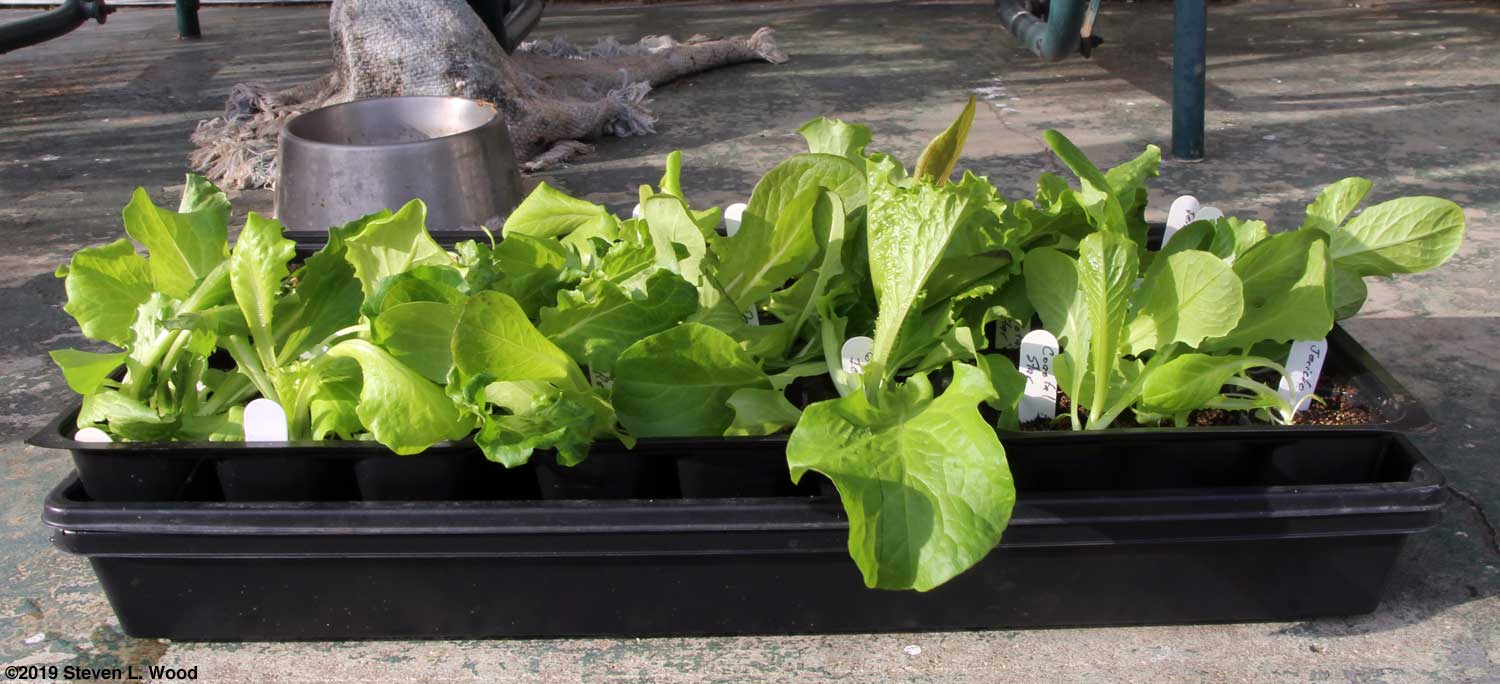
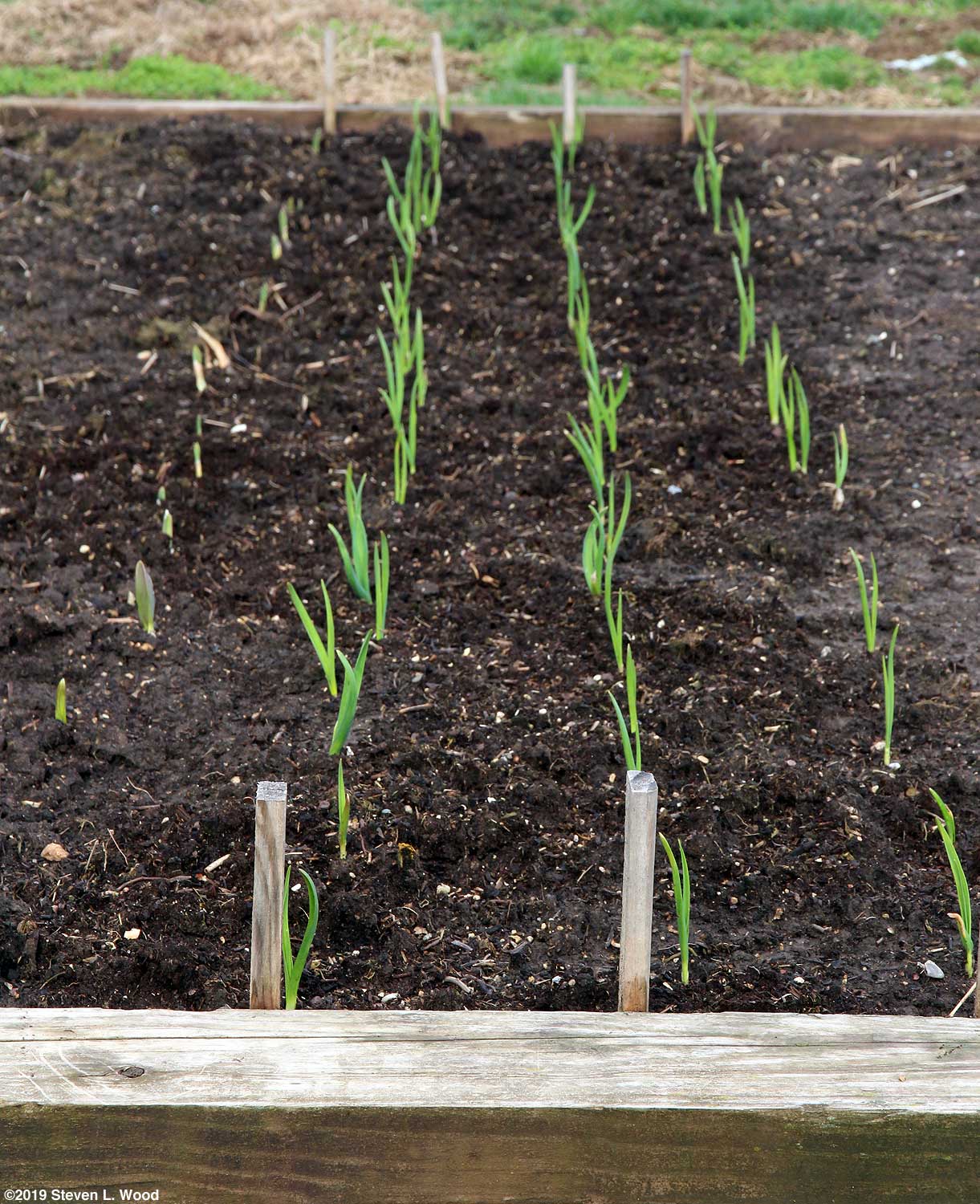
In our garden plots, we now have spinach and early peas peeking up through the soil. Our garlic is up four to six inches. What we regrettably didn't see this month was any asparagus emerging. In some years, we get a first light picking in March. Not so this year. I'd also planned to transplant lettuce into one of our narrow raised beds late this month. I hoped to protect the plants with a floating row cover or a second cold frame (which I have as yet to build). The lettuce seedlings are more than ready, but a nasty cold snap with temperatures far lower than a row cover or cold frame could protect against has delayed the lettuce transplanting until early April.
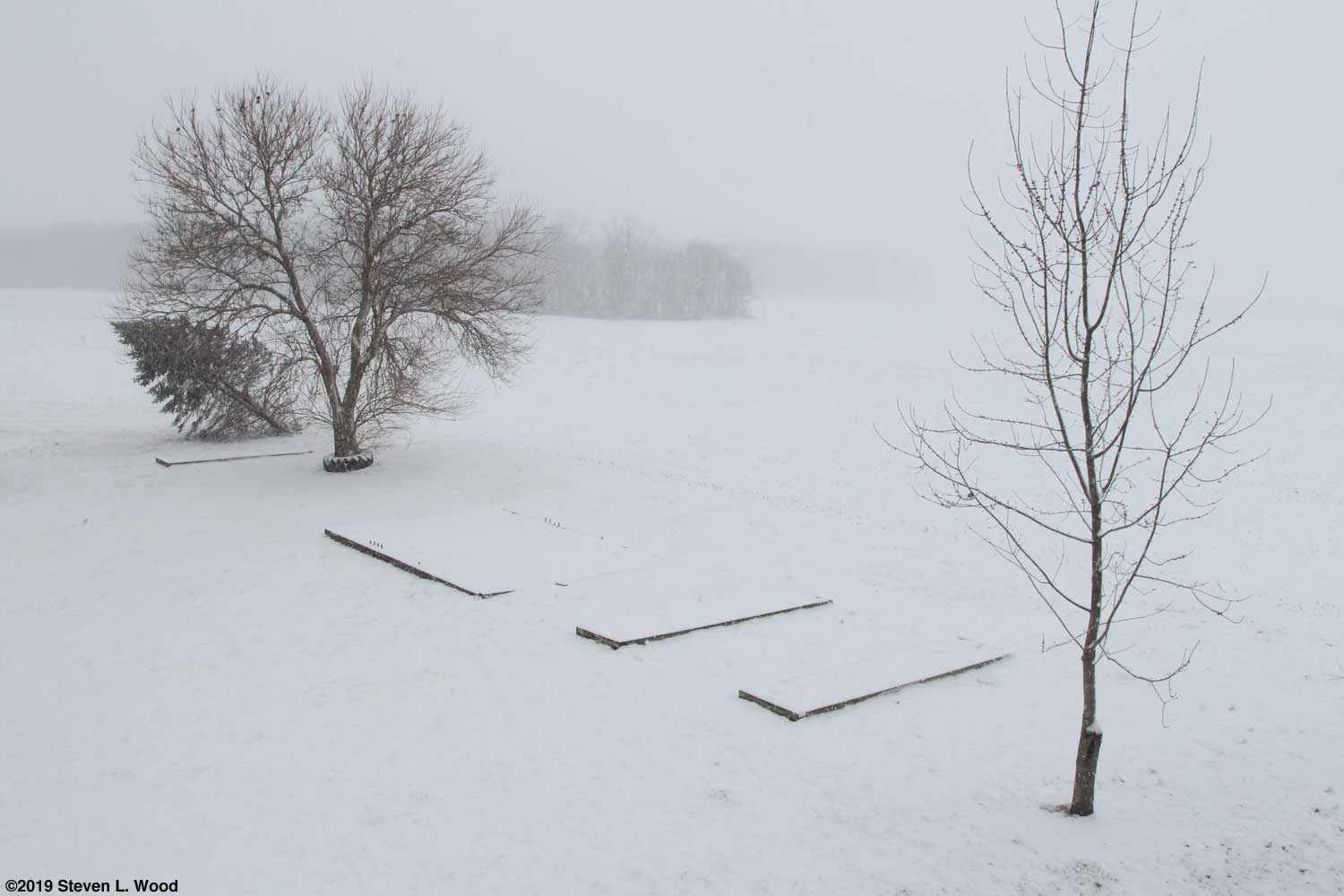
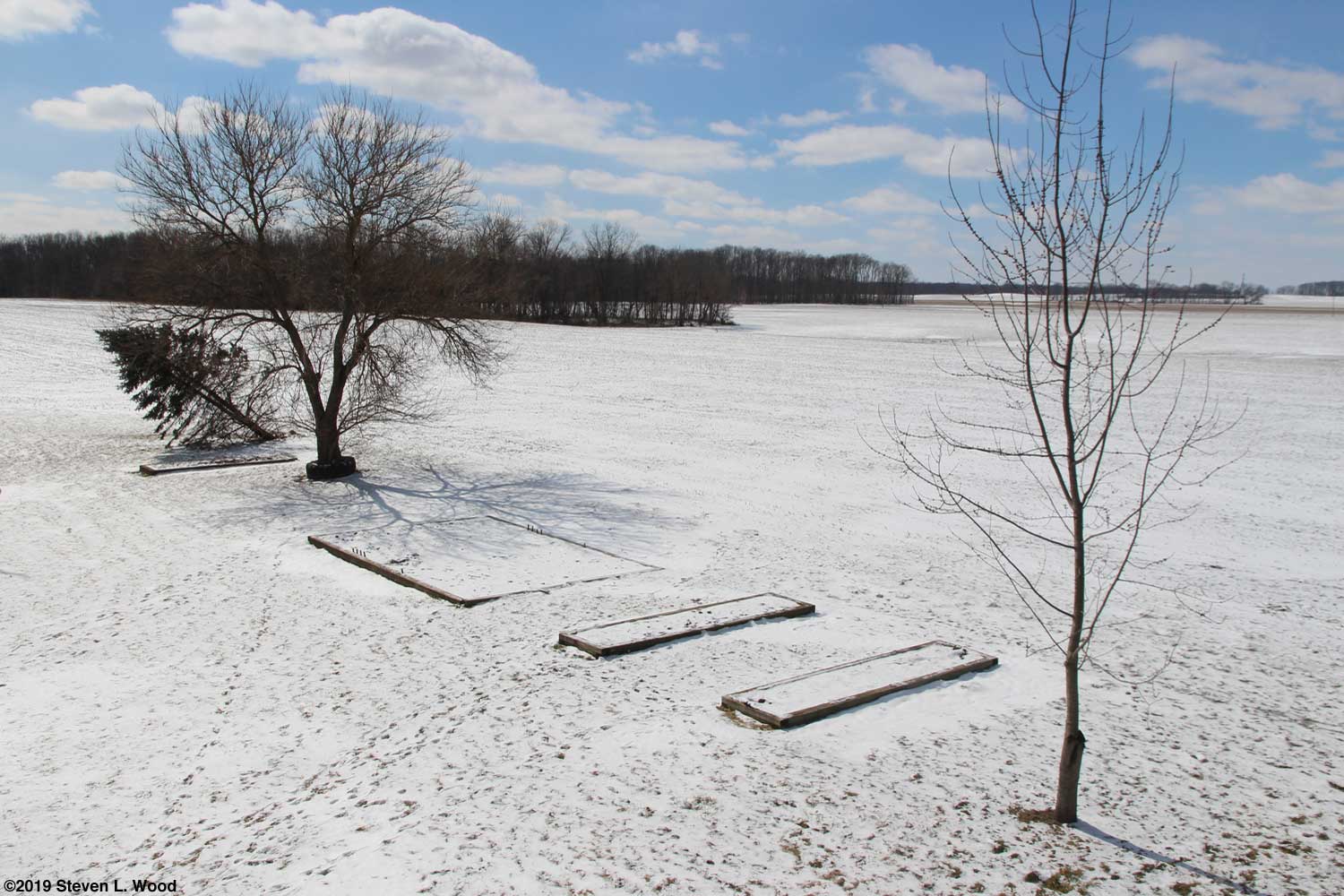
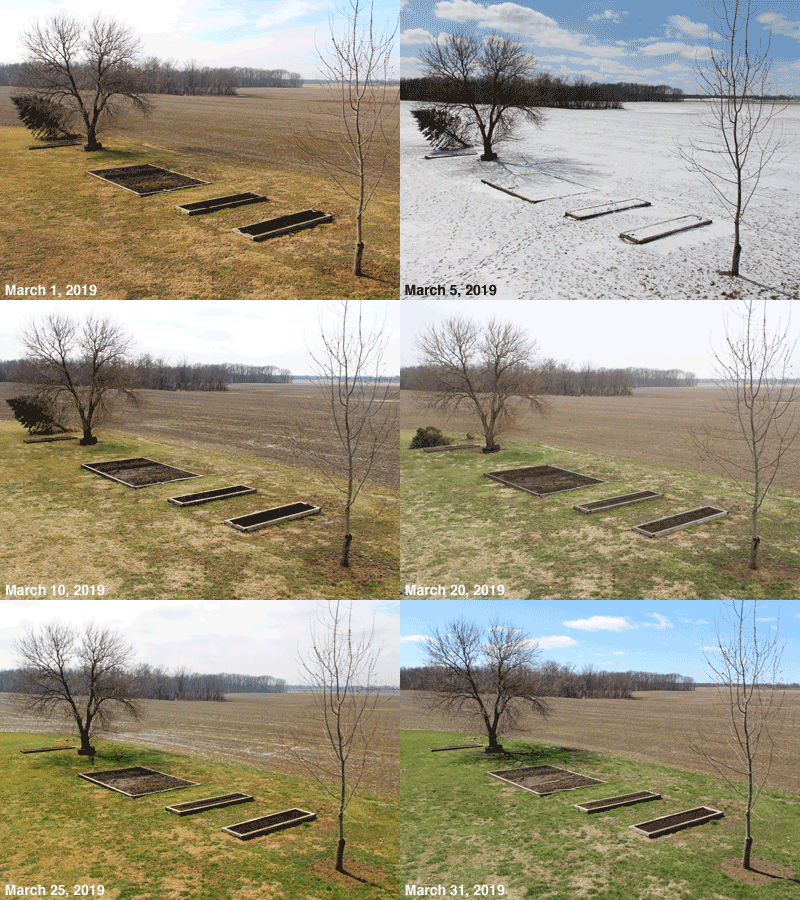
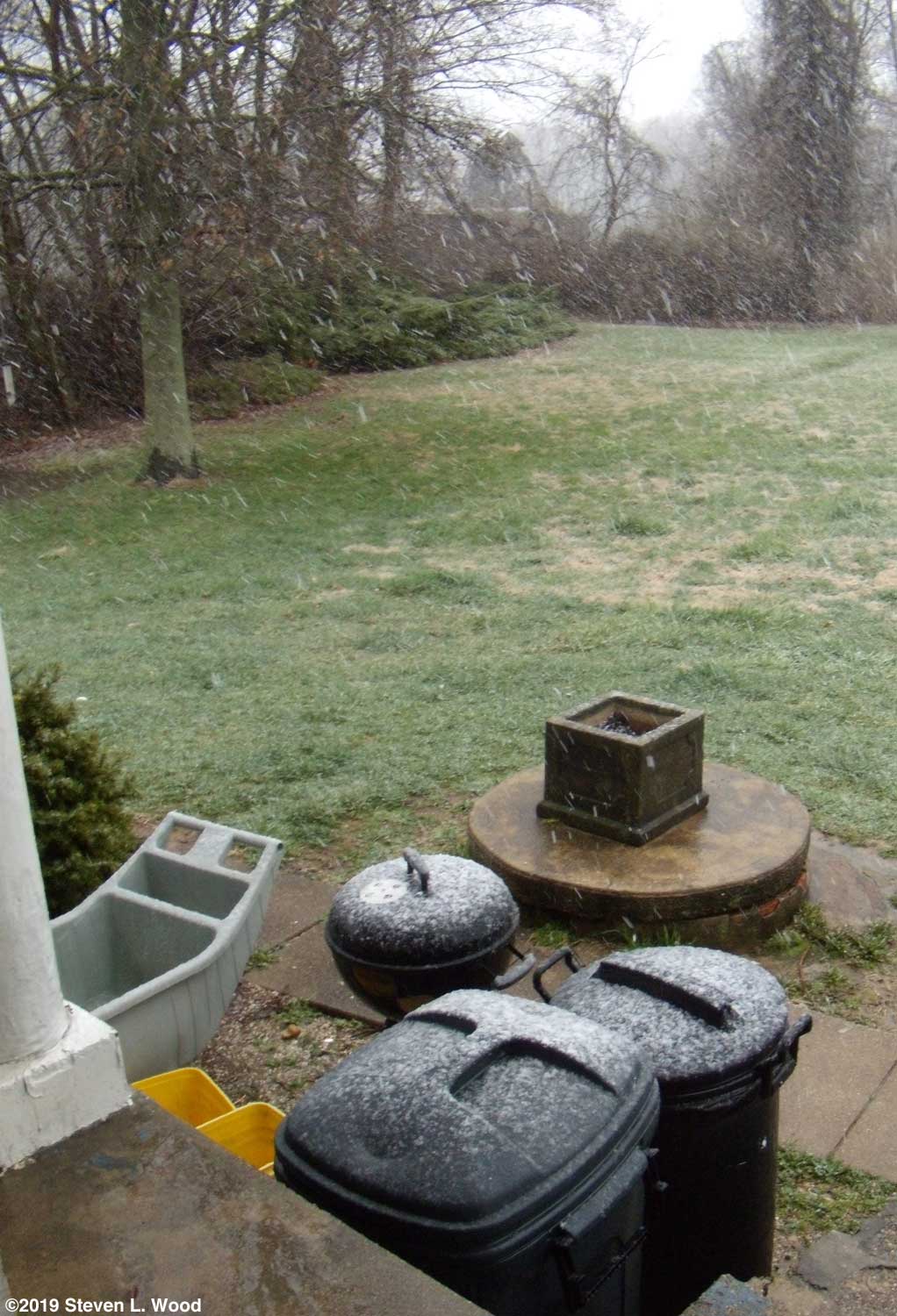
In a fitting end to an unpredictable month of weather, it began to snow quite hard around six last evening. The ground was warm enough that the snow didn't stick, although a bit north of us, folks got an inch or two of accumulation. Our extended weather forecast suggests that once we get past a couple of cold mornings tomorrow and Tuesday, we should be able to begin some serious outdoor gardening. Of course, our "official" last frost date is April 14, so we could still get a nasty surprise.
Contact Steve Wood, the at Senior Gardening |




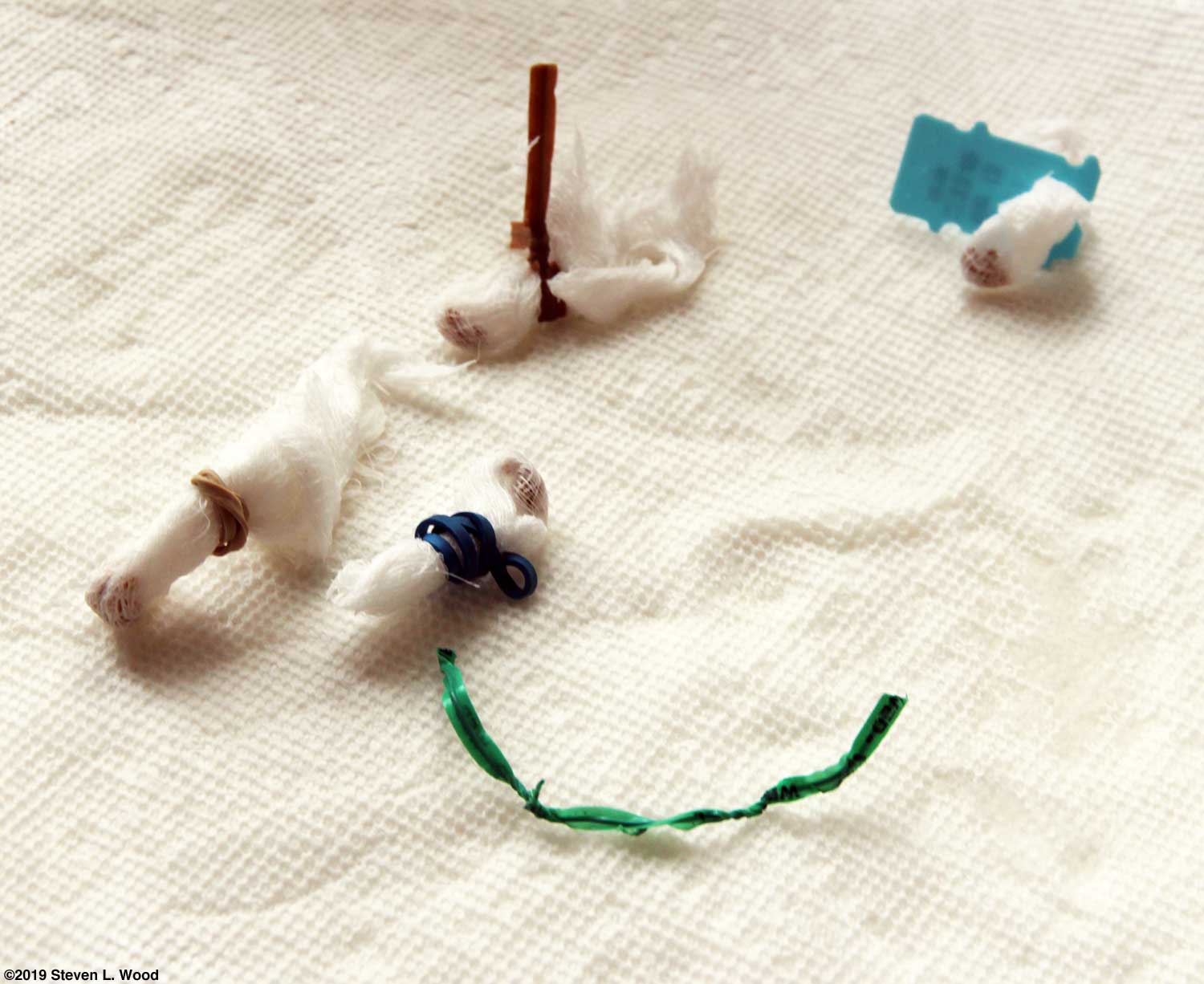
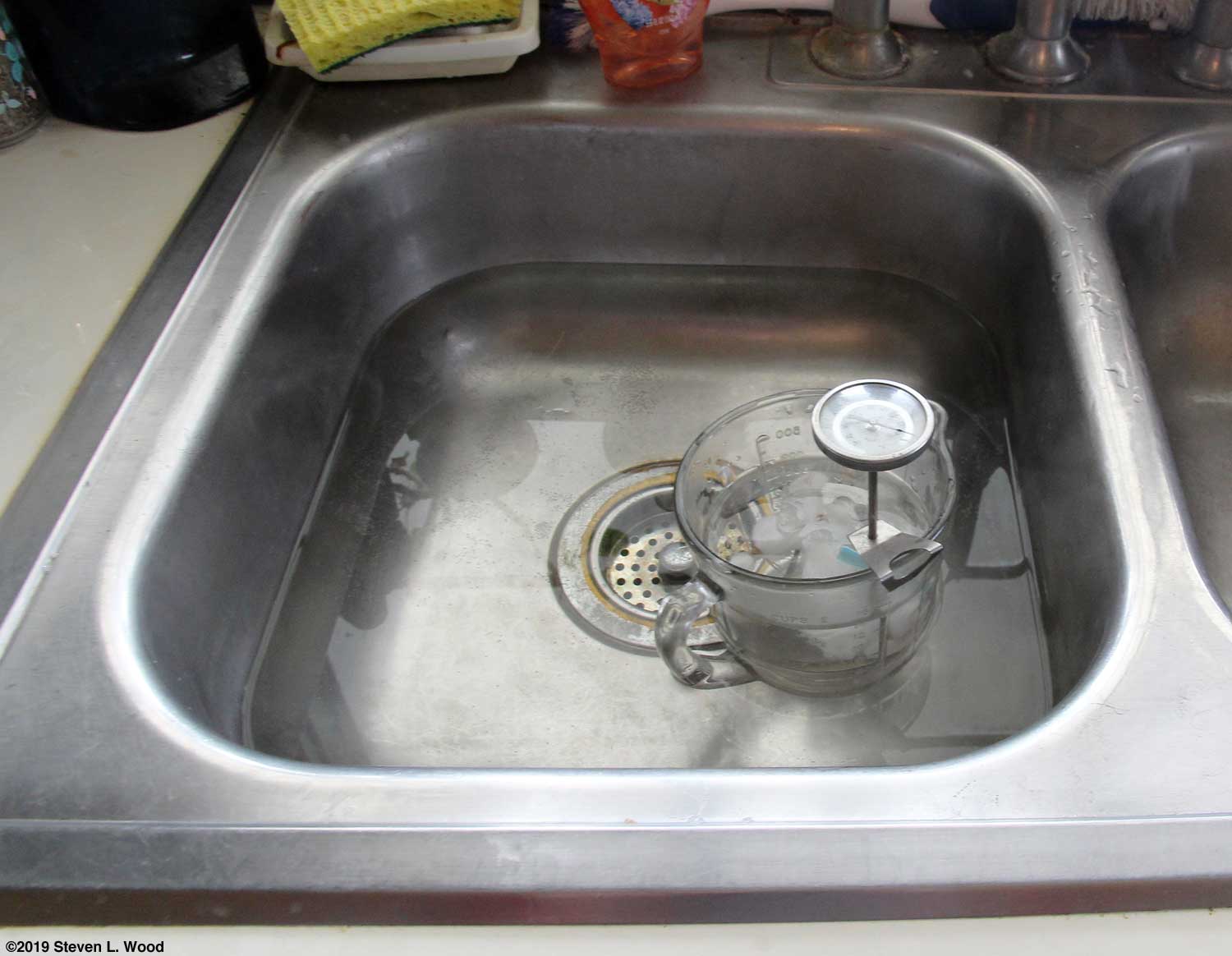
 . I gradually added hot water from the tap until I got the water temperature to the required 122° F. To help hold the water at that temperature, the pyrex cup was in our kitchen sink filled with hot water. I also had a teapot of boiling water on hand that I used to keep the sink water really hot. And when needed, I'd bump up the temperature in the pyrex cup with a little of the very hot water, being very cautious not to exceed the recommended temperature.
 from my darkroom days to monitor the water temperature.

 fungicide on the seed and liberally seeded the row. I used my rake to pull an inch or two of soil over the seed, firming it by gently tapping the soil with the head of the rake to ensure good seed to soil contact.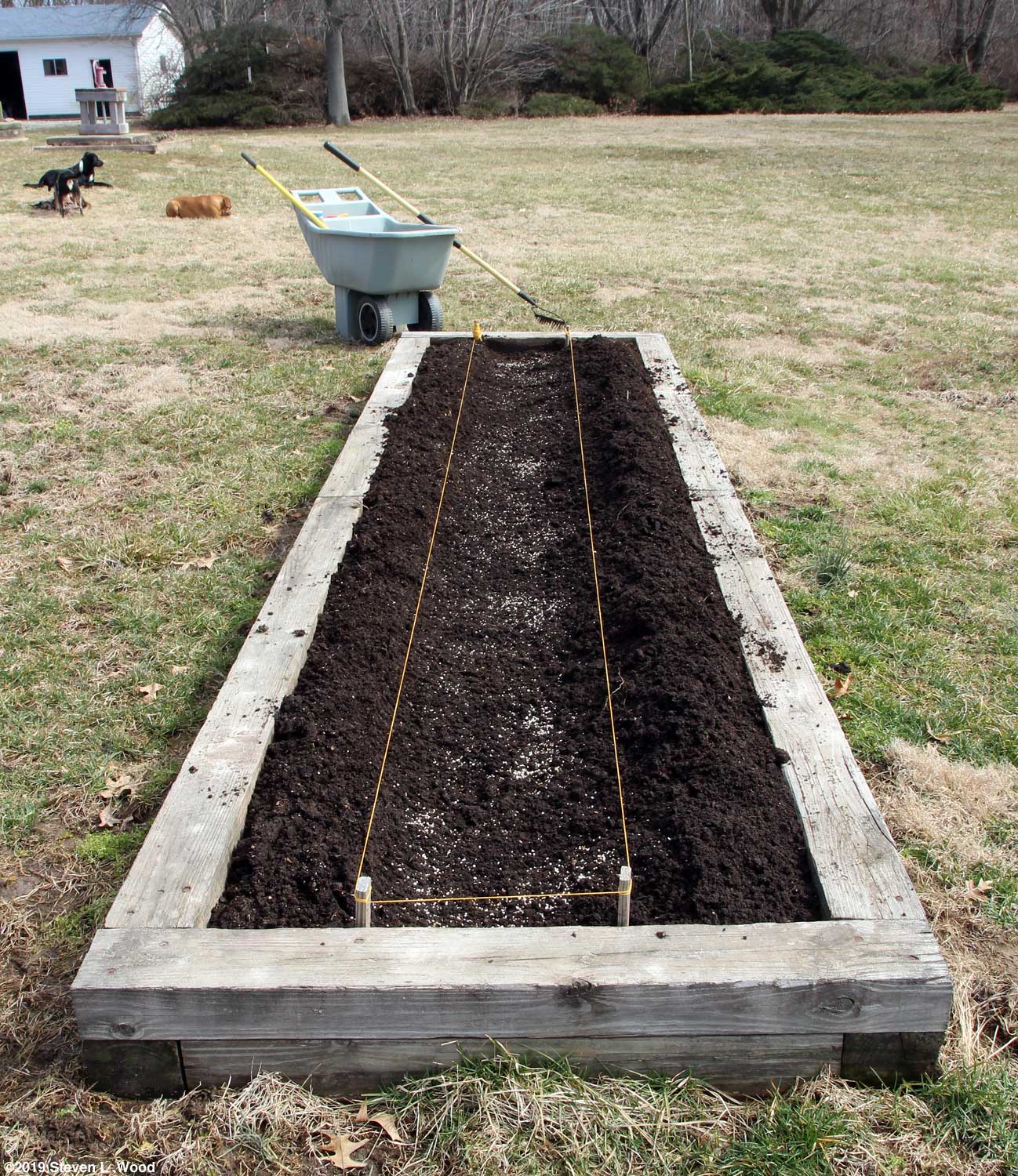











| Affiliated Advertisers |
©2019 Senior-Gardening.com