One of the Joys of Maturity |
|

| Affiliated Advertisers |
Clicking through one of our banner ads or some of our text links and making a purchase will produce a small commission for us from the sale. The Old Guy's Garden Record
Tuesday, November 1, 2016 - End of Season Gardening Chores There are a number of end-of-season gardening chores that I try to do each year. When I'm successful completing these tasks, I'm always rewarded the next spring with a much easier start to a new gardening season. But the work isn't very glamorous, nor does it produce a lot of immediate gratification. When I write about this stuff, I tend to prioritize getting the ground ready for the next gardening season. That obviously has to be done before the ground freezes, but some of the other chores are equally important. Fall Soil Preparation for Spring
Doing this task in the fall allows any soil amendments added, such as lime or soil sulfur, to have all winter to adjust the pH of our garden soil. We aim to have our garden soil at an optimal 6.8-7.0 range for most crops. Here in west central Indiana, this process involves adding lime to the soil, as our soil seems to naturally acidify a bit over each gardening season. For folks living out west, dropping the soil pH with sulfur may be necessary. We use garden sulfur to drop the soil pH to around 6.0 each year in the area planned for our next potato crop to help ward off potato scab. We also have to add organic material to our raised garden beds to compensate for all the produce we've harvested and leaves, stems, and roots of spent crops we compost rather than turning it under. If available, we add compost to our raised beds, usually with some sphagnum peat moss as well. If we lack compost, we add lots of peat moss with enough lime to compensate for the natural acidity of the peat. Unless you pre-soak peat moss with hot water, it will be slow to pick up moisture, so adding it in the fall gives it all winter to get wet and for the lime to work. New gardeners can save themselves a lot of work by fall tilling their prospective garden area, especially if it has been in sod. A Gardening Trick: If you know that you're going to add peat moss to an area of your garden, buy your peat moss early and place it close to where it will be turned into the soil. Spit open the top of the peat moss bales and allow them to absorb rain water or any water you might add. (If you add water, you'll have to shovel out some peat moss to make room for the water.) During warm fall days, the peat will absorb the water, although if fully soaked, the bales will more than double in weight! Fall Tillage Since fall can be a wet time of year, we watch for periods of dry weather when we can rototill organic matter and soil amendments into the soil. I try to fall till all of our garden plots, even though I know we'll have some wind erosion of the topsoil over the winter. Mulching after tilling helps prevent wind erosion of the garden soil, but our lawn doesn't produce a lot of grass clippings late in the season. Generally, our East Garden plot gets tilled first, as its crops of sweet corn, potatoes, and melons are usually done producing in September. Our raised beds often mature crops well into October.
While I'll write about it later, washing soil off the tiller's tines helps prevent rust. Also, draining the fuel from the tiller (or winterizing it) and running 2-cycle engines (weed eaters, chain saws, and such) gas tanks dry helps extend the life of those tools. Late fall oil changes are about the only ones our poor, old senior rototiller gets. Special Prep Several of the crops we grow require some special soil preparation in the fall. Since we plant our garlic in late October or early November, the area for the new crop gets tilled early on. I try to turn in some 12-12-12 commercial fertilizer along with a bit of Muriate of Potash (0-0-60) several weeks before planting. The potash can be hot stuff for plant roots, so it needs to begin to dissolve a bit before we put our garlic sets in the ground. We usually direct seed early peas into the garden sometime in March. Obviously, the soil for them has to be prepared in the fall. We check and adjust soil pH if necessary and thoroughly till the planting area. Since the soil may be partially frozen when we want to plant, we cover the area with a heavy layer of grass clipping mulch. We pull the mulch back in the spring a week or so before planting. If the soil is thawed, we hoe a furrow and plant treated pea seed. If the soil is frozen, we spread the seed over the soil surface and cover it with compost, potting mix, or whatever other soil we have on hand. The area in our East Garden where we'll grow our potatoes gets treated with garden sulfur. This is the one area where we want to lower the soil pH to around 6.0 to help prevent potato scab disease in the upcoming crop. If we can till in the sulfur, we do. Often, the heavy clay soil of our East Garden where we grow our potatoes (and sometimes sweet potatoes) is too wet for fall tilling. In times like that, we just spread the sulfur on the soil surface, although that's not as satisfactory for lowering the soil's pH as tilling in the acid product in the fall. And if we fall till, the potato area also gets a good shot of Muriate of Potash which won't leach out of the soil over the winter. Our spring brassicas (broccoli and cauliflower) are the first transplants to go into our garden each spring. If we can do it, we work the soil for them in the fall, adding peat moss, lots of lime, and some Maxicrop Soluble Seaweed Powder. The calcium in the lime helps prevent club root in brassicas. The Maxicrop adds trace elements that our soil may be missing. The brassica area also gets mulched if we have enough grass clippings. In a wet spring, we pull back the mulch to transplant and then draw it back around the plants (usually with cutworm collars) to hold in soil moisture and hold back weeds. If we're lucky enough to catch an early dry spell, we remove the mulch and till before transplanting. Correcting Drop in Soil Depth It's not uncommon to see garden plots that have been gardened for years to be several inches lower in soil depth than the surrounding ground level. Part of it is the result of repeated tillage and soil compaction. The drop in soil level is also related to all the produce and plant trash removed from the area. All the wonderful vegetables harvested from the area, along with plant parts that may be composted, were once part of the soil. Removing them removes volume from the soil that needs to be replaced. Our raised beds always lose a bit of soil depth each year since we compost the leaves, stems, and roots of spent crops. Our preferred method of restoring soil levels is to add lots of compost to the soil, which adds nutrients and organic matter as well as volume to the soil. Sadly, finding good compost in volume can be a challenge. Some compost sold is made up from manure from animals fed hay from fields treated with herbicides that carry over in the compost. It's known as "killer compost," as the herbicides involved can damage garden crops for several years.
Interestingly, our East Garden which gets heavily mulched with grass clippings each season doesn't seem to drop much in soil level each year. We add about a six inch layer of grass clippings around our melon plants each year to hold in soil moisture and hold back weeds. While the grass clippings contain lots of grass and weed seed, they apparently replace some of the volume of the melons we take out of the patch each year. While we pull the spent vines from the East Garden each fall, we turn under the remaining grass clipping mulch, as our East Garden plot is heavy clay soil that can use all the organic matter it can get. Putting Tools Away and Cleaning Up As important as soil preparation is, another critical end-of-season chore for us is cleaning and sterilizing our used inserts, pots, and trays. We first soak these items in water and then scrub off as much soil as possible. Sadly, without spending a lot of time on the washing, some soil tends to cling to the bottoms of the pots. Rather than scrub forever, I do a second soak of the items in a bleach solution to kill any harmful bacteria harbored in any remaining soil or on the surface of the inserts, trays and pots. Hoes, shovels, rakes and such get washed off and stored for the winter in the garage. Our old MTD walking tiller gets washed off, an oil change, its air filter cleaned, and its fuel drained or treated for the winter. Our pull-type tiller gets its tines cleaned (something I actually do after each use) and lubricated. Any 2-cycle engines (weed eaters, chain saws, and such) need to be run dry of gas, as bad things can happen when they are stored over a winter with fuel in them. Since using the pull-type rototiller requires dropping out the mower deck from our lawn tractor, thoroughly cleaning and lubricating the deck is pretty easy work. The lawn tractor may or may not get an oil change and filters cleaned, as we usually have the John Deere service truck out over the winter to service the machine. Garden chemicals that had been stored in a plastic tub on the back porch all summer get moved to the basement to prevent repeated freezing and thawing. I'm not too keen on saving biologicals such as Thuricide and Serenade Enough for Now There are several other odd jobs I do each fall, some of which are covered (or will be, as I update it) in the feature story, End of Season Gardening Chores. But it's supposed to be sunny and 81° F today. We won't have that many more nice days, so I'm going to quit writing for now and go out and play in the garden.
|


 from year to year. Their effectiveness seems to degrade over time. Using up the Serenade is easy, as I drench the soil where crops susceptible to fungal diseases have grown or will grow in the next season.
 |
Wednesday, November 2, 2016 - Five Days of Rib Roast
My wife, Annie, and I enjoyed roast prime rib of beef on both Friday and Sunday. The Paula Dean recipe worked well. On Saturday, we cut thin strips of meat off the roast, baked them an hour in beef broth, and had delicious French Dip sandwiches. On Monday, I spent over half of the day working to make an Irish Prime Rib Pie. Annie said she liked it, but I was crushed. After working so hard on the pie, I thought it tasted terrible. The heavy cream totally overpowered the dish. Being frugal, the pot pie got reheated for supper on Tuesday. And like lasagna often is, the beef pie was absolutely delicious after being refrigerated overnight and reheated. The cream flavor was overcome by all the beef and garden vegetables in the dish. If I can ever afford a standing rib roast again, we'll do this recipe again, only cooking it a day ahead of time and letting it rest 24 hours before reheating and enjoying it. The recipe I wanted to use for cleaning up all the scraps from the roast, Pulled Roast Beef Tacos, had to be abandoned. Boiling down the ribs didn't produce all that much meat, and by that point, the meat had been thawed, cooked, and reheated repeatedly for six days. Our three dogs enjoyed the rib bones, and later, the little bit of leftover beef and broth. Our second batch of Portuguese Kale Soup that I made last month was almost ruined at the start. When I got the smoked sausage, chicken and broth out of our big freezer for the soup, I was surprised to see a gallon ice cream container of chicken broth. Happy to have lots of broth, I brought all the stuff inside to let it defrost a day in the fridge. When I began making the soup the next day, I had to thaw the containers of broth in the microwave oven. When I started to pour the ice cream container of broth into the started soup pot, I realized at the very last moment that it indeed contained vanilla ice cream! Once again, our country dogs lucked out. They spent the day licking the thawed and still partially frozen gallon of ice cream. Having mentioned kale, it appears that we will have one more good picking of it this fall. Kale regrows fairly quickly after a heavy picking, as long as you don't take the new, central leaves. Having canned two batches of kale soup this fall, our last picking will get boiled with a bit of bacon, salt, and onions. I need to get the kale out of our raised garden bed, as it sits on the spot where I need to plant garlic this month. One More Week Just one week from today, we should be rid of all the nasty campaign ads on television. Yippee! Of course, then we have to live with the goobers we elected to office. A More Normal November Intro I was in a bit of a funk when I did yesterday's posting. I really didn't feel the writing juices flowing as I struggled and failed to do an introduction to what we want to do in the garden in November. Since I had the End of Season Gardening Chores feature story pretty much "in the can," I just finished editing it and threw it up. We'll get really serious about garden cleanup this month. At some point, whether our fall crops are mature or not, I'll rip them out and compost the remains. Getting our raised beds tilled is a priority, despite our continuing nice weather. We'll pH test the soil, add lots of peat moss, and till the three raised beds that produce most of our garden crops. Garlic will be planted. Our large East Garden plot that we use for sweet corn, melons, potatoes, and a few extras was put to bed for the winter last month. We'll begin receiving garden seed catalogs sometime this month. As they come in, I'll write about them a little, although I published our annual list of recommended seed suppliers last month. I'll also be doing our annual seed inventory this month. With seed catalogs coming in, it's important to know what and how much seed we have in frozen storage before beginning to order new seed. At some point this month, we'll have our first frost. That should motivate me to pull the last of our annual flowers from our flowerbeds and to clear our two asparagus beds. Getting the spent asparagus stalks cleared will permit applying a heavy layer of compost to those beds. Hey, in just five months, we should be picking asparagus again.
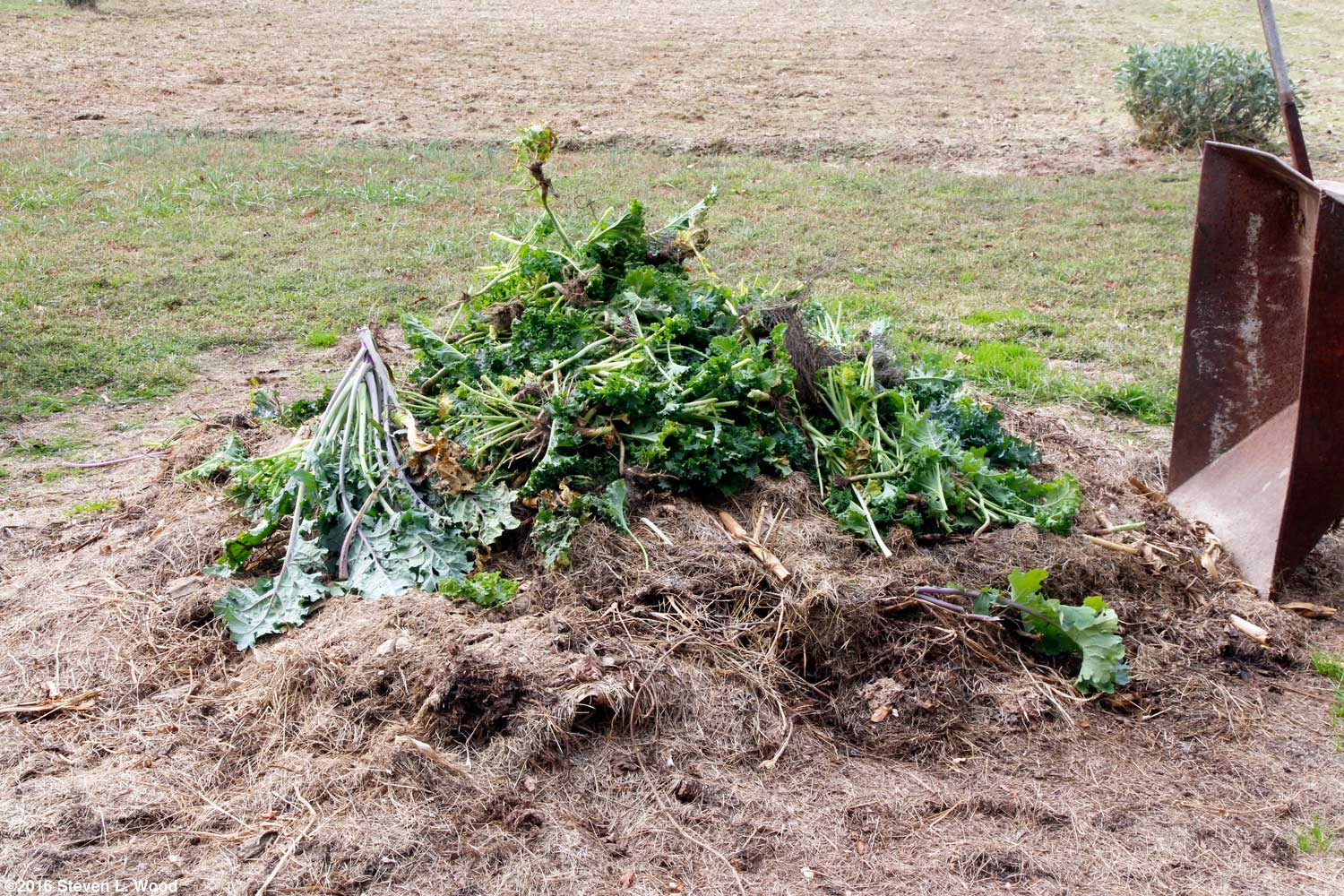
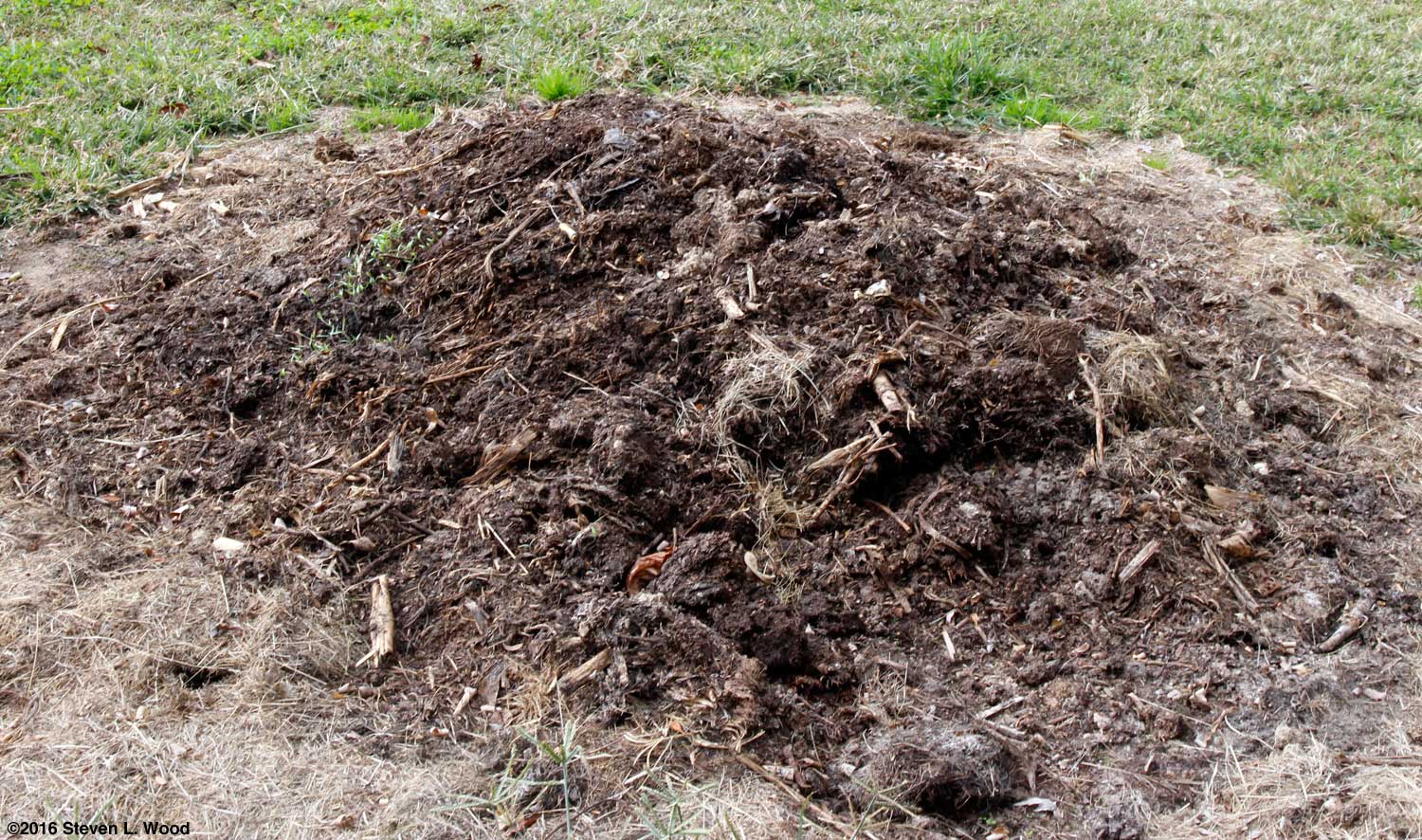
I was rather selective in choosing kale leaves to cook, so we had lots of leaves plus stems to go onto our working compost heap. Interestingly, I didn't find a single bug or worm when washing and stemming the kale leaves. The compost pile will be growing significantly in size this month. I still have the lush vines of our cowpeas and lima beans to add to it, plus the pepper and tomato plants from our two isolation plots. Then there will be lots of flowers to go on the pile when frost takes them, or I decide to pull them early.
A close examination of the pile (or photo) reveals some baby tomato plants germinating. Obviously, the pile didn't heat up enough to kill all the seeds in it. I've had a bunch of zinnia seed heads drying on a cookie sheet for several weeks. Yesterday, I began rubbing the seed off the old blooms. I'd thought that I might need to collect more zinnia seed yet this fall, but ended up stuffing a quart freezer bag full of the seed. Not really for seed saving, I've begun picking dry, brown pods off our cowpeas (Granny's Little Brown Crowder Peas), shelling them, and laying them out to dry. I have plenty of the commercial seed peas I bought a couple of years ago, so these peas will be used as dry peas in recipes I'm exploring online.
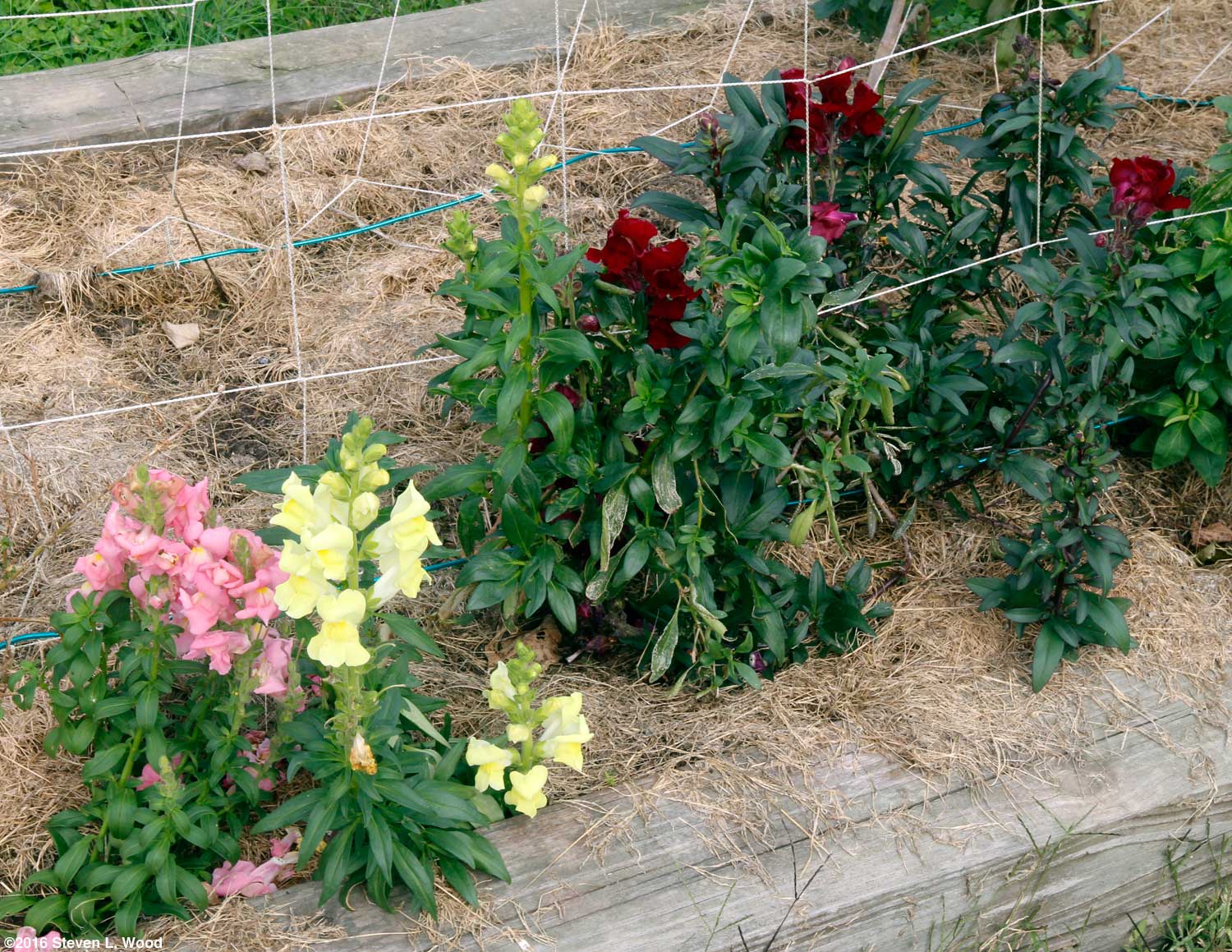
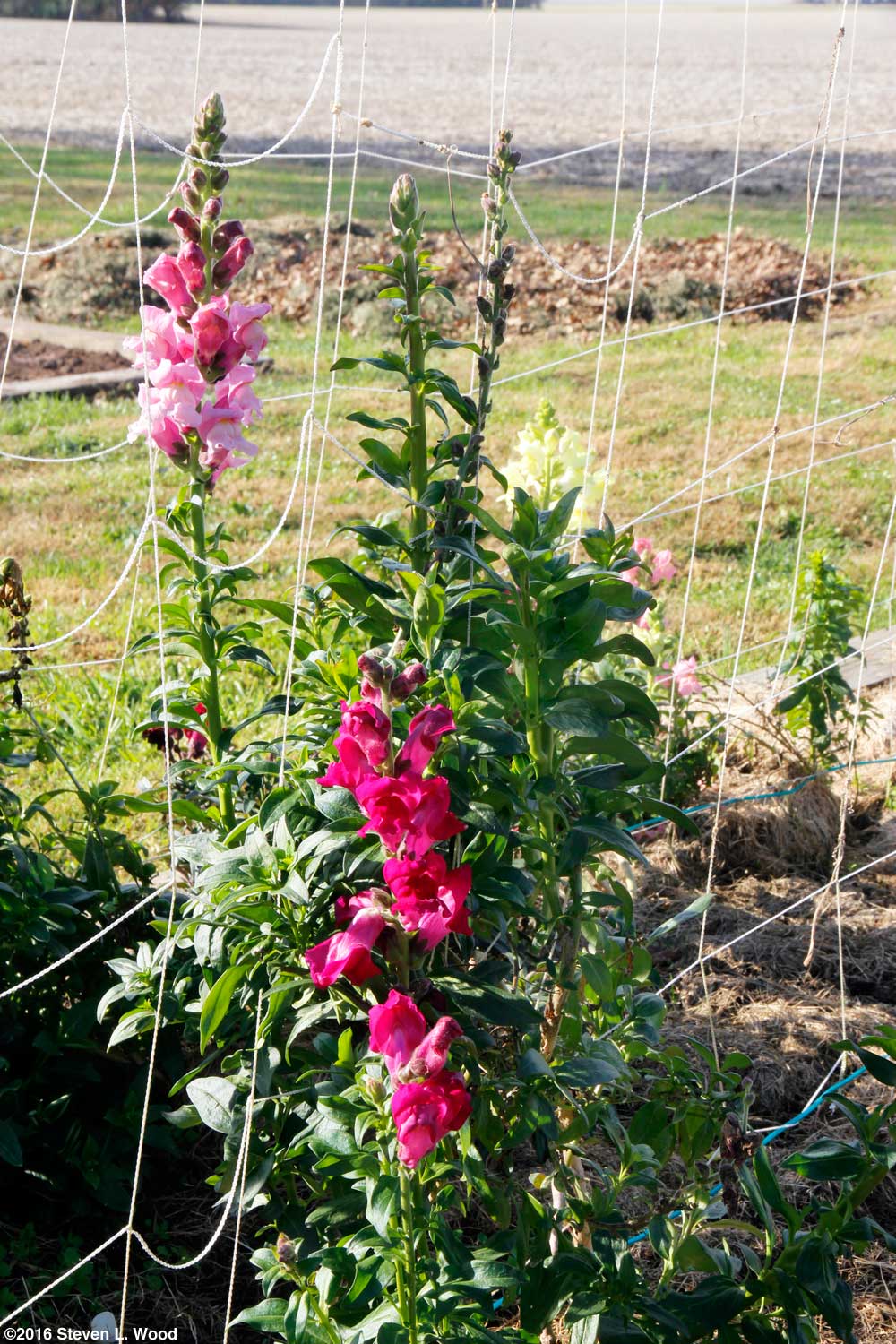
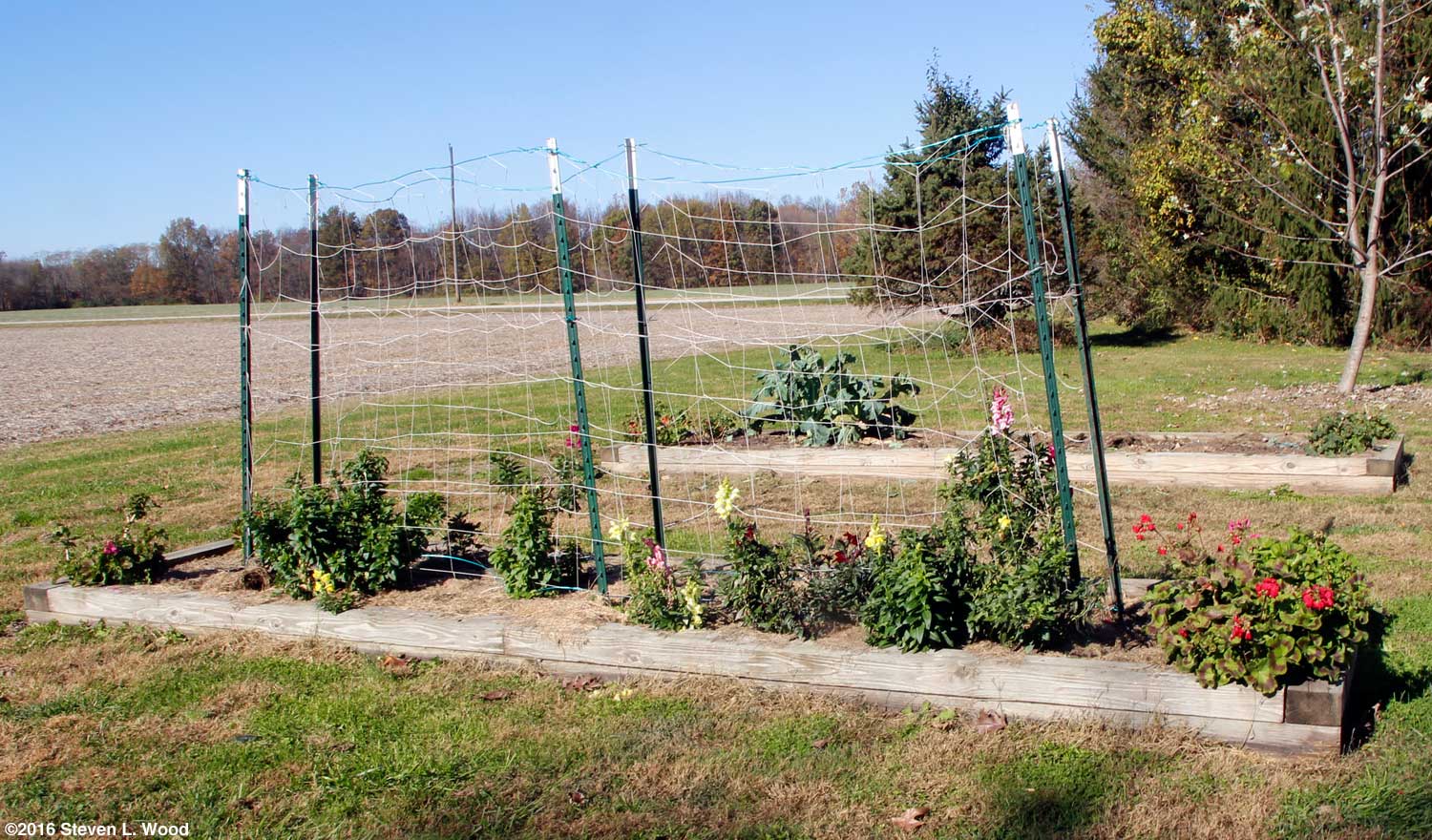
One group of flowers I've been reluctant to pull has held back working the bed where our early peas and later, cucumbers grew. I co-plant snapdragons along the trellises with our peas and cucumbers each year. The snaps get crowded out a bit, but usually not completely. This year, our cucumber vines were especially vigorous, so the snaps really got set back. They're just beginning to put on blooms in volume. Getting back to kale, it can continue producing well past a first frost. So if you have some growing in some ground you don't need to work up this fall, I'd continue to let it grow for additional harvests. I pulled ours because of some faulty garden planning on my part. With crop rotations, our kale row this fall is where I need to plant garlic sometime this month. A little rain this morning makes the flowers in our main raised bed seem to stand out more. Our temperatures are supposed to drop about ten degrees for the next week, but there still isn't a frost in our extended forecast.
Friday, November 4, 2016 - Dill Weed
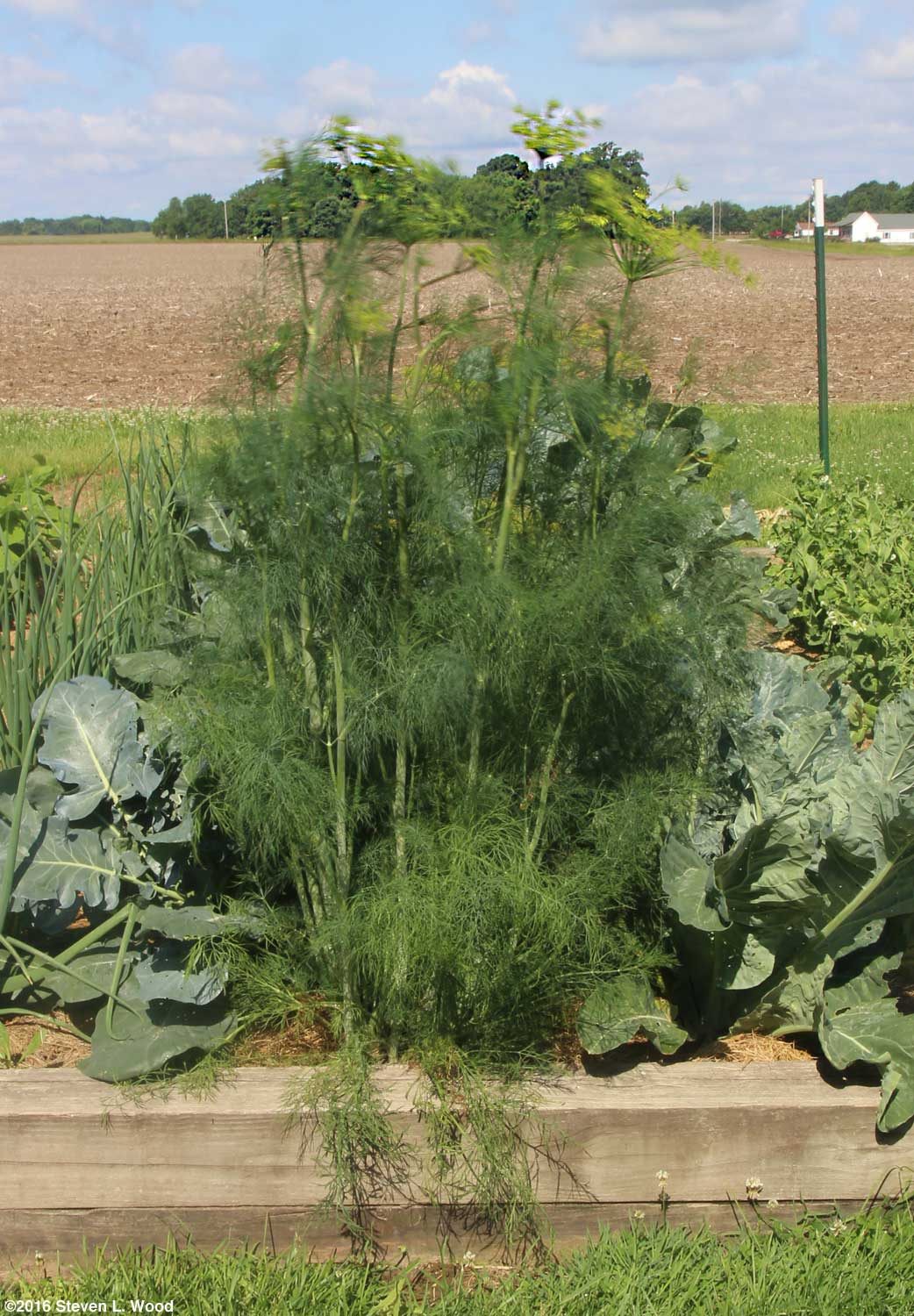
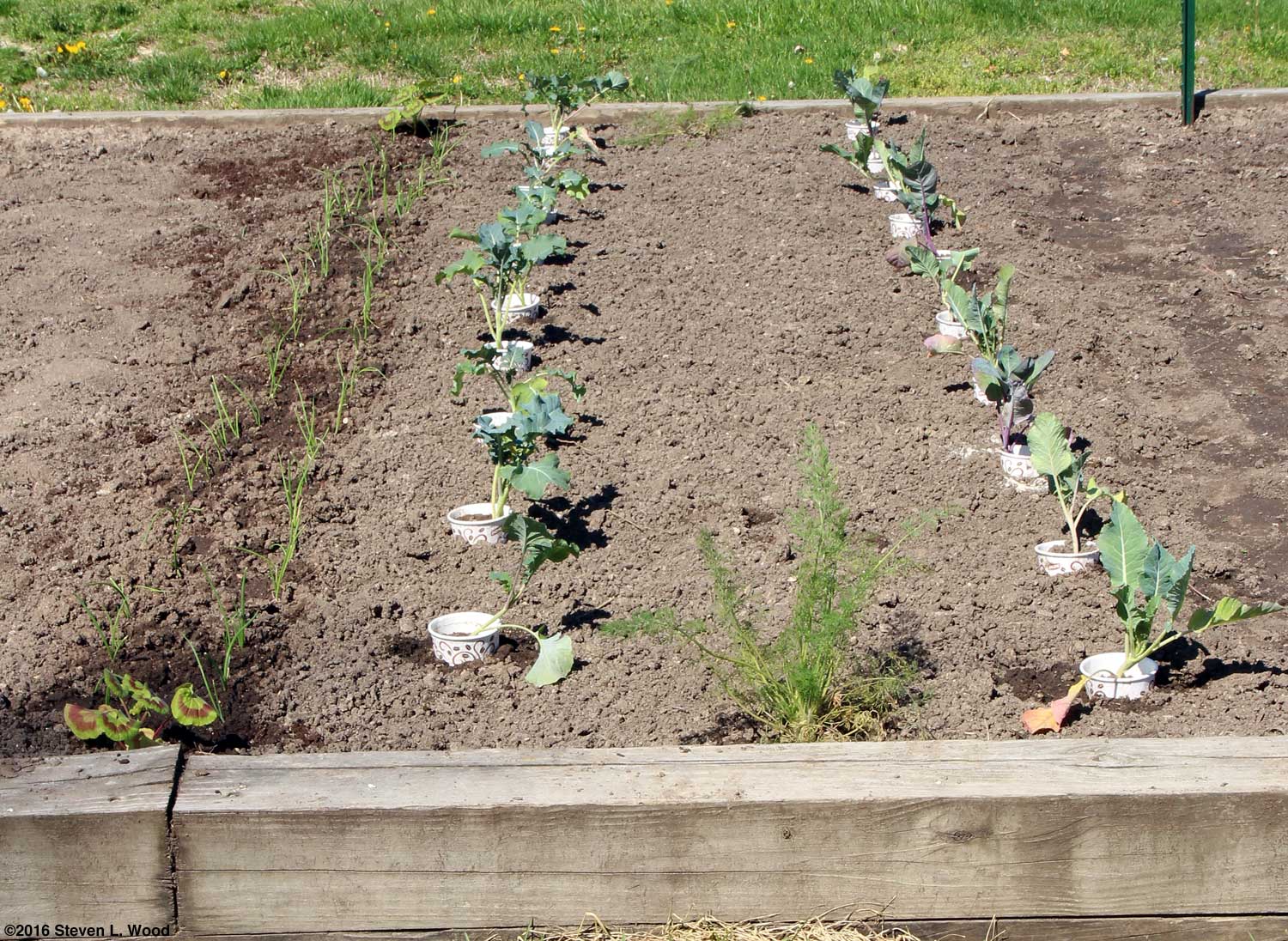
Having built a raised bed around our shallow well this spring specifically for herbs, I finally got some dill transplanted into the ground. Besides the one dill plant I put in the new, raised herb bed, I put dill plants on either end of our spring brassicas. Dill is really pretty easy to grow. I started our dill transplants in several small (3") communal pots in late January. Since dill requires light to germinate well, the small pots went under our plant lights with a clear humidome cover over them. Two weeks later, the dill was up, but the tiny plants were leggy and falling over. They got moved to fourpacks where they remained as they grew first under our plant lights, and later on our back porch.
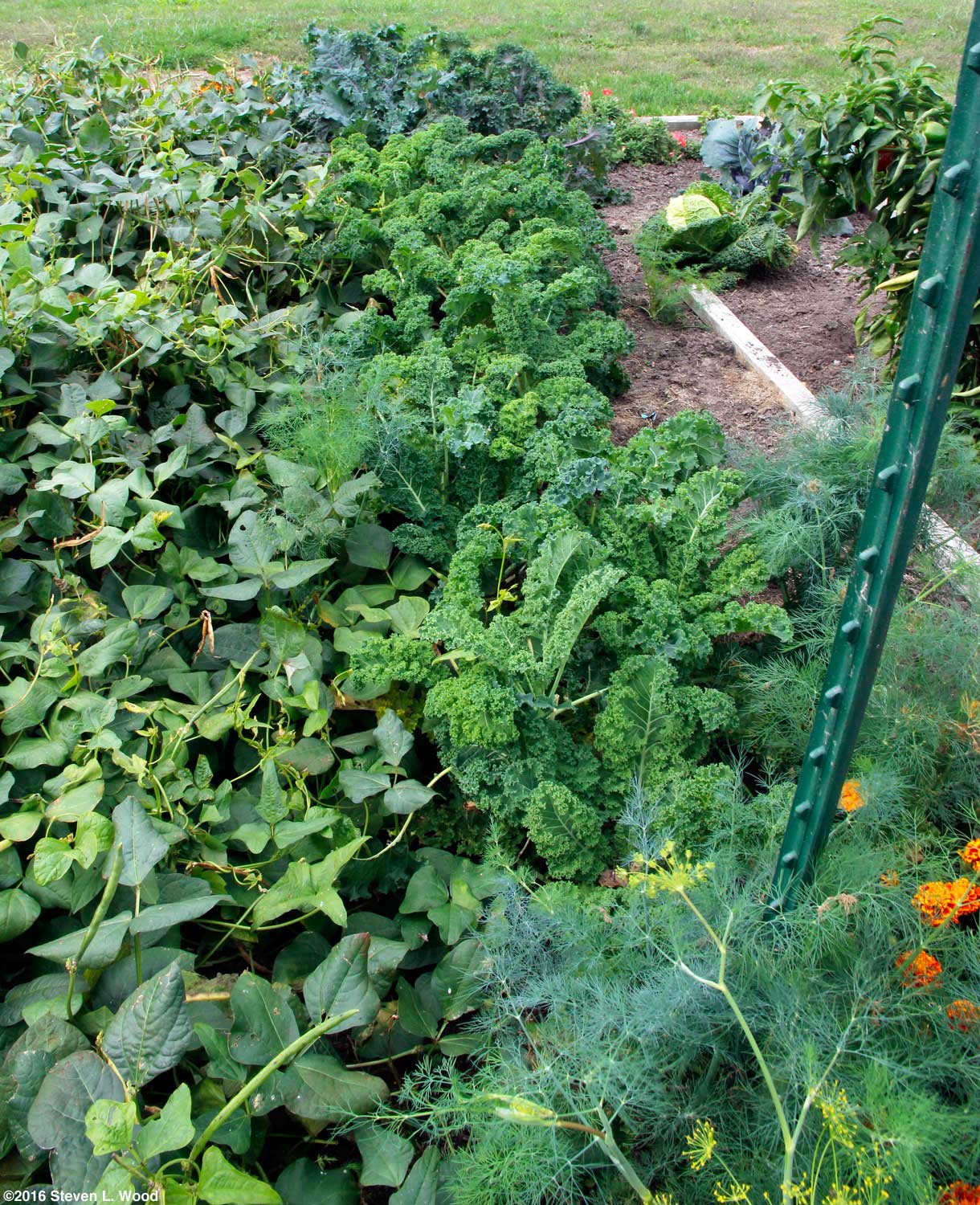
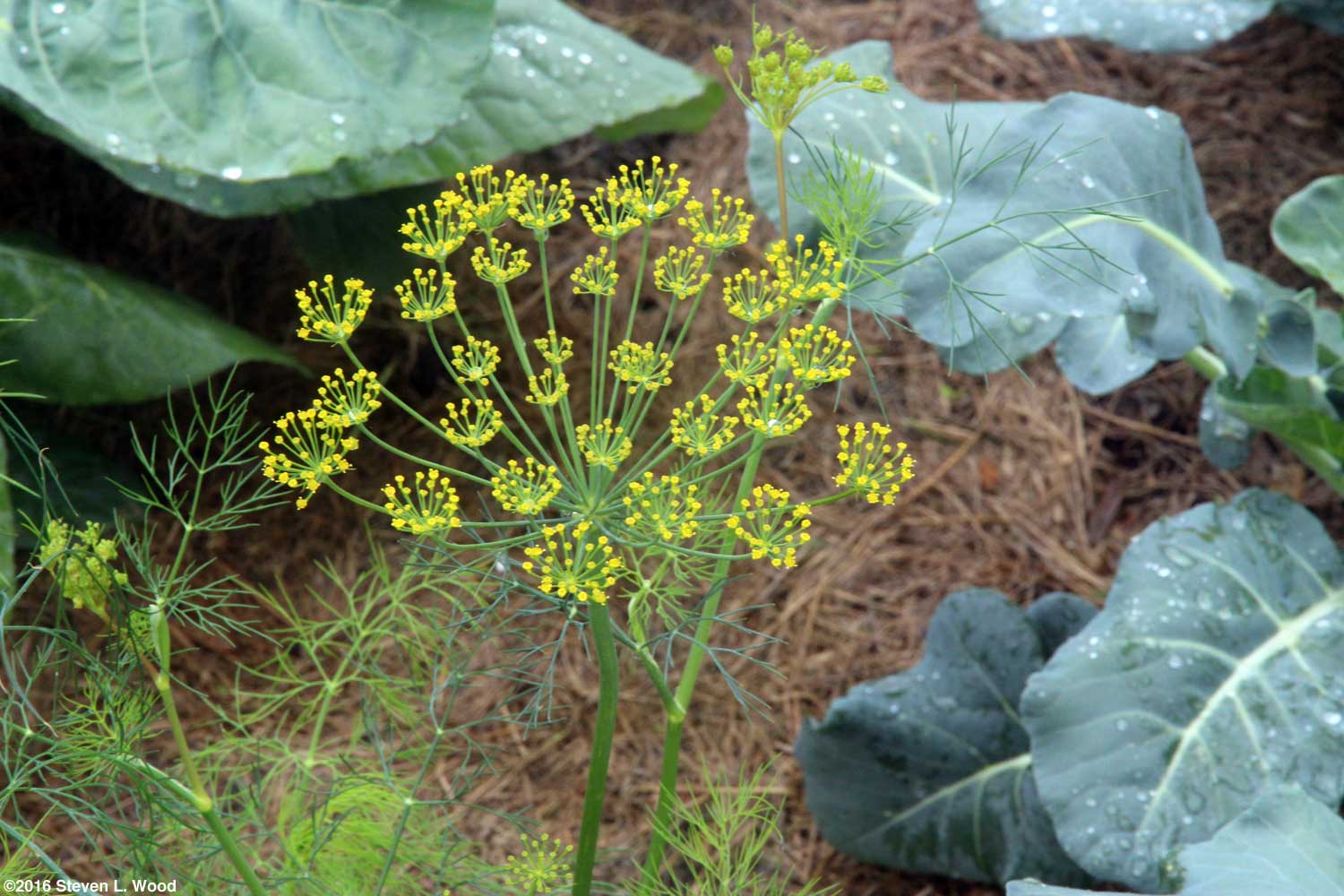
By early June, the dill in our main raised bed had already gotten away from me. It began putting on huge blooms that quickly matured seed. The dill plant in our herb garden wasn't far behind. Most sources I've seen suggest that the time to harvest dill weed, the leaves of the dill plant, is just before or as a plant blooms. When I realized the stage our plants had gotten to, the only thing left to do was to harvest dill seed and be happy with it. The problem for me at that point was that I really had wanted to save dill weed for a recipe my wife named "seduction fish." The recipe also has a similarly named chicken variation, but dill weed is one of the things that makes it special. Fortunately for me, dill weed is aptly named, as dill plants shed lots and lots of viable seed as their blooms dry. We ended up with volunteer dill plants in and around our row of fall kale that was close to where the spring brassicas had grown. Having missed getting any dill weed with our initial planting, I let the dill grow. Despite stiff competition from the kale and a nearby row of rambling cowpeas, the volunteer dill was approaching blooming stage this week.
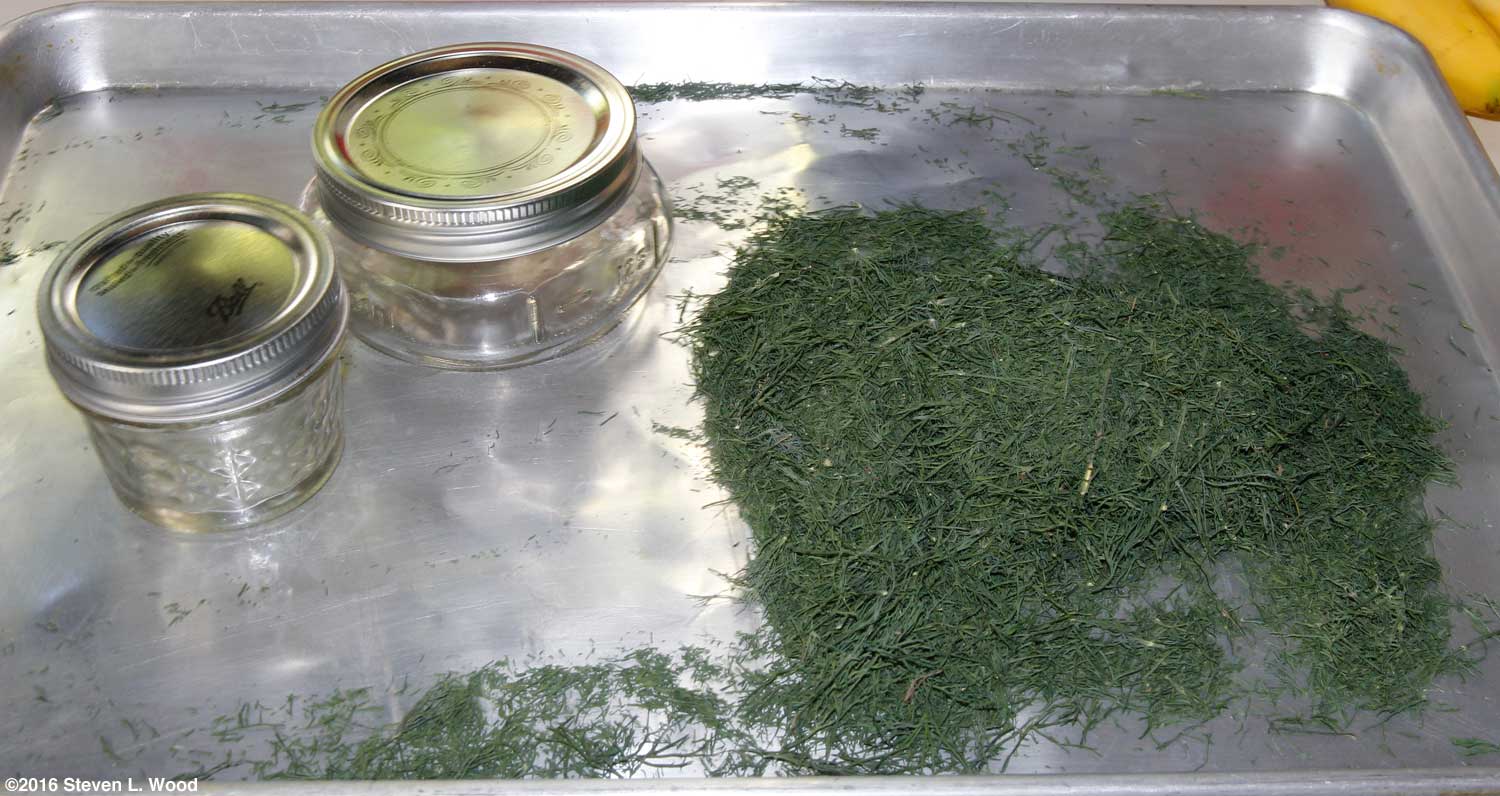
As usual, the dehydrator did its work overnight perched on top of our big freezer in the garage. I once about ran Annie and I out of our house trying to dehydrate garlic in the house. Since then, almost all dehydrations take place in the garage, although the smell of dill drying is far less pungent than garlic.
One doesn't have to use a dehydrator to preserve dill weed. Oven drying or air drying in ventilated paper bags can also work well. With our food dehydrator out (actually with the shelves now drying on the dish drainer), I'm considering picking rosemary tomorrow morning to dry and save. I've been dilatory about harvesting and drying herbs this year, as we have an ample supply of basil, sage, parsley, and oregano from previous gardens. Rosemary and possibly thyme are two I'd still like to save, although our two thyme plants look pretty sad right now. After enjoying the fragrance of dill while I worked the crops growing near it, I can't imagine having a garden again without some dill growing in it.
Sunday, November 6, 2016 - Our Last Ripe Tomato
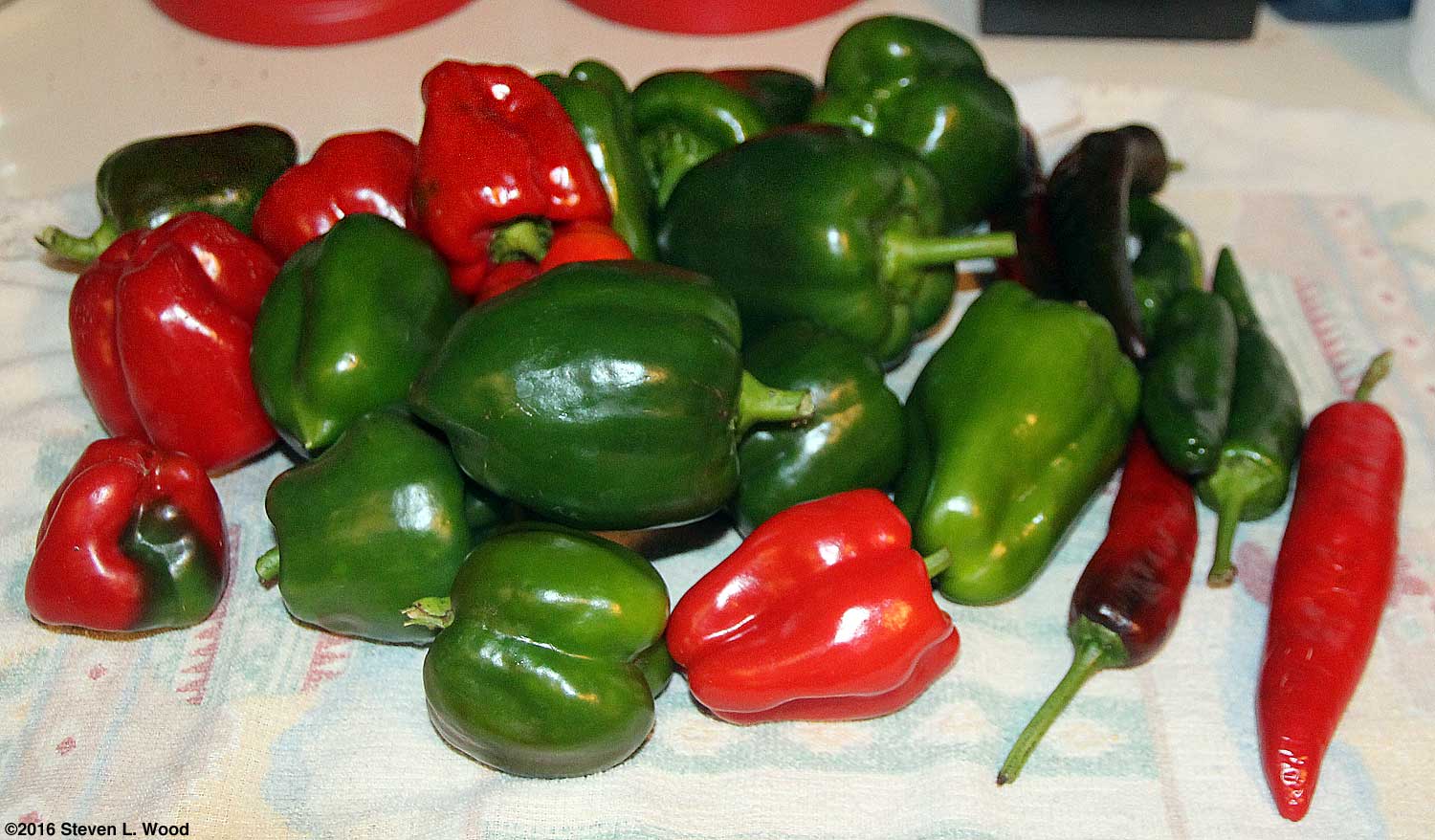
In getting ready for next season, the isolation plots simply had to come out if I didn't want to be clearing them in the snow with the ground frozen. I have, however, still left our three Earliest Red Sweet pepper plants in our main raised bed, as they continue to produce lots of small red peppers.
Before trimming the rosemary, I hacked back the two basil plants in our raised bed of herbs. The plants were in full bloom, frequently visited by bumblebees. The bees will be okay, as we still have two dwarf basil plants in full bloom in our main raised bed. Cutting back the basil revealed some rather healthy parsley plants the basil had been crowding. I may have another candidate for drying this season. I'm amazed at our late gardening season. We keep harvesting produce that should have been killed by frost almost a month ago. Each and every gardening season is unique, so we'll keep plugging along this fall until the weather ends the season. Monday, November 7, 2016 - What's This?
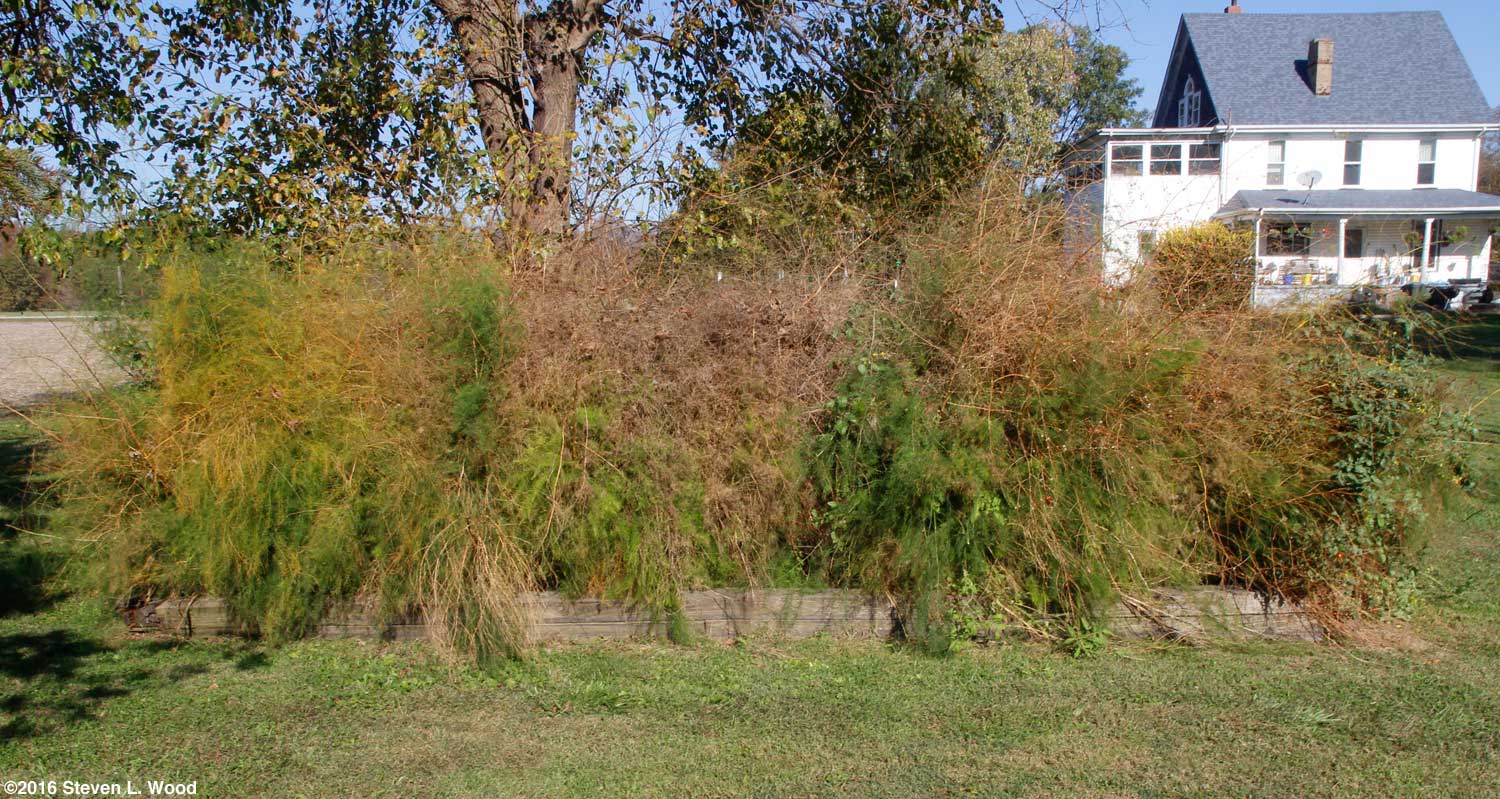
A good, hard freeze will remove any ambivalence I might have felt about pulling some of our late crops to get our raised beds ready for next spring. We have a bed of fall brassicas, three bell pepper plants, a row each of cowpeas and lima beans, and lots of flowers still actively growing in the raised garden beds. Our asparagus patch is browning, other than where some volunteer tomatoes got going. When I mowed yesterday, I windrowed the leaves and grass clippings, later picking them up with our lawn sweeper. We'll need a good bit of mulch to cover our main raised bed. The garlic we'll plant later this month does better with a bit of mulch over the ground, so long as you pull back the mulch as soon as the garlic leaves begin to emerge. Mulching our planned areas for early peas and spring brassicas allows planting both without having to till first in the spring.
Tuesday, November 8, 2016 - Election Day (U.S.)
Our Best Garden Photos of 2016 I finished up and posted our Best Garden Photos of 2016 feature Sunday night, but didn't announce it here until now. I really thought of renaming it "Some So-so Photos I Sorta Like from 2016," because the shots this year aren't all that impressive once you get past the Earliest Red Sweet peppers photo. My second favorite of the bunch is one titled Hello of a praying mantis peeking at me from the far edge of a hummingbird feeder.
Wednesday, November 9, 2016 - Clearing Our Main Raised Garden Bed
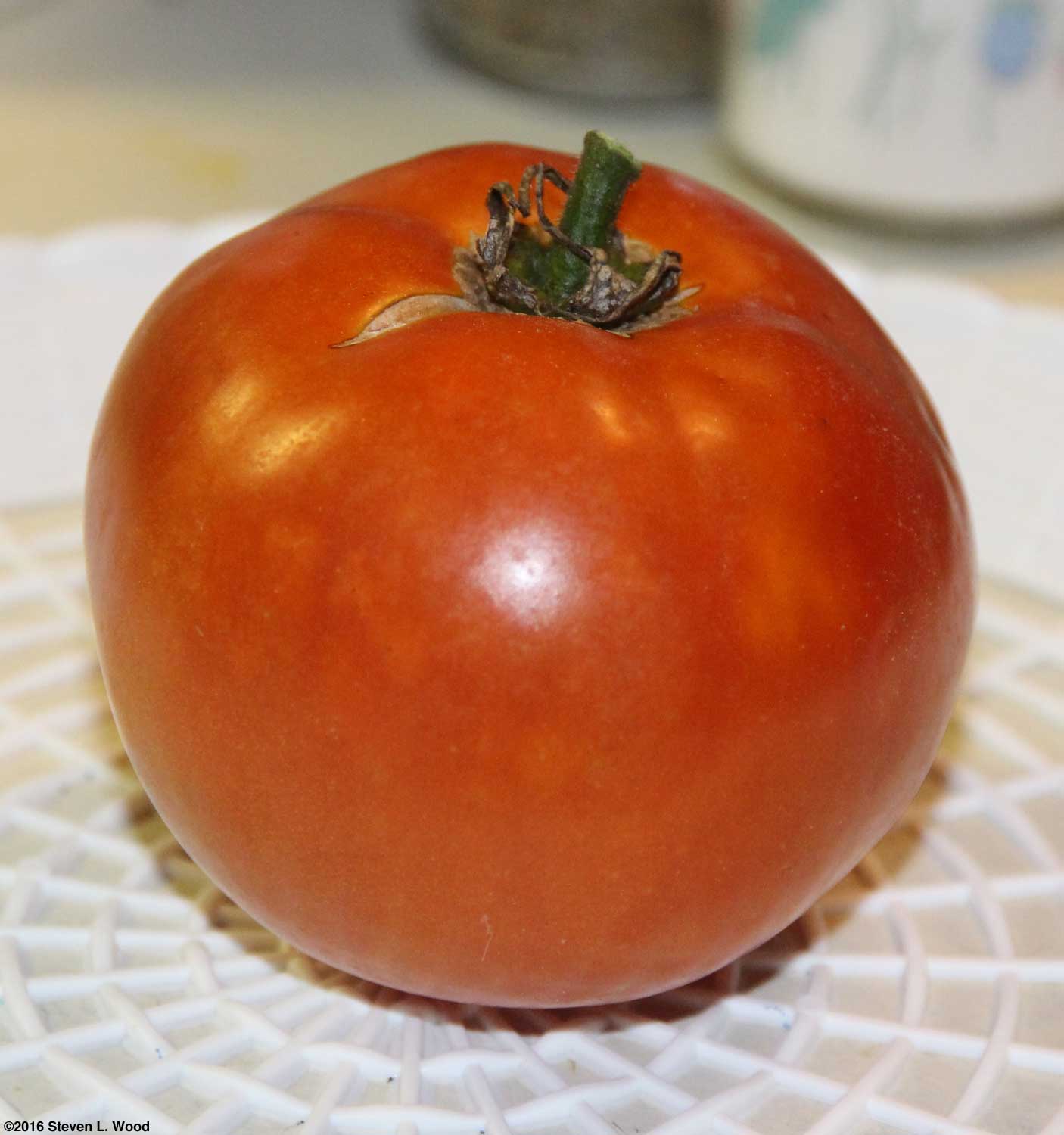
Our three Earliest Red Sweet pepper plants yielded another nineteen peppers as I pulled the plants and cages. We also got a few more dried cowpeas and our first lima beans. The limas simply didn't have enough time this season to mature many bean pods. Using our last homegrown tomato of the season, we had BLTs for supper tonight. We also had some of the freshly picked lima beans.
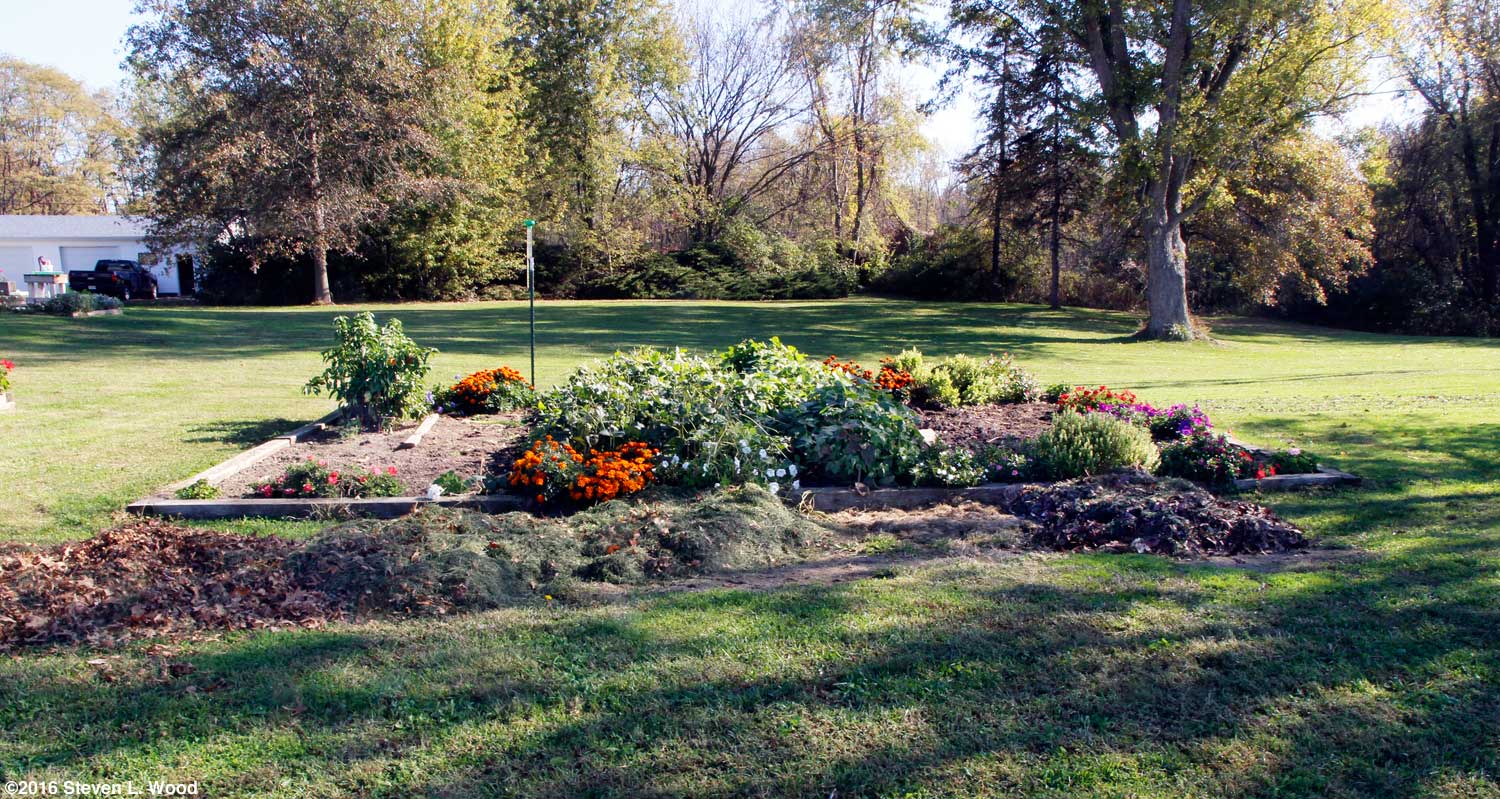
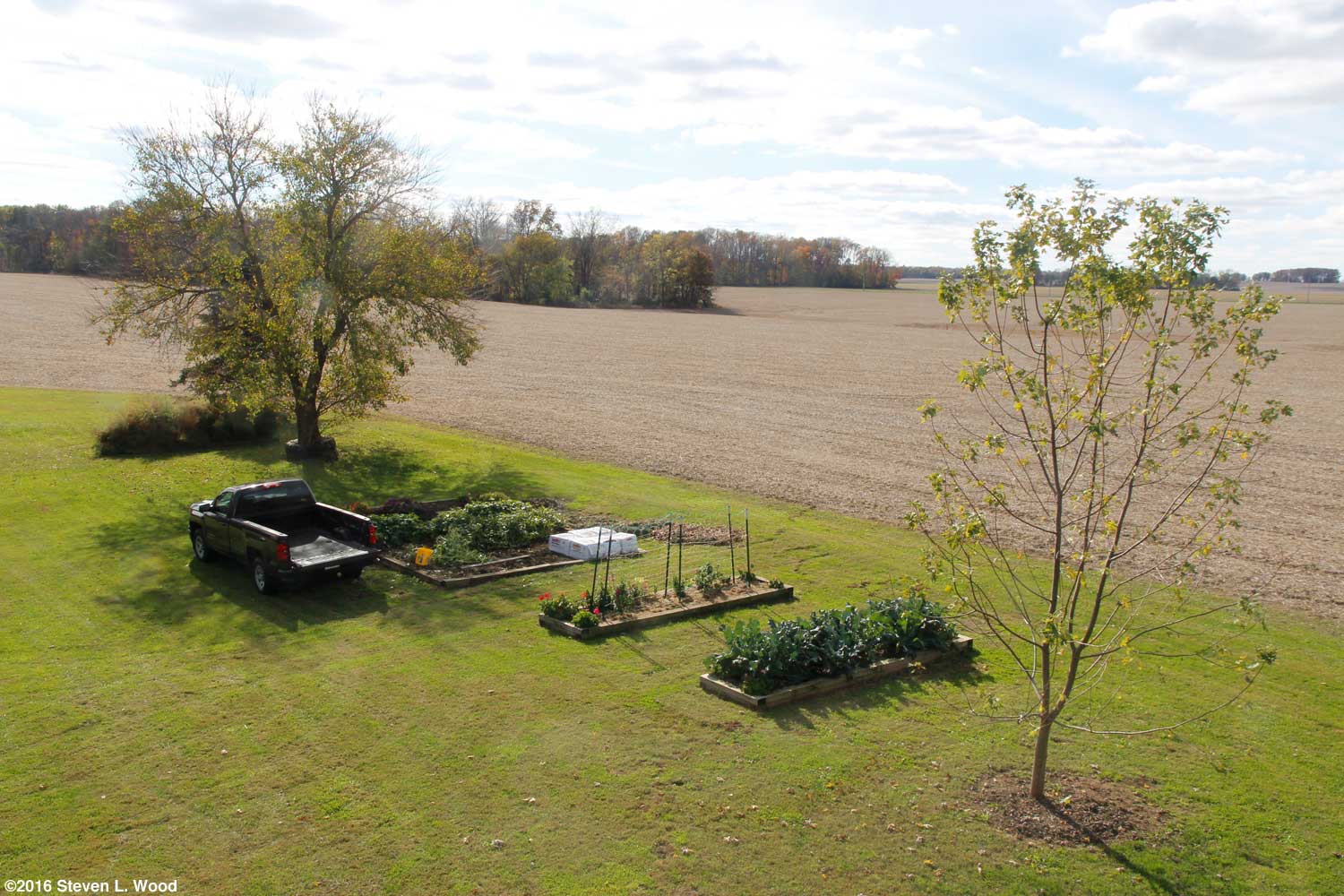
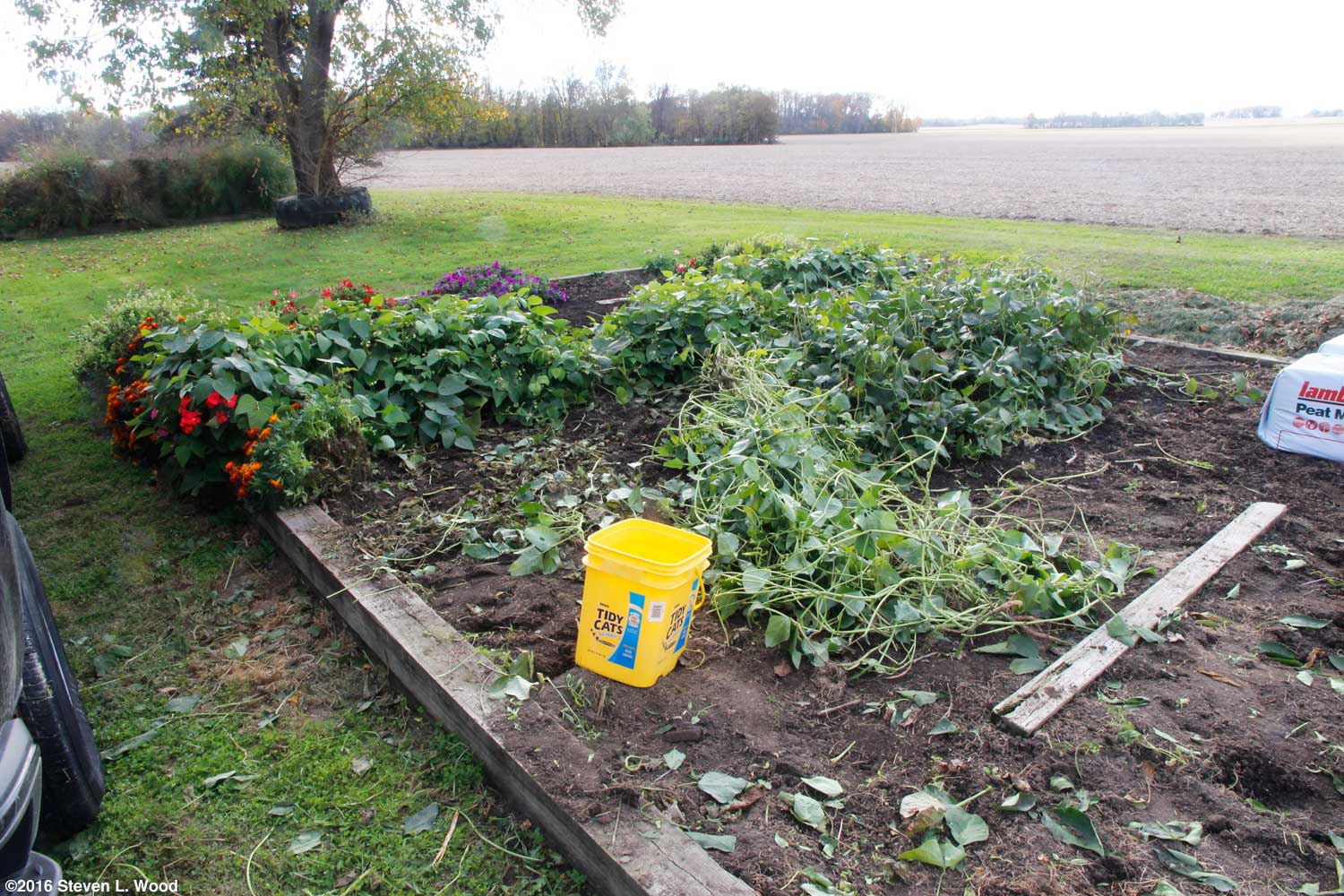
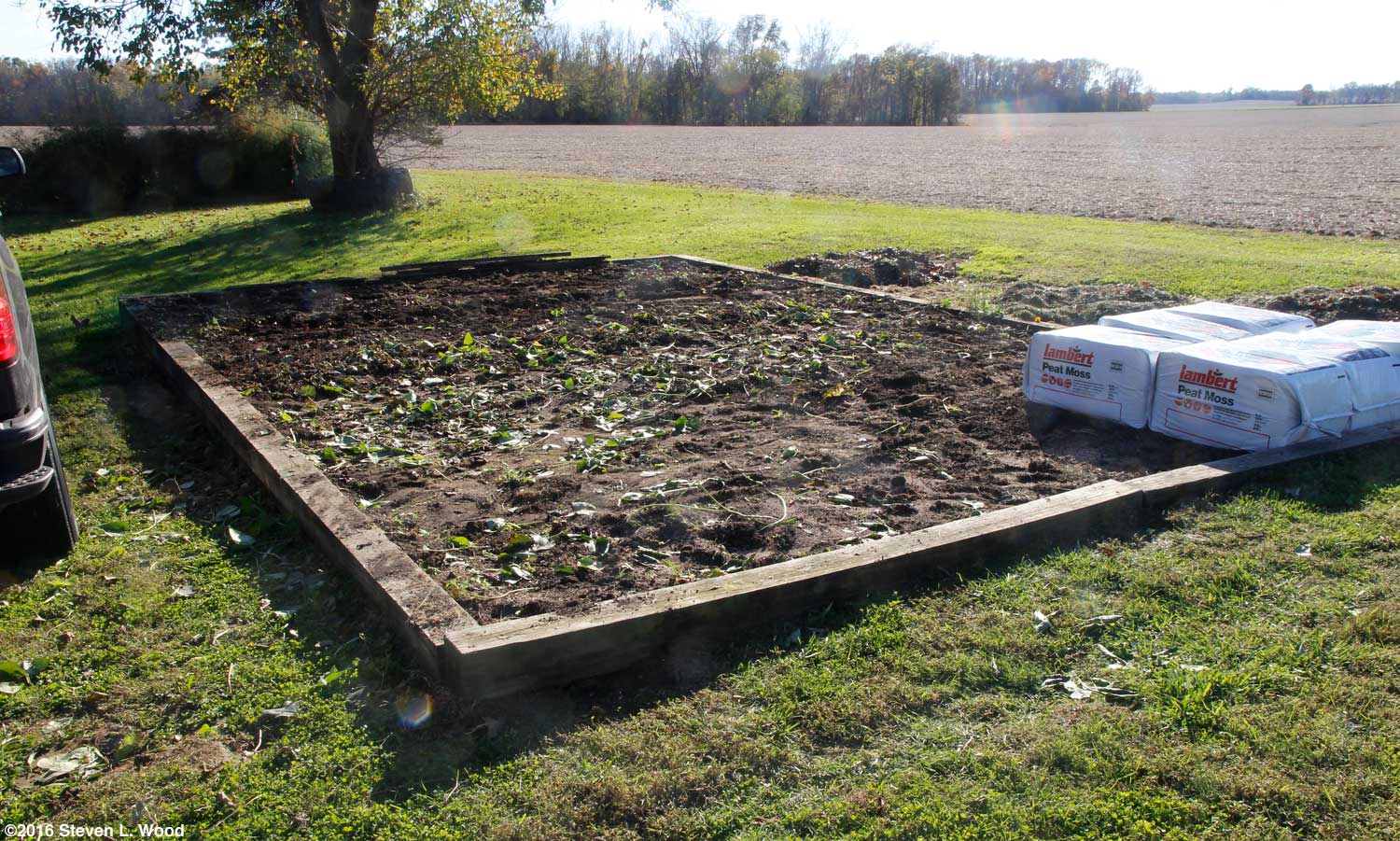
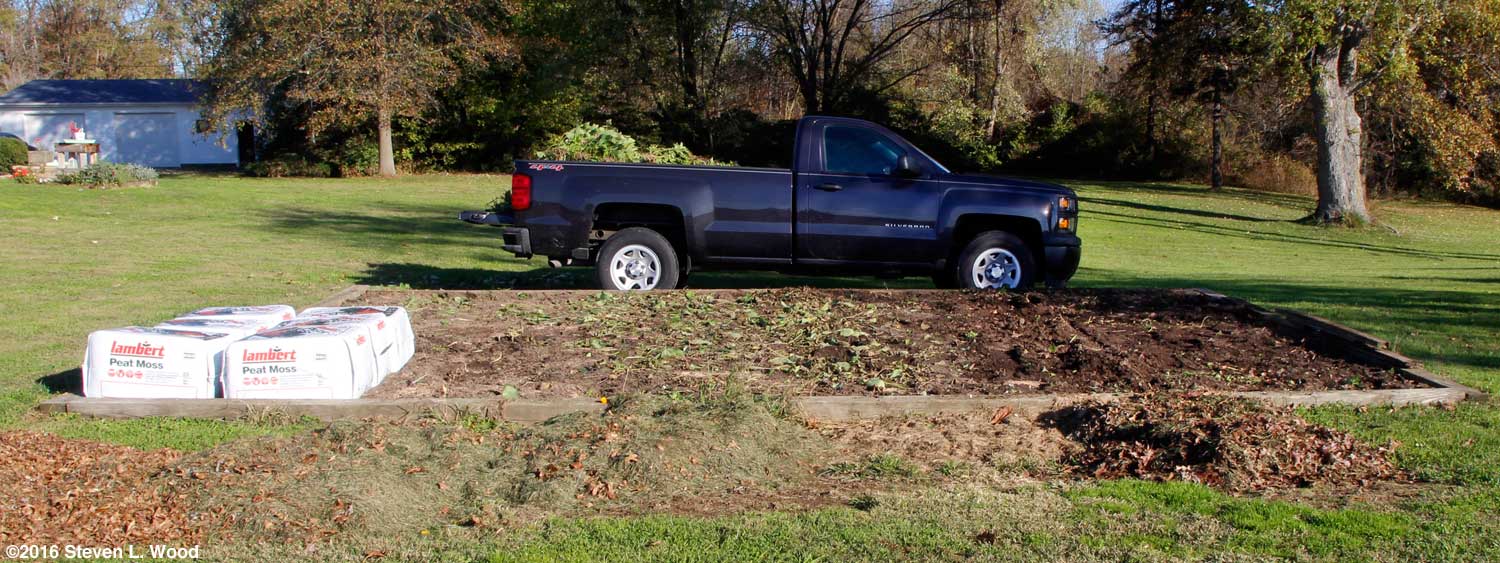
Because of the volume of plant material pulled, I opted for using our pickup truck to haul the pulled plants and vines to our compost pile. It took two loads to move it all. Our compost pile will compress a good bit in just a week or so. We still have brassica leaves, more flowers, and possibly asparagus stalks to add to it. I usually don't compost asparagus stalks, as they can be slow to break down. But I'm running out of washes around the property to throw the spent stalks into. As I began my work today, I dumped the six bales of peat moss I purchased yesterday in the main raised bed. As I worked today, I noticed that the soil level in our main raised garden bed hadn't dropped as much as I expected. I may not have to use all the peat moss to raise the soil level there. While clearing the raised bed, I pulled our rain gauge and the T-post it hangs from. The plastic rain gauge wouldn't survive a winter of freezes and thaws with water in it. I'll now have to rely on a couple of nearby Weather Underground reporting stations (1, 2) for our precipitation totals. My next big gardening task will be to till peat moss and lime into the main raised bed. The ends of the bed will get mulched to make planting early peas and brassicas easier next spring. I'll save some mulch to cover the garlic I'll soon plant. Even though I always have planting garlic in October as a goal, the warm weather this fall made that inadvisable.
Friday, November 11, 2016 - Veterans Day
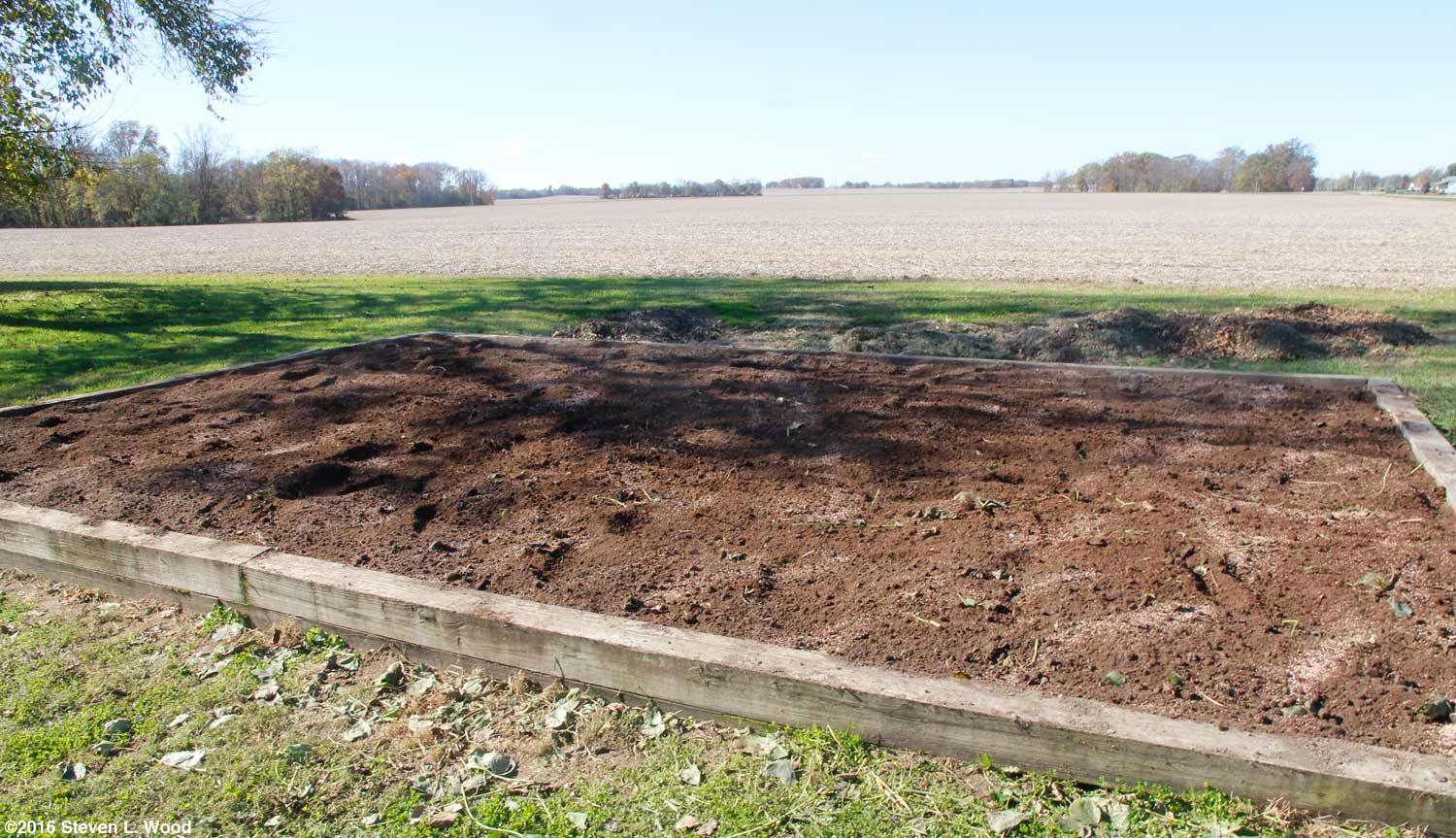
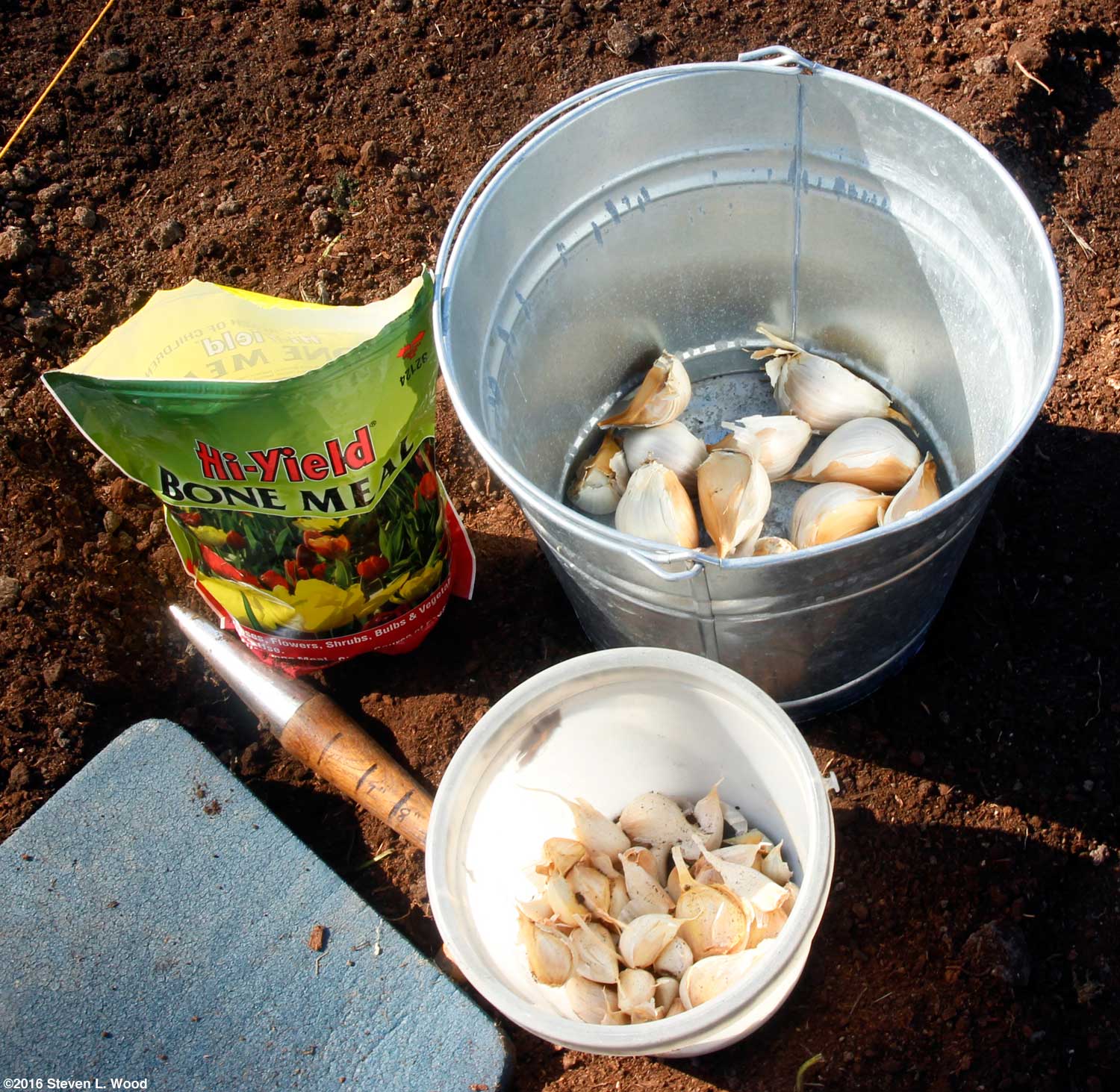
I finished the bed renovation today. I began by spreading fertilizers over areas for specific crops. The last of our saved, ground egg shells went onto the area we'll use for spring broccoli and cauliflower, as calcium in the soil helps ward off club root disease. The area where I'll soon be planting garlic got a good dusting of bone meal and Muriate of Potash to add necessary phosphorus and potassium to the soil. The center of the bed where we'll probably grow peppers got a little Maxicrop Soluble Seaweed Powder which I have found adds something to the soil our pepper plants need to produce good fruit. The entire bed got a light sprinkle of 12-12-12 fertilizer, although a lot of the nitrogen may leach out of the soil through the coming winter.
The peat moss tilled into the soil easily. I overlapped my passes with our 22-year-old senior tiller to integrate the soil amendments as much as possible. Since we have trouble with Japanese Beetle larvae (nipping roots) and moles (going after the grubs), I topped the bed with a good bit of Milky Spore. I decided to wait until I get our garlic planted before applying any mulch to the bed. Then I'll mulch the garlic and use any remaining mulch to cover the areas where we'll plant early peas and our spring brassicas.
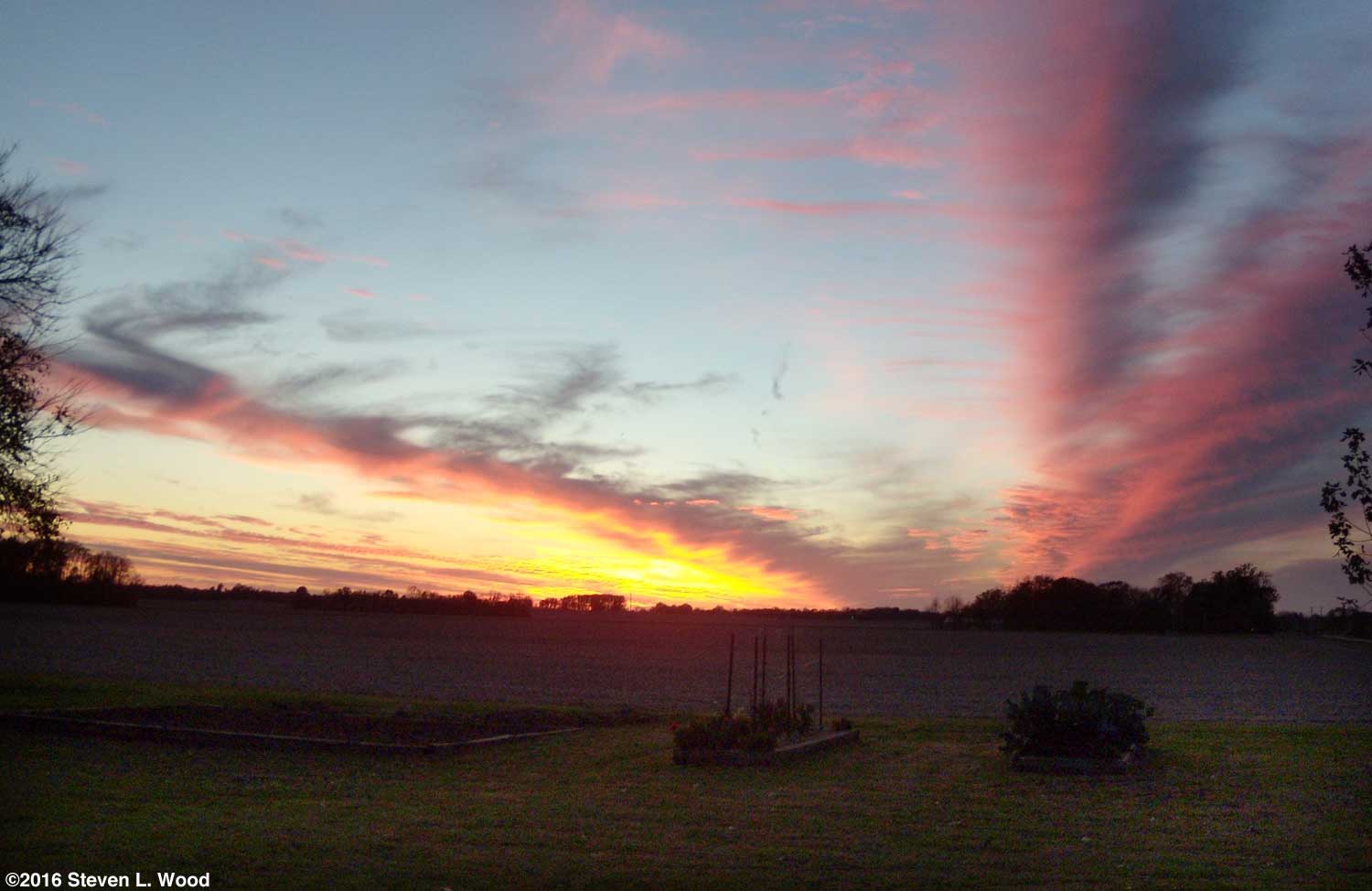
As I prepared to do the final edit and upload this posting, I looked outside and saw a gorgeous night sky that wouldn't last long. I grabbed an old camera I leave in the kitchen and started snapping shots.
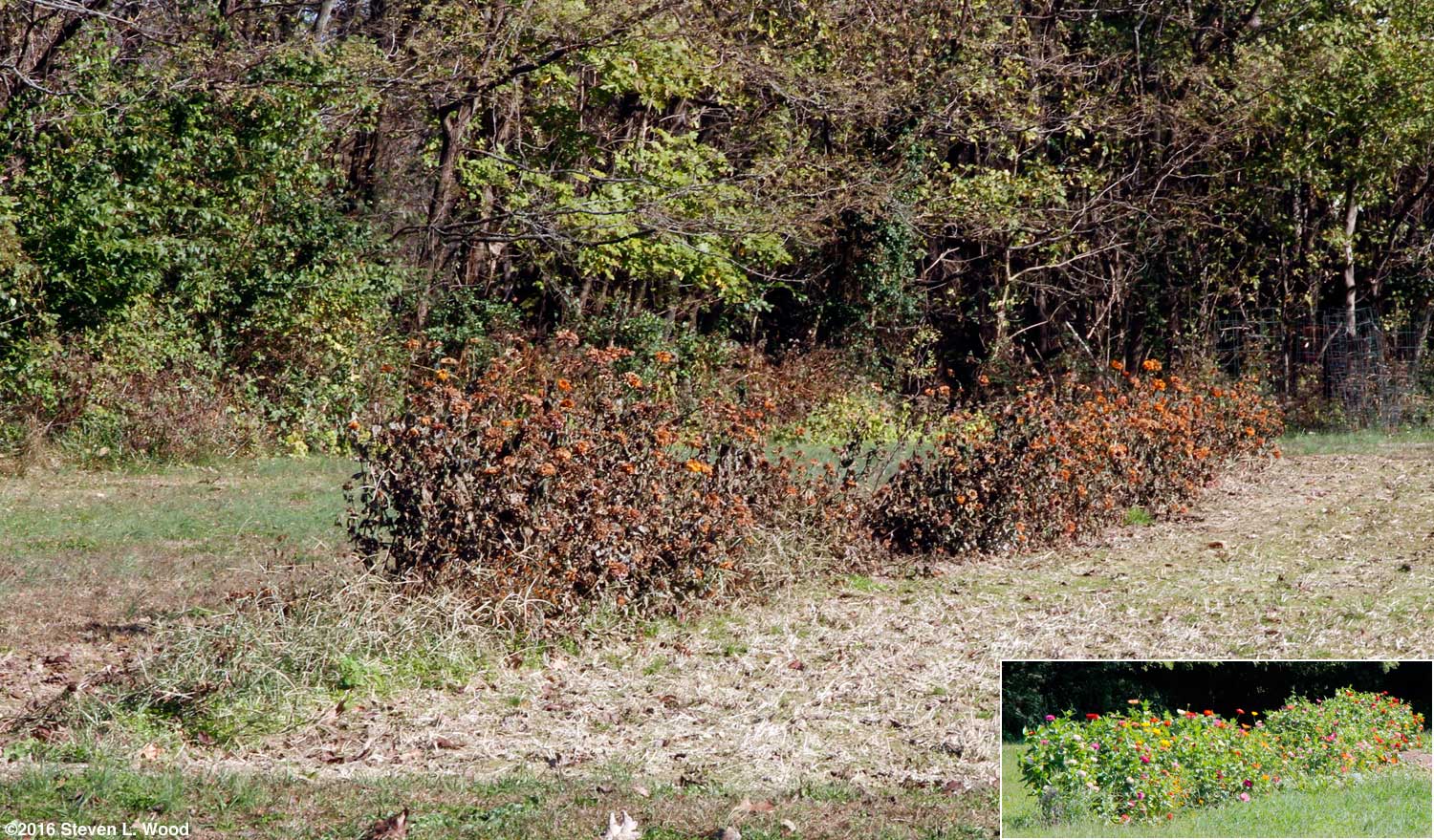
I started pulling the spent zinnia plants, but quickly realized it was more of a job than I was prepared to do yesterday. Just pulling about seven feet of the row filled my garden cart. I'll have to go back with the truck to hold all the dead plants when I pull them. The spent zinnias went over a wash I've been filling with used cat litter. While the litter stops the erosion, it also is like quicksand if you step in it or get a wheel in it. I've done both, but just once, each.
If you happen to have some frost blackened zinnias like the ones shown above, all is not lost. These zinnias were the result of almost all saved seed from previous years. Finding the most blackened, but not rotting blooms and rubbing the seed out of them is a fairly easy task. After harvesting the seed, one should spread it out and let it dry for a few weeks before storing it. I'll probably collect some more zinnia seed as I take out the spent plants this week. I plan on planting another long row of zinnias along the west side of our East Garden next spring. I think most of our zinnias trace their ancestry back to the old, reliable State Fair And if you're growing a butterfly garden, zinnias draw lots of butterflies and moths.
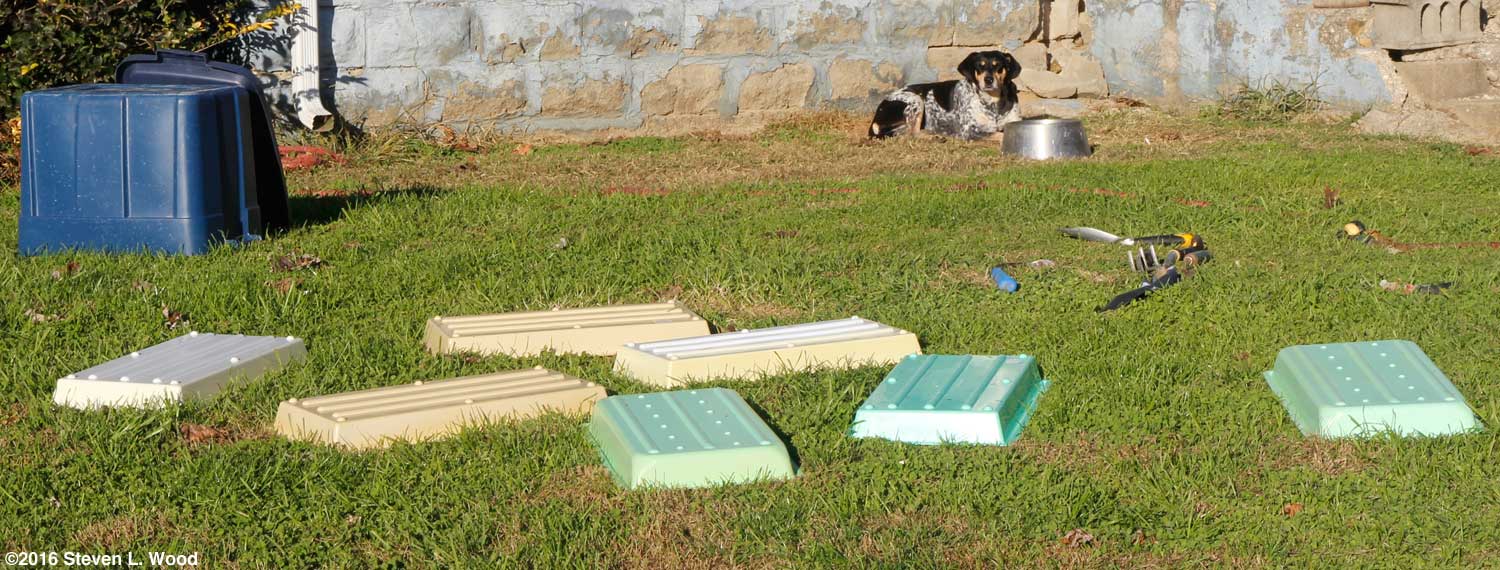
I stuck a bunch of large pots in the bleach bath when I was done with the trays. When they're clean and disinfected, I'll move on to cleaning our used, but flimsy 1020 standard plastic flats. I bought a bunch of new flats this fall, but one never seems to have enough seed flats and trays when you grow all of your own transplants. My hand garden tools also got a good scrubbing to remove encrusted soil on them. Once dried, they'll go into the plastic tub where I store our garden chemicals. I bought a new, larger tub this week to store the chemicals, as the lid for the old one had a crack in it. I don't want chemical vapors escaping from the tub. The new chemical tub got moved to the basement for the winter.
Wednesday, November 16, 2016 - Garlic Planted
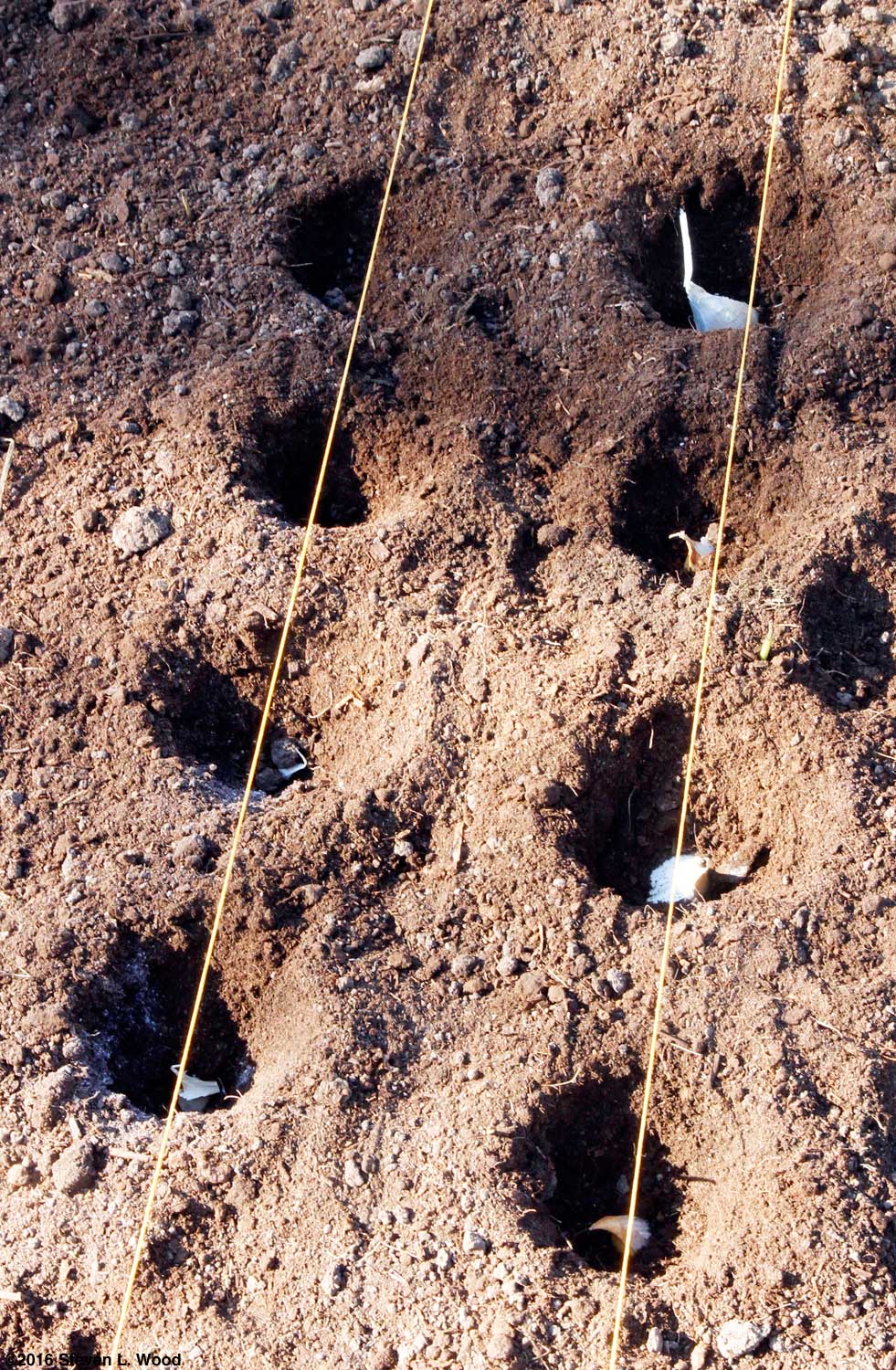
I staked our garlic rows yesterday, marking four rows just eight inches apart from each other. My first job today was to select about 20 elephant garlic cloves and 60 regular garlic cloves to plant from our saved garlic. Once I got out to the garden, my first step in planting was to rake the garlic bed smooth. I'd left a lot of footprints in our main raised garden bed while sprinkling first Milky Spore, and later, Maxicrop over the bed. The Milky Spore I spread last week already has Japanese Beetle larvae emerging, hunting somewhere to go to get away from the biological product that kills them. My package of Maxicrop Soluble Seaweed Powder had gotten moisture in it, making it impossible to sprinkle it in powder form across our garden. Instead, I began mixing the lumps of Maxicrop with water and sprinkling it across all of our garden beds, including some areas in our East Garden plot, to add trace elements to the soil.
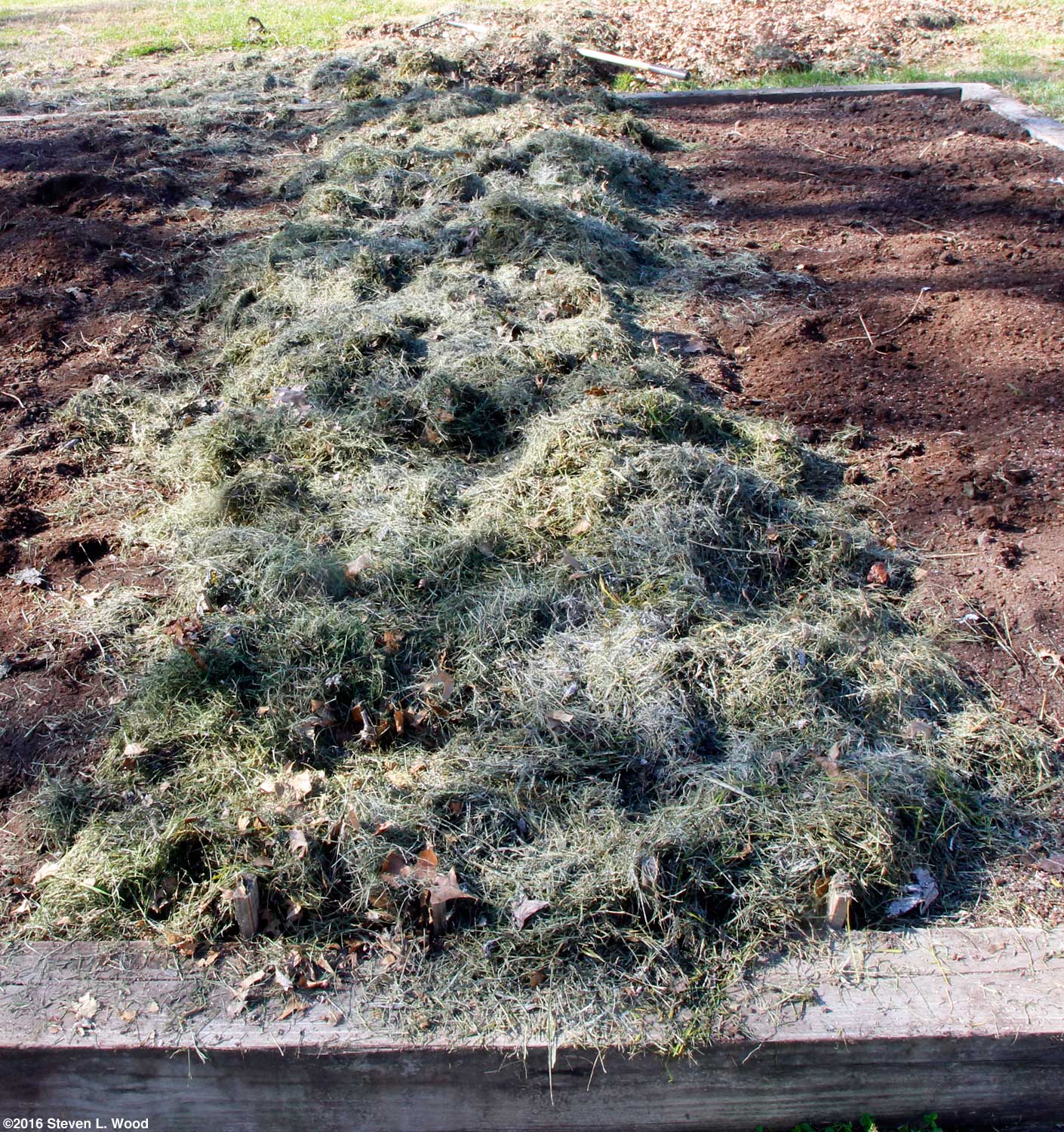
I could have quit at that point, but our garlic seems to do better with a little winter cover. I spread a heavy layer of grass clippings and leaves over the garlic rows. The mulch should help prevent heaving from frequent freezes and thaws. It will also help hold in soil moisture...once it finally rains (or snows) again. Note that winter mulch over anything, including garlic will probably matt some. We have to pull our mulch in late February or early March. If left in place, some of the garlic plants would die from not being able to push through the matted mulch to reach sunlight. After mulching the garlic, I had enough mulch left over to spread over our areas for next spring's early peas and brassicas. By preparing the ground in fall and mulching it, I can just pull back the mulch in March to plant peas and do the same in early April to transplant broccoli and cauliflower.
I began our how-to feature on Growing Garlic, "Garlic is one of the easiest, most trouble free and productive crops one can grow in a home garden." If you like garlic and haven't grown it before, I really recommend adding some to your garden. Finding garlic to buy at this time of year is usually difficult, but Burpee seems to still have a good supply. Having said and written that stuff, we've had problems in the past with our dogs digging in our garlic planting when going after moles (thus, the heavy use of Milky Spore in our garden to kill the Japanese Beetle grubs the moles are after). We also had to add nitrogen fertilizer during the spring to our garlic planting this year. That was a new one for us, but we also harvested one of our best crops ever of garlic this year.
Saturday, November 19, 2016 - First Seed Catalog
While HMOS carries a lot of seed varieties that we use, I was especially pleased to find a new, open pollinated storage carrot offered, Dolciva. It's supposed to taste great (What seed catalog says their product tastes terrible?) and store for an extended period. Since we expect our fall storage carrots to last until spring, this one sounds good. The one drawback I saw in the description of the new variety was its 105 days-to-maturity rating. Most of the carrot varieties we've grown the last few years have days-to-maturity figures in the 50-65 day range. I'll need to do a little figuring on when and where to plant the variety for fall harvest. HMOS also offers the Who Gets Kissed open pollinated, supersweet sweet corn variety and the open pollinated Abundant Bloomsdale spinach variety. For two straight years, deer (and possibly raccoons) have eaten all of our sweet corn, so I can't evaluate the Who Gets Kissed variety. The Abundant Bloomsdale spinach variety they offer is terrific. (Our seed for it came from the Southern Exposure Seed Exchange last year.) I'm really glad to see seed houses offering good, new, open pollinated seed varieties. We saved seed from our Abundant Bloomsdale spinach this year, but obviously, we'll need to order more of the Who Gets Kissed seed. A year or so ago, High Mowing Organic Seeds began including the cost of shipping and handling in the price of their seed packets. I thought this was a great idea, as I often want to order just one or two packets of seed from a seed house. Sadly, that practice appears to have not worked out so well for them. This year, HMOS charges a relatively cheap $2.95 shipping charge on orders that total less than $10. Larger orders still ship free. High Mowing Organic Seeds will undoubtedly be posting a downloadable version of their seed catalog sometime soon. Right now, they appear to be having some issues with their web site, but of course, it's still early in the season for seed orders.
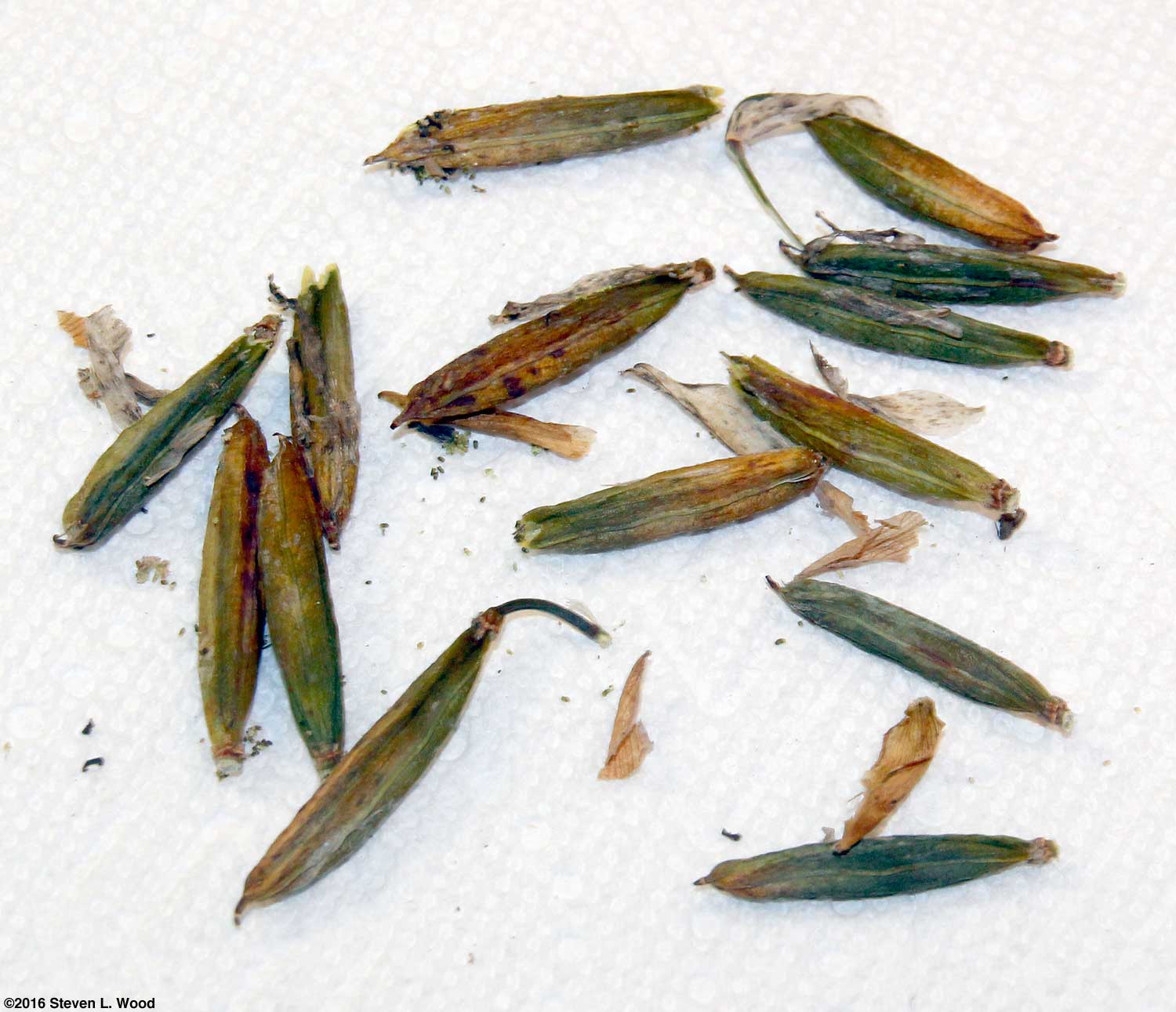
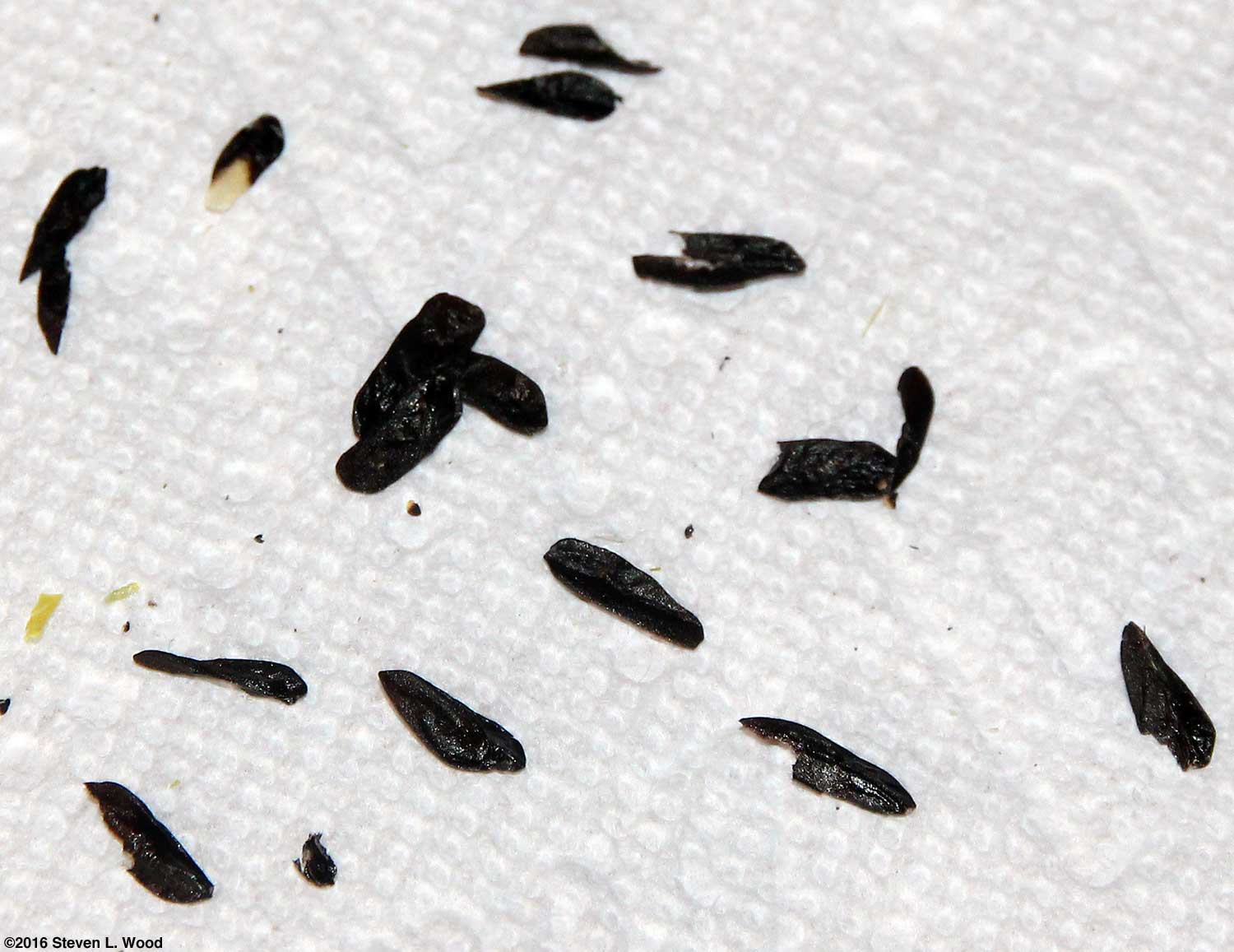
I have some of the seeds stratifying in water in our refrigerator, but also planted some. Some folks say stratification is necessary, but others don't. Since I've never grown hostas from seed, I'm trying both ways and will see how it turns out. The Art of Natural Living site has a nice page on Growing Hostas from Seed. Shopping Guides
While I'm not terribly big on Black Friday and all that stuff, I have updated our Senior Gardening shopping guides. Giving the link to your significant other might produce some nice results.
Winter Arrives After weeks of unseasonably warm weather, winter appears to be on its way. As I perused the HMOS seed catalog late yesterday afternoon, a strong storm front swept in with thunder, lightening, and winds up to 50 MPH. After a couple of days of 70°+ F temperatures, we're going to drop to daily highs in the 40s and 50s. Morning temperatures are predicted to get down to the low 20s, which should pretty well do in all the flowers we still have growing. I guess everything is relative. While it will feel cold here, my sister, who lives in northern Minnesota, told me they were expecting a foot or two of snow. The Early Bird Doesn't Always Get the Worm Our High Mowing Organic Seeds catalog wasn't actually our first seed catalog to arrive this fall. Another one came in on Monday. Unfortunately, that outfit had sold me five pounds of bad alfalfa seed a couple of years ago, so they get no mention here. Sweet Corn With deer and raccoons consuming all of our sweet corn for two straight years, I had to buy supersweet sweet corn at the grocery this year for our Thanksgiving feast. Since it wasn't our sweet corn, I cheated and dropped a whole stick of butter into the half gallon of sweet corn I put up this week for Thanksgiving. I think it's pretty cool, though, that groceries are now carrying sweet corn that is labeled supersweet.
Thursday, November 24, 2016 - Thanksgiving Day (U.S.) Rejoice evermore. 1 Thessalonians 5:16-18 Happy Thanksgiving
I got a pleasant surprise on Wednesday when our UPS driver delivered a box of garden supplies and birthday gifts for my wife and another large, flat box that I hadn't expected. The surprise box contained the 2017 Burpee Advent Calendar: 25 Days of Burpee. A booklet enclosed with the calendar had a message from Burpee's George Ball that began, "Dear Garden Writers and Journalist Friends." It's always nice to be acknowledged as a real garden writer or journalist, although in the past, that acknowledgement usually came after I'd written something negative about a seed house or computer company.
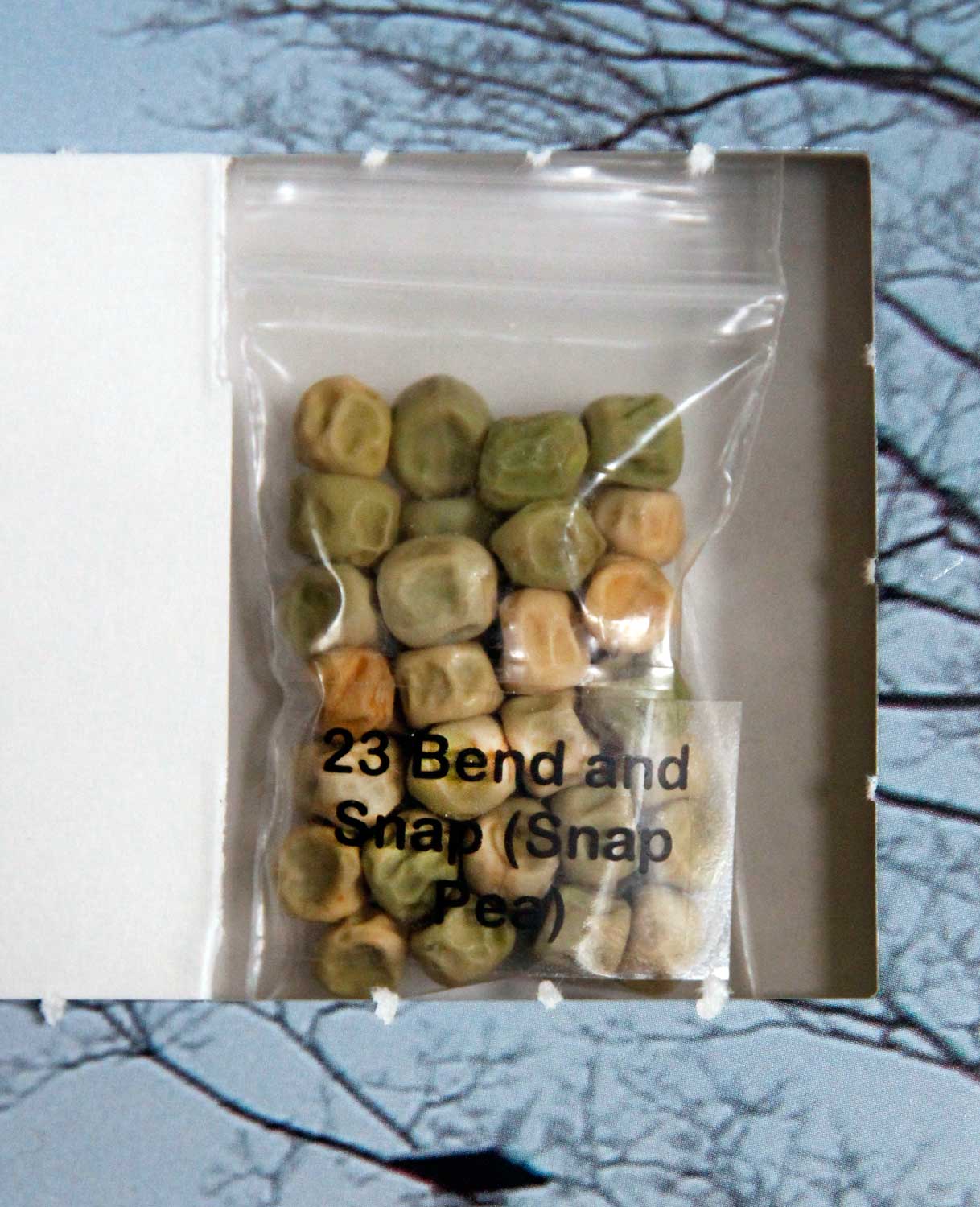
Being more of a vegetable than a flower gardener, I quickly found several varieties I may plant in our garden next season. The description for Mama's Girl Hybrid The real grabber for me was a new Sugarsnap variety, Bend and Snap Their Jaws Hybrid For flower enthusiasts, I really liked the descriptions of Purple Fan Dance
In terms of full disclosure, Burpee is a Senior Gardening affiliated advertiser, so we get a small commission whenever readers click through one of our Burpee ads or links and buy something. Burpee was also our very first mail order seed catalog, many, many years ago. But looking through the booklet that accompanied the Advent Calendar was almost as exciting as looking through a seed catalog.
Seed Catalogs
Thanksgiving We were fortunate again this year to be guests elsewhere, rather than hosting Thanksgiving at our house. Even so, I spent most of the day Wednesday preparing food for the feast. I made butternut squash yams, green bean casserole, two batches of Grandma's Yeast Rolls, and thawed out some sweet corn. Since Annie had to work Wednesday (and Friday, too), she shopped for veggie trays and pies. One of our daughters, Jen and her husband, Hutch, had the mammoth task of cleaning house and preparing the main courses for the sumptuous meal.
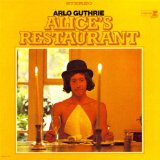
While we got ready for the day and things were heating in and on the stove Thursday morning, Annie and I listened to Alice's Restaurant. Doing so on Thanksgiving Day has become a family tradition. While we have the digital version of the classic, we listened to it on vinyl from an album I bought in the late 60s. One of the biggest treats of Thanksgiving Day was seeing eight of our ten grandchildren. You had to look quickly, as the younger ones were all moving pretty fast. Playing with cousins was always the big attraction for me at family gatherings when I was a child. As guests for the Thanksgiving feast, our refrigerator isn't filled with leftovers. The meal whetted our appetites for turkey, so I have a turkey breast thawing in the refrigerator today. Things Slow Way Down in our Senior Garden After the rather frantic pace of harvesting and renovating garden plots the last two months, it's nice that things have slowed down for us in gardening. Frost has taken almost all of the flowers we had in the garden, flowerbeds, and hanging around our back porch. I still need to pull the T-posts and trellis netting where our early peas and vining cucumbers grew. The somewhat frost hardy snapdragons still in the bed appear to have finally succumbed to frost. Whether I get to fall till our two narrow raised beds depends on the ground drying out enough to permit tilling. With or without tilling, I plan to spread the last of our ground egg shells and the last of our Serenade biofungicide over the bed where our tomatoes will grow next season. The egg shells will add calcium to the soil to help prevent blossom end rot in the tomatoes. I doubt that the Serenade will do much good in preventing disease next season, but I need to use up the biological product, and spreading it on the bed seems better than just pitching the bottle.
Our copy of the 2017 Seed Savers Exchange seed catalog came in today's mail. As usual, it has a cheery and colorful cover and is filled with lots of open pollinated and heirloom vegetable varieties. Possibly because my mood today is as gray as the sky, I checked prices on a few items from the catalog against last year's prices. I was pleasantly surprised to find that there were no price increases for America spinach, Blacktail Mountain watermelon, Boule D'Or muskmelon, or Dwarf Blue Curled Scotch kale! SSE's minimum shipping charge also stayed at a reasonable $3. The catalog received today is made up of offerings from the exchange's seed bank and growers. It isn't the one that lists members' seed offerings. That catalog doesn't come out in print until January (or February). Member offerings are, of course, available through the SSE's Online Exchange.
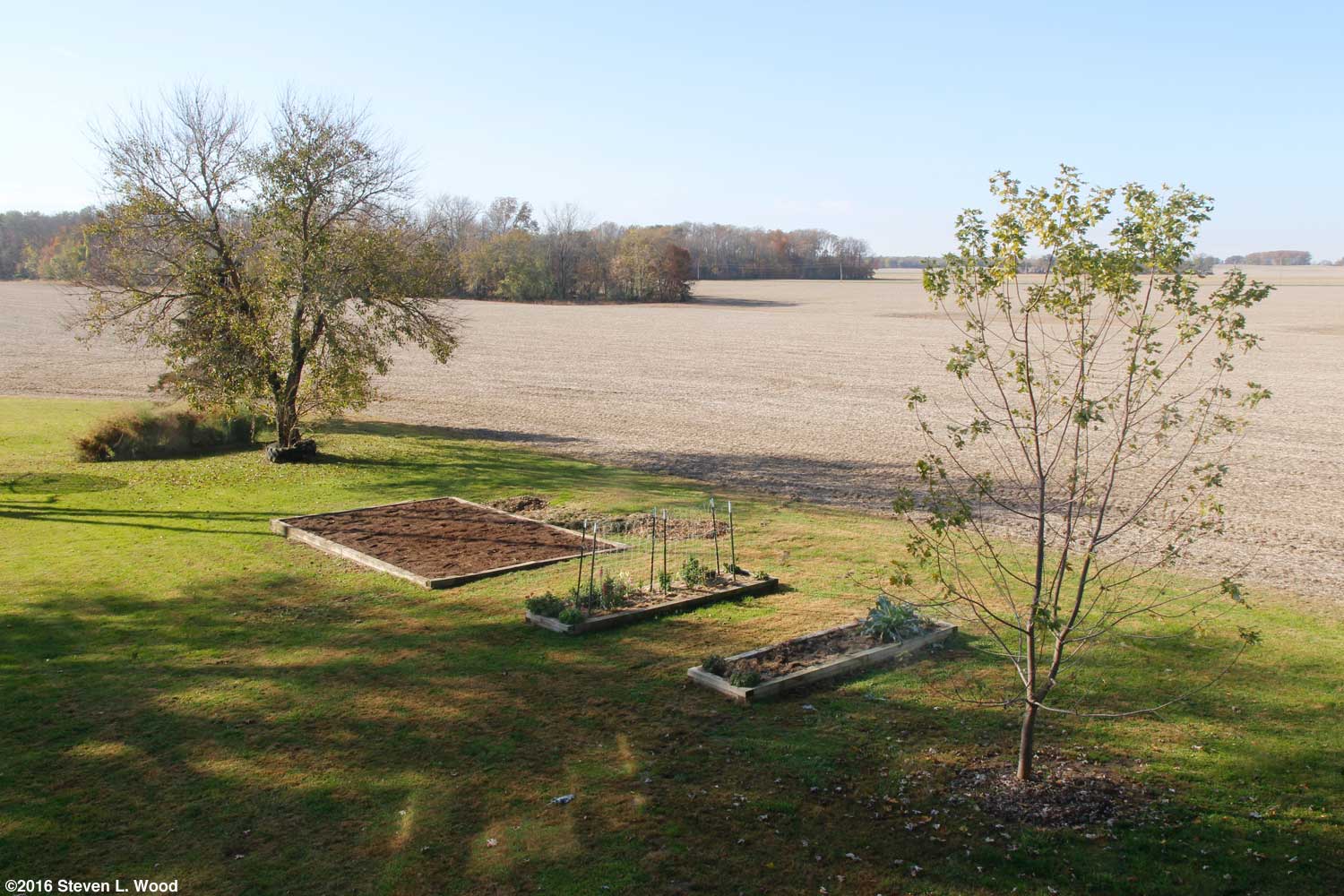
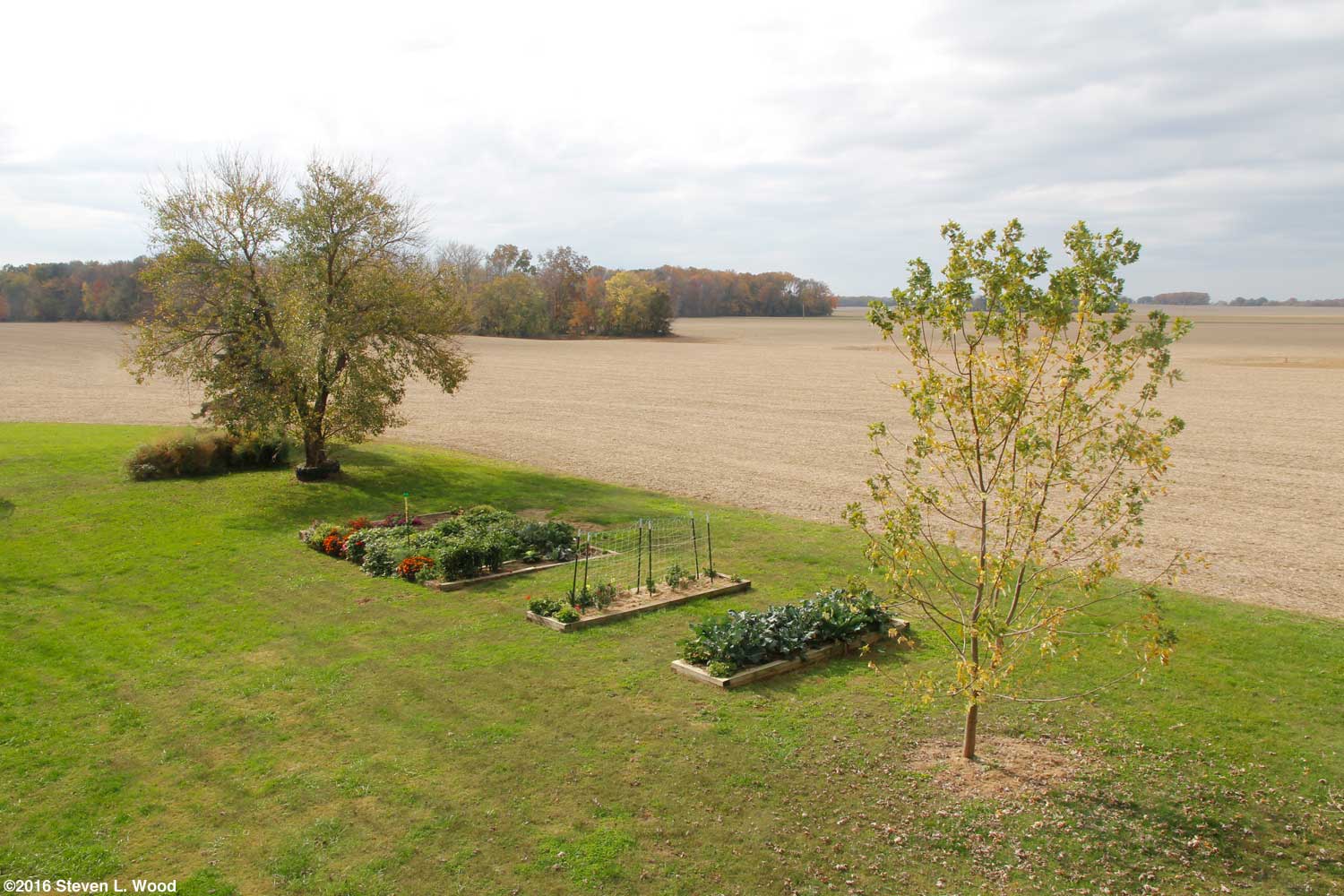
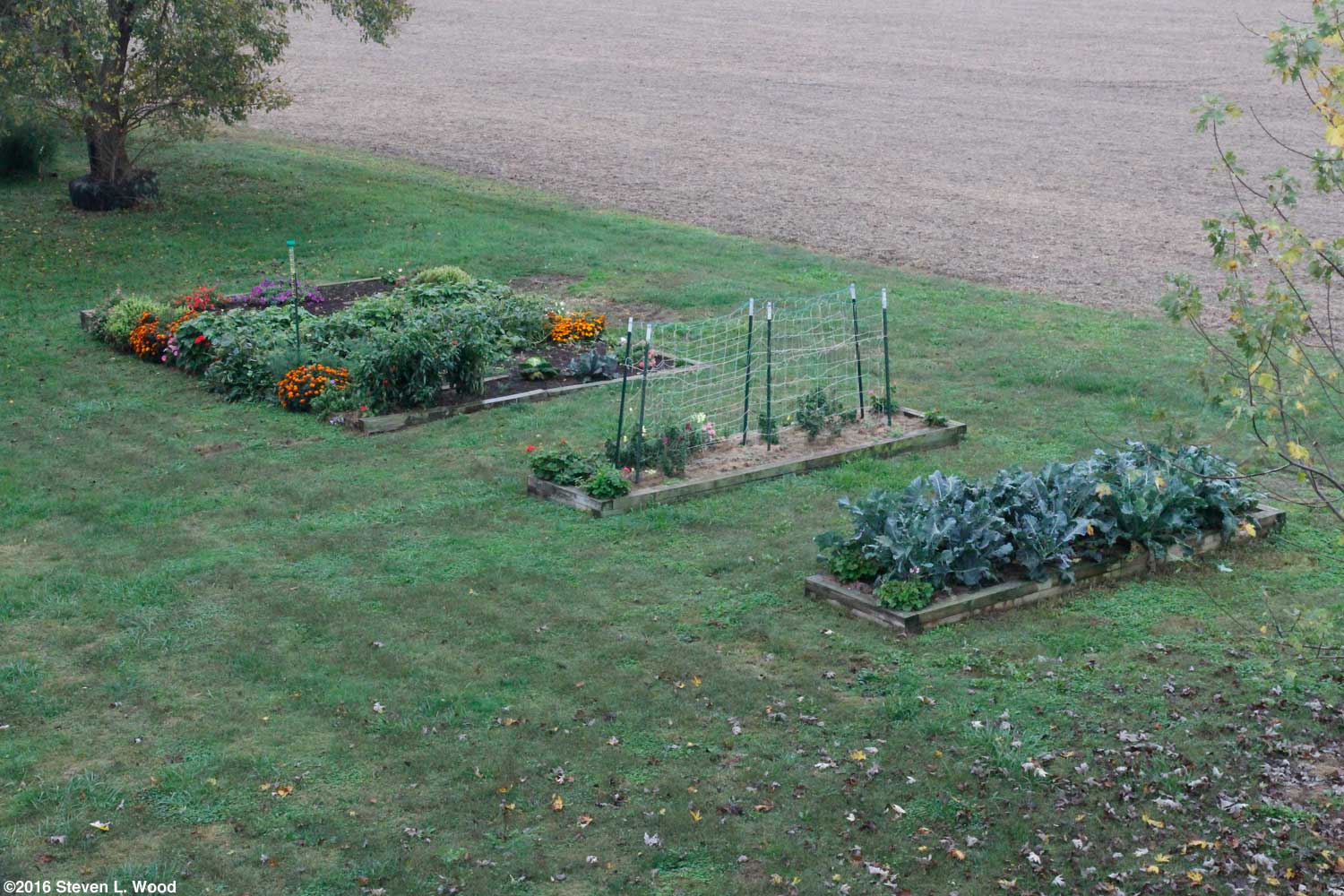
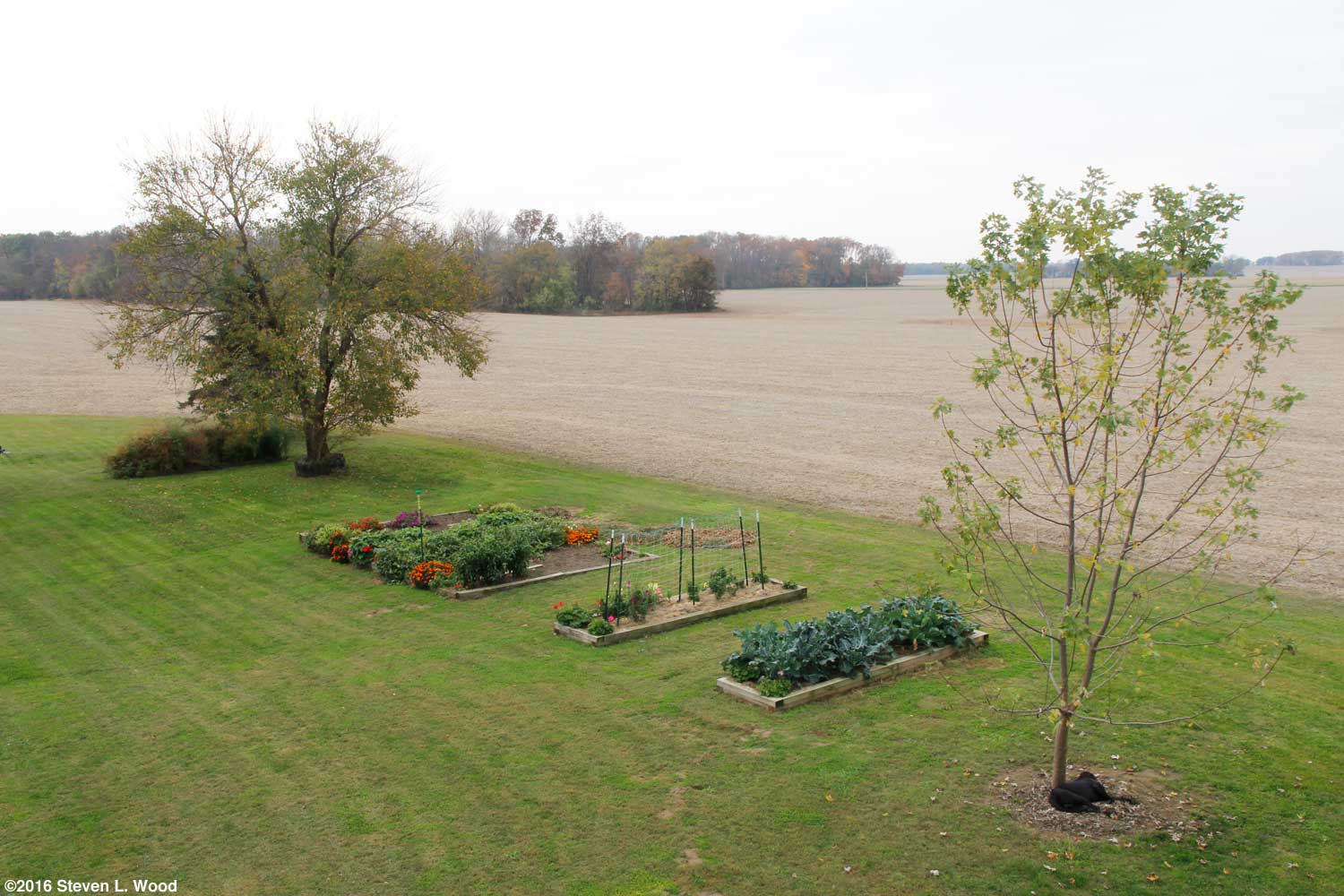
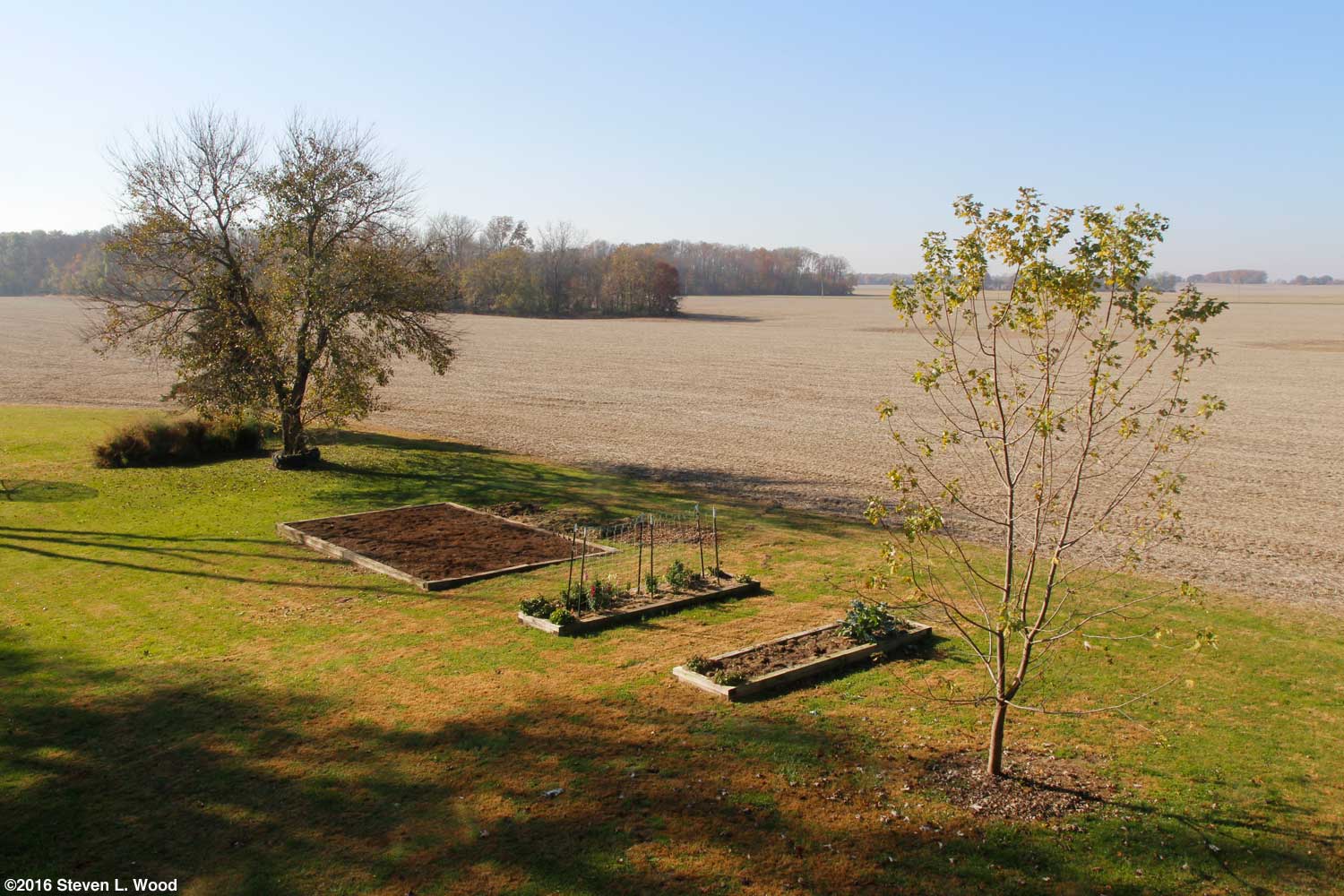
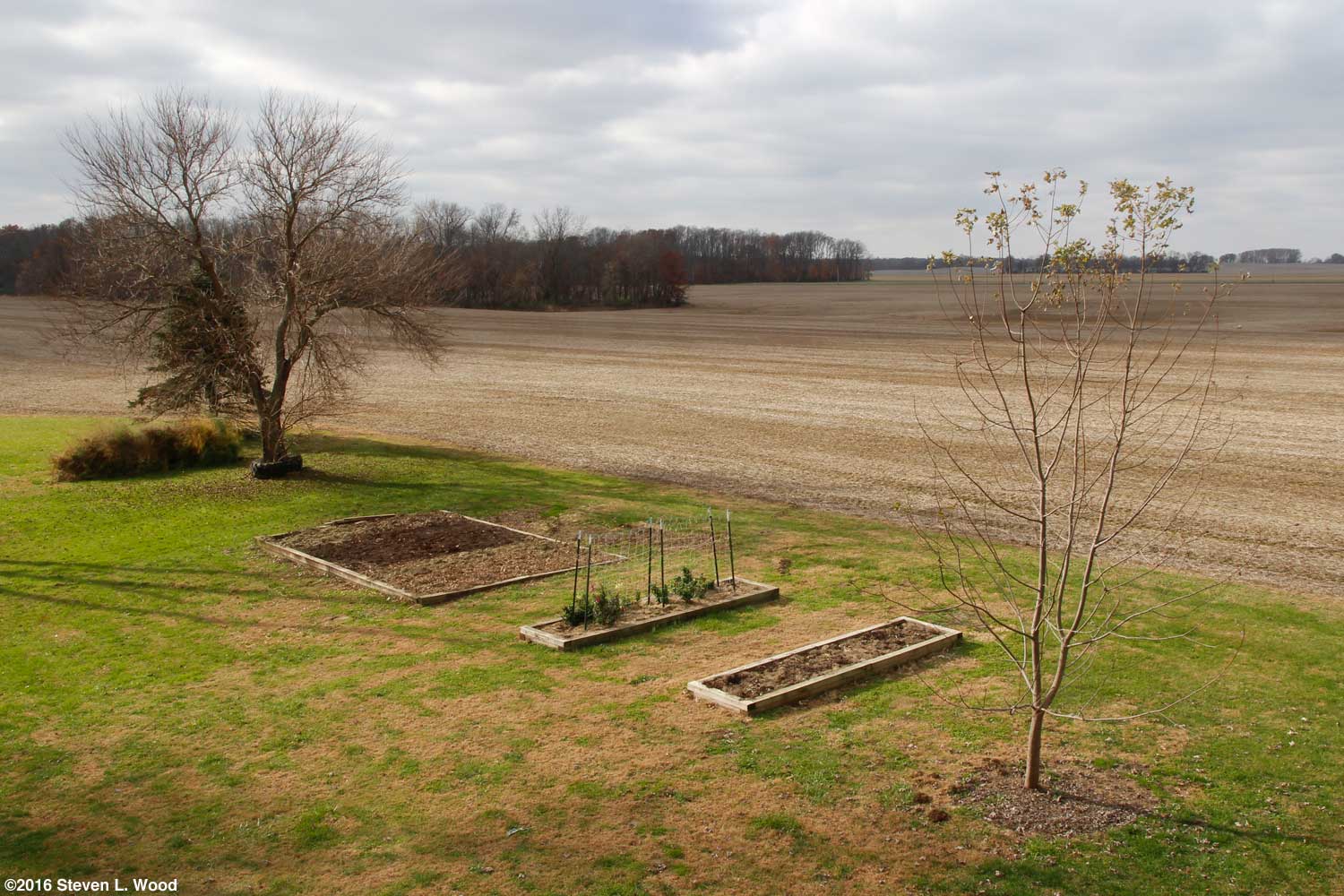
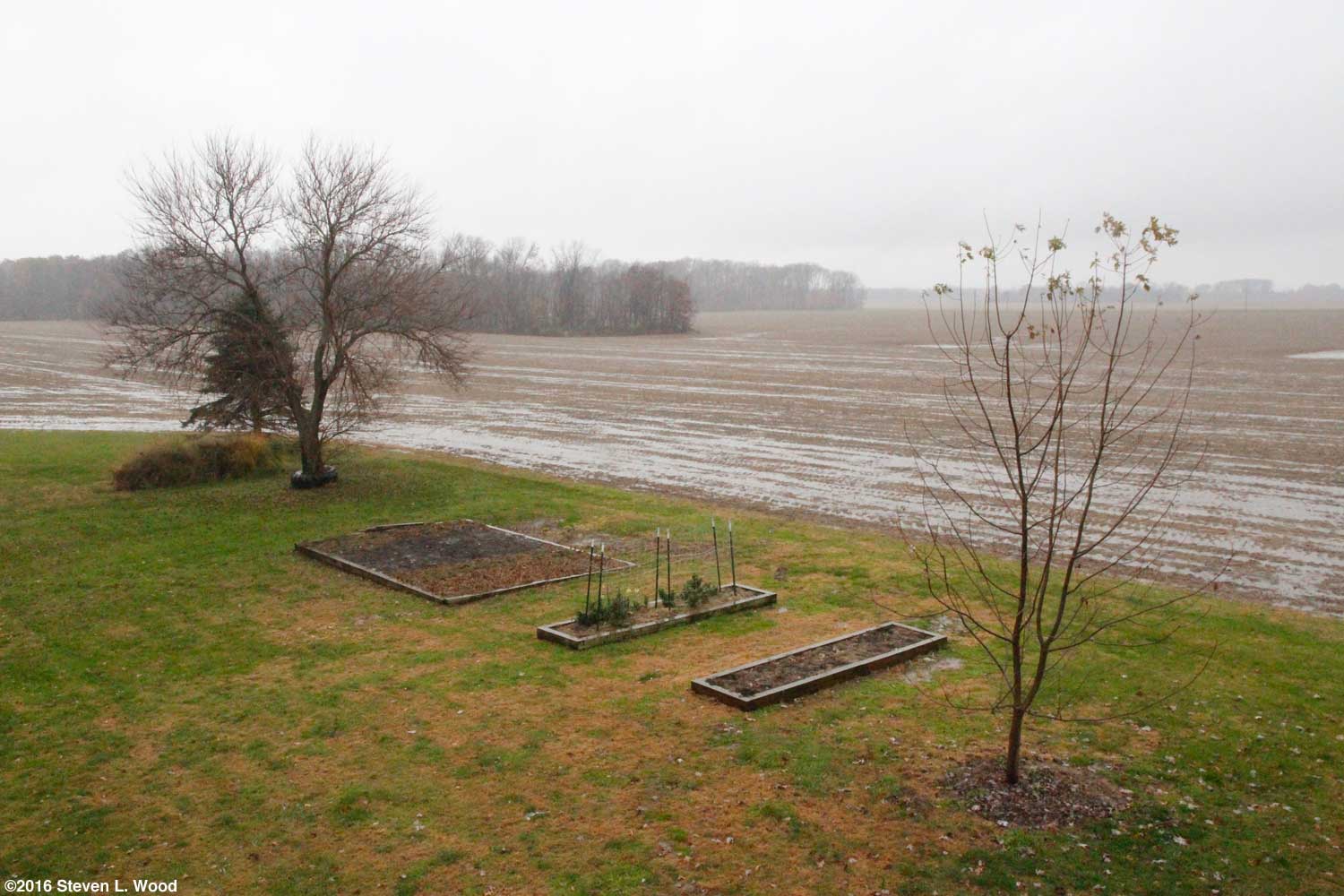
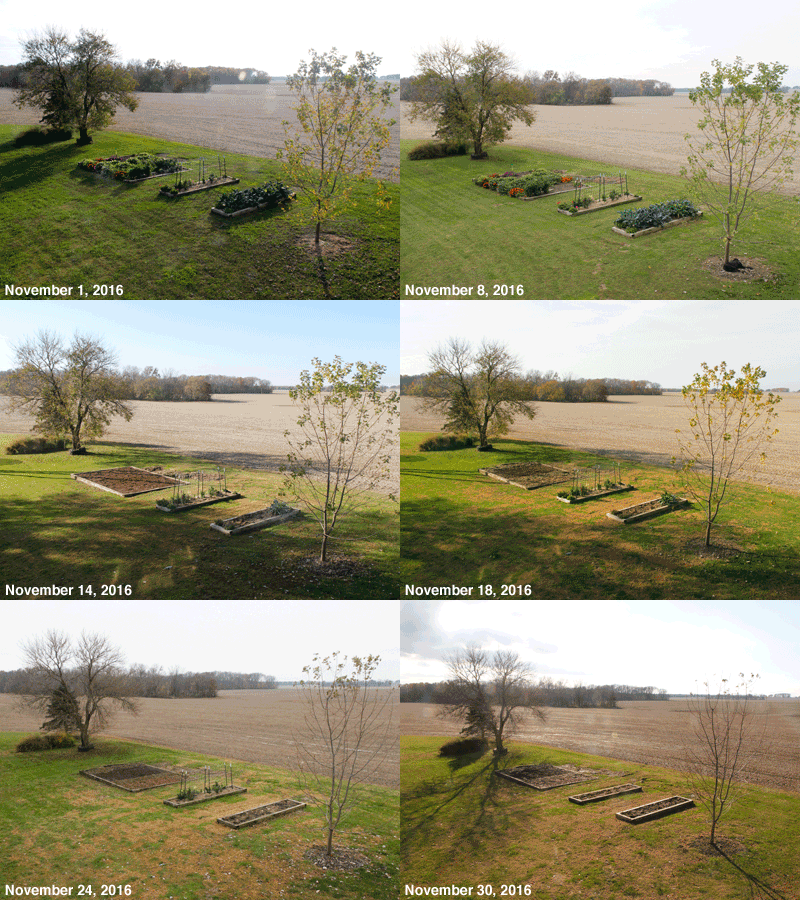
Our main raised garden bed has been tilled for the fall and our garlic planted and mulched. I also mulched areas for our early peas and brassicas, as I'll just pull back the mulch to plant those crops next spring. Our two narrow raised beds have been cleared, but they didn't get fall tilled. If we have a lucky, warm, dry spell next month, I might get that job done. The current extended weather forecast for this area suggests that we'll have much more seasonable weather in the next two weeks. Rain, sleet, and snow have popped on and off the forecast, but our warm weather appears to be done for this fall. Contact Steve Wood, the at Senior Gardening
|





























| Affiliated Advertisers |
©2016 Senior-Gardening.com