One of the Joys of Maturity |

Custom Search
|

| Affiliated Advertisers |
Clicking through one of our banner ads or some of our text links and making a purchase will produce a small commission for us from the sale. A Year in Our Garden I started writing this review yesterday while watching the first appreciable snow of the year fall on our yard and garden. When I broke for lunch, I dined on spinach salad left over from our Christmas dinner. The spinach was picked on December 18, which may give you some idea of what a wonderful gardening year we've had. There were, of course, a few disappointments and at least one outright blunder along the way. But even with mistakes and drought, 2011 was one of our better gardening years. The video at right is a collection of still images taken from our sunroom window of our main garden throughout the year.
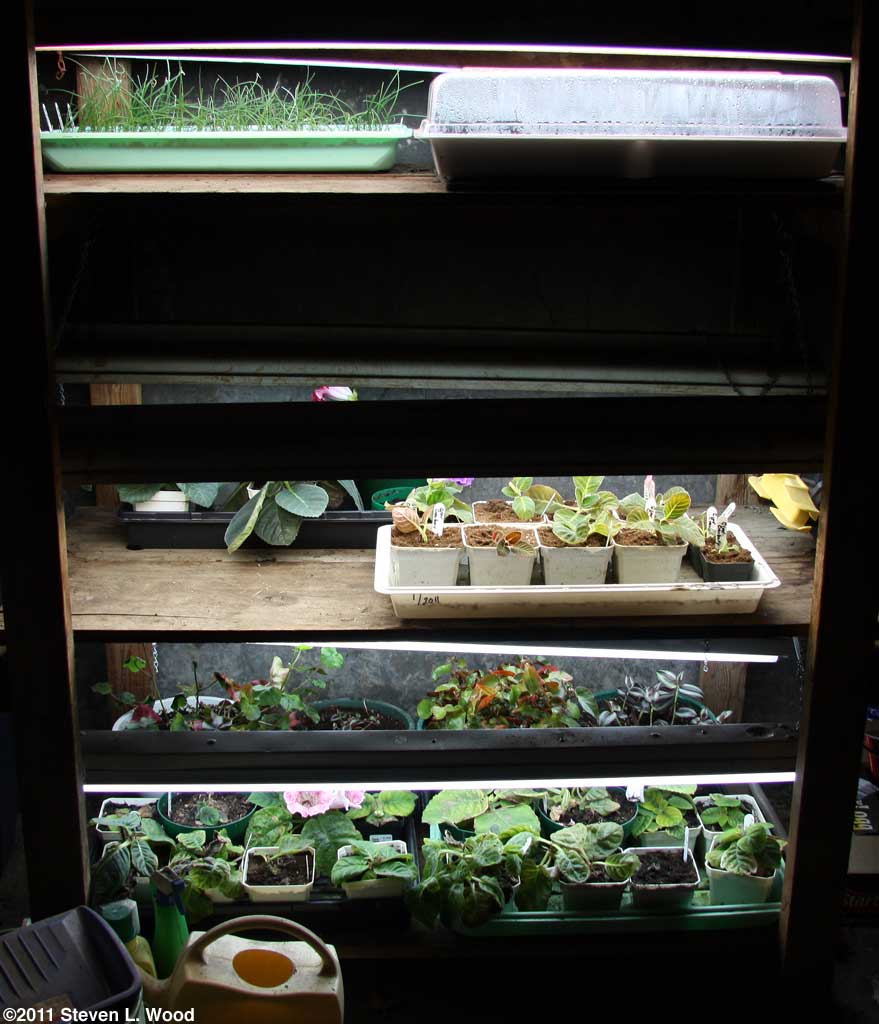
Things quickly took a turn for the worse when a nasty winter storm knocked out our power for a couple of days in early February. I'd just replaced a failed heating mat and got our geraniums seed started. Surprisingly, the geraniums survived the cold temperatures while we were without power, and we ended up with a nice bunch of them for our garden.
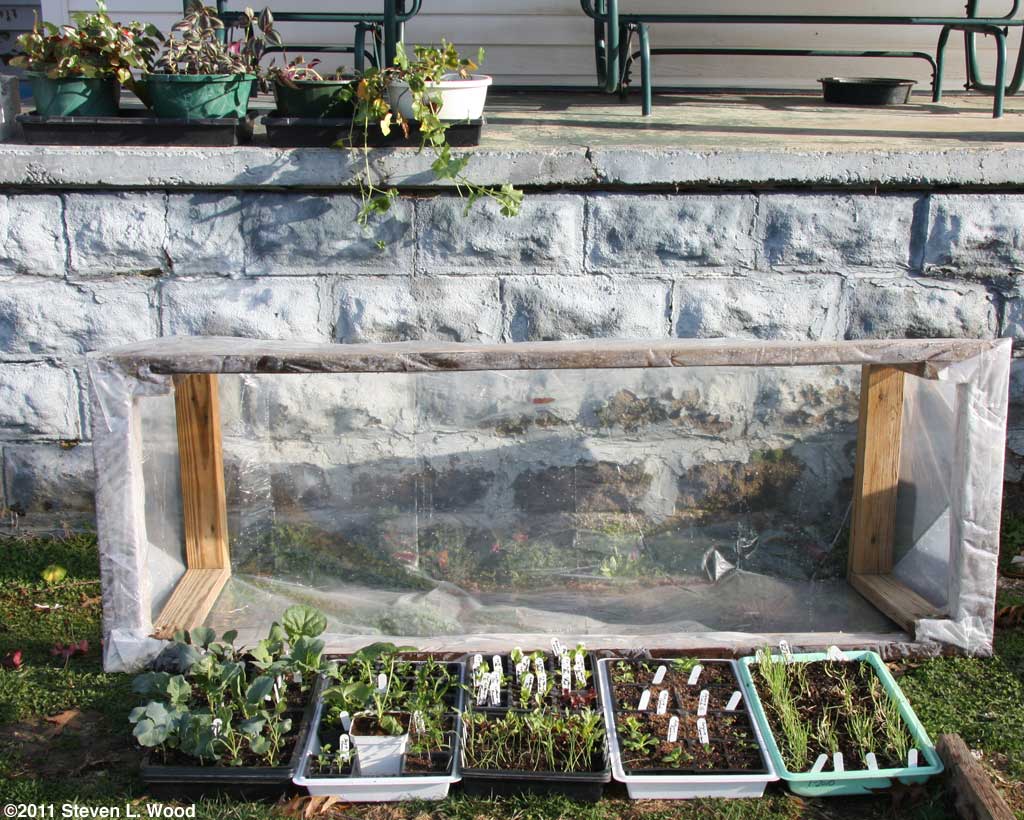
The cold frame measures around 27" by 6' and is actually a little small for our needs. But if you make them much larger, they become rather cumbersome to move around. While I've linked above to the plans to make a similar cold frame, I keep thinking of how to use lighter lumber, possibly 2x2's, to make a larger cold frame that is a bit lighter to move around. Some unseasonably warm weather in mid-March popped up our garlic plants!
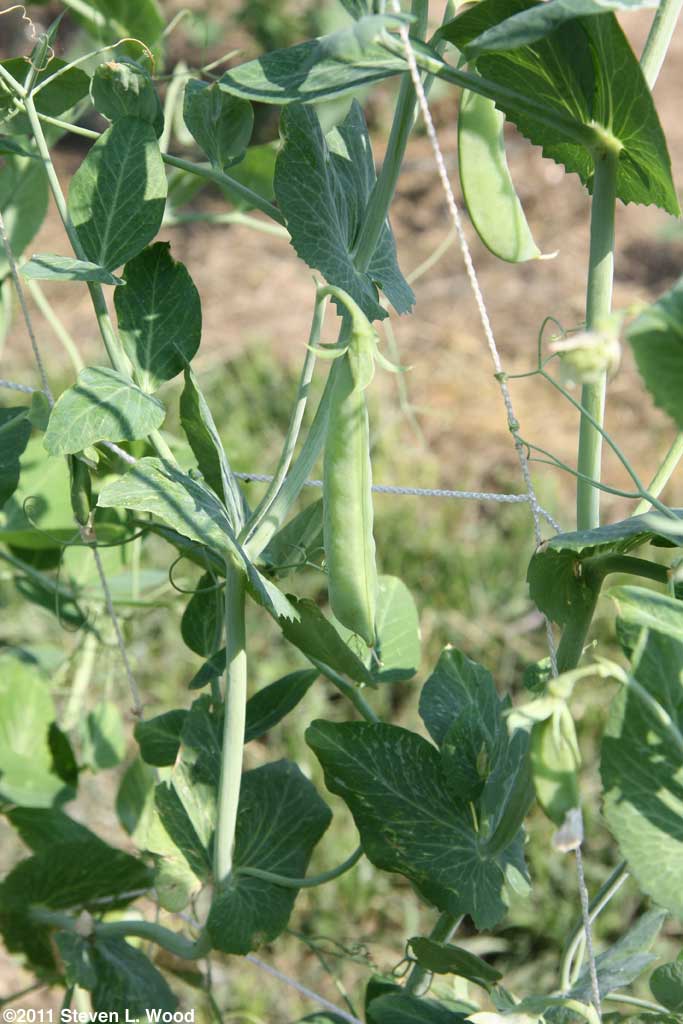
We seeded our peas on April 3 and transplanted broccoli on April 6! I ended up re-seeding the peas several times, as some of our seed was old and didn't germinate well. But we were cutting lots of broccoli by mid-May. April and May always become a blur of planting and transplanting outdoors when the ground is dry enough, still starting some seed indoors (tomatoes), and harvesting. We planted or transplanted onions, carrots, and radishes, beets, and potatoes during an April that produced over eleven and a half inches of rainfall. When things finally dried out enough in mid-May, we transplanted the first of several successive plantings of melons. We also got some peppers, green beans and kale, tomatoes, sweet potatoes, and sweet corn planted. We continued to harvest asparagus and broccoli and also brought in some beets, cabbage, spinach, and lettuce.
Now there's a reason why folks spend good money buying certified disease free seed potatoes each spring, even if they still have good looking potatoes left in storage. It wouldn't be until August that I admitted to myself that I had transplanted potato plants with late blight into our main planting. We got less than a bushel of potatoes this year, and I only have myself to blame! Things dried out in June, possibly a harbinger of the mini-drought coming later in the summer. Our plantings continued to do well, possibly because most areas in our garden were thoroughly mulched with grass clippings to hold in soil moisture. And our flowers, planted as row markers until seed came up and as borders around our gardens, simply exploded with blooms.
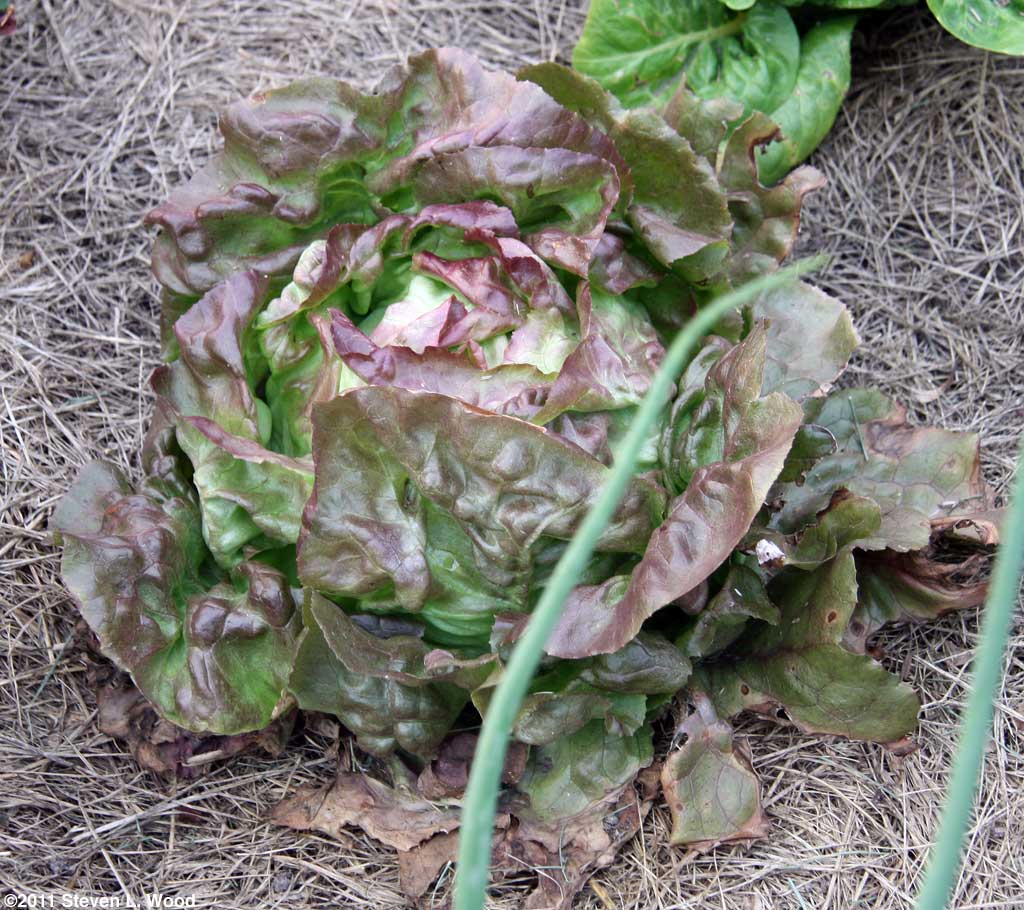
We also were pleased with a new lettuce variety we tried this year. While romaine lettuce is still our favorite, the highly touted Skyphos butterhead lettuce lived up to its billings. The soft heads produce sweet red tinged leaves that add flavor and color to salads. Some welcome rains mid-month made tilling for weed control in our sweet corn impossible, and despite our best efforts, deer kept biting off the tassels of the corn stalks. I really thought we'd lost the crop, but enough tassels survived to pollinate enough ears that we had corn for the table and a little left over to freeze. Blood meal and red blinking night lights provided some deterrence, but spreading the contents of our sweeper bag seemed to be the best deterrent!
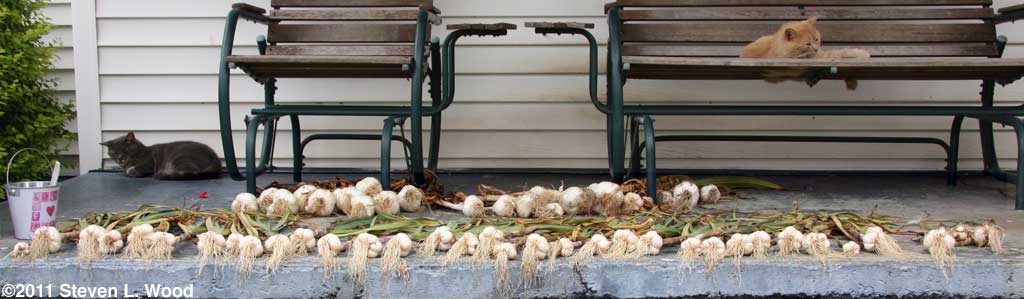
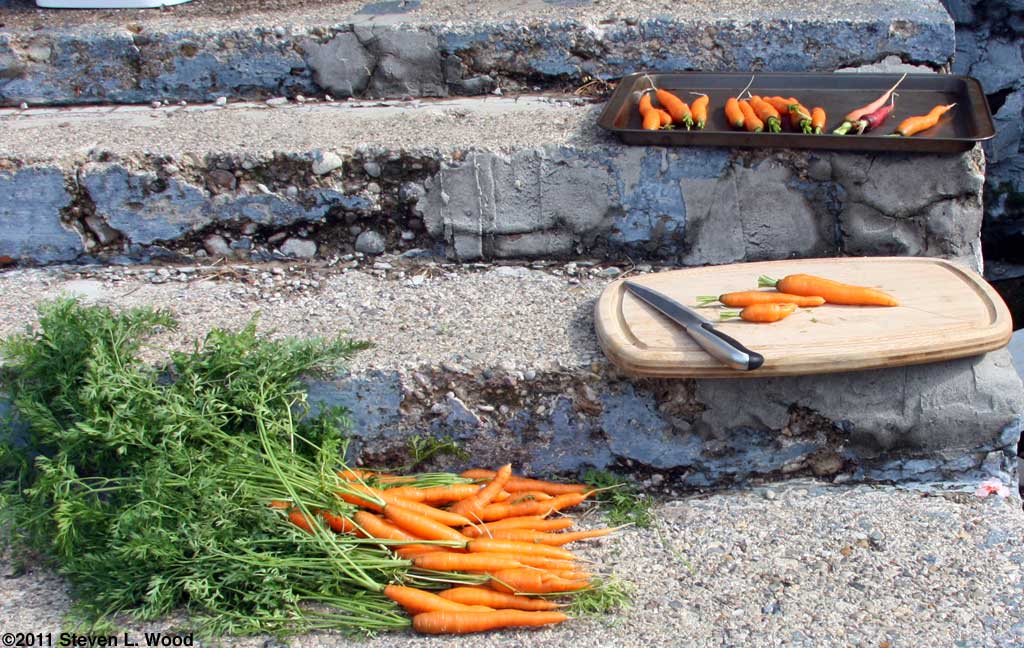
As June wore on, we began picking peas for shelling and freezing, dug the first of an exceptional crop of garlic (planted in November), and took the first of what proved to be our best crop ever of carrots. Our carrots from our 2010 garden wintered over in our refrigerator quite well, lasting well into April. We dug at least twice as many carrots this year, but are almost out of them now. Our grandkids love carrots, and well, so do we. I guess we just need to grow more of them in 2012. I finished up digging our garlic on July 1. If you use garlic but don't currently grow it, let me recommend it as one of the easiest, low maintenance crops one can grow. It goes in the ground in late fall (around here, folks in the far north have to spring plant) and comes up early in the spring. We use a heavy grass clipping mulch to suppress weeds and get great crops year after year.
We continued to harvest broccoli sideshoots, Sugar Snap peas, carrots, and began getting some nice yellow squash. By mid-month, we were picking, enjoying, and canning green beans. Our onions were well enough along that we seasoned our green beans for the table and canning with Walla Walla sweet onions from the garden.
The winds also helped our nearly mature onion stalks to tip over, so we only had to bend down a few stalks to get the first of our onions to finish bulbing and begin drying a bit. We also began picking the first of our cantaloupes, "personal-sized" Sugar Cube melons that were a hit with our whole "neighborhood." (Note, we live way out in the boonies, so anyone within a mile who waves when they drive by is a neighbor.)
August is always a strange month in gardening. We continue harvesting lots of spring planted crops, but also begin to try to plant fall crops. This year, August proved to be bone dry, so transplants we'd started earlier inside were put on hold until the drought broke. Sadly, it never did. We got just .32 inches of rainfall in August, so what little we planted fared poorly if we didn't water from our well that often runs dry for short periods during the summer.
One fall crop I couldn't put off transplanting until later was our fall brassicas. Broccoli and cauliflower take a certain number of days to mature, so I transplanted our fall crop mid-month to have time for them to mature before winter set in. The planting area looked like a desert, and I spent the rest of the month hauling water out to our East Garden where I'd planted them.
I did something this year when I planned our East Garden that I'm sorta proud of. I guess I really shouldn't be proud, but it made me feel good, anyway. I planned to plant way more melons than we could easily use or share with families and neighbors. And our cantaloupe, watermelon, and honeydew all produced bumper crops.
Little did I know that we'd have such a bountiful harvest. I ended up driving three small loads of melons and whatever else we had a surplus of (peppers, cucumbers, tomatoes, etc.) to the mission over the summer. I guess the Lord knew my purpose and smiled upon our efforts...even in the midst of a summer drought.
From mid-summer on, our row of sweet potatoes really began to put out vines. We had some problems with deer browsing the vines, making them look like someone had run a hedge trimmer over the top of them. A package of Sweeney's All Season Weatherproof Deer Repellents
Our sweet peppers that had put out some nice fruit early on began yielding large peppers once again when the rain returned in mid-September. We ate and froze a lot and gave away even more. I generally plant for a "bad season," so we'll get enough for our purposes even in a bad year. While much of this summer wasn't conducive to good crop growth, our peppers overwhelmed us before and after the drought.
The image above is just the picking from one day, although I hadn't picked peppers for a week. So maybe it's more a week's worth of peppers. Along with our usual varieties of bell peppers, we tried a pimento type pepper, Lipstick, for the first time this year. They're the smaller, non-ribbed peppers on top of the stack. Their flavor is like a bell pepper, touted by seed catalogs as even better. They were good, but in our experience, not better, than our usual bell varieties. I finally began transplanting our fall lettuce in the middle of September. The drought really hadn't broken yet, but if I waited any longer, the lettuce transplants were going to die in the flat. As it turned out, we got rain just a few days after transplanting. We'd also direct seeded some fall spinach into one of our softbeds in August. It, of course, did almost nothing in terms of germination due to the dry conditions. The few seeds that did germinate quickly withered and died in the dry weather. Later, I had a couple of our grandkids sprinkle more spinach seed into the same furrow that I reopened with a hoe. When I reopened it, I could see the seed I'd planted earlier, but we went ahead and put in a whole lot more seed. By early October, I had a lot of thinning to do in the spinach row, as almost all of the seed seemed to germinate. I generally don't do a very good job of growing spinach. It either doesn't germinate well or it bolts and goes to seed on me most years. This year we enjoyed great spring and fall spinach. As I mentioned earlier, I made our last picking on December 18, and we had spinach salad with our Christmas dinner.
My wife, Annie, wanting to get me something "gardeny" for Christmas looked online for an Eat More Kale shirt. You may have read about the silly hubbub Chick-fil-A created when they tried to force Bo Muller-Moore, a folk artist from Vermont who hand-screens T-shirts with the slogan "Eat More Kale," to stop selling the shirts. The fast food joint sent Muller-Moore a cease-and-desist letter, but fortunately, he stood up against them and refused, as Eat More Kale certainly doesn't infringe on the chain's "Eat mor chikin" slogan. Possibly a better advertisement for the tasty, nutritious vegetable would be a pot of kale soup or a steaming pot of kale seasoned with bacon drippings, onion, and garlic!
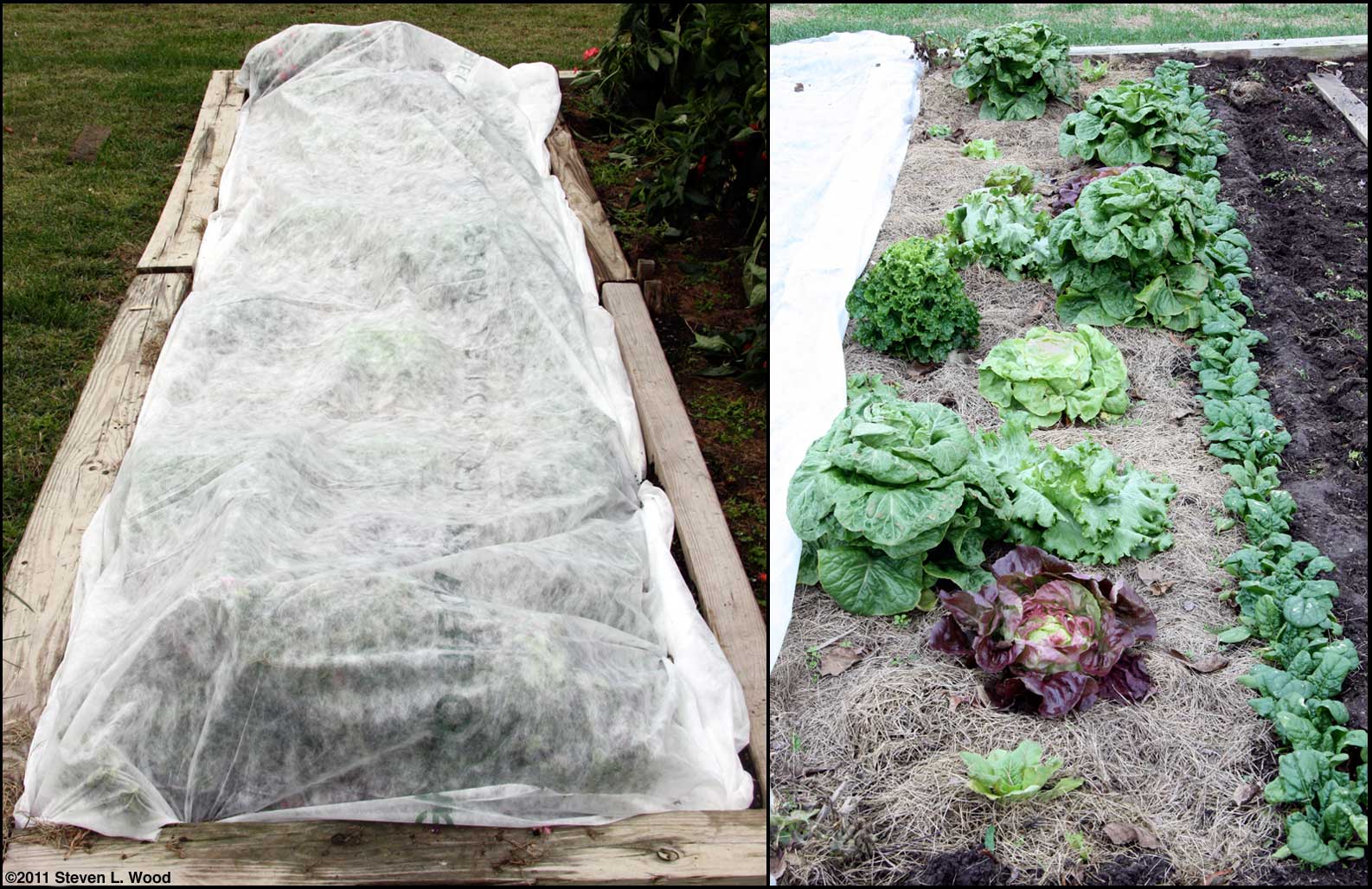
I ordered an 83" x 50' floating row cover from Johnny's Selected Seeds and used it to protect our late green beans, spinach, and lettuce from frosts. At left you can see the row cover pulled back to expose the beans. We lost some beans (and lettuce leaf tips) that touched the cover to frost damage, but found that the covers were a good investment and got us past those early, light frosts that often spell a premature end to the gardening season. While the row covers we purchased were rated for 28o protection, we had some much colder nights that most of our lettuce and spinach survived quite nicely. The row covers are supposed to be reusable, but after one of our dogs hunkered down on one and a sharp, dead geranium branch tore a hole in another, I'll only be able to reuse this year's row covers for patches next year.
We continued picking broccoli, cauliflower, lettuce, a few paprika peppers, and spinach throughout November and even into December. Having late vegetables is really great, but we eventually began taking out good growing crops such as our kale to allow our fall soil preparation. I ended up tilling our main raised bed, except for the lettuce and spinach softbed, on November 9, immediately afterward planting our garlic for next year.
Our garden plots are pretty well put to bed for the winter now. The unexpected snow cover earlier this week just sorta affirmed that there's no more outdoor gardening to be done for now.
Our garden orders for next season have arrived already, and we'll begin seeding onions and geraniums in January.
From the at Senior Gardening Ads shown on this site do not represent an endorsement or warranty of any kind of products or companies shown. |





 , an excellent biofungicide, allowed us to pick a good many tomatoes. It effectively suppressed the anthracnose, but the bacterial spot rebounded when I got sloppy with our spraying regimen. We



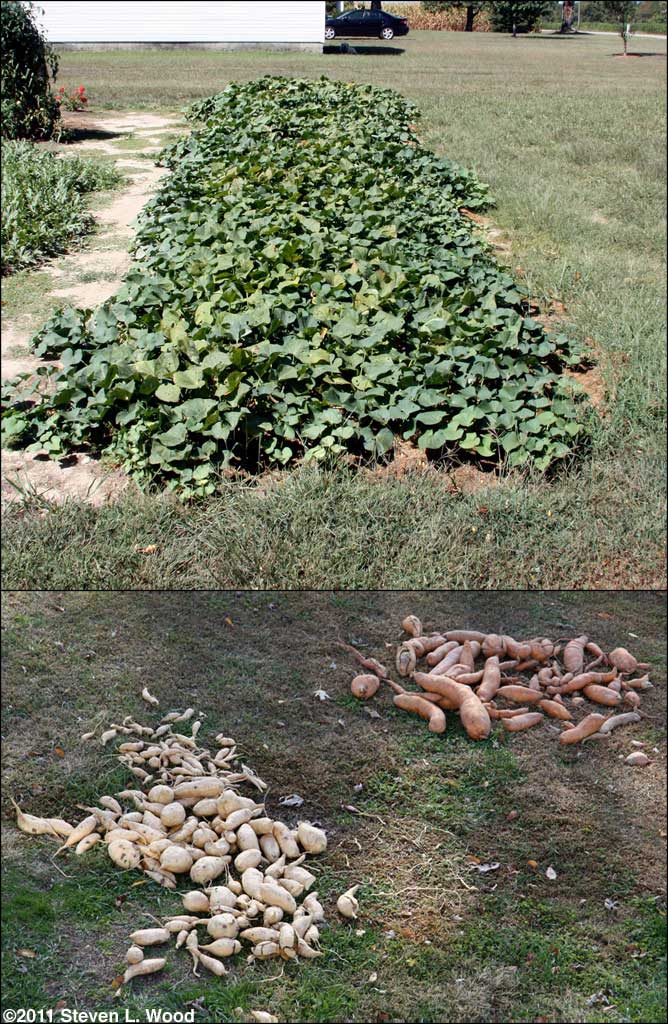
 my wife had given me more as a joke (after the deer pruned most of the tassels off our sweet corn) than anything, turned out to do the trick. With almost no care from me, other than an occasional hand weeding and blowing grass clippings up against the vines, the sweet potatoes grew and grew.


 . We've only made a few minor changes to suit our tastes and have


| Affiliated Advertisers |
©2011 Senior-Gardening.com