One of the Joys of Maturity

Custom Search
One of the Joys of Maturity |
Custom Search
|
| Affiliated Advertisers |
Clicking through one of our banner ads or some of our text links and making a purchase will produce a small commission for us from the sale. A Year in Our Garden - 2014 - Page 2 While April is a very busy month in the garden, May seems even busier. It's a race to get everything planted or transplanted and mulched for the season in an often rainy month. The heavy workload doesn't seem so bad, though, as we enjoy asparagus, lettuce, and baby spinach out of the garden.
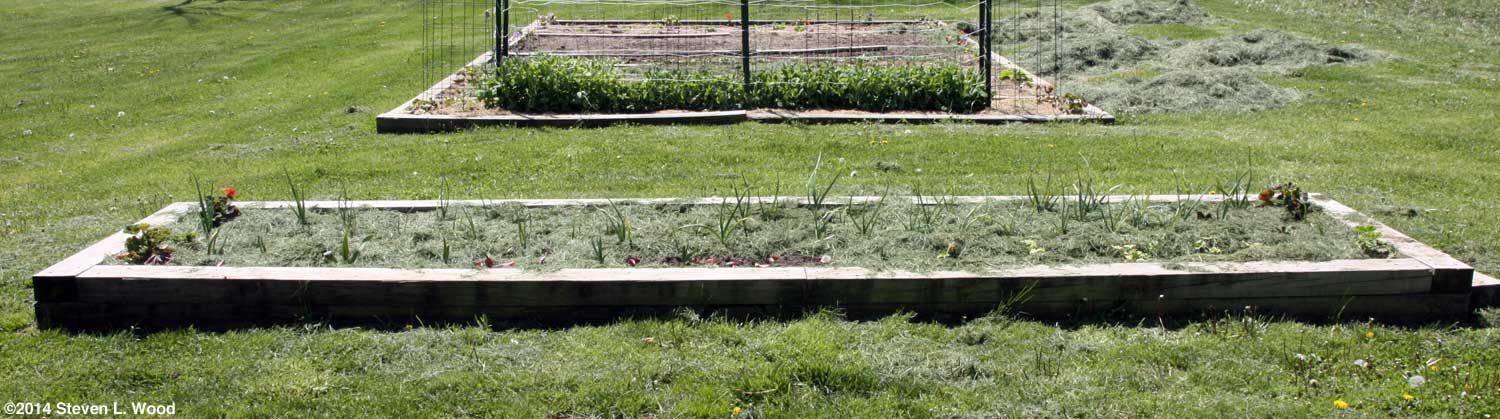
I made good use of the days, mowing and raking our yard and the field the East Garden sits in. I also was able to mulch our rather sad planting of garlic. It was in an older, narrow raised bed, so it could be worked from outside the bed. I hadn't mulched the garlic for the winter and our dogs dug up part of the bed, but even the garlic that came up didn't seem very healthy. In a section where the dogs had totally destroyed the garlic, I transplanted a few celery plants. I hadn't grown celery successfully in years, and things turned out about the same this year as in the past. But at least the bare spot in the bed was filled in with something growing.
Before I mulched the bed with grass clippings. I clawed in some 12-12-12 commercial fertilizer around the existing garlic plants. In mulching, I had to be careful to put "cool mulch" beside the garlic leaves, leaving the "hot mulch" for open spaces. I raked the grass clipping mulch a couple of days earlier, and some of it was quite hot as it was beginning to decompose. Hot mulch is great for holding back weeds in open spaces and heating up a compost pile, but not so good for tender plants. Planting Melons
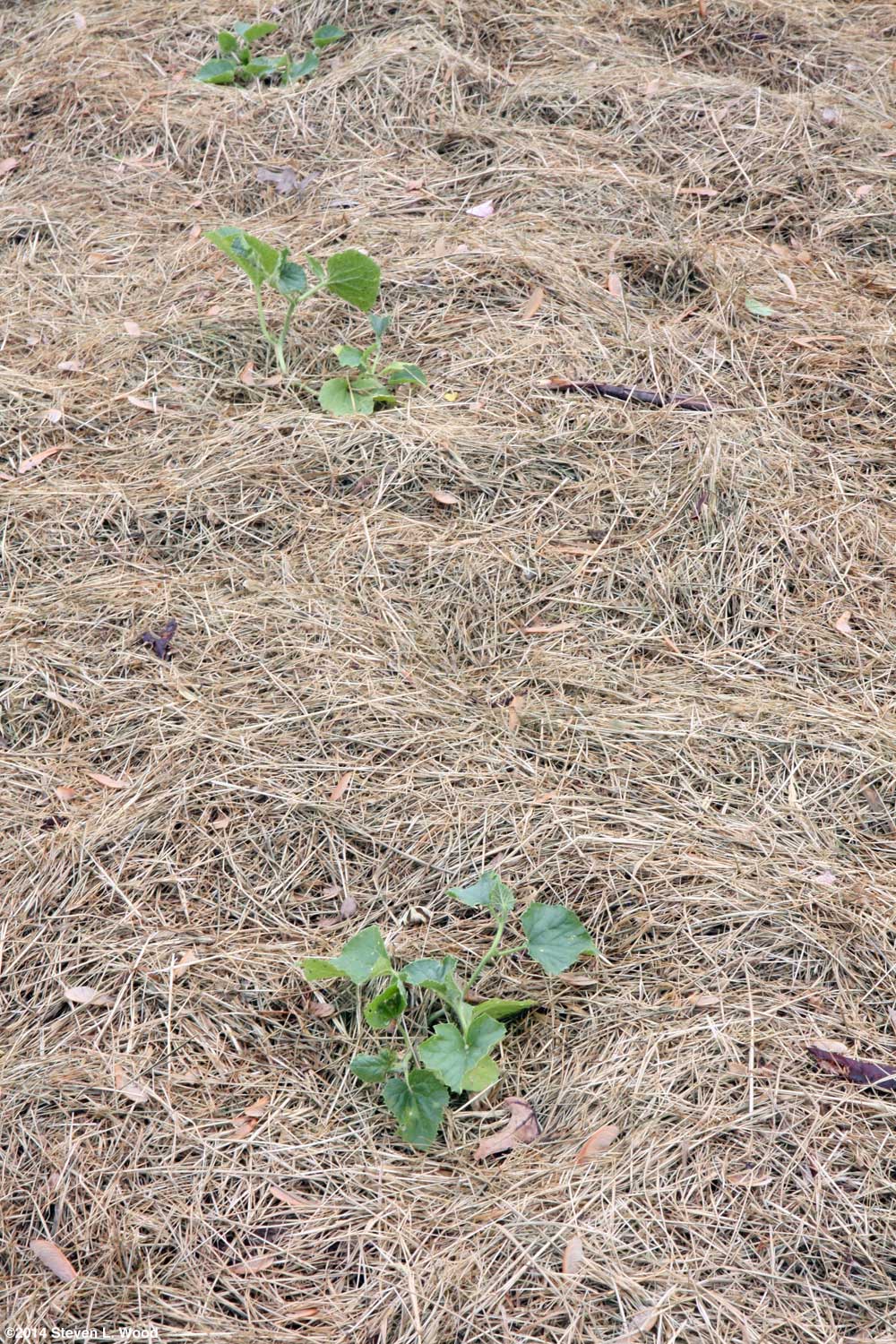
Getting our melons and corn planted in a timely fashion is always a challenge. I got our melons transplanted this year on May 5 and 6, a bit earlier than usual. We transplant our melons into "deluxe holes" due to the poor soil quality of the East Garden. We also mulch them in at planting with grass clippings, eventually covering the whole melon patch with clippings for moisture retention and weed control. I describe how we do our melons in a couple of feature stories:
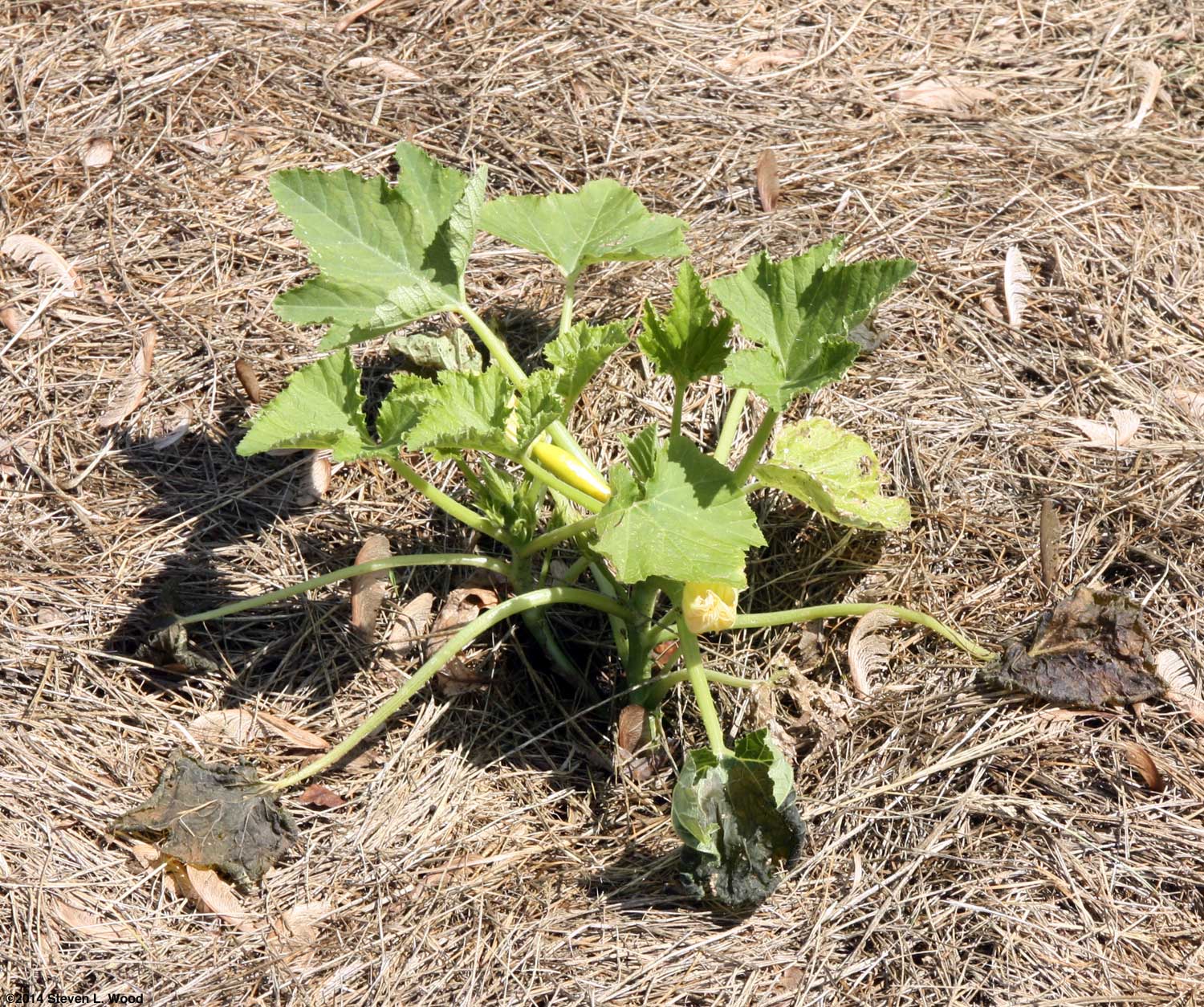
As it turned out this year, we didn't grow all that many great melons, at least not as many as we usually do. An early, undetected infestation of cucumber beetles killed some of our transplants and brought in plant diseases to some of the survivors. A couple of yellow squash plants, one hybrid and one open pollinated, also went in at the ends of the melon rows. By the time the bugs got to them (mostly squash bugs), I was more vigilant. We had a great year of summer squash. Our sweet potato slips arrived and went into the ground in a row beside our potatoes on May 8. I also seeded a row of dark red kidney beans into the plot. Neither of these crops did well this year, although we got just enough kidney beans to include in two big batches of our Portuguese Kale Soup.
May 10 turned out to be another spray day. After the systemic insecticide we used to use was taken off the market, I found that Thuricide (BT) was pretty effective in keeping bag worms off our Blue Spruce trees. Timing of the spray seems pretty important, with a recommended date of May 1. I obviously was a bit late, but also repeated the spray a couple more times during the summer. With the Thuricide out, I went ahead and sprayed our brassicas in both our main and East Garden. In rainy weather like we had in May, it's important to make sure the undersides of the leaves get some spray, as that on the tops of leaves will wash off in the rain. I later set aside the sprayer we use for biologicals only and grabbed our insecticide sprayer. Wearing long sleeves, a hat, gloves, glasses, and a paper face mask, I sprayed our apple trees with Fruit Tree Spray, a mixture of the fungicide Captan and the insecticides Malathion and Carbaryl, with a little sticker spreader thrown in. I've tried going with just dormant oil spray and insecticidal soap in the past with poor results.
Our direct seeded butternut squash had also emerged. Once the squash are up, drought and powdery mildew are the main things that can spoil a crop. Surprisingly, squash bugs don't seem to like butternut squash vines as well as they like summer squash and pumpkins. Of course, if there's nothing else they like, they will dine on the butternut leaves and vines.
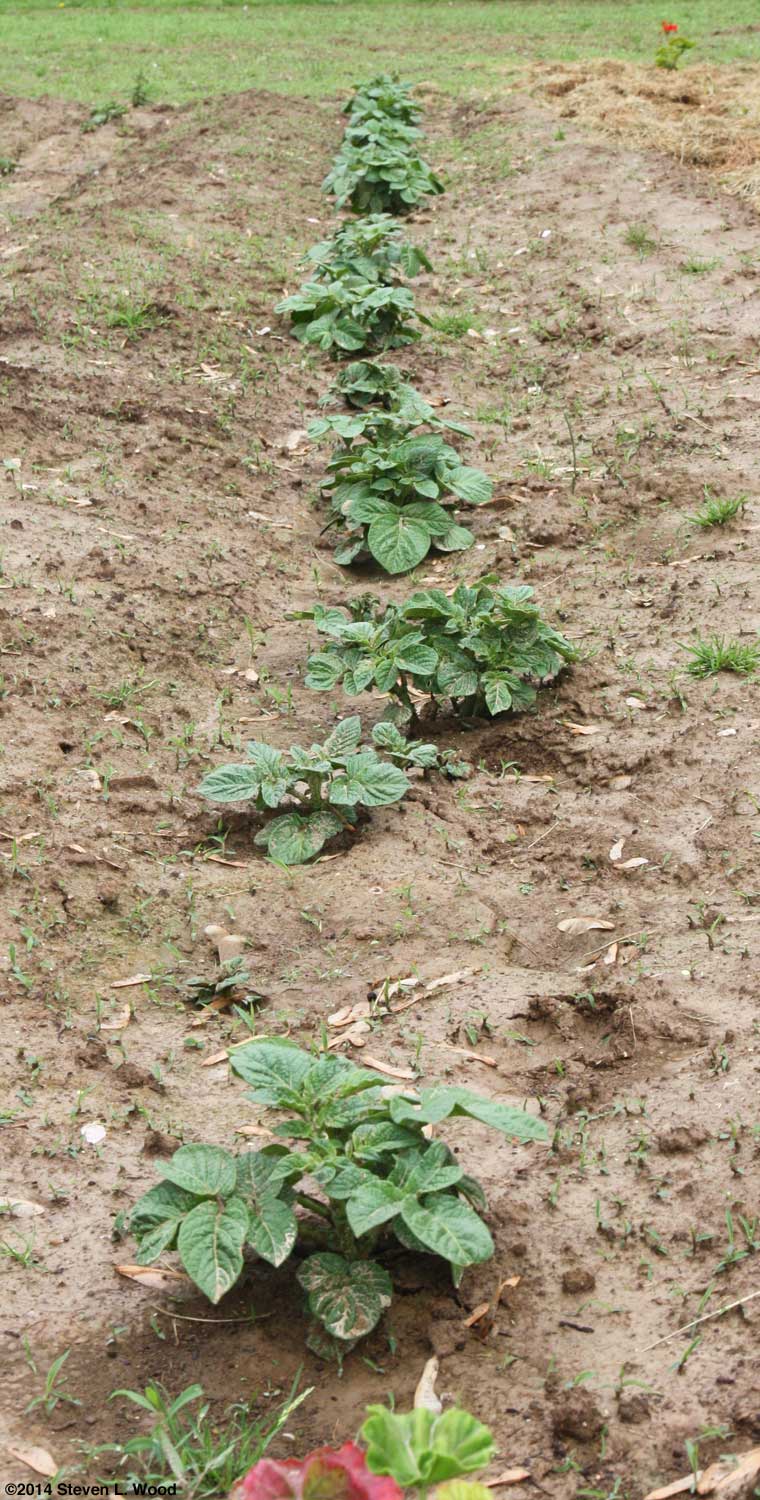
Walking around our East Garden, I was pleased to see how well our potatoes, brassicas, and melons were doing. I didn't mulch our potato plants this year, having unsuccessfully tried that method last year. Our brassicas and melons were fully mulched by this time of year. Since grass clippings are an organic material, they do break down in time. That adds organic material to the soil, actually forming a tiny, very thin layer of new topsoil where the mulch has decayed. But as the mulch decays, weeds begin to emerge once they have the daylight they need to germinate. Repeated mulching is required several times each season to keep our plots fairly free of weeds.
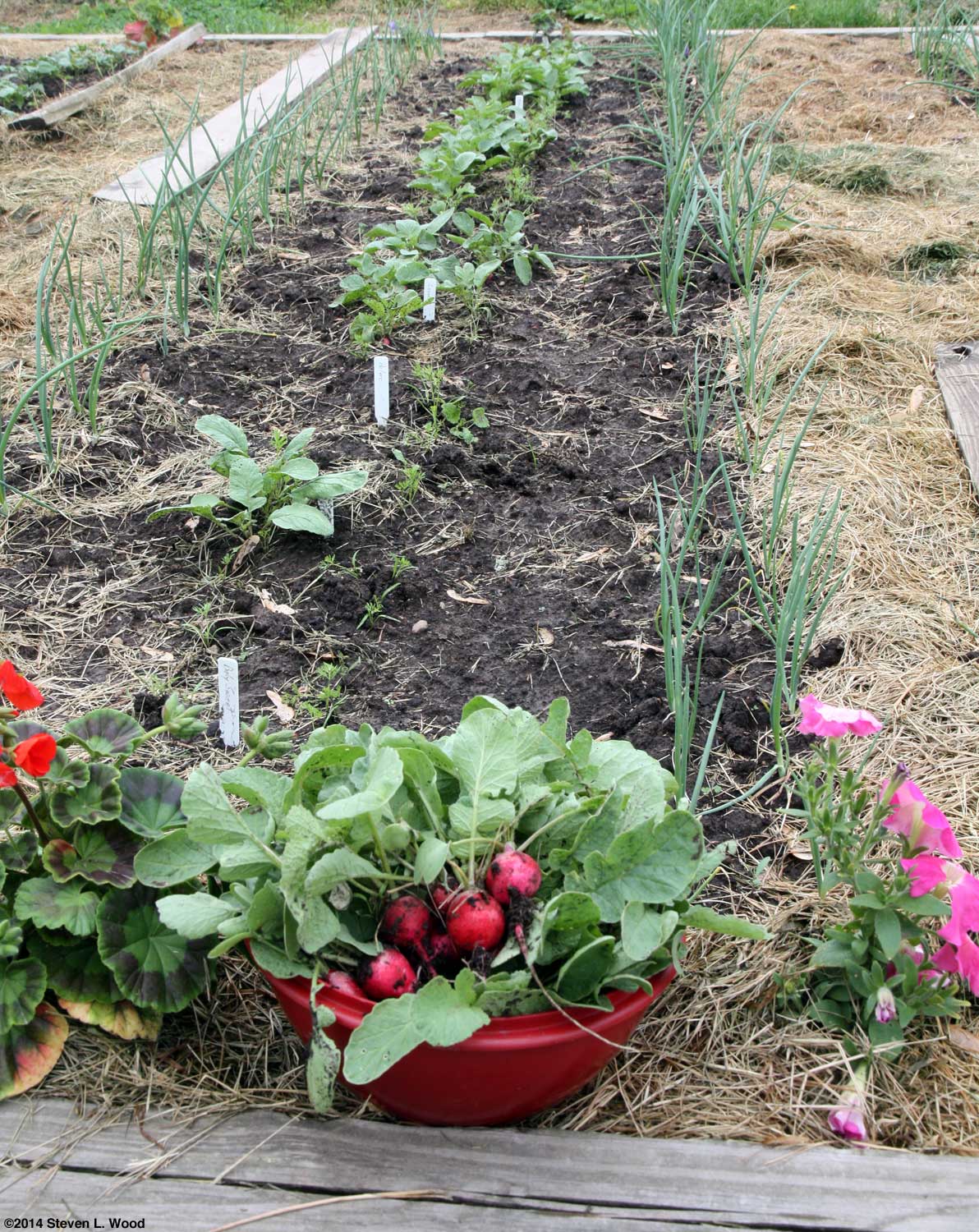
As I rather lazily walked around our garden plots, I noticed our two beautiful rows of radishes...that were supposed to be rows of carrots, I knew I had to start thinning out the maturing radishes right away. We co-plant radishes in the carrot rows to help break up any crusting of the soil that might occur and prevent the carrots from emerging. The idea is that the radishes come out before they crowd out the tiny and later germinating carrot plants. Once the radishes were out, our carrot rows looked pretty thin. The sad part of this exercise is that neither my wife nor I like radishes very much!
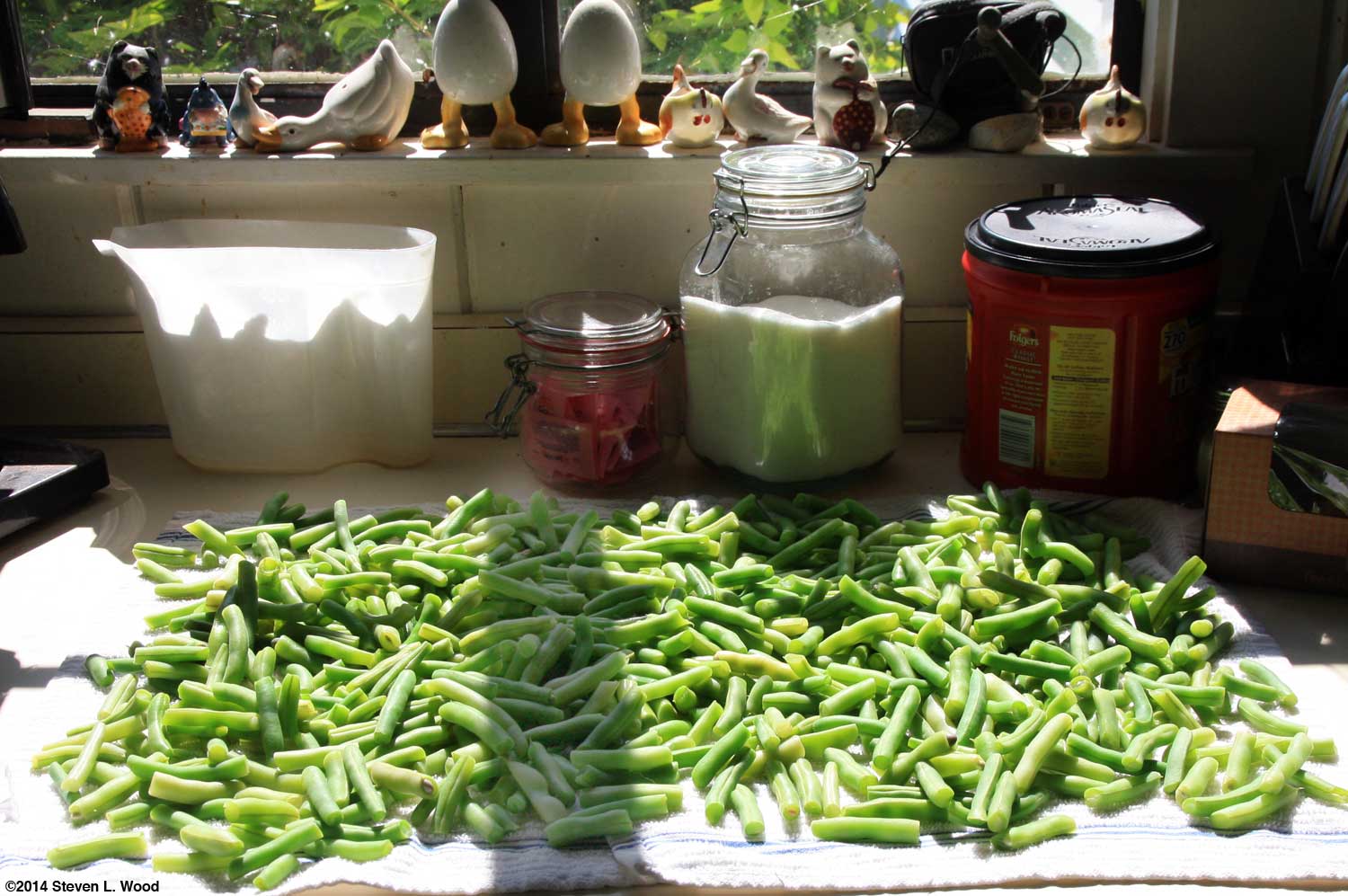
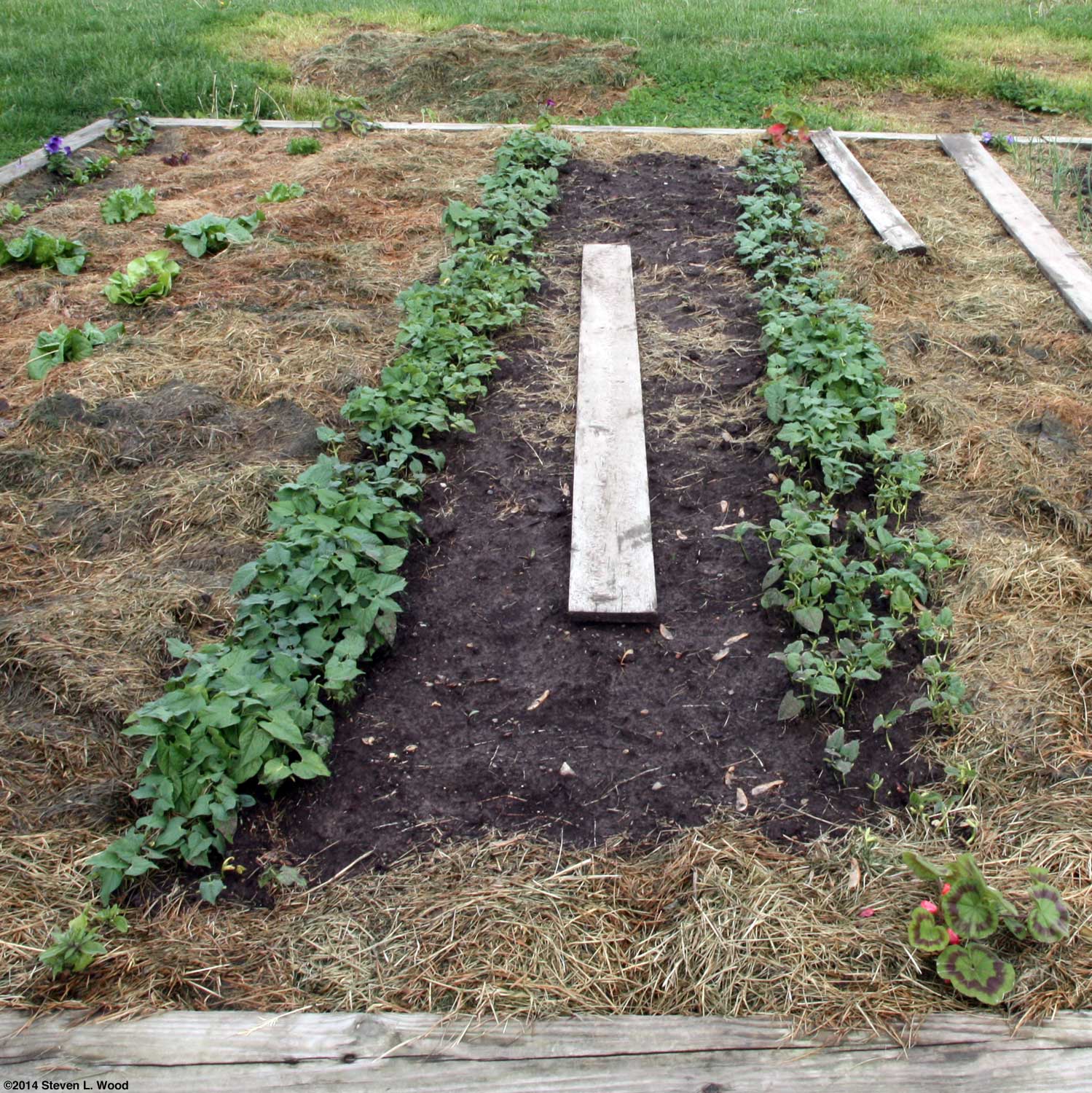
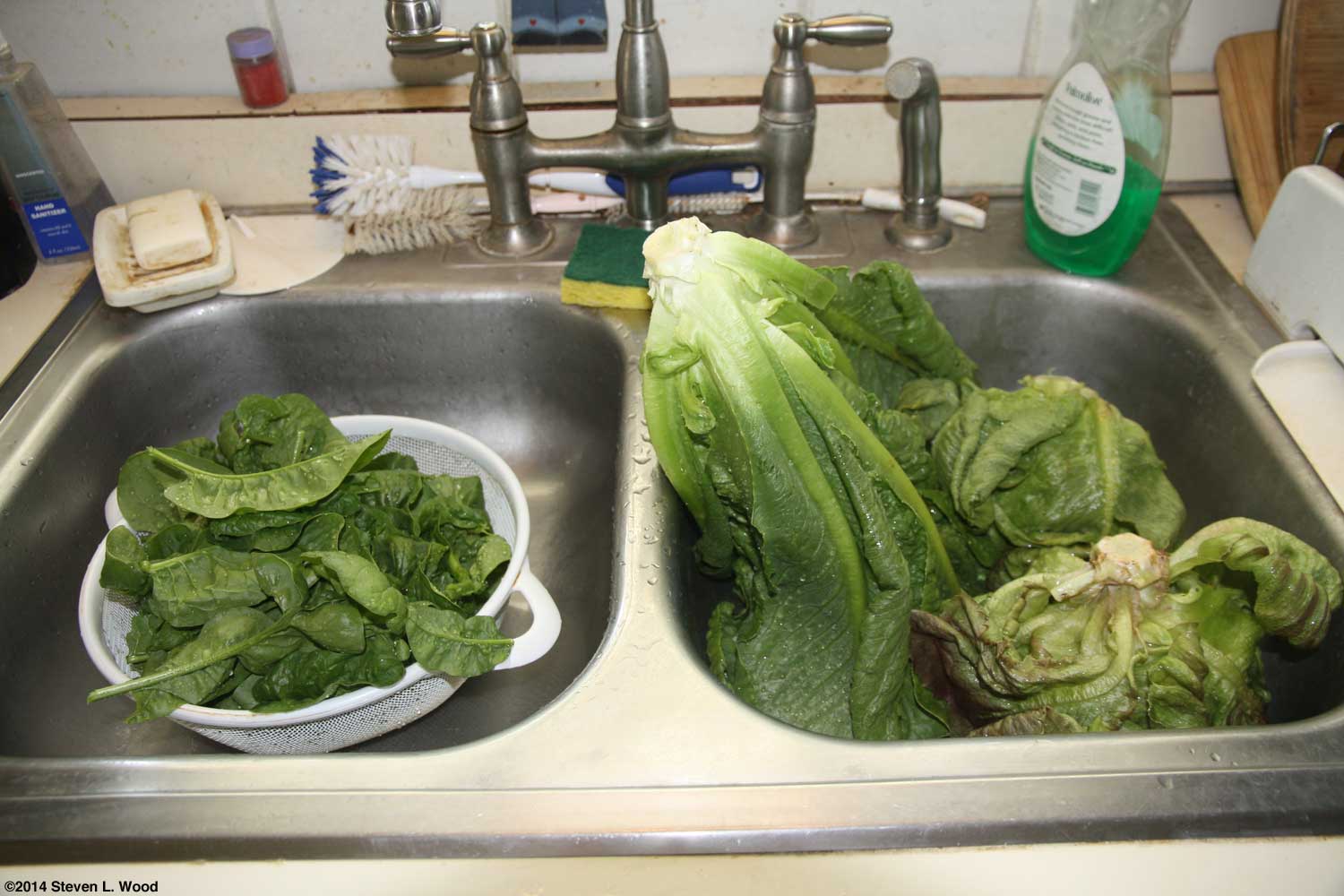
Grass clipping mulch is a mixed blessing in green beans. It does its job of holding back weeds and conserving moisture quite well. But at picking time, blades of grass often stick to the beans, making cleaning them before snapping and canning a more difficult chore. Since this planting of beans was in our main raised bed that got mulched from end to end, the beans got mulched. In other areas where I grow beans, I've been able to just hoe and/or scuffle hoe for weed control. Of course, then instead of grass clippings on picked beans, one sometimes gets muddy beans that grow close to or on the ground. Our patch of lettuce, shown in the foreground of the photo below, was doing well. We were already picking some and filling the bare spots with more seedling lettuce transplants. Sadly, most of the new plants didn't get to mature before temperatures rose and caused the lettuce to turn bitter and bolt.
I discovered that striped cucumber beetles had attacked many of our hills of melons, most seriously damaging our cantaloupes and honeydews. Some hills were already beyond saving and were replaced with what few transplants I had left on hand. When I ran out of transplants, I direct seeded the hills, not necessarily with the variety that had started there before. The entire melon/squash patch got treated with a strong insecticide. Had I been a bit more vigilant, I might have gotten by with using insecticidal soap Rather than order a tanker truck full of liquid Sevin for 2015, I'm planning to cover our melon transplants next spring with floating row covers to keep the bugs off of them until the plants begin to bloom. Then the row covers will have to come off to allow pollination by bees, but I may be able to control pests then with organic measures. I'll also be keeping a closer eye on our melon patch. After picking more asparagus than we could eat fresh, freeze, or give away for much of April and May, we began backing off on picking asparagus just after mid-May. We still picked, but only the thickest shoots, letting the slender ones get a head start on putting out their leaves and building roots that will produce our next asparagus crop. We totally stopped picking the asparagus by the end of May.
Sweet Corn
Even though we'd turned down a lush crop of buckwheat the previous year where the sweet corn would go, I broadcast a lot of 12-12-12 fertilizer over the area before tilling. I think that comes from our farming years when we were so poor that we sometimes had to grow our corn with just starter fertilizer and the hog, cattle, chicken, and turkey manure we'd spread. I usually like to let tilled ground sit a day or two before tilling it again. But with the variable weather we had in May, I got back to working the sweet corn patch by late afternoon. I seeded five sh2 varieties of sweet corn in seven forty-foot rows. Most of the corn was yellow, although I also started a seed flat of ACcentuate MRBC bicolor in fourpacks to transplant into any bare spots in the rows.
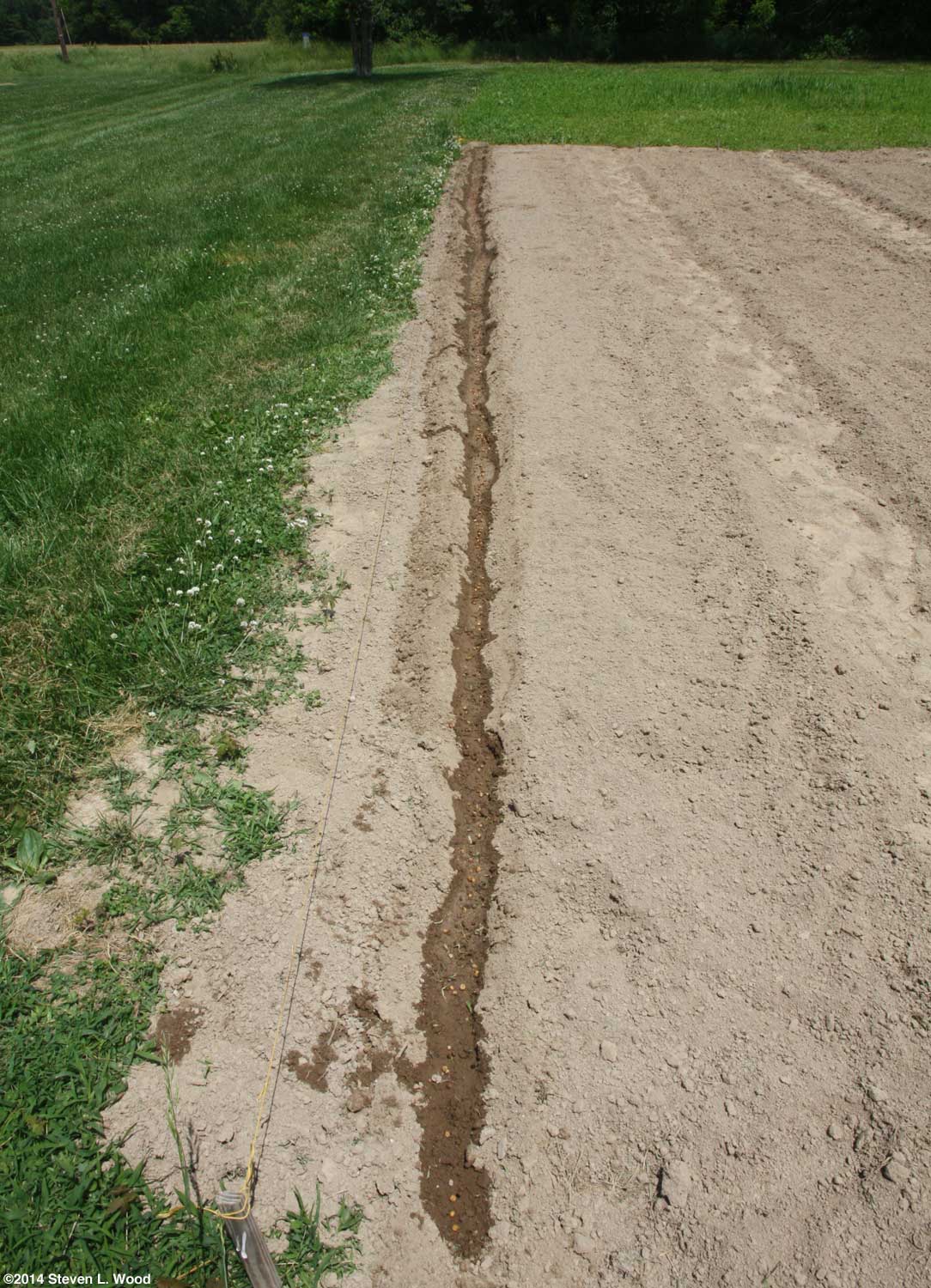
I did remember the camera the next morning when I put in a forty-foot row of nasturtiums along the west side of our East Garden. I soaked a mixture of Whirlybird, Milkmaid, Empress of India, and Night and Day nasturtium seed for a couple hours in an old potato salad container before planting them beside our sweet corn. Before seeding, I even watered the furrow a bit to give the seed a better chance of germinating before covering the row with dry soil. I finished up the month getting some isolation plots of tomatoes planted and putting in a long row of Eclipse and Encore peas along the east side of our East Garden. I also spent a lot of time just enjoying how some of our garden areas looked.
|
Our lettuce either flourished, yielding a variety of head and leaf lettuce, or went to seed. Since we usually get some really hot weather in early June, our spring lettuce season is pretty short. Over the last five or six years, we've begun growing both spring and fall crops of lettuce and brassicas (and carrots, too). Doing so obviously allows us to put up more broccoli and cauliflower. In the fall with a good bit of broccoli and cauliflower already in the freezer, we tend to use a lot of the fall harvest fresh. The fall lettuce is just an extra treat. Growing such fall crops requires starting transplants indoors under our plant lights in late June or early July. Direct seeding into our garden plots in mid-summer is a very iffy proposition. Summer heat and dry spells, along with our well that really won't support much watering through the summer, dictate we start our fall lettuce, broccoli, and cauliflower inside. Johnny's Selected Seeds provides an excellent, downloadable spreadsheet tool that can help one know when to start and/or set out stuff for a fall garden. If you lack a spreadsheet program on your computer, the one in the free, open source OpenOffice Suite works quite well. You will need to enter your approximate first frost date and then the Fall-Harvest Planting Calculator calculates the appropriate planting or transplanting dates for a good number of fall vegetables.
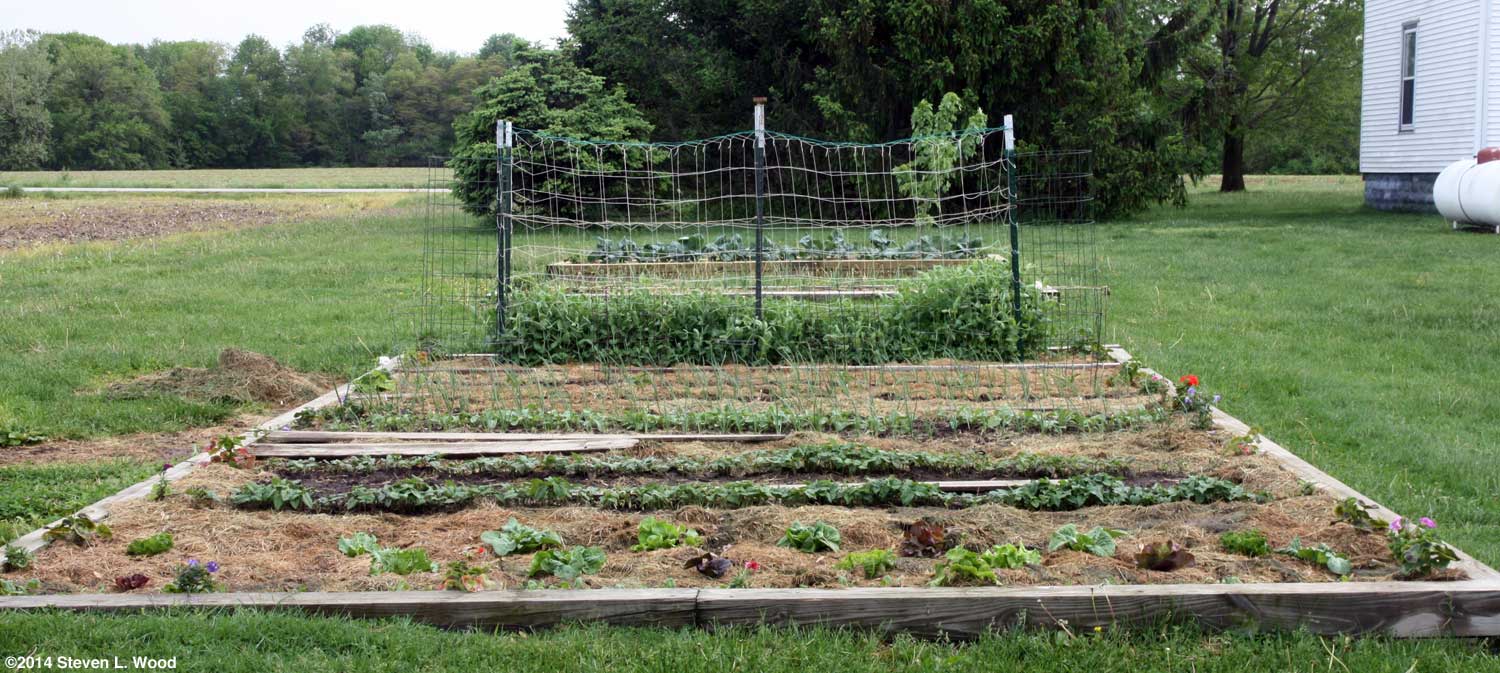
I'm not quite ready to give up on the idea yet. I'm going to try spacing the trellises a good bit wider next season. While many of our tall pea vines fell over, we still got a lot of good peas. Of course with peas, it always seems like you have a lot when picking and shelling them, but the quantity of shelled peas is a bit disappointing. If fresh peas from the garden weren't so superior to frozen peas from the grocery, I wouldn't mess with them. Our pea varieties (from left to right in the images below) are Champion of England, Mr. Big
A light rain on June 8 popped up our slowly emerging sweet corn. As soon as I'd been able to "row the corn" (see where the row is from emerging plants), I'd started scuffle hoeing the patch. Wet weather the past two seasons had kept me from properly tilling our sweet corn patch, and weeds just about took over both years. I was determined not to let that happen again.
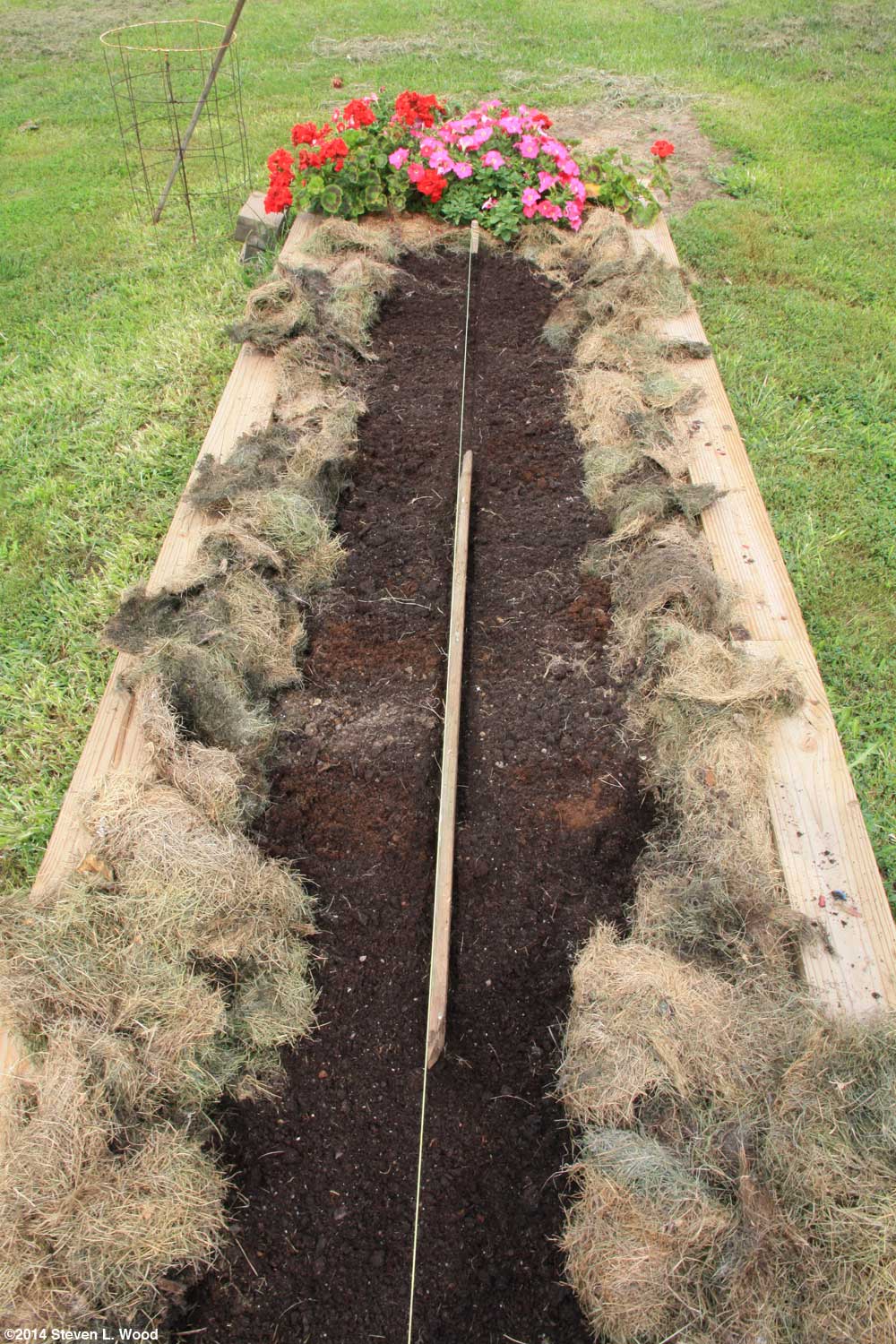
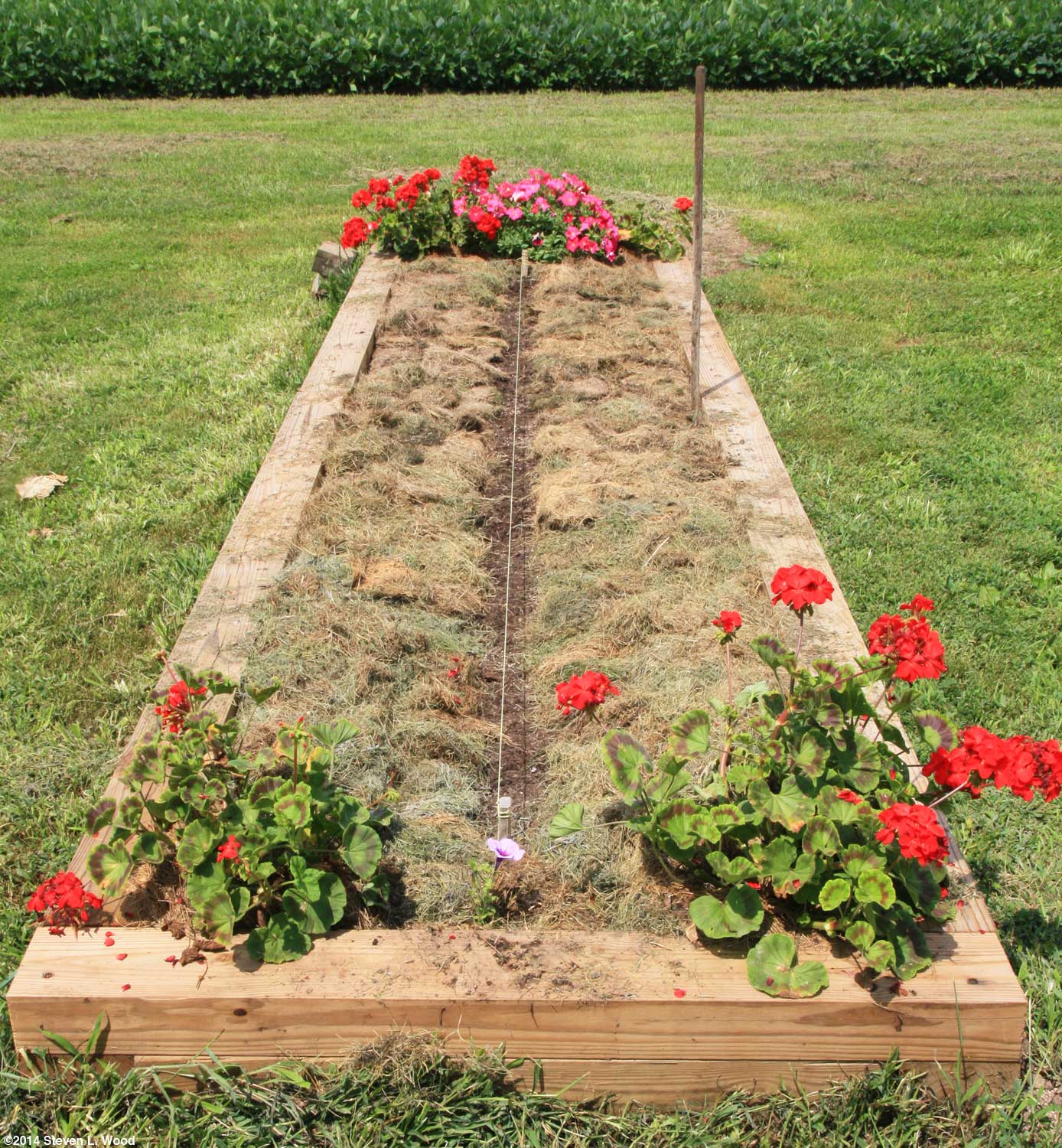
The wooden stakes we initially use as row markers and to string the rows for opening a straight furrow get quickly replaced with far more attractive plants. One way I know the soil in our East Garden is improving is that it will now support geraniums, which used to die when transplanted into the plot.
I forgot to mention that when I used some celery plants to fill in a big bare spot in our narrow raised bed of garlic, I also filled in some smaller holes with some sad looking beet transplants that had been on our back porch way too long. I popped the beets into bare spots in the garlic row, watered and mulched them, and promptly forgot all about them. When I finally got around to checking them for maturity, some of the beets were the size of small mangels (sugar beets), which I used to grow on the farm for livestock feed. An awful lot of our time in June was spent picking and shelling peas, scuffle hoeing and/or rototilling the sweet corn patch, picking lettuce, shelling more peas, cutting broccoli and cauliflower, and then lots more weeding despite the heavy mulch we use to suppress weed germination and growth. On Father's Day, I got a great shot of our Red Pontiac potatoes in bloom.
Having seen the lovely potato blooms, I went out the next day to dig some new potatoes. There's some old gardening wisdom about being able to dig new potatoes when or shortly after ones potato plants start blooming.
Since I was only going to dig one hill of small, new potatoes, I used my sun shirt to protect my camera from the rain and proceeded with the digging. I was a little surprised when I lifted a baseball sized spud from under the plant. When I got the full plant dug up, it produced four good sized red potatoes along with just two of the expected small, new potatoes! I planted our potatoes on April 24 this year.. I guess I waited too long to dig new potatoes. When I got around to harvesting our potatoes in August, we dug hundreds of pounds of Red Pontiacs. Our Kennebecs produced considerably less, and our sweet potatoes, zip. We stored some Kennebecs and about fifty pounds of Red Pontiacs in the basement for winter use. The rest all went to a local mission's food bank.
I thought the job would only take a couple of hours, but I ended up spending the whole day (with the hot, high UV hours of midday off) weeding the forty foot row and getting a trellis up. The related Eclipse and Encore pea varieties are the very best peas we grow at the Senior Garden. When Eclipse seed disappeared from seed catalogs, I made a major effort last year to produce a large seed crop of the variety. The effort worked, but I later realized that both Eclipse and Encore are patent protected varieties (PVP). Legally, I couldn't share the seed produced with anyone else, but could use it for our own garden use. The large planting of the varieties was intended to be for dual use. I hoped to first pick peas for table use and freezing and later save the late peas for a seed crop for future plantings. Germination of the supersweet Eclipse variety was dismal, pretty well dooming that crop, but the Encores thrived. I ended up using the center of the row where Eclipse peas didn't germinate for a later planting of Mohon's Heirloom Beans. The pea row along with our sweet corn and sweet potato plants got a a heavy layer of Bobbex
While our tiller with its shields up throws a lot of dirt into the corn rows, it's still necessary to go back and hand weed grass plants and morning glories in the row that survive our attempts to bury them. I also took time to push a bit more sweet corn seed into the ground in the bare areas that still remained in our sweet corn patch. I used the shortest season sweet corn seed we had on hand, some really, really old stuff that had been in our freezer a very long time. A Succession Crop
About 8:30 P.M., taking advantage of one of the longest days of the year (in hours of daylight) and slightly cooler temperatures, I began transplanting our Japanese Long Pickling cucumbers. The soil in the raised bed was incredibly dry, so I ended up using about fifteen gallons of water to transplant just eight plants along the twelve foot row between the double trellis. By transplanting late in the day, the plants had the overnight hours to begin adapting to their new conditions before enduring another hot day. This crop of JLPs was really special. Our strain of the excellent slicing and pickling cucumber came from one lone seed that germinated from a very old packet of seed that had been in frozen storage too long without being grown out. Saving seed finally led to inbreeding depression that causes problems with seed and plant vigor and disease resistance. I finally found a vendor that offered a cucumber called Japanese Long Pickling that turned out to be the real deal (after a previous failure of an untrue-to-variety one). I grew out the new seed two years ago to see if it was true-to-variety, and it was. Last year, I transplanted plants from the new seed along with our old JLP strain, hoping they would cross-pollinate and add some genetic diversity to our strain. This crop was the result of the possibly crossed and strengthened variety. Three days later, I could tell that the transplants were going to make it.
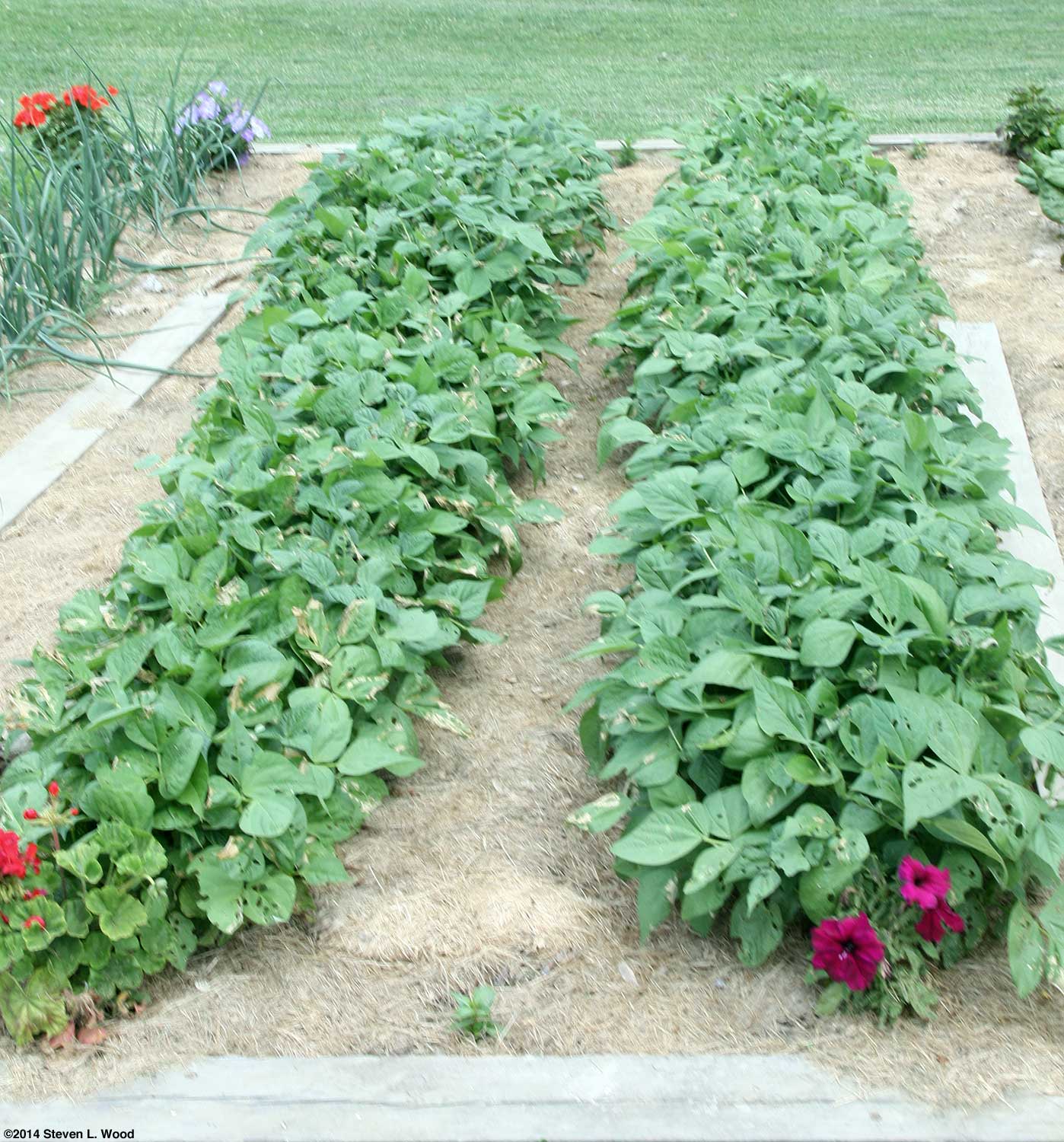
June had been a relatively dry month until June 24, when we received around three inches of rain in just 24 hours. We had standing water everywhere for a while. But our recently fertilized and tilled sweet corn leaped up several inches seemingly overnight. Squash bugs appeared in volume on our yellow squash, requiring a serious spraying of insecticide. I was able to transplant a hill of pumpkins on a previous compost pile site without too much watering, and our garlic, onions, and green beans moved towards maturity. I made our first picking of some of our green beans on June 28. The relatively light picking produced green beans for supper and six quarts canned.
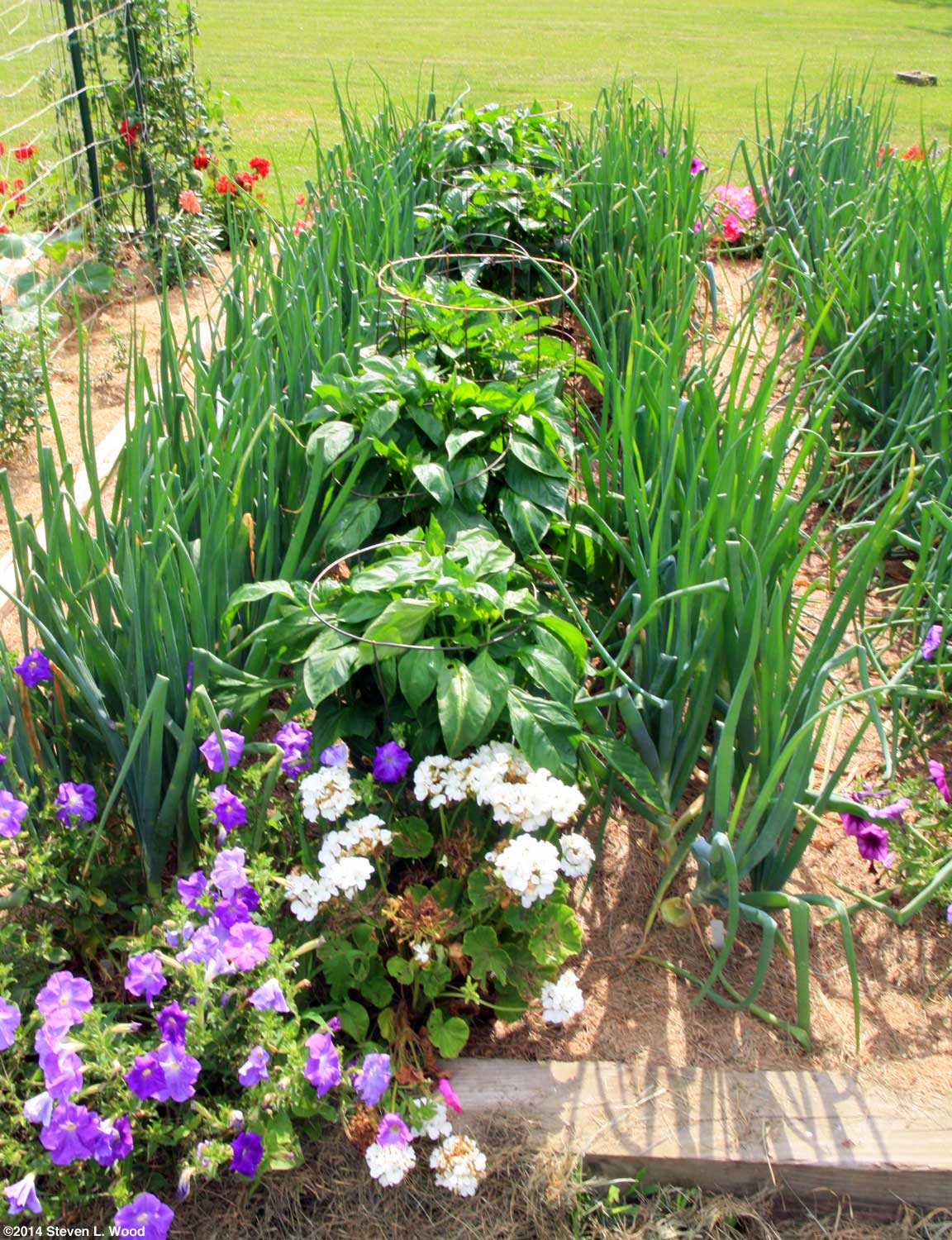
While grabbing shots of our green beans, I couldn't leave out our rows of onions, carrots, and bell peppers. The petunias at the ends of the rows actually began to crowd out some of the onions growing next to them!
As I mentioned earlier, the rain caused our sweet corn to leap up in growth. By the end of the month, it looked great.
July was a month of bountiful harvests for us in our Senior Garden, but also a month where physical issues reared their ugly head.
While picking the beans, my right shoulder began to really hurt. There wasn't an incident where I knew of doing something to it, a point of injury, but the pain cut the harvest short. By Sunday morning, the shoulder and entire right arm were immobile due to pain. A trip to the doctor on Monday suggested either a frozen shoulder or a rotor cuff problem. I walked away with a lot of pain killers, which helped with the pain and recovery, but didn't do much for getting any gardening done. A later visit to an orthopedic surgeon confirmed the rotor cuff problem. As we worked through the shoulder problems and lots and lots of x-rays, it turned out the shoulder was the least of my problems. My bum leg was actually a hip socket with no cartilage left in it and would have to be replaced soon. During my downtime, my darling wife Annie kept up with any urgent chores that had to be done in the garden. But it was a full week before I could do much of anything, and two full weeks before I actually began cautiously gardening again. It was not the best time for such an injury to occur.
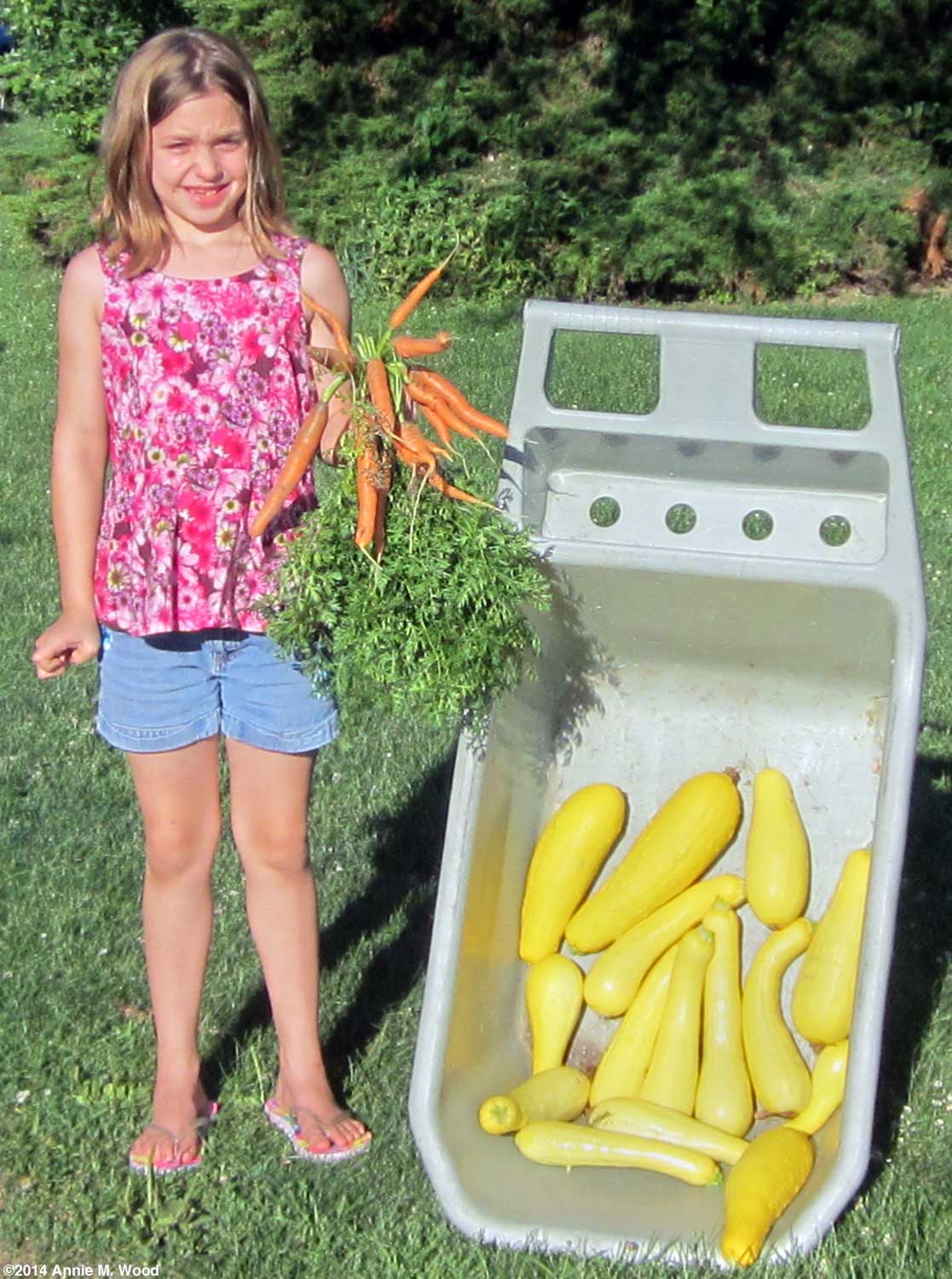
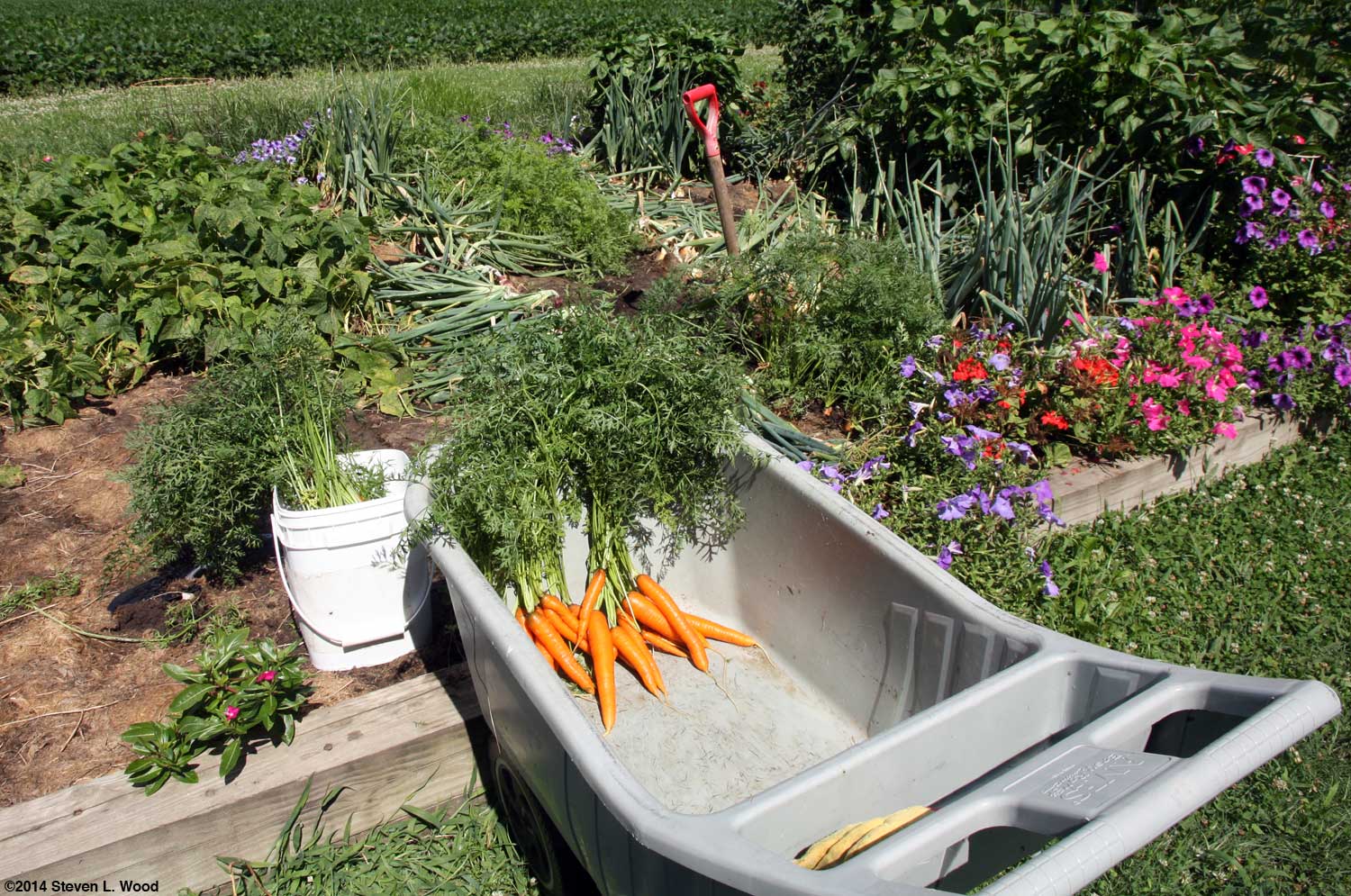
By July 15, I was finally able to do a half day of real gardening. Since our carrot rows ran between rows of rapidly toppling over onions, they needed to come out first so that the onions would have space and sunlight to cure a bit. A big surprise awaited me at the very end of our double row of carrots. I'd planted just a few feet of a highly recommended new hybrid carrot variety, Sugarsnax. Fedco raved about the carrot variety in their description (What seed house describes anything they're selling as average?) with tons of superlatives about the long, thin carrots. When I began to dig the Sugarsnax, I found that I was in for a real job. I normally just push my heavy garden fork deeply into the soil beside a carrot row and lift a bit. That usually loosens the soil enough that I can lift the carrots out of the ground by their tops without breaking the roots. With the Sugarsnax, one measuring almost fifteen inches long, I had to really dig deep to extract the carrots without snapping them off.
After rinsing and thoroughly washing the carrots for storage in our refrigerator, our haul of carrots weighed in at sixteen pounds! And when I was done, it was obvious that it was almost time to get the rest of our onions out of the ground.
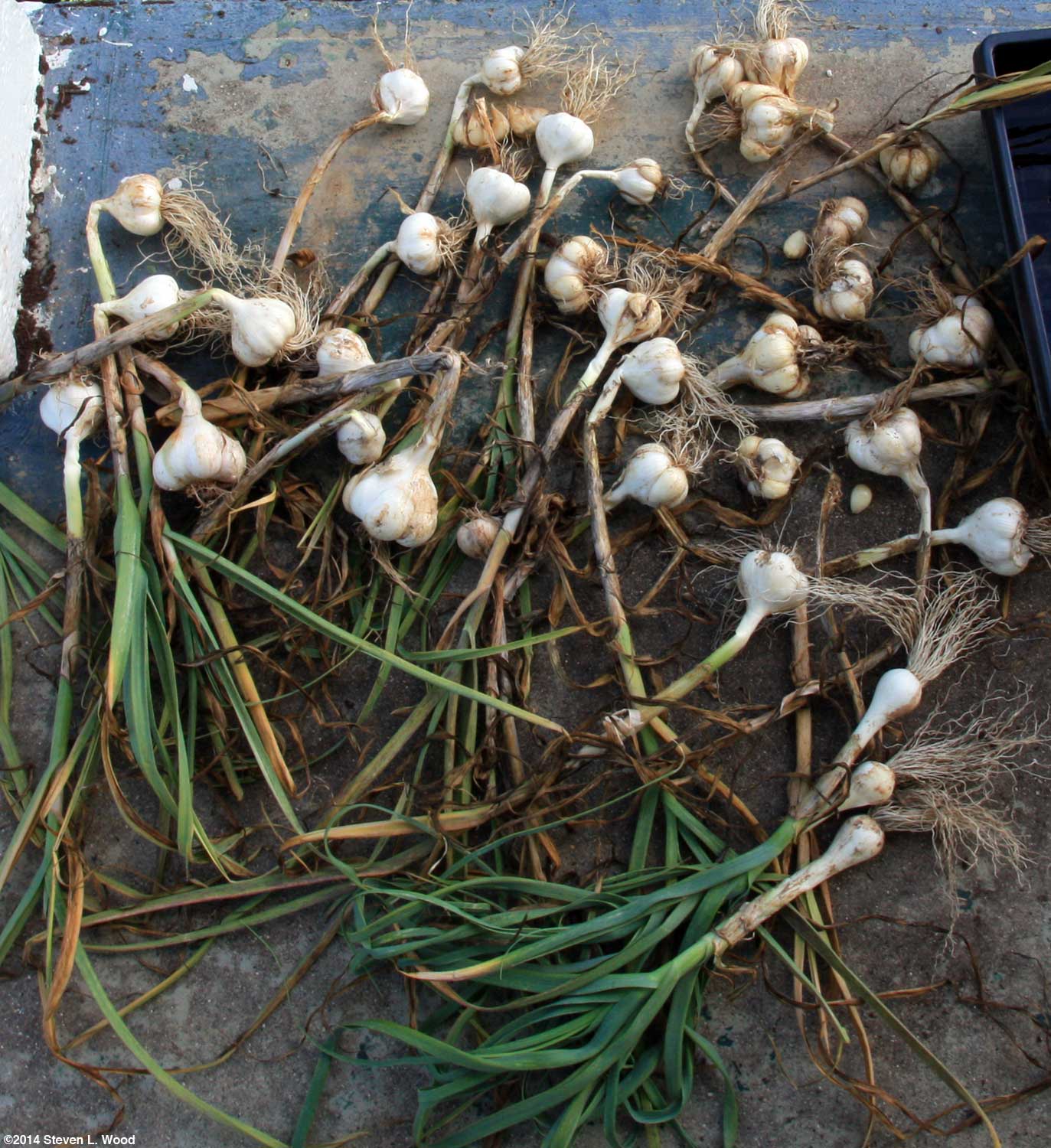
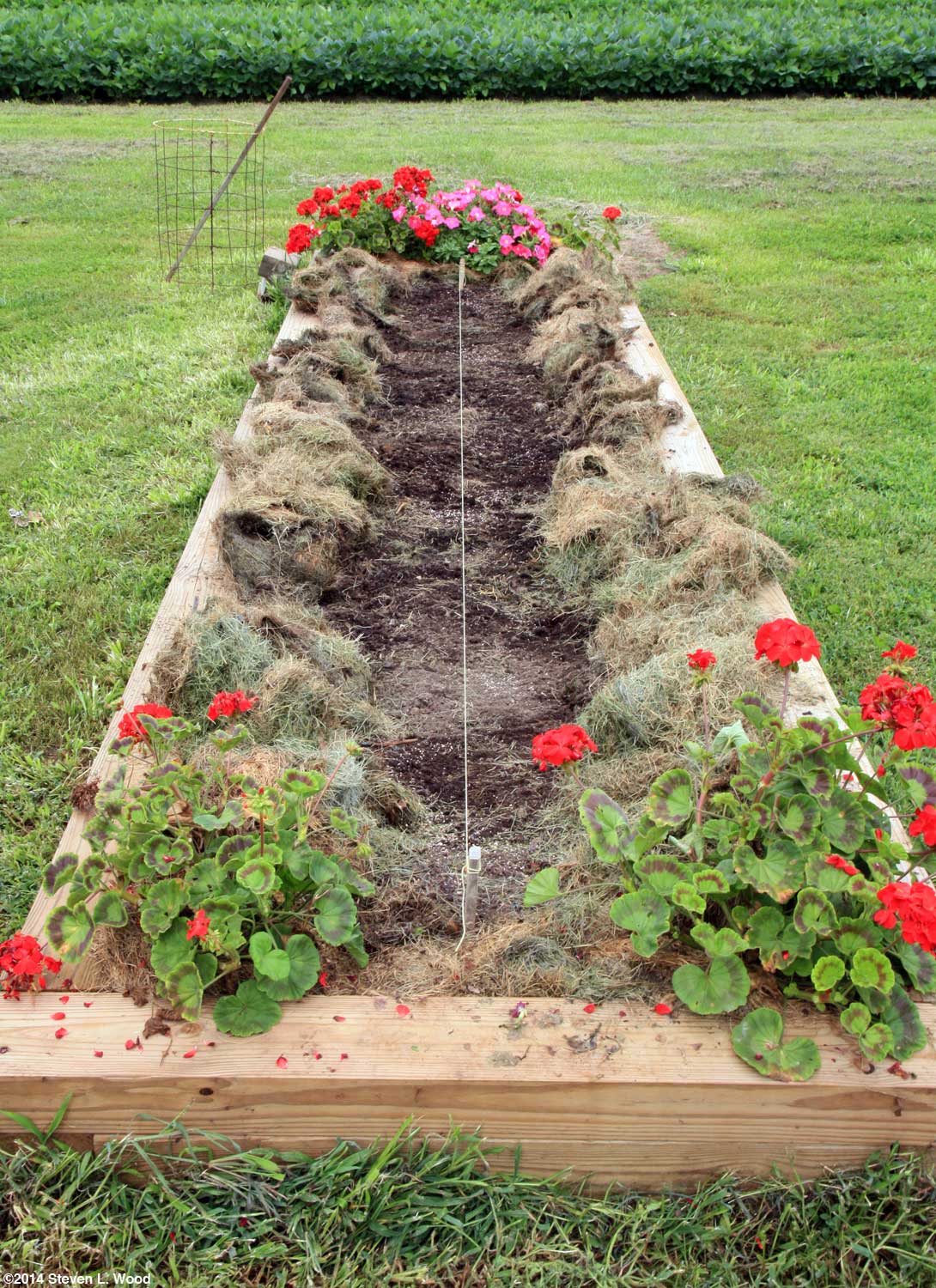
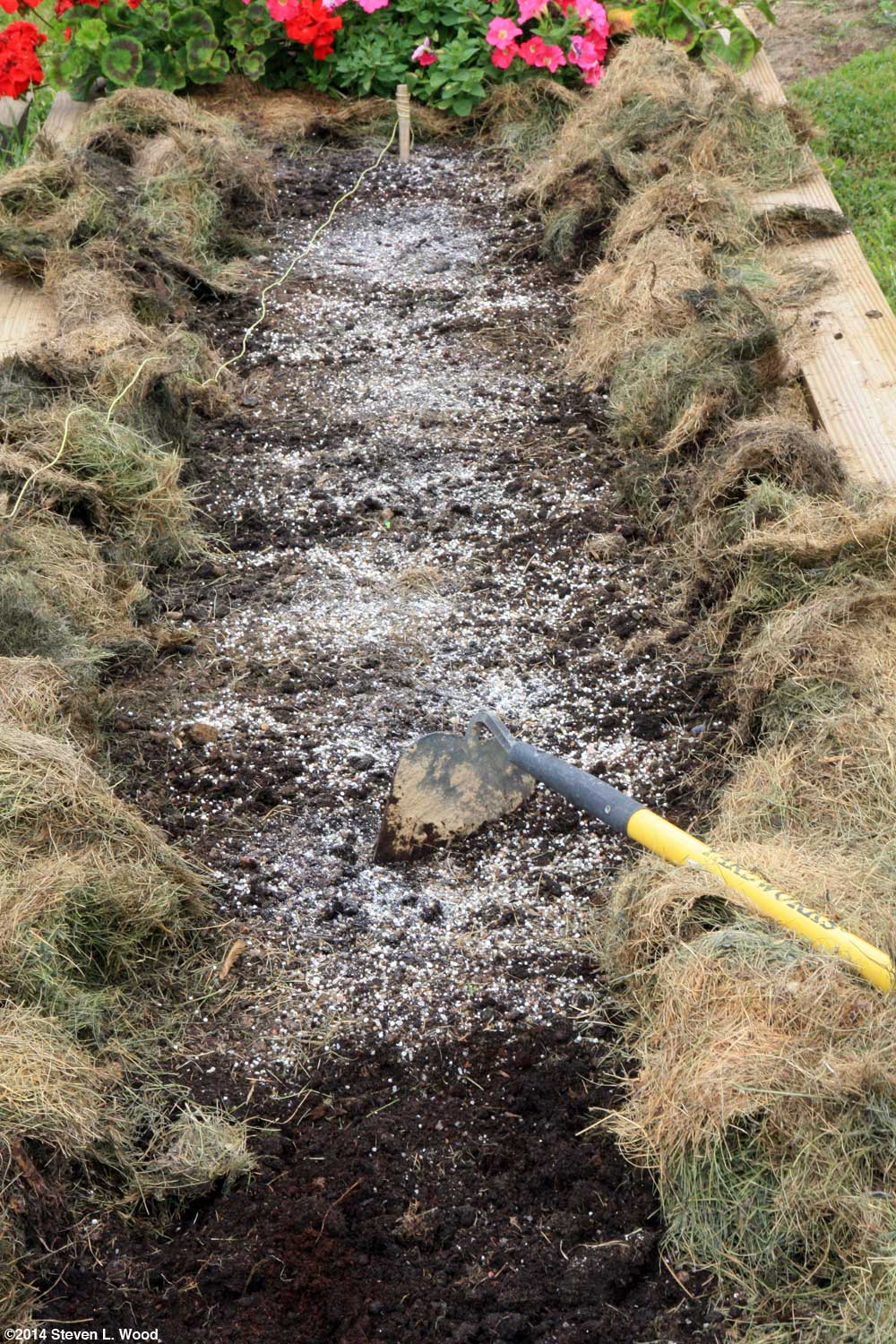
We only got a fair harvest of elephant and regular garlic. For cooking, though, there's nothing quite like the aroma and flavor of freshly dug garlic. I left three elephant garlic plants that had "bloomed" in the ground to later collect garlic bulbils from them. Coming off our worst garlic harvest in years, let me add that garlic is normally one of the easiest, most productive, and trouble free crops one can grow in their garden. For areas where the ground doesn't freeze too far down, one plants it in the late fall. For folks like my sister who lives in northern Minnesota, planting has to be done in the spring. Defying the wisdom of crop rotation, I planted our fall kale on July 18 in the same narrow raised bed our spring broccoli and cauliflower had grown in. I did do a pretty thorough bed renovation before direct seeding the kale. I pulled back the existing mulch in the bed with a rake and worked in a healthy dose of 12-12-12 fertilizer and some lime with my hoe. After raking the area smooth, I used a piece of one inch lumber to make a shallow furrow down the center of the bed and direct seeded three varieties of kale. I then scooted the old mulch up to the edge of the kale row.
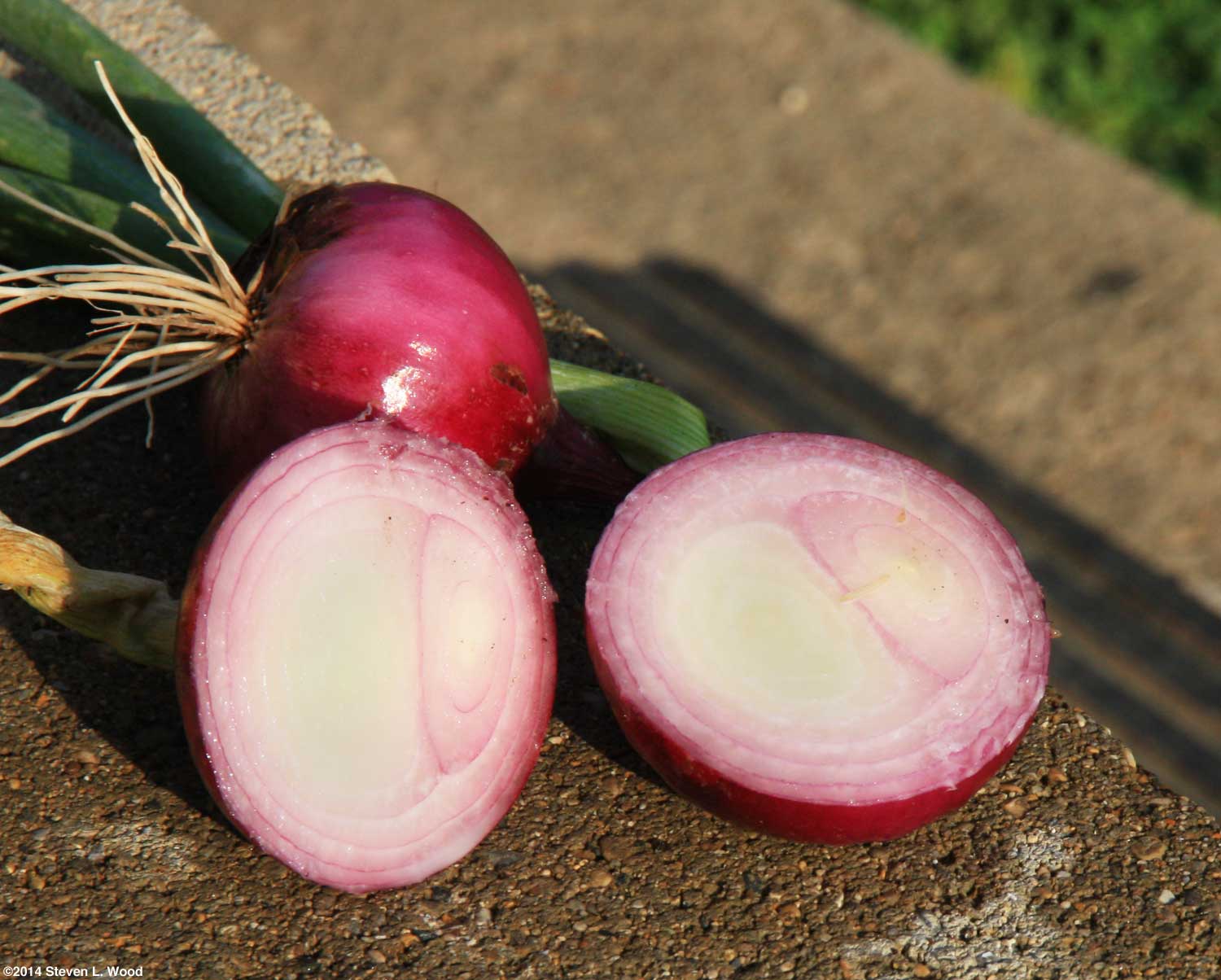
Summer plantings like this one are often an iffy proposition for us. We usually have much drier weather in July than in the spring, so I have to regularly water (and sometimes even reseed bare patches). Note that the existing flowers in the bed were just left in place. I harvested our fabulous crop of onions on July 22. I'd pulled most of the onions several days earlier to let them cure a bit in the sun. With rain predicted, I pulled all the rest of the onions and took them to a makeshift curing table in our garage.
I'd been pretty careful about keeping our onions sorted by variety and labeled this year, as we were searching for some different onion varieties to grow in the future. As it eventually turned out, our favorite storage onion was discontinued for 2015, but we'd already found one, two, and possibly even three other varieties that should serve as adequate replacements. I wrote up our onion adventure in two separate feature stories:
We ended up with enough onions for our winter use, to share with family, and more to share with a local mission.
With our onions and carrots out of the way in our main raised bed, I tilled up the open section and transplanted our fall brassicas on July 29. The remaining open area of the bed was later planted to fall carrots and a short row of parsley. We started off August with a huge harvest of early sweet corn. I hadn't planned on picking corn on August 1, as the corn's days-to-maturity suggested it wouldn't be ready for a few more days. But when I hauled a couple of buckets of kitchen scraps to the compost pile, I noticed some very ripe looking ears of early sweet corn. Since I'd been lazy with the compost buckets and used our garden cart to move them, I went ahead picking a dozen or so ears of corn. But as I walked into the rows, it became apparent that two of our three early varieties, Summer Sweet 6800R and Early Xtra-Sweet
And we still had four rows of full season sweet corn yet to mature. Fall Carrots Finally Seeded Maybe it's because we had a bumper crop of spring carrots, or possibly because I'm none to familiar with growing fall carrots, but I somehow left the task of seeding our fall carrots until a full ten days later than last year when we seeded our very first crop of fall carrots. But I got a double row of Scarlet Nantes
As with our summer seeded kale, I had to repeatedly water the carrot planting to get the seed to germinate in the hot, dry weather of early August. I omitted our usual practice of overseeding the carrots with radishes that help break up any soil crusting that might block the emerging carrots. I did, however, use an old trick of simply laying our walking boards over the carrot rows to hold in moisture until the carrots began to emerge.
I eventually dug the elephant garlic which had produced pretty nice heads. The garlic "blooms" got dried and bagged, as I hope to try growing out garlic from the tiny bulbils the bloom produces. While said to be a great way to dramatically increase ones garlic stock, the process can take two to three years. Main Sweet Corn Harvest
Husking, silking, blanching, cutting, bagging, cooling, and freezing all that corn extended well into the next day. When done, I found that we'd used up almost every bit of available space in our chest type freezer in the garage. Tomatoes
Melons and Potatoes
Our watermelon fared far worse from insects and cool weather. We picked a lot of watermelon, but the quality really wasn't what it should have been. I attribute cooler temperatures this summer to the disappointing flavor of the watermelon. I didn't get a melon with that incredible watermelon taste one wants until the last melon I picked of the season! It wasn't until August 22 that we were able to share melons with the mission's food bank, something that normally occurs much earlier...and with more frequency. Of course, this year the food bank also got a lot of onions and potatoes from us.
I cleared our East Garden of melon vines on August 28. It was our worst melon crop since we started growing them in the East Garden in 2007. While cool weather was a factor in the poor melon crop, I attribute most of our near crop failure to my not being watchful of our melon hills early on.
We also harvested and saved seed from our Japanese Long Pickling cucumbers late in the month. A Crispino lettuce plant that bolted from our spring lettuce was allowed to go to seed, producing viable seed we used for some late, fall lettuce transplants. And we began picking and dehydrating paprika peppers that we use to make our ground paprika.
|
||||||||||||||||||||||||||||||||
From Steve Wood, the at Senior Gardening |
| Affiliated Advertisers |
last updated 4/12/2015
©2014 Senior-gardening.com




 Also by this time of year,





 or
or 

 I saw that some of our tall peas were coming into bloom on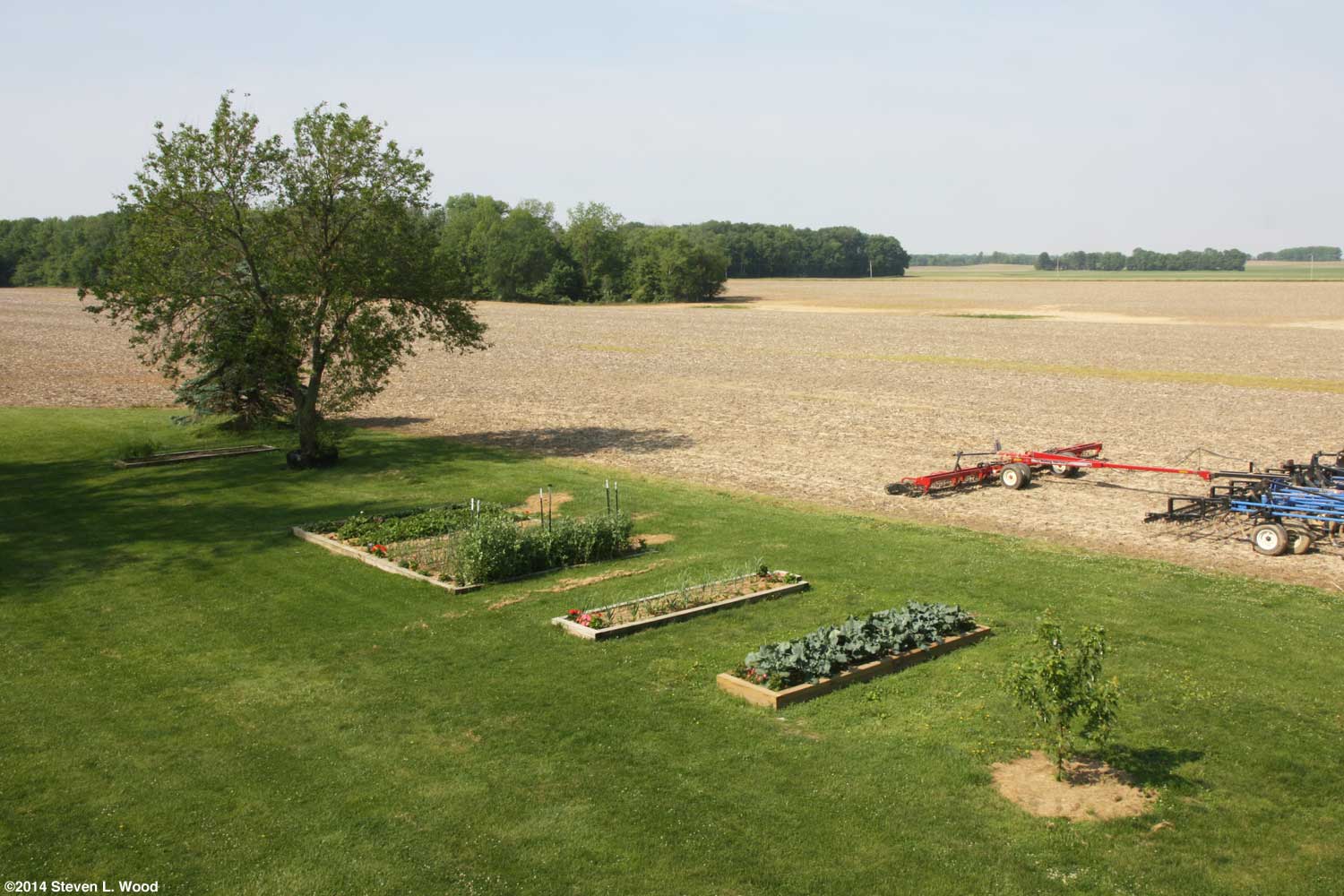






 repellent, as deer love all of those crops. Some years ago I was puzzled when I saw that our sweet potatoes looked like they'd been cut off about six inches high with a weedeater. There weren't any leaves on the ground, though, and a closer inspection revealed deer tracks around the sweet potato row.