One of the Joys of Maturity

Custom Search
One of the Joys of Maturity |
Custom Search
|
| Affiliated Advertisers |
Clicking through one of our banner ads or some of our text links and making a purchase will produce a small commission for us from the sale. A Year in Our Garden - 2016 - Page 3
We began September with a little rain that pushed me inside and got me going on making pickles. I'd been saving cucumbers from our rapidly declining Japanese Long Pickling cucumber vines for a week or so. It was a good thing I had, as all but two of the vines collapsed in the next few days. I hadn't made pickles for a couple years, as they hold up pretty well canned in storage. But when the last of our canned pickles got squishy in the jars last winter, I had to dump them and prepare for a new batch this season. I used the same pickle recipe out of our old (©1969!) Better Homes and Gardens New Cook Book that I've always used. The current BH&G online recipe for Bread and Butter Pickles is just slightly different. I added a red bell pepper and one Red Zeppelin onion to the recipe to give it some color contrast. The rest of the onions called for in the recipe were the last of our Walla Walla sweet onions. We don't eat a lot of bread and butter pickles, so I'm hoping that the eight pints we canned will last us until next summer. Maybe canning less pickles this year will prevent us from having squishy pickles again.
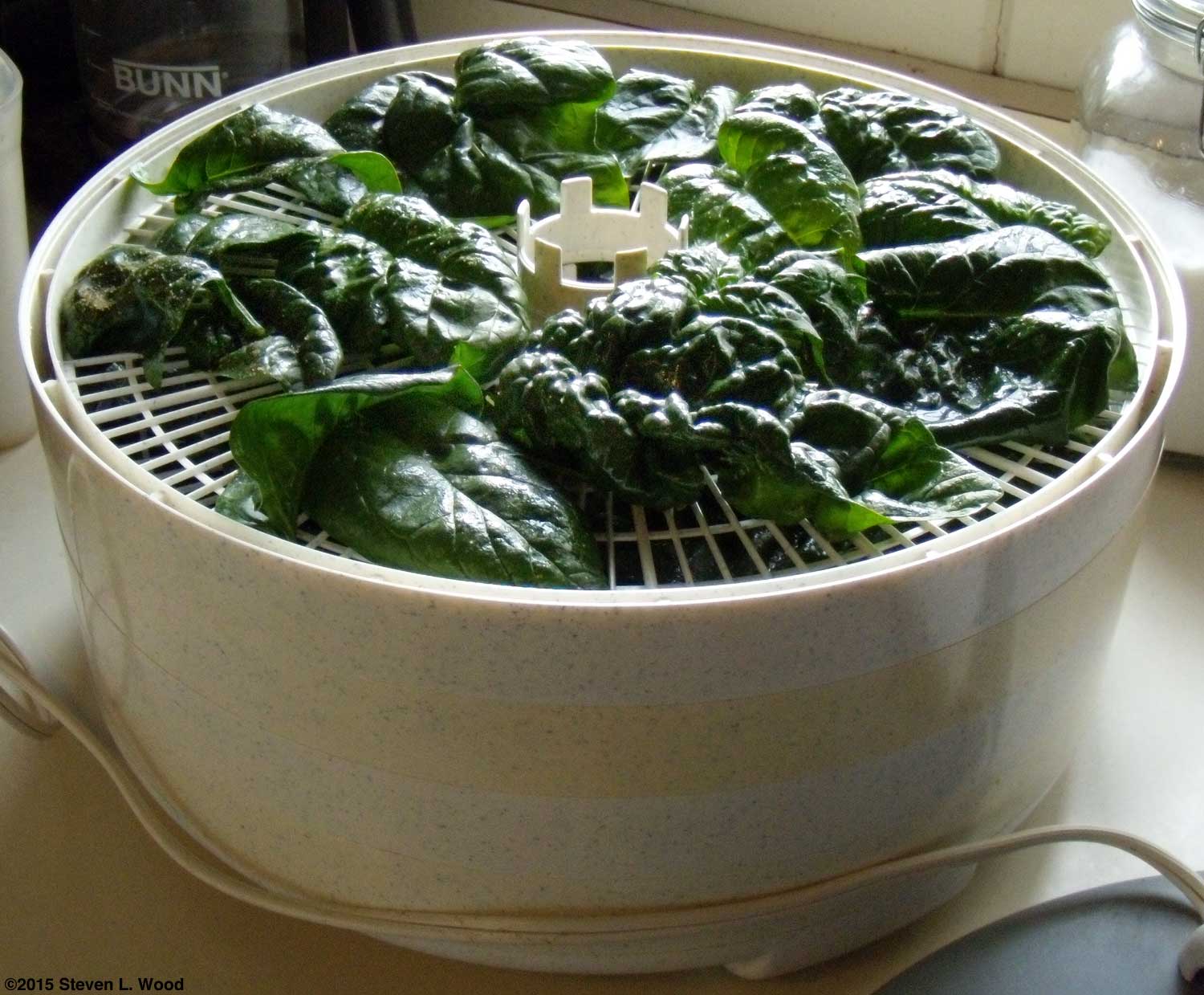
At times through the month, our spinach row (and lettuce) were attacked by some tiny bugs which swarmed or hopped when the leaves were touched. I was pleased to see that an organic control, insecticidal soap, kept the bugs in check. I hate to spray leaf crops with a true pesticide, as I always feel like some chemical residue remains on the leaves. (Note: I have absolutely no proof about the residue. It's just my personal feeling.) Despite the dry weather, bugs and sprays, and repeated pickings, our spinach continued to regrow all through the month and into October.
I began peeling the garlic cloves, storing the peeled garlics in a green bag in our refrigerator. I quickly added an outer, freezer bag to hold in the pungent smell building up in the fridge and freezer to no avail. It took me five days to peel all the garlic I wanted to use, and I still had a small box of elephant garlic culls left that eventually went to work with my wife for her co-workers. Once peeled, the garlic cloves were chopped in a food processor, leaving some slices, but mostly a really smelly garlic paste. The slices and paste got smeared across the shelves of our food dehydrator and dried at 95-110o F for a couple days in our garage.
I once started the drying process in the house, and the odor about did us in. Once completely dry, the chips and dried paste got scraped off the trays and were ground in a coffee grinder to make the garlic powder.
The first row of our green beans provided a light picking on September 17. They got used up fresh, tasting even better the second night we enjoyed them. We picked beans again on September 21, canning just four quarts of them. When picking beans, we usually can fill our pressure canner to its seven quart capacity at least once. But this year when I started our beans, I put the longer season beans in a second row which didn't receive the same tender loving care as the first row. When we picked, only the first row provided any quantity of beans. The second row's late start and getting caught in some terribly dry weather seemed to have stunted the plants' ability to set and ripen beans.
I usually have to resort to using something like liquid Sevin in the fall to keep our fall brassicas free of worms. This year I decided to try alternating sprays of the biological, Thuricide (BT), and insecticidal soap to control cabbage loopers and small white cabbage worms. It worked about as well as using pesticides. We still had to clean the occasional worm from the harvested crops, but not in any volume. We suddenly had lettuce out the wazoo in late September. I let some of it go too long and found it a bit bitter when picked. But all in all, we got great lettuce from our first fall planting on August 17. In just a few days, I filled the open spaces where the lettuce had grown with new lettuce transplants, offsetting the new plants so they weren't growing in the same exact spots as the previous plants.
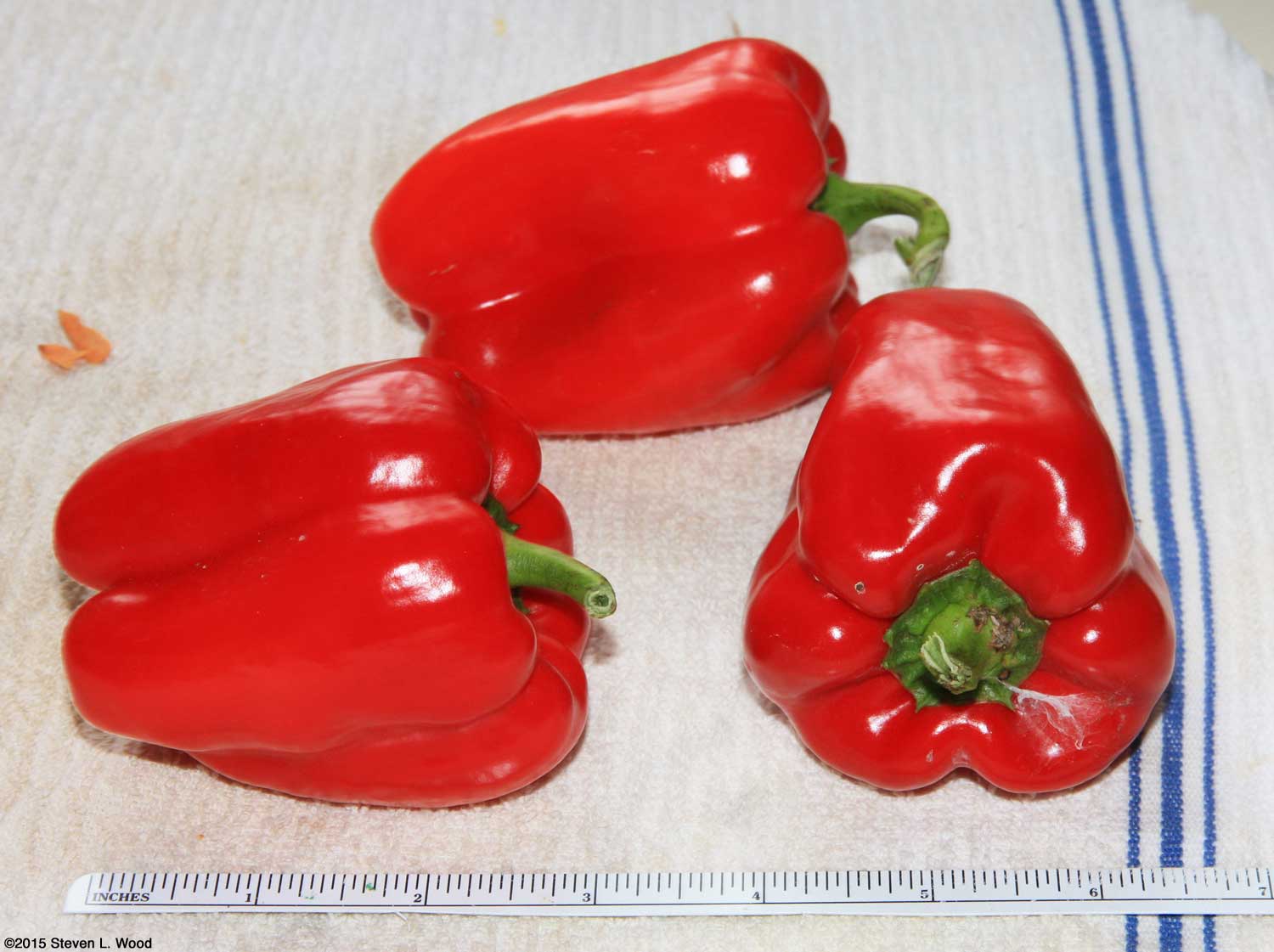
The trick with lettuce seems to be to just keep planting. Some will mature nicely, and some will be ravaged by bugs or turn bitter. But if you don't try, you won't get any sweet fall lettuce. We finished up the month with a pleasant surprise of a good many ripe and full size Earliest Red Sweet peppers. The ERS peppers don't come close to matching the size of hybrid peppers, but our seed is free (from seed saving) and the plants produce lots of excellent, flavorful, small peppers.
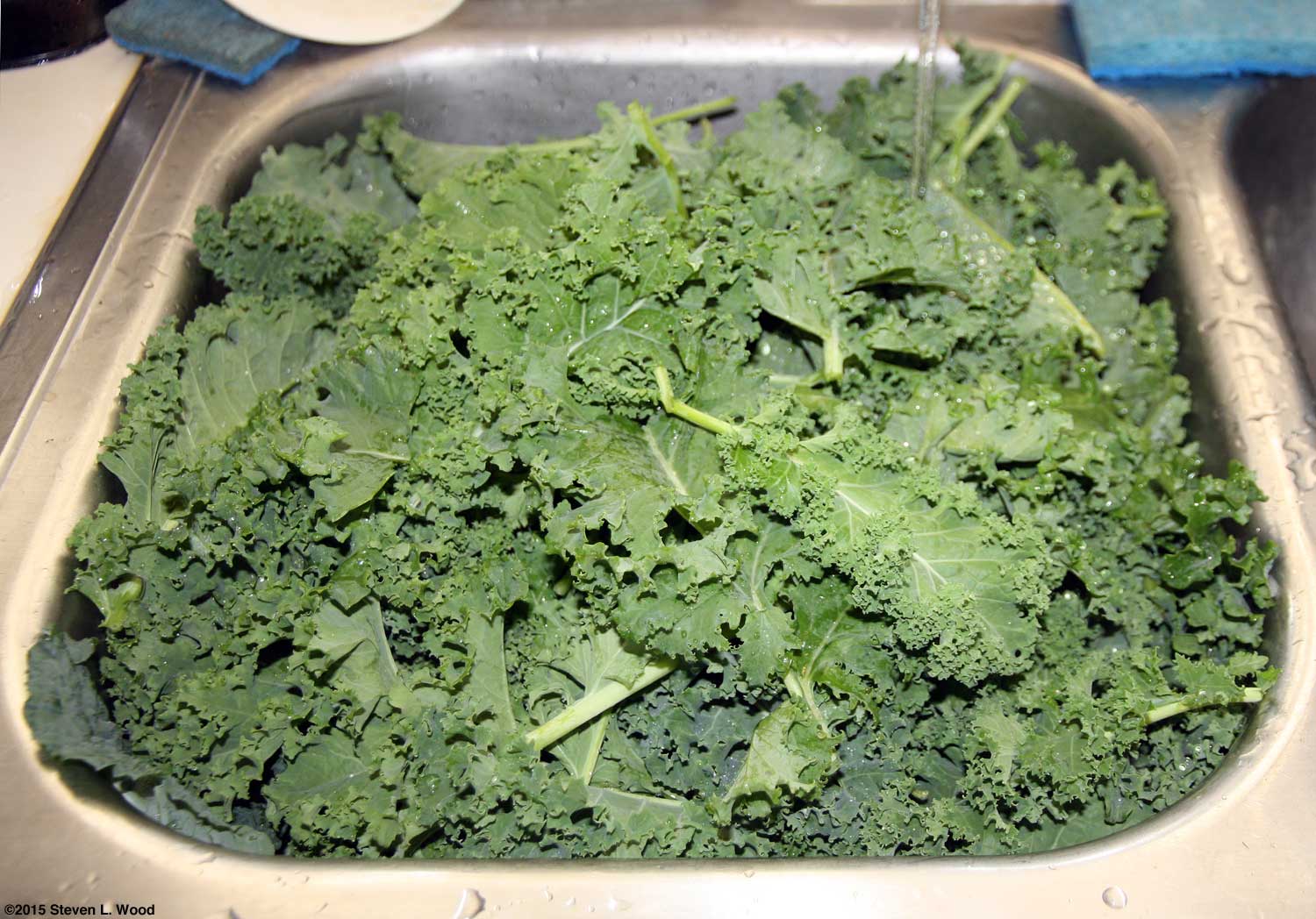
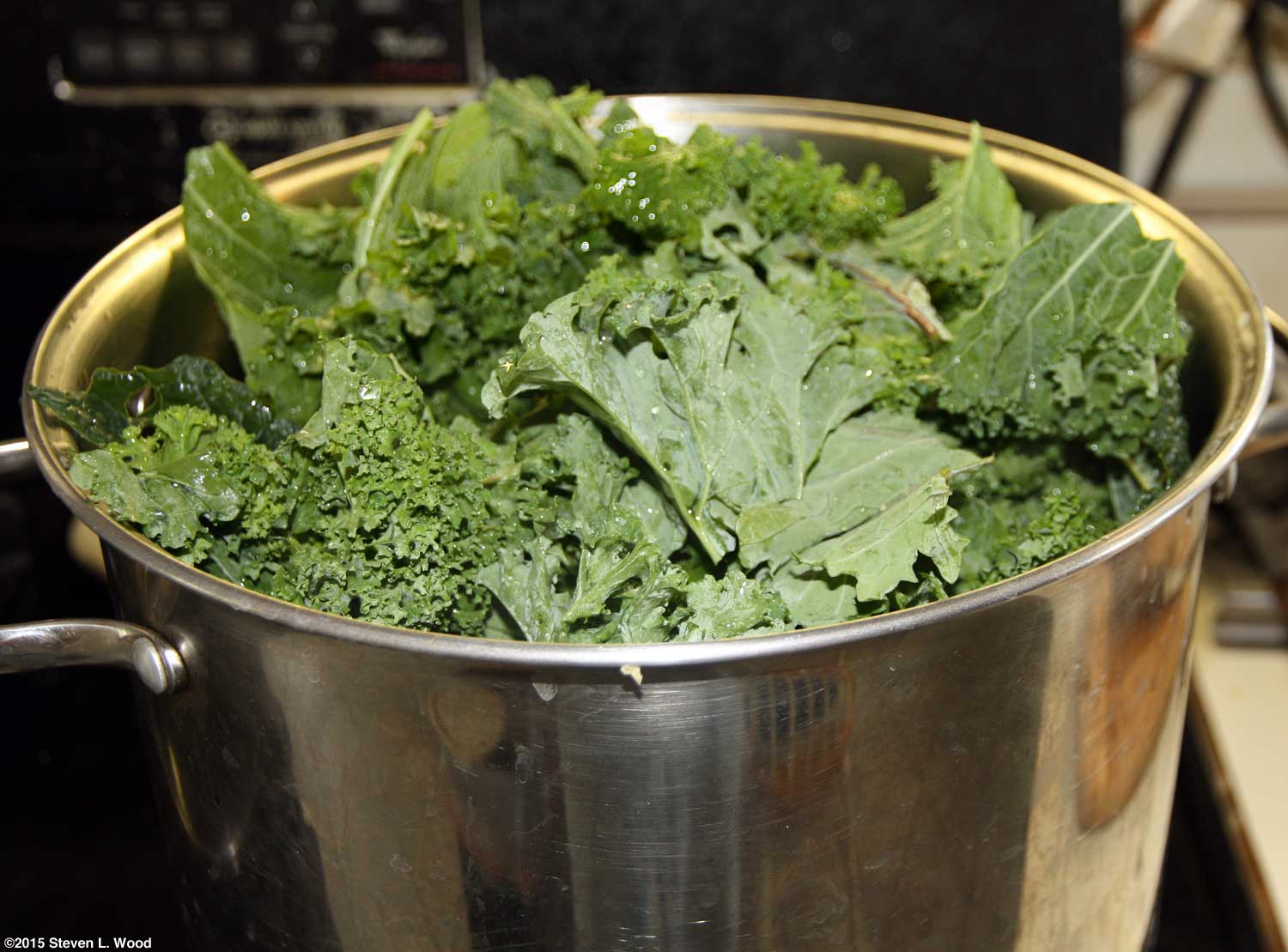
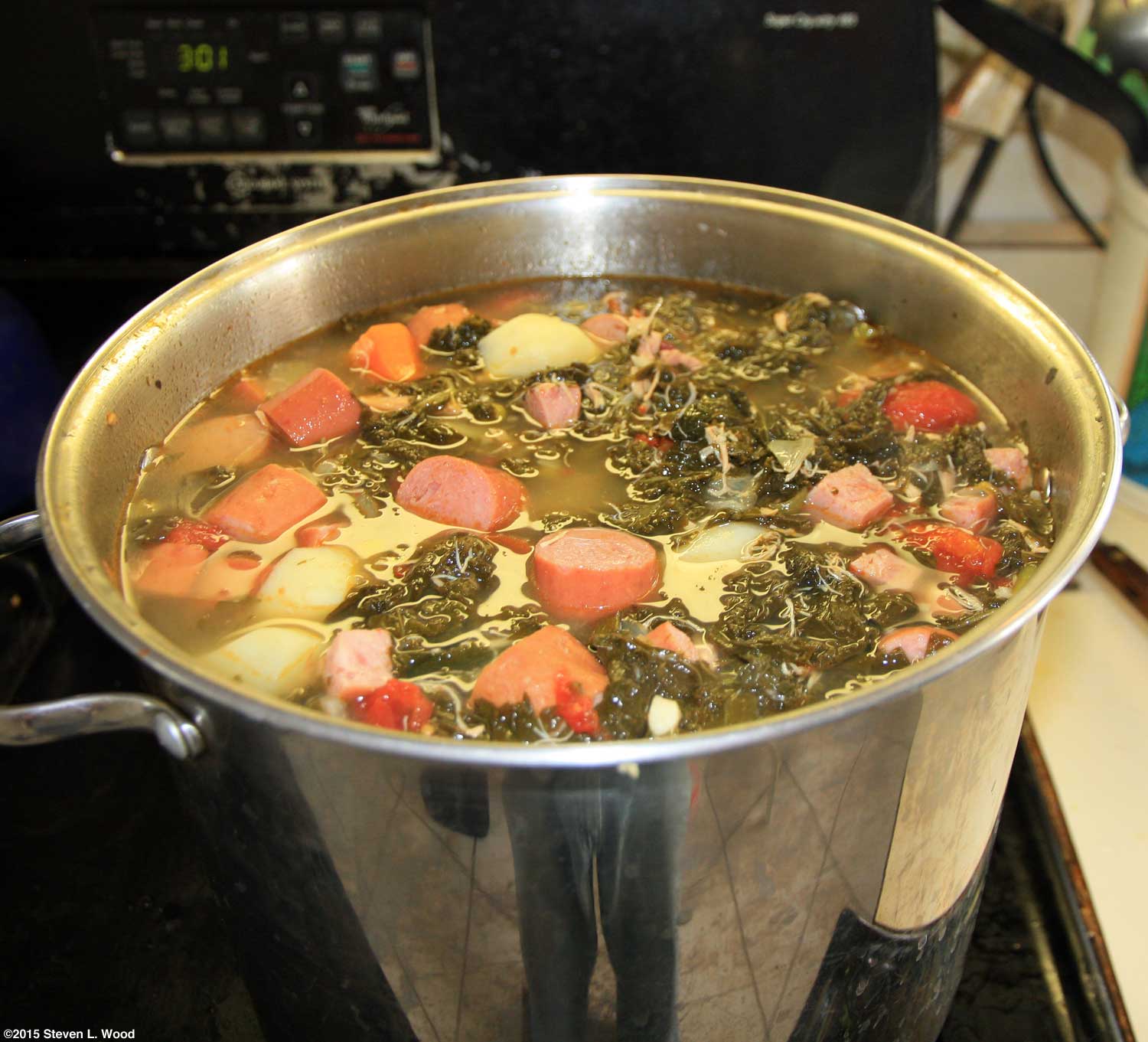
The Sugar Snap row did produce one interesting surprise. As they bloomed, some red pea blossoms began showing up amongst the white Sugar Snap pea blossoms. The red blossoms looked very much like Dwarf Gray Sugar blossoms, only they were on vines almost six feet tall, about twice the height of Dwarf Gray Sugars. Whether from stray seeds in the packet, a throwback, or a true mutation, the red blooms produced some nice photos for us. We celebrated National Kale Day on November 7 by making a big batch of Portuguese Kale Soup. The timing was actually more coincidence than planning, as the kale was ready to pick then. Sadly, after the heavy picking for the soup, the kale row only recovered enough for some boiled kale and kale chips.
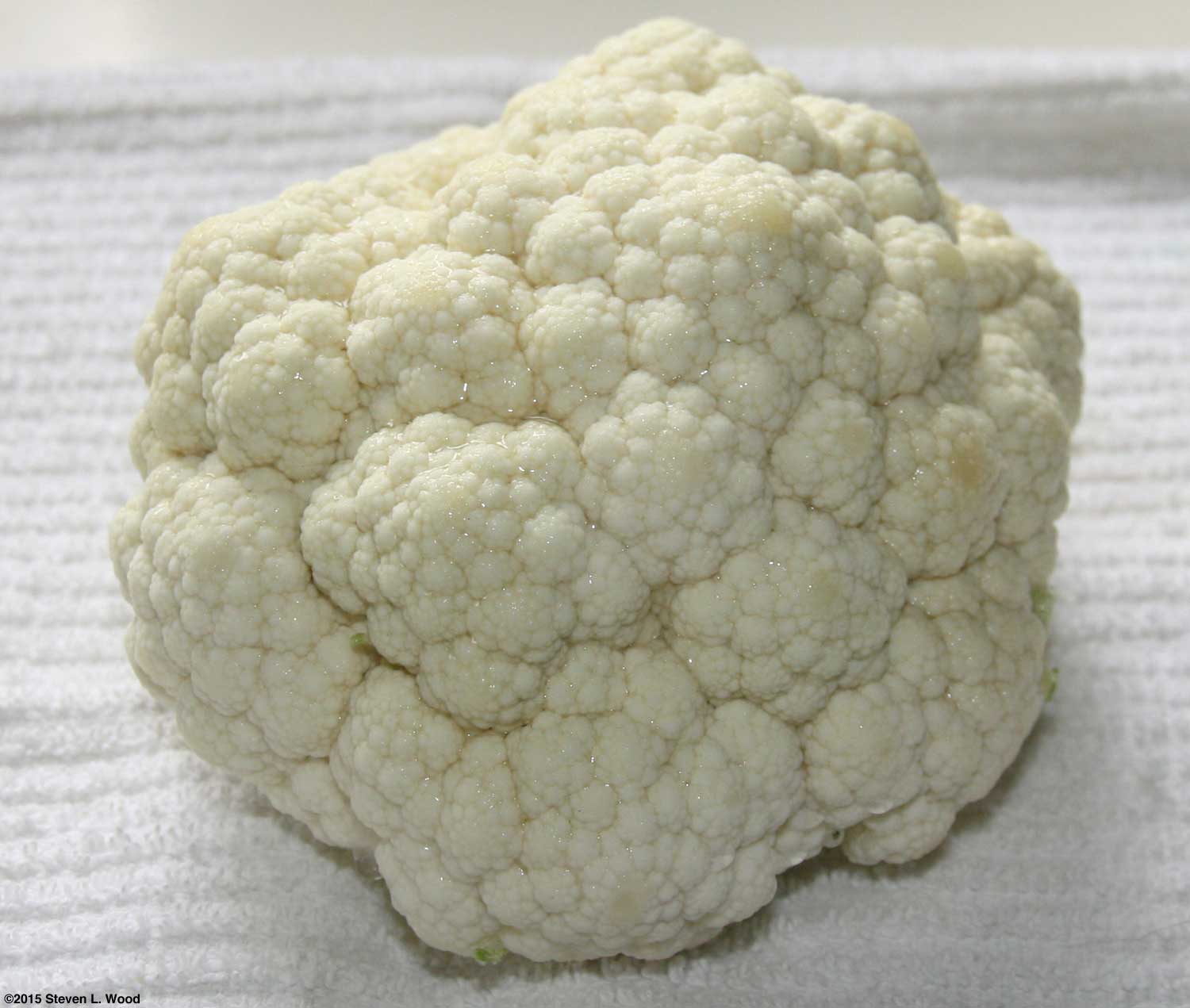
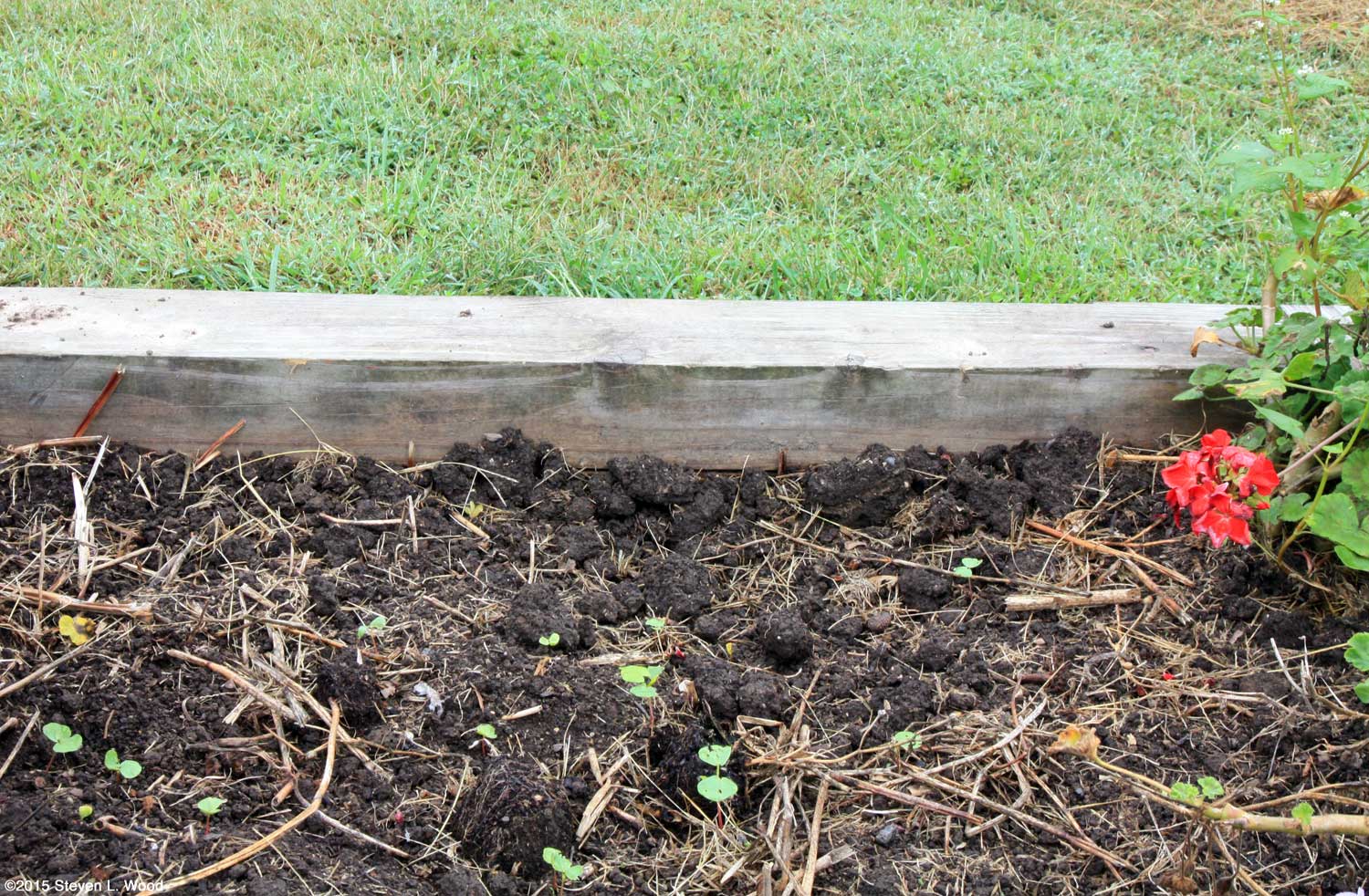
I planted our garlic on October 26, two days earlier than last year and the earliest we've ever gotten it in. Our dogs did a bit of digging in the bed, so we'll see what we have next spring when the garlic begins putting up shoots. And I learned about seed libraries from web buddy Don Smith in October. I'll write more about that in the November and December sections. We also began clearing our main raised bed this month. Our tomatoes and peppers came out, along with most of our broccoli/cauliflower row. I left one cauliflower plant that eventually produced a small head in November. |
|
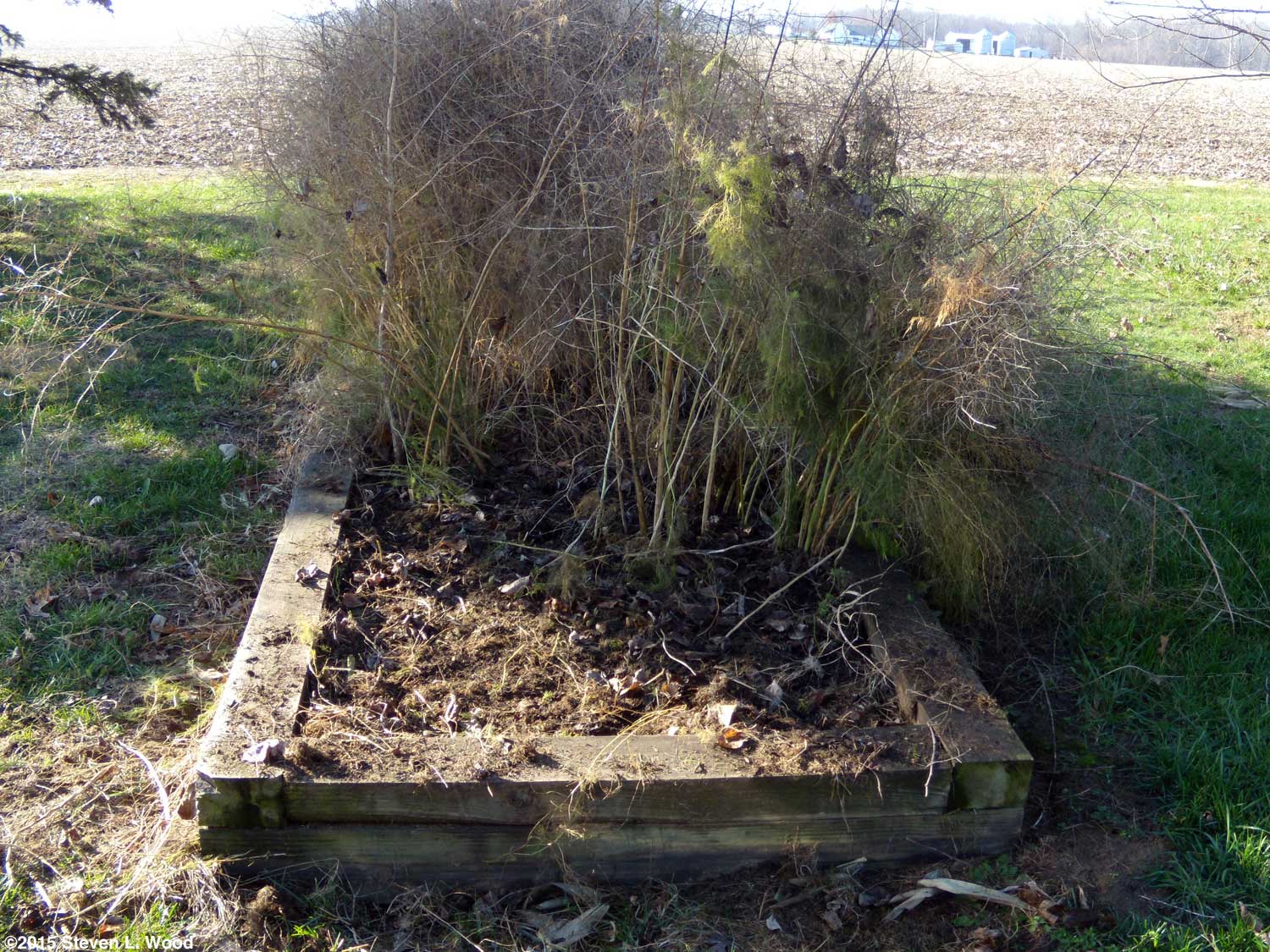
November was mostly a month of cleaning up the garden and getting ready for next season. We did pick a last head of cauliflower and some lettuce and kale, but that was about it. Getting everything out of our main raised bed and composted was our goal, which we achieved. Unfortunately, I didn't get our main raised bed tilled before the usual fall rains began, but it's not in all that bad of shape for spring planting. Since we didn't plant our East Garden plot this year, doing our annual seed inventory was pretty easy. Lots of our stored garden seed had never left the freezer. I did discover when doing seed orders in December that I'd repackaged our carrot seed, but then had left them out of the inventory! Fortunately, I do a new inventory spreadsheet each year and had the old one to use as a guide when I belatedly checked our carrot seed and entered it in the new spreadsheet.
Discovering that I was the only listed source for Earliest Red Sweet pepper seed on the Seed Savers Exchange, I decided to offer packets of it for free to readers of Senior Gardening who would promise to grow out the crop, save seed, and share it with others. The response from readers was underwhelming, so I began offering not only ERS seed, but also Earlirouge tomato and Japanese Long Pickling cucumber seed to seed libraries in Indiana and surrounding states. If they become numerous and frequently used, seed libraries may prove to be a boon to home gardening. It's really hard to beat free seed! In addition to encouraging home gardening, the requirement that those "checking out" seed each spring save seed to return to the seed library may help produce a whole new generation of seed savers. Members of both the Grassroots Seed Network and to a lesser extent, the Seed Savers Exchange, have expressed concern in forum postings at the graying of current seed savers. As one of those graying seed saver, I share those concerns. Links about seed libraries:
If you're looking for free garden seed next spring, be sure to do a web search to see if there is a public seed library close to you. I also did a bit of writing during November:
Really, really marking the end of our gardening season, I pulled our rain gauge and its post on December 8. Leaving it up all winter would be an invitation for it to break from freezing water and snow in it, so I pull it each fall. Once I've pulled on our rain gauge, I rely on two, nearby Weather Underground reporting stations for our precipitation accumulations through the winter until I can again safely hang our rain gauge in spring.
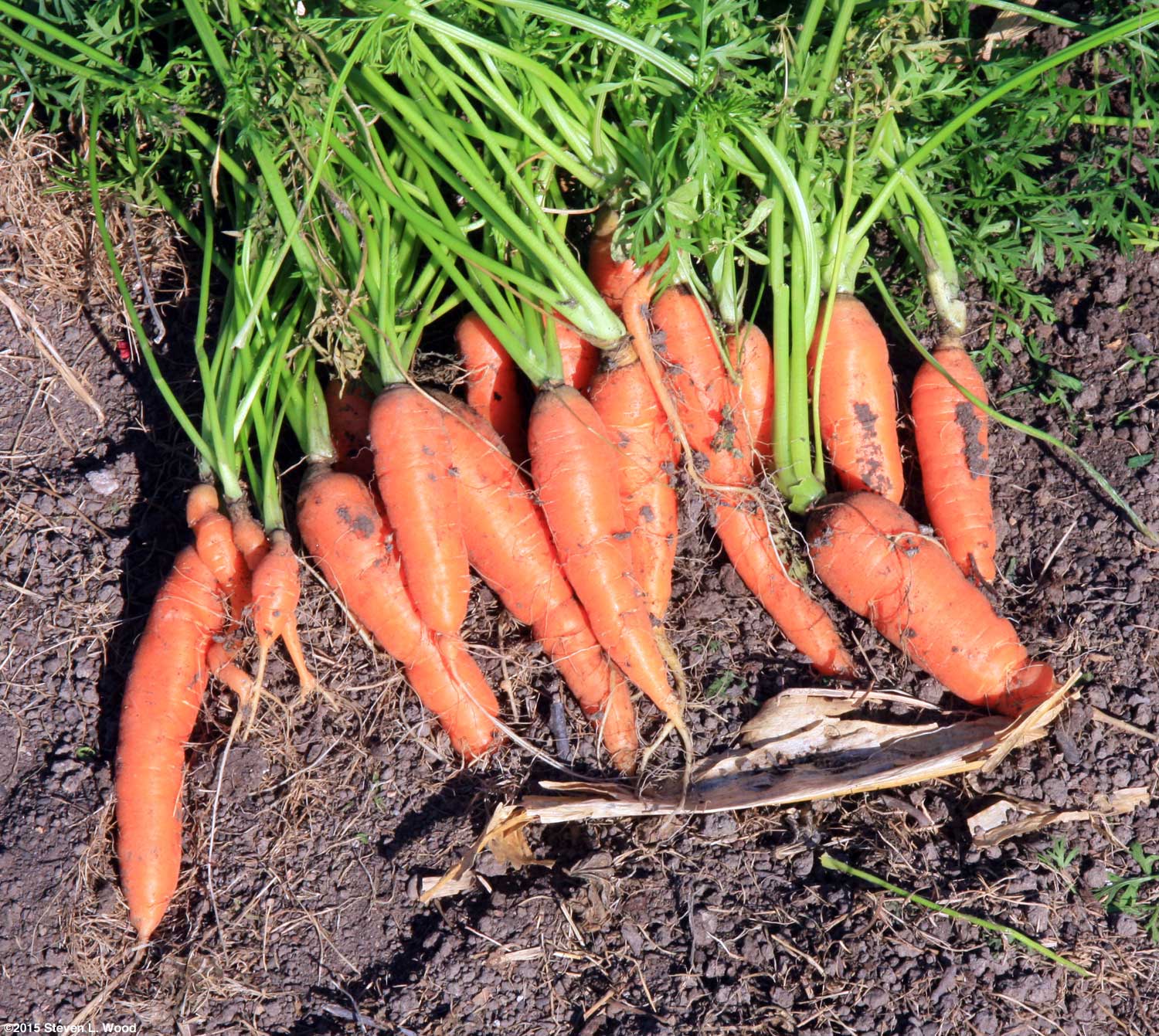
By the end of December, we'd already used or pitched half of the onions we had in storage. But as the fall months wore on, I noticed I was culling less and less onions each time I checked them for rot and sprouts. Our garlic has stored like a champion. Likewise, our carrots stored in Debbie Meyer Green Bags in the fridge have also stored well and should last us through most, if not all of the winter. I did start a tray of onions in mid-December from old seed left over from our 2014 Onion Trials. It was maily a curiosity to see if the two year old seed was still good, but may give us a few extra onion plants next spring. Our fresh onion seed won't get started until mid-January. Our larder, actually a few shelves in a basement cabinet, is filled with canned tomatoes, green beans, Portuguese Kale Soup, bread and butter pickles, and tomato purée. Sadly, our plant room only holds onions and garlic. Since we didn't grow an East Garden this year, there are no stored potatoes, sweet potatoes, and butternut squash that usually populate the dark corners of our plant room. I expanded our seed giveaway for Senior Garden readers in December to include some old Japanese Long Pickling cucumber seed I found was still quite viable (germination tests of 85-100%). Possibly more important, we began sharing free Earliest Red Sweet pepper, Earlirouge tomato, and Japanese Long Pickling cucumber seed with seed libraries in Indiana and surrounding states. The librarians who responded to my offer of free seeds were universally surprised and grateful to receive fresh, donated seed. At 67 years of age, and as my cardiologist regularly reminds me, "still a heart patient," I was happy to share some good, but endangered vegetable varieties with other gardeners and potential seed savers. A Few Comments This year has been possibly the most challenging gardening season of my life. We had our garden plots planted pretty early in anticipation of total hip replacement surgery for me in mid-May. My wife, Annie, did yeoman's work in keeping up with mowing and the garden as I worked to regain full use of my leg and hip during the spring and early summer. At this writing some seven months after the hip operation and ten months after the last heart procedure, I'm looking forward to a full and vigorous season of gardening (and blogging about it) next year. This column probably wouldn't be here if it were not for the alert call by Dr. Michele Spolyar of the Indiana Orthopedic Hospital on some minor heart irregularities she found in my pre-op exam. According to my excellent cardiologist, Dr. Tony Nasser, she probably saved my life. Beyond Drs. Spolyar and Nasser, my thanks again go out to an old friend, Dr. Bob Clayton, for his excellent work on my hip and post-op care. Finally, my thanks go out for all the prayers and good thoughts from Senior Gardening readers. Having clearly dodged a bullet last January, it would seem the Lord has some purpose for still keeping me around. Merry Christmas
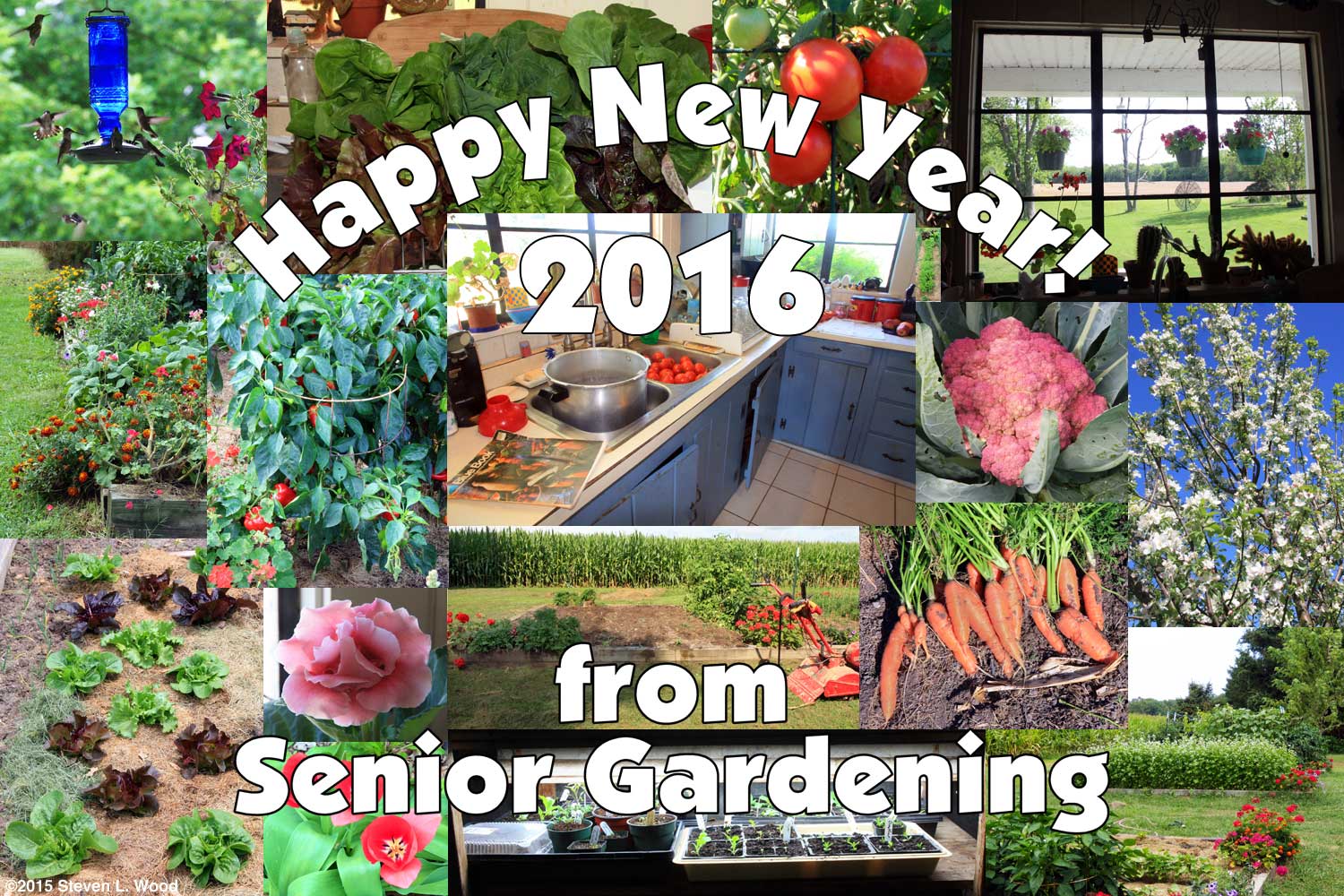
Luke 2:10-11 (ASV) The image above is a "scene from a life size nativity at the Luxembourg Christmas market." It was taken in 2006 by graphic artist Debbie Schiel who lives in Far North Queensland, Australia, and shared on the royalty-free stock.xchng site. The scripture was copied from my installation of the free Macintosh Online Bible. There's also a free version for Windows users. On my iPhone, I currently use the ESV Bible app. Best wishes from Annie and I to you for a joyous and fulfilling holiday season. Happy New Year
|
||||||||||||
From Steve Wood, the at Senior Gardening |
| Affiliated Advertisers |
©2015 Senior-gardening.com




 I mentioned in the introduction to our September blog that I'd been working on a how-to story about